






Jalandhar:

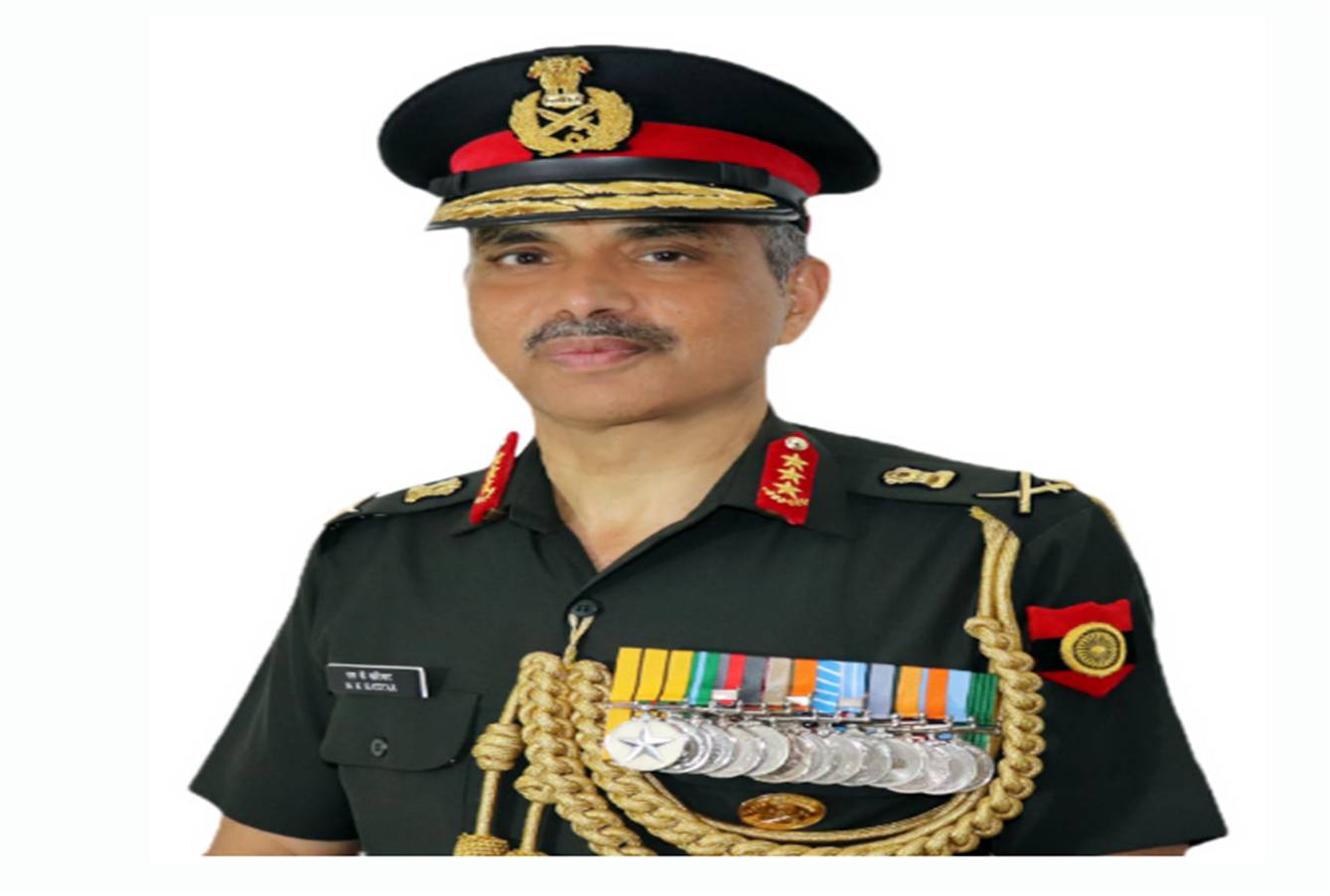
Lt Gen Sanjeev Sharma took over as the General Officer Commanding of the Vajra Corps here on Wednesday. He was commissioned in the Rajputana Rifles in December 1983 and is an alumnus of Defence Services Staff College, College of Defence Management and National Defence College. The General Officer has commanded an infantry battalion in an active counter- insurgency environment in the North East, Infantry Brigade on the Line of Control and infantry division in Jammu and Kashmir. The General officer has held prestigious staff appointments at Headquarters Army Training Command, Headquarters Directorate General of Assam Rifles, Military Operations and Military Intelligence Directorates at Army Headquarters. He has also served as a Military bserver with UN Mission in Liberia. oc
Srinagar, November 7
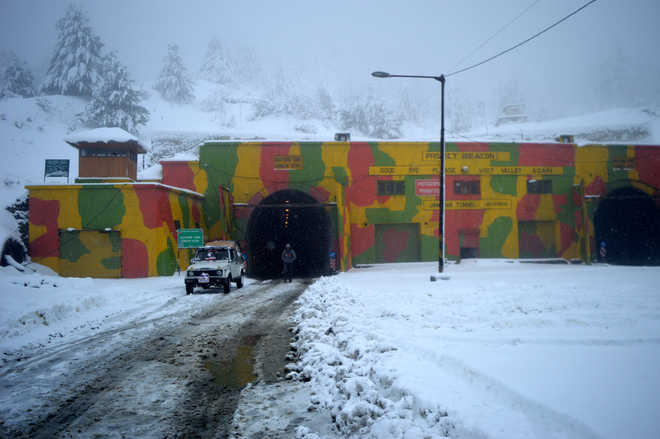
Heavy snow across Kashmir on Thursday cut off the Valley from the rest of the country as the arterial Jammu-Srinagar National Highway was closed for traffic while all flights to and fro Srinagar airport were cancelled, officials said here.
An official of the traffic department told PTI that roads which connected the summer capital with far-flung areas like Gurez, Macchil, Keran and Tangdhar had also been closed due to adverse weather conditions.
Over 2,000 vehicles are stranded on the highway due to the closure.
An official of the Airport Authority of India said all incoming and outgoing flights at Srinagar Airport had been cancelled.
“A call on afternoon flights will be taken only after reassessing the weather situation,” the official said.
The residents of Srinagar and other parts of the Valley woke up to unseasonal snow, setting in early winter chill in Kashmir as the minimum temperature fell below the freezing point for the first time this season, an official of the MET department said.
The snow has disrupted life in Kashmir as power was snapped in the early hours.
A police official said there were reports of many trees and electric poles getting uprooted due to the heavy snow.
While most of the vehicles remained off the roads, a few cars and cabs could be seen on the roads but drivers were facing difficulty in manoeuvring vehicles in view of the accumulation of snow.
Srinagar Deputy Commissioner Shahid Iqbal Chaudhary said the district administration had taken up restoration works on a war-footing.
“We have 45 machines on snow-clearance job while dewatering pumps have been put into service using generators to ensure there is no waterlogging. As many 37 power stations have been restored so far while the remaining will be restored in the next few hours,” he said.
Srinagar city received around 11 cm of snow till 11.30 am while the Valley;s gateway town of Qazigund in south Kashmir received 12 cm of snowfall.
Gulmarg, where snowfall began on Wednesday, recorded the highest snowfall of 62 cm so far, the official said.
Higher reaches of Kashmir, including Gulmarg, Sonamarg and Kupwara, received the first snow on Wednesday while the plains were lashed by rain. PTI
Tribune News Service
Chandigarh, November 2
Expressing anguish at the unprecedented situation triggered by the growing air pollution in Delhi, Punjab Chief Minister Capt Amarinder Singh on Saturday wrote an emotional letter to Prime Minister Narendra Modi.
The letter underlined the need for evolving a consensus on tackling the issue, rising above political affiliations and regional considerations.
In the letter, the CM said, “No Indian, and no one in Punjab, is oblivious to the misery of our brethren in the national capital, whatever many around the country might have been led to believe.”
Pointing out that his own children and grandchildren living in Delhi were currently sharing the plight of the lakhs of people there, he said the prevailing situation “has exposed the hollowness of our claims of being a progressive and developed nation”.
“How can a country be called developed when its capital city has been reduced to a gas chamber, not by any natural disaster but by a series of man-made ones?” he asked.
Making it clear that he had no intention of washing his hands of Punjab’s responsibility, the CM said, however, that the entire country, including Delhi and the Centre, had allowed “this state of affairs to emerge and sustain”.
Admitting that stubble fires, supported by the winds blowing in the wrong direction, were contributing to the toxic levels of air pollution that prevail today in Delhi, the CM noted that data from several independent agencies had pointed out that large-scale industrial pollution, traffic overload and the excessive construction activity taking place in Delhi were equally, if not more, to blame.
Amarinder said he took no solace from this data, nor could this blame-game help any of them to “assuage our own guilt in a matter of such serious national consequence”.
“The harsh truth is that while all of us are busy conveniently passing the buck, Delhi’s people are reeling under excruciating misery,” he wrote.
The CM said Punjab had tried to enforce the law against stubble-burning to the maximum extent possible, and was even penalising the farmers.
Amarinder wrote that he had expected the Centre “to have taken the matter in its hands long back, to find a holistic solution to the grave problem”. That, unfortunately, had not happened, despite even the Supreme Court expressing its concern on the rapidly deteriorating situation, he lamented.
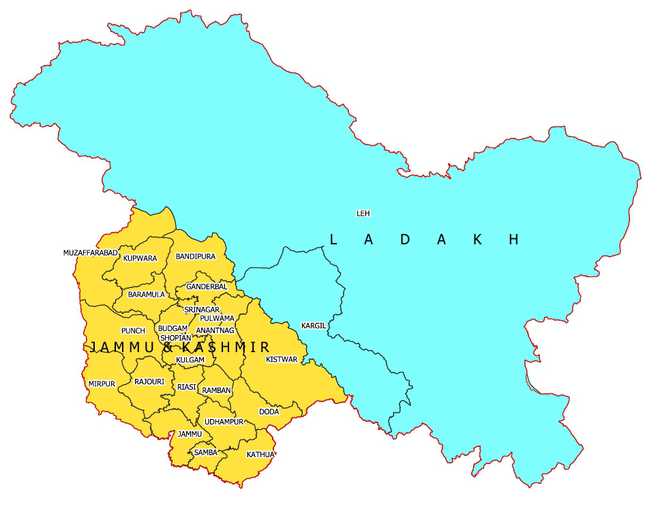
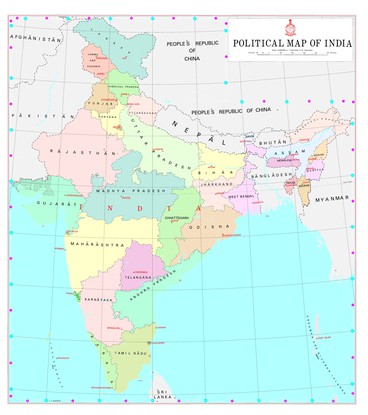
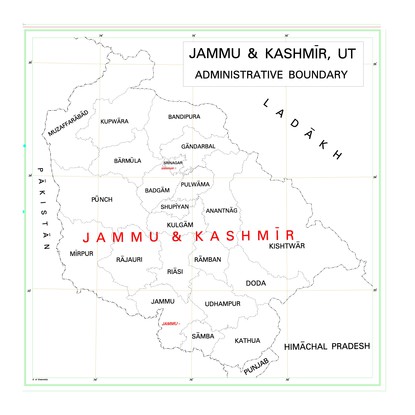
The new map of Union Territories of Jammu and Kashmir, and Ladakh.
New Delhi, November 2
The central government on Saturday released the maps of newly created Union Territories (UTs) of Jammu and Kashmir, and Ladakh and the map of India depicting these UTs.
In a statement, the Ministry of Home Affairs said the union territory of Ladakh consists of two districts of Kargil and Leh while the rest of the erstwhile state of Jammu and Kashmir is in the UT of Jammu and Kashmir.
In 1947, the erstwhile state of Jammu and Kashmir had the following 14 districts—Kathua, Jammu, Udhampur, Reasi, Anantnag, Baramulla, Poonch, Mirpur, Muzaffarabad, Leh and Ladakh, Gilgit, Gilgit Wazarat, Chilhas and Tribal Territory.
By 2019, the government of erstwhile state of Jammu and Kashmir had reorganised the areas of these 14 districts into 28 districts. New districts are Kupwara, Bandipur, Ganderbal, Srinagar, Budgam, Pulwama, Shopian, Kulgam, Rajouri, Ramban, Doda, Kishtwar, Samba and Kargil—the last one of which is now was carved out from the area of Leh and Ladakh district and is now in the union territory of Ladakh.
The Leh district of the new UT of Ladakh has been defined in the Jammu and Kashmir Reorganisation (Removal of Difficulties) Second Order, 2019, issued by the President of India, to include the areas of the districts of Gilgit, Gilgit Wazarat, Chilhas and Tribal Territory of 1947, in addition to the remaining areas of Leh and Ladakh districts of 1947, after carving out the Kargil District.
The maps prepared by Survey General of India depicting the new UTs of Jammu and Kashmir, and Ladakh, as created on October 31, 2019, along with the map of India, are released, the statement said.
On the recommendation of Parliament, the President effectively dismantled Article 370 of the Indian Constitution and gave assent to the Jammu and Kashmir Reorganisation Act, 2019.
Under the leadership of Prime Minister Narendra Modi and supervision of Union Home Minister Amit Shah, the erstwhile state of Jammu and Kashmir has been reorganised as the new Union Territory of Jammu and Kashmir and the new Union Territory of Ladakh on October 31, 2019, the statement said. PTI

Arteev Sharma
Tribune News Service
Jammu, November 18
The Border Roads Organisation (BRO) has adopted a modern technology, Cementaceous Sub Base (CTSB) — a first-of-its-kind in Asia — for the construction of the sensitive high-altitude Daulat Beg Oldi road bordering China in eastern Ladakh.
According to BRO officials, 12 km of the road is being constructed by utilising the CTSB technology.
The use of the technology is aimed at providing the military with an all-weather road access to north-eastern Ladakh and for facilitating smooth passage of armed personnel and other logistical support.
The area had seen skirmishes during the 1962 India-China conflict and also recent stand-offs. Building this section of the road is a key thrust area of the Defence Ministry for this strategic northernmost corner of India.
“This is a patented technology through which road surface is constructed in an extremely short span of time. The surface is more durable than the one obtained through the conventional method,” a senior BRO official said.
He said, “Besides being treacherous, the engineers face multiple challenges in the construction of these roads ranging from extremely high altitude extending to over 19,000 feet above the sea level resulting in acute mountain sickness to workers and rarified oxygen levels.”
Criss-crossing through the higher Himalayan ranges where temperature dips to below -50°C during the winter, the sectors offer limited window for executing the works from June to October.
“However, considering the nature of activities required to be undertaken for carving out stable roads in the high seismic zone (siesmic-4), conventional methods would take years, much beyond the timelines stipulated for the completion of the projects,” the BRO official said.
Under the CTSB technology, a dry admixture is mixed with sand and crushed stones by means of a machine known as pulveriser. First the crushed stones and sand are spread on the road. The admixture is laid ahead of the pulveriser.
The pulveriser rolls over the admixture mixing all the three components, spreading them evenly over the road surface. The surface is watered for some time. The exercise is repeated after a few days to form the second coating. Then the bitumen is laid over the surface as done in the conventional method.
Engineer in charge Feroz Ahmad said, “Through the CTSB technology, the road length will be completed within three months. The same length would have been completed in 2 to 3 years using the conventional method. The road stretch would be more tenacious to withstand harsh climatic conditions prevailing in these terrains.”
Chief Engineer, Project Himank, Brig Nitin K Sharma complimented engineers for implementing the new technology in most adverse conditions and said such techniques could be replicated in other border areas where conditions for the construction of the road network was rather impossible.
Pervin Malhotra
email your queries to careers@tribunemail.com
Q.I’m preparing for JEE along with my Class XII Boards. I’m also interested in joining the armed forces, particularly the Navy, but have not prepared for the NDA exam due to my tight schedule. Please suggest what I should I do to keep this option open. —Yashpal Saini
A. Male candidates who’ve passed their Senior Secondary or equivalent exam from any Board with at least 70 per cent aggregate in physics, chemistry & mathematics and scored at least 50 per cent in English (in class X/XII)and obtained a rank in the JEE (Main) 2020 for BE/BTech can join the Indian Navy under the 10+2 (Technical) Cadet Entry Scheme.
DoB: July 2, 2001- Jan uary 1, 2004.
Upon selection, you’ll be inducted as Cadets for the 4-year BTech course in Electronics & Communication or Mechanical Engineering at the prestigious Naval Academy, Ezhimala Kerala.
The best part is that the entire cost of training throughout, including books and reading material, will be borne by the Indian Navy. You’ll also be provided with free clothing, board and lodging.
The application window is typically open till mid-June 2020.
Do read the instruction carefully on their website: www.joinindiannavy.gov.in before applying online.
For any further Queries call on the Toll-Free no: 1800-419-2929 and press Option 7 to speak to a customer care representative.
A veritable ocean of opportunities await you: The Indian Navy is a technology-driven force with its ships, submarines and aircraft fitted with cutting edge equipment. As an Engineer Officer, you’ll get an opportunity to operate and maintain the Marine Engineering equipment on board ships /submarines/ aircrafts as well as in Repair Yards and Maintenance Units besides working in Design and Production of indigenous ships.
No other career exposes an engineer to such a wide spectrum of job profiles. As an Engineer Officer, you’ll also get ample opportunities to undergo technical courses/Post Graduation in India and abroad.
Get on the nursing course
Q.I’m a Class XII student in Jammu. I have always dreamt of a career in medicine — either practice or research. However, I belong to a conservative family who feel that I should be looking at simpler options because there are so few medical seats and they are not aware of the employment prospects. How should I convince them? — Ummaid Bakhtawar
A. As far as I know, 400 additional seats have been allotted for new medical colleges in your region, taking the number from 500 to 900 (the largest jump in any state).
Besides five new nursing colleges, two new AIIMS are coming up in Awantipora (Kashmir and in Vijaypur (Jammu)
Moreover, students of Kashmir & J&K have a 3 per cent reservation in seats and jobs in government institutions across the country.
I also read somewhere that J&K ranks among the top states to implement Ayushman Bharat scheme. Dedicated medical
cities are being set up to implement the Health Investment Policy and medical facilities across health centres and hospitals have been upgraded, DNB courses have introduced in 63 specialties across 16 leading hospitals, new posts have been created and new appointments made.
So all in all, it’s a great time to be studying medicine for students like you…! And I’m sure your parents will come around, when you present them all these facts. Best of luck!
When life serves you lemons…
Q.I am 27 years old and hearing impaired for the past 10 years. While my left ear is completely deaf, I used to wear a hearing aid in the right one. Despite this I was somehow carrying on until a viral fever recently infected my head, body, nose and throat. Within 3-4 days I stopped hearing almost completely despite the hearing aid. Docs say that I’ve lost my hearing and have prescribed medication, but it’s not helping. Even using a more powerful aid doesn’t seem to work. Cochlear implant may be the solution but I can’t afford it right now. I’ve lost my job as it involved a great deal of communication. I am now feeling terribly depressed. Please tell me what options are open for me? Although I am a fighter by nature, I’m feeling very depressed. I need someone to show me the way. I have a private school background and a diploma in computers. —Gitanjali Sood
A. Why are you depressed…! Sure, hearing loss is a disadvantage – but only a partial one. All your other faculties are intact!
The fact that you’re in this world with all its wonders and experiences and that you have the ability to see them, feel them and touch them – that’s the greatest blessing of all. For sure, your glass is more than half full.
Coming to jobs, there are so many things you can do today– all the more, since you’re computer savvy!
By your own admission, you’re a fighter. So, prove it by fighting it out. Take up the challenge.
Research suggests that the hearing impaired tend to be the least distracted, highly motivated and display a capacity for high retention that places them at par and at times, even better than their hearing counterparts.
Now there is reservation for the handicapped in all government jobs etc. Hearing impairment is a prominent condition recognised by the government.
Of course, you’ll have to sell your skills and capabilities to the employer – quite like any other candidate. Just make sure your skills are well-honed and up-to-date.
With mandated reservations for PWDs in almost all categories of jobs, I don’t think you should have a problem landing a good one with a bit of effort. If you have an entrepreneurial streak, that too is a wonderful option. Remember, the only insurmountable disability in life is a bad attitude. Best of luck!
Decoding the Canadian dream
Q. Why is it that so many Indians (and predominantly those from Punjab) are heading to Canada for work? Many of my friends are planning to go to Canada for higher studies. — Shamsher Singh Chahal
A. There are a number of reasons. Although the US has tightened the screws on immigration, its North American neighbor has shown its readiness to cash in on the chance to attract more international talent to meet Canada’s growing need for skilled professionals.
Besides being a relatively safe, friendly and clean place, a recent survey has interestingly found that Canada is more open to welcoming Indian STEM (Science, Technology, Engineering & Maths) professionals over those from China. Among Asian countries, only South Korean immigrants are more prized for highly skilled jobs than Indians.
Tribune News Service
New Delhi, November 13
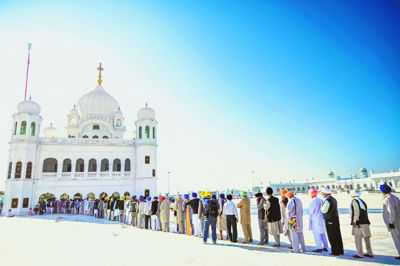
With intelligence inputs suggesting that terror elements are active in Narowal district of Pakistan, where Kartarpur Sahib Gurdwara is situated, the Centre is contemplating inserting a column in application form for pilgrims to declare that their visit through the newly built corridor “will not be detrimental to India’s sovereignty”.
Sources said the column would be inserted in the form, which the pilgrims have to fill before applying for permission to visit Kartarpur Gurdwara through the corridor.
“Concerns have been raised by security and intelligence agencies that elements in Pakistan may try to misuse the corridor by propagating anti-India narrative among visiting pilgrims,” said a senior official.
A few days ahead of the inauguration of Kartarpur corridor on November 9, intelligence agencies had alerted that “jihadi elements” were spotted hiding on the other side of border, which was very close to the Dera Baba Nanak shrine on the Indian side.
Talking to The Tribune, Border Security Force (BSF) personnel patrolling the border near Dera Baba Nanak said they had stepped up vigil with additional deployment.
In its report to the Ministry of Home Affairs, intelligence agencies had alerted that places like Muridke, Shakurgarh and Narowal, which are very close to Kartarpur Sahib Gurdwara, had become latest hotspots for terror camps.
The corridor, which connects Dera Baba Nanak Sahib in Gurdaspur district of Punjab with Kartarpur Sahib Gurdwara in Narowal district of Pakistan’s Punjab, became operational for Indian pilgrims after Prime Minister Narendra Modi inaugurated it on November 9.
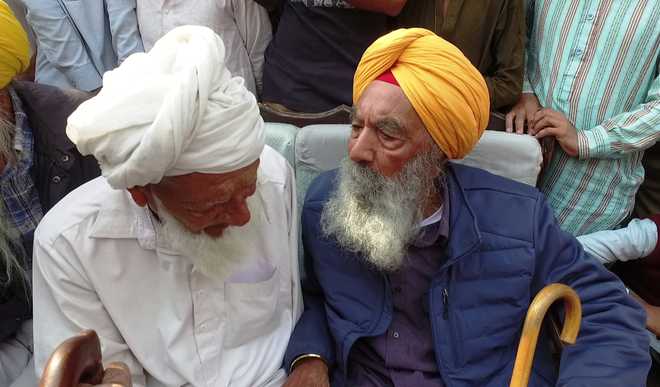
Harbans Singh met his childhood friend when he visited his ancestral village in Pakistan. Photo courtesy: Urdu News
Tribune Web Desk
Chandigarh, November 12
It was a poignant moment when a nonagenarian man from India went to his ancestral village in Pakistan to meet his childhood friends as he visited the country to celebrate the 550th birth anniversary of Guru Nanak Dev.
Harbans Singh, 90, was 17 years old when he had to leave his ancestral home in Pakistan’s Jaranwala city during the Partition.
Urdu News posted videos capturing the heart-wrenching moment when Harbans visited his village accompanied by his daughter and son-in-law, who all came from America.
Harbans’ wish to meet his childhood friend Muhamad Sharif got stronger after opening of the Kartarpur Corridor between India and Pakistan.
After reaching his village Lathianwala, an emotional Harbans asked “is this my village? This has changed so much.”
A white-bearded elder man grabs him by the side and replies, “Yes, Sardar ji, this is your village. This is Sukhan da Lathianwala. Welcome!”
The market was soon filled with beaming people and the scene looked like the one when meeting a relative after many years.
Harbans was asking about his home the entire time. He further added that their ‘haveli’ was one of the biggest houses in the village.
But Harbans Singh was surprised to find that his haveli was now replaced by a magnificent two-story building owned by local proprietors.
This 90-year-old American Harbans Singh who left Pakistan in 1947 -when the country was carved out of India-is waiting to see his childhood friend Mohammad Sharif in #Pakistan, will he meet him ever?? #KartarpurCorridor
And the emotional re-union of Harbans Singh with family of his childhood friends in Pakistani Punjab.
26 people are talking about this
However, Harbans’ wish to meet his childhood friend remained unfulfilled as Muhammad Sharif’s grandson Khushi Mohammed informed him that their grandfather died about 10 years ago.
After saying that, he also hugged Harbans. The locals gave clothes to Harbans and his family as gifts.
“It is a great pleasure to be back here. Looking at my home felt like I was born again today. The wish that had been suppressed for 72 years has come true today. I am very happy with the love I received,” an emotional Harbans said.
He rebelled against the focus on ritual, terming it vacuous if not accompanied with a pure life and chanting of God’s name
Shashi Uban Tripathi
Guru Nanak has invariably been considered with the Bhakti poets and is often described as one of the leading voices of the Bhakti movement. This perception is reinforced by his emphasis on love and devotion to God, the one Creator — Ek Onkar — who is the Truth, who is without fear and without enmity, who is eternal and immortal, who is self-created and who is revealed by the grace of Guru.
This is how Guru Nanak has been perceived in the general consciousness down the ages. But a study of his life and teachings makes it quite apparent that he was a rebel with a cause. In today’s parlance, he would have been described as a social activist. He rebelled against the overwhelming focus of the day on ritual — terming it vacuous and meaningless if not accompanied with a good, pure life and the chanting of God’s name. He asked the Pandit who had come to perform his Yagnopavit ceremony to give him a thread woven of the cotton of compassion, knotted with contentment and truth and one which will neither break nor get burnt or dirty. Blessed would be the one who wore such a sacred thread, he said. If you have such a thread, give it to me, he told the non-plussed priest.
On seeing the evening worship, the aarti, being performed at the Jagannath temple in Puri, Guru Nanak thought it would be a pity to have such a small aarti for the Lord of the Universe: Let the sky be the salver, the sun and moon the lamps, and the myriads of stars the offering of pearls; let fragrant nature be the incense, and flowers of all hues deck the salver. Such an aarti is worthy of that Dispeller of all Fears, the Ultimate Reality. This poem is said to have had tremendous impact on Guru Rabindranath Tagore, who penned similar ideas in a poem in Gitanjali.
One of his most revolutionary concepts was denouncing the theory of sanyas as the means of salvation. Nanak taught that a householder who earned a living through hard work, who shared his earnings with the family and community and who managed to chant the Lord’s name, would attain salvation much faster than a mendicant or a renunciate. To live amidst temptation and yet be untouched by it was the greatest form of austerity.
After travelling the known world (including Mecca and Medina) for close to 30 years, Baba Nanak settled down in Kartarpur to the life of a simple farmer. Here he started the tradition of langar. This was later institutionalised by the second Guru, Angad Dev, and sanctified by the third Guru, Amar Das.
The idea behind langar was not just food security or feeding the poor. It went much beyond that to embrace equality of all human beings — rich and poor, Hindu and Muslim, Brahmin and Shudra. Men and women were expected to sit together on the floor and partake of the same simple meal. When one thinks of those times when untouchability was rife and Hindus and Muslims would not drink water from the same tap, let alone eat from the same kitchen, the mind is stunned at how audacious this idea was.
No less revolutionary was Guru Nanak’s defence of women. Very few people understood a young Nanak and his great mission. Of the two who did was his elder sister, Bebe Nanaki (the other being Rai Bular, the ruler of Rai Bhoi di Talwandi, where Nanak was born). It is possible that this relationship with his elder sister coloured his view and respect for women. At a time when women’s status had been seriously eroded, he raised his voice against the denunciation of women, asking why women are bad-mouthed when they are central to life and living.
Man is born of woman, nourished and nurtured by her. In youth, he befriends a woman, marries her and brings her home. When she dies, he brings another. Why then is she who gives birth to rulers and kings, abused and called bad, he asks. The only one beyond the pale of a woman’s influence is that One Cosmic Reality who embodies the Truth. Such a spirited defence of women is hard to find among the leaders and savants of the 15th century, 550 years ago.
To categorise Guru Nanak as a mere Bhakti poet is to limit the tremendous sweep of his revolutionary ideas and practices.
— The writer is a former ambassador