Sanjha Morcha

‘Hamaara Sidhu kidhar hai’, enquires Imran Khan at Kartarpur Corridor opening

http://

Tribune Web Desk
Chandigarh, November 10

Pakistan Prime Minister Imran Khan is heard saying “Hamaara Sidhu kidhar hai” while enquiring about the coming of former cricketer and Punjab MLA Navjot Singh Sidhu at the Kartarpur Corridor opening on Saturday.

Imran Khan, who arrived in a shuttle bus for the corridor opening, is heard asking other officials in the video “Accha hamaara woh Sidhu kidhar hai, me keh raha hu hamaara Sidhu”.

The Pakistan prime minister is also heard asking “Manmohan aa gya”, referring to former Prime Minister Manmohan Singh.

A woman official is heard in the video saying if Sidhu isn’t allowed to come it would send a negative message for them and Khan says “usko aur hero banayege” and the woman says “woh saare channels ki headline hogi”.

Sidhu had on Saturday thanked the prime ministers of India and Pakistan for the historic move.

During his address at the inauguration ceremony of the Kartarpur Corridor, Sidhu said no one can deny “my friend” Imran Khan’s contribution in making the opening of the corridor possible.

“Imran Khan has made history,” he said.

Calling Khan the king of hearts, Sidhu said, “Sikandar (Alexander) had won the world with fear and you won the heart all over the world.”

Former Indian cricketer-turned-politician thanked the former Pakistani cricket captain for taking the bold step to build the Kartarpur corridor “without looking at gains or losses”.

Former Indian Prime Minister Manmohan Singh led the first delegation of Sikh pilgrims as they entered Pakistan through the Kartarpur corridor. Punjab Chief Minister Amarinder Singh was also part of the ‘jatha’ while Sidhu was the chief guest at the opening ceremony in Pakistan as he was invited by Imran Khan.

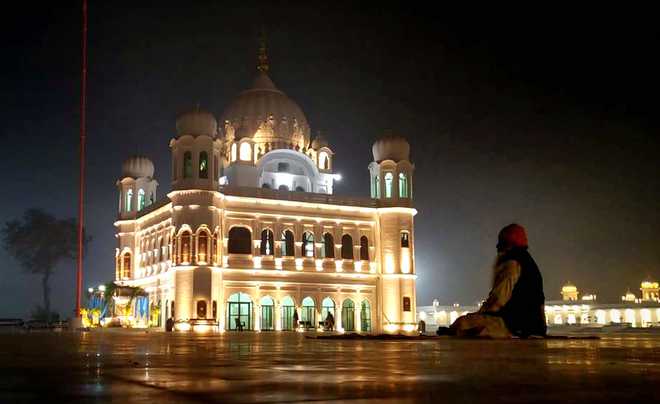
The 9 km corridor links Gurdwara Darbar Sahib in Pakistan, Guru Nanak Dev’s birth place and the final resting place, to Dera Baba Nanak shrine in Punjab’s Gurdaspur district.


Pakistan as we don’t know it

Pakistan as we don’t know it

Charanjeet Singh Minhas

A few months ago, my wife and I decided to do the unthinkable: visit Pakistan.

Before boarding the Philadelphia-Lahore flight last month, I wrote an op-ed for Pakistan’s The Daily Times, but never anticipated the reaction on social media. Some of my fellow Indians — not only Modi devotees — were offended by my positive mentions of Pakistan and Muslims. The Patel community was most upset.

With this uncertain start, how could we believe that our maiden Pakistan visit would be such a joyous experience? From the moment we arrived we were treated like celebrities. Shopkeepers and restaurants would first refuse to accept money.

It is important to mention here that I was in a country and among people I had done my best all these years to avoid.

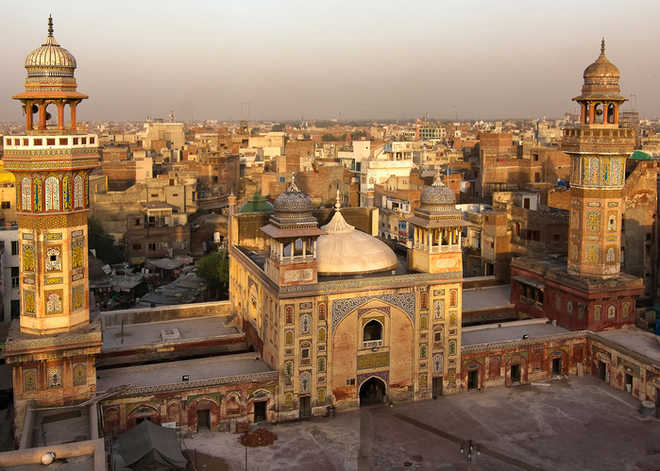
This side of Punjab has a lot of camels. I also observed rampant pigeon grooming for gambling. In Faisalabad (old Lyallpur), I was awestruck to see its sky blanketed by colourful kites. The city’s Gobind Pura, Nanak Pura and Harcharan Pura show its inseparable Sikh connection.

When we arrived at Lyallpur Khalsa College (now Municipal Degree College) on a late Friday afternoon, the college appeared to be closed. The security guard pointed us towards the principal who was just opening his car door.  One of our local companions hurriedly approached the principal. I will never forget the principal’s words: ‘It is their college, their property. They built it. Who am I to give them permission to tour it?’

Pakistani Punjabi has always been endearing to me, even though my friends and I often made it a butt of our jokes. That its speakers found my Punjabi interesting and original was a pleasant surprise.

Outside Lahore’s Defence Raya Golf and Country Club, I was introduced to Lt Gen Zahid Ali Akbar (retd). Although 88 years of age, he seemed fit enough to finish a marathon. ‘What a joy to speak real Punjabi with you. What they speak here isn’t Punjabi. Teach them some before you leave!’ he said, pointing to my hosts.

At the Punjab Club, Lahore’s colonial hangover is unmistakable. Its dress code and no-photo policy are non-negotiable. Thanks to an invitation from Riaz Ahmad Khan, retired chief justice of the Pakistan Supreme Court, and his wife, we were allowed to visit and eat there.

It was a remarkable journey. I have lived in England as a student and visited many European and Central American countries for business and leisure. I have seen more expansive physical beauty and natural diversity, awe-inspiring infrastructure and impeccable systems. However, never before have I seen such hearty hospitality or experienced an abundance of love that so contrasted with a country’s image abroad. No wonder that we frequently asked each other, ‘Are we in Pakistan?


Army’s ‘Operation Maa’ saves 50 Kashmiri youths

Army’s ‘Operation Maa’ saves 50 Kashmiri youths

Tribune News Service

Srinagar, November 4

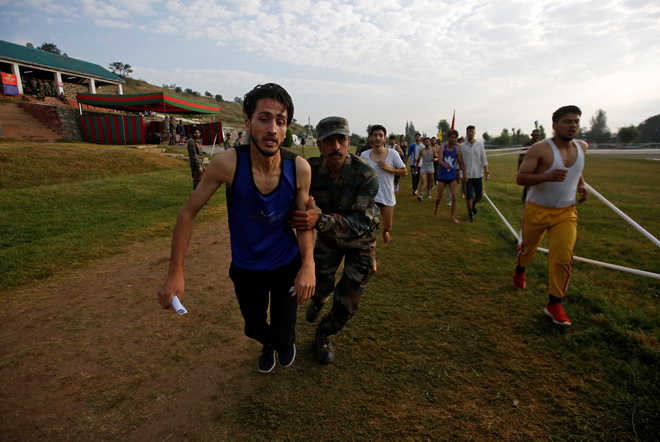
At a time when Pakistan and its proxies are making every effort to revive terrorism in Kashmir Valley, the Indian Army’s ‘Operation Maa’ has saved lives of about 50 Kashmiri youths who were radicalised and pushed towards militancy.

Senior Army officials, engaged in counter-insurgency operations, revealed that although the Rashtriya Riffles, police and para-military forces had launched sustained anti-insurgency operations, the ‘Operation Maa’, planned by Kashmir-based 15 Army Corps, had saved several lives, which was being appreciated by families of youths, mainly stone-throwers.

The operation, launched by the Army, on the directions of General Officer Commanding (GOC) of 15 Corps Lieutenant General Kanwal Jeet Singh Dhillon, undertook an exercise in the hunt for missing youths and approached their families.

“A Number of boys have rejoined their families. Some encounters have ended up with a hug between a mother and a son as part of the efforts to save lives of young Kashmiris,” said an Army officer.

“Operations have also been undertaken in situations where a local Kashmiri youth is accompanying foreign terrorists in the dead of the night. Many of my men have even risked their lives in separating a willing-to-surrender Kashmiri local terrorist from a foreigner so that he can be brought back to his family,” the Army commander said.

“The data compiled by the Army showed that 83 per cent of the youths joining various militant groups had a record of stone pelting. Seven per cent of the youths who join terrorism are killed within first 10 days of picking up arms, 9 per cent within one month, 17 per cent in three months, 36 per cent in six months and 64 per cent in the first one year itself,” the Army officer said.


How RCEP ‘deal’ tomorrow can hit India, or be a hit

The Regional Comprehensive Economic Partnership agreement, if it were to materialise, presents India an opportunity to seek integration into the global supply chains, but has generated fears across the industrial and agricultural spectrum. NZ’s dairy push is a concern, but elephant in room is China. The huge trade surplus will grow if it bounces products via other RCEP nations
Sandeep Dikshit in New Delhi

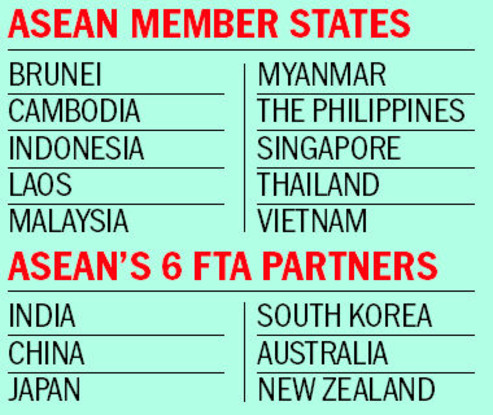
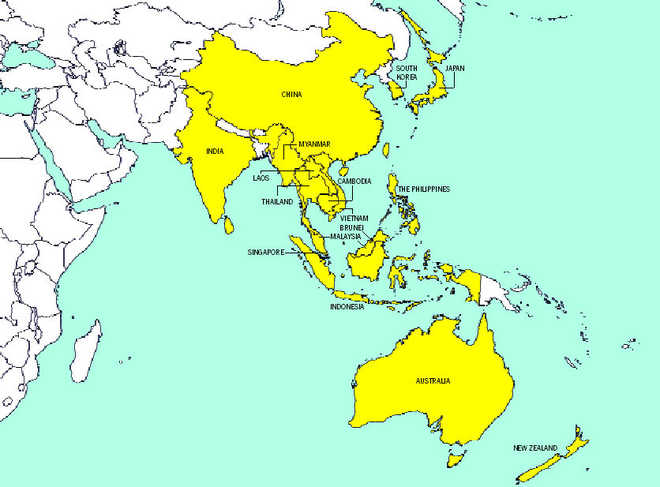
Tomorrow it will become clear whether India will sign its 11th, largest and most controversial free trade agreement (FTA) with a wide swath of 15 other countries from the Asia Pacific. If the entry of India in G-20 marked the delinking of Pakistan in the economic sphere, the Regional Comprehensive Economic Partnership (RCEP) agreement will be India’s doorway to the global neo-liberal troposphere, where it will share the same trading norms and space as China, Japan, Singapore, Australia and Malaysia, although there are laggards like Myanmar and Laos as well.


Also read:


But far from the smooth affair it was portended to be when Prime Minister Narendra Modi shared the stage with 10 ASEAN members in New Delhi last year, its signing has turned into a cliffhanger. The RCEP has become the first test of the tension between Modi’s domestic constituency and his projection outside of a more aggressive, risk-taking ‘New India’. An India that twice knocked Pakistan militarily on the knuckles has no reluctance about breaking bread with Russia and Ukraine; Iran and Israel cannot be expected to tuck in its tail on a mere trade agreement.

But PM Modi can ill-afford to overlook the growing foreboding about a new unknown once RCEP is signed. The fears of being taken unawares are accentuated by past experience. The State has rarely reduced the affected sector’s adjustment costs by informing it about the transition well in time. From Modi downwards, the top leaders cannot assuage the fears explicitly because the negotiations are secret. Though leaks have made it clear where the intrusions in India’s ecosphere will take place, the secretiveness enables fear mongers to project more widespread damage if India signs the RCEP.

At the same time, the threat to livelihood cannot remain an indefinite excuse to stave off integration with global supply chains, the de rigueur of the upper end of the economic world.

The dairy sector in India, where some of the fears lie, is both big and small. Besides single-animal-owning households, there are several dairy-to-builder conglomerates and well-appointed state-funded cooperatives that shelter behind the argument of threat to livelihood. Why is it that NDDB and state cooperatives from Verka to Mother Dairy fear getting swamped by similar farmer cooperatives from New Zealand? The government can manage dumping of milk from New Zealand at artificially low prices, which it may well do as it produces eight times above its national requirement. But if the government manages to get RCEP agree to delay the tariff reduction, the cooperatives will not have any excuse to get their act together.

The theory that India has problems with non-FTA countries gets a knocking when it comes to Japan and South Korea. Both are insisting on tougher norms that will affect India’s pharma industry and data localisation.

Several flags are being raised about the advantages gained by the other party in India’s previous FTAs, the one with ASEAN being a case in point. They overlook the advantage to the consumer from a better quality or cheaper product from abroad but also more crucially that the services component where India is at an advantage was added recently. And it awaits implementation because the Philippines hasn’t ratified the FTA in services as it fears direct competition from India. This tactic by Manila could open the way for India to adopt a similar recourse if its voice goes unheeded in its areas of advantage.

Japan and South Korea have led the charge against the easier movement of people. They are insisting on “Mode 3” type of migration, which means easier visa norms for commercial persons whereas India’s interest is served by “Mode 4 plus” that will benefit its IT personnel.

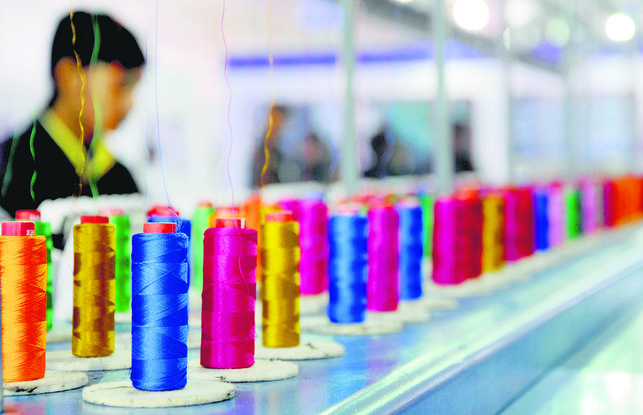
The Indian textile sector is also under threat from Southeast Asian nations like Vietnam.

WTO is on life support

The all-round American effort to undermine the World Trade Organisation has convinced New Delhi that the builder of the edifice is not interested in the structure anymore. As the stalemate in multilateral trading system persists, there can be no turning back from the criticality of FTAs in foreign trade policy.

This is also an opportunity for India to seek integration into the global supply chains, which course through the exporting powerhouses that form the RCEP. Its own industries too will reduce the transaction cost of negotiating multi-layered regulatory procedures in several countries.

But never were such fears generated when India signed 10 FTAs and six preferential trading arrangements (PTAs) in the past. This is because the elephant in the room is China. It already has a massive trade surplus with India which will grow if China bounces its products to India via the other RCEP countries.

The best case scenario for India while it works out a tilt in its favour in the services sector and ensures tight value addition norms to prevent China from masking its exports is delaying RCEP, just as its signing was put off the same time last year.

But is it possible to stay out of RCEP? India has both security and economic ties with most RCEP countries. Since India will continue to have the Indian Ocean’s largest navy, individual countries will happily deal with India on the security front. The Quad comprising India, Australia, Japan and US too will continue. But a big hole would have been blown in India’s argument that it is participating in the Quad for the economic development of Indo-Pacific region.

Is the opposition for real?

The Congress opposition is tactical and opportunistic, aimed at reaping the whirlwind of rural distress for political gain. Except for the Left, all shades of political opinion were complicit in giving wind to the RCEP sail. Negotiations for the India-ASEAN FTA, the forerunner of RCEP, began during Vajpayee’s government. They were finalised by UPA and expanded by the present dispensation.

Modi will have to countenance the erosion in rural support as he can ill-afford to send signals that he is averse to FTAs. He also risks the loss of political capital abroad if he pulls out of RCEP. After bestowing $1 billion for the Russian Far East, serenading Fortune 500 CEOs in the US and cutting corporate taxes, Modi’s predatory trade and investment instincts can ill-afford to turn vegetarian.



With J-K rejig, Centre can now declare any area ‘disturbed’

With J-K rejig, Centre can now declare any area ‘disturbed’

Imposing AFSPA: The Act is imposed in areas where armed forces are required to operate in aid to the civil authorities. It has been applicable to the erstwhile state of J&K since 1990. File photo

Tribune News Service

New Delhi, November 1

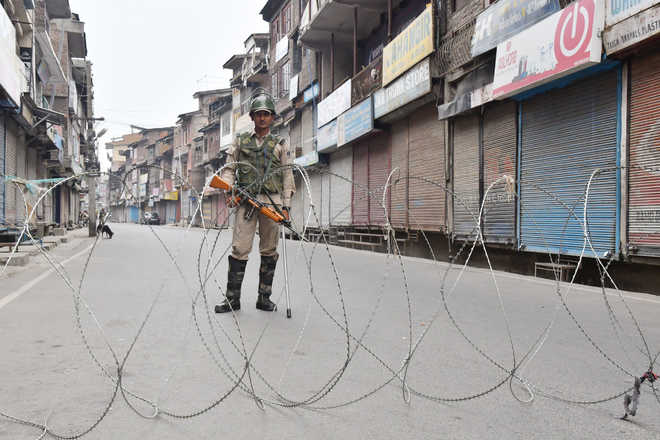
With the two union territories coming into existence, the Centre has assumed the authority to declare any area in Jammu & Kashmir and Ladakh as “disturbed” under the controversial AFSPA, which gives sweeping powers to security forces to act against any suspect.

In the erstwhile state of J&K, the state government through district magistrates was empowered to declare a particular district or police station area “disturbed” under the AFSPA, in which security forces can detain, search and even fire any suspect without warrant and the law gives immunity to the soldiers for such acts.

According to a government notification, the administration of the Armed Forces (Jammu and Kashmir) Special Powers Act, 1990 (21 of 1990) in both UTs is now vested with the Department of Jammu, Kashmir and Ladakh Affairs under the Ministry of Home Affairs.

AFSPA is imposed in areas where armed forces are required to operate in aid to the civil authorities. For the law to become valid, an area needs to be declared “disturbed” either by the Central or the state government under the Act.

AFSPA has been applicable to the erstwhile state since 1990. However, Leh and Kargil areas under the new UT of Ladakh were never declared as “disturbed”.

In the new administrative set-up, the MHA would be responsible for the police and law and order in both UTs, but through their respective Lieutenant Governors.

The nomenclature of the MHA wing, Department of Jammu and Kashmir Affairs has now been changed to Department of Jammu, Kashmir and Ladakh Affairs.

The notification said the Department of Jammu, Kashmir and Ladakh Affairs will be responsible for all matters relating to both UTs, including counter-terrorism within J-K and coordination with the Ministry of Defence as regards manning and managing the Line of Control between India and Pakistan, but excluding those with which the Ministry of External Affairs is concerned.


Google takes down mobile app ‘2020 Sikh Referendum’

Google takes down mobile app ‘2020 Sikh Referendum’ at CM’s requestThreat neutralised Data of users registered was also linked and stored on the web server of the website, created and handled by Sikhs For Justice (SFJ), an association banned by the Indian govt

HT Correspondent

letterschd@hindustantimes.com

Chandigarh : Conceding Punjab chief minister Amarinder Singh’s demand, Google has removed the secessionist, anti-India mobile application, “2020 Sikh Referendum,” from its Play Store with immediate effect.

A spokesperson of the chief minister’s office said the app was no longer available on Google Play Store for mobile phone users in India to download.

“Sikhs for Justice”, a group based abroad and banned by India, has been lobbying for Punjab’s secession through its “2020 Sikh Referendum” campaign.

The CM, who had also urged the central government to persuade Google on the matter, had asked the state police chief to coordinate with central security agencies to tackle the threat resulting from the launch of the app. Punjab CM had accused Pakistan’s ISI of being involved in the campaign.

During an analysis of the application and the website in the Digital Investigation, Training and Analysis Centre (DITAC) Lab, it was found that the data of voters registered through the app was also linked and stored in the server of the website, created and handled by Sikhs For Justice

Based on these findings, the cyber crime centre of the Bureau of Investigation, Punjab, moved to get the app removed from Google Play Store and the website blocked in India.

On November 8, a notice under Section 79 (3) B of the Information Technology Act was sent to the Google legal cell for the immediate removal of the app, created by ‘ICETECH’.

After approval from the additional chief secretary, home, a request was sent to the cyber law division, department of electronics and information and technology, Government of India, for blocking the application.

On November 9, inspector general, crime, Nageshwar Rao, and the state cyber-cum-DITAC Lab in-charge, raised the issue with the legal cell of Google India.

The state government said Google India was then convinced that its platform was abused for committing “illegal and anti-national activities”.

There was no response from Google till press time.


Jammu-Srinagar NH closed for 3rd day, rain hampers road clearing ops

JRestoration work on Heavy rain since Thursday in Ramban hampers operations; MeT predicts dry weather in parts of J&K from today

HT Correspondents

letterschd@hindustantimes.com

Jammu/Srinagar : The Jammu-Srinagar national highway remained closed for the third day on Saturday as heavy rains hampered the operation to clear the debris brought on the arterial road by a massive landslide in Ramban district, traffic department officials said.

Senior superintendent of police (SSP Traffic) JS Johar said, “It is raining heavily in Ramban district and as a result restoration operations are being affected but men and machinery are working and the debris will be cleared soon.”

A massive landslide in Digdol had blocked the highway on Thursday at around 9pm, forcing closure of the road. It was the fourth landslide since November 7 in the area.

Road clearance operation was launched immediately but intermittent rains disrupted the work, especially since Friday night, the officials said, adding that shooting stones from the hillocks overlooking the highway were also reported from several places.

A local from Ramban said rains also triggered shooting stones in Marog and Panthial areas on Saturday morning.

The SSP said around 2,500 vehicles, including trucks carrying essential commodities to Kashmir, are stranded at various place on the highway. Approximately 1,500 trucks are stranded between Nashri and Banihal in Ramban district.

The National Highways Authority of India (NHAI) has been trying to clear the debris but heavy rainfall since Thursday has been hampering the restoration work.

Around 6,000 trucks, most of them carrying fruits, are also stranded on the highway from Kashmir side.

Superintendent of police (SP traffic) Muzaffar Shah said,“It is raining heavily in Panthihal and shooting stones are frequent in the area. We are putting efforts to clear the stranded vehicles as there is a huge backlog of fruit trucks.”

The Mughal road, which connects the border districts of Poonch and Rajouri in Jammu region with Shopian district in south Kashmir, continued to remain closed for the 11th consecutive day on Saturday. The road, which usually remains closed during the winter months, was closed on November 6 after high altitude areas including Pir Ki Gali experienced first major snowfall of the season.

Pir Ki Gali and adjoining areas along the Mughal Road witnessed snowfall over the past couple of days, officials said, adding a decision to reopen the road will be taken once the weather improves.

Officials at Srinagar’s meteorological centre said light rains were recorded in Kokernag, Kupwara, Pahalgam, Qazigund, Banihal and Jammu. South Kashmir’s Kokernag recorded 2.4mm rainfall since Saturday morning and 4.2mm rain was witnessed in Qazigund. “The mercury went below zero to minus 1°C during the night in ski resort of Gulmarg, minus 2.1°C in Leh and minus 3.1°C degrees in Kargil,” a MeT official said.

The MeT department has predicted dry weather in most parts of Jammu and Kashmir from Sunday.


Army’s connect with Kartarpur Sahib

Army’s connect with Kartarpur Sahib

Brig Jagbir Singh Grewal (retd) 

The sight of multitudes of devotees with hands folded in reverence, patiently awaiting their turn at the Dhussi Bundh at Dera Baba Nanak to pay obeisance from a distance to the holy shrine of Gurdwara Kartarpur Sahib used to inspire awe. Even in 1999, during Operation Parakram in the aftermath of Pakistan’s Kargil misadventure, when we were on the verge of the outbreak of hostilities, and manning our defences, the presence of undeterred worshippers remained.

Dera Baba Nanak was my sector of responsibility then. Moving along the International Border fencing, irrespective of our faith, we would bow before the shrine, located just across the Ravi. It evoked a feeling of onerous responsibility on us, of defending the sector at all costs, and one day secure the enclave that lay ahead of us, up to Gurdwara Kartarpur Sahib. The troops’ resolve was further strengthened when our patrol moving along the border fencing was told by Pakistani personnel on their side that though there was a lot of development in India, ‘hamare paas Kartarpur Sahib hai’. The milky white domes and spires of Gurdwara Sahib evoked a benign assurance that all was well and that our prayers would be answered.

It is amazing that the Army’s deployment along the International Border at Dera Baba Nanak always has a profound effect on the psyche of the jawans, which remains unprecedented, and perhaps a rare phenomenon in any other defended sector. This was realised when one day, the overwhelmed Commanding Officer of 8 Sikh Light Infantry Battalion informed me in good humour that the company deployed along Gurdwara Baba Budha at Ramdas had turned vegetarian and shunned the consumption of liquor, and that they visited the adjoining gurdwara whenever they had the time and opportunity. No wonder that despite the presence of a large number of pilgrims in the ancient town of Dera Baba Nanak, the Army personnel were never considered outsiders and encroachers on their amenities, but were gratefully accepted by the local hospitable people as equal partners in their ventures for managing the safety and security of the town and its precincts.

The prayers of the then Dera Baba Nanak railway station master, too, have been answered. He would nostalgically speak of the bygone imperial era and lament that the spacious, well-furnished first-class waiting room of the railway station, barely 2 km from the border, was the least used amenity. There being virtually no passengers at the terminal station, the considerate railway station master offered the waiting room to us as a suitable hall for our use, though we could never avail of his offer. Now, with the railway station being upgraded, it has brought the sheen back to the railway station as well.


Two Iranian varsities want to set up Chair in Guru Nanak’s name

Two Iranian varsities want to set up Chair in Guru Nanak’s name

A delegation from Iran meets Akal Takht officiating Jathedar Giani Harpreet Singh in Amritsar on Monday. Photo: Vishal Kumar

Paul

Tribune News Service

Amritsar, November 11

On the eve of the 550th Gurpurb, two Iran-based universities have desired to establish academic Chairs to conduct research on the life and teachings of the first Sikh Guru.

Another proposal from their side was to initiate the Sikh religious study programme in collaboration with the Iran-based universities.

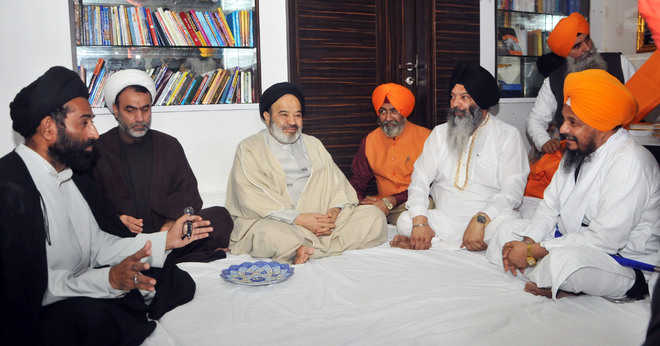
University of Religion president Sayyid Abulhasan Navab and a representative of Al-Mustafa International University on Monday held a discussion with Akal Takht officiating Jathedar Giani Harpreet Singh to work on the modalities of installing the Chairs.

Chief Minister Capt Amarinder Singh had also announced Chairs in Guru Nanak’s name to be set up in 11 universities, of which seven are in Punjab, three across the country and one (University of Religion) in Iran.

Giani Harpreet Singh said to arrange literature and reference material, they had tied up with the Punjabi University, Patiala.

“Besides this, the SGPC will be directed to assist the Iranian scholars in collecting the information on the life, philosophy and vision of Guru Nanak. It was an honour for the Sikh community that our Guru’s message was being spread on a global platform by installing a dedicated Chair,” he added.

Syed Afroz Nazvis, an Iranian delegate, said besides setting up Chairs by the universities under the patronage of the Government of Islamic Republic of Iran, a detailed discussion was also done with Akal Takht Jathedar over a religious study programme proposed to understand the concept of Sikhism. “We proposed that there should be a Sikh religious study programme for Indian and Iranian intellectuals. Once, the MoU in this regard is finalised, the proposal will be submitted to the Iran government and subsequently, to the Indian government for getting the final nod,” he said.

Meanwhile, Pervinder Singh Chandhok, a Sikh citizen of Iran, said though the Sikhs comprise a miniscule population of the country, the government had accorded them all rights to observe the Gurpurbs and other religious ethics. He said the Iran sangat had initiated 600 ‘akhand path’ non-stop to mark the 550th birth anniversary of Guru Nanak, the bhog of which would be performed on Tuesday.

“I can say that the ‘shaan’ (glory) of turban is there in Iran. There are around 60 Sikh families living in Iran. They visit two gurdwaras located in Tehran and Zahran. We are free to maintain the ‘maryada’ of Sikhism and the authorities never interfere in our religious occasions,” he said.