



Sanjha Morcha

Drones spotted in Punjab’s Hussainiwala sector by BSF

Drones spotted in Punjab's Hussainiwala sector by BSF

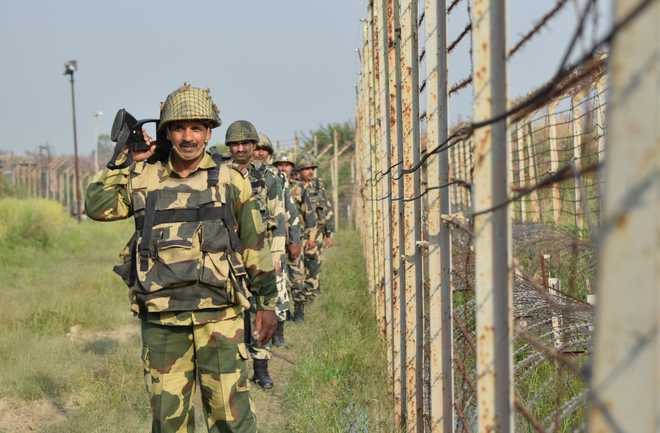
Photo for representation only.

Anirudh Gupta
Ferozepur, October 8

The BSF on Tuesday sighted two high-flying drones along Punjab’s Hussainiwala sector, days after police recovered Pakistani drones used to airdrop arms and ammunition in border areas of the state.

The security forces went into a tizzy as the BSF troops spotted at least five sorties by drones originating from Pakistani side along the Hussaniwala border.

The development comes following confirmed reports about eight earlier sorties by drones used by Pakistan-based terror groups to airdrop almost 80 kg of sophisticated arms and ammunition to foment trouble in Punjab.

As per information, the BSF troops posted here spotted high-flying drones five times between 10 pm to 10:40 pm last night.

Sources said that while four times, the drone was spotted on Pakistani side, however, once the BSF troops belonging to 136 battalion sighted the drone venturing almost a kilometre inside the Indian territory near border outpost HK Tower close to Hussainiwala, around nine kilometres from district headquarters.

Later on, the BSF troops spotted the drone going back towards the Pakistani side but midway its light and sound went off and it could not be tracked further and vanished within no time.

Besides the BOP HK Tower, the BSF troops spotted a drone near border outpost Basti Ram Lal also at 12:25 am which was on Pakistani side.

Later, the BSF troops with assistance of Punjab Police conducted a search operation in the entire area, however, nothing suspicious was found.

“Ferozepur is well guarded by the BSF, besides there is an Army formation. The Pakistani agencies might be conducting aerial surveillance or they might be up to some mischief,” said an official, on condition of anonymity.

Sources said the drone-like objects were flying high with light appearing from them.

“Had they come to drop something, they would have been flying low and moreover, there would have been buzzing sound due to the bearing load,” said another official, while adding that nothing can be said or denied at the moment.

“The information has been shared with concerned authorities and an alert has been sounded,” he said.

On September 24, the BSF/STF had seized huge quantity of sophisticated arms, including five AK-47 rifles, ten magazines, 200 rounds, 1 Austria-made Glock pistol, 22 magazines and 20 rounds, from Mamdot in this area the source of which still remains unknown.

Sources said that following abrogation of Article 370 in Kashmir, the Pakistan’s spy agency Inter-Services Intelligence (ISI) was pushing the Pakistan-based Khalistani terrorists to carry out an attack of 26/11 magnitude in religious places in Punjab.

On September 22, the police had busted a terrorist module being run with the active support of terrorist groups from Pakistan and Germany and had recovered huge cache of arms, including five AK-47 rifles, four Chinese-made .30 bore pistols, nine hand grenades, five satellite phones, which the police claimed had been dropped by a drone.

On September 12, another consignment was seized from a truck at Lakhanpur (Kathua) which included four AK-56 rifles, two AK-47 rifles besides over 10,000 bullets.

Sources said the troops have been asked to keep a hawk’s eye on all such developments and air intrusions.

Meanwhile, the BSF has also started sensitising the residents along the border to immediately inform the police or BSF authorities if they spot anything unusual near the zero line.


Pakistan will only release Kulbhushan Jadhav if India ‘admits he was a spy’

Faced with orders from the ICJ to review Jadhav’s case in the light of Pakistan breaching the Vienna Convention, Islamabad plans to use third-country diplomatic assistance to explore the possibility of sending him home in return for an official admission from New Delhi that he was engaged in espionage, sources close to the Pakistan government have told Firstpost.

Jadhav, an Islamabad-based Pakistani official told Firstpost, is being held in an Inter-Services Intelligence-run facility in Rawalpindi, rather than a prison, even though he is awaiting execution.

Islamabad, one senior Pakistani official said, hopes the offer will help bring about wider India-Pakistan talks, derailed since 2018. “The army understands that Pakistan’s economy cannot be subjected to the risk of another military crisis with India”, the official said. “They see talks as a way to finding some tactical breathing space.”
The deal Pakistan hopes to make builds on a secret diplomatic offer earlier made to New Delhi. Documents submitted to the International Court of Justice show that Pakistan had first offered to extradite Jadhav in a letter dated 30 October, 2017, written soon after India moved the International Court of Justice against his conviction.

“Without prejudice to the proceedings so far”, the letter stated, “the Government of Pakistan is prepared to consider any request for extradition that the Government of India may make in the event that Commander Jadhav is considered to be a criminal under the law of India.”

Put in plain language, the letter constituted an offer to return Jadhav to India, if New Delhi accepted his complicity in terrorism against Pakistan and was prepared to subject him to a criminal-law process.

New Delhi had, however, rejected Islamabad’s offer, seeing it as a ruse to tarnish high officials in the military and intelligence services. Islamabad’s supplementary First Information Report filed on 6 September, 2017 against Jadhav names National Security Advisor Ajit Doval, former naval chief Suresh Mehta, and former Research and Analysis Wing chief Alok Joshi as being among 15 “accomplices and facilitators”.

In a letter dated 11 December, 2017, New Delhi responded by describing Pakistan’s extradition offer as “attempted propaganda”, adding that it had no reason to believe Jadhav had committed any crime for which he could be tried.

Pakistan had made consular access to the incarcerated naval officer contingent on Indian cooperation in investigating the case, seeking statements of the officers, as well as Jadhav’s cellphone records and bank statements.

New Delhi, two Indian official sources said, would still treat any release offer with caution, if it involved an official admission that the country extended support to insurgent groups in Balochistan.
The government has so far declined to discuss several case-related issues—among them, precisely when Jadhav retired from naval service—saying it has no reason to do so until Islamabad provides consular access, and documentation related to the officer’s trial.

Islamabad’s extradition offer, interestingly, was made after the still-unexplained disappearance of former Inter-Services Intelligence Directorate officer Lieutenant-Colonel Mohammed Habib Zahir, who disappeared from Lumbini, in Nepal, in April.

The Pakistan government believes Zahir, who travelled to Nepal lured by an $8,500-per-month offer from Strategic Solutions Consultancy, a non-existent firm, had been kidnapped by Indian intelligence.

From the outset, the Pakistan army’s handling of the Jadhav case has been enmeshed with the country’s civilian-military power struggle. The public naming of high Indian officials — whose names were, notably, absent from a televised custodial confession made by Jadhav—appeared intended to derail the ongoing dialogue between the then Pakistan prime minister Nawaz Sharif and Prime Minister Narendra Modi.

In December 2016, Doval and his Pakistani counterpart, Lieutenant-General Nasser Khan Janjua, had met at a Bangkok hotel to discuss normalisation measures.

The discussions were followed by Prime Minister Modi making an unscheduled visit to Lahore, to greet Sharif on the occasion of his granddaughter’s wedding.

Early in 2018, when Jaish-e-Mohammad terrorists attacked the Indian Air Force base in Pathankot, Sharif had acknowledged the group’s responsibility and ordered officials from the country’s investigation and intelligence services to visit India to gather evidence.

Sharif’s efforts to punish the Jaish spiralled, in coming months, into a frontal break with army chief General Qamar Javed Bajwa.


6 labourers killed in J&K on day of EU group’s visit

6 labourers killed in Valley on day of EU group’s visitTerror strike All victims from West Bengal; seventh such attack on migrant workers since abrogation of Art 370 on Aug 5; 12 shot dead in less than 3 weeks

Mir Ehsan and Smriti Kak Ramachandran

letters@hindustantimes.com

Srinagar : Militants gunned down six migrant labourers on Tuesday in Jammu & Kashmir’s (J&K) Kulgam district, the fifth attack in two weeks in which people from outside the state have been targeted. The incident came on a day a group of 23 European lawmakers met senior army and administration officials in the Valley, stoking violent protests in several parts of the region.

Police sources said that the militants came to Katrasoo village of Kulgam, took out the masons and carpenters from outside the state working there and opened fire at them, killing five of them on the spot. The sixth succumbed to his injuries while being taken to a hospital.

“Five bullet-ridden bodies were discovered from the room where these labourers were staying,” said police officials.

Five of those killed were identified as Sheikh Kamrudin, Sheikh M Rafiq, Sheikh Murnsulin, Sheikh Nizam-ud Din and Mohd Rafiq Sheikh. The identity of the sixth victim is yet to be ascertained.

All the victims were from Murshidabad district in West Bengal. Police said a high alert had been sounded in the area.

In the past two weeks, militants have killed four truck drivers, a trader from Punjab, and a migrant labourer from Rajasthan. The total number of victims from outside the state in this period now stands at 12.

Tens of thousands of migrant labourers had fled the Valley in the weeks after the nullification of Article 370, which bestowed special status on J&K, on August 5. But experts estimate that many more remain at work in Kashmir and are becoming the target of militants.

Earlier in the day, the European lawmakers — the first international group to visit Kashmir since August 5 — went to the army headquarters in Srinagar, where they were briefed by chief secretary BVR Subrahmanyam and police chief Dilbag Singh.

Residents voiced anger that the federal government was trying to show the delegation Kashmir was returning to normal, even as most mobile phone and Internet connections remain severed and daily life disrupted by a security clamp-down.

The old city of Srinagar, which houses roughly a third of the its two million population, saw a number of clashes as young men and women leapt over barbed wires to hurl stones at the police, which retaliated with tear gas shells and pellets.

A senior official said at least 30 incidents of stone pelting and protests were reported from different parts of Kashmir. Roads were deserted and street vendors were missing despite restrictions having been relaxed in most parts of the region.

Meanwhile, the United Nations also expressed concern about the condition of Kashmiris and urged India to fully restore their rights. “We are extremely concerned that the population In Kashmir continues to be deprived of a wide range of human rights and we urge the Indian authorities to unlock the situation and fully restore the rights that are currently being denied,” said Rupert Colville, spokesperson for the UN High Commissioner for Human Rights

Several Opposition politicians in J&K alleged that they weren’t allowed to meet the team. “We did attempt to approach the authorities for a meeting with EU delegation. Unfortunately there was no response. The government didn’t respond to our request,’’ said Hasnain Masoodi, the National Conference MP from Anantnag.


8 terrorists killed in PoK strikes: OfficialsCasualty

18 terrorists killed in PoK strikes: OfficialsCasualty Officials say terror launch pads housing JeM, other jihadists destroyed by army
The site of Indian Army’s assault on Pakistani terror camps. by arrangement

Shishir Gupta

letters@hindustantimes.com

New Delhi : Officials in Indian security agencies that have assessed the impact of the Indian Army’s artillery assault on terror launch pads in Neelum Valley and three other places in Pakistan Occupied Kashmir (PoK), said on condition of anonymity that at least 18 terrorists were killed along with 16 Pak Army personnel on October 19 and 20. The army hasn’t confirmed the number of dead. Hindustan Times couldn’t independently authenticate the numbers.

The officials added that all the terror launch pads housing Jaish-e-Mohammed and other jihadists were destroyed in the pin-point artillery firing by the Indian army – retaliatory action to indiscriminate and unprovoked Pakistani firing along the Line of Control.

On Sunday, Army Chief General Bipin Rawat briefed Defence Minister Rajnath Singh twice about the Indian Army fire assault on PoK launch pads with the latter congratulating the former on the resolute action, the officials said. Asking General Rawat to go public on the artillery firing, Rajnath Singh said that while no terror launch pads should be spared, care should be taken to ensure that the innocent civilian population is not targeted.

Defence ministry officials said on condition of anonymity that ammunition and ration depots of the Pakistani Army were also destroyed by 155 mm guns using precision long range ammunition. While four launch pads in Neelum Valley were hit, launch pads in Jura, Athamuqam and Kundalshahi were also decimated in the fire onslaught on wee hours of October 20, they added. The Indian response came after the Pakistani Army targeted Indian positions and civil localities in Karnah sector killing two Indian soldiers and one civilian on Saturday night.

On Sunday, the army mounted the artillery attack in retaliation to ceasefire violations meant to assist infiltrators, inflicting heavy terrorist casualties. The counter-offensive measures come weeks after multiple intelligence agencies warned the government that at least 60 terrorists have infiltrated into Jammu and Kashmir recently and another 500 are waiting to infiltrate, according to the army.

Ground intelligence and communication intercepts from PoK suggests that the jihadists and their army handlers were taken by surprise by the pin-point firing and the fact that the Indian Army knew about their locations. “Intelligence about 18 terrorists and 16 army personnel killed have been corroborated on ground with hard intelligence. Many have been injured,” said a senior Indian Army official who asked not to be named.

“By taking out the launch pads near LoC in PoK, we have sent a message that retaliation will come if any infiltration attempt is made in Jammu and Kashmir,” said a senior official in a security agency.


Need for Joint Services Act taken up at Army Commanders’ meet

Discussions for the creation of a Joint Services Act by the government featured in the Army Commanders’ conference along with talks on training in the fields of space, artificial intelligence and military education, keeping in mind modern warfare.

Need for Joint Services Act taken up at Army Commanders' meet

NEW DELHI: The need for a Joint Services Act to integrate the three armed forces, ahead of the creation of the post of a Chief of Defence Staff (CDS), was taken up during the ongoing Army Commanders’ Conference in New Delhi on Wednesday.

Officials said discussions at the conference also featured around rollout of training for Army personnel in the fields of space, artificial intelligence and military education, keeping in mind the changing spectrums of war and conflicts.

Read more at:
//economictimes.indiatimes.com/articleshow/71626206.cms?from=mdr&utm_source=contentofinterest&utm_medium=text&utm_campaign=cppst


PASSAGE TO KARTARPUR 550TH BIRTH ANNIVERSARY

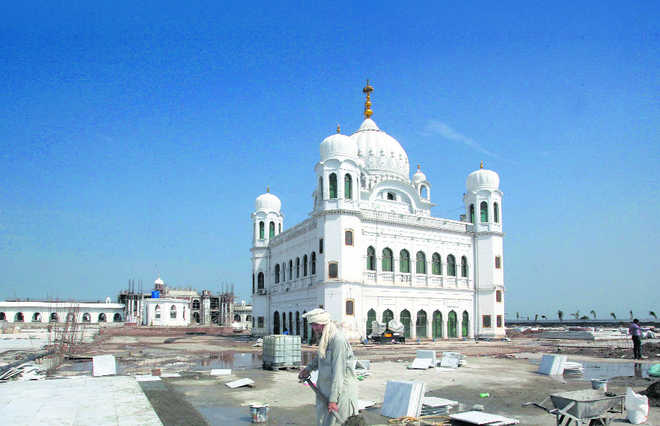
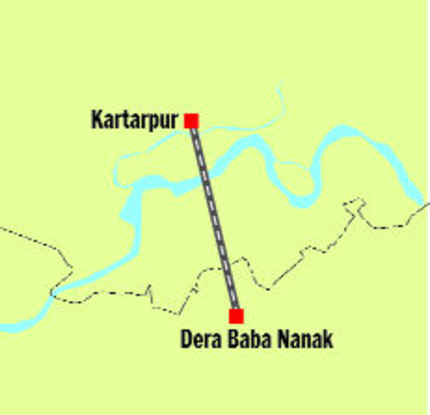
Considered a bridge too far since Independence and despite the innumerable odds, the Kartarpur corridor — a 4.6-km border crossing to Gurdwara Darbar Sahib in Pakistan — would be thrown open to public on November 9

Work underway at the site of Gurdwara Darbar Sahib in Kartarpur (Pakistan), which will be opened next month for pilgrims from India. 

HOLIEST OF SHRINES

  • Located on the banks of the Ravi and originally known as Gurdwara Darbar Sahib, Kartarpur Sahib gurdwara in Pakistan’s Punjab province is among the holiest shrines for the Sikhs
  • The gurdwara was built to commemorate the site where Guru Nanak Dev, the founder of Sikh religion, settled after his missionary work and spent 18 years until his death in 1539
  • Later, when the shrine was repeatedly ravaged by floods, the Maharaja of Patiala, Bhupinder Singh, the grandfather of CM Capt Amarinder Singh, got it reconstructed at a cost of Rs 1.35 lakh in 1920
  • The shrine was closed to people coming from across the border after Partition in 1947
  • It was opened to pilgrims after repairs and restoration in 1999, and Sikh jathas have been visiting the shrine regularly since

Also Read


What’s Unique about Integrated Check Post

  • Land Ports Authority of India, tasked with construction of Integrated Check Post, has agreed to a proposal by local MLA Sukhjinder Singh Randhawa to depict Guru Nanak Dev’s teachings and Sikh history through murals
  • The idea to have a ‘Darshani Deodi’ near the ICP has also found favour
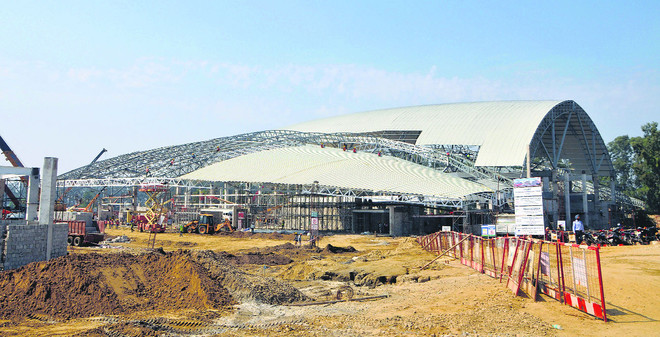
  • Immigration, customs and security checks will be done in the ICP
  • Paintings revealing history and culture of towns located on the banks of the Ravi, including Chamba, Basholi, Sialkot, Kalanaur and Ajnala, will also be hung
  • ICP, a multi-storeyed monolith when completed, ‘will act as an epitome of faith, sacrifice, and divinity’. Final inspection of the airport-like passenger terminal with over 50 immigration counters will be held on October 31
  • There will also be paintings portraying Akbar’s coronation in Kalanaur, Greek invaders crossing the Ravi, Shiv Temple in Kalanaur, Akbar making Lahore his capital, founding of Amritsar by Guru Ramdas, rise of Maharaja Ranjit Singh, declaration of Pooran Swaraj and Jawaharlal Nehru unfurling the ‘Tiranga’ on the banks of the Ravi in December 1929


2 IAF officers face court-martial, 4 others administrative action for shooting down of Mi-17 chopper

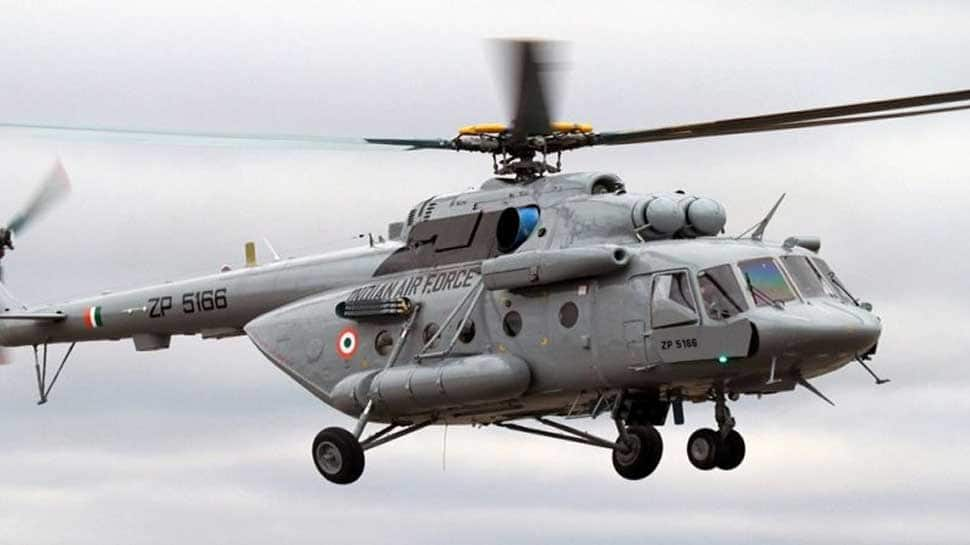
Two Indian Air Force (IAF) officers will face court-martial for the Mi-17 chopper crash in which six of its personnel were killed due to friendly fire by own missile system on February 27 over Srinagar. As many as four other officers will also face administrative action in the case which includes two Air Commodores (equivalent to Army Brigadiers) and two Flight Lieutenants (Captain equivalents in Army) for their respective roles in the entire case. “Two officers including a Group Captain and a Wing Commander would be tried by a court-martial for their lapses in the case due to which six IAF personnel were killed in friendly fire,” defence sources told news agency ANI. On the morning of February 27, when Pakistan counter-attacked in response to the Balakot airstrike, an IAF Mi-17 chopper crashed over Budgam area near Srinagar killing all six of its occupants. It was revealed that the chopper was hit by its own air defence system SPYDER deployed in Srinagar. The chopper of the Srinagar-based 154 Helicopter Unit crashed within 10 minutes of taking off even as a dogfight raged over 100 kilometres away between intruding Pakistani jets and the IAF, in which Wing Commander Abhinandan Varthaman was also involved. Six IAF personnel onboard and a civilian on the ground had lost their lives in the crash. Soon after taking over, newly-appointed IAF chief RKS Bhadauria had stated that the Mi-17 chopper crash on February 27 was a “big mistake” on part of the Air Force. Earlier, Bhadauria had said, “Court of Inquiry has completed and it was our mistake as our missile had hit our own chopper.” The fateful Mi-17 helicopter was shot down by an Indian missile when Indian air defences were on high alert following the February 26 Balakot airstrike that targetted a terrorist camp in Pakistan. The helicopter crashed near Budgam, killing all six Indian Air Force personnel on board. The helicopter was flown by squadron leader Siddharth Vashisht with other members squadron leader Ninad Mandvgane, Kumar Pandey, sergeant Vikrant Sehrawat, corporals Deepak Pandey and Pankaj Kumar.

idrw.org .Read more at India No 1 Defence News Website http://idrw.org/2-iaf-officers-face-court-martial-4-others-administrative-action-for-shooting-down-of-mi-17-chopper/ .


Pakistan’s Khan blasts media ‘double standard’ over Hong Kong protests

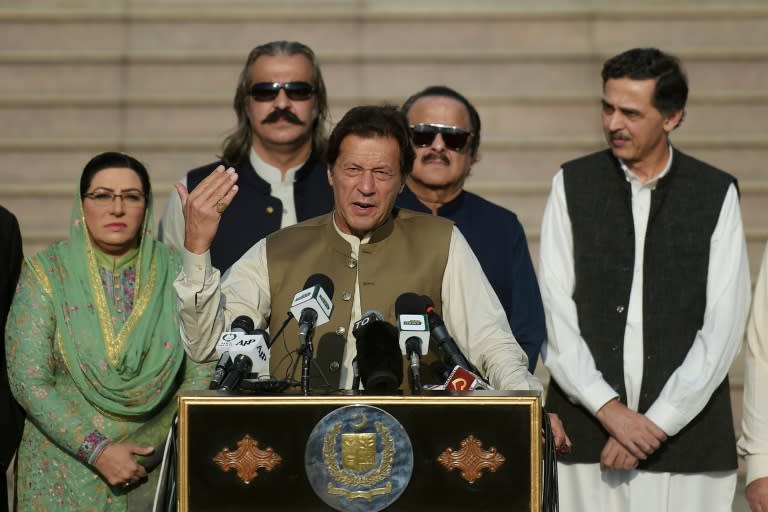
Pakistan's Prime Minister Imran Khan told a rally in Islamabad that 'the story of barbarism (in Kashmir) hardly gets reported in international media' (AFP Photo/Aamir QURESHI)

Pakistan’s Prime Minister Imran Khan told a rally in Islamabad that ‘the story of barbarism (in Kashmir) hardly gets reported in international media’

Pakistan’s Prime Minister Imran Khan told a rally in Islamabad that ‘the story of barbarism (in Kashmir) hardly gets reported in international media’ (AFP Photo/Aamir QURESHI)

Pakistan’s Prime Minister Imran Khan accused international media Friday of a “double standard”, saying news outlets give more prominence to the ongoing protests in Hong Kong than to the situation in disputed Kashmir.

Khan, who returned this week from a trip to Beijing, also told a crowd of roughly 300 people at a rally in Islamabad that Hong Kong “is a part of China, but this (Kashmir) is a disputed territory”.

“The story of barbarism (in Kashmir) hardly gets reported in international media,” Khan said.

“So I want to put this double standard in front of the world.”

Hong Kong has been battered by 18 consecutive weekends of unrest, fanned by widespread public anger over Chinese rule and the police response to protests.

While for more than two months now Indian-held Kashmir has been under a security lockdown after New Delhi scrapped the region’s semi-autonomous status.

The move has angered nuclear arch-rival Pakistan, which also administers part of the territory and, like India, claims it in full.

Khan appeared to minimise the impact of the Hong Kong protests.

“As far as I know, till now only a few people have been injured, maybe two or three people have been killed due to accidents” in the strife-torn city, he said.

But in Kashmir, he said, “eight million” people were living under curfew, while “100,000” have been killed in the past three decades.

Hundreds have been wounded in the four months of clashes in Hong Kong. One death has been linked to the unrest, when a demonstrator protesting on the side of a building fell during a botched rescue attempt.

Tens of thousands of people are believed to have been killed since the Kashmir insurgency erupted in the 1980s. New Delhi puts the toll at 47,000, while rights groups hover around 70,000.

The curfew is no longer in place there, though tens of thousands of extra security forces are still in place, some restrictions on movement remain and communications are still largely blacked out.

Khan, whose government has been criticised for shrinking press freedoms in recent months, also expressed his frustration with the global community, which has historically stayed out of Kashmir.

“I regret that the world only sees that (India) is a country with one billion (people), so they can trade and make money from them, and money is more important for these countries then humans,” he said.

Pakistan calls China, which has invested billions in the country, its “all-weather friend”.

Chinese state media has repeatedly warned foreign firms that voicing support for Hong Kong protesters could cost them access to China’s market of 1.4 billion people, with the NBA the latest to be targeted.

China has also defied escalating global criticism over its treatment of Muslims in Xinjiang province, where rights groups say one million people have been put in re-education camps.

Pakistan, which borders Xinjiang, has shrugged at the accusations. “Frankly, I don’t know much about that,” Khan told the Financial Times in March.

burs-zz-st/ind


Coffee Table Book on Rezang La Battle by Col NN Bhtia

Coffee Table Book on Rezang La Battle likely to be released on 18 Nov 2019 on the Rezang La Day. Foreword written by Brig Jatar, senior most living veteran who was deployed ay Mugger Hill as OIC B & D Coys on thay fateful night.

About The Author


Col NN Bhatia, popularly known as Nini Bhatia in the army was commissioned in 13 Kumaon (Rezang La) in mid 1963 and retired in Sept 1995 after 32 years of distinguished service. He is a diehard Kumaoni & written four books-Kumaoni Nostalgia, Industrial & Infrastructure Security in two volumes & biography of legendary Kumaoni mountaineer Col Narinder Kumar ‘Bull’ of the international fame-‘Soldier Mountaineer’. He is prolific writer & has been columnist with ‘Lahore Times’ & ‘Turkey Tribune’. He regularly contributes articles on matters military, national, industrial and infrastructure security and is a free lance industrial security consultant of national repute. He is deeply involved for the repatriation of 54 Indian prisoners of war (POWs) languishing in the Pakistani jails since 1971 war and welfare of retired soldiers in distress, ‘Veer Naris’ and their families. He can be contacted on narindrabhatia@hotmail.com and 9818044762.

About the Book
13 Kumaon became the first pure Ahir Battalion of the Kumaon Regiment prior to the 1962 Sino-Indian War. As there was no other Battalion with 100% Ahir composition, there were misgivings in some quarters. However, these were soon laid to rest when the Battalion faced its baptism of fire in Chushul in the 1962 Sino-Indian war and covered itself with glory. The gallant men of C Company of the Battalion under their redoubtable Company Commander, Late Major Shaitan Singh, PVC put up a fight at Rezang La, the like of which was never fought by any Unit in the Indian Army in its entire history and the nearest example perhaps could be ‘The Battle of Saragarhi’- both depicting bitterest irony of life that the greatest acts of the chivalry, bravery and sacrifice occur against the heaviest odds. Out of the 124 brave hearts, 120 were martyred pitched against overwhelming 4000-5000 Chinese hordes having superior weapons and logistic support!
Since 1962 Sino- Indian War has not been de-classified, many authors have written articles and books on the ‘Battle of Rezang La’ but most of these are factually incorrect and lack firsthand knowledge of the troops, the terrain and the conduct of the Battle. Col Bhatia was commissioned in 13 Kumaon located at Darbuk half way between Leh and Chushul after the Rezang La. He visited Chushul on the first anniversary of the Rezang La Battle and interacted with the few war survivors with whom he served for many years. He had for years discussed the epic Battle with late Lt Gen DD Saklani, PVSM, AVSM who was the Adjutant of 13 Kumaon during the war and Maj (later Brig) Raghunath V Jatar (Retd) who was deployed at Mugger Hill on that fateful night. He had access to the Battalion’s War Diary and rare photographs, maps and sketches of that period. According to author, ‘I hope this book written ‘straight from the heart’ of the soldier within me, will motivate our armed forces, youth and posterity. Reading the book with somewhat the same emotions that run in me, would eventually bind you to my writings -leaving you humming ‘Bedu Pako Bara Massa’ or ‘Attarah November Basath Ko’ synergizing your enjoyment while unfolding soul stirring Macaulay’s inscription on the Chushul Memorial constructed to commemorate the 114 fallen martyrs who fought against heavy odds on 18 November 1962 in the Rezang La Battle, replicating remarkable story of a valiant last stand on 12 September 1897 at the Battle of Saragarhi that would reverberate around forever.

‘Will you stand with me?
Fight and die if need be?
Hold against the hordes until the last man falls?
Will you sacrifice all you have gained in life?
Reject your comfort for a greater end?
Stand together never waiver,
Brave in the face of overwhelming odds,
For our future and for freedom,
We unite in liberty, or death’.

From When Myth and History Merged with Mystery.
Matti Frost


Slide227

IMG-20191009-WA0059


Pak activated 20 terror camps, 20 launch pads along LoC

Pak activated 20 terror camps, 20 launch pads along LoC

Pakistan has activated at least 20 terror camps and another 20 launch pads along the Line of Control

New Delhi, October 8

Pakistan has activated at least 20 terror camps and another 20 launch pads along the Line of Control with increased efforts to ensure infiltration of as many terrorists as it can into Jammu and Kashmir before the onset of winter, officials said on Tuesday.

The terror training camps and launch pads, with at least 50 terrorists in each, were activated after these were temporarily shut down following the bombing of a CRPF bus in Pulwama in February and subsequent retaliatory bombing of terror camps in Balakot by the Indian Air Force.

Pakistani agencies were desperately looking to carry out spectacular terror attacks in Jammu and Kashmir and even in the hinterlands following the abrogation of the special status given to Jammu and Kashmir under Article 370 and its bifurcation into two Union Territories, a security official said quoting intelligence inputs.

Since the terrorists have not been able to carry out any major attack, the Pakistani agencies were trying hard to push as many terrorists as they can into Jammu and Kashmir.

“We have intelligence inputs that Pakistan has activated at least 20 terror training camps and another 20 launch pads with about 50 terrorists in each. All these terrorists will infiltrate through LoC wherever and whenever there are opportunities,” the official said.

Even though the security forces remain on high alert and have enhanced their vigil along the border, many terrorists have been able to infiltrate in recent weeks.

Director General of Jammu and Kashmir Police Dilbag Singh has said 200 to 300 terrorists are active in the state and Pakistan has intensified cross-border firing to push in as many of them as possible before the onset of winter.

“The number of active terrorists (in Jammu and Kashmir) is between 200 to 300… The figure usually does not remain static and goes up and down,” Singh told reporters during a visit to the border district of Poonch on Sunday.

Singh has also said a large number of ceasefire violations are taking place in both Kashmir and Jammu regions.

The ceasefire violations have been taking place in Kanachak, R S Pura and Hira Nagar (along the International Border) and quite frequently along the LoC in Poonch, Rajouri, Uri, Nambla, Karnah and Keran.

There have also been intelligence inputs that top terrorists belonging to the Lashkar-e-Taiba, Hizbul Mujahideen and Jaish-e-Mohammad, operating in Jammu and Kashmir, have recently held a meeting and decided to intensify their attacks on security forces and other sensitive targets, another official said.

Following the central government’s August 5 announcement of the abrogation of the special status given to Jammu and Kashmir, Pakistan has also intensified its diplomatic offensive against India, especial in the West.

In the recently concluded United Nations General Assembly in New York, Pakistan Prime Minister Imran Khan said the situation in Kashmir would deteriorate once the restrictions imposed there is lifted.

“You hope for the best but be prepared for the worst,” he said.

Khan said once the curfew is lifted, “there will be a reaction” and India would blame Pakistan.

“Two nuclear-armed countries will come face to face, like we came in February,” he said, a reference to the stand-off between the two nations following the Pulwama terror attack and India’s subsequent air strikes on terror camps in Balakot in Pakistan.

The central government has been maintaining that there is no curfew or restriction in Jammu and Kashmir and Section 144 of the CrPC (banning unlawful assembly) is in force in only 10 police station areas of Kashmir, out of 196 police stations.