IN his customary address at the Vijayadashami function of the Rashtriya Swayamsevak Sangh (RSS), its chief Mohan Bhagwat tried, in vain, to kill several birds with one stone. He claimed that the term ‘lynching’ was a western construct that was being used to defame India as well as Hindus. He also attempted to dissociate the Sangh from any kind of mob violence and denied charges of Islamophobia against the right-wing outfit. Bhagwat only ended up displaying selective amnesia.
With apologies to Shakespeare, a lynching by any other name would be as heinous. In July last year, the Supreme Court had told the Union and state governments that ‘horrific acts of mobocracy’ could not be allowed to become the new normal, while underscoring the urgency to protect India’s ‘pluralist social fabric’ from bloodthirsty mobs. Five months later, Manipur had become the first state to pass a law against lynching. The fact that a government, and that too BJP-ruled, promulgated the Protection from Mob Violence Ordinance, flies in the face of Bhagwat’s ‘alien concept’ theory.
In most cases of lynchings in recent years, the role of cow vigilantes or religious fanatics has come to light. The chilling murder of Pehlu Khan, a dairy farmer, at Alwar in 2017 and other such hate crimes prompted the Rajasthan Assembly to follow in Manipur’s footsteps. In June this year, Jharkhand’s Tabrez Ansari had died after he was beaten up with rods while tied to a pole and forced to chant ‘Jai Shri Ram’ over an alleged theft. These incidents have largely been the handiwork of elements emboldened by the Sangh Parivar’s Hindutva push amid the BJP’s pan-India hegemony. The RSS has been generally loath to condemn violence directed at the minorities and has made little or no effort to allay their fears. Hate-mongers like Pragya Thakur and Sakshi Maharaj have been allowed to spew venom. The sincerity or otherwise of Bhagwat’s message of maintaining harmony and upholding the rule of law would be demonstrated by how RSS workers and supporters acquit themselves on the ground.
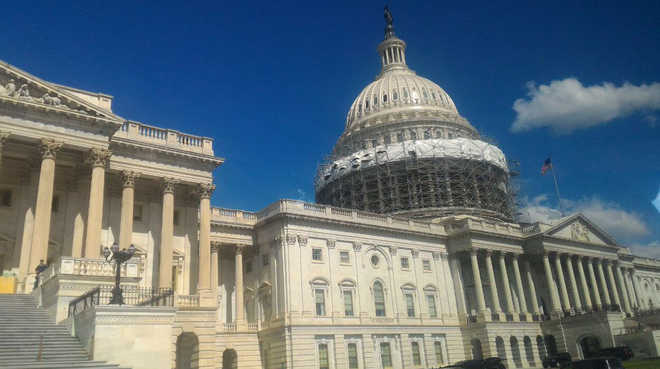
US panel urges India to lift communication blackout in Kashmir
The Asia-Pacific and Non-Proliferation Subcommittee of the House Foreign Affairs Committee has scheduled a hearing on Human Rights in Kashmir and other parts of South Asia on October 22. File photo
Washington, October 8
A powerful US Congressional Committee has urged India to lift the communication blackout in Kashmir, saying it is impacting the lives of the people in the state.
“India’s communication blackout in Kashmir is having a devastating impact on the lives and welfare of everyday Kashmiris,” the powerful House Foreign Affairs Committee said in a tweet on Monday.
“It’s time for India to lift these restrictions and afford Kashmiris the same rights and privileges as any other Indian citizen,” it said.Restrictions were imposed when New Delhi on August 5 scrapped the special status of Jammu and Kashmir under Article 370 of the Constitution and bifurcated it into Union Territories–Jammu and Kashmir, and Ladakh.
Asserting that the abrogation of Article 370 to withdraw Jammu and Kashmir’s special status was its “internal matter”, India has defended imposition of restrictions in the Kashmir Valley on the grounds that they were put to prevent Pakistan from creating more mischief through proxies and terrorists.The Asia-Pacific and Non-Proliferation Subcommittee of the House Foreign Affairs Committee has scheduled a hearing on Human Rights in Kashmir and other parts of South Asia on October 22.
The stand by the House committee comes nearly a month after Indian-American lawmaker Pramila Jayapal, along with 13 other US Congressmen, had urged Prime Minister Narendra Modi to address concerns over the human rights situation in Kashmir and lift the communications blackout. PTI
Silent coup? Imran Khan snubbed as Pakistan Army chief takes charge to revive flagging economy
In the closed-door meetings with businessmen, the army chief discussed the country’s current account deficit, the problem of corruption and slowing foreign direct investment, the people familiar with the interactions said.
At the meetings, arranged through mutual contacts, Bajwa asked business leaders how to fix the economy and what would lead them to make investments, said the people, who asked not to be identified. (File photo)
Pakistan’s already powerful military is taking an even greater role in running the country as the economy stumbles. Army chief Qamar Javed Bajwa has privately met top business leaders to find ways to bolster the economy, according to people familiar with the matter. The three meetings Bloomberg is aware of took place this year at heavily guarded military offices in Karachi, the financial capital, and Rawalpindi, a northern town that houses the army’s headquarters.
At the meetings, arranged through mutual contacts, Bajwa asked business leaders how to fix the economy and what would lead them to make investments, said the people, who asked not to be identified. Some of the meetings resulted in prompt decisions including sending instructions to top government officials, the people said, without giving any specific examples. They said the general was concerned about restoring confidence among the business community.
An army spokesman declined to comment when asked about the meetings, however on Thursday the military issued a statement after Bajwa hosted a gathering of government economic officials and business leaders on Wednesday.
“National security is intimately linked to economy while prosperity is function of balance in security needs and economic growth,” Bajwa said in the statement.
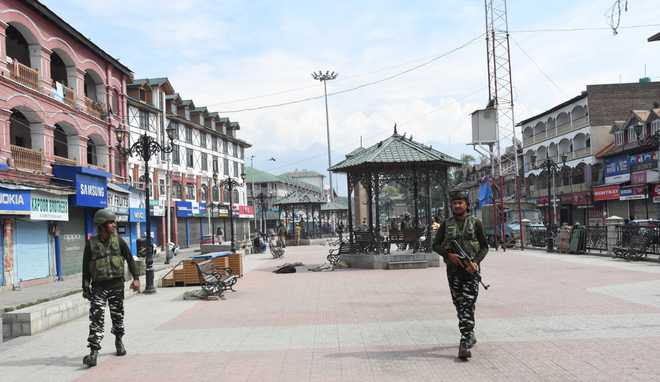
The military, which has staged numerous coups since Pakistan’s founding in 1947, has seen a direct impact from the economic slowdown: Defense spending was frozen in the 2020 fiscal year budget for the first time in more than a decade. That comes as soldiers are on high alert against terrorists based in Afghanistan and conventional forces in arch-rival India, which has put the disputed area of Kashmir under lockdown.
Many business leaders and economic analysts in Pakistan actually welcome a greater role for the generals. They view Prime Minister Imran Khan’s party — less than halfway through its first term in office — as inexperienced compared with the military, which is the country’s most respected and powerful institution.
But others are concerned about what an ever-increasing role for the military means for Pakistan’s democracy and the future of civilian institutions that haven’t been given the space to develop.
“The growing role of the military in the economy’s management in addition to its traditional dominance of the security matters is nothing but a soft coup that is a setback for the democratic process,” said Yousuf Nazar, a former Citigroup Inc. banker and author of a book on Pakistan’s economy. “This will have far reaching repercussions,” he said, adding generally that strong-arm methods for management will not work for basic economic and social issues.
Standing With Khan
The finance ministry downplayed the extent to which the army influences economic policy. While the army chief may have ideas about the economy, “we haven’t seen any kind of process interference,” Finance Ministry spokesman Omar Hamid Khan said. “They have their own scope of activities and civilian government has their own.”
Pakistan is going through an unusual period in which the democratically elected government and the army appear to be working in sync. The army has ruled the country for almost half its 72-year-old history, leading to persistent worries among civilian leaders about a potential coup.
Khan has publicly stated his government and the army have a comfortable working relationship. He gave the 58-year-old Bajwa a three-year extension as army chief in August — only the second time that’s happened in nearly a decade — amid heightened tensions with India over Kashmir. Bajwa was initially reluctant to accept the extension but his personal ties with several top government leaders across the world made the prime minister press him to stay in office, according to army spokesman Asif Ghafoor.
“This is the first government with which the army is standing,” Khan said in a television interview in July. “Historically, the army and the government worked separately. Right now, all institutions are standing with me.”
Economic Managers
The government estimates economic growth in Pakistan at the slowest pace in over a decade — at 2.4% in the year started July. Pakistan secured a $6 billion loan in May from the International Monetary Fund to help stabilize the economy after a deficit blowout.
The nation’s budget deficit rose to 8.9% of gross domestic product in the year ended June, the highest in almost three decades, while record imports about two years ago had left foreign reserves dwindling. Companies across the board, from Toyota’s local unit to Power Cement Ltd. have reduced production while many others, including Nestle SA’s Pakistan unit, have cut their workforce.
In the closed-door meetings with businessmen, the army chief discussed the country’s current account deficit, the problem of corruption and slowing foreign direct investment, the people familiar with the interactions said.
“We need generals looking after every aspect of Pakistan’s economy,” said Faizan Ahmed, research head at Karachi-based Optimus Capital Management Pvt. “The army is the most professionally organized and well-run institution in Pakistan.”
A Gallup Pakistan opinion poll released in 2017 — the most recent data available — showed the vast majority of Pakistanis trust the military more than other institutions even while backing democracy as the best system of governance. The business leaders saw the meetings with Bajwa, who has a reputation for getting things done, as beneficial to them given the military’s power and decision-making clout.
Surprise Move
The army itself has a substantial stake in the private sector. It runs the Fauji Foundation, Pakistan’s second largest conglomerate, with interests in everything from food to power.
Yet despite its business interests and all-pervading presence in most aspects of Pakistani life, the move to seek an active role in shaping economic policy has still surprised many observers.
“While the military has historically played a key role in foreign and national security policy, its role in the economy has mostly been limited,” Uzair Younus, a South Asia director at Washington-based consultancy Albright Stonebridge Group LLC. “However, with the economy slowing down, the stakes have been raised as a persistently weak economy risks defense budget allocations.”
Freeze
Pakistan’s defense budget unchanged for the first time in at least a decade.
Bajwa has been named a member of the high-powered National Development Council, put in place in July to set the country’s long-term economic policy. A member of the army’s Inter-Service Intelligence has also been nominated to a government committee set up to monitor the energy sector.
The nation is looking to avoiding tough financial sanctions to meet global anti-money laundering and counter-terrorism financing standards and has also appointed a high-level committee that includes at least two senior military officials.
The army is stepping into its new economic role at a time when the slowdown has hurt Khan’s ratings.
Mr Rajnath Singh, take a leap of faith by Maj Gen Ashok Mehta (retd
Rajnath Singh erred by transforming what is traditionally a simple domestic military ceremony in the IAF into a political and religious one with all the trappings of a single religion abroad. Singh does not represent a single-service faith. He is the Defence Minister of a multi-faith military which is secular, apolitical and professional.
eifying Rafale: In the military, it’s best not to mix religion with superstition or politics.
Maj Gen Ashok Mehta (retd) Military Commentator
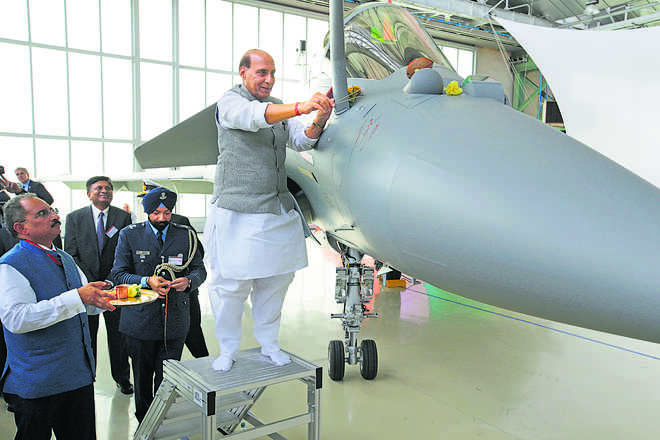
The images of India’s third most powerful leader — Defence Minister Rajnath Singh — in a flying suit with Rayban glasses after flying in the Rafale and in dhoti-kurta performing shastra puja before the flight — are two contrasting visuals of India’s state of defence equipment: from the legacy Russian MiG variants still flying to the fourth generation French Rafale fighter in the pipeline.
It is also a reflection of Singh’s conviction in religion, superstition and personal faith which he displayed on the 87th Air Force Day and Dasehra while performing the traditional shastra puja in France on receipt of the first Rafale aircraft from his French counterpart. The deification of the Rafale was very elaborate. The Ambassador to France was asked to arrange for a pandit. Singh cracked a coconut, placed flowers, tied mouli, applied the Om tilak, all behind the cockpit while tying chillies and lemons to the wheels of the aircraft — the ritual watched by a bemused French audience. In this puja, Singh was assisted by an Indian priest and Air Commodore-rank military air attache to France.
As a soldier, I have witnessed and performed the shastra puja in my battalion for six decades on Vijayadashami, a ritual which is strictly in the domain of three persons: the Commanding Officer, the unit priest and the seniormost non-officer rank officer, the Subedar Major. All weapons are symbolically worshipped before they are returned to the Quarter Guard. One has never known an outsider perform this ceremony even if he is the Defence Minister of India.
The Rafale belongs to the IAF, which has never performed a religious ceremony abroad while receiving a new imported aircraft. At an election rally in Haryana, Singh had announced that he wrote Om on the Rafale, ‘as per our tradition’. After Bofors, Rafale has proven to be politically volatile, especially the procedure followed in its acquisition on which the Supreme Court has reserved its judgment, even as the ruling party showcased it electorally before its operationalisation. Applying the tilak on an aircraft is not an IAF tradition.
Singh’s actions and his self-defence have attracted criticism from the opposition, many calling it theatrics and puja politics. NCP chief and former Defence Minister Sharad Pawar mocked Singh for tying chillies and lemons to ward off evil as truck drivers do. Singh’s colleague, Finance Minister and former Defence Minister Nirmala Sitharaman, whose main contribution to defence was the defence of Prime Minister Narendra Modi on the purchase of Rafale, both inside and outside Parliament, said: “Those who had faith had the right to conduct rituals because he is no ordinary citizen but Defence Minister of India.” She compared his shastra puja with Indian diplomats/politicians launching ships abroad by cracking a coconut (used to be a bottle of champagne). But no Om was emblazoned on the ship. A letter to the editor of The Pioneer newspaper read: ‘Politicians wedded to Hindutva ideology are adept at converting every event into an opportunity.’ He suggested that chillies and lemons should have been attached to Chandrayaan-II.
In the military, it is best not to mix religion with superstition or politics.
Singh’s final statement was defiant: ‘I did what I thought was right and will continue to do so. This is our faith, that there is a super power, and I have believed it since childhood.’ Never to be left out of India’s internal affairs, Maj Gen Asif Ghafoor, head of Pakistan’s ISPR (Inter-Services Public Relations), chipped in: ‘Nothing wrong in Rafale puja as it goes by the religion and that must be respected. It is not machine alone which matters, but competence, passion and resolve of the men behind the machine. Proud of Pakistan Air Force Shaheens.’
Singh erred by transforming what is traditionally and essentially a simple domestic military ceremony in the domain of the IAF into a political and religious one with all the trappings of a single religion, abroad. Singh does not represent a single-service faith. He is the Defence Minister of a multi-faith military which is secular, apolitical and professional. In all-India caste Army regiments, the prayer room contains multi-faith areas where soldiers of different denominations worship their God. Although Singh has asserted he will do what he did in France, again, for the sake of the Indian armed forces, he should take a leap of faith and avoid doing it.
As Defence Minister, Singh has done great things: sending powerful signals of India’s rise as a great power; raking up the issues of No-First Use after visiting Pokhran and retaking PoK in the aftermath of the parliamentary resolution of 1994; opening up Siachen to tourism and generally boosting the morale of the armed forces. At his election rally in Satara, Maharashtra, PM Modi had said his government had brought India’s armed forces on a par with those of other countries and provided the three services with modern weapons.
Judging from the sparse funding for capital account of the defence budget in the last five years, Modi’s claim is an exaggeration. Singh’s real contribution to the military would be in getting at least Rs 50,000 crore annually for capital spending, over and above the existing liabilities during the remaining term of this government in order to catch up with China. Deterring Pakistan has largely been achieved. The government has shown recently how it can loosen its purse-strings. When there is a will, there is a way.
Defence Minister Rajnath Singh is greeted as he arrives for the Naval Commanders conference, in New Delhi, on Tuesday. Also seen is Indian Navy Chief Admiral Karambir Singh. PTI
Union defence minister Rajnath Singh inaugurates the ‘Colonel Chewang Rinchen Bridge’ at Shyok River in Ladakh on Monday. PTI
Press Trust of India
letters@hindustantimes.com
Leh : Government on Monday announced its decision to open Siachen area, the world’s highest battlefield, to tourists.
Defence minister Rajnath Singh said the government has decided to open the entire area from Siachen base camp to Kumar Post for tourism purposes.
The step has been taken to give people a window to appreciate the tough work done by Army jawans and engineers in extreme weather and inhospitable terrains, he said.
Singh was addressing a function in eastern Ladakh to inaugurate Col Chewang Rinchin Bridge on Shyok River, located about 45 km from the county’s border with China.
“The Ladakh MP in his address, mentioned about opening this area to tourism. And, I am happy to share that the government has decided to open a route from Siachen Base Camp to Kumar Post for tourists,” the minister said. “This step will make them appreciate the efforts put in by jawans, engineers and other workers,” he said.
Singh later tweeted, “The Siachen area is now open for tourists and Tourism. From Siachen Base to Kumar Post, the entire area has been opened for Tourism purposes”.
At the bridge inauguration, he said, only steel and concrete have not gone into its making, but “sweat and valour” of the engineers and workers of the Border Roads Organisation (BRO) too.
They have toiled hard and people should know their stories, Singh said.
The 1400-ft long bridge is the highest altitude permanent bridge that will connect Durbuk and Daulat Beg Oldi and reduce travel time by about half.
Singh also warned Pakistan to stop its terror activities to destabilise India or face befitting reply.
“Our soldiers never launch offensive against Pakistan. The other side is doing activities to destablise India (by sponsoring terrorism and resorting to shelling, Singh said at a function in the inauguration of 1,400-ft bridge across the Shyok River near the Line of Actual Control (LAC) with China in Leh district of Ladakh. “If this is not stopped or controlled, we will continue to give befitting reply,” Singh said.
ey point: As more countries build submarines, anti-submarine warfare will become a bigger deal.
The U.S. Navy is now engineering a new, longer range and more lethal submarine-launched heavyweight Mk 48 that can better destroy enemy ships, subs and incoming weapons at longer ranges, service officials said.
Many details of the new weapon, which include newer propulsion mechanisms and multiple kinds of warheads, are secret and not publically available. However, senior Navy leaders have previously talked to Scout Warrior about the development of the weapon in a general sense.
Naturally, having a functional and more high-tech lethal torpedo affords the Navy an opportunity to hit enemies at further standoff ranges and better compete with more fully emerging undersea rivals such as Russia and China.
Progress with new torpedo technologies is happening alongside a concurrent effort to upgrade the existing arsenal and re-start production of the Mk 48, which had been on hiatus for several years.
Navy officials did add that some of the improvements to the torpedo relate to letting more water into the bottom of the torpedo as opposed to letting air out the top.
The earlier version, the Mk 48 Mod 6, has been operational since 1997 – and the more recent Mod 7 has been in service since 2006.
Lockheed has been working on upgrades to the Mk 48 torpedo Mod 6 and Mod 7 – which consists of adjustments to the guidance control box, broadband sonar acoustic receiver and amplifier components.
Lockheed developers told Scout Warrior last year that Lockheed is now delivering 20-upgrade kits per month to the Navy.
Part of the effort, which involves a five-year deal between the Navy and Lockheed, includes upgrading existing Mod 6 torpedoes to Mod 7 as well as buying brand new Mod 7 guidance control sections.
The new Mod 7 is also resistant to advanced enemy countermeasures.
Modifications to the weapon improves the acoustic receiver, replaces the guidance-and-control hardware with updated technology, increases memory, and improves processor throughput to handle the expanded software demands required to improve torpedo performance against evolving threats, according to Navy information on the weapon.The Mod also provides a significant reduction in torpedo radiated-noise signatures, a Navy statement said.Alongside Lockheed’s work to upgrade the guidance technology on the torpedo, the Navy is also preparing to to build new Mk 48s.
Upgrades to the guidance control section in includes the integration of a system called Common Broadband Advanced Sonar System, or CBASS – electronics to go into the nose of the weapon as part of the guidance section, Lockheed developers explained.
This technology provides streamlined targeting and allows the torpedo to transmit and receive over a wider frequency band, Lockheed engineers said.
The new technology involves adjustments to the electronic circuitry in order to make the acoustic signals that are received from the system that allow the torpedo to better operate in its undersea environment.
Upgrades also consist of movement to what’s called an “Otto fuel propulsion system,” Lockheed officials added.
Lockheed will deliver about 250 torpedoes over the next five years. The Mk 48, which is a heavy weapon launched under the surface, is quite different than surface launched, lightweight Mk 54 torpedo fired from helicopters, aircraft and surface ships.
The Navy’s Mk 48 torpedo is also in service with Australia, Canada, Brazil and The Netherlands.
A Mk 48 torpedo is 21 inches in diameter and weighs 3,520 pounds; it can destroy targets at ranges out to five miles and travels at speeds greater than 28 knots. The weapon can operate at depths greater than 1,200 feet and fires a 650-pound high-explosive warhead.
India will not allow water to flow to Pakistan: Modi at Charkhi Dadri
Prime Minister Narendra Modi on Tuesday said India would not allow its water to flow to Pakistan.
“For 70 years, the water which belongs to India and the farmers of Haryana flowed to Pakistan. Modi will stop this water (from flowing into Pakistan) and bring to your houses,” the Prime Minister said at an election meeting, the second in two days, here.
He said the farmers of Haryana and Rajasthan had the right over the water that is flowing to Pakistan and was not being stopped by the earlier Indian governments.
“Modi aapki ladai ladega (Modi will fight your battle),” he assured the people at the rally.
The Prime Minister said Chinese President Xi Jinping during their informal summit in Mahabalipuram, Tamil Nadu, told him that he had watched the Aamir Khan-starrer ‘Dangal’ “which showcased excellent performance of daughters of India”.
“I felt really proud of Haryana on hearing this,” he added.
Praising Chief Minister Manohar Lal Khattar, Modi said: “‘Beti Bachao Beti Padhao’ campaign would not have been effective without the support of Haryana villages.”
He slammed Congress leaders for “spreading lies” over Article 370. IANS
Many leaders had been detained in the Valley in light of the abrogation of Article 370. File photo
Srinagar, October 10
The Jammu and Kashmir Administration on Thursday released three politicians who had been under detention since August 5 when the Centre abrogated the special status granted to the state under the Constitution, officials said.
Yawar Mir, Noor Mohammed and Shoiab Lone were released on separate grounds, the officials said.
While Mir is a former PDA MLA from the Rafiabad Assembly seat, Lone contested unsuccessfully on a Congress ticket from North Kashmir and later resigned as district president of the party.
Noor Mohammed is a National Conference worker who has been managing the party’s show in the militancy-infested Batmaloo area of the Srinagar city.
Before his release, he will be signing a bond to maintain peace and good behaviour, the officials had said on Wednesday night.
The Governor Administration had earlier released Imran Ansari of the People’s Conference and Syed Akhoon on health grounds on September 21.
More than a thousand people, including politicians, separatists, activists and lawyers, were detained after the August 5 move of the Central Government to abrogate the state’s special status.
The detainees include three former chief ministers Farooq Abdullah, Omar Abdullah and Mehbooba Mufti.
Over 250 people were sent to the jails outside Jammu and Kashmir. Farooq was subsequently detained under the stringent Public Safety Act, while other politicians were mostly detained under different sections of the criminal procedure code. PTI
State Stalwarts
DEFENCES FORCES RANKS
ARMY, NAVY, AIRFORCE RANKS
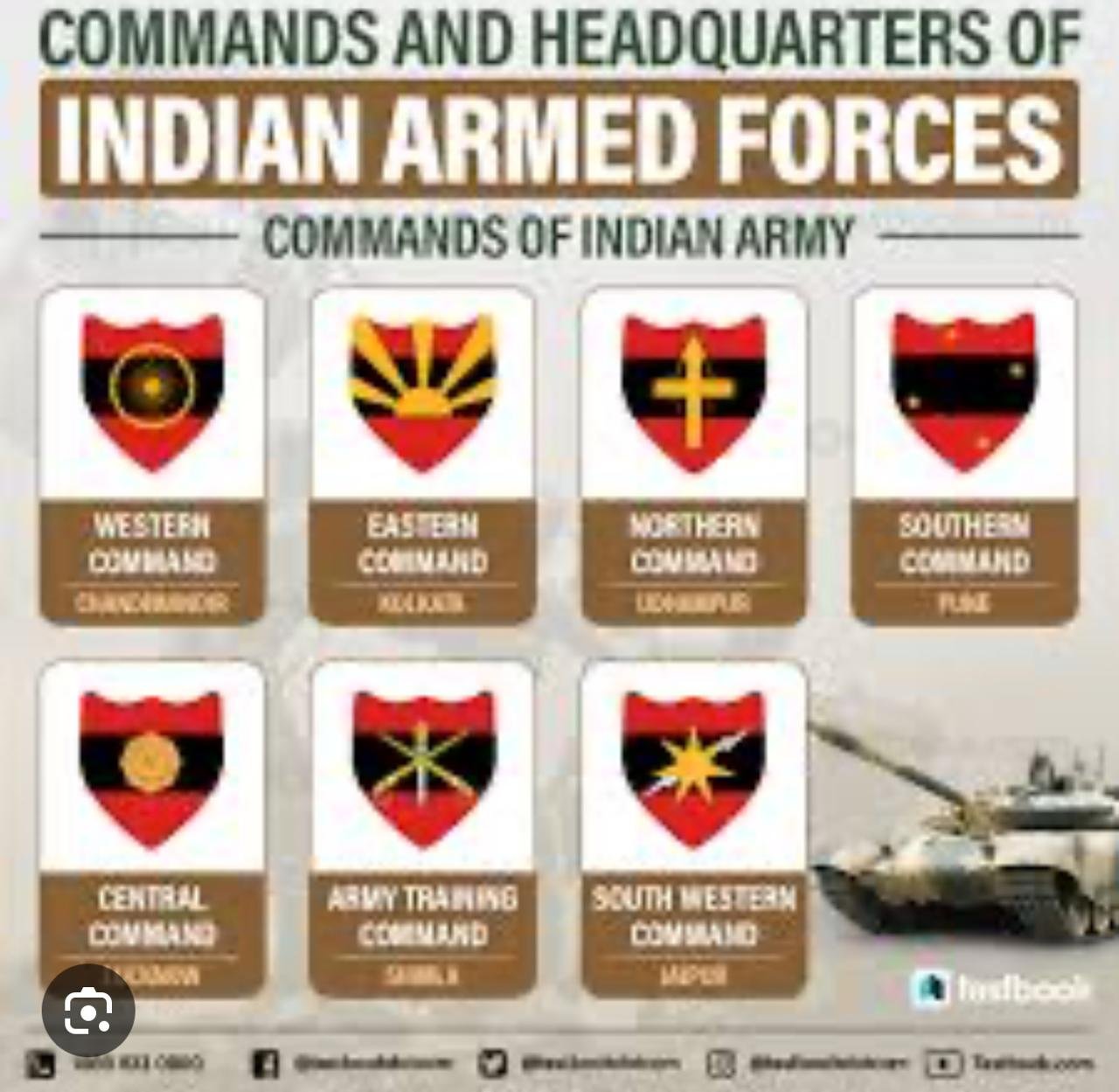
FORMATION SIGNS
FORMATION SIGNS
ALL HUMANS ARE ONE CREATED BY GOD
HINDUS,MUSLIMS,SIKHS.ISAI SAB HAI BHAI BHAI
CHIEF PATRON ALL INDIA SANJHA MORCHA
LT GEN JASBIR SINGH DHALIWAL, DOGRA
SENIOR PATRON ALL INDIA SANJHA MORCHA
MAJOR GEN HARVIJAY SINGH, SENA MEDAL ,corps of signals
.
.
PATRON ALL INDIA SANJHA MORCHA
MAJ GEN RAMINDER GORAYA , CORPS OF
sanjhamorcha303@gmail.com
PRESIDENT HARAYANA STATE CUM COORDINATOR ESM
BRIG DALJIT THUKRAL ,BENGAL SAPPERS
PRESIDENT TRICITY
COL B S BRAR (BHUPI BRAR)
PRESIDENT CHANDIGARH ZONE
COL SHANJIT SINGH BHULLAR
.
.
PRESIDENT PANCHKULA ZONE AND ZIRAKPUR
COL SWARAN SINGH
PRESIDENT SAS NAGAR (MOHALI)
COL BALBIR SINGH , ARTY
INDIAN DEFENCE FORCES
DEFENCE FORCES INTEGRATED LOGO
FORCES FLAGS
15 Th PRESIDENT OF INDIA SUPREME COMMANDER ARMED FORCES
Droupadi Murmu
DEFENCE MINISTER
Minister Rajnath Singh
CHIEF OF DEFENCE STAFF (2nd)
General Anil Chauhan PVSM UYSM AVSM SM VSM
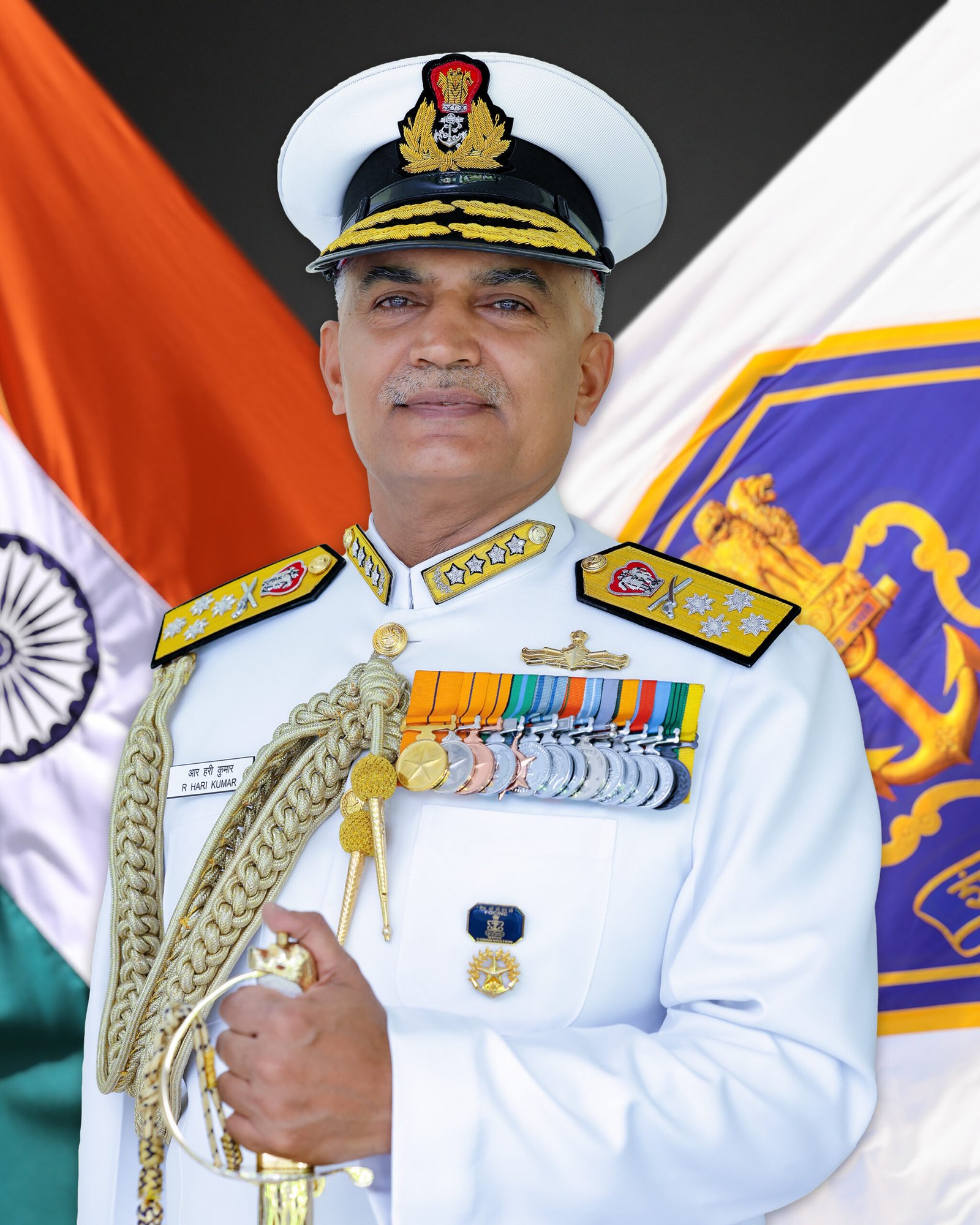
INDIAN FORCES CHIEFS
CHIEF OF ARMY STAFF(29th)
General Upendra Dwivedi, PVSM, AVSM (30 Jun 2024 to Till Date)