






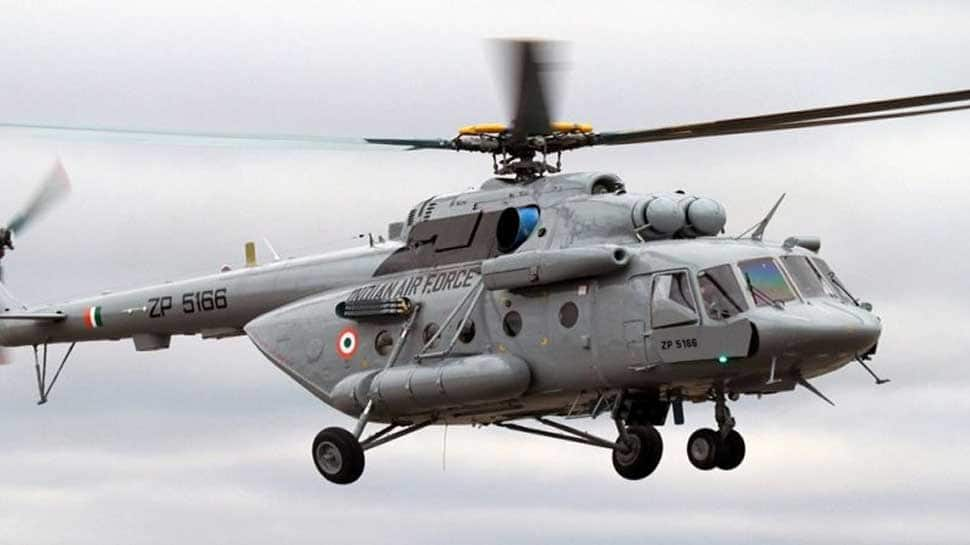
Two Indian Air Force (IAF) officers will face court-martial for the Mi-17 chopper crash in which six of its personnel were killed due to friendly fire by own missile system on February 27 over Srinagar. As many as four other officers will also face administrative action in the case which includes two Air Commodores (equivalent to Army Brigadiers) and two Flight Lieutenants (Captain equivalents in Army) for their respective roles in the entire case. “Two officers including a Group Captain and a Wing Commander would be tried by a court-martial for their lapses in the case due to which six IAF personnel were killed in friendly fire,” defence sources told news agency ANI. On the morning of February 27, when Pakistan counter-attacked in response to the Balakot airstrike, an IAF Mi-17 chopper crashed over Budgam area near Srinagar killing all six of its occupants. It was revealed that the chopper was hit by its own air defence system SPYDER deployed in Srinagar. The chopper of the Srinagar-based 154 Helicopter Unit crashed within 10 minutes of taking off even as a dogfight raged over 100 kilometres away between intruding Pakistani jets and the IAF, in which Wing Commander Abhinandan Varthaman was also involved. Six IAF personnel onboard and a civilian on the ground had lost their lives in the crash. Soon after taking over, newly-appointed IAF chief RKS Bhadauria had stated that the Mi-17 chopper crash on February 27 was a “big mistake” on part of the Air Force. Earlier, Bhadauria had said, “Court of Inquiry has completed and it was our mistake as our missile had hit our own chopper.” The fateful Mi-17 helicopter was shot down by an Indian missile when Indian air defences were on high alert following the February 26 Balakot airstrike that targetted a terrorist camp in Pakistan. The helicopter crashed near Budgam, killing all six Indian Air Force personnel on board. The helicopter was flown by squadron leader Siddharth Vashisht with other members squadron leader Ninad Mandvgane, Kumar Pandey, sergeant Vikrant Sehrawat, corporals Deepak Pandey and Pankaj Kuma
idrw.org .Read more at India No 1 Defence News Website http://idrw.org/2-iaf-officers-face-court-martial-4-others-administrative-action-for-shooting-down-of-mi-17-chopper/ .
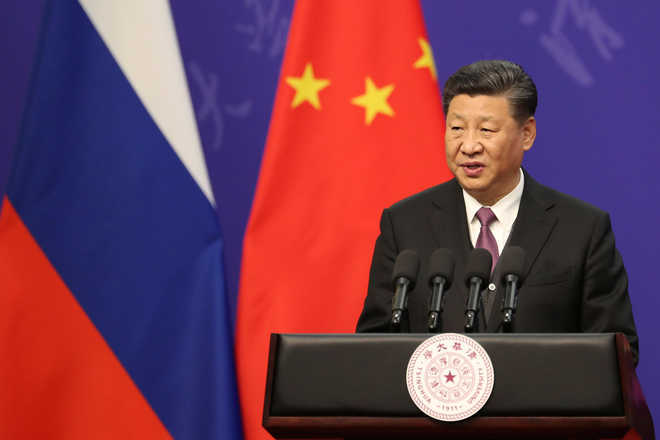
Three days before Chinese President Xi Jinping was to land in Chennai, China sprang a surprise to infuse life into the informal summit he will hold with Prime Minister Narendra Modi. Since the actual venue of Mamallapuram is quite a mouthful for the world at large, the Chennai Informal Summit, as it will be called, seemed headed to become a footnote in the diplomatic calendar of bilateral meetings. The bad blood between the two countries over the abrogation of Article 370 had created a stalemate till the Chinese Foreign Office spokesperson advised India and Pakistan to resolve their differences over J&K through dialogue.
For the first time since India effected the changes on August 5, Beijing dropped all references to the relevant UN Security Council resolutions. This reference is a red rag for India since it considers the Simla Agreement, which Pakistan has also signed, as the starting point for talks on J&K. The Chinese gesture does create a conducive environment for the two leaders to hold frank and unrestrained conversations with each other in order to remove the distrust and suspicion about each other’s policy choices. The first informal summit did produce a Chinese appreciation of India’s massive trade deficit and guidance to the two militaries to peacefully manage the border. But the Chinese stand on Kashmir nipped the shoots and stiffened India’s back to the extent that it upgraded its consultations with the Quad, an anti-China grouping, to the ministerial level.
At this moment, China cannot afford to antagonise India. Already grappling with unrest in Hong Kong, its mass internment of Muslims in Xinjiang has come under global scrutiny; US sanctioned the first lot of Chinese officials on Tuesday. The US pincer on trade is unlikely to ease and signature Belt and Road Initiative has enough challenges on its hands to dissuade China from opening new fronts. Hopefully, the Indian Army’s exercises have transmitted the right signals because China may not be ready to abandon Pakistan on Kashmir. As China has reaffirmed, Sino-Indian ties transcend sectoral disputes. But the challenge will be in adroitly managing them in the crucial days ahead.

Ideally, individual war memorials should be avoided as these get neglected due to lack of institutionalised funding. Yet, they are being allowed to come up in native villages and towns, often for vote bank and emotional considerations. Another worrying trend is the installation of statues and busts.
Lt Gen KJ Singh (retd)
Military commentator
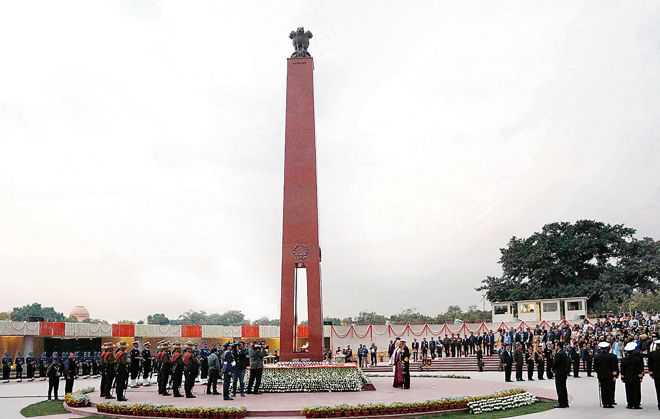
The dedication of the National War Memorial (NWM) on February 25 this year is indeed a defining moment in honouring our bravehearts. The government has fulfilled a long-pending demand by building a world-class monument. Unfortunately, people visiting the NWM and the adjoining India Gate memorial fail to display due reverence and discipline.
There are other notes of dissonance, like the Army deciding to limit representation at remembrance ceremonies outside military cantonments/stations. The ever-increasing number of monuments, including the Saragarhi memorial, is literally gasping for funds for maintenance. It is ironic to reconcile the sight of spontaneous mile-long funeral processions of war heroes with decrepit memorials in utter neglect.
Recent media reports regarding the Army limiting its participation to floral tributes and, more importantly, not providing ceremonials like band and honour guard, have to be understood objectively and in context. First, there are no pan-India orders. Instructions seem to be local or regional in scope. Secondly, these have been necessitated due to the problem of sheer numbers because of the proliferation of individual memorials and the inability to cope.
The Army, as a policy, discourages unregulated building of memorials. The official compendium of works, referred to as the ‘Scales of accommodations’, does not even include memorials and museums. Hence, technically, all such structures come under the scrutiny of auditors and are camouflaged under other listed works. With considerable risk-taking, enterprising commanders have created memorials as a combination of recognised works like band stands and sentry and guard posts. Similarly, stores have been re-appropriated for utilisation as museums.
The Western Command commissioned its museum after losing valuable archival material nearly 70 years after its raising. It is indeed unfortunate that the system lacks simple provisions for authorising memorials and museums, preferably at the recommended scale of one per station, more like the station institutes. This is indeed an opportune moment, when the government has made good its promise of the NWM and the RM has commissioned a signature project to write the history of border areas. A simple amendment will change the construction and maintenance of war memorials and museums into activities that are above board, for future generations.
The real challenge, however, lies outside the military establishments. There are three types of memorials — combined, individual and commemorative — for battles. Haryana, with a designated state-level war memorial at Rohtak and district memorials, is probably the best organised with regard to combined memorials. Many of these also have museums as an extension.
Ideally, individual war memorials should be avoided as these get neglected due to lack of institutionalised funding. Yet, they are being allowed to come up in native villages and towns, often for vote bank and emotional considerations. Even in the families of martyrs, the euphoria ebbs with time.
It is indeed sad to see different groups of a splintered family, jostling for prominence during the ceremonials. Haryana recently took the laudable initiative of laying down the standard operating procedure (SOP) for annual functions and upkeep of these individual memorials. These are to be managed by committees under the deputy commissioner, with the superintendent of police, Zila Sainik Board, the nearest station headquarters and the NCC unit, as members. Most importantly, the unit of the war hero has also been coopted. The real challenge lies in implementing and operationalising this SOP.
Another worrying trend is the installation of statues and busts. This ill-advised trend has obvious pitfalls as the final product rarely does justice to the braveheart due to limited funding and skill-deficit of sculptors. A better method is to name schools, roads and colonies after such heroes. The housing colonies of the armed forces follow this norm of naming, but recently, they too have started falling prey to the statue mania.
Unfortunately, most statues are exposed to the natural elements and require regular maintenance. A simple electronic display board would have a better connect with a war hero and also impose minimum maintenance requirements.
The third category of memorials is those commemorating battles, like Asal Uttar near Khemkaran. Commemorative memorials like the one at Dograi (Khasa) and Saragarhi (Ferozepur) are better looked after as they are situated in military stations and cantonments.
The memorial at Khemkaran, situated close to the actual battle site, doesn’t enjoy this advantage. A number of small unit memorials with the main one of Abdul Hamid were in a state of utter neglect. It took a herculean effort and persuasion to combine them with the main memorial. Similarly, yearnings for individual unit memorials had to be imaginatively synergised to make a combined memorial at Hussainiwala.
Punjab has a large number of war museums, but with very poor footfall. The sad part is that each government wants to make new ones like the museum at Amritsar. In view of the limited budget, old ones like the Ludhiana museum have become completely neglected. An imaginative battlefield tourism package from Attari to Hussainiwala (Ferozepur) border, with museums and memorials en route, can be introduced for military history enthusiasts.
The way forward lies in limiting the unchecked proliferation of individual memorials. The Central government should build a consensus for a national policy backed with legislation to regulate the memorials. A census of the existing ones should be attempted, with emphasis on consolidating and combining them. The management should be regulated by notified bodies, backed by assured funding, through the creation of a corpus on the lines of the Commonwealth War Graves Commission, which looks after Kohima and other memorials in a most enviable manner.
Memorials are configured to have a restricted serene core, but interest levels can be enhanced by incorporating interactive digital screens, with the relevant content on the periphery. Digital kiosks, e-visitor books and e-memorials should be incorporated to connect with the millennial generation.

AS I watched the proud and dignified ceremony of ‘Colour Presentation’ to the Army Aviation Corps (AAC) by the President on October 10 on the TV screen, my mind wandered both to the charismatic Army Chief who had created this new entity 33 years ago, as also to the intrepid four gentlemen officers who on August 14, 1947 had clandestinely created its nucleus.
A few days after the Government announced Gen K Sundarji as the COAS designate, he took a 14-day sabbatical with an Army establishment at Panjim, locked himself inside their guest suite, dictated to his stenographer and refined an 80-odd pages document titled ‘Army Vision 2020’. And the first demonstrable fruition of that vision was the inauguration of the AAC in 1986, an attribute which had its origin in the French army during WW I.
However, AAC’s legacy in the Indian Army is embedded in a charming act of daring piracy! During the fading days of WW II in the Burma theatre, it was decided to train Artillery officers to fly slower aircraft, enabling them to direct fire of their guns beyond the ‘contact battle zone’ to disrupt movement of enemy reinforcements and logistics chain; they were given the designation ‘Air Observation Post (AOP)’ and by December 1946, five officers had been trained in the UK and posted to the only AOP squadron in mainland Asia, at Lahore.Four among that nucleus, Captains Butalia, Govind Singh, Sridhar Mansingh and Sen, had a premonition that at the midnight hour of August 13, 1947, Pakistan would assign all assets of the AOP squadron to itself. So, taking the law into their hands, they flew out at the crack of dawn on August 14 in four Tiger Moths, landed at Amritsar, flagging the de facto and de jure creation of Independent India’s Army AOP establishment! Quite inexplicably, Butalia was inducted into the newly created Indian Frontier Service but fortunately, another trainee, Major Sahane, would fill the vacant slot.
Come October 1947, the AOP would be baptised by fire on the battlefield all through the J&K war. The very first assignment they performed was of great historical significance when on October 27, Prime Minister Nehru deputed Baldev Singh, the Defence Minister, and Maj Gen KS Thimayya, DSO, to witness the signing of the ‘Instrument of Accession’ by Maharaja Hari Singh and they would be flown to Srinagar and back by Sridhar Mansingh.It became an obsession with this new breed of foot-soldiers to spot and silence enemy guns, unmindful of hostile anti-aircraft gunfire. Maj Sahane would disable or silence several Pakistani guns in the Rajouri sector and would receive the AOP’s first VrC for gallantry. Similarly, unfazed by the intensity of mortar and gunfire at Naushera, Mansingh would land and evacuate to Jammu the fatally wounded Brig Mohamad Usman, MVC. In due course, Mansingh too would be awarded the VrC for conspicuous gallantry.
Perhaps the maverick among these pioneers was Govind Singh. A quintessential episode which this veteran recounted is the stuff of legends. When his flying instructor in the UK declared him as ‘lacking flying aptitude’, Govind would confront him with his inimical earthy logic thus: “Sir, I come from a village in Garhwal where no one has seen a bicycle yet, much less ride one. So how do you expect me to fly solo in the same time-frame as your countrymen?” Govind won the much-deserved reprieve!
Govind as a flyer would become the toast of the AOP. When dared, he landed on a hockey field. And on another occasion, he flew under the bridge spanning the Darna river (Deolali, Maharashtra) and then performed a steep side-turn to clinch the wager! Happily, the progenitors of those pioneers, now in the avatar of AAC, are a true reflection of AOP’s magnificent credo: ‘Unarmed and Fearless into Battle’.

An art learned in two World Wars.
by Charlie Gao
Key point: The Navy has a wide variety of modern weapons to find and destroy enemy submarines.
With things heating up in the South China Sea (SCS), much attention has been paid to the ships and submarines that could potentially square off against each other in the region. This ignores a key asset of most navies that is already on the “front lines” and shaping military interactions—Maritime Patrol Aircraft (MPA). Skillful use of these aircraft may determine how an engagement plays out, or it could prevent one from happening in the first place.
MPA have been around almost as long as combat aircraft. Navies quickly realized the potential of aircraft when it came to patrolling the sea, as they could move far more quickly than boats and had the significant advantage of altitude.
But modern MPA use advanced sensors to detect to see far more than what can be seen with the naked eye—Magnetic Anomaly Detectors (MADs) can detect underwater submarines, and radar systems are used to detect ships that might just be specks on the horizon. Infrared/thermographic cameras allow MPA to identify vessels even at night.
MPA can also deploy sonobuoys, floating sensors that either detect noises or send out pings to find submarines. ELINT sensors can detect the radar emissions of enemy MPA or ships. All of these sensors means that MPA are incredibly useful in peacetime as well as wartime.
Michael Zehaf-Bibeau attacks the Parliament of Canada in Ottawa, Ontario, Canada, killing a soldier and injuring three other people.
Sponsored
Advertisement
Sponsored
Advertisement
One way they could deter potential escalation is through detecting potential violations of EEZ or civilian ships in contested waters ahead of time through the use of radar and infrared. Since modern MPA have all-weather detection capability, they can watch for fishing vessels day and night, and give a navy an advanced warning of such violations so they can be headed off before a more violent encounter up close.
MPA also can provide critical information in tracking enemy submarine posture. While this is a more intensive and not “guaranteed” way to track submarines—as the battle between submarine stealth and submarine detection is ongoing—determining the patrol routes and positions of enemy submarines is critical information. Such intelligence may allow nations to avoid potential losses to convoy raiding (if it occurs) and set up anti-submarine warfare plans before the event of war.
In their traditional role in the detection of surface ships, MPA are critically important in the SCS region. Due to the relatively short distances between islands, MPA flying out of Japan or Taiwan could potentially track the movement of ships from base to base in China.
Basic MPA surveillance radars like the Seaspray 5000 have publicized ranges of around 200 nm. The more advanced AN/APS-115 and AN/APS-137D(V)5s mounted on Japan, and Taiwan’s P-3C MPA undoubtedly have better performance. Even with a 200 nm range, an MPA flying over the East China Sea could easily track ships moving south along China’s coast.
This could yield significant strategic intelligence on the development and deployment of Beijing’s People’s Liberation Army Navy (PLAN). In addition, the ELINT suite onboard these aircraft could provide insight into the capabilities of Chinese radars.
Recommended: Imagine a U.S. Air Force That Never Built the B-52 Bomber
Recommended: Russia’s Next Big Military Sale – To Mexico?
Recommended: Would China Really Invade Taiwan?
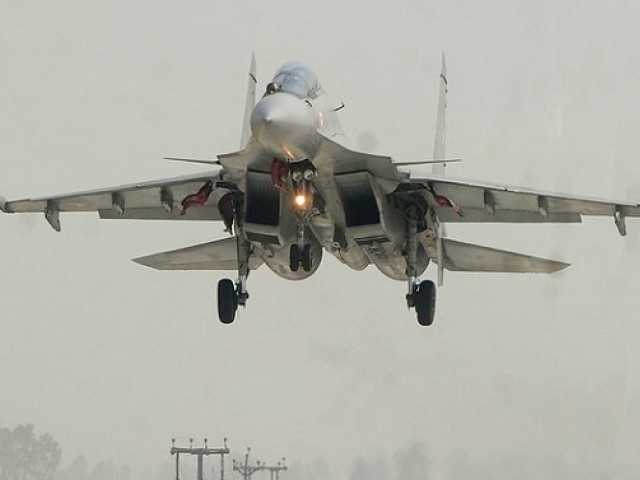
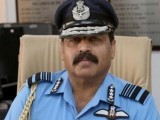
When Air Chief Marshal Rakesh Kumar Singh Bhadauria took over the Indian Air Force (IAF), we were wondering how time passes so quickly. As part of the family of a Pakistani army officer deputed for the Staff Course at the Defence Services Staff College Mirpur (in now Bangladesh), we had the opportunity to interact with the Bhadauria family as Rakesh Kumar was a Wing Commander doing a staff course at Mirpur, Dhaka. Our experience with Indian officers was that they were sharp, wily and hardworking, but had a complex about Pakistan which became more visible as time passed.
Coming back into present times, we have found the same complex about Pakistan, but more pronounced due to the Sanghi rule in India. RSS Bhakts and neo-Nazis have turned every ministry and department into the Sangh Parivar (family). Professionalism is taking a back seat and the Modi cult is the ultimate recipe to fix everything bad in India, whether it’s the downturn in economy, crash of Indian rupee, loss of millions of jobs or the Balakot tree strike; “Modi Hai to Mumkin Hai” (with Modi it is possible).
The February 27 counterstrike by the Pakistan Air Force (PAF), which shot down two IAF intruders, including Wing Commander Abhinandan (some social media activists call him “Abhi none done”), shattered many myths regarding the Indian armed forces and the false aura they had created in the past 20 years.
With the Balakot tree strike, which killed a brave Pakistani crow and injured 10 trees, Indian politico leadership started a blitz of lies and deceits and as “Abhi none done” was “undone” by the PAF and was escorted across the Wagha border in shame, this charade of lies and deceit became a shameless cover-up. Unlike a head of any professional force, former IAF chief Dhanoa was forced to become the face of this cover-up. Despite all the twists and fake stories telling the brave intrusion of Abhinandan and shooting down of a PAF F-16, the international experts on air warfare did not buy the Indian charade of lies and Dhanoa had to do a catwalk with Abhinandan till the last day to keep up the IAF’s morale.
Bhadauria, like a true Rajput, did acknowledge part of the truth that the IAF air defence system had shot down their own helicopter right at the Srinagar Air Base and that a military court would sort out those responsible. Our advice would be to put ex-chief Dhanoa into a lie detecting test and maybe Bhadauria will have to court-martial a lot of the top brass of the IAF for covering up this blatant lie. Unfortunately, the Modi-Amit-Doval circus won’t allow that, as accountability of the military would mean accountability of the political decision makers who wanted to take advantage of the clouds to hide their radar signature.
If one looks at the PR media campaign of the Indian military after February 27, one can see a deliberate attempt on giving more space to the IAF. This campaign has four major facets.
The façade of bravado and fakery to cover up the faux pas of the Balakot incident; project IAF’s technological and numerical superiority by advertising the latest procurements on an almost daily basis; conveying to the PAF that India has taken a head lead over Pakistan in acquiring modern hardware; and lastly, showing political pooja paat as essential element of military power and use of nimboo narial and laddus (lemon, coconuts and sweets) to justify the Shastra Pooja.
Maintain the bogey of limited conventional war under nuclear overhang.
But there are sane and serious voices in India, who are cautioning the politico military leadership. Pravin Sawhney has been regularly commenting on why Pakistan is not a walkover and the fact that Chinese military has marched ahead of India in almost every field and this illusion of machismo and false bravado was of no use.
Although Balakot tree strike and the PAF counter-strike lasted for few hours, the PAF’s aggressive response sent some very strong strategic signals across the globe. Pakistan conveyed to the world that it can display a sure footed response based on political intent and was ready to climb the escalation ladder in a nuclear overhang, when it comes to territorial integrity and honour of the nation. The PAF proved that Indian technological and numerical superiority was a myth and the PAF could dominate the skies over South Asia by displaying superiority over the IAF in technical, technological, training and operational domains. The PAF also displayed unwavering faith in Allah Almighty and the cause of Pakistan.
Pakistan also re-established nuclear deterrence by a quick and bold conventional response, the mere fact that Indian politico military leadership did not venture across the LoC or the international border after 27th February proves that India chickened out in this brinkmanship.
Pakistan’s defence forces displayed that a battle-hardened force can compensate for technological or numerical asymmetry, and there is no alternative to experience.
This takes us to our last part of the paper, an advice to Air Chief Marshall Bhadauria: It’s the spirit and real force which fights in battle. The US-led coalition has the best weapon systems, smart bombs and even nuclear power, but they still failed in achieving their objectives in Afghanistan. Induction of modern weapon system is a common feature in all defence forces, but the Indian military is reminding the hapless people of India that next time they will overpower Pakistani military through numbers and technology. Is this advertisement born out of fear?
Dhanoa, the ex-IAF chief, had a peculiar habit of answering every question with the word ‘No’ and he kept lying through his teeth to convince a Bollywood Zombified audience of more than a billion people that Balakot tree strike was real and ‘Abhi Non Done’ really hit an F-16 before going down. Rakesh Bhadauria should avoid that.
The IAF has the worst air safety records in South Asia and they have lost more than a dozen aircraft in the past one year. When Modi said that he wished Rafale was there on February 27th, it was a slap on the face of the largest air force in the region. This statement by Modi points out that the IAF was unfit for war without new inductions. Should Dhanoa and his team be made accountable for this admission? While we congratulate Mrs Asha Bhadauria on becoming the Chief Parton of AFWWA (Air Force Wives Welfare Association), there is a need to control AFWAA Sazi (Fake news in Urdu) in IAF. The new IAF chief should try enroll some real pilots: Coconuts won’t work in war.
Published in The Express Tribune, October 19th, 2019.
Like Opinion & Editorial on Facebook, follow @ETOpEd on Twitter to receive all updates on all our daily pieces.
Air Chief Marshal Rakesh Kumar Singh Bhadauria while interacting with media for the first time very bluntly refused to place additional orders for 36 Dassault Rafale and instantly also killed any speculation of India buying Russian developed Su-57E Stealth fighter jet and for the first time in decades its seems IAF got chief who had clear cut vision for Indigenous airforce and it seems to have dubbed badly on some so-called Defence analysts in the country who have attacked both MWF-Mk2 and AMCA programs off late. IAF is on verge of placing fresh orders for 83 Tejas Mk1A by end of this year and has backed the development of 200 Medium Weight Fighter program (MWF) and also India’s lone 5th generation AMCA fighter jet program, which leaves little space for induction of new jets in the coming decade rather then what already has been planned out earlier. IAF Chief has called for the induction of 114 new fighter jets under MMRCA Tender along with additional orders for the 21 Mig-29 and 12 Su-30Mk1 but out rightly rejected any further orders for additional 36 Dassault Rafale and has also backed away from buying 100+ FGFA fighter jet from Russia, which means that MMRCA tender for 114 units might be last foreign fighter jet type inducted into IAF if for some reason Dassault Rafale is not chosen by India. With little or no scope for any new import of fighter jets, MWF-Mk2 and AMCA programs have come under intense attack in India even before the program has lifted off the drawing board. The MWF-Mk2 program has been attacked for being a 4.5 generation fighter jet program even when air force around the world is making a gradual shift towards 5th generation fighter jets and country is investing in 4.5 gen technology. The second lobby has attacked the AMCA fighter jet program since according to this experts India doesn’t have any technical expertise in undertaking such complex project and others have criticized it timeline which they believe will be difficult to fulfill due to constant delays which we saw in past with LCA-Tejas program. Two front attacks on countries two upcoming fighter jet programs suggest that new IAF Chief has rattled Arms Lobbyist who see clear backing of the Indigenous programs who can sense that future programs will revolve around Indigenous programs with little or no chance of any imports any further. Disclaimer : Articles published under ” MY TAKE ” are articles written by Guest Writers and Opinions expressed within this article are the personal opinions of the author. IDRW.ORG is not responsible for the accuracy, completeness, suitability, or validity of any information on this article. All information is provided on an as-is basis. The information, facts or opinions appearing in the article do not reflect the views of IDRW.ORG and IDRW.ORG does not assume any responsibility or liability for the same. article is for information purposes only and not intended to constitute professional advice .
idrw.org .Read more at India No 1 Defence News Website https://idrw.org/why-arm-lobbyist-seemed-rattled-after-new-iaf-chief-backed-indigenous-programs/ .
Tribune News Service
Srinagar, October 14
After 70 days of communication blockade, postpaid mobile services were restored in the Valley today. People were seen calling up friends and relatives as the service was reactivated around 11.45 am.
“I finally managed to call my sister in Delhi after 70 days. She broke down on hearing my voice,” said Imtiyaz Ahmad, a local.
Chaos was witnessed at offices of mobile operators where people queued up for new connections or clearing bills. On October 12, government spokesperson Rohit Kansal had said services would resume on Monday noon, adding there were 40 lakh postpaid subscribers.
There is, however, no word on restoration of prepaid services. The Internet blockade imposed on August 5 remains.
Anirudh Gupta
Ferozepur, October 14
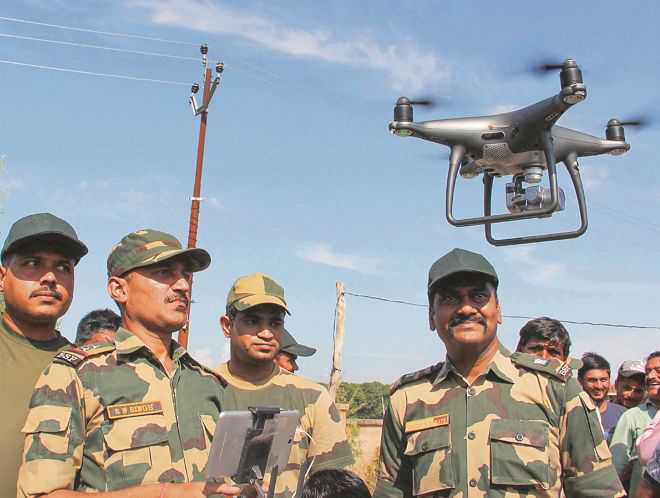
In order to combat the threat posed by unmanned air vehicles (UAVs) from across the border, the BSF will soon purchase a ground-based anti-drone system with a 360-degree surveillance mode equipped with radio frequency receiver, electronic-optical sensor and a jammer.
Sources said the tenders for the system would be floated soon. The easily deployable anti-drone equipment will be able to work day and night and able to detect multiple drones simultaneously.
In addition to procuring the state-of-the-art system, the BSF has also stepped up vigil and devised several other counter measures to deal with air intrusions in future.
“We had fired on the drones when these were sighted last time. Since then, no drone has been seen,” said a BSF official, adding that the troops manning the border had been directed to scan the skies regularly.
Rubbishing recent reports of the force ‘getting a nod’ to bring down the drones, the official said the option of opening fire in any such exigency was already available to them and was being exercised.
The sources said in places like Ferozepur and Amritsar where the cantonment was located close to the border, the drones were also used for tactical surveillance.
Apart from boosting its technological prowess, the BSF has also started sensitising the border residents about the need to identify drones or flying objects.
According to information, the Central and state security and intelligence agencies have also evolved a joint strategy to deal with any such misadventure along the border.
Though there have been no sightings of drones in the past few days, the security agencies are working out a strategy to prevent any possibility of arms and drug smuggling through the UAVs.
Last week, Punjab DGP Dinkar Gupta had also convened a meeting of various security establishments, including the Air Force, Military Intelligence, BSF, Intelligence Bureau, NIA besides other intelligence agencies.
The meeting was called following the seizure of a huge cache of arms, satellite phones and grenades from the modules backed by Pakistan-based handlers of Khalistan Zindabad Force which were dropped by drones.