Sanjha Morcha

Centre orders NIA probe into recovery of arms in Amritsar village

Centre orders NIA probe into recovery of arms in Amritsar village

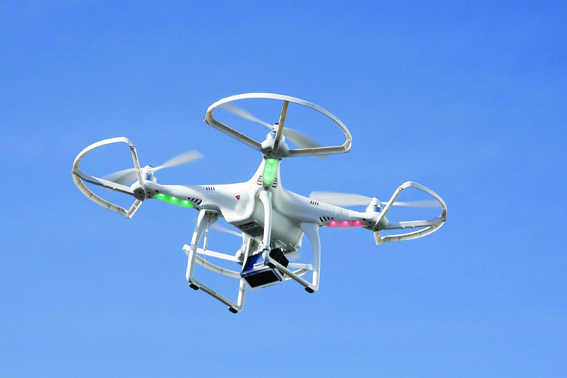
For representation only. File photo

Tribune News Service
New Delhi, October 4

The Centre has asked the National Investigation Agency to investigate the recent recovery of huge arms, ammunition and communication hardware in Punjab.

Officials in the Ministry of Home Affairs (MHA) said Punjab government had asked for the central agency to step in after the consignment was suspected to have been delivered using drones from across the border. Punjab Police claims that their bust a terror module of the Khalistan Zindabad Force (KZF)— backed by a group based in Pakistan and Germany—last month had revealed that the group had planned a series of strikes in Punjab and adjoining states.

Officials quoted the MHA’s order to say that the central government believed that the case involved scheduled offences under the National Investigation Agency Act, 2008 and “these are required to be investigated by the NIA in accordance with the Act and is hereby directed to take up the investigation of the aforesaid offences”.

The offences included a “conspiracy to carry out terrorist activity to create communal tension, instability and revival of terrorism in Punjab”, the official said.

Initial investigations found that drones were used to deliver weapons and communication hardware from Pakistan, the MHA official said, adding that according to reports four people were arrested from the outskirts of Chohla Sahib Village in Tarn Taran district of the state on September 22. A huge cache of arms, including five AK-47 rifles, pistols, satellite phones and hand grenades were seized from them, they said.

The weapons were suspected to have been delivered from across the border by the Pakistani intelligence agency ISI for jihadi and pro-Khalistani terrorist outfits working under its command, Punjab Police had said.


Can’t merge Urdu dept, Capt tells PU

Can’t merge Urdu dept, Capt tells PU

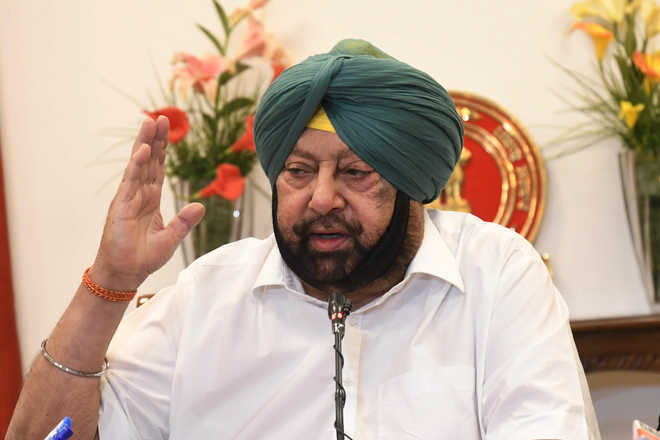
Capt Amarinder Singh, Chief Minister

Amarjot Kaur

Tribune News Service

Chandigarh, October 1

In a recent turn of events over the issue of Panjab University’s proposal to merge the Department of Urdu and Persian with the School of Foreign Languages, in view of the NAAC recommendations, Chief Minister Capt Amarinder Singh has written to the university’s Vice-Chancellor Prof Raj Kumar.

Capt Amarinder’s tweet posted on Tuesday stated: “I have written to @OfficialPU to reconsider their decision of include Urdu as a part of ‘School of Foreign Languages’. Classifying it as a foreign language with German, Chinese or Russia is not desirable. At a personal level, I regret that I did not have the chance to learn Urdu.” He has also posted a picture of the letter addressed to Prof Kumar.

The CM’s tweet comes a day after PU cancelled the meeting of a 15-member committee that was to take a call on the proposal regarding the merger of departments.

Also, Capt Amarinder had on Sunday posted a tweet, expressing concern over Panjab University’s proposal.

On September 17, a 15-member committee constituted by the university under PU (DUI)Prof Shankarji Jha had proposed to merge small departments to form bigger centres in the view of an NAAC directive.


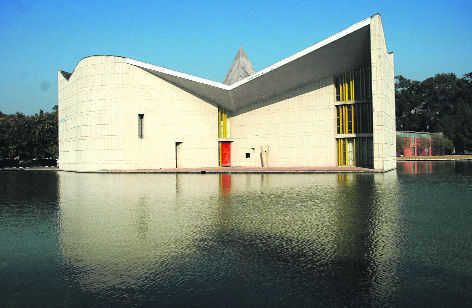
Let Urdu flourish PU move to merge dept with foreign languages ill-considered

Let Urdu flourish

Mirza GHALIB would have nailed the debate with this couplet: ‘Har ek baat pe kehte ho tum ki tu kya hai, tumhin kaho ki ye andaz-e-guftugu kya hai.’ Panjab University has courted needless controversy with the proposal to bring its Urdu Department under the School of Foreign Languages. The very idea of considering Urdu as a foreign and not an Indian language defies logic and reeks of insensitivity, no matter the administrative considerations. The department’s strong objection to the move highlighted how Urdu was ‘born, nurtured and cultured in India in the 13th century by Amir Khusro. From that moment onward, Urdu and Hindi languages have not looked back. Not only this, even Punjabi language was put on the path of development by Baba Farid Ganj Shakar’.

India’s composite way of life, where languages, religions, belief systems merge, coexist and nurture each other is a cherished idea. In the unique Hindustani communication fibre that binds India, and indeed the subcontinent, Urdu holds a pride of place. There has alongside been undeniable curiosity and eagerness to engage with this language of poetry and prose, and seek out more than just the meaning of lyrics and dialogues Bollywood so indulgently rests its standing on.

The contentious PU proposal gained traction after Punjab Chief Minister Capt Amarinder Singh’s tweet expressing concern. Language can be a great unifier and carries the potential to create irredeemable divisions where none existed, as witnessed following the recent remarks by Central ministers on exploring Hindi as the language of the country. If teaching of Indian languages like Urdu needs support, the State needs to step in, not distance itself from a national project. Some tasks demand affirmative action, this is one of them. Seeing language through the prism of religion, or even giving such an impression unknowingly, is fraught with danger. Just days before his death, Mahatma Gandhi had admonished those opposing Urdu. Cherish it, he counselled, ‘you will only gain’.


PM Modi to inaugurate Kartarpur Corridor PTB on November 8

PM Modi to inaugurate Kartarpur Corridor PTB on November 8

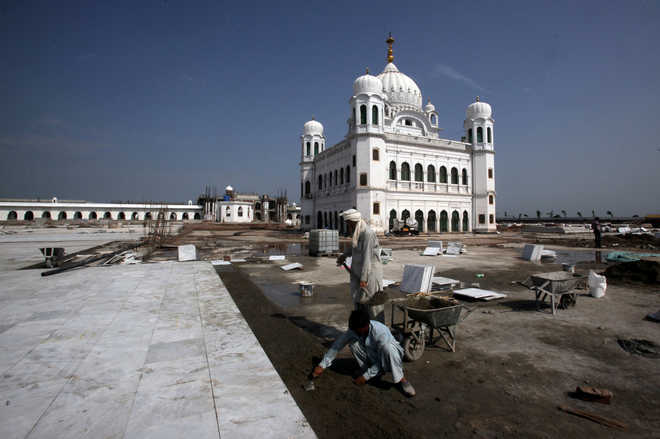
abourers work at the site of Gurdwara Kartarpur Sahib in Pakistan. Reuters file

New Delhi, October 31

Prime Minister Narendra Modi will inaugurate the state-of-the-art Passenger Terminal Building (PTB) at Dera Baba Nanak in Punjab on November 8, formally opening the Kartarpur Corridor connecting two historical gurdwaras on either side of the India-Pakistan border for pilgrims, officials said on Thursday.

The prime minister will also address a public meeting nearly three kilometres from the building after the inauguration, following which he will attend the 550th birth anniversary celebrations of Guru Nanak being organised at Sultanpur Lodhi, they said.

The much-awaited corridor will connect the Dera Baba Nanak shrine in Gurdaspur, Punjab, with the gurdwara at Kartarpur, just around four kilometres from the international border, located at Shakargarh in Narowal district of Pakistan’s Punjab province.

Guru Nanak Dev, the founder of Sikhism, had spent more than 18 years of his life at the Darbar Sahib gurdwara in Kartarpur, Pakistan, located on the banks of the river Ravi, making it one of the holiest sites for devotees.

Spanning over an area of around 2.5 lakh sq feet, the terminal will have a facilitation centre to host government officials responsible for ensuring hassle-free travel of pilgrims, food kiosks, parking areas and security points.

The government had acquired 50 acres land for the project which can accommodate 5,000 passengers.

The foundation stone for the Rs 178-crore Kartarpur Corridor was laid by Vice President M Venkaiah Naidu in November 2018.

A total of 55 immigration counters are being set up at the passenger terminal.

There will be no visa requirement but pilgrims will have to carry their passports.

Over 1,800 labourers are working in multiple shifts while 58 heavy-duty cranes are also being engaged to ensure completion of the work on schedule.

The archrival neighbours had agreed on visa-free travel for Indian devotees to Gurdwara Darbar Sahib using the Kartarpur Corridor.

The arrangement allows a pilgrim to reach the PTB with a passport and a permit, which can be applied for online.

Persons of Indian origin holding OCI (Overseas Citizenship of India) card too can visit the gurdwara using the Kartarpur Corridor.

Both countries had agreed to allow 5,000 pilgrims every day and that additional pilgrims will be allowed on special occasions, subject to capacity expansion of facilities by Pakistan side.

India and Pakistan had also decided that the corridor would be operational throughout the year and seven days a week, and that pilgrims would have a choice to visit as individuals or in groups.

Both sides agreed to build a bridge on the Budhi Ravi channel. Pending the construction of the bridge on the Pakistan side, both sides agreed to the crossing point coordinates of the temporary service road.

In November 2018, India and Pakistan had agreed to set up the border crossing linking Gurdwara Darbar Sahib in Kartarpur to Dera Baba Nanak.

The two sides had planned to open the corridor before the year-long celebrations to mark the 550th birth anniversary of Guru Nanak Dev beginning next month. — PTI


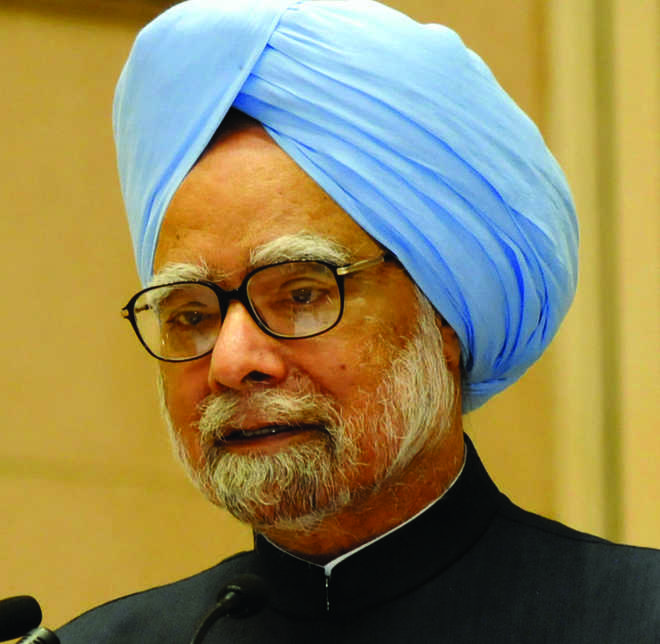
Ex-PM Manmohan to lead Congress ‘jatha’ to Pakistan

Ex-PM Manmohan to lead Congress ‘jatha’ to Pakistan

Tribune News Service

New Delhi, October 29

Former PM Manmohan Singh and 12 other Congress leaders will be among 575 Indian pilgrims to visit Darbar Saheb Gurdwara on the Pakistan side on November 9.

The official list of Congress participants in the first jatha to the historic gurdwara in Kartarpur includes senior Congress leaders Anand Sharma, Kumari Selja, AICC in charge for Punjab Asha Kumari, Mukul Wasnik, RPN Singh, Jitender Singh, Jyotiraditya Scindia, PL Punia, Jitin Prasada, RC Khuntia, Randeep Singh Surjewala and Deepender Hooda.

All leaders named in the Congress list to travel across the Kartarpur Corridor to mark the 550th birth anniversary celebrations of Guru Nanak are members of the Congress Working Committee.

The names were finalised by the Punjab Government after Manmohan Singh earlier accepted state CM Capt Amarinder Singh’s invitation to visit Gurdwara Darbar Sahib in Kartarpur.


Indian Army Chief mocked over his ridiculous claims

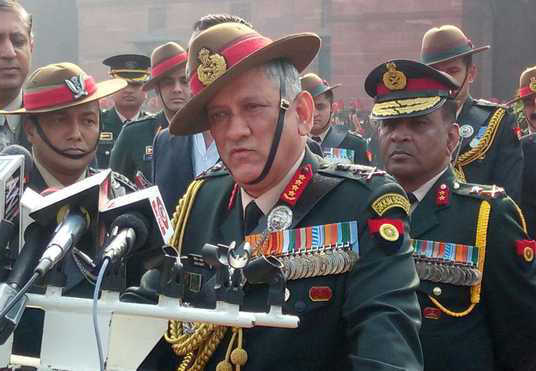
ISLAMABAD (Dunya News) – Indian Army Chief Bipin Rawat’s statement of attacking alleged camps in control areas of Azad Kashmir has been mocked around the world including by the Indian media.

Journalist Snehesh Alex Philip wrote in an article that the remarks of the Army Chief were surprising because this is a first in recent times when an Indian Army Chief was giving out speculative figures, making India a joke around the world.

“The security forces usually give out official details only after recovering the bodies as proof or after proper verification”, he asserted adding that political leaders, election strategists, journalists and people at large had started joking about the his ridiculous statement and how it happened just ahead of the polling day.

Snehesh went on to say that the Army sent out multiple messages asking everyone not to speculate and even issued a formal statement to journalists on the beat without giving out any casualty figures but within a few hours, the Indian Army Chief surprised everyone by making a statement contrary to the facts.

“The Indian Army should remember that it is not only important for it to be apolitical but also to be seen as being apolitical,” he maintained.

On Oct. 22, Pakistan arranged the visit of the diplomatic corps in Islamabad alongwith media, including foreign media, by helicopter to the site of recent Indian ceasefire violations which resulted in the shahadats of five innocent civilians on the Pakistani side and injuries to six others, Foreign Office said in a statement.

After the baseless and fallacious statement of the Indian Army Chief alleging that recent Indian ceasefire violations were targeting ‘launch pads/terrorist camps’ on the Pakistani side of the LoC, Pakistan requested the Indian High Commission in Islamabad to share details, including longitudes and latitudes of the alleged location to back the Indian allegations. No response has been received so far from India, the statement said.

It added that the diplomatic corps and media were taken to the LoC, including Jura to witness firsthand the fallacy of the Indian claims.

The Indian High Commission officials in Islamabad were also invited but did not show up.

The irresponsible allegations of the Indian Army Chief and the lack of response from India when asked to back its hollow assertions with details of the alleged “launch pads/ camps” not only expose the lies and deceit being employed as state policy and Indian aggressive posture which is a growing threat to regional peace and stability.

The visit further exposed the Indian falsehood to the international community and the desperate attempts being resorted by India to divert international attention from the humanitarian nightmare in IOJ&K.

Pakistan does not harbor any aggressive designs but our armed forces and people remain ready to defend the country against any acts of aggression, the statement concluded.


In a first, envoys from 85 countries pay obeisance at Golden Temple

http://

GS Paul
Tribune News Service
Amritsar, October 22

For the first time, a delegation of Resident Foreign Heads of Missions from nearly 85 countries paid obeisance at the Golden Temple dedicated to 550th birth anniversary of Guru Nanak Dev.

Originally, 91 envoys, sans the participation of Pakistan and China, were part of this trip. The visit was initiated by Indian Council of Cultural Relations (ICCR) head Dr Vinay Sahasrabuddhe and led by Union Minister for Civil Aviation Hardeep Singh Puri. ICCR director general Akhilesh Mishra also accompanied them.

The high profile delegation reached holy city through a chartered flight and was received by SGPC president Gobind Singh Longowal, MP Gurjeet Singh Aujla, Cabinet minister Sukhbinder Singh Sarkaria, DC Shiv Dular Singh and Police Commissioner Sukhchain Singh Gill.Puri said this programme with envoys from almost whole world to the Golden Temple together was a befitting mark of respect to Sri Guru Nanak Dev who spread the eternal universal message of peace and oneness of humanity.

“A history of the sort was in the making today with ambassadors of so many countries together paid obeisance at the Sanctum Sanctorum of this holiest Sikh Shrine. I am thankful to ICCR head who made it possible at a short notice of three-four days. This programme was dedicated to 550th birth anniversary of Guru Nanak Dev to give an opportunity to dignitaries about Sikh religion and culture,” he said.Puri, when asked about absence of representatives of Pakistan and China, said, “Invitation was extended to diplomats of various countries, but some could not make it, might be, due to their prior commitments,” he said.

Pertaining to the Centre’s programmes chalked out for Guru Nanak Dev’s parkash purb, he told that the cabinet had approved various programmes recommended by a dedicated committee under leadership of Union minister Rajnath Singh on November 22, 2018 meeting. This includes series of programmes, which included the opening of corridor leading to Gurdwara Kartarpur Sahib from Dera Baba Nanak on November 9.

When questioned about Pakistan’s insistence of imposing entry fee of $20 for Indian pilgrims, he said though this subject was out of his jurisdiction, yet as a Sikh devotee, he believed, that there should be no entry fee to visit Sikh holy shrines where every task is executed with ‘sewa’ (volunteer service). “But, it was for the Pakistan to decide upon,” he said.

Nonetheless, the visiting dignitaries partook of ‘langar’ at Sri Guru Ram Dass Jee Hall while sitting on the floor with ‘sangat’ (congregation) and ‘pangat’ (in a same row) concept founded by Guru Nanak Dev.

SGPC honoured the visitors by presenting them with Golden Temple model and ‘siropa’ (robe of honour) and literature concerning philosophy and teachings of Guru Nanak Dev’s universal brotherhood and harmony.

Earlier on arrival at Sri Guru Ram Dass Jee Airport, they were welcomed with traditional Punjabi style on bhangra beats and gidha. As the delegation reached Dharam Singh Market, they covered the distance to Golden Temple on foot through heritage street.

Children from International Fateh Academy mesmerised them with their Gatka (Sikh traditional martial art) skills. The delegation also watched the 50-minute show at interpretation centre at the basement of Golden Temple plaza, depicting the history of Golden Temple, Sikh principles, culture and Guru Granth Sahib ‘maryada’ (tenets).

SGPC president Gobind Singh Longowal told that all were overwhelmed with the spirituality and solace of the Shrine. “We had organised the programme in such a manner that they should all be well apprised about Sikh principles, religion and tenets. They were also thrilled sitting and eating together in the same row in Guru-ka-langar,” he said.

Later in the evening, DC Shiv Dular Singh apprised the visitors about Amritsar, Punjab and Invest Punjab programme, before they returned in the evening.


Why Russia’s Navy Is Becoming a Smaller, Regional Force

by David Axe Follow @daxe on TwitterL
Key point: Without the resources to fund a global navy, Moscow is focusing on ships that are smaller but modernized.

The Russian navy on Aug. 14, 2019 completed a key test of an upgraded missile corvette. The trial underscores the evolution of the Russian fleet from a force dominated by a few large vessels to one with a larger number of smaller ships.

The upgraded missile corvette Smerch conducted a live-fire exercise in the Sea of Japan, Russia’s state-run news agency TASS reported, citing the press office of Russia’s Pacific fleet.

“Today, in accordance with the plan of shipbuilders’ trials, the modernized small missile ship Smerch has held a series of missile firings against a naval and an air target,” the press office told TASS.

Smerch, a Nanuchka III-class corvette, displaces around 500 tons of water. Smerch launched in 1984.

After recent upgrades, Smerch boasts 30-millimeter and 76-millimeter guns, a battery of small surface-to-air missiles and Uran anti-ship missiles, which are equivalent to the U.S. Navy’s own Harpoon anti-ship missile.

Smerch is one of around 150 corvettes, patrol boats and mine-warfare ships in the Russian fleet. Each displaces just a few thousand or few hundred tons of water. The Russian navy operates fewer than 30 large, oceangoing frigates, destroyers and cruisers.
The U.S. Navy by contrast operates just a couple dozen small surface combatants and more than 100 large ones. The American and Russian fleets are opposites, each reflecting their country’s strategy, history, industry and geography.

The U.S. fleet, backed by a powerful, high-tech industry, favors large ships for their ability to deploy long distances in support of an interventionist foreign policy.

The Russian fleet, on the other hand, relies on outdated shipyards that reliably can produce only small vessels. Fortunately for Moscow, smaller ships are appropriate for Russia’s strategic focus on destabilizing, and occasionally invading, rivals just a short distance away along its own periphery.

The Russian navy’s transformation into a small-ship fleet has been accelerating. More large ships are decommissioning and smaller vessels — both new and upgraded — are taking their place, reshaping what was once a major global force into a new kind of regional fleet.

In April 2019 the Kremlin decided to dismantle rather than revamp two Cold War-vintage Kirov-class battlecruisers. Moscow likewise considered scrapping its sole aircraft carrier Admiral Kuznetsov rather than pay for maintenance and upgrades.

The accidental sinking of the PD-50 drydock in October 2018 weighed on the decision. PD-50 was the only drydock in northern Russia that could accommodate Kuznetsov. The Kremlin in mid-2019 signaled it will attempt to repair the aging carrier after combining two smaller drydocks to accommodate the vessel.
The new ships Russia is acquiring generally are missile corvettes displacing no more than 5,000 tons of water. An American destroyer, by contrast, displaces 9,000 tons.

The Kremlin bought just four new warships in 2018, all corvettes. While small, these vessels pack serious firepower. In recent years, corvettes from the Caspian Sea fleet have fired long-range Kalibr cruise missiles at targets in Syria — all without ever leaving Russian waters.
But the numbers are telling. As it transforms, the Russian navy by most metrics is falling behind the U.S. and Chinese navies. In 2019 the Russian fleet has 360 ships, according to U.S. Navy commander Keith Patton, writing for the Center for International Maritime Security. The Chinese fleet, by contrast, possesses 624 warships.

The American fleet at the same time has just 333 “battle force” ships. But the American ships on average are much bigger than Chinese and Russian ships are. The U.S. fleet in total displaces 4.6 million tons of water. The Chinese fleet displaces 1.8 million tons. The Russian fleet displaces just 1.2 million tons.

Perhaps most tellingly, the U.S. fleet can carry around 12,000 offensive missiles. Chinese ships in total can carry 5,200 missiles. Russia’s fleet, despite upgrades like those to Smerch, packs no more than 3,300. And that number could fall as more large, old warships decommission and smaller ships take their place.

David Axe serves as Defense Editor of the National Interest. He is the author of the graphic novels War Fix,War Is Boring and Machete Squad. This first appeared in August 2019.


Pak Army rejects India’s claim of destroying terror camps in PoK

Pak Army rejects India’s claim of destroying terror camps in PoK

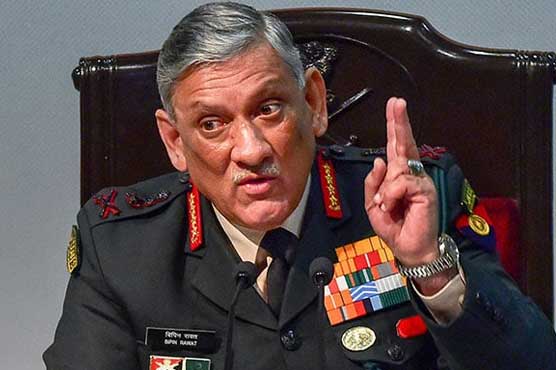
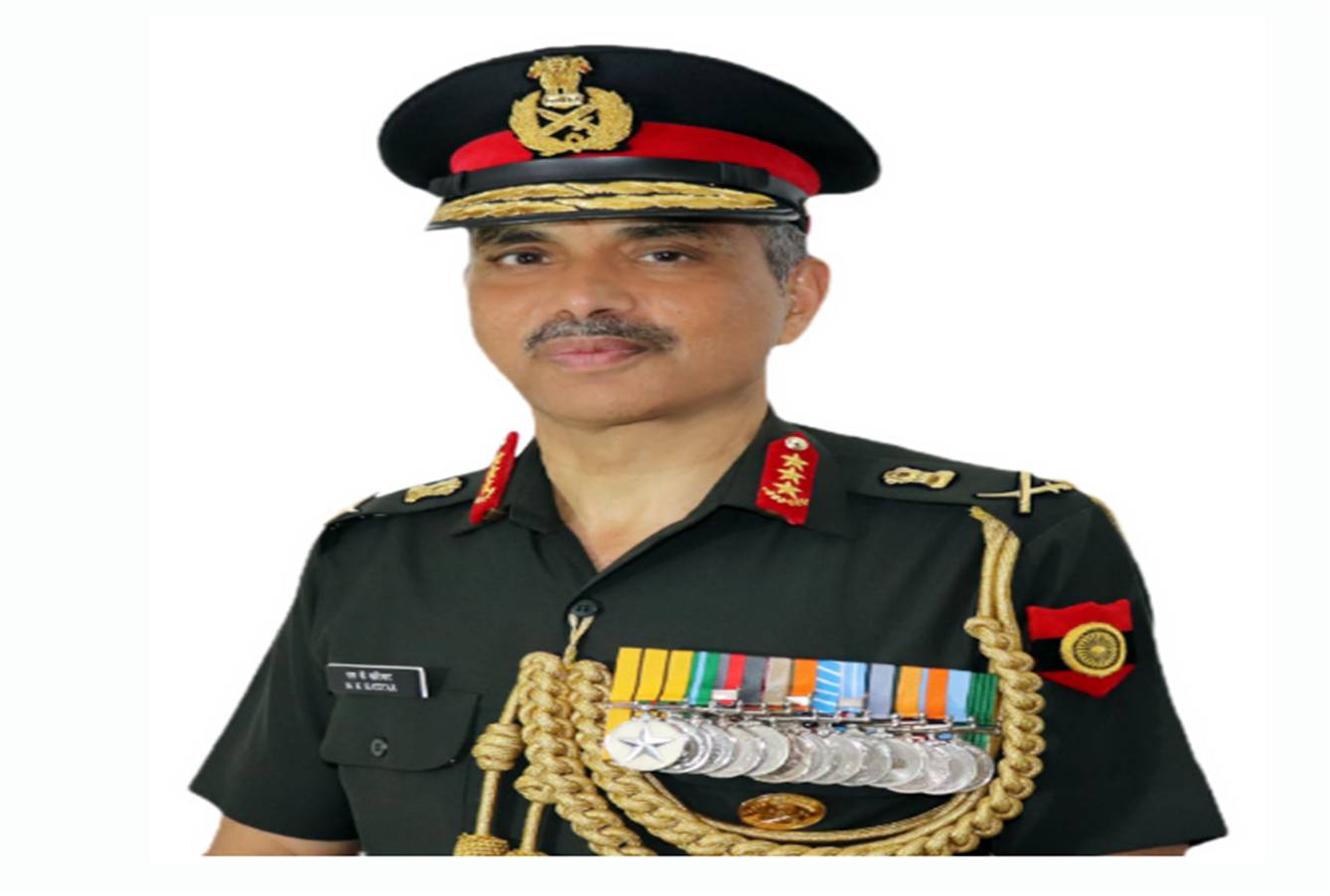
Gen Bipin Rawat. File photo
Islamabad, October 21

The Pakistan military has rejected as “false” the Indian Army’s assertion that it targeted at least three terror camps in the PoK and said India is welcome to take any foreign diplomat or media to the site to “prove” its claim on ground.

Indian Army chief General Bipin Rawat said on Sunday that six to 10 Pakistan Army personnel were killed and three terror camps destroyed in a retaliatory action by the Indian Army opposite the Tangdhar and Keran sectors in Jammu and Kashmir.

Responding to Rawat’s claim, Pakistan’s military spokesman Maj Gen Asif Ghafoor in a midnight tweet expressed disappointment at the assertions by the Indian Army chief. 

“There are no camps let alone targeting those. Indian Embassy in Pakistan is welcome to take any foreign diplomat/media to ‘prove’ it on ground,” Ghafoor said.

He said the “propensity of false claims by senior Indian military leadership especially since Pulwama incident is detrimental to peace in the region.”

“Such false claims by the Indian Army are being made to suit vested domestic interests. This is against professional military ethos,” Ghafoor said. PTI


No visa, but passport must to visit Kartarpur via corridor

No visa, but passport must to visit Kartarpur via corridor

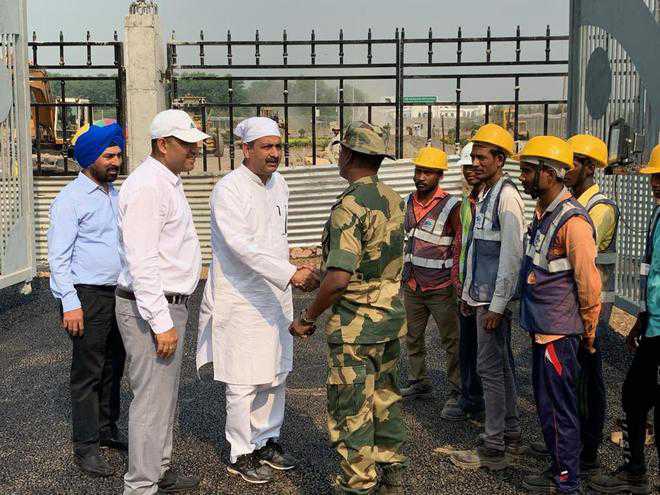
PWD Minister Vijay Inder Singla at the corridor site on Tuesday.

Ravi Dhaliwal

Tribune News Service

Dera Baba Nanak, October 15

After weeks of confusion, clarity has finally emerged on the subject of passport and visa for pilgrims desirous of visiting Kartarpur through the corridor with government officials stating that a passport will definitely be needed, but it will not be stamped with Pakistani visas.

This decision was keenly awaited because it is common knowledge that if a person’s passport has a Pakistani visa, his or her visa application to the US, Australia and European countries is compromised.

Cabinet Minister Sukhjinder Singh Randhawa, who visited the site today, said the Pakistan government had recently conveyed this decision to Indian officials.

“This was confirmed by Ajay Bhalla, Union Home Secretary, after a meeting held with him and other Central officials at the zero-line yesterday. A passport will be needed just for identification purposes. There was a lot of uncertainty on this issue because under normal circumstances, a person travelling to Pakistan by air, sea or road needs to have a visa stamped from the Pakistan High Commission in New Delhi. However, if anybody wants to use the corridor, he will not be requiring a visa,” said Randhawa.

CM Capt Amarinder Singh has been a strong votary of the corridor being both passport and visa-free. He had also taken up the issue with the ministers concerned in Delhi, but met with partial success because the government still insists upon having a passport.

Randhawa said to ensure a level-playing field, the Centre was mulling over a proposal to allow a pilgrim to cross over not more than one time a year.

“Repeated visits by those who can financially afford to go will mar the chances of other devotees. Such a rule should be put in place at least for the first year of the corridor’s inception,” he said.

Meanwhile, the CM dispatched PWD Minister Vijay Inder Singla to the corridor site today. “All four roads leading to the ICP are being recarpeted and widened. The government has already sanctioned grants. The passages which are being strengthened are the ones leading to Dera Baba Nanak from Fatehgarh Churian, Ramdas, Batala and Gurdaspur,” said Singla