Sanjha Morcha

Differently abled soldiers to light up your Diwali

Differently abled soldiers to light up your Diwali

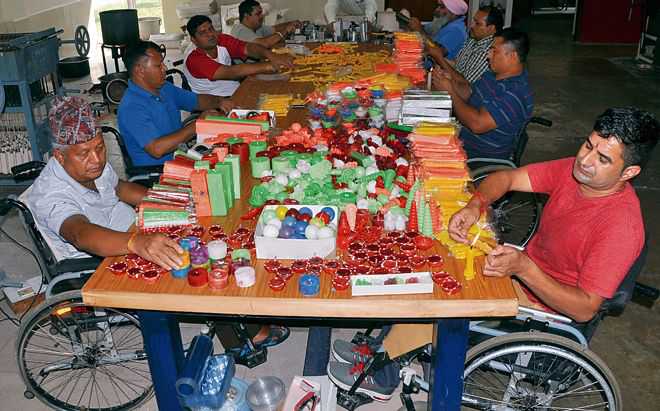
Differently abled soldiers with their creations at the Paraplegic Rehabilitation Centre in Phase 6, Mohali. Tribune photo: Vicky

Akash Ghai

Tribune News Service

Mohali, October 22

Candles and diyas (earthen lamps) made by differently abled soldiers at the Paraplegic Rehabilitation Centre (PRC) at Phase 6 here will light up many a home in the region this Diwali. Such items, worth about Rs 5 lakh, have been made by the inmates of the centre, which are being marketed for the public.

“These soldiers, who suffered 100 per cent disability in the line of duty and are now wheelchair-bound, are producing designer candles and decorative diyas in the workshop at the PRC. They are receiving a good response from local residents,” Col Gurkirat Singh (retd), Director, PRC, said.

Established in 1978, the PRC is a charitable institution that undertakes rehabilitation of paraplegic and tetraplegic soldiers and provides them therapeutic facilities and vocational training in various fields to make them economically self-sufficient.

At present, 30 ex-servicemen and their families are residing in the PRC. Former defence personnel, including Subedar AK Jha, Havildar Sarwan Sngh and sepoy Anil Karki, said preparing such items gave them relief and happiness. “It gives us immense happiness when people, who come to buy these items, appreciate our hard work. We have several permanent customers, who visit us every year to purchase these items,” said one of them.

More recently, PRC inmates have also started manufacturing uniform pullovers for students of Army Public School, Dagshai, and Sainik School, Kunjpura. “The profit earned from the sale of these items is distributed among the inmates,” Colonel Gurkirat said.

Being on wheelchairs has failed to dampen their spirits as many inmates have made a mark in the sports arena. They have participated in a host of national as well as international competitive sports for the physically challenged, including table tennis, basketball and para athletics.

Two inmates, Ajit Kumar Shukla and Mohammad Lateif Bhat, have made it to the 14-member wheelchair basketball squad for the upcoming Asia Oceana Zone (AOZ) Championship and the Tokyo 2020 qualifying round at Bangkok, Thailand. They are preparing for the forthcoming events at the PRC here.

Lt Gen RP Singh, who recently took over as the General Officer Commanding-in-Chief, Western Command, also visited the PRC last month to take stock of its activities and discuss measures to ensure the welfare of the inmates.


Pakistan at it again

Pakistan has got a four-month reprieve from the Financial Action Task Force (FATF), a global watchdog on money-laundering and terror-financing, thanks to the support of friends like China, Malaysia and Turkey and the last-ditch arrests of some Lashkar-e-Taiba leaders. However, it’s too much to expect Pakistan to mend its ways and show tangible results on the ground any time soon. On Sunday, three terror launch pads in Pakistan-occupied Kashmir (POK) were demolished in artillery firing by India after yet another ceasefire violation by the neighbour. The unmistakable presence of terror infrastructure has exposed Pakistan’s insincerity about tackling the menace emanating from its soil. The same day, Pakistan foreign minister Shah Mehmood Qureshi upped the rhetorical ante, declaring his government’s commitment to achieving all FATF targets in time to get the country off the grey list, even as he accused India of trying to blacklist it.

It’s an open secret that unprovoked ceasefire violations by the Pakistani army are aimed at assisting infiltration by terrorists into Indian territory. The Indian Army has been on high alert along the Line of Control ever since the Modi government announced the abrogation of Article 370 that had accorded special status to Jammu and Kashmir. Pakistan’s failure to win over the international community on the Kashmir issue in recent months made it desperate for another misadventure, but the prospect of being downgraded by the FATF hung over it like a sword of Damocles, forcing it to hold back the infiltrators till the coast was clear.

Pakistan’s unsatisfactory compliance report and its cross-border mischief are ample proof of its incorrigible attitude. According to the FATF charter, the support of at least three countries is required to not blacklist a country. India and other like-minded nations should ensure that this technicality does not shield Pakistan for long. Relentless pressure is needed to choke the flow of foreign aid and financially cripple the rogue state. Greater monitoring at the international level can thrust Pakistan into a cul-de-sac, cutting off all escape routes.


Bengaluru startup, HAL team-up for drone battle

Delegates at the Synergia Conclave look at an image of drones.

Toiling in secret at the Hindustan Aeronautics Limited (HAL), test pilots and engineers are working on a next-generation unmanned aerial vehicle project, which could see kamikaze drones destroy missile sites even as other aircraft-sized drones engage…

Read more at: https://www.deccanherald.com/city/bengaluru-startup-hal-team-up-for-drone-battle-769762.html


India, Philippines agree to bolster defence ties; sign 4 pacts

Manila, October 18

India, Philippines agree to bolster defence ties; sign 4 pacts

President Ram Nath Kovind (left) with his Philippine counterpart Rodrigo Duterte (R) after attending a joint press confrence

India and the Philippines on Friday agreed to bolster defence and maritime security partnership and to make it a key pillar of bilateral cooperation, amidst China flexing its military muscles in the region.

The two countries also committed to work closely together to defeat and eliminate terrorism in all its forms as President Ram Nath Kovind held wide-ranging talks with his Philippine counterpart Rodrigo Duterte at his official residence, the Malacanan Palace.

“I had very productive discussions with President Duterte. These cover bilateral cooperation as well as regional and global issues of the day,” Kovind said after the talks and signing of four agreements covering maritime domain, security, tourism, science and technology and culture.

Kovind arrived in the Philippines on Thursday as part of his five-day state visit to the country.

“My visit to the Philippines is taking place in this landmark year when we are celebrating 70 years of the establishment of diplomatic relations between our two countries,” Kovind said in a press statement along his Philippine counterpart Duterte.

Acknowledging that the relations between the two countries have grown from strength to strength, Kovind said, “We have strong cooperation in political, defence and security, counter-terrorism, trade and investment as well as in agriculture, science & technology and health fields.”

The president noted that the two countries have been the victims of terrorism with India being the target of cross-border terrorism for decades, in an apparent reference to Pakistan.

“We committed to work closely together to defeat and eliminate terrorism in all its forms and manifestations,” he said.

“The Philippines and India agreed to deepen defense and maritime security partnership and to make it a key pillar of their bilateral cooperation,” according to the official Twitter account of the Rashtrapati Bhavan.

As two vibrant democracies that believe in a rules-based international order, respect for international law and sovereign equality of nations, the Philippines and India are “natural partners” in the pursuit of their respective national development and security objectives, Kovind said.

One of the agreements inked on Friday was on the sharing of white shipping information between the Philippine Coast Guard and the Indian Navy. White shipping information refers to exchange of advance information on the movement and identity of commercial non-military merchant vessels.

The meeting between Kovind and Duterte took place after a Chinese fishing trawler hit and sank a Filipino boat in June in the contested waters of the South China Sea.

China claims most of the contested sea, including waters close to the Philippine shores, and has dismissed a UN-backed international tribunal ruling that said its assertion to the Sea is without legal basis. Parts of the South China Sea are also claimed by Taiwan, Brunei, Malaysia and Vietnam.

President Duterte said he was elated that the friendship between Manila and New Delhi has brought “tremendous opportunities” between their peoples.

“With the signing of bilateral agreements, we have likewise widened the path towards enhancement of our engagement in maritime security, science (and) technology, tourism, and cultural cooperation,” he was quoted as saying by the official Philippine News Agency.

“We hope to look back on this day as a milestone in our relation—the day when we set out to turn promise into reality, and potential into concrete benefits (that) bring the greatest positive impact on the lives of our peoples,” he added.

During Kovind’s talks with Duterte, who was involved in a minor bike accident on Thursday, the two countries decided to explore their common future through cooperation in space, as well as the past – through research of the history of their civilisational roots and commonalities in culture and tradition.

“We look forward to receive experts from the Philippines to India to research and document our ancient links,” he said.

President Kovind also highlighted the immense potential to further deepen the Philippines-India economic ties.

The Philippines is emerging as an important focus country for India’s corporate sector, he said.

The president said that India is also keen to participate in infrastructure development as well as in defence modernisation of the Philippines.

“In both these areas, Indian companies have made their mark and attained global reputation,” he said.

“We also invite companies from the Philippines to invest in India’s transformative growth and development,” he said.

Kovind also stressed on the people-to-people relations that form the bedrock of sound bilateral relations.

“India is one of the fastest growing source countries for tourists to the Philippines. Both sides are exploring to start direct flights, which will give boost to connectivity. With our highly liberal visa regime, we look forward to more Filipino tourists visiting India,” he said.

The president said he is happy to have the opportunity to unveil a bust of Mahatma Gandhi on the land of Jose Rizal on Gandhi’s 150th anniversary.

“The future presents us with new opportunities to bring our two nations closer. I believe that the time has come for the Philippines-India relationship to reach an altogether new level of engagement,” he said.

Kovind also condoled the loss of life caused by the earthquake in Mindanao on Wednesday and wished speedy recovery to those affected. PTI


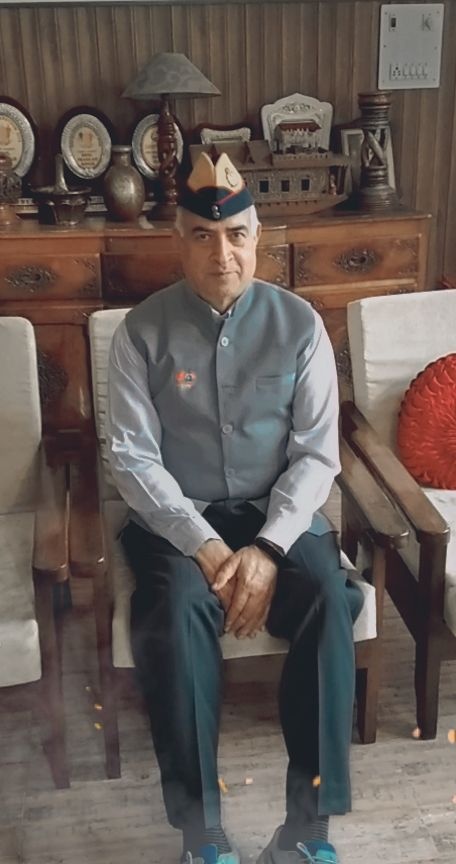
Tackling terror with smart, seamless grid by Maj Gen Amrit Pal Singh (Retd)

Maj Gen Amrit Pal Singh (Retd)

NATGRID has acquired some of the latest data mining and other essential technology to provide intelligence tracking and collation. When fully functional, it will link 10 user agencies and 21 service providers. A select group of agencies will have access to the database. This enables agencies one-point access to data which is otherwise widely spread out.

Tackling terror with smart, seamless grid

Glaring Lapse: The failure to collate intelligence or act on intelligence inputs characterises numerous terror attacks in India.

Maj Gen Amrit Pal Singh (Retd)

Military Commentator

National Security Adviser Ajit Doval’s statement that Pakistan is under immense pressure from the Financial Action Task Force (FATF) to rein in terror groups operating from its soil comes weeks after Home Minister Amit Shah announced the resurrection of the National Intelligence Grid (NATGRID). The establishment of the long-delayed National Counter-Terrorism Centre (NCTC) was pushed for by successive governments as an overarching body to handle terror. However, politics and turf-guarding have held up the creation of smart structures despite the sanctioning of Rs 5,400-crore budget. Inter-agency rivalry and distrust were primarily responsible for creating fissures about staffing and control of the central agency and the NCTC as well as NATGRID were kept on hold.

After the 26/11 Mumbai terror attacks, the NCTC was conceived as a single agency to counter terrorist actions and it was initially based on the US model and was meant to handle the functions of joint intelligence and joint operations.

The NCTC was to be superimposed on the existing multi-agency centres (MAC) and was to have sweeping powers to arrest and carry out operations across the country. In addition to complementing the NCTC, a national computerised information-sharing network, known as NATGRID, was proposed as a unified database of national stature to combine intelligence inputs.

The overriding principle in tackling terror is to be able to forecast terror threats by intelligence analysis and neutralising them before they cause casualties and damage to the humans, materials and national pride. In fact, the failure to collate intelligence or to act on intelligence inputs characterises the numerous terror incidents that have unfolded in India. The inability to separate intelligence activities and armed response has been amply highlighted by the disjointed responses witnessed in various terror acts, from the 2008 Mumbai attacks to the 2019 Pulwama carnage.

The political quagmire over the formation of a Central anti-terror agency stems from the ambiguity in the responsibility for security. Security is a state subject and the police forces are controlled by the state governments, thereby giving the states the exclusive power to legislate with respect to the police system and exercise full administrative control over the police.

The police are adept at handling crime and law and order situations. However, at present, there is no Central agency to coordinate action against organised criminal syndicates, let alone terrorism. The Mumbai and Pathankot attacks proved the glaring inadequacies of the local police forces in combating orchestrated terrorist actions.

In the haste and shock of 26/11, many attempts were made to revamp India’s internal security architecture and most of the proposals failed to materialise. A look at the architecture of the existing counter-terror mechanism brings the disjoint in the construct of the structure sharply into focus.

The Intelligence Bureau (IB), India’s main intelligence agency, is controlled by the Union Ministry of Home Affairs and is responsible for internal security and intelligence. The IB is considered the nodal agency and works closely with the state police and the Central paramilitary forces on counterterrorism intelligence. However, it cannot

fully execute this function because it has no legal authority to investigate an offence, arrest anyone or prosecute them in court.

The National Investigation Agency (NIA) is presently the central counter-terrorism law enforcement agency. Such an agency without appropriate anti-terror intelligence and analysis, at best, can follow leads to register cases and probe terror attacks because investigation, by nature, is a post-event activity and cannot be confused with the activity of seeking intelligence and collating inputs that lead to actionable analysis to forecast events.

The Crime and Criminal Tracking Networks & System (CCTNS) was envisaged to seamlessly link India’s police stations, to allow for better information sharing and replicates some of the features proposed in NATGRID. Towards the end of 2018, it was announced that 14,749 out of the 15,655 police stations in the country have been connected with the 18 CCTNS. Their efficacy, however, is up for debate as reviews indicate slackness in delivery of tangible results. Basic ground-level grassroots intelligence functions also need to be honed and used to feed data from across the states for an efficient tracking and monitoring system.

The recent report of NATGRID becoming functional within a year is a positive and well-considered development in the country’s attempt to form a stable and robust mechanism supported by institutional mechanisms to forecast, analyse and counter the existential terror threat. NATGRID has acquired some of the latest data mining and other essential technology to provide intelligence tracking and collation.

When fully functional, NATGRID will link 10 user agencies and 21 service providers. A select group of agencies will have access to the data base which comprises mobile numbers, vehicle numbers, passport details and, in later phases, train and air ticketing details. This enables agencies a one-point, real-time access to data which is otherwise widely spread out and held by different government and law enforcement departments.

David Headley’s movements in and out of the country and his visits to reconnoitre the Mumbai targets were available with various immigration and police agencies. But the lack of a seamless grid to provide real-time information ultimately led to a failure to connect the dots.

NATGRID will be crucial to intelligence gathering and use of information to arrive at a collated intelligence picture and help in the identification of any emerging threats. Counter-

terror operations agencies can, thereafter, analyse and prioritise multiple threats that emerge.

A single centre for the control and coordination of all anti-terror efforts, like the proposed NCTC, could be the next logical step. The decision to take overt or covert action against such emerging threats has to be taken by the executive who will now be given the facts duly collated and analysed by a single agency.

A comprehensive but national approach to tackle terror must transgress political and interagency rivalry and turf guarding. A centralised approach, mostly synonymous with slow and monolithic responses, has to make way for collaborative Centre-state intelligence sharing, with quick decision-making and prioritisation of threats. If not, terror planners and crime-terror syndicates will only be emboldened and strike with impunity, safe in the knowledge that it is business as usual. An armed response across the borders into another country’s territory is probably not the smartest way to combat terror — it puts troops at risk, triggers escalation and, in the end, is a reactive strategy.

The recent actions taken to finalise and resuscitate the NATGRID lead one to hope for the establishment of smart structures to combating terror.


Top Army Commanders To Meet Next Week On Emerging Security Challenges idrw.org .Read more at India No 1 Defence News Website http://idrw.org/top-army-commanders-to-meet-next-week-on-emerging-security-challenges/ .

Top Army commanders will meet next week to discuss emerging security and administrative challenges and chart a course for the force, an Army spokesperson said on Friday. The latest edition of the Army Commanders’ Conference will be held in New Delhi from October 14 to 19. The Army Commanders’ Conference, a top biannual event, is held in April and October every year. The conference facilitates conceptual level deliberations culminating in important policy decisions. “The apex level leadership of the Indian Army will brainstorm on current emerging security and administrative challenges and chart the future course for the Indian Army. To ensure due diligence, decisions are taken through collegiate system comprising Army commanders and senior officers,” the spokesperson said. The conference starts on October 14 with the address of Army Chief Bipin Rawat, followed by an update by the Army commanders on their respective operational and administrative issues. Discussions on contemporary issues are also scheduled. Additionally, an equipment display by defence industries showcasing niche technology in fields of artificial intelligence, drone systems, ammunition and unmanned ground vehicles will also be held.

idrw.org .Read more at India No 1 Defence News Website http://idrw.org/top-army-commanders-to-meet-next-week-on-emerging-security-challenges/ .


Violence in Kashmir reduced after abrogation of Art 370: Army

Violence in Kashmir reduced after abrogation of Art 370: Army

Bhaderwah/Jammu, October 11

The Army on Friday said violence in the Kashmir valley has gone down since the abrogation of the Article 370 on August 5.

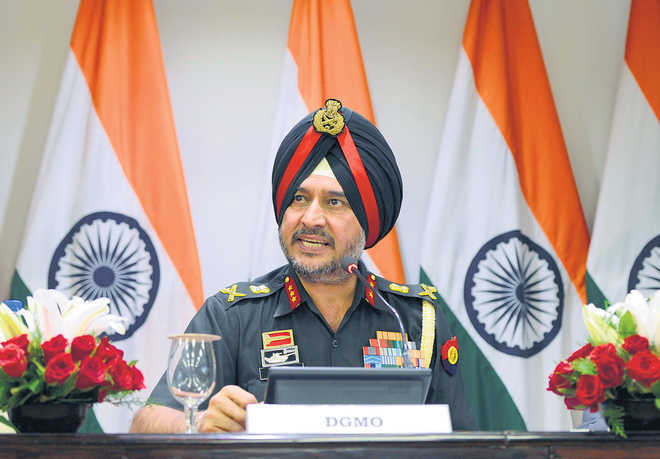
Addressing a gathering after inaugurating the ‘Sangam Youth Festival’ at University Campus, Bhaderwah, General Officer Commander in Chief, Northern Command, Lt Gen Ranbir Singh said he had high hopes from the valley’s youngsters.

“The situation in valley is under control. Ever since the abrogation of article 370 on August 5, there has been significant improvement in all the violence parameters in Kashmir,” Lt Gen Singh told reporters here.

“There has been reduction in terrorist initiated incidents. There has been reduction in stone pelting incidents. There has also been reduction in the protests that were carried out by the people or the large number of crowds coming out,” he added.

But the situation remains fragile, because Pakistan continues with its designs to push in infiltrators so that they can keep the state of Jammu and Kashmir in a constant state of turmoil, the Army commander said.

“We are prepared to foil their designs,” he added.

Replying to a question, he said there was no change in the role of the UN along the Line of Control.

Speaking about the festival, he said: “This is very humble contribution from the Army to provide a platform to the youth in Bhaderwah for nurturing their talent.”

“They are the future not only of Jammu and Kashmir but the nation,” he added. — PTI 


Border residents in Punjab spot two more drone incursions

Border residents in Punjab spot two more drone incursions

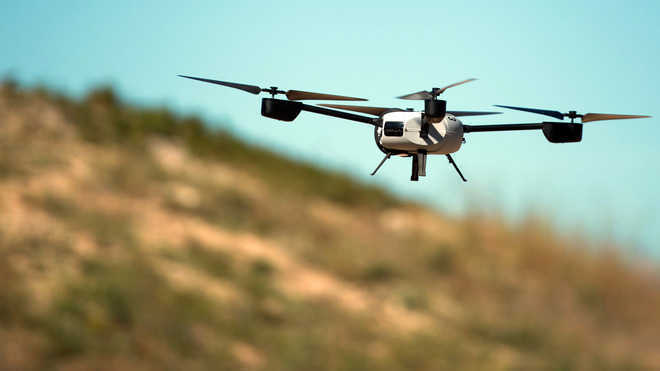
Image only for representational purposes

Anirudh Gupta
Tribune News Service
Ferozepur, October 9

Amidst speculations being rife about the use of drones by Pakistani agencies to airdrop sophisticated arms meant to carry out subversive activities in the state, border residents on Tuesday night spotted two more drone incursions in Hajara Singh Wala and Tendi Wala villages, both situated along the Hussainiwala border in Ferozepur.

However, the BSF authorities are tightlipped about the development and no official confirmation has arrived as of now. On Monday night, BSF troopers had spotted five drones sorties, out of which one drone had intruded the Indian airspace upto a kilometer in Ferozepur.

While border residents are alarmed, the security forces are on alert and combing operations were on to sanitise the entire area where drones were spotted. The BSF has reportedly lodged a protest about the incident with Pakistani counterparts during a flag meeting which took place on Tuesday.


J-K Guv asks administration to lift ‘exit’ advisory for tourists

J-K Guv asks administration to lift ‘exit’ advisory for tourists

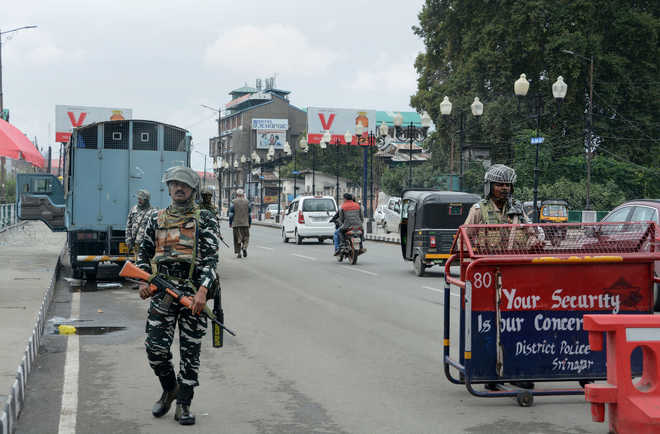
Security personnel stand guard in Srinagar on Monday. PTI photo

Tribune New Service
Srinagar, October 7

Jammu and Kashmir Governor Satya Pal Malik on Monday directed for lifting of an over two-month-old advisory, which asked tourists to leave the valley.

“The governor directed that the Home Department’s advisory asking tourists to leave the Valley be lifted immediately. This will be done with effect from October 10,” an official spokesman said.

A statement that the state administration’s Department of Information and Public Relations put out on Twitter said: “Governor Shri Satya Pal Malik held a Situation cum Security Review Meeting today with the Advisers and the Chief Secretary. The Governor directed that the Home Department’s advisory asking tourists to leave the valley be lifted immediately. This will be done w.e.f. 10.10.2019.”The advisory was issued in August, after which the central government read down Article 370 of the Indian Constitution and split the state into two union territories—Jammu and Kashmir, and Ladakh.

In the advisory, Principal Secretary Home Shalin Kabra had asked pilgrims and tourists to “curtail their stay” and “return as soon as possible”.

“Keeping in view the latest intelligence inputs of terror threats, with specific targeting of the Amarnath Yatra, and given the prevailing security situation in the Kashmir Valley, in the interest of safety and security of the tourists and Amarnath Yatris, it is advised that they may curtail their stay in the Valley immediately and take necessary measures to return as soon as possible,” it said.

In today’s meeting, the Governor was briefed about the BDC elections. He was informed that there is active interest in the BDC elections and most of the seats of Chairpersons of BDCs would be filled. All AROs and AEROs have been provided mobile phone facility to ensure smooth conduct of elections. Nomination papers were accepted even on Monday.

The Governor was informed that as BDC elections were party based, the delegations of parties whose leaders are in jail are being allowed to meet party presidents once, so that they can take a decision on elections and authorise someone to approve candidates.

The Governor was also briefed about the progress in apple procurement which has crossed 850 tonnes and worth Rs 3.25 crore. Some changes in the rates of apple are being made which will be announced shortly.

 Immediately before the controversial provision was read down on August 5, the state went into lockdown mode—restrictions were imposed on movement, several mainstream political leaders were put under house arrest and communication lines were cut off in the state.


Pak PM Imran Khan warns PoK residents against crossing LoC

Islamabad, October 5

Pakistan Prime Minister Imran Khan on Saturday warned the residents of Pakistan-occupied-Kashmir (PoK) against crossing the Line of Control “to provide humanitarian aid or support” to the Kashmiris.

The Prime Minister’s warning on Twitter comes a day after tens of hundreds of residents from across PoK set out in vehicular and motorcycle rallies to Muzaffarabad on the call of pro-independence Jammu Kashmir Liberation Front (JKLF) to show solidarity with the Kashmiris.

A JKLF spokesperson told Dawn news that the marchers would resume their rally towards Chakothi sector on Saturday morning.

“From Chakothi we will cross over the ceasefire line (LoC) for Srinagar,” he said, expressing his desire for the administration and police not to create hindrances for them.