





Sanjha Morcha

Govt ‘struggling’ to set up Ladakh UT admn

Govt ‘struggling’ to set up Ladakh UT admn

Samaan Lateef

Tribune News Service

Srinagar, October 4

The authorities in Jammu and Kashmir are facing an uphill task of setting up administration for the proposed Union Territory of Ladakh.

To put an effective chain of administration in place, the government is facing a shortage of officials of the rank of Special Secretaries to head departments in Kashmir. Even Ladakh does not have enough number of native lower-rung officials and employees to run the administration.

In the first phase, the government will shift officers and employees of Ladakh presently working in J&K state.

“To fill the shortfall, the government will be deputing officers from Jammu and Kashmir to the Union Territory of Ladakh for a two-year term on a rotation basis until a proper administration is set up there. It obviously is a difficult process,” a senior officer told The Tribune.

However, sources said most of the officers of Ladakh, who have settled in Jammu or Kashmir, are unwilling to go back to their native place.

“Ladakh was always a punishment posting for the employees of J&K. Who would like to work in that cold desert for the entire year?” asked an officer of Leh presently posted at the Civil Secretariat in Srinagar.
“The government has put an end to the state’s diverse administrative culture, which was a confluence of Ladakhi Buddhists, Muslim Kashmiris and Dogra Jammuites. After the displacement of Kashmiri Pandits, the Valley had already lost its diversity. Now this comes as a death blow to it,” he said.

The BJP-led NDA government scrapped the special status of Jammu and Kashmir and bifurcated the state into two union territories – Jammu and Kashmir, and Ladakh on August 5.

Prior to that Governor Satya Pal Malik-led State Administrative Council (SAC) in July had approved the creation of 495 posts of various categories for fully operationalising Ladakh.

The 495 new posts created include posts of 12 Directors, four Chief Engineers, four Joint Directors, Chief Conservator of Forests, Regional Wildlife Warden and other senior positions.

Over 470 more posts at different levels and belonging to a variety of departments were created to support the directorates and chief engineer offices that would be established in Ladakh.

The government on August 20 constituted a six-member committee headed by Principal Secretary, Home, Shalin Kabra to suggest measures to be taken for providing staff to the proposed UT of Ladakh and any other issue related to the staff of the proposed UT of Jammu and Kashmir.

Every department in the existing set up of J&K would submit personal and service details of their employees to the General Administration Department, official sources said.

The data would be presented before the Kabra-led committee to take a final call on the distribution of employees.

“In the next few weeks, we will prepare a complete list of employees to be shifted to Ladakh,” said an officer.

However, a woman officer from the region said she would resign if she would be sent on deputation to Ladakh.

Cold feet for cold desert posting

  • Sources said most of the officers of Ladakh, who have settled in Jammu or Kashmir, are unwilling to go back to their native place.
  • “Ladakh was always a punishment posting for the employees of J&K. Who would like to work in that cold desert for the entire year?” asked an officer of Leh presently posted at the Civil Secretariat in Srinagar.
17 hand grenades recovered near LoC in Poonch district

17 hand grenades recovered near LoC in Poonch district

 search operation was launched on specific information. Tribune file

Jammu, October 4

Army and police personnel launched a joint search operation in border areas of Jammu and Kashmir’s Poonch district and recovered 17 hand grenades on Friday, a senior police officer said.

A search operation was launched on specific information in Kharagali area of Loran border belt and a hideout was busted, he said.

Seventeen hand grenades were recovered, he said, adding that it appeared they were three to four months old. PTI


NRC imbroglio Centre must allay residents’ fears of persecution

INvoking national security in the aftermath of the Pulwama terror attack, the BJP had stolen a march on the Opposition in the 2019 Lok Sabha polls, with PM Narendra Modi claiming soon after the Balakot airstrike that the nation was ‘in safe hands’. The ruling party is now again swearing by national security to justify the urgency of preparing the National Register of Citizens (NRC). In principle, the exercise makes sense as every resident Indian should be accounted for, irrespective of caste, creed or ethnicity. However, the whole process is being given a communal colour, leading to panic and possible strife. Home Minister Amit Shah said in Kolkata on Tuesday that the Centre would not force Hindu, Sikh, Jain and Buddhist refugees to leave India, promising them that the NRC would be implemented after the passage of the Citizenship (Amendment) Bill. It was certainly not unintentional that a prominent minority community was conspicuously left out in his speech. Firebrand politician Asaduddin Owaisi duly pounced upon this omission, telling Shah to read the Constitution that prohibited the grant of citizenship on the basis of religion.

Shah’s statement came a week after BJP general secretary Kailash Vijayvargiya boasted that ‘each and every Hindu refugee’ would get Indian citizenship. He did not even bother to name any other community. For the record, of the 19 lakh people left out of the NRC in Assam, more than half are Hindus. In West Bengal, the Mamata Banerjee government claims that at least 17 people have committed suicide or succumbed to stress so far, fearing loss of citizenship. In BJP-ruled UP, the police have already set the ball rolling to identify Bangladeshis and other foreigners so that they can be deported.

The Centre needs to ensure that only infiltrators or intruders are weeded out, not the refugees who have fled persecution in neighbouring countries. Pursuing a divisive agenda is fraught with danger as it would further alienate the minorities and worsen the trust deficit. ‘Sabka saath, sabka vikas’ will become a meaningless slogan if hapless residents are subjected to a witch-hunt.


Northern Command chief visits forward areas in Ladakh

Northern Command chief visits forward areas in Ladakh

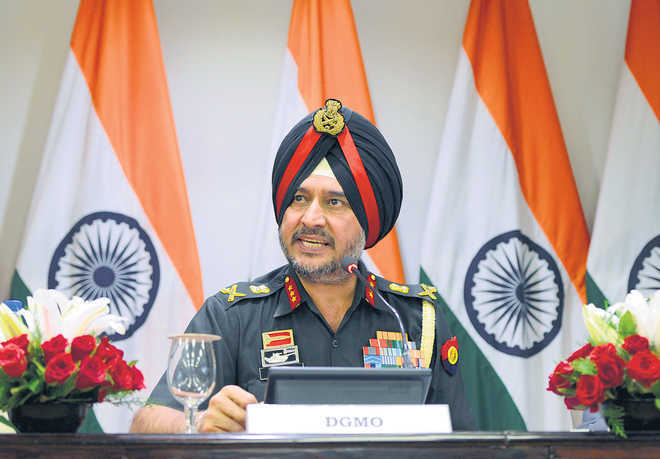
Lt Gen Ranbir Singh, General Officer Commanding-in-Chief, Northern Command – File photo

Our Correspondent

Jammu, September 30

To review operational preparedness, Lt Gen Ranbir Singh, General Officer Commanding-in-Chief, Northern Command, visited forward areas of eastern Ladakh on Monday.

Earlier this month the Army carried out a rare integrated military exercise combining its various wings in eastern Ladakh bordering China. Lt Gen Ranbir Singh was accompanied by Lt Gen YK Joshi, General Officer Commanding, Fire and Fury Corps.

Lt Gen Ranbir Singh interacted with troops deployed at forward posts and complimented them on their state of readiness. He appreciated the tenacity and high standards of professionalism displayed by all ranks in extreme terrain conditions. He exhorted them to remain vigilant, uphold the high traditions and standards of professionalism of the Army.


Report on Kashmir situation: ‘Marked increase in psychological distress

The report, ‘Imprisoned Resistance: 5th August and its aftermath,’ was released in the capital on Thursday.

US Congress panel on Kashmir, Jammu and Kashmir bifurcation, Article 370 abrogation, Gumanitarian crisis in J&K, special status kashmir, kashmir lockdown, Ilhan omar kashmir NRC,

The team, which also comprised human rights activists and legal experts, visited the Valley between September 28 and October 4.

An 11-member team comprising a mental health specialist, which visited Kashmir to understand the situation after the scrapping of the special status in Jammu and Kashmir, has said in its report that “there is a marked increase in psychological distress” in the region.

Delhi-based psychiatrist Dr Amit Sen, who was part of the team and interacted with mental health specialists in the Valley, has said in the report that “widespread disruption of daily life across the state has had a profound impact on the lives of children”. The team, which also comprised human rights activists and legal experts, visited the Valley between September 28 and October 4.

“Grassroot workers are unable to refer children showing clear signs of trauma and abuse to more centralised facilities that are better equipped to deal with such complex cases due to the lack of transport and connectivity. There is a marked increase in psychological distress in 70% (as estimated through a recent survey) of the population, although how it translates into mental health disorders is yet to be seen,” Dr Sen states in the report.

“There is no school, no routine or structure, no healthy recreation, and no sense of safety or predictability…”


Room in Capt’s house dedicated to 2 Sikh Regiment

Room in Capt’s house dedicated to 2 Sikh Regiment

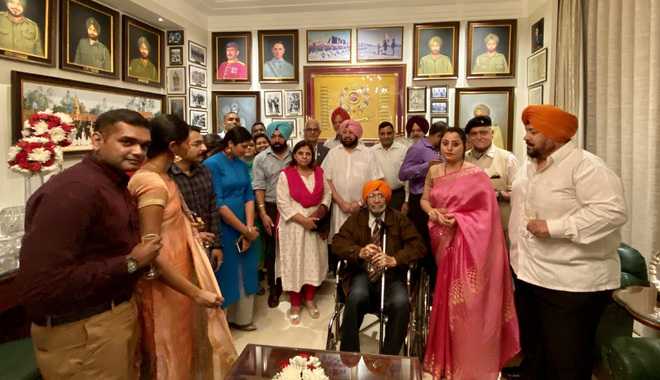
The room at CM Capt Amarinder Singh’s house that has been turned into a museum for the 2nd Battalion of the Sikh Regiment.

Chandigarh, October 29

Chief Minister Capt Amarinder Singh has dedicated a room in his new house to the valour of the 2nd Battalion of the Sikh Regiment (2 Sikh), in which he had served in his earlier days.

A government spokesperson released details and photos of the room terming it a museum for 2 Sikh with whom Chief Minister Capt Amarinder Singh has an indestructible bond, that has survived three generations of his family of soldiers.

The portraits, painted by a local artist Kuldeep, capture the toils and turbulence through which those men survived to etch their name in military history. The entire room is filled with chronicles of the regiment’s history.

The spokesperson said the room literally came alive to the 2 Sikhs motto of `Nischey Kar Apni Jeet Karon’ when the Chief Minister hosted officers from his erstwhile regiment, along with their spouses, over dinner on Monday. “I love spending time with men from my regiment… and being with them in this room full of history and memories was special,” he said, clearly happy to be with the men. Among those who joined the special occasion were Col KS Chib, CO, 2 Sikhs; Col Sukhinder Singh; Lt Gen AK Sharma; and Lt Gen RS Sujlana.


Three robbers held for murder bid on Gurdaspur armyman

On leave Haviladar Haqiqat Singh was shot at by accused near Chechian Shodian village in Gurdaspur on Diwali day
Haviladar Haqiqat Singh of 11 Dogra Regiment

HT Correspondent

letterschd@hindustantimes.com

GURDASPUR  : The district police on Tuesday arrested three robbers who shot at an armyman on leave near Chechian Shodian village under Purana Shalla police station in Gurdaspur district on Diwali day.

Haviladar Haqiqat Singh of 11 Dogra Regiment, a resident of Chounta village near Dinanagar, was undergoing treatment at military hospital in Pathankot and is stated to be critical. He is admitted in the ICU of the hospital, said an army official.

Haqiqat Singh had taken a leave and was on way to his village from his sister’s village Chechian Shodian with his wife and 10-year-old daughter on October 27 when he was shot at.

The robbers stopped the couple near Chechian Shodian at gunpoint and shot at the armyman when he resisted their attempt to snatch his wife’s purse.

They shot him in the chest, stomach and left hand. Gurdaspur superintendent of police (headquarters) Navjit Singh said the accused fled after wife of the victim started hurling stones lying on road and raised an alarm.

Navjit Singh said the accused identified as Sachpreet Singh and Gurpreet Singh alias Gopi of Gunopur village in Kahnuwan Tehsil of the district and Kulwinder Singh alias Lancer of Kotli Sainian village in Gurdaspur tehsil have been arrested with a .32 bore pistol, two magazines and two live cartridges.

SP said that with the help of CCTV cameras installed on the road, the police nabbed all three robbers along with the pistol used for committing the crime.

A case under Sections 307,379-B, 506 and 34 of the Indian Penal Code (IPC) and 25, 54 and 59 of the Arms Act against the accused at Purana Shalla police station.

All accused have past criminal records, said the SP. Kulwinder Singh is facing three cases in Purana Shalla police station here and Police Line and A division police station in Amritsar; Gurpreet Singh has a case registered against him under the Narcotic Drugs and Psychotropic Substances (NDPS) Act at police station Hajipur in Hoshiarpur and a case under Sections 363,366 of the IPC is registered against Sachpreet at Bhaini Mian Khan police station.


The submarines strengthening Indian Navy

India’s lethal submarines

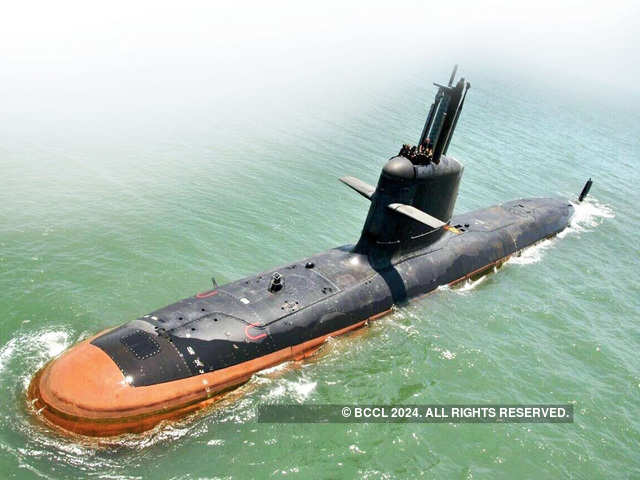
The Scorpene submarines, designed by the French Naval Group (Formerly DCNS), are being built by Mazagon Dock Limited (MDL) in Mumbai as part of Project-75 of the Indian Navy. According to MDL, the technology being used for construction of the Scorpene class submarines has ensured superior stealth features such as advanced acoustic silencing techniques, low radiated noise levels and hydrodynamically optimized shape. “These stealth features give it an invulnerability, unmatched by most submarines,” said MDL. The submarines also have the ability to launch a crippling attack on the enemy using precision guided weapons.“The attack can be launched with both torpedoes and tube launched anti-ship missiles, whilst underwater or on the surface,” MDL had said.

BCCL
INS Kalvari
2/5

INS Kalvari

It is India’s first Scorpene-class submarine and was commissioned into the Indian Navy in December 2017 by Prime Minister Narendra Modi. On the occasion, PM Modi had said Kalvari was an excellent example of ‘Make in India’ and will boost the Navy’s might. Kalvari is named after the dreaded Tiger Shark, a deadly deep sea predator of the Indian Ocean. The first Kalvari, commissioned on December 8, 1967, was also the first submarine of the Indian Navy. It was decommissioned on May 31, 1996, after nearly three decades of service.

INS Khanderi
3/5

INS Khanderi

INS Khanderi is India’s second Scorpene-class attack submarine. It is a diesel-electric attack submarine which is designed by French naval defense and energy company Naval Group (Formerly DCNS) and was manufactured at Mazagon Dock in Mumbai. The submarine can attack with torpedoes as well as tube-launched anti-ship missiles whilst underwater or on the surface. Defence Minister Rajnath Singh commissioned in it Septmber 2019.

INS Karanj
4/5

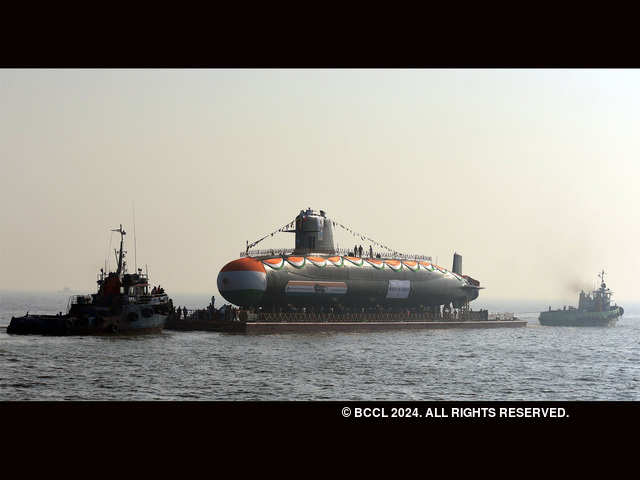
INS Karanj

The Scorpene-class submarine Karanj was launched at Mazagon Dock Shipbuilders Limited (MDL) in Mumbai in January 2018. Karanj is the third of the six Scorpene-class submarines built by MDL under the Project 75 programme.


American rifles for infantry by year-end: Rawat

American rifles for infantry by year-end: Rawat

Troops to get Sig Sauer guns

New Delhi, October 25

Army is working to empower its infantry forces and one of the world’s best rifles, manufactured by US firearm major Sig Sauer, will be made available to them by the end of this year, Army Chief Gen Bipin Rawat said on Friday.

In his closing remarks at the Field Marshal KM Cariappa memorial lecture here, he said a manufacturing unit for AK-203 rifles, an India-Russia joint venture, will start production and first set of rifles are expected to be available by the end of this year.

“To ensure there is no slippage in production, for the first time, the ordnance factory in Amethi is being headed by a serving Major General of the Army, who will be its CEO. We are confident the first set of rifles coming in dismantled state and assembled here will be available by the end of the year,” Gen Rawat said. “And, let me assure you, the best rifle available in the world, Sig Sauer from the US will be made available to the infantry by the end of this year,” he said. — PTI


The $13-Billion ‘Barge’? The U.S. Navy’s Newest Aircraft Carrier Can’t Deploy

The U.S. Navy’s new aircraft carrier USS Gerald R. Ford might not be able to deploy until 2024. That’s years later than the Navy originally expected. The delay could further inhibit the ability of the Navy’s Atlantic Fleet to deploy carriers.

The U.S. Navy’s new aircraft carrier USS Gerald R. Ford might not be able to deploy until 2024. That’s years later than the Navy originally expected. The delay could further inhibit the ability of the Navy’s Atlantic Fleet to deploy carriers.

The nuclear-powered Ford, which cost no less than $13 billion to build, has been undergoing trials off the U.S. east coast since commissioning in 2017.

The Ford class, in theory, represents a major improvement over the previous Nimitz-class supercarriers. The Navy so has ordered four Fords. Lead vessel Ford was supposed to deploy for the first time in 2022.

The Fords are bigger than the Nimitzs are, boast superior sensors and a more efficient deck layout and feature precise electromagnetic catapults rather than the maintenance-intensive steam catapults that the Nimitzs have.

Sea trials have underlined a host of problems with the thousand-feet-long Ford that have compelled the Navy repeatedly to delay the ship’s first operational deployment. The Navy’s decision to conduct explosive shock trials of the new flattop before deploying her also has contributed to the delays.

Benjamin O. Davis, Sr. is named the first African American general in the United States Army.


Cuban Missile Crisis: Adlai Stevenson shows photos at a meeting of the United Nations Security Council proving that Soviet missiles are installed in Cuba.

The most high-profile failures have involved the Electromagnetic Launch System catapult, a new aircraft arresting system called the Advanced Arresting Gear, the weapons elevators that haul bombs and missiles from the munitions magazines to the deck and the ship’s primary sensor, the Dual Band Radar.

Ford has four weapons elevators, each requiring precision installation of components weighing tens of tons. As of October 2019, just three of the elevators were working. “We certified now and turned over to the crew three elevators,” James Geurts, the Navy’s top acquisitions official, told lawmakers on Oct. 22, 2019. “The fourth one is very close.”

“We’re about 75 percent done with the entire project,” Geurts explained. “We’re talking about in some cases [lining up] 70-ton doors and hatches. It’s not a technology issue. It’s a construction completion issue in terms of getting all the doors and hatches where they need to be.”

Naval Sea Systems Command head Vice Adm. Tom Moore said he was optimistic the Navy and shipbuilders would be able to make up for recent delays and get Ford out on her maiden deployment earlier than 2024. “We’re going to pull back as far to the left as we can, but I think we’re going to beat that,” Moore said at the same Oct. 22, 2019 hearing with lawmakers.

But Ford’s problems are just one factor in the Navy’s worsening struggle to sail carriers from the East Coast. USS Harry S. Truman in August 2019 suffered electrical problems that delayed her own planned deployment. Problems overhauling USS Dwight D. Eisenhower in late 2018 “left the carrier unable to relieve USS Abraham Lincoln in the Middle East and forced Truman into a double-pump deployment,” Sam LaGrone reported for USNI News.

The Navy’s controversial proposal in early 2019 prematurely to decommission one of its East Coast flattops would have compounded the shortage.

The sailing branch proposed to decommission the 21-year-old Truman in the early 2020s, just halfway through her planned service life, in order to free up billions of dollars for newer ships including Ford-class carriers.

But decommissioning Truman would have dropped the carrier fleet to a low of nine vessels in the 2030s, despite a legal requirement for the Navy to operate at least 11 carriers at all times. If the fleet lost Truman and couldn’t buy or deploy Fords fast enough owing to technical problems with the new ships, the carrier force could’ve shrunk even further.

Lawmakers objected to the Navy’s plan, forcing fleet leaders to backtrack. Truman is set to continue in service. But the delay in deploying Ford amounts to a cutback all its own. An aircraft carrier that can’t deploy doesn’t contribute anything to America’s national defense.

At the Oct. 22, 2019 hearing, Rep. Elaine Luria, a Virginia Democrat, castigated the Navy, describing Ford as a “$13-billion nuclear-powered floating berthing barge.”

David Axe serves as Defense Editor of the National Interest. He is the author of the graphic novels  War FixWar Is Boring and Machete Squad.