Sanjha Morcha

CM gives double promotion to ‘forgotten’ Kargil war hero Vir Chakra awardee was manning traffic in Sangrur as senior constable

CM gives double promotion to ‘forgotten’ Kargil war hero

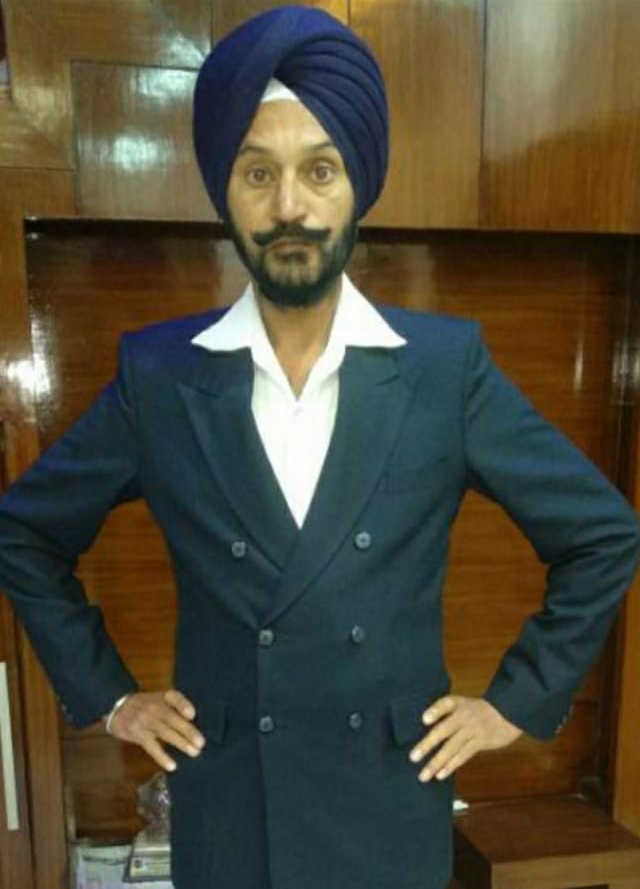
Satpal Singh

Tribune News Service
Chandigarh, July 26

Within hours of learning that Kargil war hero Satpal Singh was managing traffic as a senior police constable in Sangrur, Chief Minister Capt Amarinder Singh on Friday ordered double promotion for the Vir Chakra awardee.

The Chief Minister accused the previous SAD-BJP government of ignoring the credentials of Satpal Singh at the time of his recruitment in 2010.

An official spokesperson said Satpal Singh, who joined the Punjab Police after his discharge from the Army, has been named Assistant Sub-Inspector (ASI) following direct orders from the CM in recognition of his valiant contribution during the Kargil war.

As a special case, he will be promoted as an Assistant Sub-Inspector, after relaxing Rule 12.3 of the Punjab Police Rules by the DGP, who has been so authorised by the Chief Minister.

Satpal Singh was posted in the Drass sector during Operation Vijay and was part of the team that helped the Army capture Tiger Hill.

He killed Pakistani Captain Karnal Sher Khan of the Northern Light Infantry and three others. Khan was later conferred the Nishan-e-Haider, Pakistan’s highest gallantry award, on the recommendation of an Indian brigade commander who vouched for his bravery on the icy heights.

Capt Amarinder lamented that Satpal Singh had to suffer the ignominy of working as a senior constable after his act of gallantry during the Kargil war.

The CM said he found out about the situation of Satpal, who also belonged to the Chief Minister’s battalion, when he read about it this morning.

The Chief Minister has authorised the DGP to grant the required relaxation in age (November 7, 1973) for the recruitment of Satpal Singh as an ASI in the Punjab Police, the spokesperson said.

Satpal Singh was recruited into the Punjab Police as senior constable and was currently discharging his duties in an outstanding manner in Bhawanigarh town of Sangrur district, Director General of Police Dinkar Gupta said.

He said ex-post facto approval of the Council of Ministers would be obtained subsequently for the required relaxation in rules.

Gupta said Satpal Singh was posted in Sangrur, but had sought transfer to Bhawanigarh six months ago, which was accepted.

Elevated to ASI

  • Satpal Singh will be promoted as an Assistant Sub-Inspector after relaxing Punjab Police rules
  • He was posted in the Drass sector during Op Vijay and was part of the team that helped Army capture Tiger Hill
  • He killed Pak Captain Karnal Sher Khan of Northern Light Infantry and three others


IN HONOUR OF THE BRAVEHEARTS

The nation is filled with pride, honour and inspiration as it celebrates the 20th anniversary of the Kargil War. Several events have been planned to highlight the stories of valour by our brave soldiers and rekindle the pride among the youth.

The Kargil War will always be remembered for its strategic and tactical surprises, the self-imposed national strategy of restraint in keeping the war limited to Kargil Siachen sectors and swiftly executed tri-services military strategy and plans. The Kargil War will also be remembered for the determination and daring junior leadership and the raw courage of our jawans at tactical level.

This year, 20th anniversary of victory in ‘Operation Vijay’ is being celebrated with the theme ‘Remember, Rejoice and Renew’. We ‘remember’ our martyrs, by revisiting the sacrifices and instilling pride and respect

among us, we ‘rejoice’ by celebrating the victory in Kargil and we ‘renew’ our resolve to safeguard the honour of the Tricolour.

The ‘Kargil Vijay Diwas’ celebrations for the year 2019 will be spread over three days from July 25-27 and will be organised at Dras and New Delhi. However, as part of the build up to the main event, numerous activities are planned to be organised all over the country with effect from first week of July.

The events being organised, include expeditions by the units, which participated in the Kargil War, to their respective battlefields at super high altitude locations such as Tololing, Tiger Hill, Pt 4875 to name a few. A ‘Wreath Memorial Ceremony’ has been organised at the ‘Kargil War Memorial’ in Dras on July 26 to honour the bravehearts who laid down their lives during the ‘Operation Vijay’. A ‘Commemoration Ceremony’ is being organised at the Manekshaw Centre, New Delhi, where a panel discussion with the war veterans and serving officers will be conducted. The event will be followed by ‘Kargil Vijay Diwas Evening’ a cultural extravaganza, at the Indira Gandhi Indoor Stadium on July 27, which will be graced by the dignitaries.


Bullet-riddled wallet keeps her son’s memories alive

Bullet-riddled wallet keeps  her son’s memories alive

Kanta Devi, mother of martyr Udhay Maan Singh, shows the wallet that her son carried on the day of martyrdom. Tribune Photo

Dinesh Manhotra
Tribune News Service
Jammu, July 25

Kanta Devi, mother of Kargil martry Udhay Maan Singh, has made it a routine to go through a bullet-riddled wallet of his son to keep the memory of the martyrdom of his brave son alive.

Udhay was carrying the wallet when he attained martyrdom on July 5, 1999, while fighting with Pakistani soldiers to liberate the Tiger Hill during the Kargil war.

“Every morning I go through the wallet of my son to remind myself of the supreme sacrifice he made for the motherland,” said a teary-eyed Kanta Devi. Bullets fired by the enemy soldiers had pierced through the wallet which the martyr’s family has kept in the pooja room. 

A native of Shamachak village on the outskirt of Jammu city, Udhay had joined 18 Grendadiers of the Army at the age of 18 and had attained martyrdom at the age of  21.

“Udhay always wanted to serve in the Army ever since he was a child for which he worked hard and achieved his goal at the age of 18”, the proud mother said, adding, “In his memory we have dedicated our ancestral house at village Shamachak in which his uniform, national flag, medals and other items have been preserved to give inspirations to the younger generation and to keep his memories alive”.

On the night of July 4, 1999, the 18 Grenadiers team were given the responsibility to recapture the Tiger Hill along with two other battalions. To evict the Pakistani troops from the hill, these battalions launched an attack and reached the top of the hill, using ropes and other accessories. After reaching the peak, they had to face intense gun firing. In the ensuing gun battle, Grenadier Udhay Maan Singh had received a fatal gunshot and succumbed to his injuries. He was martyred along with his two other comrades on July 5. Udhay was the only son of his family.


Centre wants states to spend on defence, moots non-lapsable fund for armed forces

The Centre spent about Rs 92,000 crore on central para military forces in FY19 but only 10% of that was on capital assets creation.

The Centre, it is learnt, is keen that state governments pitch in for boosting capital expenditure on defence to better equip the country’s armed forces. The desire for this radical change in defence funding, officials said, was behind last week’s Cabinet decision to widen the 15th Finance Commission’s terms of reference (ToR) “to ensure an assured allocation of resources towards defence and internal security imperatives”.

The commission was also asked to examine whether a separate mechanism for defence funding (a non-lapsable fund) ought to be set up and the ways to operationalise the same. The move may, however, face stiff resistance from states as it might lead to a reduction in their autonomous space to decide what the tax resources received from the Centre be spent on. “When the divisible pool is divided between the Centre, States and Union Territories, the Commission may see whether some amount can be set aside for the defence forces. This is the idea (behind the ToR expansion),” an official told FE.

The 14th Finance Commission (FY16-FY20) had hiked the states’ share in divisible pool of taxes to 42% from 32%. However, the Centre’s overall transfers to states haven’t since grown at a pace faster than the Central budget size or its net tax receipts did. This is because the transfers under Central-sector and centrally sponsored schemes have been slashed in recent years. The Centre has also increased the cesses and surcharges, the proceeds of which are not required to be shared with the states.

On the Centre’s mind, sources said, is a non-lapsable defence capital fund account akin to a similar fund that has been in existence since 1998-99 for the North Eastern region. The parliamentary standing committee on defence had earlier recommended such a dedicated fund in the public account for defence capex. The idea is to enhance and heighten the operational preparedness of the defence forces and ensure that procurement of equipment, arms and ammunition for them is not delayed due to lack of finances.

Even as the Centre’s budget grew on an average of 11% between FY16 and FY20BE, the defence capex has grown by only 7%, hindering/delaying crucial weapon acquisition by the armed forces. Defence capex at Rs 1.03 lakh crore was only 23.5% of defence ministry’s budget of Rs 4.3 lakh crore (includinf defence pension and civil expenses) in FY19 and 33% of total defence budget (revenue and capex) of Rs 3.05 lakh crore. The Centre spent about Rs 92,000 crore on central para military forces in FY19 but only 10% of that was on capital assets creation.

The parliamentary panel found that against a projection of Rs 1.6 lakh crore for capex for FY19, only Rs 83,434 crore, that is 50% less, was allocated in the FY19BE for the defence services (Army, Navy, Joint Staff and Air Force). After examining the past trends, the panel said the lower budgetary allocations vis-à-vis the projected amounts appear to be a norm rather than an exception, probably affecting adversely capital equipment acquisition plans by the ministry of defence.

Last year, nearly half a dozen states, including Andhra Pradesh and Kerala, had opposed the 15th FC’s ToR, which mandated the use of the population data of 2011, instead of 1971, to compute the inter-se shares of states from the central tax kitty. These states fear losing out as their population growth rate is below the replacement rate of growth.

 Get live Stock Prices from BSE and NSE and latest NAV, portfolio of Mutual Funds, calculate your tax by Income Tax Calculator, know market’s Top GainersTop Losers & Best Equity Funds. Like us on Facebook and follow us on Twitter.

For talks, but other means too: Govt Kashmir issue bound to be resolved, says Rajnath Singh

For talks, but other means too: Govt

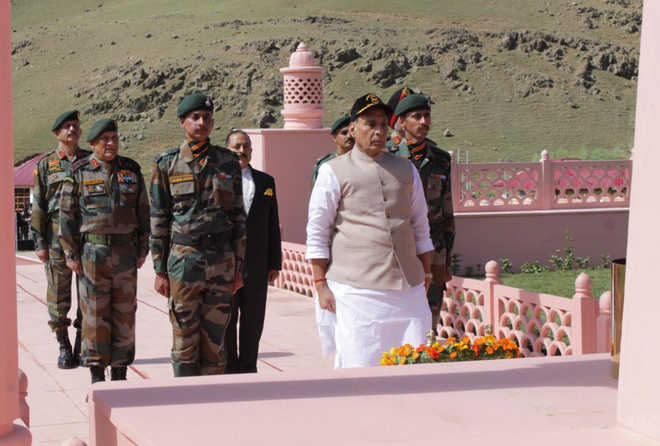
Raksha Mantri Rajnath Singh, Minister Dr Jitendra Singh and Army Chief Gen Bipin Rawat pay tribute at Kargil war memorial in Drass.

Tribune News Service

Samba/Kathua, July 20

Favouring talks, Defence Minister Rajnath Singh today said the Centre had many “ways and means” to resolve the Kashmir issue, if dialogue failed to yield results.

He was  addressing a gathering at Pandori village in Kathua district. The Union Minister inaugurated two bridges worth Rs 91.9 crore built by the Border Roads Organisation at Ujh in Kathua and Basantar in Samba district.

Taking a swipe at Kashmir-based separatist leaders for “misguiding” Valley’s youth, he said: “They send their wards to foreign countries for jobs and exploit local youth and students by placing  stones in their hands to be thrown at the forces in the name of ‘azaadi’. What kind of ‘azaadi’ they want for the youths of Kashmir?”

He said Jammu and Kashmir “lies in my heart and this is the only reason I often visit this state, which is heaven”.

Unfortunately, the militants were trying to make it hell, he said. “Our forces will not allow them to succeed in their nefarious designs. It is my firm belief that not only Kashmir but the entire state will turn into a paradise in the near future.” Rajnath said the newly constructed bridges were not only important from the defence point of view, but also for residents living near the border with Pakistan.

Rajnath earlier paid tributes to soldiers killed in the Kargil war at a memorial in Drass Sector on the 20th anniversary of ‘Operation Vijay’.


‘No force on earth can stop us’

No force in the world can stop us from resolving the issue but I want to make it clear that those who want to resolve the issue through agitations should come and sit together for dialogue. If the Kashmir issue is not resolved through talks, we have some other ways to solve the problem. — Rajnath Singh, Defence minister


Pulwama makes it to election speeches, but CRPF & its problems are left out

CRPF, which is at the forefront of fighting insurgency in J&K and the northeast, suffers from lack of training and adequate infrastructure.
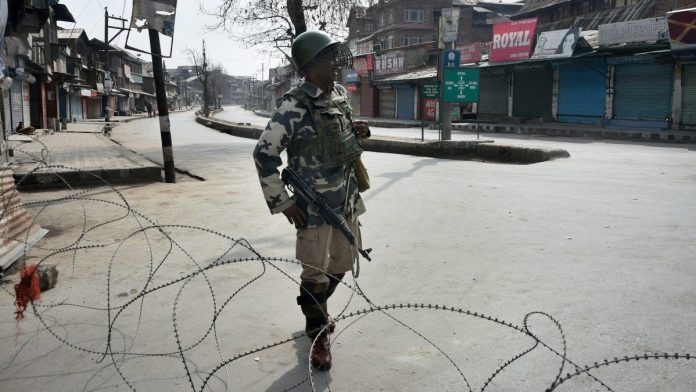
A CRPF jawan

While both the BJP and the Congress have raised the national security pitch in their Lok Sabha campaigns, none of the political parties wants to talk much about the CRPF.

The force that is at the forefront of fighting insurgency in Kashmir, central India and the northeast suffers from lack of training and adequate infrastructure.

Recent reports now say that a top CRPF officer had pointed out these shortfalls in a series of letters to the CRPF headquarters barely months before the 14 February Pulwama terror attack.

While lack of infrastructure, as pointed out by the officer, is indeed a problem, repeated setbacks point towards a systemic failure and the inability of the leadership to comprehend the training needs, analyse performance gaps and take remedial measures.


Also read: BJP & Congress manifestos offer a security policy high on emotions, low on substance


IPS officers to blame?

The standard and orientation of training in all branches of the Central Armed Police Forces (also known as paramilitary forces) has deteriorated over the years and leaves much to be desired.

The founders of these forces had put in place a well-thought-out training structure. There are training institutions catering to requirements at force, zonal and unit levels. It is the lackadaisical attitude of the IPS officers leading these forces that has led to the drop in the training standards, including in the Central Reserve Police Force (CRPF).

Seeped in police culture, IPS officers continue to consider postings to training institutions as ‘punishment posting’ and view training as a peripheral activity, which has led to the current state of affairs.

My own experience in the Border Security Force (BSF) tells me that it is only a rare IPS leader who comprehends the necessity of good training for the success of operations.


Also read: IPS dominance in top paramilitary posts must end. Chidambaram-led panel right in saying so


Stuck with outdated material

There is no investment in research and upgrade of the training methodology and literature. One would be surprised to find that the BSF till about a decade ago did not have training literature on strategic and operational aspects of border management.

The reference material prepared in 2008-09 has not been updated in spite of the several changes in the operational environment, like signing of the India-Bangladesh land boundary agreement or introduction of the ‘less lethal strategy’ in 2011-12, under which troops must exercise restraint in use of lethal force along the border with Bangladesh.

The training programmes remain archaic and must be upgraded at the earliest to align with the demands of the modern-day operational environment. Paramilitary forces need to be trained in operating against militants in the prevailing circumstances in Kashmir and Maoist-hit areas.

Similarly, there is no understanding of how management of fenced borders works and therefore the BSF has not been able to develop the right methods for training in that area.

No time for training

Another reason for the dilution of the training standards is the rapid expansion of these forces in the last few years, which has put heavy burden on the existing infrastructure and staff, affecting the quality of supervision and leading to an adverse trainer-trainee ratio. The situation should improve with the stabilisation of the force levels.

Yet another reason for the slow response rate among troops during conflict, which ultimately leads to heavy casualties, is the total breakdown of the company collective training system in these paramilitary forces. Each company of the unit is officially required to undergo this training once a year. But this is not possible because the companies are rarely, if at all, available. They are often given non-combat duties round-the-year, which also includes election responsibilities.

One can understand the compulsion of the government to utilise these forces for assembly and parliamentary elections, but they are routinely deployed for even panchayat elections.

For example, 400 companies of Central Armed Police Forces (CAPF) deployed in Kashmir during the panchayat elections continue to be there long after the polls are over. These companies are unlikely to be released until the parliamentary and the assembly elections in the state are not over.


Also read: CRPF’s new Bastariya battalion to tackle Naxals is more a military fix than political


The CAPF or paramilitary forces have an important role in the national security matrix of the country. They are mandated to guard borders, handle internal security situations and also assist defence forces in the eventuality of a war. Lack of quality training will play havoc with their operational efficiency, which can seriously compromise national security. Leaders of these forces need to take immediate steps to correct the situation.

The author is a retired additional director general of Border Security Force. 

From interviews to news reports, catch ThePrint live in action on our YouTube channel.Subscribe here




FM’s spirited defence

FM’s spirited defence

KV Prasad

Tribune News Service

New Delhi, July 12

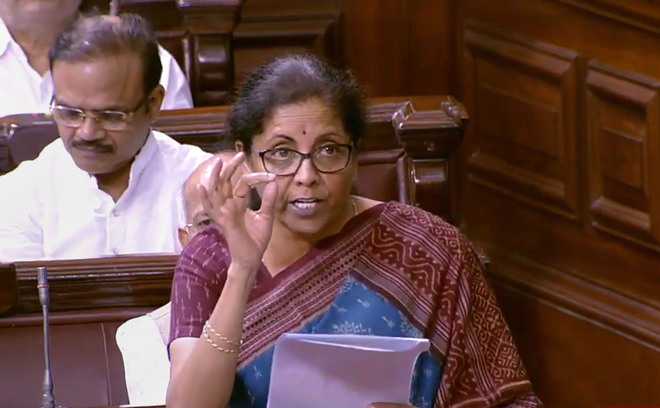
In her new role as Finance Minister, Nirmala Sitharaman today mounted a spirited defence of her Budget proposals, bordering on being combative in the Rajya Sabha, a House where the Opposition attack was both sharper and critical of the portrayal in the documents.For over 100 minutes, she chose to respond to all issues flagged by the House members, especially those raised by the Opposition members. She reserved special attention to the critical exposition of former Finance Minister P Chidambaram on her maiden effort and roadmap presented to balance the country’s economy in the face of challenges.

Towards the later part of her speech, the FM devoted much time responding to the issues underlined by her predecessor in the UPA government and offering a counter with figures in defence. At times, Chairman M Venkaiah Naidu appreciated the effort by the minister to respond in such detail.Often backed by thumping of the Benches by her party colleagues, the minister soldiered on refusing to yield when Congress leader Anand Sharma sought to counter a statement she made while comparing to work done during the UPA. Of course, she gave way for the Leader of the Opposition Ghulam Nabi Azad who said it was the BJP, which opposed the GST since 2008.

Having stepped into the shoes of party veteran Arun Jaitley, the minister sought to underscore the work done by the previous Modi government in containing inflation and introducing reforms.

The pointed reference was in a direct response to Chidambaram’s charge that the government missed an opportunity to bring about structural reforms, especially after having received such a mandate in the recent elections.

In one of her attacks, the minister sought to turn the tables on the Opposition seeking to know that it should decide whether to claim credit for GST when one of its prominent leader called it “Gabbar Singh Tax”. She also recounted some of the measures undertaken by Chidambaram that, she said, resulted in an economy with lot of unpaid bills, which the Modi government was tasked to clear.

Clearly, she made most of the opportunity to bring to the fore her approach to the Budget, its contours to convert the vision of the government to make India a $ 5-trillion economy.


No Intrusion By Chinese Soldiers in Ladakh: Army Chief

Army Chief’s comments came amid reports of Chinese soldiers crossing the Line of Actual Control last week after some Tibetans celebrated Dalai Lama’s birthday on July 6.

No Intrusion By Chinese Soldiers in Ladakh: Army Chief

NEW DELHI: 

HIGHLIGHTS

  1. “Everything is normal,” Army Chief said on sidelines of an event
  2. India and China share a disputed border
  3. Armies of the two countries were engaged in a stand-off in 2017
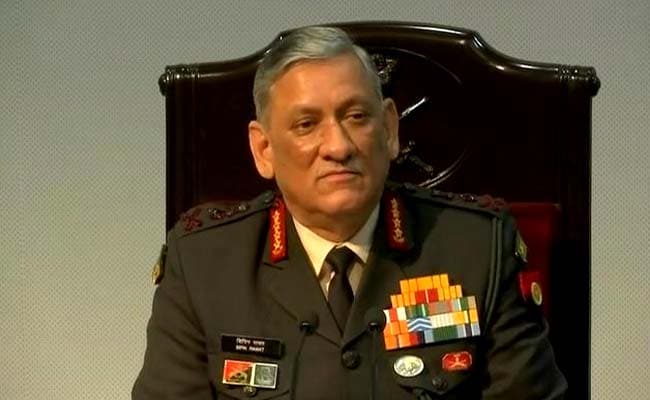
 Army chief General Bipin Rawat on Saturday said there has been no intrusion by the Chinese in Ladakh’s Demchok sector.

“There is no intrusion,” the Army Chief said on the sidelines of an event.

His statement comes amidst reports of Chinese soldiers crossing the Line of Actual Control (LAC) last week after some Tibetans hoisted Tibetan flags on the occasion of Dalai Lama’s birthday on July 6.

 “Chinese come and patrol to their perceived Line of Actual Control…we try and prevent them. But at times there are celebrations that take place at the local levels. Celebrations were going on our side by our Tibetans in the Demchok sector. Based on that, some Chinese also came to see what was happening. But there has been no intrusions. Everything is normal,” the Army chief said.
COMMENT

India and China share a disputed border and the armies of the two countries were engaged in a stand-off for 73 days in 2017 in Doklam


LCA Tejas: importance and expectations

New Delhi, July 02: Considering the massive problem that the IAF is facing of depleting squadron strength and many of its mainstay fighters set to retire by 2025, the Light Combat Aircraft (LCA) Tejas is more than just a ingenuously developed fighter. The Indian Air Force (IAF)’s depleting strength of combat aircraft squadrons is a very serious problem and steps must be taken to address it without any further delay. IAF is already down to 31 squadrons of fighter aircrafts, as per some reports, against an authorisation of 42. To fight a two-front war, the Indian Air Force needs the optimum strength of 42-plus squadrons. Tejas was supposed to have played a key role in IAF’s scheme things. In general, armed forces want to reduce reliance on imports which cost the exchequer a lot. It was thought that India’s requirement for single engine fighters could be met with LCA Tejas. But due multiple problems encountered during Tejas’s development and HAL’s failure to meet the delivery deadlines, IAF was forced to look at other foreign aircrafts. HAL has not left the IAF pleased with the way LCA project kept getting delayed and multiple deadlines that kept getting missed. IAF Chief has not minced words about it. A file photo Reports say that Tejas Fighter should have replaced Mig-21 fleet by now. Before the induction of the Su-30 MKI aircraft, Mig-21 was the frontline fighter with the Mig-29. LCA Tejas was to be the Third Line of fighter for India. At present, the problem is that the production speed of Tejas is just too slow. Given this, India will have to look to buy fighters from foreign manufacturers. There are also AMCA Programme/ HAL Advanced Medium Combat Aircraft (AMCA) of India and MWF/Medium Weight Fighter Programmes that many opine have not yielded desired results. The development of Kaveri Engine has also not gone as per plans. According to initial plans, it was the Kaveri Engine which was to be fitted in Tejas, but as of now Tejas has an imported GE engine. Why Malaysia may prefer LCA Tejas over China-Pak’s J-17 fighter? India manufactures helicopters, drones and HAL has quality manufacturing lines to make quality fighters. If Tejas production gets underway in full swing, it would create an aviation ecosystem in the country which may pave way to design and production of much more sophisticated aircrafts. In the nutshell, Tejas was supposed to have served as the first major step by India towards manufacturing of fighters. As far as meeting the requirements of the IAF is concerned, HAL has been given green signal to start manufacturing of Tejas Mk1 under Final Operational Clearance (FOC) configuration. The Ministry of Defense (MoD) has ordered 40 Tejas LCA Mark-I with HAL. 20 Tejas LCA in initial operational configuration – 16 fighters and four trainers – have been produced so far (this was as of January this year). Fuel tank of Tejas aircraft falls in agriculture field in Tamil Nadu The weaponised version of Light Combat Aircraft (LCA) Tejas equipped with capabilities of mid-air refuelling, AESA radar, electronic warfare suites and a variety of other features is likely to be inducted into the Indian Air Force by this year-end.

Read more at: https://www.oneindia.com/india/lca-tejas-importance-and-expectations-2913043.html


Medicines in short supply at clinics for ex-servicemen

ex-servicemen-med

A budget crunch has led to a severe shortage of medicines for veterans of the armed forces and their families, especially when it comes to life-saving drugs

NEW DELHI : A budget crunch has led to a severe shortage of medicines for veterans of the armed forces and their families, especially when it comes to life-saving drugs. The problem is severe at polyclinics that are not located near military hospitals.

The Ex-Servicemen Contributory Health Scheme (ECHS) on which around five million veterans and their families are dependant, is severely short of medicines for treating cancer and heart ailments. A reason why this is happening is due to the limited ‘vote-on-account’ budget. Under the vote-on-account, the ECHS can only spend 33% of its full budget for a financial year. This is for the first three months of the financial year starting from April or until the budget is passed. The ECHS has been allotted between Rs 3,000 crore and Rs 4,000 crore this year and on an average this amount is given every year. The vote-on-account budget is first spent on committed liabilities, such as payments for previous supply orders, which leaves insufficient funds for the present requirement of medicines.

“The vote-on-account budget is not adequate to meet the committed liabilities of the previous years such as medicine orders and even the requirement of medicines for the first three months of the financial year or until the full budget is passed.

So there is a gap in the supply,” explained sources, adding that there is a need for over Rs 200 crore for medicines.

Due to the shortage in funds, fresh orders for the medicine supply chains of the three defence services — Army, IAF and Navy — have not been placed. Under the supply chains, the military hospitals across India procure the medicines and then supply it to the ECHS polyclinics.

These polyclinics supply the medicines to the ex-servicemen. Sources explained that if the supply chain is good then the polyclinics don’t have to spend much from their monthly budget on procuring medicinest he medicines and then supply it to the ECHS polyclinics.

These polyclinics supply the medicines to the ex-servicemen. Sources explained that if the supply chain is good then the polyclinics don’t have to spend much from their monthly budget on procuring medicines. med-info

med2

However, this is not the case in the present circumstances. The polyclinics have a monthly expenditure limit ranging from Rs 1.5 lakh to Rs 2.5 lakh, depending on the number of patients being treated. Sources explained that this amount is also insufficient for procuring medicines from the ‘Authorised Local Chemists’ (ALCs) and is likely to be over in most of the 427 polyclinics.

“Every year, the ECHS is short of about Rs 1,000 to Rs 1,200 crore for its overall requirements,  including those for heart and cancer patients,” said sources.

For example, there is a shortage of medicines for Hepatitis B, cancer and arthritis in most of the polyclinics in Uttarakhand. The problem is compounded in those polyclinics which are not co-located to military hospitals, so procuring medicines is difficult. Several times, the ALCs may not have life-saving drugs.

..