



Sanjha Morcha

OROP: Protesting veterans meet Rajnath by Dinakar Per

Ex-servicemen stage a protest over the delay in the implementation of ‘One Rank One Pension,’ in New Delhi. File

Issue of disability pension also raised

A group of veterans met Defence Minister Rajnath Singh earlier this week to apprise him of their protest demanding the “rightful implementation” of One Rank One Pension (OROP) and the ongoing case in the Supreme Court over the issue.

“He is new to the defence ministry; so we were keen to brief him at the earliest on our main issue, OROP,”  A Major General  heading the team ,told The Hindu. “He listened to us very patiently. He was non-committal as he has to go through the whole correspondence and go through a process. He said he will speak to us again after that,” Maj. Gen. added. The delegation of seven veterans met the Minister on July 1.

Veterans under all ESM Organisations  banners have been protesting at Jantar Mantar since OROP was notified in November 2015 demanding that anomalies be corrected. They have also filed a Special Leave Petition (SLP) in the Supreme Court.

In the last hearing on May 1, the Supreme Court had directed the Defence Ministry to discuss with all stakeholders and remove all the anomalies, Maj. Gen. Singh said. The next hearing is scheduled for August 6.

“Let the government fix the anomalies and we will withdraw the case and stop the agitation,” said Maj Gen , adding that they would also reaccept the 22,000 medals that several veterans had returned in protest. Observing that the veterans had forwarded the Court’s note to then Defence Minister Nirmala Sitharaman, he said the group had written seven letters to Mr. Singh after he assumed office.

OROP implies uniform pension to personnel based on rank and length of service, and irrespective of the date of retirement. The protesting veterans have highlighted three key anomalies which they want corrected. These are the date of implementation, calculation of pension based on the highest slab and not the average as is being done and revision of pension automatically instead of periodically every five years.

Disability pension

The issue of disability pension was also discussed with the minister, said Maj. Gen. Singh. “The Minister said it was done by Finance Ministry and not by Defence Ministry and said he will look into it.” Other issues discussed pertained to veterans’ family issues and a demand for declaring December 16, which marks the end of the Liberation War of Bangladesh, as Victory Day, he added.

Separately, the Disabled War Veterans (India), an organisation of war disabled and battle casualties wrote a letter to the Army on Thursday over the issue of taxing disability pension and the Army’s stand on the issue. “Being at the forefront of issues related to the war disabled, we must put it on record that sensitivity must be displayed towards genuinely disabled with non-operational disabilities also,” the group wrote.

Last month, the Finance Ministry issued a notification which said that tax exemption would be available only to armed forces personnel who have been invalidated from service on account of bodily disability attributable to or aggravated by such service, and not to personnel who have been retired on superannuation or otherwise.

36 MPs purchased junked Army vehicles in last two years

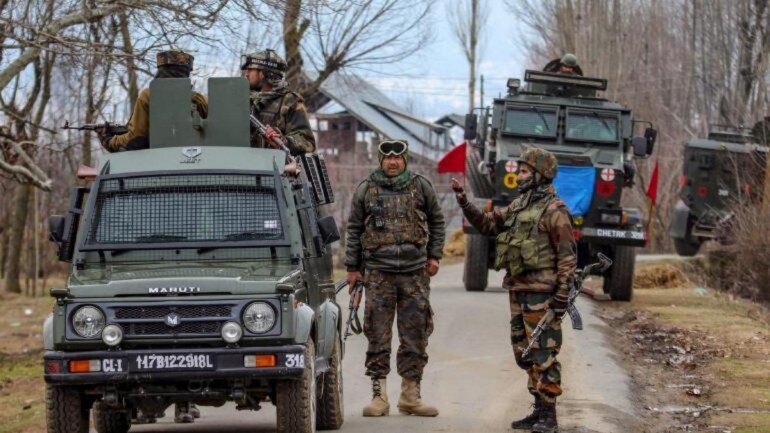
In the last two years, 36 Members of Parliament purchased vehicles disposed off by the Army, the Ministry of Defence informed Parliament on Monday.

n the last two years, 36 Members of Parliament purchased vehicles disposed off by the Army, the Ministry of Defence informed Parliament on Monday.

The vehicles were made available to all the members who had applied. Eleven MPs were allotted vehicles from Vehicle Sub Depot Meerut, 15 from Ordnance Depot Avadi, three from Central Ordnance Depot Chheoki, two from Central Ordnance Depot Mumbai, two from Central Armoured Fighting Vehicle Depot Kirkee, and one MP each was allotted vehicles from 224 ABOD Jodhpur, Northern Command Vehicle Depot Udhampur and Vehicle Depot Panagarh,” the MoD said.

The Army has a policy of discarding old vehicles that are sent to depots almost as junk as they go past their prime. Army vehicles face heavy wear and tear as they are used in hilly regions with tough terrain and poor roads.

All the Members of Parliament got the vehicle from the same depot from where they had asked for.

This information was given by Raksha Rajya Mantri Shri Shripad Naik in a written reply to Shri Ajay Pratap Singh in Rajya Sabha on Monday.


What’s wrong with states sharing Centre’s defence burden?

  • Security tax? The 15th Finance Commission (which will decide the distribution of tax revenues between Centre and states) is expected to create a defence and internal security fund by setting aside money from gross tax revenues of the central government. This would mean less money for sharing with states. While the Centre wants states to share the financial burden of maintaining and upgrading its security apparatus, states fear that they may be left with less funds at a time when developmental demands on them are rising. The defence budget for 2019-20, at Rs 3.05 lakh crore, is 1.45% of GDP of which just a little over a third is capital expenditure.
  • But then… Defence is in the Centre’s remit in the Seventh Schedule of the Constitution, which sets out the responsibilities respectively, of the Centre, the states and jointly of both. While Article 280 of the Constitution empowers the commission to decide how taxes are distributed, Article 266 says that the Consolidated Fund of India is a shared pool for all national priorities. Creating a fund outside this structure is against the Constitutional principle, some experts have said. The finance ministry had earlier rejected the idea of a non-lapsable defence fund on two grounds: unspent monies represent opportunities forgone in other vital areas (such funds are often idly parked instead of being used to pay off urgent bills) and once started for defence, such funds would proliferate.
  • Shrinking kitty: The actual devolution of the revenues of the Centre to the states is much less than the 42% recommended by the 14th Finance Commission, thanks to a sizeable chunk of the Centre’s collections being in the form of cesses and surcharges that are not shareable with the states. While the share of taxes in the divisible pool has grown, their share in the overall tax revenue has fallen because of the faster growth of the non-divisible pool of cesses and surcharges.

HEADLINES 27 JUL 2019 : OPEN FOR DETAILS

  1. CM GIVES DOUBLE PROMOTION TO ‘FORGOTTEN’ KARGIL WAR HERO VIR CHAKRA AWARDEE WAS MANNING TRAFFIC IN SANGRUR AS SENIOR CONSTABLE
  2. AMARINDER PAYS TRIBUTES TO MARTYRS OF KARGIL CONFLICT
  3. CHIEFS OF ARMED FORCES PAY TRIBUTE
  4. WAR HERO RUNS LAST LEG WITH ‘VICTORY FLAME’
  5. VETERANS SUGGESTED TO OPEN DEFENCE SALARY PACKAGE /PENSION ACCOUNT WITH STATE BANK OF INDIA FOR BETTER BENEFITS
  6. OF 527 KARGIL MARTYRS, 13 FROM HOSHIARPUR
  7. BAN ON ‘ARMY’, ‘POLICE’, ‘VIP’ STICKERS ON VEHICLES
  8. RICH TRIBUTES PAID TO MARTYRS, 35 FAMILIES FROM 14 DISTS HONOURED


  9. COMMEMORATING WAR HEROES 500 EX-SERVICEMEN, INCLUDING OFFICERS, JCOS, OTHER RANK OFFICIALS, SERVING SOLDIERS AND THEIR FAMILIES ATTEND THE EVENT

    10.KARGIL: ‘IZZAT’ AND HONOUR FOR THE SOLDIER, AFTER THE HEADLINES FADE


    11. THE 20TH ANNIVERSARY OF THE WAR IS A GOOD TIME TO INTERNALISE ISSUES THAT HAVE ALIENATED THE MILITARY

    12. REMEMBERING KARGIL 20 YEARS AFTER


    ACCUSES NEIGHBOURING COUNTRY OF TRYING TO KEEP KASHMIR ISSUE ALIVE

    WAR-DISABLED ARMY MEN SHARE THEIR TALES

    KARGIL VIJAY DIWAS: 27 FAMILIES HONOURED

    PARENTS LIVE ON BRAVEHEART’S BELONGINGS

    VEER NARIS REMEMBER GREAT SACRIFICES

    MY PROUDEST MOMENT, SAYS RIFLEMAN JAMMU’S KULDEEP SINGH SERVED 13 JAKRIF THAT CAPTURED THE TOLOLING PEAK

    BOOK ON PSYCHOLOGY FOR SOLDIERS’ SPOUSES

    20 YEARS ON, WOUNDS OF MARTYR’S FAMILY YET TO HEAL NO ACTION TAKEN TO DELIVER JUSTICE, SAYS SAURABH’S FATHER

    GUNS WILL LEAD TO GRAVE: GEN RAWAT WARNS MILITANTS AND PAK OF ‘BLOODIER NOSE’


Drass war memorial becomes tourist attraction

AMONG THE VETERANS WHO VISITED THE MEMORIAL WAS NAIK DEEP CHAND WHO LOST AN ARM AND BOTH LEGS DURING OPERATION PARAKRAM

DRASS: War veterans, their family members, soldiers, local and domestic tourists complemented the serene environs of Kargil war memorial in Drass on the 20th anniversary of Kargil war.

The war memorial, six kilometers from Drass on Drass–Leh national highway, has become a major tourist attraction in the region with majority of tourists making it a point to visit the memorial.

The memorial built in the memory of slain soldiers and officers of the Indian Army who were killed during the 1999 Kargil War between India and Pakistan.

The memorial has a huge epitaph with names of all the officers and soldiers who died in the war.

Chiefs of all the three forces – Army chief General Bipin Rawat, Air Chief Marshal Birender Singh Dhanoa and Naval chief admiral Karamveer Singh – paid homage to the slain soldiers on the 20th Vijay Diwas at the memorial on Friday.

“A lot of people, especially tourists, visit the place from every region of the country. They all make it a point to visit all the places inside memorial. The tourists ask us different question related to the war fought two decades ago,” said an army officer deployed at the war memorial.

Among the veterans who visited the war memorial was Naik Deep Chand and his wife. Chand who hails from Haryana had participated in Kargil war but an arm and both legs during the operation Parakram.

“I was fighting here in 1999 and lost my arms. I have come here after two decades to recall the old memories of war which we fought with valour and courage and also won,” he said. TOPS ITINERARY

Not only tourists from far-off places, the war memorial has become a major attraction for locals also. A tourist from Pune, Prashant Verma paid homage to the soldiers and said, “For me, it was a dream to visit this place. Finally after two decades, I came here to pay tributes to soldiers who sacrificed their youth for our future.” Not only domestic tourists but locals also visit the war memorial as a local Mohammad Ali said, “We frequently come to this place. Now this war memorial has become a major landmark of our town.”


HOW THE EVENTS UNFOLDED

EARLY MAY: Reports of infiltrators atop heights of Kargil

MAY 14: Army patrol of six men, including Capt Saurabh Kalia, head up for reconnaissance and is captured by Pakistan troops MAY 26: Indian Air Force launches air strikes MAY 27: Flt Lt (now Wg Cdr) K Nachiketa’s MiG-27 goes down, the officer is taken prisoner of war. Sq Ldr Ajay Ahuja killed after his MiG 21 is shot down

MAY 31: Prime Minister Atal Behari Vajpayee says it’s a “war-like situation” in Kargil JUNE 3: Nachiketa repatriated to India

JUNE 5: India releases the documents recovered from three Pakistani soldiers indicating Pakistan’s involvement in the war

JUNE 10: Pakistan returns mutilated bodies of six Indian soldiers, including Capt Saurabh Kalia. The six-man patrol from 4 Jat had gone missing in the Kaksar sector on May 15. JUNE 12: Deadlock at first crisis-time meeting between foreign ministers Jaswant Singh and Sartaj Aziz in Delhi. Aziz told intruders must leave

JUNE 15: US President Bill Clinton urges the Pakistan PM Nawaz Sharif to withdraw troops from Kargil

JUNE 20: Capt Vikram Batra, who immortalised the famous line, “Ye Dil Maange More” falls to enemy bullets when Point 5140, the hill he had captured, came under heavy fire. Despite being injured, he carried on inspiring his men to recapture the peak JULY 4: Tiger Hill captured. For the first time in India’s history, a battle was covered live by TV channels. Nawaz

Sharif meets Clinton in Washington JULY 5: Sharif announces pull-out of Pakistani troops from Kargil JULY 11: Pakistan begins pull out; India captures key peaks in Batalik JULY 14: India declares operation Vijay a success

JULY 26: Kargil war comes to an end. India ann


KARGIL VIJAY DIWAS Battle town sees drastic change

Azhar Qadri
Tribune News Service
Drass (Kargil), July 25

The desolate highway town of Drass, which made headlines during the 1999 Kargil war and is home to some of the well-known battle sites like Tiger Hill and Tololing, is witnessing small but significant changes of modernity.

For the first time, this frontier town is receiving round-the-clock electricity and mobile Internet services. The road connectivity has improved and a college is also being constructed.

It is a remarkable progress for Drass, which had remained cloaked in isolation due to geographic and climatic limitations. Located at an altitude of nearly 11,000 feet and also distinct for being the second coldest inhabited place on earth, Drass remains cut off from Kashmir valley for around six months every year. The shutdown of the highway for half a year means dormancy as regards economic activity. The war of 1999, however, brought Drass on the map of tourism. The hills surrounding the town, which were battlefields during the war, are now attracting tourists and veterans.

As the 20th anniversary of the war is being celebrated by the Army, which is holding all main events in Drass, the town is bustling with activity and its hotels are fully packed.

“Lots of tourists now stop at Drass and visit the places,” a motel owner said in Drass. “There is a huge potential for this place, but it needs proper connectivity,” he said.

It all can change once the Zojilla tunnel, which will be a major construction marvel that will ease the travel between Kashmir valley and Drass town, is completed.

The highway town also receives war veterans. Major DP Singh (retd), Kargil war veteran famously known as Indian Blade Runner who has run marathons despite being an amputee, is on a visit to Drass to mark the war’s anniversary. He visited the Kargil war memorial, which has become a must stopover for tourists on way to Leh and for veterans who pay their homage.

“The flag flutters so beautifully not just because the wind blows, but also because someone secured the area to let this happen by sacrificing their lives,” the former officer wrote on Twitter yesterday


Revamp of Army Headquarters to get under way by end of July

Government has already given in-principle approval

The Army’s attempt at major restructuring will begin with the draft government sanction letter for reorganisation of the Army Headquarters (AHQ) expected by the month-end, Army sources said. The AHQ restructuring is the first of the four measures being undertaken as part of the transformation of the force.

Aligning procurements

“The government has already given in-principle approval for the AHQ restructuring. We have identified how to utilise the available space. One of the main ideas is to get procurements aligned, among other things. A new Deputy Chief (Sustenance) is going to look after all procurements,” a senior Army source told The Hindu.

Under the plan, the Master-General Ordnance will report to the Deputy Chief to bring all ammunition under one head, the source stated.

The Army now has two Deputy Chiefs, one for information systems and training and the other for planning and systems. These functions are being brought under one authority to avoid overlapping.

In another major change at the AHQ, the Directorates of Military Operations, Military Intelligence and Operational Logistics will report to the Deputy Chief (Strategy). The Perspective Planning Directorate will also report to this Deputy Chief. The third Deputy Chief, Information Systems, will look after all technology and cyber-related issues, the source said.

A new post of Additional Director-General (ADG), Vigilance, is being created, and he will report to the Army chief.

The four studies ordered by Army chief Gen. Bipin Rawat are restructuring of the AHQ; the Army restructuring which includes creation of Integrated Battle Groups; the cadre review of officers; and review of the terms and conditions of Junior Commissioned Officers and Other Ranks.

The aim is a holistic integration to enhance the operational and functional efficiency, optimise budget expenditure, facilitate force modernisation and address aspirations, the Army had stated.

“So far, investigations are happening locally. He will get information of all investigations in the entire Army. This will standardise the nature of punishment,” the source said, adding the current ADG, Discipline and Vigilance, is not getting the feedback. There will be a new position of ADG, Human Resources, who “shall take proactive action on HR violations.”

In the Quartermaster General (QMG) branch, the post of ADG, Technology Evaluation, is to be abolished and chief engineers in formations will be responsible for constructions in their area, and not the Army Headquarters, as is the practice now. “The AHQ cannot look into every construction that is happening,” the source said.

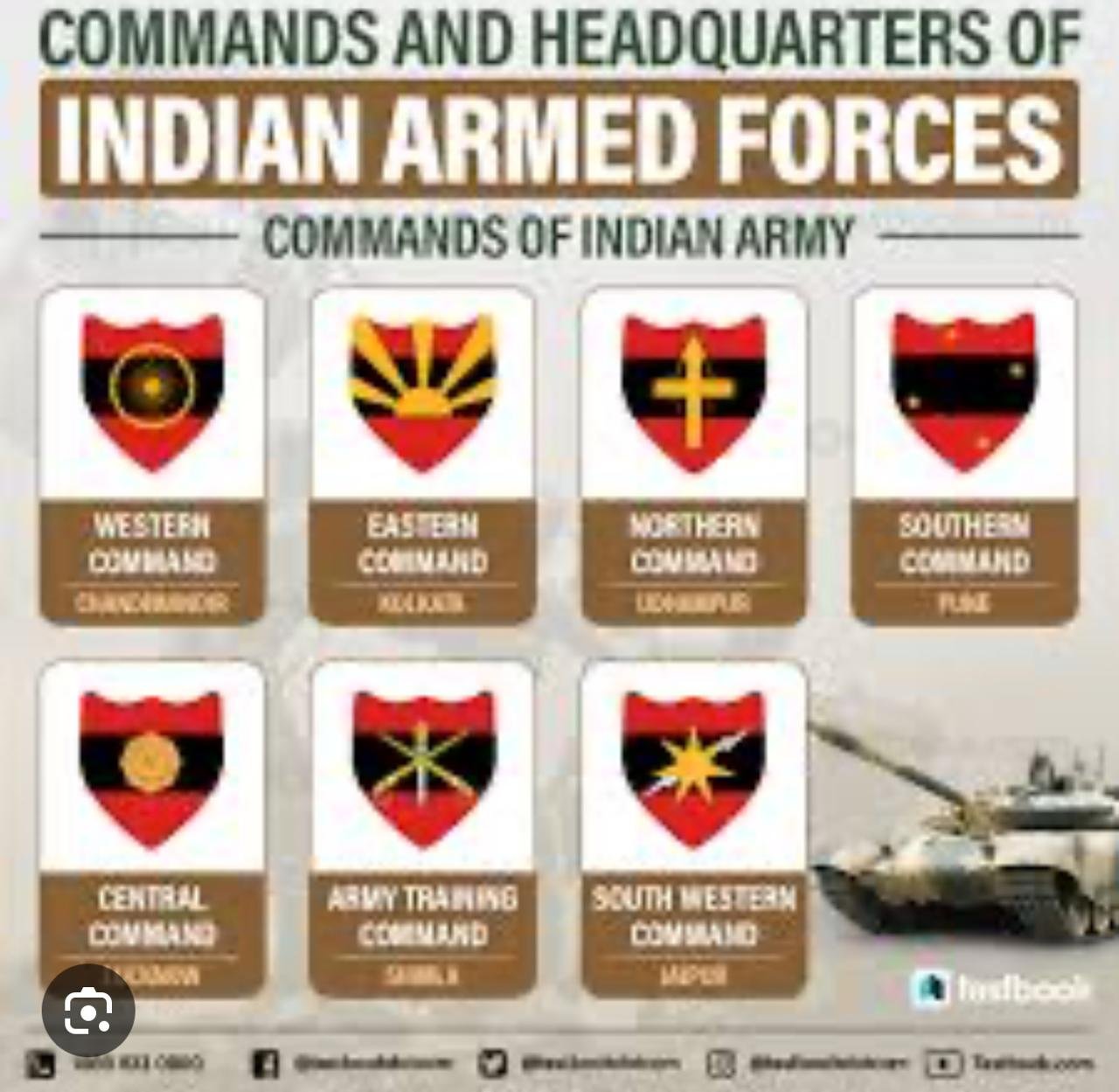
The entire training function will move under the Army Training Command (ARTRAC), which will be shifted from Shimla to Meerut. Furthermore, the Director-General, Rashtriya Rifles (RR), now based in Delhi, will be moved to Udhampur, under an Additional Director-General, where the Northern Command is located.


3-day Vijay Diwas celebrations kick off in Drass

3-day Vijay Diwas celebrations kick off in Drass

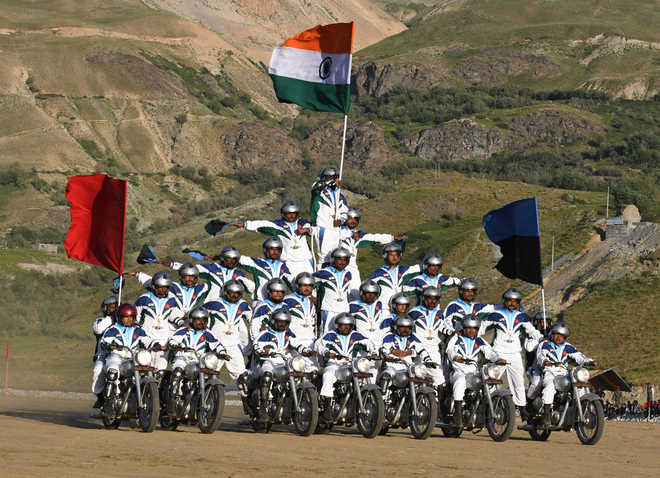
An Army team performs during the Vijay Diwas celebrations in Drass on Wednesday. Amin War

Tribune News Service

Drass (Kargil), July 24

The 20th anniversary commemoration of the Kargil war victory that will continue for three days began in the highway town of Drass on Wednesday with the Army hosting a series of events.

The celebratory events to mark the 1999 Kargil win kicked off in the Drass sector — the ground zero of fighting two decades ago and also the home to some of the famous battles of the war.

The events on the first day included a training demonstration at Kargil Battle School, display of artillery equipment and showcasing of sports and cultural events.

The Army is hosting more events over the next two days to mark the victory. Several events are also scheduled at the Kargil War Memorial, built outside Drass town to celebrate the win in the war when the Pakistan army and irregulars were evicted from the hills overlooking the strategic Srinagar-Leh highway.

The 20th anniversary is being commemorated on a large scale. Defence Minister Rajnath Singh visited the war memorial last week and paid homage to the fallen soldiers.

In the run up to the celebrations, the Army had organised commemorative treks, by the battalions which fought in the war, to the mountain tops in several parts of Kargil district.

In the past weeks, a commemorative trek was undertaken by 1/11 Gorkha Rifles to Khalubar in Batalik Sector at 17,000 feet to celebrate the battalion’s triumph in the war.

Another commemorative trek was undertaken to the symbolic Tiger Hill by 18 Grenadiers. Treks were also undertaken by 13 JAKRIF to Point 4875 and by 2 Raj Rif to Tololing Top.


Over 16,000 cases pending in Armed Forces Tribunal

Over 16,000 cases pending in Armed Forces Tribunal

The Tribunal was set up in 2009 according to provisions of the Armed Forces Tribunal Act, 2007, to adjudicate cases pertaining to commissioning, appointments, enrolment, and service conditions of military personnel. File photo

New Delhi, July 21

The Armed Forces Tribunal (AFT) meant to provide justice to the aggrieved forces personnel is severely affected due to non-functional benches. The pending cases in the AFT, set up only 10 years ago as dedicated courts in the three services, have spiralled to 16,000.

With only three of the 11 Benches functional, it is a long wait for justice for the litigants. The Benches located in Chandigarh and Srinagar are the only ones functional apart from the Principal Bench in Delhi, which is headed by the Tribunal’s Chairperson. The Principal Bench alone has around 4,500 pending cases with most litigants making a beeline to it.

The Tribunal was set up in 2009 according to provisions of the Armed Forces Tribunal Act, 2007, to adjudicate cases pertaining to commissioning, appointments, enrolment, and service conditions of military personnel.

According to the Act, only a retired judge of a high court below 65 years of age is eligible to be appointed as a judicial member. Each Bench must consist of a judicial member apart from an administrative member.

Sources in the Defence Ministry, under which the Tribunal functions, said eight names—four for the post of judicial members and four for administrative members—have been shortlisted. These appointments are likely to be made in August following final clearance.

The last judicial member to be appointed to the Tribunal was in the year 2017. Justice Sunita Gupta who had retired as a judge from Delhi High Court had been appointed as judicial member to the principal bench in Delhi.

In September 2016, the Armed Forces Tribunal Bar Association had filed a complaint with then chief justice of India demanding immediate appointment of judicial members for swift disposal of cases. The Supreme Court had taken cognisance of the case and admitted it as a Public Interest Litigation.

However, the apex court is yet to deliver a final verdict in the case. The last time hearing was ever conducted in the matter was more than a year ago on February 23, 2018.

“The Tribunal lacks contempt powers. It has no power to ensure that its judgements are effectively executed. The Tribunal should be provided with the power of judicial review in order to give it more teeth. This issue has also been raised in the PIL,” said Bar Association President AK Trivedi.


The other Benches of the Tribunal are located in Lucknow, Kolkata, Guwahati, Mumbai, Kochi, Chennai, Jaipur and Jabalpur. — IANS