Sanjha Morcha

Let Indian soldiers remain soldiers. Diplomacy is for those in embassies

At the border where every decision determines life and death, soldiers applying diplomacy instead of war-fighting instincts will be disastrous.
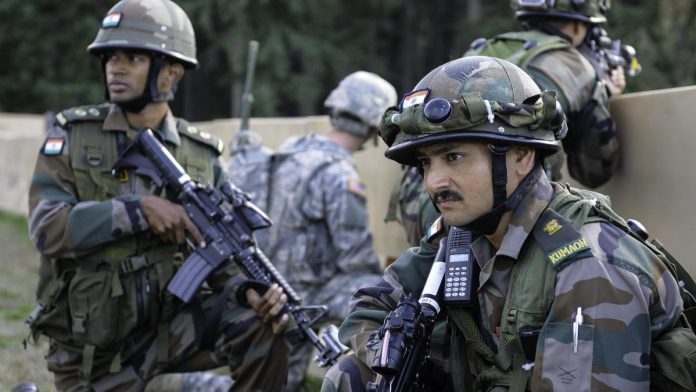
Indian military

recent article in ThePrint suggests that soldiers with qualities of diplomats who are stationed along the India-China border are avoiding skirmishes. The article confuses ‘maturity’ in dealing with day-to-day situation at the border with ‘diplomacy’.

“A nation’s power to impose its will and to achieve its national objectives emanates from its  instruments of national power.” This is an oft-repeated sentence in every diplomatic and military college.

The instruments of national power are political, diplomatic, economic, and military — generally in that order of preference. The latest technological and communication advancements have forced the western countries to consider them as diplomacy, information, military and economics, or DIME.

In this ever-changing world, the ‘information’ in DIME could be replaced with ‘intelligence’ — which is nothing but sifted, analysed and assessed information — to achieve strategic advantages.

Some contemporary US strategists derive power by focussing on MIDLIFE — military, information, diplomatic, law enforcement, financial and economic resources.


Also read: Why soldier-diplomats are key to maintaining peace along India-China border


New ideas

Although innovation and technology must go hand in hand, experimenting any new idea at the borders will be like playing with the lives of well-trained soldiers.

The zone where every decision translates into life and death of thousands of soldiers, one can only hope that sanity prevails and the soldiers remain as steadfast as they should be at the border.

In the Army, we keep harping upon an adage, “Somewhere someone is training to kill you”. While operating in such an environment, if the soldiers apply diplomacy instead of their well-trained war fighting instincts, the consequences will be disastrous.

Confusion galore

Both diplomacy and military are different professions with differing qualities ingrained during training and later to perform certain specific tasks.

The tasks, especially of the military, should never be confused with diplomacy. The synergising of diplomacy and military as instruments of national power can be achieved through Defence Attaches (DAs) in embassies and diplomatic missions.

The diplomats will be happy to have more hands to perform their task. However, the soldier will remain utterly confused.


Also read: Indian Army’s approach to electronic & cyber warfare is nowhere as evolved as China’s PLA


BPMs and flag meetings

India has two very difficult neighbours. They both are particularly unreliable, untrustworthy and pathological liars.

The atmosphere during Border Personnel Meetings (BPMs) is not always hunky-dory.

The Chinese are fiercely aggressive in claiming territory and always point out transgressions. They point out every small road construction and infrastructure development, but do not concede to any points put forth by the Indian Army.

The Chinese, at almost all BPMs and flag meetings, claim territorial transgressions by Indian donkeys. It is worth noting that a wild sanctuary exists between India and Tibet in the eastern parts of Ladakh.

The Pakistanis, on the other hand, prefer to talk about Indian movies and Indian actresses married to Pakistanis.

Both countries always scuttle the matter they should be discussing in the meetings.

The Indian Army has always found itself without intelligence on the other side due to lack of equipment. The sealing limit of our drones is much less than the mountainous region the Indian Army is told to guard.


Also read: America’s Pakistan policy is a farce and will hurt India


Territorial claims

There are many unresolved territorial claims between India and China, between India and Pakistan as also between India, China and Pakistan.

The Shaksgam Valley, which is part of the Pakistan Occupied Kashmir, was ceded by Pakistan to China in 1963 but occupied by People’s Liberation Army recently as reported exclusively by  ThePrint.

The soldier should never be tasked to be diplomatic especially when huge territorial claims remain a great irritant in our relations.

There are only two types of soldiers on the battlefield – the good and the dead.

Col (Retired) Vinayak Bhat served in the Indian Army for over 33 years. He was a satellite imagery analyst for more than two decades and served in high altitude areas of J&K and North East. An alumnus of NDA, Pune, he was a mountaineer during his young days, climbing peaks like Stok Kangri and Nun Peak.

Read ThePrint’s razor-sharp editorial take on the news of the day. In just 50 words



China’s big defence plans by Pravin Sawhney

White Paper indicates PLA is on a different trajectory altogether

China’s big defence plans

Next level: China is optimally exploiting AI, giving the US a run for its money.

Pravin Sawhney
Strategic affairs expert

China’s recently released White Paper on defence did not get the attention it should have in India. In our obsession with Pakistan, it is forgotten that China is the neighbour we need to worry about.

China claims 90,000 sq km of Arunachal Pradesh, does not accept the border with India in Ladakh and has achieved military interoperability with Pakistan. Except for India and Bhutan, all nations in South Asia have joined the OBOR project. Post-Doklam, the People’s Liberation Army (PLA) presence in Tibet Autonomous Region has increased substantially. In June 2018, Chinese President Xi Jinping told the visiting US defence secretary, James Mattis, that China would not lose an inch of its territory handed to them by their ancestors.

The paper underlines four peculiarities of PLA’s changing warfare. The first is its exceptional spectrum (short for electromagnetic spectrum, EMS) warfare capability, where by blinding India’s military assets, the PLA could end the war before it is joined, hence winning without fighting. This non-kinetic warfare will be in cyberspace, in which high-grade malware (malicious software) is injected into the spectrum that connects the target engagement cycle comprising satellites, airborne sensors, command centres, missiles and other interceptors through data-links. All modern weapons — airplanes, tanks, satellites, ships, radio — depend on the spectrum to function. By pushing malware into data-links, military assets are blanked, disrupted or debilitated. The war, then, is as good as over.

The Indian military is not prepared for PLA’s cyber offensive, central to its operational strategy. The PLA has consolidated its space, cyber, electronic warfare and psychological warfare assets under the unique Strategic Support Force, which ‘has made active efforts to integrate into the joint operations system. It has carried out confrontational training’.

The second unmatched peculiarity is the PLA Rocket Force, which has under it all nuclear and conventional ballistic, cruise, and soon to be acquired hypersonic missiles. The force ‘has organised force-on-force evaluation-oriented training and training based on operational plans at brigade and regiment level, strengthening training for joint strikes’. The PLA will use its plethora of missiles by itself and to supplement (not as substitute) its air force. India cannot meet this challenge because it has limited numbers, and the PLA with its indigenous and automated production lines can deliver unending salvos of smart, long-range and precise missiles.

The third PLA peculiarity is its mission ‘to safeguard China’s oversea interests’ to include its infrastructure and people. The PLA’s presence would continue to increase in nations which have accepted OBOR. This is being done by the office of international military cooperation, raised during the 2015 reforms, which reports to the Central Military Commission headed by Jinping. Regular interaction between the PLA and militaries of OBOR nations would lead to better understanding of Chinese arms exports and interoperability, and possibilities of PLA air and naval bases or ‘support bases’ there.

The underplayed Digital Silk Road with vast security implications would increase its footprints alongside OBOR’s growing presence. China is building fibre optics cables, mobile structures for installing Huawei 5G wireless technology to introduce common technical standards in these nations. The militaries of these nations would soon be connected to Chinese BeiDou navigation satellite system for e-commerce and military needs.

With the launch of the world’s first intercontinental quantum satellite called Micius in 2016, China has demonstrated long distance cryptography service for secure communications which can’t be hacked. It is expanding quantum communications infrastructure; quantum radar and sensing which would defeat stealth technologies; and quantum compass for submarines.

The fourth peculiarity is ‘the application of cutting-edge technologies such as AI, quantum information, big data, cloud computing and the Internet of things is gathering pace in the military field’. These technologies will shift warfare to virtual battlefields. For example, today a smart cruise missile should be more than ‘fire and forget’ semi-autonomous weapon. It should also have assured data-linking with rear for continuous instructions till desired target is hit. An AI-driven intelligent cruise missile need not have data-linking which is vulnerable to cyberattack. It will do the entire engagement cycle on its own.

In terms of revolutions in warfare, AI-driven warfare where China, if not competing, is giving a run for its money to the US, is the consequence of the fourth revolution. The earlier revolutions were wrought by the steam engine, the age of science, and the rise of digital technology. Since doctrines follow technology, China has taken lead in developing disruptive thinking in warfare to optimally exploit AI. The new military strategic and doctrinal thinking would have little or no resemblance with present warfare.

China wants to complete the modernisation process by 2035, and fully transform the armed forces into world-class forces by the mid-21st century. This means the PLA would achieve human-machine (robot) fusion by 2035, and with the arrival of quantum computers, it would have machines more intelligent than humans.

The Indian military is still entering the digital age. In multi-domain warfare, all domains like air force, army and navy are mere tactical units much like cyber, space, and electronic warfare. Thus, when services’ chiefs say that their service, on its own, is ready for all contingencies, they are talking of fighting the last war, not the next one.


Army man booked for rape in Damtal

Army man booked for rape in Damtal

NURPUR, JULY 27

The Damtal police in Indora subdivision has booked a serving Army man, identified as Deepak Rana, of Bahi-Pathiar village, for allegedly raping a girl. Following a complaint of the victim, the police conducted her medical examination and registered a case under Sections 376 and 506 of the IPC against the accused last evening.

As per the police information, the victim in her statement alleged that the accused had allured her on the pretext of marriage. He had taken her to a hotel at Damtal in March and April this year and allegedly raped her. Later, the accused rescinded on his promise to marry and threatened her of dire consequences if she revealed to anyone of their personal and physical relationship. — OC


Book on psychology for soldiers’ spouses

Chandigarh: A Kargil war veteran and military psychologist has published a book on ‘psychology for the military spouse’ as a tribute to the sacrifices made by them. Titled WAGs, an acronym often used for wives and girlfriends, the book, edited by Lt Col (Dr) Samir Rawat, aims at creating awareness about the spouse’s role in the soldier’s wellbeing before, during and after deployment in operational areas. TNS


Over 56K acres in J&K with defence: Centre

New Delhi, July 17

More than 56,000 acres in J&K is with the defence and the total rent paid for it to land owners or the state government in the last three years is more than Rs 134 crore, the Lok Sabha was informed on Wednesday.

Minister of State for Defence Shripad Naik, in his written reply to a question in the Lok Sabha, gave details of the district-wise total land in J&K with different defence departments, wings and organisations.

He said the different defence departments, wings and organisations had 18,935.474 acres in Jammu, 3,757.845 acres in Srinagar, 2,326.644 acres in Budgam, 2,152.83 acres in Anantnag, 3,963.03 acres in Udhampur and 3,529.871 acres in Kargil.

Naik also gave the details of the land with the defence departments, wings and organisations in other districts of the state with the total of such land being 56,615.54 acres.

The minister also gave the details of the district-wise rent paid in the last three years to land owners or the state governmentfor defence land.

According to the data provided by him, more than Rs 134 crore was paid as rent in the last three years. Meanwhile, more than Rs 24 is the outstanding rent that is to be paid for the defence land in the state, Naik added. — PTI


Defence partnership with India strong, will make it stronger: US

Defence partnership with India strong, will make it stronger: US

The comments come a day after President Donald Trump has announced that the US would not sell the F-35 fighter jets to Turkey. File photo

Washington, July 18

America’s defence partnership with India is strong and is looking to make it ever stronger, the Pentagon has said as it warned nations against purchasing military hardware from other countries that are designed to counter its sophisticated fifth-generation aircraft.

The comments come a day after President Donald Trump has announced that the US would not sell the F-35 fighter jets to Turkey after Ankara purchased the S-400 missile defence system from sanctions-hit Russia.

“Our defence partnership with India, I think, is strong and we’re looking to make it ever stronger,” David J Trachtenberg, the deputy undersecretary of defence for policy, told reporters at a news conference on Wednesday.

Trachtenberg was responding to a question on the impact on bilateral defence ties as India goes ahead with its decision to purchase S-400 missile defence system from Russia.

“Can you have a major defence partnership with India, which is going ahead with a decision to buy S-400?” he was asked.

“I think the message we are sending is that we want to make sure that other countries are not purchasing equipment that is designed to counter our sophisticated fifth-generation aircraft,” Trachtenberg said. “The other message we’re sending is that we are consistent in our approach on this.”

India inked an agreement with Russia last October to procure a batch of the S-400 missile systems at a cost of Rs 40,000 crore.

Trachtenberg said America’s decision to unwind Turkey’s participation in the F-35 programme was no surprise as its concerns had repeatedly been communicated to the Turkish government.

“Our reaction today is a specific response to a specific event. It is separate and distinct from the broader range of security interests where the United States and Turkey work together against common threats,” he said.

The official said the military-to-military relationship between the two countries remained strong. He added that the US would continue to participate with Turkey in multilateral exercises, as well as engage with the country on a broad range of NATO issues.

“While Turkey’s decision is unfortunate, ensuring the security and integrity of the F-35 programme and the capabilities it will provide to our partners remains our top priority,” Trachtenberg said.

Undersecretary of Defence for Acquisition and Sustainment Ellen Lord said when Turkey began publicly discussing its interest in the Russian-made missile defence system since early 2017, the US government had consistently communicated that the F-35 and S-400 were incompatible.

“Turkey cannot field a Russian intelligence collection platform in proximity to where the F-35 programme makes repairs and houses the F-35. Much of the F-35 strength lies in its stealth capabilities,” she said. “So, the ability to detect those capabilities would jeopardise the long-term security of the F-35 programme.”  PTI


Capt opposes move to remove Congress chief from Jallianwala trust

Capt opposes move to remove Congress chief from Jallianwala trust

Chandigarh, July 10

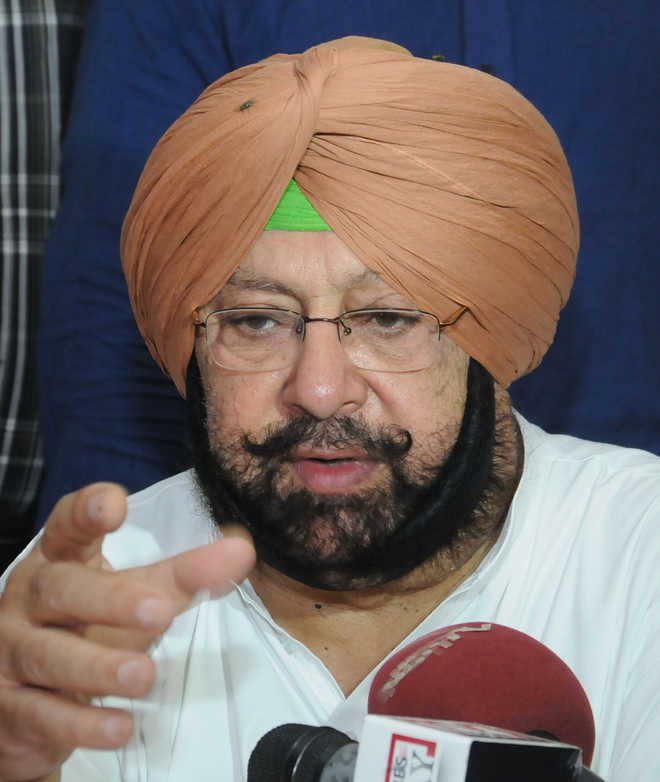
Punjab Chief Minister Capt Amarinder Singh has described as “completely wrong” the move to bring a bill which seeks to remove the Congress president as a permanent member in a trust that runs the Jallianwala Bagh National Memorial.

The bill, moved by Culture Minister Prahlad Singh Patel in the Lok Sabha on Monday, states that it seeks to “delete” the mention of ‘President of the Indian National Congress’ as a trustee.

The stated aim of the move is to make the Jallianwala Bagh National Memorial apolitical.

A similar bill was brought by the previous government but it could not get the parliamentary nod and lapsed.

“It is completely wrong to remove the Congress party (president) from the trust. The Congress has been associated with the Jallianwala Bagh (memorial) from the day it was set up,” he told reporters here on Tuesday.

The trust has the prime minister as the chairperson, and president of the Indian National Congress, the culture minister, the leader of opposition in the Lok Sabha, the Punjab governor and the Punjab CM as its members.

The memorial was established in 1951 by the central government to mark the massacre of unarmed people on April 13, 1919 by the British Indian Army under the command of Col Reginald Dyer.

To a question on state minister Navjot Singh Sidhu yet to assume the charge of the power department, the Chief Minister refused to comment.

The state BJP has written to Governor VP Singh Badnore, seeking his intervention to end the “stalemate” between Singh and Sidhu, claiming consumers were suffering as the power department had remained “unattended” for over a month. PTI


Government needs to hike defence spending: Manish Tewari ,Anandpur Sahib MP

NEW DELHI: Congress MP Manish Tewari on Wednesday raised in  .. Government needs to hike defence spending: Manish Tewari
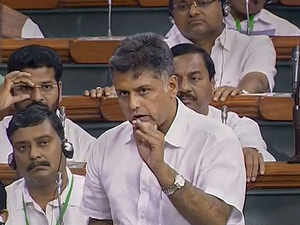
NEW DELHI: Congress MP Manish Tewari Wednesday raised in the Lok Sabha the issue of falling defence allocation in the Union Budget and pointed out that China’s defence spending has been growing.

He expressed the hope that the government would address the issue and the concern would be taken care of in the upcoming Budget.

“China is spending more on defence. Their defence spending has grown over the years,” Tewari said in the Lok Sabha during the Zero Hour.

Citing a  Parliamentary panel report, he said, the country’s defence expenditure was reduced to 1.60 per cent of the GDP in 2017-18.

It further came down to 1.52 per cent in the interim Budget for 2019-20.

Raising the issue of death of construction workers in Pune and Mumbai, Girish Bapat (BJP) said there is an urgent need to implement Development Control (DC) Rules so that they are brought under the safety net.

http://timesofindia.indiatimes.com/articleshow/70056416.cms?utm_source=contentofinterest&utm_medium=text&utm_campaign=cppst

20th Kargil Vijay Diwas: Veteran shares stories with cadets

Our Correspondent

Leh, June 30

A guest lecture session on the Kargil war by veterans was held here on Saturday as part of the special national integration camp to mark the celebrations of the 20th anniversary of Kargil Vijay Diwas.

The camp started on June 26 under the aegis of the National Cadet Corps and is being organised at the Ladakh Scouts Regimental Centre, Phyang. It is one of the series of outreach programmes to highlight the victory of India over Pakistan in the Kargil war of 1999. The theme of the Kargil war celebrations is rejoice, renew and remember.

During a guest lecture on Saturday, Col Sonam Wangchuk, hero of the Kargil war, shared stories and anecdotes of Operation Vijay with the cadets.

He was awarded the Maha Vir Chakra. President Ram Nath Kovind released a documentary named “Lion of Ladakh” about the troops under Colonel Wangchuk, who repelled enemy forces from Chorbat La in the Batalik sector. He was successful in pushing them back on May 31, 1999. It was the first successful operation of the war.

He said his achievement had given a boost to the morale of other units of the Army. Colonel Wangchuk is known as the Lion of Ladakh and is the first Army officer who had achieved success in the Kargil war.

The war veteran motivated the young cadets to join the Army to serve the nation. Colonel Sonam Wanghuk stressed the need to be physically and mentally fit and to become a role model in society with good values and discipline.

About 500 cadets from various states and Union Territories are taking part in the special national integration camp at the Ladakh Scouts Regimental Centre. Governor Satya Pal Malik is expected to attend its closing ceremony on July 7.


Revisiting Kargil, the words zone

From personal stories to letters sent home by soldiers, here’s a look at books on the 1999 war

CHANDIGARH: In the countdown to Kargil Vijay Diwas, on July 26, we got to read thousands of stories, firsthand accounts and trivia about the war. A friend of mine, too young to remember the war to reclaim the Kargil Sector that had been taken over by Pakistani insurgents, hit local bookstores and libraries with gusto, me in tow.


ARCHIVES■ July 26, 1999: Indigenous Milan missile targeted at enemy positions in Kargil’s Drass Sector.

Those wanting to revisit the conflict may want to first pick up Punjab chief minister Captain Amarinder Singh’s A Ridge Too Far: War In The Kargil Heights, which has detailed studies of all the battles that were fought during the war.

General VP Malik (retd), chief of the Army staff from 1997- 2000, provides a personal account of the war in his book Kargil: From Surprise To Victory, which is a must-read, says Ajay Arora, proprietor of Capital Book Depot, in Sector 17. Malik, who was instrumental in planning and coordinating the military operations, gives an interesting insight into the crucial war.

Pankaj P Singh, owner of The Browser Library and Bookstore in Sector 8, recommends Colonel SC Tyagi’s The Kargil Victory: Battles From Peak To Peak.

However, an account of the Kargil is grossly incomplete without reading the Pakistani version of the war. Nasim Zehra’s From Kargil To The Coup: Events That Shook Pakistan and Witness To Blunder: Kargil Story Unfolds by Col Ashfaq Hussain of Pakistan’s media wing, Inter-Services Public Relations, also give one a glimpse of the happenings across the border.

Ever wondered what goes on in the minds of soldiers when the hopes of the nation and the fate of their comrades rest on their shoulders? Lt Gen Mohinder Puri’s Kargil: Turning The Tide is a gripping account of the operations of 8 Mountain Division, which was tasked to evict the enemy from the Drass-Mushkoh Sector.

Twenty years on, it isn’t just the war but its impact on the soldiers and their families that has to be understood. Letters From Kargil: The Kargil War Through Our Soldiers’ Eyes is an epistolary account of the war. Author Diksha Dwivedi in her bookgives readers an insight into the soldiers’ lives through letters posted to their loved ones. Lt Praveen Tomar writes home to say “Baptism by fire makes you a man,” and when the war is over he exults, “We did it and we did in style.”

Other books being read in the tricity are India’s Most Fearless by Shiv Aroor and Rahul Singh; A Soldier’s Diary Kargil: The Inside Story by Harinder Baweja and The Brave: Param Vir Chakra Stories by Rachna Bisht.