Sanjha Morcha

Tearful adieu to CRPF men with full state honours

Politicians, civil and paramilitary officials join the grieving family members as hundreds of people turn up for the last rites of six men killed from region

The last rites of six Central Reserve Police Force (CRPF) men from the region killed in the Pulwama terror attack on Thursday were performed with full state honours at their native towns and villages on Saturday. Similar scenes were seen at all places as ministers, legislators and administrative and paramilitary officials joined the family members and hundreds of people from surrounding areas to give a tearful adieu to the departed souls.

SANJEEV KUMAR/HTA huge procession carrying the Tricolour-draped coffin of Jaimal Singh, 44, for the cremation at Ghalauti village in Moga on Saturday. The last rites were attended by Punjab minister Navjot Singh Sidhu, Akali president Sukhbir Singh Badal and AAP’s Bhagwant Mann.WIFE FALLS UNCONSCIOUS

As soon as the mortal remains of Sukhjinder Singh, 32, reached his home at Gandiwind Dhattal village in Tarn Taran’s Patti subdivision, his wife Sarabjit Kaur, 27, broke down and fell unconscious for some time.

Sukhjinder, who has left behind his wife, eight-month-old son, elderly parents and a brother, was recently promoted as a head constable.

Hundreds of people gathered to pay their tributes to the soldier, Union minister Vijay Goel and Punjab minister Sukhbinder Singh Sarkaria among them. His father Gurmej Singh lit the pyre.

“The Government of India and the whole nation stands with the families of martyrs,” said Goel, while promising action against the perpetrators.

Meanwhile, villagers urged Sarkaria to construct a sports ground in Sukhjinder’s name in the village.

MEMORIAL ANNOUNCED

Slogans of “Shaheed Kulwinder Singh Amar Rahey” rent the air as the funeral procession of the 26-year-old proceeded towards the cremation ground at Rauli village near Nurpur Bedi in Rupnagar district.

Kulwinder’s father Darshan Singh performed his last rites, as Punjab assembly speaker Rana KP Singh, local MLA Amarjit Singh Sandoa and deputy commissioner Sumeet Jarangal paid their tributes. The speaker announced the construction of a memorial in his name.

Earlier, heart-rending scenes were witnessed when Kulwinder’s body was brought to his home. His fiancee, Amandeep Kaur, was also present there, still in a state of shock. Kulwinder had returned to his battalion in Jammu and Kashmir on February 10 after a 10-day leave.

Meanwhile, shops in the area remained shut in protest against the terror attack.

MANN FOR ₹1 CR RELIEF

The Tricolour-draped coffin of Jaimal Singh, 44, reached his house at Ghalauti village in Moga district in presence of civil and paramilitary officials in the morning.

Punjab minister Navjot Singh Sidhu, Shiromani Akali Dal president Sukhbir Singh Badal and his wife and Union minister Harsimrat Kaur Badal and Aam Aadmi Party state president Bhagwant Mann called on the family to pay condolences.

Jaimal was driving the CRPF vehicle that was blown up after a suicide bomber rammed an explosive-laden vehicle into it. His father Jaswant Singh and six-year-old son lit the pyre.

Mann promised to build a memorial in form of a library, gate or school in Jaimal’s memory while demanding at least ₹1 crore relief to the family.

Harsimrat Kaur slammed Pakistan for sheltering terrorists on its soil while Sukhbir said it’s high time to teach it a lesson.

ANTI-PAK SLOGANS RAISED

Union minister Vijay Sampla and Punjab transport minister Aruna Chaudhary were in attendance as Lakhbish Singh, a CRPF jawan posted in Assam, lit the pyre of his brother Maninder Singh, 30, at Dinanagar, 11 km from the district headquarters in Gurdaspur.

As his coffin wrapped in the Tricolour was being taken from his house to the cremation ground, a section of people even shouted anti-Pakistan slogans.

Maninder, an outstanding basketball player with an IT degree, had joined the CRPF under sports quota 15 months ago. He had also worked with an MNC before joining the CRPF.

‘SACRIFICE NOT IN VAIN’

People from all walks of life in Dhewa village of Kangra district paid tribute to Tilak Raj, 30. Tilak’s body was flown to Pathankot on Friday evening and reached his native village on Saturday morning.

Tilak, who is survived by his wife Savitri Devi, two sons and parents, was also a folk singer and a kabbadi player.

He has sung many hit songs in Gaddiyali — dialect of Gaddi tribe of the hill state. His younger son Vivan was born just 23 days ago. Union health minister JP Nadda arrived from Delhi while Himachal Pradesh chief minister Jai Ram Thakur flew from Shimla to pay tributes to him.

While consoling Tilak’s father Shri Layak Ram and other family members, the CM said Tilak laid down his life for the nation’s sake and assured the state government’s assistance. Meanwhile, Nadda said the sacrifice of CRPF men killed in the terror attack would not go in vain.

Tilak’s elder brother Baldev Singh, who lit the pyre, said: “My brother gave his life to a cause of the country and the family is proud of him.”

PALL OF GLOOM

Head constable Naseer Ahmed, 46, of Dodasan Bala village in Rajouri district had celebrated his birthday at the CRPF’s transit camp on Wednesday, a day before the terror attack. Just three days after the celebrations, amid a pall of gloom, his mortal remains were laid to rest with full military honours at his native village on Saturday.

Prominent among those who attended the burial were Union minister Jitendra Singh, MP Jugal Kishore Sharma and legislative assembly speaker Nirmal Singh. Rajouri district police chief Yougal Manhas said Naseer is survived by his wife Shazia Kousar and daughter Falak, 8, son Kashif, 6. His elder brother Siraj-ud-Din is a head constable in the Jammu and Kashmir Armed Police.

“In a state of shock, his family and relatives in the village have only one question to those at the helm of affairs: for how long will soldiers continue to be killed by terrorists,” said CRPF spokesperson Ashish Kumar Jha, quoting Siraj-ud-Din.

Meanwhile, Jitendra Singh asked the Rajouri deputy commissioner to set up a school after Naseer at his native place.


clip


HOW THE MILITANT STRIKE UNFOLDED

The Jaish-e-Mohammad militant crashed his explosive-laden car into a CRPF convoy

03.30am

THURSDAY: Around 2,500 Central Reserve Police Force (CRPF) personnel in 78 vehicles, including buses and bullet-proof vehicles, leave Channi Rama transit in Jammu for Bakshi Stadium transit camp in Srinagar to travel further to their respective camps. The number of security personnel travelling was high as there was no traffic allowed on the Jammu-Srinagar highway for the past one week due to heavy snowfall.

03.30pm-3.35pm

The convoy approaches Latoomode in Awantipora of south Kashmir, when a vehicle driven by the Jaish-e-Mohammad militant Adil Ahmad Dar starts following the convoy. He apparently drives up to the highway from a road linking nearby villages to the highway.

03.37pm

Dar drives along with convoy for a few minutes and then

crashes his vehicle, laden with large amounts of explosives, into unarmored bus, belonging to the 76th battalion of the force. At least 40 personnel were on board. Such was the impact that the bus turned into a mangled heap of iron. The bus was in the middle of the convoy.

03.38pm

An exchange of fire takes place. It is not clear whether the firing was initiated by militants, the road opening party or forces accompanying the convey. No injuries are reported.

03.40pm

The quick reaction team of the army reaches the spot, and takes CPPF personnel to the Army Base Hospital at Badami Bagh, a cantonment town on the outskirts of Srinagar. The entire highway is cordoned off and search operations are started.


Pulwama attack: Govt hits out at Pak, seeks UN action against Jaish chief

Pulwama attack: Govt hits out at Pak, seeks UN action against Jaish chief

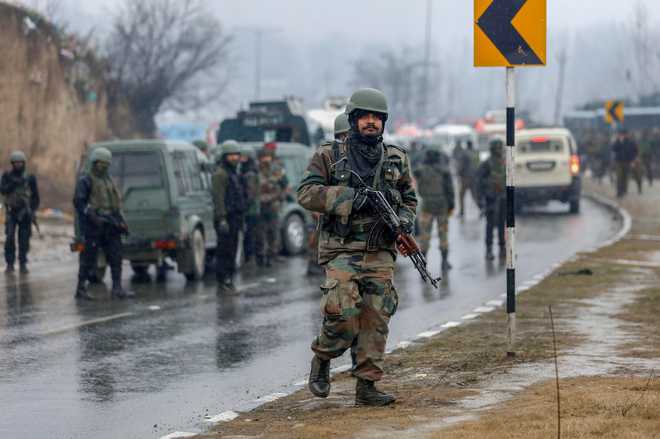
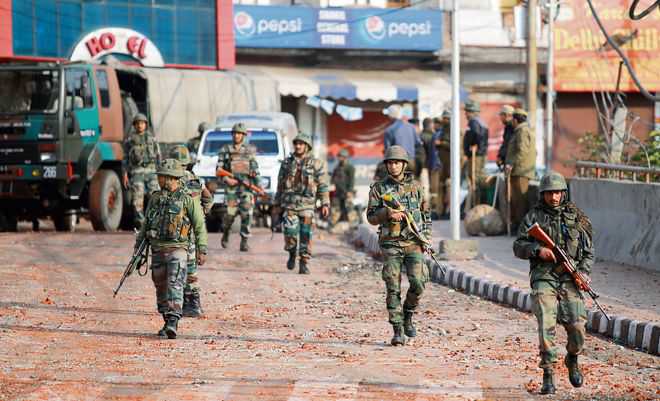
Army soldiers near the site of suicide bomb attack in Pulwama district of south Kashmir on Thursday, February 14, 2019. PTI

New Delhi, February 14

The Government of India has condemned the cowardly terrorist attack on security forces in Pulwama.

“This heinous and despicable act has been perpetrated by Jaish-e-Mohammed, a Pakistan-based and supported terrorist organisation proscribed by the United Nations and other countries. This terror group is led by the international terrorist Masood Azhar, who has been given full freedom by Government of Pakistan to operate and expand his terror infrastructure in territories under the control of Pakistan and to carry out attacks in India and elsewhere with impunity,” Ministry of External Affairs said in a release.

The Government of India is firmly and resolutely committed to take all necessary measures to safeguard national security. “We are equally resolved to fight against the menace of terrorism. We demand that Pakistan stop supporting terrorists and terror groups operating from their territory and dismantle the infrastructure operated by terrorist outfits to launch attacks in other countries,” it added.

The MEA said, “We strongly reiterate our appeal to all members of the international community to support the proposal to list terrorists, including JeM chief Masood Azhar, as a designated terrorist under the 1267 Sanctions Committee of the UN Security Council and to ban terrorist organisations operating from territories controlled by Pakistan.”

“We express our sincere condolences to the family members of our fearless security personnel who have made the supreme sacrifice.” — Agencies


Immediately end ‘support’, ‘safe haven’ to terrorists: US tells Pak

Immediately end 'support', 'safe haven' to terrorists: US tells Pak

At least 37 personnel died in the blast. AFP

Washington, February 15

The White House asked Pakistan to immediately end “support” and “safe haven” to all terror groups as it strongly condemned the Pulwama terrorist attack.

Pakistan-based Jaish-e-Mohammad (JeM) has claimed responsibility for the attack in Jammu and Kashmir’s Pulwama district on Thursday that left at least 37 personnel dead and many critically wounded.

“The United States calls on Pakistan to end immediately the support and safe haven provided to all terrorist groups operating on its soil, whose only goal is to sow chaos, violence, and terror in the region,” White House Press Secretary Sarah Sanders said in a late night statement on Thursday.

“This attack only strengthens our resolve to bolster counterterrorism cooperation and coordination between the United States and India,” she said in a strongly-worded statement issued by the White House. PTI


IAF MiG-27 fighter to show its ground attack capabilities at Vayushakti 2019

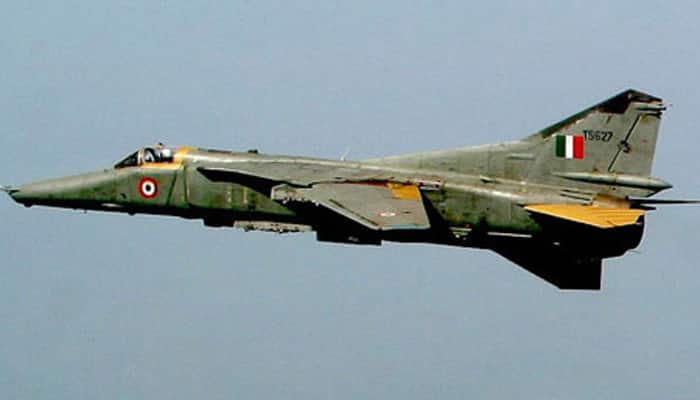
The MiG-27 upgrade is a very potent air to ground strike aircraft, which is capable of carrying a variety of armament loads comprising of bombs, rockets & front guns.

IAF MiG-27 fighter to show its ground attack capabilities at Vayushakti 2019

NEW DELHI: The Indian Air Force’s (IAF) MiG-27 will showcase its ground attack capabilities at the Vayushakti 2019 exercise on February 16.

The MiG-27 upgrade is a very potent air to ground strike aircraft, which is capable of carrying a variety of armament loads comprising of bombs, rockets & front guns. This aircraft can operate over a wide range of speeds due to its swing-wing design.

The MiG-27 was originally built by the Mikoyan-Gurevich design bureau in the Soviet Union but is now produced in India by Hindustan Aeronautics as the Bahadur (“Valiant”).

Though this aircraft is based on the MiG-23 fighter aircraft, it is optimized for air-to-ground attack. The MiG-27 is currently used by Indian, Kazakh and Sri Lankan Air Forces in the ground attack role.

IAF’s Vayushakti 2019 is scheduled to be held on February 16 at Pokhran Air to Ground Armament range near Jaisalmer in Rajasthan. The exercise will be used by the IAF for the demonstration of its firepower and showcase the ever-increasing potential of IAF’s combat platforms.

”Many Air Forces around the world display their might and aerial firepower through such demonstrations. Indian Air Force also conducts the demonstration to showcase the ever-increasing potential of its combat platforms over the years and to assure the citizens, its ability to safeguard India’s national interests,” the IAF said in the Facebook post.

The IAF post further stated, ”These exercises are also vital for operators, planners, and the leadership. It provides an opportunity for forces to operate in near realistic scenarios.”


After 10-year renovation, Pak gurdwara opens for pilgrims Nanaksar sarovar remains dry, cries for attention

After 10-year renovation, Pak gurdwara opens for pilgrims

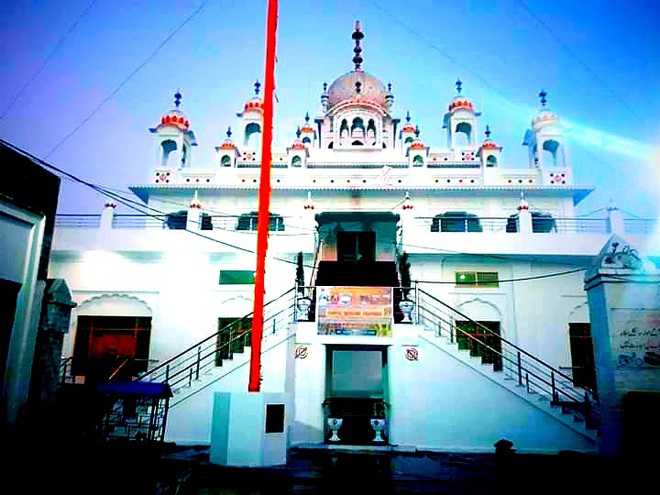
Renovated building of Gurdwara Bal Leela Sahib at Nankana Sahib in Pakistan.

Pak gurdwara where Guru Nanak used to play as a child gets a new look

Varinder Singh

Tribune News Service

Jalandhar, February 10

While the ‘Birdh’ and dried-up ‘Sarovar’ is crying for attention of the Pakistan government and authorities, the main building of Gurdwara Bal Leela Sahib in Nankana Sahib in Pakistan has been thrown open for pilgrims and visitors following completion of a 10-year-long renovation and reconstruction process.

Gurdwara Bala Leela Sahib holds great importance. It was the place where Guru Nanak Dev used to play during his childhood in an open field along with his childhood friends. It was where the Guru — who was born in Nankana Sahib (now in Pakistan) on April 15 in 1469 — used to bestow his friends with enlightenment about the Almighty in his infancy.

Gurdwara Bal Leela was situated about 300 meters south-east of world-famed Gurdwara Janam Asthan. The Nanaksar sarovar (holy pond) on the gurdwara premises was originally built by Rai Bular — the ruler of Rai-Bhoe-Ki-Talwandi (presently known as Nankana Sahib after being named after Guru Nanak. The gurdwara management was with the ‘Nirmala Sikhs’ prior to the ‘Saka of 1921’.

Between 1921 and 1947, Panthic forces or Sikhs managed its affairs. After the Partition, the management of this holy shrine had got transferred to the Evacuee Trust Property Board of Pakistan (ETPB).

The dilapidated and unsafe main building of the gurdwara was virtually closed down for visitors about 15 years ago.

“Now, the Gurdwara has once again been opened for pilgrims after the completion of the ‘Kar Sewa’ of the holy place with the joint efforts of the the UK-based ‘Jatha Guru Ka Bagh’, Baba Jagtar Singh ‘Kar Sewa Wale’ of Tarn Taran, the ETPB and the Pakistan Sikh Gurdwara Parbandhak Committee (PSGPC),” said Bhai Sukhbir Singh Maan, head granthi-cum-caretaker of the gurdwara while talking to The Tribune from Nankana Sahib over the phone.

The langar hall, the ‘Parkash Asthan’ and ‘Sukhaasan Sthan’ have been renovated, he said.

The ‘Birdh’ (Old) ‘Sarovar’ situated adjacent to the Gurdwara is still lying dried up and is badly in need of renovation. “The gurdwara is open all times for pilgrims and visitors now,” said Sukhbir Singh Maan.

Guru Hargobind, it was said, had also visited the town and had got the shrine premises enlarged. Similarly, Dewan Kaura Mal—A Hindu noble—had got the holy pond renovated and brick-lined after his victory over Multan in 1748. Maharaja Ranjit Singh was behind renovation of the holy shrine building and enlargement of the ‘Sarovar’ in early 1800.

The last renovation of the gurdwara was said have been held under the supervision of Sant Gurmukh Singh ‘Sewa Wale’ between 1930 and 1940.


Ready to localise MiG-35 production: Russian firm Claims jet to be 20 per cent cheaper than other models

Ready to localise MiG-35  production: Russian firm

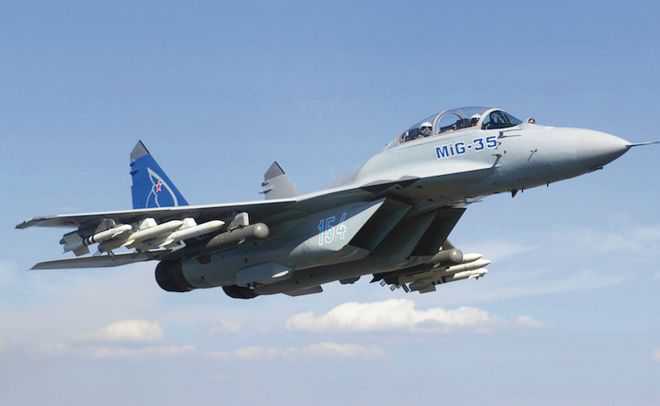
The MiG-35 is armed with new types of guided and unguided air-attack systems which provide maximum effectiveness in combat against air and ground targets.

Ajay Banerjee

Tribune News Service

Bengaluru, February 24

Russian aerospace major RAC MiG, which is offering the new MiG-35 fighter jet to India, has said that it is ready to localise production of the jet.

At Aero India, MiG Director General Tarasenko Ilya said, “At present, we are the number one plane in the world and offer to localise the MiG-35 production in India.”

Tarasenko said, “We have been here for more than 50 years (MiG-21 arrived in India in 1963). We have had excellent cooperation with India in the past and will continue it.”

MiG is one of the seven companies in the race for the Ministry of Defence (MoD) tender seeking 110 fighter jets. Tarasenko said, “We will meet all requirements of the MoD.” One of the requirements is the maximum ‘make in India’. The company has already made a presentation on new technologies, showcasing technological advantages of the MiG-35.

The Indian Air Force (IAF) operates 110 MiG-21 and MiG-27 jets which are on the verge of being phased out. It also operates MiG-29 jets while the Navy operates the MiG-29K — the sea variant.

The company has claimed that the MiG-35 will be 20 per cent cheaper than the similar offers from direct competitors.

Tarasenko said, “There is no need to disassemble the aircraft or even a part of it for maintenance and upgrade —just replacing the module is sufficient. Besides, the replacement of the propulsion unit (the engine) takes only 58 minutes in field conditions.”

The MiG-35 is armed with new types of guided and unguided air-attack systems which provide maximum effectiveness in combat against air and ground targets. It also carries a new optronic sighting, navigation system with a weapon control, a new communications system complex and AESA radar.

The Russian company has also set up a new public joint stock company United Aircraft Corporation as a part of  an after-sales service concept. It is expected to reduce time and costs at all stages of the after-sales service — from the creation of technical centres to performing maintenance and repair works.

Advanced & Lethal 

  • The MiG-35 is armed with new types of guided and unguided air-attack systems which provide maximum effectiveness in combat against air and ground targets
  • It also carries a new optronic sighting, navigation system with a weapon control, a new communications system complex and AESA radar


It’s not a win-win option by Manoj Joshi

It’s not a win-win option

Do or die: In the election year, Modi has compulsions for quick action.

Manoj Joshi
Distinguished fellow, Observer Research Foundation, New Delhi

The dilemma over military responses to the Jaish-e-Mohammed (JeM) attack in Pulwama that took the lives of 40 CRPF jawans is not new. India has been there and done that. Following the attack on Parliament House on December 13, 2001, India mobilised its entire army and threatened war for an entire year, but finally called it off.

After the Mumbai strike of November 26, 2008, PM Manmohan Singh sought military options, but was told that they were not quite prepared for the possibility of a larger war that may be triggered by a retaliatory strike.

And now, PM Modi has declared that the security forces have been given a free hand to decide the time, place and the mode of the future course of action, adding that this was an India with a new policy and practice.

What is new, in many ways, is the extent of public anger and the somewhat blatant efforts to make political use of the event.  Modi’s statements indicate that a strike is a question of when, not if.

An important factor that restrained India in 1992 (following the Bombay blasts) or in 2001 and 2008 is absent. The US played a major role in preventing an Indian retaliation, in the main out of concerns over Pakistan. Now, to go by the message being conveyed by the incendiary US national security adviser John Bolton is ‘go ahead’.

So, what will the new policy and action be?

First, the Prime Minister needs to understand that such things cannot be left to the security forces. Military action is, as Clausewitz put it, a continuation of politics by other means. In today’s post-nuclear era, when all-out war is not desirable, it is important to use the military instrument with great care, along with ‘a mix of diplomatic, economic and informational implements’.

More than ever, the present situation demands a careful mix of various means and strong political guidance and control. Just how this works was evident in the Indian response to the Kargil incursions. PM Vajpayee ordered the Army and later the Air Force in, but kept a tight control on them, ensuring a major Indian military and diplomatic victory. Not only were the Pakistani intruders pushed back, but also the international community internalised the notion of the sanctity of the Line of Control that divides the Indian and Pakistani forces in J&K.

A lesser-known fact is that the Indian Navy took up aggressive positions in the Arabian Sea and threatened to blockade Karachi in the event of a larger war.

In the long term, many options are there, including a stepped-up covert war and even an economic one. India could up the ante in Afghanistan, or for that matter in the UN Security Council. But Modi also has electoral compulsions for quick and kinetic action.

Air strikes are the easiest. An IAF aircraft can launch a Popeye air-to-surface missile with a 340-kg warhead from Indian airspace and it can travel 70 km or so to a target across the LoC. India has longer range options with the air-launched version of the Brahmos missile that can travel 400 km with a 200-kg warhead.

The second option is an overland ‘surgical strike’. Again, to be effective, it must be sufficiently violent. The so-called surgical strikes of September 26, 2016, were not, because Pakistan was able to pretend they never occurred. More important, Rawalpindi was clearly not deterred because its cross-border attacks on India did not stop. Indeed, one took place two months later on Nagrota, the HQ of 16 Corps.

The problem is targets. In the surgical strikes, India took out a couple of huts being used as launchpads and killed their occupants. But using a 200-300 kg warhead for that would be overkill. It is not clear whether we have exact coordinates of larger facilities used by the Jaish. If we do target them, we would have to be sure that they are, indeed, Jaish targets, and then the IAF would have to ensure accuracy, because in the crowded South Asian terrain, a small error could lead to hundreds of non-combatants being killed.

Since the terrorists operate in small groups and stay in scattered facilities, identifying and targeting larger facilities inland and retrieving a commando group without getting entangled with the dense Pakistan army positions would be a daunting task.

Both these options are made with the presumption that India would seek to differentiate between the Pakistan army and the terrorists. Were India be willing to strike at Pakistani military facilities, we would be into an entirely different ball game. Make no mistake, the Pakistan army will retaliate against any deliberate targeting of its facilities.

If New Delhi decides to play that game it could well also order a blockade of Pakistani air and maritime space. India does not have to be able to enforce this directly, but the threat of being sunk or shot down would be sufficient for air and maritime traffic to be severely disrupted. But this would unleash a different dynamic and affect third countries, thus complicating the outcome.

Whatever the choices are, it is imperative that the Modi government ensure that they are tightly controlled and managed by the political authorities. The Army may have the freedom to decide the nature, time and place of the action, but the responsibility for the outcome will rest on the shoulders of those who wield the instrumentality.


Why Were So Many Concessions Granted During the Rafale Negotiations?

Why Were So Many Concessions Granted During the Rafale Negotiations?

The bigger question recent exposes by The Wire and The Hindu raise with regard to the Prime Minister’s Office (PMO) conducting parallel negotiations in the Rafale deal is what did India gain by generously granting so many concessions to the French government?

Sudhanshu Mohanty, former secretary, defence finance, who had suggested the ‘escrow account’ option after the French refused to offer a sovereign guarantee to India, argues that the Centre was in a great position to bargain because it was a near monopoly buyer  of the Rafale fighter jets. Even more so because it came at a time when the company, Dassault Aviation, was struggling financially due to its falling order book.

Mohanty suggests that the India’s near “monopsony status” should have made Dassault vulnerable. However, the opposite seems to have happened as the PMO conducted parallel parleys with the French government and ceded considerable ground on several counts.

India’s demand for sovereign or bank guarantees from France for Dassault’s performance over a longer period with spares, maintenance etc was refused and we now learn that the head of the Indian negotiating team, Air Marshal S.B.P. Sinha, received a direct communication from a joint secretary in PMO indicating that the French had refused to give a sovereign guarantee. Even a bank guarantee was refused by the French.

Similarly, when Mohanty formally suggested an ‘Escrow Account’ to be strictly operated by the French government in lieu of sovereign or bank guarantee, it was accepted initially and even cleared by the Cabinet Committee on Security in August 2016. However, even this clause was taken out at the eleventh hour under pressure from the PMO.

The Defence Acquisition Council was asked to sit afresh to remove this and also the anti- corruption clause after the Cabinet had cleared it the previous month. This was indeed unprecedented. What were the pressures working on the PMO during this period can only be speculated.

“All the post-facto amendments appear to be aimed at benefiting private companies on both sides [offset partners] under the garb of an intergovernmental agreement,” Mohanty told The Wire.

Nevertheless, it is clear that after a point, the PMO virtually started dictating to the Indian negotiating team set up by the Defence Ministry under the Defence Procurement Procedure policy of 2013. This sacrosanct system of procedures was violated time and again as observed by some senior defence ministry officials, including the-then defence secretary G. Mohan Kumar.

Last week, Kumar publicly said that his observation on the files – that the PMO was undermining the negotiating position of the defence ministry – was only in the context of diluting the sovereign guarantee clause and had nothing to do with pricing of the Rafale jets.

Mohanty, however, argues that issues like sovereign guarantee or bank guarantee are inextricably linked to pricing because these decisions, including the one to remove the anti-corruption clause, create big changes in the risk profile of the contract. It is a settled commercial and market principle that a higher or lower risk is accompanied by corresponding change in pricing of the product. For instance, the removal of a sovereign guarantee must be accompanied by reduction in cost of the Rafale jet as the future risk for India increases. On the other hand, having a bank guarantee adds to the cost.

The question therefore to ask is what has India really gained by removing all these critical provisions in the DPP document, in a deal where it had monopsony status? As near monopoly buyer it could have forced the French to accept all these conditions with little increase in cost.

This is the real puzzle which must be unraveled.

Another concession India made to the French against the advice of the law ministry is that it agreed to allow arbitration proceedings happen in Geneva under UNCITRAL rules. In May 2017, as The Wire first reported, finance minister Arun Jaitley sent an urgent note to the PMO arguing that India was losing too many arbitration cases against global companies because of arbitration under the international framework.

The finance ministry suggested that India needed to be more proactive and devise a mechanism to ensure that Indian judges are also part of the arbitration bench.

In the context of the Rafale deal too, the law ministry’s inputs were also that arbitration proceedings should take place in India and not Switzerland. These concerns are not merely theoretical: it was only in late 2017 that Dassault and Taiwan settled a 20-year-old dispute over an arms sale through arbitration, with the French company being fined nearly 135 million euros.

It would seem the arbitration clause in the Rafale deal violates the spirit of the note sent by the finance ministry to the PMO and the law ministry’s beliefs. Why would India concede to arbitration in Geneva that too in the absence of other safeguards such as sovereign guarantee, bank guarantee etc. A mere letter of comfort assuring future performance by Dassault  is legally a very weak substitute, most experts have opined.

Therefore the fundamental  question remains as to why India agreed to so many concessions, in violation of DPP 2013, when it was clearly in a strong position as a near monopsony vis a vis a company starved of orders globally.


Rafale Deal: An Uncomfortable Letter and Agreement The Comfort Letter issued by the French Government is not a legally binding document, hence the only document useful in an arbitration is the Inter-Governmental Agreement, which is secret.

Rafale Deal

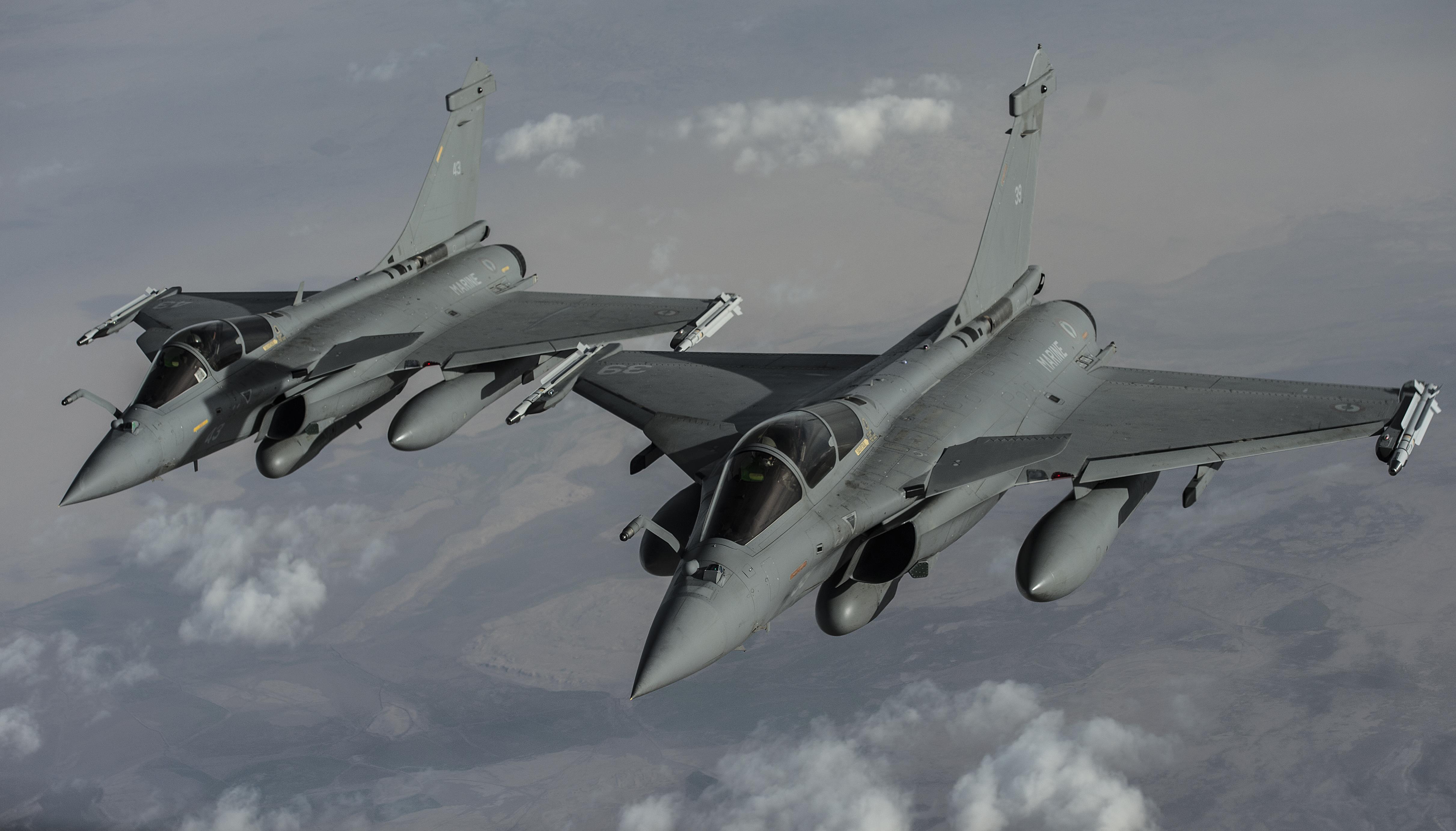
Image Coutesy: US Department of Defence, Tech. Sgt. Nathan Lipscomb.

Defence Minister Nirmala Sitharaman in response to a question in the Rajya Sabha on February 4, stated that, “In the 36 Rafale IGA [Inter Governmental-Agreement], the French Government has provided a ‘Letter of Comfort’ signed by the French Prime Minister. The provision in the IGA alongwith Letter of Comfort provide adequate safeguards to the Government of India.” She further stated that, “Any dispute in the execution of the IGA will be settled through the Bilateral High Level Group established by the Government of India and Government of French Republic. Any dispute not settled by this group shall be settled by arbitration in accordance with UNCITRAL [United Nations Commission on International Trade Law] arbitration rules.

The critics of the Rafale deal have pointed out that the ‘Letter of Comfort’ is a hollow substitute for a sovereign guarantee from the French Government. Sudhansu Mohanty, who was the former head of the Ministry of Defence’s finances, told the Economic Times, “A sovereign guarantee is given by a sovereign government to another sovereign government, guaranteeing enforcement of the terms and conditions of the contract signed under their auspices. A ‘letter of comfort’ is definitely not on par with a sovereign guarantee. Loosely, it can be said to be a ‘letter of intent’, as is often used in international contracts. Maybe, morally binding but not legally binding and enforceable.”

Also Read | Did Modi Unilaterally Also Fix Rafale Price in April 2015?

This would imply that the only legally binding document in the hands of the Government of India with regards to the Rafale deal is the Inter-Governmental Agreement. The problem with this agreement is that the Defence Minister refuses to divulge the contents of the deal by taking cover behind a 2008 security agreement between India and France. This agreement concerned protects classified information and material in the field of defence. In July 2018, after a showdown in the Lok Sabha over the pricing details, the French foreign ministry spokesperson issued a statement confirming that the 2008 agreement would apply to the September 2016 IGA on Rafale.

In the portion where the Defence Minister referred to dispute resolution, it appears that there is a two-step process. The first stage involves negotiation through a Bilateral High Level Group established by the Governments of India and France. The second stage would result in an international arbitration under the UNCITRAL. Under the Defence Procurement Procedure 2013 (DPP), procurements via contracts with private vendors require the seat of arbitration to be in India, and the proceedings to be in accordance with the Indian Arbitration and Conciliation Act, 1996. IGAs under the DPP tend to be more flexible in this respect.

Also Read | Rafale Scam: ‘For Want of a Nail the Kingdom Was Lost’

Under the DPP, the procedure for IGAs is laid down in paragraphs 71 and 72. Paragraph 71 lays down the circumstances under which procurement can take place under an IGA. Paragraph 72 lays down that under instances where the quantity to be procured is very large, or it would require product support over a long period of time, IGA may be required. Thus, “Such an Inter-Governmental Agreement is expected to safeguard the interests of the Govt. of India and should also provide for assistance of the foreign Govt. in case the contract(s) runs into an unforeseen problem.

This general guideline tends to be a bit vague, perhaps to take into consideration that not many governments would be willing to stick their necks out for private defence equipment manufacturers. However, as Sudhansu Mohanty pointed out in The Wire, at the time when the original request for proposal (RFP) was issued, due to the size of the prospective purchase, India held the advantage. In 2015, before negotiations for the IGA had even been thought about, Prime Minister Modi announced that the Rafale aircraft would be procured through this mode. Thus, in one swoop India forfeited its bargaining advantage allowing the French Government to limit the extent of its own liability while India takes all the risk. Considering that the IGA – which is the only legal document – is being kept secret, this would certainly make for interesting arbitration proceedings under the UNCITRAL.