Sanjha Morcha

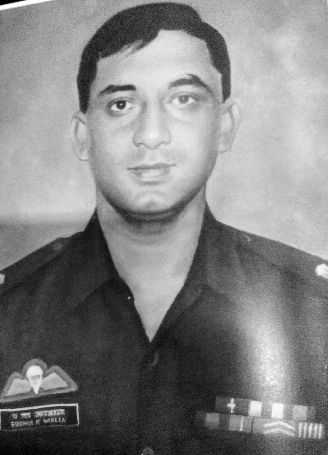
Sudhir Walia — a braveheart who went beyond the call of duty

Awarded Ashok Chakra, highest peace-time military decoration, posthumously
Col Dilbag Dabas (Retd)

Himachali soil has nurtured men of steel. Not just three Param Virs, the state has given to the Indian Army three bravest of the braves, who earned for themselves the coveted Ashok Chakra, the highest peace-time gallantry award.

Major Sudhir Kumar Walia is one such gem, which will glitter in Himachali crown till eternity.

Major Sudhir Kumar Walia, son of Subedar Major Rulia Ram Walia, was born on May 24, 1971, at Panuri village in Kangra district of Himachal Pradesh. Sudhir grew up listening about the valour of Indian soldiers from his father and knew that he was destined to be one. Even his father encouraged him to join the Indian military, which for the Himachalis is not just another career option, but a way of life, an honourable way of serving the motherland. An alumnus of Sainik School Sujanpur Tihra and the National Defense Academy, Khadakvasla (Pune), he was the first boy from his village to become an Army officer. After his military training at the prestigious Indian Military Academy, Dehradun, he was commissioned into the Jat Regiment. As a subaltern, Sudhir was a part of Indian Peace Keeping Force (IPKF), where he had an impressive record of fighting and neutralising Liberation Tigers of Tamil Eelam (LTTE) in Sri Lanka in the late ’80s. Sudhir also demonstrated his raw courage and Himachali grit during his two tenures in Jammu and Kashmir fighting exported as well as home-grown militants. His gallantry in neutralising and eliminating terrorists in the Kashmir valley did not go unnoticed and for his conspicuous acts of bravery in the face of the enemy, Sudhir was awarded the Sena Medal for gallantry twice.

The Parachute Regiment (Special Forces), always on the lookout for the daredevils, noticed all the attributes of a Para Commando in Sudhir Kumar Walia and took no time in getting him on its establishment. After three months of probation and five mandatory parachute jumps, Sudhir was permanently seconded to 9 Parachute Regiment (Special Forces). During his outstanding military career spanning just about a decade, what Major Sudhir Kumar Walia achieved is exceptional and rare. 

Kupwara district in Jammu and Kashmir has been and still is a hot bed of militancy in the Kashmir valley. The 9 Parachute Battalion (Special Forces) was deployed in Kupwara in 1999 for anti-terrorist operations. On August 29, 1999, Major Sudhir Kumar Walia was tasked to lead a squad of five commandos on “Search and destroy” mission through the dense undergrowth of Haphruda forest. His squad chanced upon a well-camouflaged hideout with 20 terrorists hiding in it. With total disregard to personal safety, Major Walia surged ahead of his squad and with the lightening speed not only neutralised the sentries, but also single-handedly killed four militants. In the cross fire, he, too, was hit in the face, arm and chest.

In spite of grave injuries, which were to prove fatal later, the gallant officer kept directing his men with his radio set and ultimately ensured that all terrorists were eliminated. Due to his fatal injuries and excessive loss of blood, Major Sudhir Kumar Walia breathed his last holding on to his radio set. This gallant officer went way beyond the call of duty and in the highest traditions of the Indian Army sacrificed his life for the country. For his most conspicuous act of bravery and supreme sacrifice in the face of the enemy, Major Sudhir Kumar Walia was awarded the Ashok Chakra, the highest peace-time military decoration, posthumously.

Major Sudhir Kumar Walia, AC, may be dead, but he still lives in the hearts and minds of not only the Himachalis, but all countrymen.

Highest peacetime military decoration in India

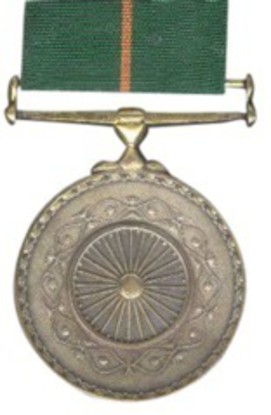
Ashok Chakra is the highest peacetime military decoration in India and equivalent to the Param Vir Chakra during war time. It is awarded for the most conspicuous act of bravery or some act of daring or pre-eminent valour or self-sacrifice other than in the face of the enemy on land, at sea or in the air. Ashok Chakra was instituted by the President of India on January 4, 1952.

Single-handedly killed four militants

The 9 Parachute Battalion (Special Forces) was deployed in Kupwara in 1999 for anti-terrorist operations. On August 29, 1999, Major Sudhir Kumar Walia was tasked to lead a squad of five commandos on “Search and destroy” mission through the dense undergrowth of Haphruda forest. His squad chanced upon a well-camouflaged hideout with 20 terrorists hiding in it. With total disregard to personal safety, Major Walia surged ahead of his squad and with the lightening speed not only neutralised the sentries, but also single-handedly killed four militants. In the cross fire, he, too, was hit in the face, arm and chest. In spite of grave injuries, which were to prove fatal later, the gallant officer kept directing his men with his radio set and ultimately ensured that all terrorists were eliminated. Due to his fatal injuries and excessive loss of blood, Major Sudhir Kumar Walia breathed his last holding on to his radio set. This gallant officer went way beyond the call of duty and in the highest traditions of the Indian Army sacrificed his life for the country. For his most conspicuous act of bravery and supreme sacrifice in the face of the enemy, Major Sudhir Kumar Walia was awarded the Ashok Chakra, the highest peace-time military decoration, posthumously.

(The writer is a veteran Gunner, 6 Field Regiment)

Pak takeover of JeM HQ Charade will strip PM Imran Khan of credibility

Pak takeover of JeM HQ

PAKISTAN can easily claim the world record for banning terrorist organisations. Ever since 9/11 it hurtled down the road of proscriptions and has rarely lifted its foot off the pedal. The problem is that the banned organisations do not remain cowed down for long. Their leading stars continue to rain down invectives on the Pakistan army’s enemy of the day, while public prosecutors fail to press home the charges, leading to courts repeatedly letting off the hook these terror-cum-charity outfits. Evidence suggests that the ban serves each time the purpose of getting the monkey off the army’s back. In the latest replay, Pakistan has banned two terror outfits led by Hafiz Saeed and its administration took over the Bahawalpur headquarters of Jaish-e-Mohammed (JeM) chief Masood Azhar.

Clearly, the problem is in implementation. First banned in 2002, Hafiz Saeed’s Lashkar-e-Taiba (LeT) and JeM would have been decimated by now, had there been a determined effort by Pakistan. After the 26/11 Mumbai attacks, it again proscribed 16 terror outfits, including the two anti-India terror outfits. Saeed’s principal gunslingers were jailed and it appeared, for once, that the centrist government of Asif Ali Zardari had got the measure of the radicals. But two dead public prosecutors later, the trial petered out. Even the US, which freely indulges in drone hunting of terrorists on Pakistani soil, was unable to get at Saeed despite a multi-million bounty.

But Pakistan is under the pump after the Financial Action Task Force (FATF) gave it a three-month deadline to sharpen the implementation of its anti-terror financing laws. The recent Saudi bailout may have been the last act of generosity by Pakistan’s all-weather friends. Its impending blacklisting by the FATF could deter foreign investors and hinder Pakistan’s access to international markets. The road ahead for Pakistan is already tough without the distraction of a large neighbour unveiling all available tools of coercion. As India determinedly tightens the political screws — it has gained access even to the Organisation of Islamic Countries (OIC) where Pakistan till now had the field to itself — and leverages its geo-economic charm, PM Imran Khan may find himself bereft of viable options.


Diplomatic isolation in bits & pieces Govt’s verbal slugfests do not achieve much

Sandeep Dikshit in New Delhi

If External Affairs Minister Sushma Swaraj was prescient while speaking in Parliament a week before the Pulwama attack, she would have eschewed the part commending the Indian diplomatic community for getting Pakistan “successfully blacklisted by the comity of nations”. The talk of diplomatically isolating Pakistan entered the governmental lexicon in January 2016 after a spate of attacks rocked the government’s equanimity. Since then, the only two successes chalked by Indian diplomacy is getting Pakistan blackballed by the Financial Action Task Force and preventing it from hosting the SAARC summit, which was in the nature of a self-goal, for the move has wrecked the organisation that India had created.

Since then, there have been pyrrhic victories or even verbal slugfests touted as diplomatic wins such as young Indian diplomat Eenam Gambhir berating Pakistan as “Terroristan”. Pakistan has, in the past, endured such barbs from more powerful countries and bigger statesmen like John McCain and Barack Obama.

There are many tools for isolating a country and diplomatic isolation of the kind India professes to practice would rank as the lowest on the scale. The successful deployment of policy tools hinges on the offended country’s economic and military power, besides its interconnections with the target country.

The attempt at isolation is long drawn out and the outcome is unpredictable. Venezuela and Iran are two test cases where the US is attempting a regime change by strangulating their economies. As India-Pakistan ties are skeletal, all that New Delhi had to be content with is withdrawing the Most Favoured Nation status.

If Sushma Swaraj was correct in stating in May last year that Pakistan is trying to reach out to India because it senses isolation on the issue of terrorism, Islamabad wouldn’t have managed to gather representatives or ships of 46 countries for a five-day multinational exercise that ended a week back.

And while the foreign office talks of diplomatic isolation, it later emerged that the national security advisers of both countries had secretly met. Pakistan even managed to cadge generous assistance from Saudi Arabia, which is now said to be in India’s corner on the strength of PM Modi’s personal chemistry with the sheikhs of West Asia. Diplomatic isolation also does not cut ice with other countries when India not just keeps alive the back channels of communication, but also sends two union ministers to Pakistan for the Kartarpur project ceremony.

India needs to spell out, like the US or Russia, what exactly does diplomatic isolation mean? Is it hot words at international meets or a sustained multi-dimensional effort with an end goal in sight? Does the UNSC blacklisting of Masood Azhar achieve anything? The US has, in the past, put hundreds of Taliban fighters on the UNSC blacklist only to pull some of them out when it felt the need to negotiate a settlement.

The end game of demolishing terrorist headquarters at Muridke (Hafiz Saeed) and Bahawalpur (Azhar Masood) and killing both the leaders entails a degree of ruthlessness, pain and risks an embarrassing blowback. Is Modi up for it? He should have in mind that his “dear friend” Benjamin Netanyahu owes his political longevity in part to his older brother’s heroics in rescuing Israeli hostages from a hijacked plane at Entebbe. Or that Barack Obama’s path for re-election was smoothened by the capture of Osama bin Laden. That, however, means moving from diplomatic isolation to military action, firm in the belief that the diplomats have insured against any other country coming to the offending country’s aid as was the case with Iraq under Saddam Hussein.

If India’s past wars are any guide, Pakistan was not exactly friendless during the 1965 and 1971 hostilities. In 1971, the Shah of Iran supplied military equipment as well as diplomatic support against India. In 1965, Indonesia offered to seize Andaman and Nicobar Islands to spread Indian forces thin. But Kargil provided a different benchmark. Hardly any country spoke in favour of Pakistan. In the end, US President Bill Clinton browbeat Nawaz Sharif into handing back mountain peaks that hadn’t been recaptured by the Army. As long as a former Pakistan military chief heads the 41-nation Islamic Military Counter Terrorism Coalition, the sledgehammer approach is unlikely to work. The limited conflict of Kargil and the preceding diplomacy makes one long for the measured escalation of those days by the trio of Vajpayee, Jaswant Singh and Brajesh Mishra.


Indian Army’s new sniper rifle paired with old improvisation tactics will turn tables at LoC

Sniping is not a new phenomenon along Line of Control (LoC) and Indian Army’s improvisations have made up for lack of equipment.

Indian Army

The media has repeatedly said over the last few months that sniping is a new modus operandi at the Line of Control between India and Pakistan and the Army is losing this new war due to ageing equipment.

Out dated equipment is a concern, and therefore the Indian Army has just bought new deadly sniper rifles for the Northern Command – .50 Calibre M95 by Barrett and the .338 Lapua Magnum Scorpio TGT by Beretta – to replace the Russian Dragunov.

But contrary to media’s claims, sniping is not a new phenomenon, and is in fact a tried-and-tested way of achieving moral ascendancy along the Line of Control (LoC) and the Indian Army hasn’t fared poorly. Improvisation has largely made up for lack of adequate equipment.


Also read: Deadly new sniper rifles are here for Northern Command soldiers along LoC


A force-multiplier

The Soviet-era Dragunov sniper rifle has been the mainstay of the Indian Army in conventional operations along the LoC as well in counter-terror missions. However, the 800-metre effective range offered by the Dragunov is now insufficient for modern-day warfare.

Yet, the Indian Army through improvisation, correct training and selection has created an environment wherein sniping has become a force multiplier. The adversary too hasn’t been static on this front.

I recall on the first day of my command at Siachen in 1995, we lost an outstanding young officer, keeping vigil on his post from behind a four-feet wall, to a single shot fired by the enemy. Investigation showed that the shot was fired by a medium machine gun (MMG) from a range of 4,200 metres. It is definitely not a range from which an MMG is fired, but improvisation made it possible.

Sources within the Indian Army say that there is no despair over inadequate sniping equipment because improvisation has made up for it, with even anti-material rifles being used for sniping now. However, improvisation alone cannot ever be a permanent solution to fighting the adversary; soldiers won’t say it but they know it.

The purchase of new sniper rifles, with enhanced range of 1500-1800 metres, was much-needed, but their arrival doesn’t guarantee overnight success. Some degree of improvisation and innovation will again be the key to ensuring optimum utilisation.


Also read: The new danger in Kashmir: Cold, calculating snipers who are wary of close contact


How to maximise effectiveness

The effectiveness of a weapon can be maximised when the user is confident about it, its technical characteristics including faults have been well-understood, and the required talent pool has been created for it among the fighting units.

All this can happen fast, given the Indian Army’s penchant to pursue an aim with utmost focus. But it also needs to add institutional weight behind the effort, through reintroduction of the sniper training course and sniper competitions, which stopped several years ago. Those who acquire requisite skills after rigorous training must be suitably rewarded.

Introducing the Sniper Badge is the first such step and only those meeting the stringent standards must earn the right to display it. Shooting ranges of 1,800 metres and beyond are not available along the LoC. There is little scope for the troops deployed to train with the equipment unless select batches are sent for training at the ranges in desert areas or central India. The best training ground, of course, is the LoC itself and there is no doubt that a simultaneous on-the-job training, while fighting the adversary, can continue there.

But we need more than just a gung-ho approach to streamline the creation of a talent pool that once existed in the Infantry units.

Sniping war will continue

It is important to know why sniping is a difficult operation at the LoC and yet easy enough to grab opportunities when they present themselves. Recently, a one-star rank officer of the Pakistan Army was seriously injured in an exchange of fire in the Lipa sector. It led to the Pakistanis targeting two JCOs on our side in the Kupwara sector. Both operations, the Pakistani and ours, involved the use of snipers. Many more exchanges have been reported over the last year. The LoC posts are virtual citadels with a labyrinth of deep communication trenches to afford movement within the post without enemy observation, but there are a number of other places where any movement is under observation.

Terrain domination in some areas give either side the advantage of observation, and vegetation is not available everywhere for cover. A quid pro quo situation exists at most places along the LoC where there are mutual vulnerabilities that prevent risk taking by either side. He who has the ability and confidence to prevent exposure of potential targets becomes the psychological winner, a major contribution to moral ascendancy at the LoC. It forces a lot of movement by night.


Also read: The enemy at the gates has a new weapon and Indian Army needs to wake up


At the LoC, the Indian Army will always be forced to offer more targets than the adversary not only because of the higher quantum of deployment, but also due to the nature of it. Deployment in small detachments in tactically unsound positions along the LoC to prevent infiltration is common; tactically unsound may seem strange to older soldiers, but the fact remains that in counter infiltration the aim is to prevent terrorists getting across and not the defence of some real estate. This increases vulnerability especially when the LoC fence is under reconstruction or maintenance.

The idiom ‘two can play this game’ is applicable all along the LoC. While ceasefire will remain on paper, violations will take place. Sniping exchange, however, is largely unreported and therefore remains outside the purview of public gaze.

The sniping war, therefore, will continue even as other means of moral domination emerge. The arrival of new sniper weapons, combined with improvisation and a return to the old-world sniper training culture, will definitely help in turning the tables on the adversary to a greater extent.

The author, a former GOC of Srinagar-based 15 Corps, is associated with the Vivekanand International Foundation and the Institute of Peace and Conflict Studies. He is the Chancellor of Central University of Kashmir.

Get the PrintEssential to make sense of the day’s key developments.


Around 450 Terrorists Operating In Jammu And Kashmir: Army

Lt Gen. General Ranbir Singh added that there was a significant percentage of Pakistani terrorists, who were being used as cannon fodder and pushed into Jammu and Kashmir to cause casualties among Indian citizens.

Around 450 Terrorists Operating In Jammu And Kashmir: Army

Army said the terror infrastructure was intact in PoK and Pakistan. (File)


UDHAMPUR: The Army on Thursday said 450 terrorists were operating in Jammu and Kashmir and the terror infrastructure across the Line of Control (LoC) was intact with the full support of Pakistan as 16 terrorist camps were operating in the neighbouring country and Pakistan-occupied Kashmir (PoK).

“The number of terrorists is more on the north of Pir Panjal. Around 350 to 400 terrorists are active in the Kashmir valley. On the south of Pir Panjal (the Jammu region), there are 50 terrorists,” Northern Army commander Lieutenant General Ranbir Singh told reporters.

He said most of the terrorists on the south of Pir Panjal were dormant.

“The security situation is stable on this side. However, the operations are mostly conducted on the north of Pir Panjal (Kashmir) as more terrorists are present there,” he added.

Lt Gen. Singh said the terror infrastructure was intact in PoK and Pakistan.

“It is sad that the terrorist infrastructure in PoK is still intact. The Pakistan Army, in its bid to support infiltration of terrorists from across the border, carries out ceasefire violations and certain tactical activities along the LoC,” he said, adding that 16 terrorist training camps were operating in PoK and Pakistan.

“They (terrorists) are being trained and then brought to the LoC. Then they infiltrate into Jammu and Kashmir. We are keeping these (activities) under surveillance,” the Northern Army commander said.

He added that 191 youngsters had joined terrorist groups in the Kashmir valley, but there was a relative decline in the number of people joining such outfits over the last few months.

 “According to reports, 191 youngsters are reported to have joined terrorism. Most of the recruitments took place up to the month of August. There was a relative decline in the number of youngsters joining terrorism from October till now,” Lt Gen. Singh said.

He added that there were concerted efforts on the part of the Army to reach out to the youngsters and their parents and teachers so that they prevailed upon the youngsters not to join any outfit propagating terrorism.

“We hope that the youth engagement programmes will pay dividends in the months to come,” the Northern Army commander said.

Castigating the narrative being created that it was an indigenous movement, he said of the 836 terrorists killed in the state in the last five years, 490 were “Pakistani or foreign terrorists”.

Lt Gen. Singh added that there was a significant percentage of Pakistani terrorists, who were being used as cannon fodder and pushed into Jammu and Kashmir to cause casualties among Indian citizens.


Fund crunch in Army, no TA/DA for officers

Fund crunch in Army, no TA/DA for officers

File photo

New Delhi, February 4

The Ministry of Defence has no money to pay for the transportation of armed forces officers who have been transferred to various places of postings and also to those being attached on temporary duty for field exercises or for attending courses.

The Principal Controller of Defence Accounts (PCDA) has said on its website that due to insufficient funds available under temporary duty and permanent duty, no advances and claims can be processed till further receipt of funds.

A defence official late on Monday evening said shortfalls were temporary and resolved routinely through re-appropriations (from existing budget allocations).

It costs around Rs 4,000 crore per annum to pay for transportation and allowances for officers who are transferred from one station to another and also those going to attend courses or to take part in exercises. Sources said an additional sum of Rs 800 crore has been sanctioned, which may help tide over some of this difficulty for now. There are nearly 40,000 Army officers. With tenures being just two-three years at one station, postings are a frequent reality. Also, during military exercises — conducted every year — a huge body of troops moves.

Then another element is the courses conducted to keep the officers updated on military issues. In October last year, several infrastructure projects of the armed forces had been stalled or are moving at a slow pace due to “fund crunch”. The then Engineer-in-Chief branch in the Military Engineering Services (MES) accepted “fund crunch” and issued instructions that at all ongoing works where payments were held up due to “fund crunch”, the work shall be put under “suspension”. The budget for infrastructure works this year is Rs 2,300 crore, of which Rs 1,850 crore had been spent by October. Some of the outstanding payment due for projects has rolled over from the previous year that ended on March 31. The work on perimeter walls around military stations in northern India (for security to prevent terror attacks) has been stopped, while making additional ammunition storage dumps or IAF works like hangars and runways have been held up or are moving slowly for want of funds. — TNS


Tathagata Roy must go Don’t spare those who demonise Kashmiris

Tathagata Roy must go

FINALLY, the Prime Minister has spoken. A day after the Supreme Court lent protection to Kashmiri students, Modi assured during a BJP rally in Jaipur on Saturday that the fight is not against Kashmiris and that the people of the Valley are at the receiving end of terrorist violence — better late than never. Meanwhile, the apex court yet again came to the rescue of the people, performing its crucial constitutional duty of safeguarding citizens from rabid mobs driven by hatred. A Bench headed by Chief Justice of India Ranjan Gogoi on Friday directed Chief Secretaries and Directors General of Police of 11 states to prevent incidents of threat, assault and social boycott of Kashmiris. The court entrusted the safety of Kashmiris with police officers who were earlier appointed as nodal officers to stop instances of lynching.

The order had a salutary effect. Late on Friday night, the Ministry of Home Affairs issued an advisory directing all state governments to ensure the security of people from Jammu and Kashmir. The University Grants Commission, too, asked vice chancellors of all universities to personally look into the issue of harassment of Kashmiri students.

Since the court has very specifically mentioned ‘social boycott, etc, against Kashmiris’, action ought to be taken against all those who spread venom and sought to shun Kashmiris. The sad reality of Indian politics is that, among those who actively promoted this agenda was a Governor, a constitutional authority. Meghalaya Governor Tathagata Roy had put out a tweet early last week openly calling for a boycott of everything Kashmiri, asking people not to visit Kashmir or buy Kashmiri handicrafts. Despite the Supreme Court order, he has neither removed his tweet nor stopped his Twitter tirade. In the context of the order, he has committed an offence and must pay for it. As a person who is blinded by ideology to even see the difference between terrorists and those desperately trying to defeat terrorists, he does not deserve to hold the office of the Governor.


Saab Proposes To Make 96 Gripen Jets In India To Win Air Force Deal

Saab is expected to face competition from rivals such as Boeing, Lockheed Martin, and Dassault Aviation to supply 110 fighter jets to the Indian Air Force

Saab Proposes To Make 96 Gripen Jets In India To Win Air Force Deal

BENGALURU: 

Swedish defence firm Saab AB, which is seeking to sell its Gripen fighter jets to the Indian Air Force, said on Tuesday it could offer to make most of them in a production facility likely to be set up in one of the southern cities.

Saab is expected to face competition from rivals such as Boeing Co, Lockheed Martin Corp and Dassault Aviation SA to supply about 110 fighter jets to the Air Force, in what could be a deal worth more than $15 billion.

As part of Prime Minister Narendra Modi’s Make in India push, Saab is considering locally manufacturing 96 of the 114 jets it wants to sell to the country, the Stockholm-based company officials told reporters on the sidelines of a conference ahead of Aero India 2019 in Bengaluru.

Saab has tied up with resources conglomerate Adani Group to sell the single-engine planes to fulfil the condition of bidders having an Indian partner to be considered for the order.

6 COMMENTS

Any manufacturing facility in the country could also become an export hub, Saab’s Indian unit Chairman and Managing Director Ola Rignell told Reuters at the conference. Bengaluru and Hyderabad would be the “natural choice” for any plant.


UP officer suspended for posting objectionable message on Pulwama

UP officer suspended for posting objectionable message on Pulwama

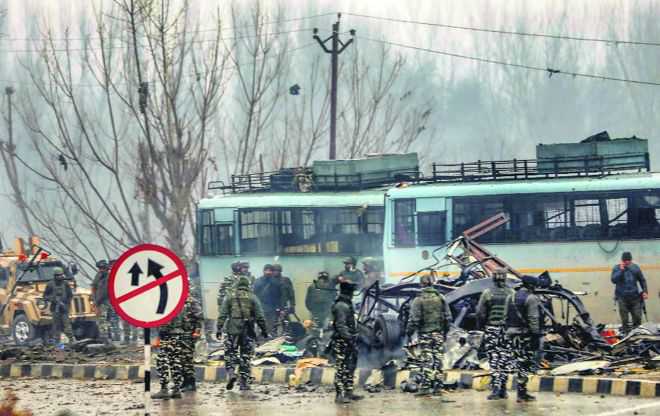
Forty CRPF personnel were killed in the terror attack in Jammu and Kashmir’s Pulwama district on February 14. PTI file

Muzaffarnagar, February 22

A government education officer in Uttar Pradesh has been suspended for allegedly posting an objectionable message on social media about the Pulwama terror attack, officials said on Friday.

Basic Shiksha Adhikari DK Yadav was suspended on the recommendation of district authorities here and the Uttar Pradesh government has taken steps in this connection, according to Additional District Magistrate Amit Kumar.

Yadav was suspended for allegedly posting an objectionable message on social media about the Pulwama incident on Thursday, the officials said.

Some people also staged a protest outside Yadav’s office over his comment and demanded strict action against him.

Forty CRPF personnel were killed in the terror attack in Jammu and Kashmir’s Pulwama district on February 14. PTI


CM backs Sidhu, says his intent not anti-national

CM backs Sidhu, says his intent not anti-national

Chief Minister Capt Amarinder Singh

Tribune News Service

Chandigarh, February 18

Chief Minister Capt Amarinder on Monday came to the rescue of Cabinet minister Navjot Singh Sidhu saying his intention were surely not anti-national, but he has to explain his stand on the issue.

He slammed the SAD for disrupting the House proceedings during the presentation of the Budget by targeting Sidhu.

“Sidhu is a cricketer and I am a soldier. We have different viewpoints,” he said, but added that the minister must have realised that he had gone overboard with his Pakistan visit.

The Chief Minister further said Sidhu did not understand defence intricacies and had possibly reacted out of friendly motive. The minister’s intentions were surely not anti-national and he must have got the message, he added.

‘ACT AGAINSTPAK’

On tackling Pakistan-backed terror, the CM advocated “an eye for an eye”. He said, “We should get 82 of them since 41 of our men have been killed.” He said the country was fed up with the senseless killings of Indian soldiers every day. He suggested tough action against Pakistan, be it military, diplomatic or economic, or a combination of all three.

Book Navjot: Badal

Former CM Parkash Singh Badal said a case should be registered against Sidhu for his “pro-Pakistan” stance. Badal said the Congress should expel Sidhu and a case be registered against him for “betraying the nation”. On Union Minister Harsimrat Kaur Badal’s visit to Pakistan for the stone-laying of Kartarpur corridor, he said, “It was a different issue”.

IMG-20190219-WA0046