Sanjha Morcha

Army ranks ::History

The Genesis of Army Ranks*
*Field Marshal*
http://www.alanharding.com/Military/ranks/field_marsh.gif
The rank evolved from the title of marescalci (masters of the horse) of the early Frankish kings. The importance of cavalry in medieval warfare led to the marshalship being associated with a command position.
The modern military title of field marshal was introduced into the British army in 1736 by King George II, who imported it from Germany. In Britain the rank came to be bestowed only upon a few senior army officers, notably the chief of Britain’s Imperial General Staff.
*General*
http://www.alanharding.com/Military/ranks/gen.gif
The King would be the commander but he might appoint a Captain General to command in his name – the first being George Monck appointed by Charles II in 1660. Later, when the title of Colonel became popular some Kings called their commanders Colonel General. The British Army stopped using the Captain part of the title by the Eighteenth Century leaving just General as the top commander. Lat. generalis “something pertaining to a whole unit of anything rather than just to a part”. Before the Sixteenth Century armies were usually formed only when needed for a war or campaign
*Lieutenant General*
http://www.alanharding.com/Military/ranks/lieu_gen.gif
The king or his Captain General would often be away from the army since they had interests elsewhere so the job of actually running the army fell to the Captain General’s assistant – his lieutenant – the Lieutenant General. This was not a permanent rank until the Seventeenth Century, before which one of the Colonels might be appointed Lieutenant General for a particular campaign or war but he would still command his own regiment.
*Major General*
http://www.alanharding.com/Military/ranks/maj_gen.gif
The army’s chief administrative officer was the Sergeant Major General. He would be an experienced soldier, possibly a commoner, who served as chief of staff. For much of his administrative work he dealt with the regimental Sergeant Majors, thus his title meant “overall” or “chief” Sergeant Major. His duties included such things as supply, organization, and forming the army for battle or march.
As the General ranks became fixed during the Seventeenth Century the Sergeant portion fell away leaving the title as Major General. This happened in England in 1655 when its Lord Protector Oliver Cromwell organized the country into eleven military districts each commanded by a Major General.
*Brigadier*
http://www.alanharding.com/Military/ranks/brig.gif
Commander of a Brigade, in some armies later known as a Brigadier General. The Lieutenant General and Sergeant Major General dealt directly with the Colonels who lead the regiments making up the army. When there got to be too many regiments for the two generals to handle effectively they organized Brigades, usually composed of three or more Regiments. During the nineteenth century and before the “rank” of Brigadier was actually established, a local or temporary appointment granted (typically) to a full Colonel when commanding a Brigade.
The Brigadier General was the lowest-ranking general officer but was abolished when the Brigade was abolished after World War I, being replaced by Colonels Commandant.. The rank of Brigadier appeared in 1928
*Colonel*
http://www.alanharding.com/Military/ranks/col.gif
The Spanish Army was organised into twenty units called colunelas or columns. These comprised1000 to 1250 men further organized into companies. The commander was the cabo de colunela, head of the column, or Colonel. Since the colunelas were royal or “crown” units they were also called coronelias and their commanders coronels.
The French developed Regiments from the colunela, keeping the title of Colonel and pronounced it the way it looks. The British copied the French. They also borrowed the Colonel from the French but adopted the Spanish pronunciation of coronel.
*Lieutenant Colonel*
http://www.alanharding.com/Military/ranks/lieu_col.gif
The Colonel’s assistants – their Lieutenants – took over at such times and any other times the Colonels were gone. The Colonel’s lieutenants, of course, soon became the Lieutenant Colonels.
*Major*
http://www.alanharding.com/Military/ranks/major.gif
A Major was originally the Sergeant Major third in command to a Colonel in a traditional Regiment. Later, like a Lieutenant Colonel, a Major might command his own Battalion. Lat. maior is simply Latin for “greater”.
*Captain*
http://www.alanharding.com/Military/ranks/capt.gif
Originally Captain-Lieutenant, becoming Captain in 1772. Lat. capitaneus “chieftain”, from Lat. caput “head”. Chieftain or head of a unit. As armies evolved his post came to be at the head of a company, which by the Sixteenth Century was usually 100 to 200 men. That seemed to be the number one man could manage in battle.
*Lieutenant*
http://www.alanharding.com/Military/ranks/lieu.gif
French lieu (place) tenant (holder). The Lieutenant normally commands a small tactical unit such as a platoon. A Lieutenant often takes the place of a superior officer when that officer is absent.
*Second Lieutenant*
http://www.alanharding.com/Military/ranks/sec_lieu.gif
The lowest rank of commissioned officer. Note that a Subaltern is a term applied to any officer below the rank of captain, especially a second lieutenant. Derivation from Latin related to the word for alternate.
Until 1871 the lowest commissioned rank was the Ensign in the Infantry and Cornet in the Cavalry – both names derived from French words signifying standard bearers. The Fusilier regiments, having no company colours, had First and Second Lieutenants anyway. The Fusiliers abolished the rank of Second Lieutenant in 1834. Between 1871-1877 the lowest was the Sub Lieutenant, after which today’s Second Lieutenant rank was established.
*Warrant Officer*
http://www.alanharding.com/Military/ranks/warrant_c1.gifhttp://www.alanharding.com/Military/ranks/warrant_c2a.gif
Introduced into the British Army in 1879, the military grade of Warrant Officer dates back to the early years of the Royal Navy. These experienced soldiers, often have specialist appointments. They hold a Royal Warrant from Her Majesty The Queen. There are currently two classes of Warrant Officer, First Class and Second Class.
*Staff Sergeant*
http://www.alanharding.com/Military/ranks/staff_serg.gif
A rank senior to sergeant.
*Sergeant*
http://www.alanharding.com/Military/ranks/sergeant.gif
Lat. serviens servant to a knight in medieval times. The English borrowed the word sergeant from the French in about the Thirteenth Century. Meaning “non-commissioned military officer” first recorded 1548. Originally a much more important rank than presently.
*Corporal*
http://www.alanharding.com/Military/ranks/corporal.gif
Originally referred to a reliable veteran called the capo de’squadra or head of the square.
The title changed to caporale by the Sixteenth Century and meant the leader of a small body of soldiers. The French picked up the term in about the Sixteenth Century and pronounced it in various ways, one of them being corporal, which indicates a mixing with the Latin word corpus or French corps (body).
The British adopted corporal in the Seventeenth or Eighteenth Century and it has been a part of the army ever since. The British gave the Corporal his two stripes when they started using chevrons in 1803.
*Lance Corporal*
http://www.alanharding.com/Military/ranks/lance_cor.gif
Appointment and not a rank. Junior to a Corporal. From lancepesade “officer of lowest rank, from obsolete French lancepessade, from Old Italian lancia spezzata, superior soldier, literally “broken lance”. Originally referred to as a “chosen man” who would take control of the section if the Corporal was to be killed or wounded


Proud of brave son, says martyr’s father Gloom descends on Karnal village of slain Havildar

Proud of brave son, says martyr’s father

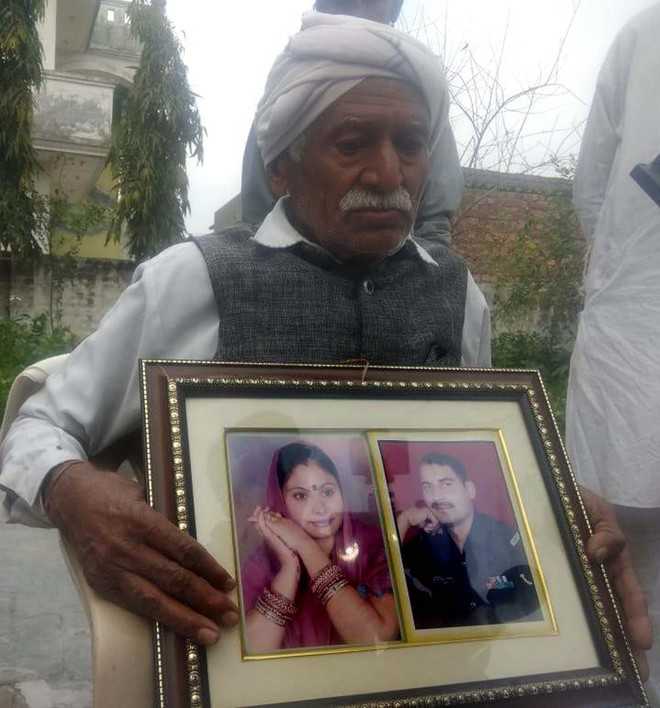
The grieving Kishan Chand with the wedding photograph of his son Havildar Baljit Singh in Karnal on Tuesday. Tribune photo

Parveen Arora
Tribune News Service
Karnal, February 12

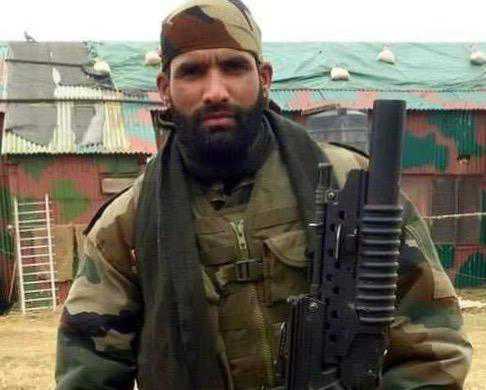
A pall of gloom descended on Dinger Majra village in the district on Tuesday following the death of Havildar Baljeet Singh (35) in a gunfight in Jammu and Kashmir.

The gunfight broke out when joint teams of security forces launched an anti-militancy operation in the Ratnipora area of Pulwama district. One militant was also killed in the gunfight.

A soldier of the 50 Rashtriya Rifles, Baljeet had joined the Army in January 2002. He talked to his wife and children over phone on Monday night. He told them that he would come home for a vacation, but destiny had something else in store for him. He is survived by his wife Aruna, father Kishan Chand (75), daughter Jannat (7) and son Arnav (3).

As per family members, his mortal remains would reach the village on Wednesday and the last rites would begin around 9:30 am.

As the news reached the village, hundreds of people thronged his house to console the grieving family and express grief. Several youths of the village were serving the armed forces.

“Officials informed us about Baljeet’s martyrdom this morning. We were informed that before laying down his life, he killed one militant. We are proud of his sacrifice,” said Dilbag Singh, Baljeet’s cousin.

He had served as NSG commando in VVIP duties between 2015 and 2017. Aruna said he had come home on Diwali and talked to them on Monday night.

“Baljeet was a brave man and great son. I am proud of my son,” said the martyr’s father. Gharaunda MLA Harvinder Kalyan said the government would extend help to the family as per its policy.


First 4 Chinooks arrive in Gujarat

o be based at Chandigarh, the existing home of the 126 Helicopter Unit

First 4 Chinooks arrive in Gujarat

Tribune News Service

New Delhi, February 10

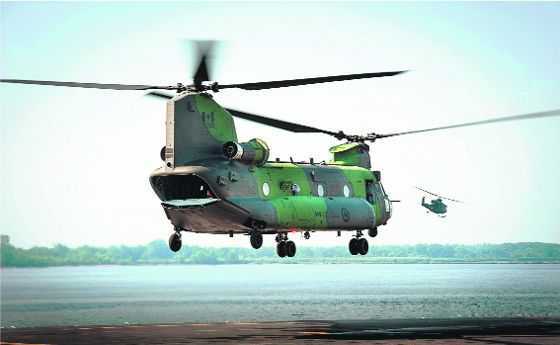
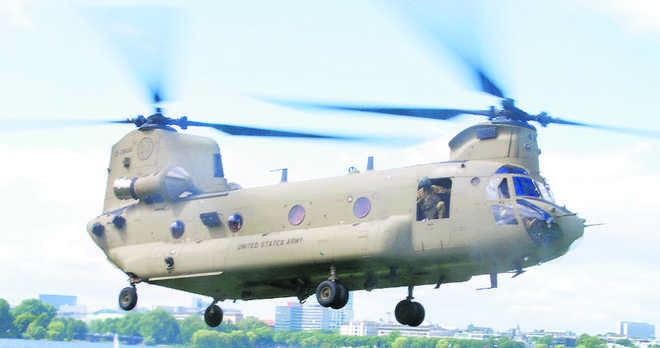
In what will augment the capabilities of the Indian Air Force and enable rapid deployment of troops, the first lot of four CH-47F Chinook helicopters arrived in India on Sunday at a port in Gujarat.

These helicopters will be based at Chandigarh, the existing home of the 126 Helicopter Unit, which holds the Soviet-origin heavy lift copters Mi-26. “The Chinooks will be ferried to Chandigarh where a formal induction is scheduled later this year,” manufacturer Boeing said in statement.

India and the US had signed a deal for 15 Chinook copters in September 2015. The first four are part of that delivery and the next lots will arrive in batches. The four Chinooks arrived at Gujarat on board a ship.

Boeing delivers first four Chinook helicopters for IAF

The Chinook is a multi-mission helicopter that features a fully integrated, digital cockpit management system and a common aviation architecture cockpit. The massive helicopter can carry 9.6 tonne of cargo, including heavy machinery, artillery guns and even light-armoured vehicles to high-altitude areas. It is also used for transport of troops, equipment and fuel. It is also used for humanitarian and disaster-relief operations, in missions such as transportation of relief supplies and mass evacuation of refugees.

The last time a set of Chinooks flew over Chandigarh was in 2015 when the UK’s Royal Air Force sent a few of the Chinooks for assistance during the Nepal earthquake. The copters were then assembled at the Chandigarh base. The city being a supply base for Ladakh, Kargil and Siachen, it also has a base repair depot.


Army questions 3 jawans over kidnapping, killing of J&K soldier Aurangzeb

Army questions 3 jawans over kidnapping, killing of J&K soldier Aurangzeb

Aurangzeb was abducted and killed by militants in Pulwama on June 14. File photo

Ishfaq Tantry
Tribune News Service
Srinagar, February 6

The Army has been questioning  three soldiers over their possible involvement in leaking information about the movement of their colleague Aurangzeb, a rifleman with 44 Rashtriya Rifles, who was kidnapped and killed by militants in south Kashmir on June 14.

The three soldiers are being quizzed on suspicion that they might have knowingly or unknowingly leaked information about Aurangzeb’s movements.

Aurangzeb, who was proceeding on leave for Eid on 14 June, 2018, was kidnapped and later shot in the head and neck.

His body was found by a team of police and Army officials at Gussu village, about 10 km from Kalampora, in Pulwama district, from where he was abducted.

Aurangzeb had taken lift from a private vehicle outside his camp in Shopian, but was being tracked by militants, who stopped the car and abducted him a few kilometres away.

Aurangzeb, who was close to an Army officer who had gunned down Hizbul Mujahideen commander Sameer Tiger in Kashmir in April, 2018, was killed by the militants in Pulwama last year.

The three soldiers, all locals and belonging to the 44 Rashtriya Rifles, have been identified as Abid Hussain Wani, Tajamul Ahmed and Adil Wani.

Though the Army is tightlipped about the questioning of the three soldiers in Aurangzeb killing, an official on condition of anonymity disclosed that “the three soldiers are with them and an Inquiry to ascertain their role is currently underway”. He did not elaborate further.

One of the soldiers under the scanner is brother of Abid Tauseef Wani — who was allegedly tortured by an Army officer in Shadimarg camp — where Aurangzeb was posted.

Wani is currently undergoing treatment at SMHS hospital here.

“Abid, originally working with JAKLI. He was posted with 44 Rashtriya Rifles, when he was detained in June. Since then, we have not heard about him. The Army is not telling us anything. The Army on Monday also took his younger brother Towseef and tortured him under custody, who is now admitted in SMHS Hospital in Srinagar,” a relative of Abid told The Tribune.

“Apart from Abid, the Army has also detained two other soldiers namely Adil and Tajamul,” the relative said.

3 security men suspected of leaking info  

  • An Army officer on the condition of anonymity said “the three soldiers are with them and an inquiry to ascertain their role is currently underway.
  • It is suspected that the detained soldiers might have leaked information about the movement of Rifleman Aurangzeb (in pic) to the militants.

CRPF plans to enhance annual leave for jawans on Army lines in combat zones

CRPF plans to enhance annual leave for jawans on Army lines in combat zones

File photo for representation only.

New Delhi, February 21

On the lines of the Army, the CRPF is mulling to enhance the number of leave given to its combat personnel, as part of a renewed push to provide enhanced rest and recuperation to its troops deployed extensively for anti-terrorism and anti-Naxal operations in the country, officials said on Thursday.

The force is planning to enhance by 13 days the number of casual leave given in a year to its jawans and officials, up to the rank of Commanding Officer (CO), they said.

At present, the Central Reserve Police Force (CRPF) troops, up to the CO rank, get 60 days of EL (earned leave) and 15 days of casual leave (CL) while being in an operationally active area like Jammu and Kashmir, left wing extremism deployment or counter-insurgency duties in the north east.

It is now planning to enhance the CL to 28 days.

In the Army, all the officials—from a sepoy to the Army chief—get 60 days of EL and 28 days of CL whether they are deployed in a peace station or the operations grid. This system helps a jawan to plan his off-duty activities and vacations better, they said.

The proposal was much favoured by the troops and officers of the force after CRPF Director General (DG) RR Bhatnagar visited his formations for two days in the Kashmir Valley post the February 14 Pulwama attack, they said.

Forty CRPF personnel were killed while five others were injured after a suicide bomber triggered a deadly explosion next to a force bus plying on the Jammu-Srinagar highway as part of a convoy.

The official said all field commanders of the over 3-lakh personnel strong force have been asked to firm up their views after which the CRPF will move the Ministry of Home Affairs seeking its sanction to the proposal.

“The move will greatly benefit the troops in planning their time when they are off duty.

“They can better spend their time with their families or get their domestic work done or to simply say make the most of their holidays, given the hectic and stressful work schedule they have on job,” the official said. — PTI


Grief, anger marks final farewell to slain jawans

Grief, anger marks final farewell to slain jawans

A family member of slain CRPF Mahesh Yadav cries before his funeral at Tudihar, in Allahabad district on February 16, 2019. PTI photo

Lucknow/Jaipur, February 16

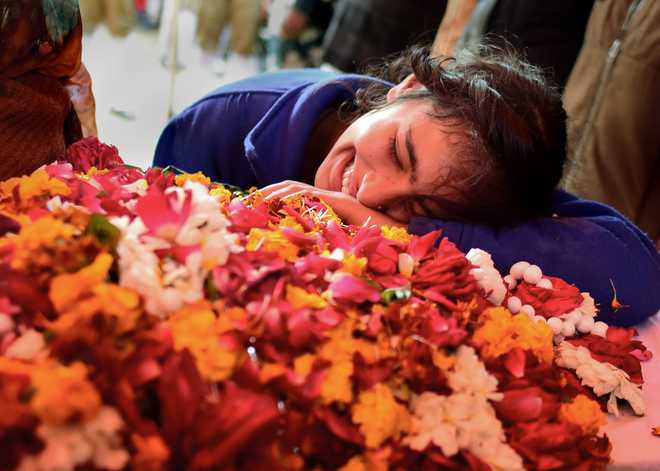
Sobbing family members Saturday lit the funeral pyres of the CRPF jawans killed in the Pulwama terror attack, joined by other mourners who at places gathered in their thousands.

In an Uttarakhand village, a 3-year-old child lit his father’s pyre.  At another cremation in Rajasthan, a 2-month baby was made to symbolically touch the torch used for the last rites.

Traders downed shutters and people lined the streets at many places as caskets carrying the remains of the jawans arrived at their native villages and towns across the country, amid the chanting of slogans—some of them anti-Pakistan.

Union ministers flew down from New Delhi to join ministers from the states to lay wreaths on the caskets of many of the 40 jawans killed in the suicide attack on the Jammu-Srinagar highway on Thursday.

In most cases, the coffins draped in the tricolor arrived from Delhi at the nearest airport, and were then taken by road to the jawans’ villages for state funerals.

In a village in Uttarakhand’s Udham Singh Nagar district, the 3-year-old Rehan lit his father Virendra Singh’s funeral pyre.

Union Minister of state for Textiles Ajay Tamta and Uttarakhand minister Yashpal Arya were at the cremation, where CRPF jawans fired three rounds in the air as a salute to their fallen colleague.

Shopkeepers in nearby Khatima, Chakarpur and Jhankat downed shutters. People taking part in a procession in Khatima shouted anti-Pakistan slogans.

In Ghalauti Khurd in Punjab’s Moga district, Jaimal Singh’s 5-year-old son Gurprakash lit the pyre. Rohitash Lamba’s infant son was made to symbolically touch the torch that lit his pyre in Shahpura town near Jaipur.

Thousands of people, including Union minister Jitendra Singh, attended the burial of head constable Naseer Ahmad at Dudasunballa village in the border district of Rajouri in Jammu and Kashmir.

Officers from the Central Reserve Police Force and the Army also visited the village to pay homage, promising to take care of the jawan’s family which includes his wife and two children, officials said.

Defence Minister Nirmala Sitharaman laid a wreath on the coffin of C Sivachandran at Tiruchirappali airport, where his body had been flown on the way to his village.

As Pankaj Tripathi’s body reached Harpur Bailhiya in Uttar Pradesh’s Maharajganj district, the villagers broke out in slogans hailing him as a martyr, and also chanting “Pakistan murdabad”.

Taking the cue from Prime Minister Narendra Modi remarks, Union Minister Shiv Pratap Shukla, who attended the funeral, said: “India will give a befitting reply to the cowardly act of Pakistan”. He announced that the local primary school will be renamed after the jawan.

“My son was coming soon to meet me, but it seems that something else was written in my fate,” his mother told reporters.

Uttarakhand’s Trivendra Singh Rawat, Himachal Pradesh’s Jai Ram Thakur and Odisha’s Naveen Pathak were among the chief ministers who paid homage as the remains of soldiers from their states arrived.

Assam Chief Minister Sarbananda Sonowal turned pallbearer when head constable Maneswar Basumatari’s body arrived in Guwahati, flown in by the Indian Air Force.

“The nation will fight united to protect the sovereignty of our country. Basumatari’s sacrifice, along with that of the other CRPF jawans, will not go in vain,” he told reporters.

In Deoria district, Vijay Maurya’s wife Vijay Laxmi demanded that Uttar Pradesh Chief Minister Adityanath should visit the family before the cremation takes place.

UP Minister Anupama Jaiswal and other leaders were trying to persuade her to go ahead with the last rites. PTI


Attack worse than Uri, India will have to act, say experts

NEW DELHI: The Cabinet Committee on Security (CCS) – the highest decision-making body on security chaired by the Prime Minister – will meet on Friday morning to discuss India’s response to the attack on the Central Reserve Police Force (CRPF) convoy in Jammu and Kashmir in which 44 soldiers were killed.

Heavily armed Indian commandos crossed the Line of Control (LoC) and carried out a coordinated raid hitting terror camps collated with Pakistani Army establishment – commonly known as surgical strikes — after 18 Indian soldiers were killed in the Uri Brigade headquarters attack in 2016. Similarly, in 2015 when rebels in Manipur ambushed an Indian army convoy, Indian commandos crossed into Myanmar and destroyed militant camps.

“This is much bigger than the Uri Brigade headquarters attack. No terror organisation claimed responsibility for the Uri attack. Now, however, a Pakistan based terror organisation – the Jaish-eMohammed [JeM] – has taken responsibility for this attack. Pakistan will be under pressure, but my hunch is that New Delhi will have to act and retaliate. What will be the form and shape of the retaliation will be the prerogative of the government,” former Northern Army Commander, General DS Hooda, said.

General Hooda played a role in the surgical strikes that followed the Uri attack.

“Pakistan hasn’t not stopped infiltration or funding terror organizations, Ceasefire violations too have gone up. India’s response will take all this into account and also the internal situation in Jammu and Kashmir,” General Hooda added.

Others experts agreed with Hooda. “We should not respond in hurry. We need to look at how our convoys are moving and whether we need to rework our quick-reaction teams. And, also devise a response to this emerging threat of vehicles being used for suicide bombing,” Former Western Army Commander, Genenral K J Singh said. “Our response should be at time and place of our choosing. Decisionmakers should not come under pressure from either media or social media. The retribution/ retaliation should be firm and with minimum noise,” General Singh added.

How Masood Azhar is waging war on India

NEWDELHI:When Jaish-e-Mohammed chief Masood Azhar emerged from years of seclusion in January 2014 to call for the resumption of jihad against India, alarm bells went off in New Delhi.

Since then, Azhar’s group has been blamed for some of the most brazen and devastating terrorist assaults in India, including the September 2016 attack on an Indian Army facility at Uri that killed 19 and Thursday’s suicide car bombing on a security forces convoy that claimed the lives of at least 43 troopers.

After remaining mostly confined to his base at Bahawalpur in Pakistan’s most populous province of Punjab for years, Azhar addressed a rally of his jihadi supporters at Muzaffarabad, the capital of Pakistan-occupied Kashmir, on January 26, 2014. Even then, he wasn’t seen in public – Azhar made the speech over phone.

The message, however, went out crystal clear. “There are 313 fidayeen in this gathering and if a call is given the number will go up to 3,000,” he was quoted as saying at the time, as he called for the resumption of the so-called “holy war” against India.

The rally, attended by thousands, was ostensibly organised to launch a book by Mohammed Afzal Guru, a Kashmiri hanged for his role in the 2001 attack on India’s Parliament, which too was blamed on the JeM and the Lashkar-e-Taiba.

Such a massive gathering couldn’t have been organised within PoK without the sanction of Pakistan’s all-powerful military, experts said at the time. Azhar’s comeback was followed by an uptick in fund-raising and recruitment by JeM in Pakistan’s Punjab province and louder antimandu India rhetoric by the group’s leadership.

Many in India’s security and foreign policy establishment haven’t forgotten the ignominy of watching Azhar create the JeM after he was released in 1999 from an Indian prison along with two other terrorists in exchange for the passengers of an Indian airliner hijacked by Pakistanbacked operatives from Kathto Kandahar.

JeM was banned in Pakistan in 2002 by then president Pervez Musharraf but it has continued its activities virtually unfettered in recent years and it has continued to publish jihadi literature such as the “Zarb-e-Momin” newspaper. The group was among terror organisations cited by India and its Western allies when they pressed the Financial Action Task Force (FATF) to put Pakistan on a “grey list” for failing to crack down on terror financing.

Even more worrying for India has been the blocking by China of efforts by New Delhi and several Western governments to sanction Azhar at the UN Security Council. Since 2016, China, a vetowielding member of the Security Council, has used what is known as a “technical hold” to stymie efforts by countries such as India, the US, Britain and France to sanction Azh ar under Resolution 1267 for his links with al-Qaeda.

Leading strategic affairs analyst Brahma Chellaney said China had persisted with this course of action as it could use Azhar as leverage without any cost and because India “had not done anything in response”. He said, “In a sense, the deaths of the CRFP men in Thursday’s attack can be laid at the door of China, because it is protecting Pakistan and the man in-charge of JeM.”

“There is absolutely no cost for China in continuing with this exercise and the Indian side doesn’t speak up on this issue,” he said, adding India should also tread cautiously on the JeM’s claim for Thursday’s attack through a video featuring the purported bomber.

“This claim could have been made to deflect attention from the LeT, which is an extension of the Inter-Services Intelligence. The JeM is sometimes used as a diversion,” he added.


44 DEAD IN VALLEY’S BLOODIEST DAY

Car with explosives hits convoy on Jammu-Srinagar highway; JeM claims responsibility, govt vows action

SRINAGAR/JAMMU: A suicide bomber driving a car packed with explosives rammed a bus carrying Central Reserve Police Force (CRPF) troops, part of a large paramilitary convoy, on the JammuSrinagar highway on Thursday. Forty-four men were killed as the vehicle was reduced to a mangled heap of metal in the deadliest terror attack in three decades of insurgency — one, which many experts said, would evoke a strong response from India.

REUTERS■ At least 44 CRPF personnel are feared dead after a Jaish suicide bomber rammed a vehicle carrying over 100 kg of explosives into their bus in Pulwama district on Thursday.At least 20 more were injured in the attack in the Awantipora area of Pulwama district. Terror outfit Jaish-e-Mohammad, which Indian authorities say is backed by Pakistan, claimed responsibility for the attack that took place in Lethpora, about 30 km from Srinagar. While the police put the official death toll at 33, security officials in Srinagar and New Delhi said at least 44 people had died.

Jaish said the suicide bombing was carried out by a local militant whom it identified as Adil Ahmad Dar of Pulwama.He joined the Jaish in 2018, PTI cited unnamed officials as saying. The Jaish claimed in a statement that the vehicle was carrying 350 kg of explosives, which Indian authorities did not confirm.

“Attack on CRPF personnel in Pulwama is despicable. I strongly condemn this dastardly attack,” PM Narendra Modi said in a statement as political parties denounced the attack in unison. “Sacrifices of our brave security personnel shall not go in vain. The entire nation stands shoulder to shoulder with the families of the brave martyrs. May the injured recover quickly.”

Congress president Rahul Gandhi wrote on Twitter: “I’m deeply disturbed by the cowardly attack on a #CRPF convoy in J&K in which many of our brave CRPF men have been martyred and a large number wounded, some critically.” In a tweet, party spokesperson Randeep Surjewala charged the Modi government with compromising national security and said terror attacks had taken place unabated under it. The attack may ratchet up tensions between India and Pakistan. Jammu and Kashmir governor Satya Pal Malik said the fact that Jaish owned up to carrying out the attack indicated that Pakistan may have had a hand in it. Minister of state in the Prime Minister’s Office, Jitender Singh, told television channels that the attack had led to a “war- like” situation.

“This is a bigger attack than Uri. Unlike the Uri attack, a Pakistan-based terror group has claimed responsibility There will be much more pressure on Pakistan, but my hunch is, because a Pakistan-based group has claimed responsibility, New Delhi too, will have to act. The form and shape of the retaliation will be the government’s prerogative,” said General DS Hooda, former Northern Army commander.

The ministry of external affairs, while condemning the “heinous and despicable act perpetrated by Jaish-e-Mohammed, a Pakistan-based and supported terrorist organisation proscribed by the United Nations and other countries” called for its chief Masood Azhar to be listed as a designated terrorist under the sanctions committee of the UN Security Council.

The security establishments at the Centre and in the state, which is under federal rule, were huddled in meetings to take stock of the situation following the attack that precedes general elections, likely to be held simultaneously with state elections, in the spring of 2019.

National security adviser Ajit Doval was monitoring the situation and senior CRPF officials were briefing him. NEW DELHI: Senior government officials are concerned about the lack of action on a high-level intelligence alert on the possibility of a Jaish-e-Mohammed (JeM) attack between Pulwama and Srinagar. They admit that it will be very difficult for India to not retaliate after Thursday’s attack in Pulwama — the worst in three decades of insurgency.

Counter-terrorism operatives suspect the attack was payback for the killing of JeM chief Masood Azhar’s nephew Usman Haider in an encounter in Tral last October.

The operatives, who asked not to be identified, said the Narendra Modi government had been apprised and was concerned about the possibility of car bomb or lone wolf attacks in the hinterland.

According to the government officials, who asked not to be identified, recent communication intercepts by intelligence agencies, coupled with a public declaration by Azhar’s younger brother Rauf Asghar that the terror outfit would “spectacularly” target the Indian security forces, and the posting of a video of a bus being blown up on the terror group’s website, all indicated a major terrorist attack. This intelligence was communicated to all internal security agencies on the eve of the attack, they added. HT couldn’t independently confirm this.

A police alert released on February 8 said before deployment of forces the area should be sanitised as there were inputs over the possible use of IEDs.

To be sure, analysts say, a suicide bombing that involves a large quantity of explosives and a car would have required a lot of co-ordination and planning – and would have resulted in some chatter.

Other generic inputs circulated through the Multi-Agency Centre (MAC) warned about a possible attack as well. One alert pointed to the so-called Kashmir Day – the hanging of Afzal Guru and Maqbool Bhat on February 9, 2013, and February 11, 1984 – and warned about a possible terror attack by JeM. On Tuesday, the local CID unit of the Jammu and Kashmir Police also warned about a possible attack.

Although the counter-terrorism operatives do not blame the Central Reserve Police Force (CRPF) for moving 2,500 personnel in a convoy through the sensitive area, the worry is on how to counter Pakistan-based terrorist groups if they escalate such terror attacks to the hinterland.

According to intelligence officials, Haider was killed in a security encounter on October 31, 2018 and IC-814 hijacker Athar Ibrahim’s other son Mohammed Umar is still stuck in the Valley. Ibrahim is Azhar’s elder brother. IC-814 was the Indian Airlines flight hijacked from Kathmandu to Kandahar in December 1999; India was forced to release three prisoners including Masood Azhar to secure the release of the passengers.

Preliminary reports on explosive analysis at the Pulwama spot indicate that the vehicle that rammed into the CRPF convoy was laden with RDX . Tests carried out by the National Security Guard (NSG) explosives team at the spot along with other teams have indicated this. A high-level NSG team is also reaching the spot on Friday.

“How and from where such a large quantity of explosives was gathered is a matter of investigation, but it points to a failure,” said a senior official in the security establishment who did not want to be identified.

“There have been reports of explosives being smuggled from the quarries [in south Kashmir],” another senior official in Jammu and Kashmir said.

At the same time, why the convoy was not adequately protected is also a question of inquiry. Officials in the security establishment are of the view the convoy was spotted soon after it moved. “It is not difficult to predict the time. Once a convoy leaves Banihal tunnel, the time is taken to reach this area, or Srinagar is predictable,” an officer said.


A fighter who displayed camaraderie of highest order Capt Shankla awarded Ashok Chakra for single-handedly killing nine militants

A fighter who displayed camaraderie of highest order

Captain Sandeep Shankla

Col Dilbag Dabas (Retd)

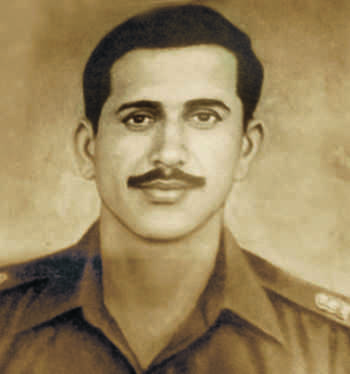
Affectionately called ‘Shanky’ by friends, Capt Sandeep Shankla, son of Colonel JS Kanwar, was born on January 3, 1964, in Hamirpur district.

An alumnus of the prestigious Indian Military Academy, Dehradun, Shanky was commissioned into the 18th Battalion of the Dogra Infantry Regiment.

Militancy started in late 1990/ early 1991 in Kashmir Valley and before the Indian state could realise, it had engulfed the entire Valley and Kashmir was no more a paradise! Pakistan-trained militants made it hell by resulting in mass exodus of Kashmiri pandits and a sizable number of Hindu trading community from the Valley. Tourism, one of the major sources of the regional economy and livelihood for many, was badly hit since the Valley was perceived as a dangerous place to live in. Kupwara district in Jammu and Kashmir was and still is a hot bed of militancy in the Valley. It was at that time that the 18th Dogra Battalion was inducted into the Valley for anti-militancy operations.

After a detailed study of the terrain, the modus operandi of militants and expected support from the local population, the 18th Dogra Battalion got on to the job it was sent for — to cordon, search, apprehend or eliminate terrorists from its area of responsibility. During its anti-militancy operations in the Valley, the battalion did a commendable job, though at unavoidable cost. During one such operation, Captain Sandeep Shankla, the leader of the Quick Reaction Team, single-handedly killed nine militants and under his inspirational leadership, the team apprehended 22 hardcore terrorists.

For his inspirational leadership and unparalleled act of bravery, Captain Sandeep Shankla was awarded the Ashok Chakra posthumously. 

His act of bravery recorded in the War Diary of 18th Dogra battalion reads: Captain Sandeep Shankla was the leader of the Quick Reaction Team (QRT) of the 18th Dogra Battalion deployed in counter-militancy operations in Jammu and Kashmir. On August 8, 1991, he learnt about the presence of a large number of militants at Zafarkhani village in Kupwara district in north Kashmir. The intelligence input was authentic and needed urgent action before the terrorists could move out to some other hideout. Leading from the front, Captain Sandeep Shankla approached the village and immediately cordoned off the area and told the militants to surrender. Finding themselves trapped, the militants opened indiscriminate firing and lobbed hand grenades. The Quick Reaction Team also retaliated and in the encounter, Captain Sandeep Shankla suffered bullet injuries. However, without caring for himself, he continued the operation and single-handedly killed nine militants. Before fleeing from the scene, a terrorist shot Captain Shankla on the abdomen and also hurled two hand grenades. Grievously wounded for the second time, Shanky, though in acute pain, threw back one of the two hand grenades hurled at him and rescued his colleague, who had sustained injuries during the cross fire. However, due to excessive loss of blood, the brave officer succumbed to his injuries.”

Captain Shankla lived and died fearlessly. For his inspirational leadership, unmatched gallantry and camaraderie of the highest order in the face of the enemy, he was awarded the Ashok Chakra, the highest peace-time military decoration, equivalent to the Param Vir Chakra awarded during war time.

Himachal Pradesh, a very small state, with a population just about 1.6 per cent of the Indian total, has given to the Indian Army 14 Maha Virs (MVC), 66 Virs (Vr C) and a large number of brave-hearts, who have won Sena Medals and other gallantry awards. Among the 77 bravest of the braves (winners of Param Vir Chakra and Ashok Chakra), seven of them have been nurtured by Himachali soil. Undoubtedly, Himachal is a nursery that produces and nurtures the future brave-hearts.

Ashok Chakra, the highest peace time military decoration, equivalent to Param Vir Chakra during war time, is awarded for the most conspicuous act of bravery or some act of daring or pre-eminent valour or self-sacrifice other than in the face of the enemy on land, at sea or in the air.

Act of bravery in 18th Dogra battalion War Diary reads…

Captain Sandeep Shankla was the leader of the Quick Reaction Team (QRT) of the 18th Dogra Battalion deployed in counter-militancy operations in Jammu and Kashmir. On August 8, 1991, he learnt about the presence of a large number of militants at Zafarkhani village in Kupwara district in north Kashmir. The intelligence input was authentic and needed urgent action before the terrorists could move out to some other hideout. Leading from the front, Captain Sandeep Shankla approached the village and immediately cordoned off the area and told the militants to surrender. Finding themselves trapped, the militants opened indiscriminate firing and lobbed hand grenades. The Quick Reaction Team also retaliated and in the encounter, Captain Sandeep Shankla suffered bullet injuries. However, without caring for himself, he continued the operation and single-handedly killed nine militants. Before fleeing from the scene, a terrorist shot Captain Shankla on the abdomen and also hurled two hand grenades. Grievously wounded for the second time, Shanky, though in acute pain, threw back one of the two hand grenades hurled at him and rescued his colleague, who had sustained injuries during the cross fire. However, due to excessive loss of blood, the brave officer succumbed to his injuries

(The writer is a veteran Gunner, 6 Field Regiment)


Air force, navy stare at fund crunch next fiscal

HARD-PRESSED Money allocated in interim budget not enough to meet liabilities

NEW DELHI: The Indian Navy and the Indian Air Force will not have funds to pay for platforms and equipment they have agreed to buy (or have actually bought) in the past years in the coming financial year 2019-2020, unless the government allocates more money to them.

The Indian Army is better off, but in general the forces face a cash crunch, a senior defence ministry official, who did not want to be named, said.

The official’s assessment, corroborated by analysts and other experts HT spoke to, is based on the capital expenditure allocated to the forces in the interim budget 2019-2020, and their so-called committed liabilities towards capital purchases.

Defence minister Nirmala Sitharaman has already been briefed about this and has taken it up with the finance ministry, this person added.

A defence ministry spokesperson did not respond to a query seeking comment.

All told, the interim budget allocates ~1.03 lakh crore towards the capital expenditure of the three forces.

Of this, the Indian Navy has been allotted ~23,156.43 crore. The committed liabilities for capital acquisition of the Indian Navy is ~25,461 crore, a second senior official dealing with the budget allocation in the ministry of defence said on the condition

of anonymity. Committed liabilities are instalments paid annually for ongoing capital projects such as building warships, aircraft, missile systems, etc.

“Either we are allocated more funds later in the year, or we need to cut down on expenditure elsewhere if we have to meet all liabilities that we have agreed on,” a senior naval officer said on the condition of anonymity.

The other option is to roll over the liability, a third defence ministry official said, asking not to be identified. According to Amit Cowshish, the former chief financial adviser to the ministry of defence, “rolling over committed liabilities happens, but is not a healthy practice. Importantly,

it reflects poorly on the country.”

The situation isn’t very different for the Indian Air Force which has been allocated ~39,302.64 crore for capital expenditure, but which has committed to paying ~47,413 crore this year, a fourth senior defence ministry official, who did not want to be named, said. Among the big-ticket items IAF is paying for are the Rafale fighters from France.

The army is relatively better off. It has been allocated ~29,447.28 crore. It has a committed liability of ~21,600 crore.

The Indian Army is racing against time to stock up arms and ammunition to be prepared to fight an intense 10-day war. The process received a boost after the terror attack at the army encampment in Uri in 2016.

India is among the largest weapons importer in the world, according to think-tank Stockholm International Peace Research Institute (SIPIRI). Between 2013 -17, the country accounted for nearly 12% of all global imports of arms, SIPRI said in its report released last year. The falling rupee has only added to the difficulties imposed by the funds crunch.


Since April 1 last year, the rupee depreciated 9.4% against the US dollar.

Cowshish claimed that this may be the first time in recent years that this is happening.

“It is a very difficult position to be in. Not providing for committed liabilities didn’t happen in the past,” he said. HT couldn’t independently verify this.

“Importantly, allocation of extra funds is unlikely to go up later in the year,” he added.

Interestingly, the Indian Army is yet to get ~1,487 crore that was sanctioned for strengthening perimeter security of encampments and installations, such as the one in Uri, in Jammu and Kashmir and the north-east. This amount was promised after terrorists stormed the Sunjuwan camp, the base of the 36 Brigade, last February. As many as 11 soldiers and one civilian died in the attack apart from four terrorists who stormed the camp.