Sanjha Morcha

US PULLOUT AND DRAWDOWN STRATEGY : IS IT AN ABDICATION OF SUPER POWER RESPONSIBILITY Lt Gen Syed Ata Hasnain

Whether the US is abdicating responsibility by pulling out it’s 2000 odd soldiers, advisers and support staff from Syria and diluting its presence in Afghanistan with a 7000 troops cut (from the 1400 currently deployed), is an interesting question.  As the lone superpower it has worldwide strategic interests but long deployments of troops overseas in contentious conflicts have obviously tired the public and triggered the US President to attempt living up to his election promises. Many in the strategic community are amazed at the decision; the US Defence Secretary, James Mattis leads the pack which perceives that the US has not yet achieved its strategic objectives in these regions and decisions to drawdown and pull out are premature which could hurt its future interests.

The US cannot have omnipresence but completely pulling out from deployment in a theater of conflict where complexities are huge and conflict termination still being sought by multiple players isn’t the usual US way. However, once before in 2011, the premature US pullout from the Iraq theatre, without overseeing conflict termination and resolution, led to three years of major turbulence in the Middle East with the rise and decline of the Islamic State (IS). So it has happened before, then too without realizing the impact that it would have.

 President Donald Trump, being what he is, unpredictable and whimsical wishes to abide by his policy of ‘America First’ which is focused on the US not fighting others’ wars and getting regional players to shoulder more responsibility. How does all this augur for future US power and status as a world power and how deeply will these decisions  affect international and regional security, is what this essay sets out to examine. It is analyzed separately for Syria first and then Afghanistan before bringing the larger aspects of the linked issues together for analysis.

The Pullout of 2000 Troops from Syria

Against the run of advice from his advisers and allies President Trump has unilaterally decided to use his own strategic sense and discretion to order the withdrawal of 2000 US servicemen from the Syrian theatre within 30 days. The orders are already under implementation. Much is being written about the manner in which the apparently maverick decisions have been taken but surely this was not something unexpected because election promises weigh obsessively on the US President’s mind and the commencement of the re-election process is but a year away. The one thing to be taken note of is the fact that the decision appears to have been largely influenced by the US President’s discussion with Turkish President Recep Taiyyap  Erdogan on 14 Dec 2018 in which Erdogan attempted to prevail upon the US President to leave the war to NATO, with Turkey as its representative. Turkey obviously was uncomfortable with US presence and support to the Kurdish forces whose domination could spell threats to Turkish integrity.

The Syrian civil war has presence of a complex set of forces namely the Syrian government and its international allies Iran, Russia and Hezbollah, a loose alliance of Sunni rebel groups (mainly the Free Syrian Army), the majority-Kurdish Syrian Democratic Forces (SDF), Salafi jihadist groups (including al-Nusra Front), and the Islamic State (IS). The SDF Kurdish fighters and the Free Syrian Army are backed by the US; the SDF has proved to be the most capable of US allies in the struggle against IS. However, SDF’s apparent victory over IS has not been taken kindly by Turkey which perceives its domination as portents of its eventual alignment with Turkish Kurds to form a Kurdish homeland in a post conflict situation. Thus it is important to realize that this civil war is not the usual one with government forces aligned against just one set of rebels. No one can be certain who is an ally and who the adversary. How President Trump’s decision will overall affect the Middle East and the international security at large is for us to examine. 

The sub questions which come to mind are; firstly whether terrorism in the Middle East and that gravitating towards Europe and possibly to the US mainland no more exists with the apparent defeat of the IS; second does the presence of 2000 US troops and advisers really mean much to the situation; third will the withdrawal of one element of the many parties to the war contribute to any stabilization; and fourth who will dominate the residual mess left behind by the US withdrawal.

President Trump’s reason to withdraw, besides his promise to the American people to do so, is his perceived and self-declared  victory for the US. Victory and defeat in as complex a hybrid war as the one raging in Syria is a misnomer and at best a ploy towards justification. With the military defeat of the IS by the various forces in Iraq, followed by the neutralization of the IS stronghold of Raqqa in Syria, the IS lost a large strength of its fighters and its ability to wage hybrid war remains suspect. However, in a networked and virtual state it still retains sufficient capability to operate and bounce back. The US presence, albeit miniscule in terms of fighting capability ensures a professional performance by the Free Syrian Army and its coordination with the Kurdish SDF besides professional military advice for hybrid war conditions where just fighting is not the essence. Both these entities have the common aim of preventing IS resurgence as also blocking any potential victory for the Syrian government forces.

Three months ago US Ambassador James Jeffrey, the US Special Representative for the Syria Engagement, had stated that the US would stay the war to support a diplomatic initiative even as the Syrian Army was preparing to launch an assault on Idlib, the last stronghold of the Syrian rebels. Simultaneously the IS under attack by the Kurdish SDF is battling in its last bastion of Hajin where 5000 fighters are reportedly holed up; the battle is raging even now. The US pull out may not mean the end of diplomatic and material support but absence of backing for planning and training will mean two things. First, the Syrian rebel forces would be most likely decimated by the joint effort of the Syrian government, Iran and Russia with a huge humanitarian impact. Second, Turkey may enter the war to counter the Kurdish SDF to prevent it joining forces with Turkish Kurds fighting for a homeland in east and south Turkey; the US presence had thus far held back such a direct Turkish involvement. That could prevent a full scale defeat of the IS at the hands of the SDF and potentially create conditions for its possible resurgence. Even Hajin may not be the last battle as the IS has demonstrated its ability to regroup and redeploy. The US influence over Turkey’s Erdogan is not apparently sufficient to prevent him prematurely enjoining battle with the SDF.

In the above complex environment it may seem apparent that the Syrian government-Russia-Iran combine emerges at advantage. However, there can be no clear cut victory because the complex alignments may lead to further exacerbation of the situation. What are the possibilities here?

First, a new wave of displaced people is likely to occur as the Syrian government forces assault Idlib; the battle is still on and will take time to reach a final decisive phase. There can be no prediction in which direction this flow of displaced people will take place and Europe would have to brace itself once again with unpredictable consequences. Second, there is no guarantee that Bashar Assad’s forces will not employ chemical weapons to evict the rebel fighters adding further to the turbulence both militarily and diplomatically. Third, as already stated, the entry of the Turkish Army could be early to catch the SDF off balance which could lead to a reprieve for the IS even as the Kurds engage the Turks in an engagement which can have no prediction of any early termination in favor of either. 

Even with uncertainty looming large Iran could be a temporary beneficiary with the Shia crescent seemingly embedded more strongly in the Levant. However two more players whose security is adversely affected are unlikely to stay silent or inactive even as their interests are trampled all over by Iran, Russia and the Syrian government. These are Israel and Saudi Arabia who would be watching the developments most carefully and would be extremely critical of President Trump’s decision. Mutuality of interests and probable proxy US backing could tempt them to attempt filling the void created by US pullout. This would be aimed at preventing the complete Iran-Hezbollah domination of the Levant.

It appears that President Trump gave little consequence to the advantage gained by Russia, from his decision. The balancing US-Saudi-Israel equation against the Russia-Iran-Syria one would now get irretrievably disturbed in favour of the latter. This makes little sense of Trump’s avowed intent of allowing Iran the space or advantage in its favour and lays bare what could happen if there is return to any turbulence in Iraq. Presence of 5000 US troops in Iraq is still keeping that nation stable. Will Trump abdicate that responsibility too to ensure his re-election? A recall needs to be made of the premature US pullout from Iraq by President Obama in 2011 without any segment of stabilization. In fact the reason why Iraq erupted with the IS presence going uncontested was due to this premature action. The effect a US pullout from Syria, under similar circumstances, will have on the larger security of the Middle East is even more unpredictable.

With an imminent cutback in US military presence in Afghanistan and the possible collapse of the Afghan government along with the Afghan National Army, both West and South Asia are heading for instability that will cause inevitable misery for the people of the region.

The US Drawdown from 14000 to 7000 Troops in Afghanistan

Even as US negotiator Zalmay Khalilzad stepped up the negotiations with the Taliban for an Afghanistan settlement, US President Donald Trump on 21 Dec 2018 indicated his intent of cutting back 7000 US troops from Afghanistan.  In 2017 President had stated about Afghanistan – “a core pillar of our new strategy is a shift from a time-based approach to one based on conditions…We will not talk about number of troops or our plans for further military actions”. No doubt, earlier Barak Obama’s strategy of surge and then announced timelines of withdrawal had come cropper. Trump was expected to go steady with his strategy of attempted stabilization and negotiation with presence of just a division worth of troops for basic security, training, advice and back up. The fighting is in the hands of the local Afghan National Army (ANA) which has suffered over 28,000 killed in the last three years. If statistics matter then the US Forces in Afghanistan lost 2372 killed till date in 17 years, with 20,320 injured; by comparison in Vietnam, in 14 years the US lost 58,320 soldiers killed. Apparently the long US deployment more than the casualties, has led to erosion of stamina and a perception that the war in Afghanistan was fruitless and unlikely to deliver what the US was looking for. The question thus arises – what is the US looking for in Afghanistan and is any of that achievable.

With an accepted ball park expenditure of 3 trillion US$ in 17 years and an approximate high of 140,000 troop deployment at one stage in Afghanistan the US may have expected total victory with the vanquishing of the Taliban and no portents of its return. Such an aim was utopian in modern hybrid wars and Afghanistan was long known for being the graveyard of empires. What the war did achieve and continues to achieve no doubt, is the fact that it placed controls on the freedom that radicals had come to enjoy, displaced and partially eliminated the leadership of the Al Qaeda and prevented the conversion of the Af-Pak space into a citadel for Islamic radicals from where they could operate against the world with impunity. Had there been greater cooperation from Pakistan perhaps the situation would have been far more positive; the US apparently had constraints on coercing Pakistan due to various factors. To maintain the status quo, on behalf of the world, with 14,000 troops and some billions of dollars, is not what President Trump now wishes because he perceives, right or wrong, that an eventual full withdrawal will get him the Presidency again in 2020. He could have waited longer to allow Zalmay Khalilzad to find some clarity with the Taliban but the haste appears to show Khalilzad has given some assurances to the Taliban of cut backs as a confidence building measure. Which way the negotiations go is only one side of the narrative; the more important one is what the effect of this is going to be on the internal security situation, the political future and more importantly the regional  security environment beset as it is with Pakistani intransigence. There are just too many issues involved; primacy is given to a few below with the analysis being India centric.

Even with US cutbacks it is not as if the Taliban will rule in Kabul immediately. This arrangement could remain for long enough and even if an agreement cannot be reached with the Taliban, status quo could be possible; although the slow erosion process of the stability and hold of the National Unity Government (NUG) would begin. The spoil sport here is likely to be Pakistan which is now sensing its first victory in years with increase of its own strategic relevance. It will step up support to the Taliban with Chinese and perhaps even Russian backing. The crucial issue is financial support to the beleaguered NUG.

The US, under accusation of a walk away from allies and its interests, must not exacerbate the situation further by any actions in the non-military domain. After pumping 130 billion US$ to support Afghanistan since 2002 the international community still has little to show in terms of Afghan self-sustainment. The government still needs 80 percent foreign aid to sustain its annual expenditure and without the donor community’s assistance its 174,000 strong ANA and 150,000 strong Afghan National Police (ANP) cannot be maintained. Any erosion here will sound the death knell of the NUG and Pakistan will be backing that. It probably has Taliban assurance of being able to govern Afghanistan with little financial backing. The Saudis and UAE, two of the three nations which earlier recognized the Taliban government when in power, may continue that financial backing since Pakistan is in no position to even finance itself. The Chinese and Russian would also step in to keep the US out. Iran has since improved its relationship with the Taliban. The strangest bedfellows may thus come together but with different interests; Saudi Arabia, UAE, Pakistan, Russia and China with Iran somewhere on the periphery.

Famously Donald Trump said not too long ago, – “We cannot repeat in Afghanistan the mistake our leaders made in Iraq”. He referred to Obama’s premature pre-conflict termination pullout from Iraq which allegedly gave the space to terrorist entities. Surprisingly Trump is not mindful of that statement with these decisions. If re-election is blinding his strategic decision making then he must remember that he could lose greater credibility for doing what he critiqued Obama of doing at one time. ‘America First’ is great as a slogan but there can be many perceptions about what is great for America; what is good in the short run may not be so good in the long run.


The Indian Connect and Interest

India’s interest in Afghanistan is strategic and historic. Afghanistan forms a part of the land mass of South Asia which is Indo-centric.  In recent weeks Pakistan has followed a policy of first supporting India’s involvement in the peace parleys for Afghanistan and then denying any necessity to have India at the table. However, through the last 18 years India has invested much time, resources and energy to support the stabilization of Afghanistan. It has been an avid supporter of US presence and the National Unity Government (NUG) as a return of the Taliban would mean a restoration of Pakistan interests. From a sheer security angle there should be no hesitation to put down the fact that a substantial part of the Pakistan Army reserves and border guarding forces would get relieved and be available for deployment against India.

India as an avid supporter of President Ashraf Ghani’s NUG, bided its time in 2015 while it was ignored by Ghani; it was pragmatism and good thinking by India’s strategic leadership.  It must continue supporting the NUG having invested energy and resources through political outreach, financial support, military training and soft power. That is because it must not be misled by any perception that the Afghan government is on its last legs and bound to fall anytime soon. No doubt the risk element from President Trump’s decision could weaken the NUG but its abandonment by its traditional supporters would put it on a sure course of extinction which is not to anybody’s advantage except arch rival Pakistan. Any signal of abandonment would also place at risk future financing by international donors.

India could face a serious challenge in the existence of its consulates in Jalalabad, Kandahar, Mazar e Sharif and Herat, long suspected by Pakistan of activities against its interests; especially the former two. It will need to read the security situation closely to comprehend how safe these missions remain, although primary security remains the responsibility of the ANA and ANP. There will be efforts by Pakistan to cultivate influence in these organizations to upend Indian interests.

With only 7000 US troops likely to remain in the country, the Afghan Taliban may talk but could simultaneously press home their advantage by accelerating the pace of attacks. The reduction in force level could now give the Taliban confidence to work towards a full withdrawal of US forces as a reasonable expectation. What can surely be expected is a surge of presence of intelligence agencies of different hues and much Pakistani foot print. Efforts will be afoot to unhinge Indian presence although it is common knowledge that the average Afghan detests Pakistan and remain favorable to India.  Fortunately Pakistan does not have that kind of money to flaunt here although what it can exploit through clandestine mafia and drug cartels is something else; plus sensing opportunity money from Saudi Arabia and others could be for the asking.

While nothing may be lost with US troop reduction it certainly does open opportunities for resurgence of the Pakistan and Taliban nexus, this time backed by a China-Russia axis too. What the US needs to realize is that by leaving the Afghans to the wolves it would not be securing its homeland. The proverbial long hand of revenge of the radicals could well strike there too. It is better to stick it out with minimal casualties and some expenditure which will probably buy a safer peace.

Is Talking to the Taliban in India’s Interest

Interestingly, in the wake of the Raisina Dialogue 2019 and the comments of the Indian Army Chief General Rawat therein, ‘talking with the Taliban’ has become a point of discussion in strategic circles. What The Army Chief was alluding to was that if as the adversary in chief of the Taliban, the US could initiate talks with it why should India hold back; it needs to critically examine its current and long term strategic interests and balance its options. What the Army Chief has said is actually what most in Government of India and the Indian strategic community do believe in but since as policy India supports the NUG making any overtures to the Taliban may dilute NUG’s confidence in its relationship with India. What it calls for is greater assurance from India to the NUG drawing parallel to the US approach of talking to stakeholders for eventual hopes of peace. There is an inherent justified fear in India’s security establishment about stepping outside its comfort zone policy of supporting and being in sync with the NUG. However, Afghanistan’s situation being what it is and the US unlikely to pursue an interest which meets India’s strategic needs it is time that the entire security establishment of India gave its Afghan policy a fresh think; not just a re-think.

Rounding Up the US Decisions

The US President appears serious about execution of his decisions and pullout from Syria has begun. To project that it remains a player without troop deployment the US could yet employ coercion through standoff resources such as air power or missiles fired from a naval task force, if and when called for. It will support Israel and Saudi Arabia to pursue its interests by proxy although both nations have no troop presence in the battle zone. In modern hybrid warfare, it is as important to ensure that its control over networks remains intact, something which it will pursue. However, it is a risk to go against the advice of a professional adviser such as James Mattis. For all the avowed focus on Iran and the intent of running that nation’s nose to the ground, President Trump has to realize that he has actually yielded space in the very zone where Iran’s power is increasing. It remains to be seen whether the US President will do the same act in Iraq. Trump may not finally drawdown from Afghanistan to the extent he has indicated. The progress in the parleys with the Taliban will also be the decider. With the Trump obsession with China and the latter’s enhancing power it should be a matter of concern for the US whether it can yield strategic space in such a crucial area as Af-Pak where another adversary, Russia is also likely to make inroads. 

Avalanche damages Army transit camp in Lahaul

Avalanche damages Army transit camp in Lahaul

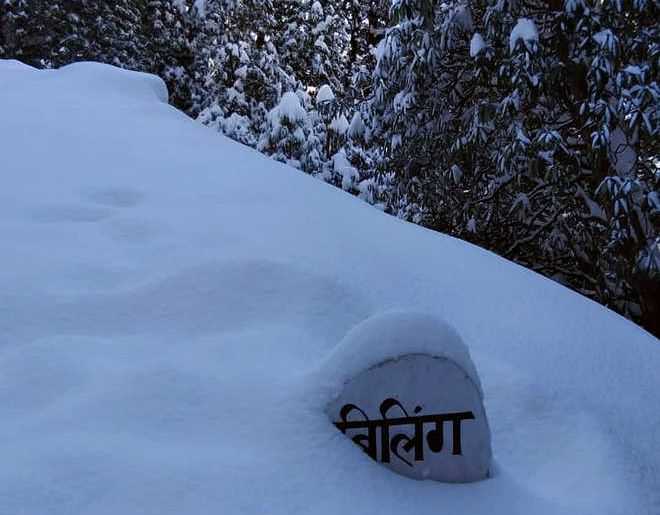
The milestone of Billing under snow.

Tribune News Service

Mandi, February 4

An avalanche has damaged an Army transit camp structure at Dalang in Lahaul-Spiti. The incident occurred a few days ago, but came to light on Sunday. In the incident, no one was injured.

According to official sources, the transit camp was used by the Army during summer, when the supply of essential commodities for the Army was transported from Manali towards Leh. During winter, no one stays in the transit camp. In 2014, an avalanche had killed two soldiers of the BRO at Dalang.The Lahaul-Spiti district is prone to avalanches. On February 1, an avalanche damaged a road bridge. The bridge connects three villages of Muring Panchayat in Lahaul-Spiti.


The Lahaul Spiti district administration is assessing the loss occurred due to avalanches and heavy snowfall.Ashwani Kumar Chaudhari, DC, Lahaul-Spiti, said no loss of life was reported in the incident. He said people were advised to take precautions to avoid any on toward incident, when they ventured out of their houses.


Defence on a Budget by Manoj Joshi

India’s security system is in deep trouble; deep reform is crucial

Defence on a Budget

The Crunch: The services don’t have enough money for even ongoing acquisitions.

Manoj Joshi
Distinguished fellow, observer research foundation, New Delhi

The allocation for defence in the 2019-20 Budget is over Rs 4.31 lakh crore as against last year’s revised figure of around Rs 4.05 lakh crore, a 6.4 per cent increase over the revised estimates. Since the total government expenditure for the coming year is Rs 27.84 lakh crore,  it represents a figure of 15.5 per cent of the Central government expenditure, as compared to that of 16.5 per cent last year.

With a Rs 210 lakh crore GDP estimate, the proportion spent on defence amounts to 2.05 per cent, which is considered quite respectable. But if, as per the Ministry of Defence (MoD) convention, we count only the revenue and capital expenditures, and minus the Rs 17,000 crore spent on the MoD, we come up with another more alarming figure of 1.4 per cent. It has come down from 2.08 per cent, when the Modi government assumed office in 2014-2015.

Another figure teases out the full picture better — that of capital expenditure. The Rs 1.03 lakh crore spent on the capital outlay of the defence services represents 30.7 per cent of all capital expenditures of the Central government. So, the country is spending one-third of its annual outlay of capital expenditure on defence, which is why it is obviously short-changing education, health, social welfare and infrastructure.

Last year, all three services complained that they were not even provided enough money to pay for ongoing acquisitions, leave alone new ones. The Navy wanted Rs 36,000 crore as capital outlay but was only given Rs 20,900 crore. The Army projected Rs 45,000 crore, but was given Rs 26,813 crore, which would have not even taken care of its ongoing commitments totalling Rs 29,033 crore. The fact that the government has increased the capital outlay by nearly 10 per cent to Rs 1.03 lakh crore means little.

Indeed, before the Budget, there were a slew of announcements declaring that the Defence Acquisition Council (DAC) had approved of a submarine project worth Rs 40,000 crore and okayed Rs 1,200 crore for the Milan anti-tank missile. In December, there was approval for four Talwar class frigates and Brahmos missiles for Rs 3,000 crore; in September, Rs 9,100 crore for Akash missiles and some other schemes; in August, the procurement of 111 utility helicopters for the Navy worth Rs 21,000 crore, and another set of equipment costing Rs 24,879 crore; in June, there was an approval of defence equipment worth Rs 5,500 crore.

Clearly, there is something unreal about these decisions, given the available resources. According to one observer, the DAC cleared  ‘Project 75I’ submarines in January for the third time in the last decade, which has also, uncharacteristically, seen the overall cost of the project coming down in each instance. And, of course, we have the controversial Rafale deal for which we will presumably have to begin payment in 2019-2020.

That all this appears shambolic is not surprising. India’s defence system is in deep trouble and little or nothing is being done about it. Simply put, the system cannot be run effectively unless it undergoes deep reform, which, in the circumstances, can only be carried out by the political class. PM Modi seems to be uninterested in this process; he’s happy to live in a make-believe world of Bollywood achievements. Defence Minister Nirmala Sitharaman lacks the clout to push through anything.

A country like India has many serious security challenges. It is no one’s case that it should cut defence expenditure. But there is something no Indian should forget — our principal national goal is to end mass poverty and deprivation in the country. Experts will tell you that the poverty rate has halved over the past decade. But that only means people who earn roughly $3 or Rs 230 a day and Rs 6,800 a month. This means that a family must feed, clothe and shelter itself within that amount.

The elephant in the room, too, is well known. The figure of Rs 1.22 lakh crore paid out as defence pensions is nearly one-third of the defence expenditure. No one grudges the ex-servicemen their pensions and their right to OROP. But the government cannot make that as an excuse to underfund the military. Another like amount, roughly Rs 1.25 lakh crore are the pay and allowances of the defence personnel, including the civilians working there.

While there can be huge savings through integration of the three services, reducing headquarter formations, joint logistics, training and housing, manpower cost is the real challenge.

Compared with other militaries, given the threats we confront, the overall numbers are OK. However, there is considerable room to re-distribute personnel — reducing the Army, enhancing the Air Force, Navy and specialised personnel who can service the new military, which needs to be better networked and supported.

While pay and allowances cannot be grudged, there is need to keep the pension bill low. There is a way to manage this, if there is a ‘whole of the government’ approach. This means insisting on a compulsory stretch in the military for all those wanting government jobs. A five to seven-year service in the armed forces would have an 18-year-old available for recruitment in the civil services, paramilitary and the police at the ages of 23-25.

The Parliament’s Standing Committee on Defence did recommend a compulsory five-year service as a pre-condition for jobs in the Union and state governments. Not surprisingly, the proposal is still doing the rounds of the government.


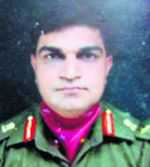
Rajesh Sharma chose Army, set family tradition

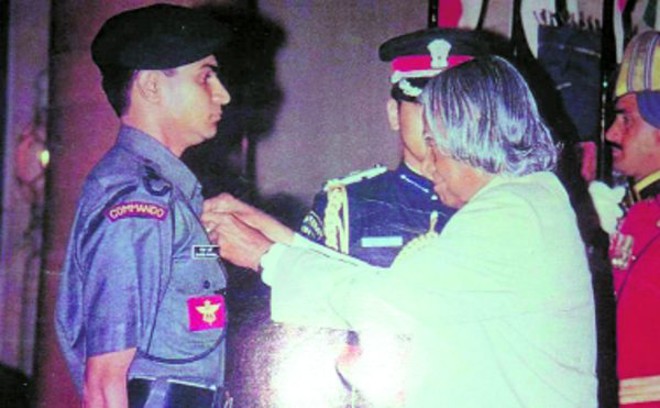
Was awarded Shaurya Chakra for bravely fighting terrorists at Akshardham Temple

Col Dilbag Dabas (Retd)

Rajesh had always abided by the advice of his parents in letter and in spirit except once when he was in his late teens. For once he defied his parents and even had his way but only after he had convinced them. Since he was good in academics right from the beginning, his father Dr Puran Chand Sharma wanted him to become a doctor or an engineer or pursue higher education and take up a good white collar job. Rajesh, however, had already chosen the career for himself and spoke his heart: “Papa, naukri hi karni hai to fauj ki karunga aur aise karunga ki aapko apne bête par garv hoga”.

Even his mother Reshma Sharma was not comfortable sending her only son to the Army but the reason she gave, “Beta, hamare khandan mein to fauj mein jaane ka rivaz hi nahi hai” did not convince Rajesh. He spoke most cordially yet confidently, “Mummy, main ye riwaz shuru karna chahta hun”. Realising the patriotic fervour of young Rajesh, the Sharmas happily allowed their only son have his way.

Rajesh was born in Kirori village of Hisar district on February 15, 1975. After senior secondary from Vaish School and graduation from Maharishi Dayanand University, both in Rohtak, he joined the prestigious Indian Military Academy, Dehradun, and was commissioned into 6th Battalion of Rajputana Rifles Infantry Regiment on December 6, 1997. After two years, Rajesh Sharma, as a young Captain, moved to 2nd Rajputana Rifles and was part of this battalion during its outstanding performance in the Kargil War. 

Captain Rajesh Sharma, for his demonstrated courage during the Kargil War, was absorbed in a newly raised Parachute Battalion. After three months of probation and five mandatory parachute jumps, he was permanently seconded to Parachute Regiment as a promising paratrooper. The National Security Guard (NSG), always on the lookout for the daredevils, found one and got Capt Rajesh Sharma posted on its establishment. It is during his challenging deputation with the NSG that Captain Rajesh Sharma exhibited the stuff he was made of when he almost single-handedly flushed out and eliminated two terrorists from the Akshardham Temple complex in Gandhi Nagar (Gujarat). For his daredevil act, Captain Rajesh Sharma was deservedly awarded the Shaurya Chakra. His citation for the award is available with the NSG as well as 23rd Parachute Battalion.

Rajesh, now a Colonel, after successfully commanding a Parachute Battalion in an operational area, is at present serving as Colonel General Staff (Planning) in the headquarters of a field formation.

Colonel Rajesh Sharma, the Shaurya Veer, too, has a son. For the past 21 years, his mother has watched him serve the motherland with pride and honour and is proud of her son. In fact, she is eagerly awaiting for the big day when her grandson too dons the oval greens and carries forward the glorious ‘rivaz’ started by his father.

The account of his bravery in War Diary of 23rd Parachute Battalion reads…

On September 24, 2002, some armed terrorists entered the Akshardham Swamy Narayan Temple complex in Gandhi Nagar (Gujarat) and started firing indiscriminately. The terrorists killed 30 people and injured over 100 present in the temple complex. To take stock of the critical situation and eliminate the terrorists, a special action group of the National Security Guard was flown in. Captain Rajesh Sharma, the leader of the action group, was tasked with locating and neutralising the two terrorists reported in the open patch outside the main complex. Despite daunting fire from the terrorists and lack of cover, leading his team from the front, this young officer continued to move forward. With total disregard to personal safety, Captain Sharma maintained pressure on the terrorists and kept them pinned down. He finally pinpointed the terrorists and gave covering fire to Subedar Suresh Chand while he closed in and killed one of the terrorists. Another terrorist inflicted a bullet injury on Captain Sharma’s left shoulder. The injury, however, did not deter this officer from his mission and he continued to press forward. In the final action, Captain Rajesh managed to locate and eliminate the second terrorist also. For his exemplary presence of mind, mature decision making and for displaying gallantry of a high order, Captain Rajesh Sharma was awarded the Shaurya Chakra.

(The writer is a veteran Gunner, 6 Field Regiment)


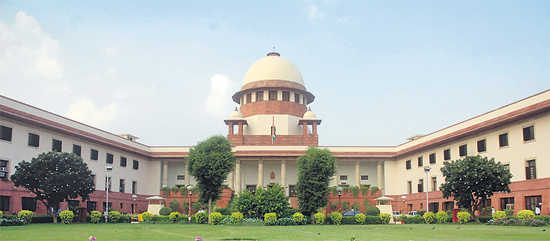
Art 35A: J&K Govt wants case adjourned

Art 35A: J&K Govt wants case adjourned

ammu and Kashmir Government today said it wanted the case to be adjourned in the Supreme Court.

Jammu, February 24

Amid a growing controversy over Article 35A hearing and tension in the state, the Jammu and Kashmir Government today said it wanted the case to be adjourned in the Supreme Court.

The clarification comes at a time when there is buzz across the state that Article 35A may be scrapped.

“It is already in the public domain that the J&K Government had sought adjournment of hearing on February 11 till an elected government is in place. We stand by that today as well,” said Rohit Kansal, government spokesman.

After the February 14 Pulwama terror attack, unusual events have gripped the state. The government has inducted 100 companies of Central paramilitary forces, ordered stocking up of essential commodities and asked health institutions to remain prepared for any eventuality.

The government said forces had been inducted in view of polls and stocking was being done as the NH remained closed for several days. — TNS


Nirmala Sitharaman launches Coast Guard vessel, asks defence PSUs to expand market

Goa Shipyard Chairman and Managing Director Commodore B B Nagpal said launching of the vessel within two years of laying the keel is a significant achievement.

Defence Minister Nirmala Sitharaman on February 21 asked public sector defence undertakings in India to look at the world as a market for their products.

She was speaking at Vasco town after launching a Coast Guard offshore patrol vessel (OPV) of the Goa Shipyard Limited, a public sector undertaking.

“I want not just the Goa Shipyard but every defence public sector undertaking to look at manufacturing of international class. Not just look at your captive market like the defence forces, but look at world as a market which you need to reach out to and compete globally,” she said.

Internationally there is an immense interest in buying defence products like the OPVs from India, she said.

Many overseas clients have shown an interest in buying from India, the minister said.

“I want the management (of defence PSUs) together with experts to capture those markets which are appreciative of your work. If they are appreciative of your work, half the work is done. You need to go and negotiate,” she said.

“You should have the confidence to get up and say that there is a market and can the government help us to get there and get it. You are capable of producing more. Please put on that attitude to say that we are able to compete globally and help us in that,” the minister said, adding, “We will still support you.”

Prime Minister Narendra Modi’s call is not just to Make in India but also to export, the minister said. “The PM is looking at India as a manufacturing hub,” she said.

Coast Guard Director General Rajendra Singh said launching of the OPV is essential considering the ever dynamic security scenario.

“The presence of Indian Coast Guard addresses twin objectives of deterrence and reassurance,” he said. The Yard 1233 ship isa new generation OPV equipped with sophisticated sensors and equipment. It is also capable of operating a light combat helicopter,” Singh said.

Goa Shipyard Chairman and Managing Director Commodore B B Nagpal said launching of the vessel within two years of laying the keel is a significant achievement.

The ‘Sachet’ vessel is the first of five such OPVs being built by the yard. The project of constructing the five OPVs for was inaugurated by Prime Minister Narendra Modi in November 2016.

The OPV will be assigned the work of patrolling and policing Indian Exclusive Economic Zone (EEZ), an official said.

The vessel is 105 metre long and has a displacement of 2,350 tonnes at full load and an endurance of 600 nautical miles. A team of 14 officers will be commanding it with a crew of 133 personnel.


Indian aerospace industry still taking baby steps

Indian aerospace industry still taking baby steps

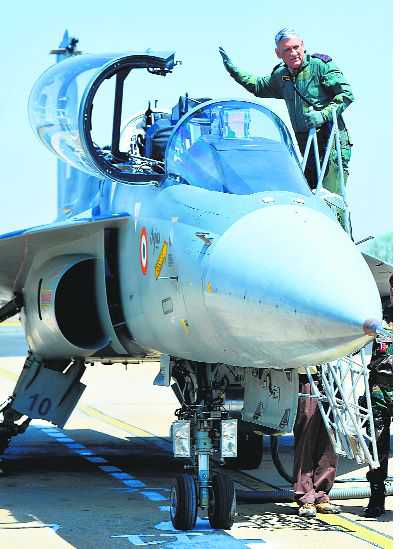
Army Chief Gen Bipin Rawat boards Tejas jet as co-pilot, in Bengaluru on Thursday. AFP

Ajay Banerjee

Tribune News Service

Bengaluru, February 21

As India tries to establish a toehold in the military aerospace sector, efforts of the domestic private industry are like the ‘first steps’ on the learning curve, the real work of making engines or other critical technologies is still some years away.At all military events like the ongoing Aero India here, multiple joint ventures between Indian companies and foreign partners are announced. A close look reveals these largely relate to forging, casting and making structures that are part of the global supply chain of the companies.

The exception is the tie-up Hindustan Aeronautics Limited had with French Safran in 2005 to make helicopter engines for the Dhruv series of copters.At the Aero India here, the Russian MiG team announced “we having been making in India since 1963” (or the time since the first MiG 21 arrived). The reality is licence production of MiGs did not help India in making engines or new and better planes.

Many business opportunities and jobs are opening up, but not in cutting-edge technology sector. Dynamatic Technologies CEO Udayant Malhoutra, speaking at a seminar here, was candid: “In India, the advantage is the (lesser) labour cost and the engineering talent pool.”

The Tata-Boeing Aerospace manufactures fuselage (body structure) for the AH-64 Apache copters. Other supply chain partners provide assemblies for aero-structures, wire harness, composites, forgings, avionics mission systems and ground support equipment for Boeing’s commercial and military aircraft out of India.

Boeing India acting president Sunil Velagapuddi says, “We are outsourcing jobs worth a billion US dollars and plan to double it in a decade. Our new plant outside Bengaluru is largest investment outside the US.”

European companies Thales and Airbus have their separate plans to outsource in India. Airbus for long has been getting doors of its passenger aircraft made by HAL. Thales is looking to ramp up its Indian presence and employ upto 6,000 persons while Airbus is now moving towards achieving 1 billion euro (Rs 7,400 crore) trade from India.

Airbus works with Indian suppliers on engineering and IT services, aero-structures, materials and cabins for several of Airbus platforms. The Adani group has joined hands with Elbit of Israel to make UAVs. The body is being made at the Hyderabad plant of Adani, another baby step.


HAL: Without inquiry, why blame for crash  

  • Public sector behemoth Hindustan Aeronautics Limited (HAL) on Thursday said it was wrong to blame it for the February 1 Mirage 2000 crash as the court of inquiry was yet to be completed
  • Crash had killed two pilots who were on test flight of HAL-upgraded Mirage
  • HAL Chairman R Madhavan said this here when asked about the bad press the company was getting, especially after Union Minister Gen VK Singh (retd), questioned HAL’s capability saying “parts of planes are falling on runway”

All Set To Deliver Fitting Response To Pulwama, Says Indian Air Force Chief BS Dhanoa

All Set To Deliver Fitting Response To Pulwama, Says Indian Air Force Chief BS Dhanoa

The Indian Air Force is ever ready for an appropriate response as assigned by the political leadership, says Air Force Chief BS Dhanoa, two days post the Pulwama attacks wherein over 40 Central Reserve Police Reserve (CRPF) personnel were martyred.

“The IAF is ever prepared to deliver an appropriate response as assigned by our political leadership. It will always remain at the forefront in executing its missions,” said Dhanoa at the launch of the Vayu Shakti exercise, reported NDTV.

Furthermore, he said he wished to assure the people of this country of the capability of the Indian Air Force.

In the Vayu Shakti exercise, around 140 fighter jets, helicopters and a large range of missiles were used by the IAF in the fire power demonstration near the India-Pakistan border.

According to top IAF sources, the Vayu Shakti exercise was pre-planned and the drill was a demonstration of the force’s capability to hit targets with “pinpoint accuracy.”


“Sidhu Was Cricketer, I Was Soldier”: Amarinder Singh On Pulwama Comment

The Congress has also reacted to Navjot Sidhu’s comment, saying people in public life must speak speak, act, express, totally in sync with and in keeping with the public sentiment.


HIGHLIGHTS

  1. Amarinder Singh has had differences with Navjot Sidhu in the past
  2. Mr Sidhu had said an entire nation can’t be blamed for act by terrorists
  3. Navjot Sidhu does not understand defence intricacies: Amarinder Singh

'Sidhu Was Cricketer, I Was Soldier': Amarinder Singh On Pulwama Comment

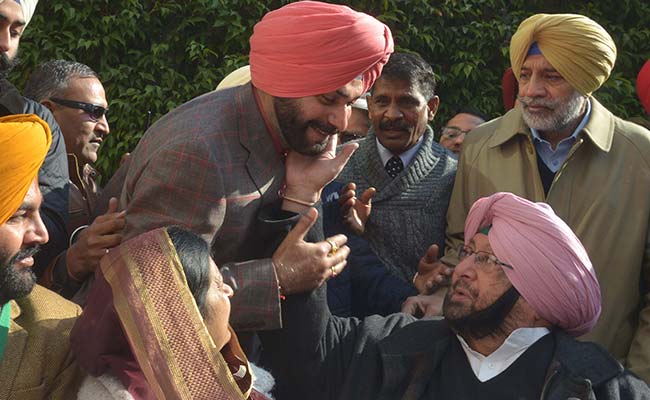
 Punjab Chief Minister Amarinder Singh has reacted to minister Navjot Singh Sidhu’s remark on Pakistan after Pulwama terror attack, saying he didn’t understand the “intricacies” of the defence sector. The leader, who has had difference of opinion with Mr Sidhu over Pakistan, said he had served in the Army whereas the minister was a cricketer.

Mr Sidhu, who calls himself a friend of Pakistan Prime Minister Imran Khan, was slammed by the opposition after he said that an entire nation cannot be blamed for the act committed by terrorists.

Amarinder Singh said Mr Sidhu’s intentions were not “anti-national”.

“Sidhu was a cricketer while I was a soldier, and both have different viewpoints on things,” he was quoted by news agency IANS as saying.

“Sidhu does not understand defence intricacies and had possibly reacted out of friendly motive,” he added.

Mr Sidhu and Amarinder Singh, though colleagues in the Punjab government, are world apart as far as views on dealing with Pakistan are concerned. Their opinions differed when Mr Sidhu had gone to Pakistan for the inauguration of the Kartarpur Sahib corridor. Mr Singh had said that he had asked Mr Sidhu to reconsider visiting the country.

“Sidhu told me he had already committed himself to going. When I informed him of the stand I had taken on the issue, he said it was his personal visit but he would get back to me. But I did not hear from him,” Mr Singh had said.

While Mr Sidhu defended his comments today, saying that terrorism had no community, Mr Singh took a more aggressive stance on the Pulwama attack as he said for every soldier killed, security forces must kill two terrorists.

“We should get 82 of them since 41 of our men have been killed,” said Captain Singh, who was an army officer before joining politics. He demanded an “eye for an eye, a tooth for a tooth”.

Over 40 soldiers were killed last week when a Jaish-e-Mohammed terrorist rammed a vehicle carrying explosives into their bus in Pulwama.

India has exerted diplomatic and trade pressure on Pakistan, by scrapping the Most Favoured Nation tag to the country, and enhancing duty on goods imported from there.

The Congress has also reacted to Mr Sidhu’s statement, saying nobody had the freedom to cross the limits.

“There is of course complete freedom of speech in this country, but everybody especially in public life, a ”karyakarta” or otherwise, owes it to himself and to the nation to speak, act, express, totally in sync with and in keeping with the public sentiment,” party spokesperson Abhishek Manu Singhvi was quoted by PTI as saying.

“I don’t think anyone of us have that freedom to cross the limits of that sentiment and that is a matter of self imposed discipline and maturity which I am sure each one of us must and will practice,” he added.


CAG on IAF purchases Rafale reflects the need for major corrections

CAG on IAF purchases

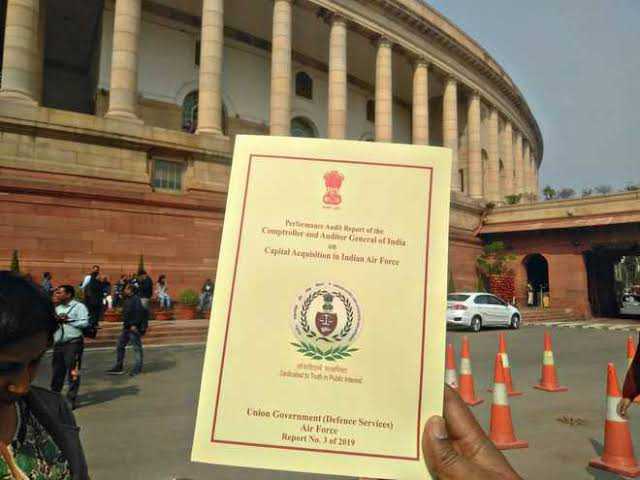
The Rafale tender stole the political thunder in the Comptroller and Auditor General of India’s (CAG) assessment of 11 capital acquisitions by the Indian Air Force over a time period that spanned both the UPA and Modi governments. Considering that previous CAG reports on coal and 2G had irrevocably damaged the credibility of the UPA government, the Modi government can consider itself fortunate to have escaped unscathed because of the inventiveness of the auditors. The CAG used a never-used formula (called alignment pricing) to declare the Modi tender cheaper than the UPA era’s now-cancelled 126 aircraft bid. An audit basically evaluates four criteria in a defence platform: quality, cost-effectiveness, delivery and objectivity. The CAG report gives conditional thumbs up on only two: cost-effectiveness and the delivery schedule. Even these are up for debate.

But the benchmark of objectivity, which includes intangibles such as transparency, fair play and integrity, stands in a grey zone. For instance, the comparison of UPA and NDA-era prices on the basis of a French index is debatable when payments are made in dollars. A dissent note alleging parallel negotiations (dismissed by then Defence Minister Parrikar as an overreaction) went unchallenged, while there was just a mild rap for not signing an integrity pact and succumbing to French refusal on opening an Escrow account. The Modi government was also easily let off the hook for failing to respond to a 20 per cent price cut by a Rafale competitor. Who knows whether Rafale would have still played tough if it had not been the single vendor.

Rafale was one of the 11 purchases studied by CAG and the common tale that emerges is of overambitious services whose requirements are frequently changed, leading to several vendors dropping out; the contract negotiations committee that rarely establishes the benchmark price, which, in turn, makes it difficult to establish the reasonability of the price. Complex and multi-level approval processes further add to the delays. Overall, the existing capital acquisition system is unlikely to effectively support the IAF in its war preparedness and modernisation.