NEW DELHI: India has already paid more than half of the Rs 5 ..
Amarinder Singh, CM, Punjab








NEW DELHI: India has already paid more than half of the Rs 5 ..
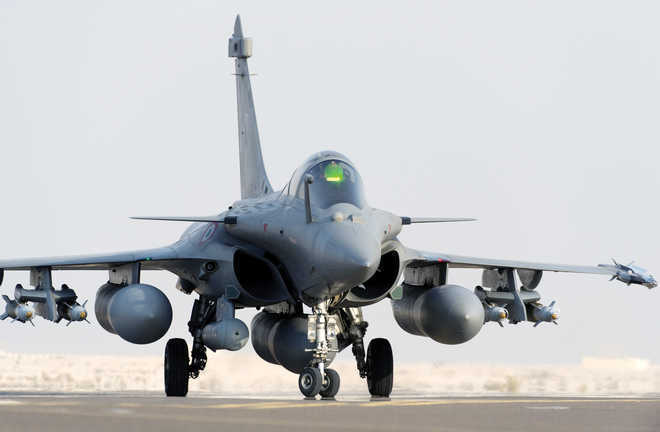
Separate pleas were filed by Singh, lawyer M L Sharma, Vineet Dhanda and former BJP leaders Arun Shourie, Yashwant Sinha and activist-lawyer Prashant against the deal. File photo
New Delhi, January 14
Aam Aadmi Party (AAP) lawmaker Sanjay Singh moved the Supreme Court on Monday seeking review of the verdict by which several pleas challenging the deal for procurement of Rafale fighter jets were dismissed.
A Bench headed by Chief Justice Ranjan Gogoi, on December 14, had dismissed as many as four petitions challenging the deal and had said that there was no occasion to “really doubt the decision making process” warranting setting aside of the contract.
Separate pleas were filed by Singh, lawyer M L Sharma, Vineet Dhanda and former BJP leaders Arun Shourie, Yashwant Sinha and activist-lawyer Prashant against the deal.
Singh, a Rajya Sabha lawmaker of the AAP, has filed the review plea through lawyers Dheeraj Kumar Singh and Mrinal Kumar. PTI
New Delhi: The Prime Minister assured of big investments but instead took away our money, representatives of the workers’ union of Hindustan Aeronautics Limited claimed in a press conference held in the capital on Thursday.
Union members of HAL, who claimed to be representing over 10,000 workers at HAL’s Bangalore plant, also demanded that the PSU be made a partner of Dassault Aviation, not just an offset partner.
The employees said that they had met Rahul Gandhi on Thursday morning in an attempt to get him to raise their issue in days to come.
The HAL employees claimed that the decision to not allow a Transfer-of-Technology clause in the renewed deal under which 36 Rafale jets had been bought, had adversely hit the 78-year-old PSU.
“When in their annual report Dassault chairperson had claimed that HAL was its partner, when Dassault and HAL had signed mutual workshare agreement, when HAL can build a 25 tonne Sukhoi, then what was the difficulty in making Rafale jets,” Renuka, one of the HAL employees said in the press conference.
He added, “In a meeting with us Narendra Modi had assured us of Rs 5000 crore investments, but what actually happened is that not only did that money not come to us, the government actually siphoned off money from our reserves. They are taking away our dividends at such time.”
So dire has the situation become, he added, that HAL has had to borrow money from the bank to pay salaries of its employees.
A statement issued by the employees of HAL also suggested that the recent statement made by Defence Minister Nirmala Sitharaman in Parliament that Rs 73,000 crore of orders for HAL were in the pipeline was misleading.
“We have total orders worth Rs 1.28 lakh crore. Of this Rs 26,570 crore of orders have come from the Modi government. This effectively means that HAL is running only on the orders of the UPA.”
K Satish, another union member of employee union of HAL who was present at the press conference, added, “Against our demand for Rs 19,334 crore only Rs 6415 crore was given to us, this is why we had to borrow money to pay our employees’ salaries. On the contrary Modi government has withdrawn Rs 11024 crore from HAL. In 2015-16 Defence Minister ordered an ‘equity buyback scheme’ that required HAL to transfer Rs 6393 crore to the government.”
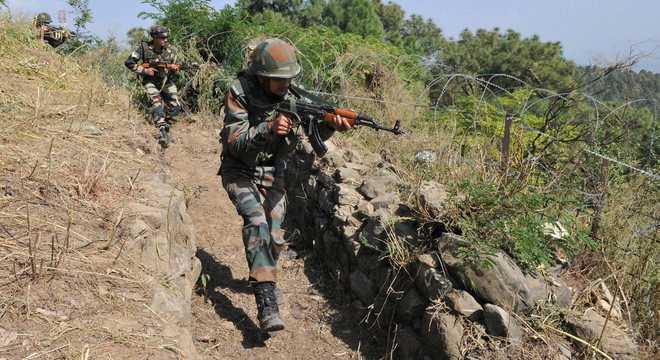
File photo for representation only.
Jammu, January 7
Jammu and Kashmir recorded 2,936 instances of ceasefire violations by Pakistan in 2018 — the highest in the past 15 years with an average of eight cases daily—in which 61 people were killed and over 250 injured, officials said on Monday.
Shelling and firing by Pakistani troops was “very heavy” in 2018, virtually making the 2003 India-Pakistan border truce “redundant”, they said.
“Pakistani troops repeatedly targeted forwards posts and villages along the Line of Control (LoC) and the International Border (IB) to create a fear psychosis among the people,” a senior police officer said.
“Pakistani forces have violated the ceasefire 2,936 times in 2018, in which 61 people were killed and 250 injured,” a senior Army official told PTI.
The violations continued despite Pakistani troops vowing to maintain peace on the border during more than 20 brigade commander-level and flag meetings with the Indian forces.
“Pakistan vows to maintain peace and strengthen border relations, but they do not keep their promises,” the Army official said.
The number of ceasefire violations by Pakistani troops in 2018 was over three times that of 2017, when 971 cases were reported.
In 2017, 31 people — 12 civilians and 19 security forces personnel—were killed and 151 suffered injuries.
People living near the border in Jammu, Kathua, Samba, Rajouri and Poonch districts were severely hit by firing and shelling by Pakistani troops.
Fear gripped the border populace due to frequent shelling, which prompted thousands of people to migrate to safer places.
The officials said that due to shelling and firing incidents, people had to migrate to safer places three times last year, which affected education and farm activities.
To protect border residents in view of increasing ceasefire violations in Jammu and Kashmir, the Central Government sanctioned Rs 415 crore for the construction of over 14,400 underground bunkers along the LoC and the IB and made efforts to speed up the work last year.
Over 300 bunkers have been constructed under the programme in Rajouri, Poonch, Jammu, Samba and Kathua districts and tenders have been floated for more such bunkers, the officials said, adding that over 4,000 bunkers would be constructed this year.
Giving details of cases of ceasefire violations in the past decade, the officials said that in 2015, 405 cases of ceasefire violations were reported and 583 such instances were recorded in 2014.
There had been a gradual increase in ceasefire violations by Pakistan between 2009 and 2013. The corresponding figures for 2013, 2012, 2011, 2010 and 2009 were 347, 114, 62, 44, and 28.
In the previous three years, the numbers of such violations were 77 in 2008, 21 in 2007 and three in 2006, according to official data.
For three years — 2004, 2005 and 2006 — there was not a single such violation on the border.
The Indian Government led by the late Atal Bihari Vajpayee entered into a border ceasefire agreement with Pakistan along the LoC in Jammu and Kashmir on November 26, 2003.
India shares a 3,323-km-long border with Pakistan, of which 221 km of the IB and 740 km of the LoC fall in Jammu and Kashmir. — PTI

In December 2015, when negotiations were still at a delicate stage, defence ministry file notings have indicated that there was interference from the PMO.

New Delhi: In what could trigger yet another political storm over the Rafale controversy, fresh facts have surfaced with regard to the procedures adopted by the Narendra Modi government while clearing the purchase of 36 aircraft.
Highly placed sources have confirmed to The Wire that it is officially recorded in government files that the Prime Minister’s Office (PMO) was compromising the negotiating position of the defence ministry, which by the end of 2015 was discussing various sensitive aspects of the deal.
What is significant is that the PMO is named in the internal memos as causing problems to the negotiating position of the defence ministry team. As per procedure, the defence ministry’s contract negotiation committee has experts who make a completely independent assessment of the purchase of defence equipment. The committee’s decisions and assessments are then sent to the Cabinet Committee on Security (CCS).
But here, there are indications that the PMO was trying to make premature interventions.
It is unlikely that these file notings, made by defence ministry officials, were placed before the Supreme Court. However, it is possible that the Comptroller and Auditor General (CAG) may have accessed these files.
Also read: Rafale and the CAG: A Case of Redaction Ad Absurdum
The national auditor is yet to finalise its own report on the Rafale deal. The Wire has learned that while the CAG draft report has raised questions over procedures adopted in executing the aircraft deal, it has steered clear of the pricing controversy and has at this stage made no assessment of the offset contracts given to the private sector.
Sources said the defence ministry’s negotiating team, which works under the overall supervision of the Raksha Mantri – Manohar Parrikar, at the time – had reached a critical stage of negotiations for the 36 Rafale aircraft by December 2015.
It may be recalled that after Modi abruptly announced the new deal in France on April 10, 2015, the Defence Acquisition Council headed by Manohar Parrikar formally approved the ‘Acceptance of Necessity for buying the jets in May 2015.
In the subsequent six months, the actual negotiations had gathered pace.
By December 2015, the negotiations were poised very delicately and the law ministry had noted that a sovereign guarantee from France for the future performance of the Rafale contract was a necessary condition for a government-to-government deal.
Not surprisingly it was in the same month – December 2015 – that the defence ministry officially noted that the PMO was compromising its negotiating position.
It seemed that the PMO was interfering at this stage. And this got recorded in an internal memo, according to one highly-placed source with knowledge of the matter.
Then in January 2016, the contract negotiation committee finalised all aspects of the new deal except that the financial terms – the most tricky aspect – was put off by a few months.
Finally, the controversial deal was fully finalised and taken to the Cabinet Committee for Security for clearance in August 2016. There was obviously some resistance from the defence ministry negotiation team to various aspects at various stages.
It is learnt that the increased benchmark price of 36 Rafale jet aircraft – from 5.2 billon euros to 8.2 billion euros – was resisted by many members of the team before being sent to the the CCS. The defence minister at the time neither put his signature on the increased price nor did he sign off on diluting the sovereign guarantee to a mere letter of comfort.
Read The Wire‘s complete coverage on the Rafale deal here.
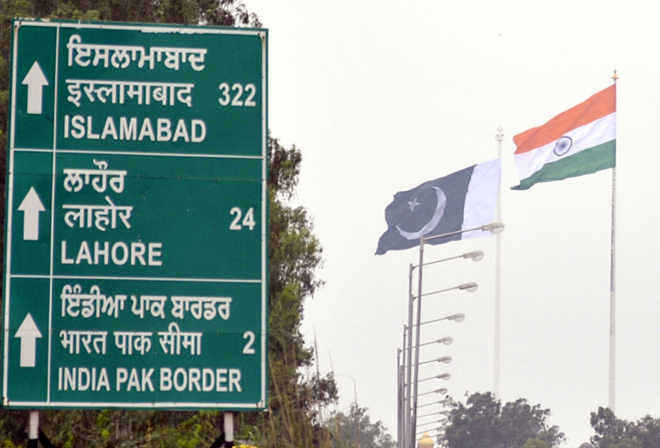
JANUARY 1 is a day India and Pakistan have set aside for conducting diplomatic business in an air of civility; when for over 25 years they have exchanged a list of nuclear installations as if to suggest that war is a distant possibility, but there is also the instinct to preserve citizens of the other country with common cultural bonds. This January 1, too, while guns roared on the border and a day earlier an all-night skirmish killed two Pakistanis from its notorious BAT team (suspected of beheading Indian soldiers in the past), the foreign offices exchanged a list of their non-military nuclear installations and facilities along with a list of prisoners. And now, just when the Kartarpur corridor and a new government in Islamabad might have provided the scaffolding for sorting out extant differences, the pitch has been queered by reports suggesting a Pak-Russia deal for T-90 tanks, though there are Italian guns too.
If Kartarpur was an olive branch, the tank deal may compel South Block to maintain its line that the corridor was a faith issue and not linked to intra-state ties. The other complication is offered by Russia’s involvement in a deal for military hardware that will only be used against India. This raises the question whether an incipient Sino-Russia-Pak triangle may be boxing-in India because of its increased alignment with US’ regional security policy? Further proof may have been provided by a newly-minted US law that resolves to bump up ties with India while calling out China for obstructionism; Russia and Pakistan are anyway in the US Senate’s doghouse.
While India waits for the US promise of providing licence-free defence technologies to play out, it must explore the new communication channels offered by the Shanghai Cooperation Organisation to hedge against regional isolation. The Russian President’s New Year message to PM Modi suggests India remains a priority country for Moscow and the four Xi-Modi interactions in 2018 have reduced Sino-India tensions. The US cannot be India’s sole comfort partner given its shifting allegiances in line with its national priorities.
Beginning the New Year on a bright note, here’s presenting the wish-list of well-known personality from the region
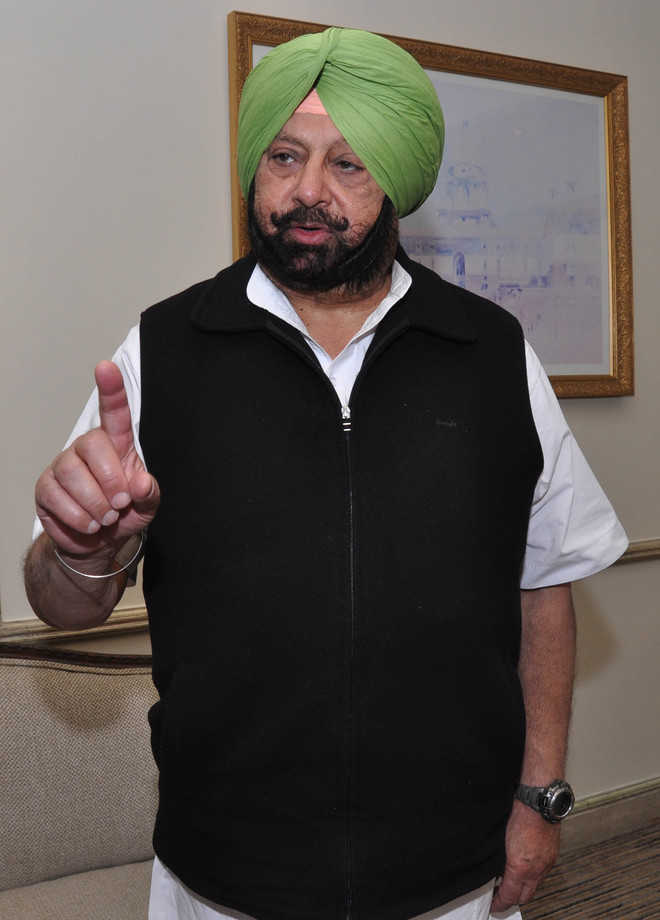
Amarinder Singh, CM, Punjab
Manpriya Singh
Powerful, poor, ordinary or significant; who doesn’t have a long list for the open-ended sentence starting with ‘I wish…’ so much so that it’s hard to differentiate between wishes and wishful thinking! And, what better time to wish than the start of a new year? For this ‘if’, we get talking to all the right people, who tick off all the fields for us.
One for the state
Amarinder Singh, CM, Punjab
Top of the wish-list: Religious tolerance and communal harmony tops my wish-list for India
It is absolutely surprising and very reassuring that out of his very long wish-list for the state, Chief Minister, Punjab, Amarinder Singh starts with the wish of communal harmony and religious tolerance for the coming year. “I am hopeful that we, as a nation, will become more tolerant towards one another,” he says.
He adds, “I also hope that at the dawn of the New Year, we achieve the much-needed freedom from pollution to make our country more live-able for the future generations. Peace with the neighbours is another desire I hold dear to my heart.” While particularly for the state of Punjab, “It is the safety of all citizens.”
Well, he is not missing anything! “Industrial development, freedom from debt for the farmers and clean drinking water for everyone in the state is also my wish. I want our youth to be free from drugs and unemployment, and prosper in an environment of social equality.” How we wish him luck with all of that!
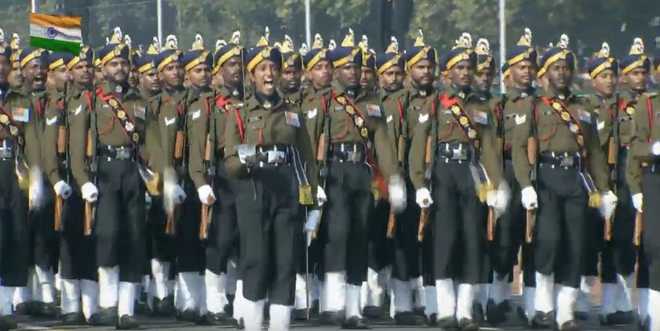
Lt. Bhavana Kasturi led a contingent of the India Army Service Corps. Photo credit: Twitter/DDNews
New Delhi, January 26
Women power was on full display during the 70thRepublic Day Parade on the Rajpath on Saturday with several Navy and Army contingents being led by them and a woman officer exhibiting stunts on bike.
The all-women Assam Rifles contingent created history this year by participating for the first time in the Republic Day Parade.
Contingents of the Navy, India Army Service Corps and a unit of Corps of Signals (transportable satellite terminal) were all led by women officers.
Capt Shikha Surabhi from the Corps of Signals became the first woman to perform bike stunts, alongside her male teammates as part of daredevils, a major attraction every Republic Day.
Her standing salute from the bike drew loud applause from the audience.
For the first time, a lady officer, Lt. Bhavana Kasturi, led a contingent of the India Army Service Corps and Capt Bhavna Syal, a third-generation officer in the armed forces, led the transportable satellite terminal’s contingent.
In a first, Shankhnaad, a military tune composed by an Indian classical music exponent based on a poem penned by a Mahar Regiment veteran, was also played during the parade.
India celebrated its 70th Republic Day with a grand display of its military might and rich cultural diversity as the ceremonial parade rolled down the majestic Rajpath here in the presence of South African President Cyril Ramaphosa as the chief guest. PTI

New Delhi: Flustered over the retaliatory action by the Indian Army along the Line of Control (LoC), Pakistan is preparing to buy huge amounts of ammunition from abroad.
Zee News quoted intelligence agency reports saying that Pakistan has finalised deal with Italy for the purchase of nearly one lakh shells for its Howitzer guns.
It may be worth mentioning here that soon after India struck a government-to-government deal with the US in November 2017 for supply of the 145 howitzers at a cost of nearly Rs 5,000 crore, Pakistan bought 121 Howitzer from Italy, to ensure that there is no shortage in preparation against the Indian Army.
“Our agencies are trying to find out why Pakistan is procuring about one lakh shells from Italy and where they are planning to use it,” Zee News quoted an official poster in central security establishment as saying.
Meanwhile, defence experts are surprised over the fact that Pakistan is buying Howitzer from Italy instead of China, its all-weather ally.
“It seems that Pakistan is not much reliant on the China-made Howitzer gun, or the price of the Chinese Howitzer can be higher than that of Italy, but instead of China, buying these guns from Italy is quite astonishing,” said an official associated with the Indian security establishment.
Indian Army has been constantly giving befitting reply to the ceasefire violations by Pakistani Army. On January 16, the Indian soldiers gunned down five Pakistani troops while destroying seven of their bunkers in retaliatory action in Jammu and Kashmir’s Poonch sector.
The year 2018 witnessed the highest number of 2,936 ceasefire violations by Pakistan troops in the last 15 years along the Indo-Pak border.
According to sources, fearing more such retaliatory actions by the Indian troops, Pakistani Army has increased the presence of soldiers on the forward posts. Also, it has reportedly alerted 3 Pakistan-occupied Kashmir (PoK) brigades in the Kotalia area of Kashmir adjacent to Poonch.
Ajay Banerjee
Tribune News Service
New Delhi, January 20
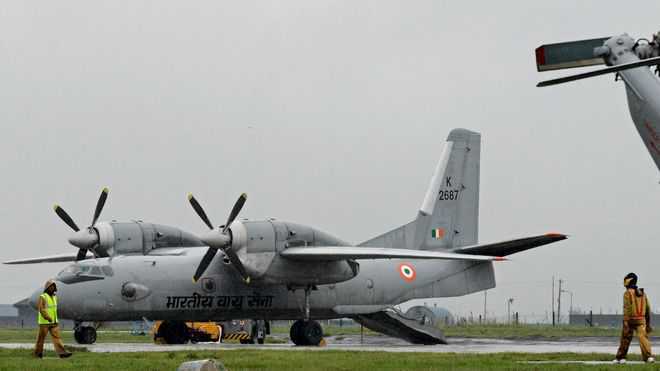
After making all six airfields in Arunachal Pradesh operational, the Indian Air Force has shifted its focus to Vijaynagar, the eastern-most tip of India, to upgrade landing facilities and make it operational by February-end.
There are six landing strips across Arunachal Pradesh where India shares a 1,100-km disputed boundary with China. In the past, a fighter jet landed in Passighat, a transport plane C-17 landed at Mechuka and a C-130 operated from Tezu. All six strips, called advanced landing grounds (ALGs), were used in a massive exercise of the IAF in April last year.
Vijaynagar in Arunachal (also known as Vijoynagar) is surrounded by Myanmar on three sides and the nearest road-head is at Miao, some 180 km away. For the locals, it is a four-day trek. An old airstrip exists in the valley. It is not in use since 2016.
The disuse stems from the logistical nightmare, as all repair material, including road rollers, petrol, diesel and bitumen, etc, has to be ferried on helicopters.
Meanwhile, the IAF operated its first AN-32 from Sikkim’s Pakyong airfield, 60 km from the China border.


























































