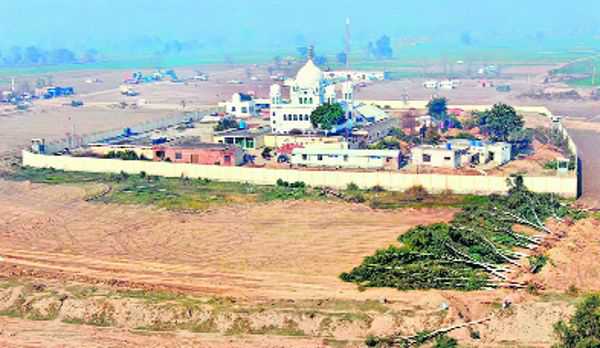
A photo released by the Pakistan government shows “work in progress on the Kartarpur corridor”.
Dera Baba Nanak/New Delhi, Jan 21
The Punjab Government has issued a notification to acquire land for the Dera Baba Nanak-Kartarpur Sahib (Pakistan) corridor. The notification comes in the backdrop of Chief Minister Capt Amarinder Singh’s request to the Centre to release funds for the project.
Deputy Commissioner Vipul Ujwal today said Dera Baba Nanak SDM Ashok Sharma signed the notification on January 18 to acquire 24 hectares of land falling in the revenue jurisdiction of three villages — Jaurian, Chandu Nangal and Pakhoke Dera Sahib.
“A total of 24 hectares will be taken over to construct the 4.25- km-long stretch from Dera Baba Nanak to the zero line,” said Sharma.
Ujwal said a Central team would visit Dera Baba Nanak on January 23 to work out the modalities for constructing the integrated check post (ICP) and select sites where other infrastructural works are to be initiated.
Cooperation Minister and Dera Baba Nanak MLA Sukhjinder Singh Randhawa, who recently claimed that Pakistan had started work on its side, said: “The time has come for the Centre to release funds. I have requested Railway Minister Piyush Goyal to give a facelift to the Dera Baba Nanak railway station.”
Meanwhile, Pakistan has shared a draft agreement with India on the corridor. It lists out proposals to facilitate the travel of Sikh pilgrims to Kartarpur Gurdwara in Narowal, 4 km from the Gurdaspur border.
It has appointed Director-General (South Asia & SAARC) Dr Mohammad Faisal as its point person and requested Delhi to appoint one soon. A statement said India is invited to urgently send a delegation to finalise the agreement. — TNS
Punjab Chief Minister Captain Amarinder Singh on Thursday accused Union Minister Vijay Sampla of putting “unnecessary” roadblocks in the Kartarpur Sahib pilgrimage.
“Instead of finding ways of facilitating the Sikh pilgrims, the central government, especially responsible elected representatives such as Sampla, were constantly putting hurdles in the way of the realisation of their dream to visit the historic gurdwara, which they had seen being fulfilled with the decision to open the Kartarpur Sahib Corridor,” Captain Amarinder Singh said.
Sampla is a former BJP state unit chief.
Singh said Sampla’s statement rejecting passport waiver and making visa mandatory for “the poor and illiterate pilgrims” crossing the Kartarpur Sahib Corridor showed neither the ruling Bhartiya Janata Party (BJP) nor its ally Shiromani Akalu Dal were interested in making the travel “hassle-free”.
“Sampla’s claim that all Punjabis had passports was highly irresponsible and wrong, and showed how misinformed and disconnected from the masses the Minister was,” he said, adding that the BJP was on the one hand trying to take credit for the corridor and one the other, trying to impede its smooth operationalisation.
He said Sampla’s statement reflected the BJP’s “anti-minority attitude” and the Modi government’s continued attempts to sideline the country’s minorities to further its political agenda.
Sidhu for no-construction zone around Kartarpur gurdwara
Will write to Pakistan PM Imran Khan in this regard
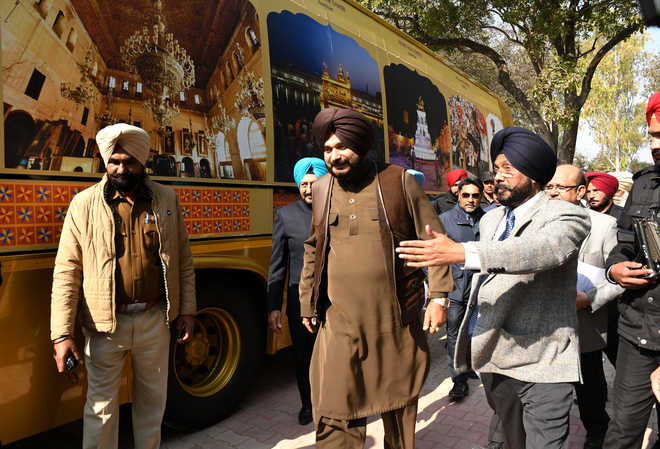
Navjot Sidhu at Chhatbir Zoo in Zirakpur on Thursday. TRIBUNE PHOTO: NITIN MITTAL
Akash Ghai
Tribune News Service
Mohali, January 17
Local Bodies Minister Navjot Singh Sidhu will request Pakistan Prime Minister Imran Khan to declare Kartarpur Sahib Gurdwara and its surroundings as a no-construction zone.
“The place (Kartarpur Sahib) belonged to our Guru where he had ploughed fields also. Those fields are still there so it’s important that the place should remain intact. I am writing to Khan to declare the place as a no-construction zone to keep its sanctity intact,” said Sidhu, who was in the town to inspect the ongoing developmental works at the Chhatbir Zoo here today.
“I am sure my elder brother (Imran Khan) will concede my request which is being made on the behalf of all Sikhs and Punjabis,” he said, adding that the letter would be sent in a day or two.
On being asked about his purpose of visit at the zoo, Sidhu said he came there to inspect certain development projects on which his department had spent around Rs 7.9 crore.
“Our certain initiatives in direction of upgrading facilities here have boosted the footfall at the zoo. If compare this year’s data with the last year’s, a substantial increase of 60 per cent in the footfall has been witnessed here. “The footfall here has witnessed an upswing by 60 per cent as 9 lakh visitors came here last year, which is an increase of more than 3 lakh, as the number earlier was nearly 5.5 lakh in 2017,” said Sidhu, adding that the target was to take this number to 10 lakh this year.
Under the development project at the zoo, an entrance gate with the theme of conservation of wildlife has been constructed. Besides, a new ticket counter, a holistic food plaza has been provided. Apart from this, an interpretation centre having a lobby, two exhibition halls, and an audio visual room have also been constructed. A children’s park with the theme of jungle training and adventure sports facilities has been provided in the zoo.
“Now we are intending to spend Rs 5 crore to set up a state-of-the-art aquarium at the zoo.
Sidhu also inaugurated a special tourism bus, which would promote tourism in the state.
Work on Kartarpur corridor in full swing on Pak side
35% WORK IS OVER AND THE ENTIRE PROJECT WILL SEE THE LIGHT OF DAY BY SEPTEMBER, SAYS EVACUEE TRUST PROPERTY BOARD
CHANDIGARH:Work on the Kartarpur corridor on the Pakistan side is in a full swing with the Evacuee Trust Property Board (ETPB), which controls temples and gurdwaras in the neighbouring country, executing the project.
Heavy earthmoving machines are working round the clock to make the corridor a reality at the earliest, said ETPB secretary Tariq Wazir talking to HT over telephone.
“Nearly 35% work is already complete and the entire project will see the light of day by September. In the first phase, ETPB will refurbish Kartarpur Sahib Gurdwara, build a sarovar, a langar hall, quarters for granthis, 4 kilometre passage from the India border to the gurdwara, a terminal for check in by pilgrims from the Indian side and parking on the India-Pak border,” Wazir said.
After check-in, pilgrims from the Indian side will be taken to the shrine in Pak government’s vehicles, he added.
The Pakistan government is preparing a master plan of the area which will have hotels, serais and other facilities for the pilgrims in phase 2 of the project.
“We started construction work the next after the groundbreaking ceremony,” said Wazir.
Our government will develop 1,176 acre around the gurdwara in two phases, with a budget of 2 to 3 billion (Pak currency).
Pakistan Prime Minister Imran Khan had laid the foundation stone for Kartarpur corridor on November 28, last year wherein two Union ministers from India — Hardeep Singh Puri and Harsimrat Kaur Badal besides Punjab cabinet minister Navjot Singh Sidhu — in attendance.
Speaking on the discussions with the Indian government about connecting the corridor constructed on Indian side, Wazir said Pakistan law and foreign ministries are working on the memorandum of understanding (MoU) to be signed with their Indian counterparts and a meeting was expected to take place shortly. Wazir said religious affairs minister Norul Haq along with a delegation of Sikh leaders visited the construction site last week to assess the progress.
Ramesh Singh Arora, a former MLA in the Punjab assembly from the Narowal constituency where the gurdwara is located, said the Pakistan’s federal government is directly involved in the work and has assigned tasks to various departments. The funds for the project are allocated by the federal government from the annual development plan, he said.
Also a member of the Pakistan Sikh Gurdwara Parbandhak Committee (PSGPC), Arora said the committee was also involved in monitoring of works, especially for the development of the gurdwara complex.
Army Day should also be the time to revisit the many challenges and fix them
Future-ready? Revenue costs are coming in the way of modernisation plans.
Lt Gen DS Hooda (Retd) Former Northern Army Command Chief
Today, as we celebrate the 71st Army Day, the Indian Army can be justifiably proud of its past record of having served the nation with distinction and honour, while retaining its secular and apolitical character. However, it is also an opportune time to consider the many challenges that face the Army as it looks at the year ahead.
The Army’s primary responsibility is to guard the borders, and these borders remain troubled. The LOC with Pakistan is extremely hostile. As per reports, 2018 witnessed 2,936 ceasefire violation cases, the highest in 15 years. The latest martyrdom of Major Nair and another soldier in an IED attack is a grim reminder of the dangers that our soldiers are exposed to on a daily basis.
In the absence of any diplomatic engagement, only the guns will do the talking. Unfortunately, this is the bloody reality of the LOC in the foreseeable future. Faced with this, the Army will have to move urgently to minimise casualties by better individual protective gear, modern counter-IED equipment, advanced surveillance systems and an effective ‘smart’ fence that detects infiltration. Each death on the LOC raises high emotions among the citizens that further restrict political and diplomatic space. Some way has to be found around this vicious cycle of death and retribution.
After Doklam, there has been relative calm on the Line of Actual Control (LAC) with China. However, this should not lull us into a sense of complacency. Two neighbouring rising powers cannot have a completely harmonious relationship. As John Mearsheimer reminds us in The Tragedy of Great Power Politics: ‘Even when a great power achieves a distinct military advantage over its rivals, it continues looking for chances to gain more power. The pursuit of power stops only when hegemony is achieved.’
An outbreak of conflict with China is unlikely, but Chumar and Doklam-type incidents are very real, and fuelled by nationalistic fervour, such incidents can take on a larger dimension. With superior Chinese infrastructure along the LAC, our Army remains at a disadvantage in many areas, particularly Arunachal Pradesh. The present government has given a push to the building of roads along the LAC but the pace remains unsatisfactory. According to the Border Roads Organisation website, by January 20, 2017, the East Directorate had achieved only about 30 per cent of its road construction targets for the financial year 2016-17. There is a need for a comprehensive plan for speeding up infrastructure development.
In internal security, J&K remains the biggest challenge. The situation is worrying, and we should not quote selective data to support claims that things are on the mend. The Army often states that its job is restricted to bringing the security situation under control so that political steps can be initiated for conflict resolution. While this statement is not incorrect, this compartmentalisation of strategy has not proved helpful. In the past, on many occasions, the Army has brought the situation to near normalcy, but the opportunity was squandered as corresponding political and governance issues were not addressed.
The Army leadership must insist on the framing of a coherent government strategy for J&K that combines the security, economic, political and information domains. In the preparation of this strategy, the Army must be a major stakeholder. The political leadership ultimately has the final word, but Army leaders, with their vast experience in the state, must offer frank, unbiased and professional advice.
Internally, the Army is considering an ambitious plan to reduce its manpower. In the time of stressed military budgets, revenue costs are prohibiting modernisation plans, leaving the Army with a majority of vintage equipment. The raising of the Mountain Strike Corps has put added pressure, as in the absence of a dedicated budget for the raising, the War Wastage Reserve was depleted to equip the new corps.
There is no option but to trade off manpower for modernisation. The Army should seize this opportunity for restructuring and reforming itself to fight future wars. This requires a deeper look at emerging threats, and a review of the Army’s current doctrine, strategy, and tactics. The government must support this transformation by not viewing it merely as a money-saving exercise but one that will enhance national security. This will require a comprehensive long-term plan and not one that promotes ideas like selling off cantonment lands.
The Army must also renew its focus on people. The men and women are our greatest asset and must remain highly motivated. Some current trends are worrying. More and more of our officers and men are approaching the civil courts. Dissatisfied officers from certain corps appealed against what they considered to be an unfair distribution of Colonel’s vacancies as recommended by the AV Singh Committee. The arguments in the SC took on a somewhat Arms vs Services tenor that left a bad taste.
Last year, over 300 officers and soldiers approached the SC over the dilution of AFSPA. The court rejected their contention, but their worries cannot be wished away. There is obviously no ban on the rights of soldiers to appeal before courts and tribunals, but if such cases increase, it could chip away at the faith in the military organisation. Officers and soldiers must feel that they will get justice from their Army. This is squarely a priority task for the Army’s leadership.
Finally, issues like women in combat role, and decriminalisation of same-sex relations and adultery are some of the matters that the Army will have to grapple with. The Indian Army has its own unique ethos and culture, but these sensitive concerns cannot be casually dismissed without a serious internal debate. Dealing with challenges defines the true mettle of an organisation.
Army’s tank crew finds extreme cold climate clothing unsuitable
Vijay Mohan
Tribune News Service
Chandigarh, January 12
As the Army beefs up its mechanised forces in high-altitude areas to meet the emerging security challenges, the troops are combating a peculiar logistical problem.
The availability and suitability of extreme cold climate (ECC) clothing for crews of armoured fighting vehicles operating in the freezing heights of Ladakh is an issue the Army is trying to sort out.
The present type of ECC clothing for troops deployed in areas that experience sub-zero temperatures is bulky and cumbersome, making it unsuitable for use in the close confines of tanks and infantry combat vehicles, sources said.
The Army has been highlighting the need for overalls or dungarees suitable for use in extreme climatic conditions by combat troops as well as technicians and support staff, without compromising their efficiency.
“In the Indian context, mechanised warfare has traditionally been associated with the plains, barring a few exceptions like the use of tanks at Zoji La in 1948 and Chuchul in 1962. There was no provision for ECC clothing for armoured crews,” an officer said.
“The case has been taken up for scaling armoured crew specific ECC clothing and accessories for armoured and mechanised infantry units in high-altitude areas. The Army Design Bureau has also been roped in to help improve the existing items or create new designs and specifications with the help of the industry,” he added.
The Army began deploying an armoured brigade, comprising three regiments of 45 tanks each, in Ladakh in phases from 2014. Prior to this, there was an ad hoc mechanised force of a few T-72 tanks and BMP-II infantry combat vehicles near Leh.
The Army’s perspective plans call for an armoured brigade each in the northern and eastern sectors along with three additional mechanised infantry battalions outfitted for high-altitude operations..
China, on the other hand, is reported to have deployed an armoured division and two motorised infantry divisions in the Lanzhou Military Region opposite Ladakh and two armoured brigades and four motorised infantry divisions in the Chengdu Military Region opposite Sikkim and Arunachal Pradesh. A division has three brigades.
The Army is also engaged in improving the design and quality of ECC clothing issued to all other troops in high-altitude areas to make it lightweight, modular and waterproof, without restricting mobility and ease of operating equipment.
Counter-insurgency expert likely to take charge of 15 Corps
A counter-insurgency expert with varied experience in tackling Kashmir militancy is likely to don the mantle of the highly sensitive 15 Corps of the Army.
Lt Gen KJS Dhillon is likely to take charge of the Army’s Srinagar-based sensitive and strategic 15 Corps in February, defence sources in Delhi said.
Lt General Dhillon is at present the Director General of Perspective Planning of the Army. He has previously served in various capacities in the conflict-hit Kashmir.
He will be replacing Lt Gen AK Bhatt, who had taken over as the General Officer Commanding of the 15 Corps, also called the Chinar Corps, on January 31, 2017.
“The new Corps Commander is assuming office in February,” a senior defence official said.
Lt General Bhatt is proceeding to New Delhi to assume charge of the Military Secretary, the defence official added.
Lt General Dhillon, a Raj Rif officer, had earlier served in the Valley and commanded a counter-insurgency brigade — 7 Sector of the Rashtriya Rifles — at Handwara in frontier Kupwara district in 2011.
As the Brigade Commander, he was instrumental in planning a large number of anti-militancy operations in Handwara. Later, he also served as the Brigadier General Staff of the 15 Corps.
Lt General Dhillon also commanded the 36 Infantry Division, also called RAPID in the Southern Command.
The new Corps Commander would assume office at a time when J&K is gearing up for the parliamentary and Assembly elections. During the tenure of Lt General Bhatt, the security forces stepped up anti-militancy operations in Kashmir. Over 240 militants were killed in Kashmir during his tenure.
Lt Gen Dhillon to take over in Feb
Lt Gen KJS Dhillon is likely to take charge of the Army’s Srinagar-based sensitive and strategic 15 Corps in February, defence sources in Delhi said
Lt General Dhillon is at present the Director General of Perspective Planning of the Army. He has previously served in various capacities in the conflict-hit Kashmir
A Raj Rif officer, had earlier served in the Valley and commanded a counter-insurgency brigade.
The CBI has booked five Army personnel, including a Colonel, for allegedly receiving bribes worth Rs 18 lakh from a supplier of rations for troops posted in Assam and Arunachal Pradesh, officials said on Wednesday.
This is the second case in the recent past when the Central Bureau of Investigation has registered an FIR against Army officers for corruption in supplies.
In the latest case, the CBI has registered an FIR against Col Raman Dahda, Lt Col Mahendra Kumar, Subedar Devender Kumar, Havildar Abhay Singh, Subedar Sahuran Sahu and supplier KK Yangfo for criminal conspiracy.
Dahda was the then Commanding Officer of the 556 Army Supply Corps and Mahendra Kumar a platoon commander. They have also been booked under the Prevention of Corruption Act.
It is alleged that the officers received Rs 18 lakh in cash from civilian contractors in regard to procurement of fresh and dry rations for troops. The action was taken on the basis of a complaint from the Army.
It is alleged that Dahda misused his official position and received Rs 4.15 lakh from supplier Yangfo through two transactions in the account of Dahda’s father.
According to the complaint, Mahender Kumar, who was responsible for quality check, misused his official position and took Rs 1 lakh as bribe. Subedar Devender Kumar allegedly took a bribe of Rs 2.04 lakh, Havildar Abhay Kumar Rs 98,000 and Subedar Sahuran Saho Rs 7.65 lakh in three transactions from Yangfo.
Yangfo, a civilian contractor in Arunachal Pradesh’s Tawang, supplied ration for the Army between 2015 and 2017. The CBI carried out a preliminary enquiry which revealed that undue advantage was paid to an entire chain of officials and unit representatives involved in checking of quality and quantity of items being supplied by Yangfo.
Those named in FIR
Col Raman Dahda, Lt Col Mahendra Kumar, Subedar Devender Kumar, Havildar Abhay Singh, Subedar Sahuran Sahu and supplier KK Yangfo. — TNS
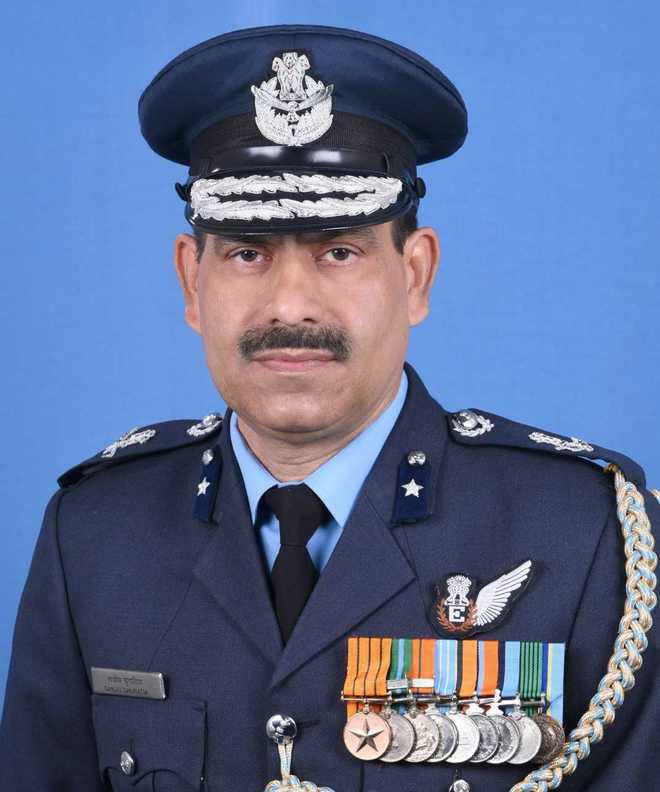
Air Commodore Sanjiv Ghuratia took over as the Air Officer Commanding of No.3 Base Repair Depot, the IAF’s largest helicopter maintenance and overhaul establishment, here on Tuesday.
Commissioned in the Aeronautical Engineering Branch in September 1988, he has held numerous important field and staff appointments, including chief engineering officer of a flying base, chief of aircraft at a base repair depot, chief engineering officer at the United Nations Mission in Congo, instructor at Air Force Test Pilots School and director, air staff requirements at Air Headquarters.
An alumnus of the Defence Services Staff College Wellington and BITS Pilani, Air Cmde Ghuratia is a qualified flight test engineer and has integrated several important weapons and sensors on IAF aircraft and has been associated with the induction of several weapons systems and air defence equipment as well as the development programmes like the Light Combat Aircraft and Saras. He was awarded the Vishist Seva Medal for distinguished service in 2016.
Awarded the Vir Chakra for displaying remarkable leadership qualities during Kargil War
Col Dilbag Dabas (Retd)
Himachal Pradesh is rightfully considered a nursery of military brave-hearts.
Sanjeev Jamwal, an alumnus of Sainik School, Sujanpur Tihra, was born on August 2, 1974, in Shimla. He was commissioned into the Indian Army on June 7, 1997. As a young Captain, while he was part of the Indian Military Training Team (IMTRAT) in Bhutan, Sanjeev got a lifetime opportunity, when he was attached to the 13 Jammu and Kashmir Rifles (13 JAK RIF) to show his mettle in the Kargil War.
Pakistan unilaterally breached the provisions of 1972 Shimla Agreement and violated the sanctity of the LOC by infiltrating its regular soldiers across the Indian side in April 1999. These intruders established themselves on the top of high mountain ridgelines from Mushkoh valley in the west to Chorbat La in the east in Kargil sector.
Initially, the information on the extent of Pak intrusion was a bit hazy, but by aggressive patrolling, soon the extent of intrusion in terms of their strength and dispositions was ascertained and plans were formulated to evict the intruders at the earliest. The highest feature on the ridgelines held by the enemy was Pt 5140, which had strategic importance since it overlooked the National Highway 1A, the lifeline of entire Ladakh. Occupation of this feature by the intruders could seriously interfere with the vehicular movement with observed artillery and long range mortar fire. The 13 JAK RIF which had been inducted in the Kargil sector in early June 1999 had fully acclimatised itself in high-altitude warfare and was prepared to take on any task assigned to it. And, the 13 JAK RIF with its every single man of steel, in just one night operation, snatched the formidable Pt 5140 from the jaws of the enemy.
Captain Sanjeev Singh Jamwal, a young officer originally commissioned into the Army Service Corps and on attachment with the 13 JAK RIF during the Kargil War, started off with the individual act of gallantry and the witnesses, the brave jawans, rallied with him and in a fierce fight, including hand-to-hand combat, blasted the intruders out from Pt 5140, an act for which Captain Sanjeev Jamwal was most deservedly awarded the Vir Chakra.
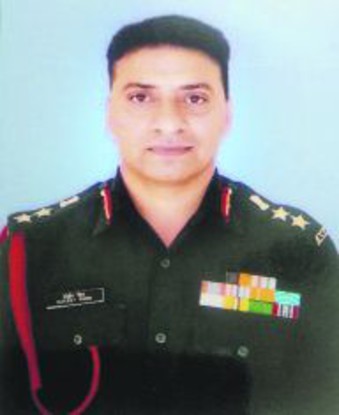
Sanjeev Singh Jamwal, Vr C, now a Colonel, is commanding an Army Service Corps battalion near Amritsar in Punjab. He has two sons and the elder one is in Class XII and already preparing to follow into his father’s footsteps.
Colonel Sanjeev Singh Jamwal, Vr C, an ASC officer, can never thank the military secretary’s branch of Army Headquarters enough for ordering his attachment order during Kargil war with the 13 JAK RIF battalion, as it earned two Param Vir Chakras, eight Vir Chakras and a large number of Sena Medals and other gallantry awards. Sanjeev has truly earned the honorific ‘The Bravest of the Brave’.
The battle account of his bravery reads…
“As part of ‘Operation Vijay’, on June 20, 1999, Captain Sanjeev Jamwal, attached to the 13 JAK RIF was tasked to re-capture Pt 5140 in Dras sub-sector. The feature had seven heavily fortified sangars (improvised bunkers) and each had to be tackled one by one to evict all intruders. Captain Sanjeev let go the battalion battle cry “Durge Mata Ki Jai” and led the assault. Sanjeev approached the objective from the west along with his column and reached within assaulting distance of the enemy defenses maintaining total surprise. Leading from the front along with his buddy, he physically assaulted the first sangar. This took the enemy by total surprise, forced a hand-to-hand fight and resulted in panic among the enemy. After successfully clearing the first sangar, Captain Sanjeev led the assault on second sangar and caused further attrition on the enemy. He personally killed three intruders and was instrumental in the successful capture of Pt 5140 Top. Captain Sanjeev Singh Jamwal displayed remarkable leadership qualities and boundless courage during close quarter battle with the enemy and was awarded the Vir Chakra.”
(The writer is a veteran Gunner, 6 Field Regiment)
India celebrates 70th R-Day; exhibits military might; highlights Mahatma’s life
India on Saturday celebrated the 70th Republic Day with a grand military parade and exhibition of its history, cultural diversity and strategic weaponry at the Rajpath—the city’s centrepiece boulevard—in presence of thousands of spectators, including foreign dignitaries and the country’s top political and military brass.
South African President Ramaphosa was the chief guest at the 90-minute celebrations marking the anniversary of the day, when the world’s biggest democracy was declared a republic in 1950.
A total of 22 tableaux, 16 from states and union territories and six from central government ministries and departments, were part of the cultural parade overall theme of which was life and ideals of Mahatma Gandhi. This year, India is celebrating 150th birth anniversary of the Father of the Nation.
Ramphosa’s presence at the celebrations was significant as Gandhi’s 21-year stay in South Africa played a pivotal role in moulding him into the apostle of peace.
The National Capital was brought under a massive security cover for the event as it took place days after two suspected Jaish-e-Mohammad terrorists were arrested.
The Republic Day Parade ceremony commenced with Prime Minister Narendra Modi, wearing a yellowish orange turban, leading the nation in paying homage to the fallen soldiers by laying a wreath at the Amar Jawan Jyoti at the India Gate.
An eternal flame burns at the Amar Jawan Jyoti to commemorate the indomitable courage of our armed forces personnel who have made the supreme sacrifice in the service of the country.
As per tradition, after unfurling the Tri-colour, the National Anthem was played with a 21-gun salute, following which President Ram Nath Kovind took the salute of marching contingents.
Alongside Ramphosa, the ceremonial parade was watched by Vice-President M Venkaiah Naidu, former Prime Minister Manmohan Singh, Congress President Rahul Gandhi and the country’s top political and military brass.
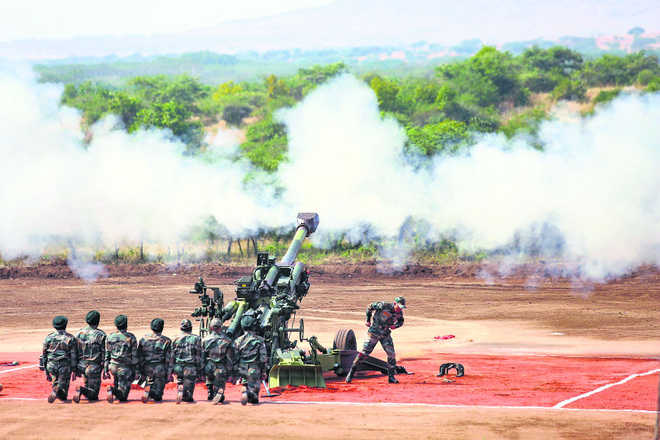
A major highlight of the parade was participation of four Indian National Army (INA) veterans—Parmanand, Lalti Ram, Hira Singh and Bhagmal, all aged over 90 years, for the first time. The other highlights include the display of American howitzers M777, the Main Battle Tank (MBT) T-90 and indigenously developed Akash weapons system.
‘Nari Shakti’ (women power) was on full display at the Rajpath with an all-woman Assam Rifles contingent creating history by participating for the first time in the parade, which was led by Maj Khushboo Kanwar.
Contingents of the Navy, Army Service Corps and a unit of Corps of Signals (transportable satellite terminal) were also led by women officers.
The tableau of Maharashtra portrayed the ‘Quit India movement’ while the tableau of Andaman and Nicobar showcased Mahatma Gandhi’s message to the inmates of the cellular jail in Andaman.
Jallianwala Bagh was the theme of Punjab tableau, which evoked memories of the watershed moment in the independence struggle. Assam came out with a tableau depicting Mahatma Gandhi’s movement in the state and his dream of rebuilding the rural economy by encouraging the growth of cottage industry.
Tableau of Gujarat depicted Mahatma Gandhi’s historical ‘Dandi March’, which shook the foundation of the British Empire. Karnataka showcased his momentous efforts at the Belagavi Congress session on December 26-27, 1924, while the tableau of Uttarakhand depicted Anashakti ashram. India’s cultural diversity was also on full display at the celebrations.
Twenty-six children, including six girl and 20 boy awardees of Pradhan Mantri Rashtriya Bal Puruskar for their “exceptional achievement” also graced the occasion.
The marching contingents of the Army included the Madras Regiment, the Rajputana Rifles, the Sikh Regiment and the Gorkha Brigade.
The naval contingent comprised of 144 young sailors led by Lieutenant Commander Ambika Sudhakarn. It was followed by naval tableau titled, ‘Indian Navy — Combat Ready Force for National Security’.
The Indian Air Force marching contingent also comprised 144 air warriors. It was followed by the IAF tableau titled ‘Indian Air Force Encouraging Indigenisation’ showcasing the scaled-down models of the aircraft, radar and missile system which have been indigenously designed and manufactured.
The models displayed were Light Combat Aircraft (LCA), Low-Level Light Weight Radar (LLLWR), Sukhoi-30MKI and the Akash missile system.
Para-military and other auxiliary forces also participated in the parade along National Cadet Corps and National Service Scheme.
The grand finale of the parade was a spectacular flypast by the IAF.
The fly-past commenced with the ‘Rudra’ formation comprising three advanced light helicopters in ‘Vic’ formation, followed by the ‘Hercules’ formation comprising three C-130J Super Hercules aircraft.
One C-17 Globemaster flanked by two Su-30 MKI fighter jets also displayed their aerial manoeuvring.
Next in line was five Jaguar deep penetration strike aircraft, in ‘Arrowhead’ formation. Following the Jaguars were five MiG-29 upgraded air superiority fighters in ‘Arrowhead’ formation.
The culmination of the parade was a lone Su-30 MKI flying at a speed of 900 km/hr with a ‘Vertical Charlie’ manoeuvre over the saluting dais.
The ceremony culminated with the National Anthem and release of balloons.
Modi waved to the crowd after the conclusion of the ceremony and were greeted with loud cheers. PTI
Baramulla declared first militant-free police district of Valley
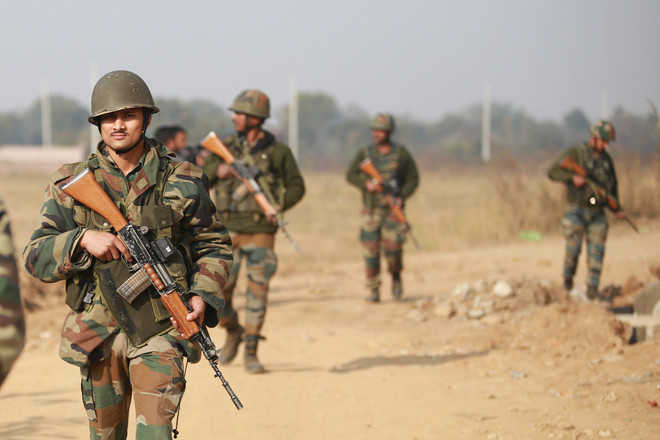
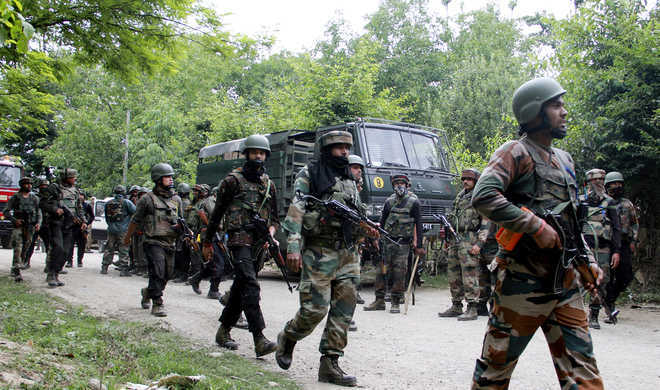
Soldier at an encounter site. — Photo for representation
Majid Jahangir
Tribune News Service
Srinagar, January 24
With the killing of three local Lashkar-e-Toiba militants on Wednesday, north Kashmir’s Baramulla has been declared first militant-free police district of the Valley.
Three militants Suhaib Akhoon, Mohsin Bhat of and Nasir Darzi — all residents of Baramulla district, were killed in a gunfight with joint forces at Binner in the outskirts of Baramulla town. Akhoon was Lashkar’s one of the top commanders for north Kashmir and was active since December 2017.
“With this (killing of three militants) Baramulla has become first district of Kashmir with no surviving militant as on date,” a police statement issued after the gunfight said.
“J&K Police extend its thanks to the local population for all their support in providing a better security environment in the district,” it added.
It is for the first time since the militancy erupted in Kashmir in 1989 that Baramulla police district has no resident militant. Baramulla had always the presence of local militants. In 2015, over 20 militants were active in Baramulla police district and all of them have been neutralised, police said.
Baramulla has two police districts — Baramulla and Sopore. While Baramulla has no resident militant, Sopore sub-district has nearly 30 active militants, including nearly a dozen locals.
Senior Superintendent of Police, Baramulla, Imtiyaz Hussain said they don’t have a resident militant in Baramulla police district right now. He said they have made huge efforts to prevent youth from joining militancy.
“It is not killing of the militant that has been our focus. We have made huge efforts to prevent the boys from joining militancy. The families have been a great support in preventing the recruitment,” Senior Superintendent of Police, Baramulla, Imtiyaz Hussain said.
While the militant recruitment has been on a high after the killing of Burhan Wani in 2016, north Kashmir’s Baramulla district has not seen much recruitment. Last year, when more than 190 youths joined militant ranks across Kashmir — highest in a decade, very few youths from the Baramulla had taken up arms.
Despite less recruitment, there are still 100 militants, majority among them foreigners, active in north Kashmir’s Kupwara, Bandipore, Handwara and Sopore. South Kashmir’s Pulwama and Shopian has the highest number of active militants among all the district.
Shutdown over killing of militants
A spontaneous shutdown was observed in Baramulla on Thursday against the killing of three local militants. Forces had also sealed several roads leading to old town and Khanpora to maintain law and order situation. A large number of people shouting “pro-freedom” and “anti-India” attended the funeral prayers of three slain militants.
State Stalwarts
DEFENCES FORCES RANKS
ARMY, NAVY, AIRFORCE RANKS
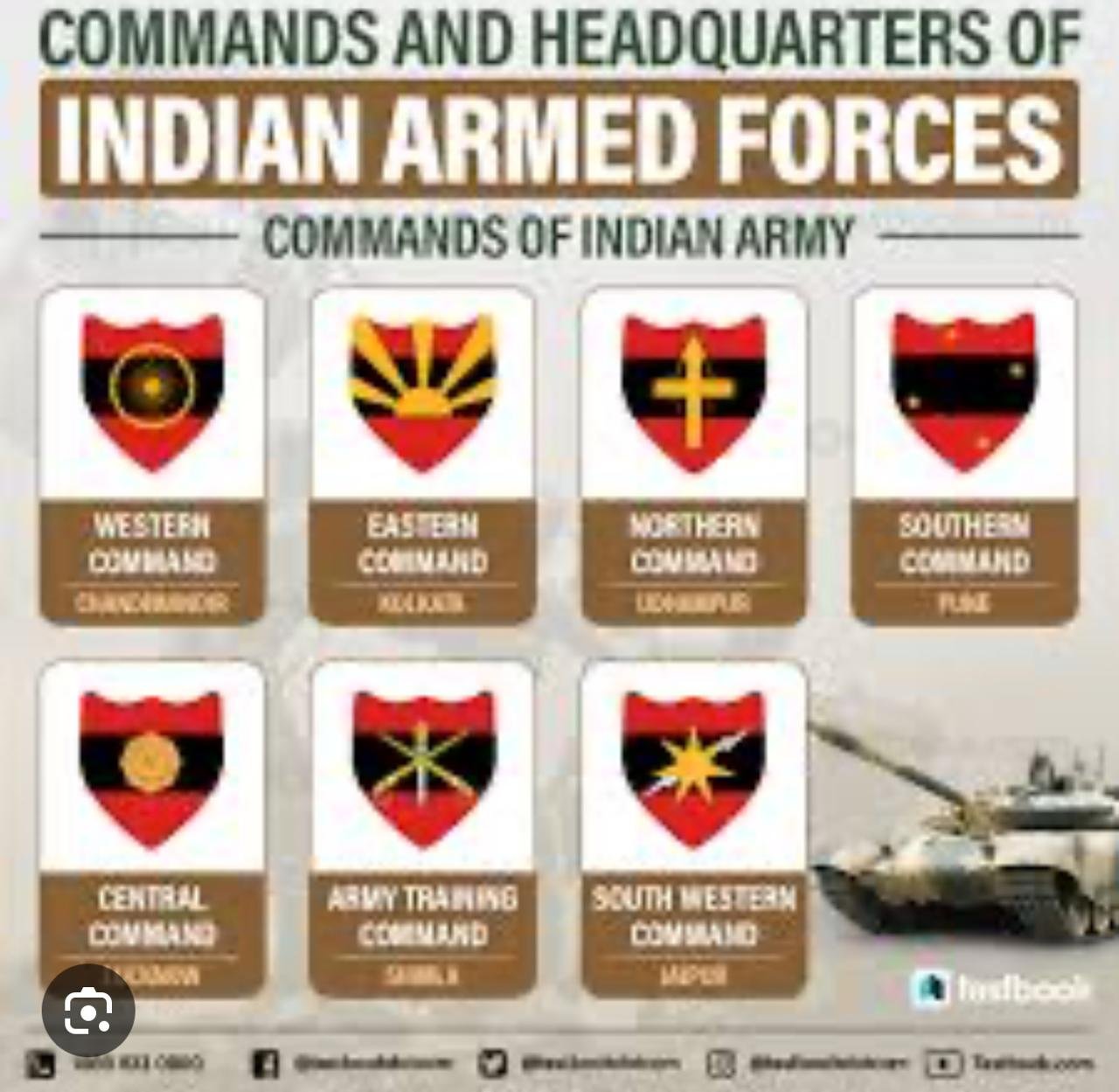
FORMATION SIGNS
FORMATION SIGNS
ALL HUMANS ARE ONE CREATED BY GOD
HINDUS,MUSLIMS,SIKHS.ISAI SAB HAI BHAI BHAI
CHIEF PATRON ALL INDIA SANJHA MORCHA
LT GEN JASBIR SINGH DHALIWAL, DOGRA
SENIOR PATRON ALL INDIA SANJHA MORCHA
MAJOR GEN HARVIJAY SINGH, SENA MEDAL ,corps of signals
.
.
PATRON ALL INDIA SANJHA MORCHA
MAJ GEN RAMINDER GORAYA , CORPS OF
sanjhamorcha303@gmail.com
PRESIDENT HARAYANA STATE CUM COORDINATOR ESM
BRIG DALJIT THUKRAL ,BENGAL SAPPERS
PRESIDENT TRICITY
COL B S BRAR (BHUPI BRAR)
PRESIDENT CHANDIGARH ZONE
COL SHANJIT SINGH BHULLAR
.
.
PRESIDENT PANCHKULA ZONE AND ZIRAKPUR
COL SWARAN SINGH
PRESIDENT SAS NAGAR (MOHALI)
COL BALBIR SINGH , ARTY
INDIAN DEFENCE FORCES
DEFENCE FORCES INTEGRATED LOGO
FORCES FLAGS
15 Th PRESIDENT OF INDIA SUPREME COMMANDER ARMED FORCES
Droupadi Murmu
DEFENCE MINISTER
Minister Rajnath Singh
CHIEF OF DEFENCE STAFF (2nd)
General Anil Chauhan PVSM UYSM AVSM SM VSM
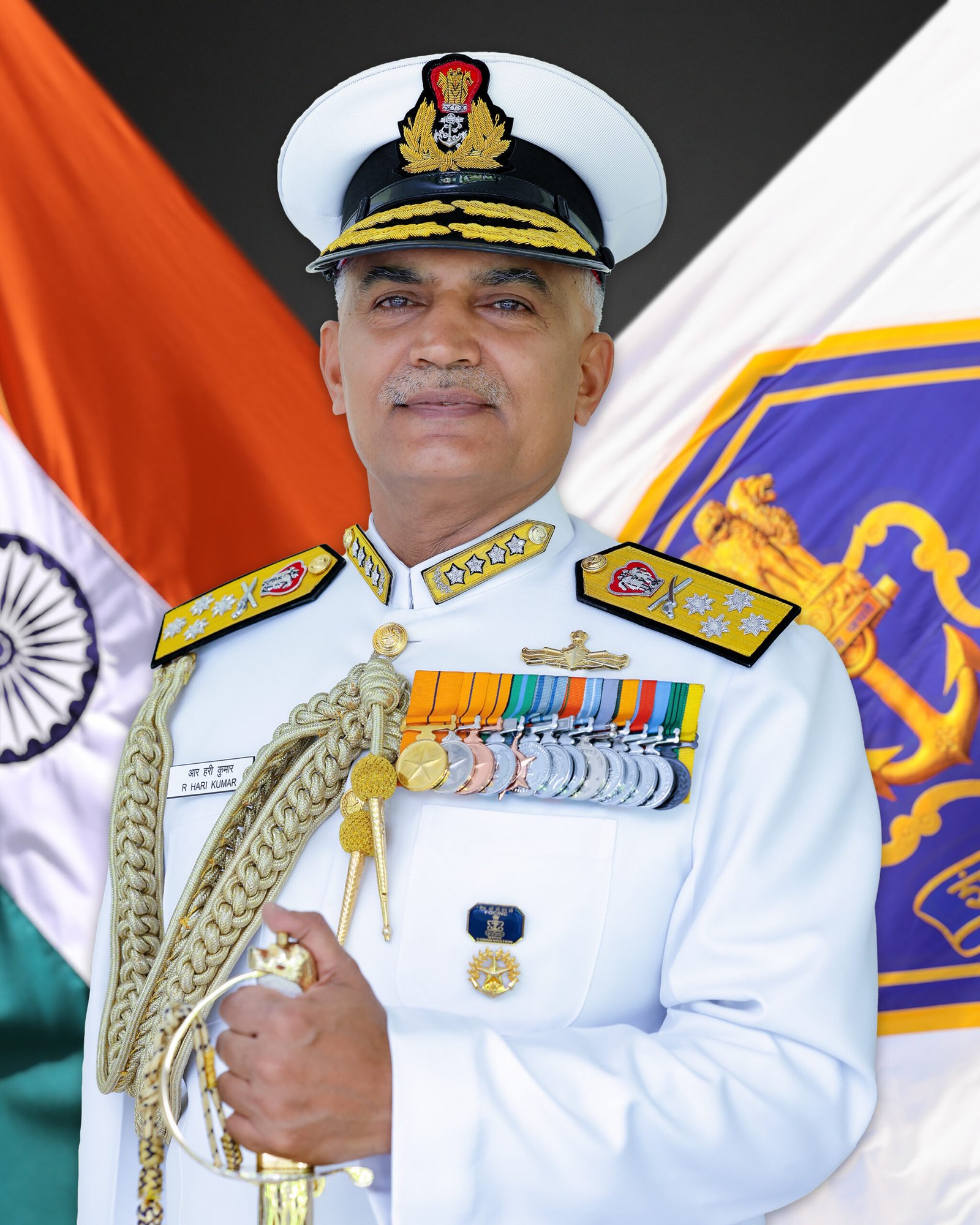
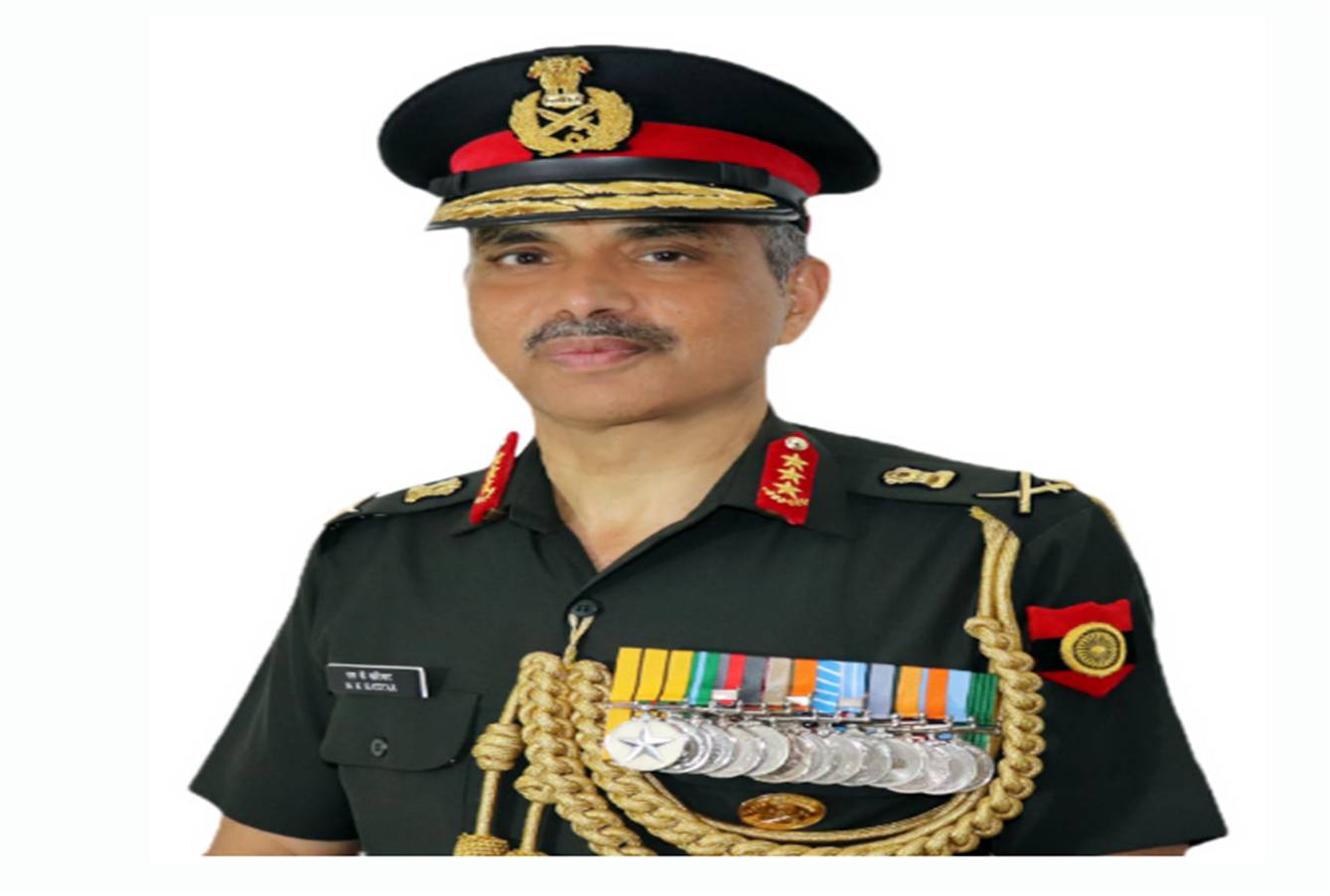
INDIAN FORCES CHIEFS
CHIEF OF ARMY STAFF(29th)
General Upendra Dwivedi, PVSM, AVSM (30 Jun 2024 to Till Date)