



Sanjha Morcha

TOPICS AND PANNEL DISCUSSION SPEAKERS DURING MILITARY LITERATURE FEST-2018

Sr. No. Panel Speakers
1.     Contribution of India towards WW 1

8th Dec

Venue A

1000-1100 hours

1.   Sqn Ldr Rana Chhina – Moderator

2.   Prof David Omissi, Univ of Hull

3.   Prof Anju Suri, Panjab Univ

4.   Santanu Das

5.   Capt Amarinder Singh

6.   Lt Gen NS Brar


2.     Indian Cavalry Charges of WW1 and the Gallipoli Campaign

9th Dec

Venue A

1430-1530 hours


1.   Lt Gen TS Shergill – Moderator

2.   Tony McClenaghan

3.   Lt Gen Aditya Singh

4.   Brig MS Jodha

5.   Brig Sukhjit Singh,MVC

6.   Capt Amarinder Singh


3.     The New Great Game

8th Dec

Venue A

1600-1700 hours


1.   Tilak Devasher – Moderator

2.   Gurjit Singh, IFS

3.   Jayadeva Ranade

4.   Maj Gen BK Sharma

5.   RK Kaushik, IAS

4.     Wisdom of Spies

8th Dec

Venue B

1600-1700 hours


1.   Lt Gen Kamal Davar

2.   AS Dulat, IPS

3.   KC Verma, IPS – Moderator

4.   Lt Gen Sanjeev Langer


5.     Role of Cross-Border Operations and Surgical Strikes


7th Dec

Venue A

1200-1300 hours

1. Gen DS Hooda – Moderator

2.   Maj Maroof Raza

3.   Lt Gen JS Cheema

4.   Lt Gen NS Brar

5.   Col Ajai Shukla


6.     Kashmir Quandary: Diagnosis and Remedy

9th Dec

Venue C

1000-1100 hours

1.   Lt Gen SA Hasnain – Moderator

2.   AS Dulat, IPS

3.   Lt Gen Gautam Banerjee

4.   Tavleen Singh

5.   Lt Gen MC Bhandari

6.   Lt Gen Satish Dua


7.     Over Hang of the Sino-India War of 1962 and Today

8th Dec

Venue B

1000-1100 hours

1.               Maj Gen Govind Dwivedi,

2.               Maj Gen PJS Sandhu – Moderator

3.               Lt Gen JS Cheema

4.               Kunal Verma

5.               Claude Arpi


8.     Two Battles For Survival

Ferozshah 1845

Chillianwala 1849

9th Dec

Venue C

1130-1230 hours


1.   Capt Amarinder Singh

2.   Amarpal Sidhu – Moderator

3.   Lt Gen TS Shergill

4.   Dr JS Grewal

5.   Dr Indu Banga


9.      

The Battles of Delhi and Meerut, 1857

9th Dec

Venue A

1000-1100 hours

1.               Sqn Ldr Rana Chhina – Moderator

2.               Amaresh Mishra

3.               Dr Amit Pathak

4.               Manimugdha Sharma

5.               Saiyid Zaheer Husain Jafri


10.                       Cyber Warfare and Autonomous Lethal Weapon Systems

9th Dec

Venue C

1430-1530 hours

1.   Lt Gen RS Panwar – Moderator

2.   Lt Gen Arun Sahni

3.   Maj Gen RK Arora

4.   Lt Gen Sanjiv Langer


11.                       Military Industrial Base and Make in India

8th Dec

Venue B

1130-1230 hours


1.      Col Ajai Shukla

2.     Gen KJ Singh – Moderator

3.   Gen VP Malik

4.   Brig Khutub Hai

5.   V Adm HS Malhi


12.                       Special Forces: Force Multiplier for the Modern Military

8th Dec

Venue C

1600-1700 hours


1.     Saikat Datta

2.   Brig Pradeep Sharma

3.   Lt Gen Tej Pathak – Moderator

4.   Vikramjit Singh

5.   Col Jaideep Sengupta, VrC


13.                       Punjabi  – Poetry, Literature and Folk Forms Fostered by the First World War

7th Dec

Venue B

1200-1300 hours

1.   BubbuTir

2.   Surjit Pattar
3 .Dr. Swaraj Bir Singh, IPS – Moderator
4. Prof Jasbir Singh, History Dept, PU

5. Dr Manmohan Singh, IPS

6Brig KS Kahlon

7Navjot Singh Sidhu


14.                       Hindi – The Heroic Tradition (Vir Ras) in Hindi Poetry

7th Dec

 Venue C

1200-1300 hours

1.   Mrinal Pande – Moderator

2.    Dr Gurmeet Singh, HOD, Hindi, PU –

3.     Ashok Chakradhar

4.     Prof Abhimanyu Singh Arha


15.                       Armour Operations of the1965 War

8th Dec

Venue B

1430-1530 hours


1.   Lt Gen TS Shergill – Moderator

2.   Lt Gen JS Cheema

3.   Brig Khutub Hai

4.   Brig JS Bhullar


16.                       Air Power Lessons Learnt from the 1965 War and Their Implementation

9th Dec

Venue B

1000-1100 hours

1.   Air Marshal Bharat Kumar- Moderator

2.   AVM Manmohan Bahadur

3.   Gp Capt RS Chhatwal

4.   Jagan Pilanisetti

5.   Pushpinder Singh


17.                       Operations Trident and Python: The Karachi Raids, December 1971

9th Dec

Venue B

1130-1230 hours

1.   Adm Arun Prakash – Moderator

2.   V Adm HS Malhi

3.   Cdre Srikant Kesnur

4.   Cdr Arun Saigal

5.   Brig RJS Dhillon


18.                       Evolving Challenges in Indian Defence

8th Dec

Venue C

1000-1100 hours


1.   Lt Gen KJ Singh

2.   Col PK Vasudeva

3.   Gen VP Malik – Moderator

4.   Vishnu Som

5.   Dinesh Kumar

6.   Lt Gen Aditya Singh


19.                       Guerrilla Campaign of Maharana Pratap

8th Dec

Venue A

1130-1230 hours

1.   HE The Governor

2.   Prof Rima Hooja – Moderator

3.   Maj Gen Randhir Sinh

4.   Prof Abhimanyu Singh Arha

5.   Lt Gen T S Shergill


20.                       Evolving Indo-Pacific Concept: A Game Changer

9th Dec

Venue B

1430-1530 hours


1.   Adm Arun Prakash, PVSM, AVSM, VrC, VSM, ADC – Moderator

2.   Lt Gen RK Sawhney

3.   Lt Gen AK Singh

4.   Lt Gen HPS Klair

5.   Gurjit Singh, IFS


21.                       Humanitarian Aid and Disaster Relief – Role of Indian Army

8th Dec

Venue C

1130-1230 hours

1.   Lt Gen N C Marwah, PVSM, AVSM  – Moderator

2.   Lt Gen Satish Dua, PVSM, UYSM, SM, VSM

3.   Dr.Awadesh Kumar Singh

4.   Lt Gen Rajan Bakshi

5.   Lt Gen Anil Chait

22. Information Warfare – The New Face of War

8th Dec

Venue C

1430-1530 hours


1.   Lt Gen RS Panwar

2.   Lt Gen Vijay Oberoi – Moderator

3.   Lt Gen SP Kochar

4.   Swati Chaturvedi

5.   Lt Gen Sanjiv Langer


23 Interactive Session with Vir Sanghvi – Valour, History, Politics and Media


8th Dec

Venue A

1000-1100 hours


1.Capt Amarinder Singh

2.Lt Gen TS Shergill

3.Brig Justin Maciejewski

4.Col Ajai Shukla

24 Interactive session with Shekhar Gupta – Reporting from the War Zone


9th Dec


Venue A

1130-1230 hours


1.Vikramjit Singh

2.Barkha Dutt

3. Vishnu Som

4. Nitin Gokhale (Maybe)


Soldier, BSF man die in LoC firing Ceasefire violated in Machil, Sunderbani

Soldier, BSF man die in LoC firing

Srinagar/Jammu, December 6

An Army jawan and a BSF constable were killed in ceasefire violation by Pakistan along the Line of Control (LoC) in Jammu and Kashmir today.

Rifleman Rajesh Kumar from Uttar Pradesh was killed when a volley of bullets was fired towards a forward post in Machil sector of Kupwara, 150 km northwest of Srinagar.

“Pakistan violated the ceasefire in Machil sector at 10.45 am. One soldier got  martyred in the enemy fire,” said Srinagar-based defence spokesman Col Rajesh Kalia. “Indian forces retaliated strongly,” he added.

This is the third ceasefire violation by Pakistan in the past 24 hours in north Kashmir. Earlier today, Pakistan forces violated the ceasefire in Kamalkote area of Uri in north Kashmir’s Baramulla district, resulting in the suspension of cross-LoC trade via the Kaman bridge.

Yesterday, Indian posts in the same area were targeted in which two soldiers were wounded, he said.

In the Sunderbani sector, a BSF Constable was killed and another injured in heavy fire from across the LoC this evening, officials said. The incident happened at a forward post in Mala area. The sector is manned by BSF’s 126th battalion.

While a bullet hit Constable Prosenjit Biswas in the stomach, Constable Mansa Ram suffered a gunshot wound in the thigh, they said. They were airlifted to Command Hospital at Udhampur, where Biswas succumbed to injuries.

The condition of the other jawan is stable, officials said.

The violations come a fortnight after a Brigade Commander-level flag meeting between the two sides. — TNS


Martyrs’ well at Jallianwala Bagh to get glass canopy

Martyrs’ well at Jallianwala Bagh to get glass canopy

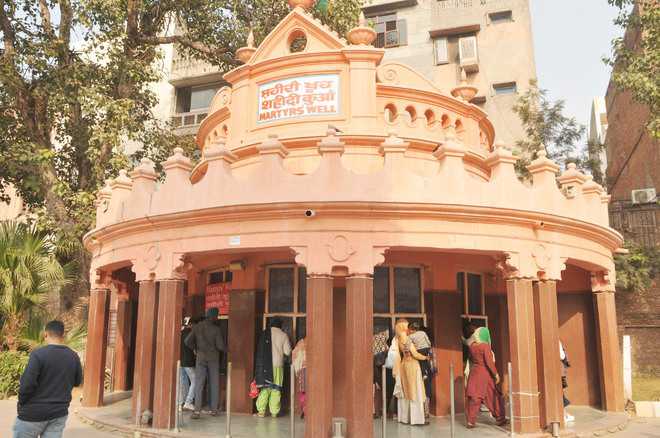
Visitors look through the window to have a glimpse of the martyrs’ well. photo: Vishal Kumar

GS Paul

Tribune News Service

Amritsar, December 4

As part of its revamp plan ahead of Jallianwala Bagh massacre centenary next year, the Central government mulls sprucing up the martyrs’ well located on the premises.The grill mesh-covered well, which is testimony to the brutal killings on April 13, 1919, when hundreds of innocents had jumped into it in panic to escape the indiscriminate firing, is in a dilapidated state. As per records, 120 bodies were later recovered from the well.

At present, the well is surrounded by a concrete structure having six ventilating windows on its wall which facilitate the visitors to have a glimpse deep inside the well. After the Golden Temple, the Bagh is the most sought-after spot for the visitors.Apart from preserving its heritage contour, the proposal is to fix a dome-shaped unbreakable glass or see-through fibre canopy over its outer area having approximately 20-ft diameter.

Rajya Sabha MP Shwait Malik, who is also a member of the Jallianwala Bagh National Memorial Trust, said the suggestion cropped up during the recent visit of Union Minister of State (independent charge) for Culture and Tourism Dr Mahesh Sharma, who got it approved on the spot.

Malik stressed that the heritage value of the well would be maintained at any cost while fixing the canopy. The job of its design has been awarded to Union Culture Ministry’s architect Vandana Raj, who is preparing the blueprint of the whole project of restoration and renovation of the Bagh.

“Since the windows got worn out with its grills broken, it was observed that the existing windowpanes were not safe and inadequate to offer clear view of the inner side of the historic well to the visitors. It has been decided to fix a dome-shaped canopy, which will also ensure safety. The portion of the well, which has heritage value, will be preserved as it is, whereas only the structure that was added later on will be altered to fix the dome,” he said.

Some visitors throw coins into the well. In June 2017, some unidentified persons had cut the grill to enter the well with the help of a rope and stole coins worth Rs 4,000.


Only ‘dignified activities’ will be permitted on INS Viraat: Vice-Admiral Luthra

Only ‘dignified activities’ will be permitted on INS Viraat: Vice-Admiral Luthra

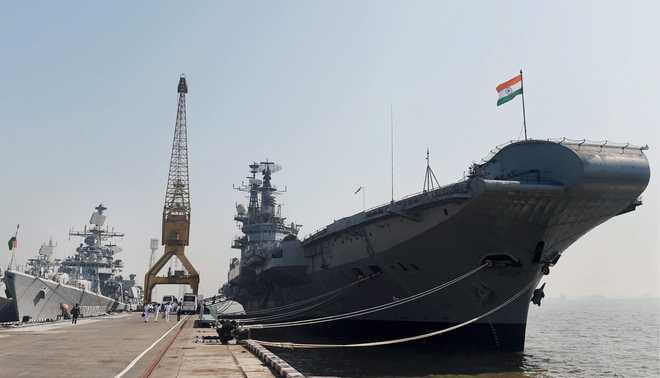
The carrier was built and deployed by the Royal Navy of the United Kingdom in 1959. PTI file

Mumbai, December 3

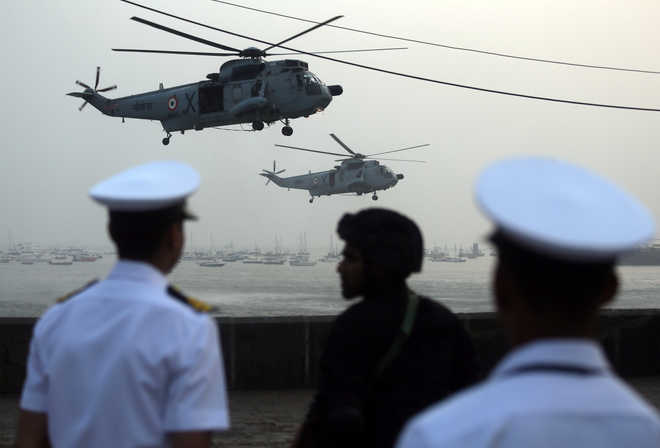
Only “dignified activities” will be permitted on board the Indian Navy’s decommissioned aircraft carrier INS Viraat, Western Naval Command chief Vice-Admiral Girish Luthra said on Monday.

Since its decommissioning, several states have expressed interest to convert the ship into a tourism hub or a museum.

The carrier, built and deployed by the Royal Navy of the United Kingdom in 1959, served the Indian Navy from 1987 till it was formally decommissioned in March, 2017.

The Centaur-Class aircraft carrier operated for 56 years under British and Indian flags, earning itself a Guinness World Records mention for being the oldest serving warship.

“Proposals have been received from several states, including Maharashtra, to convert INS Viraat into some tourism destination. We will be permitting only dignified activities there,” Vice Admiral Luthra told reporters here.

He also said the proposal from Maharashtra had been forwarded to the Defence Ministry.

The Vice-Admiral said the ship, in its future avatar, could be a public private partnership initiative.

“It is going to be a Public Private Partnership (model) which means the state as well as a private company is going to be involved. Whether it will be a convention centre or a museum or a tourism destination will depend on the PPP,” he said.

About the Maharashtra government’s proposal for INS Viraat, Vice-Admiral Luthra said, “It is being examined actively at the highest level.” On the maintenance cost of the decommissioned aircraft carrier, he said about 225 people have been deployed to take care of the ship, but the Navy did not “do any costing” of it.

INS Viraat was commissioned into the Indian Navy on May 12, 1987, and operated Sea Harrier fighter aircraft, Sea King 42B anti-submarine helicopters, Sea King 42C commando carrier helicopters and Chetaks as its main air elements.

The aircraft carrier is reputed for having been out at sea for over six years, covering the globe 27 times. PTI


2 Army personnel killed in landmine blast along LoC in J&K

2 Army personnel killed in landmine blast along LoC in J&K

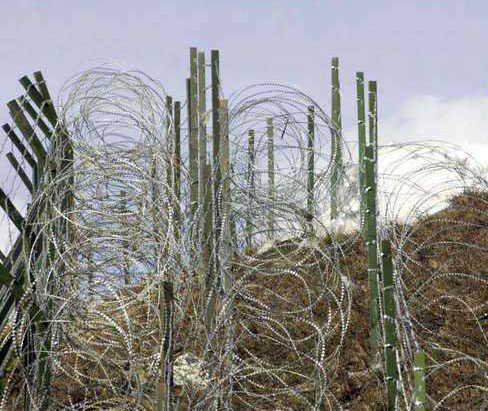
The landmine exploded near the anti-infiltration obstacle system when an Army column was on patrol duty along the LoC. File photo

Jammu/Anantnag, December 1

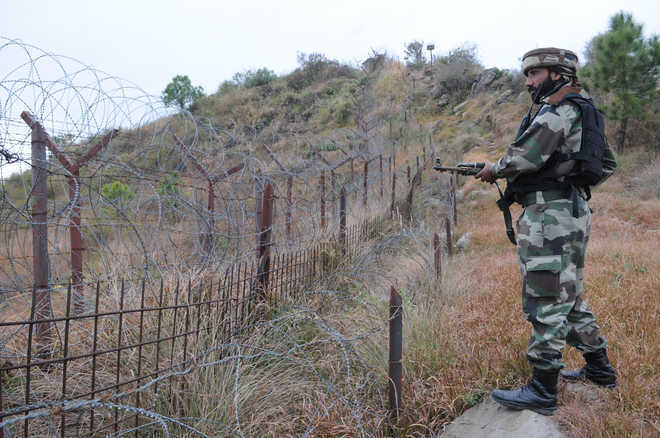
Two soldiers were killed and two others were injured in an accidental landmine blast in Pallanwala area of the Akhnoor sector near the Line of Control (LoC).

The injured have been shifted to hospital, where the condition of a soldier is stated to be critical.

While Vivek Gupta, DIG, Jammu, said two soldiers had been killed, the Army is yet to confirm the incident. 

Meanwhile, a civilian was injured on Saturday evening in crossfiring as security forces and militants briefly exchanged gunfire in Pulwama district of south Kashmir.

The injured civilian has been identified as Bashir Ahmad Mir, a resident of Litter village. Sources said militants opened fire at an Army patrol party in Niloora village of the district at 6 pm. “The Army retaliated and in the exchange of fire, a civilian was injured.”  

Police officials, however, said the exchange of fire took place amid a cordon and search operation in the area.

The injured civilian was being treated at the Sub-District Hospital in Bijbehara. — TNS


Indian Army Creates Record: Repairs Helicopter At Crash Site In Siachen Glacier, Flies It Back To Base Camp

Indian Army Creates Record: Repairs Helicopter At Crash Site In Siachen Glacier, Flies It Back To Base Camp

In an unprecedented feat, the Indian Army successfully repaired its advanced light helicopter Dhruv at its crash site in Siachen glacier and flew it back to the Siachen base camp, New Indian Express has reported.

As per the report, the helicopter belonging to the 203 Army Aviation Squadron had crashed at about 17,000 feet near the Khanda post in January and was initially left to its fate.

As per an ANI report, the helicopter was on an air maintenance sortie when it developed a snag and had to be landed into the snow. It subsequently fell sideways due to overnight snow.

In subsequent inspections by the army, officials felt that the chopper can be repaired and a plan was initiated after getting due approval from the General Officer Commanding of the 14 Corps and the Director-General of Army Aviation Corps.

Under this plan, a squadron was dispatched from Khanda on a 15-day journey to repair the helicopter. Under extreme climate ranging between 25 to 30 degree Celsius below zero, the team started working on the helicopter under various physical and technical difficulties.

On most days the window of opportunity to work on the helicopter was just 60 to 90 minutes but despite all odds, the team managed to affix new parts to make it operational.

This feat has been described as a world record of sorts and it is the first time the Indian Army has successfully retrieved a chopper which crashed in the Siachen region.


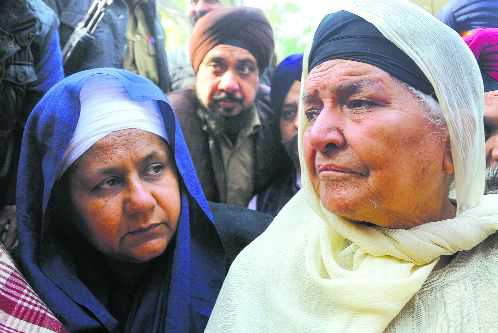
‘Jailed for 9 yrs in false case, but I didn’t give up’

‘Jailed for 9 yrs in false case, but I didn’t give up’

ough journey: Anti-Sikh riot victims Jagdish Kaur (R) and Nirpreet Kaur react after Sajjan Kumar was convicted.

Aditi Tandon

Tribune News Service

New Delhi, December 17

Nirpreet Kaur was only 16 when she witnessed the horrific murder of her father in Delhi Cantonment’s Raj Nagar area on November 1, 1984.

“We were a very happy family. My father Nirmal Singh and mother Sampuran Kaur loved me a lot. Our house was located next to Raj Nagar Gurdwara that was defiled and torched by the communally charged mobs on November 1, 1984,” recalls Nirpreet Kaur, one of the three witnesses against Congress leader Sajjan Kumar.

Settled in Mohali now, Nirpreet says her mother had sent her to Punjab long ago fearing for her life.

“I remember every detail of that day. Then Congress MLA Mahendra Yadav and Congress councillor Balwan Khokhar, who were known to my father, came to our house pretending to offer us security. But after my father let them in, they dragged him out. Two persons accompanying them tied my father up and Khokhar and Yadav beat him with iron rods before torching him to death,” says Nirpreet Kaur. Happy that Sajjan Kumar and other Congress leaders had been convicted for the murder of five Sikhs, besides defiling the gurdwara in Delhi Cantonment, Nirpreet says her fight for the resettlement of anti-Sikh riot survivors will continue.

Asked which part of her journey to justice was the toughest, she says the toughest part was when those who perpetrated the crime against her family began to torture her near and dear ones to intimidate her.

“They wanted me to withdraw the case. My close friend was killed and his death was shown as an accident. Then my mother was picked up and jailed. A false case under TADA was slapped against me. I spent nine years in jail, but did not go back on my word,” she says, pledging to keep helping the victims of 1984 carnage.

The HC today placed on record its appreciation for the fearlessness of witnesses Nirpreet Kaur, Jagdish Kaur and Jagsher Singh, saying it was due to their testimonials that Sajjan Kumar had been brought to justice


They wanted me to withdraw the case. My close friend was killed and his death was shown as an accident. Then my mother was picked up and jailed. A false TADA case was slapped against me. I spent nine years in jail, but did not go back on my word. —  Nirpreet Kaur, Witness 


‘Police post in charge asked the mobsters: Kitne murge bhun diye’

According to HC judgment: “Around 9 am on November 2, 1984, when Jagdish Kaur went to lodge a report at the police post, she saw that a public meeting was taking place which was attended by local MP Sajjan Kumar. She heard him declare ‘Sikh sala ek nahin bachna chahiye, jo Hindu bhai unko sharan deta hai, uska ghar bhi jala do aur unko bhi maro’”. She claimed she heard officer-in-charge of the police post ask mobsters “kitne murge bhun diye”.


Opening Ceremony :: Military Fest ::06 Dec2018 At 10:00 a.m Also Armed Forces Flag Day

Military Literature Festival kicks off at Lake Club today

CHANDIGARH: Punjab governor VP Singh Badnore will inaugurate the three-day Military Literature Festival 2018 at the Lake Club in Sector 1, Chandigarh , on Friday. Open to all, the festival aims to offer an opportunity for the youth to get acquainted with India’s military heritage, while also bringing a host of cultural activities, cuisines and competitions to the public.

HT PHOTO■ A series of brainstorming sessions will be organised at five venues of the Lake Club in Chandigarh.It is a joint initiative of military historian and Punjab chief minister Captain Amarinder Singh and Badnore with support extended by the army’s Western Command.

A series of brainstorming sessions have been organised at five venues at the club during the festival that will continue till December 9.

Subedar Yogendra Singh Yadav, one of the three living recipients of Param Vir Chakra, the nation’s highest gallantry award, and decorated defence personnel will interact with visitors.

The opening ceremony will see a session on the role of cross-border operations and surgical strikes. It will be moderated by Lt Gen DS Hooda (retd).

Another session on Friday will feature discussions on Punjabi poetry, literature and folk forms fostered by World War I.

Hindi litterateur Mrinal Pande will moderate the session on the heroic tradition (Vir Ras) in Hindi poetry.

CAPT TO TALK ON ROLE OF INDIA IN WWI

On Saturday, Punjab chief minister Capt Amarinder Singh will share his thoughts on the contribution of India towards World War I.

Columnist Vir Sanghvi will have an interactive session with Amarinder on ‘Valour, history, politics and media’, which will have actors Sonu Sood and Gurmeet Chaudhary on board.

The afternoon session will see Badnore talk on ‘The guerrilla campaign of Maharana Pratap with Rima Hooja moderating the session, followed by deliberations on the topic ‘Wisdom of spies’ with IPS officer AS Dulat, along with Lt Gen Kamal Davar and Lt Gen Sanjeev Langar as participants. KC Verma will moderate the session. BATTLES FOR SURVIVAL The concluding day will see live discussions on two battles for survival – Ferozshah 1848 and Chilianwala 1849 and Indian cavalry charges of the First World War and the Gallipoli Campaign with Captain Amarinder, Lt Gen TS Shergill, Dr Indu Banga, Tony McClenaghan and Brig Sukhjit Singh as panellists.

There will be a session with journalist Shekhar Gupta on reporting from the war zone. Journalists Vishnu Som and Barkha Dutt will participate in the session.Forty short films on wars fought by the army since Independence will be screened during the festival.

Besides, martial dances, weapons display, medallion gallery, artists’ corner, cultural activities and exhibitions, food and cuisine, book fair and children’s Saragarhi Samvadh will be among activities for visitors.


clip

clip


Pak continues to use Afghan Taliban as hedge against India: US

Pak continues to use Afghan Taliban as hedge against India: US

Marine Corps Lt General Kenneth McKenzie’s remarks came days after US President Donald Trump sought Pakistan Prime Minister Imran Khan’s help in the Afghan peace process.

Washington, December 5

Pakistan continues to use Afghan Taliban as a hedge against India, a top American commander has told lawmakers, as he expressed the US frustration over Islamabad’s failure to take concrete steps to deny safe havens to terrorist groups.

Marine Corps Lt General Kenneth McKenzie’s remarks came days after US President Donald Trump sought Pakistan Prime Minister Imran Khan’s help in the Afghan peace process.

The Trump administration, in the recent months, has intensified its efforts to seek a negotiated settlement of America’s longest war in Afghanistan where the US has lost over 2,400 soldiers since late 2001, when it invaded the country after the 9/11 terror attacks.

The Taliban are fighting to flush out US-led international forces and re-establish their regime in Afghanistan after their ouster in 2001.

“Pakistan is an essential element in long-term stability in Afghanistan,” McKenzie told members of the Senate Armed Services Committee on Tuesday during his confirmation hearing for commander of the US Central Command (CENTCOM).

Pakistan could play a key role in facilitating talks between the Taliban and government of Afghanistan, he said.

“Pakistan does not appear to be using the full extent of its influence to encourage the Taliban to come to the table,” he said.

“We continue to see the Taliban being utilised as a hedge against India rather than as part of a stable, reconciled Afghanistan,” McKenzie said.

His answers to the Senate Armed Services Committee came after it became public that Trump had written a letter to Imran Khan, seeking his help in the Afghan peace process.

“President Trump sent a letter to Prime Minister Khan, requesting Pakistan’s full support to the US-led Afghan peace process and Special Representative for Afghanistan Reconciliation Ambassador Zalmay Khalilzad’s upcoming trip to the region,” a spokesperson of the National Security Council, White House, told PTI.

“In the letter, the President recognises that Pakistan has the ability to deny the Taliban sanctuary on its territory,” the spokesperson said.

“The letter also makes it clear that Pakistan’s assistance with the Afghan peace process is fundamental to building an enduring US-Pakistan partnership,” the spokesperson said.

McKenzie told lawmakers that he did not see much of a change in Pakistan’s behaviour towards Afghanistan or its stand against terrorist groups.

Despite Pakistan’s positive rhetoric in support of the US’ South Asia Strategy, violent extremist organisations (VEOs) operated along its border with Afghanistan, he said.

“While Pakistan has conducted some operations against VEOs in the country, they must continue to expand these operations and remain aggressively engaged,” McKenzie said.

“Taking concrete steps that deny VEO safe havens in Pakistan and VEO freedom of movement from Pakistan to Afghanistan remain an important task that Pakistan needs to fulfil. Pakistan must leverage their influence over the Taliban leadership to help compel them to come to the table for reconciliation negotiations,” he added.

McKenzie said the US CENTCOM would continue to support the State Department as it worked towards a diplomatic solution to the conflict in Afghanistan, which included ensuring that Islamabad’s equities are acknowledged in any future agreement.

“Pakistan’s action or inaction, as it relates to stability in Afghanistan, has often led to US’s frustration,” he said, adding that stability in the South Asia region remained the most important mutual strategic interest for both the US and Pakistan.

“We must continue to engage with the Pakistani leadership to realise how we can achieve this mutual interest,” McKenzie said.

“I do believe that any solution in Afghanistan is going to require the assistance of Pakistan. It has to be a regional solution, not just a solution centred in Afghanistan,” he said.

It is in Pakistan’s long-term interest to have a government in Afghanistan that is stable, and that they can do business with, he said.

“So I think Pakistan has not shown indications, by and large over the last few years, of being a serious partner in this regard,” McKenzie said.

US Special Representative for Afghanistan Zalmay Khalilzad on Tuesday met Pakistan Foreign Minister Shah Mahmood Qureshi in Islamabad. McKenzie said the meeting was to see if the US could find some way forward.

“Probably Pakistan knows very clearly that their assistance will be required to reach an end-state in Afghanistan. I think the task that we have is to make it attractive to them so that they see that it is in their best interest to do that,” McKenzie said. PTI


Navy’s salvo against IAF The rocky path to achieving military jointness

Navy’s salvo against IAF

THE Indian military has held its own in all military ventures since Independence, barring the 1962 conflict with China. After Kargil found the Indian military stretched, deep introspection about the archaic system of organising the forces gave way to a nearly two-decade endeavour to achieve tri-service integration. The Fusion Doctrine, as it is known the world-over, involves drawing together all military capabilities in which the might of the three services is brought to bear on the enemy in an integrated manner. The efficacy of the CDS system has been proved in five dozen countries, but in India, serious and sincere efforts to remodel the present higher defence organisation have run into political and inter-services opposition.

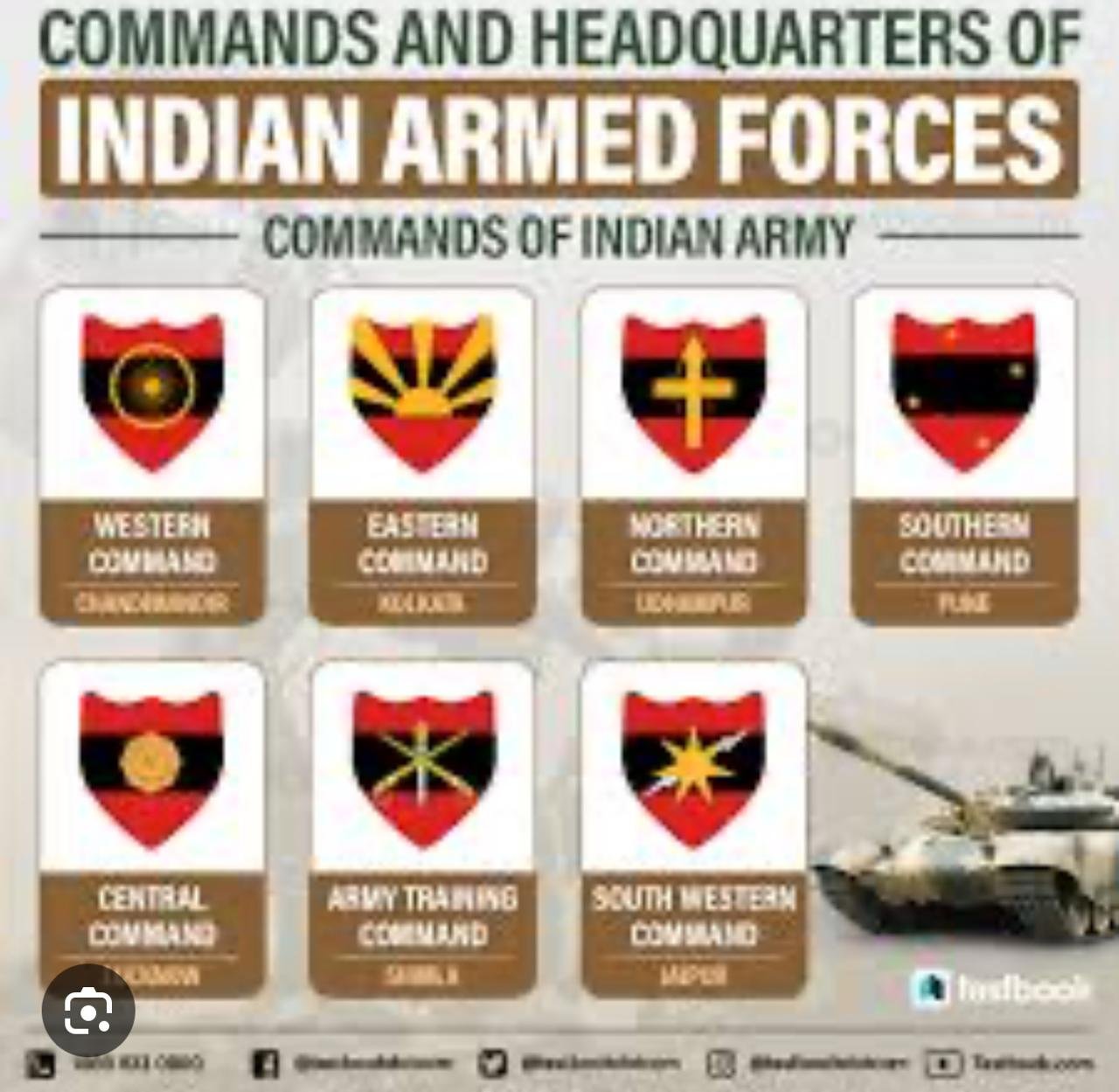
The Navy Chief’s disclosure that his Air Force counterpart has raised the red flag over joint theatre commands indicates the tough road ahead in taking all stakeholders on board for an eventual reorganisation of the Indian military. The appeal of sole ownership over existing military assets and the possibility of restructuring shaking up present channels of promotion have contributed to foot-dragging by one service or the other. But there is no escape from restructuring — a single Chinese theatre command faces India’s six commands of the Air Force and the Army. The snafus in coordination during hostilities can be easily visualised.

That jointness imparts speed and optimum concentration of military assets is known. Restructuring will also help an emerging, but resource-strapped power like India to eliminate commonality and overlap in many tri-service arenas, including equipment, training and utilisation of surveillance assets. The Vajpayee and the Manmohan Singh governments hung back from pushing the envelope for fear of a backlash from the services. The Indian armed forces have risen to national emergencies without fail. But corrective measures too are long overdue. The government must lose no time in setting up joint theatre commands. With a budget of just 3 per cent of GDP, the armed forces need to pool their manpower and firepower to play a more cost-effective and active role in guarding and building the nation.