Sanjha Morcha

WW-I Remembrance Day: Captain deplores attempts to politicise army

CHANDIGARH: Chief minister Captain Amarinder Singh on Wednesday deplored the ‘attempts to politicise the defence forces’, asserting that the armed forces were meant to report only to their regimental heads and not work at the behest of the political dispensation.

KARUN SHARMAHT■ Punjab CM Capt Amarinder Singh with British deputy high commissioner Andrew Ayre (extreme left), consul general of Canada in UT Mia Yen and former army chief VP Malik in Chandigarh.

He was speaking at a Remembrance Day ceremony here to pay homage to soldiers from Commonwealth nations who had sacrificed their lives during the World War-I.

A two-minute silence was also observed in memory of the martyrs.

The event was also attended by British deputy high commissioner at Chandigarh, Andrew Ayre, and the consul general of Canada in Chandigarh Mia Yen, besides former army chief VP Malik.

“The exemplary valour and indomitable courage of all those great soldiers in preserving the ethos of freedom, liberty and democratic values had remained largely unrecognised,” Captain Amarinder Singh said, pointing out that nearly 74,000 Indian soldiers had attained martyrdom and 67,000 were wounded in the historic war.

He called for aggressive propagation of the nation’s rich military history among the youth, to make them more aware about the rich and glorious legacy of the armed forces


120 girls take part in NCC camp

Divya Sharma

Tribune News Service

Amritsar, November 10

One hundred and twenty girls participated in the annual cadet training camp with RDC launch concluded at Gharinda, near Indo-Pak border on Sunday. Most of them aim for joining armed forces, besides learning art of self-defense.

The girls across Majha were trained in life skills and self-defense. The camp was conducted by the First Punjab Battalion, NCC. The girls came from Amritsar, Gurdaspur, Tarn Taran and Pathankot.

“I left a private school and joined a government school as it offered NCC. I wish to join the Army and NCC is my first step,” said Palakdeep Kaur, a young cadet.

Diksha, a college student, highlighting life lessons learnt in such events, said, “My primary aim is to make into defense service. In any case, I am unable to achieve it. The life learning skills I have nurtured here are going to stay with me. I know how to protect myself. My inter-personal skills have improved.”

Around 350 cadets are being trained under the experts from military on their physical and mental fitness. Many of them see here an opportunity to make new friends and meet new people.

“This is my second camp. I have met a number of cadets from different places,” said a student. The young vibrant girls feel that such camps have helped them improve their confidence level and have made them better individuals.

“I feel much more confident than before. Debates, physical activities and shooting lessons have improved our confidence level,” said Nandini, a cadet.

“Major Kavita along with other instructors trains these young female cadets. Most of them are learning self-defense mechanism, taking part in physical activities and understanding Army and NCC,” said Sukhpal Singh, associate NCC officer. The camp on Sunday concluded with prize distribution function followed by a cultural programme.


‘Man-of-the-match Sidhu can win poll in Pakistan’

KARTARPUR: Punjab state minister Navjot Singh Sidhu was clearly the man of the match at the groundbreaking ceremony here for the Kartarpur corridor on Wednesday, with Prime Minister Imran Khan joking the former cricketer would easily win if he contested elections in Pakistan.

AFP■ Pakistan PM Imran Khan addresses the gathering at the groundbreaking ceremony in Kartarpur.

Sidhu was at Khan’s side along with Indian ministers Harsimrat Kaur Badal and Hardeep Singh Puri, with Pakistan Army chief Gen Qamar Javed Bajwa standing behind, as the premier inaugurated work on the corridor. Sidhu later sat beside Khan and foreign minister Shah Mahmood Qureshi at a public gathering, sharing smiles and pleasantries.

Several speakers referred to Sidhu and every mention drew loud cheers from the audience, which included a large number of Indian and Pakistani Sikhs.

Bajwa first spoke of Pakistan’s plans to open a corridor to Kartarpur Gurdwara when he met Sidhu at Khan’s swearing-in in August, but the former cricketer faced criticism on his return to India for having hugged the Pakistan Army chief.

Pakistan’s religious affairs minister Noor-ul-Haq Qadri referred to the “historic hug” in his speech and said: “If there were more such hugs, a lot of our problems would be solved.”

Sidhu, clad in a purple turban and matching kurta, was effusive in his praise of Khan in a speech peppered with several Punjabi couplets and passages from the Guru Granth Sahib. “When the history of the Kartarpur corridor is written, the name of Imran Khan will be written on the first page and in the first line.”

During his speech, Khan said he was inspired by the verses recited by Sidhu and read out a Punjabi couplet by Pakistani poet Munir Niazi. “I was affected by what Sidhu said. I didn’t know he knows so much about Sufi poetry,” he said.

Khan also joked about Sidhu’s electoral prospects in the country.

“What crime did Sidhu commit by coming here? And Sidhu, let me tell you one thing — from what I’ve been seeing since yesterday, you can come and contest elections here in Pakistan and you will win, especially in Punjab,” he said.

Referring to the need for strong and determined leadership in India and Pakistan to resolve problems, Khan said there were two types of politicians — those with big visions who take chances and those who are scared and worried about vote banks. “I hope that we will not have to wait till Sidhu becomes prime minister to have friendship between India and Pakistan,” he said to loud laughter.


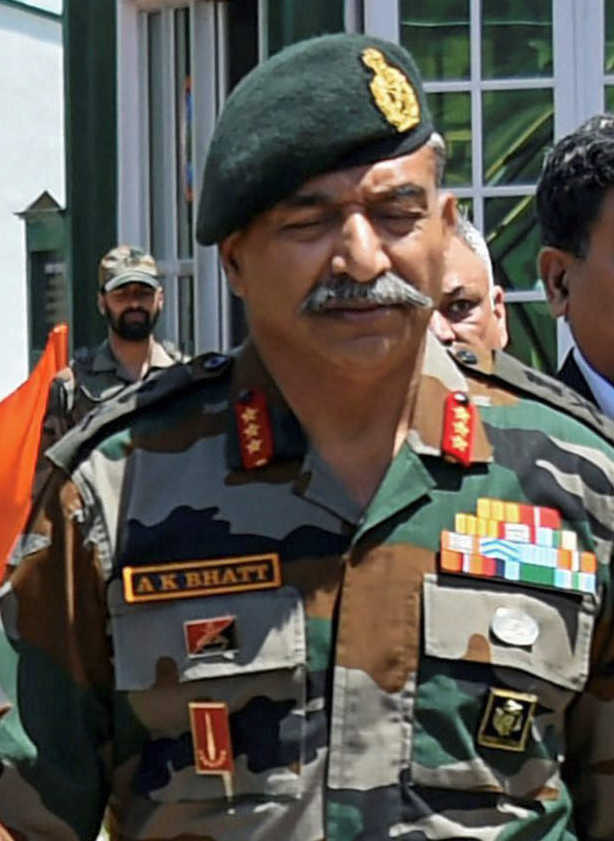
Ultras will be neutralised no matter what: GOC

Ultras will be neutralised no matter what: GOC

Lt Gen AK Bhatt

Tribune News Service

Srinagar, November 23

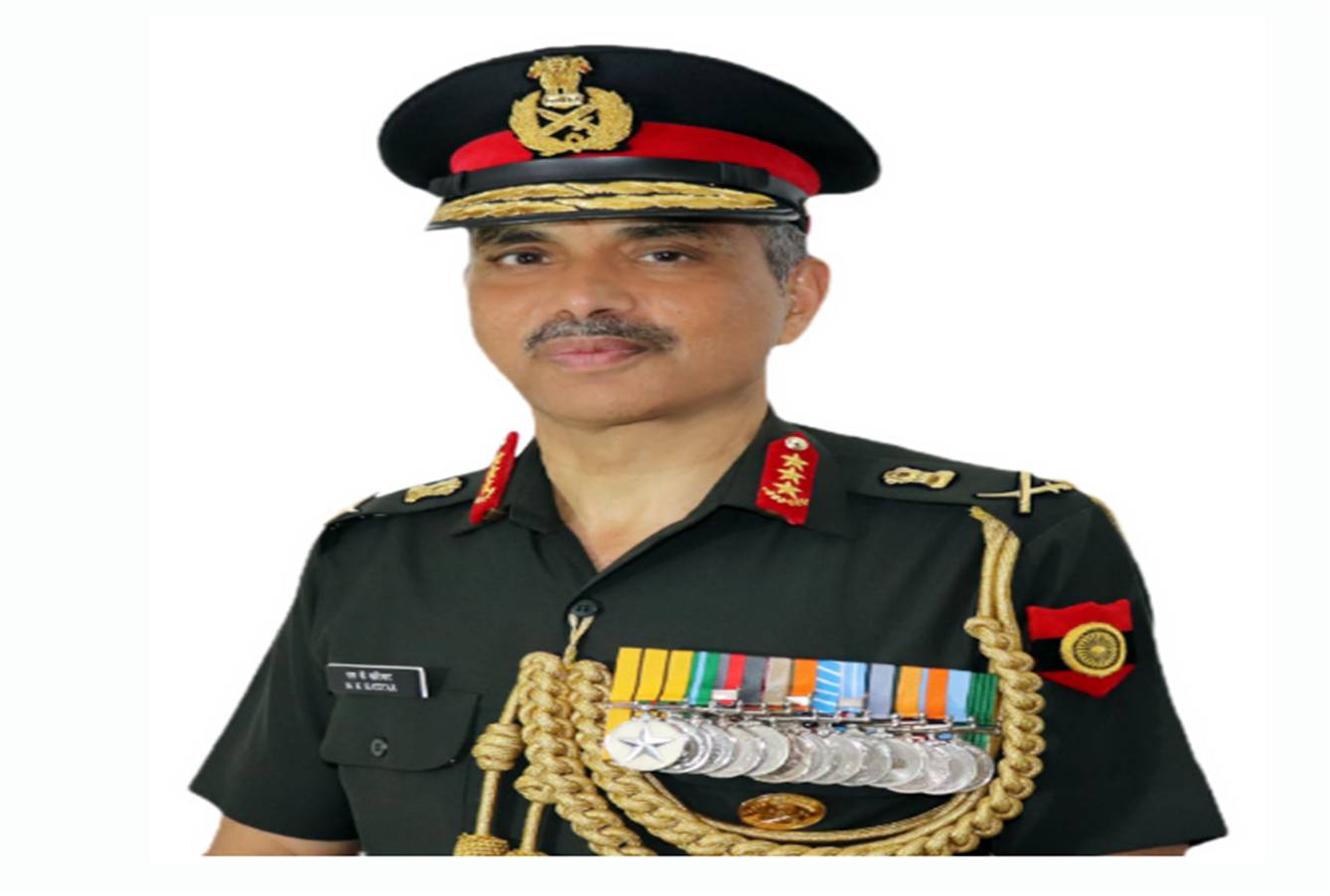
Buoyed by the killing of six militants in Anantnag, Srinagar-based General Officer Commanding (GOC) of 15 Corps Lt Gen AK Bhatt on Friday said militants would be neutralised no matter where they hide.

He termed the anti-militancy operation in Bijbehara a “surgical operation.”

“It was a surgical operation. The Army and police had full cooperation in the operation and it was carried out swiftly and without any collateral damage,” Lt General Bhatt told reporters in Baramulla after paying obeisance at Chhatti Padshahi Gurdwara on Gurpurb.

When asked as to how he saw the killing of over 200 militants this year, he said it was just a figure and more important for them was restoration of peace.

“More important for us is that we want the restoration of peace. And for restoring peace, we have the cooperation of youth and people. Our effort is to ensure peace in Kashmir just like any other part of the country,” he said.

On surfacing of pictures on the soc-ial media showing Hizbul Mujahideen militants at Lal Chowk in Srinagar, Lt General Bhatt said, “The police are checking whether they are genuine or photoshopped pictures. At the same time, we will neutralise the terrorists wherever they hide.”

On the recent arrest of two women overground workers (OGWs), the GOC said, “Women should not get involved in this fight.” “In past, there have been women OGWs. Recently two women OGWs were arrested. We will request that women should not get involved in this fight,” he added.


Resizing the Army: One Size that Doesn’t Fit All by Lt Gen (Dr) JS Bajwa

“It is too true, however disgraceful it may be to human nature, that nations in general will make war whenever they have a prospect of getting anything by it.”

— John Jay, The Federalist Papers September 17, 1787.

“You must first enable the government to control the g ..

Read more at:The paramount measure of national power is military capability. Today, countries endure in an environment where internal and external threats to security are both common and ever-present; the effectiveness of the coercive arm becomes the ultimate criteria of power. Capable military’s enable countries to defend themselves against all adversaries, foreign and domestic, while at the same time enabling the government to pursue and protect whatever interests they value, if necessary, over and against .. National power has many components, some tangible, like economic wealth and technical pre-eminence. Other components are intangible – such as moral force, or strong national will. Military forces, when they are strong and ready and modern, are a credible – and tangible – addition to other elements of a nation’s power. When both the intangible national will and those forces are forged into one instrument, national power becomes effective. 
Of all the many policies the citizens of a country need to understand, is the use of military power. Deterrence will work only if the adversaries’ understand the nation’s firm commitment to keeping the peace and a well-informed public that can be expected to stand solidly behind its government decision. The first American President, George Washington, enunciated a policy of peace through strength in his fifth annual message to Congress, the 1793 State of the Union Address. He said: “There is a rank due to the United States among nations which will be withheld, if not absolutely lost, by the reputation of weakness. If we desire to avoid insult, we must be able to repel it; if we desire to secure peace, one of the most powerful instruments of our rising prosperity; it must be known that we are at all times ready for war.” The old truism holds good – a strong military is the best guarantee for peace. Peace through strength or if that failed, peace through threat. 
Alexander Hamilton, writing in the Federalist Papers (September 1787), said that – “it is impossible to foresee or define the extent and variety of national exigencies, or the correspondent extent and variety of the means which may be necessary to satisfy them”. If it was true then one can fathom the complexity of the geopolitical and strategic environment now. Most leaders today often mention of the complex and dynamic geostrategic environment prevailing. Countries are faced with serious indirect challenges to the peace in a spectrum from border wars to proxy wars onto individual terrorist action. While the use of military force to defend territory has never been questioned when a democracy has been attacked and its very survival threatened, most democracies have rejected the unilateral aggressive use of force to invade, conquer or subjugate other nations. The extent to which the use of force is acceptable remains unresolved for the host of other ..


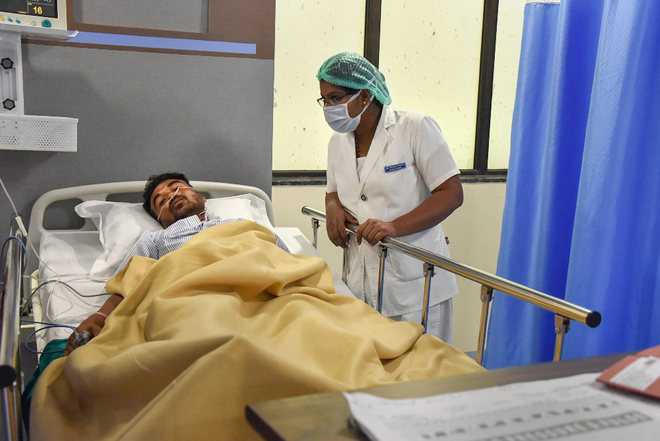
6 die in Wardha ammo depot blast

6 die in Wardha ammo depot blast

An injured being treated at a hospital on Tuesday. PTI

Tribune News Service

Mumbai, November 20

Six persons were killed and 10 injured in a blast at the Central Ammunition Depot (CAD), Pulgaon, in Maharashtra’s Wardha district this morning.

According to the police, the deceased included an Army man, a CAD employee and four labourers.

The incident occurred around 7 am when boxes of ammunition were being shifted to an open field near the ammunition depot where they were to be destroyed.

Initial information indicates that one of the boxes of ammunition caught fire and exploded while being offloaded from a truck.

Those killed were Narayan Shamrao (55), Vilas Lakshman (40), Uday Virasingh (37), Pravin Prakash Munjewar (25), Rajkumar Bhovate (23) and Prabhakar Ramdas Wankhede (40). While four of them died on the spot, two others breathed their last at a hospital. The ammunition comprised of defective shells for Shilka anti-aircraft guns. Contractual labourers were hired by the authorities to dig a pit in the ground where the ammunition was to be packed in sand bags before being exploded.

In a similar incident in 2016, 19 persons, including two Army officers, were killed when a warehouse storing anti-tank mines caught fire following an explosion.


Defence Minister Nirmala Sitharaman reviews operational preparedness of Indian Coastal Guard

The Defence Minister and the delegation were briefed about the coastal security mechanism and preparedness of Coast Guard to tackle maritime emergencies.

Nirmala Sitharaman

Defence Minister Nirmala Sitharaman  |  Photo Credit: PTI

New Delhi: Defence Minister Nirmala Sitharaman on Saturday reviewed the operational preparedness, infrastructure development and coastal security mechanism of the Coast Guard during Consultative Committee Meeting of Ministry of Defence on Indian Coast Guard. Minister of State for Defence Incumbent Subhash Bhamre, MPs from Lok Sabha and Rajya Sabha, Director General Indian Coast Guard Director General Rajendra Singh along with senior officials of Ministry of Defence also attended the meet.

The Defence Minister and the delegation were briefed about the coastal security mechanism and preparedness of Coast Guard to tackle maritime emergencies. Coast Guard’s initiative of making fishermen the eyes and ears of Coast Guard were appreciated in the meeting.

Sitharaman reiterated that the Indian Coast Guard (ICG) discharges a silent but invaluable service to the nation and lauded the efforts of all personnel of Coast Guard for its multiple successful search and rescue missions, humanitarian aid, assistance to fishermen and increased surveillance capability.

The Defence Minister also laid emphasis on modernisation of the ICG with the Definitive Action Program 2017 – 22 which envisages acquisition of 43 ships, 20 aircraft, and other infrastructure. She appreciated the Coast Guard for successfully implementing Minister’s directions on use of local language speaking personnel onboard the ships and aircraft to alert the fishermen during emergencies and rescue operations.

Sitharaman sought the support of all members of the house and their influence in their home states to spread awareness among the sea-faring community regarding the utility of carrying emergency communication equipment which they tend to leave behind and face difficulty in communicating SOS messages in times of emergencies.


160 terrorists waiting to infiltrate: Army

160 terrorists waiting to infiltrate: Army

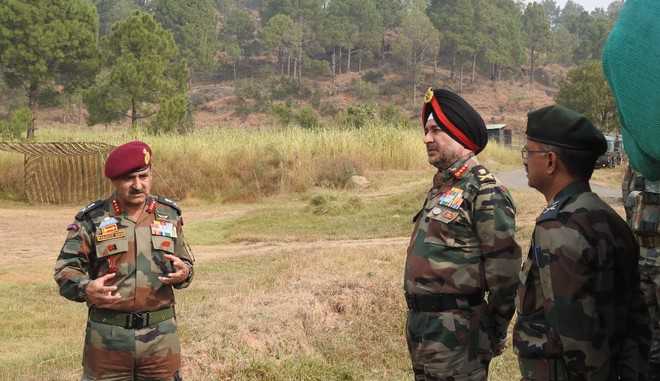
Northern Command chief Lt Gen Ranbir Singh (2nd from right) and 16 Corps commander Lt Gen Paramjit Singh (left) review the prevailing security during a visit to the Poonch sector. Tribune Photo

Jammu, November 11

The terror infrastructure in Pakistan remains intact and around 160 terrorists are waiting across the Line of Control (LoC) to infiltrate into the Indian territory, a senior Army officer said on Sunday.

Lt Gen Paramjit Singh, who took over as General Officer Commanding of the Nagrota-based White Knight Corps, commonly known as 16 Corps, also said that cross-border terrorism would stop only if Pakistan changed its policy and intentions.

The officer, involved in the planning of the 2016 surgical strikes on the terror infrastructure in Pakistan-occupied Kashmir, said the Army was not letting up on “our preparedness and the counter-infiltration grid is strong enough to deal with infiltrators”.

Lt General Singh, who has served in all three regions of J&K, said: “As many as 140 to 160 terrorists at different locations in Pakistan are being pushed into the state.” “The terror infrastructure is intact, and Pakistan’s intentions have not changed. The Pakistan army and the ISI’s complicity in planning infiltration and terror attacks is evident and it continues,” said the GOC, who has a vast experience in high-altitude warfare.

To a question on the situation along the LoC, he said ceasefire violations had abated after the Director General of Military Operations (DGMO)-level talks. “For troops on the LoC, there is no ceasefire… periodic unprovoked firing by the Pakistan army and attempts to cause harm to forward posts continue. We do not initiate fire, but we give it back in adequate measure. There is no let-up on preparedness and our counter-infiltration grid is strong to deal with infiltrators,” he said.

Talking about challenges during winter, the GOC said the Army anticipated that Pakistani troops would make an attempt to push infiltrators through heavy snow-bound areas and non-traditional routes.

“We have all contingency plans ready. We have coordinated with all security agencies, and plans are being implemented smoothly,” said Lt General Singh, who commanded a special forces’ battalion that participated in the surgical strikes after the attack on an Army brigade in Uri in 2016.

Referring to the recent incident of firing of 107-mm rocket on the Poonch brigade, he said: “Despite the DGMO-level talks in May during which the two countries agreed to abide by the 2003 ceasefire agreement, Pakistani troops targeted these locations.” “In response, we conveyed that Pakistan must exercise caution before indulging in any misadventure,” the General said.

Replying to another question about casualties suffered by Pakistani troops in retaliatory fire by the Indian Army, the officer said, “Pakistan has never been open about its casualties unless the soldier is from Pakistan-occupied Kashmir”. — PTI




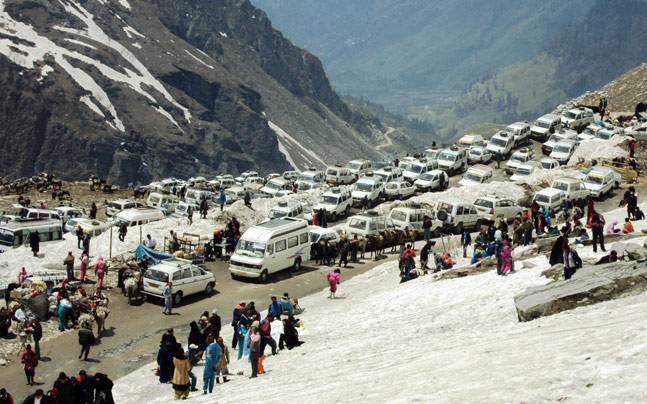
Rohtang Pass opens to traffic Was shut after Nov 3 snow I 150 stranded vehicles moved out

Rohtang Pass opens to traffic

Dipender Manta

Tribune News Service

Mandi, November 8

The Border Roads Organisation (BRO) opened the Rohtang Pass on Wednesday, bringing relief to residents of Lahaul-Spiti.

The pass was closed on November 3 following heavy snowfall in the region, cutting off the tribal district from the rest of the state.

Talking to The Tribune, BRO Commander Col AK Awasthi said: “The pass could only be restored due to tireless efforts of the BRO. We had engaged our workforce and machinery from Lahaul and Manali to restore the road at the earliest.”

“On Diwali too, BRO men were seen clearing snow from the Manali-Leh highway. By afternoon, they had restored the pass. As soon as it opened, around 150 stranded vehicles passed from the Lahaul side towards Kullu. The vehicles had been stuck in the valley since November 3 because of heavy snowfall,” Awasthi said.

On Thursday, the Kullu administration allowed the movement of vehicles from Manali towards Lahaul, which were stranded in Kullu-Manali.

A large number of Lahaul-Spiti residents, living in Kullu-Manali, keep shuttling between Kullu and Lahaul for various works.

However, the district administration has restricted the movement of tourist vehicles towards the Rohtang Pass for security reasons. They have been allowed to go up to Gulaba.

Raman Gharsana, Subdivisional Magistrate, Manali, said: “We are allowing the movement of Lahaul-Spiti residents towards Lahaul from the Manali side. The tourists can go up to Gulaba only for snow-related activities.”

The people have been told not to take the road between Manali and Lahaul because of frost at several places.

Ashok Kumar, Dinesh Kumar, Gyalchhan, Ravinder and a few other residents of Lahaul-Spiti thanked the BRO for opening the road despite several challenges in sub-zero temperature. “It will help us transport potato seed out of the district,” they said.


Time for new chapter with Pak: PM

Tribune News Service
New Delhi, November 23

Paying tribute to Guru Nanak, Prime Minister Narendra Modi said the proposed Kartarpur corridor could serve as a bridge for people-to-people contact. Addressing a function at the residence of Union Minister Harsimrat Kaur here, he said the tragic incidents of 1947 should be left behind and a new chapter of ties opened between the two countries.

He did not elaborate, except for pointing out that the Berlin Wall too had been pulled down, reuniting the people of East and West Germany. “This was unthinkable at one point of time,” he observed.

The PM said India believed in “Vasudhaiva Kutumbakam” and bore ill-will towards none. He offered “ardas” and listened to Gurbani during his visit that lasted 30 minutes. He was felicitated with a siropa and a turban by SAD president Sukhbir Singh Badal and Delhi Sikh Gurdwara Management Committee (DSGMC) president Manjit Singh (GK).

The PM attributed the good works by his government to blessing of the Gurus and saints. “The sacrifices of the Gurus have built and protected the country. Their message encapsulate the culture of India: love for everyone and equality of all without discrimination of caste and class,” he noted.

Sukhbir lauded the government for its decision to build and develop the Kartarpur corridor as well as Sultanpur Lodhi. Manjit Singh said Vice-President of India Venkaiah Naidu would lay the foundation stone of the corridor.

Among others present were Union Finance Minister Arun Jaitley and former PM Manmohan Singh.