Sanjha Morcha

Pakistan violates ceasefire on LoC

Pakistan violates ceasefire on LoC

Jammu, August 17

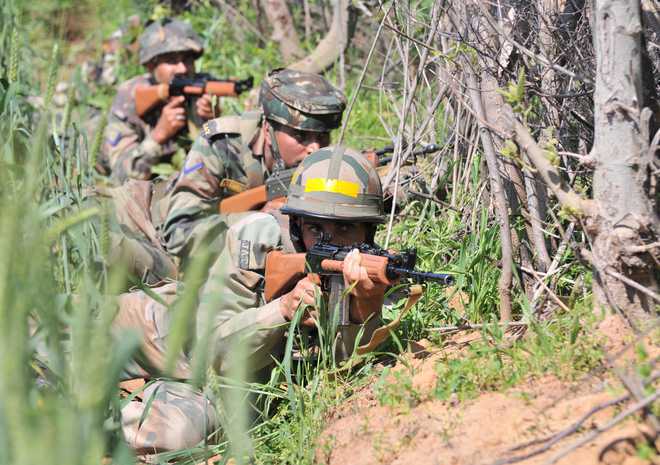
The Pakistan Army on Friday resorted to unprovoked firing on Indian forward posts on the Line of Control (LoC) in Jammu and Kashmir’s Poonch district, defence sources said.
“Adequate retaliatory action was taken by our troops. No casualty has been reported from our side,” the sources said. — IANS  

 Four soldiers hurt in Nowgam sector gunfight

4 soldiers hurt in Nowgam sector gunfight

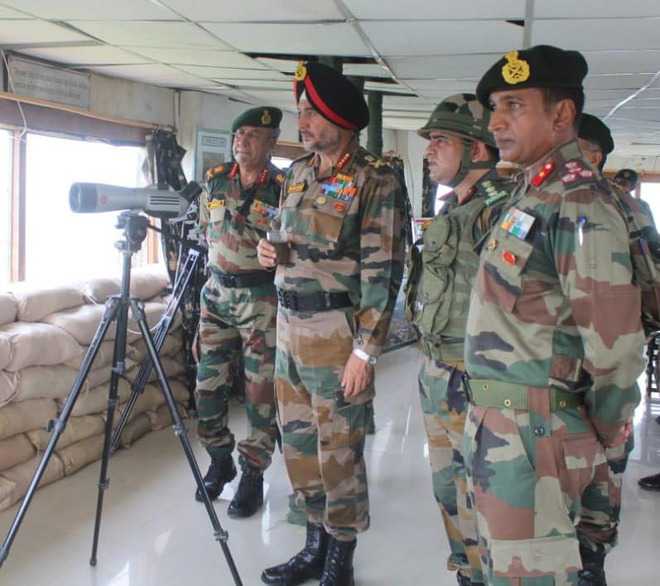
Northern Command chief Lt Gen Ranbir Singh reviews security situation in the Rajouri sector on Thursday. Tribune Photo

Tribune News Service

Srinagar, August 16

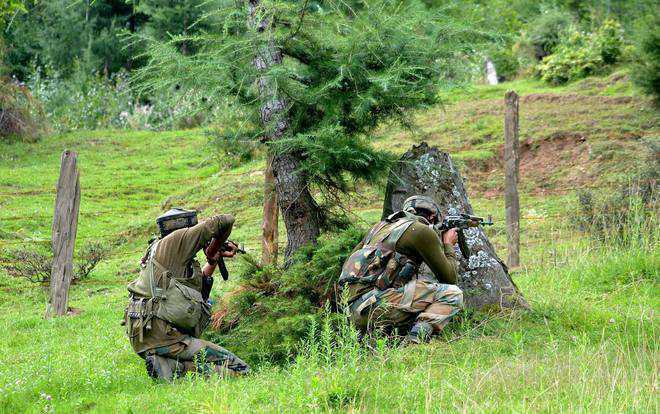
Four Army men were injured in a gunfight close to the Line of Control (LoC) in north Kashmir’s frontier Kupwara district in the wee hours of Thursday, defence sources said.The gunfight erupted in the Nowgam sector, 120 km northwest of Srinagar, when soldiers noticed suspicious movement near a forward post.“As the group was challenged, it opened fire, which was retaliated. In the exchange of fire, four soldiers were injured,” sources said. The injured soldiers were shifted to a hospital.Defence sources said the infiltrators were supported by the Pakistan army which resorted to a ceasefire violation to give a cover to the militants.“It could have been a BAT attempt which was foiled or it could have been an infiltration attempt,” they said.Soon after the firing, the Army launched a massive combing operation in the sector to trace the militants. However, there is a possibility that the militants could have escaped to Pakistan-occupied Kashmir taking the advantage of the ceasefire violation.This is the second time in the past 24 hours that Pakistan has fired on Indian posts in Kupwara district.On Wednesday evening, the Pakistan army fired on Indian posts in the Tangdhar sector. The two sides exchanged fire at forward posts in the Sudhpora and Danni areas of Karnah till Thursday morning. The firing has created panic among locals.Armed men spotted in Jammu, search held  

  • Jammu: A search operation was launched in the Bathindi and Narwal areas of Jammu city on Thursday after the Army received an input of two armed men roaming in the area in a  vehicle.
  • After the intelligence input, the quick response teams were activated in these areas and the search operation was on till the filing of the report.
  • The police also joined the Army in the search operation and a close watch was being kept on the movement of vehicles. TNS

Army foils infiltration bid in Rajouri district

  • Rajouri: Troops of the Gorkha Regiment have foiled a major infiltration attempt by terrorists in the Jhangar sector of Rajouri district.
  • Defence sources said around 5.15 am on Wednesday, alert troops noticed some movement along the Line of Control in the Jhangar sector and challenged the intruders.
  • “On being challenged, the intruders opened fire on the troops which was retaliated effectively. Pakistani soldiers also provided cover fire to the intruders. An Indian soldier, Krishan Bahadur Acharya, received injuries during the firing and was evacuated to a hospital,” the sources said. TNS


Indian Army chief wants to revolutionise the military — by cutting manpower SUJAN DUTTA 14 August, 2018

General Bipin Rawat bats for creation of integrated brigades, wants a leaner headquarter, considers calling up reservists.

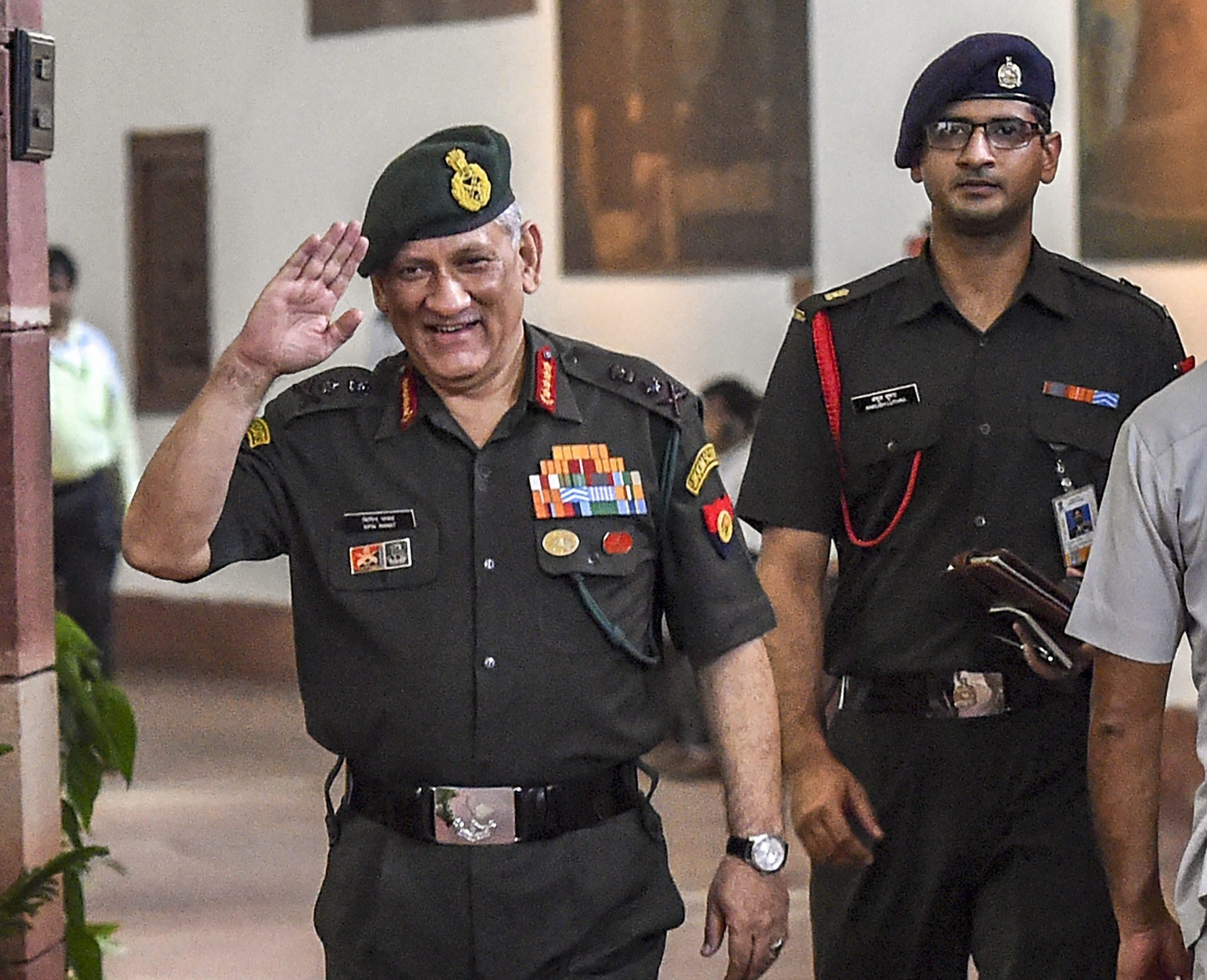
New Delhi: Army chief General Bipin Rawat is set to issue orders for the slashing of manpower at the Army Headquarters (AHQ) in New Delhi, the creation of integrated brigades and the calling up of reservists for frontline duties.

An Army document, seen by ThePrint, says these measures will usher in a “revolution in Indian Military Affairs (RIIMA)”.

As per the document, there are way too many personnel at the Army headquarters who are redundant; those not required will now be sent to operational areas.

This is being viewed as a not-so-direct attack on efforts by soldiers and officers within the army to lobby for postings to New Delhi. Civilians will be asked to fill in for staff duties that do not require combatants.

The two other major elements of RIIMA are the formation of “integrated brigades” with an enhanced number of battalions and the calling up of “reservists” — soldiers are in the reserves for two years after retirement — for frontline duties to fill in gaps.

‘A revolution in the Army’

The document says these measures will usher in a “revolution in Indian military affairs” and will make the army more agile.

The measures will also mean a downsizing of the army to increase its “teeth-to-tail ratio”.

“Teeth-to-tail ratio” is the number of support personnel required to sustain the number of combat soldiers. The lesser the number of support personnel — the “tail” — the more the resources will be available to make the combat soldiers – the “teeth” – more efficient.

The order to usher in RIIMA will override a discussion that was initiated last month.

Reforms are being carried out by militaries across the world. In Asia, China, with the largest army in the world (the PLA), ushered in drastic reforms in 2007 and over the last two years has restructured its commands. The most radical of this was to bring its entire frontier with India under a single “Western Theatre Command” (WTC).


Also read: Indian Army officer fights a lonely battle with his comrades over ‘fake encounters’


Army set for ‘Integrated Brigades’

The Army chief’s proposed orders come in the wake of a note that the Army circulated on 12 July.

The note said the Army was considering measures to reorganise its cadre for the first time in 35 years. One of the proposals being considered was to eliminate the rank of brigadier. It had asked for suggestions in a churning of ideas.

The “integrated brigades” that are envisaged under RIIMA, in the latest document prepared this week, will be of enhanced strength with four to five battalions each.

A normal brigade in the current structure has three battalions, each of between 900-1,100 troops.

These “integrated brigades” will report directly to the corps headquarters. This, as the army is contemplating eliminating the formation of a division altogether, across the board.

Currently, there will be about three brigades to a division and about three divisions to a corps. (Some of the divisions and corps are reinforced in operational areas with more troops).

A normal infantry division will have between 9,000-12,000 troops. A normal corps will have about 30-36,000 troops. (Mountain divisions and those tasked as ‘pivots’ — with both operational and defensive tasks — have more troops).

One takeaway of creating integrated brigades, headed by a major general, the document notes, will be the opening up of opportunities for promotion to the rank of major general (or two-star general) to more officers than ever.

This, in turn, will enable the army to ensure equivalence comparable to civilian officers of the All India Services (civil services).

Reservists to fill the shortage

The RIIMA document foresees a possible shortage of officers on the frontlines once the reforms are implemented. To offset this, it said it will call up reservists.

All soldiers and officers are considered in the reserves for up to two years after retirement.

The RIIMA document said that a task force headed by a lieutenant general (a three-star officer) has been authorised to conduct discussions, and take feedback from officers, even as the reforms were being carried out.

The document did not specify the numbers that would be the objective of the reforms. The army is currently 1.3 million strong. About a third of its numbers retire every year.

There is little doubt that there will be a domino effect of the RIIMA reforms in the Army on the other services – the Air Force and the Navy.


Also read: Indian Army puts Mountain Strike Corps aimed at China in cold storage


They are much smaller – the Air Force has about one lakh and the Navy about 50,000 personnel. But the impact would be felt more on the comparable ranks.

For instance, it is not clear what will happen to the ranks of the air commodore and the commodore, equivalent to the army brigadier currently (one-star officers).

But there is a belief in army headquarters under General Rawat that the reforms have to be pushed through without getting bogged down in complexities.


Soon, ‘Made in India’ clothing for troops in Siachen

New Delhi, August 12

Almost eight months after the Army asked private Indian firms to make specialised clothing, boots, sleeping bags etc for soldiers posted in Siachen and other extreme cold conditions, the project is on the verge of fructifying. Some of the equipment will now be made in India. This includes thermal insoles, snow goggles, ice axe, boots, avalanche victim detector, rock pitons, karabiner-related mountaineering equipment and sleeping bags. The Army has identified that all these can be produced by Indian firms, some of which are already supplying raw material to manufacturers in the US, Australia, Canada and Switzerland. A number of foreign companies have also shown interest in co-production of such clothing with Indian firms. The move could save India some Rs 300 crore — Rs 800 crore spent annually on the import of these items. — TNS


Opposition dubs Rafale deal a scam, Cong demands setting up of JPC

Opposition dubs Rafale deal a scam, Cong demands setting up of JPC

New Delhi, August 7

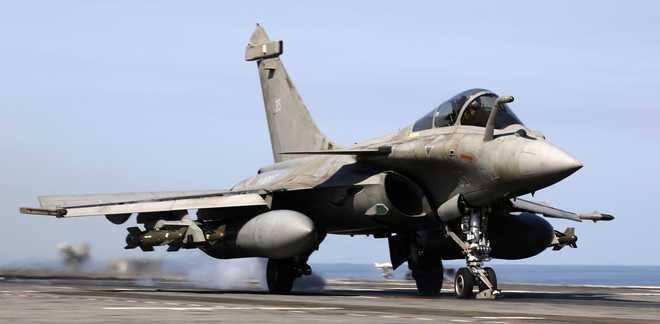
Dubbing the Rafale fighter jet deal as a “scam”, opposition parties in the Lok Sabha on Tuesday demanded a probe into it, with the Congress demanding the setting up of a Joint Parliamentary Committee (JPC) to investigate it.The demand for a JPC was raised in the Lok Sabha by Congress MP KC Venugopal when he initiated the debate on the Supplementary Demand for Grants for 2018-19 and the demand for excess grants for 2015-16.He said the House should know about the cost of the Rafale deal and alleged that there was “a major scam”.“We demand a JPC inquiry into this deal,” he said.Objecting to his demand, BJP MP Nishikant Dubey urged Deputy Speaker M Thambi Durai that Venugopal should place the evidence before the House before making any “wild allegation”.Later, Trinamool Congress leader Saugata Roy also said that the Rafale deal was “one of the biggest scandals of independent India”.“The country is going to lose Rs 2,500 crore due to Rafale deal,” Roy said, while demanding a “full-fledged enquiry” into the fighter jet deal. — PTI


The unsung war heroines

Noor Inayat Khan, Abbakka Devi and Velu Nachiyar gave up their royalty for valour. Their courage deserves a place in the Indian history

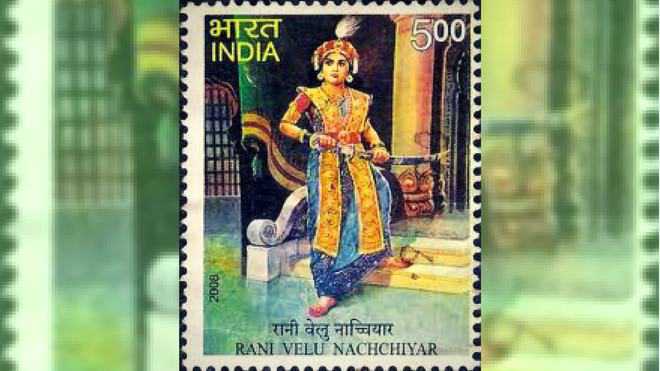
Fought by choice: A postage stamp of Rani Velu Nachiyar

Banisha Kundu

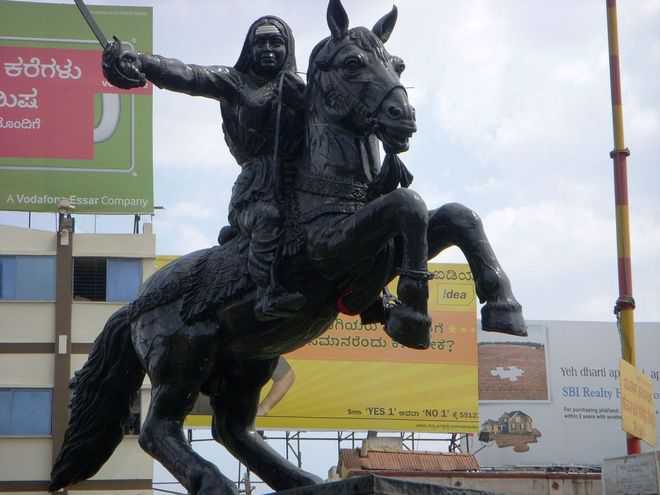
History remembers brave men. There are paeans sung in honour of their valour, texts written eulogising their courage and memorials built to commorate their sacrifices. History really remembers and celebrates its brave men well! But how does it treat its brave women? They too played a part in several wars against the British and the French and the Portuguese. The past hasn’t been as considerate. Even the descendant of Tipu Sultan, who fought as valiantly as the men in the army, slipped through the cracks of history for lack of recognition.Patriarchal society drew borders to make women away from administrative roles and ranks. The royalties adhered to the same protocols as well.  Sons succeeded their fathers, as daughters were mere tools to establish political alliances between kingdoms. A woman would occupy the throne only if her husband died young and the son wasn’t old enough to rule the kingdom.Expect for Rani Laxmi Bai of Jhansi, Raziya Sultana and Maharani Gayatri Devi, women rulers weren’t given their due.  Here is remembering some unsung women warriors and their featsNoor Inayat Khan, who worked as a British spy during World War II, was a descendant of Tipu Sultan. Born on January 1, 1914, she opposed her father’s diktat of following Mahatma Gandhi and got herself enrolled in the British army. She infiltrated inside the enemy’s borders and channeled the secrets to London before getting caught. She was classified as extremely dangerous, shackled in chains, and was kept in solitary confinement. Noor and three other female special operations’ agents were transferred to Dachau concentration camp in September, 1944. According to other prisoners, right before the Nazis shot her; she screamed her last word, “Liberté.” She was only 30 year old then. Even though she was from a royal lineage, she chose a life replete with challenges and wished to help India gain India independence. However, she wasn’t appreciated for her achievements by the Indians. Even her existence was forgotten, unlike the English, who unveiled her statue in 2012 at Gordon Square, London.Rani Abbakka Devi was another warrior queen, who embarked on a journey never to return from. Born in the Chowta Dynasty that ruled over parts of coastal Karnataka; she was one of the first freedom fighters of India who ruined the plans of the Portuguese to reign over the country. As the rightful queen to the Ullal Empire, which followed the matrilineal tradition of female accessing the throne, she kept the Portuguese, the Dutch and the English at bay for four long decades. She was defeated ultimately by the Portuguese, but not before etching her name as the brave Indian warrior on the pages of history. It’s said that she died in the cell. While some believe that she was wounded during the battle and was hidden at an isolated place by her loyal soldiers.  Similar to the mystery of her death, Rani Abbakka Devi’s life and achievements continue remain a secret. Rani Velu Nachiyar challenged the mighty British Empire and is popular as ‘India’s Joan of Arc’. She trained an army of women, who led her to victory during her hiatus. Born in 1730 to King Chellamuthu Sethupathy and Rani Sakandhimuthal of Ramanathapuram; her husband, Muthu Vaduganathan Periya Udaya Thevar of Sivagangai Royal family, was killed by British. She escaped with her daughter and sought refuge from Hyder Ali at Virupachi, a sworn enemy of the British. Eight years later, after defeating the British, she regained her empire in 1780. On December 31, 2008, a commemorative postage stamp of her was released, paying tribute to this unsung warrior. 


4 militants killed in fresh exchange of fire with forces in Shopian

4 militants killed in fresh exchange of fire with forces in Shopian

With these deaths, the number of militants killed in the overnight operation reached five. File photo

Majid Jahangir

Tribune News Service
Srinagar, August 4
Four more suspected militants were killed in a fresh gunfight at Kilora in Shopian district in south Kashmir on Saturday morning taking the militant toll in the operation to five.On Friday evening, one top local Lashkar-e-Toiba militant was killed in the initial encounter between militants and security forces in the area.The anti-militancy operation was launched on Friday evening on the basis of information about the presence of militants in the area.“Four more militants have been killed at Shopian. A total of five militants have been killed so far,” Srinagar-based defence spokesman Col Rajesh Kalia said.He said weapons had also recovered.“The operation is continuing,” he added.The identity of the four militants is being established.On Friday evening, a top Lashkar militant, Umer Malik of Malikgund Shopian, who was active since August 2017 was killed.Meanwhile, two suspects were detained by security forces at Panthachowk on the outskirts of Srinagar on Saturday morning and two hand grenades were recovered.The two were being questioned, a security officer said.


Army takes on Ministry of Defence, refuses to open cantonment roads

Cantonments are distinct from military stations and have civilian and military population. Photo: Instagram/singh_pawanjot

As many as 17 cantonment roads still remain closed despite instructions to the Army from the Centre in what appears to be a move to poke the Ministry of Defence (MoD) in the eye. Of the 17 roads majority are in the Western Command, five are in the Southern Command, top government sources told India Today.

Cantonments are distinct from military stations and have civilian and military population. In addition, it is understood the Army has moved the MoD to close down another 70 cantonment roads.

 Opening cantonment roads have turned out to be an emotive issue. Veterans and families of servicing officers have joined the issue against opening-up of roads. They have highlighted security concerns and threats to families.
 On the other hand, members of Parliament across party lines have written to Defence Minister Nirmala Sitharaman citing difficulties and harassment to the public-at-large because of closed cantonment roads.

Issuing directions to open the roads, the MoD on 20 May 2018, had said the decision to ask the army to open the roads was taken after a detailed review of the cantonments with the elected representatives of cantonment boards, Chief of Army Staff and officials of the Ministry of Defence. Echoing the MoD, the Army then had said opening the cantonment roads was deliberate, calibrated and monitored exercise.

A thorough examination revealed that as many as 130 roads had been closed. The review showed that roads had been closed without following due procedure. The Cantonment Act of 2006 details procedure that needs to be followed before closing down a cantonment road.

Queries about why the 17 roads remain closed has gone unanswered from local commanders, sources said and added the fact that queries from the government has gone unanswered has raised eyebrows.

India Today wrote to both the Indian Army and Ministry of Defence last week seeking a clarification on the issue. Neither chose to respond.

ALSO WATCH | Row over move to open cantonment roads for civilians: Ending colonial legacy or security risk?


India, Pak troops let their hair down at Russia gala

India, Pak troops let their hair down at Russia gala

Ajay Banerjee

Tribune News Service

New Delhi, August 29

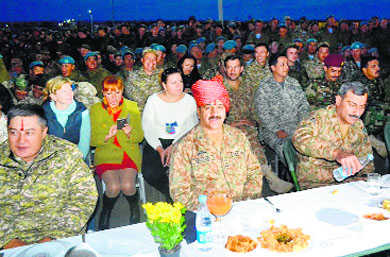
Unusual scenes were witnessed in Russia last night —Indian and Pakistani soldiers dancing together on popular Punjabi music.

The event was a cultural evening hosted by the Indian Army to mark the end of the eight-nation joint military exercise at Chebarkul, Russia. Pakistan and China were among other participants.

However, it does not mean the two nuclear-armed countries, which have fought four wars against each other and have a running dispute in Jammu and Kashmir, have turned “friends”.

Yesterday was India’s turn of hosting the other nations over an evening to showcase its culture. Military commanders leading each of the countries, including those of Pakistan, China and host Russia, were welcomed with a traditional red ‘tilak’ on their forehead and traditional red-coloured Rajasthani ‘pagris’. The Indian Army’s Rajput regiment is the lead contingent, hence the Rajasthani gear. A well-laid-out meal and some music followed, which led to impromptu dancing by the troops of all countries and some unusual images have emerged of the armies of India and Pakistan for whom this was the first-ever joint military exercise.

Indian and Pakistan soldiers have operated together in the past on UN missions.

The exercise, ‘Peace Mission 2018’, was under the Shanghai Cooperation Organisation and it culminated last night.


Petition in SC protesting non-adherence to AFSPA, investigation by CBI requires understanding of conditions army operates in by Lt Gen Syed Ata Hasnain

Three articles from my keyboard and one from Admiral Arun Prakash. His and my articles are the first two, on the 356 strong Writ Petition in the Supreme Court. Please read these in succession to get a full idea of what this issue is all about. It comes up for hearing on 04 Sep 2018.

A few years ago, at a British institution in London, after listening to a talk on India, I complimented the speaker for mentioning that the two most respected institutions of India, credited with upholding the dignity of the nation, were the Supreme Court and the armed forces. The credentials of the two institutions are certified by almost every Indian. It is therefore quite ironic that this essay is about the very same institutions.

On 14 August, 356 officers and army personnel of other ranks — spread from military stations across the country — petitioned the Supreme Court to alert it about the increasing difficulty faced by soldiers while fighting for the nation in sub-conventional conflict situations. The writ petition on behalf of at least one brigadier, a couple of colonels and representatives of other miscellaneous ranks has been accepted and scheduled for hearing on Monday, 20 August.

Their perception is that while human rights of the public at large and even anti-national elements is a subject of intense scrutiny, soldiers’ own human rights are being progressively denied due to a lack of understanding of the conditions in which they operate against terrorists and militants.

The reference here is essentially to the alleged non-adherence to the provisions of the Armed Forces Special Powers Act (AFSPA), which is applicable all over Jammu and Kashmir (less Ladakh) and portions of the northeastern states. Under the AFSPA, protection is to be given to soldiers if inadvertent mistakes are made while operating in the line of duty and acting in good faith.

The petition is in reference to the recent direction of the Supreme Court to the Central Bureau of Investigation (CBI) to expedite the investigation of 1,500 cases of alleged extra-judicial killings by the security forces in Manipur. This includes the army, Assam Rifles (officered by the army) and the Manipur Police. A charge against a colonel has already been framed and a case regarding filing of FIR against Major Aditya of 10 Garhwal Rifles, whose column allegedly killed three stone throwers/attempted lynchers in self-defence in Kashmir’s Shopian district, is under hearing.
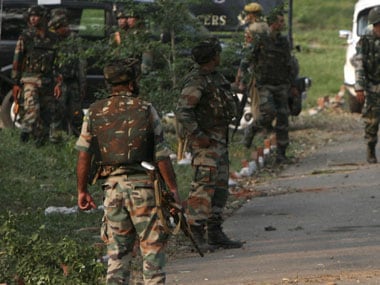
Representational image. Reuters


To the general public, most of this makes little sense without a simpler understanding of legal rights and powers in an internal proxy conflict.

Law and order situations, such as various caste-based agitations, are handled by the state police and central police organisations; the army often comes to their aid under the ‘aid to civil authority’ clause. This is for short durations and for functional requirement, but the army does not operate independently and has a magistrate whose presence is mandatory at all times and a magisterial endorsement needs to be signed to allow the army to use a firearm.

But such a system cannot work in areas where the threat is much larger and affects the integrity of the nation. While battling terror groups or militants, the army cannot await magisterial sanction before it gets into the act, which is often a rapid response to actionable intelligence. Thus, in conduct of such operations, the army functions independently under empowerment of a legislation, which in the case of both Jammu and Kashmir and the North East, is provided by AFSPA (1990) and AFSPA (1958) respectively.

In this, there is one relevant provision of the AFSPA. This is the protection — or part immunity from prosecution — for soldiers who in the line of duty make inadvertent mistakes or are simply forced by circumstances to cause injuries or death to civilians, the stone-pelting mobs in Jammu and Kashmir attempting to hinder operations against terrorists being a case in point. In such cases, prosecution of a soldier can only be done under sanction of the Central Government, although law and order is a state subject. This is to protect soldiers from local bias or pressure.

It needs to be understood that such irregular or sub-conventional operations as they are called are complex procedures involving intelligence gathering and discernment of targets. They are not conducted under simple binary conditions that are involved in conventional operations against an established adversary with clear battle lines. The complexity is further enhanced by the ever-present feasibility of manipulation of situations by terrorists or their supporters, normally referred to as over-ground workers (OGWs), to place the army under legal pressure and impede its operations. Allegations of rape or gender insensitivity are not uncommon.

There is considerable consternation among both serving personnel and veterans on a couple of issues. Firstly, army personnel are involved in these operations at the behest of the State, and that too as the last resort, after the failure of the other organs and agencies. And second, circumstances and complexities of such operations are seldom understood outside the Services community, and therefore prosecution of individuals is unfair.

There are also other aspects involved here, but what is seldom appreciated is the relative infirmities in the law which provides protection to soldiers. For example, AFSPA provides partial protection from prosecution due to the provision of prior approval by the Central Government.

However, it gives no protection from investigation, and that gives scope for much harassment of soldiers against whom first information reports (FIRs) can be registered and the investigation be carried out under arrest for undetermined period. In addition, local police authorities under directions from lower judiciary may also reopen a case or commence investigation of an action by army personnel long after the conduct in which some local civilians may have allegedly disappeared or been killed.

Such personnel may have retired from the army; the interpretation of AFSPA in some instances has gone to the extent to assume that the law does not protect soldiers who may have retired but were serving at the time the operation was conducted. One such case was handled by me when the local police arrested a retired Havaldar from his village in Orissa for an act in which he was allegedly involved while in service.

There are many other issues involved which cause concern to those responsible for executing sub-conventional operations. They perceive severe vulnerability in the absence of what they perceive as insufficient sensitivity about the manner in which such operations are conducted. However, it is also important to flag the division of opinion within the veteran ranks and perhaps within those of the serving personnel on the method of petitioning the Supreme Court.

Some perceive it as bordering on collective insubordination, although legally this step has the scrutiny and presence of a uniformed legal officer. There are others who feel that the situation is exasperating and that instead of receiving support, the army is being obstructed at every step. There is also a prevailing perception that the army’s higher leadership may have compromised its credibility by not sufficiently thumping the table on this issue which apparently was sensitive enough to affect the quality of its sub-conventional operations.

Media commentaries have not been entirely sensitive to the issues highlighted leaving the entire case open to perception. The one thing on which any experienced soldier will always agree is that long drawn deployment of the army in such operations is never good.

Also, that the truth in most such cases is almost impossible to determine. It is going to take much understanding and maturity to determine how this thorny issue is going to be resolved such that rights of everybody are respected and yet the protectors of the law are themselves not made the victims of it.


Case filed against Sidhu for hugging Pakistan Army chief

Case filed against Sidhu for hugging Pakistan Army chief

August 20

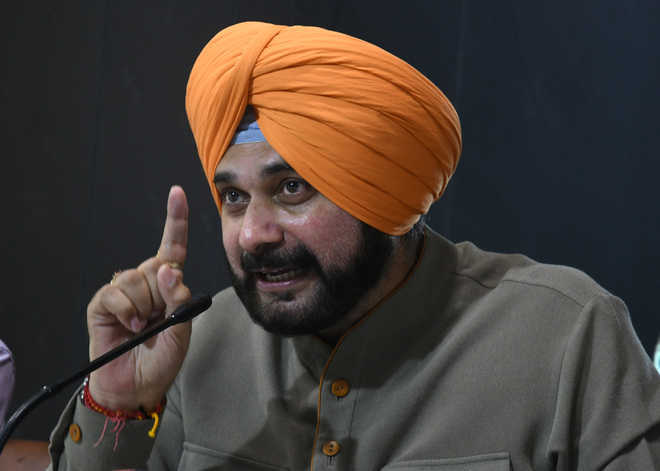
A case was filed against cricketer-turned-politician Navjot Singh Sidhu in a Bihar court on Monday for insulting the Indian Army by hugging Pakistan Army chief at the swearing-in of Imran Khan.Lawyer Sudhir Ojha filed the case in Muzaffarpur’s Chief Judicial Magistrate (CJM) court.Ojha said he had filed the case under the Indian Penal Code sections involving sedition. In his complaint, he said Sidhu’s gesture hurt the people of the country.“The court has admitted the case and will hear it next week,” he said.Sidhu, a minister in the Congress-led government in Punjab, is under attack for hugging the Pakistan Army chief, by the BJP and Akali Dal leaders. IANS

COMMENTS

All readers are invited to post comments responsibly. Any messages with foul language or inciting hatred will be deleted. Comments with all capital letters will also be deleted. Readers are encouraged to flag the comments they feel are inappropriate.
The views expressed in the Comments section are of the individuals writing the post. The Tribune does not endorse or support the views in these posts in any manner.


Share On