



Sanjha Morcha

UN report right off the mark by Lt Gen D S Hooda (retd)

Grilling India on violations in J&K, but ignoring Pakistan’s role smacks of ‘propaganda’
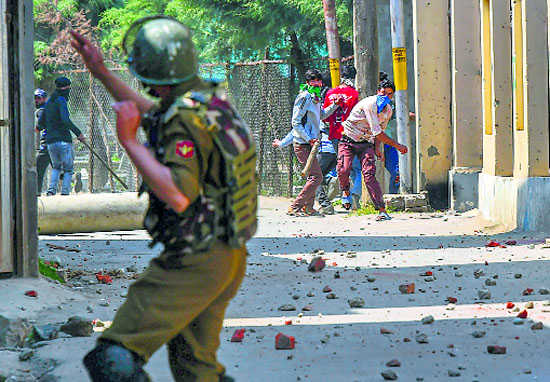
UN report right off the mark

One-sided: The report also gives the dos and don’ts, integral to AFSPA, a miss.

Lt Gen D S Hooda (retd)THE Office of the UN High Commissioner for Human Rights, on June 14, published the Report on the Situation of Human Rights in Kashmir for the period of June 2016 to April 2018. While the report covers both sides of the Line of Control, its main focus is on the incidents of alleged excesses committed by the Indian security forces following the killing of Burhan Wani in July 2016. The report was swiftly and categorically rejected by India. The Ministry of External Affairs (MEA) called it “fallacious, tendentious and motivated” and “a selective compilation of largely unverified information. It is overtly prejudiced and seeks to build a false narrative”. The MEA also said the “report violates India’s sovereignty and territorial integrity. The entire state of Jammu and Kashmir is an integral part of India…The incorrect description of Indian territory in the report is mischievous, misleading and unacceptable. There are no entities such as ‘Azad Jammu and Kashmir’ and ‘Gilgit-Baltistan’”. There have been a number of accounts dealing with human rights in Jammu and Kashmir, but the first reaction on reading the report is a sense of disbelief that a respected international organisation like the United Nations would bring out what could more accurately be described as a “propaganda manual”. Perhaps after being denied “unconditional access to Kashmir”, the UN High Commissioner for Human Rights is showing his ire by a compilation that is completely prejudiced, and, in many ways, impinges on the sovereignty of the Indian state. The report claims to base its methodology using the “reasonable grounds” standard of proof based on a “reliable body of information”, but it selectively uses data to build a completely biased picture, questioning Indian lawmakers, judiciary and security forces. Its main source of information is the Jammu Kashmir Coalition of Civil Society, whose data of persons killed in the 2016 protests appears to take precedence over the figures announced by the Chief Minister in the Legislative Assembly.In completely ignoring the role of Pakistan in exporting terror into Kashmir, and describing the Hizbul Mujahideen (which has been designated as a terrorist group by India, the European Union and the United States) as an armed group, the bias and motivations are clearly visible. There is a lengthy section on the Armed Forces Special Powers Act (AFSPA), 1990, which has given the “security forces virtual immunity against prosecution for any human rights violation”. The report also claims that Section 4 of AFSPA that allows any person operating under the law to use lethal force “contravenes several international standards on the use of force and related principles of proportionality and necessity”. It completely ignores the dos and don’ts which form an integral part of AFSPA and which state that minimum force will be used, and that a clear need will be established for opening fire. This is just one example of how the report has used facts selectively.The report also comes down heavily on the military courts and the Armed Forces Tribunal, accusing them of “impeding access to justice”. While there is a lively debate in India on AFSPA and military courts, these are sovereign functions of Indian lawmakers. By questioning these functions, the UN High Commissioner is clearly overstepping his authority.When the report commences the discussion on the events from 2016 to 2018, it clearly demonstrates a complete lack of understanding of the situation that existed, particularly following the killing of Burhan Wani. The security forces are accused of using excessive force while no mention is made of the violent mobs that attacked police stations, army convoys and patrols. Figures are extensively quoted for civilian casualties, but there is no mention of the more than 3,300 security personnel who were injured in the very first month of the protests. The report has bold headings on “Torture”, “Enforced disappearances” and “Sexual violence”. While stating that there have “long been persistent claims of torture by security forces in Kashmir”, the report has listed three cases of “torture” in the 2016-18 period — one of whom is Farooq Ahmad Dar, who was tied to a jeep. There is one incident of “enforced disappearance” and no reported case of sexual violence. These are again examples of an attempt to embellish and sensationalise the report.It is illuminating to compare the tone and tenor of this report with the Afghanistan Annual Report on Protection of Civilians in Armed Conflict: 2017, published in February 2018 by the same Office of the UN High Commissioner for Human Rights and the United Nation Assistance in Afghanistan (UNAMA). Between January 1 and December 31, UNAMA documented 10,453 civilian casualties in which there were 3,438 deaths. Of these deaths, 745 were attributed to pro-government forces, with aerial operations alone causing 295 deaths. Despite these casualty figures, the report says, “UNAMA observed that the number of airstrikes conducted by international military forces and Afghan air forces has increased significantly compared to 2016, while the number of civilian casualties has increased by 7 per cent. While emphasizing that no civilian casualties are acceptable, the reduced harm ratio suggests improvements in targeting and civilian protection procedures.” There is no strident criticism.The timing of the release of the report is also intriguing. It was released during the period of the Ramzan ceasefire, at a time when the government was making its most sincere effort to create a period of calm in Kashmir. Such a malicious piece of work can only serve to vitiate the environment in Jammu and Kashmir, and the Office of the UN High Commissioner for Human Rights could not have been unaware of this. If this was done with a deliberate intent, the matter is extremely serious.Today, Kashmir is mourning the killing of Shujaat Bukhari, one of its most respected journalists. Terror attacks have intensified and the ceasefire is unlikely to be extended. In this highly volatile environment, this clearly motivated and prejudiced piece of work deserves to be thoroughly condemned. The writer is a former GOC, Northern Command

India to get six Apache US copters for $930 m

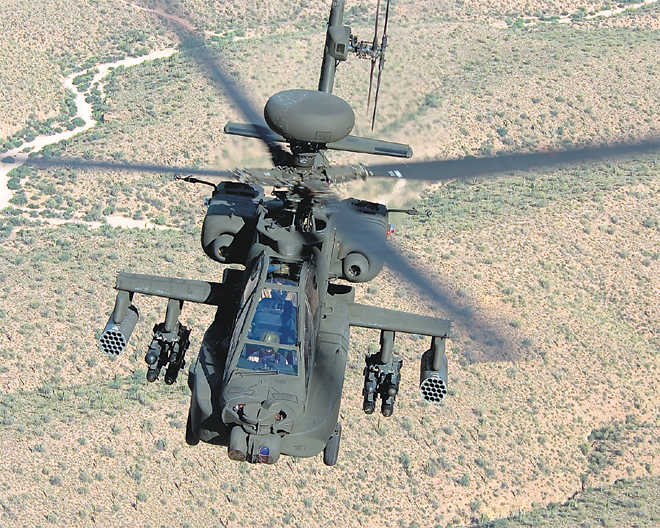
AH-64E Apache is a multi-role combat helicopter and is used by the US army and a number of international defence forces

India to get six Apache US copters for $930 m

Washington, June 13

The Trump administration has approved a deal to sell six AH-64E Apache attack helicopters to India for $930 million as well as Hellfire and Stinger missiles to bolster the country’s ability to defend its homeland and deter “regional threats”, the Pentagon said on Wednesday.The Pentagon’s notification to the Congress comes ahead of the first 2+2 dialogue between India and the US next month in Washington DC involving External Affairs Minister Sushma Swaraj and Defence Minister Nirmala Sitharaman and their American counterparts Mike Pompeo and James Mattis.Pentagon’s Defence Security Cooperation Agency notified the Congress about the State Department’s decision. The sale is expected to pass through if no lawmaker opposes the notification.The contract also includes fire control radars, Hellfire Longbow missiles, Stinger Block I-92H missiles, night vision sensors and inertial navigation systems.In 2016, India was awarded the status of a US major defence partner. — PTI


Adopt These Lifestyle And Diet Changes To Regulate Blood Pressure Effectively

A new study by the Andrews University has demonstrated that a programme aimed at helping people modify their lifestyle and diets, can be as effective against high blood pressure, as medication.

Adopt These Lifestyle And Diet Changes To Regulate Blood Pressure Effectively

High blood pressure and hypertension are serious ailments affecting large swathes of the urban population nowadays, thanks to the increasingly sedentary lifestyles and unhealthy diets. Repeated studies have demonstrated how exercise and other lifestyle changes can help mitigate the disease. Now, another study by the Andrews University has demonstrated that a programme aimed at helping people modify their lifestyle and diets, can be as effective against high blood pressure, as medication. The study, that was presented at the American Society for Nutrition annual meeting, Nutrition 2018 in Boston, showed that some 117 participants saw a drop in their blood pressure by 19 points, after they adopted a new lifestyle for just 14 days.

The programme was designed by Weimer Institute Newstart Lifestyle, and the study result showed that the programme achieved for the participants, what using three half-dose standard medications for blood pressure could do for them. The results also showed that a majority of the participants either able to reduce their dosage of blood pressure medicines or eliminate it completely. Research team leader M. Alfredo Mejia, associate professor at Andrews University was quoted as saying, in a press release, “By adapting selected lifestyle health principles, half of the people in our study achieved normal blood pressure within two weeks while avoiding the side effects and costs associated with blood pressure medications.”

He added by saying,”The Newstart Lifestyle program works quickly, is inexpensive and uses a palatable diet that allows for moderate amounts of salt and healthy fats from nuts, olives, avocado and certain vegetable oils.” The programme that the participants were asked to follow included following a vegan diet, taking daily walks, drinking adequate water and getting enough sleep, as well as participating in spiritual activities. The diet especially included fresh produce like fruits and vegetables, as well as nuts and seeds, non-dairy milks like almond and soy milk, as well as avocados. The participants were only given whole-grain breads. At the end of the programme, half the participants showed systolic blood pressure below the recommended 120 mmHg.

Here are some more diet tips that may help you regulate high blood pressure:

1. Cut back on caffeine: Consuming too much caffeine may lead to a sudden rise in blood pressure. Therefore, for blood pressure patients, it may be advisable to cut back on caffeine consumption.

2. Consume oatmeal: Oats are chock-full of healthy dietary fibre, which may help maintain an optimal blood pressure.

3. Avoid salty foods: Foods rich in trans-fats and excessive sodium or salt are the obvious culprits causing high blood pressure. Therefore, people who have high blood pressure must avoid salty foods.

4. Eat foods rich in magnesium: Spinach, cashews, dark chocolate and other magnesium-rich foods may help you regulate blood pressure.

5. Eat foods rich in potassium: Foods rich in potassium like bananas, kidney beans, flax seeds, etc., may help people with hypertension in controlling blood pressure.

(With ANI inputs)


Soldier killed, another injured in attack on patrol along LoC

TARGETED Kupwara attack comes on a day when the Union home minister is on a two­day visit to J&K

SRINAGAR: A soldier was killed and another injured in a militant attack on an army patrol near the Line of Control (LoC) in Keran sector of Kupwara district of Jammu and Kashmir (J&K) on Thursday.

PTI FILESince the unilateral Ramzan ceasefire was announced by the Centre last month, there have been at least three big encounters near the LoC in Kupwara sector.

The attack comes on a day when Union home minister Rajnath Singh is in Kashmir on a two-day visit to review the security situation in the Valley and on the LoC.

Officials said militants attacked the army patrol near the LoC fencing in Keran sector.

Two soldiers were injured in the incident, which was retaliated to by Army personnel, said defence spokesman Colonel Rajesh Kalia.

However, later it was learnt through sources that one of the injured soldier succumbed to his injuries at the Base Hospital in Srinagar.

The army, meanwhile, has not revealed if it was a hit-andrun attack or if the infiltrators had targeted the regular army patrol close to the LoC fence.

Since the unilateral Ramzan ceasefire was announced by the Centre last month, there have been at least three big encounters near the LoC in Kupwara sector in which 10 militants have been killed so far.

Earlier, army had said all the militants killed were foreigners, however, later two turned out to be youngsters from Pulwama district whose bodies were exhumed on Wednesday and handed over to their families.

Recently, Brigadier PK Mishra, commander Tangdhar Brigade, had revealed that the army has strong intelligence inputs that many infiltrators are waiting at the launching pads close to the Line of Control.

“There are many groups of

infiltrators who are waiting for an opportunity to infiltrate. This group even sneaked close to the Pakistani post,’’ the officer said.

After the fresh infiltration,

Army has stepped up vigil along the LoC especially in Kupwara sector. Meanwhile, a militant attempt to loot the cash van of J&K bank was foiled by alert jawans in south Kashmir.


Elite Gurkha contingent to guard Trump-Kim summit

SINGAPORE: When US President Donald Trump and North Korean leader Kim Jong Un meet for their historic summit in Singapore later this month, they will be protected by men from one of the fiercest warrior tribes in the world – the Gurkhas of Nepal.

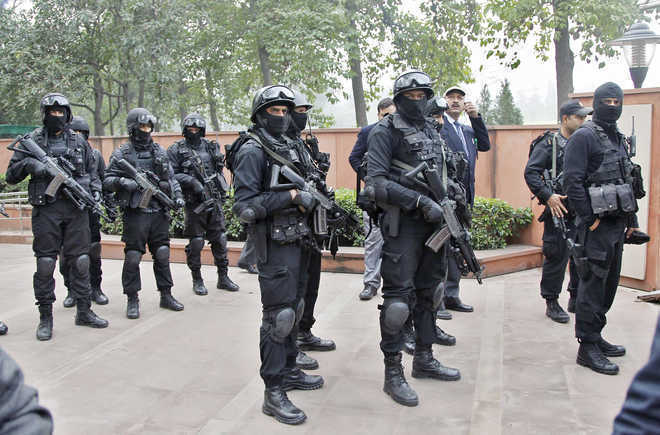
REUTERS■ Gurkhas patrol at the IISS Shangri­la Dialogue in Singapore.

While both leaders will bring their own personal security teams, elite Singaporean police, including its Gurkha Contingent, will be securing the summit venue, roads and hotels, according to diplomats familiar with VIP security in the island state.

The Gurkhas, who have a lowprofile presence in Singapore, were more visible than usual at the weekend as they secured the Shangri-La Hotel for a security conference that included Indian Prime Minister Narendra Modi, US defence secretary Jim Mattis and other regional ministers.

The Gurkhas, recruited by the Singapore police from the hills of faraway Nepal, were kitted out in body armour, Belgian-made FN SCAR combat assault rifles and pistols in leg holsters at the conference, in what some security experts believed was a dry run for the US-North Korea summit. Despite all the advanced weaponry, the Gurkhas do not prepare for battle without the khukri – the heavy curved knife that is their traditional weapon of choice. According to custom, the khukri must draw blood every time it is unsheathed. “They are among the best Singapore can offer, and I am sure they will be involved (in the summit),” said Tim Huxley, an expert on Singapore’s armed forces at the International Institute for Strategic Studies (IISS).


Lt Gen Ranbir Singh is new Northern Army Commander Lt Gen Anbu is Vice-Chief of Army

Lt Gen Ranbir Singh is new Northern Army Commander

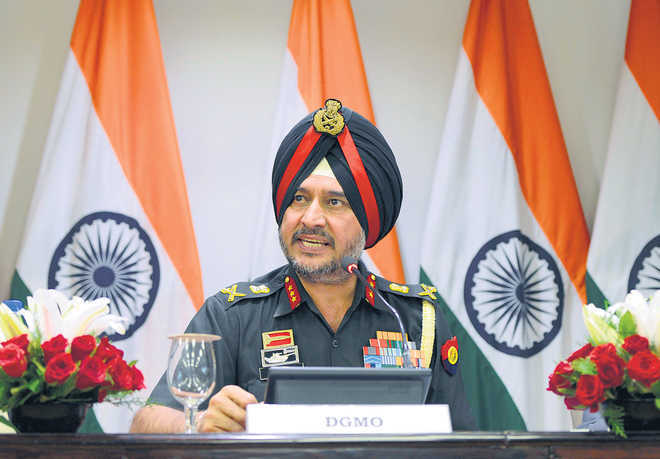
Lt Gen Ranbir Singh. File photo

Tribune News Service

New Delhi, May 30

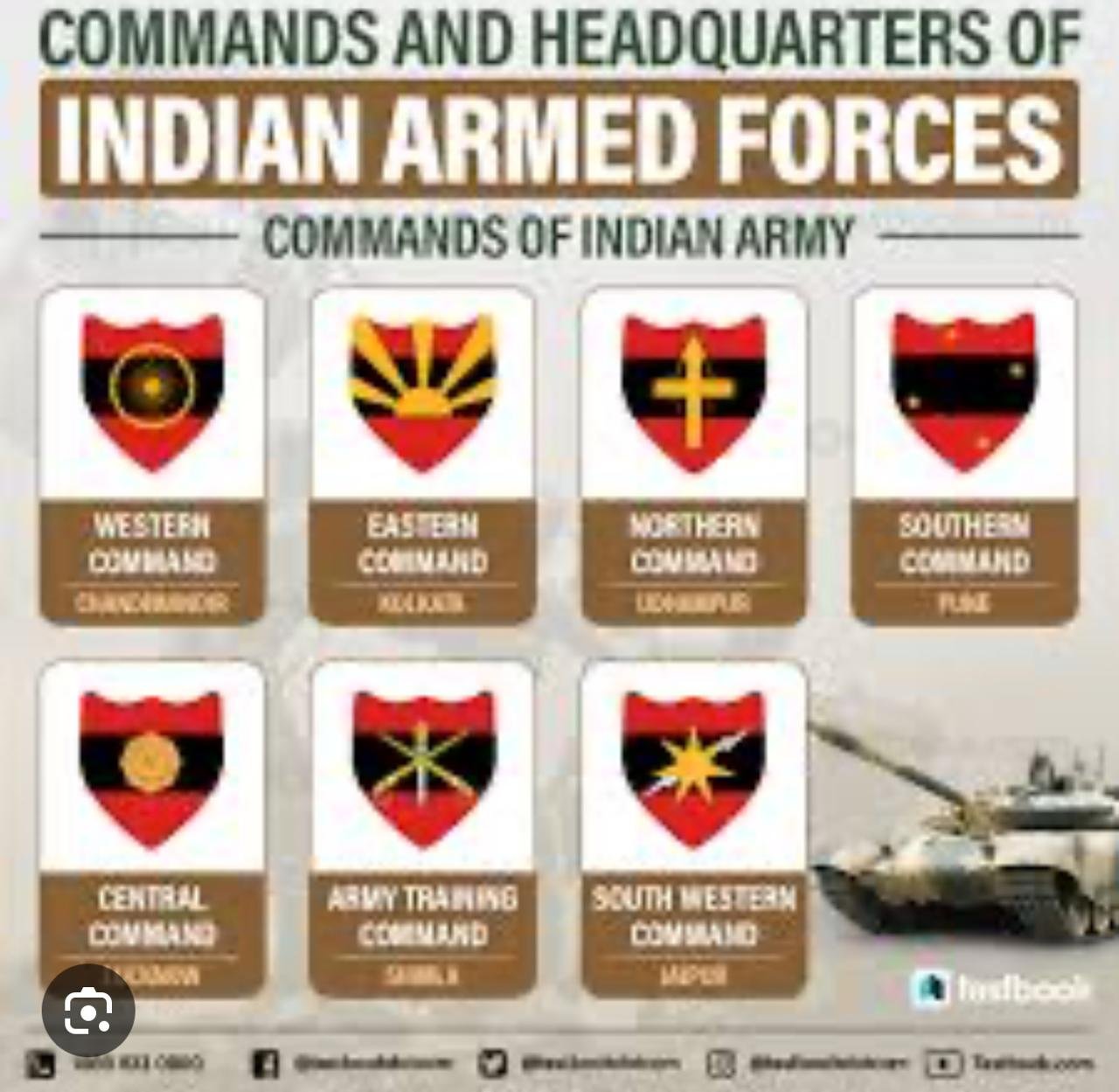
Lt Gen Ranbir Singh has been appointed the new Northern Army Commander. He replaces Lt Gen Devraj Anbu, who has been shifted as Vice-Chief of the Indian Army.Lt Gen Singh, 58, who belongs to Jalandhar, was the Director General Military Operations (DGMO) when India carried out the surgical strikes across the Line of Control (LoC), destroying terror camps in Pakistan-occupied Kashmir (PoK) on September 29, 2016. He has also had stints as Colonel and Brigadier in the military operations directorate that oversees and coordinates all operations and troop movements.Lt Gen Singh, along with Lt Gen Manoj Mukund Naravane, who now heads the Army Training Command at Shimla, are likely to be the front-runners for the Army Chief’s post when General Bipin Rawat ends his tenure in December 2019. Lt Gen Naravane is senior to Lt Gen Singh.Lt Gen Anbu from the Sikh Light Infantry moves to Delhi. The Vice-Chief is the head of all policy and planning of the 1.3 million-strong Army. The current Vice-Chief, Lt Gen Sarath Chand, retires on Thursday.Commissioned in December 1980 into the 9 Battalion of the Dogra Regiment that draws its troops from Himachal Pradesh and parts of Jammu region, Lt Gen Ranbir Singh commanded the same unit. Presently posted at Army Headquarters as the Deputy Chief of Army Staff, he had earlier commanded the Mathura-based 1 Strike Corps, a strike formation.One of his most significant appointments was the General Officer Commanding of the 33 Armoured Division based at Hisar in 2012. According to his course mates, he is probably the first infantry officer after the late General K Sundarji to command an armoured formation.An alumnus of the Sainik School, Kapurthala, and the National Defence Academy, Kharakvasla, he also attended the Royal College of Defence Studies in the UK for a year-long course and served with UN missions in Angola and Rwanda.As Commander of the 181 Mountain Brigade in the North-East, he was decorated with the Yudh Seva Medal in 2010. The other awards include the Sena Medal and a bar to the Ati Vishisht Seva Medal in 2015 and 2018.These two new appointments are the first in the series of changes in the top structure of the Army this year. Three Army Commanders — Lt Gen DR Soni, Southern Army Commander; Lt Gen BS Negi, Central Army Commander; and Lt General Satish Dua, who heads tri-service organisation — retire this year.


Major Handa called girlfriend to inform ‘he killed Shailza’

NEWDELHI:Minutes after allegedly killing his fellow officer’s wife, Major Nikhil Rai Handa called and “confessed” about the crime to one of his “girlfriends” in Delhi, police said.

VIPIN KUMAR/HT PHOTOThe police said Handa killed Shailza for objecting to his marriage proposal and unwanted advances.A police officer who interrogated Handa and went through the content on his mobile phones said the arrested officer had at least three girlfriends in the city.

The woman he allegedly called and informed about the murder is much older to him, police said. “He is most attached to this woman. But when he told her about killing Shailza Dwivedi, she thought he was bluffing and disconnected the phone call. She did not feel the need to alert the police,” said the officer.

The woman was questioned by the police but was ignorant about Handa’s crime, which investigators said was “pre-planned”.

“The woman is a divorcee and has grown-up children. We tried to ensure her relatives or neighbours did not get a whiff about her relations with Handa,” said the officer who is not authorised to speak to the media.

Handa had befriended some of these women in 2015 by allegedly creating a fake Facebook profile to send friend requests to unknown women.

“Handa had come across Shailza’s Facebook profile while surfing from the fake account but did not send a friend request when he realised she too was the wife of an Indian Army Major. Instead, he met her directly during a get-together,” said the officer.

Handa told his interrogators that Shailza was “obsessed” with him but her family as well as the police maintained that it was the other way round. Police said she was killed for objecting to his marriage proposal and unwanted advances.

“Each of these women he has had an affair with or was chasing had a faint idea of his multiple affairs but he was able to convince them to continue their relationships with him,” said the interrogator.

To pursue Shailza, Handa arrived in Delhi on June 4 on the pretext of getting himself treated for migraine. Instead, he was using the opportunity to allegedly confront and interact with Shailza at the army’s base hospital in Delhi Cantonment where she was visiting for physiotherapy

sessions

It was the visit to the hospital that gave him away. “When Shailza’s husband could not contact his wife , he visited the hospital and requested to see CCTV footage and spotted Handa in the video,” said the investigator. Since Amit was aware of the alleged unwanted attention his wife was receiving from Handa, he approached the police who informed him of his wife’s murder.

He immediately pointed the finger of suspicion at Handa.


NSG introduces psychology test to select future commandos

NSG introduces psychology test to select future commandos

The new system of induction will ensure that physically and mentally fit personnel are inducted into the force. Reuters file

New Delhi, June 24

The NSG has included a new and comprehensive psychology test for entry-level soldiers aspiring to be inducted and honed as ‘Black Cat’ commandos who undertake special counter-terror and counter-hijack operations in the country.

The federal contingency force till now used to put Army and paramilitary troops under rigorous physical and mental strength tests once they join the commando conversion course (CCC) to get inducted into the premier force.

Soldiers desirous of joining the National Security Guard (NSG), modelled on the lines of special counter-terror forces of the UK and Germany, will now have to undergo a special capsule of psychology tests and questions during the three-month CCC, a senior official in the Union home ministry said.

He said a threshold mark has to be obtained by a soldier in the psychology test like qualifying the other physical and mental parameters in order to join the force.

The force had a “pressing” need for a full-time pyschologist in its commando selection panel and experts of this domain have recently been hired in the NSG, he added.

The new system of induction will ensure that physically and mentally fit personnel are inducted into the force to become and perform as the best commando unit of the country, the official said.

PTI had reported in January that the force, while conducting a Psychological Screening Test (PST) when chosen personnel from various uniformed forces join it on deputation, wanted to have a “regular process” of measuring psychological attributes of a trooper wanting to join it and also for those who are already in the ranks.

The force had also included yoga in the daily fitness curriculum and gradings given by the yoga instructor and the newly-hired psychologist will henceforth be reflected in the performance records of commandos, who undertake continuous training when not part of an operation.

The ‘Black Cat’ commandos of the NSG are segregated into two major units—SAG (Special Action Group) manned by officers and jawans from the Army and the SRG (Special Rangers Group) comprising personnel from paramilitary forces.

The force was raised under an act of Parliament in 1984 as a federal contingency combat unit. It has undertaken numerous operations till now. These include flushing out terrorists during the 26/11 Mumbai siege in 2008 and the 2016 operation when they were deployed to kill terrorists who attacked the Indian Air Force (IAF) base in Pathankot.

Recently, a small team of its commandos has been deployed in the Kashmir Valley to undertake specific ‘house intervention’ and terrorists’ neutralisation operations as part of  their new mandate to “strengthen the security grid” in Jammu and Kashmir.

The force will also train personnel of the Special Operations Group (SOG) of the J&K Police and the CRPF which regularly undertake counter-terror operations in the Kashmir Valley. PTI


IMA cadet robbed of car at gunpoint

Tribune News Service

Yamunanagar, June 20

An under training Army officer was robbed of his car at gunpoint near the district’s Bhambhauli village on Wednesday.Under training Lieutenant Bhanu Pratap (27) of Jagadhri had gone to Saharanpur in Uttar Pradesh to attend his friend’s wedding on Tuesday night.The next day, he was to visit Chandigarh. He left from Saharanpur at 3.30 am. On the way, he stopped his car at a “dhaba” on the Jagadhri-Panchkula national highway near Bhambhauli village to take a nap inside his car.“After 15 minutes, a man knocked at the window of my car. I woke up and when I opened the window, a man pointed a pistol at me. Soon, two more persons joined him. They snatched the key of the car and my wallet,” Bhanu Pratap told The Tribune.He said the robbers came in Toyota Liva. “They left their car at the ‘dhaba’ and took away my i20 There was more than Rs10,000 ATM cards, a voter card, a PAN card and an Aadhaar card in my wallet,” Bhanu said.He said the robbers were between the 25 and 30 years. “Two of them were speaking Haryanvi and the third was speaking a local language.”Bhanu’s father Somesh Chauhan said Bhanu had joined the Army as a trainee Lieutenant on January 1, 2018. “He is undergoing training at Indian Military Academy, Dehradun. He came home on June 10 on leave.”Chhappar police station SHO Ramesh said Toyota Liva was robbed from Barwala in Panchkula district on April 16 and a case was registered at Barwala police station in that connection the next day.On Bhanu’s compliant, a case has been registered against unidentified persons under Sections 392 (robbery), 397 (robbery or dacoity with attempt to cause death) and the Arms Act at the Chhappar police station.


The Defence Minister’s statements on the Cantonment issue only adds insult to injury

In a recent post, I had pointed out the confoundment of serving and retired armed forces personnel, many of whom like me are votaries of this government, at the inexplicable decisions adverse to the welfare and morale of armed forces, taken by successive defence ministers in the past four years. Last in the series of such decisions was the arbitrary order passed by the present Defence Minister for the opening of all cantonment roads to the public.

In view of certain inaccurate and misleading remarks made by the Raksha Mantri (RM) during her recent press conference, here’s an examination of this decision and her defence of it in detail. It’s not clear whether it was the positive reaction by a handful of people benefitted by the opening of these roads, lack of accurate advice, or poor judgement which prompted these remarks. But inaccurate they definitely were. The aim is to present facts in case the minister isn’t already fully aware of them. It is also to ensure that this government, which is doing good work in many other spheres, isn’t ‘penny wise pound foolish’ to trip on such issues.

First of these statements is, “a total of 850 roads were closed in various cantonments, out of which 119 were blocked without following laid down procedures and now some 80 of them have been opened while 24 remain closed and rest of the 15 have been partially opened. Of the 39 roads that remain closed despite the order for their re-opening; 14, the highest, is in Secunderabad.”

The inconsistencies in this are as follows:-

The amended Cantonments Act was passed in 2006, as per the Article 258 of which, the GOC-in-C is the competent authority to sanction closure of roads for security reasons. It further states that public notice will be given inviting objections prior to closing such roads.

This act was passed in 2006, and cantonments have been in existence for much before that, governed by the earlier Cantonment Act of 1924. Section 192 of this act applied to the closing of roads, which did not have any provision for giving public notice or inviting objections. The roads were closed much before 2006, as per prevailing rules, obtaining the sanction of the GOC-in-C. The Act of 2006 does not mention anything about giving public notice/seeking objections with respect to roads already closed at the time of its enactment.

In 2014, eight years after the Act of 2006 was passed, Andhra Pradesh High Court ruled on a collection of writ petitions and PILs against the closure of the 14 roads in Secunderabad cantonment mentioned by the Defence Minister. Dismissing all the petitions, the honourable High Court ruled that these closures were valid and within the powers of the GOC. On the other hand, it took cognisance of the fact that petitioners wanted to use these roads “for convenience or because of their better motorability”, a matter that “required immediate attention of the civilian authorities” who should “take expeditious steps to improve the alternate roads so that ordinary people are not subject to any inconvenience.” It further stated that “the army authorities have imposed restrictions in a phased manner and such decision cannot be held as one made in an arbitrary manner.” Since the Cantonment Act of 2006 is cited in above judgement, it is clear that the ruling did not consider any irregularity vis a vis the same. It’s on the strength of this judgement that the 14 roads remain closed despite orders by MoD.


The above judgement quotes rulings by other courts in similar cases from across the country, including one from Supreme Court, in all of which the closure of roads has been upheld. (full text of judgement here)

After the defeat in court, the residents and their elected representatives did not appeal in Supreme Court as they probably knew it would meet the same fate. Instead of pressurising the civic authorities to provide better alternate routes as per the judgement, they took the easier route of trying to put political pressure on the then Defence Minister Mr Parrikar. There were several rounds of meetings in which the army authorities down to the station commanders were summoned to the Minister’s office and given an opportunity to explain the ground realities. Based on this, Mr Parrikar upheld the army’s decision and even offered handing over defence land to construct alternate route as directed by the court.

Instead of using his influence to speed up the construction of the alternate route, the local MP built an alliance of interest with local representatives of areas adjoining the 62 cantonments. This group seems to have started the whole discussion de novo once Ms Sitharaman was appointed the Defence Minister. It’s not clear whether she was aware of Mr Parrikar’s decision and whether she consulted him on the matter before arriving at a decision to go against it, not only in the specific case of Secunderabad, but across all 62 cantonments. Consequently, she ordered the Ministry of Defence to issue the following letter-

Not only do these instructions completely ignore the judgement of 2014 and subsequent deliberations and the decision by Mr Parrrikar, but also subsume the powers of the GOC-in-C to be the final authority for closing any roads as laid down in the Act of 2006. To my mind, this letter is not only in contempt of court (whose order cannot be overruled by a ministry letter), but also implies that the Ministry considers the GOsC-in-C, the senior most rung of field commanders under whom the nation’s army would go to war, incompetent to take prudent decisions on this matter without supervision by it. It is also an insult to the Parliament which vested these powers in the GOC-in-C through the Act of 2006.

Did the Minister consider these aspects before taking the decision and thereafter publicly defending her decision?

The second statement that is inaccurate and misleading is “The order by the ministry of defence addresses traffic related issues. Places where unit lines exist or where families of our servicemen are living, we are cautious about its security”. The Ministry of Defence letter does not distinguish between roads closed to address ‘traffic related issues’ and places which have security implications. On the contrary, the letter calls for an ‘annual review’ of all roads closed. Do they expect the unit lines and family quarters to shift to different locations warranting such annual reviews?

The third misleading statement is “Army Chief General Bipin Rawat and other top brass of the force were consulted before the government decided to allow civilian access to roads in military cantonments across the country”. Misleading, because of the time allocated for such deliberations, as is apparent from the schedule below (Source)

As per this schedule, the issues of road closure was discussed by the Defence Minister with various stakeholders for a total of 485 minutes (8 hours and 5 minutes) between 2nd April and 23rd May before the blanket order dated 28th May was issued. Out of this, the Chief of Army Staff (COAS) or any other army representatives were included for 170 minutes (2 hours and 50 minutes) and time allotted to meet with elected representatives was 2 hours. It’s questionable whether the decision to open 119 roads could be adequately deliberated in this time frame.

The Army brass cannot be completely absolved of blame either, as they seem to have been unable to put across the facts and implications of such a decision convincingly enough. On the contrary, when asked to bow, they kneeled. Although the ministry letter talks only about the opening of roads, without mentioning any restriction on checking vehicles that pass by, the following letter issued by the Army Headquarters did away with any security checking as well.

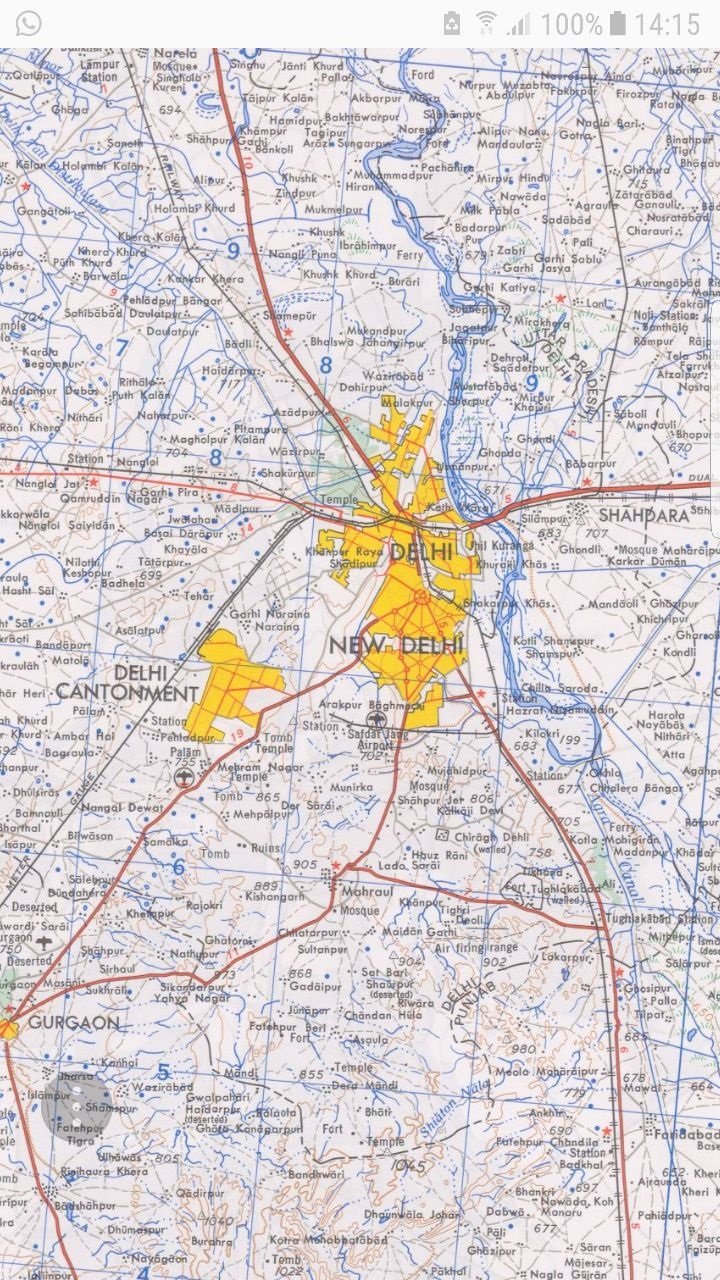
Delhi Cantt shown Independent below in pre-1965 map

IMG-20180611-WA0024

It’s unbelievable that security checks, which are routinely carried out at hotels, malls, airports etc, have been dispensed with for vehicles passing through cantonments. Whether this was because of any instructions in addition to this MoD letter, or due to over-enthusiasm by the army authorities to comply with the order and even go a step further, is unclear.

How much of all this has happened with the full acquiescence of the Defence Minister based on complete knowledge of facts is difficult to say. Whether the inconsistencies in her statements pointed out above are deliberate or due to lack of adequate briefing is hard to guess. But at the end of the day, she’s responsible for this irrational and hasty decision. And heaven forbids if there is a single untoward incident, will she look back and wish she had given more time and thought to the matter?