Sanjha Morcha

Defence PSUs for foreign tie-up under Strategic Parnership model

Defence PSUs for foreign tie-up under Strategic Parnership model

Ajay Banerjee

Tribune News Service

New Delhi, April 4

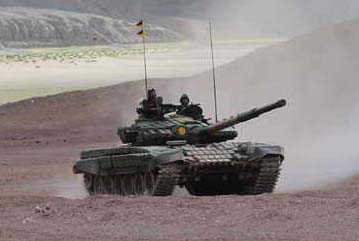
Almost two years into the Strategic Partnership (SP) model for ‘make in India’ in defence sector, the Ministry of Defence is considering allowing its owned Public Sector Undertakings to partner foreign companies under this policy.Producing world-class military equipment hinges on ‘SP model’. Production of four crucial military items–fighter jets (both for the Navy and IAF), submarines, helicopters (for all three services) and new-generation tanks are listed under this model.The ‘SP model’ allows the Ministry of Defence (MoD) to select an Indian private company to collaborate with a foreign partner and produce military equipment in India. On paper, it looks fine, but technology transfer is tricky.The MoD will now also consider the Defence PSUs. Additional Secretary Defence Production Subhash Chandra on being asked if the DPSUs would be considered, said on Wednesday: “We remain committed to a level-playing field. We will consider inclusion of the DPSUs if they have the wherewithal to do this.”In May 2017—ending almost two years of discussions with industry and experts—the Modi government cleared the SP model. It was made a part of defence procurement procedure (DPP), the guiding framework of making military equipment in India.Earlier, Secretary Defence Production Ajay  Kumar said the four-day def-expo-2018 would open in Chennai on April 11.  The theme this year will be ‘India: the Emerging Defence Manufacturing Hub’. For the first time India will be showcasing its own made land, air and naval equipment.Among the equipment on display will be the advanced towed artillery gun systems (ATAGS) designed by the DRDO and manufactured by L&T and Bharat Forge, Arjun Mark 2, Dhanush artillery guns, Tejas fighter jets, the Advanced Light Helicopter-WSI, Light Combat Helicopter. Also, India-made warships, the INS Shayadari, INS Kamorta an dINS Airvaat will be displayed on the sea front facing the expo.In the 2016 def-expo over 1,000 companies, both foreign and Indian, took part. This year, 671 exhibitors have confirmed space that includes 517 Indian companies.


Guardians of Governance: 6­month report released

Members rue resistance from political leaders, corrupt practices by govt officials, mismanagement of funds as the reason behind lack of implementation of schemes

From page 01 LUDHIANA: The Guardians of Governance (GoGs) project members released a six-month report card of their assessment of the administrative affairs during a press briefing held here on Thursday.

GURPREET SINGH/HT■ Guardians of Governance district project head Lieutenant Colonel HS Kahlon. retd, (second from right) during a press conference in Ludhiana on Thursday.The chief minister’s pet project Guardians of Governance (GoGs) seems to have rubbed the political leaders on the wrong side as hinted by some of project members .

The report has picked gaping holes in the claims made by the district administration in the implementation of the government schemes.

The report mentions that under Mahatma Gandhi National Rural Employee Guarantee Act (MGNREGA) scheme, it was observed that the labour force was used for de-weeding the village ponds and lakhs of money was wasted which could have been used for other developmental works.

“We found mismanagement of funds, wages which was being siphoned off to aides of sarpanches. Involvement of few banks in aiding this fraud has also been revealed,” said Colonel (retired) BS Bhangu, second in command of the project in the district.

Around seven GoGs posted at different levels in the district released this report which raises serious questions over the delivery of services to the ordinary people.As per the report, despite the district being declared open defecation free, people in Braich village defecate in the open.

The report also mentioned that most of the Reverse Osmosis (RO) plants in the villages lack maintenance as the filters in these plants have been rarely changed. “High-stage tanks have been constructed in almost all the villages but the equipment for chlorination is lying defunct,” said Bhangu.

‘ GOVERNMENT OFFICIALS INVOLVED’ Acknowledging the failure to implement the government schemes at micro-level, the project members accused government officials at lower- level of corruption.

“At village and block level, the officials in connivance the village representatives are indulging into corrupt practices.As of now, we have not specifically identified those individuals in our report,” said one of the members pleading anonymity.

“We have been facing resistance from political leaders of the ruling party who have also approached the chief minister in this regard,” said the member.

“The local MLAs think of us as their rivals. We do face resistance when we strike out the fake names from the list of beneficiaries for welfare schemes,” said another member.

‘EMOLUMENTS FOR SARPANCHES’ Sarpanches across the state have not been getting their monthly honorarium of ₹1,200 for the past four years. However, the state government will be soon releasing the emoluments for the sarpanches, said Lt. Col. (retired) Harbant Singh Kahlon, in-charge of GoG in Ludhiana. We will keep on informing the government of all the updates from the district, he said.


MHA needs Rs 3,50,000 cr for internal security, border guarding in 2020-25

MHA needs Rs 3,50,000 cr for internal security, border guarding in 2020-25

The capabilities of states alone are not adequate to meet the threats of insurgency and terrorism that have national and international links, the official said. File photo

New Delhi, April 22

The Home Ministry has projected a budgetary requirement of more than Rs 3,50,000 crore for internal security, mordernisation of police forces and other related responsibilities during 2020-25.

This was conveyed by Home Minister Rajnath Singh to Chairman of the 15th Finance Commission NK Singh here recently, officials said today.

The ministry has projected budgetary requirement of more than Rs 3,50,000 crore for the period 2020-2025 for internal security, central armed police forces, police modernisation, border security, disaster management and Union Territories, a ministry official said.

A detailed memorandum will be submitted to the Finance Commission later.

A presentation was made during the meeting which stressed that the responsibilities of the Home Ministry have increased manifold that include diverse and varied internal security challenges, even though public order and police are constitutional responsibilities of state governments.

The capabilities of states alone are not adequate to meet the threats of insurgency and terrorism that have national and international links, the official said.

The home minister has pointed out that his ministry also has other challenges that include improving sense of security amongst the public, making vulnerable sections such as women and children safer, improving effectiveness of police, meeting cyber threats, providing immediate relief and rehabilitation during natural disasters etc.

He said due to concerted and coordinated efforts of the central government and the state governments, there has been a significant and steady improvement in the overall security situation in the hinterland, in the mortheastern states and in the areas affected by Left-Wing Extremism.

The home minister said relentless efforts are needed to be made continuously in order to consolidate the gains and spread successes in the new areas.

The Finance Commission was briefed about the various schemes being implemented by the Home Ministry, which require continued capital expenditure such as modernisation of police forces, Crime and Criminal Tracking Network and Systems (CCTNS), immigration, visa, Foreigners Registration and Tracking (IVFRT), coastal security, border infrastructure, integrated check posts, another official said.

The commission was conveyed that further capital investment is also required to make appropriate use of new technologies for cyber security, border management etc, the official said. PTI


Commuted Pension – A Money Minting Business of the Government

Startled? Bitter but true. It is a harsh reality that the Government has made a profitable business out of the apparently innocuous ‘welfare measure’ called “Commutation of Pension”. Calculations show that the Government recovers much more than the amount it extends ostensibly as a welfare measure to the retiring personnel. The main reason projected by the Government for excess recovery is the ‘mortality risk factor’ as the balance recovery is waived in case of death. The hard fact remains that commuted pension is like any other advance/ loan on which the Government charges interest (currently 8%) at market rate! The Government keeps on chewing on the pension for 15 years though it recovers the full amount with interest in 10 years and 10 months (in case of post-1.9.08 retirees). In the case of earlier retirees, it fully recovers in less than 13 years. 

As per extant rules [Central Civil Services (Commutation of Pension) Rules, 1981], commuted pension is restored 15 years after the date of drawal of the commuted amount. This period of 15 years is arbitrarily fixed, without any legal or mathematical basis. This amounts to an unjust and immoral enrichment of the Government at the cost of the pensioners/ senior citizens. This affects all the services, irrespective of the rank/ level of the pensioner. What right/ justification has the Government got to overcharge the pensioners and recover even a penny more than what it has paid? The Government is behaving like a typical rural money lender and is knowingly milking the pensioners.

In the succeeding paragraphs, I will mathematically and legally prove how the pensioners are being fleeced. The calculations, made on the basis of one particular pay, are only illustrative but the principle/ method applies equally to all the ranks, leading to exactly similar results.

Retirees between 1986 and 1995

Ask a Free Legal Question at Tilak Marg Forum

The age of retirement during this period was 58 years. Such retirees have all completed the prescribed period of 15 years for restoration of pension. Since 1.3.1971 and until 1.9.2008, the Commutation Factor (CF) was 10.46 and the rate of interest was 4.75% p.a. Commutation allowed was 1/3rd of the basic pay. The basic pension of those who superannuated between 1.1.86 and 31.12.95 at the top of their pay scale (Rs.8,000), was fixed at Rs.4,000 and they got commuted pension of Rs.1,67,318 with a deduction of Rs.1,333 per month. The principal amount of Rs.1,67,318 was fully recovered in 10.46 years.

  • Considering the simple interest rate of 4.75% p.a., the total interest works out to Rs.36,250. This was fully recovered in 2.27 years [36250/1333 = 27.2 months or ~2.27 years]. Thus, total recovery period of the commuted amount works out to 10.46 + 2.27 = ~12.73 years. But the pensioner was made to pay for additional 15 – 12.73 = 2.27 years, amounting to Rs.36,250.


Retirees between 1996 and 2005

The age of retirement was raised to 60 years w.e.f. 1.5.98 after the 5th Central Pay Commission (CPC) report. Permissible commutation was also raised from one third to 40% of the basic pay w.e.f. 1.1.96. The Commutation Factor (CF) came down to 9.81 from 10.46. The rate of interest was 4.75% p.a. Those who superannuated between 1.1.96 and 30.4.98 at the age of 58 years at the top of their pay scale (Rs.26,000) got the commuted amount of Rs.6,52,704 with a deduction of Rs.5,200 p.m. Those who retired between 1.5.98 and 31.3.04 at the top of their pay scale (Rs.26,000) got the commuted amount of Rs.6,12,144 with a deduction of Rs.5,200 p.m. Those who retired on or after 1.4.04 after the merger of 50% DA with basic pay got Rs.9,18,216 with a deduction of Rs.7,800 per month.

  • Retirees between 1.1.96 and 30.4.98:- The principal amount of Rs.6,52,704 was fully recovered in 10.46 years. Considering the simple interest rate of 4.75% p.a., the total interest worked out to Rs.1,50,779. This was recovered in 2.42 years [150779/5200 = 29 months or 2.42 years]. Thus, total recovery period of the commuted amount works out to 10.46 + 2.42 = 12.88 years. But the pensioner kept on paying for further 15 – 12.88 = 2.12 years. Excess recovery was Rs.1,32,517.
  • Retirees between 1.5.98 and 31.3.04:- The principal amount of Rs.6,12,144 was fully recovered in 9.81 years. With interest rate of 4.75% p.a., the total interest works out to Rs.1,41,409. This is recoverable in 2.27 years [141409/5200 = 27.2 months or 2.27 years]. Thus, total recovery period of the commuted amount works out to 9.81 + 2.27 = ~12.08 years. But the pensioner kept/ keeps on paying for further 15 – 12.08 = ~2.92 years. Excess recovery = Rs.1,82,447.
  • Retirees between 1.4.04 and 31.12.05:- The principal amount of Rs.9,18,216 has already been fully recovered in 9.81 years. With the simple interest rate of 4.75% p.a., the total interest works out to Rs.2,12,114. This is recoverable in 2.27 years [212114/7800 = 27.2 months or 2.27 years]. Thus, total recovery period of the commuted amount works out to 9.81 + 2.27 = ~12.08 years. But the pensioner will keep on paying for further 15 – 12.08 = ~2.92 years. Excess recovery = Rs.2,73,670.

Retirees from 1.1.2006 to 1.9.2008

Since 1.3.1971 and until 1.9.2008, the Commutation Table remained unchanged. The Commutation Factor (CF) in 2006-2008 was 9.81 and the rate of interest was 4.75% p.a. The basic pension of those who superannuated between 1.1.06 and 1.9.08 at the top of their pay scale (Rs.80,000), was fixed at Rs.40,000. Their commuted pension amount was Rs.18,83,520 with a deduction of Rs.16,000 per month. The principal amount is fully recovered in 9.81 years.

  • Considering the simple interest rate of 4.75% p.a., the total interest works out to Rs.4,35,106. This is recoverable in 2.27 years [435106/16000 = 27.2 months or 2.27 years]. Thus, total recovery period of the commuted amount works out to 9.81 + 2.27 = 12.08 years. But the pensioner will keep on paying for further 15 – 12.08 = 2.92 years. Excess recovery = 2.92 x 12 x 16000 = Rs.5,60,640.

Retirees with effect from 2.9.2008

This category of pensioners is the worst affected. They suffered a triple jeopardy: (i) 16.5% lower commuted amount (ii) 68% higher interest and (iii) status quo in recovery tenure. The persecution is explained below.

A new Commutation Table was introduced from 2.9.08 which reduced the commuted amount drastically without reducing the recovery tenure. Despite a sharp rise in life expectancy, the Commutation Factor (CF) was downgraded from 9.81 to 8.194, thereby reducing the commuted amount by a whopping 16.5% !!! To add insult to injury, the rate of interest was enhanced from 4.75% to 8% p.a., an astronomical jump of 68% even in this low interest regime !!! This category of pensioners suffered the costliest advance/ loan called the ‘commuted pension’.

The basic pension of those who superannuated on or after 2.9.08 at the top of their pay scale (Rs.80,000) was fixed at Rs.40,000. Their commuted pension amount is Rs.15,73,248 with a deduction of Rs.16,000 per month. Had the Commutation Table not been revised, they would have got a higher commuted sum of Rs.18,83,520 as per the old CF of 9.81. Thus, they were/ are put to the first shock loss of Rs.3,10,272(-16.5%) at the outset, even before the recovery started/ starts !!!

  • Coming to the recovery part, the principal amount of Rs.15,73,248 will be fully recovered in 8.194 years. With interest @8% p.a., the total interest works out to Rs.5,10,417. This is recoverable in 2.66 years [510417/16000 = 31.9 months or 2.66 years]. Thus, total recovery period of the commuted amount is = 8.194 + 2.66 = 10.85 years. But the pensioner will keep on paying for further 15 – 10.85 = 4.15 years. Excess recovery = 4.15 x 12 x 16000 = Rs.7,96,800.

The following tables summarise the comparative position:-

Sl.

Retirement Period & Age

Commutation Factor

Interest

(% p.a.)

Basic Pension

Commuted Amount

Monthly Recovery

1986 to1995;

58 years

10.46

4.75

4,000

1,67,318

1,333

1.1.96 to 30.4.98;

58 years

10.46

4.75

13,000

6,52,704

5,200

1.5.98 to 31.3.04;

60 years

9.81

4.75

13,000

6,12,144

5,200

1.4.04 to 31.12.05

60 years

9.81

4.75

13,000

9,18,216

7,800

1.1.06 to 1.9.08;

60 years

9.81

4.75

40,000

18,83,520

16,000

2.9.08 onwards;

60 years

8.194

8

40,000

15,73,248

16,000

Sl.

Retirement Period

Commuted Amount + Interest (Rs.)

Recoverable in

Actual Recovery in 15 years

Excess Recovery (Rs.)

1986 to1995

2,03,568

12.73 years

2,39,940

36,250

1.1.96 to 30.4.98

8,03,483

12.88 years

9,36,000

1,32,517

1.5.98 to 31.3.04

7,53,553

12.08 years

9,36,000

1,82,447

1.4.04 to 31.12.05

11,30,330

12.08 years

14,04,000

2,73,670

1.1.06 to 1.9.08

23,18,626

12.08 years

28,80,000

5,60,640

2.9.08 onwards

20,83,665

10.85 years

28,80,000

7,96,800

In a nutshell, the commuted pension is fully recovered with interest in:-

  • 12.73 years in case of those who retired between 1986 and 1995;
  • 12.88 years in case of those who retired between 1.1.96 and 30.4.98;
  • 12.08 years in case of those who retired between 1.5.98 and 1.9.08;
  • 10.85 years in case of those who retired on or after 2.9.08.

Supreme Court Order of 1986

All the time, the Government is harping upon the Supreme Court Judgement of 9.12.86 in Common Cause Vs. UOI in Writ Petitions No. 3958-61 of 1983 under Article 32 of the Constitution of India. The justification given by the Government for excess recovery is two fold: (i) convenience of lump sum payment to pensioners and (ii) mortality risk factor. It is almost 29 years since the SC judgement was delivered while much water has flown down the Ganges since then. Several factors and circumstances, which were relied upon by the Apex Court, have undergone a sea change as elaborated in the analysis below:-

1)    As per an official release, the life expectancy in India currently is 67.3 years for males and 69.6 years for females. The average comes to 68.5 years. In 1986, when the Supreme Court judgement was delivered, life expectancy in India was only 57 years while the retirement age was higher than this (58 years). In 29 years after the judgement, there is a sharp upsurge in life expectancy by 11.5 years while the retirement age (60 years) is 8.5 years lower than the life expectancy of 68.5 years! This has reduced the projected risk factor (of non-recovery and waiver due to premature mortality) to almost zero. This factor alone demolishes the Government’s constant bogey of mortality risk factor.

2)    Even if a pensioner dies at the average life expectancy age of 68.5 years and the unrecovered commuted amount stands waived off, the Government is not a loser at all. The reason is that the family pension, which remains 100% only up to 7 years after retirement, i.e. up to the deceased’s presumed age of 67 years, is reduced thereafter by 40% after the death of the pensioner. This drop is exactly the same as the current commuted portion which is 40% of the basic pension. Thus, in the changed scenario, virtually no risk factor exists.

3)    When the age of retirement was raised from 58 to 60 years after the 5th CPC in 1996, the Commutation Factor (CF) came down to 9.81 from 10.46, thus lowering the financial liability of the Govt by 6.2% (though this drop was almost offset by the increase in the commuted value from 33-1/3% to 40% effected after the 5th CPC).

4)    As mentioned earlier, with effect from 2.9.08, a new Commutation Table was introduced which drastically reduced the commuted amount by as much as 16.5% because of the reduction in the CF from 9.81 to 8.194. Though the Government’s financial liability towards the commuted amount came down by 16.5%, the period of recovery was not reduced though it should also have been brought down proportionately by 16.5%, i.e. by 2.5 years. Thus, logically, even if we ignore other factors, the recovery period should have been brought down to 15 – 2.5 = 12.5 years.

5)    Apart from revising the Commutation Table, the rate of interest was raised w.e.f. 2.9.08 from 4.75% to the market rate of 8% which is almost double the previous figure. Thus, calling the commuted pension a concessional dole and a welfare measure is no more valid. The Government is claiming its full pound of flesh even in this low interest regime. In such a situation, why should the Government recover more than what it has advanced?

6)    A relevant portion of the SC judgement of 1986 is cited below:-

“In dealing with a matter of this nature, it is not appropriate to be guided by the example of Life Insurance; equally unjust it would be to adopt the interest basis. On the other hand, the conclusion should be evolved by relating it to the ‘years of purchase’ basis. An addition of two years to the period necessary for the recovery on the basis of years of purchase justifies the adoption of the 15 years rule. That is more or less the basis which appears to be equitable”.

This has two inferences:-

a)    No link of the concept of commutation can be made to life insurance. This demolishes the official stand that an element of insurance/ risk is made into the concept of commutation.

b)    The period of recovery for interest cannot exceed 2 years after the recovery of the principal amounton the basis of years of purchase. This leads to the following recovery periods for different retirees:-

Sl.

Retirees Between

Principal Amount is Recovered in

(Years of Purchase)

Total Recovery Period after Adding 2 Years for Interest Recovery

1986 to1995 and up to 30.4.98

10.46 years

12.46 years

1.5.98 to 1.9.08

9.81 years

11.81 years

2.9.08 onwards

8.194 years

10.194 years

7)    The Government’s argument that the period of 15 years was “fixed” by the Supreme Court is fallacious and misleading. A plain perusal of the judgement shows that this period was proposed by the Government itself during the pendency of the Writ Petition (as an offer of compromise) and the figure was simply accepted by the Court. No calculation chart was ostensibly submitted either by the Government or by the Petitioner to justify the proposal of 15 years but it was welcomed by all because till then, the recovery period was life long.

8)    A perusal of the judgement shows that 15 years is the upper limit while there is no lower threshold fixed. No bar has been placed by the Court on its reduction which can always be done in view of the changed circumstances like higher life expectancy, lower risk factor, revised commutation table, reduced commutation factor, increased interest rate, higher age of retirement and the changed scenario after the 4th, 5th and 6th Central Pay Commissions.

5th CPC Recommendation Rejected by the Government

The 5th Central Pay Commission, in Chapter 136, had specifically recommended reduction of the period of recovery to 12 years. The Commission had observed that the commuted value of pension receivable currently by an employee retiring at the normal age of 58 years was equal to 10.46 years’ purchase. It was, however, separately recommended that the age of superannuation be raised from 58 years to 60 years. Consequently, the commutation value in respect of employees superannuating at the age of 60 years and commuting a portion of pension within a period of one year would be equal to 9.81 years’ purchase. After adding thereto a further period of 2 years for recovery of interest in terms of the observation of the Supreme court, it was felt reasonable to recommend restoration of the commuted pension after 12 years. The Government rejected this recommendation summarily, without citing any plausible reason despite the Commission having given sound reasons for the same. 

Summary

Keeping in view all the factors and mathematical calculations, the exact period of restoration of commuted pension works out as under:-

a)    1st category of retirees (who retired between 1986 and 1995): They repaid the entire amount with interest in 12.73 years. The Government should refund the excess recovery made for 2.27 years with interest.

b)    2nd category of retirees (who retired between 1.1.96 and 30.4.98): They repaid the entire amount with interest in 12.88 years. Excess amount recovered for 2.12 years should be refunded with interest.

c)    3rd category of retirees (who retired between 1.5.98 and 1.9.08): Their repayment completes in 12.08 years. Therefore, their full pension should be restored thereafter. Excess amount recovered should be refunded with interest.

d)    4th category of retirees who retired on or after 2.9.08: Their repayment completes in 10.85 years. Their full pension should be restored thereafter.

The Forum of Retired IPS Officers (FORIPSO) gave a Power Point Presentation before the 7th Central Pay Commission last year and was able to convince it. These facts were also brought to the attention of the Government but these fell on deaf ears, forcing FORIPSO to file a PIL in Delhi High Court where it is pending.

About J.K. Khanna
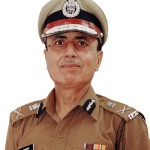
J.K. KhannaJ.K. Khanna is a retired IPS Officer of Bihar Cadre, 1974-batch. He retired in the rank of D.G.Police in 2011. He is the Secretary of the Forum of Retired IPS Officers (FORIPSO) which is an all India body, representing 23 States.


Defence Expo 2018: Ashok Leyland bags Indian Army order for 10×10 vehicles to carry Smerch rockets

The Ashok Leyland HMV 10×10 is powered by an engine that has a power of 265 kW (360 hp) at 2200 rpm. It has a maximum speed of 90 km/hr. The fuel capacity of the tank is 350 litres and has a massive payload capacity of 32000 kg.

ashok leyland, andhra pradeshMinistry of Defence has given Ashok Leyland the contract to supply high mobility 10×10 vehicles for the Indian Army. (Reuters)

Ashok Leyland, Hinduja Group’s flagship firm, has got the contract from the Ministry of Defence for the supply of high mobility 10×10 vehicles. The high mobility vehicles will be used to carry smerch rockets in the Indian Army. The Indian Army was on a lookout for high mobility 10×10 vehicles for a long time now. The agreement comes on the sidelines of the DefExpo 2018 that is being held in Chennai. Ashok Leyland’s high mobility 10×10 vehicle is fully designed and developed in India. It is one the flagship products of Ashok Leyland under the ‘Make in India’ initiative. The Indian Army has placed the initial order worth Rs. 100 crore for the supply of HMV 10×10.

Speaking at the event, Amandeep Singh, Head of Defence at Ashok Leyland said, “We have won 12 tenders out of the total 15 tenders we participated in last year. This is a big win for us”. He also said that this contract will mark Ashok Leyland’s further inroads into the defence sector.

“We will make use of this opportunity to further develop mobility products for other weapons such as missile carriers, missile launchers, modular bridges and other critical loads”, he added. He also assured that Ashok Leyland will continue to partner with Indian defence forces to serve the nation.The Ashok Leyland HMV 10×10 is powered by an engine that has a power of 265 kW (360 hp) at 2200 rpm. It has a maximum speed of 90 km/hr. The fuel capacity of the tank is 350 litres and has a massive payload capacity of 32000 kg. The 10×10 HMV by Ashok Leyland will prove to be extremely useful for the Indian army in moving and carrying the smerch rockets. The smerch rocket is Soviet-made heavy multiple target launchers that have a maximum firing range of 90 km. Indian Army has around 40 smerch rockets under its operations.


Andhra rural innovators get a big push, courtesy retired Army officer

Suresh Dharur in Hyderabad

Retired Brigadier P Ganesham is on a unique mission. He travels to villages, identifies the rural innovators, nurtures their ideas and presents them to the world. ‘Palle Srujana’ (rural creativity), a Hyderabad-based voluntary organisation set up by the septuagenarian ex-serviceman and other like-minded individuals, is engaged in spotting the rural talent, aiding and promoting creativity at the grassroots level in the two Telugu states of Telangana and Andhra Pradesh. So far, they have identified more than 210 innovators across the two states, besides documenting close to 2,500 traditional practices.Among these, 13 innovators have won the Rashtrapati Award, and two have won the Padma Shri. The organisation has also helped 24 innovators patent their devices.”The innovators have collectively generated a turnover of close to Rs 4 crore, impacting more than Rs 5 lakh families,” says the retired Brigadier. The idea of Palle Srujana is that rural innovators leverage knowledge derived from nature for their livelihood. There is abundant creativity in villages to find solutions which are simple, affordable, sustainable and user-friendly.”It has been a great learning experience for me. In the last 12 years that I have been visiting the villages, I have always amazed at the level of talent and innovative spirit that exists in our rural areas,” he says. A group of Palle Srujana volunteers, comprising 20-40 people, undertake what they call ‘Shodh Yatra’ that would see them crisscrossing the villages and interacting with locals to identify the rural talent.Ch Mallesham, a school drop-out from a poor weaver family in Andhra Pradesh who figured in the Forbe’s list of seven most powerful rural Indian entrepreneurs, is among the innovators whose unique work has been brought to light by Palle Srujuna volunteers. He is inventor of Laxmi Asu Machine which automates the weaving process and dispenses with the strenuous movement of hands and legs.The humble machine, which Forbes said “ignited a revolution” in India’s weaving community, proved to be a boon for the weaving community in the backward Nalgonda district, famous for Pochampally silk sarees.Mallesham’s machine can make six saris worth of material in one day, and no human effort is required beyond placing thread on the machine and removing the material after the process is complete. It saves time and relieves stress. Domestic power supply is sufficient to run the 0.25 HP motor attached to the machine.The use of Asu machine has significantly improved the productivity and marketability of Pochampally silk sarees. Mallesham received Padma Shri last year. “This machine brought a ray of hope to the weavers and provided livelihood to many,” says Brig Ganesham. Another innovator Pandu Ranga Rao (33), who studied up to tenth standard, developed a natural air sealant for motorcycle and auto-rickshaw tyres which can resist punctures without damaging the tubes. The novelty of this sealant is that it is prepared using natural products and works equally good in summers and winters. He received a special innovation award from former President Pranab Mukherjee.”We have conducted 26 Shodh Yatras so far. We document rural knowledge, explain intellectual property rights and the importance of consent to them before patenting their device and showcasing it in exhibitions,” says Brig Ganesham.Ganesham, an engineering graduate, served in the Army for 35 years. He was awarded the Vishisht Seva Medal (VSM) by the President in 2005, before he retired in 2006.”As most of the Grassroots innovations are being developed with locally available raw materials, they are mostly not in a marketable state. In addition, most of the grassroots innovators solve their problems through their creativity and do not intend to sell them. Based on the readiness of the innovation, and the innovator, each innovation at Palle Srujana is categorized into three: Ready For Sale (RFS), Ready For Entrepreneur (RFE), and Ready For Prototyping (RFP),” explains Brig Ganesham.


China protests India’s ‘transgression’ in Arunachal; Army denies claim

China protests India’s ‘transgression’ in Arunachal; Army denies claim

Kibithu (Arunachal Pradesh), April 8

In yet another incident of discord, the Chinese military last month strongly protested against what it called the Indian Army’s “transgression” into the strategically sensitive Asaphila area along the disputed border in Arunachal Pradesh, but the Indian side roundly dismissed the complaint, official sources said.

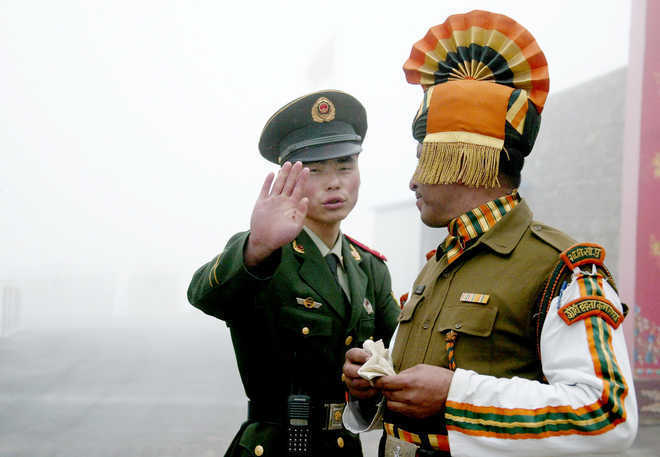
They said the Chinese side raised the issue at a ‘Border Personnel Meeting’ (BPM) on March 15 here but the Indian Army rejected it, saying that the area in the upper Subansiri region of Arunachal Pradesh belongs to India and it has regularly been carrying out patrols there.

The sources told PTI that the Chinese side called India’s patrolling in the area a “transgression” and the Indian Army objected to the terminology.

“China’s protest to our patrolling in Asaphila is surprising,” said a source, adding there were several instances of Chinese intrusions in the area which had been seriously taken up by the Indian side in the past.

Under the BPM mechanism, both sides can register their protest over any incident of transgressions as there are varying perceptions about the LAC between the two countries.

The delegation of China’s Peoples Liberation Army specifically mentioned extensive patrolling in Asaphila by Indian troops, saying such “violations” may escalate tensions between the two sides in the area.

However, rejecting the Chinese protest, the Indian side said its troops were aware of the alignment of the Line of Actual Control (LAC) and the Army would continue to carry out patrols up to the LAC, the de facto border between the two countries.

Perceptions of the border by India and China vastly differ in the area.

The sources said the Chinese military specifically mentioned large-scale Indian patrolling in Asaphila near Fishtail 1 on December 21, 22 and 23 last.

Indian and Chinese troops hold BPMs to resolve issues triggering tensions along the border.

There are five BPM points along the Line of Actual Control (LAC) at Bum La and Kibithu in Arunachal Pradesh, Daulat Beg Oldi and Chushul in Ladakh, and Nathu La in Sikkim.

The BPM on March 15 had taken place at the Daimai post on the Chinese side in the Kibithu area.

At the BPM, the Chinese also accused the Indian side of damaging its road building equipment when a road laying party left its gear in Tuting in December last year following a protest by India.

The Indian Army rejected the allegation, the sources said.

The Chinese road building team had crossed into Indian territory, about 1 km inside the Line of Actual Control in the Tuting area, in the last week of December.

The road construction team left the area after Indian troops asked them to stop the activity.

The team brought in two excavators which were later returned.

The sources said the Indian Army has increased war-fighting drills to deal with all possible scenarios along the LAC following the Doklam standoff.

“We are fully prepared to deal with any situation,” said a senior Army official.

Troops of India and China were locked in a 73-day standoff in Doklam from June 16 last year after the Indian side stopped the building of a road in the disputed area by the Chinese Army. The face-off ended on August 28.

Sources said India has deployed more troops and increased patrolling in the mountainous terrains along the borders with China following the Doklam face-off.

India is also strengthening its surveillance mechanism to keep an eye on Chinese activity along the borders in the strategically sensitive Tibetan region and has even been regularly deploying choppers to carry out recce.

The government has been focusing on strengthening its defences along the border with China.

In January, Army Chief Gen Bipin Rawat had said the time had come for the country to shift its focus from its borders with Pakistan to the frontier with China, reflecting the seriousness of the situation. PTI


‘India’s provocations on border will destroy foundation of mutual trust’

‘India’s provocations on border will destroy foundation of mutual trust’

Beijing, April 2

India’s “provocations” on the border with China will “destroy” the foundation of mutual trust and undermine bilateral ties, a Chinese analyst has said.

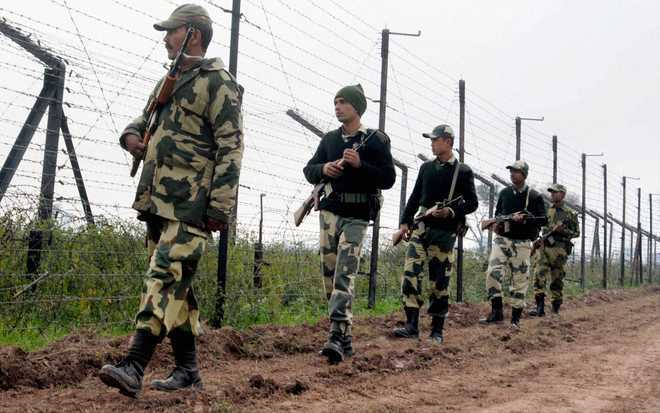
The statement comes after top Indian Army officials told PTI that the Indian troops have been deployed along the disputed Sino-India border in the Himalayan range to increase their patrolling at a tri-junction of India, China and Myanmar to prevent a repeat of a Doklam-like standoff.

Reacting to India’s increased deployment of troops along the border, Zhao Gancheng, director of the Center for Asia-Pacific Studies at the Shanghai Institute for International Studies, claimed that India’s “provocations” on the border will “destroy” the foundation of mutual trust and undermine bilateral ties.

“India keeps enhancing its military deployment along the border because it has never believed the border region will become peaceful,” Zhao was quoted as saying by the Global Times yesterday.

“India thinks that border conflicts with China will eventually happen,” Zhao said.

“India’s provocations will destroy mutual trust and aggravate the delicate regional situation,” Zhao added.

The mutual military distrust will ultimately undermine Sino-Indian relations in all sectors including diplomacy, economy and cultural exchanges, he said.

The Indian officials said the tri-junction, located around 50km from Walong, the easternmost town of India near the Tibet region, is extremely important for India to help it maintain its dominance in the nearby mountain passes and other areas.

A senior Indian Army official said Chinese troops did not enter the tri-junction too frequently but had developed a road infrastructure near the area which could be advantageous for the mobilisation of army personnel.

Troops of India and China were previously locked in a 73-day-long standoff in Doklam from June 16 last year after the Indian side stopped the building of a road in the disputed area by the Chinese Army. The face-off ended on August 28.

The area in Doklam, where China tried to construct a road, is a disputed territory claimed by both China and Bhutan. India sent its troops to stop the Chinese construction activity, saying it could be a threat to its strategic interests in the region.

Since the Doklam standoff, India has deployed more troops and increased patrolling along the borders with China in the Tibetan region. PTI


The looming danger of tech asymmetry by Air Vice-Marshal Manmohan Bahadur VM (retd)

The PMO should consider taking defence-preparedness directly under its wings, like the space and nuclear domains, to prevent a tech asymmetrical surprise in a future war.

The looming danger of tech asymmetry

Air Vice-Marshal Manmohan Bahadur VM (retd)
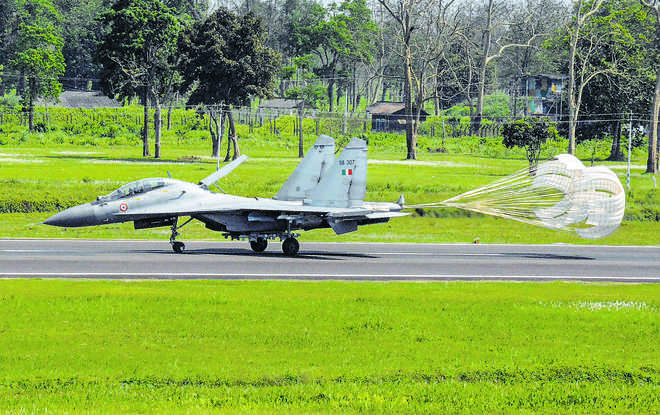
Distinguished Fellow, Centre for Air Power Studies, New DelhiTwo recent events have been discussed for their implications on the security posture of the nation. First, the establishment of the Defence Planning Committee (DPC) and second, the hosting of Exercise Gagan Shakti by the IAF. While the former is perched at the strategic level and will see its efforts beginning to bear fruit only a decade from now, the latter is about testing the preparation of the Air Force to fight a war in the immediate future. The DPC would be about spelling out doctrines, strategies, capability development, defence diplomacy and streamlining defence-manufacturing and acquisitions. Gagan Shakti, on the other hand, is about testing the operational and tactical capability of the IAF to prosecute war. However, lost in the media hype is an insidious reality creeping in — a fast-developing technological asymmetry between the armed forces of India and China, which if not addressed head on would be detrimental to India’s deterrence posture.Deterrence projected by a force is a function of the lethality of its equipment, training of its personnel and the stamina of its logistics chain. In turn, these are a function of their technological relevance when the balloon goes up. Thus, down the ages, the sword was overtaken by the lance, which was no match for the bow and arrow – and they all were made to look silly when the musket, rifle and mortar came on the scene. So, while the Indian Army is firmly entrenched on the mountainous northern border and the Navy expanding its blue water capabilities, it is the IAF that is the primary instrument of deterrence against China. The IAF, at present, is well placed vis-a-vis the Peoples’ Liberation Army Air Force (PLAAF) in almost all aspects of aerial warfare. There is a string of airfields along our northern border (all at low altitudes and hence not affecting weapon carrying capability of aircraft), the air defence network has been strengthened with new radars and surface-to-air missiles and its frontline Su-30 MKI fighters are better in all aspects than any aircraft that PLAAF can throw in. The C-17, IL-76 and An-32 transport aircraft afford an airlift capability much better than PLAAF’s while Mi-17 helicopters, supported by ALH Dhruv, match its heli-lift potential. Crowning this positive equipment asymmetry is the qualitatively better combat-readiness state of IAF aircrew who are trained in modern war fighting techniques unlike PLAAF’s rigid Russian legacy training profiles. This, however, is set to change as PLAAF goes about feverishly modernising its equipment and training profiles.The J-20 stealth fighter and Y-20 very heavy transport aircraft have started entering PLAAF and so have upgraded fourth-gen fighters like J-11, J-16 and J-10C. Feverish R&D is ongoing to master aero-engine technology by the amalgamation of numerous engine R&D centres into a single entity. In the next five-odd years, Chinese engineers would have turned the corner – dependence on Russia for engines would then end. With indigenous engines, the J-20 would become a true fifth-gen fighter and the Y-20’s payload would augment from the present 50 to 66 tonnes, bringing it on a par with India’s C-17. The Y-20, besides ramping up airlift capacity, would then be used as the base for indigenous AWACS and Flight Refuelling Aircraft, which are PLAAF’s Achilles’ heel at present.A long-range strategic bomber is on the design table and would be flying in a decade as would a hypersonic glide vehicle, whose prototype is already in existence. With extensive radar development and deployment, missile forces being coalesced into a single rocket force command, space assets being deployed in increasing numbers and net centricity in place, PLAAF may nullify IAF’s present edge. This could be accentuated by the drawdown of IAF fighter squadrons as MIG-21/27 fleets retire, low replenishment due the tortoise like production rate of Tejas by HAL and the meandering acquisition programmes of additional fighter aircraft and force multipliers like AWACS, FRA and armed UAVs. Immediate steps are necessary to prevent this alarming reversal, which is true for the other two Services too; could DPC be that catalyst?The DPC can succeed in its mission only if it follows in the footsteps of the atomic energy and space programmes — two success stories in the strategic domain, mainly because the Prime Minister’s Office (PMO) is directly involved and orders from these platforms are implicitly implemented by all ministries. As is known, though the foreign and finance ministries would be integral to it, the DPC would report to the Defence Minister who would forward recommendations to the Cabinet Committee on Security for consideration. This does not bode well for the very laudable spirit of making the DPC an instrument to expedite matters defence. True, that decisions and actions would be faster since the DPC head would be the National Security Adviser, but the speed with which tech asymmetry is developing against the Indian armed forces would become too skewed to play catch-up. India has tried the ‘committeeisation’ route, to use Chinese terminology, for the past seven decades and failed — and the DPC is but another committee. Time, tide and technology wait for no man and the PMO should consider taking defence preparedness directly under its wings, like the space and nuclear domains, to prevent a tech asymmetrical surprise in a future war.


*IMPORTANT EXTRACTS OF PENSION RULES*

Dear Veterans and Family Pensioners,
Please update yourself….!!
1. Fixed Medical Allowance (FMA) @ Rs.100 was introduced w.e..f. 01.12.1997.
2.Fixed Medical Allowance @ Rs.1000 was increased w.e.f. 01.07.2017.
3. ECHS members not eligible for Fixed Medical Allowance.
4. ECHS facility is now extended to the dependents of ex-recruits boarded out are drawing Disability pension.
5. ECHS made compulsory for those discharged after 01.04.2003.
6. There is *no fee for pre 1.1.96 pensioners* to join this scheme.
7. From 1.1.96 to 31.3.2003 they have to pay to join this scheme.
8. From 29.12.2017 the rates have been increased. (From Recruit to Hav rank Rs. 30,000, From Nb.Sub. to Hon.Capt and Equivalents. Rs.67000 & for all Officers Rs.1,20,000)
9. If you are having 32 KB individual white card, you can use up to Dec 2020.
10. If you are having Temporary ECHS slip, you have to apply for NEW Card.
11. If you have lost your ECHS card, you have to apply on line for new card.
12. If you are a member of ECHS make sure that you are not paid Fixed Medical Allowance.  If you are paid, wirte a letter to the bank to stop it, otherwise your ECHS Card will be suspended.
13. War disabled pensioners & widows are exempted from paying ECHS contribution.
14. If you are having old 16Kb (Red colour combined card), you have to change it before Sep 2018.
15. Keep note of your PPO No and always give your particulars like Rank, Group, Qualifying Service and date of birth in case of any query.
16. Always keep your pension account jointly with your Spouse. (E or S or F or S basis)

17. All family pensioners must give nomination to their pension accounts.
18. Update your pass book entries regularly.
19. Collect Pension slip from bank every month and keep it safe.
20. Link your Aadhaar Number and PAN number with your Pension account.
21. *Name of your spouse in the PPO and in the Bank account must be same*.
22. *If your and your spouse date of birth is not with your Bank, please submit your school certificate, Aadhaar card, PAN Card, Voter ID to the Bank for recording your Date of Birth*.
23. *Do not forget to give Life Certificate to the Bank in November every year*.
24. *All Pre 1.4.1985 pensioners must make sure that their Spouse name is there for family pension*.  If not, apply for endorsement of family pension immediately through ZSB to your Records office.
25. *All pre 1.4.1985 pensioners, who do not have pension book or PPO copy, please apply to bank and get a copy*.
26. If a pensioner dies before the age of 67,his spouse should get the same pension as her husband.  From the date of death till the deceased attains age of 67 or for 7 Years whichever falls early.
27. The pensioners who completed 80 years of age are eligible to get 20% increase in their basic pension as additional pension. *Thereafter, Pension increases 20% for every 5 years increase in age to 100% increase on attaining age of 💯 years*.  If you are not getting, you have to apply to the bank with the proof of date of birth.
28. EPF Pension in addition to Defence Pension Family pension allowed w.e.f. 27.07.2001
29. ESM can draw two pensions separately without any ceiling w.e.f. 01.01.1996.
30. DR. for re-employed ex-servicemen with some conditions w.e.f. 18.07.1997.
31. DR. is admissible to employed family pensioners without any condition w.e.f. 18.07.1997.
32. Minimum Ordinary Family Pension as per 7th CPC  is Rs.9,000+ DR  w.e.f. 01.01.2016.
33. Minimum Special Family Pension as per 7th CPC is Rs. 17,990 w.e.f. 01.01.2016.
34. Compensation for Delayed payment of Pension/Arrears to be paid w.e.f. 01.10.2008.
35. Improvement in pension for ORs & JCOs as per CDA Circular 430 w.e.f. 01.07.2009.
36. Additional pension is payable after 80 years on both the pensions, if any one drawing two pensions.
37. Additional pension is applicable for WIP (War Injury Pension) /Disability Pension/Lib.FP & SFP.

38. Joint notification of family pension was introduced from 01.03.1985.  Those who do not have    joint notification for family pension, they have to apply immediately.
39. Dual family pension is payable from 24.9.2012. as per CDA Cir.504 dt.17.01.2013.  The families of ESM who were drawing two pensions and died before 24.9.2012 were denied dual family pension at that time.  As per CDA Cir.504, they are eligible for two family pensions.
40. W.E.F. 01.07.2009 the concept of Broad banding of percentage of disability / War injury Shall be extended to Armed Forces Pensioners who were invalided out of service prior to 01.01.1996 and are in receipt of disability/war injury pension as on 01.07.2009.
41.Broadbanding for all pensioners is applicable wef 01.01.2016 (Circular 596)
42. The Cap on maximum WIP i.e. not to exceed emoluments last drawn has been removed w,e,f, 01.07.2009.
43. Liberalised family pension came into existence from 01.02.1972.
44. If you are having disabled children, unmarried daughters, widowed daughters, you must apply for Part II order (POR) for pension benefits on later dates.
45. Always check your pension with your Rank, Group, Qualifying service and date of birth.
46. Apply for financial assistance for disabled children from  KSB if you are not getting from anywhere.
47. If you have lost your ESM ID Card, you have to apply for duplicate from Zilla Sainik Board.
48.Your full date of birth must be recorded in your Aadhaar Card.  Your mobile number also to be linked to your Aadhaar card.  Visit Aadhaar permanent enrolment centre for any change.Nowadays banks are also entrusted to be Aadhaar enrolment centre.
49. ADLR (Assured Dignified Last Rites) Scheme Funeral Grant Rs.10,000 w.e.f. 08/07/2016.. Paid by Canteen.
50. Zilla Sainik Board pays Rs.5000 funeral grant.
51. Dignified Last Rites grant from Army/Navy/Airforce HQs amount differs.
*Note down or keep handy for your information and share with others*
Regards,Untitled
Brig R Vinayak, VSM

08989003891