Sanjha Morcha

*Patriot* anchored by *Maj Gaurav Arya* on Republic TV, covering activities of ASC College and Centre.

Pleased to announce telecast of two episodes of *Patriot* anchored by *Maj Gaurav Arya* on Republic TV, covering activities of ASC College and Centre.
The first one hr episode will be telecast at 1930 hr this Saturday (31 Mar) and repeated this Sunday (01 Apr) at 1430 and 2030 hr.
The second one-hr episode will be telecast at 1930 hr next Saturday (07 Apr) with repeat telecast at 1430 and 2030 hr next Sunday (08 Apr).
Promo enclosed.

As Modi & Xi re-engage, what’s on China’s mind by Lt Gen Syed Ata Hasnain

Prime Minister Narendra Modi (right) and Chinese President Xi Jinping. (Photo: File/AP)

Prime Minister Narendra Modi is visiting China and will meet President Xi Jinping on April 27-28 in an informal summit at Wuhan.

Prime Minister Narendra Modi (right) and Chinese President Xi Jinping. (Photo: File/AP)

Prime Minister Narendra Modi is visiting China and will meet President Xi Jinping on April 27-28 in an informal summit at Wuhan. They will again meet in June this year when he travels for the Shanghai Cooperation Organisation (SCO) summit. After the low point to which Sino-Indian relations had sunk in the wake of the Doklam standoff in June-August last year, and repeated Chinese transgressions of the Line of Actual Control (LAC) over the past many years, one could never be certain what China’s approach to “friendship and cooperation” was going to be. The continuous efforts by China to prevent India’s entry into the Nuclear Suppliers Group and its unrelenting determination to prevent Masood Azhar be declared an international terrorist by the UN Security Council would forebode no happy tidings from the coming encounter. Yet China can be the strangest country to deal with. After all, in 1962, after roundly defeating us on the battlefield, it withdrew behind its claimed lines, leaving the so-called disputed territory to be reoccupied by India. There is no reason for an Indian sulk in 2018 as that would be counterproductive, and the Modi government has done well to re-engage.

What can then reasonably be expected from the situation at this juncture of Sino-Indian ties and what will dictate it. China knows that it is destined for big things, the eventual leadership of the world. However, it is in no hurry to reach that stage prematurely. In Chinese philosophy, anything premature is bound to create uncertainty, and the certainty of its rise and ultimate dominance is China’s vision. Thus, the status of Sino-Indian relations needs to be examined from this angle. The perception that China is tempted to go to war with India at a stage when it finds India still militarily weak and unprepared could be inherently flawed. The discussions at the 19th congress of the Chinese Communist Party (CPC) made it amply clear that China retained the wisdom of the ancients and had the patience to await its turn to assume the leadership of the world. The interim is all about China working towards maintaining relationships with major powers that it sees as potential competitors and yet setting the stage for their eclipse at its hands. There is no doubt that India falls within the ambit of that perception, that demands from China strategic patience and just sufficient coercion to retain an upper hand in the bilateral relationship. President Xi Jinping’s new status, with leadership for life, and the statements of the 19th congress made it reasonably clear that he is no longer bound by the limits of tenure to achieve what he perceives he is destined to. The new vision surely cannot begin with conflict.

The $85 billion (and growing) trade between India and China is one of the drivers of China’s need for India — the growth was 18 per cent year on year in 2017, in spite of Doklam and other irritants; and the imbalance remains in China’s favour. In the face of a dwindling economy and with threats of trade wars with the United States, the idea of a lucrative trade relationship going bust may not sound tempting. Yet, for all this, China will still not put curbs on its coercion at the border, specially the disputed areas. That provides the scope to put India in its place and project it as unable to stand up to China’s military power. This has continued for a fairly long time, while cooperation in other domains also remained firm. The extent of this strategy was clear even in 2014 when Xi Jinping sat with Narendra Modi on the banks of the Sabarmati, even as the PLA blatantly carried out a transgression of the LAC in eastern Ladakh. But then Doklam happened, and that upset the carefully crafted strategy. India did not cow down, it held its own militarily and diplomatically, and even more importantly psychologically. China’s attempts at information and psychological warfare to browbeat India did not succeed and India handled its media well enough to neither intimidate nor escalate the conflict. A reset was therefore imminent.

The reset that China seeks is perhaps a marginal tweak of the original policy of simultaneous intimidation and engagement. India’s resistance to BRI and its refusal to show up for the grand BRI conference did not go down well with Beijing. The reset now probably includes an adjustment to bring India into the ambit less the CPEC, which crosses India’s claimed area of Pakistan-occupied Kashmir. Some alternatives could be in the offing, to include a China-Nepal-India Trilateral Economic Corridor extendable to Bangladesh, a China-Bhutan-India Corridor or a relook at the Bangladesh-India-Myanmar-China Corridor (BIMC). The signing of MOUs would be in the offing but the materialisation of these would be contingent upon what China has in store as far as the border is concerned. Putting that in the freezer is unlikely after years of experience in brinkmanship through walk-in operations. Leaving Doklam unavenged may also not be a tempting proposition as ego still dictates China’s self-perception. Analysts have been prophesying that limited coercion at the border accompanied by massive doses of deniable cyberattacks, along with a refurbished information strategy, could be in the offing even as India’s leadership is engaged in talks. That is the Chinese way, with the aim that India will wilt under the combined pressure and yield strategic space. The game being played over the Maldives is another prong of this strategy, a game which does include temporary yielding of space to send positive signals. In the recent past, China displayed this at FATF, where after initial reluctance it agreed upon placing Pakistan on the warning list for its financial terror links. By being willing to engage, India is not wilting but displaying pragmatism. When a nation has neglected its comprehensive national power to meet its threats, some pragmatic compromise is inevitable. Hopefully, over the next decade or so it will pay more attention towards this weakness and acquire a position to resist Chinese coercion, even as the two remain engaged in many other domains of cooperation.

Syed Ata Hasnain, a retired lieutenant-general, is a former commander of the Srinagar-based 15 Corps. He is also associated with the Vivekananda International Foundation and the Institute of Peace and Conflict Studies.


India, US, Japan ready for war drill in Pacific

Chinese aircraft carrier Liaoning and its associated fleet have been practising in the same area recently

Ajay Banerjee

Tribune News Service

New Delhi, April 25

Even as China takes forward its military expansion into the island territories of western Pacific Ocean, India, US and Japan will conduct their annual Malabar exercise at sea off the coast of Guam, a US-controlled military base in the western Pacific Ocean.Chinese aircraft carrier Liaoning and its associated fleet have been practising in the same area recently even as Vanuatu, another island close to Australia, is being eyed by Beijing for a possible Naval base. Beijing’s moves could lead to a rejig of plans of the newly formed quadrilateral—US, India, Japan and Australia. The nine-day Malabar exercise will commence on June 7. India will set sail its three warships — INS Shayadri, INS Kamorta and a fleet tanker—in the third week of May. These will be joined in by long range maritime recognisance aircraft, the Boeing P8-I. The US is expected to have one of its carriers in the exercise.The Malabar is conducted annually, the last time India hosted it in the Bay of Bengal. This included high-end war-fighting skill set, subject matter experts, combined carrier strike group operations, maritime patrol and reconnaissance operations, surface and anti-submarine warfare, medical operations, damage control, special forces, explosive ordnance disposal (EOD), helicopter operations, and visit board search and seizure (VBSS) operations. In 2016, the exercise was hosted by Japan with the “sea phase” taking place in the Philippine Sea. China has recently increased its air and naval excursions in the western Pacific in what is being seen as a quest to expand its military presence. Beijing has a policy of ‘open seas protection’, which includes warships, nuclear-powered attack submarines and aircraft carriers.


Gr8 achievements by sportsmen of Army Sports Institute Pune in CWG 2018 at Gold Coast, Australia


Image may contain: 2 people, people smiling, text

.1.Sub Neeraj Chopra won first ever  Gold Medal in Javelin throw with season best 86.47M ,

2. Nb Sub Amit won Silver Medal in Boxing 49 kg,

3. Nb Sub Gaurav Solanki won Gold Medal in Boxing 52 kg,

4.Nb Sub Manish Kaushik won Silver Medal in Boxing 60 kg,

5.Nb Sub M Hassumudeen won Bronze Medal in Boxing 56 kg,

6.Sub Satish won Silver Medal in Boxing  +91kg,

7.Nb Sub Deepak Lather won Bronze Medal in Wtlifting.

8.Sub Jinson Jonson came 5th in 1500M n broke 23 yrs Indian National Record.

Image may contain: text

Total…… 02 Gold Medals, 03 Silver Medals n 02 Bronze Medals.

Sportsmen of ASI Pune have created history by winning 07 medals in any CWG. Regards

http://


Pakistan violates ceasefire in J&K’s Rajouri

Pakistan violates ceasefire in J&K’s Rajouri

There has been spurt in the ceasefire violations along the LoC this year. Tribune file

Jammu, April 14

Pakistani troops on Saturday violated the ceasefire by resorting to unprovoked and indiscriminate firing along the Line of Control (LoC) in Jammu and Kashmir’s Rajouri district, prompting retaliation from the Indian side, officials said.

A defence spokesperson said there was no report of any casualty in the skirmishes, which continued for several hours.

Pakistani troops started the unprovoked and indiscriminate firing from across the border in Nowshera sector around 8.30 am, the spokesperson said.

A police official said the Bhawani area was targeted by the Pakistani troops with small and medium weapons and mortar guns, causing panic among the residents.

There has been spurt in the ceasefire violations along the LoC and the International Border (IB) in Jammu and Kashmir this year, resulting in the death of 29 persons, including 15 security personnel, in over 650 such incidents. PTI


Subsidies and morality Punjab’s hope for free-power surrender on weak ground

Subsidies and morality

Punjab has told the Punjab and Haryana High Court that it does not intend to withdraw the power subsidy from farmers of any size. Instead, it has appealed to “rich” farmers that they surrender the subsidy voluntarily. This is very much in line with the larger campaign of the NDA government at the Centre that is urging the well-off to avoid taking various subsidies, starting with LPG. Even though the success of that appeal is yet to be detremined, there is no gainsaying it does raise a fundamental question of the morality of precious public resources going to those who don’t really need them when all needy have not yet been served.India has had a tradition of giving in the name of God, a significant part of which does reach the poor. However, the spirit has not been evident when it comes to scientific philanthropy, in which specific areas of need, such as education or health, may be identified to enable high-net-worth individuals to make contributions. There is need for charity to move beyond personal or spiritual satisfaction, where the giver wants to personally see the exact beneficiary and end use to draw a certain fulfilment. To be fair to the rich, there is a trust gap when it comes to charitable organisations. It is only natural for a person to demand that his money be put to good use. That is where the “give it up” initiatives of governments can fill the gap by providing planned and organised channels of “charity”.The power subsidy situation in Punjab, however, may be slightly different. That is because the definition of a “rich farmer” is debatable. The number of those rich purely on farm income would be very small as there exists a limit on the amount of land a person can hold. Then there are those, including politicians, who have income from land as well as other sources. Sadly, their preparedness to give up may be gauged from the fact that thus far in Punjab only Chief Minister Capt Amarinder Singh and Leader of the Opposition Sukhpal Khaira have taken the step.


Civilian deaths: Kashmiri students clash with forces

SRINAGAR: Students clashed with security personnel in Kashmir on Thursday after authorities reopened educational institutions after a shutdown following the death of 13 militants, five civilians and three soldiers in gunbattles earlier this week.

REUTERSA policeman throws a teargas shell towards protesters outside a college in Srinagar.Students took on security personnel at different institutes in Srinagar, protesting the five civilian deaths. Scores of female students were among the protesters in the commercial hub of Lal Chowk.

The Associated Press reported that security personnel fired tear gas to stop students from marching at several colleges. Clashes also erupted in other parts of Kashmir as students hurled rocks at police and paramilitary soldiers. They also burned a police bunker in Srinagar, the news agency reported.

Thursday’s student protests were reminiscent of similar agitation a year ago when sporadic clashes between students and security personnel spread across the Valley after alleged police excess in dealing with students at the Degree College in Pulwama.

The protests came even as chief minister Mehbooba Mufti visited the house of 23-year-old Gowhar Ahmad Rather, who died on Tuesday after being injured in clashes with security forces in Kangan town of Ganderbal district.

“The chief minister assured the family members that the guilty found involved in excessive use of force in the incident would be brought to book. She also conveyed her sympathies with the bereaved family,” an official press statement said.

Jammu and Kashmir police on Wednesday suspended a constable and ordered as a departmental and magisterial inquiry into Rather’s death.


MS Dhoni receives Padma Bhushan, impresses all in army uniform

As MS Dhoni’s name was announced, the ex-Indian cricket team captain marched past the dignitaries present at the Rashtrapathi Bhavan before receiving Padma Bhushan award from President Ram Nath K

MS Dhoni, ex-Indian cricket team captain, during the Padma Awards 2018 at Rashtrapati Bhavan in New Delhi on Monday.

Exactly seven years after lighting up the Mumbai skyline with an unforgettable six, MS Dhoni again became the cynosure of all eyes as the honorary Lieutenant Colonel received the Padma Bhushan Award, dressed in an army uniform.

It was a happy coincidence for Dhoni as he was conferred with the prestigious civilian honour on the seventh anniversary of their famous World Cup triumph.

The Indian Territorial Army had conferred the honorary rank of Lieutenant Colonel to Dhoni on November 1, 2011, months after the country lifted its second World Cup under his leadership.

The 37-year-old Dhoni is the second Indian cricketer after Kapil Dev to receive this honour.

Dhoni has been the recipient of many awards, including the ICC ODI Player of the Year award in 2008 and 2009 (the first player to win the award twice), the Rajiv Gandhi Khel Ratna award in 2007 and the Padma Shri, India’s fourth highest civilian honour in 2009.

An article beyond the usual pass on posts

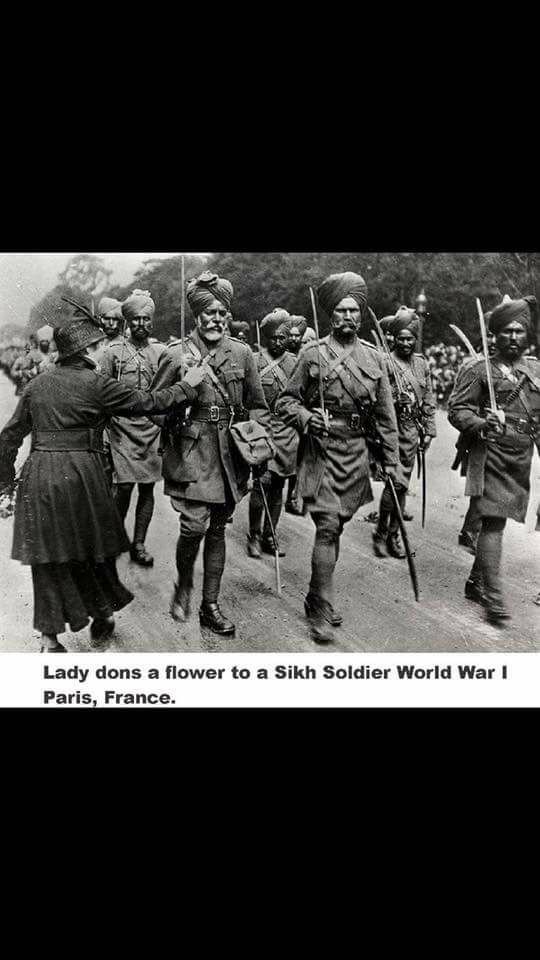
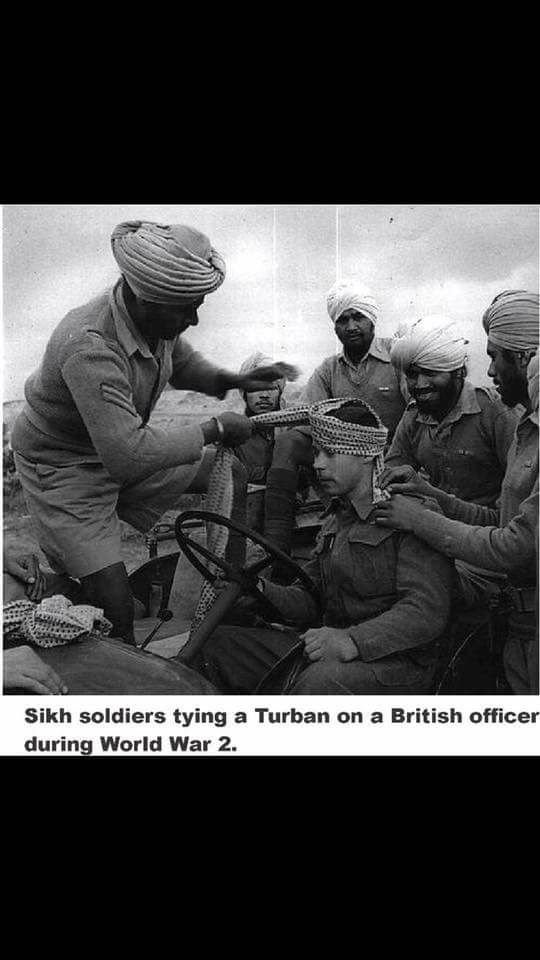
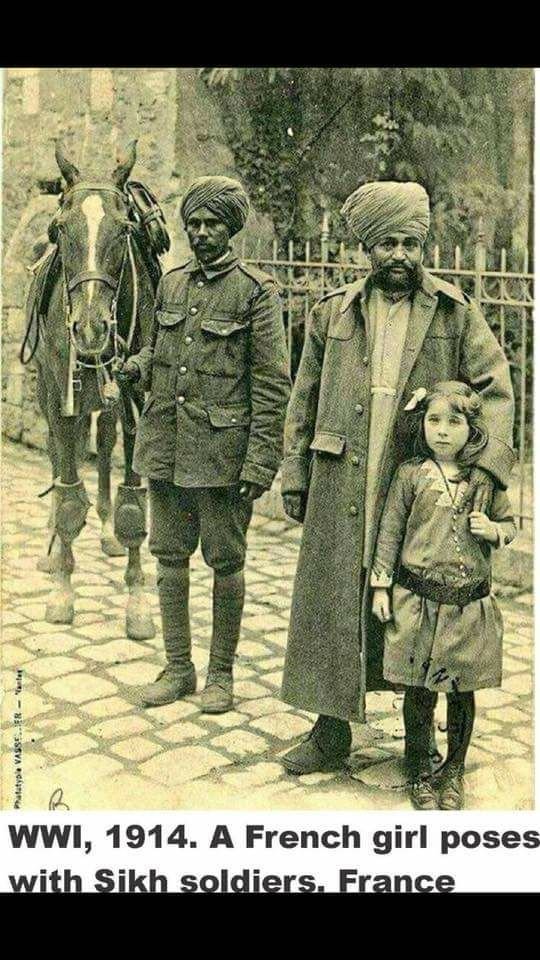
 Some of us saw this Bn from close quarters and Col now Brig (retd) purushe my ex CO dealt with some court-martials. Story below as told by Brig Gakhal of Sikh Regt;
THE SPIRIT TO WIN !
“It is not the dog in the fight that matters but the fight in the dog.”  Harold Robbins.
1. The other day i had a lunch appointment with Col Karam Singh Virk and it is that which brought to mind this quote of Harold Robbins that one read in college. We met to glean the events of Disbandment of 9 Sikh, an event entrusted to his charge after the CO was attached. During the course of the three hour interaction, he eyes were perpetually moist at times the tears made an appearance, but his voice never quivered or cracked. Having commanded three Battalions, it was his fate to preside over the disbandment of the third. The emotions were but natural. 
2. Towards the close of 1984, Col Virk who was commanding 20 Sikh at Charmagad, was summoned  at short notice to assume command of 9 Sikh. At that point in time the unit was split in three locations. The detainees numbering 387 in Ganganagar under 14 Bihar, 05 Officers,16 JCOs and 200 OR who were on leave /courses on 7/8 June 84 were attached at Bikaner with a Field Regiment and the remaining 05 officers,10 JCOs and 140 OR were at Lalgarh Jattan. Though technically Col Virk took over 9 Sikh he was actually commanding 05 Officers, 10 JCOs and 140 OR, a rifle Company strength. His efforts to concentrate the Battalion less the detainees at one location did not get the approval of the chain of command. It is in that scenario that the ‘fight in the dog’ came to the fore.
3. The Competition calendar was being finalised and Col Virk was asked if  9 Sikh would like to participate. With nothing to loose the answer to the amazement of brigade staff was an affirmative. The X Country team was unaffected by the events of 7/8 june and won the brigade hands down. First nine positions went to 9 Sikh. The Rajputs & Gurkhas were way behind. Hockey followed, the original team had been mauled by the events of 7/8 June. Available talent practised day and night with little else to do.( The unit was disarmed and as such training with arms was not possible). Hockey was also won, comfortably. Basket ball posed problems as the Rajputs boasted of Command level players and a  well oiled team. Col Virk a basketballer himself  had in LT PK Singh a fine talent, between them they mustered, skilled and trained a team. Col Virk often witnessed the Rajputs at play and was able to strategize their game plan. Come the finals, the Sikh’s defensive play frustrated the skilled Rajput players who lost rationality as reputation was at stake. A victory here stunned the Rajput Battalion.
4. Boxing is a prestigious Gurkha sport. Sikhs have little talent in the lower weights while the Gurkhas lack in higher weights. On the final day, the first three knock outs by Gurkhas and chants of “Ho Kay Hoi na” motivated the Sikh heavier weights. To cut a long story short the Knock outs that followed silenced the audience and as the trophy was handed over to 9 Sikh Jaikar’s reached a crescendo.  The only sport in which  coy worth of 9 Sikh were runners up was football, where the Gurkhas won a closely fought final by 3-2.
5. What motivated a motley Company strength to show the prowess they did ? Right Leadership and Right Spirit. 9 Sikh was always renowned for the limitless spirit to win. A unit that within a year of its raising in Apr 1964 won the Gen Chaudhry Match and repeated the win the following year.  A gruelling physically demanding competition that ended in testing accuracy in firing. A unit that captured 46 Sq KMs of the Lipa Valley in sept 1971. Their spirit to win was endless !
Its not the Dog that matters its the spirit in the dog !! so well said !!