Sanjha Morcha

The opening with Pakistan Return of veneer of normality

The opening with Pakistan

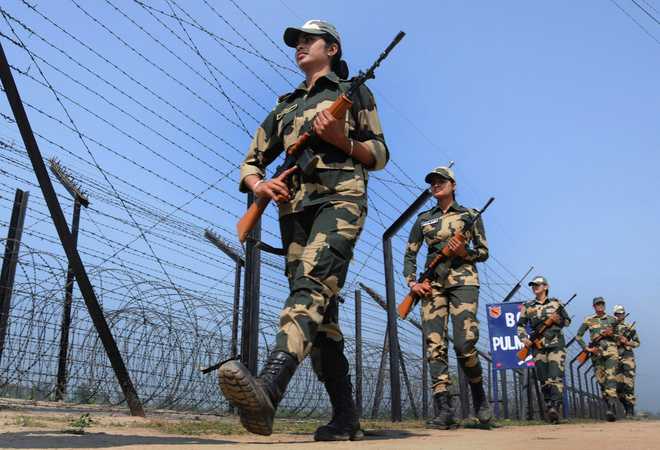
The India-Pakistan saga has taken many strange twists and turns. One of them would be India’s sudden offer to break bread with Pakistan on humanitarian issues even as soldiers take potshots at each other along the border in J&K. Equally surprising is Pakistan’s quick acceptance of the offer to de-escalate the hostilities on the border. It may not be hard to detect the inspiration behind the abrupt realisation that the border needs peace and that women and the elderly are the worst sufferers in the absence of regular diplomatic relations. The US is trying to regain its lost geopolitical footing following quicksilver moves in the region by the Chinese. Washington allows New Delhi to do the heavylifting in the contest with Beijing for island-nations in the Indian Ocean or the countries between Tibet and India. But it has taken matters in its own hand to check the Af-Pak drift away from the Western camp.The US interest in easing tensions between India and Pakistan is obvious. It has just offered an olive branch to the Taliban and warm words to coax Pakistan into relocating bulk of its army on the Afghanistan border to bottle-up militants out to sabotage the talks. A prime requirement for the US game in Afghanistan to succeed is peace on the Indo-Pak border. For both countries uninterested in normalising ties because of the divergence in their core concerns, the humanitarian angle is a convenient cover to announce a break from the mutually unhelpful and endless skirmishing on the border.Appearances can be deceptive but Pakistan has offered more than a formal breaking of bread by dangling the prospect of a comprehensive dialogue. This is the ideal opening for diplomats to step in. India needs space to strengthen its internal political processes in J&K as well as allow smooth implementation of its Iran trade corridor and the gas pipeline from Turkmenistan, even as it keeps turning the screws on Pakistan for harbouring militants. A stoppage of dialogue has so far only added more files to the folder of bilateral negativity.
How forces got Jaish chief in 10 minutes

How forces got Jaish chief in 10 minutes

Majid Jahangir

Tribune News Service

Srinagar, March 6

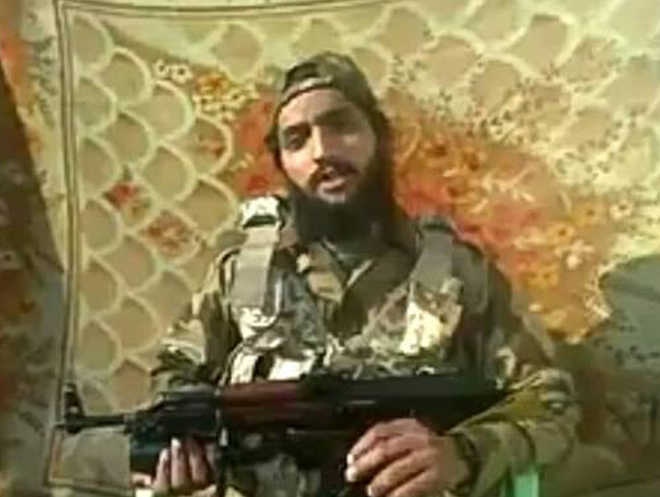
Barely a few minutes of gunfight led to the killing of Jaish-e-Mohammad top militant in Kashmir who masterminded all recent fidayaeen attacks in J&K.Jaish operational commander Mufti Waqas, a resident of Pakistan, was killed in a meticulous operation on Monday evening at Hatiwara, Awantipora, nearly 20 km from Srinagar.Upon receiving “pinpoint” input about Waqas’ presence in a house with a small attic in the village on Monday afternoon, security forces planned the operation. The police suspect that Waqas had arrived in the village late Sunday. A joint operation was launched by the police, 50 Rashtriya Rifles Battalion and 130 Battalion of the CRPF in a congested locality, though the suspected house was located in an open area, sources said, adding that the security forces had considered the possibility of the operation continuing through the night.“After the cordon was laid around 5 pm, the militant commander was offered surrender through the house owner, which he declined. The inmates of the house were taken out. The militant commander came out running and fired in a bid to escape. In the nearly 10-minute gunfight Waqas was killed,” a security officer in south Kashmir said. “It was a crisp and clean operation.”The anti-militancy operation was called off by 7 in the evening.After infiltrating into the Valley last year, Waqas was operating in the Tral area of Pulwama district, said police sources. Waqas and the 3-foot-tall local militant commander Noor Mohammad Trali together revived the Jaish outfit and planned fidayeen attacks. Trali was killed in December last year close to the village where Waqas was killed last evening. “Waqas was close to Jaish founder Maulana Azhar Masood, whose nephew Talha Rashid worked under Waqas,” another police officer in Srinagar said while terming the killing of Waqas as the biggest success of the year. Talha was killed in November last year in a gunfight in Pulwama.A police spokesman on Monday had said the slain militant commander was the chief architect of attacks on the security forces, including the strikes at District Police Lines, Pulwama, on August 26 last year, Lethpora CRPF camp on January 1 and Sunjuwan Army camp on February 10.Meanwhile, Tral, Awantipora and Pampore towns observed a shutdown over the killing of Waqas.


Crisp encounter

  • A joint operation was launched at Hatiwara, Awantipora, after input about Mufti Waqas’ presence in a house in the village.
  • After the cordon was laid around 5 pm on Monday, the Jaish commander was given the surrender offer through the house owner, which he declined.
  • The inmates of the house were taken out. Waqas came out of the house running and fired in a bid to escape. In 10 minutes, he was killed in a crisp and clean operation, said a security officer.

Violence in Tripura Not the change voters were looking for

Violence in Tripura

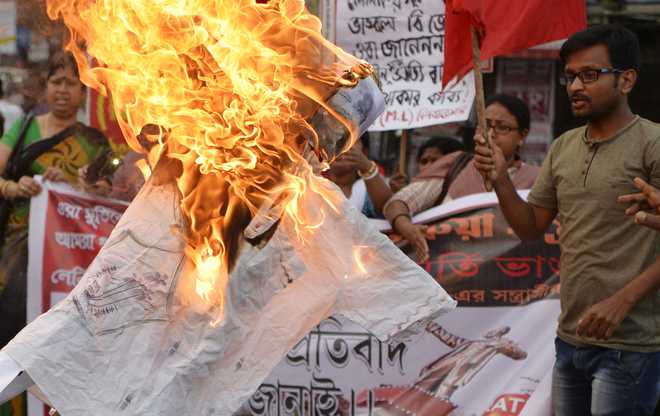
TRUE to its election-time slogan of Chalo Paltai (let us overturn), the BJP has put its battle cry into practice even before an elected government could be sworn in. The overexcitement among its cadres has given way to frenzy. A statue of Lenin was overturned and several CPM offices were torched or vandalised. The BJP activists seem to have borrowed the idea of bulldozing Lenin’s statue from Eastern Europe where thousands of Lenin and Marx statues were pulled down rowdily as a joyous expression of the end to a deeply prescriptive and intrusive ideology. Matters ended at that. The practice has continued in Ukraine more because it is a country deeply at odds with itself and vandalism of the other’s cultural and political symbols is part of the tit-for-tat violence that has engulfed the land.But in India, the vandalism of the Lenin statue and the larger script of political violence sit uneasily with the traditional Indian practice of cohabiting with opposing binaries and philosophies. The true Indian willingly imbibes the essence of the atheistic-materialistic Charvak as well as the Sanatan Dharma’s spirit of renunciation and embedded ritualism. Rather, the BJP betrays comfort with static ideas much like its vanquished opponent when it rationalises the demolition of the statue of a “foreigner”, overlooking the continued relevance of his ideas.Union Home Minister Rajnath Singh needs to be commended for quickly sensing the vacuum in governance and instructing the police to take charge of the situation. At the real-politic level, he would be conscious that the BJP has so far only successfully peddled a dream. It needs to summon the spirit of cooption and cooperation even for its partial realisation; though the Left Front lost the polls, it drew in a significant 45 per cent of the vote. The BJP’s cadres should also realise that the pattern of wins and losses in a democracy are cyclical and so is retributive violence; good governance, by which it swears, will be the casualty if mayhem in the bazaars of Tripura is allowed to continue unchecked.


Judiciary-govt bonhomie, death knell for democracy: Justice Chelameswar

Judiciary-govt bonhomie, death knell for democracy: Justice Chelameswar

New Delhi, March 29

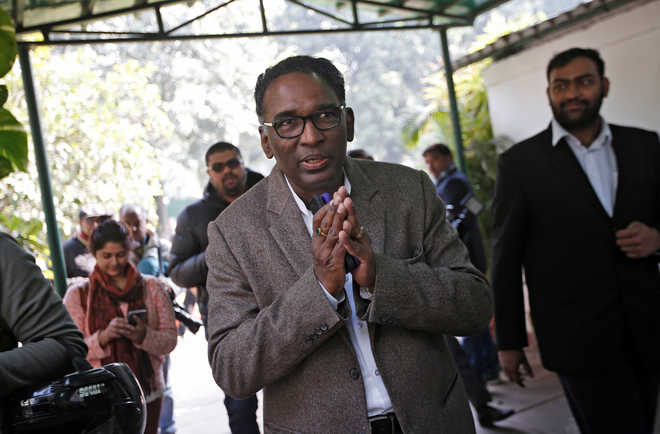
Any “bonhomie” between the judiciary and the government would sound the “death knell” for democracy, senior-most Supreme Court judge Justice J Chelameswar has told the Chief Justice of India (CJI) and urged him to convene a full court to deal with the alleged executive interference in judiciary.In an unprecedent letter to the CJI, copies of which were also sent to 22 other apex court judges on March 21, Justice Chelameswar has questioned the probe initiated by Karnataka High Court Chief Justice Dinesh Maheshwari against District and Sessions Judge Krishna Bhat at the request of the Union Ministry of Law and Justice, despite his name being recommended for elevation twice by the Collegium.Efforts to get a response on the letter from the office of CJI Dipak Misra did not fructify, while several legal luminaries, when contacted, chose not to comment on the matter.Justice Chelameswar, who had held the unprecedented January 12 press conference along with three other senior judges raising issues, including the allocation of cases by the CJI, expressed concern over the executive directly asking the Karnataka Chief Justice to conduct a probe against Bhat, saying this was done even after his name was recommended twice for judgeship by the apex court collegium.In 2016, then Chief Justice of India T S Thakur had asked then High Court chief justice S K Mukherjee to hold an inquiry against Bhat on certain allegations levelled by a subordinate woman judicial officer. After the probe had given him a clean chit, Bhat’s name was recommended by the collegium for elevation.”Someone from Bangalore has already beaten us in the race to the bottom. The Chief Justice of Karnataka High Court is more than willing to do the Executive bidding, behind our back,” Justice Chelameswar wrote in his six-page letter.Raising the issue of judicial independence, he said, “We, the judges of the Supreme Court of India, are being accused of ceding our independence and our institutional integrity to the Executive’s incremental encroachment.”The executive is always impatient, and brooks no disobedience even of the judiciary if it can. Attempts were always made to treat the Chief Justices as the Departmental Heads in the Secretariat. So much for our ‘independence and pre-eminence’ as a distinct State organ.” The letter said: “Let us also not forget that the bonhomie between the judiciary and the government in any State sounds the death knell to democracy. We both are mutual watchdogs, so to say, no mutual admirers, much less constitutional cohorts”.Justice Chelameswar referred to the “unhappy experience” where the Government sat tight over the files even after the Collegium recommends names for appointment in the higher judiciary.”For some time, our unhappy experience has been that the government’s accepting our recommendations is an exception and sitting on them is the norm. ‘Inconvenient’ but able judges or judges to be are being bypassed through this route,” he alleged.The apex court judge, who demits office on June 22, took serious note of the communication between the Karnataka High Court chief justice and the executive saying, “the role of the High Court ceases with its recommendation”.He said that any correspondence, clarificatory or otherwise, has to be between the executive and the Supreme Court.The top court judge also said the day may not be “far off” when the executive would directly communicate with the High Court about pending cases and ask what orders are to be passed.While referring to Bhat’s case, he said, “To my mind, I could recollect no instance from the past, of the executive bypassing the Supreme Court, more particularly while its recommendations are pending, to look into the allegations already falsified and conclusively rejected by us.”Asking the High Court to re-evaluate our recommendation in this matter has to be deemed improper and contumacious.” Beseeching the CJI to take up the issue of executive interference in judiciary by convening a full court on the judicial side, he said this was necessary in order to ensure that the institution (Supreme Court) remained relevant under the scheme of the Constitution.He also referred to a past instance when the apex court had taken serious note of a direct communication of the then Law Minister to the High Courts on the issue of judges’ transfer which had finally led to the judgement in first judges case in 1981. Later, the Collegium had assumed power with regard to judges’ appointment in the higher judiciary. – PTI


Pakistan to exhibit archives of Bhagat Singh case trial

Pakistan to exhibit archives of Bhagat Singh case trial

Lahore, March 25

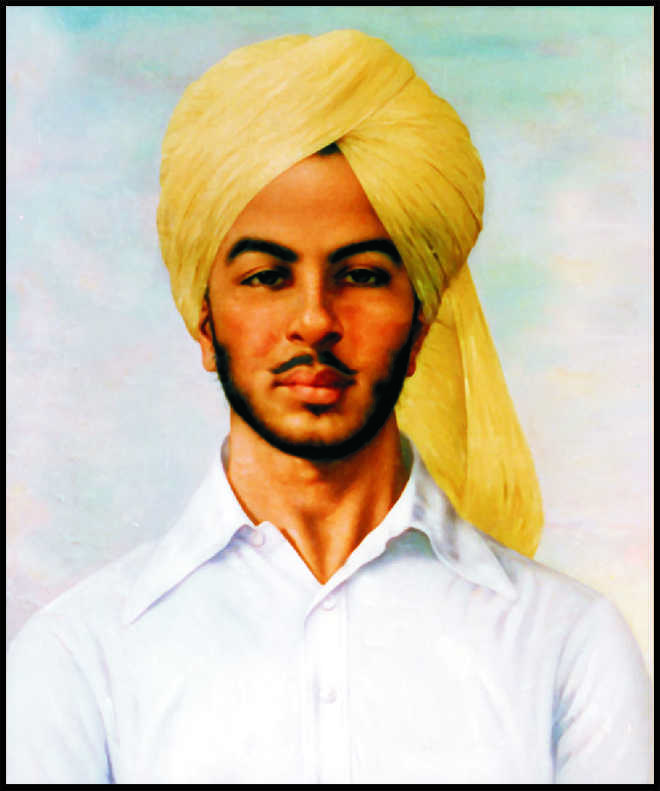
The Pakistan Government will for the first time put on display the case file of the trial of legendary Indian freedom fighter Bhagat Singh among other historical documents here tomorrow.This was decided at a meeting of the Punjab Government top bureaucrats, headed by chief secretary Zahid Saeed, which proclaimed the revolutionary as “hero of both India and Pakistan”.“The meeting decided that Bhagat Singh was the Independence movement hero of both India and Pakistan. The people of the country have the right to know about his (Singh) and his comrades’ great struggle to get freedom from the British Raj,” an official of the Punjab Government told PTI today.The exhibition will take place at the Anarkali tomb in Lahore which houses the Punjab Archive Department.The official said letters written by Bhagat Singh from jail to his father and for getting ‘A Class’ after declaring himself and others as political prisoners and books, newspapers, record of the hotels where he and others stayed when underground would also be exhibited.The application Bhagat Singh had written for facilities carried his signatures.“The revolutionary significantly did not end each application with the customary ‘yours truly’ or ‘obediently’. Instead he chose the words ‘Yours etc. etc.’ showing his resilience in the face of tyranny,” the official said.The case file contents to be displayed tomorrow also include the court’s order convicting him and his associates Rajguru and Sukhdev, black warrants and the jailer’s report confirming their hanging.The locations where Bhagat Singh and his associates used to stay, including a factory on Ravi Road, a rented house in Gowalmandi, another in Mozang and in Kashmir Building on McLeod Road, admission register of a comrade from the DAV college, books, novels and revolutionary literature which Bhagat Singh would read are also being displayed.The books include ‘Punjab Tragedy’, ‘Zakhmi Punjab’, ‘Ganga Das Dakoo’, ‘Sultana Dakoo’, ‘The Evolution of Sinn Fein’ and ‘History of the Sinn Fein Movement’.The case files contain documents showing how the British India police and agencies had busted the team of Bhagat Singh comprising around 25 members from different parts of India and established their links with the Hindustan Socialist Republican Army and the Naujawan Bharat Sabha.Bhagat Singh was hanged by British rulers on March 23, 1931 at the age of 23 in Lahore, after being tried under charges for hatching a conspiracy against the colonial government. The case was filed against Singh, Sukhdev and Rajguru for allegedly killing British police officer John P Saunders.The documents to be displayed also include postmortem reports of Saunders and constable Charan Singh, the official said. — PTI


Chinese have finally arrived: Army chief General Bipin Rawat lauds neighbour`s military might

Chinese have finally arrived: Army chief General Bipin Rawat lauds neighbour's military might

They did not forget that military power should rise simultaneously with economy, said General Bipin Rawat.

Indian Army chief General Bipin Rawat on Tuesday acknowledged the military might of China, saying “Chinese have finally arrived”. During a media interaction, the Army chief pointed that China ensured rise of its military power along with its economic prowess.
“Chinese have finally arrived. I can say that. They did not forget that military power should rise simultaneously with economy,” said General Rawat. He further acknowledged that China stands “strong today in the world order, challenging the might of the US”.
According to the Army chief, counties across the world have started looking up to India after the rise of China. He said, “As China has risen, countries have started looking up to India to see whether we can also become a nation that can balance the rise of China.”

It was because of China’s assertiveness that the focus of the international community shifted towards the Indo-Pacific region, said General Rawat.

This comes days after the Army chief blamed Pakistan and China for influx of illegal immigrants from Bangladesh. He had said that it is part of a proxy warfare by Pakistan, which is getting support from China with an aim to keep the area disturbed.

“I think the proxy game is very well played by our western neighbour, supported by our northern border (China) to keep the area disturbed. We will continue to see some migration happening. The solution lies in identifying the problem and holistically looking at it,” he had said

India and China recently ended about a 70-day long military standoff at the Doklam tri-junction near the Sikkim border which had strained bilateral ties.

In another reference to China, Rawat had said in August 2017 that China was attempting to ‘change the status quo’ on its border with India and incidents like stand-off in the Doklam area were likely to ‘increase’ in future.


“The recent stand-off in the Doklam plateau by the Chinese side attempting to change the status quo are issues which we need to be wary about, and I think such kind of incidents are likely to increase in the future,” he had said.


IAF proposals will be given due attention: CM

Dehradun, March 14

Uttarakhand Chief Minister Trivendra Singh Rawat today reiterated his government’s commitment on the issues of national security and said all proposals put forward by the Indian Air Force (IAF) regarding land acquisition in the state would be given due attention.A team of senior officials of the Western Air Command, led by the Air Officer Commanding-in-Chief, Air Marshal C Hari Kumar, called on Rawat and held discussions on the requirement of land for new IAF units in the state, an official press release said. — PTI


Army battles fund crunch Tells House panel it’s struggling even to make emergency purchases

New Delhi, March 13

The Army has said it was reeling under severe fund crunch and struggling to even make emergency procurements when it was dealing with an assertive China along the northern border after the Doklam face-off and increasing hostilities from Pakistan on the western frontier.The Army told a parliamentary panel that the insufficient allocation to it in the defence budget was going to hit the Army’s modernisation at a time when Chinese military was competing to reach the level of the US and Pakistan bolstering capability of its forces.Vice Chief of Army Lt Gen Sarath Chand said 68 per cent of the Army’s equipment is in the ‘vintage category’, adding fund crunch will also impact the serviceability of the existing equipment and may even affect payment of instalments for past purchases.The Army’s frustrations over inadequate allocations of funds in the defence budget for next fiscal figured in a report of the Standing Committee on Defence, which was tabled in Lok Sabha today.Talking about the new procurement policy, delegation of financial powers to Vice Chief of Army and several other initiatives towards modernisation of the armed forces, Lt Gen Chand told the panel that “the Budget of 2018-19 has dashed our hopes and most of what has been achieved has actually received a little setback.” He said, “Allocation of Rs 21,338 crore for modernisation is insufficient even to cater for committed payment of Rs 29,033 crore for 125 on-going schemes, emergency procurements,” he said, adding “committed liabilities of 2017, which will also get passed on to 2018, will further accentuate the situation.” Referring to the regional security scenario, Lt Gen Chand said the possibility of “two front” war is a reality and the country needs to pay attention to modernisation of the Army. He said the Doklam issue was going on and China has become increasingly assertive.The Army also informed the panel that it does not have adequate resources to even undertake the construction of strategic roads near the Sino-India border.The Vice Chief of Army Staff also referred to daring terror attacks on military installations in Uri, Pathankot, Nagrota and Sunjuwan Cantt in Jammu and said the defence forces must get their due. On its part, the Parliamentary Standing Committee, headed by BJP MP BC Khanduri, also came down hard on the government for inadequate allocation of financial resources to the armed forces. — PTI


UK think tank pushes for cheaper visas for Indians

UK think tank pushes for cheaper visas for Indians

London, March 10

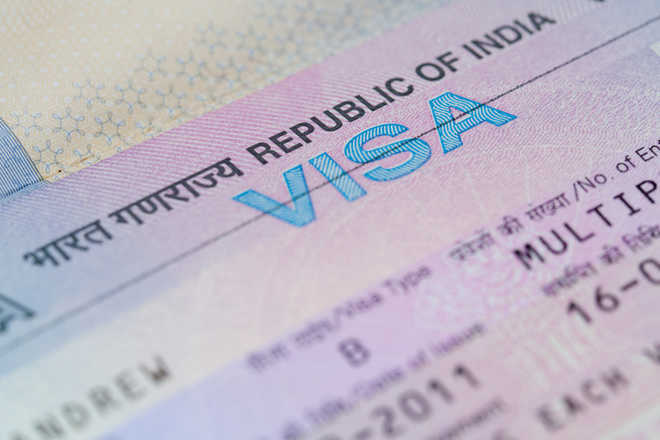
A leading UK-based think tank has released a research to support its call for a new, more economical visa regime to attract Indian visitors to the country. The Royal Commonwealth Society (RCS) revealed that the UK was losing out as neighbouring France attracted 185,000 more Indian business visitors and tourists in 2016. Overall the number of visits to the UK by Indian nationals fell by 1.73 per cent in 2016, while in France it grew by 5.3 per cent.(Follow The Tribune on Facebook; and Twitter @thetribunechd) “The UK’s market share of Indian outbound tourists has more than halved from 4.4 per cent in 2006 to 1.9 per cent in 2016… 600,000 Indians visited France in 2016, 185,000 more than visited the UK,” RCS says in its new ‘Britain and India: Building a New Visa Partnership’ fact sheet presented to British MPs as part of its campaign launched in 2016 for a new UK-India bilateral visa agreement which would considerably reduce the cost of tourist visas. — PTI


Wang: Chinese dragon, Indian elephant must dance together

Wang: Chinese dragon, Indian elephant must dance together
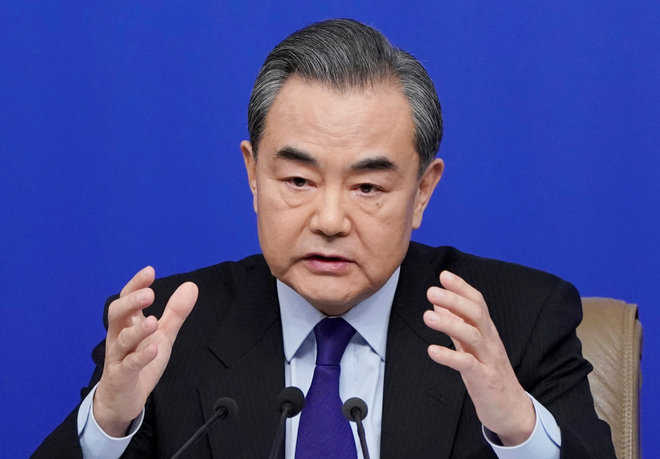
China’s Foreign Minister Wang Yi in Beijing. Reuters

Beijing, March 8

Chinese Foreign Minister Wang Yi today said that China and India should be “free of mental inhibition” and build mutual trust, which is a “precious commodity” in their ties.Speaking at a press conference on the sidelines of the Chinese parliament session, Wang said both countries, which nearly came to war over a two-month military standoff along their border last year, should replace suspicion with trust.(Follow The Tribune on Facebook; and Twitter @thetribunechd)Sounding positive on bilateral ties in the coming year, the minister said: “The Chinese dragon and Indian elephant must not fight each other, but dance with each other.”India-China ties took a nosedive after their militaries faced-off each other in their worst standoff at Doklam. China’s opposition to a UN ban on Pakistani terrorist Masood Azhar and India’s entry into the Nuclear Suppliers Group (NSG) has also tested their relationship. “Despite some tests and difficulties, the China-India relationship continues to grow. In the process, China has both upheld its legitimate rights and interests and taken care to preserve the relationship. Chinese and Indian leaders have developed a strategic vision for the future of our relations. The Chinese dragon and Indian elephant must not fight each other, but dance with each other,” Wang said.“China and India must do everything to empathise with and support each other and avoid mutual suspicion and attrition. “Mutual trust is the most precious commodity in China-India relations. With political trust, not even Himalayas can stop from friendly exchanges. Without it, even level land cannot bring us together,” Wang said.“Let me put this to our Indian friends, our shared understanding far outstrips our differences and far outweigh our frictions. China is ready to forward traditional friendship.”  — IANS

Quad will dissipate like sea foam’

  • China on Thursday reacted sharply to the quadrilateral coalition between the US, Japan, Australia and India and its Indo-Pacific concept, saying it was a “headline grabbing” idea which will “dissipate like sea foam”
  • Asked if the grouping will affect China’s Belt and Road Initiative (BRI), Chinese Foreign Minister Wang Yi said it was a “headline grabbing” exercise
  • Wang said contrary to the claims made by academics that the strategy was aimed at containing China, the four nations have made it clear that it targets no one. “I hope they mean what they say,” he said