GOG( Gurdians of Goverance) on colcluding Day TRAINING AT GURDASPUR was visited by Lt Gen TS Shergill,PVSM Sr advisor to the CM Punjab cum Sr Vice Chairman of GOG and Maj Gen SPS Grewal ,CMD PESCO cum Vice Chairman GOG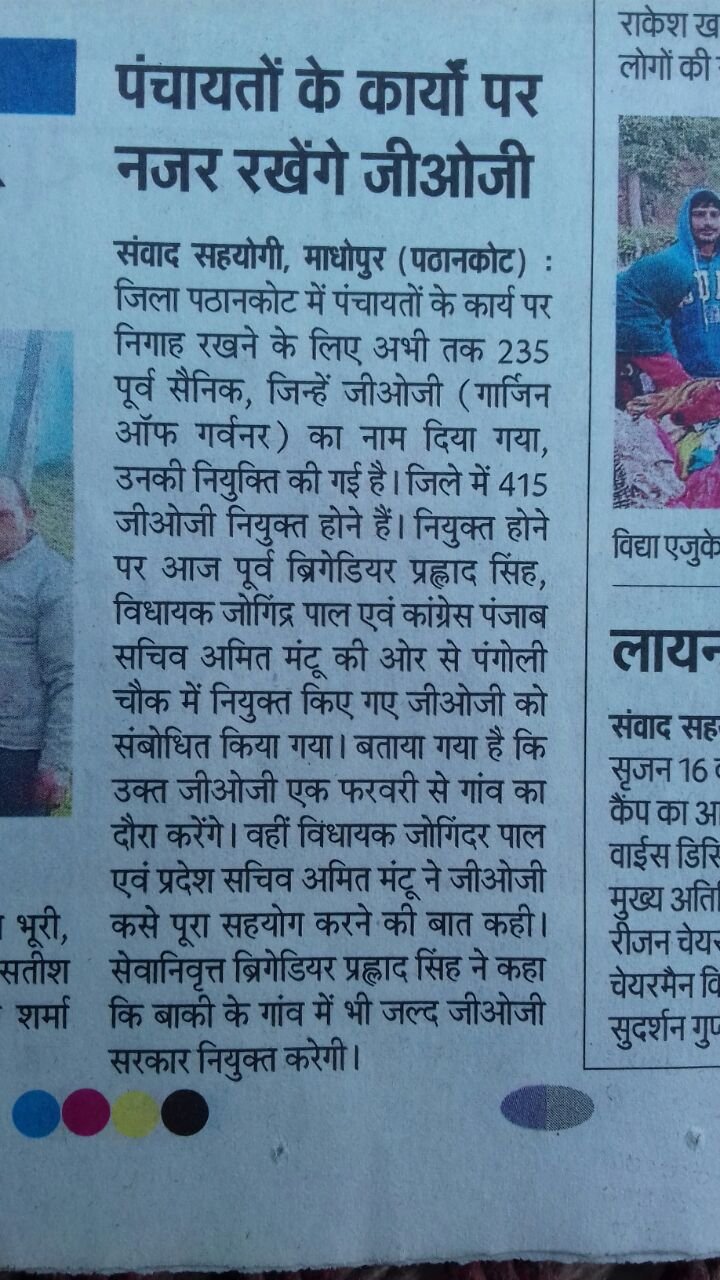
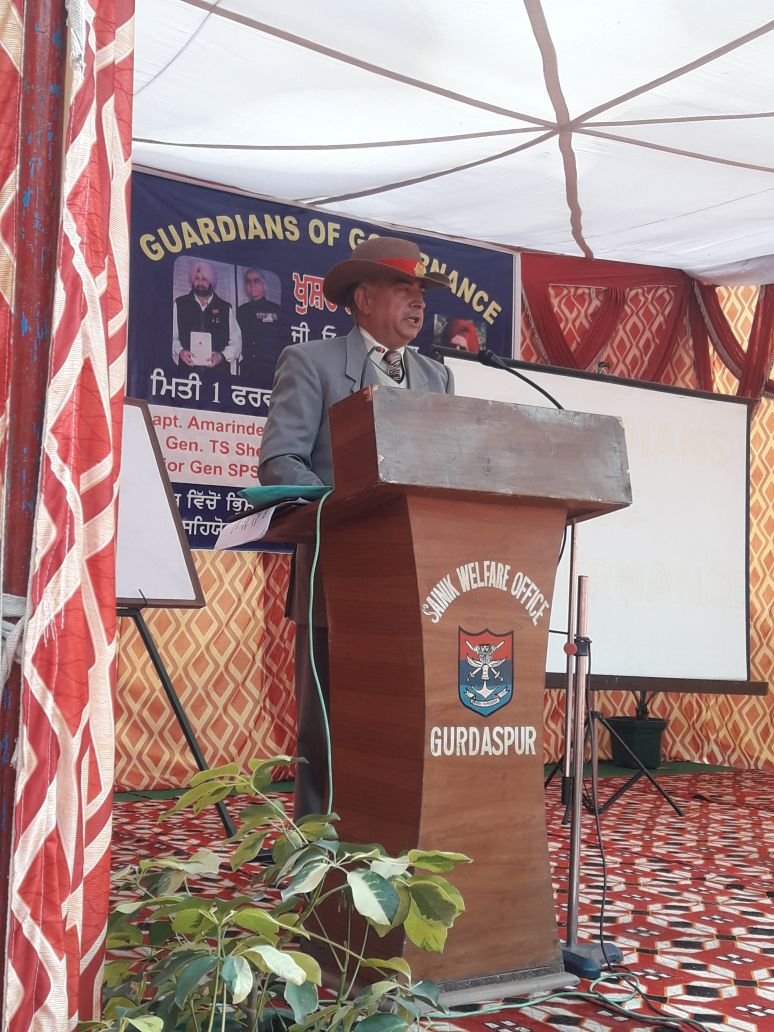
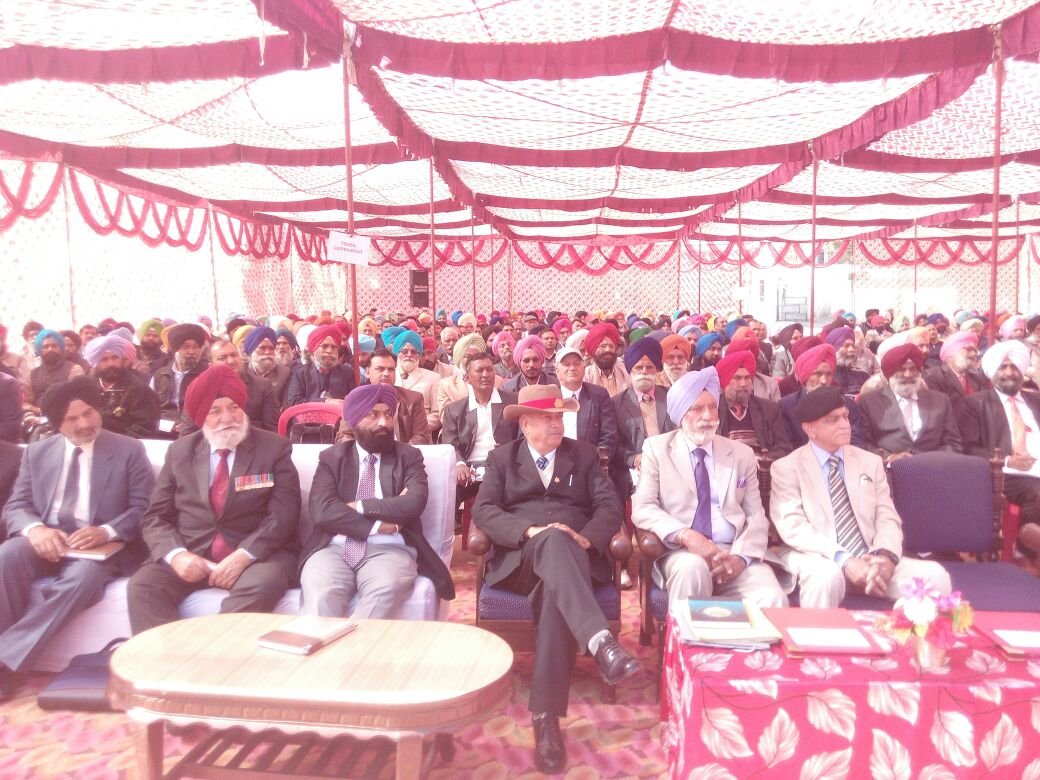
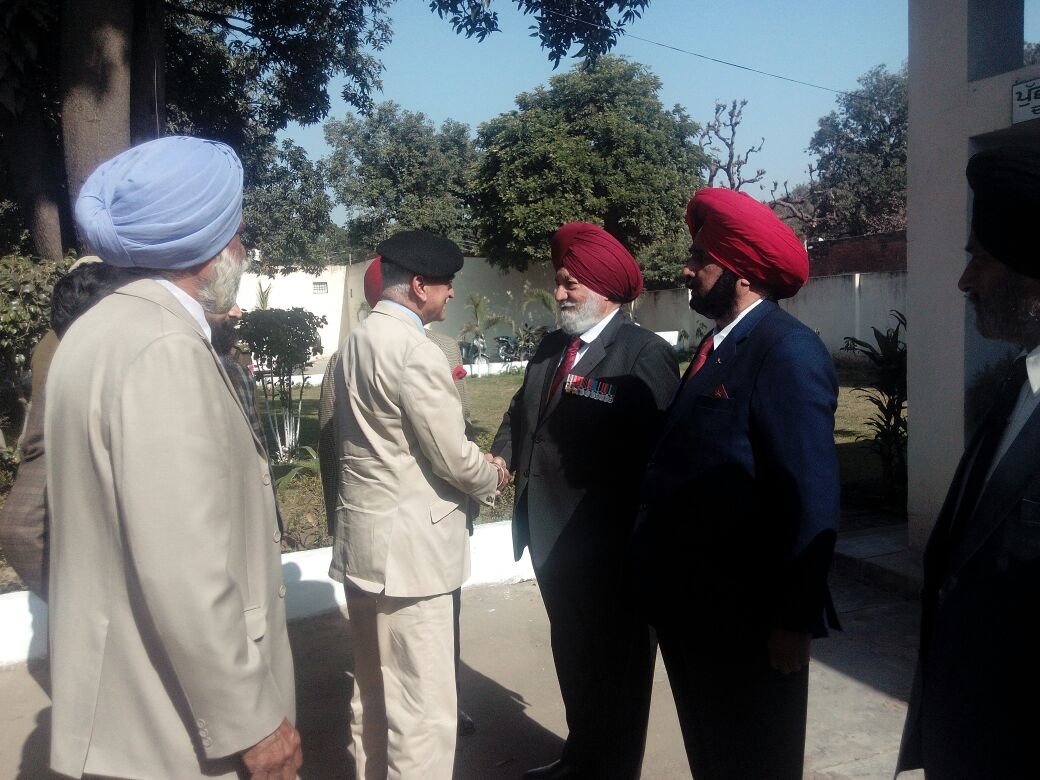
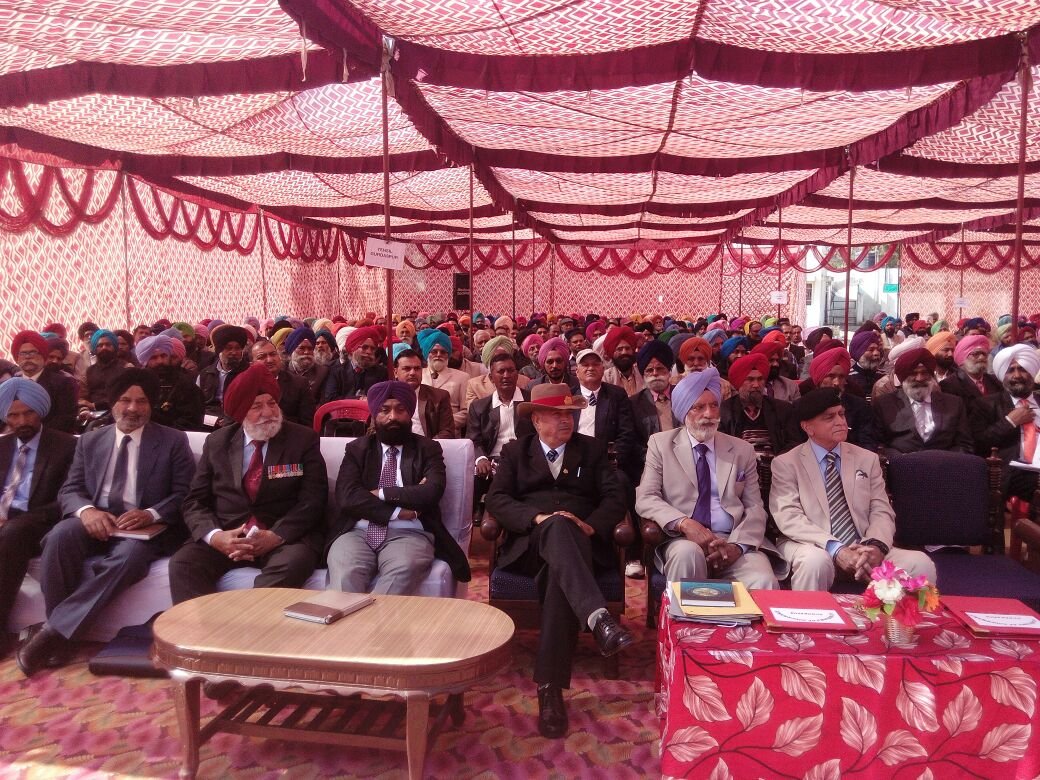
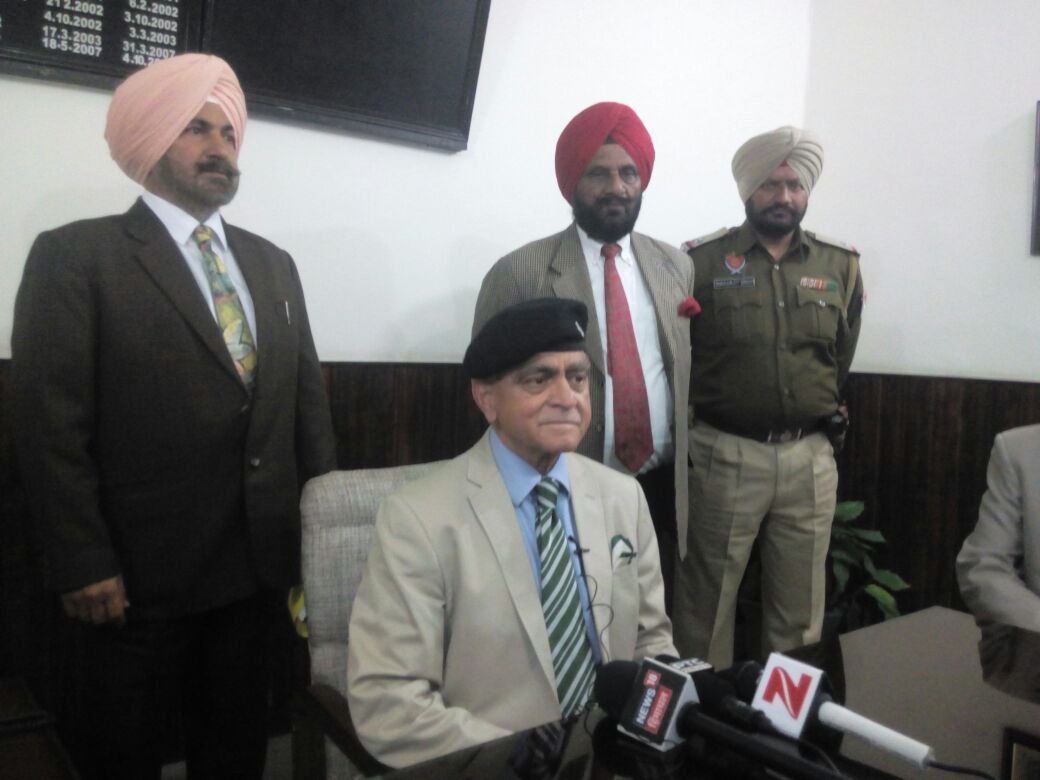
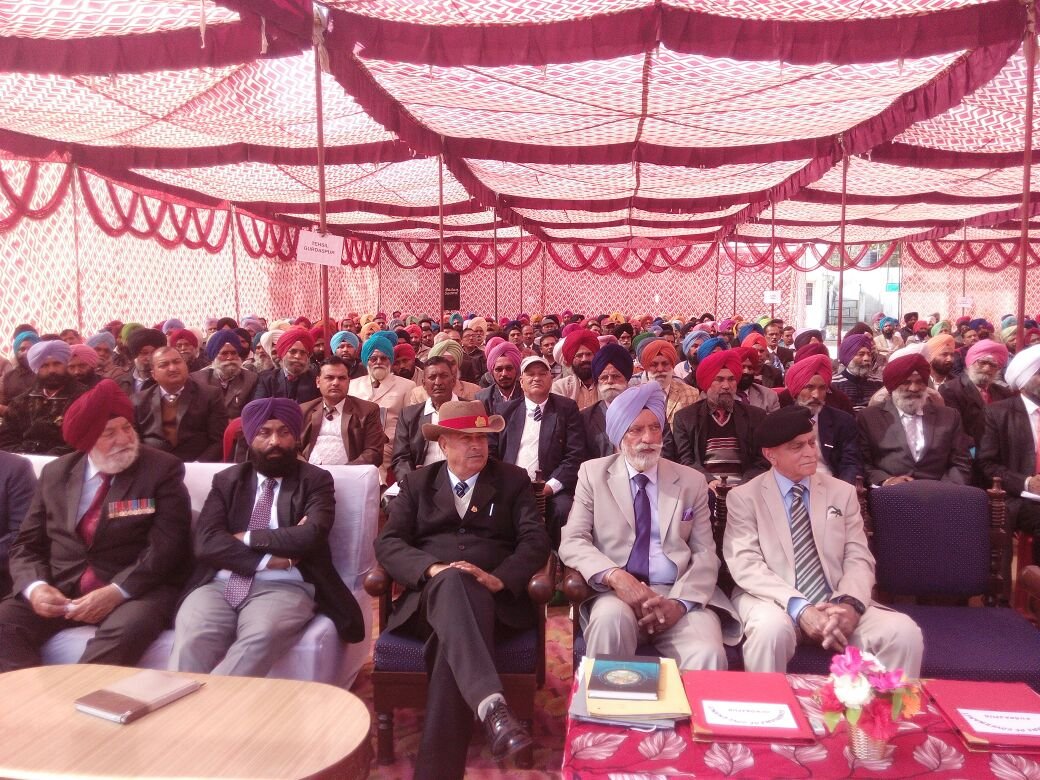
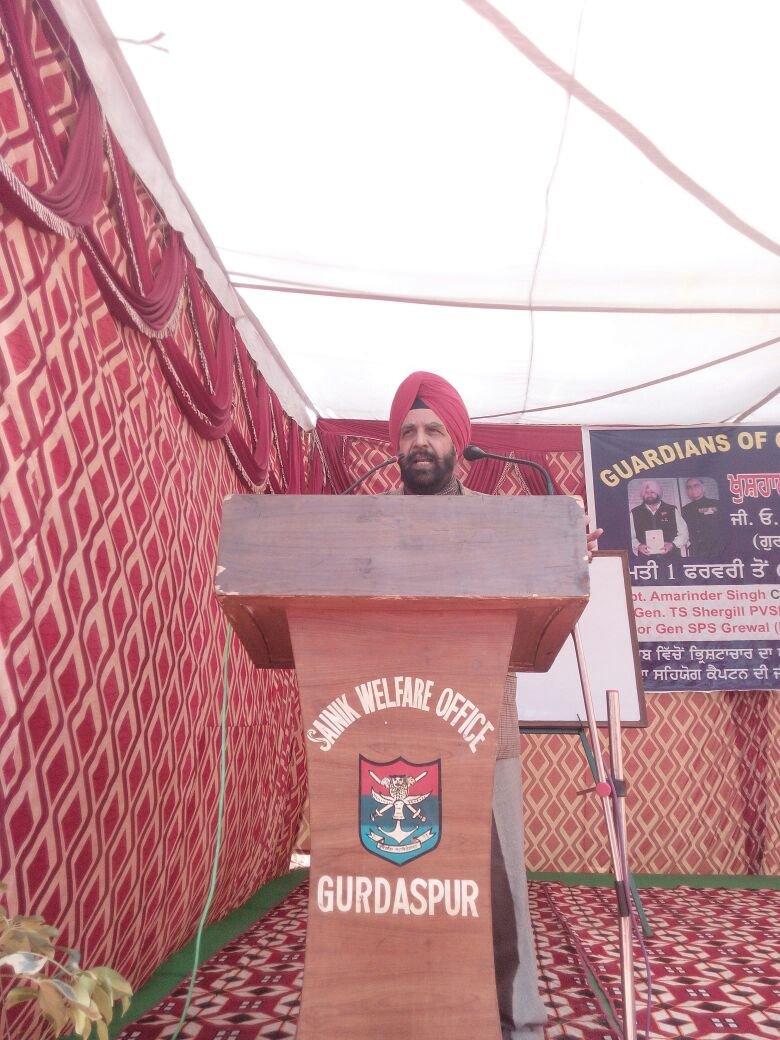








GOG( Gurdians of Goverance) on colcluding Day TRAINING AT GURDASPUR was visited by Lt Gen TS Shergill,PVSM Sr advisor to the CM Punjab cum Sr Vice Chairman of GOG and Maj Gen SPS Grewal ,CMD PESCO cum Vice Chairman GOG
NEWDELHI: The Union home ministry and the Issak-Muivah faction of the National Socialist Council of Nagaland (NSCN-IM) have discussed creating a special auxiliary regiment, or an armed police force on the lines of the India Reserve Battalion (IRB) to induct the armed cadres of the Naga insurgent group, a senior home ministry official has said.

The government has so far not revealed the contents of the Framework Agreement but a high ranking official of the ministry of home affairs (MHA), who is part of the peace process with the Naga group, said the Centre and the NSCN-IM have discussed recommending that “heavily armed cadres of the insurgent group” form a new unit that will operate under the government’s watch.
“Our government is dedicated to achieving a peaceful solution to the Naga issue and channeling the armed cadres to form such a force under the government of India will ensure peace and prosperity for the state,” the ministry official said on the condition of anonymity.
The official added that details such as the time frame of establishing the regiment, recruitment for the top brass of the said regiment or whether or not the insurgent group will give up its weapons are yet to be worked out.
Under the current arrangement, which came about after the government signed a ceasefire agreement with NSCN-IM in 1997, cadres of the insurgent group remain armed when they are in their camps located in Nagaland, the official added.
Former home secretary GK Pillai said the decision to induct NSCN-IM cadres must be a part of the final step of rehabilitation package for the insurgents.
“In the past, too, we had raised two BSF battalions comprising surrendered Naga militants. Same has been done in left-wing affected areas and in Kashmir. There must be between 4,000-5,000 armed NSCN-IM cadres and the government ideally should provide an income source as part of the peace deal to keep them away returning to militant fold,” Pillai said.
The revelation comes after tension over the government’s decision to hold assembly elections in Nagaland before the signing of the Naga peace accord subsided last week with the BJP forming an alliance with the Nationalist Democratic Progressive Party (NDPP). This was after civil rights groups and political parties in the state, including the ruling Naga People’s Front (NPF), announced they would not contest the assembly polls scheduled for February 27 until the Naga political problem was resolved. The NSCN-IM had extended its support for boycotting elections.
The senior home ministry official also said the government used both “hot and cold manoeuvres” to navigate the politics revolving around the election boycott call, adding that Union home minister Rajnath Singh, his deputy Kiren Rijiju and Naga interlocutor RN Ravi played key roles.
“The NSCN-IM recently issued statement that they will not use violence to enforce election boycott call.
“Compare the statement with the day when all political parties in Nagaland decided to boycott elections when filing of nominations too seemed to be a distant possibility.
“We have crossed the first hurdle, nominations have been filed. Now let’s have faith in Naga people for turning up to vote,” the official said.

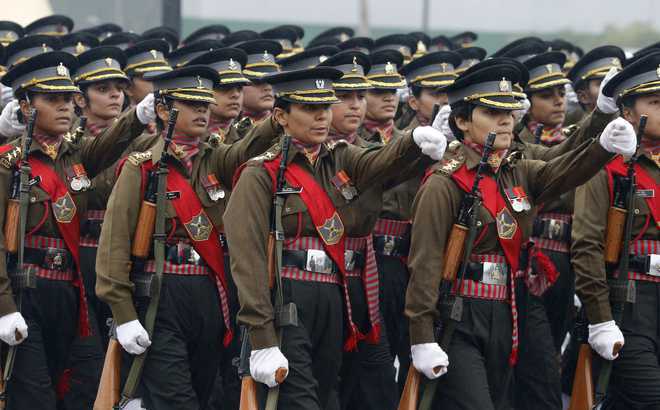
Two petitions allege discrimination against women in the Army”s recruitment policy related to its engineering and education corps.
New Delhi, February 10
The Centre has opposed in the Delhi High Court two petitions that allege discrimination against women in the Army’s recruitment policy related to its engineering and education corps.A bench headed by Acting Chief Justice Gita Mittal was told that the allegation of discrimination against women in Indian Army with respect to their recruitment in the force is “baseless, unfounded and devoid of merit”.The Army sought dismissal of the two PILs filed by a lawyer that have alleged “institutionalised discrimination” against women by the Army as it does not recruit them into the two corps by giving them a permanent commission.However, the Indian Army maintained that it has in “1992 introduced women special entry scheme (officers) for induction of short service commission (women officers)”, under the appropriate provisions of the law.”Prior to this there was no provisions of entry of women officers to the Indian Army,” the ministry added.Advocate Kush Kalra said that, “This discrimination on grounds of gender is violative of fundamental right of equality before law, the right not to be discriminated on the ground of sex, the equality of opportunity in the matters of public employment, the right to practice any profession and occupation and the human rights of the women.”Women candidates are denied entry into the Engineering Corps under the 10+2 Technical Entry and the University Entry schemes in contrast to their male counterparts, one of the petitions said.The lawyer in his other plea has said the reason given by the Army for not recruiting women is that they are not eligible for permanent commission in the army while the Army Educational Corps is a permanent commission.The petitioner has sought an order declaring the Indian Army’s eligibility conditions which disentitle women from being recruited in the Army Educational Corps as void, since they are inconsistent with the fundamental rights of women.In his other plea relating to entry of women into the Engineering Corps, the petitioner has said the advertisement inviting application for recruitment only mentions male candidates and not female.”As per the eligibility criteria only unmarried male candidates are eligible for recruitment to the 10+2 Technical Entry and University Entry schemes (both for permanent commissions), which in-fact means no female with equivalent qualification are eligible.”This practice is discriminatory. The respondents (MoD and Army) are treating equals unequally. It is arbitrary and discriminatory against women,” the petition on Engineering Corps said.Kalra has also sought an order declaring the eligibility conditions for recruiting unmarried males alone in the Engineering Corps under the two entry schemes for a permanent commission as unconstitutional. — PTI
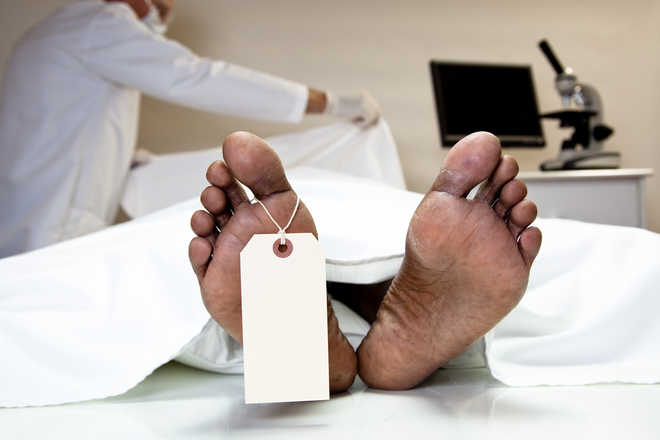
Photo for representation only. Source: iStock
Shiv Kumar
Tribune News Service
Mumbai, February 4
The body of a former captain in the Indian Army is lying in a Pune morgue after none of his relatives have come forward to claim it, according to police.Ravindra Kumar Bali, 67, an alumnus of the National Defence Academy at Khadakvasla in Pune, was living on the footpath near the officers’ mess in Pune Cantonment after his flat was reportedly repossessed by the
bank for non-payment of loans.(Follow The Tribune on Facebook; and Twitter @thetribunechd)Police said Bali was attacked by two persons who beat him up and smashed his head with a boulder.He was taken to Sassoon Hospital by passers-by where doctors declared him dead early Friday morning.According to officials at the Lashkar police station, Bali may have been killed by criminals who extorted money from pavement dwellers.
Bali’s relatives were traced to Kota in Rajasthan but they were not in touch with him for nearly 30 years, police said.“We were told by some of his relatives that they were not even aware that he was living in Pune,” the duty officer at the Lashkar police station said.The police were also told by Bali’s relatives that he was married with a daughter and a son but was estranged from his family.Sources say Bali was in the Army for 18 years though it is not clear under what circumstances he quit the service.Officials from the Pune Municipal Corporation, which has taken custody of Bali’s remains, say they will wait for the next few days before deciding on their next course of action.As a rule unclaimed bodies are disposed off as per the dead person’s religion after a photograph of the deceased is taken for the records.
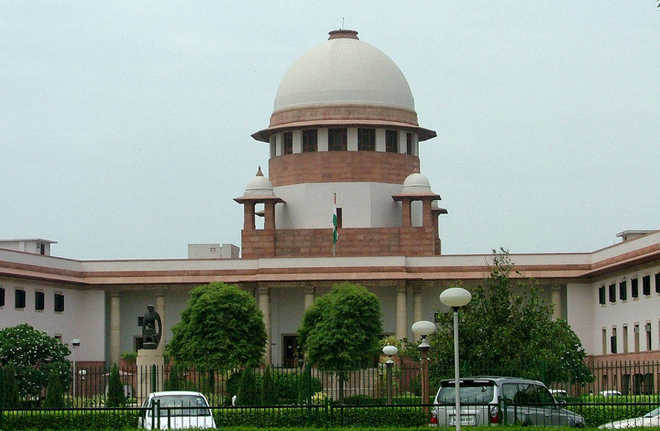
A new roster system will come into effect from Monday in the Supreme Court. It is tempting to see it as an attempt to introduce transparency and to institutionalise allocation of cases to various Benches — one of the main demands of the four seniormost judges who staged a “judicial mutiny” on January 12. Still, the rebel judges wouldn’t get to hear PILs which the CJI has assigned to his own Bench. Subject-wise roster system for judges — a first for the Supreme Court — is, in fact, not a novel idea. It has been working well in the Delhi High Court for years. So far so good. The question is: has the apex court returned to a state of judicial tranquillity? The CJI had unilaterally announced the new roster system without consulting the rebel judges. Admitted, that the CJI is “master of the roster”; but enforcing it without consulting senior judges can be problematic. The new arrangement partly denudes the CJI of his moral authority.It’s understandable that CJI Misra is hurt by the washing of dirty linen in public by Justices J Chelameswar, Ranjan Gogoi, Madan B Lokur and Kurian Joseph as it gave a bad name to the institution. But ignoring the issues raised by them cannot be the solution. The judiciary faces, perhaps, its most serious crisis since the supersession of judges and the Emergency during the 1970s. This time around, the damage done to the institution is self-inflicted.The very credibility of the judiciary as an institution is at stake. It is time for the CJI and others to rise above personal differences and display judicial statesmanship in the larger interest of an institution which still enjoys immense public faith. But there are silver linings too. For a change, the Bar has played a positive role. The judges reposed faith in the media which is often blamed by the judiciary for sensationalising events and conducting media trial; and, thirdly, the judiciary has been one of the most opaque institutions. It has now been forced to flirt, paerhaps, with openness and transparency. Hopefully, Monday will be a new day and, perhaps, a new beginning.
In an interview to state-run broadcaster Doordarshan, finance minister Arun Jaitley discussed Budget 2018, touching upon issues ranging from the National Health Protection Scheme, which he termed ‘Modicare,’ to the fiscal deficit and farm sector. Edited excerpts:

You can theoretically use the word slippage, but essentially it is substantially statistical. For a 12-month year, my direct tax revenue is for 12 months but this being the first year of GST (goods and services tax), it factors in only 11 months of GST. Because of this, I am inherently ₹36,000 crore short because the 12th month is not there.
As far as the future roadmap is concerned, despite expanding expenditure, I have predicted 3.3 for next year, and 3.1 for the year thereafter, then 3.0. The glide path, which has been my commitment, will remain. I have not allowed it to grow in any single year and this year you can call it an aberration partly because of structural reforms and partly because of the statistical switchover that has taken place.
ON FOCUS ON TAXATION; TAXING THE RICH AND NOT REDUCING TAXES ON BIG COMPANIES AND RELIEF OFFERED TO SMALL COMPANIES
My eventual roadmap is to bring down corporate tax to 25% also because of competitive reasons. We are now competing with countries where investors have a choice, and why should they invest in a country where the tax rate is 30-40% when they have the choice to go to a 20% country?
Last year, I took the first step, that small companies, upto ₹50 crore turnover, (should be taxed less). This time, I have taken it up to ₹250 crore. Which means the entire small-medium upcoming sector is covered in this. I am gradually moving upwards and out of the 600,000 companies which are filing returns, I have covered 593,000. These 7,000 big companies are out of it yet, but don’t forget these 7,000 companies are those who avail of all the exemptions and the actual rate they are paying is less than 25%. I can’t suddenly remove the exemptions as they have a sunset date.
…as far as long-term capital gains are concerned, quoted in my speech last year, ₹367,000 crore is the profit large investors have earned—domestic and international—andthey are wealthy people who have brought in equity into the investment market. Not a rupee of tax is paid. Is it equitable that ₹367,000 crore is what you earn in a year and don’t pay tax? Somebody had to bite the bullet and some day it had to be bitten. I think this was the most appropriate moment for it. Investors also knew that sooner or later this would come, but I didn’t want to commit the mistake my predecessors did by putting anything which would have a retrospective effect. So I said that whatever you have earned in India till yesterday — 31 January — will be grandfathered and protected. Any profit which is earned thereafter from the sale of equities will be subject to a 10% tax.
ON WHETHER THIS IS AN ELECTION BUDGET
This is not an election budget at all. If you look at the economy, our services sector is strong and manufacturing has improved, so it is natural that we will fix the weakest areas of our economy… We all are very worried about agriculture and we are working to double farmers’ income. We need to work on rural roads, electrification within and outside the homes in rural areas, toilets, health for the poor and work on giving the farmer a good price for the produce. And there are band-aid solutions like waiving off loans so that the problem is solved, but they will recur after two years. We need to attempt to increase their income from agricultural and non-agricultural activities. So for him (farmer) to get a price which is 50% more than his cost, according to Dr (MS) Swaminathan’s recommendation, we need to get closer to that and have attempted that.
ON ‘MODICARE’ FUNDING AND ITS DELIVERY
This will be a government-funded scheme. This is a country where there was no social security. It (Modicare) is a leap in the direction of social security. You have put 0.1% cess on income tax, which means the 3% has been changed to 4% with a 1% surcharge which will have a marginal 0.3% impact. We can use the long-term capital gains and these resources to help increase farm income and provide healthcare. This means that the money you are collecting from the public is being used to provide healthcare to the weaker sections. If through government means, the wider the base the cheaper will be the insurance premium because not everyone in every family has to be hospitalised every year, but only during a crisis. So every family should have an insurance card’s insurance premium will be prepaid by the government along with a list of both private and public hospitals that can be availed of. The health ministry will work on the details and roll it out as soon as possible.
ON THE HIKE IN THE MINIMUM SUPPORT PRICE AND IF IT IS A SHORT-TERM FIX
Higher food prices have an effect but so do a lot of other things. And in this country, in the past, inflationary levels have always been very high and today the situation is such that inflation can be contained within 3-4%.
MSP will not solve all the problems of the farmers, but it is an important pillar of it. I have specified several plans in this budget to increase the non-farming incomes for farmers and how we can increase their incomes.
ON THE MIDDLE-CLASS COMPLAINING ABOUT THE ABSENCE OF ANY RELIEF FOR THEM IN THE BUDGET
Last year, entry point rate was brought down from 10% to 5% of income tax. So it must be remembered that India is the only country in the world where 5% income tax exists. It’s the lowest slab in the world and it is not possible to reduce it further. Second, I chose three categories in such a way that those who were in need of tax relief this year and who fall in the middle-class bracket (benefit).
First, the entire salaried class which also includes the pensioners amount to nearly 2.5 crore people; for them I have restored ₹40,000 as standard deduction and the reason for this is that the other individual taxpayers such as business (people), professionals, can adjust their expenditures in their own accounts. The salaried people have no such room to do so and hence this step was taken to provide them relief.
Secondly, senior citizens have complained that interest rates have been dropping and for the economy to move forward, it is important to reduce interest rates too and they were suffering because of it. I have not touched the interest rate of small savings and kept it constant at 8.3% …. The interest they earn on up to ₹50,000 has been made tax free. A relief of upto ₹50,000 has been given on the expenses of their medicines; if they are hospitalized, they will be given a relief of up to ₹1 lakh.
In the salaried class, we have included women as well because there is no separate category for women in taxation. The standard deductions that have been offered will include women as well.
The third category belongs to businesses… all SMEs (small and medium enterprises)– all businesses (with a turnover) less than ₹250 crore – should corporatize themselves and conduct transparent businesses and their tax slabs will automatically reduce…
ON BUDGET BEING SILENT ON RISING INTERNATIONAL CRUDE OIL PRICES
If you go into the details of the excise duties, one of the duties has been changed to a cess to balance the central revenues because after GST, the central revenues were taking a hit and the decline that you notice is because the duty becomes a cess. Ideally India would be very comfortable with a price of about $60 (per barrel) and even if it moves up to the present level, it’s a shock we will try and absorb though it has an inflationary impact. Until now, we are bearing the shock.
ON BITCOIN, GOLD
We want to discourage people on bitcoin and a government committee is deliberating on it. Gold is an idle asset, present in the economy half in the form of jewellery lying in bank lockers and the other half in raw form and does not affect productivity of the country. People can monetize it or use it so we introduced gold bonds or schemes but we have not received as much response as was anticipated so I gave an indication of making gold monetisation more attractive in this budget.
From page 01 RAGHAV ARORA
Born: April 4, 2000
Institute: Maharaja Ranjit Singh Armed Forces Preparatory Institute, Mohali Badge of honour: Cadet Quarter Master Sergeant, Bravo Squadron
On turning 18
It’s the start of a new phase in life. It brings both new responsibilities and distractions. The challenge is to work towards your aim and not be led astray.
What I want to be and why
I have always wanted to fly high as an air force officer. It’s because I have always thought of the sky, and not the land, as my terrain. Nothing can beat the thrill of flying at double the speed of sound. No one in my family is from the forces, I joined the AFPI so that I could work towards it.
Fear and fantasy
I am not afraid of anything in particular. My only fear is of getting distracted and not fulfilling my duties and long-term ambitions.
I dream of becoming the air chief marshal of India.
What makes me happy
I enjoy a good bonding with my comrades at the institute. It gives me a high when we accomplish tasks together. I also enjoy spending time with my parents and elder sister.
I can’t live without
I can’t imagine life without my family and friends.
What makes me angry
I get angry when I feel some cadets deliberately flouting orders. An order is just another step towards an aim, it must be followed.
Am I happy at the moment
Yes, I am enjoying my time at the institute. All of us are brothers in arms and we have the same goal.
What religion means to me
I am not into rituals. I believe religion has two faces to it. It helps us unite till the point we are secular, but it can become divisive if we turn hostile towards other religions. It is unfortunate, but this is happening these days. The solution is to build a place with room for all beliefs. The armed forces have all-religion places of worship, which drive home the message that all religions are one.
Role of social media
It can be helpful as it connects you to the rest of the world and you can gain tremendous knowledge. But this too needs to be used within limits. It’s important to ensure that the time you spend on it is productive.
My idea of India
India is the world’s largest democracy. There are so many varying viewpoints here, ranging from moderate to extreme. We have to ensure that our democracy, economy and defence work in tandem to be a successful nation.
What I admire the most about India
It’s a great country, nowhere else do you get so much liberty. I also love the concept of ‘jugaad’, we help ourselves despite lacking in R&D.
The change I would like to see in India
We should invest in research and development. This will not only bolster initiatives like Make in India, Skill India and Startup India, but will also tackle social issues. Right now, we focus all our energies on solving social issues, which change with every generation.
What money means to me
Money is important to lead a decent life but more money doesn’t necessarily translate into happiness. The armed forces not only offer good money but also give you a life of patriotism, honour and prestige.
My role model

A good beginning may be made by agreeing to establish a line of communication between important sectors and formations on the LoC to allow interaction between field commanders.
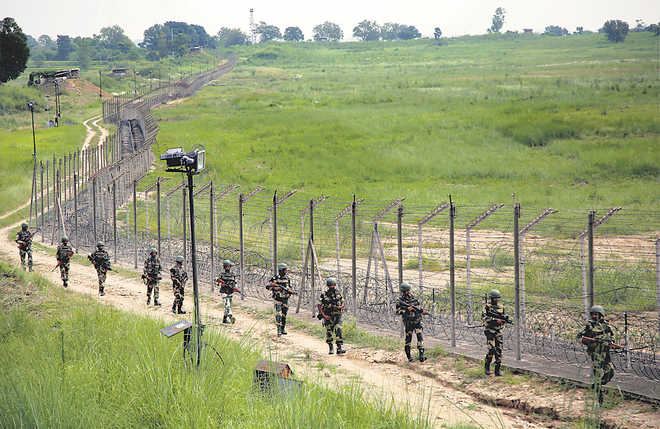
Lt-Gen Syed Ata Hasnain (retd)THE nearest to an official and written ceasefire agreement at the LoC is only enshrined in the subtext of the Simla Agreement of July 2, 1972. However, since then, LoC soldiering has assumed a different colour. It’s not just about preserving the ‘sanctity of the LoC’ with Pakistan, an adage well known to Indian Army officers; it’s much to do with proving a couple of points. First, which is the more macho Army and, by extension, the more macho nation? Second, which is the more professional army? Yet, more importantly, it’s all about ‘moral ascendancy’. I can’t remember a definition of the term in any Indian Army publication; perhaps the Pakistanis may be having something of their own. Nevertheless, since it is a task spelt out to every LoC commander, it does deserve an analysis of its interpretation and what affect that has on the attitude towards and manifestation of ceasefire.On the face of it, moral ascendancy is all about being professionally more competent than your adversary. However, the most important aspect is motivation and morale. There are increasing instances in which units of the two armies, which faced each other in Siachen or later days of Kargil 1999, are coming back face to face once again at the LoC. The antipathy then was much higher. All this is fine. It’s when the lead begins to fly around that problems arise. Even worse, when rogue actions from across the LoC involve bestial acts such as beheading, they have to be responded to. Otherwise, the moral ascendancy slips and that’s not acceptable by a mile or more.It’s not as if ceasefire infringements commenced only in 1989, the year when Pakistan decided to launch its proxy war to exploit the fast-track changes the world was then undergoing. The moral ascendancy game was in play through the late seventies and eighties, but with one difference: there was no infiltration of terrorists. Immediately after 1989, the LoC got associated primarily with infiltration; terror sponsors in Pakistan found that the simplest way of forcing gaps in deployment to effect infiltration was to push Indian ambushes, deployed in the open, into their posts which had overhead protection (OHP) from fire. Even with the construction of the LoC fence, although partial OHP exists at ambush sites, it is the resultant chaos from shelling and small arms fire that assists in infiltration.On November 26, 2003, Pakistan took a decision to vigorously implement the ceasefire and abide by it. Although it appeared unilateral and India has never made it look any different, the truth is that some behind-the-scene parleys did assist in reaching that stage where Pakistan could announce its ‘offer’. There was no official document signed by the two sides, although recorded announcements to abide by it made it appear as a de facto agreement. Infiltration attempts continued as before, but at reduced levels. Why President Musharraf accepted, or as claimed, even initiated the ‘proper implementation’ of the 1972 ceasefire remains a mystery to the day. Analysis of initiatives which characterised the Vajpayee premiership is a subject by itself, but there was a Vajpayee-Musharraf moment which captured the essence of what could have been the grounding for an improved Indo-Pak relationship. The ceasefire was probably the result of that. Many a Pakistani strategic analyst I have spoken with has failed to identify the Musharraf thought process. And Pervez Musharraf today is in search of another identity; he would preferably disassociate himself with the ceasefire.The LoC remained quiet almost till 2009 when one segment in the Krishna Ghati sector erupted and has never quieted thereafter. Siachen has remained a model of the ceasefire as much as has been Kargil. This gives weight to the argument that breaches of ceasefire take place in infiltration-prone areas because there is no infiltration in the Ladakh zone. Paradoxically, larger attempts at infiltration have been made in the Machil, Keran, Tangdhar and Lipa sectors of the Valley, but very few breaches of ceasefire have occurred there. In recent years, the major LoC exchanges have all been south of the Pir Panjal and along the International Border (IB), the latter being held by the BSF. The area has little terrorist presence, but some sleeper agents continue to exist. However, the area is more vulnerable to transient terror through infiltration of suicide squads (fidayeen) due to the shorter distances and potential of single-night operations. Currently, the prime reasons for the breach of ceasefire by the Pakistani side revolve around a few factors. 1 Firstly, infiltration continues to play a role, irrespective of the explanations above. 2 Secondly, the LoC offers the easiest location for the demonstration of violence for the international community to take note that the J&K conflict continues to fester; it is Pakistan’s abiding interest to prove this despite being a signatory to the bilateral clause of the Simla Agreement. Earlier, major terror attacks sponsored by Pakistan preceded big ticket events such as high-profile international visits to South Asia or even the annual UN General Assembly session. With better Indian control over J&K, it isn’t easy to do that; the LoC becomes the next best symbol for demonstration. 3 Thirdly, the Hindu populated areas of the Jammu IB or LoC belt get targeted to cause more angst within J&K and, indeed, within India and enhance the communal temperature to Pakistani advantage. 4 Fourthly, Pakistani friendly jihadi elements such as the Jaish-e-Mohammad (JeM) and Lashkar-e-Taiyaba (LeT) maintain their relevance through shallow infiltration and attempted terrorist actions against objectives closer to the LoC, as shown by the Uri and Mohra attacks in the Jhelum Valley. 5 Lastly, with increasing political ambitions of the jihadi groups of Hafiz Sayeed and Masood Azhar, spectacular acts at the LoC or deeper in the hinterland will continue so as to draw attention and attraction.In the light of the history of the ceasefire, the fact that it hardly exists today and the harder response by India without remorse, the feasibility of returning to 2003 remains remote. It could have happened with PM Modi’s initiative of December 25, 2015, or may still find life in a sudden unprovoked peace-related trigger. The advantage of keeping the LoC hot finds favour with Pakistan, but once a threshold is crossed, India will not disfavour a more robust response. Pakistan’s intent is to somehow bring the UN military observers into the scene so as to internationalise the issue and rescind the provisions of the Simla Agreement. The initiative for the ceasefire cannot come from India because the triggers come from Pakistan. It is up to Gen Qamar Bajwa to find his own moment if peace is to return to the LoC; the chances of that in 2018 appear more remote than ever. A good beginning may be made by agreeing to establish a line of communication between important sectors and formations on the LoC to allow interaction between field commanders.
Our Correspondent
Palampur, February 11
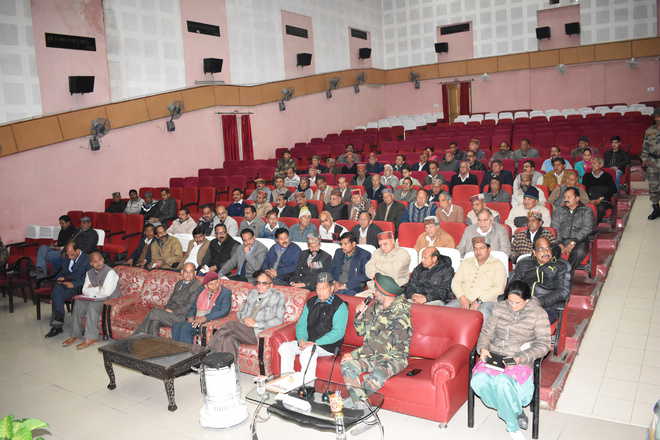
The DAH division of the Army in continuation with its effort to reach out to veterans organised an ex-servicemen meet at the local Army cantonment today.The meet was another stepping stone towards educating the veterans and veer naris on various welfare schemes and measures for uplifting the ex-servicemen.The meet was attended by hundreds of ex-servicemen and ‘veer naris’ coming from different parts of Kangra, Mandi and Hamirpur districts.The meet was aimed at addressing issues pertaining to the ESM (ex-servicemen) and acquaint them with various schemes and programmes for enhancing the quality of life of the veterans.Brigadier Charandeep Singh, Station Commander of Palampur, addressed the ex-servicemen and educated them on the ECHS facility available in the state. He encouraged the ex-servicemen to register themselves so that they could avail all medical facilities provided by the Army free of cost.The ex-servicemen enquired regarding extension of these facilities to the remote areas for which the Station Commander assured that necessary steps were being taken. The ex-servicemen were assured that the local Army authorities’ endeavour was to educate the veterans on various welfare schemes and address their grievances for an early resolution, it said.The veterans showed great enthusiasm by actively participating in the meet. The vibrant atmosphere of the ex-servicemen meet was truly reflective of their energies. Ex-servicemen were also educated how to apply online for the ECHS smart card. The paramedics team from the ECHS polyclinic conducted screening of patients from among the ex-servicemen.
There is a Neville Maxwell school of historiography regarding India’s 1962 war with China. It has reigned in much of the external world and left a footprint even in India. The Maxwell school has a lengthy curricula, but its principal text is that Jawaharlal Nehru’s Forward Policy provoked China into launching a full-scale military offensive. Maxwell believed the likeliest time for Mao Zedong to have made the decision to attack was thus “in mid-October 1962” just after India’s forward movement had led to an outpost being set up in Dhola, in the eastern Himalayas. Lintner argues that “Chinese preparations for the war obviously began long before October 1962… Even if there already were new roads and military camps in the area, tens of thousands of more PLA troops and tons of supplies, including heavy military equipment, had to be moved over some of the most difficult terrain in the world.”

He develops scholar Claude Arpi’s argument that the 1962 war was useful for Mao to restore his authority at home. While this sounds nice, it is questionable given at least one Chinese general’s account that Mao was nervous as to whether his army would be able to defeat the Indian military.
Short work is made of other parts of Maxwell’s thesis. The Chinese, for example, have no historical right to Arunachal Pradesh. Lintner shows the Chinese set up border posts in that area for a brief period in 1911-12 and then, finding it impossible to hold, never returned again. He refutes Maxwell’s claim that the British Raj’s designated Outer Line in the Northeast was treated by London as a de facto border. British authorities defined the Outer Line as a limit of administrative capacity not sovereignty. Maxwell’s claim that the Indian military’s post mortem of 1962, the Henderson Brooks report, blamed the Forward Policy was a lie. The report focused on tactical issues – as became evident when Maxwell posted it on the internet years later.