



Sanjha Morcha

Nirmala to reconsider fee cap for martyrs’ children

Nirmala to reconsider fee cap for martyrs’ children
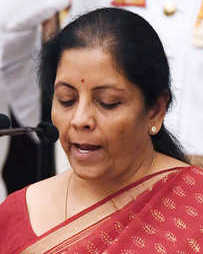
Defence Minister Nirmala Sitharaman

Tribune News Service

New Delhi, December 5

Defence Minister Nirmala Sitharaman tonight said she would reconsider the cap on the education expenses of children of martyrs.Speaking in Ahmedabad, she said fee capping was part of the 7th Pay Commission recommendations. The Cabinet took a call on it. “I will go back and reconsider it,” she said. Terming it a sentimental issue, she said, “Our government is never against soldiers.”(Follow The Tribune on Facebook; and Twitter @thetribunechd)The Tribune was the first to report the matter in its edition dated December 1.The Ministry of Defence (MoD) has already asked for details in this regard and is expected to sort out the matter. In September, the Department of Ex-servicemen in the MoD decided to cap the fee at Rs 10,000 per month, impacting around 3,200 students in schools, colleges and professional institutions.The forces raised an objection on October 10, but the ministry turned it down. Now, the forces, under the banner of the Chairman Chiefs of Staff Committee (a body of three service chiefs), have sought removal of the cap.A letter by the committee says “these personnel made the supreme sacrifice for the country and the provision of educational concessions to their wards is a small gesture to recognise their commitment to the defence of the country”. The committee has sought a review of the government decision.Under the scheme, rolled out in 1972, the tuition fee of children of martyrs or those disabled in action is paid by the ministry.The scheme to bear the cost of education of children of martyrs was announced in the Lok Sabha on December 18, 1971—two days after the Pakistani forces surrendered to the Indian forces at Dacca (now known as Dhaka).

The Challenges of Securing Local Soldiers and Policemen in J&K by Lt Gen SYED ATA HASNAIN

A third off duty Indian Army soldier has been killed this year in Kashmir’s Shopiyan area of south Kashmir. The body of Irfan Dar from one of the Territorial Army (TA) Home & Hearth (H&H) units has been found this morning. He had driven from his home in his private car the evening before and did not return, thus prompting a search.

It serves as a grim reminder of how Lieutenant (Lt) Umar Fayaz of the 2 Rajputana Rifles, a young Kashmiri officer with just eight months of service, was killed by terrorists in May this year.

Thereafter, there was a spate of attacks on the JK police, some while on duty and some off-duty.In September, Mohammad Ramzan Parray of the Border Security Force was shot dead by terrorists when he and his family resisted attempts to kidnap him, in central Kashmir.
Fayaz Ahmed Bhat’s body in a paddy field in Tangmarg, J&K. 
Fayaz Ahmed Bhat’s body in a paddy field in Tangmarg, J&K.
(Photo: ANI)
Why Are Off-Duty and Unarmed Policemen Easy Targets?
Why do terrorists target local off-duty and unarmed soldiers and policemen, and how can these brave hearts who defy societal pressures to serve the nation, be secured. The answer to the first is relatively simple.
Terrorists have two broad targets – first, the Army and Police or anyone who functions as an organised armed force; second, the populace which they must keep under control.
While it is important to win over and take support of the population so that logistics, safe houses and early warning of security forces (SF) presence is available, it is equally important to prevent any kind of public support to the SF.

SF recruitment schemes to their ranks is considered a major threat because a local Kashmiri once recruited is considered to have ‘crossed over’ or is no longer reliable. Surprisingly, through the 27 years of proxy war the targeting of such soldiers and policemen was minimal, almost like some kind of unwritten agreement. There are several reasons for this.
These servicemen provide sustenance to extended families and in an environment where jobs aren’t too many, the employment opportunities are far too tempting to ignore.
Targeting SF personnel therefore does not create anything positive for terrorists. In the past too, targeted killings of such off-duty SF personnel was always considered the handiwork of rogue terrorists.
In recent times and especially after 2016, we have witnessed a planned targeting of JK policemen in particular and some soldiers.
The strategy here is to dissuade young people seeking these services as career options so that there is no dilution in the anti-national movement by those considered loyal to India.
At the same time the intent is to demoralise local SF men and prevent them from being effectively loyal to their organisations. Publicity by the police and army about thousands of local youth queuing up for a chance at recruitment unnerves the terrorists and separatists, who then dissuade the youth through such acts.
Also Read: ‘We Miss Him’: Family & Friends Remember Slain Army Lt Ummer Fayaz
Rioters protesting against security personnel in Srinagar. 
Rioters protesting against security personnel in Srinagar.
(Photo: PTI)
Equal Number of Locals Involved
For every couple of thousand local Kashmiris who serve in the JK Police, there are a couple of thousands who serve the Jammu & Kashmir Light Infantry (JAK LI) and the J&K Rifles (JAK RIF), besides BSF and the CRPF. They are deployed all over the borders and return home on brief periods of leave. The TA (H&H) units composed of locals serve in the Valley itself and their local personnel proceed on leave on many weekends.
Thus, at any given time at least a ballpark figure of 2000-3000 local soldiers would be on leave in their villages, excluding the policemen who outnumber them.
The army did make some efforts towards procedures involving reporting of a local soldier on leave to the nearest army post. These posts could be anything from a hundred meters to two to three kilometers from the residence of an off-duty soldier.
Responding in real time to a situation is near impossible and yet allowing the targeting of off-duty SF personnel with impunity has a debilitating effect on the morale of all soldiers while enhancing terrorist confidence. This is where confidence building with the populace and strengthening of the intelligence grid makes a difference.
Arming these personnel with personal weapons has been considered in the past but never entered the options list.
The troops to population ratio is never such so as to allow SF presence in groups of villages; there are in fact large tracts where they may be no SF presence at all. Among the very few options that do exist for security is the continued domination, night and day, of the grid, keeping terrorists off balance and building reliable sources of information.
As the SF progressively achieves greater military domination, the terrorists are going to opt for more soft targets which have an out of proportion effect. Unarmed and off-duty personnel virtually become quasi-strategic targets because their targeting makes bigger news and secures brownie points for rookie terrorists.

The army and J&K Police will have to reconsider their methodology of securing these vulnerable targets if they wish to convert their current domination to an eventual victory because the terrorists are realising where the SF vulnerability really lies.
Also Read: Bullet-Riddled Body of Army Jawan Found in Shopian, Kashmir

8
(The writer, a former GOC of the army’s 15 Corps, is now associated with Vivekanand International Foundation and Institute of Peace & Conflict Studies. He can be reached at @atahasnain53. This is an opinion piece and the views expressed above are the author’s own. The Quint neither endorses nor is responsible for the same.)


Govt’s duty to take care of Sepoy’s family: Abhay

Govt’s duty to take care of Sepoy’s family: Abhay
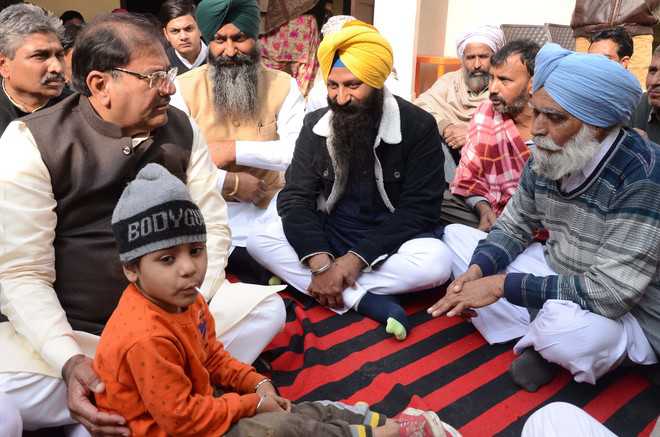
Leader of Opposition Abhay Chautala at the residence of Sepoy Pargat Singh in Ramba village of Karnal district on Wednesday. Tribune photo

Tribune News Service

Karnal, December 27

Leader of the Opposition Abhay Chautala today visited the house of Sepoy Pargat Singh, who was killed during a ceasefire violation in Keri sector of Rajouri district (J&K) on Saturday.Pargat had dual responsibilities — one towards the nation and second towards his family, the INLD leader said, adding that as Pargat was the sole breadwinner of the family, the government should provide all facilities to his family.Abhay was accompanied by party general secretary Brij Sharma, former Gharaunda MLA Narendra Sangwan, district INLD president Yashveer Rana and former youth district president Gurdev Ramba.He demanded of the government to make facilitate the admission of Pargat’s son Yuvraj Singh to an academy, so that he could get good education. “Yuvraj wants to serve the country like his father.”Earlier, while addressing a public meeting in Dadupur village, Abhay served an ultimatum on the state and the Central governments to construct remaining part of the SYL canal by February 23, failing which he said the INLD would organise a rally in New Delhi on March 7 to decide the future course of action.


Talks when Pak stops supporting terror in J&K: Army Chief Gen Rawat

Talks when Pak stops supporting terror in J&K: Army Chief Gen Rawat
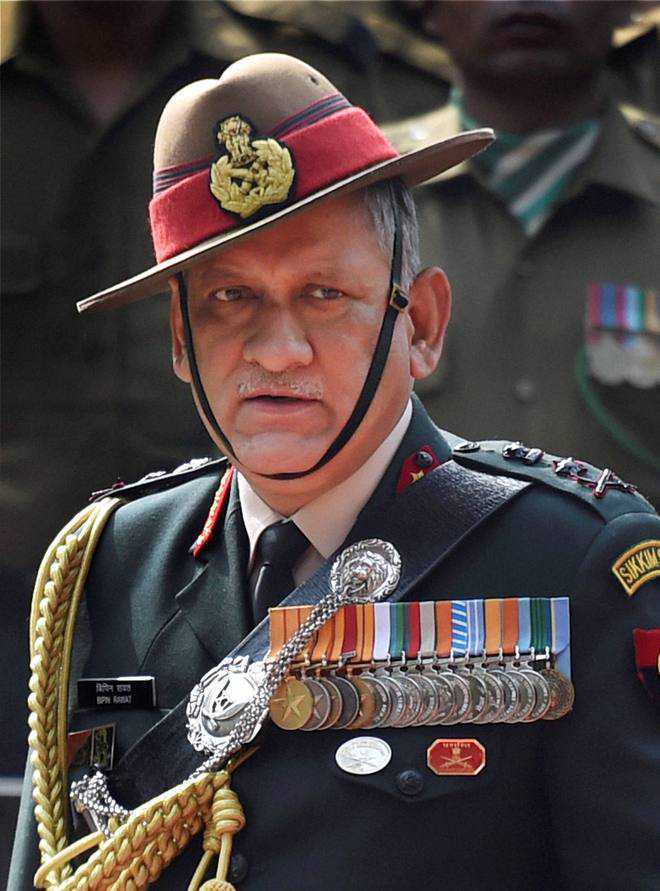
Army Chief General Bipin Rawat. File

Jaipur, December 22

Army Chief General Bipin Rawat on Friday said peace talks with Pakistan can take place only when it stops supporting terrorists in Jammu and Kashmir.

Given its actions, it doesn’t appear that Pakistan really wants peace, the Army Chief added.

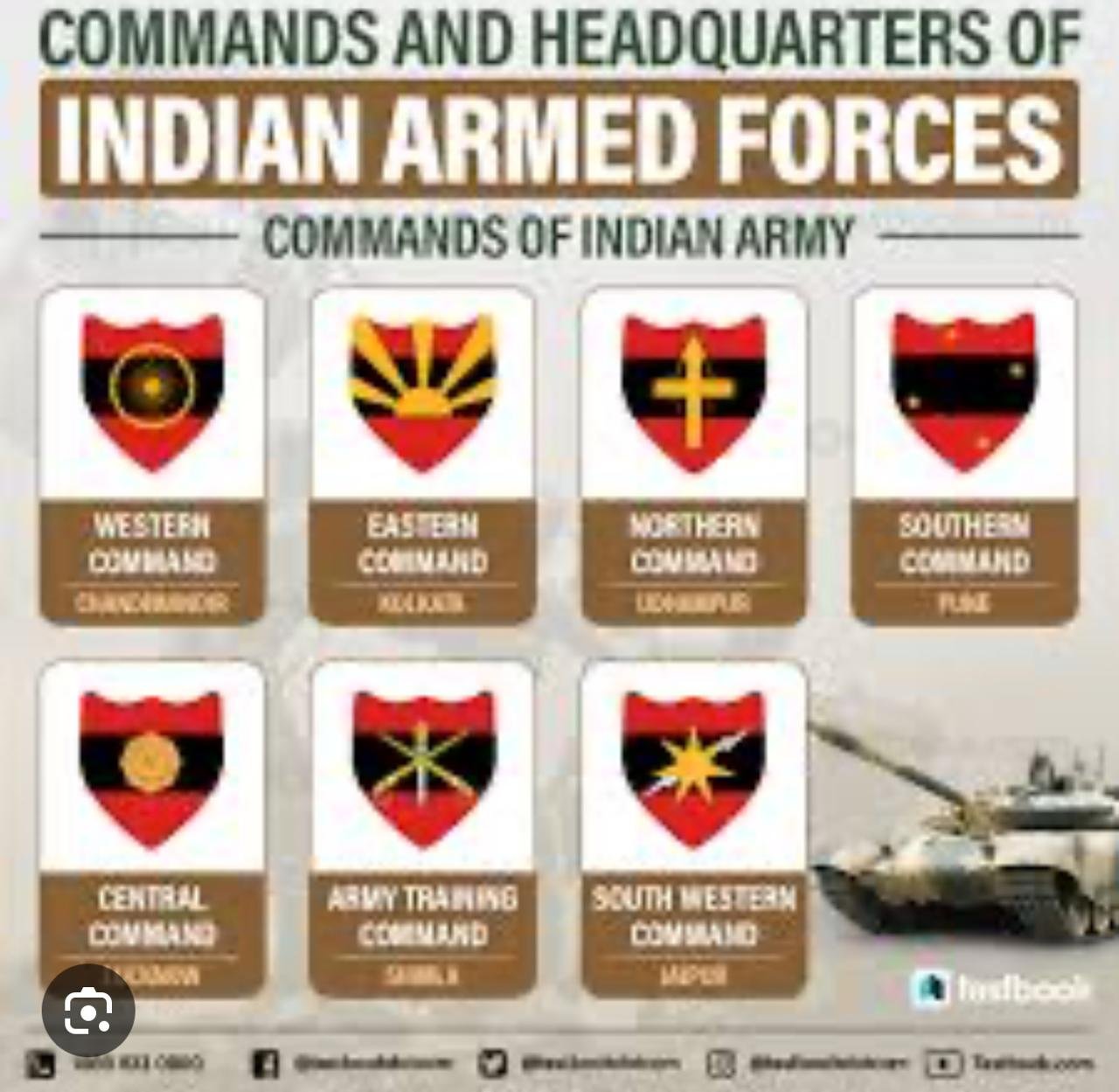
He was in the Thar desert in the western sector to witness the ‘Hamesha Vijayee’ exercise conducted by the Southern Command close to the India-Pakistan border in Rajasthan.

Rawat said Pakistan should stop supporting terrorists.

“Only then can we say that peace talks should take place,” he told reporters in the exercise area near Barmer.

“We also want that relations should be better but given what kind of actions there are (from their side) and terrorism is spreading in Jammu and Kashmir, it doesn’t appear that they really want peace,” Rawat said.

Asked about China’s rising presence and influence in Pakistan through the China-Pakistan Economic Corridor (CPEC), the Army Chief said India is also taking its steps while keeping security aspects in mind.

“The way they are taking steps, we are also taking our steps while keeping our security perspective in mind,” he said.

Rawat said the Army, paramilitary forces and the Jammu and Kashmir police have been taking actions against militants in Jammu and Kashmir successfully and the action will continue.

His comments come a day after Ministry of External Affairs spokesperson Raveesh Kumar said India would like good relations with Pakistan provided Islamabad takes action against terror groups.

“It is important for Pakistan to understand our core concern, which is terrorism. We have time and again asked them to take action against terrorists who are operating from their soil. This is something they (Pakistan) will have to handle if they are serious in cultivating this friendship,” Kumar said.

The assertions follow Pakistan’s Army Chief General Qamar Javed Bajwa pledging his support for better ties.

According to media reports, Bajwa has said he will support any initiative of the civilian government to resolve issues with India through talks. PTI


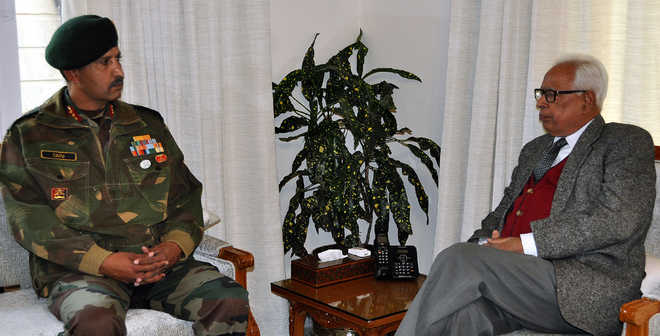
Governor briefed on security situation

Governor briefed on security situation
Gen SK Saini, GOC, 9 Corps, with Governor NN Vohra in Jammu.

Jammu, December 20

Lt Gen SK Saini, General Officer Commanding (GOC), 9 Corps, called on Governor NN Vohra at Raj Bhawan and briefed him about the security situation in the area of responsibility of his command.The Governor discussed with General Saini issues relating to the continuing Pakistani attempts to infiltrate terrorists across the International Border. He also stressed the importance of the state police enforcing heightened surveillance in the entire hinterland on a sustained basis. — TNS


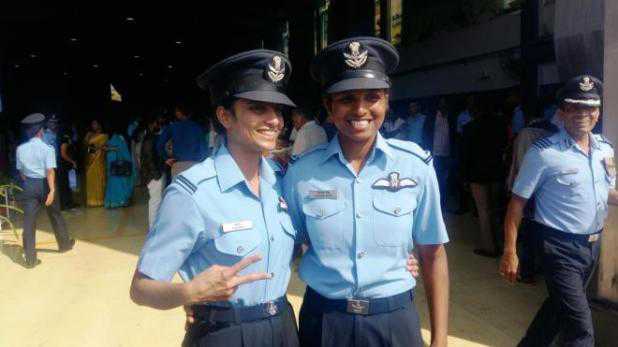
2 women fighter pilots among 100 get into IAF

2 women fighter pilots among 100 get into IAF
Flying Officers Pratibha (left) and Shivangi Singh

Hyderabad, December 16

Over 100 officers, including two women fighter pilots, were commissioned in the Air Force today during the Combined Graduation Parade of Pilots and Ground Duty Officers at Air Force Academy, Dundigal, near here.An official statement said the event marked the passing out of 105 flight cadets as flying officers, including two women fighter pilots—Flying Officers Shivangi Singh and Pratibha, of a total of 15 women who joined the elite cadre of IAF officers.(Follow The Tribune on Facebook; and Twitter @thetribunechd)The occasion also marked the passing out of the 200th pilot’s course of IAF officers. Navy Chief Admiral Sunil Lanba was the chief guest at the parade. He conferred the President’s Commission to the graduating Flight Cadets who successfully completed their basic and professional training. — IANS


Talking of Army culture

Meaningful discussions, sonorous bands, cultural artifacts and avid visitors made the concluding day of the first Military Literature Festival a glittering affair

Amarjot Kaur

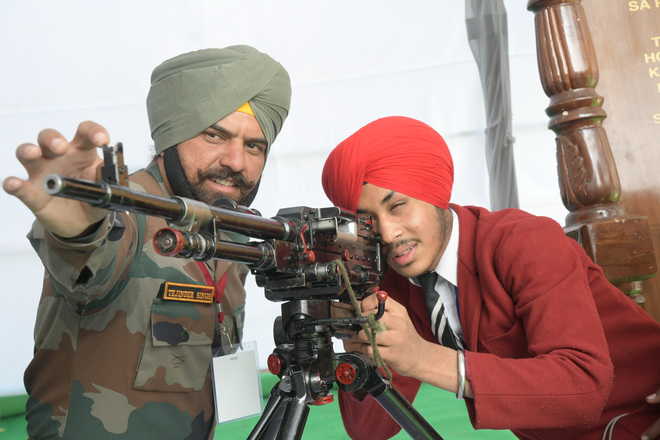
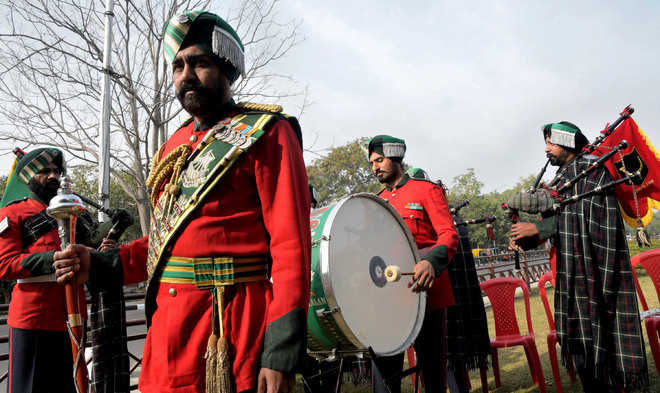
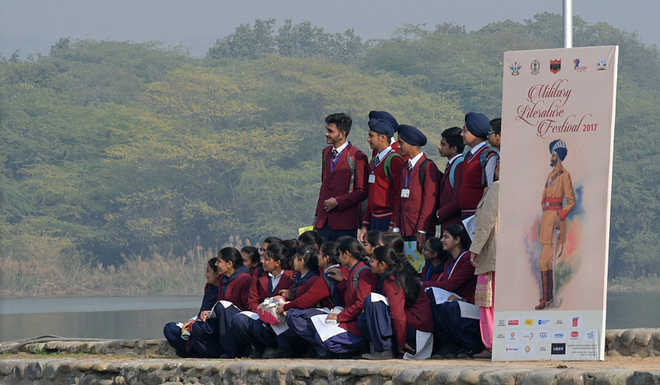
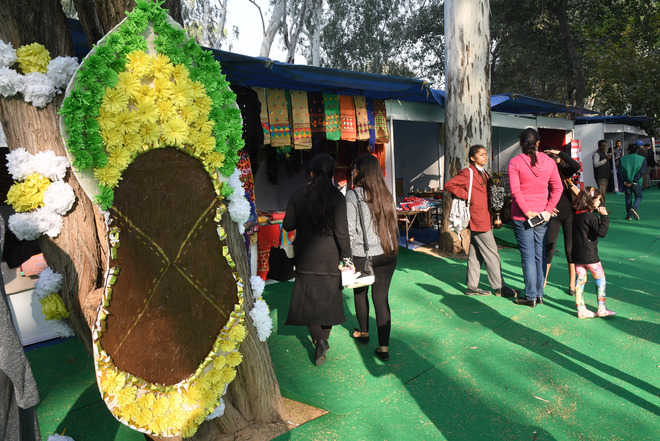
From discussions on Saragarhi Samvad and battles fought from 1818 to 1837, including the Battle of Peshawar, Jamrud, Multan, and Kashmir, to discussions on Anglo-Sikh wars, 1971 and 1965’s Indo-Pak war, military animals, national security strategy and ongoing conflicts, Chandigarh’s first Military Literature Festival kept introducing firebrands to the bonfire of thought-provoking dialogues by the Sukhna Lake at the Lake Club on Saturday.Besides military leaders, authors, writers, and thinkers, who added to the literary part of the festival, five book stalls, among 30 other booths selling artefacts and handicrafts, contributed to the cultural side of the three-day festival.Regaling the visitors with Kullu and Kashmiri shawls, Hoshiarpur’s famous wood inlay work, UP’s handloom cotton bed-sheets and covers, and Jaipur’s traditional jewellery, the last day of the festival witnessed a footfall of over 2,000 people, including National Cadet Corps, and school students. With daris, cushion covers, and table mats on display, Manuj Kamboj from SabTera Foundation says, “We are an NGO for women empowerment based in Khuda Ali Sher, near PGI, and these are items made by SabTera Livelihood programme by underprivileged women.”What catches our attention the most is the Pipe Band from the 11 Madras regiment. “This band was established on July 1, 1980. I have been a part of it since 20 years now and have over 100 tunes to play at the festival,” says band major BV Anathan. 

amarjot@tribunemail.com


OPEN INVITATION TO ALL FOR MILITARY LITERATURE FEST :::07 DEC TO 09 DEC 2017 AT CHANDIGARH LAKE CLUB

INVITATION FOR MILITARY LITERATURE FESTIVAL: 2017

Military literature festival is scheduled to be held at chandigarh Lake Club from 7th  to  9th December 2017. This is an initiative of His Excellency the Governor of the Punjab, Shri V P S Badnore and the Honourable chief minister of Punjab, Capt Amarinder Singh, in association / coordination with the Indian Armed Forces, to create public awareness about elite armed forces among the citizens/future generation.

 Well known personalities who have been invited and will be sharing their views /experiences with the public are authors, veterans, war decorated heroes, publishers, musicians, artists, journalists, war correspondents, poets, film makers, research fellows, leaders in technology and manufacturing, architect, craftsmen, industrialists.

 In addition to the panel discussions, the other attractive activities are Akash Ganga Sky Divers team, Brave Hearts Motorcycle ride, Equitation Tattoo, Para Motor shows, Daredevils Motorcycle displays and Military music by Military bands. The Subjects will range from National security, wars, conflicts, battlefield, heroism and life of military family thus providing a wholesome and enriching exchange of discussions and dialogue & ideas.

Apart from above, there will be books, arts and handicraft exhibitions, magic shows, puppet shows, the vibrant and lively Bhangra and Giddha troupes and an armament display of the latest army weaponry.

 On behalf of the government of Punjab, I invite you and all officials of your organisation, along with families / friends to participate / witness this historical event, and to pass the baton of legacy bravery, valour and sacrifices of the sons of soil to the future generations/children. Students of Schools/Colleges/Universities are most welcome.

 Confirmation may be sent via email to     

                      festcoordinator.mlf@gmail.com

    OR telephonically on —9877860269

 Military literature festival:PGME

Event              Date                      Venue


Braveheart’s Motorcycle ride for the military 03 December War Memorial Chandigarh to KOI Chandimandir


A V Shows 05 to o9 December


Lake Club Area


Air Force Fly Past Show


05 to 06 December


Lake Club Area Subject to Sanction By MOD
Akash Ganga Sky Diving Team


05 to 06 December


Lake Club Area Subject to Sanction By MOD
Band Displays 05 to 09 December


Lake Club Area


Equitation Tattoo


06 December


Secretariat Ground


Motorcycle Daredevil Team Display


07 December


Uttar Marg near Lake

Club


Paramotor Display


07 December


Secretariat Ground  
High Tea


07 December


Raj Bhawan  


Dinner 07 December Western Command  


The military literature festival 08 And 09 December

Opening Ceremony 08 December 1000 to 1100 Lake Club
Tea 08 December 1100 to 1130 Lake Club
Panel discussions 08 December 1130 to 1345 Lake Club
Lunch 08 December 1345 to 1435 Lake Club
Panel discussions 08 December 1445 to 1815 Lake Club
Mega Social Evening 08 December 1900 onwards Capital Complex
Dinner 08 December 2000 onwards Hotel Taj

                        09 December2017

Panel discussions 09 December 1000 to 1330 Lake Club
Lunch 09 December 1330 to 1430 Lake Club
Panel discussions 09 December 1445 to 1645 Lake Club
Closing Ceremony 09 December 1700 to 1800 Lake Club
TEA 09 December 1800 to 1830 Lake Club
Dinner with concert 09 December 2000 onwards Hotel Mt View

FOR REGISTRATION OPEN SITE

HTTP://WWW.MILITARYLITERATUREFESTIVAL.COM


Religious beliefs, political personas by Satya Narayana Sahu

Politics should be used to nourish and enrich the unity of the country. By remaining wedded to our multiple identities and by remaining tuned to the Constitution and not to any shrine or place of worship, we can defend the Idea of India.

Religious beliefs, political personas
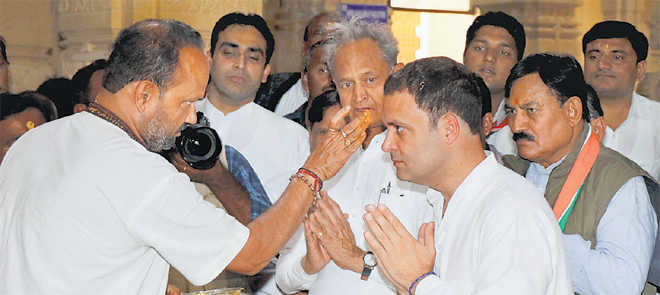
Congress Vice-President Rahul Gandhi at the Somnath temple in Gujarat on Wednesday. PTI

Satya Narayana Sahu
Former Press Secretary to President KR NarayananRahul Gandhi’s visit to the Somnath temple on Wednesday and the alleged entry of his name in the register meant for non-Hindus has predictably caused a row. It came to imply that he is not a Hindu. Photographs of him wearing a sacred thread were flashed to prove his credibility as a Hindu. Efforts were made to demonstrate that his religion is Hinduism and the entry of his name in the register meant for non-Hindus is a political mischief. It is strange that the immediate identity of somebody gets highlighted just to score a political point and appeal to voters. Let us take two examples from history where our leaders refused to be defined  by their religious identity alone:1. In 1965, just before the invasion of Pakistan on India, the BBC in a radio broadcast stated that the Prime Minister of India Shri Lal Bahadur Shastri being a Hindu would attack Pakistan which is a Islamic Republic. Immediately, Prime Minister Shastri issued a statement in which he dismissed the BBC portrayal of his identity as PM of India in terms of Hindu religion as mischievous and asserted that he became the Prime Minister of India not because of Hinduism but because people of all faiths chose him for the post. He then referred to the secular character of India and the office of the Prime Minister. He argued that India did not stand for only one religion and he being the Prime Minister, and not a Hindu, would defend India the idea of which could not be reduced to one religion. It is a remarkable lesson which teaches us to stand above religion.2. Another shining example of going beyond religious identity was shown by none other than Mahatma Gandhi when he declined to meet Jinnah who insisted that he should come to see him as a representative of the Hindus. Gandhiji wrote a piece on the issue and he defined his identity beyond Hinduism. He said that he hailed from Gujarat and, therefore, he had a Gujarati identity which was coextensive with his Indian identity. Then he further expanded his Gujarati and Indian identity by saying that these Gujarati and Indian identities coexisted with his planetary identity. Stretching further and broadening all those identities, Mahatma Gandhi said that he was of the cosmos and so his Gujarati, Indian and planetary identities coexisted with his cosmic identity. These refreshing examples of leadership teach us to go beyond immediate identity by including manifold identities which define every individual. Professor Amartya Sen, in his book Identity and Violence, and in one of his speeches “Indian Identity” had cautioned that if one identity of an individual is privileged over other identities, it would lead to distortion and imbalance of multiple identities which an individual has and which define his overall identity. Such a process of privileging one identity over other identities would necessarily lead to narrowness of mind which, in turn, would spread violence and venom, cashing festering sores across the whole body polity. 

Glorious legacy

Politics, which is a necessary attribute of parliamentary democracy, has to be used to nourish and enrich the unity of our country. By remaining wedded to the multiple identities which we have and by remaining tuned to the Constitution and not to any shrine or place of worship, we can defend the Idea of India. Rahul’s visit to Somnath temple or the visit of anybody to any shrine should be seen from the perspective of the Mahatma who juxtaposed his Hindu identity with his planetary and cosmic identities. Such a harmonious approach is indispensable to harmonise our identities to use politics to foster harmony and understanding in society and stand up for the Idea of India.The Mahatma said he did not want India to be wholly Hindu, wholly Islamic or wholly Christian but wholly tolerant with all its religions coexisting side by side and flourishing. He also said that to define nationalism as Hindu nationalism or Islamic nationalism is a libel on nationalism. Exactly the same composite dimension of nationalism was given by Swami Vivekananda when he said that he wanted India to have a Vedantic brain and Islamic body. Dr BR Ambedkar described attempts to establish the Hindu Rashtra as “arrant non-sense”. In no phase of India’s history was the identity of India defined by the religious identity of the rulers. When Sardar Patel wanted to use government funds to reconstruct the Somnath temple, Mahatma Gandhi advised to create a trust and appeal the people to contribute money for that purpose. Sardar Patel paid heed to this voice of sanity  and desisted from using the funds of the Government for conducting religious work. In doing so, Sardar Patel was setting a splendid example of keeping the State apparatus away from religion and temple construction activities. It is gratifying to note that that narrative of Gandhi’s advice to Sardar Patel and the later’s acceptance of it is part of the light and sound show event being conducted every evening in the sacred premises of the temple for the pilgrims who visit the shrine. Such a glorious legacy to go beyond religious identity in public life and politics and not to use the State for religious purposes is the defining feature of our Republic. It is every Indian’s duty to uphold this legacy which is the basic structure of the Constitution. The leadership must remain tuned to this legacy to uphold the Idea of India or in the words of the former President of India, the late KR Narayanan, the ideals of Indiatva in contrast to Hindutva.Mahatma Gandhi’s exampleIn the pre-independent India, once when Mahatma Gandhi was requested to dedicate the Lakshmi Narayan temple in Delhi, which is popularly known as the Birla temple, he initially refused to do so. However, he was persuaded to come and do the honours as Pandit Madan Mohan Malviya who was supposed to do it could not come to Delhi because of his other engagements. Gandhiji, while doing so, delivered a speech and said that by visiting a temple, a devotee should pray to get strength to respect faiths of others and fight against the practice of untouchability which plagued Hinduism.

(Views are personal)