



Sanjha Morcha

Modi inks Russia N-pact, to meet Trump on Jun 26

NEWDELHI : Prime Minister Narendra Modi met Russian President Vladimir Putin in St Petersburg on Thursday and the two countries concluded a much-awaited agreement to build the last two units of the Kudankulam nuclear power plant in Tamil Nadu.

REUTERSPrime Minister Narendra Modi with Russian President Vladimir Putin in St Petersberg on Thursday.

After Putin, he is expected to meet US President Donald Trump on June 26 in Washington, Hindustan Times has learnt.

This would be a highly-anticipated first meeting between the two after Trump took office in January. Government sources said counter-terrorism, maritime security and Afghanistan will top Modi’s agenda during his two-day visit to the US from June 25.

In St Petersburg, the Russian President’s hometown, Modi and Putin discussed ways to take their energy and strategic ties forward. Russia and India signed five pacts, reflecting the partnership between the traditional allies. The Nuclear Power Corporation of India Limited and Russia’s Atomstroyexport, a subsidiary of Rosatom, the regulator of Russia’s nuclear complex, will jointly build the reactors of the 6,000 megawatt plant.

“International relations see ups and downs, but history is witness Indo-Russia relations have not seen any ups and downs,” the Prime Minister said.

Wooing Russia will be a challenge

Narendra Modi will have to revitalise ties with Moscow while safeguarding regional security

Prime Minister Narendra Modi’s Russia visit raises a fundamental question: Is Moscow still India’s ‘tried and trusted’ friend? Russia’s growing relations with India’s adversaries, China and Pakistan, have spurred unease in New Delhi. However, many in India have failed to grasp the factors driving Moscow’s overtures to Islamabad or its sale of offensive weapon systems to Beijing.

Such moves have little to do with India. Russia may be in decline economically, but, geopolitically, it is a resurgent power, spreading its influence to new regions and pursuing rearmament at home. Russia is the only power willing to directly challenge US interests in West Asia, Europe, Caspian Sea basin, Central Asia and Afghanistan, where America is stuck in the longest war in its history.

In keeping with the maxim that countries have no permanent friends or enemies, only permanent interests, Russia has rejigged its geopolitical strategy to respond to the US-led sanctions against it since 2014. Russian President Vladimir Putin has expanded the geopolitical chessboard on which Moscow can play against the US and Nato.

Putin has made Russia the central player in the Syrian conflict. Until Russia launched its own air war in Syria in September 2015, the US-British-French alliance had the upper hand there, aiding supposedly ‘moderate’ jihadist rebels against Bashar al-Assad’s regime and staging separate bombing campaigns against IS. Russia’s direct intervention, without bogging down its military in the Syrian quagmire, has helped turn around Assad’s fortunes and reshaped Moscow’s relationships with Turkey, Israel and Iran.

As part of his multidimensional chess game, Putin is also building Russian leverage in other countries that are the key focus of US attention — from North Korea to Libya. But it is Russia’s warming relationship with the medieval Taliban — the US military’s main battlefield foe in Afghanistan — that seriously conflicts with India’s interest.

Russia’s new cosiness with the Taliban, of course, does not mean that the enemy of its enemy is necessarily a permanent friend. Moscow is opportunistically seeking to use the Taliban as a tool to weigh down the US military in Afghanistan. Because of the Taliban’s command-and-control base and guerrilla sanctuaries in Pakistan, Moscow has also sought to befriend Islamabad. This imperative has been underscored by Washington’s refusal to bomb the Taliban’s command and control in Pakistan.

The paradox is that as India has moved strategically closer to the US, American policy has worked against India’s regional interests, propelling Moscow to forge closer ties with China and to build new relationships with the Taliban and Pakistan. The US still continues to fecklessly accommodate China and battle the Taliban on just one side of the Afghanistan-Pakistan divide. Russia is equally nonchalant if its geopolitical chess play squeezes Indian interests.

The revival of the ‘Great Game’ in Afghanistan is just one manifestation of the US-Russian relationship turning more poisonous. Another sign is Moscow’s stepped-up courting of Beijing. For example, with Russia staying quiet, last year’s BRICS Goa Declaration, at China’s insistence, omitted any reference to cross-border terrorism or to any Pakistanbased group, yet mentioned IS and al-Nusra. Putin attended the recent ‘One Belt, One Road’ summit in Beijing despite his concern that China is using that project to displace Russia as the dominant influence in Central Asia.

With Russia becoming the largest crude oil exporter to China, Moscow-Beijing ties are booming economically, yet underlying political suspicions and wariness remain. In the India-Russia case, it is the reverse: Relations are warm politically but the two-way trade is in sharp decline, slumping to less than $8 billion in 2015. US-led sanctions against Russia, by promoting Moscow-Beijing closeness, are undercutting a central US policy objective since the 1972 opening to Beijing — to drive a wedge between China and Russia.

For Putin, the sanctions represent war by other means and a justification for Russia to countervail US power. With the US Congress threatening to impose additional sanctions even as a special counsel investigates alleged collusion between President Donald Trump’s election campaign and Moscow, US-Russian tensions and rivalries will continue to buffet India’s regional interests, but serve as a strategic boon for China.

Against this background, Modi faces an exigent challenge to revitalise a flagging partnership with Russia while safeguarding India’s regional security and its $3 billion development aid to Afghanistan since 2002. This challenge is compounded by the fact that a robust relationship with Moscow is vital to a balanced Indian foreign policy, to leveraging India’s ties with other powers, and to managing an increasingly muscular China. A drifting relationship with Russia would crimp India’s options, to its serious detriment.

Brahma Chellaney is a geostrategist and author The views expressed are personal


clip

clip

clip


2 Hizb militants killed in encounter with security forces in Baramulla

2 Hizb militants killed in encounter with security forces in Baramulla
The Army official said two weapons were seized and operations were still on in the area. PTI file

Srinagar, June 21

Two Hizbul Mujahideen militants were on Wednesday killed in an encounter with security forces in Sopore township of north Kashmir’s Baramulla district, the police said.

(Follow The Tribune on Facebook; and Twitter @thetribunechd)

The militants have been identified as Basit Ahmad Mir, a resident of Indergam Pattan, and Gulzar Ahmad, a resident of Brat Sopore.

Following intelligence inputs about the presence of militants, security forces had launched a cordon and search operation in the area last night.

The search operation was halted for the night but the forces maintained the cordon to stop the militants from escaping, a police official said.

He said the operation resumed this morning and the gunfight started after the trapped militants opened fire on the forces.

Two AK rifles, five AK magazines, 124 AK rounds, a hand grenade and a pouch have been found at the encounter site, the official said. PTI

– See more at: http://www.tribuneindia.com/news/jammu-kashmir/2-hizb-militants-killed-in-encounter-with-security-forces-in-baramulla/425512.html#sthash.Aicw2Ypv.dpuf


Ex-soldier, family found murdered in Maharashtra

Ahmednagar (Maharashtra), June 18

A four-member family of an ex-soldier was found brutally murdered in Shevgaon village of Ahmednagar in Maharashtra on Sunday morning, police said.

According to a police official, the victims were found in a pool of blood around dawn by neighbours.

The victims were identified as: Appasaheb Govind Harvane, 58, his wife Sunanda, 48, their daughter Snehal, 18, and son Makarand, 15. The motive behind the killings is not known.

They had been repeatedly stabbed by a sharp weapon. The incident reportedly occurred around midnight, the official said. — IANS


When three neighbours unite

When three neighbours unite

Pakistan shares borders with four nations, of whom, three have unequivocally accused Pakistan of direct sponsorship of terrorism and becoming, the ‘haven for terrorists’. Pakistan has restive borders of 3323 km with India in the East, 2430 km with Afghanistan in the North and 909 km with Iran in the West – each of whom has accused Islamabad of harbouring and encouraging elements that are inimical to the interest of these three countries. India’s grudge against the Pakistani complicity in terror has been historical and consistent for many years. But the more recent stand-off and a diatribe by President Ashraf Ghani of Afghanistan, chorusing the common frustration against Pakistan, has now been mirrored in blunt terms by Major General Mohammad Hossein Bagheri, the chairman of the Iran’s Armed Forces General Staff (AFGS). “We expect Pakistani officials to control the borders, arrest the terrorists and shut down their bases,” Bagheri said. “If the terrorist attacks continue, we will hit their safe havens and cells, wherever they are.” This is a unveiled threat, eerily reminiscent of the ‘surgical strikes’ that were forced upon Pakistan by its continuing insincerity, duplicitousness and patronisation of ‘terror nurseries’ (an expression that Indian Prime Minister Narendra Modi had used while inaugurating the new Afghan Parliament building in Kabul in 2015).

Ironically, the now-irate political leadership in all three neighbouring nations had started on a clean slate, around the same time. In May 2014, Prime Minister Modi’s decision to invite his Pakistani counterpart Nawaz Sharif for his swearing-in ceremony was hailed as the ‘right decision at the right time’ to soothe the frayed nerves on the Line of Control. Later in September 2014, the incoming President of Afghanistan, Ashraf Ghani attempted a complete U-turn in the established ground rules by trying to bury the hatchet and change the tenor of open hostility and accusations that defined the Af-Pak relationship during the 13-year tenure of the outgoing Afghan President, Hamid Karzai. Earlier still in 2013, Tehran had seen a change of guard from the hawkish hardline stand of Ahmadinejad to the more moderate, liberal (read, less sectarian) and pragmatic Hassan Rouhani. Pakistan had reciprocated then by refusing to send troops to Yemen as part of the ‘Sunni Coalition’, funded by Iran’s traditional nemesis, Saudi Arabia.

Since then, the initially thawing narrative vis-à-vis Pakistan has regressed into the familiar cold freeze with all three i.e. India, Afghanistan and now Iran, accusing Pakistan of the same thing – i.e. aiding, abetting and harboring terror groups that are ‘neighbour facing’ (e.g. Lashkar-e-Taiba for India, Taliban for Afghanistan and Jaish al-Adl for Iran), inaction on known operatives and facilitating the border ‘shoot-and-scoot’ wherewithal for these terror groups. India faces the daily risk of terrorists slipping across the LoC with Pakistani ‘cover fire’. Meanwhile, the imperious concept of ‘strategic depth’ for Pakistan in Afghanistan irks the Afghan President Ashraf Ghani to lament, “One of the key figures in the Taliban movement recently said if they didn’t have a sanctuary in Pakistan, they wouldn’t last a month”.

The Iranians are also facing similar Balochi and Ahwazi insurgencies that have its benefactors in the Pakistani establishment. The Iranian Military chief Maj Gen Mohammad Hossein Bagheri was earlier the Deputy of Iran’s intelligence and operations, which makes him familiar with the asymmetric and devious track-record of the Pakistani machinations. Expectations from the Iranian Military Chief sworn in last year was alluded to in the decree from Ayatollah Khamenei. “You are expected to oversee an upgrade to [Iran’s] military and security capabilities and the readiness of its armed forces and the popular Basij, and to improve their ability to respond in a timely fashion to any threat against the Islamic Republic at any level, using revolutionary determination,” the Ayatollah wrote. It was an implied nudge to Bagheri, a veteran of extraterritorial operations and the supposed theoretician of the Iranian ‘threat for threat’ tactic, manifested in the unprecedented outburst aimed at the Pakistanis, recently. The incident that triggered the Iranian Chief’s ire was the cross-border terror attack by the Sunni militant group Jaish al-Adl (‘Army of Justice’), which left 10 Iranian soldiers dead in its wake. Iran accuses Pakistan of supporting this terror group – who had earlier claimed responsibility for terror attacks in 2015 that killed eight Iranian Border Guards and fourteen in 2013. The Iranian police investigating the latest incident stated that the terrorists had used long-range weaponry and that, “Pakistan bears the ultimate responsibility for the attack”. Pakistan’s rote refugee accompanying any cross-border terror attack of blaming ‘non-state-actors’ has lost its moral currency and credibility, globally. Recently Pakistan aggravated its ongoing disharmony with Afghanistan when it claimed to have killed 50 Afghan border troops and destroyed five posts across the Af-Pak border – no amount of platitudes and homilies like “sadness” at having to attack Afghans, “as they are our Muslims brothers”, cuts ice in either Kabul or Tehran. Islamabad’s sole investment in its ‘all-weather-friendship’ with Beijing, is fraught with increasing risks from all other sides, as the remaining three border nations contiguous to its geography are in an unusually aggressive mood. Ashraf Ghani had virtually closed doors on Pakistan and turned down an invitation to visit, Modi has made his mind known, and now the Iranians have converged to add that Iran, “cannot accept the continuation of this situation”. Tehran issued a cutting statement against the Janus-face of Islamabad, after Pakistan joined the sectarian grouping of 39 Sunni countries (‘Islamic Military Alliance to Fight Terrorism’), under the operational leadership of former Pakistani Chief of Staff, General Raheel Sharif, and Iran stated incredulously, “Countries which seek to join anti-terrorist coalitions must answer how they are incapable of countering armed bandits and terrorist groups on their own soil” – echoing a very familiar sentiment that Kabul and Delhi routinely posit at the Pakistanis. Unsurprisingly, Iran, India and Afghanistan are strategically converging on various geopolitical, economic and security domains that willy-nilly tighten the strategic noose around Pakistan. The common grouse amongst the three surrounding neighbours is one of Islamabad consistently falling shorts of its commitments. The cold optics of the reciprocal summoning of the Ambassadors posted at both Tehran and Islamabad was symbolic of the regional isolation of Pakistan, and the emerging grouping of the three anti-Pakistan nations.
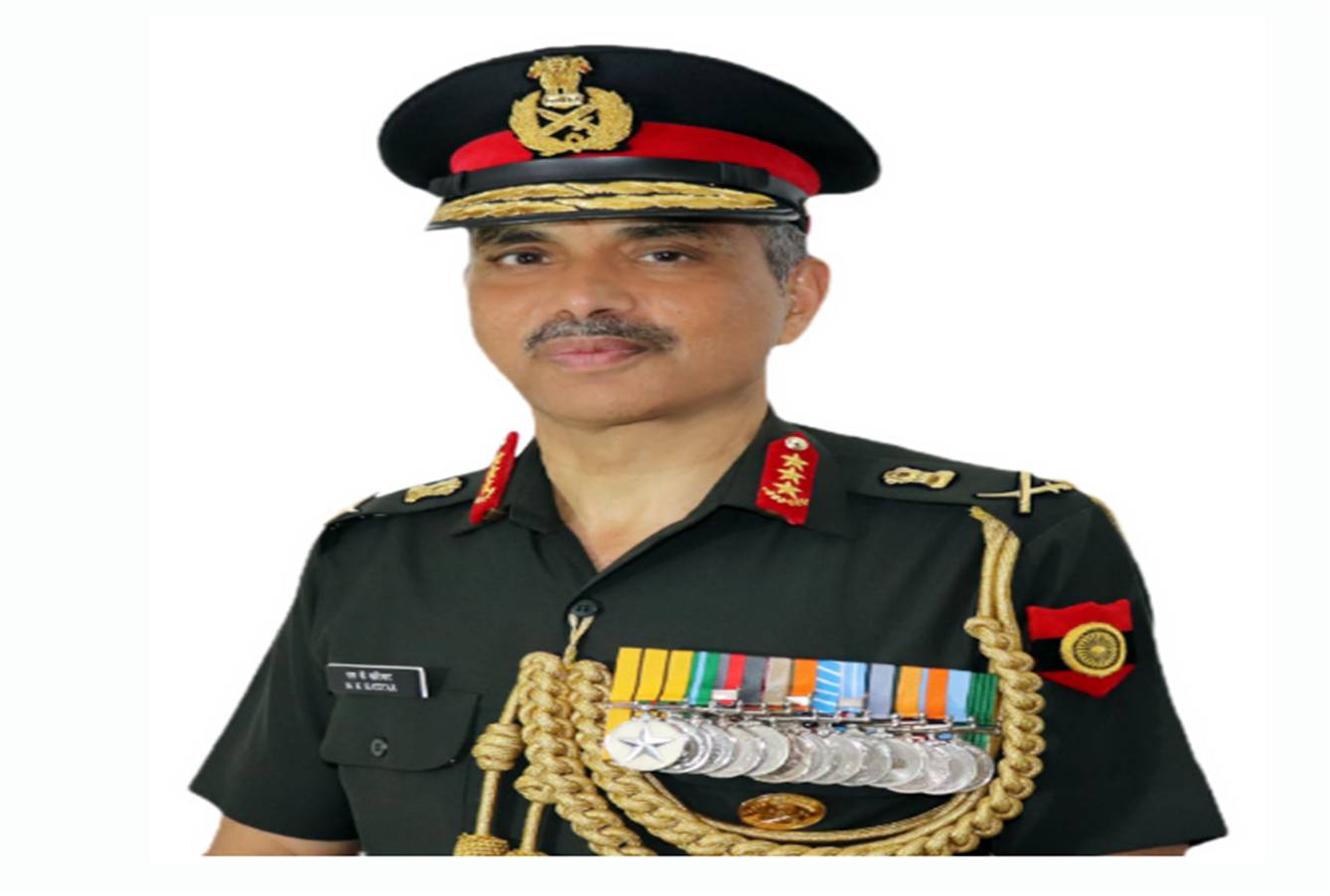

Ultra killed as Army foils infiltration in Gurez

Ultra killed as Army foils infiltration in Gurez
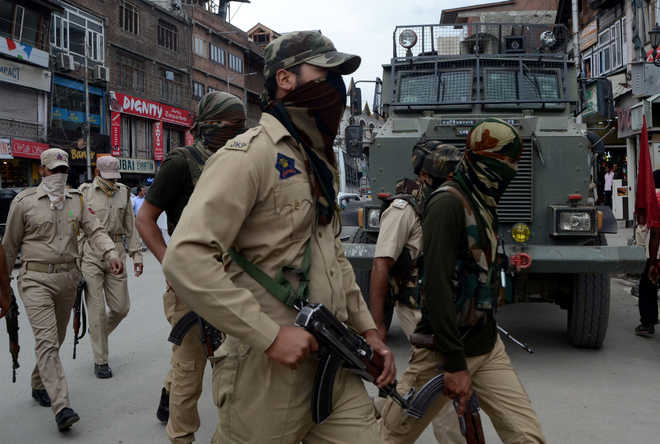
Security men during a search operation at Lal Chowk in Srinagar on Saturday. Tribune Photo: Amin War

Majid Jahangir

Tribune News Service

Srinagar, June 10

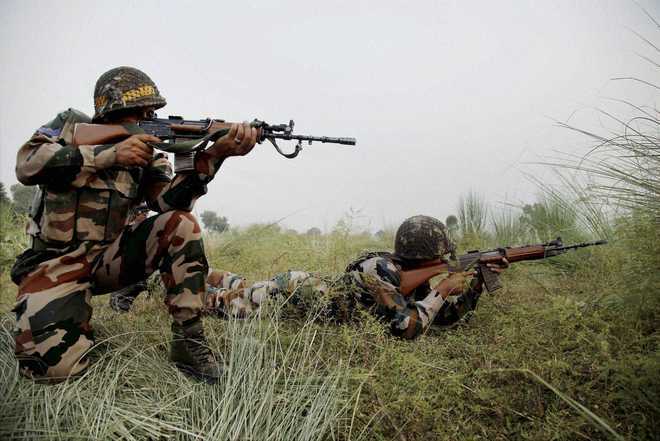
Security forces had a busy day today. From mountainous Line of Control (LoC) to busy Lal Chowk to senstive south Kashmir, forces were on toes to track militants.An unidentified militant was killed in a gunfight as the Army foiled an infiltration bid in the Gurez sector of Bandipore district, over 150 km from Srinagar.Defence sources said a group of militants was intercepted close to the LoC in the Gurez sector during the intervening night of Friday and Saturday by soldiers.“As militants were challanged, they opened fire triggering a gunfight. The body of one militant was recovered this morning and one weapon was recovered,” they said, adding that the combing operation was still underway.There is a possibility that other militants of the group may have fled back during the exchange of fire.At least 13 militants have been killed in four gunfights close to LoC in Nowgam, Machil in frontier Kupwara district, Uri in Baramulla and Gurez in Bandipore since Wednesday. An Army jawan was also killed in one of these gunfights. At least six infiltration bids have been foiled in past four day along the LoC in Kashmir. Army claims that these multiple infiltration attempts along the LoC are backed by Pakistan Army.“The sinister designs of the Pakistan army to push in multiple groups of armed intruders across the LoC in Jammu and Kashmir continue to be defeated by proactive operations being carried out on the LoC,” Udhampur-based spokesman for the Northern Command said.“The explosives, inflammable material, arms and ammunition recovered from the armed intruders indicate Pakistan’s designs to orchestrate high-profile terror incidents targeting innocent civilian population and security forces during the holy month of Ramazan,” the spokesman added.This year, the Army claims that it has foiled 24 infiltration attempts and 40 militants have been killed.Local hurt in militant attackA civilian was injured on Saturday morning when militants opened fire on security forces’ vehicles on the Srinagar-Jammu national highway in Anantnag district.The police said the militants fired upon the two security forces’ vehicles at Vesu and missed the target injuring a civilian in a car. The injured was identified as Arif, a resident of Bakshiabad, Anantnag, and his condition is stated to be stable.


Passing-out parade: Army Chief to visit IMA on June 10

Tribune News Service

Dehradun, June 8

Chief of Army Staff General Bipin Rawat will be the reviewing officer for the June 10 passing-out parade (POP) of the Indian Military Academy, Dehradun.After reviewing the parade at the historic Chetwode drill square that will also lead to the culmination of training of 423 Indian and 67 foreign Gentlemen Cadets from 10 friendly foreign countries, General Rawat will address the Gentlemen Cadets.Meanwhile, a day ahead of the parade, the ceremonial commandant’s parade took place at the Indian Military Academy today. Addressing the cadets, IMA Commandant Lt Gen SK Upadhya asserted that the Army’s reputation rested firmly on their shoulders.He exhorted the Gentlemen Cadets that the honour they had earned through hard work must be retained by them by living up to the Army’s core values of character, competence, commitment and compassion. “These values are reflected in the IMA’s code of conduct and the Gentlemen Cadets aspiring to high ideals must demonstrated these at all times,” he said.He also reminded the cadets that as they took the final step to join as officers of the Indian Army, the expectations of an entire nation were on them. “Being in uniform, you have a definite role in contributing to society and building of the nation,” Lt Gen Upadhya told the Gentlemen Cadets.A large number of schoolchildren from Dehradun and neighbouring cities, local citizens and Army personnel with their friends and families witnessed the impressive parade.On the other hand, security arrangements in Dehradun have been tightened keeping in view the passing-out parade. Elaborate security arrangements have been made at areas in close proximity to the IMA campus.


IMA AWARD CEREMONY Gentlemen Cadets felicitated

Gentlemen Cadets felicitated
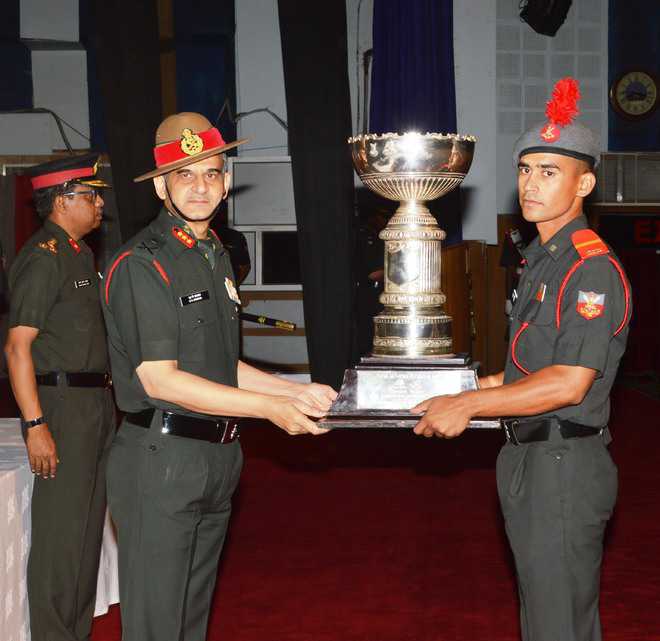
Lt Gen SK Upadhya, Commandant of IMA, presents a trophy to a Gentlemen Cadet in Dehradun on Wednesday. Tribune photo

Tribune News Service

Dehradun, June 7

Afew days ahead of the passing out parade, Indian Military Academy’s (IMA) Commandant Lt Gen SK Upadhya today said it was important for an officer to have a sense of competitiveness within the ambit of the feeling of sportsmanship.The Commandant was addressing the Gentlemen Cadets after presiding over the award ceremony of the passing out course of 140 regular, 123 technical graduates course and 25 university entry scheme courses, at the Khetrapal Auditorium of the IMA.He said it was important for an officer to maintain a competitive streak within the parameters of sportsmanship and fair play at all times. The urge to win and excel as a team should always be there. “In the profession of arms, it is always the collective and team effort that is important as there are no runners up in a war,” he added.Earlier, Lt Gen Upadhya gave away awards for the passing out course. Gentleman Cadet Semchon Hungron was awarded the Parachute Regiment Medal after being adjudged the best in endurance and physical fitness, Avinash Chettery was awarded 9 Gorkha Rifles Medal for standing first in military studies and Ashutosh was awarded the Sikh Regiment Silver Medal for being adjudged the best sportsman.Further, Sir Alwyn Ezra Trophy was presented to Sinhgarh Coy for standing first in weapon training, the Burma Army Trophy was presented to Alamein Coy for standing overall first in sports and the Governor of Uttarakhand Trophy was presented to Zozilla for standing overall first in academics.


Army warns Pak of retaliation

TOUGH TALK
In a telephonic conversation with his counterpart from across the border, DGMO Gen Bhatt says they will strike back if the neighbour continued to assist infiltrators

If Pakistani Army continues to abet infiltrations and cause trans­Line of Control firings, the Indian Army will take appropriate retaliatory actions. ARMY IN A STATEMENT

NEW DELHI : India on Monday warned Pakistan of “appropriate retaliatory actions” if the neighbouring country’s army continued to “abet infiltration” and violate ceasefire.

Indian Army’s director general of military operations (DGMO) lieutenant general AK Bhatt conveyed the strong message to his Pakistani counterpart over the phone on Monday morning.

“DGMO Indian Army conveyed his commitment of ensuring peace and tranquillity which is contingent on Pak army’s intentions and actions,” the army said in a statement.

“If Pak army continues to abet infiltrations and cause trans-LoC firings, the Indian Army will take appropriate retaliatory actions.”

The two DGMOs usually speak on Tuesdays but this unscheduled conversation took place on the request of the Pakistani side.

India’s aggressive stance along the line of control (LoC) as part of a reworked approach towards counter-insurgency operations in Kashmir appears to have rattled the Pakistani army, sources in defence ministry said.

Not just the LoC, security forces have stepped up the offensive in Kashmir Valley as well, bringing back search operations after almost 15 years.

General Bhatt also highlighted “needless escalations” by the Pakistan army along the LoC, the de facto border between the two countries.

The Pakistani DGMO raised the issue of civilian killings. “DGMO Indian Army conveyed that the Indian Army is a professional army and will not harm civilians in any manner,” the statement said.

The army has carried out “punitive fire assaults” against Pakistani posts providing cover fire to militants trying to sneak into J&K.

What makes these fire assaults different is that the army on May 23 released a rare video of the military action, showing heavy artillery blasting temporary bunkers and shelters on a tree-covered mountain.

The army went public with its action a few days after a rogue Pakistani border team crossed the LoC, attacked a patrol and beheaded two Indian soldiers.

The Pakistan army on Sunday released a video purportedly showing damage it has caused to the Indian military posts across the LoC.

The two sides have exchanged heavy fire in recent weeks. Ceasefire violations along the LoC go up in the summer as snows melts and mountain passes open through which militants sneak into India. Pakistani troops give cover fire to infiltrators.

Will retaliate to any cross-LoC infiltration or firing, DGMO tells Pak

There have been many ceasefire violations by Pakistan in recent past. PTI file

Ajay Banerjee
Tribune News Service
New Delhi, June 5

India’s Director General of Military Operations (DGMO) Lt Gen AK Bhatt on Monday told his Pakistani counterpart that India would take ‘appropriate retaliatory action’ to any Pak-Army-abetted infiltration of terrorists and firing from across the Line of Control (LoC) .

(Follow The Tribune on Facebook; and Twitter @thetribunechd)

Referring to the situation along the 749 km-long LoC that divides the state of Jammu and Kashmir, Lt Gen Bhatt conveyed his commitment to ensuring peace and tranquillity along the LoC saying it was contingent on the Pak Army’s intentions and actions.“If Pak Army continues to abet infiltration and cause trans-LoC firings, Indian Army will take appropriate retaliatory action,” an Indian Army statement said while quoting the DGMO.
The DGMOs spoke to each other over the phone hotline on between New Delhi and Rawalpindi on Monday morning. The talk was not the weekly talk the two sides have’ the Pak DGMO had requested for the DGMO-level talk.
The Indian side highlighted the ‘needless escalations’ by the Pak Army along the LoC.
The Pak DGMO raised the matter of civilians being hit on his side, to which the Indian DGMO said, “The Indian Army will not harm civilians in any manner.”

clip


A SOLDIER KILLED IN ACTION ISN’T A MARTYR

Ihave a problem with calling soldiers killed in action martyrs. I know it’s meant as respect and I’m well aware it’s intended as an honour, but that still doesn’t address my key concern which is that the term is singularly inappropriate. I’m not sure I can convince you but I’d like you to think carefully about my argument.

First of all, the term martyr has clear and undisputed religious overtones. Traditionally and historically it’s used for those who are killed defending their faith. Each of the great faiths has its own list of honoured martyrs. In each case it was refusal to renounce their faith that led to the sacrifice of their lives.

This unavoidable religious association is, I believe, inappropriate for a man in uniform and, particularly, for an Indian Army soldier. Remember ours is a military force that defends a secular State. Its cause is constitutional not religious. And secularism is one of the key principles of our Constitution and, therefore, of our nationally accepted political identity.

However, this is only my lesser concern. The bigger one has to do with the way martyrs traditionally approach and accept death. I’d like you to follow this part of the argument with particular attention.

A martyr seeks to die. You could even say he wants to die because he’s deliberately chosen a path that will lead inevitably and irrevocably to death. This is not simple suicide but the defiant embrace of death in defence of the faith he values more than life. And this seeking of death is intrinsic to martyrdom. It defines the martyr. In contrast, soldiers do not want to die. They don’t seek death. That is not their intention. Their aim is to vanquish the enemy but emerge victorious and alive.

A soldier may lay down his life in defence of his country but that wasn’t what he wanted. It certainly wasn’t what he sought. He has a wife and children he wanted to return to. A mother and father he wished to see again. A life he hoped to live to the full. At no point was he seeking death.


Now don’t misunderstand me. I’m not devaluing soldiers or their commitment. I’m just correcting a misunderstanding. In fact, I would go one step further. I would say that because soldiers want to live, their commitment to the cause they’re fighting for and their determination to prevail is even greater.

So let me reiterate in simple terms: A soldier may be prepared to die to secure victory but that doesn’t mean he wants to. He wants to live to enjoy his success. That’s what sets him apart from a martyr.

This is not a small difference. It’s not one of interpretation or use of language. It’s not etymological. It has to do with understanding the role and thinking of a soldier. You could, therefore, call it philosophical. That’s why it’s important. Finally, if it’s misleading and, therefore, wrong to call soldiers killed in action martyrs what term do we have that fits better and still honours the sacrifice they’ve made? Because there’s no doubt they’ve made an enormous sacrifice. The biggest any human being can.

I’m afraid I don’t have an answer. Instead, what comes to my mind is the epitaph on the Kohima War Memorial, derived from the words of the English poet John Edmonds: “When you go home, tell them of us and say, for your tomorrow we gave our today.” The views expressed are personal