Sanjha Morcha

Chinese incursions matter of perception: Army chief

Chinese incursions matter of perception: Army chief
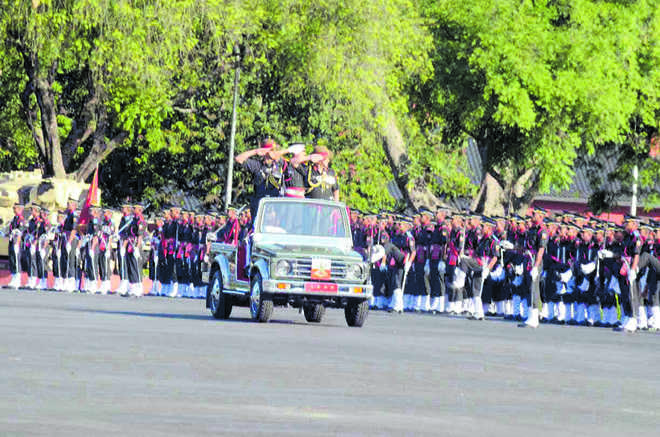
Army Chief Gen Bipin Rawat reviews the passing-out parade of the Indian Military Academy in Dehradun on Saturday.

Jotirmay Thapliyal

Tribune News Service

Dehradun, June 10

Chief of Army Staff Gen Bipin Rawat has ruled out recent Chinese intrusions at Barahoti in Uttarakhand as a serious threat to the country asserting that it was just a matter of perception for the two countries.Talking to mediapersons on the sidelines of passing-out parade at the Indian Military Academy, where he was the reviewing officer, Gen Bipin Rawat saw no major threat to the country on possible Chinese intrusions into country, particularly Barahoti in Uttarakhand. He asserted that it was just a matter of perception due to lack of proper border alignment between the two countries.“It is just a matter of perception. We also use intrusions while patrolling and thus it is a matter of perception,” said the Army chief, adding that it was however more important that there was a better understanding between both India and China, rather than aggravating things.As for combat role for women officers’ in the Army, General Rawat said the women officers would initially be roped in military police and would gradually be taken into other combat roles. He said women officers were already doing well in service arms like Engineers and Signals. “Often during operations in insurgency-hit areas, the forces have to face women and under such conditions male members feel hesitant and here the presence of women officers in combat role can make a difference,” General Rawat pointed out. General Rawat said stone-pelters were misguided youth who were using social media as a tool and resorting to misinformation campaign. He said these were misguided youths who would have to be brought back to the mainstream. He asserted the Army was never in favour of violence but peace. He said to meet our terror challenges, the Army continued to make its training better and better. “Terror elements keep on innovating and thus we have to anticipate them and for this the Army needs to be fully trained at all the times,” he added. 


Militant seen at Hizb commander’s funeral surrenders

POLICE AND ARMY ASKED HIS PARENTS TO CONVINCE HIM TO SURRENDER

SRINAGAR: A militant, seen at the funeral of Hizbul Mujahideen commander Sabzar Bhat who was killed in an encounter in Tral, surrendered at a police station in Handwara in Jammu and Kashmir, police said on Wednesday.

Video clips of the militant, Danish Ahmed, a resident of Kulangam in Handwara, were shot during the funeral in Tral and circulated across social media. He was seen wearing a battle pouch with a grenade.

Police said that during investigation, they found that Danish was a student of BSc (third year) at Doon PG College of Agriculture Science and Technology in Dehradun, Uttarakhand.

Found to be involved in a few stone-pelting incidents at Handwara in 2016, Danish was picked up by police but let off later after counselling. Police from Handwara and the army’s 21 Rashtriya Rifles got in touch with his parents and asked them to counsel their son to surrender. Danish later surrendered before police and the army in Handwara. On being questioned, he revealed that he was in touch with militants of south Kashmir region on social media, and it was on their instigation that he decided to become a militant.

He said he was tasked by Hizbul Mujahideen commanders to lead some local youth in north Kashmir to militancy as in south Kashmir. However, after spending a few days with the militants, police said he realised the futility of joining the militant ranks. A case under the Arms Act has been registered in Handwara, and investigation is on. Danish’s case is being considered under the Jammu and Kashmir Surrendered Militants Rehabilitation Policy.

The Hizbul Mujahideen however said that Danish was not affiliated with the outfit.In an e-mailed statement to KNS news agency, Hizbul spokesperson Saleem Hashmi, quoting the outfit vice chief Saif-ul-llah Khalid, said that the claims made by police were not true.He said that the Danish had no links with Hizbul and that “such acts should be seen as tactics of Indian agencies”.


You have 2 months to Kill every last terrorist in the Valley – Modi Govt. to Indian Army

The Government of India has given the Army a free hand to deal with the situation. The Army won’t be bogged down by political interference while dealing with the situation in the Valley, the government has made it clear.

The tempo is up and the Army is going for the kill. There is no other way to deal with terrorists, highly placed sources say. The approach is more aggressive and while engaging with terrorists this is no scope for dialogue. They have to be gunned down and there is no two ways about it, the source also said.

While on one hand the Army is dealing with the militants in the Valley on the other it is hitting Pakistan posts by carrying out punitive fire assaults. These strikes have ensured that at least 20 terrorists have been wiped out. More importantly the posts that are hit strategically were the ones aiding infiltration of terrorists by providing cover fire.

There is only one way to deal with the problem and that is with an iron hand. India will show Pakistan that it is no longer a soft state. If there is a genuine attempt made by Pakistan to talk peace, then it could be considered. However the issue of terrorism will be dealt with an iron fist, India has made it clear.

Finance and defence minister Arun Jaitley on Thursday emphasised that the force was not only dominating the LoC but also applying pressure on militant cadres.

While on hand, the Army has sent in 4,000 of its men into the Valley to eradicate the terrorists on the other hand, those police personnel with residences in South Kashmir where the problem is immense have been advised not to go home for another 2 months.


A proactive response to Kashmir conflict? Lt Gen Syed Ata Hasnain (retd)

The meeting of the Army Chief with the senior Army brass in Srinagar has sent out a strong message. Since collective wisdom always scores over unilateral considerations, a unified approach might work better. A unified command is essential to deal with the ongoing conflict in Kashmir.

A proactive response to Kashmir conflict?
Conflict Zone: The Chief of Army Staff Gen Bipin Rawat on a recent visit to LoC formations and units in North Kashmir.

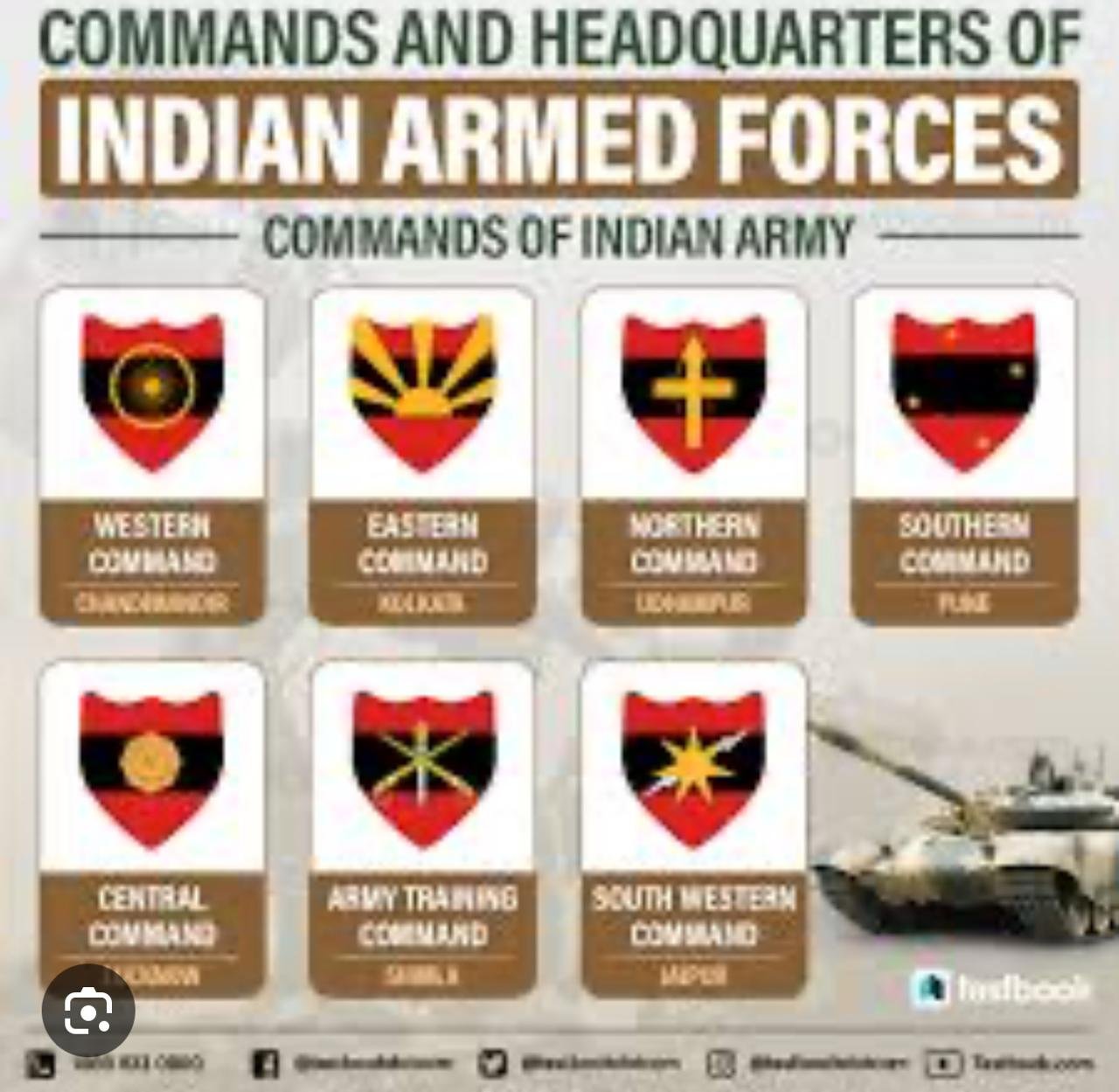
THE event got highlighted briefly in print and electronic media and got a passing reference in social media. That is how unimportant the public considers an unusual meeting of top Indian military brass away from the traditional haunt of South Block, New Delhi. However, when the Army Chief and seven Army Commanders met at Srinagar last week it was a departure from normal and something that keen observers of strategic affairs, especially those with eyes on Jammu and Kashmir, should have noted. The meeting could very well have been for the purpose of a collective change of scene and retreat but the Indian Army is a little too serious to think of such things. It is not unusual for different field armies of the Indian Army to plan an odd training event at a picturesque location within its geographical precincts. Chandimandir’s Headquarters (HQ) Western Command often conducts events at Kasauli or Subathu as does Lucknow’s HQ Central Command at Nainital. These take in a few issues of general interest and focus thereafter on the fixed responsibilities and tasks as applicable to them. Thus a contentious issue such as the North-East remains only the purview of Eastern Command and its brass and Kashmir that of Northern Command. The operational discussions on pan-India security issues are restricted to the half-yearly conference at Delhi. The Military Operations Directorate gets just a day to itself to conduct these. There is grossly inadequate and insufficient employment of the wealth of talent available in the senior command and staff appointments each of whom have served across the spectrum of challenges that the Indian Army faces. Rarely do you find Principal Staff Officers from Delhi involved in the war games of field armies. In other words, while our regional issue-based approach may be efficient the combined national approach may really not be as seamless as it needs to be. Of course, one does think of the time of late General K Sundarji’s legendary Brasstacks series of exercises, where different departments of the Government of India were involved in the discussions in the lead up to Exercise Brasstacks 4 — the maneouvres involving troops which led to the near war between India and Pakistan in 1987. This has happened once or twice thereafter but at a much lesser level of intensity and seriousness.Collective wisdom always steals a march over unilateral consideration of issues. Jammu and Kashmir is currently facing one of the most challenging phases in the last 28 years of existence of the proxy conflict because the issue is deeply embroiled in the hybrid zone. If it was purely military, the Army would have found it far simpler to address. Because it is not, the situation needs deft handling, a 360-degree consideration of the issues, tremendous coordination, cooperation with multiple agencies and team work. This type of conflict just cannot be fought through isolated, single-agency campaigns. Very early in the conflict environment there were men worth their weight in gold who thought of the right things. The Unified Command was the product of such thinking as early as 1993 but somehow it could not achieve the desired interest in its scope and the same was not sufficiently investigated. Is it time that it was restored to the status of what was intended with its use? Are these signals that people in authority are giving the whole approach a fresher look? The recent meeting in Srinagar had some interesting aspects to it. Some of the brass met and briefed the Governor. The Chief Minister was also briefed by the Western Army Commander. It is not known whether any other important members of the security team at Srinagar had the occasion to meet and brief the brass; it would have been a great gesture in jointmanship and that is the direction which should be taken in the future. The cascading effect of this should be a greater empowerment of the Unified Command, with the Chief Minister playing a more proactive role in the security realm and the outreach campaign to the people; these are inevitable arms of comprehensively countering any hybrid conflict. The planning and war gaming should be selectively done by the Unified Command, using the Army’s time-tested methods and tools of decision- making.One of the reasons for the comparative lack of interest in the media towards this event has been the inability to comprehend just what this meeting means. It was not noticed that the Chairman Chiefs of Staff Committee and Chief of the Naval Staff, Admiral Sunil Lanba was also in the Western theatre and being briefed at Yol by GOC 9 Corps. All this can be dismissed as holiday retreat time for the defence brass but it must also send a good message of the serious intent with which India is viewing Pakistan’s threats and attempts to intimidate it. At the same time the statements of the Army Chief, although taken negatively by many, do convey an upward ratcheting of the doctrine to fight the proxy efforts of Pakistan, brazenness of the mobs intimidating soldiers and getting away with it. As soon as reasonably can be the downward ratcheting will take place; have no doubts about that. The Air Force Chief’s letter to his officers is also a contributory factor in the turn of the screws as far as our readiness is concerned. The long overdue action against the financial networks also seems to have begun with recent revelations and raids. This will be a major contributory factor in diluting the proxy effectiveness. From across the border there would be many eyes glaring towards Srinagar, probably smug that a war council of the Indian Army had gathered there. The Pakistanis should be reassured that their perception is correct. India is no longer viewing the intimidation defensively and another high-profile negative incident could well test this intent. Repairing the situation in Kashmir should begin in earnest and there is no need to be in any hurry to engage Pakistan. Mission Kashmir is now all about securing Kashmir and making no bones about it.The writer, a former GOC 15 Corps, is now with Vivekanand International Foundation and Institute of Peace & Conflict Studies.


SHO removes turban to save drowning couple


LUDHIANA: The Station House Officer (SHO) at Daba police station and a constable showed quick judgment to save the lives of a drowning couple, who had jumped in Sidhwan Canal near Lohara Bridge on Saturday night.

Inspector Gurbinder Singh removed his turban and threw one of its ends in the canal to rescue the couple, while constable Jarnail Singh jumped in to the water.

The police with the help of the locals rescued the couple and rushed them to a private hospital, where their condition is stated to be stable.

Deepa, an eyewitness, said he was crossing from the Lohara Bridge when he saw a woman jump in to the canal after her husband. He raised alarm and immediately informed the police.

Inspector Singh said he along with police force was present at the check post and were checking vehicles. When he came to know about the incident he rushed to the spot.

“When I reached at Canal Bridge I saw a couple was drowning. Without losing a second he removed his turban and threw one of its ends into the water and asked the couple to hold it,”said the SHO.

“I asked constable Jarnail Singh to jump in to the canal to save the couple. The constable held the woman and swam to the bank by holding the end of the turban. The person, who informed about the incident, also came to the rescue and saved the man,” he added.

The couple identified themselves as Gurpreet Singh of Hemkunt Nagar of Lohara and his wife Harsimrat Kaur alias Manju. Gurpreet Singh is a driver, while Harsimrat works in a factory.

Gurpreet Singh told police that he had a spat with his wife over some family issue. In a fit of rage he went out of the house threatening that he is going to end his life by jumping in to the canal and his wife also jumped after him. They have two children.

The SHO said that his religion taught him to serve people when they are in trouble. He is happy that his efforts have saved two lives.

Deputy Commissioner of Police (DCP) Dhruman Nimbale said SHO and constable have set an example of bravery by saving two lives. The department will honour the brave police personnel on Monday during the parade. The department will also recommend their name for state award.


Army’s salute to gender parity

Plans to have women in combat roles send out the right signals

As a national institution, the Indian Army, one of the largest in the world, is looked up to for the values that it represents: probity, work ethic and discipline. So the proposal to allow women soldiers to carry out combat duties from Army chief General Bipin Rawat will send out the right signals in a patriarchal and unequal society. But there will be many obstacles in the way of women actually becoming equals in the army’s actual combat operations.

In the past, sceptics have questioned recruiting women in close-combat roles saying women could be taken as prisoners of war. Those opposed to deploying women in front-line combat argued that even the United States army, one of the most egalitarian in the world, doesn’t follow this policy. Neither does the British army. If General Rawat has his way, India will join a select club of nations including Germany, Australia, Canada, the US, Britain, Denmark, Finland, France , Norway, Sweden and Israel that put women in combat roles. Although India began inducting women for non-medical positions in the armed forces almost 15 years ago, women were restricted to select corps such as education, signals and engineering. Combat roles were strictly off limits, owing to legacy, perception and logistic concerns. The armed forces recruit about 3,300 women officers annually at present. To begin with, the recruitment for combat roles will happen for the post of jawans in the military police. General Bipin Rawat is the first army chief to discuss this possibility. A few months ago, President Pranab Mukherjee, the supreme commander of the armed forces, had announced that the army was considering inducting women in every fighting stream of the armed forces.

This is a big departure from attitudes that hitherto prevented women from being assigned combat duties such as the reluctance among some officers to be led by women and the Army not giving permanent commissions to women officers. One hopes the Army chief ensures that adequate mechanisms are in place to prevent discrimination on the ground.

Women in the Combat Arms: The Greatest Disaster in US Military History

BY RAY STARMANN

combat

Operation You Go Girl is destined to fail; failure defined not as a NO GO, or an F, but as the nation’s young women flown home in flag draped Glad Bags when the nation loses the next war(s). When this happens, the Hollywood producers, the feminists and the cultural Marxists who were responsible for forcing the nation’s women to experience the horrors of ground combat will scratch their heads and wonder why reality is so much different from their imaginary ideas of women in combat.

Think about this: US defense policy is now being run on a fantasy propagated by Hollywood, feminists and cultural Marxists.

Hollywood created the fantasy of the rough and tough, hard charging female cop. On any given night, on any given network, you can watch an anorexic 95 pound model, turned NYPD detective brandish a pistol larger than her waist and proceed to karate chop and cuff and stuff a myriad of male heavyweight thugs with the imaginary aplomb of Chuck Norris on all night POW camp raid.

Goodbye Popeye Doyle…

Unfortunately, real war is much different than a Demi Moore movie. A battlefield is not gender neutral. On a battlefield the roughest, toughest sons of bitches win the fight. What remains of the losers are picked at by ravens or fade away like dust in the wind.

Unfortunately, the Pentagon, the White House and Congress are no longer living in reality.

Simply put, the authorization in December 2015 to allow women to serve in the combat arms (infantry, armor, cavalry, artillery) and special operations forces (SEALs, Green Berets, Rangers, Delta Force, Marine Raiders) of the US armed forces is the greatest disaster in US military history.

The defenders of this insanity will say that women have been in combat in Iraq and Afghanistan so what’s the big deal? Returning fire when your convoy is attacked or defending yourself during a military police security operation is different than being in a unit with the sole mission of killing the enemy and seizing and holding ground. It’s like comparing peddling a beach cruiser to racing in the Tour de France.

The social engineers will cry that the standards will remain the same. Horse dung and hay: the standards were already warped so that the three females could graduate from Ranger School. They had months of special training, nutritionists, endless chances to repeat the course, etc. Ninety-nine percent of the women in the world simply cannot meet the male physical standards of the combat arms and special operations units. No amount of estrogen charged You Go Girl battle cries, or Universal Studios light and magic shows can stop reality. Reality says a million times over that women simply don’t have the physical strength, aerobic lung capacity or aggressiveness to withstand life in the combat arms and special operations. They are also more prone to stress fractures and other injuries.

Has anyone in the Pentagon wondered why they’re authorizing women for ground combat duty, yet the PGA won’t allow women to play with Jordan Spieth and Dustin Johnson in any tournament. Why, because women don’t have the physical strength to hit a golf ball as far as men, that’s why.

So, the Masters is out for women, but the Green Berets are in. Are you kidding me?

Either there will be double standards or the standards will be made gender neutral and so weak that the fat ladies driving around Walmart in two horsepower electric carts will become Navy SEALs.

Another factor dooming Operation You Go Girl are the emotional issues surrounding young men and women living together in garrison and more importantly, in the field.

The military says that good leadership will put a damper on human sex drive. Newsflash social engineers, no amount of ROTC Leadership 101 is going to stop an 18 year old with an erection in a movement to contact with a 36-24-36 cheerleader, Private Babs Horny. Get a grip; the Army and the Marines are about to become nothing more than a high school summer camp with guns and high explosives.

You have to wonder if the social engineers who are throwing a wrecking ball into the US military have any knowledge at all about combat, the military and war itself. People like Obama, Joe Biden, Ash Carter, Ray Mabus, Eric Fanning and the rest of the military’s executioners should study battles like The Wilderness, Verdun, Tarawa, Peleliu, Okinawa, Iwo Jima, Normandy, the Bulge, Khe Sanh and Tet. Think modern war can be won by diversity and technology; just ask the Marines who fought at Fallujah, or the soldiers from the Big Red One in Desert Storm who got into hand to hand fighting with the Republican Guard during the Battle of Norfolk, on the night of 26 February 1991.

War is about one thing; killing the enemy before he can kill you. It has nothing to do with equal opportunity, diversity, LGBT rights, transgender expression and ludicrous fantasies emanating from Professor Birkenstock’s women’s studies class.

Call me a cynic, but I think the subject is such a third rail in American politics that even a PC bashing behemoth like Trump won’t touch the issue. If elected, Trump would rebuild the military, but I don’t believe he has the knowledge nor will he have any generals with the stones to tell him to amend this debacle. If Trump utilizes the same school of Pentagon jellyfish trolling the hallways of the E-Ring, it’s game, set and match bad guys.

And, of course if Madame Secretary is elected it really is End Times, not only for the military, but for the nation itself.

Nope, it will take a colossal military disaster for this fiasco to end once and for all. Colossal military disaster defined as Putin’s Boys leaving the wreckage of the New US Army on the Ukrainian steppes; M1 tanks, red high heels and breast milk coolers. Or, the Chinese leaving a trail of tampons, mascara, lipstick and dead coed Marines throughout the tiny atolls of the South China Sea.

The true victims of this impending disaster are America’s young women in uniform. Well over ninety percent of women in the US military want nothing to do with ground combat, the combat arms and special operations. They are happy serving their country in the hundreds and hundreds of different jobs open to them. They know more than anyone what they are physically capable of doing in the military. It is a small minority of self-serving women in the military and leftist civilians who are pushing this nightmare agenda down the throat of the military.

The US military is on a collision course to defeat, disaster and perhaps complete destruction in war. The forced integration of women in the combat arms is not a civil rights victory, but rather the single greatest disaster in US military history.



How The Army Should Handle Psychological Pressure Of Long Drawn Hybrid Conflict In J&K by Lt Gen Ata Husnain

How
The Army Should Handle  Psychological Pressure Of Long Drawn Hybrid Conflict
In J&K

SNAPSHOT

J&K remains the tinderbox even as there are candid interviews which speak about recent events and the changing dynamics. Lt Gen Ata Hasnain explains the nuances of the situation and how such situations need to be handled.

Educate, be quiet and do your work are essentials of the theme, he suggests.

A few years ago, while in uniform, this subject would have been anathema for me but the world has moved on and so have I making us both comfortable with examining and analysing some uncomfortable subjects. I usually like assessing situations the way the Army taught me; by imagining that I am the enemy. Sitting in Rawalpindi some keen hawkish Pakistanis must be keeping the tabs on every utterance of the Indian Army Chief and other important leaders who matter. They would also be reading the deluge of articles in the Indian mainstream media (MSM) and the regional Jammu and Kashmir (J&K) media to get an idea of which way things are going with regard to India’s national security. The prime focus would be on J&K considering the current situation and the beginning of what is known as the ‘campaigning season’ in 2017 in J&K’s parlance.

It has been 28 years since the commencement of the ongoing proxy conflict. Judging from the Pakistani point of view it is obviously not a slap dash military affair. The proxy war was never designed to be so. It was to challenge India’s resilience, open up cracks in its unity, prevent it from achieving its aspirations, project it negatively to the world, motivate the population of J&K to remain alienated with a perception that it had no place in India, create and nurture a separatist leadership, run clandestine networks to finance and resource the struggle, make religious ideology and affinity an important unifier and run a propaganda machine that could exploit situations to advantage. With all the above it wished to draw the Indian Army and other security and intelligence agencies into the fray to tire them out, keep them away from their main role and embroil them in a thankless task fighting an insurgency like situation with no end in sight.

The low cost proxy conflict was ultimately designed to frustrate India and its institutions, and force it into so many errors that would make it self-defeating for it with whatever was done in J&K. Such a strategy could be made to work through activation of many domains making this conflict hybrid in nature and preventing India’s response from being sufficiently comprehensive. The primary target has been the Indian Army, the nation’s strength and ultimate resort. It has fought professionally, largely kept itself out of unseemly controversy, calibrated the employment of force, performed tasks that many others should be performing and frustrated the designs of the adversaries at every step.

In recent days, the Indian Army has suddenly come into the eye of the storm with many intellectuals and even the senior veteran community finding fault with some of its activities in Kashmir and being critical of its Chief. It makes the soldier in me sit up and take not only notice but actually do a deeper introspection. The Army Chief has been making quite a few statements in a suddenly proactive engagement with the media. That itself is fuelling speculation about a change which General Bipin Rawat apparently seems to be bringing to the table in the handling of operations in Kashmir besides some other areas.

It’s clear the Indian Army holds a fine reputation in Kashmir. Its detractors have to say many negative things about it which should be reasonably expected. They also manipulate events to besmirch its reputation because that reputation is good; and even the separatists realise it. There was a time when the Army used hard methods to contain turbulence of all kinds, but since 1997 it has consciously chosen to balance the use of hard power with a measure of soft power, engagement and outreach. Senior commanders are extremely watchful of this. The restrictions such as the Standard Operating Procedure of Northern Command Headquarters, the Army Chief’s 10 commandments, the principles enshrined in the Sadbhavanadoctrine and the Do’s and Don’ts of the Supreme Court, all add up to the humanisation efforts of the Army. Much that has been written by respected analysts in recent days has appreciatively covered all the above without naming them, that being a matter of detail. So the concepts are all clear to them. These are simply concepts which any professional Army must follow to bring a turbulent militancy/proxy war under control. The people remain the centre of gravity.

What is not appealing to this segment of the intelligentsia is perhaps a perception that the Army has lost its focus and its long term aim. Such hybrid conflict (long war) is never static in character. It remains dynamic and the adversary continuously seeks ways of obtaining advantage. The concept of balancing hard and soft power which the Army follows has therefore to be dynamic too with the ratio between the two segments of the balance undergoing calibration which forces a change in the method of handling. Agreeably this change must be subtle and must not reflect frustration of the rank and file nor be overtly provocative such that the carefully crafted narrative of years is upset in any measure which can lend advantage to the provocateur. The latter has a wily mind and is ever watchful for opportunities to exploit and this is what Pakistan is doing and doing it rather well.

The current situation in Kashmir is not of the Army’s making. Hopefully this is clear to all. It has faced all kinds of situations and bested them. It is not necessary to recall why the situation has come to the current pass. However, it is the presence of the Army which ensures that the periphery is held tightly while the process of stabilisation is taken up. ‘Holding the periphery’ is a term which needs correct understanding. It involves the conduct of such operations as to prevent any surge in terrorist strength, prevent the leeway they seek to carry out their nefarious activities, give the police forces the confidence that there is always a fallback and assist in conveying the message of impossibility of the adversary ever attaining its aim.

The issues which upset the applecart and seemingly brought an element of frustration to the Army’s ranks was the interference by flash mobs at encounter sites leading to some fatal casualties, the fatal targeting of Lt Umar Fayaz by terrorists, the baiting of the Central Reserve Police Force by targeting its personnel returning from a difficult duty and lastly preventing the Army from carrying out its legitimate duties of protection of election staff. The cumulative effect of all this on all ranks of the Army and the pressures of the long counter proxy campaign could perhaps be telling although I believe the Army is far more resilient than that. Yet the pressure cooker existence brings frustration in its wake. From the Line of Control to the transit camps to which the soldiers travel while on leave, the effects of proxy conflict seem omnipresent in the tension that is felt by the soldiers.

I am aware that Pakistan would find much glee in my words but it has yet to contend with the professionalism of the Indian Army. It is not necessary to pick and choose every word that the Army Chief has spoken. What he has conveyed is that measures will be taken by the Army to secure itself far better even if it has to use a higher ratio of hard power temporarily to overcome the current situation. The stone versus AK-47 is a long debate which also went the full way during the Palestinian intifada. The stone is classified by many as a weapon of the poor and by others as a weapon of non-violence. That is fine until the ‘non-violent weapon’ hurts and upsets operations of a larger nature. That is when armies lose patience and respond. It may attract allegations of rights violations but it is clear there is no absolutism of rights when lives of soldiers are also involved. That is the message the Indian Army Chief has conveyed.

There is no need to join the voices in support of or against the Army Chief unless you comprehend the nuances of conflict situations. The intellectuals and the veterans who have warned about the Army losing its moral ascendancy are entirely right. There will be a degree of compromise in such ascendancy when hard power returns to the environment and rights are not seen in more absolutist terms. The Army knows this too and much better than most. Where I choose to disagree with my own Army, and it is intellectual honesty to do so and say so, is in the sphere of communication.

Unfortunately, none of the major sets of principles of war of different countries yet include communication as an entity deserving to be a principle of war. However, the world is changing rapidly because of communication. The power of communication is such that signaling can be done in different ways with the message reaching the right quarters and having the desired effect. If conceptual changes in policy are necessary this can be conveyed through the powerful communication tools within the Army itself.

In a democracy, executive policy changes can be briefed to the Parliamentary Defence Committee and equally be sent as directives to the tactical levels through classified notes. It is not necessary to openly state such changes to the media. The art of communication empowers senior functionaries such as the Army Chief to speak in different languages. Warnings need not be vitriolic or threatening. Events perceived by a class of people as unbecoming will take place. These are compulsive effects of conflict where right and wrong are blurred into a more relevant ‘maybe’.

What we can definitely do is not to keep revisiting these events. As said before, the Army’s internal communication system built on the edifice of its strong system of loyalty is well geared to spread the word of the Chief to the last man. Clarity is the key here and that clarity never carries through media. If it is motivation which is important along with the support given to even genuine mistakes the Army still works on the good old ‘personal for all formation commanders…’ type of format. Social media and MSM only confuse on the basis of perception generated and perception can be of many kinds.

So there is some change in the concept the Army is adopting and rightly so; it is in keeping with the dynamics of hybrid conflict which hardly remain static. It is also to frustrate the designs of the adversary. Soonest that the situation returns to a higher degree of control there will be reversion to another well perceived ratio of hard and soft power. There is nothing wrong with debate in a vibrant democracy but it is communication which holds the key to perception.

It is best to appreciate the compulsions of difference of opinion which is bound to take place. Strong expression of sentiments through public forums is not what is going to strengthen the hands of the Indian state; it only puts unnecessary pressure on the most effective instrument of the state. Being quiet and doing what is necessary may be a better answer.


India’s blocking of road building in Sikkim seriously damaged border peace: China

The People’s Liberation Army today accused the Indian military of stopping the construction of a road in what it claims to be China’s “sovereign territory” in the Sikkim section of the India-China border and said the move has “seriously damaged” border peace and tranquillity.

In a statement, the Chinese defence ministry spokesman Ren Guoqiang said recently China had begun the construction of a road in DongLang region, but was stopped by Indian troops crossing the Line of Actual Control (LAC).

“The China-India boundary in Sikkim has delineated by historical treaty. After the independence of India, the Indian government has repeatedly confirmed it in writing acknowledging that both sides have no objection to Sikkim border,” the statement said.

“For China to build the road was completely an act of sovereignty on its own territory and the Indian side has no right to interfere,” it said.

Earlier, the Chinese side briefed the Indian side on this issue, it added.

“In this context, the Indian troops unilaterally provoked trouble which was in violation of the relevant agreement between the two sides and the mutual consensus of between the leaders of the two countries,” it said.

“This seriously damaged peace and tranquillity in the border areas. China is committed to developing bilateral relations with India, but also firmly defend its legitimate rights and interests,” it said.

“We hope that the Indian side will meet China halfway, and do not take any actions to complicate the boundary problem, and jointly maintain momentum of good development of bilateral relations”.

Tension mounted in a remote area of Sikkim after a scuffle broke out between personnel of the Indian Army and the PLA, leading to Chinese troops damaging bunkers on the Indian side of the border.

The incident happened in the first week of June near the Lalten post in the Doka La general area in Sikkim after a face-off between the two forces, which triggered tension along the Sino-Indian frontier, official sources in New Delhi said.

After the scuffle, the PLA entered Indian territory and damaged two make-shift bunkers of the Army, the sources said.

After the India-China war of 1962, the area has been under the Indian Army and the ITBP, which is the border guarding force and has a camp 15km from the international border.

This is apparently the reason why China stopped a batch of 47 Indian pilgrims from crossing through Nathu La border in Sikkim into Tibet to visit Kailash and Manasarovar.

Earlier, Chinese Foreign Ministry spokesman Geng Shuang told the media here that the Foreign Ministries of both the countries were in touch over the entry of 47 Indian pilgrims blocked by China from entering Tibet at the Nathu La border in Sikkim.

“According to my information, the two governments are in touch over this issue,” Geng told reporters, declining to elaborate whether it was due to any weather-related issues like landslides and rains.

He said the issue was being discussed by the two foreign ministries. China last week refused entry to 47 Indian pilgrims who were scheduled to travel to Kailash Mansarovar through the Nathu La pass in Sikkim.

The pilgrims were scheduled to cross over to the Chinese side on June 19 but had failed to do so due to inclement weather. They waited at the base camp and tried to cross again on June 23 but were denied permission by the Chinese officials.

This is the second route agreed by the two counties for the Kailash yatra. Till 2015 the Yatra was being organised by External Affairs Ministry since 1981 only through Lipu Pass in the Himalayas connecting the Kumaon region of Uttarakhand in India with the old trading town of Taklakot in Tibet.

The Nathulla route enabled pilgrims to travel 1500 km long route from Nathu La to Kailash by buses.


China kills India’s NSG hopes, again

Simran Sodhi Tribune News Service New Delhi, June 23 India’s hope of getting through to the Nuclear Suppliers Group (NSG) this year virtually came to an end today with China reiterating its opposition to India’s bid. This comes in the backdrop of the ongoing NSG plenary session in the Swiss capital Bern that concludes today. India had kept its outreach to the NSG members in the run up to the Bern session low key, keeping in view the negative backlash it endured last year after the Seoul fiasco. Sources said the government pushed forward India’s case with various NSG members, but in a quieter way. The problem, however, seems to be that with China not budging from its position, and the NSG working on the basis of a consensus, India’s chances have hardly moved forward. Smaller countries like Turkey and New Zealand also continue to hold on to their reservations about India’s entry into the group. “As for non-NPT countries being admitted to the group, I can tell you there is no change to China’s position,” Chinese foreign ministry spokesperson Geng Shuang said today. “I want to point out that the NSG has clear rules on expansion and the Seoul plenary made clear mandates on how to deal with this issue. With these rules and mandates, we need to act as they dictate.” “As for the criteria regarding admitting new members,” Geng added, “as far as I know this plenary meeting in Switzerland will follow the mandate of the Seoul plenary and uphold the principle of decision upon consensus, and continue to discuss various dimensions like technology, law, legal and political aspects of non-NPT countries admission to the group”. China has further complicated the situation by holding talks in Islamabad on Pakistan’s entry into the NSG. Pakistan also followed India’s example and has been pushing for a berth, citing the fact that if India, a non-signatory to the Non-Proliferation Treaty (NPT) can be considered, then why not other non-NPT states. India has been arguing that its case needs to be de-hyphenated from Pakistan’s, but China seems to have other thoughts.