Sanjha Morcha

Aspects of military training showcased

Aspects of military training showcased
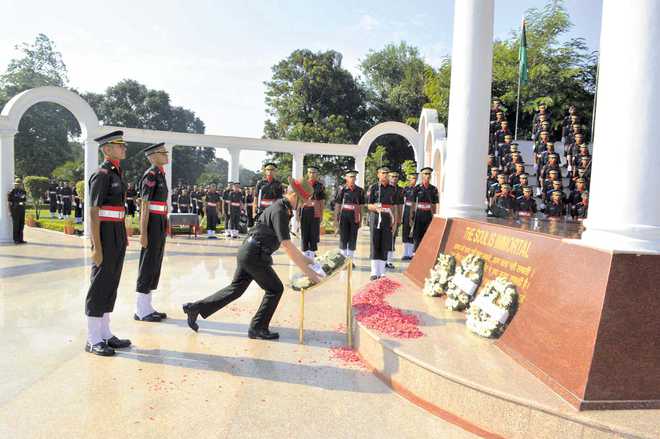
Lt Gen SK Upadhya, Commandant, IMA, lays a wreath at the martyrs’ memorial in Dehradun on Friday.

Tribune News Service

Dehradun, June 9

It was a day full of activities today at the Indian Military Academy (IMA), Dehradun, as the Gentlemen Cadets anxiously waited for tomorrow’s (June 10) passing-out parade that will have Chief of Army Staff Gen Bipin Rawat as the reviewing officer.It started with a wreath-laying ceremony held at the War Memorial, IMA, in the morning. The solemn ceremony, held a day ahead of the passing-out parade, is observed to pay homage to the brave alumni of the academy. IMA Commandant Lt Gen SK Upadhya, along with officers, laid wreaths and offered floral tributes to the martyrs.As a prelude to the passing-out parade, a multi-activity display showcasing various facets of military training imparted to the Gentleman Cadets coupled with awe-inspiring acts by the Motorcycle Rider Display team of Corps of Signals, popularly known as “The Dare Devils”, was also staged at the IMA. The display was witnessed by a large number of spectators, which included the passing-out course, their parents and relatives and other dignitaries.Later in the evening, a sound and light show for the parents of the passing-out course was organised which was held at the historic Chetwode Drill Square. The sound and light show included a multimedia, audio-visual presentation on the theme “Indian Military Academy Through the Ages”.


Major Gogoi and Farooq Dar – Grey is the colour of decision making in hybrid conflicts such as Kashmir by Lt Gen Ata Husnain

Major Nitin Gogoi faded from the limelight after the army and the Attorney General justified his action of taking Farooq Dar as a supposed ‘human shield’ to save lives of election officials and some policemen on 9 April. He has returned all guns blazing, with the army’s decision to allow the media to directly interact with him and also award him an army chief’s commendation.

Even as the incident allowed extreme ideologues of the right and the liberal camp to take aim at each other, the reality of sub-conventional hybrid conflict isn’t easily understood. The situation in Jammu and Kashmir has many grey areas, even if it seems black or white to most people. Let me explain.

In 2008, when the Amarnath Shrine Board land case triggered street turbulence no one had much idea how to handle it. In the initial days of the agitation the army imposed restrictions on movement of all its vehicles except as part of large convoys. But someone erred somewhere.

A small three vehicle convoy was stopped by a mob near Khunmoh. Just like Gogoi’s case, this was not a copy book situation. The mob looked menacing and was armed with missiles including petrol bombs. The havaldar had the choice to open fire, kill a couple of local citizens and bash his way through to the nearest army or police camp. Instead he left one vehicle to the mob, withdrew into the remaining two vehicles, turning them around and making haste to an army camp a kilometre away.

The vehicle, a large truck, was gleefully burned by the mob. My superiors were livid at the ignominy of an army vehicle being burnt and soldiers withdrawing in the face of threats. I refused, however, to order an inquiry or chide the havaldar.

For people who have lived these situations all their lives it is second nature to look for out of the box solutions, right or wrong. There is little room for procrastination. By his action the havaldar achieved minimum possible loss to the state and did not embarrass his superiors into defending possible killings. The issue was played down in the media but a stern message to the people of Khunmoh was passed through local police that a repetition would invite tough reprisals.

Armchair warriors are good people. But they know nothing about how such situations pan out into the most awkward threats at different levels. There are no neat, black and white solutions. If Major Gogoi is telling the truth – and i see no reason why a professional soldier will choose to lie – then all his actions fall in the zone of grey.

Like my havaldar he chose to prevent loss of life but by an ingenious method, which many senior veterans and highly educated people say amounts to gross violation of dignity and human rights of an Indian citizen. As an educated military leader with full awareness of the necessity of following the rules of engagement i will always work towards maximising human rights, but never at levels even close to absolute because that is practically never possible in a conflict zone.

This is because i know that i am mostly dealing with people who are not adversaries but acting on behalf of them. If they have chosen to take public order in their hands then they have abrogated certain rights too. Gogoi respected almost all those rights except the right to dignity of Farooq Dar, whose innocence or otherwise from stone throwing has yet to be established. In such situations there are no ideal solutions.

Was putting Gogoi in front of the media incorrect? What the army did not take into account was the unnecessary raking up of an issue that had receded. To announce an award when an individual is under investigation is not something which even i, an ardent army loyalist, find easy to defend.

Grey is the colour of decision making in hybrid conflicts. The security forces should know it, as should the political leadership and media. It will save everyone much embarrassment. For now, putting this affair behind it is the best option for the army.


Rawat meets his generals in Srinagar as LoC burns

WESTERN DISTURBANCE Jaitley says India dominates line, Pak summons Indian envoy

NEW DELHI: Army chief General Bipin Rawat and his top commanders landed in Srinagar on Thursday for a security review, even as cross-border shelling and gunfire escalated and Pakistan summoned India’s deputy high commissioner in Islamabad over casualties.

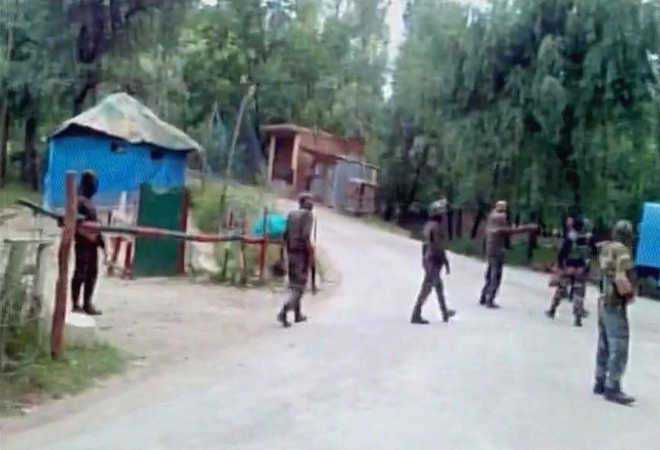
HT FILEA soldier takes position near the Line of Control in Nowshera sector, about 145 km from Jammu.

It is rare for the army’s seniormost generals to congregate in Jammu and Kashmir to review the security situation and operational preparedness of soldiers posted in the state and along the Line of Control (LoC), the de-facto border between Indian and Pakistan. The air force was also represented at the review.

In New Delhi, defence minister Arun Jaitley said Indian soldiers are in a commanding position along the LoC.

“In the past few weeks, our armed forces, the Indian Army and BSF, are dominating the Line of Control,” he said.

At least five Pakistani soldiers were killed and six more were wounded in retaliatory firing by the Indian military in the Bhimber and Battal sector of Jammu and Kashmir.

The army was responding to unprovoked ceasefire violations by Pakistani forces, which fired machine guns and 82mm and 120mm mortar shells at Indian outposts and villages across the border. A General Engineering Reserve Force labourer was killed, while two more men, including a BSF trooper, were wounded on Thursday in Pakistani firing in Rajouri and Poonch districts.

But Pakistan accused India of targeting civilians in border towns, killing a villager.

The Pakistani foreign office summoned the deputy high commissioner JP Singh and condemned the ceasefire violation.

The border burned on a day Rawat was in Srinagar for a twoday security review after the killing of Hizbul Mujahideen commander Sabzar Bhat on May 27. The army gunned down a number of militants in the past weeks, but has been unable to tamp down on local anger. Thousands showed up at the funeral of Bhat on Sunday.

Jaitley dismissed reports of mounting unrest and public anger in the Valley, saying the situation was mostly normal. “The situation in Kashmir is better than the impression.”

Indian security forces have piled pressure on militants and the results are visible, he said.

 Army Chief in Valley for security review

Tribune News Service

Srinagar, June 1

Amid the heightened tension along the Line of Control, Army Chief General Bipin Rawat along with the top Army brass arrived in Srinagar on Thursday and reviewed security.While there was no official word from the Army on the Chief’s visit, sources said a high-level meeting chaired by General Rawat discussed the issues of logistics, security in the hinterland and along the Line of Control.The sources said the top brass meeting in Srinagar would give a boost to the morale of the soldiers on the ground, who had faced a lot of flak after the “human shield” case.

2 Hizb ultras behind Sopore attack on cops killed

Security forces zeroed in on militants after grenade thrower identified from CCTV footage

2 Hizb ultras behind Sopore attack on cops killed
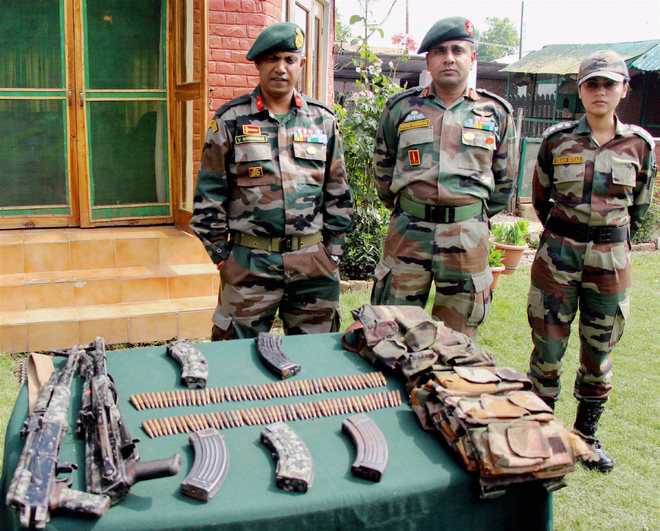
The arms and ammunition recovered from the Sopore encounter site on Thursday. PTI

Majid Jahangir

Tribune News Service

Srinagar, June 1

Two local militants of the Hizbul Mujahideen were killed in an encounter with security forces in north Kashmir’s Sopore sub-district on Thursday morning.The two slain militants, the police said, were instrumental in the grenade attack on a police party yesterday in Sopore town that left four policemen injured.The militants were killed in a joint operation which was launched in the wee hours by the J&K Police, Army’s 22 Rashtriya Rifles and the CRPF’s 92, 177 and 179 battalions at Sopore, some 55 km from here.As the forces were zeroing in on a suspected house after a specific input, the militants hiding there opened fire, resulting in injuries to two Army men, who were evacuated to a hospital.“The militants were asked to surrender, but they opened fire. In the encounter that followed, two militants were killed,” said Inspector General of Police, Kashmir, Muneer Ahmad Khan said.Two AK-47 rifles and other ammunition were recovered from the site.The two slain militants were identified as Basharat Ahmed Sheikh of Bomai, Sopore, and Aijaz Ahmad Mir of Brath Kalan.The police said the two militants had planned the grenade attack.“The two militants had assigned two persons to hurl the grenade. We were able to identify one grenade thrower who was caught on a CCTV camera. The grenade thrower was arrested during a raid and we got a clue from him about the militants,” a police officer in north Kashmir said.The local sources said the militants had appeared at the funeral of a slain militant and given a gun salute. They said that Aijaz had been studying law through the distance mode before he went underground last year.

Lady doctor treats2 injured jawans

  • A young Army lady doctor was part of the anti-militancy operation in Sopore and provided medical support to the two injured jawans. The Army said Capt Eram Riyaz tirelessly administrated medical support at the encounter site, helping the two injured jawans with grenade splinters. “She then evacuated the injured jawans to the nearest medical facility at Pattan for further treatment,” an Army officer said.

clip


India’s opposition can affect China-Pakistan Economic Corridor in short run: Chinese media

The construction of the USD 50 billion China-Pakistan Economic Corridor may be hit in the short run due to India’s objections but if Beijing and Islamabad are firm about their cooperation, they can dispel New Delhi’s doubts, a report in state-run Chinese media said.

India is protesting against the CPEC as it passes through the Pakistan-occupied Kashmir (PoK).

“Some people believe obstruction by India may become a stumbling block to the development of the China Pakistan Economic Corridor (CPEC),” an article in the official daily Global Times said.

In fact, India’s “rejection” is mainly because the corridor passes through Pakistan-occupied Kashmir. The corridor’s construction may be affected in the short term, but from a long-term perspective, China and Pakistan can dispel India’s doubt to the maximum degree if they are firm about their cooperation and actively interact with neighbouring countries, it said.

The article written by a researcher who worked in Pakistan said Chinese investments there could make profits.

“The return rate of the CPEC for China is generally higher than that in other countries. Pakistan is required to pay 17 per cent of the investment deposit for each project,” it said, providing rare details about the conditions laid down for Chinese investments in Pakistan.

“At present, China has invested in 51 projects in the CPEC, with 19 already complete. Pakistan has announced that the total investment has reached USD 50 billion. That number is based on projects that are currently running, and the final number will exceed it,” the article said.

In addition to the CPEC, China has invested in more than 200 projects in Pakistan. Its investment in the Hualong One Nuclear Power project near Karachi amounted to USD 6.5 billion, it said.

The investments mainly focus on energy and infrastructure, which are urgently needed for Pakistan’s economic development.

It also sought to dispel fear about Chinese workers’ safety in Pakistan after two Chinese were killed in Balochistan allegedly by the Islamic State militants.

“Many Chinese have serious concerns about the security environment and prospects of the CPEC after the recent kidnapping and alleged murder of their compatriots there,” the article said.

“But I found the misgivings were not necessary after carrying out on-the-spot research at Chinese and local enterprises in Pakistan, and visiting scholars and research fellows at various universities and think tanks,” it said.

Despite the recent tragedy, the overall security situation in Pakistan has improved, the article said.

“Attacks on Chinese people mainly occurred in Balochistan, where the security situation has been truly deteriorating,” it said.


Wife’s efforts yield result as J&K cop is home from Pak jail

Dinesh Manhotra

Tribune News Service

Jammu, June 22

The fiesty Sukhvinder Kour was for once at a loss for words when she got wind through the media that among the four Indian prisoners released by Pakistan today on humanitarian grounds was her husband.A constable in the Jammu and Kashmir Police, Sohan Lal Choudhary had inadvertently crossed over to Pakistan on May 11, 2014, while working in his fields on the International Border. His village Gulabgarh is a stone’s throw from the border near the Suchetgarh post.  (Follow The Tribune on Facebook; and Twitter @thetribunechd)“We have been eagerly awaiting this news for more than three years. I have no words to express my feelings,” Sukhvinder Kour said. Sohan Lal was taken into custody by the Pakistan Rangers and was shifted to Lahore Jail, where he was lodged till his release today.“As Sohan Lal was mentally disturbed during those days, he had mistakenly crossed the border three years back,” she recalled. Since then, it has been a persistent struggle for Sukhvinder to meet anyone who could be of help to get him back home, and to keep alive the issue. “We  approached all forums,” she said, adding that it was all due to the media’s constant pressure that the authorities worked assiduously to secure his release. “We met politicians, officials and senior BSF officers,” she said, expressing her gratitude to the Border Security Force for effectively taking up the issue with the Rangers.When Sohan Lal had crossed over to Pakistan, his younger daughter Mahima was in UKG and elder one Anjali in Class IV. Anjali, who’s now in Class VII, had written to PM  Narendra Modi and Union Home Minister Rajnath Singh for help in getting her father home. The other prisoners repatriated via the Attari-Wagah border were Suraj Ram, Mohammad Maqbool Lone and Abdul Majid.


Dagshai school boy tops state in NDA exam

Dagshai school boy tops state in NDA exam
Sameer Sharma

Tribune News Service

Solan, June 19

Sameer Sharma has done the Army Public School, Dagshai, proud by securing the second position in the All-India rankings of the National Defence Academy (NDA) released by the UPSC recently. Sameer, who passed out from the school this year, cleared the NDA in his first attempt.He has also topped among all schools of the state and all Army Public Schools in the NDA. His performance in the Class XII board examination has also been excellent in which he scored 95.2 per cent marks to top the school and he scored a perfect 100 in physics and 98 in IP.The NDA entrance exam was held in September last year and nearly 5 lakh Class XII students had appeared in it.Son of JWO (IAF) Lalit Kumar Sharma, Sameer hails from Mohali. His mother Seema Sharma owns a saloon.He was enrolled in Class VIII of the school. He has won many accolades and prizes of proficiency during his stay. He was also adjudged the Best Student of the Year 2016-17.Principal SK Mishra while terming it as a proud moment for the school said the school had a special cell which not only encouraged students to appear in the NDA but also arranged special classes.Ravi Sharma, in-charge, NDA classes, said a sense of respect and admiration was imbued in the students so that they could join the armed forces.


Centenarian ex-serviceman felicitated

Centenarian ex-serviceman felicitated
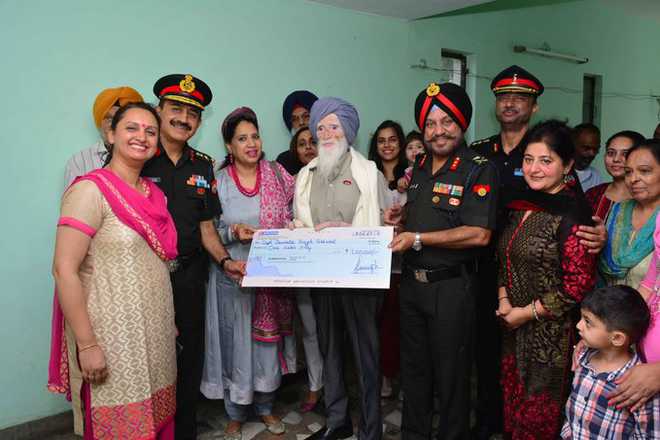
Capt Jawala Singh Grewal, who turned 100 in April, being felicitated by Major-General Harvijay Singh, Directorate-General of Signals, Army Headquarters, Delhi, in Ludhiana on Sunday. Tribune photo

Tribune News Service

Ludhiana, June 18

Capt Jawala Singh Grewal, who celebrated his 100th birthday on April 1, was enrolled in the Army (Corps of Signals) on February 19, 1937, and he retired from service on April 1, 1972.To felicitate the centenarian, senior officer Major-General Harvijay Singh, Directorate-General of Signals, Army Headquarters, came from Delhi and presented him with a token amount of Rs 1 lakh on behalf of the Indian Army at a small ceremony organised at his residence at Punjab Mata Nagar, Pakhowal Road, in Ludhiana today.On the occasion, the local Army officers also interacted with him and he, in turn, recounted his days in the Army and gave advice on various issues. He expressed satisfaction on various facilities being made available to ex-serviceman and thanked everyone present for the felicitation.The Major-General assured the veteran and his family of all help from the Army and the Corps of Signals fraternity.


Infiltration, best countered by Lt Gen (Retd) Syed Ata Hasnain

8

Pakistani militants are fervently trying to gain access through Uri. This is a warning bell to step up counter-terror ops, intelligence — and outreach to Kashmiris

At the best of times, it is difficult to make sense of events in Kashmir as these go from street turbulence and stone-throwing to LoC duels and attempts at infiltration. The last two weeks have witnessed infiltration bids all along the LoC in the Valley zone — in fact, more than I can remember anytime in recent years. The Jammu region is quiet in comparison, with a few exchanges of fire across the LoC in Naushera and Krishna Ghati.

The focus of the infiltration seems to be in the Uri area, followed by the Naugam (Lipa) sector and Machil. This is a pattern witnessed years ago — in 2010, when the street agitation was at its height, efforts were made by Pakistan to infiltrate terrorists to give impetus to the movement, through high-profile acts in the hinterland. There was also an attempt to induct maximum leaders as terrorists without leadership are easy fodder for security forces.

The sudden recourse to infiltration attempts has many reasons. To understand these, a brief explanation of the Pakistani concept is necessary. Those who keep recalling the goodwill of the ceasefire, the four point formula, the peace process with Pakistan, need to shelve all that — the Pakistan we see today is driven by a perception that it has never been strategically stronger — and the situation in Kashmir was never so much in its favour.

However, while the streets may erupt at its bidding, through social media instigation and separatist rabble-rousing, boots on the ground are deficient. The terrorist strength in the hinterland bestows the capability to execute acts which tie the army and other security forces down — and make news. Of the less than 300 terrorists estimated in the Kashmir hinterland, more than half are locals. Pakistan’s handlers have little faith in the capability of local terrorists, Burhan Wani notwithstanding: Emotional fervour when a local terrorist is neutralised is fine — but banking on the passion of locals is something the Pakistani controllers have never relied upon.

In 1991, they infiltrated mercenaries from the Afghan conflict of the 1980s, followed by more Pakistani terrorists after 1996. The generational change, with the rise of new militancy in 2013-16, passed the mantel to local Kashmiri youth, Pakistan’s control slipping marginally.

In 2014-16, Pakistan focused on Jammu, high-profile terror acts, trans-LoC firing and infiltration. Terror acts from within the Valley were of a lower order and the attrition was high. The separatist movement has also virtually come to be localised to just the Valley. The Jammu region and areas north of the Chenab have been peaceful for most of this time.

India’s initial assessment, that a new military leadership in Pakistan may see a change of tone towards the positive, has been belied. In Pakistan under General Qamar Bajwa, the emphasis appears to have returned to the Valley, the centre of gravity, where Pakistan intends to support ongoing street turbulence with hit-and-run operations, small-scale ambushes and terrorist acts. That explains the multiple attempts at infiltration through non-traditional areas. It is also deemed essential to fill up the Valley before the Amarnath Yatra, which offers maximum scope to execute high-profile acts.

Counter-infiltration is one of the most difficult operations — it demands 24×7 vigil and far more troops. It is not just a question of securing the LoC fence, but also of securing our posts against possible rogue actions from border action teams (BATs), responsible for ambushes on some of our patrols. In 2002, the Army inducted thermal imagers for night surveillance. Renewal of this equipment is essential as this is in its last cycle. The more of this equipment, in good shape, the better our counter-infiltration will be.

Intelligence networks deliver quantum results. Even the most mundane information must never be held back: It must reach where it is needed by the fastest means with senior commanders seriously monitoring the response of ground troops.

The Uri sector is witnessing a surge of infiltration efforts through areas which have been quiet for years. The recent discovery of suicide vests on five terrorists killed in the South Jhelum area is a repeat of what was seen with two or more terrorists in the Naushera sector of the Jammu division. This is an interesting development because the proxy conflict has seen many other shades of typical Islamic terrorism the world over — except suicide bombing.

This method will need rabidly radicalised individuals: Pakistan cannot rely on Kashmiris for that, whatever the state of radicalisation in the Valley. However, it can find enough volunteers from its jihad factories. Thus, the importance of effective counter infiltration to prevent a new threat.

Uri offers multiple choices for targeting. The distance, of 46 km to Baramulla, has several army camps, labour sites, the National Hydro Power Corporation campus and frequent army convoys — all these offer lucrative targets. In December 2014, a terror attack on an artillery gun position at Mohora, on the Jhelum road, led to large-scale casualties. Infiltrated groups can travel further inwards, along routes which are difficult to monitor, and reach Rafiabad, where they become part of the Sopore and Baramulla terror grids.

Much depends on the successful ability of the counter-infiltration grid to prevent a surge. There will be leakages, however strong the grid, because there are human and terrain factors which cannot all be countered. Thus, along with these efforts, the outreach and engagement with the people and counter-propaganda efforts must be professional and continuous to make a difference in the campaign to mainstream Kashmir with the rest of India.



Six attacks within hours in Kashmir Army, CRPF camps targeted; 16 hurt


Six attacks within hours in Kashmir
CRPF camp attacked in Pulwama. ANI photo

Azhar Qadri & Suhail A Shah

Tribune News Service

Srinagar/Anantnag, June 13

For the first time in recent years, militants carried out a series of near-simultaneous attacks in four districts of Kashmir valley on Tuesday, injuring 16 security personnel and looting four rifles.The first attack took place in Tral sub-district in the evening and by the night-fall, the militants had carried out a total of six attacks—five in south Kashmir and one in north Kashmir.(Follow The Tribune on Facebook; and Twitter @thetribunechd)DGP SP Vaid said there was prior intelligence about possible escalation in attacks to commemorate the anniversary of Battle of Badr, the first battle fought by a Muslim army in the seventh century.  “Today was the 17th day of Ramazan, it is also the day of Battle of Badr. We had inputs on escalation of their activities and grenade attacks,” he said. In Tral, located in volatile south Kashmir, militants hurled a grenade at a CRPF camp in which 10 paramilitary personnel were injured.Zulfiqar Hassan, IG (Operations), CRPF, said the injured were rushed to Army 92 Base Hospital in the city and were reportedly in a stable condition. Following a brief lull, the militants carried out five attacks within a span of an hour, targeting a guard post at the residence of a retired judge, a police station, CRPF camp and two Army camps.At the guard post securing the residence of retired Justice Muzafar Attar in south Kashmir’s Anantnag district, militants injured two policemen and looted four self-loading rifles.A police official said the militants opened indiscriminate fire at policemen guarding the house, injuring two of them. Attar, who is now affiliated with a political party, and his family were not at home.“Both the injured have been shifted to Anantnag district hospital. While one of them is stable, another is in a critical condition,” the police official said.In Pulwama district, militants hurled a grenade at a CRPF camp in Padgampora locality. Minutes later, militants fired a rifle grenade at the police station in Pulwama town and opened fire at the policemen. A police spokesman said two of their personnel sustained minor injuries. The fifth attack of the day targeted an Army camp in north Kashmir’s Sopore sub-district. The DGP said a rifle grenade was fired at the camp.Later in the night, the militants also attacked an Army camp at Lurgam village of Tral. Two personnel were injured in the attack. A police spokesman said the militants fired a rifle grenade at the 42 Rashtriya Rifles camp. 

Meeting on security

New Delhi: After holding meetings with CMs of Naxal-affected states and those having boundaries with Pakistan, China and Myanmar, Union Home Minister Rajnath Singh has called a conference of state Home Ministers on July 3 to discuss internal security.


clip

clip

clip


For a multi-pronged, pragmatic K-strategy Lt Gen Vijay Oberoi (retd)

download (2)

The use of both hard and soft power, a clampdown on all seditious elements and a changed game plan can help restore stability in Kashmir. However, for this an all-party consensus is a must, as the issue is one that affects the entire nation.

For a multi-pronged, pragmatic K-strategy
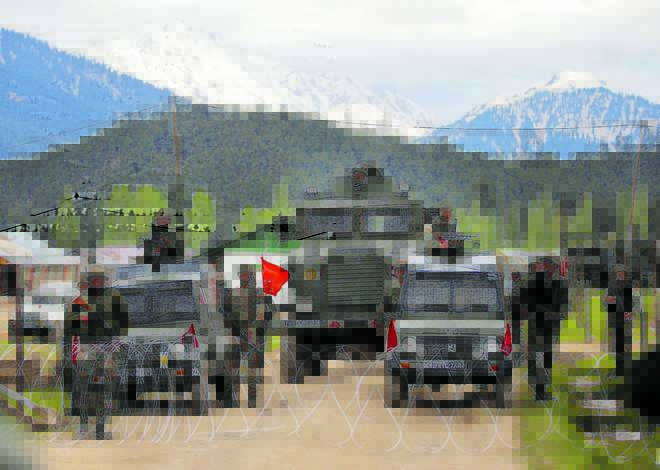
Treading a Tricky terrain: Soldiers stand guard at their Army base after it was attacked by suspected separatist militants in Panzgam in Kashmir”s Kupwara district. REUTERS

THE current instability in Jammu and Kashmir that had commenced in late 1989 has seen many ebbs and flows. The situation has deteriorated. It is not a case of “panic stations” at present, but the nation needs to work hard to bring about peace and tranquility. Calm can be restored but it must be carried out with a changed game plan.The problem is politico-military-administrative in nature, needing a holistic solution in accordance with a comprehensive plan.  While doing so, we need to ignore the whining of the “bleeding hearts” of all varieties and biased utterances of their fellow-travellers.  “Change” must emanate from the highest political level and be carried out in a cohesive manner.The political leadership must make course corrections and check the obvious drift in the state. This needs governing in earnest, with political leaders fanning out in their constituencies, ensuring that people-friendly projects move; give assurances; motivate the polity and deliberately stop politicking. The policy of appeasement and allowing anti-nationals to instigate the populace by using religion — “opiate of the masses” (Karl Marx) must end. This will close the window to Pakistan that has been used to create mayhem and havoc in the state by exporting Wahhabism, alien to Kashmir’s ethos.Political bungling in the past, both by the Centre and state leadership, needs to be re-visited. Jawaharlal Nehru  bungled by first going to the UN; then accepting plebiscite; and finally being persuaded by Sheikh Abdullah to add Article 370. Shastri grossly erred in reverting to the status quo on the ceasefire line after the 1965 war. After India’s decisive victory in 1971, Indira Gandhi missed a golden opportunity to enforce peace at gunpoint. VP Singh was blackmailed into releasing several terrorists for the “hostage,” the elder sister of the current Chief Minister. This was a decisive victory for the insurgents. Rajiv Gandhi erred in getting elections rigged through Farooq Abdullah. The UPA government that followed reinstated Farooq and continued the appeasement policy. Much was expected from Vajpayee but he slipped badly when he allowed the hostage swap, during the Kandahar hijacking and then was back-stabbed (Agra and Kargil). The next UPA government, in both tenures, showed little interest in Jammu and Kashmir, as it was too busy in other activities. Narendra Modi unilaterally extended his hand to make peace with Pakistan, till he realised that it was the powerful Pakistani Army that sabotaged all overtures. Within Kashmir, his link-up with PDP to form a coalition government has been a major mistake. At the state level, three Abdullahs, two Muftis’ (the senior Mufti twice) and a host of others have ruled the state. Not one provided good governance, but kept asking for additional funds. Today the per capita infusion of funds in Kashmir is 10 times higher than it is in the rest of India.Sheikh Abdullah spent 11 years behind bars for treason, yet Nehru released him and made him Chief Minister. His son brought militancy/insurgency/ terrorism to the state during his 1986-1990 tenure, when Pandits were massacred/driven out. As soon as stability was achieved during Governor’s rule, Farooq was brought back as a bad penny. From late 1989, when the Valley started boiling, the Army was the lead player. It stabilised the situation by 1996. Elections were held and Farooq Abdullah became the Chief Minister again. There was a spurt in infiltration from Pakistan, following the 1999 Kargil War, but the Army stabilised the situation again. Having made no headway, Pakistan changed tack and commenced instigating local youth through a highly emotive use of social media and liberal cash payments, to interfere in anti-insurgent operations, including by resorting to stoning.What is now needed is the use of  smart power (a mix of hard/soft power), devoid of any appeasement. Simultaneously, political/ administrative initiatives must explain pitfalls of violence and confrontational approach; and motivate the youth to shun violence. Additional jobs must be created, including massive recruitment to the Territorial Army (TA) and the police of all varieties.A complete clampdown on all factions of the Hurriyat is a must. They need to be charged with sedition and taken out of the state to face trial. Placing the state under Governor’s rule for a finite period is an option worth considering as the people have lost faith in the political dispensation. An all-party consensus is a must. It is not a party issue but one that affects the entire nation. Opposition parties need to play a constructive role and not continue with divisive acts and utterances. The Centre needs to set up an exclusive “Department of Perception Management”, under a dynamic non-bureaucratic head, comprising the media and tech-savvy technocrats, to counter the vicious propaganda of Pakistan’s ISI. It should produce and air programmes both in conventional and social media. Such a department must not be placed under any intelligence organisation or any uniformed force, as it will then have no credibility. There should be no talks with anyone at this stage, but responsible individuals and organisations, which can wield influence with the alienated youth and others should be identified. The “liberal pseudo-seculars” who falsely cry for “human rights” need to be ignored. They need to be attached to the Army and CAPF units operating in Kashmir to feel actualities on the ground. Only then they will realise that a soldier is the greatest victim of “human rights”.Pakistan, can never be trusted, however much we bend over backwards. We need to ignore biased world opinion and take decisions in our national interest. We should build allies in UN and with great powers to negate overtures by Pakistan. Our media (judged as the second worst in the world in a report by the World Economic Forum) needs to shun sensationalism and play a constructive and unbiased role in all security-related issues. Publicity is “oxygen” for all insurgents, therefore the need for reports to be circumspect.Stability operations by security forces must continue; all acts must be lawful but anybody breaking the law must not be spared. To ensure that massive funds being given are spent properly, an organisation, minus politicians, needs to be set up under the Governor to fund productive and people-friendly projects. Imposing strict “Rule of Law” is of paramount importance. Anyone acting against national interest must be dealt with expeditiously. Taking a cue from the handling of insurgency in Punjab in the 1970s-80s, a carrot-and-stick policy is needed. A professional Kashmiri Muslim police officer, if appointed as the DGP will achieve wonders. At the appropriate time, remove Article 370 after explaining how the state is suffering on account of this Article. The writer is a former Vice Chief of the Army Staff