Central Goods and Services Act 2017 – GST India Forum
Open link below to read about GST Act

Central Goods and Services Act 2017 – GST India Forum
THE INTEGRATED GOODS AND SERVICES TAX ACT, 2017








Open link below to read about GST Act
THE INTEGRATED GOODS AND SERVICES TAX ACT, 2017
Jammu, June 22
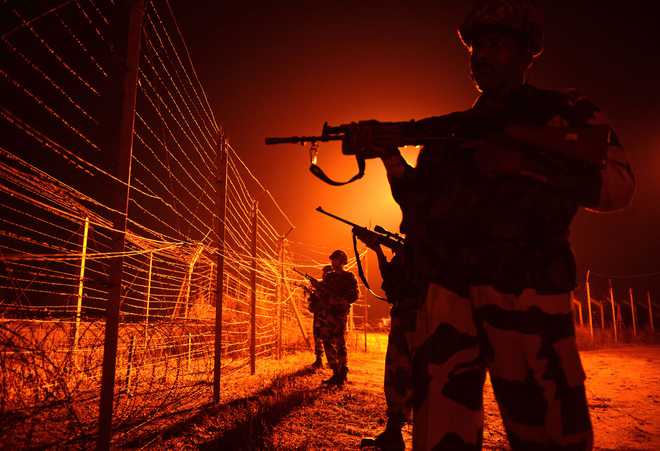
Pakistani troops on Thursday carried out an attack 600 metre inside the Indian territory in Poonch sector of Jammu and Kashmir, killing two jawans and losing one of their men in the retaliatory action.One of the attackers was injured in the Indian retaliatory action and his body was extricated under the cover of heavy firing by the Pakistani troops from their posts across the LoC, an Army official said.(Follow The Tribune on Facebook; and Twitter @thetribunechd)The Border Action Team (BAT), which generally comprises special forces of the Pakistan Army and some terrorists, carried out the attack at around 2 pm with the aid of cover fire by the Pakistani troops from their posts, he said.The slain soldiers hailed from Maharashtra. They have been identified as Naik Jadhav Sandip Sarjerao, who hailed from Aurangabad, and Sepoy Mane Savan Balku from Kolhapur.This was the third BAT action in Poonch this year.The official said the Indian Army’s ‘Area Domination Patrol’ was “targeted by the armed intruders and exchange of fire occurred.””Pakistan’s BAT team was 600 metre within the Indian side of the LoC and 200 metre from the Indian posts,” the official said.The Indian troops retaliated and in the firefight, two Indian jawans were killed, the official said.The Indian troops killed one armed intruder, whose body “is within visual reach”, he said.While the firefight was going on, the Pakistani posts resorted to heavy firing, the official said.”The operations are in progress and heavy exchange of fire is going on,” he added. — PTI
The Jammu and Kashmir police is doing an admirable job against all odds in the strife-torn Valley. Despite being at the focused receiving end of terror outfits and socially ostracised, the force refuses to buckle under pressure. It’s time to synergise and strengthen the state police. –


Police officials & locals pay tribute to the six police personnel killed by Lashkar-e-Toiba militants, Anantnag. Feroze Ahmad Dar, the SHO Achabal, who was killed. PTI
AS photos of late Feroze Ahmad Dar, the SHO Achabal, flash on social media one deeply regrets his loss along with six of his colleagues, all bravehearts of the Jammu and Kashmir Police (JKP). The six Kashmiri policemen have become the victims of the continued targeting of JKP personnel in the last few weeks. The tragedy is as deep as the untimely martyrdom of Lt Umar Fayaz, the young Army officer from Kulgam also killed by terrorists a few weeks ago. These killings have been a part of the ongoing focus of the terror groups to intimidate those in the service of India, to prevent the success of the campaign to allow maximum Kashmiris to aspire for government services. In recent times, I have been one of those who has perpetually extolled the virtues of the JKP. I even wrote a laudatory ode to it in a defence journal, following that with the same in a journal of the National Police Academy. I have worked with this force through thick and thin. It is only when you have done so that you can take liberties with analysing its capability and offering a critique. The force continues to do yeoman service to the state and the nation. Its plural and syncretic character is an asset. I find all segments of faith within it, all professionally and socially in sync with each other. I never felt the need to ever know the faith of a JKP cadre who was working in coordination with the Army. I met hundreds of them during and at the end of various successful joint operations and hugged them all as I did my own soldiers. The public in rest of India rarely gets to know the degree of intense support the Army receives from the JKP. The Supreme Court of India has clearly laid down a set of do’s and don’ts for the Army, while it functions under AFSPA 1990. One of these outlines the necessity of ensuring that every time the Army operates in any civilian area outside the LoC belt (where the Army operates alone), it will do so only with the presence of civil police (JKP). That rule has established an unbreakable bond which brings policemen and soldiers together to respond to situations in the quickest possible time. While the Army’s units which are the frontline response troops receive intelligence from myriad sources, including its own, the most actionable intelligence is usually provided by the JKP through its various intelligence organisations. The combination of such intelligence with the Army’s crack troops of the Rashtriya Rifles and the Special Operations Group (SOG) of the JKP usually sounds the death-knell of many a prominent terrorist leader. In 2011, this combination wiped out 19 such leaders across the length and breadth of the Valley and broke the back of Pakistan-supported terroristsIt is for reasons given above that one feels aggrieved to see the JKP at the focused receiving end of the terror groups who know that it is the force multiplier for the security forces in Kashmir. Adversaries in such proxy conflicts rarely like to remain outside the loop of such situations; they monitor, take feedback and alter strategy. Taking 2008-10 as a case in point. The agitational turbulence of 2016, post the killing of Burhan Wani, ensured that a prime part of the strategy was to lay the JKP low through social targeting. Families of the police were singled out in villages to break the homogeneity of JKP and dilute its motivation. For a moment in time I felt that the nexus of separatists and their masters had succeeded as 54 houses of policemen were initially burnt and families forced to apologise at mosques. This social ostracisation should have demoralised the force no end, broken its confidence and laid the foundation for a compromising attitude towards their responsibilities. I hope I am right in saying that some astute leadership and the resolve to cleanse Kashmir’s killing fields off the presence of Pakistan-sponsored radicals and terror groups is ensuring that the JKP instead of wilting is actually emerging stronger. The adversaries are not going to wilt. They will re-evaluate options and select innovative ways of targeting the JKP, social media and other forms of media being one, while the harnessing of mosque power could be another. There are already messages across social media from Kashmiris warning policemen about how they are being used by Indian authorities. The cyber space must not be left uncontested even if it has to be done in an unstructured way. There are other issues which must be attended to forthwith. Compensation for the houses of policemen burnt to intimidate them must be released quickly and must be sufficient. Compensation to families of policemen martyred must be at par with casualties of central forces and paid with urgency and without reminder. Officers of the force on deputation and serving away must return as it happens in the Army. These officers relate best with the men and will provide the necessary leadership which is so much required under the current challenging circumstances. Lastly, JKP has to realise that its personnel are going to be baited. It must improve its relationship with the people through friendly measures and outreach, while ensuring that subversion of its ranks is guarded against. There will be fresh and manipulated accusations of misdemeanour too. Without a proactive and experienced leadership handling the threats is not going to be easy.The writer, a former GOC of the Srinagar-based 15 Corps, is now associated with the Vivekanand International Foundation & the Institute of Peace and Conflict Studies. – See more at: http://www.tribuneindia.com/news/comment/the-j-k-police-and-its-resilience/425154.html#sthash.fiIqCA3l.dpuf

KASHMIR is losing the count of its dead as the ongoing conflict enters a dangerous and audacious phase. Last week saw a spurt in killings and an unusual happening: politicians skipping the funeral prayers of policemen dying in the line of duty. The massacre of six policemen in an ambush on Friday evening in the Acchabal area of Anantnag district, within hours of the killing of Lashkar-e-Toiba commander Junaid Mattoo, delivered a message to the security forces that militants would retaliate instantly and fiercely to avenge the killing of their colleagues. This is not the first time policemen have been ambushed, but the latest killings have created a scary environment. The all-pervasive thought ruling the Valley is that the “enemy” wears the uniform. This has propelled new challenges for the state police, already under pressure from the conflict between the prevailing pro-militant sentiment and the call of duty. The task is getting tougher as the hostility towards them is no less than that towards other uniformed forces. Political support, too, is not discernible as most politicians have chosen to stay away from their funeral prayers. That has not gone down well with the families of the slain policemen, even though politicians’ decision could have been influenced by security concerns. Immediately after the Acchabal atrocity, militants mounted another attack on the security forces’ camps in Bijebhra, Anantnag, on Saturday. The militants have shown their capacity to strike anywhere and anytime. Also, a nexus of militants and stone-throwers has surfaced at encounter sites. Security forces view them as disrupters of operations and “enemies” like the holed-up militants, while the locals sympathetic to the idea of separatism see them as innocent protesters under attack from the “Indian forces that have declared a war on the people of Kashmir”. Such emotional bonding is unprecedented in Kashmir. The locals’ connect with militants and disconnect with the state police is a new and dangerous phenomenon. Things are bad and are likely to worsen because there is no counter to the prevailing sentiment and violence in Kashmir.

HOW DID IT START?

On MAY 23, Filipino forces launched an offensive in Marawi to capture Isnilon Hapilon, leader of the Abu Sayyaf terror group. Abu Sayyaf militants opened fire on the forces and called for reinforcements from the Maute group, another terror organisation. President Roberto Duterte placeed Mindanao — of which Marawi is a part — under martial law
HAS TERROR AFFECTED PHILIPPINES BEFORE?
Muslims make up an estimated 10% of the Philippines’ population and Islam is the second largest religion. Mindanao, the country’s southernmost island, is Muslim-majority, with most practicing Sunni Islam Philippines witnessed its first terror attack in 1971, but since January 2000, Islamist militant and separatist forces have carried out more than 40 bombings, mostly in Mindanao
HOW DID ISIS GET INTO PHILIPPINES?
Various factions in Mindanao have a history of armed violence over land and resources. Now, they have formed a coalition against a common enemy — the government in Manila — with the IS convincing them that the answer to Mindanao’s problems is Islamic law. Pledging allegiance to IS has facilitated cooperation across clan and ethnic lines, and widened recruitment Experts say IS, facing losses in Syria and Iraq, has looked to the Philippines to establish a province in the region

Bhubaneswar, June 13
Minister of State for External Affairs VK Singh today demanded an apology from the Congress for its leader Sandeep Dikshit’s comment likening Army Chief General Bipin Rawat to a “goon on the street”.Apologies and regrets expressed by individual leaders are not enough, said Singh, a former Army Chief himself. “Congress as a political party should apologise for his (Dikshit’s) remark, which is inappropriate and condemnable.”The Minister said the Army does not indulge in politics in any form and works for the nation with complete dedication and commitment. Dikshit, an ex-Congress MP and son of former Delhi chief minister Sheila Dikshit, had yesterday said: “Ours is not a mafia army like the Pakistani army which makes statements like goons. It looks bad when our Army Chief gives a statement like a ‘sadak ka goonda’ (goon on the street).”Dikshit later withdrew his statement. — PTI
The requirement is of 2 lakh light-weight modular carbines with advanced optical sights and laser designators
Vijay Mohan
Tribune News Service
Chandigarh, June 11
Even as the Army is scouting for a new assault rifle to replace its existing standard issue firearm, it has projected another requirement of a carbine for a close quarter battle.A request for information issued today reveals that the Army’s requirement is of 2 lakh light-weight modular carbines with advanced optical sights and laser designators, of which 44,000 guns are required immediately.The Army also wants to switch over to the 5.56 mm caliber for the carbine, the same as the existing INSAS assault rifle made by the Defence Research and Development Organisation. It earlier used the Sterling 9 mm carbine, which is now obsolete. Broadly put, a carbine is a smaller, lighter version of an assault rifle that is issued to a specific category of troops.It also wants to switch over to a higher caliber for its standard assault rifle, from the 5.56 mm to 7.62 mm. The 5.56 mm bullet is designed to injure rather than kill. Western armies first started switching over to it in the 1970s with the rationale that an injured soldier would tie down more human and material resources of the enemy than a dead one. The Army began switching from 7.62 mm self-loading rifles to 5.56 mm INSAS in the late 90s. It is now being felt that with increasing involvement in low-intensity conflict and counter-terrorist operations, a more lethal caliber with a higher range and killing power is required.DRDO’s Director General, Armament and Combat Engineering Systems, Pravin K Mehta says the DRDO is not taking up any project to develop a 7.62 mm rifle for the Army. The new rifle is expected to be an imported weapon manufactured in India under collaboration by private firms or the state-owned Ordnance Factory Board.The OFB, which has also issued an expression of interest inviting partnership from firms to manufacture modern 7.62 mm rifle, had come up with a weapon based on the AK-47 design.

The Centre and the state administrations will have to keep a “hawk-eye” by effective human and technical surveillance on the remnants of the Bhindranwale followers and radicalised religious outfits.
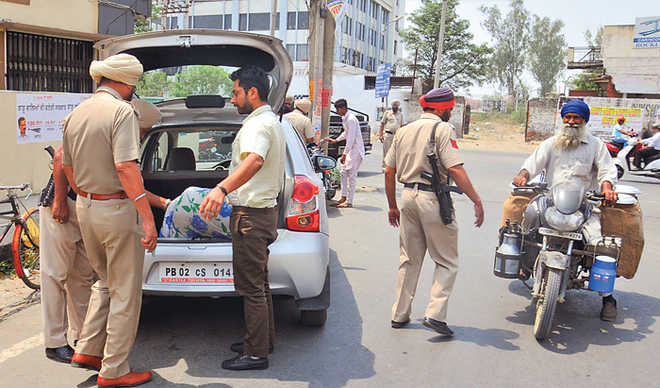
THE fact that Pakistan’s notorious spy agency, the Inter-Services Intelligence (ISI), has built a formidable reputation for its diabolical string of terror-oriented successes in Afghanistan and, importantly, India in the past few decades is unquestionable. It is equally a reality that the ISI has not been able to achieve former Pakistani military dictator, Gen Zia-ul-Haq-conceived diktat of “bleeding India by a thousand cuts.” But no one in India’s security institutions should downplay the ISI’s dogged persistence in stoking the fires in India, be it Jammu and Kashmir or the North-East and now Punjab, once again.The “Khalistan Movement”, checked and then buried after many years of a concerted struggle by the endeavours of the Centre, successive Punjab state governments, the will of the common people of Punjab and the professionalism of the security forces, is now showing signs of re-emerging. This churning is, once again, attributable to Pakistan’s ISI, making renewed efforts to stir the pot like in the 1980s and early 1990s.One of the chief architects of combating the highly violent and grossly anti-national “Khalistani Movement”, supercop KPS Gill passed away recently. No representatives from the previous ruling Akali Dal and even the Aam Aadmi Party did not care to attend the formidable cop’s “bhog ceremony” in New Delhi. This does display the priorities and inclinations for national causes of these two parties. The very fact that the Punjab Chief Minister Capt Amarinder Singh specially went from Punjab to New Delhi to pay homage to KPS Gill displays the correct attitude that India’s politicians must display publicly for those who have honestly and professionally spent their lifetime working for the unity and integrity of India. Undoubtedly, KPS Gill was one such personality. Somewhere, successive governments have not given him his due. As leopards never change their spots, some intelligence agencies too display a propensity for consistency in their evil ways. The ISI stands out as a glaring example for now reviving its wicked strategies to create unrest in India’s strategic border state of Punjab in concert with the sinister forays it is planning in the neighbouring Jammu and Kashmir. All security organs of the nation and Punjab will have to factor in their security preparedness to thwart Pakistan’s new stratagem of stoking communal disharmony and terrorist acts in Punjab. Fortunately, the Punjab Chief Minister is a former Army officer and thus will be able to galvanise as well as keep a sharp eye on the state police, the intelligence set-up and the members of the central police organisations and paramilitary forces deployed in Punjab. Effective synergy between all security organs of the state and the Centre is a pre-requisite to counter the security threat will be merely stating the obvious. The Ministry of Home Affairs, the sleuths of the Intelligence Bureau and the Border Security Force will have to work in close coordination with the Punjab Police. Additionally, units and formations from the Army and Air Force deployed close to the international border will have to be included in the overall existing security matrix, even during peacetime. Standard Operating Procedures between these different set-ups must be streamlined for effective and speedy responses to any terrorist threats as and when they emerge. It is hoped that lessons learnt from the security inadequacies witnessed, in the last two years, from the Dinanagar and Pathankot episodes, will be scrupulously rectified. Terrorism, in most parts of the world, is linked to drug running and Punjab is no exception. With Pakistan’s ISI having foisted the drug menace in India’s strategic and communally sensitive state, since the last many decades, the Punjab administration, down to the panchayat level has to remain more than vigilant. The Congress Party, in its campaign during the recent state elections in Punjab had made the eradication of the drug problem as one of its major planks. It is time for the Punjab government now to go on an all-out blitzkrieg to root out this serious menace from Punjab.Millions of Punjabi youth, once famed for their physical prowess, are now mere shadows of their earlier “avatars” — gravely afflicted by drugs from neighbouring Pakistan. Only a dedicated effort by the Punjab government, anti-drug campaigns by civil society especially religious and educational institutions, ruthless stamping out of drug-runners by effective policing at the grass-roots level and speedily administered justice will have to be ensured. Local manufacturers of toxic drugs need to be severely punished under the law of the land.The Centre and the state administrations will have to keep a “hawk-eye” by effective human and technical surveillance on the remnants of the Bhindranwale followers and radicalised religious outfits like the Babbar Khalsa, the Khalistan Commando Force and such like outfits. The Shiromani Gurdwara Parbandhak Committee and their political mentors, the Akali Dal, must put in unwavering efforts to ensure that radicalisation among their followers is nipped in the bud.Canada has a fair number of Khalistani sympathisers and our intelligence outfits including the Research and Analysis Wing and the National Technical Resources Organisation have their work cut-out, including keeping an eye on these anti-national elements and particularly on “hawala money” transactions. Meanwhile, our Ministry of External Affairs must send out a stern message to the Canadian government not to be lax with anti-India Khalistani supporters in their country. The Punjab Chief Minister displayed courage and pragmatism in not hosting the Canadian Defence Minister on his visit to Punjab as the latter reportedly has Khalistani sympathies. How many politicians will do that? The coming months will be crucial to ensure that Khalistani stirrings are effectively squashed notwithstanding the ISI’s evil machinations. Importantly, all political parties in Punjab must not politicise national security challenges. It is imperative for all of them to rise above petty motivations and thus create a conducive environment for the “sword-arm” state of India to ascend to its yet unattained progress and glory.The writer is the founder-DG of India’s Defence Intelligence Agency. The views expressed are personal.
INDIA HAS REDOUBLED EFFORTS TO ENLARGE ITS DEPLOYMENTS IN THE NATION’S EASTERN SECTOR IN AN ATTEMPT TO KEEP A CHECK ON NEIGHBOUR CHINA
NEW DELHI: Beefing up its force levels in the northeast to counter China, the Indian Army is all set to deploy a squadron of weaponised Dhruv advanced light helicopters in Assam’s Likabali town.
This will be the army’s first armed helicopter unit in the region.
India has redoubled its efforts to strengthen its deployments in the eastern sector, with the raising of a new mountain strike corps and stationing of front-line Sukhoi-30 fighter planes. The armed force is also engaged in the reactivation of advanced landing grounds, deploying supersonic cruise missiles and proposed basing of special operations aircraft.
Speaking on the condition of anonymity, army sources said the Dhruv Mk-IV squadron with 10 indigenously-built helicopters was likely to be functional in two to three months, as part of an overarching plan to scale up the force’s offensive capabilities in the eastern sector.
There are four weapon stations on the helicopter with a turret gun in its nose area. Weaponised Dhruv helicopters are equipped with air-to-air missiles, 70 mm rockets and 20 mm turret guns.
Newer variants are being equipped with anti-tank guided missiles, infrared jammers and obstacle avoidance systems.
The army’s aviation wing has an armed chopper squadron near Jodhpur and another unit is coming up in one of the northern states.
The army is speeding up a new mountain strike corps whose raising was kicked off in January 2014 in West Bengal’s Panagarh.
Aimed at countering China in the northeast, the government will spend around ₹40,000 crore on the new corps, 17 Corps, which is likely to be fully operational by 2025.
The corps will be equipped with M777s ultra light-weighed howitzers ordered from the United States in November 2016 under a $750-million contract. The contract is for 145 M777s.
Of these, 25 ready-built weapons will be supplied by the United States of America (USA) over the next two years and the remaining 120 howitzers will be produced in the country under the Modi government’s ambitious Make in India initiative.
Manufactured by Britain’s defence and aerospace company, BAE Systems, the guns will be built in India in collaboration with Mahindra Defence. The 155 mm/39-caliber howitzers have been bought to increase the army’s capabilities in high altitude
Last August, India cleared the deployment of a special version of BrahMos supersonic cruise missiles in the northeast.
Weeks after the Indian government cleared the new BrahMos regiment at a cost of ₹4,300 crore, China warned that such a move would have “a negative influence” on stability along the border.