Sanjha Morcha

अपने जनरल के दौरे के बाद पाकिस्तानी सेना ने दागे गोले

pakistan01_1495688984

इस्लामाबाद, 10 जून (एजेंसी)
जम्मू-कश्मीर में एलओसी पर आतंकियों के खिलाफ भारतीय सेना की सख्त कार्रवाई के बीच पाकिस्तानी सेना प्रमुख जनरल कमर जावेद बाजवा ने शनिवार को नियंत्रण रेखा से लगे अग्रिम क्षेत्र का दौरा किया। इसके बाद रात को पाकिस्तानी सेना ने जम्मू-कश्मीर के पुंछ जिले में भारत की अग्रिम सैन्य चौकियों और रिहायशी इलाकों में भारी गोलीबारी की।
सेना के एक वरिष्ठ अधिकारी ने कहा कि पाकिस्तानी सैनिकों ने कृष्णा घाटी में नियंत्रण रेखा के पार से मोर्टार बम फेंके और स्वचालित हथियारों से गोलीबारी की। भारतीय जवानों ने भी कड़ा जवाब दिया। देर रात तक गोेलाबारी जारी रही। खबरों के अनुसार, पाकिस्तानी सेना ने कृष्णा घाटी और बलनोई इलाकों में नियंत्रण रेखा पर रिहायशी आबादी और गांवों को भी निशाना बनाया।
इससे पहले एलओसी दौरे के दौरान जनरल बाजवा ने कश्मीर को लेकर बयानबाजी की और भारत को चेताया। उन्होंने कहा कि पाकिस्तान कश्मीरियों के आत्मनिर्णय के अधिकार को समर्थन देता रहेगा। यह भी कहा कि पाकिस्तानी सेना किसी भी खतरे को नाकाम करने में सक्षम है, चाहे वह किसी भी मोर्चे पर हो।
माना जा रहा है कि बाजवा ने ऐसा कह कर भारतीय सेना प्रमुख जनरल बिपिन रावत के उस बयान का जवाब दिया है, जिसमें उन्होंने कहा था कि भारत ढाई मोर्चे पर लड़ने के लिए पूरी तरह तैयार है।

एक अौर आतंकी ढेर
श्रीनगर: सेना ने शनिवार को गुरेज सेक्टर में नियंत्रण रेखा पर घुसपैठ की कोशिश नाकाम करते हुए एक आतंकवादी को ढेर कर दिया। सेना के एक अधिकारी ने बताया कि नियंत्रण रेखा की पहरेदारी कर रहे सैनिकों ने आतंकियों को सीमा पार से घाटी में घुसपैठ करने की कोशिश करते देखा। इसके बाद दोनों पक्षों के बीच गोलीबारी शुरू हो गयी, जिसमें एक आतंकी मारा गया। इस अभियान के साथ पिछले 4 दिनों में उत्तरी कश्मीर में नियंत्रण रेखा पर मुठभेड़ों में 14 आतंकवादी मारे गए हैं।
इनमें से एक मुठभेड़ में सेना का एक जवान शहीद हो गया था। सेना की उत्तरी कमान ने एक बयान में कहा था कि घुसपैठ की चारों कोशिशों में पाकिस्तानी बलों ने भारी क्षमता वाले तोपखाने  सहित तमाम तरीके से सक्रिय मदद मुहैया करायी। शुक्रवार को उड़ी सेक्टर में 6 आतंकियों और शनिवार को गुरेज में एक आतंकी को ढेर करने के साथ सेना ने उत्तरी कश्मीर में एक पखवाड़े से भी कम समय में घुसपैठ की 8 कोशिशें नाकाम की हैं।

युवाओं को गुमराह किया जा रहा है : रावत
देहरादून: सेना प्रमुख जनरल बिपिन रावत ने शनिवार को कहा कि शांति विरोधी ताकतें जम्मू-कश्मीर में युवाओं को गलत सूचना देकर गुमराह कर रही हैं। उन्होंने कहा कि सुरक्षा बलों को इसका मुकाबला करने के उपाय तलाशने होंगे। वह आईएमए में जेंटलमेन कैडेट को संबोधित कर रहे थे। रावत ने आतंकवाद को देश के सामने सबसे बड़ी चुनौती बताते हुए कैडेट्स से कहा कि वे स्थिति से निपटने के लिए खुद को तैयार करें।
महिला जवानों की होगी भर्ती : सेना प्रमुख रावत ने कहा कि सेना के ऑपरेशन के दौरान कई बार महिलाएं सामने आ जाती हैं। विभिन्न घरेलू मोर्चों पर जूझने के लिए महिला जवानों की जरूरत है, इसलिए सेना में महिला जवानों की भर्ती की जाएगी। रावत ने कहा पहले मिलिटरी पुलिस में महिलाओं की भर्ती करेंगे, अगर सफलता मिलती है तो आगे विचार होगा।
हरियाणा के 49 युवा बने सैन्य अफसर : सेना प्रमुख ने 490 जेंटलमेन कैडेट की पासिंग आउट परेड की अध्यक्षता की।     अकादमी से ट्रेनिंग पूरी करने के वाले 490 कैडेट में 67 मित्र देशों से हैं। उत्तर प्रदेश के सबसे अधिक 74, हरियाणा के 49, उत्तराखंड के 40, राजस्थान के 30, बिहार के 28 और दिल्ली के 23 कैडेट हैं।


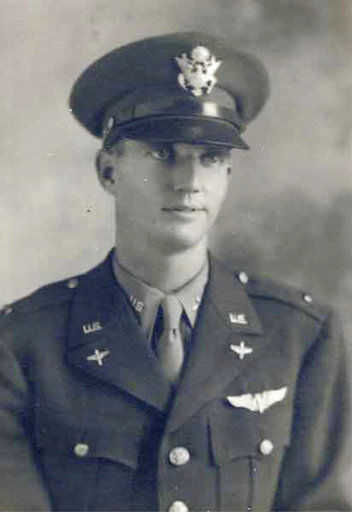
WW-II US veteran’s remains return home from India after 74 years

WW-II US veteran’s remains return home from India after 74 years
In this 1944 photo released by the U.S. Army, U.S. Army Air Corps Lt. Robert Eugene Oxford poses for an official portrait. (U.S. Army via AP)

Atlanta, June 8

More than 70 years ago, a US Army cargo plane dubbed “Hot as Hell” was headed for India on a supply mission.

(Follow The Tribune on Facebook; and Twitter @thetribunechd)

It never arrived, and no one went looking for the doomed aircraft or the eight men on board because military officials had no way of pinpointing where it went down.

All signs of the mission were lost until 2006, when a hiker in northeast India spotted a wing and panel sign with the plane’s name inscribed, “Hot as Hell.” It wasn’t until 2015 that the US Defence Department investigated the crash site and found the remains of 1st Lt. Robert Eugene Oxford.

Today, Oxford will finally be returned home and then laid to rest this weekend with full military honours in his tiny hometown of Concord, Georgia. Photos of his seven fellow crewmen, none of whom was ever found, will lay beside the coffin and then be placed inside it for burial.

“We were ecstatic that Eugene was found, but we feel guilty there are seven other men on that mountain top,” said Merrill Roan, the wife of Oxford’s nephew. “So we are honouring the other seven. … We have to honour them as well, because they may never get any closure.”

Oxford’s plane departed Kumming, China, on January 25, 1944, said Staff Sgt Kristen Duus at the Defense Prisoners of War/Missing in Action Agency. Oxford was declared dead two years later.

Oxford’s family didn’t know the wreckage had been found until 2007 when Merrill Roan saw a message on a genealogy website from a relative of another service member on the aircraft. That relative wanted help persuading military officials to investigate the crash site.

Duus’ agency confirmed the crash site correlated with the missing aircraft in 2008. But harmful weather coupled with access issues and security delayed recovery operation efforts until late 2015, Duus said.

Officials say a DNA analysis of Oxford’s remains matched his niece and nephew.

Roan said the family was “shocked and excited” when they heard the news.

Duus said Oxford is one of 74 veterans who have been identified so far this year. She said all service members have been returned to the US for identification before the family is notified and the service member is provided a funeral with honours.

Eighty service members were identified in 2015, and that number more than doubled with 164 the following year, Duus said.

The Missing in Action Agency website says there are more than 86,000 Americans still missing abroad from World War-II, the Korean War and the Vietnam War. Advancements in DNA testing technology and partnerships with other nations has helped find and identify more missing service members than ever, Duus said.

Oxford’s parents, siblings and any other relatives who saw him leave for World War II have all died since he went missing, said Terrell Moody of Moody-Daniel Funeral Home, which is handling burial arrangements. Still, the long-overdue homecoming of his remains won’t go unnoticed.

A State Patrol escort will guide a hearse carrying Oxford’s casket 50 miles south on Interstate 75 from Hartsfield-Jackson Atlanta International Airport to the funeral home. A funeral will be held Saturday in a school auditorium, the biggest venue in town, Moody said.

“It’s just a huge historical event for our little town,” Moody said. “The phone constantly rings from people wanting information.”

Oxford will be buried in the same plot with his parents, Charles and Bessie Oxford, who had placed a memorial marker for their lost son at the gravesite after his plane went missing seven decades ago. — AP


HEADLINES —06 JUN 2017

breakl line

100-yr-old birth records in Cantt still attract British

“INDIAN ARMY – OFFICERS TRAINING ACADEMY PASSING OUT PARADE ( MARCH 2017-YOU TUBE

“10 INDIAN ARMY LADY OFFICERS WHO MOTIVATED MILLIONS::YOU TUBE

COURT OF INQUIRY ORDERED INTO MAJOR GEN’S DEATH

ARMY’S SALUTE TO GENDER PARITY


Women in the Combat Arms: The Greatest Disaster in US Military History

SEPARATIST MEET OVER NIA RAIDS FOILED CALL FOR PROTESTS ON FRIDAY AGAINST SEARCHES, ‘VILIFICATION CAMPAIGN’


ARMY WARNS PAK OF RETALIATION

Will retaliate to any cross-LoC infiltration or firing, DGMO tells Pak

ATTACK ON CRPF CAMP FOILED 4 FOREIGN TERRORISTS GUNNED DOWN BY SECURITY FORCES IN BANDIPORA

Suicide attack on CRPF camp in J&K foiled, four militants killed

breakl line


India’s heaviest rocket set to fly

India’s heaviest rocket set to fly
The GSLV-Mk III-D1 will also carry India’s heaviest satellite GSAT-19 on Monday. PTI

Chennai, June 4

India’s heaviest rocket — Geosynchronous Satellite Launch Vehicle-Mark III (GSLV-Mk III) — is all set for its maiden flight into space along with a communications satellite on Monday evening as its countdown of 25 hours and 30 minutes began at 3.58 pm on Sunday.The rocket, weighing 640 tonnes and standing 43.43 metres tall, will blast off from the second launch pad at India’s rocket port at Satish Dhawan Space Centre in Sriharikota in Andhra Pradesh, 105 km from here.(Follow The Tribune on Facebook; and Twitter @thetribunechd)It will carry a 3,136-kg GSAT-19 communications satellite — the heaviest to be lifted by an Indian rocket till date — to an altitude of around 179 km above the Earth after just over 16 minutes into the flight.The mission’s success will enable India to launch 4-tonne satellites on its own rocket instead of paying huge amounts of money to foreign space agencies to execute the operation.The Indian space agency had flown a similar rocket without the cryogenic engine but with 3.7-tonne payload in 2014 mainly to test its structural stability while in flight and the aerodynamics.Interestingly, GSLV-Mk III at around 43 metres is slightly shorter than Mk-II version that is around 49 metres tall. India presently has two rockets — Polar Satellite Launch Vehicle and GSLV-Mk II — with a lift-off mass of 415 tonnes and a carrying capacity of 2.5 tonnes. — IANS


IAF pilot moves SC against stay on relief

New Delhi, June 2

Air Force pilot Sanjeet Singh Kaila, who was awarded Rs 55 lakh compensation by the Delhi High Court for being exposed to “unreasonable risk” after being injured in a MiG-21 crash in 2005, today requested the Supreme Court to vacate the stay on the order.Kaila’s counsel told the top court that he had filed a caveat but it was not listed before the Bench which passed an ex-parte order last month staying the high court’s verdict order awarding him Rs 55 lakh compensation. However, a Vacation Bench headed by Justice MM Shantanagoudar said the matter would be listed before an appropriate Bench on July 17 along with the main matter.The stay order was passed on a petition filed by the government and the state-owned aircraft manufacturer Hindustan Aeronautics Limited, which challenged the high court’s May 2 verdict.The high court had granted compensation to the pilot holding that manufacturing defect and faulty workmanship of the plane led to the crash. It asked the government and HAL to pay Rs 5 lakh and Rs 50 lakh, respectively, to Kaila within four weeks.Posted at Nashik in Maharashtra, 46-year-old Wing Commander Kaila had demanded compensation on account of violation of his fundamental right to life, especially the right to work in a safe environment under Article 21 of the Constitution.The serving IAF officer had moved the high court in 2013, also seeking a direction to the Centre and the HAL to issue a formal apology for the manufacturing defect and the faulty workmanship of the MiG-21 aircraft that allegedly led to the crash. He had also sought guidelines for the manufacturing company to avoid such incidents in future. — TNS

IAF pilot moves SC against stay on relief

The apex court had last month stayed the high court order on a plea of the government and the state-own aircraft manufacturer Hindustan Aeronautics Limited challening it. Tribune file photo

New Delhi, June 2

An Indian Air Force pilot, who was injured in a MiG-21 crash in 2005, on Friday moved Supreme Court seeking vacation of stay on the Delhi High Court order awarding him Rs 55 lakh as compensation for being exposed to “unreasonable risk”.

A vacation bench of Justices M M Shantanagoudar and Deepak Gupta said the matter will be listed for July 17 before an appropriate bench.

The counsel appearing for IAF pilot Sanjeet Singh Kaila, said that he had filed caveat but it was not listed before the bench which passed an exparte order staying the verdict of the high court by which Rs 55 lakh compensation was awarded to him.

The bench said that the application for vacation of stay will be take up along with the main matter pending before the court.

The apex court had last month stayed the high court order on a plea of the government and the state-own aircraft manufacturer Hindustan Aeronautics Limited challening it.

On May 2, the high court had granted compensation to the pilot, holding that manufacturing defect and faulty workmanship of the fighter jet had led to the crash.

It had asked the government and the HAL to pay Rs 5 lakh and Rs 50 lakh respectively to 46-year-old Wing Commander Kaila within four weeks.

Kaila is at present posted at Nashik in Maharashtra.

The pilot had sought compensation on account of violation of his fundamental right to life, especially the right to work in a safe environment under Article 21 of the Constitution.

The serving Air Force officer had moved the high court in 2013, also seeking a direction to the Centre and the HAL to issue a formal apology for the manufacturing defect and the faulty workmanship of the MiG-21 aircraft that allegedly led to the crash.

He had also sought guidelines for the manufacturing company to avoid such incidents in future.

Allowing his plea for compensation, the high court had noted that putting the officers of the armed forces above what is “expected to be normal risk” was against the fundamental right to life, especially the right to work in a safe environment guaranteed by the Constitution.

The court had said that the HAL was liable to compensate pay compensation for “exposing him to more than reasonable risk”.

The Russian-origin fighter aircraft has been often referred to as the “Flying Coffin” and “widowmaker” due to its poor safety record.

It was perhaps the first time that an IAF plane crash survivor had taken on the government in a high court seeking redressal and compensation.

In 2005, a regular flight exercise had gone awry, leaving Kaila with debilitating neck and back pain that has rendered him unfit for flying and even for day-to-day activities, according to the petition.

Kaila had said he was posted at Air Force Station, Nal in Rajasthan as a Squadron Leader in 2005. On January 4 that year, he had took off for a regular exercise along with three other pilots.

“Immediately after take-off, he experienced a drift to the left side of the aircraft. Simultaneously, he was informed by the pilot flying the second aircraft of a fire at the rear end of his aircraft.

“Assessing the emergency, he promptly carried out all the essential directives and got the tyres of the aircraft down for a landing,” the petition had said.

Kaila performed all the procedures even though the rear of the aircraft was engulfed in thick fire, it had said.

Despite a near-complete engine/control failure and at grave risk to his own life, he continued to stay put in an almost uncontrollable aircraft so as to steer it away tosafety from a nearby village, the petition had said.

To save human life, he ejected only seconds before the crash of the aircraft, according to said.

Kaila had said following the incident, he was injured and later forced to discontinue flying after a comprehensive medical examination showed he was suffering from cervicalgia and disc bulges of the vertebrae (cervical spine).

“The medical report also clearly mentions that he was rendered unfit for flying duties because of the incident. He was additionally instructed and advised by the doctors to even refrain from performing even day-to-day tasks,” it had said.

The petition had further alleged that a reply to his RTI application revealed that the incident was caused due to a manufacturing defect and poor workmanship at HAL’s facility.

Kaila had claimed that despite sending a representation to the government on December 25, 2012 seeking justice by compensating him for the loss suffered as a result of the air crash, no response was given it. PTI



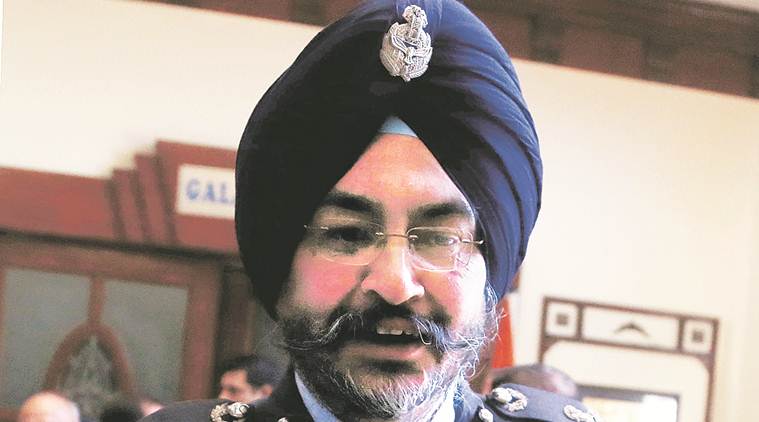
‘Not enough fighter jets is akin to playing cricket with just 7 players’: Air Chief Marshal B S Dhanoa flags concern

The IAF’s authorised strength of 42 fighter squadrons “is the minimum strength necessary to dominate a two-front conflict”, Air Chief Marshal Dhanoa said.

indian air force, air chief bs dhanoa, fighter jets, fighter squadrons, iaf fighter sqaudrons,

The IAF’s authorised strength of 42 fighter squadrons “is the minimum strength necessary to dominate a two-front conflict”, Air Chief Marshal Dhanoa said.

Highlighting the shortfall in the number of fighter squadrons in the IAF as a challenge to “dominat[ing] a two-front conflict”, Air Chief Marshal B S Dhanoa has said “it is akin to a cricket team playing with seven players instead of 11”. The Chief of the Indian Air Force also said that while the IAF is ready for the use of air power against Pakistan in response to a terrorist attack, it is an option that has to be exercised by the government.

In a candid and wide-ranging interview to The Indian Express, the Air Chief asserted that the IAF has the capability, and is in a position to strike against the Maoists, as and when it is cleared to do so by the government — but that he does not envisage any air attacks in India’s own territory.

The IAF’s authorised strength of 42 fighter squadrons “is the minimum strength necessary to dominate a two-front conflict”, Air Chief Marshal Dhanoa said. The IAF currently has 32 fighter squadrons, and is tasked with tackling a two-front collusive threat from China and Pakistan.

The “reduced numbers place a severe handicap akin to a cricket team playing with 7 players instead of 11,” Air Chief Marshal Dhanoa said. “Though we are operating under challenging conditions, we have devised mitigating strategies,” he added.

“IAF’s plans of prosecuting a two-front scenario with available resources are based on a judicious force employment philosophy. Once the strengths and capabilities are augmented, we would be in a better position to overcome our combat differential and be in a position to dominate the air space,” he said.

Asked whether the IAF had given options to the government about some kind of an “aerial surgical strike” inside Pakistan occupied Kashmir (PoK), the Air Chief said: “The use of air power in response to heinous acts or terrorist attacks is an option that is to be taken by the government. IAF is prepared for any eventuality.”

The situation on the Line of Control (LoC) has been tense over the past several weeks, particularly after two Indian soldiers were killed and beheaded last month by a Pakistan Army Border Action Team. Last year, special forces of the Army had launched surgical strikes in PoK after 19 soldiers were killed in a terror attack at Uri. The IAF was not used in that operation.

On the possible use of air power against the Maoists, Air Chief Marshal Dhanoa said: “Our roles are restricted to providing intelligence and surveillance to the forces on ground. We use the RPAs [remotely piloted aircraft] extensively in these operations for intelligence collection, as well as helicopters, mainly for speedy movement of forces between area of operations, and casualty evacuation. As far as terrorist threats are concerned, we do not envisage carrying out air attacks on our territory, to prevent any sliver of possibility for collateral damage. But we have the capability, and are in a position to strike as and when we are cleared to do so by the government.”

The IAF chief also stated his objections to the proposal to establish Integrated Theatre Commands of the Army, Navy and the IAF: “You could argue that this concept is worth attempting if we had older types of air assets whose reach was limited, for which they would have to be placed in specific locations and concentrate their efforts to achieve the military objectives in a sector.

“But with our modern acquisitions, it is possible now to exploit the agility and reach of our platforms to near simultaneously affect the battles on the two fronts, and meet the objects of war. Air power needs space for manoeuvre to exploit its varied characteristics of surprise, shock and speed. If restricted to one sector, the potential of this arm of the military will not be optimally exploited and thus, the Air Force desires to have independence for execution so that the purpose of conflict is best served.”

The Air Chief, however, came out in support of a Permanent Chairman, Chiefs of Staff Committee, who “would thus be the fourth four-star officer who would also be responsible for the various Tri-Service Commands. The Service Chiefs however, will continue to exercise operational control and training over their respective Services and have direct access to RM [Raksha Mantri, or Defence Minister].”

The issue, he said, is still under consideration of the political leadership.


Valley to be normal soon: Army Chief

Valley to be normal soon: Army Chief
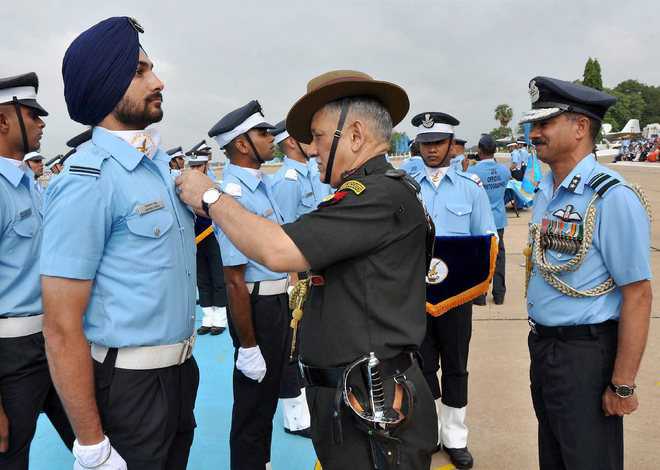
Army Chief General Bipin Rawat presents wings to a flying officer during the Combined Graduation Parade held at the Air Force Academy in Hyderabad on Saturday. PTI

Tribune News Service

Hyderabad, june 17

Commending the security forces for doing a good job under difficult circumstances, Army Chief General Bipin Rawat today asserted that the situation in the strife-torn Jammu and Kashmir would be brought under control soon.“Some parts of south Kashmir are troublesome. The necessary action is being taken to ensure that the situation there is soon brought under control. I don’t think there should be any cause for concern in any of you,” he told reporters after reviewing the Combined Graduation Parade at the Air Force Academy in Dundigal near here. He said “misinformation and disinformation” was “possibly compelling” youngsters to take up arms in the Valley.“I am quite confident that they (youth) will soon understand that what they are doing is not good for their own state. All that armed forces and security forces want is peace and tranquility in the Valley,” General Rawat said.

Kashmir tense, militants give gun salute to killed Lashkar man

SRINAGAR: Thousands of people, including militants, participated on Saturday in the funeral of three alleged Lashkar-eTaiba men killed by security forces a day earlier when Kashmir saw a wave of bloodshed.

APFamily members of Jammu and Kashmir cop Tasveer Ahmad mourn as his body arrives for funeral at Surasyar village near Srinagar on Saturday.Much of Kashmir was tense on Saturday, prompting chief minister Mehbooba Mufti to make a renewed call for peace.

Friday’s deaths included top Lashkar commander Junaid Mattoo, who was seen as the third most prominent face of the insurgency after Burhan Wani and Sabzar Bhat. Militants at his funeral in Kashmir’s Kulgam district gave a gun salute, underscoring the challenge for security forces that often face hostility from civilians while pursuing militants.

Thousands of the attendees jostled to touch Mattoo’s body. Similar scenes played out during the funeral of the other two LeT militants, Nasir Wani and Adil Mir. Mattoo, like Wani and Bhat, enjoyed support from sections in the Valley.

Wani was killed in July last year — a death that triggered one of the worst phases of violence for the region and left at least 100 civilians dead — and Bhat was killed late last month.

Union defence minister Arun Jaitley hit out at the insurgents on Saturday, calling the killing of five policemen on Friday an “act of cowardice”.

Mattoo’s outfit, the LeT, claimed the attack as a revenge for his death. The Jammu and Kashmir director general of police (DGP) promised on Saturday to catch the suspects “very soon”. Two civilians, including a teenager, were also killed on Friday when forces opened fire on people pelting stones at them in an apparent attempt to intervene in the operation against Mattoo and the two LeT rebels.

The opposition National Conference and the Congress protested outside the assembly against ‘innocent killings’.

Mehbooba Mufti said instances of 12 year-old boys going to encounter sites with stones in their hands or the killings of policemen were a repercussion of democracy being denied in the state.

“Guns or army can’t solve any issues. Only dialogue can,” she said in the assembly. AWANTIPORA:In a chronicle of his death foretold, Feroz Ahmed Dar wrote, “Just imagine…yourself in your grave. Down there in that dark hole…Alone.”

The 32-year-old Jammu and Kashmir police officer was buried on Friday night in the family’s ancestral graveyard in Dogripora village in Pulwama district, with many from the village and his department bidding him a tearful farewell.

Dar and five other policemen were killed on Friday when suspected Lashkar-e-Taiba (LeT) militants ambushed a police party in Anantnag’s Achabal area. The militants also tried to disfigure the faces of the policemen before walking away with their weapons.

As his family and friends prepared for the last journey, Dar’s words written on January 18, 2013, came back to haunt. “Did you ever stop for a while and asked yourself, what is going to happen to me the first night in my grave? Think about the moment your body is being washed and prepared to your grave.

“Think about the day people will be carrying you to your grave And your families crying …think about the moment you are put in your grave,” he had written on his Facebook wall.


37 commissioned as lieutenants at Western Command’s nursing school

AS MANY AS 753 NURSING OFFICERS HAVE GRADUATED FROM WESTERN COMMAND SCHOOL OF NURSING

Thirty seven probationer nurses from 48th batch of the School of Nursing, Western Command, were commissioned as lieutenants at a ceremony held at Western Command Hospital, Chandimandir, on Wednesday.

HT PHOTOSNurses celebrating the culmination of their training and the commissioning ceremony at the Western Command in Chandimandir on Wednesday; (right) Major General Manomay Ganguly felicitating Lt Jyoti Prusty with the rolling trophy.

Major general (medical), Manomoy Ganguly, of Western Command headquarters and major general Mukti Sharma, awarded the rank of lieutenant to the newly commissioned military nurses.

General Ganguly later gave the medals and trophies to distinguish performers.

Brigadier SV Saraswati, principal matron of Western Command Hospital, administered oath to the newly-commissioned nursing officers.

Lieutenant Chinchu Eldhose won the gold medal for securing the first position in academics. Lieutenant Binsa K Sasi won the silver medal for standing second in the batch.

Lieutenant Malini Lama was adjudged the best all-round cadet and lieutenant Jyoti Prusty was awarded the best bedside nurse rolling trophy.

Till date, as many as 753 nursing officers have passed out from the Western Command School of Nursing.

While addressing the newlycommissioned nursing officers, chief guest General Ganguly said, “Military nursing is a noble and highly challenging profession where a nurse needs to work hard even in difficult terrain to provide a compassionate and comprehensive care to the soldiers and their families.”

He called upon the young officers to keep abreast with the latest trends in the health care delivery system to ensure optimum care and well being of the patients.

Major General Mukti Sharma, in her address emphasised upon the importance of the health profession which requires constant and selfless devotion and preparedness to meet requirements of the armed forces.

Principal, School of Nursing, colonel R Saraswathi, presented the school report and deputy principal Lieutenant Colonel RJeyanthi gave the vote of thanks.


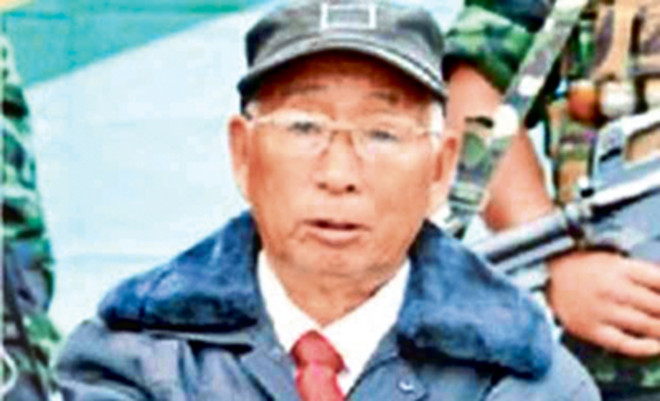
Peace in post-Khaplang North-East by Lt Gen KJ Singh (retd)

With the passing away of Shangwang Shangyung Khaplang, in Nagaland the baton now passes on to a new generation of rebel leaders. For the first time, the control of the NSCN-K is with an indigenous Konyak. Elders like TH Muivah, the last of the old tribe, can help to leave a legacy of reconciliation for future generations.

SS Khaplang: Nobody’s friend?

H Muviah: Now, a legacy of truce?

Trecent demise of SS Khaplang, referred to as “Baba,” combined with the passing away of Issac Chisi Swu in June 2016 and the frail health of 83-year-old Thuingleng Muivah sets the stage for the advent of a new generation of rebel leaders. It is these leaders that hold the key to the future of the “Act-East policy”. Our traditions and the Stockholm syndrome (a condition that causes hostages to develop a psychological alliance with their captors as a survival strategy during captivity) have sprouted eulogies about Baba, a Hemi Naga and the senior-most member of the trio. Sadly, driven by vote-bank politics, the Chief Minister of Nagaland has even released an official obituary. On balance, this foe-turned-friend who almost got Issac and Muivah eliminated in 1988, was nobody’s friend. He showed his viciousness with deadly ambush on unsuspecting Dogras in Chandel in June 15, resulting in the martyring of 18 bravehearts. His death opens new possibilities as the control of the he National Socialist Council of Nagaland-Khaplang (NSCN-K), for the first time is with an indigenous Konyak, Khango Konyak. Naga insurgency, that began in the early 1950s, was initiated by the first-generation leaders, Phizo, Mowu Angami and Kaito Sema with the Naga National Council (NNC), and the Naga Federal Government (NFG) as the rallying force. The seeds of proxy war were sowed as early as 1950s with East Bengal (Bangladesh) as the springboard. Phizo’s foiled bid to escape to East Pakistan in 1952, followed by successful forays by Mowu and Kaito, resulted in Phizo finally making it in December 1958. Later, Phizo visited Karachi in 1962 and Pakistan trained nearly 2,500 Naga rebels in the Chittagong Hills between 1962 and 1968. The mischief by the ISI continued even after the liberation of Bangladesh with ISPR as their partner and relationship with new clients like the United Liberation Front of Asom (ULFA).  Mercifully, Sheikh Hasina put an end to this aberration, which was making Bangladesh a sanctuary for all centrifugal forces. The current generation of “armchair warriors, locked up in analysing the ongoing proxy war in Jammu and Kashmir, will be well advised not to lose sight of this not-too-distant history and dangers of the Dragon using it again as a leverage to vitiate the situation in the North- East.There is an uneasy peace with the National Socialist Council of Nagaland-Isak Muivah (NSCN-IM) since the ceasefire agreement in 1999. This accord has, unfortunately, partially legitimised the Naga quest for sovereignty as ceasefire is generally signed between two sovereign nations. Ceasefire with the smaller but equally deadly counterpart, NSCN-K, inked in 2001 lasted till end March 16. Abrogation of the ceasefire resulted in Khaplang’s last fling at fiefdom building, manifesting in the formation of United National Liberation Front-West South-East Asia (UNLF-WSEA), a conglomeration of NSCN-K, Paresh Barua faction of ULFA, Manipuri Meitei groups with allegiance to another combination called CorCom. There is an urgent need to redouble our efforts, along with Myanmar, to regain the control of Taga and adjoining liberated sanctuaries in Kachin forests, serving as training camps for UNLF-WSEA. The Naga society, led by Ho-Hos (tribal bodies), particularly the Konyak Union and the Church, stare at a decisive turning point wherein they could bring all marginal groups (including NSCN-K) together for reconciliation and talks. Muivah, the only link to the old generation, should seize the moment to leave a legacy of being a problem solver, something that Issac missed out on. The third and new generation of Naga leadership, though dominated by Manipuri Tangkhuls, needs to be persuaded to display pragmatism on contentious issues, which despite the sanctity of the Naga Framework agreement of 2014, have been leaked out probably to satisfy their local constituency. These are: unification of all Naga territories, shared sovereignty and joint defence.This is the most opportune period to resolve these issues as the ruling party is in the saddle in relevant states and a thaw between the Nagas and the Meities seems to be on cards, with the lifting of the blockade and the recent visit of the Chief Minister of Nagaland to Manipur. Shared sovereignty within bounds of Article 371, applicable to tribal areas, can be refined with additional autonomy. However, all such measures have to be carefully worded with constitutional safeguards and time stipulation. Joint defence can be worked out with the additional Nagaland Armed Police (Indian Reserve Batallion) battalions and enhanced recruitment in Assam Rifles. Once again, the previous experience of two Naga BSF battalions, comprising surrendered militants, hopefully, will not be lost sight of by policy makers. Even Nagalim, a compulsion with IM due to its almost Orwellian over-reliance on Tangkhuls, can be resolved by setting up a quasi-legal tribal body with a mandate on specified tribal-related subjects and jurisdiction extending to Naga areas in the adjoining states. Our quest to match the Chinese One belt one road policy (OBOR) can gain traction only through the actualisation of the “Act-East policy”, with focus on connectivity to South-east Asia. They say, when you cross Brahmaputra, life is governed by lahe, lahe (slow and slow) but even in the North-East, the new generation needs to shift gear and not deny themselves an opportunity that beckons. The writer is currently Maharaja Ranjit Singh Chair at Panjab  University


Late army officer’s family denied life insurance claim


ROHTAK: The Rohtak-based family of Lt Nitish Kakkar, who died in a road mishap in Bathinda two years ago, is still struggling to cope up with the loss of their only son but the rejection of the insurance claim over his death has now further upset the bereaved family.

HT PHOTOLt Nitish Kakkar with his parents in 2015.

CLAIM REJECTED BY INSURANCE COMPANY, SAYING IT RECEIVED RELEVANT DOCUMENTS ONE DAY LATE

Lt Kakkar, 26, who got commissioned into the 45 CAV Armoured Corps of the Indian Army in 2015, was killed on May 26 in the same year in an accident in Bathinda Cantonment area— the place of his posting.

However, the life insurance claim pertaining to the late army officer has been rejected on the ground that his documents were received by the company one day late.

“At first, Reliance General Insurance declined to process our claim saying we did not intimate them about our son’s death within 90 days. But when I showed them the receipt of their acceptance of our intimation, they changed their stance and said the payment was declined because the requisite documents had reached their office on the 181st day of Nitish’s death, and not within the stipulated period of 180 days,” Nitish’s father Jitender Arya said, adding that he had sent the documents in time.

The family said their repeated requests to the army to intervene in helping them get insurance claim elicited no response. The competent authority also denied special family pension and ex-gratia lump-sum compensation to the bereaved family, despite recommendations from the senior army officers.

“The authorities concerned have not told us why the family pension and ex gratia were rejected even when it was recommended by the top army officers officers ,” Arya said.

Meanwhile, the family said, the police are yet to reach a logical conclusion about the death of their son.

“All they know is that his body was found by the side of his bike on the highway. They have not been able to find out what happened and which vehicle (s) was involved in the accident,” he added. .


clip

clip