




Sanjha Morcha

Sharif sacks top aide over info leak, army ‘rejects’ it Dawn report spoke of rift over proxy war against India

Sharif sacks top aide over info leak, army ‘rejects’ it
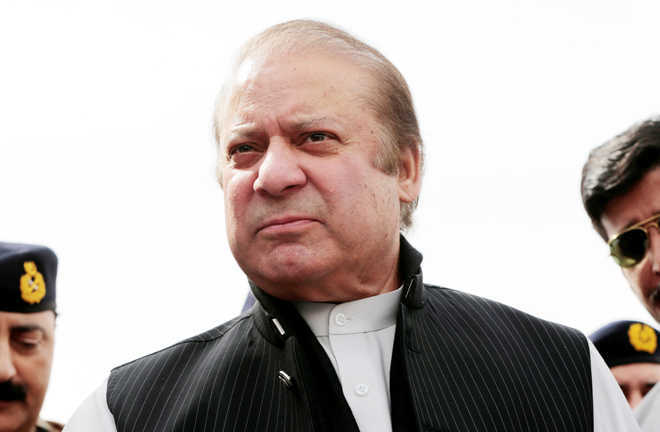
Pakistan Prime Minister Nawaz Sharif. — File photo

Islamabad, April 29

Beleaguered Prime Minister Nawaz Sharif today faced a crisis when Pakistan’s powerful army rejected his move to sack top aide Tariq Fatemi and demanded full implementation of recommendations by a committee which probed a story on a rift between the army and the government.The Sharif government was quick to go into a damage-control mode after the confrontation with the army over a “notification” and announced that the “real notification” to implement the recommendation of the probe was yet to be issued.In October, a columnist for Dawn newspaper wrote about a rift between civilian and military leaderships over militant groups that operate from Pakistan but engage in a proxy war against India and Afghanistan.Dawn had reported how in a “blunt and unprecedented warning”, the civilian government had informed the military leadership of growing international isolation of Pakistan on terrorism.The army took strong exception and the PML-N government was forced to remove then information minister Pervaiz Rasheed, but a probe was also initiated at the army’s behest to fix responsibility. According to the report, special foreign affairs assistant Fatemi was primarily responsible for leaking the report of the meeting.Today, in an unusual move, the army rejected the “notification” by the government to sack Fatemi. “Notification on ‘Dawn’ leak is incomplete and not in line with recommendations by the Inquiry Board. Notification is rejected,” army spokesman Maj Gen Asif Ghafoor tweeted.Minutes later, Interior Minister Chaudhry Nisar Ali Khan in a veiled criticism of the hasty reaction said, “Twitter reactions were highly dangerous for the country.”“There are several issues of great importance and it’s unfortunate they are being dealt with through tweets. State institutions don’t communicate with each other through tweets,” Khan said. — Agencies


Captain directs rationalisation of property prices in cities

THE ORDER IMPLIES THAT THE AUTHORITIES WILL ENSURE GOOD RESPONSE DURING AUCTION OR DRAW OF PROPERTIES

SASNAGAR: Taking note of exorbitant prices of property being charged by various development authorities under the department of housing and urban development, Captain Amarinder Singh, chief minister, Punjab and chairman, Punjab Urban Planning and Development Authority (PUDA) has directed the department to rationalise the prices and sustain maximum participation of buyers.

The authorities which would be affected by the orders includes Greater Mohali Area Development Authority (GMADA), Greater Ludhiana Area Development Authority (GLADA), Bathinda Developmet Authority (BDA), Jalandhar Development Authority (JDA), Patiala Development Authority (PDA), Amritsar Development Authority (ADA) and PUDA.

Orders implied that concerned authorities would ensure good response before property is offered for sale through auction or draw of lots. Department is also working to explore right time and season for sale of its property.

This indicates that sale of property by the department would be on hold for some time.

Additional chief Secretary, department of housing and urban development has also issued instructions to the development authorities to build their land banks. The land may be acquired under the land pooling scheme or under 80:20 format. Intention of acquisition of land under these two formats is to make land owners/farmers partners in urban development of the state. The two formats provide for acquisition of land on ‘Land for Land’ basis.

Department is also in the process identifying new sites for development.

The department has commercial, residential and institutional property to offer for sale. Section 43 of Punjab Regional and Town Planning and Development Act 1995 mandates the department to dispose of land in any manner by creation of an easement.

Properties available for sale are divided into two categories that is property transferred to the department under optimum utilization of vacant government lands (OUVGL) scheme and property available in the urban estates developed by department


Tracking what leaders say after Maoist attacks

Maoist violence has been the biggest killer of India’s security forces, according to casualty figures from the last 10 years. After each attack, there is a standard response from leaders at the Centre and states, irrespective of which party is in power. Soon after Maoists killed 25 CRPF jawans in Chhattisgarh’s Sukma on Monday, Prime Minister Narendra Modi termed it a “cowardly and deplorable” act. Union home minister Rajnath Singh tweeted that he was “extremely pained” to hear about the deaths. After every attack, there is condemnation, condolences are conveyed, and strongest action is promised. Here’s a history of statements made by politicians over more than a decade of Maoist attacks on the police, central armed police forces and civilians.

CRPF says bodies of slain jawans were not mutilated by Maoists

AFTERMATH Government sends NIA chief Sharad Kumar to Sukma, triggering speculation of agency taking over investigation

NEW DELHI: A two-member team of home ministry’s senior security advisor K Vijay Kumar and acting CRPF chief Sudeep Lakhtakia told the government on Thursday that there was no evidence that the bodies of the CRPF personnel killed in a Maoist attack in Chhattisgarh on Monday were mutilated.

PTI FILEA guard of honour for martyred CRPF personnel at Patna airport on Tuesday.

The government also dispatched National Investigation Agency (NIA) chief Sharad Kumar to Sukma — where an ambush by the militants claimed the lives of 25 troopers — possibly paving way for an investigation to be handed over to the National Investigation Agency.

“I can, with all authority at my command, say that none of the dead bodies of the CRPF personnel were found to mutilated. We checked with the doctors also who conducted postmortem of the dead bodies,” said Sudeep Lakhtakia after meeting Union home secretary Rajiv Mehrishi to give his preliminary report on the incident.

Maoists, too, have condemned the media reports alleging mutilation of the bodies. “We have not mutilated any body and the latest attack was in continuity of the killing of 11 CRPF jawans in Sukma’s Bhejji area,” said Vikalp, spokesperson of CPI (M) Dandakaranya Special Zonal Committee of CPI (Maoist) in an audio clip purportedly released by the party. A senior home ministry official said it is likely that the NIA will be pressed into service to probe the attack.

“Earlier too we have given probes into Maoist attacks to the NIA. It can be done again for speedy identification of the perpetrators of the attack in order to bring them to justice,” said the official who spoke on the condition of anonymity.

The home ministry will receive the final report on the Sukma attack from the CRPF within a week’s time.

K Vijay Kumar, who along with Sudeep Lakhtakia returned to the national capital on Thursday morning after spending two days at ground-zero, said the CRPF personnel deployed there were showing signs of fatigue.

“Initial examination suggests that the CRPF personnel retaliated the attack in equal amount. It was not a one-sided exchange of fire but most of the personnel have been deployed there for more than three years. The deployment in Sukma is highly stressful, which ultimately leads to lack of motivation and possibility of non-adherence to standard-operating-procedure. But again, this is my preliminary opinion,” said K Vijay Kumar.

According to government figures, 2017 has seen 32 Maoists killed while the CRPF has lost 38 personnel in Chhattisgarh.

The central government has been trying to boost the morale of the forces by providing them necessary infrastructure and logistics for anti-Maoist operations, Kumar and Lakhtakia said. Around 45,000 central paramilitary personnel and 20,000 state policemen have been deployed in Bastar region, which saw the maximum Maoist violence in Chhattisgarh.


Cabinet meet today, massive police, admn reshuffle on cards

Dinesh Manhotra

Tribune News Service

Jammu, April 27

Many important policy decisions, including a massive reshuffle in the police and civil administration, are likely to be taken at the Cabinet meeting before the shifting of the Durbar offices from Jammu to Srinagar for the next six months.The Cabinet, which will meet tomorrow, is also likely to approve transfer of land, already identified, to the Health Department for setting up of the All India Institute of Medical Sciences (AIIMS) in Samba district.“In the Friday’s meeting, the Cabinet will formally take up the issue of transferring 293 kanals and 13 marlas, situated at Vijaypur, Samba, to the Health Department for setting up of AIIMS,” a source said, adding that the Cabinet is likely to give a nod to the proposal as the BJP is facing criticism for not speeding up the process of setting up the premier health institution.Contrary to the repeated announcements of ministers, the state government is yet to transfer the land for AIIMS. In August 2015, the state government had announced setting up of AIIMS at Vijaypur and had identified state land for the same but no steps were taken to transfer the land to the department concerned.Highly placed sources said that as per the agenda circulated for the Friday’s meeting, besides appointing the principal of Government Medical College, Srinagar, the government would take approval for transferring land for setting up of AIIMS. The Centre had announced the setting up of AIIMS in the Jammu region in August 2015.

On the agenda

  • Enhancement of ration money from Rs1,000 to Rs 2,000 for employees engaged in emergency services
  • Adoption of State Water Policy and Plan
  • Promotion of senior IPS Officer Alok Kumar

Now, all-woman battalion to deal with stone-throwers in Kashmir State to hire 1,000 women for police unit

Now, all-woman battalion to deal with stone-throwers in Kashmir
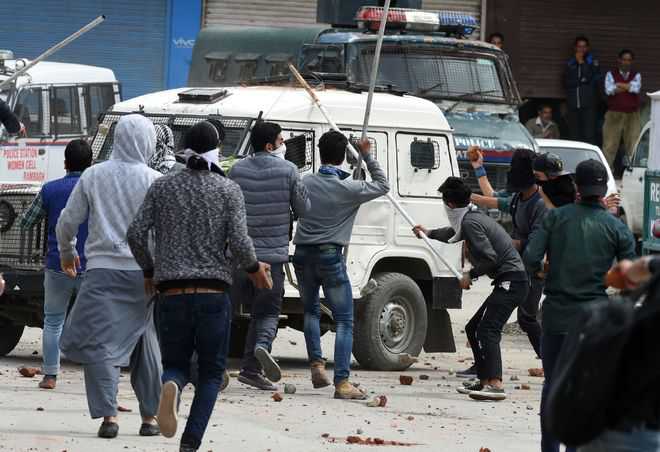
Youth attack a vehicle of security forces in Srinagar. File photo

New Delhi, April 27

Around 1,000 women will be hired in Jammu and Kashmir for a police battalion, which will primarily deal with incidents, like stone-throwing, in the Valley.The policewomen will be part of the five India Reserve Battalions (IRBs) which the Central government has already sanctioned.As many as 1,40,000 youth in Jammu and Kashmir have applied for 5,000 posts in the five IRBs to be raised in the state. The process of recruitment in the five IRBs has started and authorities have received around 1,40,000 applications, 40 per cent of which are fromKashmir.The women battalion will primarily deal with incidents such as stone-throwing in the Valley and other law and order duties, a Home Ministry official said. The response to the police battalions was very encouraging as there were nearly 30 applicants against one post, the official said.The issue was discussed today at a high-level meeting chaired by Home Minister Rajnath Singh on the Rs 80,000-crore development package announced for Jammu and Kashmir by Prime Minister Narendra Modi in 2015.The IRBs are being raised with an aim to provide jobs to the local youth and 60 per cent of new IRB vacancies will be filled from the border districts of the state.The cost of raising each battalion is around Rs 61 crore and 75 per cent of it will be provided by the Central government.IRB personnel are normally deployed in their respective states but they can be deployed in other states too if there is a requirement.At present, there are 144 IRBin various states. In addition, four IRBs each are being raised in Andhra Pradesh and Telangana, 12 in Maoist-hit states besides the five battalions in J&K. — PTI

J&K to get five IRBs

  • The raising of the battalion was discussed on Thursday at ahigh-level meeting chaired by Home Minister Rajnath Singh
  • The policewomen will be part of the five India Reserve Battalions which the Central government has already sanctioned
  • As many as 1,40,000 youth in J&K have applied for 5,000 posts in the five IRBs to be raised in the state

Cows will get Aadhaar-like numbers, Centre says in SC

TAGS TO HAVE DETAILS LIKE ANIMAL’S BREED, AGE, SEX, HEIGHT, COLOUR, TYPE OF HORN AND SPECIAL MARKS

NEW DELHI: The central government will soon approve tamperproof identity tags for all cattle in the country that will document a range of data, including a unique number and the type of their horn and tail, solicitor general Ranjit Kumar told the Supreme Court on Monday.

A government-appointed panel headed by a joint secretary of the Union home ministry came up with the idea as part of efforts to prevent illegal transportation of cattle and livestock to Bangladesh. The panel’s report was submitted to the top court on Monday, and Kumar told the bench headed by Chief Justice JS Khehar that the government backed the suggestions.

“The government will issue a formal notification soon,” Kumar said.

The polyurethane tags will contain identification details such as the age, breed, sex, lactation, height, colour, horn type, tail switch and special marks of cattle heads and its “progeny”.

The SC is hearing a petition to stop the smuggling of cattle to be slaughtered at beef export units.

Focus on cow protection, especially by vigilante groups, has risen since the BJP-led government under Prime Minister Narendra Modi took power at the Centre three years ago. There has been a string of cow-related violence but many state governments, particularly those ruled by the BJP, have defended the action on the grounds that the animal is considered holy by many Hindus. Critics, however, accuse these vigilante groups of targeting people, mostly from the Muslim and Dalit communities.

Cows, buffaloes and other cattle are issued identity tags when they are insured. But the new proposal seeks ID cards are all cattle. The suggestions included strengthening of institutional framework against cattle smuggling, sensitisation of enforcement agencies, the setting up of homes with guards for stray cattle and stricter prosecution.

The panel identified the reasons for smuggling of cattle and evolved a comprehensive future plan to stop it. Such incidents were said to be the highest in West Bengal and Assam which have borders with Bangladesh.

The idea to have unique tags came after the panel members learnt that the seized cattle heads, which get auctioned by the customs department, reach smugglers who re-sell them across the border.

The panel took a view that the responsibility of safety and care of abandoned animals was mainly of the states. Asking the government to make tamperproof identification of cattle mandatory, the committee suggested having a state-level data bank to be uploaded on government websites and linked to an online national database.


Death toll in Afghan military base attack rises to 140

Death toll in Afghan military base attack rises to 140
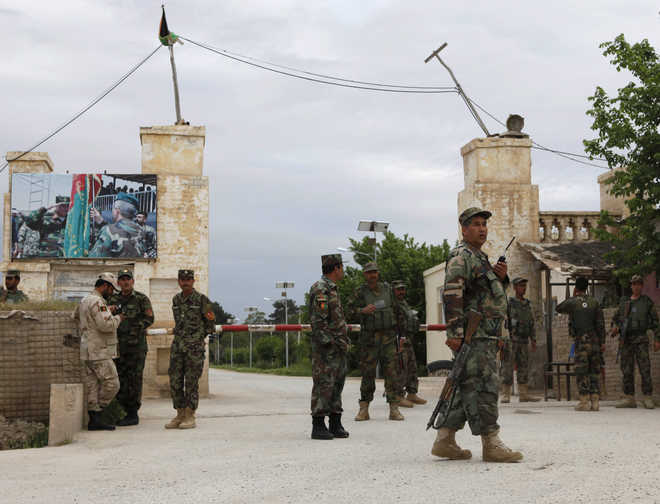
Afghan national Army (ANA) troops keep watch near the site of an attack on an army headquarters in Mazar-i-Sharif, northern Afghanistan, on April 21, 2017. Reuters

Mazar-i-Sharif (Afghanistan), April 22

As many 140 Afghan soldiers were killed on Friday by Taliban attackers apparently disguised in military uniforms in what would be the deadliest attack ever on an Afghan military base, officials said.

(Follow The Tribune on Facebook; and Twitter @thetribunechd)

One official in the northern city of Mazar-i-Sharif, where the attack occurred, said on Saturday at least 140 soldiers were killed and many others wounded. Other officials said the toll was likely to be even higher.

The officials spoke on the condition of anonymity because the government has yet to release official casualty figures.

A US official in Washington on Friday had put the toll at more than 50 killed and wounded.

As many as 10 Taliban fighters, dressed in Afghan army uniforms and driving military vehicles, talked their way onto the base and opened fire on soldiers eating dinner and leaving a mosque after Friday prayers, according to officials. The attackers used rocket-propelled grenades and rifles, they said.

Taliban spokesman Zabihullah Mujahid said in a statement on Saturday the attack was retribution for the recent killing of several senior Taliban leaders in northern Afghanistan.

The NATO-led military coalition deploys advisers to the base where the attack occurred to train and assist the Afghan forces but coalition officials said no international troops were involved in the attack.

The Western-backed Afghan government is locked in a prolonged war with Taliban insurgents and other militant groups. — Reuters


Jawan suicide case: Bail pleas of journo, retd army man rejected

Jawan suicide case: Bail pleas of journo, retd army man rejected
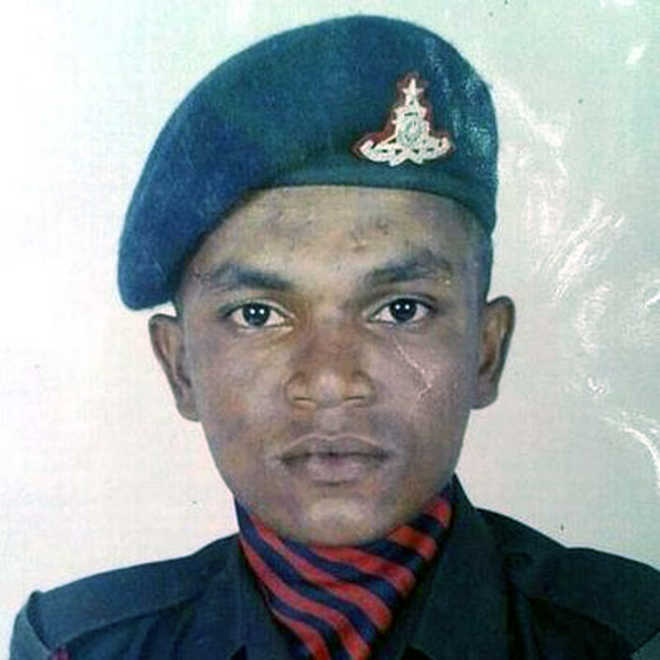
DS Roy Mathew had gone missing on February 25 soon after the video became public. File photo

Nashik, April 16

A court here has rejected the anticipatory bail applications of a New Delhi-based woman journalist and a retired Army official charged with abetting suicide of Lance Naik DS Roy Mathew.Mathew had committed suicide after he purportedly figured in an expose by a news portal over alleged abuse of the “buddy” (orderly) system in the Army.District and Sessions Judge MS Pathan rejected the applications of Poonam Agrawal, a journalist with a news portal, and retired Army officer Deepchand Kashmirsing yesterday after the court was informed that they needed to be arrested to get more information in connection with the case.Both Agrawal and Kashmirsing had moved their bail plea in the court on April 9.The prosecution told the court that it was necessary to impound the camera and the memory card used by Agarwal in carrying out the sting operation by entering an Army area illegally.The jawan had hanged himself after a video on the “abuse” of buddy system surfaced which showed soldiers, working as ‘sahayaks’, walking dogs of senior officials or taking their children to school.Mathew had gone missing on February 25 soon after the video became public and his body was found in a decomposed state in a barrack at Deolali’s Heig Line on March 2.Deolali police had on March 27 registered a case against Agrawal and Kashmirsing for offences under the stringent sections 3 (spying) and 7 (interfering with officers of the police or members of the armed forces of the Union) of the Official Secrets Act.Agrawal was also booked for violating Army rules by entering prohibited areas and conducting a shoot there without permission.She was also charged under Sections 306 (abetment of suicide), 451 (criminal trespass), 500 (defamation) and 34 (common intention) of the IPC. — PTI


More in Canada govt pro-Khalistan: Capt Reiterates won’t play host to Sajjan

Rajmeet Singh

Tribune News Service

Chandigarh, April 13

Hardening his stand against Canada’s Defence Minister Harjit Singh Sajjan, whom he had dubbed a “Khalistani sympathiser” on Wednesday,  Punjab Chief Minister Capt Amarinder Singh today said not only Sajjan but Canada’s other Sikh ministers and MPs — including Navdeep Bains, Amarjit Sohi, Sukh Dhaliwal, Darshan Kang, Raj Grewal, Harinder Malhi, Ruby Sahota and Randeep Sarai — were known for their pro-Khalistan leanings.Canada, meanwhile, termed Capt Amarinder’s comment that five ministers in the Justin Trudeau government, including Sajjan, were Khalistani sympathisers as “disappointing and inaccurate”. Rejecting Canada’s defence, Capt Amarinder said he stood by his “principled” stand and would not meet any “Khalistani sympathiser”.(Follow The Tribune on Facebook; and Twitter @thetribunechd)The CM seems to have politically scored over the Aam Aadmi Party, the main Opposition party, whom he had during electioneering accused of aligning with radical Sikh groups. Reacting sharply, AAP said the CM has not only insulted Sajjan, but “Sikhs in particular, who have proved their mettle in foreign lands”.   The CM said Sajjan was welcome to attend conferences in Punjab and visit the Golden Temple but he would not play host to him as he had information that like his father Kundan Sajjan, a board member of the World Sikh Organisation, he too was sympathetic to the Khalistan cause. “The state government will provide security to the minister and ensure that he is treated as per the protocol,” Amarinder said.He lashed out at AAP and Dal Khalsa for attacking him on the issue, accusing the two of playing into the hands of forces inimical to India. He said his sole concern was the future of Punjab that had lost 35,000 innocent lives during militancy. The CM said he had never believed in public posturing and “from breaking away from the Congress in the wake of Operation Bluestar to resigning from the Lok Sabha over the SYL issue,” he had only upheld values to protect the interests of Punjab and its people.The CM said AAP’s criticism only proved that its national convener Arvind Kejriwal’s had a soft corner for Khalistanis. “Kejriwal had shown his extremist leanings by residing in the house of a former Khalistan Commando Force (KCF) militant during one of his election tours,” Amarinder pointed out.


India, China warships thwart pirate attack off Aden coast

India, China warships thwart pirate attack off Aden coast
Photo courtesy: Twitter handle of @indiannavy

Ajay Banerjee

Tribune News Service

New Delhi, April 9

Even as India and China spar over the visit of Tibetan spiritual leader the Dalai Lama to Tawang in Arunachal Pradesh, the navies of the two countries have coordinated on the high seas to jointly rescue a merchant ship from pirates off the coast of Aden in the Arabian Sea.

(Follow The Tribune on Facebook; and Twitter @thetribunechd)

The Indian Navy and China’s People’s Liberation Army (Navy) jointly saved a bulk carrier named OS-35 which came under attack by pirates. The 178-metre ship was attacked by pirates on Saturday night in the Arabian Sea. The INS Mumbai provided air cover to the distressed merchant vessel, while the PLA Navy ship Yulin sent in a team of 18 to sanitise the merchant ship.

The Commander of the INS Mumbai has reported back to the Naval headquarters here that the merchant vessel is safe, Indian Navy spokesperson Captain DK Sharma said on Sunday. The merchant vessel is scheduled to dock at Aden

India, China and Japan have been cooperating with each other to tackle piracy since 2011 and India has maintained an anti-piracy patrol in the Gulf of Aden since 2008.

The three countries have deployed warships independently. Their role is conducting independent anti-piracy patrols in the internationally recognised transit corridor — a 480 nautical mile (approx 890 km) long area in the Gulf of Aden. The 92-km wide corridor starts at the confluence of the Red Sea and the Gulf of Aden and extends eastwards towards the Arabian Sea.