




Sanjha Morcha

Steps to revive Punjab economy

The economy of Punjab is on life support and a multi-pronged strategy to revive it has to be put in place. Policy makers need to examine alternate and viable strategies of growth. The focus must shift from only agriculture to floriculture, tourism, industry and the services.

A farmer at his sunflower farm on the outskirts of Jalandhar. It is important for Punjab to break the paddy-wheat cycle.

Charan Singh

PUNJAB has a new government led by an experienced Chief Minister who has an opportunity to turn around the ailing state suffering from high unemployment and low growth. Punjab has had a unique history. In a short time, from a semi-arid land, thanks to Green Revolution, it became the granary of the country and the richest state of India. These good times were short lived. Historically, in the mid-1960s, India was passing through severe drought conditions, and it was a challenge to feed 50 crore people, of which nearly half were below the poverty line. Food aid, globally, was difficult and was largely used to manipulate geo-political decisions. Hence, to be truly independent, it was crucial to ensure national food security. Punjab, though short of rainfall, was considered perfect for an experiment of high-yielding variety of seeds. The Green Revolution, ably supported by canal and tube-well irrigation, and minimum support price of the government, ensured food security but changed the cropping pattern in Punjab. In 1971, 39 per cent of the land area was under wheat, 7 per cent under rice, and 55 per cent under various crops like gram, maize, cotton, bajra and groundnut. By 2015, 49 per cent was under wheat, 41 per cent under rice and 10 per cent under others. In terms of per cent share of major crops in production, the story was obviously similar. The high dependence on rice and wheat, and over-exploitation of land led to unforeseen complex problems. The rapidly depleting water table in face of non-adoption of micro-irrigation, and high toxicity of soil because of over-use of fertilisers and pesticides led to unfolding of health issues reflected in the high incidence of cancer and kidney failure.  The state, given its critical fiscal situation, cannot support present levels of standard of living through subsidies. There are no employment opportunities for the youth, who are increasingly turning to drugs – a recipe for a social disaster.

Alternate models of growth

The academia and policy makers of Punjab need to start examining alternate models of growth to transit from mono-emphasis on agriculture to tripolar dependence on agriculture, industry and services. To have sustainable agriculture, Punjab needs to expedite alternatives like exploring floriculture and horticulture. To meet challenges, agricultural university needs to support these endeavours as it did in the past for rice and wheat. Similarly, there is an urgent need to go in for agro-processing of agricultural produce, and that too by farmers’ collectives, to yield additional income and employment. There is no escape from industrialisation. Punjab has to decide as to which are new industries that can be attracted and then provide suitable incentives while taking advantage of the Centre’s successful “Make-in-India” campaign. In India, illustratively, the aerospace industry has been booming in the last few years, especially, in South India. Aerospace industry plans an investment of a trillion US dollars and capacity to create 2 million jobs. Presently, there are only few assembly facilities in places like Bangalore.  Similarly, Punjab is known for its crafts and skills in jewellery, carved furniture, embroidery, phulkari, soft toys for children, specialised food items, and leather products.The need is to explore synergy in labour-intensive crafts and MSMEs. The government could consider supporting the marketing of such products. The largest scope for growth is in services sector, and Punjab could explore medical tourism which is being encouraged by the Central government. Annually, about 2 lakh tourists arrive, mainly from neighbouring countries, the Middle East and Africa to Maharashtra, West Bengal, Delhi, Andhra Pradesh and Kerala. Given that the Centre is already promoting pilgrimage tourism, there is a need to develop tourist-circuits of historical and pilgrim venues of different faiths in Punjab. Religious tourism can have a multiple effect on employment generation as it promotes local culture, handicrafts, and cuisine. Finally, farm tourism which has been successful in Kerala and Maharashtra, should also be strengthened in Punjab.

Skill development

In view of the protectionist policy being pursued by advanced countries, especially the USA and some countries in Europe, Punjab needs to take advantage of the Central government’s policy of skill development. The Centre has already signed MoUs for skill development with several countries like the United Kingdom, Germany, Australia, USA, Canada, Singapore, the European Union, and France. The government’s Pravasi Kaushal Vikas Yojana aims to train and certify Indian workforce keen on overseas employment in select sectors and job roles in line with international standards to facilitate overseas employment opportunity.Similar to the look-East policy, India can also consider strengthening its trade and cultural relations in the North-West by creating in Punjab a trading hub of goods and services for Central-Asian countries like Kazakhstan, Uzbekistan, Turkmenistan, Kyrgyzstan, Tajikistan, and even Afghanistan. These Central-Asian republics can be connected to India through Punjab rather than the extensive long sea route from Mumbai. Interestingly, Zahedan in Iran is already connected by an all-weather road and 1,676-km broad gauge railway line to Amritsar.Finally, there is an urgent need to strengthen the state planning board which can help inspire multilateral lenders like the World Bank as well as experts from universities like Harvard and Stanford, to give advice on development plans. A professionally managed planning board could serve as an anchor to steadily steer Punjab into high growth. Punjab has been in the forefront of providing food security to the nation but now it needs help. The band-aid approach would not be able to cure the ailing economy of Punjab which is in the ICU and therefore, this time thorough diagnostic tests are required to honestly identify the specific root causes of the disease. On completing the “identification” exercise, the Punjab government needs to prepare a road map, with milestones, based on wider consultations. The road map, given the critical situation, would have to be implemented in mission mode and diligently sequenced so that the health of the economy is restored without harming the sentiments of people or disrupting normal economic activity. It would have to be a very carefully planned surgical operation, given the sensitive circumstances. Reviving the ailing economy would be a lasting contribution of the experienced Chief Minister to the land of his forefathers. The writer is a Professor in the Department of Economics & Social Sciences, IIM  Bangalore
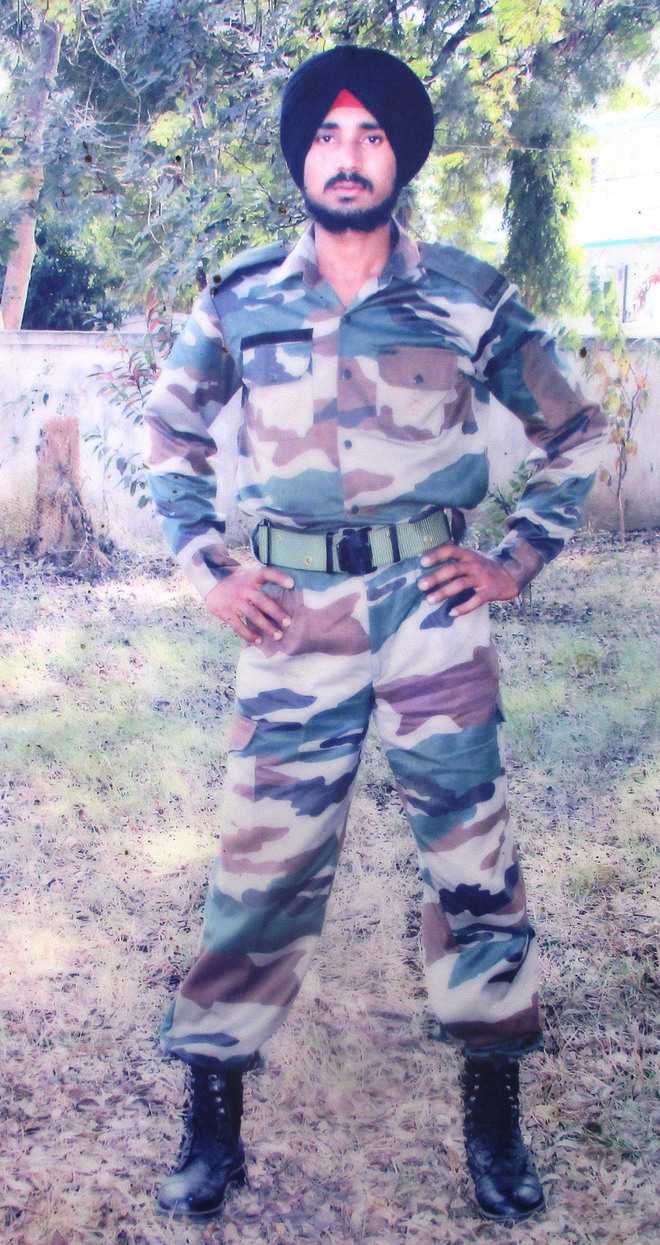


Fazilka jawan found dead in Kashmir

Fazilka jawan found dead in Kashmir
Kulwant Singh

Praful Chander Nagpal

Fazilka, March 31

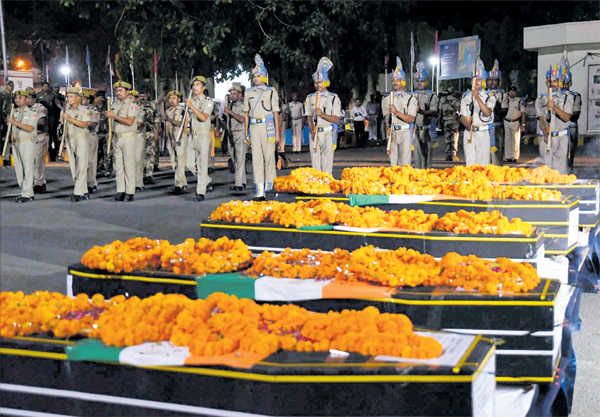
An Army jawan, Kulwant Singh (26), was found dead with a bullet wound in Balakot sector along the Line of Control (LoC) in Jammu and Kashmir’s Poonch district today. He was a resident of Kharaswali Dhani, 3 km from here. He had married Daljinder Kaur on February 2 and rejoined duty on March 4.Kulwant’s elder brother Malkeet Singh said the Army authorities told him on the phone this morning that the jawan had sustained a bullet injury.Later, he was informed about Kulwant’s death. He said the authorities had not yet given details of the incident.The victim’s father, Gurdeep Singh, a labourer, said Kulwant had joined the Army in 2009. The body would be brought here tomorrow for cremation.

Soldier found dead along LoC

JAMMU/FAZILKA : A soldier was killed on Friday in a mysterious incident of firing on the Line of Control (LoC) in Jammu and Kashmir’s Poonch district.

HT PHOTOFamily members of Sepoy Kulwant Singh mourning his death in his village in Fazilka district of Punjab on Friday.

Police sources said Sepoy Kulwant Singh, 26, a resident of Kharass Wali Dhani village in Fazilka district of Punjab, was found dead with a bullet wound in Chaprahali area Balakote sector in the morning. Singh was from the 49 Rashtriya Rifles.

“It is not known whether the soldier’s death was a suicide or due to firing from across the LoC,” an official said.

The deceased had married on February 2 this year and rejoined duty in the first week of March.

Meanwhile, Singh’s family says that on Thursday night some intruders from Pakistan ambushed his unit during which he sustained critical injuries, and died on Friday morning.

News of his death has engulfed the village in a pall of gloom. Singh’s body will reach his village on Saturday afternoon and will be cremated with full state honour, an official said.


Sukma: Avoidable tragedy Anil Chowdhry

Sukma: Avoidable tragedy
We need to recast our anti-Naxal policy.

AROUND noon on April 25, a  36-strong contingent of the 74th Bn of  CRPF deployed to protect a  road construction party  in Sukna (Dantewada) of Chhattisgarh was ambushed by a huge band  of about 300 fully armed Naxal militia. 25 brave young CRPF personnel were taken by surprise, killed on the spot and another eight were seriously injured. Such a heavy toll of lives of the central police force playing a key role in combating terrorism naturally aroused concern in the media. As an ex-cop and internal security professional, this made me very sad. It  raised  a number of questions about how it happened and where we went wrong in protecting our brave policemen. Before  dwelling on the do’s and dont’s to ensure that such incidents are not repeated in the future, let us take  stock of the facts leading to the tragedy.Sukna, carved out of erstwhile Bastar district  is the area worst affected by Naxal  violence, accounting for almost 70 per cent of casualties suffered by the police forces operating in these  areas. It is a hilly and deeply forested terrain. The Naxal armed militia, comprising local Adivasis,  are recruited, trained, equipped and financed by Maoist thinkers living in comfort in urban areas. They issue directions to the armed groups to strike against selected targets via their network of local commanders through a well-defined command structure. The contact of the “Jungle Parties” of Maoists with the local villagers is minimal. They maintain utmost secrecy in their movements. Road construction on the remaining 50-km distance, aimed to end the isolation of the tribals from government services, is  critical to the anti-Naxal strategy. The Naxals were opposed  to this road contruction activity.Their desperation was increasing with the successes achieved  in counter-insurgency operations in recent years. They were apparently busy planning this big strike to regain hold over the area to boost the sagging morale of its cadres. The CRPF is deployed to assist the local government in counter-Naxal operations and is under the tactical command of the District SP. The regular deployment of the CRPF at the same spot in a highly vulnerable, ambush-prone terrain  was avoidable. The location  and numbers was  known to the local Naxal commanders. The latter were surreptitiously  gathering troops to hopelessly outnumber the adversary and inflict  maximum casualties. It is not known whether the CRPF commanders either at the local or higher levels had expressed concerns over the risks involved in such deployments. Standard operating drills to guard against ambushes  in hostile terrain  were not followed. The Naxal leadership has been taking advantage of the poverty, unemployment and illiteracy among the local tribals, which has become more acute following revision of the forest conservation laws to make them stringent. Naxals  have been luring innocent young tribals to leave their homes and families and take up the gun after being paid adequately every month.Actionable tactical intelligence holds the key to success of all counter-terrorist operations of the police and security forces. Human intelligence (Humint), which is the forte of our local and central intelligence agencies, has severe limitations in penetrating underground groups operating from deeply forested inaccessible hideouts. Our technical intelligence (Techint) capabilities fall woefully short to yield meaningful results in counter-terrorism operations. UAVs deployed to provide technical intelligence regarding the movement of armed groups in deep forest areas of Chhattisgarh and contiguous territory called  “Abhujmarh”(unknown areas) are not able to provide any worthwhile inputs, given the inability of the cameras mounted on them to penetrate deep vegetation and take pictures of objects below .Here are a few suggestions based on my experience of heading intelligence outfits in terrorism-affected areas in J&K and the North-East. We need to recast our counter-Naxal strategy and tactics to ensure that such losses do not reoccur:Do  involve the CRPF and state police officers facing ground realities  in affected areas while discussing and deciding upon counter measures in Delhi and state capitals. During a stint in the MHA in 2004-5, I was asked to chair the first Joint Task Force to combat  Naxalism nationally. The deliberations  were held in Delhi and the capitals of the affected states, including Chhattisgarh. Officers handling the situation on the ground participated and the Union Home Minister too attended such conclaves in the state capitals and actively involved the state governments at the highest level. Naxal groups operating in Chhattisgarh and elsewhere are making extensive use of electronic devices to communicate via cyber space and using Voice Over Internet Protocol (VOIP) which cannot be intercepted. Information on the presence and movement of Naxals can be considerably stepped-up by extensively analysing the cyber data being exchanged among them, even minus content.Air support being extended at present to the police and the CRPF by the IAF is currently limited to logistics — supplies, movement of manpower, equipment etc.. The IAF helicopters can be used more effectively in para-dropping of troops to overwhelm and strike against armed groups. Of course, such para-droppings are possible only in clearances in deep forest areas.Finally, the CRPF must draw heavily on the expertise of the Andhra Pradesh/ Telangana  police force Greyhounds that has achieved significant success in countering Naxalism by sharpening the troops’ skills. The training of CRPF personnel deployed in Naxal areas needs to be undertaken on a war footing. The appointment of an officer with a proven track record as full-fledged DG of the CRPF,  the largest paramilitary force in the world, as announced a couple of days back, will ensure the toning up of operational capabilities. A salute to the brave CRPF personnel who had to lay down their lives in trying to keep our country safe from depredations of  armed hostile groups. The writer is Former Secretary, Internal Security, MHA.


Navy war room leak: Court allows ex-naval officer to go abroad

New Delhi, April 24

A special court has allowed a former navy officer, facing trial in the 2006 Naval War Room leak case, to go abroad for 25 days but asked him not to travel to London where prime accused Ravi Shankaran, who has been absconding, is learnt to be living.Special CBI Judge Sanjeev Aggarwal granted the relief to ex-naval lieutenant Kulbhushan Parashar, who sought permission to travel to several countries, including France, Spain, Czech Republic, Russia and Greece from June 4 to July 1 for meetings and exploring business opportunities relating to food imports.The court said Parashar would not be permitted to stay abroad beyond the permitted time and should not seek extension on any grounds, including medical.The 2006 Navy War Room leak case involves leakage of over 7,000 pages of sensitive defence information from the Naval War Room and the Air Headquarters, having a direct bearing on national security.“He shall not contact any witnesses while abroad, he will not object to the examination of witnesses in his absence and in his absence, his counsel will accept all the notices on his behalf.“It is also made clear that accused/applicant shall not travel to London, UK, during this period where accused Ravi Shankaran (proclaimed offender in the case who is absconding), is stated to be residing,” the judge said in the order.The CBI had opposed the plea, saying the case was at the stage of recording prosecution evidence and the trial was being expedited.It had also alleged that there was a strong suspicion that Prashar might not return to India, which could delay the proceedings. It had said that Shankaran was residing in London and there were chances of Parashar fleeing from justice.Parashar is facing trial along with four accused, including three former naval officers.Besides Prashar, former commander Vijender Rana, sacked naval commander VK Jha, former IAF Wing Commander Sambha Jee L Surve and Delhi-based businessman and arms dealer Abhishek Verma are facing trial in the case for the offence of criminal conspiracy under IPC and under various provisions of the Official Secrets Act (OSA). All the accused are out on bail.The court had earlier framed charges after the five accused pleaded not guilty and claimed trial. Prime accused Ravi Shankaran is still absconding and has been declared a proclaimed offender by the court. PTI


The resistance revolution in Kashmir

The situation in Kashmir is spiralling out of control as the youth take to the streets with a devil-may-care recklessness. Without fear, they confront security forces that to them are a symbol of the coercive power of the state. This mindset poses new dangers of disintegration to the state.

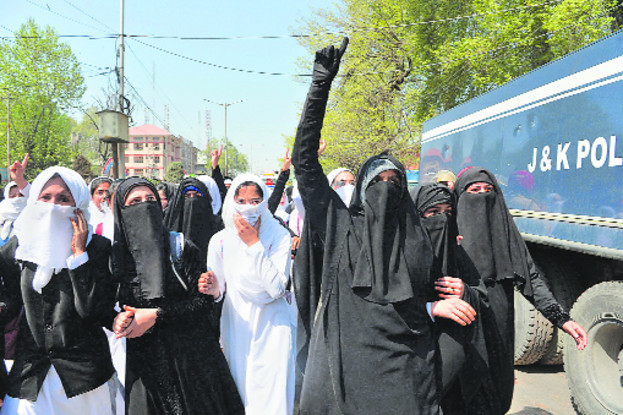
THE Kashmir situation is going from bad to worse. In the current situation,  almost every household has become a  grooming centre for the  would-be “warriors”, where  children  sing  the songs calling for “martyrdom” to boost their morale  These are uploaded on social media  and get the intended response. A message of hatred against India is spread and that translates into anger on the streets. Homes, schools and streets peddle this narrative of Islam and liberation. The tales that parents, teachers and the youngsters bring about the real or imagined or exaggerated versions of the “atrocities” of the security forces  reinforces the thinking that they are living  in a besieged land. The talk of the village  corners has shifted from  devastating militancy of the 1990s to “state terrorism.” It is something that separatists had been saying for long, now the “mainstream” leaders, too, have joined the chorus. They are unanimous in demanding restraint from the security forces but  are shy of telling the misguided youth to go to schools instead of  stoning the  security personnel. That has made this narrative of “state terrorism” more pronounced. A recent video showing the Army using a youth as a human shield has further given credence to this  version  to the youth. 

Conditioned minds

They are conditioned by the mindset of resistance  not  only for the liberation of Kashmir but also as their religious obligation. Kashmiri nationalism is just a cover, as always. The militancy was guided by  the goal of setting up an Islamic Republic in Kashmir. The situation is  dreadful — the fear of the Army is over; crowds gather  in a matter of seconds and start throwing stones, political workers are either being killed or threatened  to declare their disassociation  with the  political groups that  they belong to.  The disclaimers broadcast on social media, combined with real-time blood spilling, has infused the atmosphere  with extreme fear for commoners. The  police department’s advisory to its personnel that they should  not visit their homes for the next few months  is   seen  an  admission  of the deteriorating situation where policemen  have been told to be extremely cautious. That means that the threat to them is real.Alongside, there are youth drawn from villages, schools and  colleges  who are manifesting their anger  on the streets using stones, each stone cast with  a message that they were ready to face bullets. And, once the bullets are fired, the cycle of funerals, burials, new vows  and martyrdom  move  at an unimagined pace. This cements the feelings that a final battle has to be fought. A striking factor was that there was a deep element of fear  of the search-and-cordon operations. People would sit for hours during search operations. There was an awe. Now such operations are near-impossible. There is no forbidden zone for the stone-throwers or gunmen.

Deadly trio

A new deadly trio has emerged of gunmen, stone-throwers  and the crowds offering moral support to them. In 1990, it was hoped that Army would reverse the situation and that it did, making it possible for the politicians to contest elections and form the governments. Then the vested interests in Delhi started playing games — a fair assessment of the situation  was dumped as a bad idea because the threats from  across the border had not vanished and militancy was not over as yet.  The breathing space was scotched.Nowadays, public anger and hate against India is too pronounced  to be ignored. The politicians, who are now calling for restraint by the security forces, were the ones who never bothered to deliver on governance. The basic needs of the people were ignored with contempt. They ruled with the backing of Delhi, and the Centre never held them accountable for their waywardness.  They started hiding their failures  by  claiming that they were working for the larger goal of  a political solution to the Kashmir crisis. The new generation did not trust these politicians, who promised “sadak, bijli, paani” during the election campaign  but shifted their  narrative to the honourable and dignified solution of the Kashmir crisis. Their flip-flop and mishandling of small incidents snowballed into a bigger crisis of  confidence. The political class is seen as “opportunistic, collaborators, exploiters and corrupt to core.”

Religious identity

Now they suspect that the Rashtriya Swayamsevak Sangh-backed BJP is  trying to undermine their religious identity. Religion is a very sensitive issue in the exclusively Muslim Kashmir. This is the most uniting factor as the “pro-freedom  leadership” started its campaign by driving Kashmiri Pandits  out of the Valley. That was in 1990. The 2017 visual realities of the Muslim world clashing with the West  and  their own youth heckling, slapping, kicking the CRPF jawans has  given them the power of aggression. They are sensing a new revolution that would make India retreat. That is where the situation is not only uncontrollable but also defining new dangers of disintegration of the state that can have a ripple effect on the rest of the places as well. This mindset of resistance is the real challenge for the country now.

ajoshi57@gmail.com


PUNJBA NEWS HEADLINES -08 APR 2017–CLICK HEADINGS TO OPEN DETAILED NEWS

Sidhu’s TV show: Court questions state on propriety

BJP leader’s son arrested for ‘running’ drug racket

Former Akali MLA’s nephew held for illegal sale of liquor

Welfare payments in 10 yrs under scanner: Dharamsot

Secys’ performance under CMO lens

Manpreet Badal visits MC office, officials unaware

Capt’s decisions hailed

DRIVE AGAINST ILLEGAL SAND MINING 10 trucks, six tractor-trailers seized; four arrested

clip

clip

LAW TAKEN FOR A RIDE CHANDIGARH POLICE


No lessons learnt History set to repeat itself in Punjab

IT may be a little too early for Congressmen to forget why the Akali Dal-BJP combine had lost the last election in Punjab and why they were chosen instead to run the state affairs despite AAP offering an aggressive alternative. The majority perhaps thought the financial condition that Punjab was in did not warrant an experiment with a team of novices and Punjabis reposed their trust in the leadership of Capt Amarinder Singh having past experience of running a government. However, the Captain they had trusted to steer them out of troubled waters is taking the state ship on the same ruinous path laden with icebergs. Among the most hated things the Badals did with disastrous consequences — for the state, the party and themselves — was the introduction of the halqa in-charge system. Media reports indicate the Congress government plans to revive the discredited practice without officially calling it so. Putting sons of serving Supreme Court judges on the government lawyers’ panel without their consent was embarrassing enough but could be explained away as a bad decision taken in a hurry, if not as a deliberate and crude attempt to court judges. But posting civil and police officers in consultation with the MLA of the area is no different from the Badals’ clever ploy to empower and enrich their local chieftains. It might still work if the legislators and officials do not hijack the law to target political opponents.There is, however, absolutely no justification for issuing an ordinance or bringing in a Bill to create posts of Chief Parliamentary Secretary and Parliamentary Secretary. The financial burden notwithstanding, the move will violate the constitutional cap on the size of ministry a state can have apart from last year’s ruling by the Punjab and Haryana High Court. If providing administrative training to MLAs is a motive, as Capt Amarinder Singh has stated in an interview, then that can be done without giving them the special post and minister-like pay and perks. Questions are already being raised over the army of advisers the Captain has raised. Is power already breeding arrogance and blurring judgement?


HEADLINES— 06 APR 2017

breakl line

MORE MOHALLA GET-TOGETHERS REQUIRED FOR CONNECTING PEOPLE: GEN MALIK

FOUR STEPS TO CORRECT SQUINTED VIEW OF KASHMIR BY ARUN JOSHI

YOGI KEEPS HIS PROMISE MAKES IT DIFFICULT FOR THE RAJA IN PUNJAB

Yogi’s farm loan waiver puts Capt under strain

BACK TO THE VALLEY BY G PARTHASARATHY

PROVOKING THE DRAGON ARE THERE ANY FALLBACK OPTIONS?

9 LIVES FOR CRPF’S CHEETAH, RECOVERS FROM 9 BULLET WOUNDS

PUNJAB HEADLINES –06 APR 2017

:::SEE WHAT’S NEW AT SCROLLING NEWS .CLICK SCROLLING HEADING FOR DETAILED NEWS 

breakl line


Headlines 05 Apr 2017

breakl line

PAK OPENS HEAVY FIRE ON FORWARD POSTS IN RAJOURI

Iran upset at Raheel Sharif heading Saudi military alliance

I SOUND STRONG BECAUSE THAT’S HOW MY SIKH PARENTS RAISED ME’

CAPTAIN TO PEN A BOOK ON PUNJAB’S TROUBLED PAST

AIRPORT ARREST: CUSTODY OF JAWAN GIVEN TO ARMY

MAJOR CALLED FOR QUESTIONING OVER RECOVERY OF GRENADES

UP WAIVES RS 36,000-CR FARM LOANS

STEPS TO REVIVE PUNJAB ECONOMY

INDIA SNUBS US ON J-K MEDIATION OFFER

PUNJAB HEADLINES 04 APR 2017

:::SEE WHAT’S NEW AT SCROLLING NEWS .CLICK SCROLLING HEADING FOR DETAILED NEWS 

breakl line