Sanjha Morcha

Vistara, IAF aeroplanes’ collision averted at Chandigarh airport

Vistara, IAF aeroplanes' collision averted at Chandigarh airport
They said as the plane accelerated to take off, it was asked to abort and return to the gate by the ATC.

Chandigarh, April 30

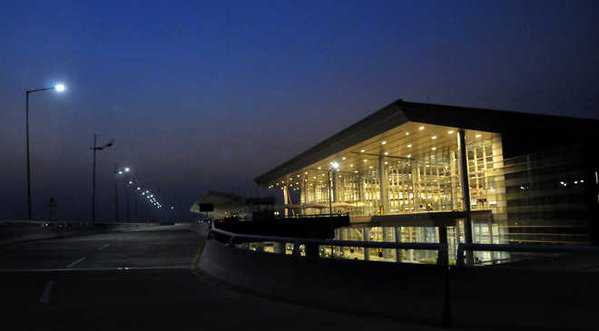
A major mishap was averted when an Air Vistara flight was asked to abort its take-off at the last moment to avoid crashing into an Indian Air Force plane that was landing on the same runway at the International Airport here.Sources said the timely intervention by the Air Traffic Controller (ATC) prevented the mishap from happening when the Delhi-bound Air Vistara flight was about to take off from here on Saturday after an IL-76 cargo plane of the Indian Air Force (IAF) sought permission for landing on the runway.

(Follow The Tribune on Facebook; and Twitter @thetribunechd)

The Air Vistara flight had 151 passengers on board and was scheduled to depart at 3.20 pm. However, it got delayed and left past 5 pm, officials said.They said as the plane accelerated to take off, it was asked to abort and return to the gate by the ATC.After the incident, Vistara tweeted, “Regret the trouble, take off was aborted as per instructions from ATC at Chandigarh airport.”IAF officials said the decision to abort take-off of the private airline was taken by the ATC keeping in view the safety norms. PTI


HEADLINES 25 APR 2017

breakl line

MLA BALBIR SINGH SIDHU OF MOHALI VISITS MAI BHAGO ARMED FORCES PREPARATORY INSTITUTE FOR GIRLS

25 CRPF MEN KILLED IN NAXAL ATTACK SIX INJURED AS PATROL SANITISING ROAD IN CHHATTISGARH’S SUKMA DISTRICT AMBUSHED

ESM RALLY ORGANISED BY UCHCHI BASSI STATION COMMANDER

SACRIFICES OF MARTYRS WILL NOT GO IN VAIN, SAYS PM MODI

INDIA 5TH LARGEST MILITARY SPENDER WITH $56 BN OUTLAY

CHINESE MEDIA TELLS INDIA TO KEEP A CHECK ON ITS MILITARY GOALS

आर्मी कैंटीन (CSD) में पतंजलि आंवला जूस की बिक्री पर रोक

NAVY WAR ROOM LEAK: COURT ALLOWS EX-NAVAL OFFICER TO GO ABROAD

HOLD ‘DEFENCE MELAS’ TO RAISE FUNDS FOR EX-SERVICEMEN, KIN: GOVERNOR

SC NOTICE TO CENTRE ON ALLEGED MISUSE OF OFFICIAL SECRETS ACT, SAHAYAK SYSTEM

IAF ENHANCES CAPABILITIES OF HALWARA BASE NEAR INDO-PAK BORDER

COWS WILL GET AADHAAR-LIKE NUMBERS, CENTRE SAYS IN SC

CAPTAIN’S KNOCK AWAITED PUNJAB NEEDS MAJOR SHAKE-UP TO RESTORE LAW AND ORDER

REDUCTION OF BOPS: PARLIAMENTARY PANEL TAKES SERIOUS NOTE

breakl line


3 days before Pulwama clashes, students targeted Army vehicle

Army officer had come with seminar proposal, left amid stone-throwing

3 days before Pulwama clashes, students targeted Army vehicle
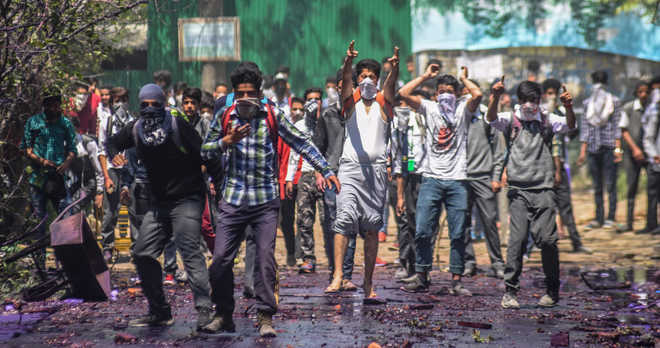
The Valley saw widespread protests on Monday over police action against students in Pulwama. Tribune file photo

Ishfaq Tantry

Tribune News Service

Srinagar, April 18

Three days before violence erupted in Pulwama Degree College on Saturday, triggering Valley-wide protests on Monday, it is learnt that an Army vehicle came under attack on the campus last Wednesday.There was intense stone-throwing by students on an Army vehicle on April 12, when an Army officer of the Rashtriya Rifles arrived in the college to discuss a proposal with the principal for conducting a seminar on the campus.“At that time, the Army showed exceptional restraint and moved out their Casspir vehicle within 10 minutes of arriving in the college,” Pulwama Degree College principal Abdul Hameed told The Tribune.“Earlier, the Army officer concerned had called me on phone to seek permission for conducting a seminar in the college. I told him that I would get back after discussing the proposal with the senior staff of the college,” Hameed said while refusing to identify the officer. As the principal was discussing the proposal with the staff after the phone call, he heard some noise outside. “As I came out of my office, I saw an Army Casspir vehicle entering the college premises and students resorting to intense stone-throwing as they mistook it as a raid on the college,” the principal said while narrating the incident on April 12, which he said became the precursor to the police action later on Saturday.“Exhibiting immense restraint, the Army vehicle retreated and calm was restored in the college within half an hour. The students even resumed their classes afterwards,” the principal said, adding that for the next two days, that is April 13 and 14, the college was closed on account of gazetted holidays.“As soon as the college reopened on April 15, I saw two police vehicles entering the college premises around 11.30 am. This provoked the students, who resorted to stone-throwing. The police retaliated by resorting to intense shelling inside the college with nearly 5,000 students,” the principal said, alleging that the police entered the college premises without seeking permission or intimating about their arrival. The principal, who rang up the local Superintendent of Police and Inspector General of Police as the commotion broke out in the college, said he pleaded with the police personnel accompanied by the local SHO and a DSP-rank official to leave the college as the situation was getting out of control.“They yelled at me and started firing tear-gas shells,” he said. In the clashes between the police and the students, who were later joined in by outsiders, over 50 pupils of the college were injured.The police, however, maintained that the clashes erupted when a normal naka was established around 200 metres away from the college and some miscreants started throwing stones at the personnel manning the checkpost.In principal’s words… 

  • There was heavy stone-throwing by Pulwama Degree College students on an Army vehicle on April 12, when an Army officer arrived in the college to discuss a proposal for conducting a seminar
  • Exhibiting immense restraint, the Army vehicle retreated and calm was restored in the college within half an hour
  • On April 15, two police vehicles entered the college premises. This provoked the students, who resorted to stone-throwing. The police reacted by firing tear-gas shells. In the ensuing clashes, 50 pupils were injured


Parliamentary panel raps intel agencies for ‘failure’ to prevent attacks

Parliamentary panel raps intel agencies for ‘failure’ to prevent attacks
Soldiers taking positions during a search operation in a forest area outside the Air Force base in Pathankot. File photo

New Delhi, April 16

A parliamentary panel has rapped intelligence agencies for the terror attacks in Pathankot, Uri and a few other places saying these strikes “exposed the deficiencies” of the agencies but there was no analysis of their “failure”.

The Parliamentary Standing Committee on Home Affairs, headed by senior Congress leader P Chidambaram, said a year had passed since the January 2, 2016, terror attack at the Indian Air Force station in Pathankot but the probe has not been completed by the National Investigation Agency.

Moreover, it said, no analysis seems to have been done of the “failure” of the intelligence agencies to provide credible and actionable inputs regarding the attacks at Pathankot, Uri, Pampore, Baramulla and Nagrota.

“The committee feels that these attacks have exposed the deficiencies of our intelligence agencies,” it said.

While in the Pathankot attack, seven security personnel were killed, 19 army soldiers lost their lives in the attack at the Brigade headquarters in Uri on September 18 last year.

Terrorists also attacked a convoy of CRPF vehicles on June 25, 2016, at Pampore along the Srinagar-Jammu highway, killing eight paramilitary personnel.

While in Baramulla district of Jammu and Kashmir, militants attacked a camp of the Rashtriya Rifles killing a security personnel on October 3, 2016, seven soldiers were killed when an Army base in Nagrota in the state was attacked by militants on November 29, 2016.

“The committee, therefore, recommends that the (Home) ministry should instruct the NIA to complete the investigations of these attacks at the earliest so as to identify the loopholes in the intelligence setup in the border areas,” it said.

Taking note of “huge rise” in the number of infiltration, the committee said the government must carry out a thorough investigation into the sudden spurt in infiltration attempts along the Line of Control from across the border and find out vulnerabilities that are being apparently exploited by the infiltrators.

There were 364 attempts of infiltration in 2016 of which 112 were successful in comparison to 121 infiltration attempts and 33 net infiltration in 2015.

The committee also noted that there has been an increasing number of incidents of infiltration through tunnels from across the border.

The panel felt that in future this might become a major modus operandi of the infiltrators and the government must take proactive steps to foil such attempts.

“The committee recommends that the ministry must explore technological solutions for tunnel detection in border areas and should seek the help of other countries which have successfully developed tunnel detection systems,” it said. — P


Jadhav case: Pakistan yet to respond to India’s demand

Jadhav case: Pakistan yet to respond to India’s demand
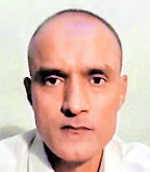
Kulbhushan Jadhav

New Delhi, April 16

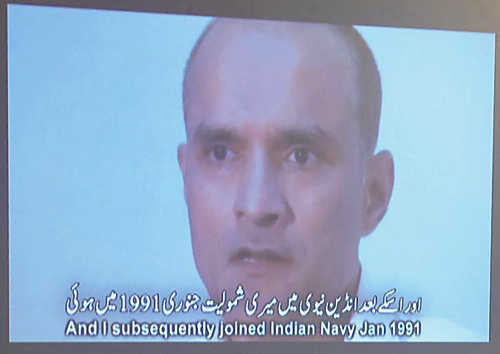
India on Sunday said it was yet to get a response from Pakistan on its demand for a certified copy of the chargesheet as well as the military court order awarding death sentence to the retired Indian Navy officer Kulbhushan Jadhav.

“We have sought from the Foreign Ministry (of Pakistan) a certified copy of the chargesheet as well as the judgment in the death sentence of Jadhav, but there is no response yet from Pakistan’s side,” MEA spokesperson Gopal Baglay told reporters.

India had already announced that it would appeal against the death sentence to Jadhav.

Indian High Commissioner in Islamabad, Gautam Bambawale, had met Pakistan Foreign Secretary Tehmina Janjua on Friday in connection with the case and demanded a certified copy of the chargesheet and the judgment, besides consular access to Jadhav.

“India made the demand for the two documents on Friday when the Indian High Commissioner in Islamabad met the Pakistan Foreign Secretary,” said Baglay, replying to a question on the issue.

The death sentence to Jadhav, 46, was confirmed by Pakistan army chief General Qamar Javed Bajwa after the Field General Court Martial found him guilty of “espionage and sabotage activities” in Pakistan.

Pakistan claims its security forces had arrested Jadhav from the restive Balochistan province on March 3 last year after he reportedly entered from Iran. It also claimed that he was “a serving officer in the Indian Navy”.

The Pakistan Army had also released a “confessional video” of Jadhav after his arrest.

However, India denied Pakistan’s contention and maintained that Jadhav was kidnapped by the Pakistan authorities.

External Affairs Minister Sushma Swaraj had warned that Jadhav’s execution would be taken by India as a “pre-meditated murder” and Pakistan should “consider its consequences” on bilateral relations, if it proceeds on this matter. — PTI


India, Pak harden stance on Jadhav Pak generals rule out compromise

India, Pak harden stance on Jadhav
Kulbhushan Jadhav

Simran Sodhi

Tribune News Service

New Delhi, April 13

India and Pakistan today hardened their stance on the death sentence awarded to Kulbhushan Jadhav. Pakistan alleges he is an Indian spy, while India maintains he is “innocent”.India reiterated that if Pakistan went ahead with the death sentence, it would amount to a pre-meditated murder.The Ministry of External Affairs said it has no information on Jadhav’s location in Pakistan or his condition, noting that it was in touch with the government there on this “immensely important” issue.In Islamabad, top military generals held a meeting and decided there would be no “compromise” on the death sentence awarded to Jadhav. Sources say India is exploring options, both soft and hard, for ensuring that Jadhav is brought back home.(Follow The Tribune on Facebook; and Twitter @thetribunechd)The rift within Pakistan between the civilian government headed by PM Nawaz Sharif and Army Chief Gen Qamar Bajwa is also evident. Rawalpindi barracks seem to have taken the initiative and are leading the discourse on the issue. Today’s corps commanders’ conference in Islamabad was presided over by Gen Bajwa, the military’s media wing Inter-Services Public Relations (ISPR) said.The generals were briefed about Jadhav and it was concluded that “no compromise shall be made on such anti-state acts”, the statement said. The Ministry of External Affairs put the ball firmly in Pakistan’s court, calling in question the legality of the sentence and in essence harping on two facts. One: If Jadhav was indeed a spy, why would he be carrying an Indian passport ? Two: Pakistan’s obstinate insistence to not grant India consular access violates international norms and raises questions on the authenticity of charges.“Consular access is usually expeditiously granted,” MEA spokesperson Gopal Baglay said. “We need to verify how this gentleman got to Pakistan; we don’t know the circumstances of his presence in Pakistan. For that we need to meet him which is part of international law,” he added. Meanwhile, Pakistan claimed “foreign spy agencies”, may have “trapped” and then abducted Lt Col Muhammad Habib Zahir who disappeared on April 6 from Lumbini, a Buddhist pilgrimage site near India’s border town of Sonauli. Pakistan was in touch with Nepal to trace him.


India-Pakistan Hostility: America’s Good Intentions May Not Reflect Ground Realities by Lt Gen Ata husnain

India-Pakistan Hostility: America’s Good Intentions May Not Reflect Ground Realities

India-Pakistan Hostility: America’s
Good Intentions May Not Reflect Ground Realities
SNAPSHOT
Nikki Haley’s proposal to mediate is actually loud thinking about what the US may wish to see in the near future.

The Trump Administration may be attempting to change policies, which it may feel have not delivered. But the degree of sensitivity of issues must be central to such policies.

Noble may be the intent of a big power to bring estranged neighbours, anywhere in the world, to the negotiating table. However, if that is done without realistic assessment of the ground situation and without considering the likely immediate response, the effort would be doomed to failure. One cannot be unfair to a nation such as the US because its institutional understanding of the international security environment is usually up to date. Yet its actions may not always support its thinking.

The context here is the statement of Nikki Haley, US Ambassador to the United Nations, about a proposal to mediate between India and Pakistan and stabilise the potential conflict situation in South Asia; something which has seen many critical moments in the last 28 years. The statement reads:

“It’s absolutely right that this administration is concerned about the relationship between India and Pakistan and very much wants to see how we de-escalate any sort of conflict going forward. I would expect that the [Trump] administration is going to be in talks and try and find its place to be a part of that because it’s concerned about the situation”.
It has to be assumed that Ambassador Haley was referring to US mediation and not merely facilitation because other parts of her statement did refer to the administration’s intent to be proactive about preventing the bubbling over of conflicts, with even the President personally involved.

Pakistan, of course, was quick to respond by welcoming the statement, forgetting that it is a signatory to the Shimla Agreement of 1972, which lays down bilateralism as the only means to problem resolution with India. India’s spokesman Gopal Bagley, an old Pakistan hand, clearly rejected the idea. Pakistani media made it out to be a result of the five-day visit of Indian National Security Adviser (NSA) Ajit Doval to Washington where purportedly discussions on Pakistan, its terrorist problem and nuclear weapons were held with a number of high-ranking officials.

So what has actually triggered the sudden rush of blood to look towards reversal of a policy which has been followed to the tee by at least three previous administrations on the trot? The State Department has seldom given credence to rants by Pakistan at the UN General Assembly sessions or any other international gatherings, but to think that Pakistan’s importance is in any way insignificant to the US scheme of things would be a half truth. Pakistan’s geo-strategic location bears tremendous importance for the US. It controls the access to the heart of Asia and the reverse access to the Indian Ocean. It flanks both Afghanistan and Iran, two countries the US has deep interests in, in different ways.

However, the real importance of Pakistan is in the negative. The more it is in confrontation mode with India, chasing a charade and a dream of wresting Jammu and Kashmir through its avowed strategy of ‘a thousand cuts’, the more it ties itself in knots. Its pursuance of perceived interests both at borders and in neighbouring territories has led it to adopt the notorious policy of friendly and unfriendly terrorists, employing the former as strategic assets. To add to it are its infirm democratic credentials and a military which rules the roost and takes all the strategic decisions.

The US analysts have for long worried about the state of security of the nuclear arsenal reputed to be fourth largest in the world with its control in military hands. But all this has been known for long and it’s for these very reasons that the US policymakers have treated Pakistan with kid gloves, ensuring they do not push it over the top. They need it for the logistics route to Afghanistan and for the stabilisation efforts there. They also need US influence over it to prevent it completely playing to the Chinese tune.

In fact, if there is any plausible reason for alarm bells in Washington forcing some rethink, it could be the recent parleys between Russia, China and Pakistan; reportedly for the purpose of stabilising Afghanistan. The US is looking for a way to remaining more relevant in South Asia at a time when other big powers appear to be stealing a march. Should it therefore be presumed that the US is insufficiently enthused by its emerging strategic partnership with India?

A better explanation may be the necessity for a super power to balance its options far better than to put all eggs into one basket; it does make strategic sense from a US standpoint, after all, the investment in Pakistan’s stability has been costly and over quite a long time. That should not in any way put off Indian policymakers, who are known to be pragmatic and comprehensive in thinking. The importance of the US-India strategic partnership cannot be dented by such actions.

The only other perceivable trigger appears to be the high profile status suddenly occupied by the China Pakistan Economic Corridor (CPEC), its operationalisation considered by many as the most strategic event for long. There is no doubt that it gives Pakistan a confidence boost with talk of the current 5 per cent being converted to 7 per cent growth in GDP terms, in the next three years. It is possible the US thinking harped on the feasibility of a strategically emboldened Pakistan with Chinese backing, undertaking a dangerous mission against India. That would be catastrophic and the source of much instability in Asia.

India is confident of its stand over J&K notwithstanding the very turbulent conditions which have existed there for the last one year. Drawing it out into internationalisation and mediation will force it to compromise on its stance which has been amply clarified. It wishes stability and will work towards that. Its approach in adopting bilateralism has ensured it a position of strength with very few ever questioning its credentials.

An article by Robert Cassidy in National Interest magazine, “How Pakistan Warped into a Geopolitical Monster” refers to the support which terror groups affecting Afghanistan and the rest of the South Asian region receive at the hands of the Pakistani establishment. He goes on to say “As long as they enjoy external enablement, they have no incentive to reconcile”. Perhaps the strategic stalemate in Afghanistan is in the minds of the officials of the Trump Administration, who probably feel that progress towards peace between Pakistan and India will help Islamabad shed its propensity to depend on terror groups to deliver its strategic interests.

The US establishment’s approach appears to reflect some advantage that it perceives in reducing tensions in the subcontinent. No attempted backroom diplomacy is being reported and such actions are usually preceded by shuttle diplomacy. Admitted that Nikki Haley’s projection is actually loud thinking about what the US may wish to see in the near future. Many administrations have thought similarly but have avoided delving into any form of mediation or even facilitation except in crisis times. One is reminded of the Gates shuttle diplomacy of 1990 and the Clinton Administration’s role during Kargil in 1999. These examples should never be applied to the larger relationship issues between India and Pakistan. India’s stand is quite clear. It will engage Pakistan in dialogue but not under duress and definitely not with Pakistan continuing to sponsor proxy war in India.

The Trump Administration may be attempting to change policies, which it may feel have not delivered the dividends on ground. That is sensible but the degree of sensitivity of issues has to be kept centre point and consultation before decisions and even loud thinking would always be prudent.


6 dead as stone-pelting mob storms polling station in Budgam

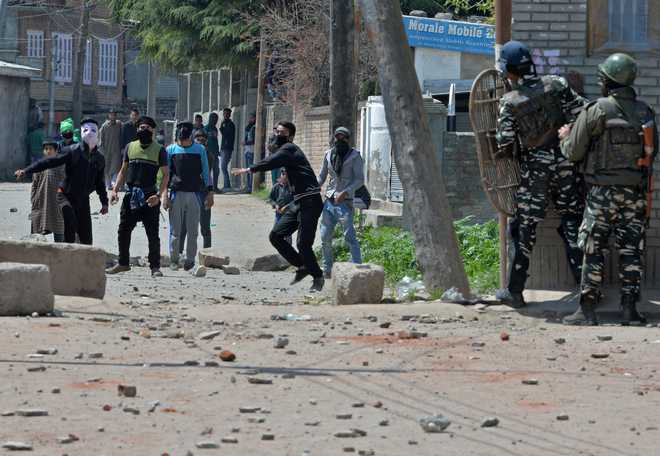
Protesters clash with security forces near a polling station in Srinagar on April 9, 2017. — AFP

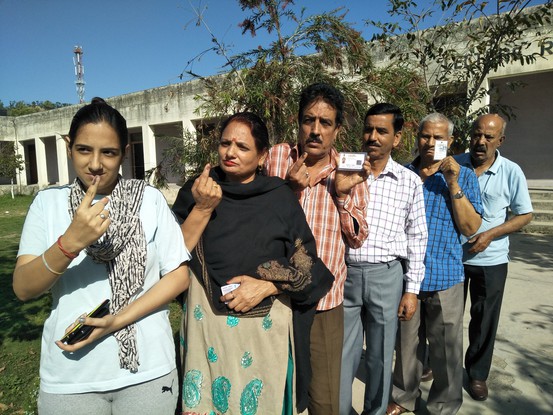
Kashmiri migrants show their inked fingers after casting vote at a polling station on the outskirts of Jammu on Sunday. Tribune photo: Inderjeet Singh

Tribune News Service

Srinagar, April 9

Six youths were killed and several others were injured when security forces opened fire on a stone-pelting mob that stormed a polling station in Budgam district in this Lok Sabha constituency on Sunday, disrupting polling, which saw an abysmally low 5.84 per cent turnout till 3 pm.Hundreds of protesters stormed a polling station at Pakherpora in Chrar-e-Sharief area of Budgam district and ransacked the building, officials said. (Follow The Tribune on Facebook; and Twitter @thetribunechd)Security forces fired several warning rounds to disperse the mob, which did not relent.Those killed were identified as 20-year-old Mohammad Abbas, 15-year-old Faizaan Ahmad Rather, Nissar Ahmed of Beerwa, and Shabir Ahmed of Daulatpora Chandoora, while two more have yet to be identified.

They said the BSF, deployed for security of the polling stations, fired live rounds as they were not provided with pellet guns.

Voting was affected in urban areas as the polling staff and security forces bore the brunt of stone-pelting incidents reported from across the district, comprising two assembly segments. However, polling in rural areas was higher than in Ganderbal town and other urban areas.

Army was called out in aid of the state administration in the Gadura area after a mob rained stones at polling stations and tried to burn down a building where a booth was located, officials said, adding that petrol bombs were hurled at the booth as well as the security forces guarding it.

The area connects the district with Soura area of Srinagar and is often used by militants to infiltrate into the city.

Ironically, a poster of Zakir Moosa, commander of Hizbul Mujahideen, appeared in the vicinity of a police station in the main town of Ganderbal leaving police personnel red-faced.

A visit to the area, located barely 20 km from Srinagar city, showed protesters gathered outside poll booths and staging a sit-in asking voters to refrain from polling.

Opposition National Conference leaders, including its president and candidate, Farooq Abdullah, and his son Omar attacked the Jammu and Kashmir government led by Mehbooba Mufti for having completely failed to ensure smooth conduct of the polls.

Comprising Ganderbal and Kagan assembly seats, the district has been a traditional bastion for National Conference.

In the Chenar area, one Mohammed Ramzan Rather and his wife and other villagers faced the wrath of angry protesters when they were on their way to vote. He was rushed to Kangan district hospital with a bleeding head.

The nearby locality of Wakura wore a deserted look after protesters pelted stones at security forces in the morning. After being on the defensive for over two hours, securitymen fire several rounds of tear gas shells to disperse the protesters.

Fifteen polling booths in Ganderbal and two in Kangan had reported zero votes till 1 pm. There are 209 polling stations in this district, all of which have been declared sensitive or hyper-sensitive.

Ganderbal town recorded 6.95 per cent of polling while the adjacent Kangan area recorded 16.9 per cent of polling by 1 pm.The average percentage of the district was 11.9 per cent.

An unusual incident occurred at Gutlibagh area where a group of 25 people cast their ballot at 9 AM and later resorted to pelting stones at the polling station to prevent others from casting their votes. — With PTI inputs


Don’t shadow me, meet people, Capt tells OSDs

Move aims to clip wings of OSDs who owe allegiance to ‘rival’ factions within his core team that decides access to MLAs, officers, media

Hectic lobbying is on for cabinet berths and posts of chief parliamentary secretaries. Many party leaders are also lobbying for their business interests. It will soon be business as usual in the Congress. A SENIOR MLA

CHANDIGARH: Return to power after 10 years of political exile has its own exigencies, no matter how urgent the need for austerity. So Punjab chief minister Captain Amarinder Singh made a slew of appointments to adjust his key aides as advisers and political secretaries.

The younger lot have been appointed as officers on special duty (OSD) with charge of different districts. Among the five young OSDs appointed so far, the youngest is a 24-year-old law student, Ankit Bansal. The other four are Gurpreet Singh alias Sonu Dhesi, Jagdeep Singh Sidhu, Sandeep Singh Brar and Damanjeet Singh Mohi.

However, all these OSDs were doing for now was hangout at the CM’s camp office at his private residence in Sector 10 of Chandigarh — he has yet to move to his official residence — and be seen around him.

According to sources in the government, in a stern diktat from the CM, the OSDs have been given a list of dos and don’ts. The first is “not to enter the CM residence, until asked”. Second, “not to accompany the CM, until asked”. And the third, “not to seek appointments” with the CM for people. They have been asked to meet people of districts they have been entrusted with and get their problems and applications to the notice of the CM and his officers.

Behind the appointment of OSDs is also a power struggle within “rival” camps in the CM’s core team of advisers and secretaries.

“The OSDs owe their allegiance to one or the other camp close to Amarinder. Each camp tries to control access of CM to people they perceive to be from the rival camp, be it MLAs, officers or the media. Right now, hectic lobbying is on within the camps for cabinet berths and posts of chief parliamentary secretaries for MLAs close to them. Many party leaders are also lobbying for their business interests. It will soon be business as usual in the Congress,” a senior MLA said requesting anonymity.

The letters have gone to the young team of OSDs barring two of Amarinder’s trusted aides –MP Singh, who is CM’s OSDcum-secretary and Sandeep Sandhu, an Amritsar-based businessman who has been made in-charge of camp office at Amritsar.


Russia nod to Kamov JV Copters to be built under ‘make in India’ initiative

Russia nod to Kamov JV

Ajay Banerjee

Tribune News Service

New Delhi, April 5

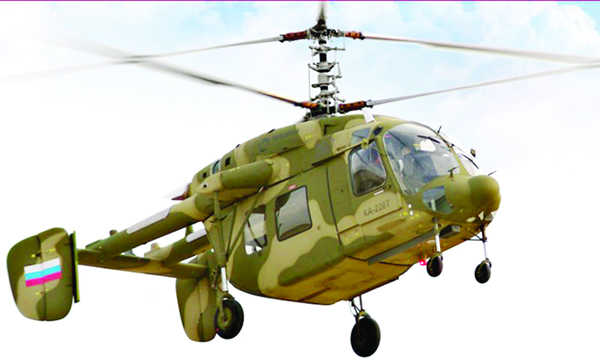
In the first major ‘make in India’ move, Russia has formally agreed to have a joint venture with India for production of the Kamov-226T light-utility helicopter.The two long-standing military allies had been discussing the project since December 2015, but Russia had not approved the joint venture (JV). Top sources in the Ministry of Defence today confirmed that Moscow had conveyed its consent, which was accorded by President Vladimir Putin.New Delhi was not satisfied with the price being asked by the Russian side and it was one of the reasons for holding back the formal JV.The MoD would then ask the new company to submit its technical and commercial proposal within six months, meaning some cost negotiation will be carried out in the future.Kamov-HAL are to produce 200 of the Kamov 226T copters at a cost of nearly US$ 1 billion (Rs 6,500 crore) or Rs 32 crore per copter. Sixty of these copters will come in fly-away condition from Russia, another 40 will be assembled in India and the remaining 100 will be fully built in India.An inter government agreement inked in October 2016, during the Narendra Modi-Putin meeting at Goa, had announced the Kamov deal.The twin-engine Kamov 226-T will replace the single-engine Cheetah/Chetak, usually deployed for surveillance, dropping small loads and for rescue, including of troops posted at forbidding heights such as the Siachen Glacier-Saltoro Ridge region.The three services and the Coast Guard currently have 430 Cheetah/Chetaks. These are based on the 1950s’ designed Alouette Aérospatiale 315B Lama of France.

New firm to be floated

  • India, Russia will now form new company ‘Indo-Russian Helicopters Private Ltd’
  • Russian govt-owned Rostec Corporation will own 49.5 pc stake in the firm
  • Ministry of Defence-owned Hindustan Aeronautics Limited will own the rest 50.5 pc
  • Indian forces need some 800 light utility copters over next decade