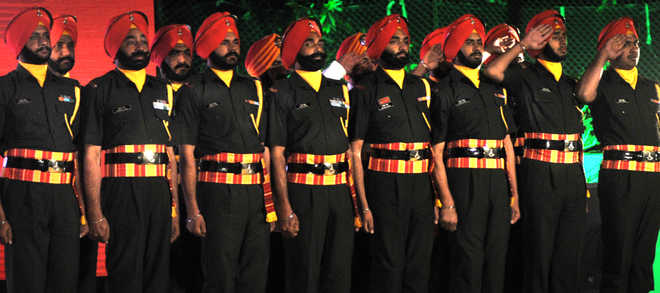
Soldiers of the Sikh Regiment pay tributes to the martyrs of the Saragarhi battle, in Chandigarh. Tribune Photo: S Chandan






NEW DELHI :The Indian Army’s mules could soon be retired with the force working on a proposal to deploy all-terrain vehicles (ATVs) in mountainous areas to ferry weapons and ammunition. It is also exploring the possibility of using drones to support its high-altitude deployments.
The mules of the army’s animal transport units are currently assigned responsibility of supporting some of the most remote outposts.
The animals played a crucial role during the 1999 Kargil war, ferrying stores to posts as high as 19,000 feet.
The suggestion to retire them and use vehicles was made by the Army Design Bureau (ADB).
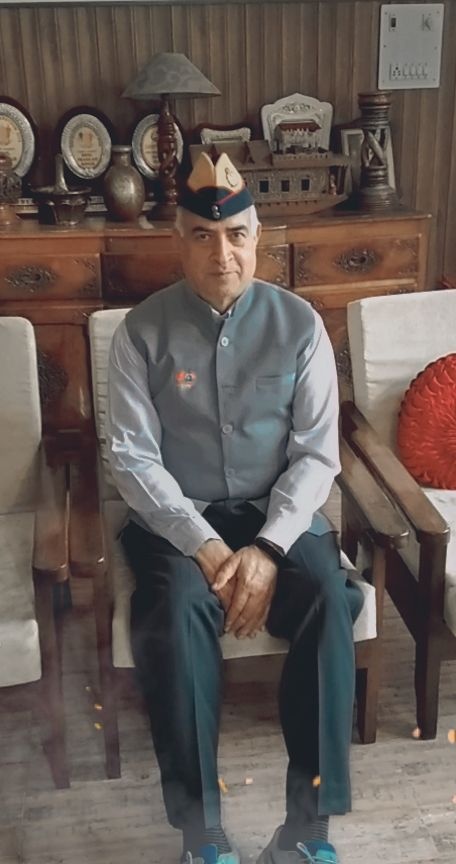
“A mule can carry only 40kg load. The army has to find smarter solutions to transport stores in high altitude,” said Lieutenant General Subrata Saha, who retired as the army’s deputy chief on March 31. The ADB reports to the deputy chief.
In two back-to-back reports, the ADB listed 78 problem areas that need to be addressed for the best protection to soldiers on frontlines and to develop new systems for battlefield superiority.
“At present, the troops operating in rugged areas are required to traverse vast distances on foot, which imposes time penalty and exposes troops to undue fatigue,” said the 119-page report on Future Core Technologies and Problem Statements.
The army has made some improvisations for transport in remote areas, having locally built ropeways and modified load carriers. But the methods have only been partially successful.
On the need to solve the problem on priority, the report said: “During active operations there is a need for small teams to deploy rapidly… Need for air-portable, light-weight, ATVs is felt to speed up the movement of these troops with their stores and equipment.”
Soldiers of the Sikh Regiment pay tributes to the martyrs of the Saragarhi battle, in Chandigarh. Tribune Photo: S Chandan
NRIs join the ‘Green Sriganganagar’ campaign in villages bordering Punjab. Tribune Photo
Chandigarh: Military ambience was all-encompassing at Saturday’s launch of Punjab Chief Minister Capt Amarinder Singh’s book ‘The 36th Sikhs in the Tirah Campaign 1897-98: Saragarhi and the Defence of Samana Forts’. As a mark of respect to 22 soldiers, who fought to the last man against more than 8,000 Afridi tribals, 22 soldiers from the Sikh regiment paraded with six buglers sounded the last post before observing a two-minute silence for the martyrs. For a while, the audience felt like moving back 120 years to the battleground of Saragarhi.
Army man robbed of cash, valuables
Amritsar, April 9
Miscreants looted an Army man who was returning to his duty after leave.The victim, Gurmeet Singh, told the police that he was going towards the local railway station on a rickshaw to rejoin his duty after leave.He said when he reached near Chitra Cinema near the Hall Gate, two youth came on a motorcycle and stopped his rickshaw. They brandished a sharp weapon and demanded all valuables from him.He said when he resisted, one of the accused assaulted him with a knife on his leg while the other miscreant took out a pistol and threatened to shoot him.He said the accused snatched Rs 4,000 in cash, a mobile phone, two ATM cards and other documents from the victim before escaping from the spot. A case under Sections 379-B, 394 and 34, IPC, and 25, 54, 59 Arms Acthas been registered. — TNS

Trump may have achieved for himself the image of a strong and decisive leader at a time when many were questioning his ability to lead the US and the world.
However, he has also opened up risk far greater than currently meets the eye.
To be seen as an effective leader, he has to go beyond just the muscular response.
A single decision leading to a major military offensive can have serious implications especially when it involves a superpower and a former one in an already tenuous environment. There can be an escalatory effect and the implications can be felt well outside the military domain. That is how the US Tomahawk (cruise missile) strike against Syria has to be viewed. Importantly, we are only looking at the initial symptoms of the decision. Probably much more will follow.
US President Donald Trump, off late under increasing pressure of falling approval ratings and criticism from his own Republican Party took a decisive step to launch 59 Tomahawk cruise missiles against the Syrian airfield Al Shayrat from where purportedly the Syrian government forces of President Bashar Al Assad launched aerial chemical attacks on civilians leading to 80 civilian deaths, including children. Assad’s alleged target for the chemical attack was the province of Idlib, where a number of displaced people from rebel-held areas are herded; a loose rebel and Al Qaeda control exists in the area where almost 3.5 million people still live. The post strike damage assessment for the physical damage caused to the infrastructure of the airfield is unimportant. The more important part is the damage effect on the situation and the highly sensitive strategic environment of Syria especially with the presence of Russian military forces in the area and the multiple interest groups.
Trump’s decision reversed quite decisively his predecessor Barack Obama’s policy of non-intervention in the Syrian conflict. Personally for him, it met immediate approval from some of his detractors such as Senator John McCain. However, none of the events explains the rationale and logic employed.
Looking at the Syrian side, Assad has used chemical weapons in the past but the attempts in 2014-15 drew little international response and this probably emboldened him. Then, the Islamic State (Daesh) was at its peak and engagement against it was perhaps more prudent than getting after Assad; the Russians had just started operations in Syria and their role was yet being ascertained, while Obama was nearing the end of his presidency.
The question begging answer now should be: why there is a need for Assad to take the extreme step of employing chemical weapons at this stage, at a time when things seemed to be going his way? He had definitely not won the war but the military situation was in the favour of the Russian-Syrian-Iranian combine. In the US, there were indicators that President Trump was willing to allow the re-legitimisation of the Assad regime and diplomatic efforts were afoot towards this. Billions in US dollars aid was being discussed in Brussels without insisting on any political transition. The refugee crisis in Europe was in mind while seeking ways to restore some order in Syria. So, why this strategic hara-kiri by Assad when he was surely aware of these steps afoot? Assad has denied the involvement of his forces in the chemical attacks so who then was responsible? Complete lack of clarity exists on that with no evidence at all to point fingers at Iran or Russia, both being partners of Assad. The finger was also being pointed towards rogue elements of the Syrian Army who are out of sync with the larger diplomatic process that is underway now.
On the US side, what was achieved with the decision to launch 59 Tomahawk missiles? From a military angle, it hardly had any tactical effect; wasn’t aimed at chemical weapon storage facilities for obvious reasons; the choice of the airfield from where the strikes were launched was perhaps with a focused but symbolic intent. The aim in such circumstances when one-off military action is launched is invariably politico-strategic. It is not regime change, nor diluting Assad’s military capability. It is more about a message to Assad that in spite of Russian presence the US retains the capability and will to launch military strikes in an area of its interest. A follow up action is unlikely which signifies that the objective here is the message regarding use of chemical weapons. The intent is to put an end to it. It is equally a strategic messaging to Russia that the Trump administration has the will to robustly defend its interests even at the risk of escalation. Trump’s personal image will take an upswing, at least temporarily until more analyses reveal some other murky picture; that goes for the image of his advisers too.
Has Trump been wise in his decision? There are two angles to this. First is his personal image and that of his advisers. Second is the strategic effect of the strike. Here was a situation which could fetch tremendous dividend in terms of restoration of US confidence after a period of some uncertainty and self-doubt. Trump was probably advised that retrieval of US military prestige, particularly in the eyes of its allies, could be done with little risk and the same would contribute to his personal image of a decisive chief executive, both for the external and the internal constituency. However, that will be true if the objectives remain just there and no ‘vague maximalism’ (term courtesy Foreign Affairs magazine) without clarity enters the matrix of future options, which most certainly would be drawn up. It was probably calculated that the Russian connection, in public perception, being Trump’s negative point. A military strike which would needle the Russian leadership would probably retrieve the situation with the home constituency.
An effect which is likely to be immediate is the stoppage of the process of re-legitimisation of Assad, something which would have had a decisive effect on the Syrian crisis. It is regime change once again that the US and its allies are going to seek after a brief hiatus. The ceasefire is going to be a major problem here onwards. Russia seems to have painted itself into a corner with accusations of being complicit in the chemical weapon attacks. Its intended deployment of a robust anti-aircraft defence to defend the Syrian airspace is not the answer in these circumstances. It should be seeking ways of how to respond diplomatically. The event also puts Iran under pressure in the face of an emboldening US where the new administration has already threatened the scrapping of the 15 July 2015 nuclear deal.
The ones with the last laugh will quite obviously be the IS, who suddenly appears like they are the ‘good guys’. Anything to divert attention is good for Daesh. In a three-way conflict in the Levant weakening of one of the other two has a commensurate effect on the fortunes of the third. Hopefully, the battles underway to vanquish and displace Daesh will not witness any change in the focus and weight of attention and resources.
Trump may have achieved for himself the image of a strong and decisive leader at a time when many were questioning his ability to lead the US and the world. However, he has also opened up risk far greater than currently meets the eye. To be seen as an effective leader, he has to go beyond just the muscular response. Perhaps he could have initiated the setting up of a United Nations investigation team, in the light of denials about chemical weapon capability of the Syrian state, also being certified by the Russians. Russia has put on hold all military cooperation with the US including local agreements in the battle zone of West Asia.
The complexities of West Asia dictate that he who can think through situations with vision and forethought will stand to benefit. In the current context, that notion seems far from any considerations of the US President and his team of advisers.

Tribune News Service
Jalandhar, April 8
The move by the new government to set up Guardians of Governance in less than a month after Capt Amarinder Singh came to power in Punjab has enthused ex-servicemen of the city, who feel that the commitment made to them at a pre-election rally here has been honoured rather quickly.As Chief Minister Capt Amarinder Singh has entrusted the job to his adviser Lieut-Gen TS Shergill (retd), not just the JCOs and jawans but even the high-rank Army officials have shown their willingness to be part of the programme. The city has more than 15,000 ex-servicemen, primarily concentrated not just in villages of the Jalandhar Cantonment area but also in city localities, including Deep Nagar, Defence Colony, Urban Estate, Ladhewali and Punjab Avenue.Former Deputy Director Sainik Welfare Lieut Col Manmohan Singh said, “I have been called by Lieut-Gen Shergill for a meeting next week. I think he wants to discuss the modalities of the programme with me, including the framework and the training part. I will be more clear on it whenever I meet him next.”He added, “There are about 31 officers of the rank of Major and above in Jalandhar, including six Lieutenant Generals, 17 Major Generals, 30 Brigadiers and about 150 Colonels and Lieutenant Colonels. As I worked earlier on Re 1 per month salary to impart training to the youth for entry into the armed forces, I and many other officers who are already drawing a good pension are ready to help the government make the system transparent and corruption-free. All that the members need to be given is ID cards, certain parameters and some training.”Another prominent ex-serviceman closely associated with Congress, Col Balbir Singh, opined, “There are about 12,730 villages of Punjab where Capt Amarinder Singh wants to have one ex-serviceman to take care of the implementation of his schemes. There will be some where there are more than 50 ex-servicemen and, thus, selection criteria will be required. There might as well be other villages where there are no volunteers. So, ex-servicemen from neighbouring villages will look after a cluster of villages in such a case. We do not know how many of them the CM will want to take initially. There will be some at village, block and district levels. We have already started working on it and are preparing a list of volunteers to be handed over to the CM. We will prefer ex-servicemen from lower ranks, rather than those from the officers’ ranks.” Jalandhar Cantonment MLA Pargat Singh, too, has said that the move has spread goodwill among the ex-servicemen of the area.“There are many employable ex-servicemen who will volunteer to work under the project largely concentrated in Dhina, Sansarpur, Mithapur, Nangal Karan Khan and other villages of my constituency. Being a disciplined force and having remained stickler for work, they will do monitoring of ongoing projects of villages rather quite well,” he said.
China is like the proverbial cat on the hot tin roof as far as the Dalai Lama’s visit to Arunachal Pradesh is concerned. China has accused India of obstinacy that has caused “serious damage” to bilateral ties after the Dalai Lama began visiting the “disputed” parts of Arunachal Pradesh. India’s outwardly resolute stand should gladden the cockles of nationalists, especially in light of the RSS top brass calling for an overhaul of India’s China policy because Beijing has not reciprocated India’s friendly overtures. In addition to maintaining that the Dalai Lama is a religious leader and enjoys freedom of movement in any part of the country, the nationalists argue, not without reason, that there was no adverse fallout when the Dalai Lama had last visited Arunachal Pradesh in 2009. But 2017 is not 2009 in many respects: the number of high-level Sino-Indian summits that could reduce tensions is fewer, serious differences exist on the China-Pakistan Economic Corridor (CPEC), India was rebuffed when it contrived to send the Dalai Lama to Mongolia and China is more upfront in thwarting India’s great power ambitions. India had earlier bought insurance against Beijing’s adventurism by getting co-opted in Barack Obama’s “Pivot to Asia”. But Donald Trump is yet to spell out his China policy and his meeting with Xi Jinping months before an interaction with Prime Minister Narendra Modi could be a sign of things to come.Indian diplomacy does not have a fallback option if China accepts New Delhi’s gauntlet. The multiple power centres have blunted the creativity in implementing foreign policy. Indian diplomacy is in a freeze because of the PM’s accent on an unremittingly muscular foreign policy. South Block is trying to keep China in good humour by highlighting the potential for economic partnerships. But this strategy comes up short because India opposes CPEC, the crown jewel in Beijing’s Belt and Road initiative. Diplomacy must help creatively wriggle out of strategic immobilisation. Some forthcoming regional summits will see China and India sitting across the table. Both sides must grab the chances for partnership in other areas to ensure that security disputes remain within manageable proportions.

FOR PUNJAB NEWS
CLICK AT THE SCROLLING NEWS HEADING FOR DETAILS AT RIGHT COLUMN TOP::WHATS NEW
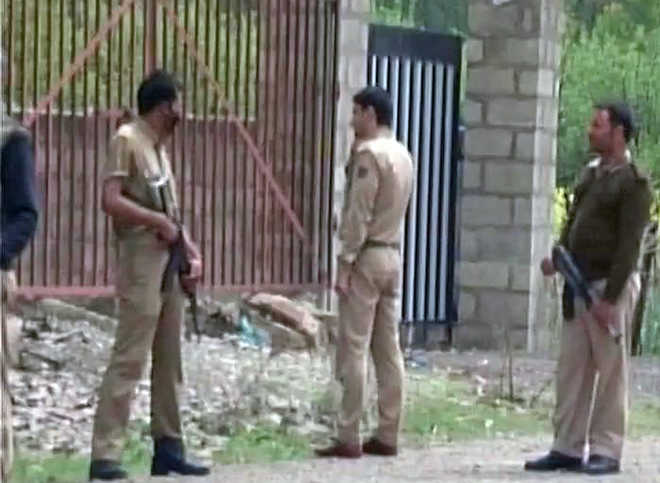
The site of the militant attack in Pulwama. ANI photo
Majid Jahangir
Tribune News Service
Srinagar, April 24
Ruling Peoples Democratic Party (PDP) leader Abdul Ghani Dar was shot dead in a militant attack in Pulwama in south Kashmir on Monday.Police said PDP district president, Pulwama, Dar was fired upon by militants at Pinglina on the outskirts of Pulwama town.
(Follow The Tribune on Facebook; and Twitter @thetribunechd)
“His vehicle was intercepted by militants at Pinglina and he was fired upon. The injured Dar was shifted to a Srinagar hospital where he succumbed to his injuries,” they said.The attack on the PDP leader came on a day when Jammu and Kashmir Chief Minister Mehbooba Mufti held a meeting with Prime Minister Narendra Modi in New Delhi and discussed the prevailing situation in the state.
Prime Minister Narendra Modi with Jammu and Kashmir Chief Minister Mehbooba Mufti. —PIB
New Delhi, April 24Jammu and Kashmir Chief Minister Mehbooba Mufti on Monday said the Prime Minister appeared amenable to holding talks with stakeholders in a bid to arrest the deteriorating situation in the Valley.However, she cautioned that “an atmosphere needs to be created” for a dialogue.“Talks cannot happen amid stone-pelting and firing of bullets,” she told reporters after a 20-minute meeting with Prime Minister Narendra Modi at his residence.
(Follow The Tribune on Facebook; and Twitter @thetribunechd)
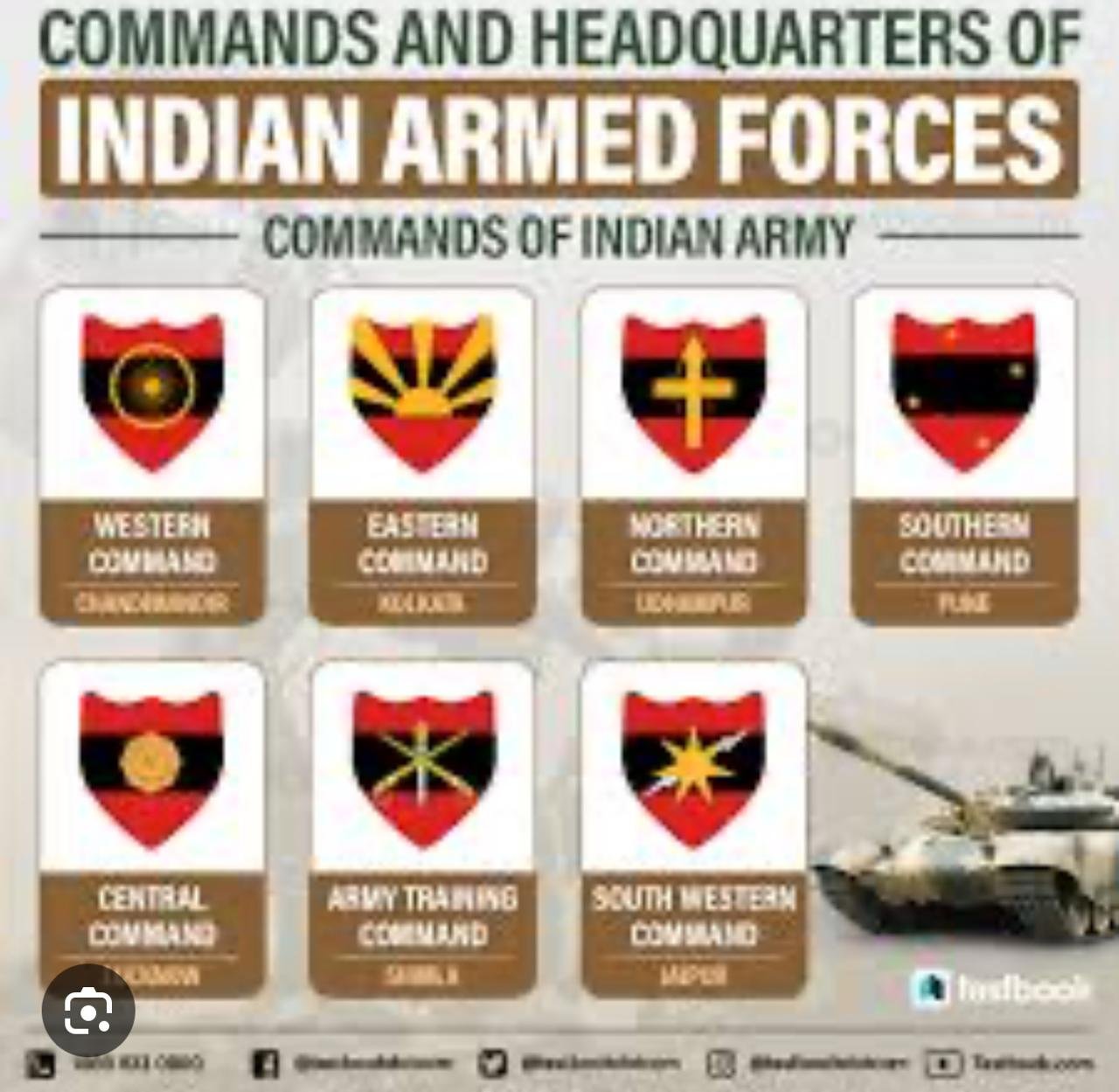
At the meeting, she invoked former Prime Minister Atal Bihari Vajpayee’s policy on Kashmir, saying the thread should be picked up from where he had left it–an apparent suggestion for talks with separatists.“The Prime Minister has an intention of holding talks after the situation becomes normal,” Mehbooba told reporters.Kashmir is in the grip of increased violence since the April 9 bypoll for the Srinagar Lok Sabha constituency. The security forces are under intense pressure as they are faced with almost daily protests and stone-pelting.The army and the CRPF have received some praise for showing restraint under provocation, and also come under criticism, especially after a video showed a civilian tied to a jeep as a human shield as it drove through the streets to avoid being attacked.“Talks are the only option,” Mehbooba said. “How long can you have a confrontation?”“Talks with Hurriyat (Conference) had taken place when Vajpayee ji was the Prime Minister and LK Advani ji was the Deputy Prime Minister. We need to start from where Vajpayee ji left. Talks are the only way out,” she said.Referring to the increase in stone-pelting incidents in the Valley, she said there were some young people who were “disillusioned” while some were being “instigated”, often through the use of social media sites such as Facebook and WhatsApp.Rising tensions between the coalition partners, the PDP and the BJP, over the handling of the security situation in Kashmir also came up at the meeting.The coalition also came under strain when the PDP lost a seat in the recently held MLC polls when an independent MLA voted in favour of BJP candidate Vikram Randhawa, leading to his victory.“Whatever happened should not have taken place. But this is an internal matter and we will resolve it with the BJP,” she said.She also raised the Indus water treaty issue, saying it was causing a huge loss of Rs 20,000 crore to the state.Mehbooba said the Prime Minister assured her that efforts would be made to see how the state would be compensated for this.The Jammu and Kashmir Chief Minister said the situation in Kashmir would be discussed in a meeting of the Unified Command on Tuesday.The GOC-in-C Northern Command, GOC 16 Corps, GOC 15 Corps, DGP J&K, IG BSF, IG CRPF, senior officers of the IB and RAW and Deputy Chief Minister Nirmal Singh will also participate in the meeting in Srinagar. PTI
Tribune News Service
Chandigarh, April 21
A month after Capt Amarinder Singh took oath as Chief Minister, the Ex-Servicemen Cell — promised by him to redress issues concerning defence veterans — has become functional.
The cell, part of the Chief Minister’s Office, will be headed by Capt Amarinder.
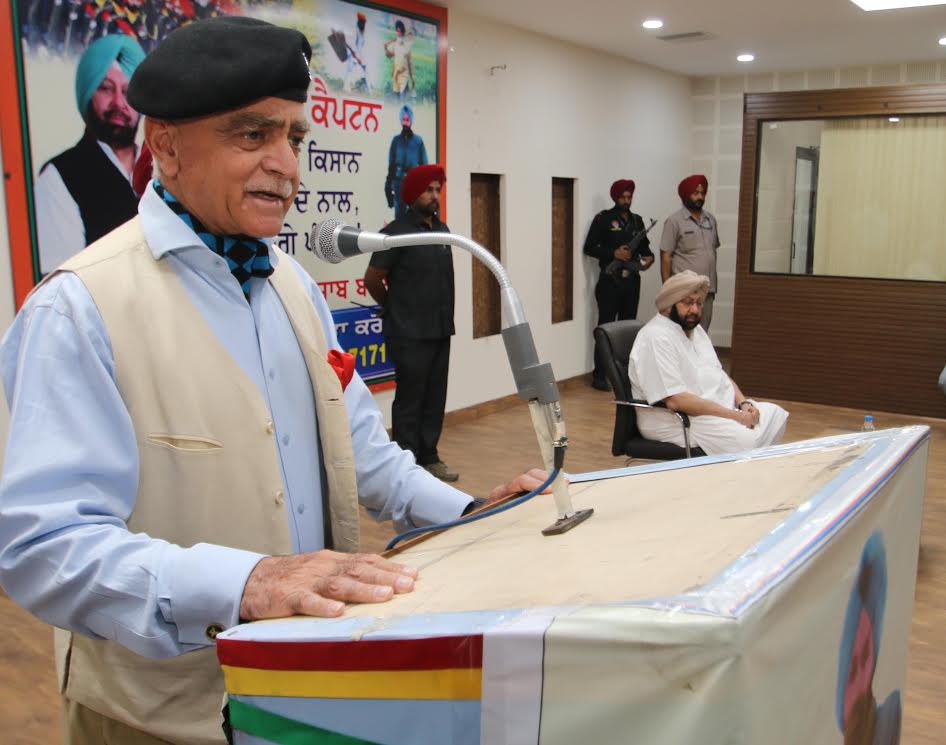
His senior adviser Lt Gen TS Shergil (retd) is the cell’s senior vice-chairman and Maj Gen SPS Grewal is the vice-chairman.“The notification for the cell was issued yesterday and it is mandated to look into all government schemes concerning ex-servicemen,” Gurkirat Kirpal Singh, Secretary Defence Services Welfare (SDSW), Punjab said. “The cell’s scope may be widened in time to cover other aspects listed in the party’s election manifesto.” Other members include Director, Defence Services Welfare; Director, Punjab Ex-Servicemen Corporation; Director, Centre for Training and Employment of Punjab Youth; and Director, Mahatma Gandhi Institute of Public Administration (MGIPA), Chandigarh. The SDSW will be the member-secretary.The cell will also supervise the implementation of the Guardians of Governance (GoG) scheme that envisions deploying ex-servicemen to oversee the implementation of government schemes and to keep a watch on the working of officials at the grassroots level.In the coming weeks, MGIPA will train about 12,000 ex-servicemen who are to be enrolled for the GoG. Each veteran enrolled under the scheme: who should not be a member of any political party, should not be engaged in any full-time employment, have a clean record, be physically fit to move around and able to operate a smart phone will be required to undergo a five-day training programme that would be held at the district level. “We expect the GoG to be functional by July 1, by which time we would have recruited and trained the people involved,” Gurkirat said.