Sanjha Morcha

Back to the Valley by G Parthasarathy

Back to the Valley
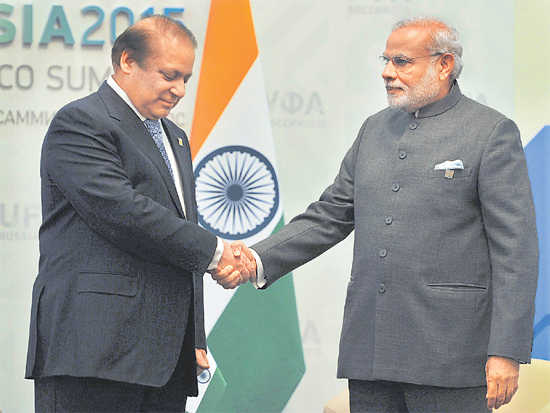
Mean business: India should insist on the agreement reached at the Ufa Summit.

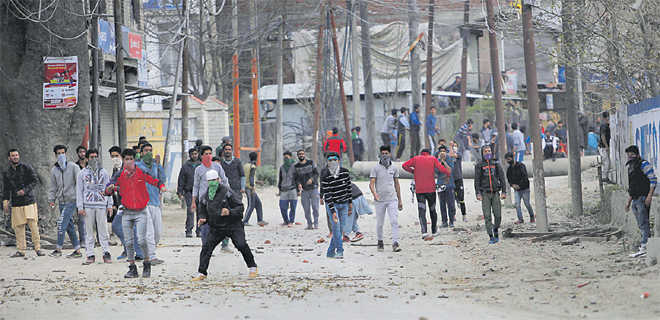
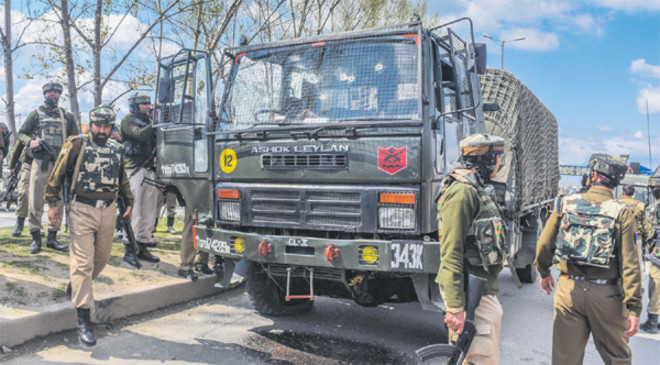
THE year 2016 was tumultuous in the Kashmir valley. The gunning down of Burhan Wani, a terrorist who built his image by imaginative use of social media, was accompanied by an unprecedented, but imaginatively crafted agitation, using stone-pelting youths to confront the security forces. The winter snows restricted such enthusiastic and carefully financed and planned pelting. The planners, sitting in comfortable surroundings in the PoK and Pakistan, did, however, achieve their objective of getting wide media publicity, even if it involved disrupting and sacrificing the lives of young Kashmiris. Not surprisingly, the Hurriyat Conference, receiving instructions from ISI handlers, did its bit in inflaming public sentiment.With the Himalayan snow set to melt in the coming weeks, India will have to prepare for yet another summer of disruption and stone-throwing. The ISI will ensure that those Kashmiri youngsters, who crossed the LoC, will be joined by new jihadis from the LeT and JeM to serve as cannon fodder for fulfilling ISI ambitions. Enough funds will be provided to get unemployed youth to resort to  pelting and getting killed or injured in the return fire by the security forces. Social media will be used for incendiary messaging, crafted to stoke passions. In the meantime, a propaganda blitz will be launched by Pakistan calling on the world to intervene and compel India to resume the sterile ‘composite dialogue process’. Why does Pakistan place so much emphasis on this so-called ‘composite dialogue process’? The answer lies in the fact that this dialogue process, initiated in 1997, was the outcome of one of the worst blunders in Indian diplomacy, matched only by our diplomatic ineptitude during the Sharm-el-Sheikh fiasco. In this process, primary importance is given to what Pakistan wishes to discuss, including J&K, Siachen, Sir Creek, and hydel/ river water projects in J&K, which Pakistan likes to block. Shockingly, ‘terrorism’ features only towards the very bottom of this list. Terrorism was rendered even more marginal by coupling it with ‘drug smuggling’. This is a format that suited Pakistan as it could unleash terrorism across India and then insist that terrorism could be discussed peripherally, alongside issues like cultural ties and visas!The strike by our Special Forces on terrorist staging areas across the LoC on September 29 had more than mere symbolic importance. It signalled a readiness by India to strike across the established borders, if and when needed, at a time and manner of its choosing. The likes of Hafiz Saeed and Dawood Ibrahim should not ever be allowed to feel secure from such Indian retribution. To achieve this, the entire ‘composite dialogue process’ should be discarded. There is no need for a ‘structured’ dialogue process with Pakistan. We merely need to convey our readiness to discuss all issues when the time is appropriate.To start with, India should insist that in accordance with the agreement reached between Prime Ministers Modi and Nawaz Sharif at the Ufa Summit, the DGMOs of both countries should discuss specific measures to seal the borders and end infiltration and terrorism. The levels of such meetings could be raised to meetings between the Indian Army’s Vice-Chief and Pakistan’s Chief of General Staff. There could even be meetings between the two army chiefs. While one cannot expect significant change in the strategic aims of the Pakistan army, its present army chief, Gen Qamar Javed Bajwa, does not appear to be afflicted by megalomania, like his predecessor.The entire dialogue should be exclusively security-oriented and also involve meetings between chiefs of the BSF and Pakistan Rangers. Meetings could be considered between the chiefs of R&AW and the ISI. Meetings between foreign secretaries, and at political level, should commence only if our concerns on terrorism are seen as being addressed in an irreversible manner. India should continue to back moves by Bangladesh and Afghanistan to keep SAARC in coldstorage, while promoting links with our eastern neighbours through forums like BBIN and BIMSTEC.Given its domestic situation, Pakistan does not appear able to deliver meaningfully on issues of terrorism. Sharif is under siege domestically, because of a Supreme Court inquiry into his properties and wealth abroad. Pakistan is being torn apart by sectarian Shia-Sunni and Wahhabi-Sufi rivalries and violence. The army is now deployed virtually across the country, fighting insurgencies in Balochistan and the Pashtun tribal areas bordering Afghanistan. Islamabad is being repaid in kind by the Afghans across the disputed Durand Line, both in Balochistan and the Pashtun tribal areas. Sectarian violence has reached Punjab and Sindh. India needs to ensure that it extends unstinted moral, material and diplomatic support to Afghan efforts to deal with ISI-sponsored terrorism.While the security and diplomatic efforts to deal with terrorism continue, New Delhi will also have to consider measures internally to signal that it means business in dealing with those encouraging, supporting and inciting youths to take to stone pelting.  South Block has for too long looked rather benignly on the Hurriyat Conference and its role in inciting and supporting violence. There is evidence against many Hurriyat leaders of money laundering and other charges. People like Syed Ali Shah Geelani, who take the lead in inciting violence, based on instructions from across the LoC, need to be charged, moved out of the Valley and tried. Even Mirwaiz Umar Farooq, who is said to receive benign treatment, is given to inciting crowds regularly, especially after prayers he leads. Those inciting and distributing money to youngsters should be immediately put behind bars.The state government and its police, including the Special Operations Group, should be activated to take the lead in restoring normalcy, with the Army’s backing. Terrorists have been emboldened to threaten the lives of family members of police officials. The Punjab Police reacted very strongly when their families were similarly threatened. There is no reason why the J&K Police cannot be similarly motivated. Moreover, far more proactive measures are needed to curtail and even disable facilities for the use of social media in the Valley. Most importantly, the ruling coalition partners should set aside differences, with the Mehbooba Mufti-led government taking the lead in ensuring that the education of children is not held hostage to the diktats of separatist leaders and their patrons across the LoC.
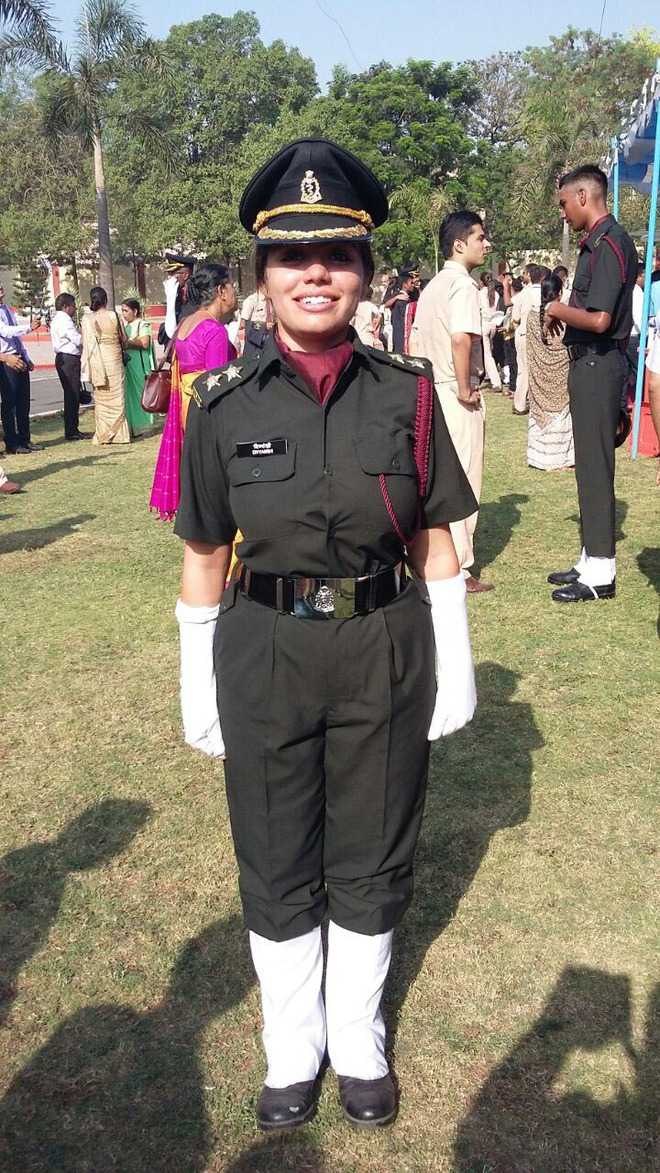
Palampur girl joins Army as doctor

Palampur girl joins Army as doctor

Tribune News Service

Dharamsala, April 1

Divyanshi (in pic) of Palampur has been commissioned as a medical officer in the Army.She is the first girl from the region to join as a medical officer in the Army.Her first posting will be at the Command Hospital, Northern Command, Udhampur.Her father Pradeep Kumar Sharma said Divyanshi won many prizes, both in academics and extra-curricular activities, during her college days. She had also won a title for exceptional dance performance.


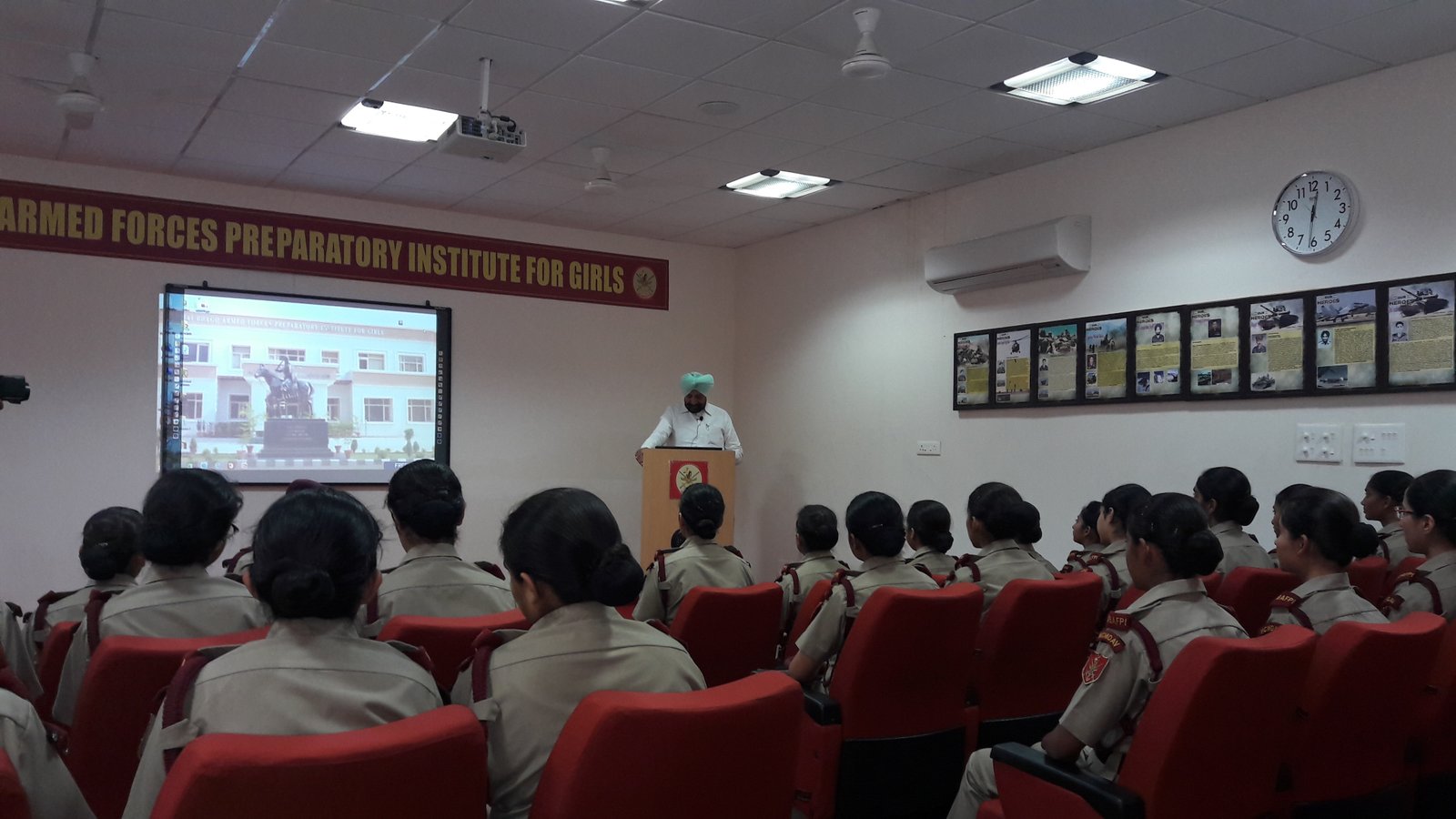
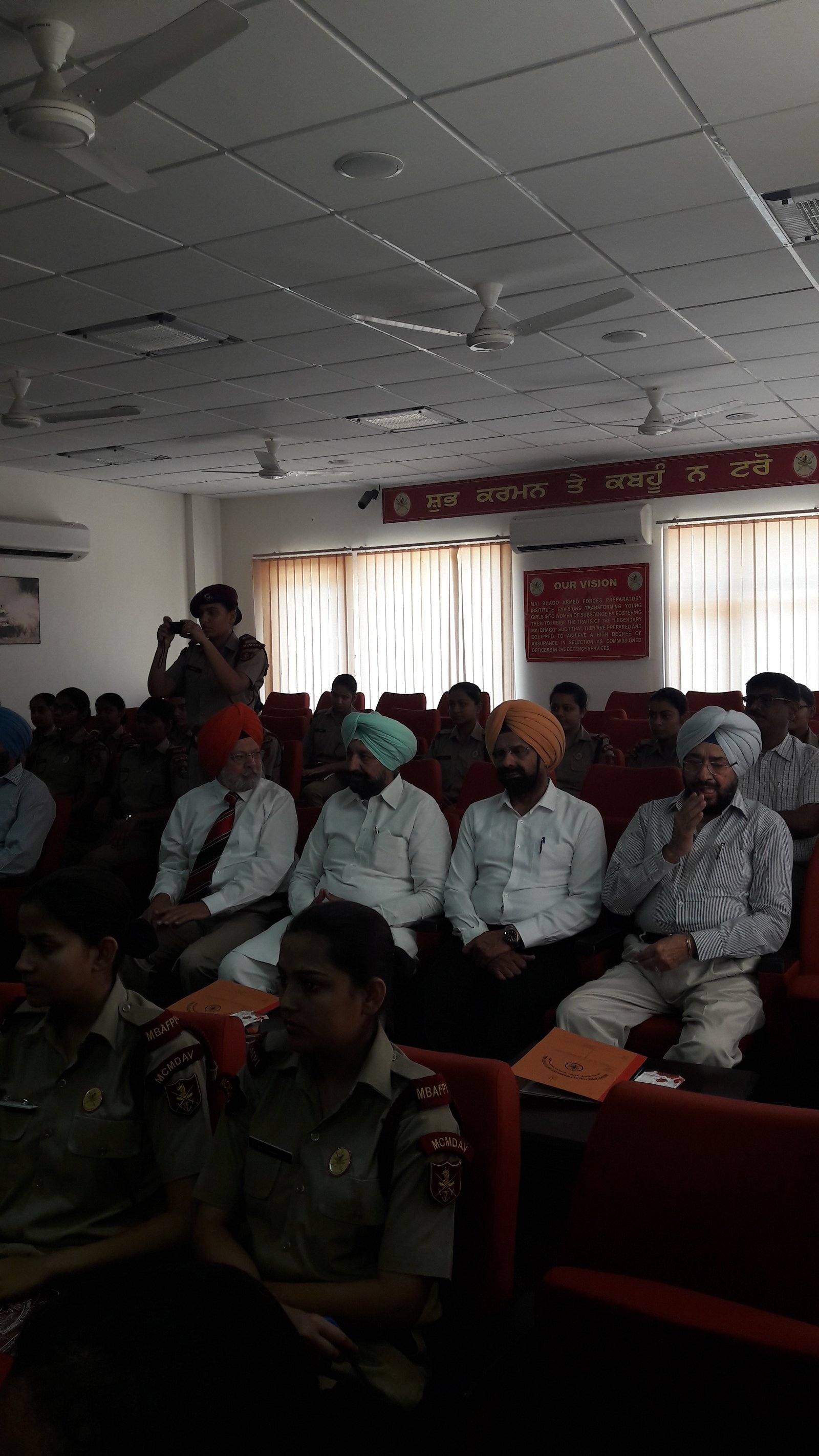
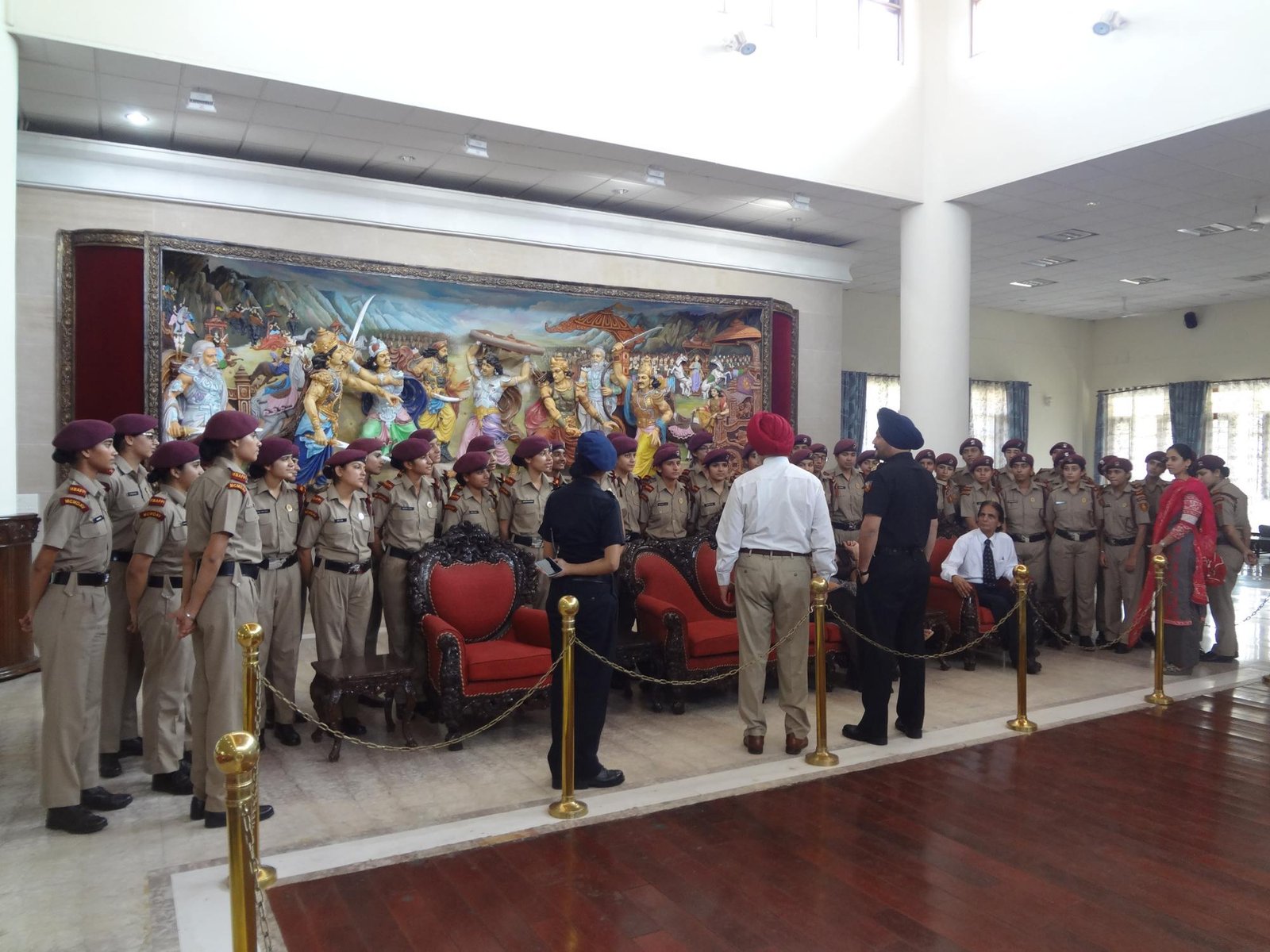
MLA BALBIR SINGH SIDHU OF MOHALI VISITS MAI BHAGO ARMED FORCES PREPARATORY INSTITUTE FOR GIRLS

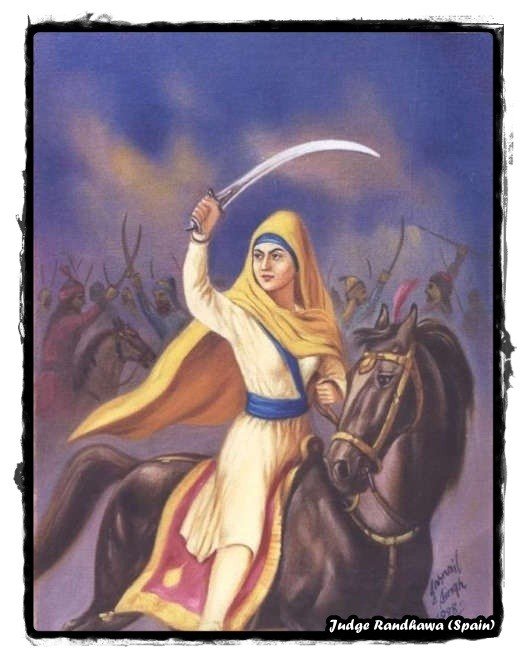
Brief Jeevani of Mata Bhag Kaur (Mai Bhago)

214319

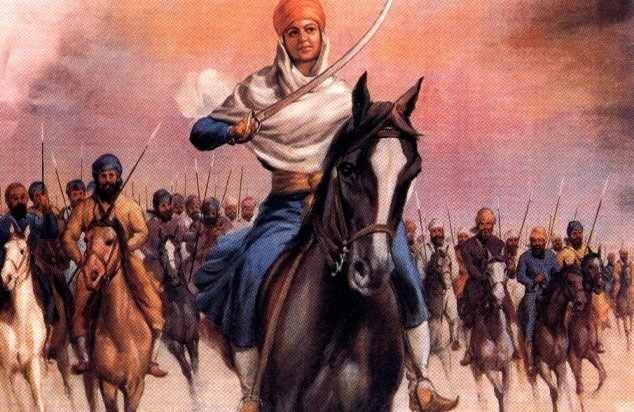
Mai Bhago also known as Mata Bhag Kaur was a Sikh woman who led 40 Sikh soldiers against the Mughals in 1705.
She killed several enemy soldiers on the battlefield, and led a life of true Sant Sipahi in every aspect. She was the sole survivor of the battle of Khidrana, i.e. Battle of Muktsar fought on 29 December 1705)

 In her childhood, Mai Bhag Kaur was called Bhag Bhari, which means “fortunate”. On being baptized, she was named Bhag Kaur. In the Sikh history, she is known as Mai Bhago.
She was born in a well known village, Jhabal, near Amritsar in year 1666.
She was the daughter of Malo Shah, son of Bhai Pare Shah. Her grandfather and Pare Shah’s brother, Bhai Langaha, had served under Guru Arjan Dev and Guru Hargobind.
Bhai Langaha had helped Guru Arjan Dev in the construction of Harmander Sahib and was one of the five Sikhs who accompanied Guru Arjan Dev when he went to Lahore for martyrdom.

The young Saint-Soldier

She visited Anandpur with her father in 1699 when Guru Gobind Singh created the Khalsa and was baptized along with other members of her family
She had inherited from her family ideals of bravery and courage.
Faith, truth, and fearlessness were her ornaments.
She had a well built body and started learning the art of warfare and horse riding from her father. She came to know that some Sikhs of her area had deserted Guru Gobind Singh at Anandpur Sahib and renounced his guruship in writing (Bedava).
The governor of Sirhind was planning a big attack on Guru Gobind Singh at village Dina where he was staying after the Battle of Chamkaur.
She could not hold herself, and in zeal to serve the Guru, she, the great heroine, said to her husband, “let us lay down our lives for the Guru who has sacrificed his father, mother and four sons for the Sikh faith. We must not sit idle when innocent lives are being bricked alive.”

391425_10200157311275388_877818085_n
She motivated the ladies of the area to challenge those deserters. These ladies dressed themselves as soldiers and wanted to proceed with Mai Bhago.
She said to the deserters, “Guru Ji has sacrificed his family and comforts for our freedom. We should not hide ourselves like cowards. Everybody has to die. Why not die like a brave person? If you don’t join me, I shall take a party of women and die for the Guru.” They got armed and they took the oath to die fighting and not to retreat from the battlefield. All of them marched to help the Guru and seek his forgiveness, under the leadership of Mai Bhago Ji.They were also informed that the Mughal forces, under the command of the governor of Sirhand, were proceeding towards the Guru.

In 1704 the city of Anandpur Sahib, the residence of Guru Gobind Singh Ji was under extended siege by the combined forces of the Mughal army and Hill chiefs. The siege took its toll and the meager provisions were completely exhausted, with the Sikhs having to live on leaves and bark from the trees.
Within the Sikh ranks there was a group of Jats of the Majha region, they had had enough and they made up their mind that they wanted to escape and leave Anandpur Sahib. After much deliberation they made their way to the Guru, and their leader Maha Singh told him of their desire to leave. Guru Gobind Singh Ji understood their situation but asked them to stay and fight, but all his persuasive arguments fell on deaf ears, they were resolute, they wanted to leave.

With no alternative Guru Gobind Singh Ji with a heavy heart asked them that if they truly wished to leave then they must write a disclaimer and have it signed by all the deserters claiming that they no longer belonged to the Guru, and the Guru no longer belonged to them. Obviously we can never understand the hardship the Sikhs had to endure and the desperate situation the Sikhs were in but even so, when we think of the great sacrifices made by Sikhs like Bhai Mani Singh, Bhai Taru Singh, Bhai Mati Das, Bhai Sati Das and Bundha Singh to name but a few it is hard to understand what possessed the Majha Sikhs to put pen to paper and write a disclaimer that “Guru Gobind Singh Ji, we are no longer your Sikhs and you are no longer our Guru,” it must go down as a most shameful episode in Sikh history.

The deserters were from the Majha region and one of the villages in this area was called Jhabal, and in the village lived a woman named Mai Bhago. She was known for her faith and courage and when she saw the 40 Sikhs approaching in the distance she went out to meet them. She asked news about Guru Gobind Singh Ji, and when she heard their sorry tale her blood boiled. She could not contain herself, she charged them with cowardice and a lack of faith in their Guru. She felt, as did the other women folk of the area that they had brought shame on their region. Mai Bhago was determined to wipe this stain of infamy of the Majha sikhs. She told all the women folk not to be hospitable to the Sikhs, she shamed and censured the Singh’s for their cowardice.

Mai Bhago donned on men’s clothing and told them that either they stay behind and look after the children or they try to make amends and return with her to the Guru. Ashamed by their act of desertion they vowed to put things right and mounted their horses and set off towards Frozepur.

Knowing that the enemy Wazir Khan was advancing to attack the Guru, Mai Bhago’s group took up positions near a place called Khidrana. As the enemy forces came close the Sikhs pounced on them, a fierce battle ensued; although heavily out numbered the Sikhs attacked with ferocity and many were killed on both sides. The dust raised by the battle alerted Guru Sahib Ji who by this time had vacated Anandpur Sahib, he joined his Sikhs on a sandy hill (tibbi) and shot arrows on the enemy. As the battle raged Guru Sahib Ji mounted his horse and led his contingent from the west. The enemy could not stand a sudden attack on its left flank and after sustaining heavy loses withdrew leaving the dead and dying on the battlefield.

Guru Gobind Singh Ji dismounted from his horse and surveyed the scene. He saw one of his Sikhs lying wounded and recognised him as Maha Singh, the leader of the 40 deserters. Guru Ji sat beside him and put his head on his lap and wiped away the blood and tears from his eyes, just as a father would a son. Guru Ji was greatly impressed and pleased by his Sikhs. “Ask whatever you will, the house of Guru Nanak is open to you” spoke Guru Ji but Maha Singh only had one thing on his mind, the letter of desertion. “O Lord of all the heavens, if you are in mercy then please forgive me and my companions for our betrayal, and all that I pray for now is that you tear up the letter we handed to you.” The all knowing Guru had kept the letter on his person knowing full well that it would be needed, Guru Ji took it out and tore it in front of Maha Singh.

“You have redeemed yourself here and in the hereafter.” The forty deserters who lay dead in the battlefield were blessed by Guru Sahib Ji as the chali mukhtay –the forty liberated ones. A grand gurdwara now stands at the site of the battle, known as GurdwaraTibbi Sahib, Mukhtsar.

Mai Bhago in the meantime was also laying in the battlefield wounded. Guru Ji blessed her for her courage and fortitude in leading the Sikhs into battle and regaining their honour. In time Mai Bhago recovered from her wounds and remained in the Guru’s presence after the battle. Mai Bhago followed Guru Sahib Ji to Nanded. In 1708 when Guru Ji ascended the heavens Mata Ji settled at Bidhar about 200 km from Nanded where she lived to a ripe old age. Mata Bhago Ji is held in the utmost high regard by Sikhs and considered a saint. Her spear and musket that she used in the battle at Mukhatsar is still preserved at Takhat Sri Hazur Sahib, Nanded.

Gurdwara Tibbi Sahib is associated with the Tenth Guru, Guru Gobind Singh Ji. This place is situated in high sandy mound (tibbi means a small hillock). Guru Sahib chose this place to stay on reaching Muktsar as it provided a very good view of the area. When the battle between the Forty Muktas and the Mughals was in progress, Guru Ji helped his sikhs by shooting arrows at the Mughals from this place. The birthdays of Guru Nanak Dev Ji, Guru Gobind Singh Ji and shahidi purab of Guru Arjun Dev Ji are celebrated with great fervour here. Besides, the Magh Mela is organized on the 12th and 13th of January to commemorate the sacrifice of the Forty Muktas. Diwali and Baisakhi are also celebrated with enthusiasm.

The Guru praised the bravery of Mai Bhago. She told the Guru how the forty deserters had fought bravely and laid down their lives.
The Guru asked her to go back to her village as her husband and brother had also obtained Shaheedi in that battle.
She expressed her desire to become an active saint-soldier and stay in the service of the Guru. Her wish was granted and she stayed with the Guru as a member of his bodyguards.
She accompanied the Guru to Damdama Sahib, Agra, and Nanded and lived there until the Guru left this world.
After the Guru’s death, she left Nanded for Bidar.
She lived there & preached Sikhism till end of her life.
She was a symbol of bravery and courage. Her life history and organization skills against odds will always be a milestone in Sikh history.

215036 zpic68

20170422_141154
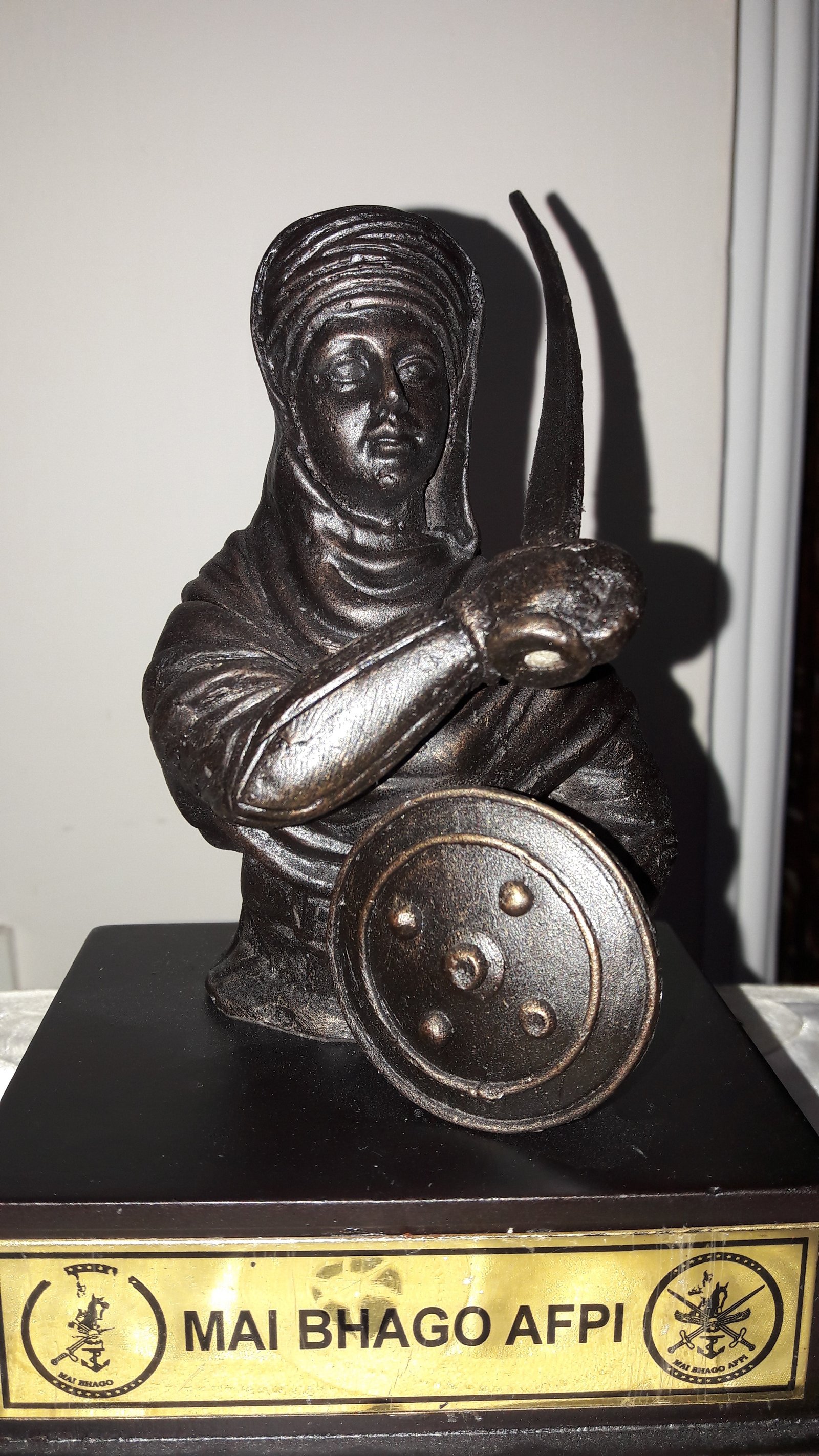
MOMENTO
20170422_125139
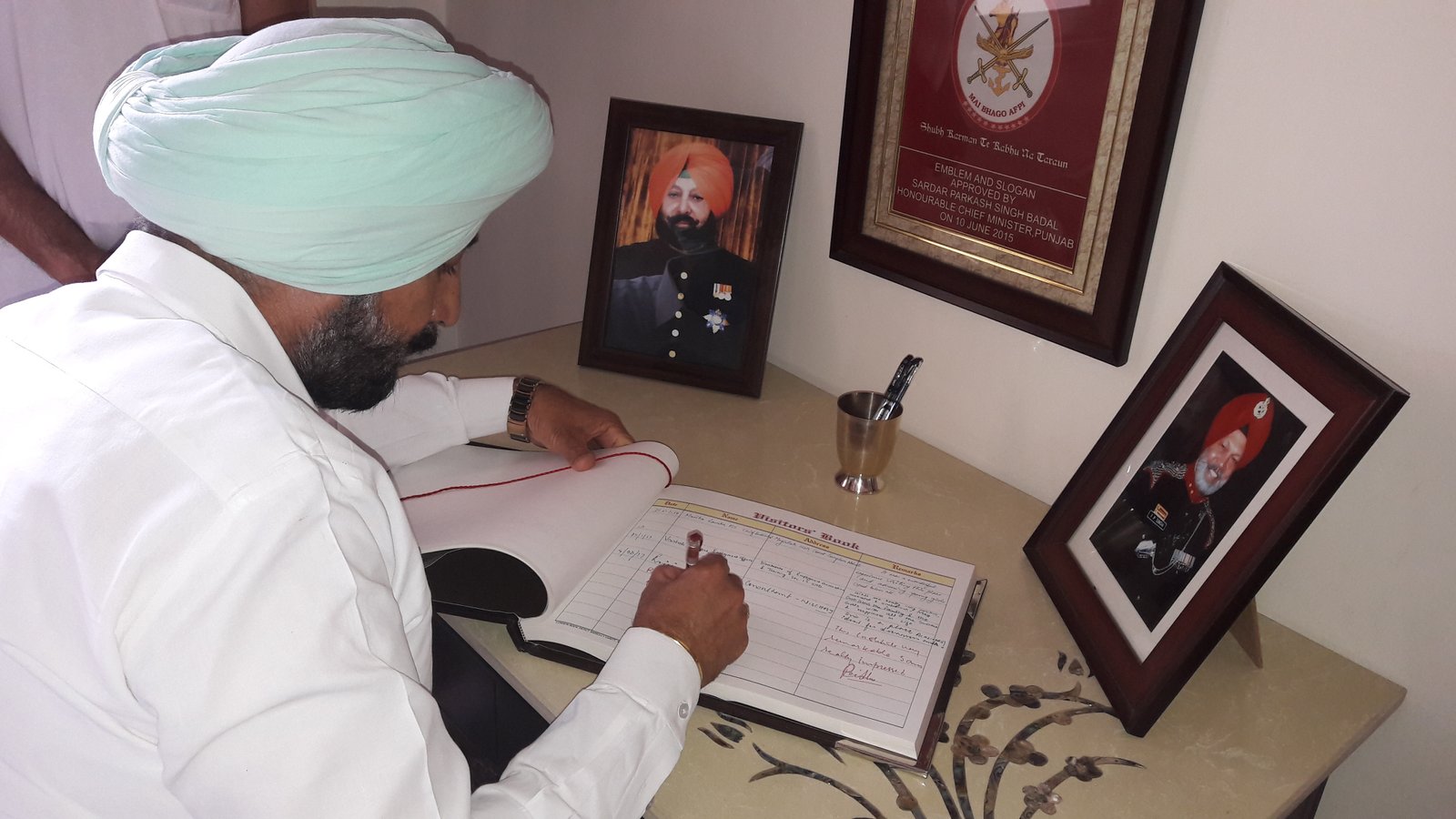
MLA BALBIR SINGH SIDHU SIGNING THE VISITORS BOOK


20170422_113538
MAJ GENJ IP SINGH(LEFT TOP) BRIEFING MLA (CENTRE)


20170422_12311020170422_122151


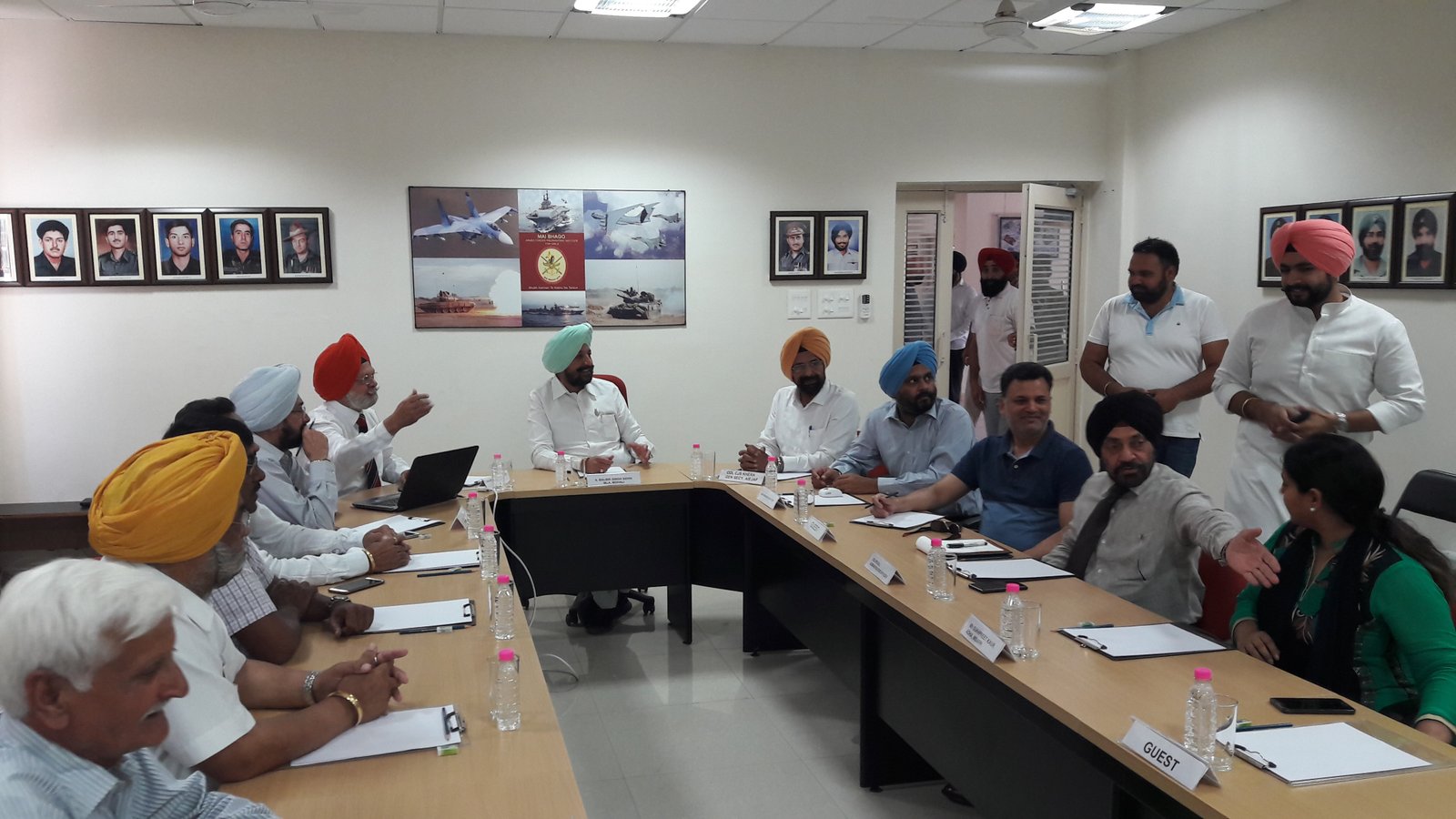
AT AUDITORIUM-L TO RIGHT—MAJ GEN IP SINGH,MLA BALBIR SINGH SIDHU,COL CJS KHERA,COL RS BOPARAI

About the Institute

sl-2

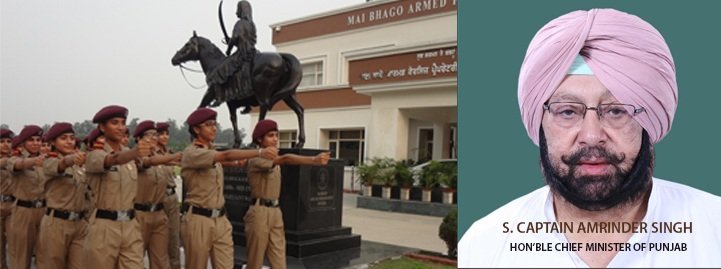
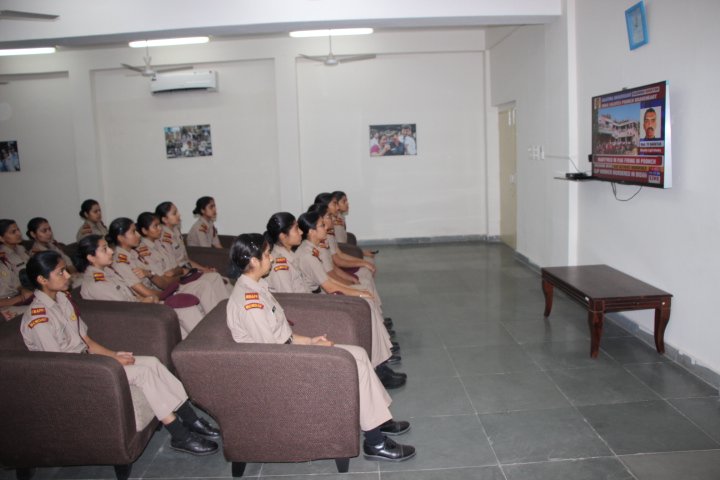
Mai Bhago Armed Forces Preparatory Institute for Girls has been set up by Punjab government as an exclusive all girls training Institute. It is a unique, first of its kind initiative in the country for the girl child. The Institute provides a lifetime golden opportunity to 10 plus 2 level girls from Punjab to choose an elite career as a Commissioned Officer in the Defence Services. The Institute, named after Mai Bhago Ji, the famous Sikh saint warrior, is laid out on a sprawling 8 acres beautifully landscaped area in Sector 66, SAS Nagar. Hon’ble Raksha Mantri, Sh Manohar Parrikar, inaugurated the Institute with its first batch of 25 Lady Cadets on 25 Jul 2015.

The Institute is fully residential and has all the modern facilities to include multi gym, swimming, shooting, sports fields, walking plaza etc. The training includes three years graduation in MCM DAV College Sector 36, Chandigarh; Sports and Physical Fitness, Personality Development, Communication Skills, Grooming, Extra Curricular Activities, NCC, Professional Training and preparation for SSB Interview. At the end of three years the Lady Cadets are made to appear in the competitive examination to seek admission into the officer Training Academies based on different Women Entry Schemes for commission into the Defence Services.ante roombriefing at


ਵਿਧਾਇਕ ਸਿੱਧੂ ਵੱਲੋਂ ਆਰਮਡ ਫੋਰਸਿਜ਼ ਪ੍ਰੈਪਰੇਟਰੀ ਇਸਟੀਚਿਊਟ ਦਾ ਦੌਰਾ12204CD-_22_MOHALI_1_A_-MAI-BHAGO-INSTITUTE-_1-BY-SODHI

ਪੱਤਰ ਪ੍ਰੇਰਕ
ਐਸਏਐਸ ਨਗਰ (ਮੁਹਾਲੀ), 22 ਅਪਰੈਲ
ਹਲਕਾ ਵਿਧਾਇਕ ਬਲਬੀਰ ਸਿੰਘ ਸਿੱਧੂ ਨੇ ਅੱਜ ਸੈਕਟਰ 66 ਸਥਿਤ ਮਾਈ ਭਾਗੋ ਆਰਮਡ ਫੋਰਸਿਜ਼ ਪ੍ਰੈਪਰੇਟਰੀ ਇਸਟੀਚਿਊਟ ਦਾ ਤੂਫ਼ਾਨੀ ਦੌਰਾ ਕਰਨ ਮੌਕੇ ਪ੍ਰਬੰਧਾਂ ਦੀ ਸਮੀਖਿਆ ਕੀਤੀ ਅਤੇ ਸਿਖਲਾਈ ਪ੍ਰਾਪਤ ਕਰ ਰਹੀਆਂ ਲੜਕੀਆਂ ਨਾਲ ਰੁਬਰੂ ਹੋਏ। ਉਨ੍ਹਾਂ ਕਿਹਾ ਕਿ ਇਹ ਇਸਟੀਚਿਊਟ ਪੰਜਾਬ ਦੀਆਂ ਧੀਆਂ ਲਈ ਵਰਦਾਨ ਸਾਬਤ ਹੋਵੇਗਾ ਤੇ ਇਸ ਸੰਸਥਾ ਵਿੱਚ ਉੱਚ ਸਿੱਖਿਆ ਪ੍ਰਾਪਤ ਕਰ ਕੇ ਲੜਕੀਆਂ ਨੂੰ ਆਪਣੇ ਪੈਰਾਂ ’ਤੇ ਖੜ੍ਹੇ ਹੋਣ ਅਤੇ ਡਿਫੈਂਸ ਫੋਰਸਿਜ਼ ਵਿੱਚ ਬਤੌਰ ਅਫ਼ਸਰ ਭਰਤੀ ਹੋ ਕੇ ਦੇਸ਼ ਦੀ ਸੇਵਾ ਕਰਨ ਦਾ ਸੁਨਹਿਰੀ ਮੌਕਾ ਪ੍ਰਦਾਨ ਹੋਵੇਗਾ। ਇਸ ਮੌਕੇ ਵਿਦਿਆਰਥਣਾਂ ਨੇ ਸ਼ਬਦ ਗਾਇਨ ਵੀ ਕੀਤਾ। ਮਾਈ ਭਾਗੋ ਆਰਮਡ ਫੋਰਸਿਜ਼ ਪ੍ਰੈਪਰੇਟਰੀ ਇਸਟੀਚਿਊਟ ਦੇ ਡਾਇਰੈਕਟਰ ਮੇਜਰ ਜਨਰਲ ਆਈਪੀ ਸਿੰਘ ਨੇ ਸੰਸਥਾ ਬਾਰੇ ਵਿਸਥਾਰ ਪੂਰਵਕ ਜਾਣਕਾਰੀ ਦਿੱਤੀ। ਸ੍ਰੀ ਸਿੱਧੂ ਨੇ ਜਿੱਥੇ ਸਿਖਲਾਈ ਪ੍ਰਾਪਤ ਕਰ ਰਹੀਆਂ ਲੜਕੀਆਂ ਦੇ ਸੁਨਿਹਰੀ ਭਵਿੱਖ ਦੀ ਕਾਮਨਾ ਕੀਤੀ, ਉੱਥੇ ਸੰਸਥਾ ਦੇ ਡਾਇਰੈਕਟਰ ਦੀ ਕਾਰਗੁਜ਼ਾਰੀ ਦੀ ਵੀ ਸ਼ਲਾਘਾ ਕੀਤੀ। ਉਨ੍ਹਾਂ ਪੰਜਾਬ ਸਰਕਾਰ ਵੱਲੋਂ ਭਰੋਸਾ ਦਿੱਤਾ ਕਿ ਇਸ ਵਕਾਰੀ ਸੰਸਥਾ ਦੀ ਹਰ ਸੰਭਵ ਮਦਦ ਕੀਤੀ ਜਾਵੇਗੀ। ਇਸ ਮੌਕੇ ਇੰਸਟੀਚਿਊਟ ਦੇ ਪ੍ਰਬੰਧਕੀ ਅਫ਼ਸਰ ਦੇ ਸੇਵਾਮੁਕਤ ਕਰਨਲ ਪੀਐਸ ਗਿੱਲ, ਸਹਾਇਕ ਡਾਇਰੈਕਟਰ ਤੇ ਹੋਸਟਲ ਪ੍ਰਬੰਧਕ ਸੁਖਪ੍ਰੀਤ ਕੌਰ ਥਿੰਦ, ਯੂਥ ਕਾਂਗਰਸ ਦੇ ਸੀਨੀਅਰ ਆਗੂ ਕਨਬਰਵੀਰ ਸਿੱਧੂ ਤੇ ਹੋਰ ਪਤਵੰਤੇ ਮੌਜੂਦ ਸਨ।


PUNJAB NEWS :::19 APR 20017

Punjab begins exercise to break cable cartel

Sarbjit Dhaliwal

Tribune News Service

Chandigarh, April 18

Eager to break the television cable network monopoly in the state, the Punjab Government has started the exercise to enact a law in this regard.Sources said the government has approached experts and others who have worked in the cable network field for suggestions before setting up a Cable Network Authority with legal backing for the purpose of implementing the rules and regulations to be framed to operate the network in the state.(Follow The Tribune on Facebook; and Twitter @thetribunechd)“The cable network cartel has been working in the state for long. It has been using muscle power to stop others from entering this business. We want to end that by opening it for all interested in running the cable network,” said Finance Minister Manpreet Singh Badal. The Cable Network Authority Act would be passed in the Budget session, he added.The objective is to provide a level-playing field to all those interested in running the cable network in various cities, towns and other parts of the state. Depending on the viability, there could be four, five or even more players to provide the cable network, he added.“Customers would  have a choice to get connection from any cable operator working in that city. Obviously, customers would opt for the best service provider,” said an official.Cable network operators had been censoring channels at their own level in the state. The private cartel would decide what news people should see and what channel should not be allowed to be seen.“There would be no control on the delivery of information via news channels. During the previous SAD-BJP government, only one particular Punjabi news channel was having a free run in the state. Others were either not delivered through the network or made to follow the government line,” said a state government official.

Harjit Sajjan refuses AAP invite

Deepkamal Kaur

Tribune News Service

Jalandhar, April 18

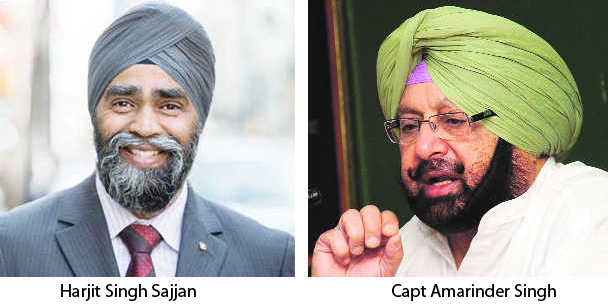
Dubbed a “Khalistani sympathiser” by Punjab Chief Minister Capt Amarinder Singh, Canadian Defence Minister Harjit Singh Sajjan has refused an invite by the Aam Aadmi Party (AAP).Leader of the Opposition HS Phoolka had invited Sajjan for coffee with the party MLAs at Chandigarh during his visit to the state capital on April 21.Phoolka said, “My office had sent an invitation to him via the Canadian High Commission. We have been told that his schedule is already very hectic and such a meet will not be possible.”Party insiders said the refusal indicated that Sajjan didn’t want to be drawn into a controversy, considering some AAP leaders’ alleged links with Sikh hardliners.Meanwhile, AAP Chief Whip Sukhpal Singh Khaira said here today that Capt Amarinder had snubbed Sajjan in order to appease his bosses in Delhi following the Ontario Assembly’s motion declaring the 1984 riots as genocide.Addressing mediapersons, Khaira said the Ontario motion seemed unacceptable to the Congress high command.“I urge the CM to reconsider his unjustified statement borne out of petty considerations and welcome Sajjan to Punjab as a state guest,” he added.

New sand quarries:Govt to opt for progressive bidding

New sand quarries:Govt to opt for progressive bidding
The new draft mining policy will come up for consideration at the Cabinet meeting tomorrow. Tribune file

Ruchika M Khanna

Tribune News Service

Chandigarh, April 18

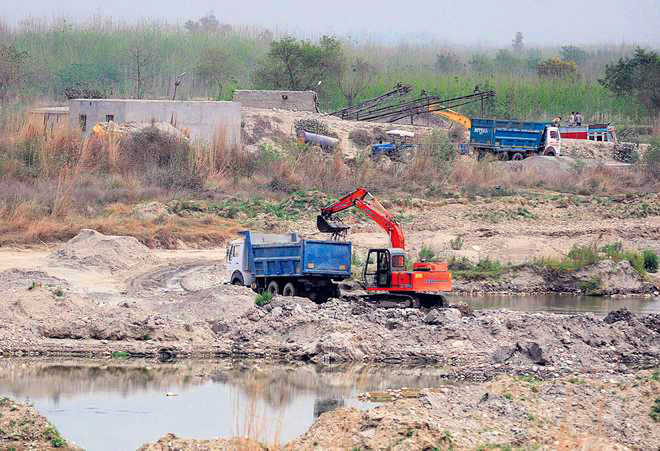
The state government is all set to do away with reverse bidding for the auction of 58 new sand quarries, whose environmental clearance is expected soon, and opt for progressive bidding.The new draft mining policy will come up for consideration at the Cabinet meeting tomorrow. However, reverse bidding will be adopted for the 59 old quarries to be re-auctioned on April 24.In progressive bidding, buyers compete to obtain goods or service by offering increasingly higher prices. In a reverse auction or bidding, the sellers compete to obtain business from the buyers and prices typically decrease as the sellers undercut each other.The then Akali-BJP government had drawn flak over the cartelisation of the mining business and escalating prices of minor minerals extracted from sand quarries. After a below-par show in the 2014 Lok Sabha polls, the government had adopted reverse bidding.Mining contractors opine that progressive bidding would lead to higher bids, thus hiking manifold the cost of extracting sand and aggregate (sand and gravel).In the past month, the supply of sand has dropped and its price has gone up from Rs 15,000 to Rs 19,000 for 800 cubic ft (one truckload). The price of aggregate (bajri) has gone up from Rs 15,000 to Rs 20,000 for 800 cubic ft.Official sources said checks and balances had been incorporated in the draft policy to control prices of sand and gravel. The policy, it is learnt, will have provision for a helpline on which complaints about illegal mining or overcharging can be made.

Students to be taught about Saragarhi battle: Badungar

Students to be taught about Saragarhi battle: Badungar
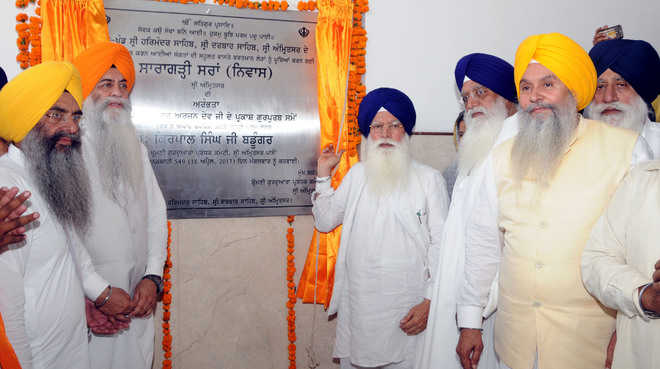
SGPC chief Kirpal Singh Badungar (second from right) inaugurates Saragarhi Niwas in Amritsar on Tuesday. tribune photo: vishal kumar

Amritsar, April 18

The Battle of Saragarhi, one of the greatest stand-offs in the Indian history, is now going to be part of the curriculum of the SGPC-run educational institutes.This was disclosed by SGPC chief Kirpal Singh Badungar while inaugurating the state-of-the-art inn dedicated to the 21 Sikhs, who chose to fight to death while facing 10,000 Afghan attackers, in the Battle of Saragarhi on September 12, 1897. It occurred in North-West Frontier Province, which was part of British India at that time. It is now named Khyber-Pakhtunkhwa and is part of Pakistan.Badungar said even as the story is part of school curriculum in countries such as France, Italy, Japan and the UK, the Centre had never spared a thought for it.“We have decided to include the history of Saragarhi battle in the curriculum of our 38 colleges, 80 schools, medical college, Guru Granth Sahib University, polytechnic and other institutions. We are putting up a resolution in our upcoming executive body meeting to seek nod for it,” he said. — TNS

Top educationist to be VC of PTU

Rajmeet Singh

Tribune News Service

Chandigarh, April 18

The Punjab Government today decided to appoint a reputed educationist as Vice-Chancellor of the government-run IK Gujral Punjab Technical University (PTU), Jalandhar.While clearing the appointment, the CM has directed the Department of Technical Education to invite fresh applications through public notice and get them scrutinised by a search committee headed by the Chief Secretary (CS).The previous Technical Education Minister, Madan Mohan Mittal, and the then CS Sarvesh Kaushal had locked horns on the selection of the Vice-Chancellor. The government has decided to consider 28 applications that were received during the term of the previous government.Due to the cold war between Mittal and Kaushal, the Vice-Chancellor’s post had been lying vacant since January 2015 even as a 12-member Board of Governors (BOG) had recommended a three-member panel to select the Vice-Chancellor.Mittal, who had even gone public in blaming the CS for “violating rules” while forwarding the panel had reportedly been lobbying for a candidate with a saffron background.The then panel comprised Dr MP Poonia, director, National Institute of Technical Teachers Training and Research (NITTTR), Chandigarh; Dr VK Rattan (professor in Panjab University) and Dr Sanjay Marwaha, a professor of Sant Longowal Institute of Engineering and Technology, Sangrur.

Printing woes: Schools to have book banks

Chandigarh, April 18

Struggling to provide textbooks to students in time, the Education Department today announced “book banks” in all schools to save time and money of the students.Students will be asked to submit their old books, which in turn would be provided free of cost to others in need.The department is also mulling to incentivise such students. However, the department has not finalised the criteria and method on how to do so.The decision comes when Punjab School Education Board (PSEB), which publishes books on behalf of the department, is facing a severe shortage of paper.“The constitution of the book bank is purely voluntary and is not binding on any student. Those contributing towards the book bank must be incentivised, which is being deliberated upon, Education Minister Aruna Chaudhary said. — TNS

Punjab CM writes to VC, promises help

Tribune News Service

Chandigarh, April 18

A day after Punjab Finance Minister Manpreet Badal offered help, Chief Minister Capt Amarinder Singh wrote to the Panjab University Vice-Chancellor, reiterating the same.Arun Kumar Grover, Vice-Chancellor, Panjab University, said, “We received a letter from the Chief Minister today. he asked us to consult with the state Finance Minister in this regard.”The Vice-Chancellor, however, said he had written to the Finance Minister, seeking a meeting, to which he is yet to responsd.Notably, on Monday, the Congress government had assured to help the university and accused the previous SAD-BJP dispensation of not providing adequate funds to it.Earlier, Grover had written to the government seeking a meeting to apprise it of the financial situation.


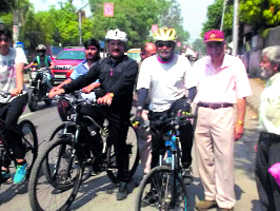
Ex-Maj Gen Jha completes 42k minutes of cycling

Ex-Maj Gen Jha completes 42k minutes of cycling
Maj-Gen Somnath Jha (retd) who completed his cycling campaign in Dehradun on Thursday. A Tribune Photograph

Tribune News Service

Dehradun, April 13

He is not like other Army veterans, who would have loved playing golf after retirement. But Maj-Gen Somnath Jha (retd) had something else in his mind when he hung up his boots in September 2016.Pushing 60, Maj-Gen Somnath Jha decided to go for 42,000 minutes of cycling as a tribute to 21,000 martyrs of the country. He resolved that for these 21,000 martyrs, he would cycle for two minutes for each one of them, the total of which would come to 42,000 minutes of cycling. Jha today reached Dehradun finally completing 42,000 minutes of cycling and covering all the 29 states of the country which he did in seven months.Talking to The Tribune in Dehradun, Maj-Gen Somnath Jha said he received a standing ovation from commoners wherever he went during his cycling campaign. “I met ordinary people, who lauded my pledge for cycling for the fallen heroes of the country. I even met family members of many martyrs, who appreciated my gesture,” he said. He said a large number of veterans, NCC groups and even serving personnel came forward to greet me at various places.“I had pledged to do this task as a tribute to the fallen soldiers of the country and I have completed it today. Rain, heat, etc on the way were no excuse,” Maj Gen Somnath Jha said.


Canadian minister is a Khalistani sympathiser, won’t meet him: Capt

Capt: I will not meet Canadian minister Sajjan

Chandigarh, April 12

Punjab CM Capt Amarinder Singh today said he would not meet Canadian Defence Minister Harjit Sajjan during the latter’s visit to India later this month. In an interview with a Delhi-based TV channel, he dubbed Sajjan as a “Khalistan sympathiser.” The CM claimed five ministers in the Trudeau government were Khalistanis and would have truck with neither. “These Khalistani sympathisers had last year prevailed upon the authorities to block my entry into Canada. I only wanted to meet my Punjabi brethren there,” he said. In protest, Amarinder had written a letter to the Canadian PM and later refused to meet the Canadian High Commissioner in  India. — TNS(Follow The Tribune on Facebook; and Twitter @thetribunechd)

Says Sajjan, four other ministers prevented his entry into Canada ahead of Punjab polls

From page 1 CHANDIGARH : Dubbing Canadian defence minister Harjit Singh Sajjan a “Khalistani sympathiser”, Punjab chief minister Captain Amarinder Singh on Wednesday said he will not meet the Indo-Canadian leader during his expected visit to India later this month. Amarinder’s statement has the potential to snowball into a major diplomatic row between India and Canada.

“Harjit Sajjan is a Khalistani sympathiser,” Amarinder alleged on the ‘Off the Cuff’ TV show by veteran journalist Shekhar Gupta. The chief minister claimed that there were, in fact, five ministers in the Justin Trudeau government who were Khalistani sympathisers and he would not have any truck with them.

“They had prevailed upon the government to prevent my entry into Canada, where I wanted to go to meet my Punjabi brethren and not to campaign for elections,” he was quoted as saying in a release issued by his team after the programme.

Amarinder, whose poll campaign in Canada was stalled last year in the run-up to the Punjab assembly elections, had responded by accusing some Canadian ministers of having “Khalistani leanings” then too. The Canadian defence minister is expected to travel to India this month in his first visit since his appointment as minister.

ON BANS

Amarinder was candid on other issues too. Asked about beef ban, he said people had the right to, and should be allowed to, eat whatever they wanted.

The CM also said that he was not in favour of a ban on Pakistani artistes, and said he would be happy to invite them to Punjab and would also love to visit Pakistan again. “It is time to mend fences and make friends with Pakistan,” he said, urging New Delhi to be wary of China on the other border.

ON RAHUL

As for his party, seeing a “deliberate malicious attempt” by vested interests to pull down Congress vice-president Rahul Gandhi, Amarinder also urged the people to give him (Rahul) a chance. There is a clear conspiracy against Rahul who is being targeted with ridiculous names, he said.

Captain said that he had always found Rahul “extremely perceptive” and willing to listen, besides being open to suggestions and ideas.

ON EVMS

On the controversial issue of possible tampering of electronic voting machines, Amarinder said had the EVMs been tampered with in Punjab, he would “not be sitting here today”.

However, he was quick to note that it was important to find out the reason for many advanced countries refusing to adopt EVMs.


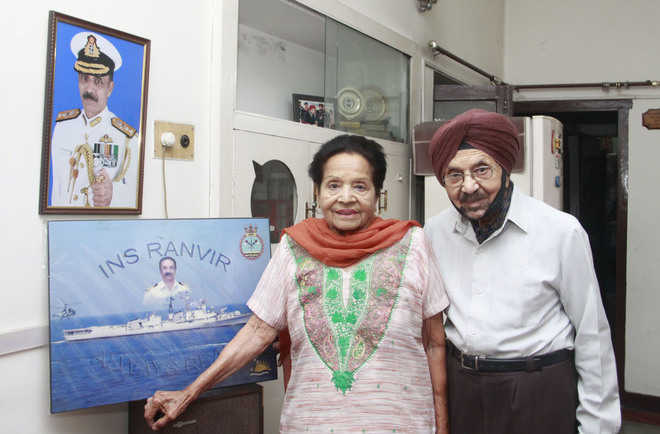
Naval officer’s parents elated Vice Admiral Ravneet Singh awarded Ati Vishisht Sewa Medal by Prez

Naval officer’s parents elated
Parents of Vice Admiral Ravneet Singh in a cheerful mood in Jalandhar on Friday. Photo: Sarabjit Singh

Rachna Khaira

Tribune News Service

Jalandhar, April 7

Vice Admiral Ravneet Singh, who hails from Jalandhar, has been honoured with Ati Vishisht Sewa Medal (AVSM) by the President of India. Earlier too he had been awarded for the recovery of a Sea Harrier fighter aircraft in a grave emergency.The Flag Officer has the distinction of having flown 11 types of aircraft during his distinguished career. He is a qualified flying instructor and has more than 2,480 hours of flying experience.While speaking to The Tribune over the phone, the officer said that Navy had given him so much in all these years. “It’s time to pay back to my motherland by securing its borders,” Singh said.Expressing pride over his son’s achievement, his father, Avtaar Manmohan Jit Singh, a practicing lawyer at Punjab and Haryana High Court and Sessions Courts in Jalandhar, said winning was in his son’s blood. “I have no words to express my happiness at his enthralling success. All I want to pray is that he should keep on defending the country with utmost grit and determination,” said an emotional father. He said being a lawyer, although he had wanted his three sons to be in the same profession, the elder two including Admiral Ravneet joined the defence forces. While his one son is serving in Army, the other is a lawyer and settled abroad. The officer’s mother, Sarabjeet Kaur, also expressed her happiness.The Flag Officer has commanded various ships, establishments and air squadron during his illustrious career with INS Ranvijay, INS Ranvir, INS Himgiri, Sea Harrier Training and Frontline Operational Squadron INAS 300 and a premier naval air station INS Hansa.Prior to assuming his present appointment as the Chief of Staff, Headquarters, Western Naval Command, he had had the privilege of commanding the sword arm of the Indian Navy i.e. the Western Fleet, as the Flag Officer Commanding Western Fleet (FOCWF). Singh has also been the Flag Officer Goa Area and Flag Officer Naval Aviation (FOGA and FONA). He has also served as Assistant Controller Warship Production and Acquisition (ACWP&A) and Assistant Controller Carrier Projects (ACCP) at Naval Headquarters, New Delhi. Further, he has also served as the defence adviser in Kenya, Tanzania and Seychelles.An alumnus of Kendriya Vidyalaya, Jalandhar, Vice Admiral Ravneet Singh graduated from DAV College, Jalandhar, prior to joining the Indian Navy. Married to Deep Singh, he is blessed with two daughters.


Army Institute of Law celebrates annual day

Chandigarh, April 29

The Army Institute of Law (AIL), Mohali, celebrated its annual day here today. Various scholarships and cash prizes were awarded to meritorious students on the the occasion. Two industrial scholarships worth Rs 80,000, three alumni scholarships worth Rs 1.40 lakh and eight Tata Merit Scholarships for toppers in academics worth Rs 1.40 lakh were awarded to the students.—TNS


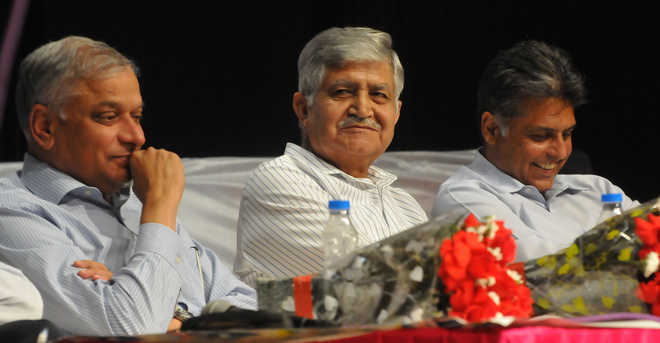
More mohalla get-togethers required for connecting people: Gen Malik

More mohalla get-togethers required for connecting people: Gen Malik
Former Prime Minister Manmohan Singh’s media adviser Pankaj Pachauri, former Army Chief General VP Malik and former Union Minister Manish Tewari during a function at the Punjab Kala Bhawan auditorium in Sector 16, Chandigarh, on Wednesday. Tribune photo: Vicky Gharu

Chandigarh, April 5

Former Army Chief General VP Malik said more mohalla get-togethers are required so that people can interact with each other. Gen Malik was speaking at a function organised by the People’s First Society on the topic Towards Togetherness (Apasdari and Shehardari) at Punjab Kala Bhawan, Sector 16 today.The focus of the programme was to increase people-to-people connection by holding small sabhas and get-togethers. Former Union Minister and Congress spokesperson Manish Tewari said: “The concept of “Know Your Neighbour” is a unique concept and we need to take this concept and idea first in Chandigarh and then to Mohali and Panchkula”.On this occasion, Pankaj Pachauri, veteran journalist and former Prime Minister Manmohan Singh’s media adviser, shared his experience and said there was Nana Nani Park in Maharashtra specially designed for the old-age people where they come and interact with each other.Former councillor Chander Mukhi Sharma said: “Connecting people on the social media is far easier than face-to-face meetings. So our focus is more on face-to-face interaction among the people of Chandigarh as it decreases the stress among neighbours and creates togetherness”. — TNS


Four steps to correct squinted view of Kashmir by Arun Joshi

India has to first and foremost put in place a realistic narrative as a way out of the Kashmir imbroglio that has become more intractable. More than ever before, instead of a military solution, there is the dire need for “quiet diplomacy and politic

IT is very difficult to describe the current Kashmir situation in a balanced manner. There are so many prejudices that suppress the existing reality from coming to the real-time attention. The whole scenario is subjugated by an all-pervasive narrative  of  oppression of the people by the ” brute forces” . It  has been peddled so effectively on the social media and the news channels that the US  representative  at the United Nations,  Nikki Haley, dropped clear hints that President Donald Trump may speak to India and Pakistan to resolve their issues. The unspoken reference is to Kashmir, which evokes fears of a “nuclear flash point in the region” for the international community. India, for all good reasons, rejects the talk of third-party intervention and asserts that it can resolve its issues. But the the damage is done. Pakistan has succeeded in reviving the world’s fears vis-à-vis Kashmir and its eastern neighbour, India. Now, the question may be asked who has isolated whom  at the world stage. 

Worsening situation

Never before was the Kashmir situation as bad as it is today.  It is a grave mistake to read the situation in terms of decline in terrorist violence  and drastic reduction in casualties from hundreds in the 1990s to less than 100 in terrorism-related incidents in the Valley. The real issue is that the Kashmiri psyche is ingrained with the idea of resistance — not just with guns and stones but also with the hate and anger that they harbour against India. What happened  in Chadoora on March 28 — three  protestors were killed  in security forces’ firing for they were being harassed by the hostile and the stone- throwing  mobs to  dismantle their anti-militancy operation launched to neutralise one militant. These killings, read with the  home-grown  psychology of ‘hate India’ —soldiers are seen as  face of India — reveal an uncomfortable truth. The crowds had rushed to the encounter site, willing to risk their lives to save the  trapped militant. This doesn’t end here. The youth at the encounter sites with  all-too-visible stones in their hands showcase the widening of the conflict. Pakistan, of course, is delighted by all this. It helps its Deep State to work to cause unrest in the Valley and to demonise India through its envoys and hired propaganda machinery within  Kashmir and abroad. That is where the international attention gets riveted to Kashmir trouble. In short,  the  conflict is widening  at an amazing pace in the minds of Kashmiris.  Prime  Minister Narendra Modi, who brought a choice of terrorism and tourism for the stone-throwers, was looking only through the prism of  economic prosperity of the place. That terrorism and tourism don’t go together is a universally accepted phrase. He was 100 per cent right in making the people aware of how terrorism in Kashmir had brought decades of bloodshed to the Valley, ruined their progress and made them hostage to deprivation. So much so, the benefits of the advance of the 21st century have been denied to the people.  Thus economics matters in Kashmir as it does elsewhere in the world. But they have demonstrated an undiminished  love for the militants and stone-throwers. All the earlier talk of “azadi,” and Pakistan  as their future nation has been subdued by the  romance of the Islamic rule. India faces four different challenges to transform the narrative if it really wishes to do something  in Kashmir. First, it has to discard the notion that a military approach alone can help to regain the lost paradise. It has not worked. Local militancy is a greater threat than the one coming from across the border. It is true, as the Prime Minister said, that if Pakistan is unable to stabilise itself, can it be a choice  for the people of Jammu and Kashmir? The fact is that the Pakistan-sponsored narrative has more acceptability here. Secondly, Pakistan needs to be dealt with sophisticated diplomacy. The snub-Islamabad policy for all its audaciousness is not the answer. Mature nations look at  long-term victory and not short-term nationalist passion-satisfying diplomacy.  Third, it is more important  for India to set its own house in Kashmir in order  before embarking on the journey of diplomatic victories. The country’s soft power is nearly absent. Hard power has not been able to tame militancy. The people are important. It is a good sight to see (from the Indian perspective) thousands lining up for jobs at the Army recruitment rally. That, too, needs to be analysed. Why were these people there? Were they in search of jobs or for their love for the nation? The narrative should be moulded in such a way that even those who don’t find jobs love the nation. Unfortunately, that is not the reality. Fourth, it should be borne in mind  that Kashmiris by and large are peace-loving  people but they have been pushed into the cauldron of violence. They are in search of  trustworthy peace not by the overwhelming and intrusive presence  of the forces but as an evolution that  finds its way through “quiet diplomacy and politics.” This is the phrase used by the former Home Minister, P Chidamaram, but it is more relevant today than ever before. Delhi should also stop funding and  encouraging political parties and their leaders who  seek escape routes in being pro-Pakistan and  manufacture narrative  about the Kashmir scene. They are more deadly than separatists. That distinction needs to be made right away to bring a breath of fresh air, with the help of a realistic narrative which will help in curing the squinted  view of Kashmir. 

ajoshi57@gmail.com