Sanjha Morcha

B’desh Navy Chief arrives ahead of Hasina visit, focus on defence pacts

clip

clip

B’desh Navy Chief arrives ahead of Hasina visit, focus on defence pacts
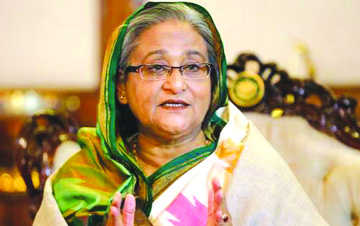
Bangladesh PM Sheikh Hasina is likely to be in India from Dec 17-20

Simran Sodhi


Tribune News Service

New Delhi, December 7

India and Bangladesh are looking to upgrade their security and defence ties during the visit of Bangladesh Prime Minister Sheikh Hasina to India later this month. Bangladesh Navy Chief Admiral Muhammad Farid Habib reached Delhi today to prepare the ground for defence agreements likely to be signed during Hasina’s visit.The Bangladesh Navy Chief’s visit follows that of Defence Minister Manohar Parrikar to Dhaka a week ago to augment ties. Though the dates for Hasina’s visit are yet to be announced officially, it is learnt she would be in India from December 17-20.For India, the biggest worry in managing this bilateral comes from China, which is increasing its footprint in Dhaka. Bangladesh recently purchased two submarines from China for an estimated USD 203 million. Hasina recently announced her intention to modernise the country’s Navy and the visit of the Navy Chief this week to India could be understood in the same context.In October, en route to Goa to attend the BRICS Summit, Chinese President Xi Jinping made a stopover in Dhaka and signed off loans worth USD 24 billion. Dhaka has traditionally been a close ally of India and any increase in Dhaka-Beijing defence ties is bound to make Delhi jittery. A UN tribunal has settled Bangladesh’s long-standing maritime border disputes with neighbours Myanmar and India giving Dhaka the leeway to now invite bids from multinational firms to explore for oil in the Bay of Bengal. To that end, Bangladesh now wants to modernise its Navy and protect the resource-rich Bay of Bengal.Hasina is likely to meet Prime Minister Narendra Modi on December 18 and after holding delegation-level talks, a defence pact is likely to be signed. The one major irritant today in the Delhi-Dhaka relationship remains the Teesta water agreement, which will be discussed between the two leaders, though a resolution is not expected.


Pakistan’s new army chief ‘knows what India thinks’

Gen Bajwa indicated a change in approach but many believe this may not translate into a strategic shift

Gen Qamar Javed Bajwa’s assumption of the post of Pakistan Army chief ominously coincided with a brazen attack on an Indian Army camp at Jammu and Kashmir’s Nagrota that left seven soldiers dead.

REUTERSPakistan’s outgoing army chief Gen Raheel Sharif (right) hands over a ceremonial baton to his successor Gen Qamar Javed Bajwa at the Change of Command ceremony in Rawalpindi on November 29.

It was even speculated the assault was outgoing army chief Gen Raheel Sharif’s parting shot. He had warned his country’s restraint and patience on Kashmir should not be mistaken for weakness.

The developments in Nagrota and Chamliyal, where three infiltrators were killed, were in marked contrast to Bajwa’s remark at the change of command ceremony in Rawalpindi that the situation on the Line of Control (LoC) “will be alright” soon.

The comment suggested Bajwa, who served on the LoC and once commanded the Rawalpindi-based X Corps responsible for operations along the ceasefire line, could adopt an approach different from that of Sharif.

Former colleagues say Bajwa’s keen interest in India goes back to his days as a young major serving on the LoC in 1992. That was when, they say, he began reading about India and discussing its developments with other officers.

The buzz in Islamabad is Bajwa was a beneficiary of a debate on whether the new army chief should be a general who focussed on the counter-terrorism drive started by Raheel Sharif, or one who balanced the campaign against militants with a renewed focus on India. Given his extensive expertise on Kashmir, Bajwa was a natural fit when the Pakistani leadership chose the second option.

Brig (retired) Feroz Hassan Khan, Bajwa’s commanding officer on the LoC, says the man in what is seen as the most powerful position in Pakistan does not have a “visceral hatred” of India.

“There is an assumption that every Pakistani military officer who rises has some sort of a visceral hatred towards India, as if it’s a default. This is not the case with (Bajwa)… He has studied India so much,” Khan told HT from Monterey, California, where he teaches at the US Naval Postgraduate School.

Bajwa, with whom Khan has stayed in touch over the years, “understands India (and) reads a lot of what India writes and knows a lot about what India thinks”. He added, “There’s hardly any senior officer of his level who reads a lot of what is published in India and he studies, he reflects and he remembers.”

Bajwa also believes in striking a civilmilitary balance and giving space to the elected government, Khan said. “The complexity of the issues…demand that neither the army can do it alone and nor the civilians can do it alone, so you have to balance the civil-military relations,” he said. “I think (Bajwa) is one person who realises the heavy responsibility that comes on his shoulders.”

Khan, however, noted Bajwa had taken over at a difficult time. Tensions between India and Pakistan have spiked because of a string of terror attacks and exchanges of fire on the LoC have strained a 13-year-old ceasefire.

“If he inherits something with so much tension on the border, he is first and foremost chief of the Pakistan Army. He has to do his duty,” Khan said.

Despite its recent focus on targeting “bad militants” such as the Taliban, the Pakistan Army largely remains – as former army chief Ashfaq Kayani put it – an “India-centric” force. The military also retains a tight grip on foreign and security policies, especially relations with countries such as the US and India.

Lt Gen (retired) Kamal Davar, the first chief of India’s Defence Intelligence Agency, is among the skeptics who believes a change of guard will not necessarily lead to a change of heart in the Pakistan Army.

“An army’s stance emerges from national strategies and national interests. And the chief of any army is responsible for implementing those policies. Strategies don’t change because of a change of personality,” Davar told HT.

“Pakistan’s operational strategies aren’t going to change at all. There’s a difference between tactical and strategic matters. An army chief wouldn’t be directly involved in tactical stuff,” he said, referring to the Nagrota attack.

Bajwa’s stand on corruption may seal Nawaz Sharif’s fate

IF THE NEW CHIEF, GEN QAMAR BAJWA, TAKES A STRONG STAND ON CORRUPTION, THERE COULD BE FRICTION BETWEEN HIM AND THE PREMIER WHO FACES ALLEGATIONS OF GRAFT

Prime Minister Nawaz Sharif has become the first politician in Pakistan’s history to appoint six army chiefs. One of them — Pervez Musharraf — toppled Sharif in a bloodless coup in 1999, while the rest too gave him a tough time.

AFPPakistan Prime Minister Nawaz Sharif meets General Qamar Javed Bajwa in Islamabad.

After assuming office in 1990, Sharif appointed Gen Asif Janjua to succeed Gen Mirza Aslam Baig. Unlike ambitious and insecure Baig, Janjua was a popular officer who commanded loyalty.

Janjua, who earned admiration for tackling the MQM as corps commander in Karachi, died of a heart attack in 1993.

Gen Abdul Waheed Kakar filled the leadership void. A Pashtun officer appointed by Sharif, Kakar was seen as a weak candidate. He brokered the agreement in mid-1993 whereby Sharif and President Ghulam Ishaq Khan resigned after a constitutional deadlock.

Sharif returned as premier in 1997, when Gen Jahangir Karamat was army chief. They got off to a bad start as the army was given a constitutional role in decision-making through the National Security Council. Sharif rejected the idea and the situation deteriorated to the point that Karamat resigned in 1998.

Against all advice, Sharif appointed Musharraf in 1998. Soon after the Kargil conflict, Sharif moved to dismiss Musharraf and appoint a new army chief, Gen Ziauddin Butt. The army rejected it and Musharraf toppled the government.

Sharif returned as premier in 2013, when Gen Ashfaq Kayani was the chief. Soon after, Sharif nominated Gen Raheel Sharif, who was seen as close to the Sharif family. But his three years as chief proved a testing time for the PML-N government. If the new chief, Gen Qamar Bajwa, takes a strong stand on corruption, there could be friction between him and the premier, who faces the opposition’s ire over allegations of graft in the Panama Papers leaks.


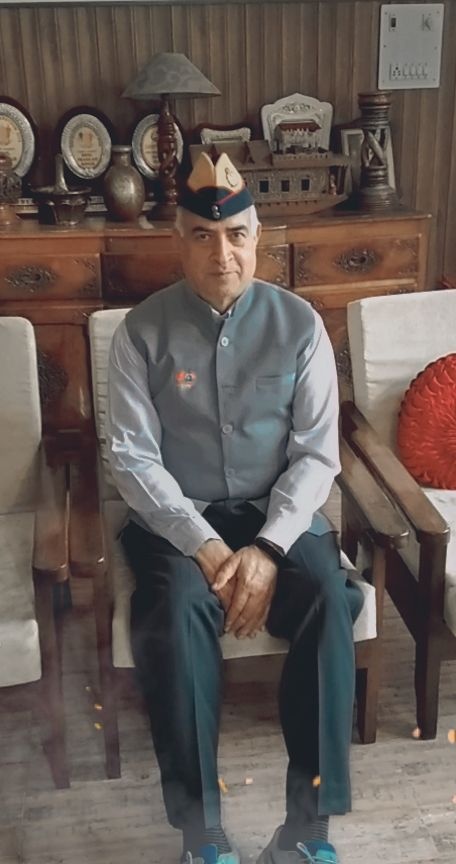
Bhiwani’s Major cremated with full honours

Sat Singh

Tribune News Service

Bhiwani, December 2

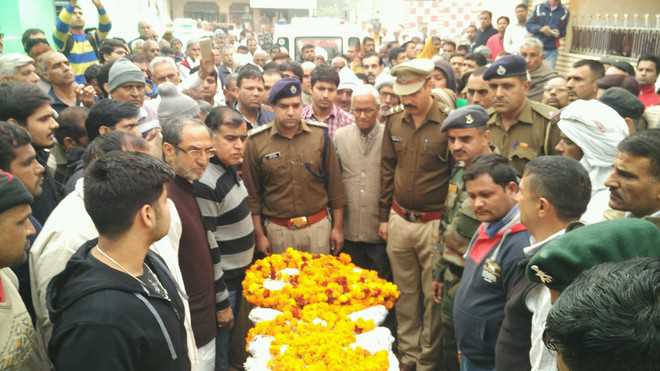
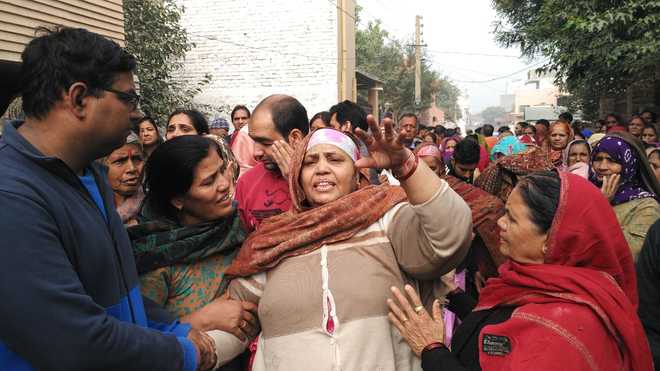
Major Sanjeev Lather was today cremated with full state honours at his native Budha Khera village of Jind district.Earlier in the day, his mortal remains were brought to his Bhiwani residence in Vidhya Nagar from New Delhi.Major Sanjeev, along with two other Armyofficers, was killed in Siliguri, West Bengal, in an Army helicopter crash on Wednesday.State Cooperation Minister and Rohtak MLA Manish Grover, who were present at the cremation, announced Rs 50 lakh for the family.At Major Sanjeev’s residence in Bhiwani, Mahender Lather, his father, demanded the Centre and the Prime Minister to focus on the maintenance of its Army choppers to avoid such incidents in the future.He said he was proud that his son died while serving the nation.Jagram Mann, father-in-law of the deceased officer, said the tragedy was a result of outdated Cheetah helicopters by the Army.He said Chetak and Cheetah helicopters had claimed 294 lives in 98 mishaps and it was high time the government phased them out.Besides Army officers, naib tehsildar Naresh Kumar and Deputy Superintendent of Police Vijay Deswal reached his residence to pay tributes to the deceased.


LOOKING BACK 1971 WAR When Gnats and MIGs dominated the sky

Despite the PAF striking many Indian air bases on the night of December 3, the IAF retaliated brilliantly and came out victorious

Ajay Banerjee

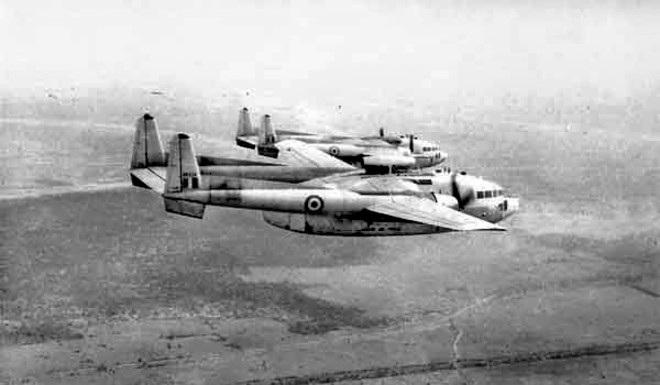
For the Indian Air Force, the 1971 War with Pakistan started when it bore the first brunt of enemy attack that was timed to coincide with a UN meeting in New York. Just a few hours before the UN Security Council (UNSC) was to hold a meeting to discuss the ‘situation in the India/Pakistan subcontinent’, Pakistani President General Yahya Khan declared war against India on December 3. Just before sunset on the same day, Pakistani fighter bombers struck five Indian airfields — Srinagar, Avantipur, Pathankot, Amritsar and the advanced landing ground at Faridkot. More strikes by the PAF followed at night at IAF bases at Ambala, Agra, Halwara, Amritsar, Pathankot, Srinagar, Sirsa, Adampur, Nal, Jodhpur and Jamnagar. But not a single IAF aircraft was destroyed in these raids and runways damaged were repaired within hours. Apart from bases, the PAF attacked railway stations, Indian armour concentrations and other targets. Famously, the Soviet Union used its veto to stall the UNSC from blaming India and the resolution was finally adopted some two weeks later asking both India and Pakistan to cease hostilities. In retaliation , over the ensuing two weeks, the IAF literally turned the tables on the enemy and dominated both flanks – the west and east. In a counterattack it carried out some 4,000 sorties in the west and another 1,978 sorties in the east.In hindsight, PAF’s plan was to neutralise the IAF jets on the ground with a lightning air strike and then it hoped to ride on the shoulders of its ally, the US, to get India censured for aggression. The PAF attack, coordinated with the expected UNSC action, had come about after an incident on November 22.  That day, Flight Lieutenant M A Ganapathy and Flying Officer D Lazarus, had shot down an intruding PAF plane over Boyra near Calcutta and its pilots had been taken captive. The war in 1971 revealed the true air-to-air combat capabilities of the MiG-21, a Soviet-built top-line fighter jet of those times. The IAF had six squadrons of these stationed in ‘penny-packets’ all across and had ample opportunity to engage the enemy.Western flank: The IAF’s counter strike in the west was mounted on much greater scale than in the east. The high-point remains the well- documented story of Ambala boy Flying Officer Nirmaljit Singh Sekhon, who single-handedly took on six PAF sabre jets, hitting two of them over Srinagar before losing life when his plane nose-dived into a valley near Budgam after having endured serious enemy hits. He was awarded the Paramvir Chakra (PVC) posthumously. Earlier the three ‘counter-strikes’ launched on December 4 were stunning. The 20 Squadron then located at Pathankot, bombed PAF airfields at Peshawar, Chaklala and Kohat. The raids left eight aircraft destroyed on the ground. The first sortie to Chaklala was flown by a young Naval pilot, later Admiral Arun Prakash (retd) who commanded the Indian Navy. Chakala was hit again the next day.  Those were days when both countries did not have many radars or potent anti-aircraft missiles and such day-time raids were possible. Today it would be much tougher, if not impossible.In the Arabian Sea, Pakistan’s off-shore oil installations near Karachi harbour were struck twice on December 4 by an IAF formation which repeated the act two days later. Another epic was the way the Pakistani Armoured formation was stopped at a Longewala. A company of the valiant 23 Punjab led by Brig KS Chandpuri (retd) had held on during the night, before IAF planes bombed the Pakistani tanks at first light on December 7. The other big hit was when the AN-12s flying from Jodhpur struck the Sui Gas Plant in Sindh. Eastern flank: By December 7, the IAF had broken the back of the PAF in East Pakistan. It had even self-destroyed 13 planes at Dacca lest these could be used by India. On December 8, PAF fighter pilots were sent to West Pakistan via Burma. The MiG-21s based at Guwahati, blasted the runway at Tejgaon base and once the PAF repaired  it,  the runaway was hit again on December 7.The IAF’s 14 Squadron (flying bulls) operated jets from within enemy territory at Jessore after it was captured.  The IAF Mi-4 helicopters participated in the tactically brilliantly move to air-lift some 1,500-1,600 troops of the 311 Brigade across the Meghna River starting with the first batch of 600 men on the night of December 9 when the 4 corps of the Army led by Lt-Gen Sagat Singh was advancing to capture Dacca (now Dhaka) from its eastern flank. In 36 hours over 110 sorties were flown to cross the Meghna, a four-km wide distributory of the mighty Brahmaputra river. At the end of the war Pakistan leader, Zulfiqar Ali Bhutto, who took over from General Yahya Khan after the 1971 defeat publically castigated the PAF for its lack of fight. The IAF had come out victorious.

India, US sign Rs 5,000-cr deal for 145 artillery guns

India, US sign Rs 5,000-cr deal for 145 artillery guns

New Delhi, November 30

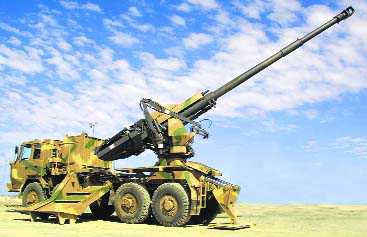
Breaking the Bofors jinx, India and the US today inked a nearly Rs 5,000 crore deal for 145 M777 ultra-light howitzers, which will be mostly deployed near the borders with China. “India has today signed the Letter of Acceptance which formalises the agreement between India and the US for these guns,” sources said.The deal for 145 American ultra-light howitzers, costing about Rs 5,000 crore was recently cleared by the Cabinet Committee on Security (CCS). It was inked as a two-day meeting of the 15th India-US Military Cooperation Group (MCG) began here.On the issue of M777, the sources said India had sent a Letter of Request to the US government showing interest in buying the guns which will be deployed in high-altitude areas in Arunachal Pradesh and Ladakh, bordering China. The US had responded with a Letter of Acceptance and the Defence Ministry had in June looked into the terms and conditions and approved it. The offsets, under which BAE Systems, manufacturer of the gun, will invest about $200 million, will be pursued independently. While 25 guns will come to India in a fly-away condition, the rest will be assembled at the proposed assembly integration and test facility for the weapon system in India in partnership with Mahindra. The first two howitzers will be delivered within six months of the contract being inked, while rest will be delivered at the rate of two per month. — PTI


Veterans discuss military issues of Nehruvian era

Veterans discuss military issues of Nehruvian era
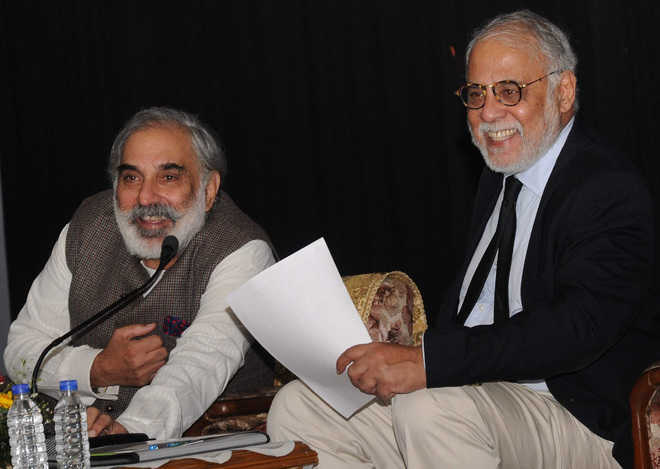
Observer Research Foundation fellow Manoj Joshi (right) and defence analyst Rahul Bedi during a talk organised by the Indian Ex-servicemen Movement in Panchkula on Saturday. Tribune photo: Manoj Mahajan

Tribune News Service

Panchkula, December 10

The first prime minister, Jawaharlal Nehru, had little understanding and liking of the armed forces and consequently he did not take the military’s advice as he should have done.Stating this here today while delivering a talk on “Evolution of India’s Defence Policy under Pandit Nehru” as part of the Veterans Day Commemoration organised by the local chapter of the Indian Ex-servicemen Movement, Dr Manoj Joshi, fellow, Observer Research Foundation, said while Nehru had his shortcomings on the military front, the military too did not come up with any strategic plan or vision. As a result, appropriate advice was not available to Nehru and he committed mistakes and ad hocism prevailed.Dr Joshi said Nehru had reposed great faith in the United Nations (UN) giving a fair play in sorting out the post-Independence India-Pak imbroglio, but that did not happen as some countries like Britain backed Pakistan.Stating that while Nehru had made significant contributions to the national cause, he faced vast challenges and after the death of the then Home Minister, Sardar Patel, he had no equal among his political peers, which led to him developing a personality cult and devising his own way of doing things unilaterally.They also discussed various aspects of India’s national security issues pertaining to the Nehruvian era.


Fake news leads Pak minister to issue Nuke threat to Israel

Fake news leads Pak minister to issue Nuke threat to Israel
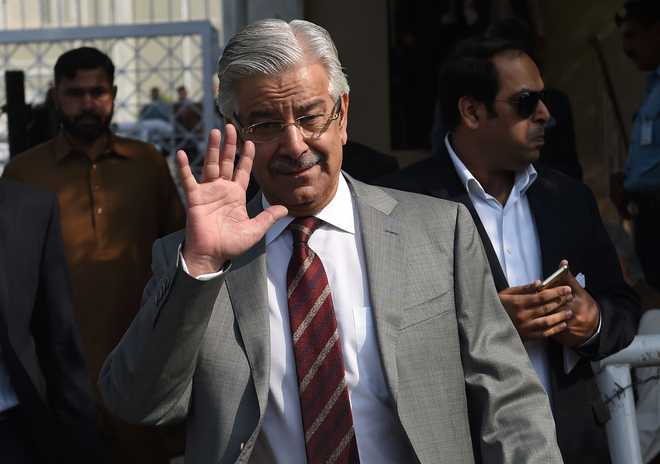
Pakistan Defence Minister Khawaja Muhammad Asif. File photo

New York, December 25

Pakistan’s defense minister threatened Israel that his country could use nuclear weapons after a fake news report that his Israeli counterpart had threatened “nuclear retaliation” for Islamabad’s role in Syria against Islamic State, highlighting the serious problem proliferation of fake news poses.

A report in the New York Times said a fake news story prompted Pakistan Defence Minister Khawaja Muhammad Asif to threaten to go nuclear.

In a post on Twitter, Asif lashed at Israel after a false report — which the minister apparently believed — that Israel had threatened Pakistan with nuclear weapons.

“Israeli def min threatens nuclear retaliation presuming pak role in Syria against Daesh,” the minister wrote on his official Twitter account, using an Arabic acronym for the Islamic State. “Israel forgets Pakistan is a Nuclear state too.”

The NYT report said Asif appeared to be reacting to the fake news article published on awdnews.com, which was titled ‘Israeli Defense Minister: If Pakistan send ground troops to Syria on any pretext, we will destroy this country with a nuclear attack’.

The article had appeared on the website on December 20, alongside articles with headlines like ‘Clinton is staging a military coup against Trump’.

The fake story about Israel even misidentified the country’s defence minister, attributing quotations to a former minister, Moshe Yaalon. Israel’s current minister of defence is Avigdor Lieberman.

The Israeli Defence Ministry responded on Twitter to say the report was fictitious.

“The statement attributed to fmr Def Min Yaalon re Pakistan was never said,” the ministry wrote in Twitter post directed at Asif.

The Israeli ministry added in a second post: “Reports referred to by the Pakistani Def Min are entirely false”.

The NYT report added that the proliferation of fake news stories, spread on social networks and produced by a variety of sources including pranksters, foreign governments and enterprising individuals who hope to receive advertising revenue by driving traffic to their websites, has become an increasingly serious problem.

A North Carolina man was arrested this month after firing a gun at a Washington pizza parlor, because investigators said he was investigating claims in fake news articles that the pizzeria was at the center of a child sex slave ring linked to Hillary Clinton. — PTI


India’s defence report card at 70 :————–Gen VP Malik

Following are the excerpts from Gen VP Malik’s inaugural lecture, “Defence at 70”, under the aegis of the Tribune National Security Forum, on Saturday, December 3, 2016.

INDIA’S  defence report card of the past seven decades is more positive than negative. But the credit for that goes less to our policies and grand strategies; more to those responsible for operational planning and execution on the ground. The baptism started soon after Independence.

Yesterday

Barring the 1962 war with China, India’s national defence has been ensured in all military engagements. But many a time, we have failed to convert-hard-won with much sacrifices-operational achievements into long-term politico-strategic successes. There is a need to analyse this aspect at this juncture. In hindsight, these reflect on India’s poor strategic vision, guidance and directions, and lack of coordination amongst civil and military leaders. Let me end this part by stating, rather sadly, that the lack of political guidance on important security-related issues, its excessive dependence on bureaucracy in PMO, MEA, MoD, IB, RAW, and marginalisation of professional and critical stakeholder’s military advice at the highest level of decision making, continues to be a major handicap even after 70 years.

Today

Externally, both our neighbours have established a very strong strategic nexus. Internally,  although threats have declined the vulnerabilities persist. They persist due to polarising, violent, identity politics and contempt for constitutional norms.

Tomorrow

In this new age of heightened nationalism and unpredictability, no one can give an assurance of nuclear and high-level conventional wars. But recent trends show that there is a greater likelihood of sub-conventional, hybrid and limited border wars. Information technology has made the battle space larger, more inclusive and faster. The entire command-and-control mechanism depends on space satellite facilities. Cyber-attacks on civilian infrastructure would have far more significance than any damage to military installations.

Defence management

The separation between tactical, operational and strategic levels of warfare has blurred. A small military action becomes an issue for consideration and decision making at the highest level. We have a situation where a junior military officer is expected to understand political considerations, and the political leader to know the tactical and operational considerations.Therefore, defence management requires greater, direct politico-military interface covering national security strategy, defence policy and planning, budgetary economy and common personnel and logistics. This requires a major overhaul of the Ministry of Defence and the higher defence-control system.

The roadblock

We have neither delivered a Chief of Defence Staff (CDS) nor addressed many organisational problems. By keeping the Integrated Defence Staff headless, it has failed to provide an integrated and joint paradigm; much less give integrated advice to the Defence Minister, Prime Minister or the CCS. My feedback shows that there has been no change in the responsibilities, accountability and procedures, or in the attitude of civilian officers in the Ministry of Defence.  Inter-Services cooperation remains weak. The bureaucratic wall between the political executive and the professional service chiefs has converted the concept of “civilian political control” into “civil bureaucratic control”. There is an urgent requirement to reorganise the Ministry of Defence and its business rules. The CDS appointment has become indispensable.

At others’ mercy

The Kargil war made me realise the importance of being self-reliant in arms and equipment. During that war, every country that we approached, either refused or took us for a ride by trying to sell their old weapons, ammunition and equipment at a high price. That situation is not very different today. We also carry the dubious distinction of being world’s largest importer of defence equipment. Despite the latest changes in FDI, defence purchase norms and the PM’s push on “Make in India”, it will take 20-25 years to make up deficiencies in our arms and equipment. This delay is unacceptable.

The to-do list

The strategy should include (a) facilitating the domestic defence industrial houses to expand their hi-tech base soonest (b) creation of skilled worker base (c) ensuring a level playing field for public and private defence sectors (d) an unambiguous export policy, and, most importantly, (e) sufficient defence budget for capital purchases.We must place some orders for complete items as in the case of 36 Rafael fighters aircraft, lest we are caught in another Kargil war-like situation.

People count

The man behind the gun is more important than the gun. In last 70 years, there has been a steady denigration and erosion of the soldiers’ status within the government, and therefore in civil society. This is reflected in the qualitative and quantitative dilution of the military rank and file, despite being the most dependable brand in the country. Honour, izzat, and comparable status in the government and society have sustained the armed forces and enabled them to draw the right kind of leadership. By taking away its pride and status, making the career unattractive, and not getting required weapons and equipment, the military is no longer a prime choice today. Next, it will affect their morale and fighting spirit. Our political leadership must introspect and correct this aspect sooner than later.

No silos

National security decision-making and higher direction of military conflicts require multi-disciplinary vertical and lateral consultations, and much faster decision-making. We need many changes in the national security structures, processes and procedures which can make it more efficient, resilient, and speedily responsive. I hope we will pay serious attention to our strategic policies, higher defence-control organisation, forces’modernisation, capacities, and military morale. It is only then that we can be secure internally and externally, fully prepared to take on the role that we see for ourselves. The writer is the former Chief of the Army Staff


Handle with care Lt Gen Vijay Oberoi (Retd)

Keep politics out of Army Chief’s appointment

Handle with care
ARM IN ARM : Institutions like the Army are far too important to be fiddled with.

FOR the uninitiated, langar gups are rumours in the Army that emanate from messes, where uniformed persons gather and discuss issues pertaining to the military in general and the Army in particular. Although langar refers to jawans’ messes, the term generally refers to discussions where officers and jawans congregate and ‘shoot the breeze’!For over a month, when the appointment of the new Army Chief was not announced, speculations evolved into langar gups, with all kinds of permutations and combinations emerging. Many claimed inside knowledge about who will be the next Chief and the rank and file, besides being perturbed as to why the announcement was not forthcoming, rightly smelt that the powers that be were up to some hanky-panky! The startling news about the appointment of the next Chief confirmed it.Generally, appointments of new incumbents at the higher levels of the armed forces are announced two-three months in advance. This is because unlike hierarchies of the police, bureaucracy and others, the armed forces, being the custodians of the nation’s security, are much more important appointments and need to be announced much before time. If this is not done, not only the contenders remain on tenterhooks, but also wrong signals are sent across the board that ‘all is not well’. In the last few months unfortunately, even the Headquarters Command remained headless over months and hence it was clear to the discerning that the politico-bureaucratic combine was up to something. The announcements of the new Army and Air Chiefs at such a late stage have confirmed such misgivings.In countries like Pakistan, where elected representatives are mortally scared of the powerful army that can manoeuvre a military takeover in a jiffy, it is standard for the elected elite to weigh all consequences till nearly the last date, but in democracies such things do not, and must not, happen. Therefore, the only conclusion is that the leaders and their advisers are up to no good. Announcing that Lt Gen Bipin Rawat will be the next Chief, superceding two Generals senior to him, smacks of arrogance and stupidity on the part of the government. Lame excuses of operational experience or lack of it does not cut ice with veterans like me who are experienced and are au fait with the tricks of governments. Officers are posted to appointments in accordance with well laid out systems based on their profiles, and no one opts for so-called operational appointments or otherwise. It is all the luck of the draw and when officers become Army Commanders, they all are professionally the best, otherwise they would not have reached such exalted heights. In my view, it is more important to have a full tenure as an Army Commander and not a truncated one of a few months to command the third largest Army in the world. Commanding at various levels up the chain adds to one’s experience as a professional, but it will be naïve to place experience of commanding an Army lower than commanding units and formations at subordinate levels, whether in counterinsurgency operations, on the borders, or elsewhere.It is, no doubt, the prerogative of the government of the day to appoint whoever they consider meets their criteria, but governments usually think many times before grossly interfering with what has generally been happening in the past. Trotting out excuses, justifying their actions and scotching perceptions with lame excuses, tend to reinforce that there was some skullduggery indeed. Yes, even in the past there have been a few instances where the seniority principle was sacrificed, but they were quite unconvincing. The easing out of General Thorat by the then combine of the Prime Minster and the Defence Minister and appointing General Thapar instead, was a case of sacrificing merit and professionalism at the altar of sycophancy that resulted in the biggest debacle for our country in 1962. The excuses now trotted out were uttered earlier too, when the highly professional and greatly admired the late Gen SK Sinha was passed over, ostensibly for lack of operational experience, when the actual reason was that he was opposed to military action against Punjab militants; what followed is well known. In keeping with the credo of an officer and a gentleman, he resigned. Later, the same General (with less operational experience, as the government had averred) was appointed Governor in two insurgency-infested states, which he managed with aplomb! Even earlier, the highly professional, highly decorated and a soldier’s General — PS Bhagat — was denied his rightful appointment based on whims and ulterior motives by another PM. In each of these cases, the political leadership succumbed to manipulators, mostly bureaucrats, sycophants and parochial advisers.At this stage, I need to narrate a discussion held on the sidelines of a seminar at the College of Defence Management, Secunderabad, many years back. Military intellectuals Gen Raghavan and Air Vice Marshal Kak and I discussed the pros and cons of selecting a service chief on the basis of seniority, as was the norm, vis-à-vis an open-ended selection. We came to the conclusion that there were more negatives in the latter, as chances of selection based on political, sycophantic and non-professional reasons may become predominant in due course, with professional and character qualities being sacrificed on account of extraneous issues. With such precedence, even appointments of the Army and Corps Commanders may meet such a fate later. I have no quarrel with the Chief-designate, as I hardly know him, but it is the principle that is of utmost importance. Institutions like the Army are far too important to be fiddled with because of political or other considerations. We are fortunate that we have an apolitical and a competent Army, which will continue to conduct itself with élan and pride irrespective of who leads it. We have had a gamut of average leaders, along with a few highly superior ones, but the Army has weathered all storms.If the present PM continues with his dictatorial ways, like the first PM of Independent India did, without consulting advisers who would give him unbiased advice, the nation is in big trouble. Rhetorics with modulated utterances may go down well with ignorant masses, but they are no substitute for good governance. It is only Modi bhagats, including the few still in the armed forces with their personal agendas, are quoted by the sarkari propaganda machine and the paid media, while the bulk of the citizenry is not at all convinced.   The moot point remains, the nation and the Army need a Chief who delivers and not one who sways with the wind because he is grateful for small mercies. I hope that the new incumbent will take the Army to greater heights of professionalism and not succumb to blandishments and sweet words.

Oberoi-copy1

The writer is a former Vice-Chief of Army Staff


LASER WALLS TO CHECK INFILTRATION, SAYS RIJIJU

The government will install laser walls and other technologically advanced systems on the India-Pakistan border to thwart any infiltration bid from the neighbouring nation, Union minister Kiren Rijiju said here on Sunday. He said the work will be completed in a year.

The minister of state for home affairs was here to pay tributes to Shaheed Ram Parkash on his martyrdom anniversary at Qadian town in the district.

The laser walls or fence are being monitored by the Border Security Force (BSF), which guards the Indo-Pak International Border in Jammu and Kashmir, Punjab, Rajasthan and Gujarat. A dozen laser walls have been made operational already along the border in Punjab to plug the porous riverine and treacherous terrain and keep an effective vigil against intruders and terrorists exploiting the frontier areas to cross over.After the Pathankot terror attack in January, where it was suspected that terrorists crossed over from Pakistan by breaching the IB from Bamiyal area in Punjab, the Union home ministry and BSF have sped up the deployment and activation of these walls along the border.