Sanjha Morcha

Soldier’s life no cheap, sir Dinesh Kumar in Chandigarh

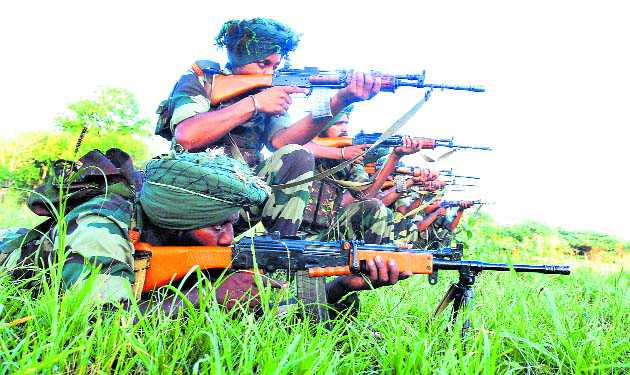
Ever wondered about the plight of the Army’s Infantry soldier! Dressed in battle fatigues, the semi-literate rifle-wielding soldier from a rural or semi-urban part of the country spends much of his career patrolling and guarding disputed borders with China and Pakistan in tough terrains that range from hilly jungles to very high-altitude barren, rocky mountains and glaciers and in extreme weather conditions. For the last 60 years, starting the Infantry soldier has been fighting a bleeding and fatiguing irregular war against terrorists and insurgents. Soldiers have silently suffered hostility, at best, indifference of sections of people in parts of J&K and some states in the northeast. Plus, they have to help in times of natural disasters such as earthquake, floods and landslides.Yet the Infantry’s 382 battalions, which comprise the largest arm of the Army, are also among the most neglected and lacking even in some basic equipment. Lost in the race for acquiring the more glamorous and highly expensive ‘big ticket; items such as tanks, artillery,

surface-to-air missiles, helicopters etc, the not-so-glamorous Infantryman does not evoke the same level of urgency even though it is the public face of the Army and bears the maximum casualties whether during war or peace. In April 2005 the Army conceived a major modernization plan for the Infantry with the fancy title of F-INSAS (Futuristic Infantry Soldier as a System). The project, spread over three phases and originally scheduled to have begun rolling out in stages from 2012 to 2020, is meant to upgrade, if not altogether revolutionize, the Infantry into an ultra-modern fighting machine. The aim is to provide the soldier with lethality, mobility, survivability, communications and situational awareness. The F-INSAS is based on five major technologies: (i) modular weapons; (ii) body armour and individual equipment; (iii) weapon sights and hand-held target acquisition devices; (iv) communication equipment to enable soldiers to transmit and receive complex voice, data and video systems; and (v) portable computers for soldiers and officers. The ambitious programme has made little progress and compares poorly with the ground realities 11 years after the project was conceived. Let alone modular assault rifles with interchangeable barrels (7.62 mm for counter-insurgency operations and 5.56 mm for conventional warfare), the Army has been unable to replace the existing and flawed 5.56 mm indigenously produced INSAS (Indian Small Arms System) rifle. A global tender floated in 2011 has been cancelled as all the competitors failed to clear the trials. The Infantry needs 1,85,000 new and better assault rifles which continue to remain elusive. But let alone buying new rifles, the Army has been unable to even change the orange colour of the existing INSAS rifles which compromises the camouflage of the soldiers thus putting them to risk.The Infantry presents a microcosm of the existing deficiencies in the Army which includes even basic and non-lethal items. Starting from 1,26,270 mosquito nets, 1,86,092 brown canvas rubber sole shoes with laces and 2,17,388 high-ankle boots, the Infantry is suffering a shortfall of 4,47,000 ski masks (required in the mountains) and three lakh bullet-proof vests, which can help protect the lives of soldiers in counter-insurgency operations and along the Line of Control. There is uncertainty over the current tenders for 44,600 carbines and 4,097 light machine guns that the Infantry is in dire need of even as about 1,000 Infantry combat vehicles need an upgrade. One other ‘small stuff’ is the need to replace the existing thin brown canvas shoes with proper sports shoes. Over 10 years later, the Army continues to await 8 lakh superior quality PT shoes for its troops. The Army is already suffering a woeful shortfall of ammunition including the Armoured Corps, Artillery, Air Defence and Infantry. So severe is the deficiency in ammunition that the Army’s War Wastage Reserve (WWR) has fallen from the required 40 days to between 15 and 20 days. In other words, the Army does not have ammunition enough to fight a war for more than 15-20 days. The depletion of the WWR is partly also because the Army is being forced to divert resources to raise a new Mountain Strike Corps (17 Corps). The first of its kind Mountain Strike Corps, sanctioned in July 2013 and to be raised by 2021, is being established at a cost of Rs 65,000 crore and will add 90,274 more soldiers and 32 new Infantry battalions. This will increase the number of existing Infantry battalions to 414. The WWR is expected to reach 100 percent only in 2019. Owing to delays in the F-INSAS project which has since been restructured and modified, the Infantry is a long way from becoming a fully networked all-terrain, all-weather personal-equipment platform with enhanced firepower and mobility for the digitalized battlefield of the future. The Infantry soldier’s wait has only become longer.

dkumar@tribunemail.com


New Pak army chief hints at LoC peace

Rawalpindi, November 29

General Qamar Javed Bajwa, an expert in Pakistan-occupied Kashmir affairs, today took over as Pakistan’s new army chief succeeding Gen Raheel Sharif and promised to improve the tense situation at the Line of Control soon.Gen Sharif handed over the command of world’s sixth-largest army by troop numbers to Bajwa (57) at a ceremony in Rawalpindi.Prime Minister Nawaz Sharif on Saturday appointed Bajwa as chief of army staff (COAS) by elevating him to the rank of a four-star general.Raheel in January had declared that he would not seek extension. There was speculation that the PML-N government would give him extension at the eleventh hour citing reasons that he was needed by the country to lead the war on terror. The post of the army chief is the most powerful in Pakistan.“The situation at the LoC will improve soon,” Bajwa was quoted as saying by Geo News after taking charge as the COAS.Bajwa sought support from the media to play a role in the keeping the morale of troops high. He said he had a heavy responsibility on his shoulders.Bajwa’s appointment coincides with the rising tensions and heavy exchange of fire at the LoC. Analysts believe Bajwa’s reference to the LoC situation could be a reconciliatory gesture towards India.However, Gen Raheel was not so conciliatory in his final speech as the army chief, as he cautioned India against adopting an aggressive stance in Kashmir.Raheel, 60, said in recent months “India’s increasing terrorism and aggressive stance” in Kashmir have “endangered” the region. “India should know that mistaking our policy of patience for weakness would be dangerous,” he said.“This is a reality that in South Asia, lasting peace and progress is impossible without solution of the Kashmir issue. For that, international community’s special attention is necessary,” he said.He also stressed the need for institutions to work together for the nation’s progress.“It is important that all institutions work together against external threats and internal threats. For this, we will need to follow the National Action Plan in letter and spirit,” Gen Raheel said. — PTI

Bq

But, Raheel warns India

“India’s increasing terrorism and aggressive stance in Kashmir have endangered the region. India should know that mistaking our policy of patience for weakness would be dangerous”— Gen Raheel Sharif, outgoing pak army chief


The ‘Chief’ Among Our Worries BY Lt Gen Syed Ata Hasnain (Retd)

The ‘Chief’ Among Our
Worries

SNAPSHOT

Pakistan appears to be moving quietly towards changing its Army Chief, and the D-Day for change is likely to be 29 November.

If the incumbent Gen Raheel Sharif is sacrificing an extension for the sake of political advancement he would definitely need the support of a friendly Army Chief.

While India remains obsessed with counting or changing its notes and coins, Pakistan appears to be moving quietly towards changing its Army Chief. That is a big event in that country, considering the kind of power the Chief wields. Yet, the announcement seems to be withheld for the moment. The incumbent, Gen Raheel Sharif, is reportedly on rounds of important headquarters to address officers and troops as part of his farewell. The D-Day for change is likely to be 29 November 2016.

Pakistan Prime Minister Nawaz Sharif does have the authority to extend the tenure of the Army Chief. Almost all previous chiefs have had extended tenures except the straightforward and unambitious General Jehangir Karamat who resigned prematurely or as some believe was asked to go by Sharif which led to the appointment of General Pervez Musharraf as the Army Chief. Musharraf executed the Kargil intrusion in 1999, which set the chain of events leading to the overthrow of Sharif. As an ex-President and Army Chief, Musharraf still exercised sufficient influence to ensure that his protege Gen Raheel Sharif was appointed the Army Chief in 2013, even while Nawaz Sharif was yet again the Prime Minister, and Musharraf’s power had considerably eroded.

Gen Raheel Sharif today exercises the authority and has the power of persona to push for his own extension, especially in light of the situation with relation to India, on the Line of Control (LoC), in the J&K hinterland and in the politico-diplomatic realm. Yet, this does not appear to be happening. Earlier assessments did speak of General Sharif’s possible effort to trigger worsening of relations with India to enable his case for extension. The trigger has happened, the relations have worsened, but Gen Sharif is still apparently interested in laying down office. Why all this magnanimity? The Indian media is focused on the identity of the next incumbent, forgetting that General Raheel Sharif cannot yet be written off as a has been Pakistan Army Chief like General Kayani. General Sharif without being the Chief could yet be an important player in Pakistan’s future hierarchy.

Loyalties in the Pakistan Army can sometimes be short-lived. There can be no guarantee that the Musharraf-Raheel Sharif club can ensure placement of its candidate as the replacement, but if we know the Pakistan Army and the power of the current Chief, the next incumbent should again be a Musharraf man. In fact, it is well known that Musharraf does not favour a change of Army Chief at this juncture. For him, having a favourable Chief would be a distinct advantage as the legal cases pending against him have all not been yet disposed of. His seniority difference with the next incumbent would be an uncomfortable 15 to 16 years. With General Sharif it is also 12 years, but he is special. He is the younger brother of Musharraf’s mentor who died in the 1971 Indo-Pak conflict, and whose memory is that of a celebrated warrior in Pakistan.

General Sharif is also a graduate of the Royal College of Defence Studies (RCDS) that is another power centre within the Pakistan Army; just like Musharraf himself. Musharraf is known to have had much to do with the appointment of Gen Raheel Sharif who was then third in the seniority in the pecking order of the top Generals. However, there are reasons more than one for Musharaf to be actually favouring a change. He can then run with the hares and hunt with the hounds. These reasons are not far to seek.

The fact that the Pakistan Army is having a timely turnover of an Army Chief (provided it does finally happen) is reason enough to analyse and even speculate. The first of the reasons which come to mind is that Gen Sharif is being correct in protocol and ethics by not robbing one of his immediate juniors and subordinates the opportunity of heading the Pakistan Army. He has built a fairly iconic image of himself as a macho leader having reduced the quantum of internal violence by targeting specific radical Islamic terror groups. His popularity in the street and equally within the uniformed community of Pakistan is definitely high. He has raised the pitch against India and exploited the situation when opportunities presented themselves in Kashmir. Perhaps, Gen Sharif seeks to pursue a political ambition outside the uniform. He could find many political parties willing to host him and carry him on their shoulders, thus achieving greater international acceptance for him, should he be ultimately elevated to political control of Pakistan. Extension as Army Chief was well within his hands as already brought out, especially after India’s surgical strikes but that would bring another two or three years in the appointment.

When Generals are ambitious they like to go the whole hog. With the prevailing perception of his achievements that he has been able to project in civil society and the public at large, his image remains extremely clean and likeable. In a country where likeable leaders are rare to find, Gen Raheel Sharif has definitely shown himself as someone a bit different. He can play to the galleries and the street, charm foreign leaders, carry his military persona in the army, exploit his brother’s martyrdom and national warrior status and throw in anti-India sentiments to good measure. You can’t find that type of leader in Pakistan today, even if you search with a fine tooth comb.

If General Sharif’s powers of analysis and appreciation give him the same answers as above, he should be confirming these from his mentor, General Musharraf. A long term view reveals him to be just about the only candidate who as a military-civilian leader can rock the boat of all political parties. He can be the reviver of fortunes of his mentor Musharraf’s own political party. Musharraf could then be the patron and the even the iota of doubt, which exists about the future of the legal cases against him, could be laid to rest.

Having effectively denied the surgical strikes by India there is virtually no loss of face for General Sharif. When uncomfortable questions regarding the presence of terror groups were being raised by Pakistan’s powerful media, he muzzled that too with the steps against Cyrus Almeida. That communicated the need for discretion among those who think that the Pakistan Army has lost some of its steel in dealing with civil dissent.

From among the candidates being spoken of as possible replacements, it may be prudent to stop imagining that the choice would lie in the hands of the Prime Minister. If General Sharif is sacrificing an extension for the sake of political advancement he would definitely need the support of a friendly Chief. That should mean anyone close to Nawaz Sharif would be dangerous. Lt Gen Javed Iqbal Ramday falls in that category. Being a wounded soldier also puts him in the category of a potentially popular Chief, not something General Sharif would be looking for. That would put Lt Gen Qamar Ahmad Bajwa and Lt Gen Ishfaq Nadeem Ahmad as the two direct contenders. Both would have an equally good chance although the former’s 10 Corps (Kashmir) experience may place him at some advantage.

A change of Army Chief carries much importance for Pakistan whose destiny is decided by him, but for India it would be business as usual. A display of a degree of machismo at the LoC or Jammu International Border can be expected. With the Chief turning over and the DG ISI also under transfer to Karachi as Corps Commander, we will have a new incumbent in that appointment too. These are times which could be unpredictable as the Punjab-based jihadi anti-India groups may just wish to further their agenda when all eyes are elsewhere. A strike inside India could be a tempting proposition for India’s enemies when it is under a different kind of instability, public attention is elsewhere and passions can be lit up to unpredictable proportions. Putting all this in the melting pot, I as an Indian, should be careful and prepared.

Stop Press… the killing and mutilation of the body of another Indian soldier at the LoC is General Sharif’s swan song and way of admission that the surgical strikes did take place. It’s his way of leaving with honour but the Indian Army should give him a signature salute with a deniable strike across the LoC and let him live to regret his last days in uniform.

http://swarajyamag.com/politics/the-chief-among-our-worries


Army launches full fledged Bench of AFT in Jammu

Justice N. Paul Vasanthakumar, Chief Justice of Jammu and Kashmir High Court File Photo: Prashant Nakwe

Army on Friday launched a full fledged Bench of the Armed Forces Tribunal (AFT) at a Military Station in Jammu, the winter capital of Jammu and Kashmir.

Justice N Paul Vasanthakumar, Chief Justice of High Court of Jammu and Kashmir, inaugurated the full fledged Bench of the AFT here at the Sunjuwan Military Station.

The ceremony was presided over by Justice B P Katakey, Officiating Chairperson, AFT, New Delhi.

The Government of India in the second phase had sanctioned two Regional Benches, one at Jabalpur in Madhya Pradesh, which was notified on July 9, this year, and the Srinagar Bench at Jammu on November 17, a defence spokesman said.

The Bench since then has functioned as a circuit Bench of Chandigarh Bench.

The establishment of the full fledged Regional Bench has mitigated the problem relating to long journey to Chandigarh faced by the Armed Forces Personnel and their families, he added.

The official notification issued by the Ministry of Defence, under SRO 12(E), said: “In exercise of the powers conferred by sub-section (4) of section 5 of the Armed Forces Tribunal Act, 2007 (55 of 2007), the Central Government hereby notifies the Bench of the Armed Forces Tribunal, Srinagar with effect from the 17th day of November, 2016, which shall have jurisdiction within the territorial limits of the State of Jammu and Kashmir.”

The Bench thanked the efforts of Jang Bahadur Singh Jamwal, Former Registrar of this Bench for his sincere and dedicated efforts to find the present building to house it.

He worked like a one man army with no infrastructure except the active support of the local Army Station Commander and his dedicated staff, it said.

He liaised with the army authorities without whose cooperation, it would not have been possible to have the Bench functional on time.

It is for the first time, in the history of the AFT that on the date of inauguration of the Bench, the free Legal Aid Clinic has been inaugurated.

Besides the Principal Bench in New Delhi, AFT has Regional Benches at Chandigarh, Lucknow, Kolkata, Guwahati, Chennai, Kochi, Mumbai and Jaipur.

Chief Justice inaugurates AFT regional bench

Newspoint Bureau

Jammu Tawi, November 25

 Justice N Paul Vasanthakumar, Chief Justice of High Court of Jammu and Kashmir today inaugurated the full fledged Bench of the Armed Forces Tribunal (AFT) at Military Station Sunjuwan, here today. The ceremony was presided over by Justice B P Katakey, Officiating Chairperson, Armed Forces Tribunal, New Delhi.

The Government of India in the second phase has sanctioned two Regional Benches, one at Jabalpur in Madhya Pradesh, which was notified on July 09, 2016, and the Srinagar Bench at Jammu on November 17, 2016. The Bench since then functioned as a circuit Bench of Chandigarh Bench. The establishment of the full fledged Regional Bench has mitigated the problem relating to long journey to Chandigarh faced by the Armed Forces Personnel and their families. The official notification issued by Ministry of Defence, under S.R.O. 12(E), “In exercise of the powers conferred by sub-section (4) of section 5 of the Armed Forces Tribunal Act, 2007 (55 of 2007), the Central Government hereby notifies the Bench of the Armed Forces Tribunal, Srinagar (temporarily to be located in Jammu) with effect from the 17th day of November, 2016, which shall have jurisdiction within the territorial limits of the State of Jammu and Kashmir”.

The Bench thanked the efforts of Jang Bahadur Singh Jamwal, Former Registrar of this Bench for his sincere and dedicated efforts to find the present building to house it. He worked like a one man Army with no infrastructure with the active support of the local Army Station Commander and his dedicated staff.

CJ inaugurates full-fledged bench of Armed Forces Tribunal

CJ inaugurates full-fledged bench  of Armed Forces TribunalExcelsior Correspondent
JAMMU, Nov 25: The defence personnel will now be able to get their grievances redressed without facing the hassle of going outside the Jammu and Kashmir as full-fledged bench of the Armed Forces Tribunal (AFT) has been established at Military Station Sunjuwan and State High Court has identified about 425 cases, whose fate is hanging in balance during the past several years, for transfer to the Tribunal within shortest possible time.
The Government of India, in the second phase, has sanctioned two Regional Benches—one at Jabalpur in Madhya Pradesh, which was notified on July 9, 2016 and the Srinagar bench at Jammu on November 17, 2016.
The official notification issued by Ministry of Defence under SRO-12 (E) reads: “In exercise of the powers conferred by Sub-Section 4 of Section 5 of the Armed Forces Tribunal Act, 2007, the Central Government notifies the bench of the Armed Forces Tribunal, Srinagar (temporarily to be located in Jammu) with effect from November 17, 2016, which shall have jurisdiction within the territorial limits of the State of Jammu and Kashmir”.
The establishment of full-fledged Regional Bench has mitigated the problems relating to long journey to Chandigarh faced by the armed forces personnel and their families. It is pertinent to mention here that besides the Principal Bench in New Delhi, Armed Forces Tribunal has Regional Benches at Chandigarh, Lucknow, Kolkata, Guwahati, Chennai, Kochi, Mumbai and Jaipur.
The full-fledged bench of AFT at Military Station Sunjuwan was inaugurated by Justice N Paul Vasanthak-umar, Chief Justice of J&K High Court. The ceremony was presided over by Justice B P Katakey, Officiating Chairperson, Armed Forces Tribunal New Delhi.
Justice B S Walia, Judge J&K High Court, Justice V K Shali, Judicial Member, Armed Forces Tribunal New Delhi, Vice-Admiral A G Thapliyal, Administrative Member Jammu Bench, Major General S K Sharma, General Officer Commanding Tiger Division, A K Kaul, Registrar General of J&K High Court, Sindhu Sharma, ASG J&K High Court, Arun Kheda, Principal Secretary to Officiating Chairman, G P Mogha, Principal Registrar AFT New Delhi and M Y Akhoon, Designate Presiding Officer for Food Safety Appellate Tribunal Kashmir, Director Judicial Academy and Judicial Officers were present on the occasion.
In his inaugural address on the occasion, Chief Justice N Paul Vasanthakumar said that as per the Armed Forces Tribunal Act, the Tribunal has been given original as well as appellate jurisdiction to decide grievances of the members of armed forces about their appointment, tenure, remuneration, seniority, promotion, superannuation and retiral benefits etc.
“The cases filed by the armed personnel, even during the year 2002 are pending in the High Court due to huge pendency of variety of cases”, he said, adding “I am sure that with by the establishment of this Tribunal, aggrieved defence persons will get speedy justice with the cooperation of advocates specialized on service laws”.
He disclosed that the Registry of the High Court has identified about 425 cases (writ petitions) pending before both the wings of the High Court filed by the armed forces personnel, which are pending over several years and steps will be taken to transfer these cases in compliance to Section 34 of the Armed Forces Tribunal Act, 2007.
“The Armed Forces Tribunal is a substitute to the High Court and the Tribunal is vested with powers like civil court with respect to summoning of witnesses, production of documents and recording of evidence. It is also empowered to reappraise facts and evidence while deciding validity of Court Martial orders. It is also vested with power to punish for contempt up to three years imprisonment”, Justice Vasanthakumar said.
Stating that defence personnel are guarding the country from Kashmir to Kanyakumari, handling situations during natural disasters as well as during internal disturbances, the Chief Justice said, “we have experienced their courage and conviction by helping the flood victims during September 2014 in this State and December 2015 in Tamil Nadu”, adding “many of them posted in this State are hailing from various parts of the country. Even for redressing their genuine grievances they approached the courts having jurisdiction in far off places. Therefore, the Government of India though it fit to establish a separate judicial establishment to be approached by the persons belonging to armed forces to seek justice”.
“Access to justice is a fundamental right guaranteed under the Constitution of India which includes affordable and speedy justice. With the establishment of this Armed Forces Tribunal, access to justice has been made easier and timely justice made possible”, Chief Justice said.
“While considering the cases as a Judge, I could notice that under the guise of maintaining discipline, persons committing even minor delinquencies are dealt with very seriously and extreme punishment of dismissal is being imposed ignoring their long years of service, sometime by ignoring the principle of natural justice and the mandatory procedures provided under rules”, he said, adding “proportionality of punishment is one of the cardinal principles to be borne in mind by disciplinary authority as well as appellate authority. If extreme punishment is imposed for minor delinquency, same would be treated as arbitrary exercise of power”.
He further said: “Officers of Armed Forces are also expected to bear in mind the Constitutional principles, procedural safeguards and settled principles of law declared by the Supreme Court in various decisions while dealing with disciplinary matters. If punishment imposed is found excessive, power is vested to this Tribunal to go into the issue of proportionality of punishment and it can reduce/modify the punishment depending on the facts of each case”.
“One other factor noticed is that the appellate authority while deciding the appeal filed against the orders of punishment is not recording reasons for affirming the order of the disciplinary authority in most of the cases. This action of the appellate authority is causing inconvenience to the Courts/ Tribunals to decide the matters, as it is a settled principle of law that a quasi judicial authority passing orders must record reasons, as the order is expected to be challenged before the court of law/ Tribunal”, Chief Justice said.
“Another important issue noticed is, while considering the claim of disability pension to discharged personnel on medical grounds routine orders of rejection are being passed in spite of various judgments rendered by the Supreme Court. The officials must deal with such issue by sensitiveness and compassion. Due to erroneous orders passed, cases are piling up in Tribunals/Courts”, Justice Vasanthakumar said.
He thanked the efforts of Jang Bahadur Singh Jamwal, former Registrar of the Bench for his sincere and dedicated efforts to find the present building to house bench of the AFT. He worked like a one man army with no infrastructure except the support of the local Army Station Commander and his dedicated staff.

INAUGURATION OF REGIONAL BENCH, SRINAGAR AT JAMMU

Jalandhar: 25 November 2016                                                                                                                                                                                         

Hon’ble Mr. Justice N. Paul Vasanthakumar Hon’ble Chief Justice of High Court of Jammu and Kashmir inaugurated the full fledged Bench of the Armed Forces Tribunal (AFT) at Military Station Sunjuwan, Jammu today. The ceremony was presided over by Hon’ble Mr. Justice B.P Katakey, Officiating Chairperson, Armed Forces Tribunal, New Delhi.

The Government of India in the second phase, sanctioned two Regional Benches, one at Jabalpur in Madhya Pradesh, which was notified on 09 July 2016, and the Srinagar Bench at Jammu on 17 November 2016. The Bench since then functioned as a circuit Bench of Chandigarh Bench. The establishment of the full fledged Regional Bench has mitigated the problem relating to long journey to Chandigarh faced by the Armed Forces Personnel and their families. The official notification issued by Ministry of Defence, under S.R.O. 12(E), “In exercise of the powers conferred by sub-section (4) of section 5 of the Armed Forces Tribunal Act, 2007 (55 of 2007), the Central Government hereby notifies the Bench of the Armed Forces Tribunal, Srinagar (temporarily to be located in Jammu) with effect from the 17th day of November, 2016, which shall have jurisdiction within the territorial limits of the State of Jammu and Kashmir”.

        The other guests included Hon’ble Mr. Justice BS Walia, Judge Jammu & Kashmir High Court, Hon’ble Mr. Justice V.K Shali, Member, AFT, New Delhi, Vice Admiral A.G Thapliyal, Administrative Member Jammu Bench, Major General S.K Sharma, General Officer Commanding, Tiger Division, Mr. A.K Kaul, Registrar General of Jammu & Kashmir High Court, Ms. Sindhu Sharma, ASG Jammu & Kashmir High Court, Mr. Arun Kheda, Principal Secretary to the Hon’ble officiating Chairman and Mr. G.P Mogha, Principal Registrar, AFT, New Delhi.

      The Bench thanked the efforts of Mr. Jang Bahadur Singh Jamwal, Former Registrar of this Bench for his sincere and dedicated efforts to find the present building to house it. He worked like a one man Army with no infrastructure with the active support of the local Army Station Commander and his dedicated staff. He liaised with the Army authorities without whose cooperation, it would not have been possible to have the Bench functional on time.

It is for the first time, in the history of the AFT that on the date of inauguration of the Bench, the free Legal Aid Clinic has been inaugurated.

Besides the Principal Bench in New Delhi, AFT has Regional Benches at Chandigarh, Lucknow, Kolkata, Guwahati, Chennai, Kochi, Mumbai and Jaipur.  


India warns Pakistan against blocking SAARC initiatives

New Delhi, November 21

India gas asked Pakistan to desist from “blocking every possible initiative” under SAARC and warned that the “damaging” approach will force countries of the region to look for other options like Bay of Bengal Initiative for Multi-Sectoral Technical and Economic Cooperation (BIMSTEC) to boost regional cooperation.

Without naming Pakistan, Foreign Secretary S Jaishankar said on Monday some basic standards of regional cooperation had to apply as he noted its opposition to major initiatives like those aimed at improving regional connectivity had frustrated a majority of the member countries.

In an address at a leading think tank, Jaishankar, dwelling on China-Pakistan ties, said some issues arising out of the relationship were causing concern to India, including the economic corridor Beijing was building through Pakistan-occupied-Kashmir.

When asked about Pakistan’s frequent threat of using “tactical” nuclear weapons, the diplomat said: “We do not speak of tactical nuclear weapons, somebody else does”. At the interactive session, he said there was no need for major powers to get involved in resolution of issues between India and Pakistan, saying it gives rise to “expectations and illusions” that are not sustained by objective facts on the ground.

Referring to the 1965 and 1971 wars with Pakistan and some other instances, he said there was some sort of involvement of great powers in the past. He, however, insisted that “a constantly interfering umpire” does not allow the game to take its natural course. He said India’s “allergy” to involvement of any great power in Indo-Pak ties is well known.

Talking about “fluidity” of geo-politics and fast changing foreign policy space, Jaishankar, who has just returned from the US, said there would be change in the terms of engagement between the US and the world under Donald Trump’s presidency.

On SAARC, he said India has immense interest in the grouping while calling “hugely damaging” to the region as well as Asia Pakistan’s approach in blocking major regional initiatives under the grouping.

The annual summit of the grouping was to be held in Islamabad but it was cancelled after India and many other member countries decided not to participate.

There has been an indication that India and some other countries may look for BIMSTEC for regional cooperation if Pakistan continues to create hurdles for SAARC. Islamabad played spoilsport in firming up a key connectivity pact during SAARC’s last summit in Kathmandu.

“Problem with SAARC is that some basic sort of standards of regional cooperation have to apply. If you say that I will be regional member but I will not allow regional trade, I will not allow regional connectivity, will not allow regional motor ways, I will not allow regional railways, then what is it about.

“You cannot be a member of a region and block every possible regional initiative and still say I am good member. That sort of approach has to change,” Jaishankar said. — PTI


Told troops to kill enemy, not wait to get martyred: Parrikar

Panaji/Mumbai, November 21

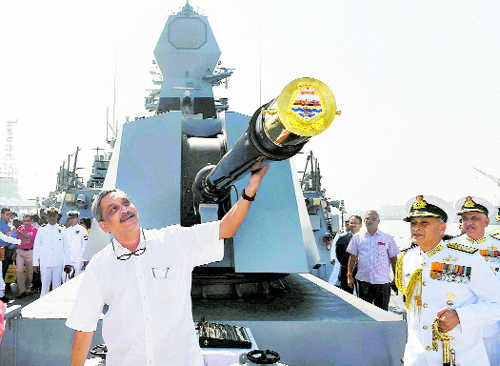
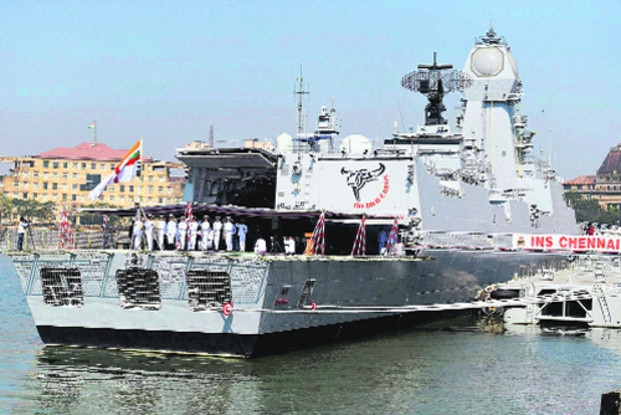
Defence Minister Manohar Parrikar has said the armed forces in Kashmir had complete power to shoot at those wielding guns, instead of waiting for the terrorists to open fire and “getting martyred”.“When I took over as the Defence Minister, the first thing I told them (soldiers) that if you see machine gun or pistol in anyone’s hand, don’t expect that he has come to say hello to you. Before you get martyred, you should eliminate him,” Parrikar said at Vasco in Goa last evening.“In Kashmir, our Army is fighting with terrorists. The Congress government had given them directions that till they (terrorists) don’t fire at you, don’t retaliate,” he said, claiming that the morale of the Army had gone up since Prime Minister Narendra Modi-led government came to power.Speaking to mediapersons after commissioning new warship INS Chennai in Mumbai, he said the recent surgical strikes had put forth the message that the government would not be aggressive, but “will also not take things lying down”.He said the cross-border tension would ease if Pakistan stopped ceasefire violations. “Surgical strike has given a message that Indian Government will not be aggressive but will also not take things lying down,” Parrikar said. Responding to questions on the Army’s action against terror camps and the recent rise in ceasefire violations across the border, Parrikar said if the ‘timetable’ of such violations was observed, there was always some political angle to them. — PTIBlocking regional initiatives cannot go on: Foreign Secretary on Pakistan’s actions New Delhi: Sending out a clear message to Pakistan, India on Monday asked it to desist from “blocking every possible initiative” under SAARC, cautioning such a hugely damaging approach will force countries of the region to look for other options like BIMSTEC to boost regional cooperation. Without naming Pakistan, Foreign Secretary S Jaishankar said some basic standards of regional cooperation had to apply as he noted its opposition to major initiatives like those aimed at improving regional connectivity had frustrated a majority of the member countries. PTIPakistan army chief Gen Raheel Sharif to retire on Nov 29, kicks off farewell tour  Islamabad/Lahore: Ending speculation that he might get an extension, Pakistan’s powerful army chief General Raheel Sharif today kicked off his farewell visits to various army units before his retirement on November 29. “The COAS (Chief of Army Staff) kicks off his farewell visits beginning from Lahore on Monday,” military spokesman Lt Gen Asim Saleem Bajwa said. Bajwa said General Raheel met troops and addressed a “huge gathering of soldiers of army and Rangers at (Lahore) Garrison.” General Raheel said accomplishment of peace and stability was no ordinary task. PTI

Commissions INS Chennai

  • Parrikar on Monday commissioned INS Chennai—third indigenously designed guided missile destroyer
  • Built in Mumbai, the ship marks end of Project 15A to build such destroyers in Kolkata class
  • With an overall length of 164 metres and displacement of 7,500 tonne, it’s one of the largest destroyers in Navy
  • The ship is armed with supersonic surface-to-surface BrahMos missiles and Barak-8 long range surface-to-air missiles


MODI’S INHERITANCE BY Lt Gen PG Kamath (pgkamath11@yahoo.com)

To be a Prime Minister of a country like India is indeed more demanding than any other position  in the world. POTUS, of course has humongous global challenges; to monitor and influence the US political presence, diplomatic dominance, economic inducements and exert military coercion? However, the machinery, he inherits, is so well oiled that it can take on extremes of personalities from Nixon to Regan, and soon the world will see how even Trump would take to the White House like the white pigeons, which nibble on its North and South lawns?
 
Yes! To change the basic direction of US policies, would indeed invite obstinacy from well entrenched bureaucracy, however there are provisions in US, where  they can appoint any suitable person in the country to key positions in the government and overcome the bureaucratic resistance.  Even the secretaries (ministers) are taken from general public not necessarily  politicians, however they have to undergo senate confirmation.  The selection of Reince Priebus as Chief of Staff and media mogul Stephen Bannon as Chief Strategist; both with no experience in the Federal Government indicates that Trump means business.  Their inexperience in the government should be an asset to Trump, as they would be able to follow different policies and procedures and would be able to think out of the box.  Hence, he has already taken steps to mould the government to give new direction to his policies. 
China and Russia without doubt are authoritarian in more than one aspect, hence their heads of state can steer the country in the direction they choose and it would be illogical to compare their problems if any, with the gargantuan problems faced by the Indian PM.  The Japanese, though were in the habit of changing their prime minister with every season, have settled down under the dynamic Prime Minister Abe. However their people, bureaucrats, politicians not only love their country but also have great respect for their institutions. A case in point; it was unthinkable that the only country in the world that had been devastated by nuclear bombs would ever sign the nuclear deal with India; never mind the mandatory approval of the Diet ?  Japan signing the deal is a testimony to their maturity and understanding to pursue their national interest, in view of the looming threat from China. Again, to compare Japan with our putrefied politico-bureaucratic system is a sheer wastage of time and questioning the intellect of the readers? To make it difficult for Shinzo Abe to get the deal ratified in the Diet, our defence minister expresses doubt on our commitment to ‘No First Use’.  What an inopportune time to make such a statement? Oh God! Please educate our ministers and their likes!
Now, what does the Indian Prime Minister inherit?  A bureaucracy, which has been the biggest stumbling block in the progress of the country?  As per the 1951 census of India, the country had 322 districts, which have been reorganised into 640 districts as on today. Each of the districts have been under a District Collector and a number of districts comprising  a Division have been under a Divisional Commissioner.  Right from the time of independence, the administration and governance was provided to the people of our country by District and Divisional Commissioners. Health care, primary and secondary education,  food distribution, water supply, sanitation, social forestry,  scientific farming, irrigation, agriculture, forest and agro based industries, housing, and a host of other schemes that the government had introduced from time to time were not delivered, causing serious deficit in governance. As on today 205 districts; nearly one third of the country is affected by terrorism, insurgency and left wing extremism? If one tours this area the main cause for such fissiparous trend is ‘bad governance’? Why no one is held accountable for dragging our country to such depths? The politicians have no direct role in the grass root administration and they are accountable to the people once in five years; however the bureaucrats, who are directly responsible to give a clean administration are neither accountable to the people nor to their superiors.  Their esprit de corps has ensured that they protect their breed from the politicians and ensure the non-performers also survive and continue to harm the country till they retire and thereafter?  To ensure that every non-performer is rewarded,  they have introduced ‘non-performance up-gradation’ in the 6th Pay Commission.  This unique and obnoxious provision enables that all inefficient and non performing bureaucrats keep getting the higher band of pay irrespective of their promotion?  Hence, the system has ensured that not even a shred of incentive is left for a bureaucrat to work? 
The Hong Kong based   Political and Economic Risk Consultancy (Perc) has been carrying out  survey of Asia’s best and the worst bureaucracies.  The survey is being conducted since 1997 and we all should be proud that India has maintained her position as the Worst Bureaucracy in Asia since 1997.  It is indeed a laudable achievement considering that in Asia we have many Least Developed Countries, Developing Countries and Developed Countries.  To maintain the position unchallenged for nearly two decades is no mean a feat?  We have soundly beaten even countries like Indonesia, Philippines and Vietnam to bag the coveted award. 
Our bureaucracy has not reacted to this report as they have nothing to defend and they know the organisation actually need not have to carry out the research:  No one needs to prove an axiom?   It is unbelievable but true that the website of the organisation (www.asiarisk.com) has been blanked from all servers in India?  If anyone can access it, please drop an email to me.
Sadly; most bureaucrats genuinely feel that they are the ones, who are progressing the country and harbour unfounded, undeserved and unjustified pride in themselves?  If indeed, the bureaucrats are the arbitrators of the nation, considering the elected representatives do not have time for governance, then the future of the country is in the hands of the Asia’s worst bureaucracy?  No doubt; we are unable to exploit our immense potential and get mired in quicksand of our own making?   Our Human Development Index, tolerance and inclusive index, social progress index, health and wellness index are abysmal.  Our infantile mortality, maternal mortality, open defecation, tragic state of our education, rampant social ills, exploitation of poor and the all pervasive corruption, makes us hang our head in shame? Has anyone questioned as to why we could not progress for seven decades as we could have? Have we ever held the bureaucracy responsible for the tragic state of the country?  The   sad state of the country is due to red tape, government controls, corruption, greed, avarice, lack of commitment, absence of patriotism, lack of concern for others and the ubiquitous incompetency and inefficiency.  It is also due to bad politicians and the worst bureaucrats and indifferent people with feudal mind set, who vote for their oppressors and tolerate the power brokers.  If not, how come a party led by fodder scam accused get maximum number of seats in Bihar assembly? How come an advocate spokesman of GOP, who misused his chamber as a brothel continue to be in Rajya Sabha? The same person in order to avoid income tax has seemingly bought 1250 laptops for 14 professionals he has employed in his office.  He has also bought solar panels for ₹25.16 Crores and the dealer has confessed in his statement to the IT Department that it was an inflated bill and he has returned ₹ 10 Crores as loan to his two sons.  He has further said in his defence that after a termite attack on his record – not surgical strikes; he has not been able to give supporting documents of his expenditure? If I have to talk of our political leaders then I would lose the focus of this article; hence I will stop. 
To take things forward; it is the first time, we are seeing some drastic steps being taken.  The demonetisation has really hit all the political parties and also their backers.  Lo and behold! Look at the virulence with which the opposition parties have attacked the government? They have suddenly taken the common man under their umbrage seemingly unable to see his plight? The truth is the unaccounted wealth of each of them individually and their parties have been hit by a tsunami?
It was on 2 Mar 2016, Raga said in parliament “The Finance Minister announced a fair and lovely scheme, saying it was Modiji’s scheme, which would convert black money into white. In 2014, Modi had said “I will finish black money… I will jail anybody who has black money”. But under the fair and lovely scheme, nobody will go to jail, nobody will be arrested, nobody will be asked anything. Go to Arun Jaitleyji, pay tax and turn black money into white”.  Now, Raga; what problem do you have in demonetisation? What a down to earth leader you are; you stood in a queue for converting ₹ 4000/-?  You indeed ascribe very low intellect to our countrymen; don’t you?  I take it that with those 4000/- you went to Sarojani Market and bought some vegetables and had a delayed lunch at your house? I still do not want to take the credit out of your stunt as the people around you were provided with some form of amusement that added a little mirth in the boredom, while waiting in the queue.  In the same breath, the PM’s 96 year old mother also need not have gone to the bank to exchange her currency? Mr PM! Even your enemies do not doubt your nationalistic ardour and credentials? One of your personal secretary or your friends could have assisted her.  Raga has indeed lot to prove himself to the people of this country and you really don’t have to do it. I want to remind politicians of all hues, the games you play is being seen by the people and they are able to see thorough each one of you!  All of you are fooling yourself and people watch with amusement as they do it to the caged animals in the zoo!
We have another muffler clad Chief Minister, who started his stint by a respiratory problem and has ensured the 17 million people who voted him overwhelmingly, have also have a respiratory problem? When will you start administering your State rather than keep on wearing the national mantle and comparing yourself with the Prime Minister? It is so irritating to hear your cheeky spokesmen yelling like school boys scoring brownie points on the national television. The CM himself has called the PM a coward and psychopath.  He lauded him for surgical strikes at the same time asking for proof?  Obviously he wanted the Army to disclose the detailed plans so that such strikes can be neutralised by Pakistani forces, in case there is a requirement of another strike? Either he is completely naïve or  he is working at the behest of ISI?  The buffoons of the left parties and jokers of the GOP, were also braying for proof.  How happy were the Pakistanis? Indian opposition was doing their work admirably?
In contrast to the US President elect, the Indian PM inherits a system that is rotting from the roots to the leaves. He has the  worst bureaucracy to run the country. He has a system that is corrupt to the core, where the lower officials take bribe in giving government deliverables to the poor and the higher offices are headlong immersed in scams.  If some of the higher bureaucracy is not corrupt, they have professional egos and manipulate the decisions of ministers by granting favours, camouflaging truth and have their way, which is not necessarily in the interest of the nation. Look at the way the Defence Minister approved a mischievous letter of equivalence between the Armed Forces Officers and the civilian cadre?  Look at the sad state of OROP? Just look at the 7th Pay Commission tearing into the pride of the Armed Forces. The Armed Forces are really not fighting for monetary emoluments they have put up with that for several pay commissions, where more than hundred anomalies have remained un-actioned.  The main issue is that it is hurting their pride and élan.  Please remember Prime Minister; a soldier without his pride is a weapon without its ammunition.
All the Prime Minister’ staff are almost entirely filled with serving or retired bureaucrats.  How can these tired old straight jacketed bureaucrats can fan new ideas? The NSA is a police officer, which was quite evident in PM’s Independent Day address to the nation from the ramparts of Red Fort, where he remembered the sacrifices of 33000 police personnel, who are defending the nation on land, sea and air.  You seem to have a new role in mind for the police and I am sure in times to come you would dismantle the armed forces and task the police under the NSA to defend the nation on land, sea and in air?  Since Independence; Mr Prime Minister, no armed forces personnel have ever died in the wars of 1947-48, 1962, 1965, 1971, Sri Lanka, Kargil, Op Parakram and innumerable Counter Terrorist and Counter Insurgency operations in the North East and Jammu and Kashmir? I have no doubts your NSA must have told you so?
I still would like to appreciate the Prime Minister that in spite of inheriting the decrepit official machinery, how come he has been able to take ground breaking decisions? He has dissolved GOMs, Planning Commission, reduced foreign trip bonanzas to the bureaucrats and politicians, concentrated on infrastructures, science and technology such as research in cold fusion and gravitational wave, progressing electrification of the entire country, passing the real estate bill, jan dhan yojna, digital India, surgical strikes, swach Bharat, awas yojna, Atal pension yojana, make in India, sukannya samraddhi yojna, LPG subsidies pahal scheme, free gas connection to the poor under ujjwal yojna, new scheme for rehabilitation of bonded labour, digital locker,  smart city, suraksha bima yojana, gold monetisation scheme and the recent demonetisation scheme to name only a few! The  achievements have been done in Indian Government departments with the resources that we pejoratively call “Babus” – is nothing short of absolute miracle! says Desh Kapoor an acclaimed creative writer. Look at the resistance he had to face to move the rusted, dissonant, discordant, vintage and ill maintained official machinery?
Mr Prime Minister! You still have to conduct a surgical strike on the Armed Forces. Neglecting the reorganisation of Defence Ministry would leave the country under a grave threat.  The Chief of Defence Forces should be made a reality and it is high time the Defence Minister and you, have an ‘one point military advice’. He should be a permanent member of Cabinet Committee on Security.  The reorganisation of the Ministry of Defence is long pending.  All you have to do is look at the GOM on National Security of 2001 headed by your mentor LK Advani and act.  Restoring the battered pride of the Armed forces is an onerous task, which you can only neglect at grave peril to the nation.
Please also ask your NSA, what advice he has to give you in solving the Jammu and Kashmir problem? How come he; an intelligence professional did not give you the advance of information of broth discontent brewing in the valley? How are you going to reign in the Hurriyat? I assure you, all these problems have answers and all you have to ask is to take real experts in to confidence and discuss with them.  Forget it in case you think the mandarins of Foreign Ministry and Home Ministry would give you solutions? Over a period, they have become one tracked and developed high levels of ego to ask advice from better informed experts. This problem also needs your immediate attention.
Mr Prime Minister! Your inheritance from your parents is phenomenal.  You have a clear mind, innate sagacity and courage to walk the path alone, where others fear to tread.  Your opponents fear you, as  their daily is threatened? I still believe that you cannot be informed on all issues.  Your ministers range from mediocrity to intellectuals and let me assure you none of them are visionaries like you?  I also suggest you reorganise your PMO.  You need to take technocrats, economists, academicians, armed forces officers, strategists and philosophers. They should also act as your devil’s advocate.  Do not rely too much on bureaucrats; they are all set to play a ‘Sanjay Baru’ on you? If you do not believe me, just get hold of their personal diaries; their draft memoirs are in the making!
(The writer is veteran from Indian Army)

Lt Gen PG Kamath of the Madras Regiment is a graduate of the Defence Services Staff College, Wellington; and the National Defence College, New Delhi. He has served for over 21 years in operational areas, all over the Country, including Jammu & Kashmir and Arunachal Pradesh. He commanded an Infantry Brigade in Punch (J&K) during Op Parakram; and commanded an Infantry Division in Kutch, Sir Creek area and Barmer. He has held prestigious Command and Staff appointments; and retired as Commandant Army War College, Mhow.


Lawyers file plea in Bombay HC challenging ban on Rs 500, Rs 1,000 notes

Two senior advocates have moved the Bombay high court (HC) urging it to take suo moto cognisance of the Union government’s decision to stop the circulation of all currency notes of the denomination of Rs500 and Rs1,000.

Advocate Jamshed Mistry and advocate Jabbar Singh moved the HC’s vacation bench on Wednesday arguing that the government’s move was rushed and had caused unprecedented inconvenience to the general public.

Justice MS Karnik, who was presiding over the vacation bench, has now directed the lawyers to plead their case before a regular bench of the court as “there were several questions of law involved”.

Mistry and Singh also cited a November 2 notification of the Reserve Bank of India that was sent out to all nationalised banks. In the notification, the RBI had said that as part of a ‘pilot project’, all banks must ensure that “within the next 15 days”, at least 10% of their authorised ATM machines should dispense currency notes of Rs100 denomination.

Mistry argued that the notification made it clear that this project was initiated on a pilot basis and thus, the Centre shouldn’t have rushed into it. As per the law, the government needed to come out with an ordinance and then an Act before such a move, he said.

Mistry said that in 1978, during the emergency, the ordinance followed by an Act called The High Denomination Bank Notes Act, 1978, was passed to bring demonetisation into effect. “Therefore, the requirement is that the current demonetisation could have been done only through an ordinance, or amendment of the Act, and not merely through a gazetted notification.”

He said that “merely giving four hours notice is no notice at all and that one’s right to life and right to occupation/conduct business were severely affected”.

Two lawyers move Supreme Court against de-monetization of 500 & 1000 notes

Supreme Court of India

Two petitions have been filed in the Supreme Court of India challenging the decision of the Central government to de-monetize 500 and 1000 notes.

Both the petitioners are practising lawyers – one is an Advocate-on-Record at the Supreme Court, Vivek Narayan Sharma and the other is advocate Sangam Lal Pandey.

Sharma’s petition runs to thirty-nine pages and he has questioned the manner of implementation of the scheme which he has alleged has failed to follow constitutional rule of law, principles of natural justice and provide sufficient time to citizens of India to prepare for such phasing out of specified bank notes.”

He has contended that the “constitutional ‘Right to Life’ & ‘Right to Trade’ of all the citizens of India is being infringed by the Centre due to unreasonable, unmethodical and dictatorial manner of implementing the said Scheme”

The petition states that,

“…phasing out of specified bank notes on 9.11.2016 was announced by the Hon’ble Prime Minister between 8.00pm – 9.20pm on 8.11.2016 and thereafter that Notification dated 8.11.2016 was issued around 11.00pm by Respondent. It is submitted that Hon’ble Prime Minister also announced that new bank notes of denominations of Rs.500/- and Rs.2000/- are going to replace the existing specified bank notes of Rs.500/- and Rs.1000/-. Therefore, giving no time to people in possession of Rs. 500 & Rs. 1000/- to exchange from banks and other government utilities..”

Sharma has alleged violation of Section 26(2) of the Reserve Bank India Act, 1934 which, according to him, mandates that,

“reasonable time be given to people to make alternate financial arrangements to avoid large scale mayhem and chaos.”

He has submitted that the manner of implementation of the scheme has created panic amongst the people and “emergency like situation” in India and that the next few weeks or months could be a nightmare for public since,

“..almost all citizens of India are going to face grave harassment in almost every small day to day affair and elementary services like hospitals payments, schools fees payments, toll fees payments, out-station hotel payments, labor payments, local transport payments, buying of essential items like grocery, clothes, pollutions masks, air cleaner, winter clothes, kids care items, old-age care items etc.”

Sharma has prayed for quashing the notification which de-monetizes 500 and 1000 notes or alternatively direct the Centre to provide methodological and reasonable time frame to the people for exchanging the specified bank notes to legitimate notes.

Sangam Lal Pandey has also pointed out various practical difficulties faced by the public due to the sudden discontinuation of the notes.

He has submitted that various private hospitals are refusing to accept notes of denomination 500 and 1000. Besides that, other grounds like initiation of marriage ceremonies, difficulties in travelling by public transport etc. have been raised by Pandey.

Calling it a ‘Tughlaki Farman’, Pandey has prayed that the notification be quashed.

Pandey’s petition will be mentioned in Supreme Court tomorrow.

Update [November 10, 2016]: Both the petitions were mentioned today – one before Justice Anil R Dave in the morning and the other before Chief Justice TS Thakur in the evening. Both petitions are likely to be listed for hearing on Tuesday, November 15.


Rs 500, Rs 1,000 NOTES DEFUNCT


KV Prasad

Tribune News Service

New Delhi, November 8

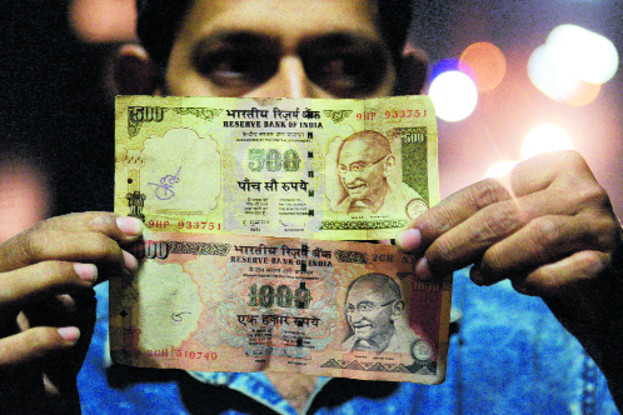
Aimed at eradicating black money and corruption in the country, Prime Minister Narendra Modi today announced that Rs 500 and Rs 1,000 notes ceased to be legal tender from November 8 midnight. The Reserve Bank of India would issue new Rs 500 and Rs 2,000 notes in due course, he said in an emergency address to the nation, that was preceded by a meeting with top Cabinet Ministers, including the Home Minister and the Finance Minister and the National Security Adviser.The last time India undertook such a measure was during the Janata Party government of Morarji Desai which did away with the Rs 1,000 note. It took at least two decades for the government to re-introduce currency of a higher denomination.For those who have earned money legally, the old notes can be deposited in banks between November 10 and December 30 by producing PAN, Aadhaar or voter card. The money can then be withdrawn. The banks will limit the withdrawal transactions to Rs 10,000 per day and Rs 20,000 per week. The ATM withdrawal limit will be Rs 2,000. Banks will be closed tomorrow while ATMs will not function for two days. The old notes can also be converted through post offices and sub-post offices during the 50-day period.   On humanitarian grounds, the old notes will be accepted in hospitals, by the airlines and road and rail transport till November 11. Essential facilities, including crematoriums, will accept the old notes till the next three days.The PM said when his government came to power, the country’s economy was floundering and now it was being seen as a bright spot by international institutions, including the International Monetary Fund. He said corruption and black money had made deep roots in the country and in global ranking, India was rated high. Stating that specific classes of people, including those in high positions, were behind corruption and generation of black money, the PM said the common man was honest and hard working.  The PM cited several instances of an honest taxi or auto driver returning valuables to their customers and hoped people would contribute in this ‘mahayagya’ to tackle corruption and black money in the country.Citing that corruption and terrorism were affecting the country’s vitals, he said counterfeit currency was being pushed into the country from across the border to finance terror. Hawala was another form through which corruption and black money was being utilised to move such ill-gotten money. The government, he said, had taken several steps to tackle the menace and so far unearthed Rs 1.25 lakh crore.

50-day window for depositsOld currency notes can be deposited in banks between November 10 and December 30. Withdrawal transactions fixed at Rs 10,000 per day and Rs 20,000 per week. The ATM withdrawal limit has been fixed at Rs 2,000Banks shut today, ATMs for 2 daysBanks will be closed on Wednesday while ATMs will be shut for two days. Old notes can be deposited in post offices and sub-post offices during the 50-day period. There is no limit on the money depositedSome concessions till Nov 11On humanitarian grounds, old notes will be accepted in hospitals by the airlines and road and rail transport till November 11. Essential facilities, including crematoriums, will accept the old notes till the next three days Common man needn’t fear: GovtPM says specific classes of people, including those in high positions, are behind corruption and generation of black money and that the honest and hard working common man has nothing to fear


What it means for you

What’s valid

All coins and lower-denomination notesRs 100, Rs 50, Rs 20, Rs 10, Rs 5, Rs 2 and Rs 1What to do with existing currency

  • 50-day window (November 10 to December 30) has been left open to deposit any amount in bank accounts
  • From November 10 to 24, it can be exchanged with smaller/new currency at banks, post offices after producing valid IDs like PAN, Aadhaar and voter’s card with a daily cap of Rs 4,000
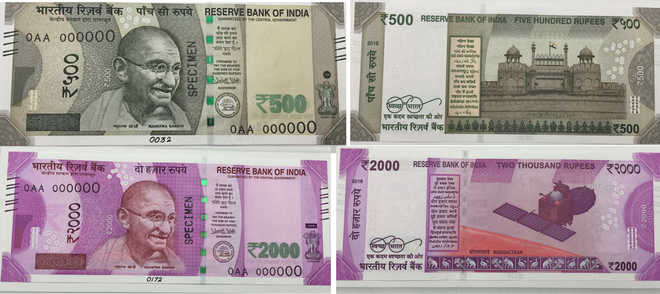
  • From November 10, new Rs 500 and Rs 2,000 notes with greater security features to be circulated
  • From December 30 to March 31, final chance to deposit invalid currency in designated RBI offices after filling out declaration form along with proof and reasons

Limit on withdrawals

ATMs: Rs 2,000/day

Banks:  Rs 10,000/day; Rs 20,000/weekNo cap on cashless transactions

  • No restrictions on non-cash payments by cheques, demand drafts, debit/credit cards, e-fund transfers
  • Those with medical prescription can buy medicines from chemists with old notes till November 11
  • Fuel stations and retail outlets (kendriya bhandar) to accept old notes till Nov 11, but with customer record

Quotes

This is a financial chaos and disaster let loose on the common man. It’s a heartless and ill-conceived blow to the common people and the middle class in the fake name of anti-corruption. — Mamata Banerjee, TMC chiefModern-day Tughlaq has thrown a nuclear trident at poor people of India. Rs 1,000 of today is what Rs 100 was 20 years back. This is insanity. — Manish Tewari, Cong leaderDemonetising high denomination notes can be an effective means to check accumulation of wealth in cash. The government has taken a measure targeting the heart of the black cash economy. — Naushad Forbes, CII presiden

It’s bold: Pranab

  • New Delhi: President Pranab Mukherjee welcomed the move as a bold step that would help unearth unaccounted money as well as counterfeit currency. The President called upon the people not to panic, to follow the government’s guidelines and to avail of the opportunity provided by the government to exchange notes of Rs 1,000 and 500 denomination for new legal tender. — PTI
Rs 100 hot property

  • Mumbai: The humble Rs 100 bill had several takers on an otherwise normal weekday evening in the financial capital tonight, even as police had to be deployed outside ATMs to control the crowd waiting eagerly to get their hands on the banknote. There was a beeline to acquire the “hottest commodity” or dispose of the high value Rs 500 and Rs 1,000 bank notes, which will become illegal tender at midnight. — PTI

In circulation now

  • 1,650 crorenotes of Rs 500
  • 670 crorenotes of Rs 1,000

clip

clip

Full text of govt statement on currency withdrawal

Full text of govt statement on currency withdrawal
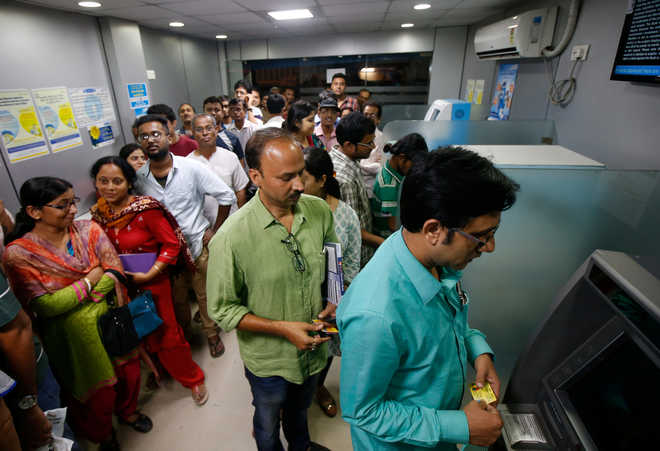
People wait to withdraw and deposit their money at an ATM kiosk in Kolkata, India, November 8, 2016. Reuters

Tribune News Service

Full text of the statement released by the Department of Economic Affairs, Ministry of Finance, on Tuesday regarding the withdrawal of Rs 1,000 and Rs 500 denomination notes and introduction of new Rs 500 and Rs 2,000 notes:1. With a view to curbing financing of terrorism through the proceeds of Fake Indian Currency Notes (FICN) and use of such funds for subversive activities such as espionage, smuggling of arms, drugs and other contrabands into India, and for eliminating Black Money which casts a long shadow of parallel economy on our real economy, it has been decided to cancel the legal tender character of the High Denomination bank notes of Rs.500 and Rs.1000 denominations issued by RBI till now. This will take effect from the expiry of the 8th November, 2016.(Follow The Tribune on Facebook; and Twitter @thetribunechd)2. Fake Indian Currency Notes (FICN) in circulation in these denominations are comparatively larger as compared to those in other denominations. For a common person, the fake notes look similar to genuine notes. Use of FICN facilitates financing of terrorism and drug trafficking. Use of high denomination notes for storage of unaccounted wealth has been evident from cash recoveries made by law enforcement agencies from time to time. High denomination notes are known to facilitate generation of black money. In this connection, it may be noted that while the total number of bank notes in circulation rose by 40% between 2011 and 2016, the increase in number of notes of Rs.500/- denomination was 76% and for Rs.1,000/- denomination was 109% during this period. New Series bank notes of Rs.500/- and Rs.2,000/- denominations will be introduced for circulation from 10th November, 2016. Infusion of Rs.2,000/- bank notes will be monitored and regulated by RBI. Introduction of new series of banknotes which will be distinctly different from the current ones in terms of look, design, size and colour has been planned.3. The World Bank in July, 2010 estimated the size of the shadow economy forIndia at 20.7% of the GDP in 1999 and rising to 23.2% in 2007. There are similar estimates made by other Indian and international agencies. A parallel shadow economy corrodes and eats into the vitals of the country’s economy. It generates inflation which adversely affects the poor and the middle classes more than others.  It deprives Government of its legitimate revenues which could have been otherwise used for welfare and development activities. 4. In the last two years, the Government has taken a number of steps to curb the menace of black money in the economy including setting up of a Special Investigation Team (SIT); enacting a law regarding undisclosed foreign income and assets; amending the Double Taxation Avoidance Agreement between India and Mauritius and India and Cyprus; reaching an understanding with Switzerland for getting information on Bank accounts held by Indians with HSBC; encouraging the use of non-cash and digital payments; amending the Benami Transactions Act; and implementing the Income Declaration Scheme 2016.5. In order to implement the above decisions of the Government and keeping in view the need to minimise inconvenience to the public, the following operational guidelines have been issued:-(i) Old High Denomination Bank Notes may be deposited by individuals/persons into their bank accounts and/or exchanged in bank branches or Issue Offices of RBI till the close of business hours on 30th December, 2016.(ii) Old High Denomination Bank Notes of aggregate value of Rs.4,000/- only or below held by a person can be exchanged by him/her at any bank branch or Issue Office of Reserve Bank of India for any denomination of bank notes having legal tender character, provided a Requisition Slip as per format to be specified by RBI is presented with proof of identity and along with the Old High Denomination Bank Notes. Similar facilities will also be made available in Post Offices.(iii) The limit of Rs.4,000/- for exchanging Old High Denomination Bank Notes at bank branches or at issue offices of Reserve Bank of India will be reviewed after 15 days and appropriate notification issued, as may be necessary.(iv) There will not be any limit on the quantity or value of Old High Denomination Bank Notes to be credited to the account of the tenderer maintained with the bank, where the Old High Denomination Bank Notes are tendered. However, in accounts where compliance with extant Know Your Customer (KYC) norms is not complete, a maximum value of Rs.50,000/- of Old High Denomination Bank Notes can be deposited.(v) The equivalent value of the Old High Denomination Bank Notes tendered can be credited to an account maintained by the tenderer at any bank in accordance with standard banking procedure and on production of valid proof of Identity.(vi) The equivalent value of the Old High Denomination Bank Notes tendered can be credited to a third party account, provided specific authorisation therefor accorded by the said account holder is presented to the bank, following standard banking procedure and on production of valid proof of Identity of the person actually tendering.(vii) Cash withdrawal from a bank account, over the counter will be restricted to Rs.10,000/- subject to an overall limit of Rs. 20,000/- in a week for the first fortnight, i.e., until the end of business hours on November 24, 2016.(viii) There will be no restriction on the use of any non-cash method of operating the account which will include cheques, demand drafts, credit/debit cards, mobile wallets and electronic fund transfer mechanisms.(ix) Withdrawal from ATMs would be restricted to Rs.2,000 per day per card up to November 18, 2016. The limit will be raised to Rs.4,000 per day per card from November 19, 2016 onwards.(x) For those who are unable to exchange their Old High Denomination Bank Notes or deposit the same in their bank accounts on or before December 30, 2016, an opportunity will be given to them to do so at specified offices of the RBI on later dates along with necessary documentation as may be specified by the Reserve Bank of India.(xi) Instruction is also being issued for closure of banks and Government Treasuries, on 9th November, 2016.(xii) In addition, all ATMs, Cash Deposit Machines, Cash Recyclers and any other machine used for receipt and payment of cash will remain shut on 9th and 10th November, 2016.(xiii) The bank branches and Government Treasuries will function from 10th November, 2016.(xiv) To avoid inconvenience to the public for the first 72 Hours, Old High Denomination Bank Notes will continue to be accepted at Government Hospitals and pharmacies in these hospitals/Railway ticketing counters/ticket counters of Government/Public Sector Undertaking buses and airline ticketing counters at airports; for purchases at consumer co-operative societies, at milk booths, at crematoria/burial grounds, at petrol/diesel/gas stations of Public Sector Oil Marketing Companies and for arriving and departing passengers at international airports and for foreign tourists to exchange foreign currency at airports up to a specified amount.6. The relevant Notifications are available in the website of Finance Ministry(http://finmin.nic.in). Further details including Frequently Asked Questions (FAQs) are available on the website of the Reserve Bank of India (https://www.rbi.org.in).

Traders shut door on Rs 500, Rs1,000 notes

Traders shut door on Rs 500, Rs1,000 notes
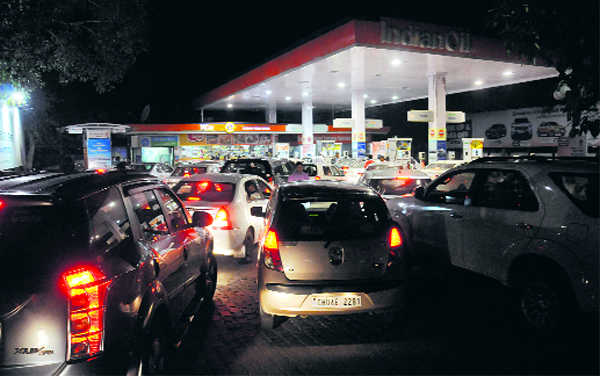
Long queues of vehicles at a petrol pump in Sector 33, Chandigarh, on Tuesday night. Tribune photo: Pradeep Tewari

Rajinder Nagarkoti

Tribune News Service

Chandigarh, November 8

As Prime Minister Narendra Modi announced to do away with the Rs 500 and Rs 1,000 currency notes from midnight on Tuesday, a majority of the city traders immediately stopped accepting the Rs 500 and Rs 1,000 notes.Charanjiv Singh, chairman of the Chandigarh Beopar Mandal, said they would hold a meeting on the issue tomorrow, but most traders had stopped taking the Rs 500 and Rs 1,000 currency notes from tonight.Sanjiv Mahajan, a cloth merchant in Sector 17, said he had issued directions to the staff over the phone not to accept Rs 500 and Rs 1,000 notes. Our shop will only accept payment through credit or debit cards, he said.Echoing similar views, another Sector 17 trader, Pawan Gulati, said with this decision, the sale would immediately dip by 50 to 60 per cent. They would also not accept the Rs 500 and Rs 1,000 currency notes, he said.Chander Verma, owner of a furniture store in the Industrial Area, Phase II, said it was like an emergency situation. Our store will also not accept Rs 500 and Rs 1,000 currency notes, he said.“The government should have given some time before implementing the orders. It is like dictatorship,” he said.Property dealers and taxi operators will also not accept Rs 500 and Rs 1,000 currency notes. Raj Kumar Pal, president, Property Consultants Association, said they would not accept Rs 500 and Rs 1,000 notes. “The decision taken by the Modi government is a good step,” he said.Shiv Kumar Sharma, a taxi operator, said immediately after Modi’s announcement, he told his drivers not to accept the Rs 500 and Rs 1,000 currency notes. Dalip Singh, a vendor in Sector 22, said they would accept the Rs 500 and Rs 1,000 currency notes only till the time the weekly limit of Rs 20,000 is reached.

Shopkeepers to be hit

The decision will majorly hit shopkeepers of the Sector 26 grain market, the Sector 22 Shastri Market, the Sector 15 Patel Market and the Sector 19 Sadar Bazaar. As a majority of the transactions take place without any receipt, the decision will hit them hard.Guest houses seek payments in Rs100 denominationEven guest house owners in villages in Chandigarh such as Burail, Kajheri and Attawa have stopped taking the Rs 500 and Rs 1,000 currency notes from guests. Jagdish Bhandari, a guest house owner, said they were giving rooms to only those customers who were ready to make payment in Rs 100 currency notes.QuotesIt is a huge surgical strike on black money by Prime Minister Narendra Modi to save the country. Modi has once again proved his 56 inch ka seena. —Sanjay Tandon, City BJP PresidentPM Narendra Modi has once again proved that he is capable of taking bold decisions whether the issue is concerning the security of the country or dealing with Pakistan or black money. No Prime Minister has ever taken such bold decisions. —Satya Pal Jain, Former MPDemonetising currency notes without a three-four day notice will affect people who are without debit and credit cards, especially those admitted to private hospitals. Facsimile of the new Rs 2,000 note was in the social media. Who leaked this and why? Will it not encourage black money again? —Pawan Kumar Bansal, Former Union MinisterThere should be a real fight against black money. With this sudden decision, the middle class and small traders will be the most affected. There is panic among residents after the decision. —Pardeep Chhabra, City Congress President