Sanjha Morcha

Treat country as your own: Nana Patekar’s message for the youth of Kashmir

AMMU: Known for his versatility in movies as well as his social work, Bollywood actor Nana Patekar on Wednesday morning had a word of advice for the youth of Kashmir Valley.

HT PHOTOBollywood actor Nana Patekar consoles family members of martyr Gurnam Singh during a visit to BSF’s Paloura camp in Jammu on Wednesday.

“Pursue your dreams via academics, learn something and be part of the national mainstream because throwing stones won’t lead you anywhere. It (stone-pelting) is not going to do anything constructive in your life,” he said.

Following deaths and injuries to the BSF men in recent ceasefire violations by Pakistan on the border, Patekar came on a brief visit to meet Border Security Force troopers and their families.

“How can I boost their (BSF men) morale? In fact, it is they who boost my morale. Go and see them on the border — young boys in their early twenties are guarding the border 24×7. They don’t need me but we need them. Despite being asked to avail their leave, these young boys are not ready to leave the borders,” said Patekar to another poser.

“No Eid, no Diwali, no Holi but still they are very happy and the credit goes to their leader, inspector general DK Upadhyaya, who loves them like his sons. I am returning with a high morale,” he added.

BAN ON PAK ARTISTS He also talked about a lobby in Bollywood, which had recently vouched for Pakistani artists working in Bollywood. “I feel the government should have taken a decision. When our soldiers are dying on the borders, the ‘artist is an artist’ logic doesn’t work. I think when relations turn hostile between two countries, artists from outside should go back to their country and when situation turns normal, they can come again,” he said.


No extra commitments in nuke pact with Japan

KV Prasad

Tribune News Service

New Delhi, November 13A fresh controversy surfaced over the India-Japan civil nuclear agreement amid a report that New Delhi made additional commitments to Tokyo, denied by authorities privy to details of the agreement.Sources in the Ministry of External Affairs said the Nuclear Cooperation Agreement signed last week in the presence of Prime Minister Narendra Modi and Prime Minister Shinzo Abe contained the same ‘’template’’ as with other civil nuclear pacts with others, including the USA, barring an exception.“Given Japan’s special sensitivities as the only nation to have suffered a nuclear attack, it was felt that their views should be recorded in a separate note, a record by the negotiators of respective views on certain issues. It states, on one hand what could be Japan’s views in advance on what is a hypothetical situation; that is their national prerogative,” the sources said.On reports of termination clause, the sources said it was present in other pacts that India had signed, including the US, and made specific reference to Article 14. “However, the circumstances triggering a possible termination are never sharply defined. Consideration also has to be given to mitigating factors”.Report in a section of media suggested that if India violates it voluntary commitment on moratorium on nuclear testing made to the Nuclear Suppliers Group in 2008, the section on emergency suspension of nuclear parts or fuel supply could be invoked. India, the sources said, also recorded its position, which was a reiteration of the September 5, 2008 commitments and no change was envisaged from it to make additional commitments.The civil nuclear agreement is to be ratified by Japanese Parliament, Diet. Barring Russia, Japanese companies Hitachi, Toshiba and Mitsubishi have parts in nuclear reactors that US companies like Westinghouse and GE or French Areva are to install in India under the separate arrangement.


Banks to open more counters, work extra hours to tackle rush

Banks to open more counters, work extra hours to tackle rush

New Delhi, November 8

Banks will open additional counters and work extra hours beginning Thursday to help people exchange Rs 500 and Rs 1,000 notes that have been declared invalid from midnight tonight.Anticipating panic and rush at bank counters, RBI as well as government has set up control rooms in Mumbai and the national capital to avoid any crisis, Department of Economic Affairs Secretary Shaktikanta Das said.Banks will remain shut tomorrow to allow stocking of smaller currency notes and public will be allowed to tender their now invalid Rs 500 and Rs 1000 from November 10. They can deposit any amount of the invalid currency in their bank account till December 30 and also exchange them for lower banknotes at special counters at banks and post offices till November 24 but with limit of Rs 4,000 in a day.Bank will, however, report any unusual transaction to Financial Intelligence Unit and tax authorities for scrutiny. RBI Governor Urjit Patel said the central bank had ramped up production of the new higher security currency notes of Rs 500 and Rs 2,000 that will replace the notes being taken out of circulation. The new notes will come into circulation from November 10, he said.      He linked the government decision to use high denomination currency notes for terrorism financing and also for holding black money.While overall currency circulation had increased by 40 per cent during 2011 to 2016, Rs 500 banknotes in circulation had gone up by 76 per cent and that of Rs 1000 by 109 per cent.As many as 16.5 billion notes of Rs 500 denomination are in circulation currently while 6.7 billion Rs 1,000 notes are in market. — PTI

clip

clip

THE BLACK BUCK STOPS HERE, SAYS MODI

NEW WHITE REVOLUTION Notes of `500, `1,000 not legal tender any more, 50-day window to deposit or exchange

NEW DELHI: Prime Minister Narendra Modi announced on Tuesday the abolition of 1000 and 500 rupees bank notes from midnight, a dramatic move aimed at stamping out corruption and draining illicit cash from the economy.

In a surprise late-evening televised address to the nation, Modi said the notes in circulation can be exchanged at banks till December 30. Some concessions will be allowed for use of these notes at hospitals and crematoriums, and to buy air, rail and bus tickets till November 11.

There will be some restriction on withdrawal of cash from banks and ATMs (See box).

The move could help bring billions of dollars-worth of unaccounted for cash back into the economy, and choke the flow of fake high-value banknotes militant groups use to fund their attacks against India.

The decision is also an attempt by Modi to fulfill his election promise of curbing tax evasion and recovering illegally stashed incomes overseas. It gives his Bharatiya Janata Party a talking point ahead of elections in five states next year.

But the move entails possible downside risks. Given that about 40% of India’s economy is driven by small- and medium-sized enterprises that largely run on cash transactions, the decision could have a knock-on effect on economic growth.

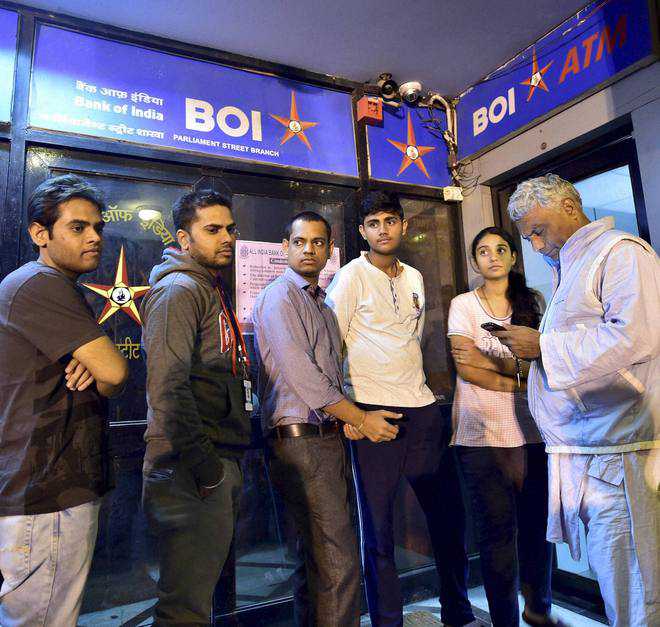
The short notice too sparked concern among people, and large queues were reported outside ATMs across India, as people rushed to withdraw smaller bank notes. The move could also inconvenience poorer people and families planning weddings, the season for which starts in days.

It wasn’t immediately clear how businesses and private banks with large stocks of highvalue notes will deal with the transition. The banned denominations account for more than 80% of all currency in circulation by value.

“Banks will be closed tomorrow. It will cause some hardship to you… Let us ignore these hardship… In a country’s history there come some moments when every person feels he too should be a part of it,” the prime minister said in a 4-minute speech.

“We have an opportunity when every citizen can join this mega mission,” he added, calling the move an “Imandari ka Utsav”, or celebration of honesty.

The Reserve Bank of India (RBI) will issue a new `2000 and `500 notes later.

Modi also dwelled on the scourge of fake bank notes, saying militants operating against India were using counterfeit of the 500 rupee note, worth about $7.50 at current exchange rates.

NOTEWORTHY DETAILS

“Banks will be closed tomorrow. It will cause some hardship to you …. Let us ignore these hardships… In country’s history, there comes a moment when people will want to participate in the nation building and reconstruction. Very few such moments come in life.” — Narendra Modi, PM

Deposit old notes of `500 and `1,000 in bank or post office accounts between November 10 and December 30, 2016, showing ID proof

After Dec 30, you can exchange notes at designated RBI offices till March 31 next year with a declaration form along with proof and reasons

WITHDRAWAL LIMIT

BANK `10,000 per day and `20,000 per week

ATM `2,000 per card per day which will increase to `4,000 per card

NO RESTRICTIONS ON

Payments by demand draft, cheque, non-cash payments, debit card, etc

FOR THE NEXT 72 HOURS, VALID AT:

Government hospitals

Railway ticket booking counters

Ticket counters of govt buses

Airline ticket counters

Petrol, diesel and gas stations authorised by public sector oil companies

Consumer coop stores authorised by state or central govt

Milk booths authorised by state govts

Crematorium, burial grounds


Defence Ministry okays new blacklisting policy

Defence Ministry okays new blacklisting policy
In 2013, the purchase of AgustaWestland chopper was stopped midway following suspected bribery charges. — File

Ajay Banerjee

Tribune News Service

New Delhi, November 7

The Ministry of Defence on Monday approved a new ‘blacklisting’ policy that will tackle corruption in defence deals and having a method to deal with foreign companies who pay bribes.The Defence Acquisition Council (DAC) that met under the chairmanship of Defence Minister Manohar Parrikar okayed the new policy.Its details shall be put out on the website of the MoD in a few days.Sources said the MoD has decided to do away with having a system of ‘blanket blacklisting’.The Tribune had reported details of this on October 26 on how the ‘blacklisting’ policy has been okayed. The DAC is the apex decision-making body of the MoD.The new policy will have a pointed product-specific ban, aimed at punishing the corrupt among the foreign suppliers and not hold to ransom the country’s military and defence needs. The new policy envisages that a person of a foreign company, if found to be indulging in corruption will not be allowed to deal in another case of the company’s subsidiary, sources said.During the tenure of the Congress-led UPA (from May 2004 to May 2014), a ‘blanket blacklisting’ was followed and several new procurements are held up.The MoD has decided to do away with ‘blanket blacklisting’ of foreign companies that were found guilty of offering bribes, a top official in the MoD told the Tribune.‘Blacklisting’ a firm may not be a good option as it just forecloses options for India. There are no more than 4-5 equipment makers who are largely integrators of specialised parts produced by niche companies.A sub-committee formed by the MoD will issue guidelines on the extent of blacklisting, its tenure and what all will be the procedure.In 2015 a committee headed by former Union Home Secretary Dhirendra Singh, after talking suggestions, submitted a report on Defence Procurement Procedure (DPP) and suggested that misdeeds of an entity or its employees should not be visited on the equipment or system.In August 2014, just months after the Narendra Modi government took over the MoD informally decided that ‘blanket bans’ will not help and now this has been firmed up in way of a policy.The MoD banned the Bofors artillery gun in the late 1980s. Since then, there has been no artillery gun purchase. In 2013, the purchase of AgustaWestland helicopters was stopped midway. In both cases, suspected bribery charges emerged.


Indian Army finishes Canal Work for local villagers in Ladakh

lights
  • Army engineers have finished the work for laying a water pipeline for irrigation purpose in Ladakh
  • Indian & Chinese troops have been in a stand-off since Wednesday in the area
  • PLA troops had earlier entered an area near the LAC and stopped the construction work

Unfazed by the ‘ sit-in’ by the Chinese border guards at Demchok in Ladakh that led to a face-off with Indian troops earlier this week, Army engineers have finished the work for laying a water pipeline for irrigation purpose for local villagers in Ladakh division.

China’s People’s Liberation Army (PLA) troops had entered the area near the Line of Actual Control (LAC) and stopped the construction work. The Chinese troops took positions on the perceived LAC and demanded that work be stopped as both sides need to seek permission before undertaking any such activity. This claim was disputed by the Indian side which said that the terms of the agreement between the two countries state that information about construction needs to be shared only if meant for defence purposes.

The sources said that while the face-off between the two sides continued for three days ending Saturday evening, the Army engineers, ignored the warnings by PLA personnel and continued laying pipeline for nearly a kilometre for irrigation purpose of the villagers in Demchok, located 250km east of Leh.

According to the sources, the formula of ‘active patrolling’ adopted by the ITBP and Army ever since 2013 fortnight long stand-off near Daulat Beig Oldie has been reaping rich dividends and Chinese have been cautious in carrying out incursion especially in Ladakh sector.

This time also, the sources said, army and ITBP personnel did not allow the PLA guards to erect the hut and they were forced to take the material back to their base camp located a kilometre away at Demqog from the place of face-off.

The fresh incident had erupted on November 2 when Chinese troops took positions on the LAC and demanded that work be stopped as either side needs to take permission from each other before undertaking any construction work, a claim disputed by the India which says that as per the agreement between the two countries, information about construction needed to be shared only if it was meant for defence purposes.

Both sides pulled out banners and have been stationed on the ground, the sources said, adding the Army and ITBP troopers were not allowing the Chinese “to move an inch” ahead despite the PLA claiming that the area belonged to China.

The area had witnessed a similar incident in 2014 after it was decided to construct a small irrigation canal at Nilung Nalla under the MNREGA scheme which had been a sore point with the Chinese.

The PLA had mobilised villagers from Tashigong to pitch Rebos (tents) at Charding-Ninglung Nallah (CNN) Track Junction to protest Indian action.


Lights out during festival of lights

Lights out during festival of lights
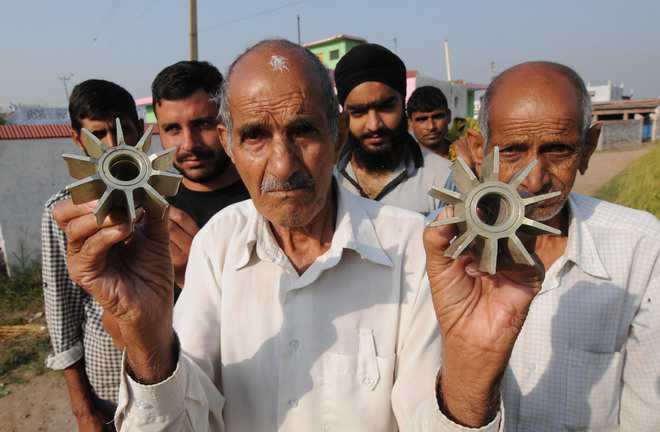
Villager show the mortars after shelling by Pakistan in the RS Pura area. Tribune file Photo

Amit Khajuria

Tribune News Service

Jammu, November 3

Residents of border areas in the Jammu region had the darkest Diwali this year as they could not light a single candle on the festival due to continuous shelling from across the fence.Tension on the international border and Line of Control (LoC) dampened the festive season this year for residents of Jammu, particularly border villages, with 11 lives lost within a month.Uncertainty prevailed in all villages along the LoC and international border with residents of these villages leading their lives under the shadow of fear for more than a month.Fear could be seen in the eyes of people of all ages, from the elderly to one-year-olds, who had been witnessing continuous shelling from the other side. There was no festive season, right from the first Navratra to Bhai Dooj, for residents of border villages.The festivity was missing from their lives since September 29 when surgical strikes were conducted by the Army and Pakistan started unprovoked firing at different posts on the international border.“What Diwali? We forgot this festival this year!” said Ram Lal, a farmer in the Ramgarh sector of Samba district near the international border.“From Navratras to Bhai Dooj, we did not have proper food. There was no reason to celebrate the festival. We could not light even one candle on Diwali as the light could be spotted by the Rangers,” he added.About 35 per cent of the villagers who had their friends and relatives in safer places had shifted temporarily from border areas. The rest were at home, but were not allowed to light a single candle or step out of their homes after 5:30 pm.“It was the darkest Diwali this year as we remained inside from 5:30 pm to 6 am. We spent the festival praying for peace on the border,” said Updesh Kumar of SM Pura village in Samba district on the border.


China’s growing clout ::—-G Parthasarathy

India lacks resources to match Chinese aid to other nations

China’s growing clout
Quick thinking: China has moved swiftly to make the most of the shale revolution.

THE BRICS Summit in Goa had a salutary effect. For too long have people in India been carried away by the illusion that China will show better understanding of India’s strategic imperatives, if only we opened our doors to trade and investment and obliged Beijing, “accommodating” its wishes by diluting our relations with the US. Such illusions about China prevailed, despite the fact that we refrained from voicing concerns about its unprecedented assistance to Pakistan’s exclusively “India-centric” nuclear weapons and missile programmes. President Xi Jinping made it clear in Goa that China would not countenance even any oblique reference to Pakistan’s sponsorship of cross-border terrorism, or its involvement in the Uri attack.  To add insult to injury, China announced its intention to supply Pakistan eight submarines, barely a week after Xi left India! Pakistan has been and remains Beijing’s principal tool in its “strategic containment” of India. China’s Mandarins have also been more than forthcoming in providing military and economic assistance to India’s South Asian neighbours to undermine India’s regional influence. Beijing has also sought to back leaders in South Asia, who are less than friendly to India — most notably recently in Sri Lanka and Nepal. India has to, however, recognise the reality that it just does not have the resources to match Chinese economic assistance to governments in its South Asian neighbourhood and beyond to the shores of Africa. We should also understand the realities that shape Chinese economic assistance worldwide. The Chinese Export Import Bank and the apex China Development Bank provide funding for Beijing’s aid projects, with interest rates generally varying between 2 per cent and 3 per cent.With its foreign exchange reserves now crossing $4 trillion, following double-digit economic growth over a decade, China’s Overseas Development Assistance has averaged around $174 billion annually in recent years. This poses a challenge to the US and Western/OECD aid organisations, including the World Bank and Asian Development Bank. But, unlike the terms of Western assistance, which are largely untied and concessional, Chinese assistance has conditions that give it an exploitative orientation. Chinese assistance is marked by very substantial use of Chinese labour, machinery and equipment, with very little transfer of technology or expertise. As much as 50 per cent of imports required for “aid” projects have to be sourced from China. Moreover, experiences in Africa have shown that while the large number of Chinese workers in infrastructure and mining projects are required to be provided comfortable living conditions, the Chinese are parsimonious in payments to local labour.China’s dependence on imports of oil and gas is steadily growing. Chinese investments and economic assistance in minerals and energy-related projects are simultaneously growing significantly in Africa, the Gulf Region, Central Asia, and Latin America. China is involved in exploration for gold in Eritrea and Zimbabwe, for platinum and diamonds in Zimbabwe and South Africa, for uranium in Niger and aluminum in Egypt. China has secured a $2 billion contract for the Kingfisher oilfield in Uganda. It has built the largest hydropower project in Africa, along the Ethiopia-Sudan border. China’s ability to move swiftly and act decisively in the wake of the shale revolution has led to its securing large investment opportunities in Iraq and Iran in the oil and gas sector. This is reportedly evoking Saudi concern.Closer to India in South Asia, there is growing awareness of the mercantilist elements in so-called Chinese aid, where Sri Lanka realised that the Colombo Port City project was a Chinese rip-off. Likewise, in Myanmar, there is growing resistance to Chinese involvement in mining of precious stones and its callous disregard for environmental considerations in huge projects like the proposed Myitsone dam. Healthy scepticism about Chinese offers of aid is also evident in Bangladesh. During the recent visit of President Jinping to Bangladesh, China agreed to aid 22 projects, amidst calls for careful scrutiny of repayment liabilities. Pakistan received $135 billion of Chinese financing between 2001 and 2014. It is now scheduled to receive $46 billion in financial assistance for its OBOR project. This project has become controversial because it primarily benefits only the dominant Punjab province. It has evoked criticism in both Khyber Pakhtunkhwa and Balochistan provinces. The Balochis are already not too pleased by the way their province has received virtually no benefits/royalty from the exploration of gold, silver and copper from the Aynak mine at Chagai Hills, where Pakistan’s nuclear tests were carried out. Moreover, while the Chinese would evidently like the Pakistan army to take over providing facilities and security for the project, the Nawaz Sharif government does not relish the idea. Finally, the IMF has made it clear that the project is, in coming years, going to create new problems on debt repayment and current account deficit, given the way the repayment liabilities are structured.Despite all these factors, India has to recognise that whether in Sri Lanka, Bangladesh or Nepal, the essential political thrust of Chinese economic support is to prop up regimes that are given to being anti-Indian. It is noteworthy that when President Xi was in Dhaka, he met Begum Khaleda Zia (who avoided calling on President Pranab Mukherjee) and even proposed party-to-party links between the CPC and BNP (China recognised Bangladesh in 1976, a year after Sheikh Mujibur Rehman was assassinated). It is evident that India does not have the resources to quantitatively match Chinese assistance even to its South Asian neighbour. But, we need to recognise our relative strengths and weaknesses and firm up our assistance programmes accordingly. We also need to carefully study the strengths and weaknesses of Chinese aid programmes. The agenda of the tripartite India-US-Japan dialogue should be expanded to discuss how best this grouping could pool its resources to meet the challenges posed by the growing economic clout of China. Japan and the US can, in turn, carry out a similar exercise with their OECD partners. Given Chinese hostility, it is imperative for New Delhi to devise a comprehensive strategy to protect and promote its interests across its Indian Ocean neighbourhood and indeed across the entire Indo-Pacific Region.


NABHA JAIL BREAK FILMY STYLE—-SPECIAL NEWS COVERAGE

clip

Gangsters storm Nabha jail, free 6 inmates

AUDACIOUS ATTACK 10 armed men in police uniform storm high-security prison, fire 200 shots before escaping with 6, including KLF terrorist Mintoo BREAKTHROUGH Hours after the attack, gangster Palwinder Pinda arrested in UP with getaway vehicle and weapons

(With inputs from S Raju in Meerut and agencies)

PATIALA: About 10 gunmen disguised as policemen tricked their way into Punjab’s high-security Nabha prison, stabbed a guard at the gate, fired automatics, and escaped with a Khalistani militant group commander, his sidekick and four gangsters in a daring jailbreak on Sunday.

ANIPalwinder Singh, alias Pinda, who was arrested by the police at Kairana in UP’s Shamli district late on Sunday evening, and (below), arms recovered from the SUV used in the crime.

The stunned jail guards offered no resistance and couldn’t allegedly fire a single shot to stop the self-styled chief of the Khalistan Liberation Force (KLF), Harminder Singh Mintoo, his aide Kashmir Singh Galwadi and another four prisoners from escaping. Besides the militants, the fugitives include gangsters Harjinder Singh alias Vicky Gondar, Gurpreet Singh Sekhon, Kulpreet Singh alias Neeta, and Amandeep Singh alias Bura.

Their rescuers fired more than 200 rounds before escaping in getaway cars — a sedan, a hatchback and an SUV. The entire operation lasted not more than 10 minutes, indicating the attackers were familiar with the jail’s layout and routine.

Uttar Pradesh police arrested one of attackers, Palwinder Singh alias Pinda, at Kairana in Shamli district later in the evening. A self-loading rifle, two rifles, bullets and cash were found on him.

When constables flagged down a Haryana-registered white SUV, he jumped from the vehicle and tried to escape. The constables chased and caught him in a congested market alley.

“He has confessed to the crime. Mintoo was with Palwinder in the car but he got down at Panipat. Police have recovered two more vehicles used in the Punjab jail attack, a sedan and a hatchback,” additional director general of police Daljeet Singh Chowdhary said.

Pinda was arrested for killing an assistant sub-inspector in Jalandhar in 2013. But he escaped this March with the help of aides when he was undergoing treatment at a Patiala government hospital.

The 49-year-old Mintoo was arrested in November 2014 at the New Delhi airport after he was deported from Thailand. He was wanted in at least 10 terrorism-related offences, including the 2008 attack on Sirsa-based Dera Sacha Sauda chief Gurmeet Ram Rahim Singh and recovery of explosives at Halwara air force station in 2010.

Galwadi, 30, was arrested for shooting at a Shiv Sena leader in Gurdaspur last April.

The 28-year-old Gurpreet alias Gopi is on trial for murder, kidnap, extortion and highway robberies. A trained flight attendant, he comes from an affluent family that owns brick kilns.

A reward of `25 lakh was offered for information on the fugitives and a high alert sounded in Punjab, Haryana, UP and New Delhi with security around railway stations, airports, bus terminuses and other public places stepped up.

Deputy chief minister Sukhbir Singh Badal suspended the state’s additional director general of police (jails) MK Tewari and dismissed the jail’s superintendent and deputy superintendent. The railways ADGP, Rohit Chaudhary, has been given the charge of prisons.Badal, whose Shiromani Akali Dal is facing tough elections next year, sniffed a Pakistani hand in the incident, saying the neighbouring country was “desperate to revive terrorism” in the state after Indian forces destroyed militant hideouts in Pakistanoccupied Kashmir in surprise raids across the border.

“Pak desperate to revive terror post surgical strike. Could be behind jailbreak,” Badal, who also spoke to national security advisor Ajit Doval after the incident, tweeted.

His father and chief minister, Parkash Singh Badal, ordered a probe and formed a special investigation team. Union home minister Rajnath Singh sought a report.

The Congress and Aam Aadmi Party (AAP) found a handle to reaffirm their campaign point that Punjab’s law and order have plummeted under the Akali-BJP alliance government.

State Congress chief Captain Amarinder Singh said: “The manner in which gangsters walked into the high-security jail … shows complicity of the highest level.”AAP’s Punjab in-charge, Sanjay Singh, demanded deputy chief minister Badal’s resignation.“By claiming that the jailbreak was the handiwork of Pakistan, Sukhbir has again exposed his irresponsible behaviour.”

The meticulous and swift assault shook the establishment as it follows a similar but controversial jailbreak in Bhopal on October 31, in which eight suspected Islamic radicals were killed a few hours after they escaped from prison. The two incidents put to question the security set-up in jails.

clip

540-SECOND OPERATION

8.54am

Two men dressed as cops arrive in a car, along with a handcuffed man. Knock at the main entrance, show court ‘warrants’ and enter jail. 6-7 men park their SUV nearby

8.55-8.56am

Take two guards hostage, knock at main entrance, enter inside where inmates are handed over after paperwork. Put dagger into the mouth of a policeman

8.57-8.58am

Slip a pistol inside the jail’s inner gate to the inmates. The inmates take a guard hostage, and open one lock and break the other with gunfire. As per plan, the 6 jailed men come out

9-9.03am

Escapees fire in the air. SUV brought to the main gate, inmates flee. Others get into second car and flee

PROFILES OF ESCAPEES

TERRORISTS

HARMINDER SINGH MINTOO (48) Self-styled chief of Khalistan Liberation Force. Was arrested at New Delhi’s IGI airport in November 2014 while returning from Thailand KASHMIR SINGH ‘GALWADI’ (30) Was arrested within hours of shooting at Shiv Sena leader Harvinder Soni in Gurdaspur in April 2015. Was lodged in Nabha jail since 2013

GANGSTERS

GURPREET SEKHON (28) Once a member of mostwanted Jaipal gang, he went on to lead his own gang. Involved in murder, kidnappings, extortion and highway robberies KULPREET DEOL ALIAS NEETA (35) Dubai-based member of Sekhon gang. Was arrested at Amritsar airport for Sukha Kahlawan’s murder on his return from Dubai HARJINDER SINGH BHULLAR ALIAS VICKY GONDER (28) Also member of Sekhon gang. Was arrested from Tarn Taran in December 2015 for involvement in Sukha Kahlwan’s murder AMANDEEP SINGH DHOTIAN ALIAS BURA (25) Started as petty snatcher and went on to lead own gang of snatchers and car thieves. Was arrested in November 2015

Sekhon aide plotted great escape

Assigned task to Palwinder ‘Pinda’, who had escaped from Nabha jail in March, held in UP after Sunday’s jailbreak

PATIALA: Palwinder Singh ‘Pinda’, who was arrested by the Uttar Pradesh police from Kairana in Shamli district, has revealed that Gurpreet Sekhon, who was lodged in the Nabha prison, and Jalandhar-based gangster Prem Lahoria plotted the jailbreak, while he executed.

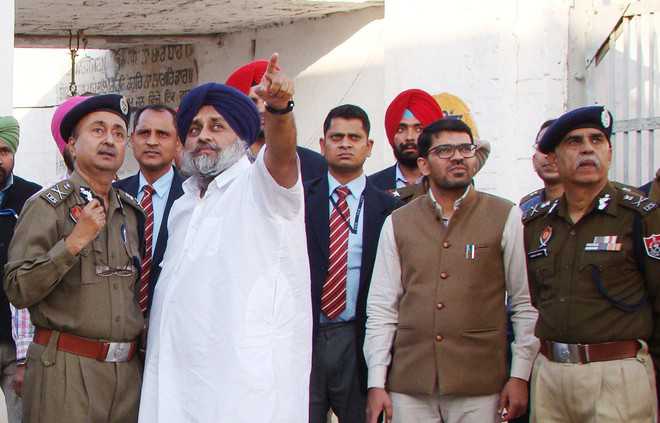
BHARAT BHUSHAN/HTPunjab deputy chief minister Sukhbir Singh Badal, ADGP (jails) MK Tewari and DGP Suresh Arora after the jailbreak at the maximum­security Nabha jail (right) near Patiala on Sunday.

Sources said Sekhon and Lahoria also involved KLF militants, who promised them of heavy funding. Lahoria assigned the task to Palwinder, who escaped from the Nabha jail when he was being taken to the civil hospital in March this year.

“Things are becoming clear now. It was a well-planned conspiracy involving many gangs. Sekhon masterminded the plot in jail, while Pinda and Lahoria, who are on the run, executed his escape and others,” said Nabha senior superintendent of police Gurmeet Singh Chauhan. He said with the arrest of Pinda, police of other states, especially Uttar Pradesh, has been alerted to track Khalistan Liberation Force (KLF) terrorist Harminder Singh Mintoo and others.

The UP Police also recovered arms and ammunition reportedly used by the accused during the jailbreak incident from the Toyota Fortuner, which was used in the crime. A Punjab Police team has been sent to UP to quiz the accused.

Sources said after crossing Nabha, the escapees changed the vehicles and fled in a Swift and Verna cars. They were to meet at the UP border to plan their escape to Nepal.

Escaped gangsters Gurpreet Sekhon, Vicky Gonder and Prem Lahoria had allegedly killed another gangster, Sukha Kahalwa, in Jalandhar. Later, Gonder was arrested from Tarn Taran following an encounter, while Sekhon was arrested from Faridkot. Prem is still at large.

They accused used self-loading rifle, Springfield gun, pistol and other weapons and fired over 200 shots to create panic at the high-security Nabha jail before freeing the accused. The UP police have recovered a selfloading rifle and a gun from Pinda.

Chaos, corruption rule Punjab jails

CHANDIGARH: The unprecedented audacious act at the high-security Nabha jail on Sunday has once again brought under glare the chaos and corruption ruling Punjab prisons.

Jails have virtually lost their meaning and instead of serving as “reform centres” they are being used by gangsters to regroup and realign, recruit new members and plan crimes together. With easy access to mobile phones, they also execute crimes, run extortion rackets and plan their own escapes.

The police investigating the Nabha jailbreak incident is of the view that the six inmates who dashed to freedom this morning were in constant touch with those who had come to facilitate their escape. Since January 2015, 37 gangsters have escaped from custody while being brought for hearing and another eight have absconded while out on bail, in most cases with the active help of fellow gangsters.

The mismanagement of Punjab prisons has been a serious cause of worry for police authorities. Aggravating the anarchylike situation in state jails is a rampant political interference in flagrant violation of the jail manual rules.

In fact, Punjab director general of police Suresh Arora had flagged this with the chief election commissioner during the latter’s visit to poll-bound state recently. “Unless the jails are well-controlled, there can be a serious fallout on the state’s law and order” says a top police official.

CORRUPTION NUB OF THE PROBLEM

The nub of the problem is rampant corruption with jail staff allowing almost every comfort possible to the inmates for a price. Inmates, have access to mobile phones, sim cards, cash and drugs. In May, police conducted surprise checks of various jails in Punjab and recovered 65 mobile phones, a dozen sim cards, opium and other drugs besides cash. As many as 15 phones were seized from Nabha jail.

Inmates manage to smuggle these things either through the help of relatives who come to meet them in jail or during their visit to the court for hearings. Inmates also “use” mobile phones of the jail staff for a price. Similarly drugs, syringes to inject drugs, cigarettes, bidis etc are also supplied through the jail staff.

SHORTAGE OF STAFF AND INFRASTRUCTURE

The jail department suffers from a perpetual shortage of staff to control the overburdened jails. In Punjab there are 26 jails which house over 23,000 inmates. In 1994, the prisons had about 2,000 warders for about 10,000 inmates. Currently, the jails have 24,000 convicts/undertrials with only 1,000 warders. It was only recently that the department began hiring almost 560 jail wardens after the cabinet cleared additional posts for the department.

In order to enhance security inside and outside the jails, the department has been demanding a battalion of the Punjab Armed Police (PAP) for every jail but the police have not been able to spare its employees for duty in jails. Most of the jails in the state also lack basic surveillance and monitoring infrastructure and it was only recently that the police started installing jammers and CCTV cameras in jails.

THE MISSED OPPORTUNITY

oday’s incident also comes in wake of the state government having shot down a move to bring in the Punjab Control of Organised Crime Act (PCOCA), 2016, to empower the police and courts to effectively counter gangsters. The draft act was proposed by the police but was put off by the cabinet on the grounds that some of its provisions could be misused by the police.

clip

Cong, AAP corner govt, say shows complicity at high level

CHANDIGARH/SANGRUR: The Nabha jailbreak has given the Congress and the Aam Aadmi Party (AAP) enough ammunition to corner the ruling Akali-BJP government ahead of the high-stake assembly in Punjab.

Alleging involvement of the Parkash Singh Badal government in the jailbreak, Punjab Congress chief Captain Amarinder Singh said the incident had exposed a “complete breakdown” of law and order in the state, while triggering fears of revival of terrorism ahead of the assembly elections.

“The manner in which gangsters walked into the high-security jail and freed a Khalistani terrorist along with other convicts shows complicity of the highest level,” Amarinder said in a statement.

Reiterating his fears of terror attacks and other violent incidents in the state ahead of the polls, Amarinder said the rescue of Khalistan Liberation Force (KLF) chief Harminder Singh Mintoo, accused in 10 terror-related cases, suggested an “active effort” from across the border to revive terrorism in Punjab.

Meanwhile, AAP national spokesman and Punjab in-charge Sanjay Singh has demanded deputy chief minister Sukhbir Singh Badal, who is also the state home minister, and jails minister Sohan Singh Thandal’s resignation.

“By claiming that the Nabha jailbreak was the handiwork of Pakistan, deputy chief minister Sukhbir Singh Badal has once again exposed himself to his irresponsible behaviour,” the AAP leader said, adding that if it is true, Union home minister Rajnath Singh should also quit for failing to protect the international border.

Party’s Punjab convener Gurpreet Singh Waraich said this was not the first time when Sukhbir has blamed Pakistan for all ills in Punjab

‘AMARINDER PLAYING INTO HANDS OF ANTI-NATIONALS’

Punjab deputy chief minister Sukhbir Singh Badal on Sunday accused Capt Amarinder Singh of playing into the hands of antinational forces by making “wild and malicious allegations” against the SAD-BJP government, instead of rallying with it to corner and confront such forces.

“They know a special team has been constituted, both at the police and civil level, to get to the bottom of this conspiracy. The senior most jail official has been suspended while Nabha jail officials have been dismissed,” he said.


Jailbreak puts spotlight on law and order in poll-bound Punjab

CHANDIGARH : At a time when the parties of Punjab are whipping up poll frenzy on Sutlej-Yamuna Link (SYL) canal issue, debt waivers for farmers and drug abuse among the youth, the daring jailbreak at Nabha in Patiala district has once again put the spotlight on the law and order in poll-bound Punjab.

The border state faces the danger of extremism from enemies across the border and within. Decades after the long spell of militancy came to an end, attack on Pathankot air base in January 2016 and Dinanagar police station in July 2015 gave way to fear of revival of terrorism.

The spate of incidents of sacrilege of Guru Granth Sahib in the recent months helped Sikh radicals get more politically mobile ahead of the high-octane elections. They held a congregration — Sarbat Khalsa — last year at Amritsar. The separatist agenda is getting a push from organisations and advocacy groups abroad such as Sikhs for Justice

Punjab Congress chief Captain Amarinder Singh, whose Canada tour was stalled following a complaint by SFJ, and his US trip marred by protests by radicals, has even hinted at extremists having the sympathy of some Canadian ministers.

Though the Parkash Singh Badal government has been blaming foreign hand in all this, it cannot escape the responsibility for losing grip on law and order. The daylight murder of Namdhari sect matriarch Chand Kaur and attack on RSS leader Jagdish Gagneja, who later succumbed to his injuries, have exposed how outlaws are getting emboldened. The fact that the government had to recommend both these cases to the CBI shows either the home department headed by SAD president and deputy CM Sukhbir Badal is clueless or incompetent to handle these elements.

clip

clip

clip

clip

NABHA JAILBREAK: AUDACIOUS ATTACK MONTHS BEFORE SCHEDULED ASSEMBLY POLL

Red alert sounded, Centre seeks report

Union Home Minister calls up Badal | Deputy CM briefs NSA head | Rohit Chaudhary new ADGP (Jails)

Jupinderjit Singh

Tribune News Service

Chandigarh, November 27

The sensational Nabha jailbreak wherein six armed assailants dressed in police uniform freed two terrorists and four gangsters has alarmed security forces across northern states.Alarmed over the security situation in poll-bound Punjab, Union Home Minister Rajnath Singh called up Chief Minister Parkash Singh Badal and sought a detailed report on the incident.Rajnath asked him to “take urgent steps” to tighten security in all jails in Punjab, official sources in the MHA said, adding that during the 15-minute conversation, the CM briefed the Home Minister about the incident and steps taken to nab the culprits.“I have told the Home Secretary to get a report from the Punjab government immediately. If the Punjab government needs any assistance, we will provide it,” Rajnath said.A red alert has been sounded in Haryana, Himachal Pradesh and Rajasthan, besides Chandigarh and New Delhi. The police have erected barricades all over the three states, besides monitoring rail and bus transport.Union Home Secretary Rajiv Mehrishi also spoke to the Punjab DGP and asked him to ensure adequate security in all state jails.As an immediate fallout of the incident, ADGP Jails MK Tiwari and Nabha jail superintendent and deputy superintendent were suspended.ADGP Railways Rohit Chaudhary has been posted as ADGP Jails and S Bhupati, IPS, as the superintendent of Nabha Jail. Rohit was investigating the Dinanagar terror incident earlier, but was unceremoniously removed from it. The government has ordered the constitution of a probe panel headed by Additional Chief Secretary (Home) Jagpal Singh Sandhu to look into the security lapses.The state has announced a reward of Rs25 lakh to any person providing information leading to the arrest of the six escapees.Deputy CM and Home Minister Sukhbir Badal briefed National Security Adviser Ajit Doval about the incident and the steps taken to nab the escapees.Amid reports that hardliners were regrouping and trying to take advantage of the government’s denial of the fact that the incident has taken place in the poll-bound Punjab where a number of high-profile killings, including that of RSS leader Jagdish Gagneja and Namdhari matriarch Chand Kaur, have remained unsolved, Rajnath Singh has offered more security forces to the state. Already, 10 paramilitary battalions are deployed in Bathinda and adjoining areas in the wake of the proposed “Sarbat Khalsa”.Badal held a meeting of civil and police officers this morning. A Special Investigation Team (SIT) has been formed to investigate the jailbreak.Prabodh Kumar, Additional Director General of Police, Internal Vigilance Cell, would head the SIT that comprises Paramraj Singh, IGP, Patiala Zone; Ishwar Singh, IGP; Nilabh Kishore, IGP, Counter Intelligence; Amar Singh Chahal, DIG, Patiala Range; and Gurmeet Chouhan, SSP, Patiala.A manhunt has also been launched to nab the escapees.Car with uniform found in Kaithal village Kurukshetra: Police uniform suspected to be used by the Nabha jail escapees was found in an abandoned car bearing Punjab registration number (PB 29 S 6154) at Solu Majra village in Kaithal. Kaithal DSP Tarun Kumar said several phone numbers scribbled on paper were found. Karnal police range IGP Subhash Yadav said the vehicle was suspected to have been used by the escapees but a conclusive comment would be made after the investigation. The IGP said police deployment was scaled up at all entry points bordering Punjab and movements of suspected persons were being examined. TNS

Nine jail officials booked

  • The police have registered a case against 30 persons, including nine jail officials, under Sections 307, 392, 223, 224, 120-B, 148 and 149 of the IPC and various sections of the Arms Act. An FIR has also been filed against the six escapees.

Jail reforms take backseat

Jail reforms take backseat

Aman Sood

Tribune News Service

Patiala, November 27

Poor infrastructure, condemned vehicles, political interference, open threat by gangsters and judicial scrutiny following false complaints by jailed gangsters are some of the reasons that prisons in Punjab are far from reforms.Sources said police officials are not interested in getting a posting inside jails, while the Jail Department officials are performing their duties under poor conditions.In May, the state Jail Department had failed to convince senior police officials to join as Superintendent, Jails. Even those who were without plum postings in the Police Department had expressed their reservations about joining as jail superintendents. Interestingly, despite hard duty, jail officials get less salary compared to police officials of the same rank.The then Additional DGP (Jails) MK Tiwari had made personal “SOS calls” to over 20 senior Indian Police Service and Punjab Police Service officers to come to the Jail Department on deputation, but many officers “politely refused” the offer.“The government suspended our ADGP, but the fact is that there is nothing that the government has done in terms of ensuring better facilities for jail officials. Tiwari is now made a scapegoat, while the action should be against seniors who are holding back reforms,” said a jail official, preferring anonymity.“Jails in Punjab are breeding grounds for crime and once in jail, inmates do not fear the law. Further, the recent policy by the Punjab Government, allowing a 21-day parole after every three months has also demotivated both the police and jail staff,” said an official, who had earlier refused to serve the Jail Department. “Today’s daring escape is the collective failure of many departments. We cannot even think that no one dared to check the men in private cars, who were armed,” he said.Recently, directly recruited Deputy Superintendent of Jails (DSJ) declined to join the department, citing “poor working conditions and pitiable infrastructure”. Already at the junior level, the Jail Department is short of 1,300 officials out of 2,450 posts. “In case you suspend or transfer a jail warden or a below rank official, they would use political clout and get back in service,” said a jail official.Overcrowding is another problem that worsens conditions such as sanitation and the failure of basic services such as health care, spread of diseases, stress among inmates and staff. 

Gounder may be killed in encounter, fears family

Gounder may be killed in encounter, fears family
Vicky Gounder’s mother Jaswinder Kaur shows his photo at her house in Muktsar’s Sarawan Bodla village on Sunday. Tribune photo

Archit Watts

Tribune News Service

Muktsar, November 27

The family of gangster Harjinder Singh Bhullar alias Vicky Gounder (27), who escaped with five other prisoners from Nabha jail today, demanded legal action against him for his action. It, though, feared the police might kill him in an encounter.Gounder is a native of Sarawan Bodla village in Lambi Assembly segment.His mother Jaswinder Kaur said, “I learnt of my son’s escape from jail through news. He can’t escape on his own. He acted on someone’s suggestion. The police must put him behind the bars and not harass us. They (cops) have taken away two of my nephews.”In the past four years, she and her husband Mehal Singh never met their son in jail. “I feel sad because of his actions. He is my lone son,” Jaswinder said.Gounder was once into sports. “After taking admission in a Jalandhar college, some youths spoiled him and he took to the world of crime. We advised him to mend his ways,” she said taking a deep breath.Jagdish Singh, younger uncle of the gangster, said Gounder’s action of escaping from jail had shocked them. “He should not have run away. We fear that the police may kill him in an encounter.”He questioned the security arrangements in the jail.“I had met him in jail about three months ago. He had told me he would become a law-abiding citizen. But I was unaware of what was going on in his mind,” Jagdish said.Gounder was once a discus thrower and won medals at the national level, he recalled. He regretted sending Gounder to Jalandhar.His father Mehal Singh was not present in the house. Jagdish said his brother had disowned Gounder in 2011.Senior Superintendent of Police Gurpreet Singh Gill said, “The police have rounded up two cousins of Gounder. They will be released once the investigation is over. Besides, we are conducting raids at some of his possible hideouts and put up nakas.”

NABHA JAILBREAK

Chawla, Congress demand Deputy CM’s resignation

Tribune News Service

Amritsar, November 27

Politics has taken the centre stage following the sensational escape of two terrorists and four gangsters from the high security Central Jail in Nabha.Veteran BJP leader Laxmi Kanta Chawla even demanded resignation of Deputy Chief Minister Sukhbir Singh Badal, who also holds portfolio of the Home Department, on moral grounds.In a statement here today, Chawla said it was failure of the Punjab government and the Home Department, which led to escape of terrorists and dreaded gangsters from the Nabha jail. She said the Deputy CM was busy in inaugurating buildings in name of development and had no concern for the state’s dismal law and order situation.“If any terrorist attack happens in Punjab following the escape of Harminder Singh Mintoo, a Khalistan Liberation Force operative, it will be the responsibility of junior Badal,” she said while adding that he should resign on moral grounds.Meanwhile, the Punjab Pradesh Congress Committee vice- president and Amritsar West MLA, Rajkumar Verka, held the Akali government responsible for the sensational escape. In statement here today, Verka said, “The Congress Party demands resignation of Sukhbir Badal for failure of the Punjab government and the Home Department.” He said the Election Commissioner should immediately announce imposition of model code of conduct after this incident.He alleged that Akali government wanted to deteriorate the peaceful atmosphere of Punjab before the upcoming Assembly polls. “Today’s incident was a well planned move by Akalis,” he added. He said around 200 gun shots were fired while there was no fitting response from the police, which had raised many eyebrows, he added. He said suspension of an ADGP was unfortunate as he was made a scapegoat for Deputy CM’s own failure. “Sukhbir should resign from the post of Deputy CM,” he added.Two terrorists and four notorious gangsters were freed by armed persons in police uniforms from the high security Nabha jail today. Hundreds of rounds were fired by them while managing the escape.

Security beefed up at Kapurthala Modern Jail

Only 330 policemen to guard 2,800 prisoners in the jail
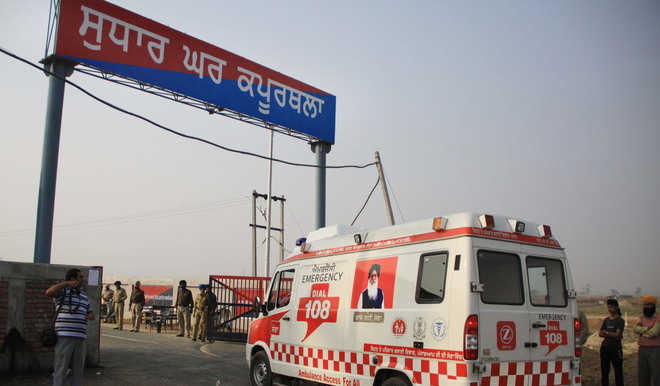
Security beefed up at Kapurthala Modern Jail
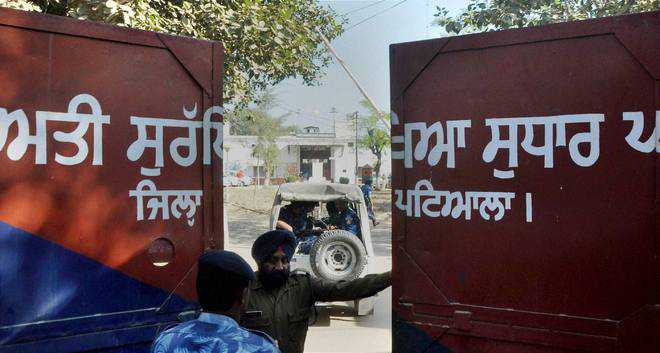
Entry to Kapurthala Modern Jail. A Tribune Photograph

Rachna Khaira

Tribune News Service

Jalandhar, November 27

Security was beefed up inside the Kapurthala jail today following the fleeing of dreaded terrorists and gangsters from the Nabha jail.Meanwhile, there are only 330 staff members of the Prison Department to guard around 2,800 prisoners lodged inside Kapurthala Modern jail.According to jail superintendent Ravinder Singh Thiara, more companies had been moved to the outer boundary of the 78-acre jail area and also the CCTV footage was being monitored round the clock in the security room. “The jail staff has been asked to be vigilant 24×7 and to conduct random checking inside prison cells to keep a close tab on the activities of prisoners lodged inside various cells,” said Thiara.Despite strenuous efforts by the jail authorities, they were having a troublesome time due to the shortage of staff inside the jail.According to sources, though there has been a huge increase in the number of prisoners inside the jail since it was running from the old jail site in Jalandhar, having a capacity to lodge around 300 prisoners, there has been no increase in the number of staff members since then.Also, the weapons and ammunition available with the jail authorities were inadequate. Though the state government has claimed that the recruitment process was under way, any government decision in this regard before the crucial election time seemed to be a distant reality.

Jails staff under pressure, criminals enjoying multiple Wi-Fi connections’

Rachna Khaira

Tribune News Service

Jalandhar, November 27

In the wake of the today’s attack at high-security Nabha jail from where six dreaded criminals, including two terrorists, escaped, senior police officials who have served in various jails of Punjab revealed some sensational information about the alleged nexus among prisoners, politicians and staff of the Department of Prisons deployed inside jails. “Prisons in Punjab are the epicentre of a hardcore nexus among criminals, politicians and also officials of the Home Department serving inside jails,” alleged a senior police official who had served at an Amritsar prison a few years ago.According to him, despite the installation of jammers, a majority of the criminals, including dreaded gangsters, were presently holding more than 10 Wi-Fi connections inside jails.He even alleged that the staff deployed on duty inside jails lower the frequency of jammers to enable criminals to use mobile phones and to continue their criminal activities even while lodged inside jail.Also, officials revealed that jail management inside Punjab prisons was incoherent, as criminals had not been segregated in any of the jails till date. “According to the custody management, the criminals having a history should be kept separate from those having a non-criminal background. However, due to immense political pressure, the jail authorities are forced to keep even the dreaded criminals according to the choice of their political bosses,” alleged another official.The official also said that there was no transparency in the jail authorities and the Police Department on the reshuffle of criminals. “The jail staff is supposed to discuss with the Police Department about the reshuffle of a criminal from one jail to another. However, they do not inform us. In case of Vicky Gonder, he was shifted to Nabha jail without any intimation to us. Despite shifting him to Nabha jail to segregate him from his other gang members, he was lodged along with other dreaded criminals like Harminder Singh Minto. This itself proves a huge lapse by the Nabha jail authorities,” said another official.Also, officials spoke at length about the dilapidated infrastructure inside Punjab prisons.If they were to be believed, the overcrowded jails were facing an acute shortage of jail staff, no police official from the department was ready to come on deputation in these jails.Amongst other issues, the CCTV cameras were not working and, most importantly, the jail staff was under intense pressure of politicians and senior officials.