Sanjha Morcha

OROP CONTROVERSY Capt Abhimanyu blames Cong for Grewal’s suicide

Finance Minister demands inquiry into reason for Grewal’s decision to end life
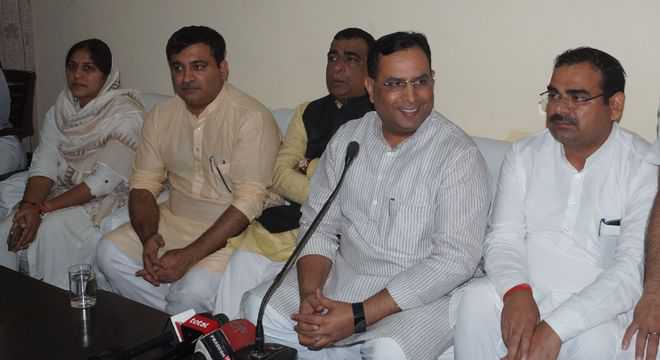
Capt Abhimanyu blames Cong for Grewal’s suicide
Finance Minister Capt Abhimanyu addresses the media in Hisar on Saturday. Tribune Photo

Tribune News Service

Hisar, November 5

Finance Minister Capt Abhimanyu today blamed the Congress for Subedar Ram Singh Grewal’s suicide, alleging the previous UPA government had failed to implement the One Rank-One Pension (OROP) scheme during its 10-year tenure.“If the financial condition is one of the reasons behind his decision to commit suicide, the UPA government is to blamed because it denying Grewal OROP benefit for 10 years,” he told the media here.The Indira Gandhi government had, in 1972, discontinued the OROP scheme for defence personnel, leading to pension-related discrepancies, Capt Abhimanyu said.“Ex-servicemen struggled for 43 years, including 10 years of the UPA government. Prime Minister Narendra Modi kept the promise on the OROP,” he claimed.On the demand for a martyr status to Grewal, the minister said: “Suicide cannot be glorified. Being an ex-serviceman, I can say that a soldier is taught to fight and struggle; not to surrender to the circumstances. The narrow thinking of the Kejriwal government failed to differentiate between martyrdom and suicide. Martyrdom is always inspirational, whereas suicide cannot be.”The reason for his decision needed to be investigated, he said.He hit out at Congress vice-president Rahul Gandhi. “I appreciate Rahul’s gesture to express solidarity with the bereaved family. But the martyrdom of a soldier from Kuruksherta a few days ago failed to draw his attention.”Capt Abhimanyu defended the government’s decision to provide Rs10 lakh and a government job to the deceased’s family. “A sensitive Chief Minister always helps the needy,” he added.

Several anomalies in scheme: Cong

  • “There are several anomalies in the scheme; it only amounts to a marginal increase in pension… The government is claiming that Ram Kishan Grewal committed suicide because he was under debt. That might be true, but he was camping in Delhi to protest forearly implementation of the OROP scheme. His phone call to his family proves he took his life for a cause”Kiran Choudhry, CLP leader

PM didn’t honour his promise, says Kiran
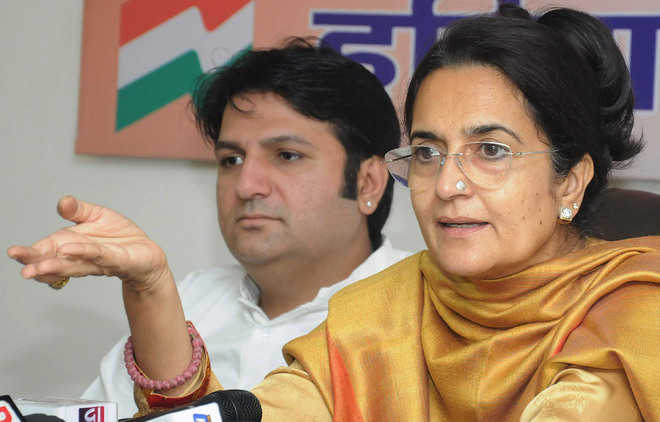
PM didn’t honour his promise, says Kiran
CLP leader Kiran Choudhry in Chandigarh on Saturday. Tribune Photo: Manoj Mahajan

Chandigarh, November 5

Congress Legislature Party (CLP) leader Kiran Choudhry today alleged Prime Minister Narendra Modi had gone back on his word on implementing the OROP scheme, as promised at a pre-election rally in Rewari.“The BJP government at the Centre has only, at best, enhanced the pension, while denying ex-servicemen their due,” she told the media here.“There are several anomalies in the scheme; it only amounts to a marginal increase in pension. At a rally of ex-servicemen in Rewari, the Prime Minister had announced that implementation of the OROP scheme would be the first thing he would do on assuming office. It has been two years since and the ex-servicemen have been forced to take to the streets. We are ashamed at the treatment being meted out to them at the hands of the BJP government,” Choudhry said.She claimed the suicide by Bhiwani ex-serviceman Ram Krishan Grewal had failed to move the government. “It was shocking to hear Modi’s minister General VK Singh say Grewal was mentally unstable. He should have stepped down in protest, to express solidarity with the defence personnel.” — TNS

Veteran’s son my party worker, says Athawale
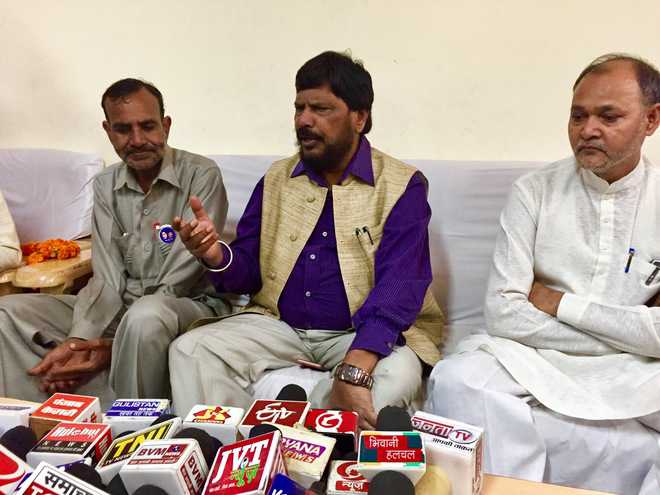
Veteran’s son my party worker, says Athawale
Union Minister Ram Dass Athawale (center) makes a point at a press meet in Bhiwani on Saturday. Tribune Photo

Bhiwani, November 5

Contrary to Union Minister VK Singh’s remark that OROP protester Ram Kishan Grewal, who committed suicide in Delhi, was a Congressman, another minister Ram Dass Athawale said that Grewal’s son was his party worker.“Grewal’s son Jaswant Singh is the block president of my party and he is not a Congressman,” said Athawale when asked to respond to the statement of former Army Chief VK Singh about the political background of the deceased.Athawale, who is chief of the Republic Party of India, reached here today and demanded martyr status for Grewal. He said that he would speak to Chief Minister Manohar Lal Khattar on the issue. One of the deceased sons would be absorbed in the department under him, he stated. — TNS

Pension for war widows, veterans raised to Rs 3,000

Chandigarh, November 5

The Haryana Government has enhanced monthly pension to Rs3,000 given to ex-servicemen of and above the age of 60, widows and orphans of ex-servicemen, disabled ex-servicemen, war widows of the defence personnel killed in action during war, and paraplegic, tetraplegic and hemiplegic ex-servicemen.The revised pension will be disbursed from from November. Earlier, pension ranged between Rs1,500 and Rs2,000.A government spokesman said financial assistance would be enhanced by Rs400 a year from November 1, 2017. TNS
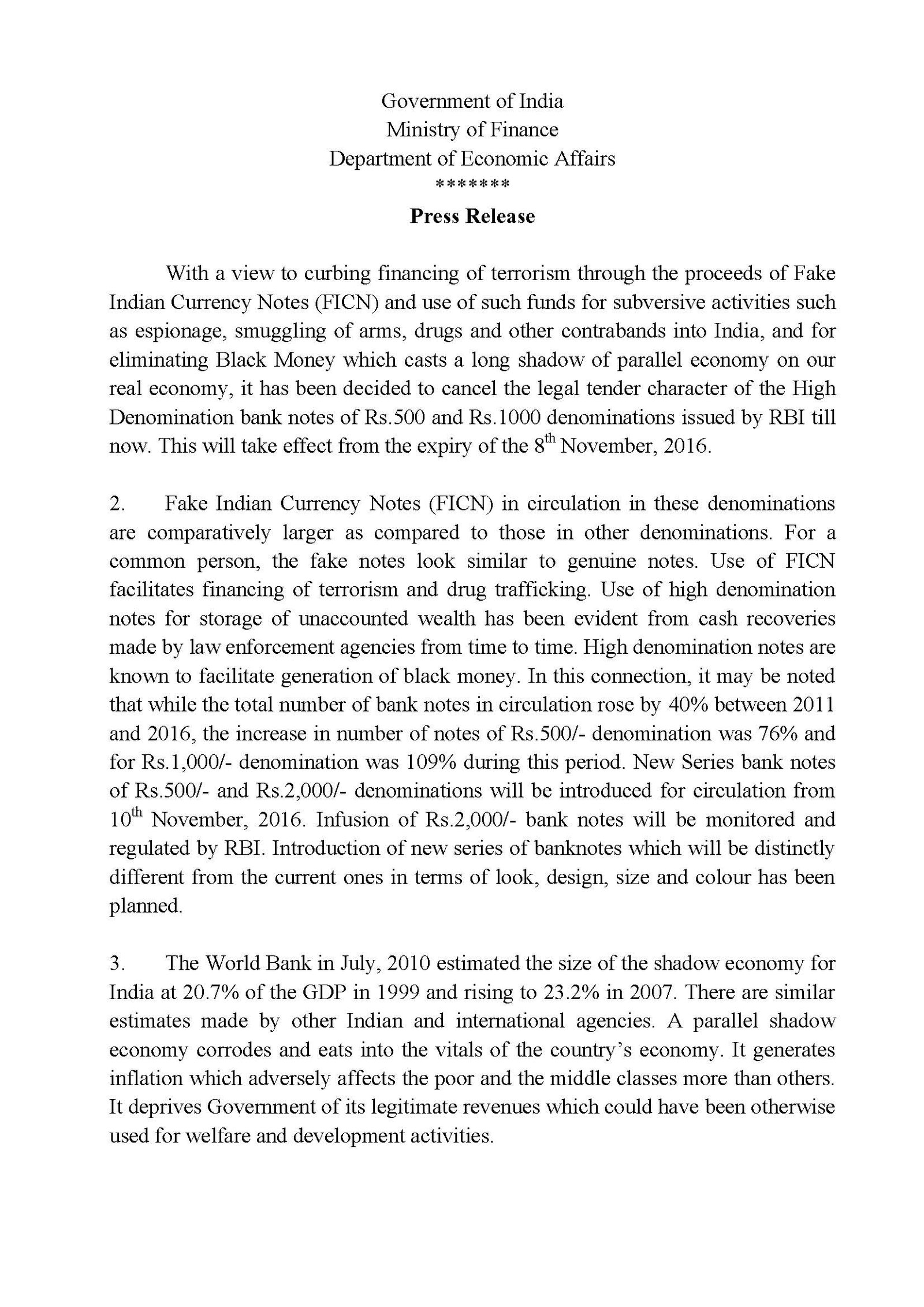
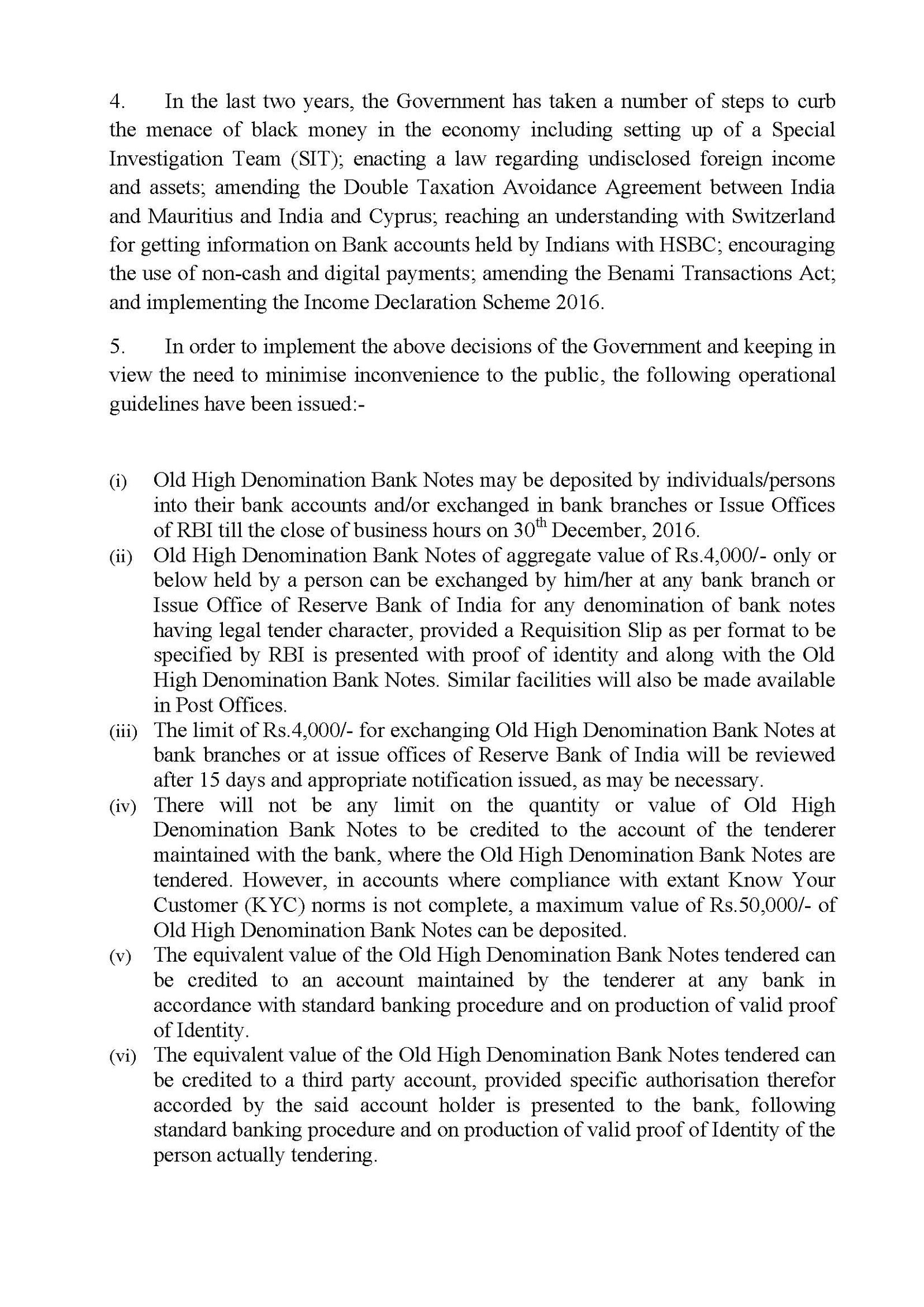
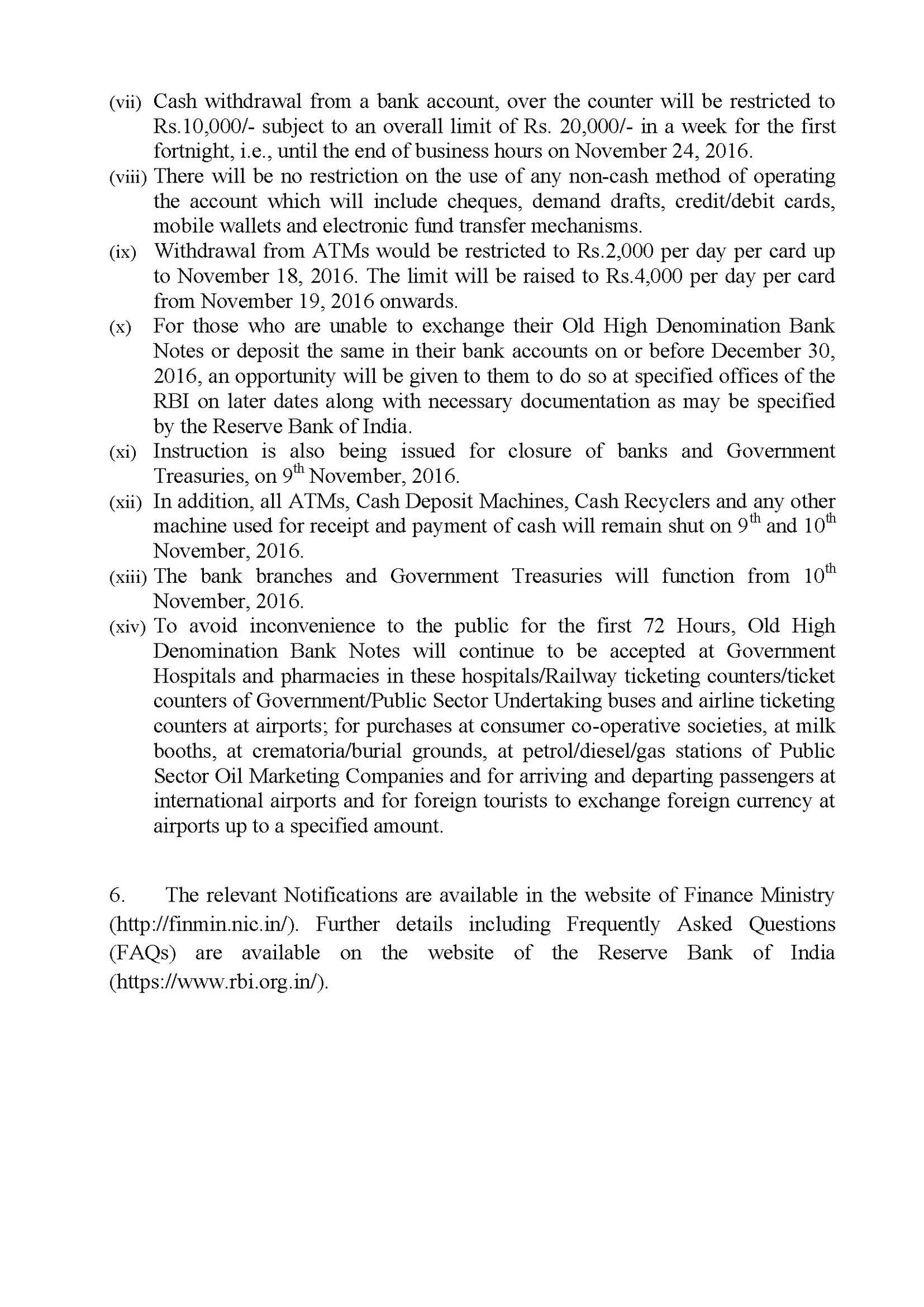
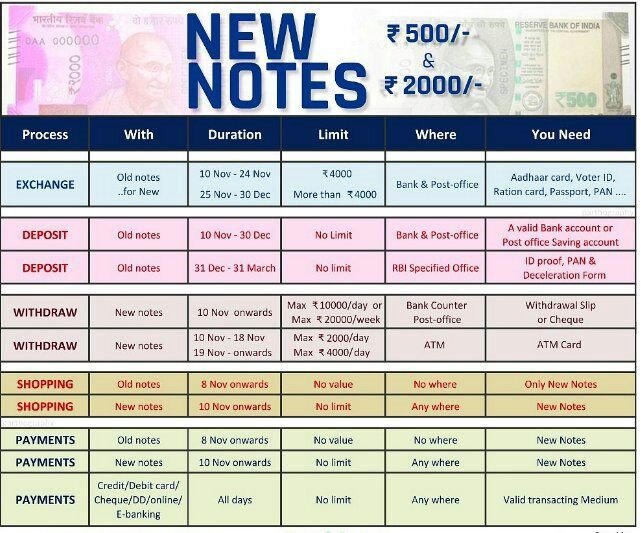
OLD NOTES EXCHANGE WITH NEW NOTES :: HOW AND WHEN ALLL

PRESS_Page_1 PRESS_Page_2 PRESS_Page_3

IMG-20161109-WA0009


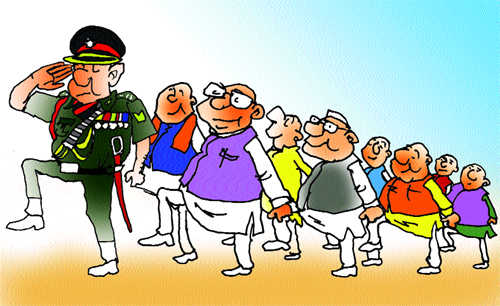
A Generals’ India ::::The politician ceding democratic space byHarish Khare

A Generals' India

It is the Diwali day. The text message landed at 9.17 am: “Happy Diwali! Mins of YAS Sh Vijay Goel will celebrate Diwali with Army Jawans today 11.30am Rajputana Rifles Regimental Centre, Delhi Cant wid  NYKS students. Pl. cover.” At 4.30 pm, there is another text: Hello Kindly check your mail box for Press Release — “Vijay Goel celebrates Diwali with Army Jawans” along with pictures of the event. It is possible to infer confidently that other 60-odd Cabinet members were celebrating Diwali similarly in  the conspicuous company of this or that Army unit.  

Nor can any one of them be chided for this PR overkill because they have been commanded to do so. In fact, advertisements had been appearing for days prior to Diwali, drawing attention to a PMO-directed campaign, called “Sandesh-to-Soldiers”, exhorting the citizens to remember this Diwali “our courageous jawans who constantly protect our nation. Lakhs of people have already sent their messages, have you?” A few days earlier, the Chief Minister of Punjab, Parkash Singh Badal, was reported to have decreed that all officers be appropriately respectful to the soldiers and ex-soldiers whenever they visited a government office.

 The Economic Times (October 27) had reported how the BJP was preparing to send out Diwali greetings to soldiers’ households in Uttar Pradesh. Both Punjab and Uttar Pradesh are due to have assembly elections in a few months’ time. And, then, a few days after Diwali, we had on Wednesday a retired Army Subedar committing suicide, in support of the demand for  one rank, one pension (OROP). That a retired Army man should commit suicide was sad enough; it is even sadder and uglier that professional political leaders should have sought to draw political mileage out of this tragedy.  Earlier, the non-BJP political leaders were tut-tutting the government for wanting to do a bit of khoon ki dalali, now it was the turn of the BJP to pretend that a veteran’s suicide was nothing to get excited about and that it was in bad taste that someone should want to “politicise” the death.

 How is the republican voices and constituency to view this extraordinary state-sponsored glorification of the military men, values and demands? Are we in the process of re-arranging the ensemble of institutional preferences? Examine, for instance, the Income Tax Department’s sales pitch. It takes out advertisements, showing a solitary solider standing guard over the forbidding mountainous border: “He is doing his duty…How about you?” The “he” is the Army Jawan, and “you” is the “tax deductor”, who is sternly reminded that TDS procedures must be totally complied with.  It is not too complicated to break the code of a new civil-military chemistry.  Legitimacy, political respectability and electoral advantage are being sought to be derived from the soldier and his shahadat (martyrdom). Unthinkingly, new space, new respect and new autonomy are being ceded to the Army brass and other security forces.   In the post-surgical strike days, various ministers and authorised spokespersons have made it clear:

(1) it is for the Army to decide whether or not to give the lie to Pakistan’s preposterous claim that there were no cross-border raids;

(2) it is for the Army to decide what should be the response to provocations, if any, from Pakistan; and

(3) that what the Army says or claims ought to be accepted, without any kind of reservation or dissent.    The Republic finds itself at a fork in the road, an unfamiliar stage which could, in the long run, produce only democratic unhappiness.  After all, all these years, generations after generations of Indians took pride in the fact that Jawaharlal Nehru and other democrats saw to it that the Army stayed in the barracks, and that the civil authority was firmly in control of matters of war and peace. The political crowd did not need to piggyback the soldiers. The fundamental reality was that the constitutional and political legitimacy accrued to the political elites only because they could garner for themselves a mandate to govern, and that too, in an open, fair and transparent electoral contest. There was a sacredness to this authority from the citizens and it entitled them to obedience and respect. “We, the people of India” were to be the ultimate and only sovereign. And, the political leader was deemed to be endowed with certain laudable skills and attitudes. He was respected as “a politician” because he undertook to understand the people’s issues and grievances.

A political operative who aspired to be recognised as a “leader” had to have the willingness to harmonise conflicting social values and claims to produce a kind of “public good.”  Coercion was not to be his calling card; persuasion and motivation were to be his first, second and third preferences.  Only autocrats rely on force and intimidation. All these years, there had been a complete consensus that the armed forces were a valuable institution, deriving its authority and parameters from the Constitution, and, that, as an institution, the armed forces were committed to democratic and secular values.  

The armed forces, to be fair, never asserted that they were outside the ambit of democratic accountability; nor did they demand a lion’s share in the national resources. Unlike in our neighbourhood, the armed forces never subscribed to a grammar of entitlements. This despite the fact that in the last three decades or so we have come to depend heavily on the coercive arm of the Indian state to restore a semblance of order in large parts of the country. Yet, we find ourselves witness to the process of re-arranging some of the working assumptions that have served the Indian republic well for all these years.  Unlike in Pakistan, where it were the Army Generals who made the judgement that the politicians were incompetent and incapable of safeguarding the best interests of their nation; we are not just deferring too much to the Generals, we are also redefining “competence”. Suddenly, it would seem that competence of a leader is to be judged by his willingness to allow the use of force. And, a willingness to let the “security forces” be the judge of how to use force, when to use it. 

And, once we let the “security forces” write their own ticket, the others who have capacity to initiate and inflict violence also take a cue. If the Army can give a “bloody nose to the Pakis”, so can the BSF; and if, the BSF can be allowed to over-react, why can’t the cops in Bhopal go on a shooting spree and gun down a few SIMI boys?  All this adds up to a new but troublesome acceptance of violence. Nehru’s India is forging a new identity under the shadow of joyful acceptance of conflict. Elements of a garrison state are being grafted on to the republic’s escutcheon.


The shame at Nabha Serious consequences for national security

Two days ago the Prime Minister was in Punjab. In the company of the Punjab Chief Minister and the Deputy Chief Minister, Mr Modi meditated on the Indus Water Treaty, Pakistan, black money, counterfeit currency, terrorism etc. His presence sought to impart a kind of certificate of good conduct to the Punjab Government. On Sunday morning the criminals at Nabha mocked at all these claims of good governance and “law and order”. The sheer audacity of the Nabha escapees and their accomplices in believing that they could carry out such a jailbreak is an advertisement of sort. The jailbreak was virtually a cake walk. The only saving grace is the immediate arrest of one of the escapees, Harminder Mintoo, of the Khalistan Liberation Force.What stood out clearly at Nabha was the cowardice of the jail staff and mismanagement of the so-called high-security jail. How easy it was for the gangsters to trick the jail staff into believing in their story. As the criminals opened indiscriminate firing, the jail staff failed to retaliate and stop the escapees in their tracks. But no one should be surprised at this meek surrender. It reflects a corrupt jail management culture in which prisoners are allowed access to mobiles, internet and drugs. This will not change with the suspension of a couple of jail officials. Post escape, the Punjab Police brought upon itself additional infamy when they fired at a car, killing an innocent young woman. Here they did not have the excuse of shooting in self-defence. All said and done Sunday was a bad day for the Punjab Police and its pretension to professionalism.By making it easier for prisoners to come out on parole the Akali-BJP government has invited the charge of doing it to use criminals in elections. Such is the credibility of the government that soon after the Nabha jailbreak Capt Amarinder Singh immediately suspected high-level complicity, while Home Minister Sukhbir Badal saw a Pakistani conspiracy to revive terror. Why should Pakistan’s dirty games impair the police capacity to act and do their job? All recent high-profile cases of murder have remained unsolved. None of the countless SITs have yielded any conviction. The sorry spectacle at Dinanagar, Pathankot and now Nabha should unnerve not just the citizens of Punjab but also our national security establishment.


At 9, to retire is aim BY Brig IJ Singh (Retd)

WHAT do you say to a nine-year-old grandson who tells his nana, a retired Brigadier (me) that he wants to retire? I was taken aback when the young chap, who till yesterday had excelled in science and maths Olympiad, dropped the bombshell. Concerned, I immediately asked him what had triggered this course of action or inaction. Pat came the reply, “You have been the root cause of such ‘holy’ proposal.” He was not found wanting and had done his homework well. He took off, “Nana, you don’t have to get up early, no school, no homework, no examinations, nobody to chase you. You get up late, read newspapers, play golf, see movie first day, first show; attend parties and entertain your friends, and on top of that, the government pays you pension without doing any work.” He mentioned my holidaying, both in India and abroad. On two such occasions, he had been my fellow companion and had seen me enjoying my single malt whiskey/beer sessions.A retired soldier, I decided that I was not going to be defeated by a misled grandson. I started by saying that even now me and my wife work and are responsible for running two companies. Sometimes, I have to work for 12 to 14 hours. Straight came the reply from the youngster, “So what? You are your own boss, you give orders and no one bullies you.” With a solider’s never-say-die attitude, I decided to take him head-on. “Look here, as a student your age, I did not have the comforts of a tablet and a laptop, or LED TV, mobile phone, no holidays abroad, except trips to my nana-nani’s village. I got only an anna to spend a day, no branded clothes and I walked to school. When I joined the Indian Military Academy, I was bullied by seniors. In subsequent years, the Army put me to places where the temperature was -35°C. We stayed in bunkers.   “Your nani and I stayed in remote places in temporary one-room accommodation. My superiors chased me all my life and now my wife. And with 36 years of hardship in the Army, I had earned my pension.” To motivate him to get on with his daily routine of studies, I mentioned that as an Army officer, I did my MSc in defence studies, MPhil in defence management and even BEd before taking up the assignment of chairman of an Army Public School. I drove the final nail by saying that all those who work hard in the initial years enjoy the rest of their life and those who enjoy in their earlier years, suffer for the rest of their life. I reminded him of Army mottos — Abhi nahin to kabhi nahin, Reach for the Sky, Do or die — in which we believed all our lives. And to have total superiority over my grandson, Dilawar, I was now adding operational components. I fought the 1971 War in Uri sector and was posted to Leh soon after the Kargil War. I had been to Siachen, Kargil, Drass, Chushul, unlike him who had only been to five-stars in India and abroad. “I participated in real war while you fight cartoon wars on the tablet!” By now I saw the froth had settled down, but there was defiance in his eyes. “Some other day, nana.”

Veterans seek AFT overhaul

Tribune News Service

Chandigarh, November 28

Averring that the Armed Forces Tribunal (AFT) has failed in achieving its objectives to provide an effective judicial forum to aggrieved soldiers due to faulty composition and vested interests, veterans have called for an overhaul of the existing system.In a letter written to Prime Minister Narendra Modi today, Saviours of Human Rights for Armed Forces Personnel (SHRAF) has stated that unlike the Central Administrative Tribunal that deals in only administrative matters, the AFT in addition to such issues also handles criminal appeals and a review of trial evidence, which requires knowledge and experience of criminal law, criminal jurisprudence and the evidence Act.Administrative members of the AFT, who are retired senior armed forces officers, do not possess such qualifications and appointing them to decide criminal matters involving inter-woven questions of law and facts is nothing but fraud with the judicial system, the letter states.Pointing out that hundreds of cases are listed daily in the AFT only to be adjourned due to non-availability of members, adding to the suffering of soldiers and veterans, SHRAF has demanded that only judicial members, who are retired judges, should constitute an AFT Bench and the posts of administrative members be abolished. Also, the number of benches should be increased.

Wants retired judges on Bench

  • In a letter to Prime Minister Narendra Modi, Saviours of Human Rights for Armed Forces Personnel has stated that AFT members do not possess knowledge of criminal law, criminal jurisprudence and the evidence Act
  • It has demanded that only retired judges should constitute an AFT Bench and the posts of administrative members be abolished. Also, the number of Benches should be increased

Batch of 190 Army recruits passes out

Batch of 190 Army recruits passes out
The passing-out parade at the Ladakh Scouts Regimental Centre, Leh. Tribune Photo

Tribune News Service

Srinagar, November 26

A fresh batch of 190 recruits from Jammu and Kashmir participated in the passing out parade today at Jammu and Kashmir Light Infantry (JAK LI) Regimental Centre, Rangreth, after completing a year of strenuous training.Lt Gen Rakesh Sharma, Director General of Operational Logistics & Strategic Movement in the Army Headquarters, reviewed the passing out parade at the JAK LI’s Bana Singh Parade Ground. The parade, depicting graduation of a recruit and his transformation into a soldier, was attended by over 1,500 parents and relatives of young soldiers from J&K along with a number of civil and military dignitaries, an Army spokesman said.General Sharma congratulated the young soldiers for their immaculate parade and impressed upon selfless service towards the nation. He praised their contribution towards encouraging more and more youth from J&K to come forward to join security forces and also highlighted the vital role played by their parents in motivating their wards to join this noble profession.The young soldiers who distinguished themselves in varied facets of training were felicitated by General Sharma. Recruit Mukesh Kumar received the Sher-e-Kashmir Sword of Honour and Triveni Singh Medal for being adjudged the ‘Overall Best Recruit’ and Recruit Lal Hussain bagged the Chewang Rinchen medal for being the ‘Best in Firing’.52 recruits begin career as soldiers  The highest-located drill square of Ladakh Scouts Regimental Centre was stirred by precise drill movements and ankles digging into the parade ground as 52 recruits of Ladakh Scouts Regiment began their lifetime journey as soldiers. The passing out parade was on Saturday held at the regiment centre in Leh. The impressive ceremony, reviewed by Col TPS Consel, Deputy Commander, Headquarters, Chushul Brigade, was attended by civil and service dignitaries and parents of recruits. The young recruits, hailing from all regions of Ladakh, took oath in unison to serve the supreme cause of the nation. Colonel Consel congratulated the young soldiers for the march past and urged them to devote their life in the service of the country. The young soldiers are now ready to join their Battalions of Ladakh Scouts Regiment.


OUR HEROS::—Param Vir Chakra::::RECOLLECTION

Param Vir Chakra
Major Somnath Sharma (Posthumous), 4 KUMAON (1947) Naik Jadunath Singh (Posthumous), 1 RAJPUT (1948) 2nd Lt Rama Raghoba Rane, BOMBAY ENGINEER (1948) CHM Piru Singh (Posthumous), 6 RAJ RIF (1948)
Lance Naik Karam Singh, 1 SIKH (1948) Capt Gurbachan Singh Salaria (Posthumous), 3/1 GR (1961) Major Dhan Singh Thapa, 1/8 GR (1962) Subedar Joginder Singh (Posthumous), 1 SIKH (1962)
Major Shaitan Singh (Posthumous) 13 KUMAON (1962) CQMH Abdul Hamid (Posthumous), 4GRENADIERS (1965) Lt Col AB Tarapore (Posthumous), 17 HORSE (1965) L/Naik Albert Ekka (Posthumous) 14 GUARDS (1971)
2nd Lt Arun Khetrapal (Posthumous), 17 HORSE (1971) Major Hoshiar Singh, 3 GRENADIERS (1971) Naib Subedar Bana Singh, 8 JAK LI (1987) Major R Parameswaran (Posthumous), 8 MAHAR (1987)
Capt Vikram Batra (Posthumous), 13 JAK RIF (1999) Lt Manoj Kumar Pandey (Posthumous), 1/11GR (1999) Grenadier Yogender Singh Yadav, 18 GRENADIERS (1999)

MARTIAL MUSIC INDIAN ARMY MARTIAL TUNE

http://


Army invites applications for havildar education

JALANDHAR: Army has invited applications for recruitment of Havildar Education in the Army Education Corps in Science and Arts stream for group ‘X’ and ‘Y’.

Candidates applying for Group `X’ should have passed BA/B Sc/B Sc(IT)/BCA/BE/B Tech/M Sc/M Sc (IT)/MCA/M Tech with B Ed from any recognised university.

Candidates applying for Group ‘Y’ should have passed BA/BSc/ BCA/BSc (IT)/without B Ed from any recognised university.

The age of the candidate should be between 20 to 25 as on October 1, 2017 and for serving soldier, the age should be 20 to 28.

All eligible candidates can apply through online registration on www.joinindianarmy.nic.in. Last date for receipt of applications is Nov 29, (1700hrs).


Need to have more subs, says Parrikar 30-year plan to build 24 submarines ‘not enough

Need to have more subs, says Parrikar

Ajay Banerjee

Tribune News Service

New Delhi, November 22

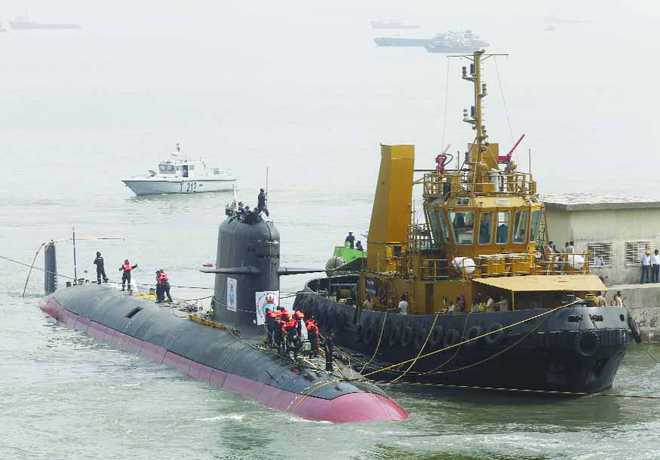
Defence Minister Manohar Parrikar today said India must rethink its submarine building plan and look for greater numbers than the existing plan of making 24 submarines by 2030.Referring to the existing 30-year submarine building plan approved in 1999 that envisages construction of 24 submarines, including both nuclear and conventional, Parrikar said India needed a longer plan till 2050 with more numbers.The existing plan ends in 2030 and the first submarine under it — the Kalvari — will be commissioned in January 2017. To maintain and sustain the knowledge in submarine making, India needed a longer plan, Parrikar told the media on the sidelines of a seminar here today.He was addressing a seminar “Current and future challenges in design and construction of underwater vehicles” organised by the Federation of Indian Chamber of Commerce and Industry.At present, India has 14 submarines: nine Kilo-class (EKMs), four German-designed HDWs (SSKs) and one Akula class nuclear-powered submarine (SSN) on a 10-year lease from Russia (since 2012).In comparison, China is building up submarines with speed. The US Department of Defence, in its annual report to the US Congress, spells out the rise of China’s submarine fleet. A US report, “Military and security developments involving the People’s Republic of China 2016”, says, “The People’s Liberation Army Navy places a high priority on the modernisation of its submarine force and presently possesses 61 vessels. By 2020, this force will likely grow to between 69 and 78 submarines.”Parrikar said other countries like the UK, Russia and the US had built hundreds of submarines. On the coming next line of submarines—“Project 75-India”— he said it would start once the strategic partnership model was approved.Navy Chief Admiral Sunil Lanba said the submarine design is an area that challenged indigenous development. Indian yards will need technology transfer to ensure that the Navy gets its submarine development plan.

clip