Sanjha Morcha

IAF assesses how sleep deprivation hits fighter pilots

NEW DELHI: The Indian Air Force is experimenting with the sleeping pattern of its fighter pilots to find out how fatigue affects flight performance in an unforgiving environment.

AP FILEA study conducted on 40 fighter pilots reveals significant deviations in performance due to lack of sleep.

A sleep deprivation study conducted on 40 fighter pilots has revealed significant deviations in their performance and now the IAF will kick off field studies on a larger scale, officers familiar with the research told Hindustan Times.

Insufficient sleep can lead to increased error rates, decreased levels of alertness and lapses in judgment.

The experiment is being conducted by the IAF’s Institute of Aerospace Medicine and Defence Institute of Physiology and Allied Sciences.

Several international air forces including those of US, UK and Germany have conducted such studies to improve flight safety and come up with countermeasures for fatigue.

“Subjects are not allowed to sleep when they normally do and tested on various flight parameters. And then they are tested again in a well-rested state,” said an IAF officer, involved in the study.

“We have observed noticeable deviation from optimal flight performance.

The IAF is using a monitoring system developed by IIT Kharagpur to assess how fatigue impairs performance.

The system is similar to psychomotor vigilance task monitor used globally for measuring reaction time of pilots under different stages of sleep deprivation, said an aviation medicine specialist.

“We want to develop a system that allows us to quickly assess if a pilot is fatigued during the morning briefing. Fighter pilots have to stay sharp at all times,” said a senior IAF officer.

The scope of the IAF study will also cover the effects of “go pills” and “no-go pills” that Indian fighter pilots are authorised to use during training for specific combat missions.

The IAF allows its fighter pilots to use Modafinil, a “go pill” that helps them stay alert and focused during long sorties.

They can also pop Zolpidem, a “no-go pill” used to promote sleep after demanding day-night missions.

“The idea is to send a fully alert fighter pilot to the cockpit and be aware of his sleep pattern and the effects of pills on his performance,” said Air Marshal Pawan Kapoor, who heads the IAF’s medical wing.

4 Army men injured as Pak violates truce

Jammu, November 20

Four Army jawans were injured as the Pakistani army resorted to heavy cross-border firing in Rajouri sector of Jammu and Kashmir tonight, in third ceasefire violation since yesterday.”The Pakistani army resorted to heavy cross-border firing in the Rajouri sector, in which four of our soldiers have been injured,” an Army officer said.He said the Army was giving a befitting response to the Pakistani fire and the exchange of fire was going on till the last reports came in.Today’s violation of the ceasefire came a day after a BSF jawan and a woman were injured when Pakistani troops targeted Indian posts and civilian areas in Nowshera and Sunderbani sectors of Rajouri. — PTI


‘LIKELIHOOD OF PAK USING N-WEAPONS HAS INCREASED’

NEW DELHI: Former national security adviser (NSA) Shivshankar Menon has warned that the likelihood of Pakistan using tactical nuclear weapons against India has increased, which has given rise to the possibility of an all-out nuclear war between the neighbours.

Menon told a TV channel that power to use tactical nukes would be devolved to lower ranking officers in the Pakistani Army that is “increasingly religiously motivated and less professional”. He said the Pakistan Army had “consistently produced rogue officers staged coups against its own leaders”.

He indicated the use of tactical nukes by Pakistan could lead to a full-fledged nuclear conflict when India decides to mount a massive retaliation of its own.

Commenting on defence minister Manohar Parrikar’s questioning of India’s ‘no first use’ policy, Menon said the minister didn’t have a right to articulate his personal opinion on nuclear policy in public, particularly when it contradicted the country’s official policy.

He said Parrikar’s suggestion would not be in India’s interest, adding that threatening a nuclear response to a terror strike from Pakistan would be like “threatening to kill a mosquito with a shotgun”.

Menon, who was India’s foreign secretary when the 26/11 Mumbai attack took place, said he was all for “immediate visible retaliation of some sort” after the attack. He said he had pressed for action against “LeT in Muridke or their camps in PoK or against the ISI, which was clearly complicit”.

Men on said he then believed that retaliation would be “emotionally satisfying” and also go some way toward “erasing the shame of the incompetence that India’s police and security agencies displayed.” He said then foreign minister Pranab Mukherjee seemed to agree with him but didn’t reveal then PM Manmohan Singh’s response.


Here’s All You Need To Know About Gen Bajwa, The New Pak Army Chief by Lt Gen Syed Ata Hasnain –

Here’s All You Need To Know About Gen Bajwa, The New Pak Army Chief

SNAPSHOT

Pakistani Army chief General Raheel Sharif’s exit brings General Qamar Javed Bajwa to the hot seat, and therefore, throws up yet another challenge for Indian analysts, to predict what course the new boss will follow.

So, finally Pakistani Army chief General Raheel Sharif did decide to go home. An extension would have given him two or three years more in uniform. Outside the uniform, he can aspire for much more, perhaps even a political career. Seldom has a Pakistan Army chief worked so assiduously on his personal image and used all elements of state to project that. His achievements were plastered all over the media and the Inter-Service Public Relations pulled out the stops; it led to Gen Raheel’s posters being pasted even behind Karachi’s rickshaws, in a city he helped partially clean up of its criminal and terror mess.

His exit brings General Qamar Javed Bajwa to the hot seat, and therefore, throws up yet another challenge for Indian analysts, to predict what course the new boss will follow. Predictably, analysts on our side are already reading far more than is evident. Predictions of being Nawaz Sharif’s man, who helped him survive the attempt by Imran Khan to conduct a civilian coup, are doing the rounds. Much weightage is being given to the Kashmir record because of the current impasse along the Line of Control (LoC), and the possibility that he will follow a very proactive approach towards Kashmir.

All the above are furthest from the truth. The Pakistan Army is professional and extremely strategic in its orientation. Its prime concern is itself and its power. It is not going to give a woolly-headed Prime Minister the space to rejig himself into a dominant position to dictate to the generals. So, Gen Bajwa is nobody’s man, but his own and that of the Pakistan Army. Right from 1977, when Gen Zia ul Haq spelt out his diabolical plan for retribution against India, the core of Pakistan Army’s existence, it has always been in the dominant position that must be occupied in Pakistan’s polity, either directly or indirectly.

Gen Pervez Musharraf assumed full power and later restored civilian rule. His successors have been refining the hold of the Pakistan Army over the country’s polity and governance; projecting diluted control and in actual effect assuming more power. The master of this was Gen Raheel Sharif. To assume that Gen Bajwa will roll it all back is a figment of someone’s imagination. Yet reasonable space could be accorded to him to view the situation with rationale.

A little about the new incumbent. The Pakistan media hardly delves into personal details, but we know that Gen Bajwa is a second-generation infantryman from Baluch Regiment, like three previous chiefs, Yahya, Aslam Beg and Kayani. The general is called apolitical by the Pakistan media which is also being repeated by the Indian media; the assumption is beyond reason. He is from the October 1980 batch of the Pakistan Military Academy, Kakul. The same as Gen Zubair Hayat, who has been appointed the chairman of joint chiefs of staff committee, except that he is junior in number. Gen Hayat was the Director General of the Strategic Plans Division, which oversees Pakistan’s nuclear assets from the military angle, an appointment far more important than the one held by Gen Bajwa (Inspector General Training and Evaluation, virtually the DGMT of the Pakistan Army). He later became the Chief of the General Staff as a Principal Staff Officer having the DGMO under him, and therefore has experience in the handling of operations at the strategic level. Academically, the two general officers have matching profiles; Gen Hayat being a graduate from Staff College Camberlay, UK and Gen Bajwa from Staff College Toronto, Canada. The latter later attended the Naval Post Graduate School at Monteray Bay, US. Internationally too, he has greater experience having commanded a Pakistan Army Brigade in South Kivu in Congo as part of the UN mission there.

Given his international experience, good academic record with exposure abroad and the record of service in Kashmir, Gen Bajwa was a natural choice as Chief for the Pakistan Army. The general has had three tenures in Pakistan’s 10 Corps; as Chief of Staff at the Headquarters, GOC Force Command Northern Areas, which also looks after Pakistan’s glaciated terrain opposite our deployment in Siachen and Saltoro ridge, and as GOC 10 Corps (Pakistan’s Kashmir Corps). However, the recent crop of senior officers of the Pakistan Army have all been blooded in serious battles with Islamic radical terrorists in the North West or in other internal security duties.

Gen Bajwa does not have that experience but is reputed to believe that the threat from radicals is far more serious than from India. That is in the same mold as Gen Kayani and Gen Raheel Sharif. However, no Pakistan Army senior officer is going to blatantly talk of targeting India except as reaction. Gen Raheel Sharif has been using some very aggressive language off late as his date for departure approached. Gen Bajwa could be forced to follow suit considering that the temperature at the LoC is extremely high. The Indian media’s remarks that the Pakistani Army is virtually suing for peace after the heavy crunch of response through fire assaults by the Indian Army, will not be helpful. Maturity of a general is displayed, when he does not play to the galleries. Watching former Indian Army Chief General Bikram Singh praise his earlier subordinate in the UN mission in Congo and accepting the reality that he needed to work for his nation’s interests was display of what may be called military respect and magnanimity. Rhetoric is something which has become so common place in the India-Pakistan narrative that one would like to see Gen Bajwa change the tone and tenor. If he does, he probably will give indicators of what will form the essence of his doctrine at the LoC.

Gen Raheel Sharif’s positive legacy has been the manner in which he went after the Lashkar-e-Jhangvi (LeJ) and TTP even as he embarked on cleaning up Karachi. These organisations are not down and out and would be looking to rearing their heads again. They would be assessing the commitment, understanding and energy that Gen Bajwa brings to the appointment. Any leeway and they would seek to exploit. In the light of this situation, the reported shifting of forces (two divisions worth) to the eastern front may not sound so prudent. Yet, Gen Bajwa cannot be as bold as to rescind an order of his previous chief. Those decisions will all be respected.

General Bajwa takes over an army far more experienced in hybrid operations than it was a few years ago. Gen Raheel Sharif did bring his imposing personality to the arena of irregular operations and took some robust decisions. His successor will follow suit by the sheer kinetic energy set in motion by Gen Raheel. However, Gen Bajwa comes at a time, when equations and axes are also changing.

First, the Chinese are increasingly looking at the China Pakistan Economic Corridor with a more serious intent. They would not want Gilgit-Baltistan in greater tension, neither Baluchistan. But if the current tensions with India only get worse India is going to play both cards; diluting of tension in J&K is therefore in Pakistan’s interest.

Secondly, the US appears to be ignoring Pakistan as its strategic interests shift. With President-elect Donald Trump’s likely isolationist policy, Pakistan’s significance will further dilute. It is only nations with whom economics and business will be strong, that US is likely to strengthen relations and India is one of them. Pakistan’s relationship with Afghanistan is not improving and the Taliban in Afghanistan are under no one’s control. That means continuation of Pakistan’s dwindling strategic space and India’s continuing influence.

Thirdly, the positive on the horizon is the improving relationship with the Russians and feasibility of some weapons and equipment from that source. The Russians too may not be too happy to see their weapons in use against India with whom it still has a strong strategic relationship.

Thus from every count an improvement in relationship with India is called for. It won’t happen with loss of any pride to the Pakistan Army. Gen Bajwa may after initial briefings and unbiased review realise the above. If offered tactical escape routes without loss of pride we could yet see the LoC tension drawing down. The need may be to reduce rhetoric from our side too to allow this to take place.

Usually machismo may demand false military notions of domination etc and some robust trans-LoC exchanges as the new Pakistan Army chief takes over. It would be in everyone’s interest if some time is given to Gen Bajwa to make his assessment, send messages through the hotline that Pakistan may wish to re-appraise its policy vis-a-vis the LoC and await response. I think there may be a chance that Gen Bajwa may just turn out to be different. The experience as GOC 10 Corps may have tempered him into the futility of the breaches of ceasefire. To expect anything on the sponsorship of proxy war may be a little too much; one step at a time will be a good policy.

Lastly, rumours that an Ahmadiya connection of a remote relative almost scuttled Gen Bajwa’s chances can be dismissed as mere speculation. Pakistan has had Ahmadiya generals before although Gen Bajwa is far from being one.
8

The writer is a former GOC of India’s Srinagar based 15 Corps, now associated with Vivekanand International Foundation and the Institute of Peace and Conflict Studies.

Lt Gen Syed Ata Hasnain, PVSM, UYSM, AVSM, SM, VSM and BAR, is one of India’s most decorated military officers. He retired in 2013 as the Military Secretary, after 40 years of service in the Indian armed forces. Prior to that, he had been specially inducted back to Srinagar to command the strategic 15 Corps to restore order when the three-year agitation in the streets went out of order. In his long career, he has served in Sri Lanka with the IPKF; in Punjab, during the heyday of militancy; in India’s North-eastern states, and in seven tenures of duty in Jammu & Kashmir. He also commanded his unit in Siachen Glacier. 


No Indian submarine chased out by Pak warships: Navy

No Indian submarine chased out by Pak warships: Navy
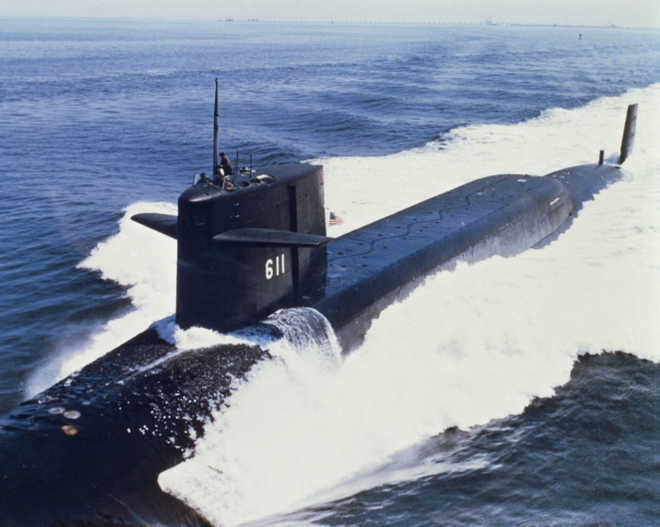
Thinkstock photo, only for illustrative purpose

Ajay Banerjee

Tribune News Service

New Delhi, November 18

Indian Navy on Friday dismissed reports that its submarines were chased away by Pakistan warships, as some reports by the neighbour’s media had claimed.

Indian Navy spokesperson Capt DK Sharma said that none of its submarines was in Pakistan’s waters and, therefore, there was no question of being driven out.

A Pakistan Navy spokesman said the Indian submarines were detected near Pakistan’s territorial waters but had been pushed back.

“The Indian Navy, in order to fulfil its nefarious designs, was deploying submarines. The Pakistan Navy, alert and using its extreme skill, prevented Indian submarines from entering Pakistani waters,” the Pakistan Navy spokesman said in a statement. “Pakistan Navy fleet units detected the presence of Indian submarines in the southern parts of Pakistani waters…and restricted their activity.”

Territorial waters are defined as 12 nautical miles (22.2kms) from shore. (With inputs from PTI)

Pak says it ‘drove out’ Indian sub

New Delhi denies claim as tension between neighbours reaches Arabian Sea

Pak says it ‘drove out’ Indian sub

Ajay Banerjee

Tribune News Service

New Delhi, November 18

The India-Pakistan tension today shifted from Jammu and Kashmir to Arabian Sea where Islamabad and Beijing have been conducting a naval exercise. Pakistan claimed to have “detected” an Indian submarine, which had “violated the sea limits” and said it was “driven back”, a claim New Delhi vehemently denied.   The Indian Navy refused to accept that its submarine had entered the territorial waters of Pakistan-that is 12 nautical miles (some 22 km) from the shore.Pakistan’s Inter-Services Public Relations (ISPR) realised a video and pictures of a diesel-electric powered submarine while “breathing” or “snorting” (showing its periscope and masts above sea level even when the vessel is submerged and charging its batteries). The pictures and video indicate that the shots were from an infra-red camera or sensor, signifying these were captured at night from either a warship or a low-flying drone.This, Pakistan claimed, was an Indian submarine, which had entered Pakistan’s waters.  India operates two varieties of the diesel-electric submarine-Russian-origin Kilo class and German-origin HDW. India’s nuclear-powered submarine INS Chakra would not need to “snort” as a nuclear vessel need not charge its batteries at sea.ISPR said, “(Indian) submarine was deployed within Pakistani waters to secretly sneak into Pakistani limits; however, it was successfully traced”.  Meanwhile, the Pakistan-China navy exercise would enter its ‘marine drill phase’ tomorrow. 

Pakistan claims it ‘blocked’ Indian sub, New Delhi denies

ISLAMABAD: The Pakistan Navy said on Friday it had “blocked” an Indian submarine from entering the country’s territorial waters, though officials in New Delhi described the claim as “blatant lies”.

AFP FILEThe Pakistani Navy said the submarine was detected “south of the Pakistani coast” on Monday.

“The Pakistan Navy once again proved its vigilance and operational competence by detecting and blocking an Indian submarine from entering in Pakistani waters,” an official statement said.

“The unsuspecting submarine was detected and localised south of Pakistani coast on November 16. Thereafter, despite submarine’s desperate efforts to escape detection, it was continuously tracked by Pakistan Navy fleet units and pushed well clear of our waters,” the statement said. The detection of the Indian submarine reflected the Pakistan Navy’s anti-submarine warfare capabilities, it added. The navy also released footage and photographs of what it was said was the submarine trying to enter Pakistani waters.

In New Delhi, Indian Navy officials described the Pakistani claim as “blatant lies” and said none of its vessels were in that area. Security analyst Admiral (retired) Tasnim Ahmad told the media the submarine had been in Pakistani waters for more than four days. He said the vessel left Pakistani waters after being detected. Earlier this week, the Pakistan Navy announced that the first cargo containers for the China-Pakistan Economic Corridor (CPEC) were safely escorted in the Arabian Sea towards their destinations in Middle Eastern and African countries.

It said the success of the CPEC and Gwadar port project was linked to a safe and secure maritime environment in the Indian Ocean and Arabian Sea.


Army truck mows down 12-yr-old girl

Tribune News Service

Ambala, November 26

Gunjan(12), a resident of Mahesh Nagar, was mowed down by an Army truck at Parshuram Chowk in Ambala Cantonment today. The victim was reportedly returning home from school along with her cousins, when their motorbike was hit by the truck. She died on the spot. The truck driver fled the spot.Later, kin of the deceased kept the body on the road and tried to block the Ambala-Jagadhri road. They alleged the police were trying to protect the accused as the truck belonged to the Army.They lifted the road blockade after seeing a copy of FIR. Deputy Superintendent of Police Suresh Kaushik said the truck driver had been booked under sections 279 and 304A of the IPC. He said the Army officials concerned had been informed about the situation and efforts were being made to nab the driver.


Eleven Indian soldiers killed on November 14, claims Pak army chief

NEW DELHI: Pakistan army chief General Raheel Sharif said on Wednesday that 11 Indian soldiers were killed in crossborder firing on November 14, the day seven of his personnel were gunned down near the defacto border between the two countries, according to reports in the Pakistani media.

He dared the Indian Army to “accept their losses”, stressing that the “Pakistan Army accepts and owns its casualties”, a report on the website of the Dawn said.

Gen Sharif, in a conversation with the media in Islamabad, said India’s surgical strikes across the LoC were limited to mere words and New Delhi had to face embarrassment over the claim, the Geo News reported. Earlier in the day, Gen Sharif, alongside PM Nawaz Sharif, watched a Pakistani military exercise near the strategic border to test the army’s preparedness.

Ties between New Delhi and Islamabad have hit a low in the aftermath of an attack on an Indian Army base in Kashmir’s Uri that killed 19 soldiers in September. New Delhi blamed the brazen assault on Pakistan-based militants, a charge Islamabad promptly denied.

The Indian Army also said it carried out surgical strikes across the LoC in response to the Uri attack. Since then, repeated ceasefire violations at the border and civilian deaths have added to the tension.

India recently accused a Pakistan high commission staffer of spying, and in a titfor-tat move, a media leak in Pakistan accused eight officials of the Indian mission of being involved in “subversive activities”. Almost all engagements between the neighbours have been put on hold amid reports that the two countries will scale down diplomatic presence in each other’s capitals, though Pakistan has confirmed it will attend a conference in Amritsar in December.


Maharajas —Indian and American

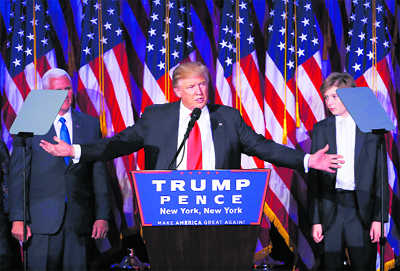
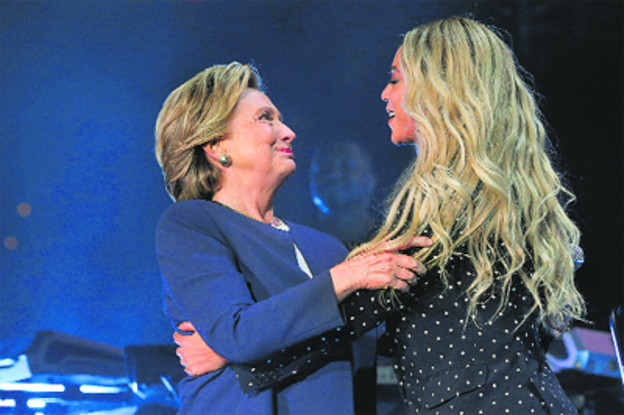
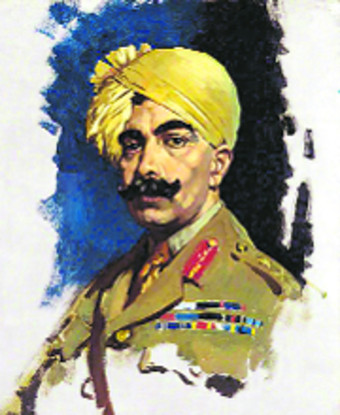
Great leaders rule over the hearts of the people. For this, you need neither money nor a show of power. With all the celebrities by her side, Hillary Clinton lost. Hopefully, Donald Trump will wield power to strike the right chord. He can emulate Maharaja Ganga Singh of Bikaner, who inspired the confidence of his subjects.

About a century ago, just shy of the first light of dawn, a young Rajasthani woman was bathing by a water tank.She caught the attention of a rider. Sitting upright on his well-built Marwari horse, looking away, he questioned the young lady, “Thaahne darr koni laage?” (Aren’t you afraid?) The woman sniggered and spoke with utmost confidence, “Saa main kaahoon darroon? Mhaare raaje ka naam Ganga Singh ae.” (Why should I be afraid? My king’s name is Ganga Singh). The man with a firm grip on the reins (literally and metaphorically) was the Maharaja himself — conducting an in cognito morning patrol. The king smiled, said, “Phalo, phoolo beti, Karni Mata ki Jai,”” (God Bless) and left.President-elect Trump’s triumph came as an enormous surprise. Most world leaders had dismissed him as a joke, as did the rest of us. It would be deceitful of me to hide that I lost a bet with KPS Gill, who was certain of a Trump victory even when Trump’s ratings were at their lowest. As for political pundits (almost all exit polls predicted a Hillary win), the only answer is that there is no answer. Hillary lost despite the massive support she enjoyed. Bill Clinton was a popular president and his presidency saw a policy of fiscal conservatism and reduced deficits. He presided over the longest period of peacetime economic expansion in American history, with the Congressional Budget Office reporting a record surplus of $236 billion in 2000. Despite the Lewinsky scandal, Clinton left office with one of the highest approval ratings of any departing president. Backing Hillary was the state machinery. The FBI gave her a clean chit two days before America voted — suspicious much? Fuelling her campaign were larger-than-life celebrities — Madonna, Beyoncé, Lady Gaga et al. And, of course, the billionaires.Wooing support from the upper echelons of wealth is not new for the Clintons. They have been experts at getting the “right” people on their side since President Clinton’s first election. Among others, Warren Buffet, Oprah Winfrey and Mike Bloomberg supported Hillary’s candidacy with their dollarsAbsolutely astonishing is the fact that only eight years ago, the very same America voted (twice) a liberal, half-black man — with Hussein as his middle name into the White House. Amazing how a boorish billionaire managed to defeat the former First Lady, Secretary of State, Clinton. It is certainly indicative of a colossal change. As John F. Kennedy said: “Change is the law of life and those who look only to the past or present are certain to miss the future.” We will perhaps never know why Trump swam to the White House with such ease but it wouldn’t be far wrong to say that Trump pinpointed the frustrated Americans and played to that gallery. Trump’s outbursts against immigrants, women, Muslims — it is remarkable how he got away. “America is the only country that went from barbarism to decadence, without civilisation in between,” once said Oscar Wilde. Trump certainly went from barbarism to the White House, without civilisation in between Trump’s victory is a repudiation of President Obama’s tenure in no uncertain terms. President Obama put all his weight behind Hillary. No ordinary President he (he will stand among the finest), all in vain. All is well that ends well. Unfortunately, it did not end too well for President Obama. Trump’s victory has jeopardised Obama’s legacy. Of course, we will have to wait and see who has the last laugh (not ruling out an impeachment). Que Sera Sera… whatever will be, will be. The future is not ours to see. Candidates always promise much more than they can ever deliver and mellow down as the weight of responsibility falls on their shoulders. Trump is no exception. The only consolation, if any, (for us in India at least) would be President-elect Trump’s unwavering resilient stance against states perpetrating terrorism. It remains for the world to see how the United States will engage with state and non-state actors exporting terrorism. President Obama did strengthen ties with India, with Manmohan Singh being the most-honoured guest of honour at the White House. Nevertheless, Bin Laden (most wanted by America, ever) was found on Pakistani soil but the administration failed to cut back the funding to Pakistan. The supply of military hardware was never terminated. The US Consul-General Grace Shelton has already reassured Pakistan, saying, “Our foreign policy is based on national interest and it doesn’t change when the government changes.” America has no friends or foes; she has her own interests. Though it is high time that America distinguished friend from foe. Coming back to Maharaja Ganga Singh. What’s in a name? “A rose by any other name would smell just as sweet.” But deeply etched in our minds, is the sweetness, the innocent beauty, the unmistakable fragrance of this king of flowers. Similarly, Sir Ganga Singh’s name evoked a sense of security, honesty and integrity. It is a virtue of a great leader to be present everywhere, all the time. There is a sincere hope that President-elect Trump’s no-nonsense attitude will deter malevolent nations and send out a stern warning. It isn’t too much to ask from the commander-in-chief of the superpower. The leader of the free world ought to make this world a safer place. As Plato observed: “The measure of a man is what he does with power.” God bless America! The writer is a Master of Laws, University of Kent, England. 


Nine nominated councillors were guiding force for civic body then’ Lt Gen (retd) BKN Chhibber, ex-UT administrator

LOOKING BACK As part of the series, HT talks to people at the helm when the Chandigarh municipal corporation came into existence in ’96

“It was with our efforts that the municipal corporation elections were conducted in 1996 because we wanted full-fledged development of the city. We appointed nine nominated councillors who were experts in their own fields and thorough professionals with no political affiliations. In those days, they were the guiding force for the MC, but over the years these nominated councillors have no qualms about wearing their political affiliations on their sleeves. In 1996, they were appointed because the budget of the MC was small, but now they decide on mayoral elections. However, I believe we no longer need them and the authorities can elect all 35 councillors. Also, in those days, we were strict with the implementation of by-laws and could hardly spot posters or banners in the city. But despite so many bureaucrats, implementation has failed. I feel that Chandigarh is the only city in the country which is run by babus. Regarding elected councillors, they are more embroiled in politics and do not debate much on development issues. Elected and nominated councillors should act more responsibly and focus on the development of the city rather than play the blame game.


Delhi govt defends decision to give Rs 1cr to ex-serviceman’s kin

Delhi govt defends decision to give Rs 1cr to ex-serviceman's kin
Compensation policy matter, says Delhi Government. ANI

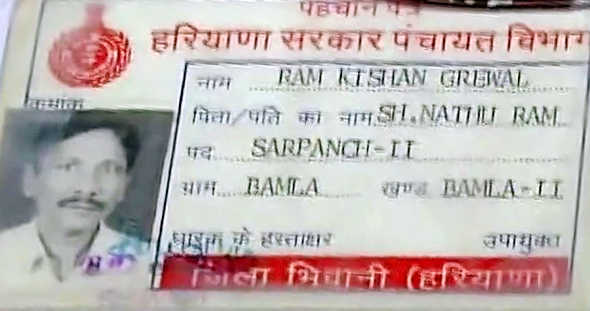
New Delhi, November 7The Aam Aadmi Party’s government defended its announcement of Rs 1 crore compensation and a job to the family of an ex-armyman who had recently committed suicide over the controversy surrounding ‘One Rank, One Pension’ in the Delhi High Court on Monday.Insisting it was a subject of “policy”, the Delhi Government said it would soon send it to the Lieutenant Governor for his approval, as it defended itself against two separate petitions before a bench of Chief Justice G Rohini and Justice Sangita Dhingra Sehgal.”No public interest is involved in this. These petitions are premature. The decision has to go to the LG. If any decision is taken by the council of ministers, it has to go to the LG for his approval,” senior standing counsel of Delhi Government Rahul Mehra told the Bench.He also said the decision was “a policy matter under consideration. It is under the domain of government policy”.The Bench also wondered if there was “any public interest” involved in the petitions.”This is a policy matter. What public interest is involved in this and why the court should interfere in this,” the Bench asked the petitioner, Puran Chand Arya.Arya said the compensation would be out of taxpayers’ money and that such an award would also “promote suicide”, a contention the second petitioner also agreed to.The Bench said it would hear the case on November 14.Retired Army Subedar Ram Kishan Grewal killed himself on November 1. — PTI