



Sanjha Morcha

Make it unsustainable for Pak ::::::By Maj Gen (retd) Prof GG Dwivedi

Make it unsustainable for Pak

After repeated unsuccessful attempts to take on India in conventional conflicts, Pakistan shifted to waging a ‘proxy war’. The mainstay of its doctrine has been to employ irregulars, non-state actors (NSAs) to bleed India in a ‘low intensity war’. Pakistan mastered this art in Afghanistan where it supported the Mujahedeen to defeat the Soviets at the behest of the US. 

Proxy War

Since 1989, Pakistan has been actively involved in fuelling militancy in Kashmir. Ironically, Indian retaliation to terrorist actions has been incidence-specific, and has lacked a holistic approach. September 29, 2016, marked the first time when Indian military response became a part of a well thought-out national strategy in the form of surgical strikes across the LoC.Surgical strikes are well-planned, bold military actions against specific target(s), executed with precision, by specialised forces, to inflict maximum destruction, with minimal collateral damage. Such tactical actions have strategic ramifications; may be executed from ground, air or sea. These military responses require careful selection of objectives aligned with overall strategy, accurate real-time intelligence, seamless coordination amongst various agencies and fine timing. Surprise is most crucial element, a vital prerequisite for success.The destruction of Iraqi Osirak reactor by Israeli air raid in 1981, employment of Tomahawk cruise missiles in the Gulf wars, the use of armed drones and elimination of Osama Bin Laden in 2011 by the US Navy Seals in Abbottabad are classic examples of surgical strikes.The recent operations undertaken by the Army should be viewed as the military component of calibrated national response; which includes politico-diplomatic- economic dimensions. Some salient aspects with regards above surgical strike are:

  • The selected targets were known terrorist launch pads in POK. Located in the close proximity of the Pak Army posts astride the LoC, these act as staging areas where terrorists in small groups wait for a short period before crossing over. Launch pads are makeshift shelters and can relocate at a short notice. These were kept under close surveillance both from ground and air, to facilitate accurate target analysis.
  • The planning for such operations is done simultaneously at both strategic and operational levels. While it is a political decision to assign the task, the prerogative is of the field commanders to work out the plans and execute the mission. This was the format followed by the government in the run-up to the recent operation.
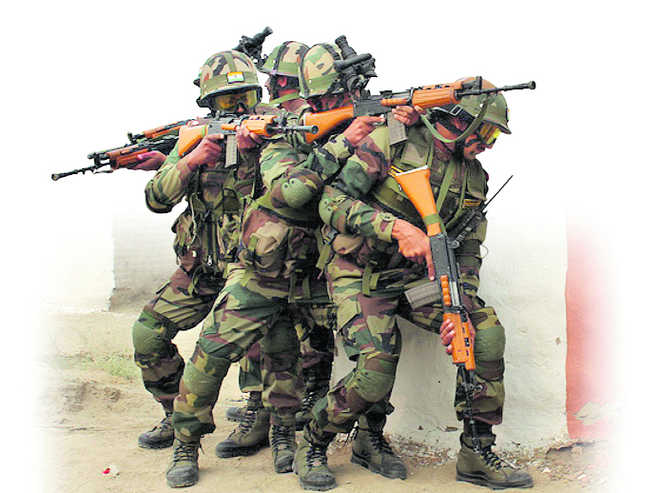
  • The troops selected for execution of the task were from the Special Forces who are attached to the Northern Theatre. They are highly trained, well-rehearsed and equipped with state-of the-art weapons, with capability to operate in all-weather conditions at a short notice. They operate in teams, with strength varying according to a task. For the above operations, a team was tasked for each target, with strength around of 30.
  • Execution of the surgical strike by the ground forces has three phases; insertion of force, conduct of strike and exfiltration. In this case, the strike force was heli- lifted to the forward bases during the day. Insertion was on foot in the hours of darkness. All the objectives were engaged simultaneously, well past midnight. The exfiltration had to be speedy, during the hours of darkness to avoid immediate enemy reactions.
  • Detailed coordination with units and formations deployed on the LoC is critical, especially during the insertion and exfiltration phases.

Surgical strike by Indian Army across LoC is a manifestation of well calibrated national response to Pakistan with a clear message; there is a penalty to be paid if Islamabad does not mend its ways. India should be well prepared to blunt Pak retaliation, which could be by way of upping the ante astride the LoC and scaling up the terrorist activities in the hinterland. It is also time to expose its hollow nuclear bogey. Delhi has taken the call, projecting itself as a responsible and resilient nation, capable of not only safeguarding its own security but a stabilizing factor in the region at large. Diverse options including calibrated military responses are the only way to make Pakistan misadventures unsustainable and cost-prohibitive.(The writer is former Assistant Chief Integrated Defence Staff, commanded Brigade in Valley; currently Professor Security & Strategy)

Terror camps are thriving in Pakistan-occupied Kashmir, confirm locals

Terror camps are thriving in Pakistan-occupied Kashmir, confirm locals
They say these camps have made their life hell

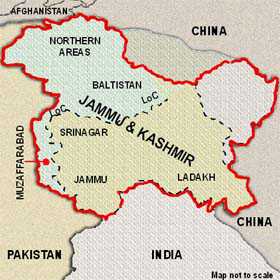
Muzaffarabad (PoK), October 6Terror training camps have been thriving in Pakistan-occupied Kashmir (PoK) for years, according to people living across the area who have shown resentment to Pakistan’s intelligence agency ISI for having made their region a haven for anti-social elements.Residents of Muzaffarabad, Kotli, Chinari, Mirpur, Gilgit, Diamer and various parts of the Neelum Valley say their lives have been made hell by the terror training camps as the lawless men, who train here, plunder local villages and molest women.

(Follow The Tribune on Facebook; and Twitter @thetribunechd)

They say their region is being used by the ISI to further its proxy war against India.In various interactions, people and leaders in the region spoke about the daily extortion and harassment caused the terror groups which are located near the Line of Control (LoC).“If management doesn’t end Taliban’s terror camps and ‘no-go’ areas in Diamer, Gilgit, Baseen and others, we will take action,” a local leader of Gilgit was seen as saying.Residents confirm that the region is being used as nothing more than a staging post for Pakistan’s proxy war against India. They say they have no sympathy for the terror groups which are perhaps hated more in PoK than anywhere else.PoK leaders like Arif Shahid exposed the ISI terror nexus in the region and paid for it with their lives.Shahid has been found on record saying that the poor people of Pakistan are being exploited by the ISI to wage a jihad against India in which only the Pakistan Army is interested.Shahid fought tooth and nail against Pakistan’s oppression in PoK before he was shot outside his residence in Rawalpindi on May 14, 2013. He was 62. The investigation into Shahid’s murder is still inconclusive, and there is no closure to the cold-blooded murder, so far. The ISI is blamed for conspiring and executing Shahid’s murder.The people of PoK have been demanding the removal of terror camps for years but the state has always turned a deaf ear.Earlier, the PoK witnessed a series of protests by residents against “rigged polls” that saw Prime Minister Nawaz Sharif’s party, the Pakistan Muslim League (Nawaz), coming to power. ANI


Have faith in govt: Rijiju on demand for proof of PoK surgical strikes

Have faith in govt: Rijiju on demand for proof of PoK surgical strikes
Says the issue should be left to the Army. ANI

New Delhi, October 5Amid demands for releasing proof of the surgical strikes by the Army across the LoC, Union Minister Kiren Rijiju on Wednesday said everyone should have faith in the government and allow the force to take its own call.“Have faith in the government and leave it to the Army,” he told reporters here when asked about the demand for release of proof of the surgical strikes by the Army.A political slugfest broke out on Tuesday over the surgical strikes on terror launch pads across the LoC with Mumbai Congress chief Sanjay Nirupam calling it “fake”, provoking stinging criticism from the BJP even as his own party said it “totally dissociates” itself from his remarks.

(Follow The Tribune on Facebook; and Twitter @thetribunechd)

The Congress leader demanded “some evidence” to prove that the surgical strikes did take place and accused the BJP of indulging in politics over the issue.With patriotic sentiments running high amid soaring tensions with Pakistan, Union Minister Uma Bharti said leaders who cast “doubt over the Army’s surgical strike should take Pakistani citizenship”. PTI


Under shadow of shelling, sleepless in Suchetgarh

Under shadow of shelling, sleepless in Suchetgarh
Army personnel comb Sheikhu Chak village in the Suchetgarh sector on Tuesday after locals reported suspicious movement in the area. Tribune Photo: Inderjeet Singh

Sumit Hakhoo

Tribune News Service

Suchetgarh, October 4

In the wake of escalating cross-border tension, villagers in forward areas in the Suchetgarh sector, 27km from Jammu, are living a life of uncertainty as about 8,000 kanals under basmati crop is under the shadow of Pakistani guns.The land falls near the fence erected by the government and some of it goes beyond the concertina wires for keeping the infiltrators away. Though the guns are still silent in the RS Pura-Suchetgarh belt yet the fear of losing their crop near the border is giving sleepless nights to people who do not wish to leave their homes despite the evacuation order issued by the government following the heightened tension on the international border and the Line of Control after the Uri terror attack on September 18 and the retaliation by India in Pakistan-occupied Kashmir on September 29.Despite the fear of Pakistani small arms and mortar fire, villagers could be seen working in fields in the hope that restraint shown by military commanders from both sides would hold till farmers harvested their prized basmati crop.“This entire belt onwards till the Pakistani side is known for the world-famous basmati and harvesting is still a month away. There is a lot of anxiety among the people about what will happen to the crop if the shelling resumes,” said Mohinder Kumar, a resident of a border village in Suchetgarh. His village is just 500 metres from the international border and sentry towers of the Pakistan Rangers are visible from his fields.The villagers’ concern has grown as Pakistani guns are booming in the Pagarwal sector in Akhnoor, forcing thousands to leave their homes and crops behind to take shelter in makeshift camps established by the government in educational institutions.The border residents here are aware that shelling in the past has left several people dead and injured. “Life is very short here. A few years ago, a young boy, grazing his cattle, was killed after he became a victim of sniper fire from across the border. Death lurks everywhere and during tension on the border, our miseries increase”, said Shamshir Singh while cutting grass for his cattle.People in border villages in Jammu have always lived on the edge as they come in the first line of attack during cross-border shelling. During the Kargil war of 1999, hundreds of kanals of prime land was taken over by the Army to lay mines, leaving thousands of farmers without livelihood. 

Alert villagers help in search op

  • Suchetgarh: Army and police personnel started scanning paddy fields near a village about one km from the border in Suchetgarh on Tuesday morning after a woman saw a suspicious person. Rakesh Singh, a farmer, joined the operation. He remained with the Army and police throughout the day. Though the search did not yield anything, it highlighted the alertness and cooperation of villagers.

Baramulla terror attack: One BSF jawan killed in Kashmir

CHENNAI: In yet another outrageous incident, terrorists on Sunday carried out a “Fidayeen” style attack on an Army camp located in the outskirts of the Baramulla town. One BSF jawan was reportedly killed in the incident and two others were injured. Both the terrorists involved in the attack were killed by the forces, claimed unconfirmed media reports.

The brazen attack has come less than a week after Indian Special Forces smashed seven terror launchpads in surgical strikes across the Line of Control. “The terrorists opened fire at an Army camp at Jabanzpora in Barmulla district,” Army spokesperson Col Rajesh Kalia said.

The Army camp, according to agencies, is located about 50 km away from the Baramulla town. “The firing was reported at 46 battalion of Rashtriya Rifles and terrorists are believed to have entered the establishment through adjacent BSF camp,” official sources were quoted saying. “Some were also firing from houses adjacently located from the camp.” The attack comes following intelligence inputs about possible terrorist attacks on security installations in Jammu and Kashmir after the surgical strikes on September 29. The attack also comes exactly a fortnight after terrorists struck at army brigade headquarters at Uri, 102 kms from here killing 19 soldiers.

Cross-border firing reported: In yet another ceasefire violation, Pakistani troops launched firing and shelling on forward areas along the Line of Control (LoC) in Pallanwala sector of Jammu district on Sunday evening.

Firing and shelling from across LoC started late in the evening in forward areas in Pallanwala belt along the LoC. It is intermittently going on,” a Police officer said. The officials could not confirm if any casualties were reported.

This is the sixth ceasefire violation since the surgical strike. On Saturday, Pakistani troops fired at Indian posts and civilian areas with mortar bombs, rocket-propelled grenades and heavy-machine guns in Pallanwala and Chamb areas.

Intel reports had warned of retaliation

The attack comes following reports by intelligence agencies warning the armed forces in Kashmir of a retaliation by terrorists to the surgical strikes carried out by India in Pakistan-occupied Kashmir. The attack also comes exactly a fortnight after the Uri attack


LITTLE SLEEP, NO LEAVE, DREAMS ON HOLD

Indian Army soldiers at forward posts in front of the illuminated fence in Hamirpur area near Bhimber Gali, about 180 km north west of Jammu. Soldiers barely get four hours of sleep when the situation on the border is tense

THE BIGGEST CHALLENGE FOR COMMANDERS ON THE GROUND IS TO STRIKE A BALANCE BETWEEN KEEPING THE TROOPS BATTLE READY, AND ENSURING THAT THEY ARE NOT WORN OUT.

On the Line of Control (LoC), life is no picnic. Yet, a year ago, soldiers could break the monotony of keeping the troubled border under watch with occasional leisure activities. Sometimes, this meant a game of chess or carrom. Or flipping through a Bollywood glossy. Soldiers would even soak in the breathtaking beauty of the treacherous mountains.
GURINDER OSAN/HT PHOTO
Indian Army soldiers at forward posts in front of the illuminated fence in Hamirpur area near Bhimber Gali, about 180 km north west of Jammu. Soldiers barely get four hours of sleep when the situation on the border is tense.
Back then, when this correspondent toured the LoC for a week, things may not have been rosy but they weren’t this tense. Pakistani provocations had compelled India to shed a culture of restraint and lift a self-imposed restriction on using artillery guns. Border violations peaked in intensity and numbers last September, leaving the 2003 ceasefire in tatters.
But the LoC was never as volatile as it is now in the aftermath of Thursday’s surgical strikes by India’s Special Forces, the first direct military response to the Uri attack that left 19 men dead. “The strikes across the LoC are only the first step. It is an ongoing operation and we expect and are preparing for a retaliation,’’ says a Valley-based officer. A localised conflict can spread rapidly along the LoC.
The life of men guarding the de facto border has undergone a sea change, as the army is on its highest alert level to deal with a counter-offensive from Pakistan. There are serious concerns about hostilities escalating. So there’s absolutely no question of soldiers tossing a volleyball around, watching TV or finding time to prepare for a promotion exam.
Apart from leave restrictions amid heightened tensions, they are also getting less sleep, say army officers serving at the LoC. “Leisure activities are totally ruled out. The focus is on operational readiness and nothing else,” points out an officer on condition of anonymity. The soldiers have orders to retaliate with lethal force to any aggression.

If soldiers were getting six hours of sleep before hostilities spiked, they are now making do with barely four hours. Another officer explains, “Sleep is a casualty as we want maximum manpower available at all times. We have to guard all flanks, given the build-up on the other side.”

The army has intensified patrolling along the LoC and is keeping a cautious watch on a maze of routes infiltrators could take. Rogue border action teams could strike anytime — remember Hemraj’s beheading and the cold-blooded killing of five Indian soldiers in Poonch three years ago?

“When the situation is normal, you can sometimes afford to man infiltration routes selectively. That could be suicidal now,” says the officer. The army’s contingency plans are in place and the possibility of a flare up has been factored in.

“In its efforts to show it is equally strong, Pakistan may just repeat what India has done. But it’s fully aware that such as action would amount to an act of war,” says former army vice chief Lieutenant General AS Lamba (retd).

How Pakistan reacts is anybody’s guess. A senior army officer in Delhi says no matter what course the adversary takes, the army is prepared to deal with it. But the shadows of Pathankot and Uri loom large.

“We will dominate the conflict at any level of the escalation ladder,” he says, adding Pakistan may respond now, in a week or several months later. Battle readiness is constantly being reviewed. India cannot afford another Uri.

The biggest challenge for commanders on the ground is to strike a balance between keeping the troops battle ready and ensuring they aren’t worn out. “You can’t keep them on highest alert level for a year. We are monitoring how things unfold,” he says.

Last September, this correspondent visited several posts along a 224-km stretch of the 740 km-long LoC. At one such post in Poonch sector, guarded by one of the army’s largest brigades with nine battalions, I met a 22-year-old Gorkha soldier who had just returned from a punishing patrol.

There was chicken and rice for dinner but he was keener on reading some current affairs’ magazines tucked under his pillow. He was trying to make time to study for an exam that could fulfil his dream of becoming an army officer. His commanding officer called me a few months later breaking the news that the soldier had passed the exam.

Some of those dreams may be on the back burner now. A lot has changed at the LoC – except the stunning landscape dotted with towering ridges, dense pine groves, lush valleys and maize fields.


Shahbaz: Simla pact a mistake

Lahore, September 30

Pakistan Punjab Chief Minister Shahbaz Sharif on Friday termed the Simla Agreement signed by India and Pakistan after the 1971 war a “big mistake” as it “hurt the Kashmiri freedom struggle”.Shahbaz is the brother of Prime Minister Nawaz Sharif. His statement evoked sharp criticism from the Pakistan People’s Party (PPP), whose then chairman and Prime Minister Zulfikar Ali Bhutto and his Indian counterpart Indira Gandhi signed the pact in 1972. “Someone should teach the CM what foreign policy is,” tweeted PPP chairperson Bilawal Bhutto Zardari.The agreement resulted in the release of some 90,000 Pakistani soldiers imprisoned by India following the 1971 war. — IANS


Defence Ministryto take cognisance of mutilation of jawan’s body: Jitendra

Defence Ministryto take cognisance of mutilation of jawan’s body: Jitendra
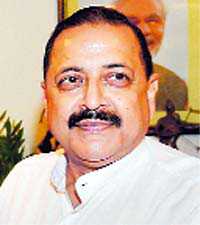
Jitendra Singh, Union Minister of State

Dinesh Manhotra

Tribune News Service

Jammu, October 29

Amid raging anger after recovery of badly mutilated body of an Army jawan in the Machil sector of Kupwara district of north Kashmir, Union Minister of State (MoS) in the Prime Minister’s Office (PMO) Jitendra Singh today hoped that the External Affairs and Defence ministries would take cognisance of the barbaric act.“I am not qualified to give a statement on the behalf of the ministries concerned, but I am sure that the Ministry of External Affairs (MEA) and Defence Ministry would take cognisance of this heinous crime,” Jitendra Singh said after visiting border areas of Kathua, Samba and Jammu district, adding that “I am not directly concerned with the matter”.Jitendra Singh, who reached Jammu this morning from Delhi, straightway went to the shelling-affected areas of the Jammu region and interacted with soldiers and villagers. He said the Centre would take every step to mitigate miseries of the border people. He lauded border residents for working like soldiers without uniform. “The morale of the border residents is high. They are more concerned about thwarting the designs of the enemy, rather than be concerned about their own safety,” he observed after touring border areas.When his reaction was sought about a “barbaric” incident, in which terrorists, aided by the cover fire by Pakistani Army, on Friday night crossed the Line of Control and killed an Indian Army jawan and mutilated his body in the Machil sector of Kupwara district of Kashmir, Jitendra Singh said, “Nothing can be more heinous than this act of terrorists”.Taking a dig at those who raised bogey of human rights of terrorist and other anti-national elements, Jitendra Singh said that this barbaric incident had exposed those who raked up rights issue on every incident. “Those who lack courage to call Burhan Wani as a terrorist, those who lack courage to condemn mutilation of Army soldier have not right to speak about human rights,” he said.It was high time, Jitendra Singh said, that the nation rose up to call the bluff of the so-called human rights protagonists and the pseudo-intellectuals, who sought to promote their politics at the cost of an Indian Army jawan, but when you ask them a straight question, whether Burhan Wani was a terrorist or not, instead of saying “Yes” or “No” in reply, they invariably come out with long platitudes, philosophies and postulations.“The barbaric killing of the Army jawan has exposed the duplicity of all those who keep raising the bogey of human rights, especially in the Valley, but now they have maintained a criminal silence on mutilation of the body of a soldier. The entire nation is angered with this heinous act,” he added.


Chetak Corps celebrates 67th Infantry Day

Tribune News Service

Bathinda, October 28

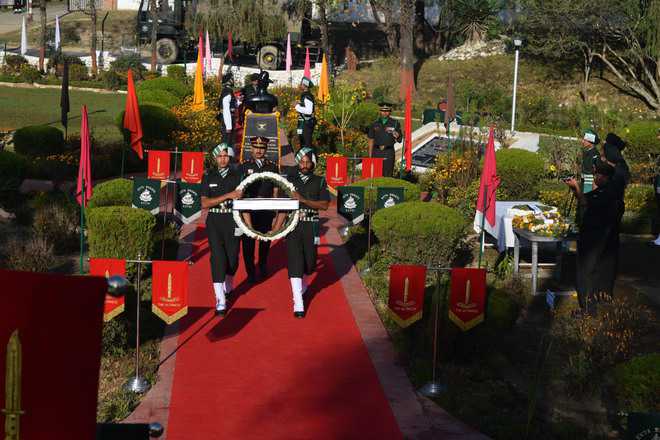
The 67th Infantry Day was celebrated here today by the Chetak Corps in remembrance of all infantry soldiers for their contributions in ensuring the sanctity of the country’s borders and territorial integrity.On this day in 1947, the first infantry contingent landed at the Srinagar airfield and fought a courageous battle to save Kashmir Valley from intruders.The celebrations commenced with a wreath laying ceremony at the war memorial.General Officer Commanding, Chetak Corps, Lieutenant General Ashwani Kumar paid tributes to all valiant infantry soldiers and comrades.Speaking on the occasion, Lt General Ahswani Kumar conveyed his greetings to all ranks of infantry and their families. He complimented them for their unflinching and dedicated contributions towards the safety and security of the nation.In defence, infantry holds key areas of tactical and strategic significance. This crucial role makes infantry the most predominant, indispensable and ultimate combat arm for achieving victory in a war.A ‘sainik sammelan’ for all ranks of the infantry, including retired officers, Junior Commissioned Officers and other rank, was also held on the occasion.

  • In 1947, the first infantry contingent landed at the Srinagar airfield and fought a courageous battle to save Kashmir from intruders
  • In defence, infantry holds key areas of tactical and strategic significance

Infantry Day celebrated in Kumaon

Infantry Day celebrated in Kumaon
Commander of Panchashul Brigadier Rakesh Manocha going to lay a wreath at the Kumaon war memorial in Pithoragarh to mark Infantry Day on Friday. Tribune photo

BD Kasniyal

Pithoragarh, October 28

A wreath was laid at the Kumaon war memorial at Panchashul Brigade here today to celebrate the 70th Infantry Day and paying respect to the brave soldiers who had made the supreme sacrifice for the sake of the country on this day in 1947 while fighting Pakistani Razakars in Srinagar.The celebration took place at the Kumaon war memorial here. Panchashul Commander Brig Rakesh Manocha laid the wreath on the memorial and remembered the sacrifices made by the soldiers of the Infantry in various wars.“Infantry Day is celebrated on October 27 in remembrance of the 1st Sikh Regiment that landed at the Srinagar airport to expel Pakistani Razakars from Kashmir. The brave Sikhs expelled the Razakars and saved the country from their attack,” said Navin Rajan, Commander of 28th Punjab Regiment. Infantry officers, veteran Army officers and personnel were present.India, Nepal police to jointly check human traffickingIndia and Nepal will chalk out a special strategy to stop human trafficking, besides taking measures to jointly check smuggling of narcotics and counterfeit currency notes across the border. This was agreed upon at a meeting of police officers from both countries at the Banbasa border in Champawat district on Friday.Kumaon DIG Ajay Rautela and his counterpart from Nepal DIG Vijay Raj Bhatt attended the meeting.Rautela said the police officers from both countries agreed to cooperate in checking smuggling across the border by exchanging intelligence and information. “The police officers from both countries have agreed that they will help each other in nabbing absconding criminals in the other country and stopping humiliation of Nepalese at the hands of the Indian authorities on the pretext of security and customs checking at border posts,” he added.The Nepalese police officers sought help from their Indian counterparts in checking frequent incidents of looting of Nepalese in the Tanakpur and Banbasa region of India. “We have also sought India’s help in opening canal gates at the Banbasa border at the time of any medical emergency with Nepalese when they want to go to India for immediate treatment and their security while they are working in interior villages in Kumaon,” said Bhatt.

Martyred jawan given tearful adieu

Martyred jawan given tearful adieu

Tribune News Service

Dehradun, October 28

Rifleman Sandeep Singh Rawat, who attained martyrdom in Jammu and Kashmir, was cremated with full military honour at Kotdwar here today. District administration officials, Army personnel, neighbours, friends and relatives attended the last rites of the martyr.A pall of gloom descended on the entire colony when the news of his martyrdom reached here. Almost the entire locality swarmed the martyr’s house to console the bereaved family members.Residents waited for hours to pay tributes to the martyr. Rawat was posted with 7th Garhwal Rifles and attained martyrdom in Gulmarg (J&K). Public representatives and relatives attended his last rites. The body was consigned to flames on the banks of the Khoah river.MLAs Teerath Singh Rawat, former MLA Shailendra Rawat, Zila Panchyat vice-president Suman Kotnala and SDM Rakesh Tiwari attended the cremation.