Sanjha Morcha

Pakistan’s envy, India’s parade

New Delhi is warming up to the UAE at a time when Islamabad has earned the wrath of many Arab states, especially the Emirates

When Narendra Modi visited Abu Dhabi and Dubai last summer, the Pakistani daily Dawn wondered if the Indian prime minister had “stepped into the recent breach between Pakistan and the United Arab Emirates over Islamabad’s refusal to actively join the Yemen war?” The need for the question-mark was removed this week, with the announcement that Abu Dhabi’s crown prince, Mohamed bin Zayed al Nahyan, will be the guest of honour at India’s next Republic Day celebrations

REUTERSCrown Prince of Abu Dhabi Sheikh Mohamed bin Zayed al Nahyan waves to Prime Minister Narendra Modi at Rashtrapati Bhavan, February 11

There are plenty of reasons for Modi to make Sheikh Mohamed his chief guest, not least the $60 billion in IndoUAE trade, and the 2.3 million Indians who live and work in the Emirates. But the timing of the announcement made it especially piquant for Pakistan, for it came in the middle of New Delhi’s campaign to isolate Islamabad diplomatically in the aftermath of the Uri attacks.

Islamabad should have seen this coming. On his August, 2015 trip to the UAE, Modi made pointed barbs at Islamabad during his public speeches, eliciting no reproach from his hosts. Earlier that year, Pakistan had earned the wrath of several Arab states, including the UAE, when it refused to join a coalition led by Saudi Arabia in an assault on Yemen, where Iran-backed Shia militias known as the Houthis had toppled a Saudi-friendly government. The UAE was especially blunt in its expression of displeasure. Minister of state for foreign affairs Anwar Mohammed Gargash rounded on Islamabad for its “vague and contradictory stand”, and warned Pakistan would pay a “heavy price”.

In the language of diplomatic politesse, such words are the equivalent of schoolyard curses, but Gargash had even harsher invective to deliver. He suggested Islamabad cared more for Iran than for the Arab states: This, in the context of the Sunni-Shia conflagration across West Asia, came within a whisker of accusing Pakistan of apostasy, a heinous and contemptible crime in Islam.

Pakistan was right to stay out of the war on Yemen, which continues to this day, bringing ever more destruction to the Arab world’s poorest nation and still more dishonour to its richest. Although Islamabad does little to discourage the persecution of the Shia (and other minorities) within Pakistan, it cannot, for many reasons, afford to participate in the wider sectarian conflict. Having long been assured that their military was busy protecting them from the designs of India, and the depredations of internal enemies, like Baloch separatists and Pashtun terrorists, ordinary Pakistanis showed no interest in sending their troops to fight for a dubious Arab cause.

Even so, saying “No” can’t have been easy for Prime Minister Nawaz Sharif, or for army chief Raheel Sharif. The Arab states are Pakistan’s principal economic benefactors, as well as a diplomatic bulwark against India. The UAE is one of Pakistan’s largest donors of aid, both humanitarian and economic, and its largest trade partner. Around 1.8 million Pakistanis live in the Emirates. The Arab states also bankroll Raheel’s troops, and helped underwrite Islamabad’s nuclear programme. In return, they have long regarded the Pakistani military as theirs to summon.

It is hard to know if the Pakistani military would have swung the conflict in Yemen decisively in favour of the Saudi coalition, which has proved singularly incompetent, despite overwhelming superiority in arms. Earlier this summer, Gargash announced the UAE was pulling most of its forces out of Yemen, citing the death of 80 of its soldiers — a large number for such a small country. (The war continues to exact a toll, however: Over the weekend, a UAE vessel was sunk by Yemeni rebels. They claim it was a warship, the UAE says it was delivering aid, and the US says it belonged to a dredging company.) For a nation that takes pride in its ability to buy the world’s best war weaponry to be forced into a withdrawal by a rag-tag band of rebels was an utter humiliation, and many Emiratis must wonder if they may have been spared the ignominy if Pakistan had joined the fight.

Since Gargash’s outburst last year, Islamabad has tried desperately to make nice with the Arab states, and especially with the UAE. But its efforts have mostly been in the shape of words, including a speech from Nawaz Sharif to the effect that Pakistan “does not abandon friends and strategic partners”. This has gone down like a lead balloon in the Emirates. On a trip the Dubai earlier this year, practically everyone I met were still asking why Pakistan was sitting out on the war.

Unable to do anything substantive to mend relations, the Pakistani leadership will have squirmed at Modi’s announcement of a “strategic partnership” between India and the UAE during his visit. Their discomfiture will have been the more acute for hearing that the India-UAE joint statement called “on all states to reject and abandon the use of terrorism against other countries, dismantle terrorism infrastructures where they exist, and bring perpetrators of terrorism to justice”. Subtle, it was not. With Sheikh Mohamed’s participation in India’s Republic Day now confirmed, there’s additional pressure on Pakistan’s leaders — political and military alike — to get back into the UAE’s good books. There’s little prospect that the Pakistani military will be deployed in Yemen, and even if that were to happen it would earn Islamabad few brownie points with the Emiratis, since they’ve themselves all but abandoned the battlefield. Nor are there any meaningful economic inducements that Pakistan can offer in recompense: The UAE already enjoys unrestricted access to the Pakistani market.

It’s a good thing that Pakistan’s leadership has had much recent practice in squirming uncomfortably. They will be doing a lot of it on January 26.


India, Pak must clear clouds of war, target terrorism

On my first, and perhaps last, visit to Pakistan in the spring of 2008 to attend Pugwash Conference in Islamabad, I was told by my daughter, a doctor by profession, “Please get me the CDs of ‘Tanhaiyan’ and ‘Dhoop Kinare’” (two most popular TV shows of Pakistan).She had taken a fancy to Marina Khan, who played the lead role in these two shows. But, she knew her as “Dr Zoya Khan”, a character that turned bright the dull life in a hospital in the multi-episode Pakistani serial “Dhoop Kinare”.On the eve of my departure from Pakistan, I decided to buy the CDs. In the lobby of Marriott Hotel, I spotted Mehbooba Mufti, then an MP and now Chief Minister of Jammu and Kashmir. I asked her if she would like to accompany me to the market. She agreed to my great surprise. BJP leader Nirmal Singh, now Deputy Chief Minister, also came along.Omar Abdullah was also there, but he was not to be seen around, except during the conference where he was the star articulator of all problems under the sun, particularly South Asia. And, Mehbooba never forgot to compliment her political rival back home.As we stepped out of the hotel, I could see deep annoyance in the eyes of ISI spies shadowing Mehbooba. “She moves in and out like a bird. We are left clueless. It is becoming difficult for us to tail her,” one of the spies had confided to one of the delegates, who now holds an important position in the Mehbooba Mufti government. That was one such occasion when they felt uncomfortable with her unannounced movement.It was getting dark. Mehbooba suggested, “Let’s walk up to the market.” She is a walk buff. But she was not wearing her usual sports shoes, but sandals. Suddenly the straps of her sandals fell apart, as we were negotiating the under-repair footpath. We hired a cab to complete our small journey to the market.At the shop, a long-bearded customer, wearing a typical Khan dress, was asking the shopkeeper, “Do you have a CD of songs of ‘Jannat’ (Indian movie)”. The shopkeeper nodded and pulled out a CD for him.On my turn, “I asked for the CDs which my daughter had demanded. The shopkeeper, who later identified himself by his first name, Iqbal, looked at me with extreme curiosity and I found myself hearing, “Are you from India?” “Yes” was the answer to his expectations.Why are you asking for such old dramas? I explained my daughter was a Marina fan. She has watched these dramas as serials but not in one go. He was all smiles which reflected a unique hospitality and friendliness. After getting the CDs, he told me that his shop had more Indian movies than Pakistani. It was a genuine admission because I was not shopping the Indian stuff.Where was I? A Hindu from India in Pakistan, an Islamic country. The two countries have often been viewed as enemies and have fought wars. Did this incident reflect hostility or friendship? These thoughts crossed my mind as we headed back to our hotel.“Here is your ‘Dr Zoya Khan’,” I told my daughter on my return. She was so excited that she started playing it at once.Does Marina, “Dr Zoya Khan”, mean a Pakistani to my daughter. No, her love for Marina transcends all boundaries. She still watches the dramas, whenever she needs solace, or wants to laugh with her role model.Marina was playing the role of a doctor, and my daughter is a doctor by profession. Can I draw boundaries between the two? No. I better not. In fact, no one should think of creating such chasms. We have nothing in common as far as our history and culture is concerned with America or China, but we share much more with Pakistan than with any other country in the world. We are just a little distance away, then why are the tanks on the border and why are we all getting hysterical with maniac thoughts of eliminating each other?Terrorism is the biggest enemy. That should be understood. Indians love “Dr Zoya Khan” but it is for Pakistan to eliminate terrorism from its soil and its export is proving costly.The idea of “Dr Zoya Khan” can help us clasp our hands. From this side, we have “Bhai Jaan.” Both India and Pakistan need to clear the clouds of war, decimate terrorism, so that the role models of hope and love grow and prosper on both sides with mutual admiration.


Parrikar warns Pak of befitting reply if threatened

US DELIVERS A BLUNT MESSAGE TO ISLAMABAD — ‘EXERCISE RESTRAINT’ ON NUCLEAR TALK AND MISSILE CAPABILITIES

WASHINGTON/NEW DELHI: Defence minister Manohar Parrikar on Saturday threatened Pakistan with a “befitting reply again” if it continues to sponsor terrorism, the tough talk coming a day after the US bluntly told Islamabad to stop its rhetoric on nuking India.

Parrikar’s warning came two days after New Delhi said Indian forces carried out surgical strikes on terror launch pads across the Line of Control — the de facto border between the two countries in Jammu and Kashmir. The Indian strike was in response to a militant attack on an army camp at Uri that left 18 soldiers dead. Pakistan has no idea what happened because its condition is like that of an “anaesthetised patient” postsurgery, who has no idea what has happened, the minister said at Pauri in Uttarakhand. Islamabad has denied New Delhi’s claims about conducting surgical strikes in Pakistanoccupied Kashmir.

PM Narendra Modi met President Pranab Mukherjee and is understood to have briefed him about the surgical strikes.

According to TV reports, Parrikar gave an analogy of Lord Rama, the protagonist in the epic Ramayana, who won Lanka and gave it to Vibhishana.

“We did the same in Bangladesh. We do not want to harm anyone, but if someone harms us, a befitting reply will be given…Lord Hanuman did not know of his powers before going to Lanka, I made our armed forces realise their power,” he was quoted as saying.

Parrikar’s tough talk against Pakistan comes when New Delhi’s diplomatic encirclement of Pakistan seems to be paying off. The international community, including Pakistan’s traditional allies, has maintained a studied silence on India’s surgical strikes, while underscoring the need to act against terrorism, indirectly bracketing Pakistan.

In a blunt message delivered publicly on Friday, the United States told the Pakistani government to “exercise restraint” regarding the use of nuclear weapons, or the talk about it. “I would just say nuclear-capable states have a very clear responsibility to exercise restraint regarding nuclear weapons and missile capabilities,” US state department spokesman Mark Toner said at the daily briefing in response to a question, about “some of the rhetoric from the Pakistani government”.

“And that’s my message publicly and that’s certainly our message directly to the Pakistani authorities,” he added.On Monday, Pakistan’s defence minister Khawaja Asif had threatened to “destroy India” in the event of a war. “We have not made an atomic device to display in a showcase. If such a situation arises we will use it and eliminate India,” he told a TV channel, raising alarm in capitals around the world already worried about Pakistan’s nuclear arsenal falling into the hands of terrorists.

On Saturday, Indian army chief General Dalbir Singh also reviewed military preparedness at the northern and western borders.

He visited the Udhampur-based Northern Command and interacted with the special forces men who destroyed seven terror launch pads in PoK, killing at least 35 terrorists and their handlers. He later visited the Chandimandir-based Western Command to take stock of the army’s readiness along the Punjab border.


Shadow wars Dinesh Kumar in Chandigarh Get real, get smarter

Shadow wars
Special forces across the world keep their operations secret. The euphoria over a ‘kill’ is never celebrated and there is no sense of complacency after an operation ends. National security is a larger concept not based on jingoism or revengeful actions.

The Army’s Sept 28-29 surgical strikes inside Pakistan mark a watershed in our strategy to combat terrorists and their sponsors. Not that such strikes had never happened; this time, a convincing response was well acknowledged. Covert ops are seldom publicized and these have an in-built element of deterrence. Our larger and more significant strategy would be a deeper understanding of the enemy and an ever-vigilant security apparatus. Almost 17 years ago and just six months after the Kargil War, the Indian Army on January 22, 2000, killed 16 Pakistani soldiers after over-running a Pakistani post across the Line of Control (LoC) in the Chhamb sector. The bodies of five Pakistani soldiers were reportedly dragged back by Indian troops and later handed over to the Pakistani Army. This was one of many such attacks carried out from time-to-time by the Indian Army consequent to Islamabad’s continuing proxy war in Jammu and Kashmir. The Pakistani Army, too, has been carrying out similar attacks on Indian positions after crossing the LoC along with enjoying the advantage of having an army of terrorists to whom it routinely outsources terror attacks as it did most recently in Uri.These trans-LoC attacks by both armies stopped for a while after the November 2003 ceasefire came into effect along both the LoC and the Actual Ground Position Line (AGPL) with Pakistan Occupied Kashmir (PoK). But there have been occasions when, even during the current ‘ceasefire’, India has been conducting retaliatory attacks across the LoC such as, for example, in response to the decapitation of two Indian soldiers by the Pakistani Army in January 2013. Indian Army soldiers are reported to have then beheaded between five and ten Pakistani soldiers in response.So what is new about the shallow-distance ‘surgical’ strike carried out in the wee hours of September 29? One, that New Delhi has officially acknowledged what the Indian Army has been doing for many years now. Second, the Army carried out simultaneously coordinated surgical strikes across the LoC at seven launch pads located over an arc of 250 km spread across both the Jammu and the Valley sectors. Third, the attacks were directed specifically against terrorists in their launch pads rather than against the Pakistani Army. In doing so, India has made it publicly known that it has the resolve and capability of crossing the LoC to strike at terrorists who Pakistan officially denies supporting. 

Some questions

Last Thursday’s action gives rise to three questions. First and foremost, how qualitatively and quantitatively effective were the Army’s strikes against terrorists in PoK? The government has indicated it will furnish evidence and some details about the effectiveness of the strikes. Until then, we only have the government’s word for it. Sooner or later questions are bound to rise. Second, and most important, will this deter Islamabad from continuing to support terrorism in Jammu and Kashmir and other parts of the country? Third, will surgical strikes of high intensity and quality henceforth become state policy to be repeated as and when thus truly marking a paradigm shift in India’s response to Pakistan’s support to terrorism? Or, will this be a one-off strike aimed at quelling public anger over the terror attack on an Indian Army camp in Uri? Furthermore, will this action be milked for political gains by the ruling party, especially during campaigning in the forthcoming assembly elections in Uttar Pradesh and Punjab?Such strikes cannot and must not be an end in itself. The aim of such action has to be to make it expensive for Pakistan to support terrorists and also for the terrorists themselves if not altogether stop Islamabad from making terrorism an instrument of state policy. Leave aside ceasing to support terrorists, Pakistan is expected to become more hostile towards India in response to which New Delhi will need to be ever vigilant and prepared. The Army’s limited ‘surgical’ strike on is so far a reactive measure – a response to the September 18 terror attack in Uri. It was not, truly speaking, a pro-active measure initiated without an immediate provocation. Besides, a solitary military action of this nature is never enough. For, this cannot be a number game where the killing of 19 Indian soldiers must be matched by an equal or higher figure after which India waits for the next terror attack to occur before again responding. 

Draw a policy

Rather, New Delhi needs to consider making it a policy to conduct pre-emptive surgical strikes on Pakistani terror factories on a relentlessly continuous basis in order to truly making it expensive for the terrorists and its Pakistani patrons. Prevention, rather than cure, is ideally the answer. But for this, Indian intelligence agencies will need to develop an intelligence gathering network par excellence comprising human intelligence (HUMINT) and electronic intelligence (ELINT) sources to obtain real time actionable information; Well-equipped special forces will have to be on permanent stand-by and work in conjunction with intelligence agencies. The political executive irrespective of the political alliance in power will need to maintain a steely resolve and keep the nerve to ‘go for it’ each time. Both the Indian intelligence and military establishments will need to develop capabilities to overcome Pakistani measures to prevent such attacks; and India will have to be in a ‘state in being’, i.e. in a perpetual state of alertness and preparedness including for setbacks as does happen in this long drawn out game. Only then would India have truly ‘arrived’ such as like Israel, which some Indian commentators love to quote. 

Dangerous game

The question is whether India has the stomach, resolve and capability for this kind of a response? Then again, the September 29 strike was across a shallow distance of up to between 2 and 3 km. How deep will India be prepared to go should Pakistan relocate its launch pads well inside Occupied Jammu and Kashmir? Is India prepared for an escalation, and to what extent? Soon after the terror attacks in Mumbai on November 26, 2008, Air Chief Marshal Fali Homi Major told the government that the Indian Air Force was unable to conduct air strikes on terror camps in Pakistan since they did not have specific coordinates. In other words, there existed no actionable intelligence despite supposed reforms in intelligence gathering carried out after the May-July 1999 Kargil War. 

Covertly overt?

The Army’s trans-LoC action has been greeted with and commented on with much jingoism and chest thumping by some in India, especially by some sections of the ruling party, as had occurred when India exploded nuclear devices in May 1998. Covert operations and surgical strikes are more effective when not publicised. While overt announcements are good for the domestic audience and gives the ruling dispensation political mileage, it does not serve its true purpose; certainly not at such an early stage. Ideally, covert operations should strike hard and remain covert. It should be left on officers to refer to it in passing in their memoirs written well after their retirement. If at all it must be made public by the government, it is best done when Pakistan’s terror factory is sufficiently degraded. Until then maturity lies in silent but relentless continuous action. A tool in the boxDuring the height of militancy in Punjab when Rajiv Gandhi was Prime Minister, the Research and Analysis Wing (RAW) engaged in a series of covert operations in Pakistan which was partial cause for some dent in Islamabad’s support to terrorism in the state. In 1989 killings by terrorists declined to 1,188 from 1,949 in 1988 only to escalate after the VP Singh government came to power. With RAW’s operations then ceasing and the VP Singh government adopting a ‘liberal’ outlook, terrorism escalated and in just two years (1990 and 1991), terrorists killed 5,059 people in the state (2,467 in 1990 and 2,591 in 1991). This was equivalent to the figure of a total 5,070 people killed in the preceding 12 years (1978 to 1989) before terrorism in the Punjab began tapering off following a regime change in New Delhi and the formation of an elected government in Chandigarh.Strategy is the employment of all means for an end. Surgical strikes have to be viewed as a tool in the box. It cannot be the sole instrument. Equally important, the 29th September action must never be a one-off. It should mark the beginning of pro-active measures to end Pakistan’s long standing roguish game of using terror against India. The journey has just begun and India has a long way to go. It is for successive governments in New Delhi to complete this journey.

dkumar@tribunemail.com


Fearing attack, govt sets 72-hr deadline for constructing bridge

Fearing attack, govt sets 72-hr deadline for constructing bridge
The platoon bridge on Ravi river being constructed. Tribune photo

Ravi Dhaliwal

Tribune News Service

Gurdaspur, October 1

Fearing a retaliation attack by Pakistan on a cluster of seven villages situated across the river Ravi, the state government has ordered PWD to get the 750-feet long pontoon bridge constructed within 72 hours.The bridge at Makkoran Pattan village, the confluence point of rivers Ujh and Ravi, is dismantled in June every year and is reconstructed in the first week of November. However, this time, keeping in view the volatile situation the structure will be ready by October 3.Construction work is going on in full swing with the PWD authorities working overtime to meet the deadline.“In the event of a conflict, residents will be forced to cross the river in boats before reaching Gurdaspur.The boats, in any case, are unable to take such a heavy load. The state government has taken the decision of getting the pontoon bridge ready a month ahead of schedule after a lot of deliberations. The army and the BSF have also been consulted,” Gurdaspur DC Pardeep Sabharwal said.The bridge, when completed, can take a load of 5 tonnes which is enough for army trucks and tractor-trolleys to move.   Residents, however, are not satisfied. They claim that for the last several decades they had been demanding a permanent bridge instead of a pontoon bridge.“Education, transport and health facilities are non-existent in our villages. They can improve only if we have a permanent structure that can connect us to the city throughout the year. We have requested the authorities many times but all we get is the “lack of funds” excuse. If the government can not give us a concrete bridge better merge the island with Pakistan which is just a stone’s throw away,” Jaswant Singh of Mummy Chakranga village said.The official line is that neither the Army nor the BSF are willing to give permission for the construction of a concrete bridge.“Funds are not a problem. The fact is that the security forces refuse to give a green signal. They say construction of a permanent bridge is not possible because of security considerations,” the DC said. 


Locals along LoC repair, dig bunkers

Poonch: After the Army’s surgical strikes on launch pads across the Line of Control (LoC) and the escalating tension between the two countries on the LoC, the district authorities have asked border residents to move to safer places along with important belongings. Hailing the surgical strikes, the residents have started constructing and renovating bunkers in villages along the LoC in Poonch district instead.Expressing their support for security forces, they have been renovating their old bunkers to save themselves during shelling from the Pakistani side. Most village residents had constructed the bunkers in 2008 when Pakistani soldiers resorted to heavy shelling on villages near the LoC, compelling residents to migrate to Poonch. There are over 25 villages from Balakote sector to Saujian sector in Poonch district which are in direct range of Pakistani firing. “We welcome the surgical strikes and want to convey our congratulations to the Prime Minister and Army for teaching a lesson to Pakistan not to test our patience,” said Satish Kumar of Jhullas village. “We have already constructed concrete bunkers for such situations and renovated those to keep our families safe in a war-like situation. Some people have started constructing new bunkers,” he said.  The district authorities had asked people to shift to safer places identified by it. “We have identified many places for the people living on the LoC and made all facilities available for them. We have closed schools within a distance of 10 km from the LoC till further orders for the safety of students,” said MH Malik, Deputy Commissioner, Poonch.

Preparedness of rly stations checked  Jammu:

Senior officers of the Government Railway Police, Jammu, including Senior Superintendent of Police (SSP), Railways, Rajinder Kumar Gupta, Additional Divisional Railway Manager, Railways, Sudhir Singh, Divisional Traffic Manager and Railway Protection Force (RPF) officers jointly visited the railway stations adjacent to the international border (IB) on Friday to check preparedness in view of the prevailing situation on the border. The team visited the Vijaypur and Samba railway stations to check the preparedness of the Government Railway Police (GRP) and Railways officials and to ensure coordination among various agencies. Senior Superintendent of Police, Railways, Rajinder Kumar Gupta said the team of officers took stock of the situation and checked the preparedness to maintain synergy among various agencies in view of the prevailing situation on the border. In addition to this, a security review meeting was convened by the SSP at his office with the representatives of non-civilian organisations to review the security measures. He stressed on augmenting the security on the ground and for remaining extra vigilant and alert in view of the prevailing scenario. It was emphasised that round-the-clock patrolling be conducted jointly by officials of the GRP and RPF so that it becomes effective and meaningful.

20 evacuation camps identified in UriSrinagar

: A day after surgical strikes were carried out by the Army across the Line of Control (LoC), an eerie calm prevailed in the border town of Uri even as people went around with routine activities, with markets and schools remaining open on Friday. However, the district authorities had a detailed meeting with all school heads of the Uri area, comprising around 120 villages, to chalk out contingency plans. The authorities have identified and designated around 20 locations, including Uri Degree College and the Salamabad Trade facilitation Centre where people would be lodged  in case of any eventuality in the sector. “On Friday, we called a meeting of all school heads of the area and discussed the evacuation plans with them in case of any eventuality. After getting a feedback from them, particularly regarding the  facilities and other infrastructure available in the  schools, we have identified 20 places, including degree college and trade centre, to serve as evacuation camps,” said Uri Sub-Divisional Magistrate Showket Ahmed Rather. The meeting was chaired by the Baramulla Deputy Commissioner.


Army Chief visits Pooh, Samdoh

Army Chief visits Pooh, Samdoh

Tribune News Service

Shimla, October 28

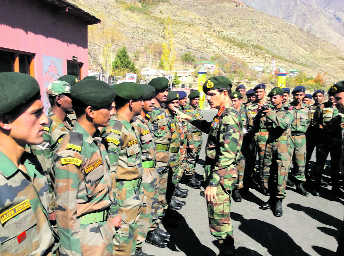
Chief of Army Staff Gen Dalbir Singh Suhag today visited the Pooh and Samdoh areas of tribal Kinnaur district, bordering China.The visit of Gen Suhag was kept a closely guarded secret and even the Kinnaur administration and police were completely unaware of it. The visit assumes significance in view of escalating tension and ceasefire violation along the Line of Control. Suhag visited the brigade headquarter at Pooh and Samdoh along the international boundary India shares with China.He interacted with the Army personnel posted along the border area and inquired about their well being and problems. He flew back later in the afternoon.


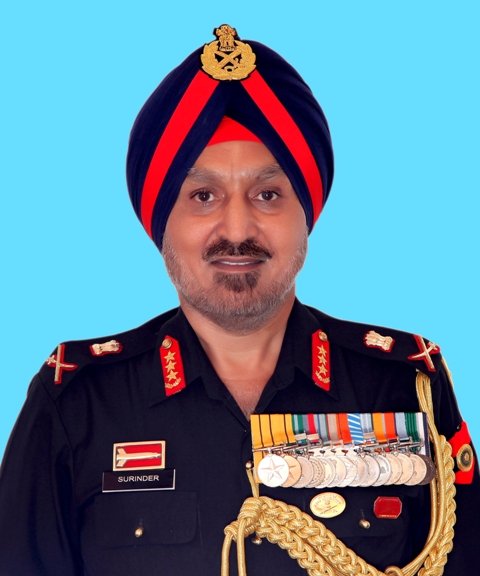
LIEUTENANT GENERAL SURINDER SINGH, AVSM, VSM GENERAL OFFICER COMMANDING IN CHIEF WESTERN COMMAND

gocwc181016


1.      Lieutenant General Surinder Singh, Ati Vishisht Seva Medal, Vishisht Seva Medal took over the reins as General Officer Commanding-in-Chief of the prestigious Western Army on 17 Sep 2016. In keeping with the traditions, the General Officer paid homage to the Martyrs at the Veer Smriti and reviewed Guard of Honour at the command Headquarters.


2.     Lieutenant General Surinder Singh, an alumnus of National Defence Academy, Pune was commissioned into the 2nd Battalion, BRIGADE OF THE GUARDS in 1979 and later commanded the same unit. In a distinguished military career panning near four decades, he has tenanted critical Command and Staff appointments in active counter insurgency and operational environments. He has held important operational appointments in Military Operations Directorate and the Perspective Planning Directorate at the Army Headquarters. The General Officer has vast experience in Operational logistics as well having tenanted key logistic appointments on the western front. He also has had the distinction of serving with the United Nations Peacekeeping Force in Liberia.

3.     The General Officer is a graduate of Staff Collage Camberley (UK), The Higher Command Course and the National Defence Collage. He has served as an Instructor at The Infantry School and The Collage of Military Engineering. He has commanded an Armoured Brigade, a Division in Strike Corps and operationally committed Corps in the Eastern Command prior to taking over the Western Army.

4. Lieutenant General Surinder Singh is a proud recipient of the Ati Vishisht Seva Medal and Vishisht Seva Medal for his distinguished service to the Nation. He is also the ‘Colonel’ of The Brigade of Guards.


Indian soldiers were bravest, says WW-II British army commander

AMRITSAR: “Indian soldiers were the bravest of the brave. It was an honour to command them,” says Major Tom Conway (retd), 98, one of the last surviving British officers who had commanded Indian soldiers.

Major Conway was in Amritsar on Sunday for the inaugural ceremony of War Memorial and had come to north India after 80 years. “They (state government) wanted other officers around as well, but probably I am the only one surviving,” he says.

A World War-II veteran and one of the heroes of Battle of Alamein, he had commanded the Dogras, Sikhs and Pathans.

Major Conway joined the British Army in April 1940. “I volunteered to join the Indian Army in Egypt. I had heard and read so much about India. I had read Rudyard Kipling and I was also impressed from the tales of valour of the Indian soldiers,” he says. He joined Guides Cavalry where he commanded companies of Dogras, Sikhs and Pathans. “Dogras were the quietest. It was being said that they were easier to command. But they were all good,” he adds. “I used to take train from Pathankot to Kullu valley which used to run at ten past midnight daily. I used to visit Dogra soldiers’ families to get to know them better,” he recalls. WORLD WAR-II WITH INDIAN SOLDIERS

In 1941, Guides Cavalry was a reconnaissance regiment for 8 Indian Division in Egypt. “We were armed with wheeler carriers, made by Tata,” he narrates. Then they went to Syria. “One of our brigades was overrun. We were retreating,” he adds. Then he was asked to go to Sudan where he commanded the Sikhs.

In November 1942, the Battle of Alamein took place in Egypt where he was one of the heroes and got a medal too. “First time in 3 years, Germans had a major defeat. Churchill (Winston) said it was not the end of war but the beginning of the end. Our job was to keep the Army chasing,” he says. Then he was sent to Iraq to check Germans from the North, but they instead attacked Russia and tasted reverses.

“By the beginning of 1943, there was no threat to Middle East. I was sent to India. I was to engage in Burma (Myanmar) with 15 Indian Division but was sent to North West Frontier area as small-scale battles were going on there. I commanded Dogras there,” he adds.

In 1944, he went to Britain for a month which was his first leave in four years. He looked after Indian contingent in London and retired after victory parade in 1946.

“It is wrong to say that the British only recruited martial races in India. In the 18th century, most of the soldiers in the Army used to be from the Southern parts,” he says. After going back to Britain, he married a Chinese teacher and stayed in Japan for about 25 years. “I would love to go back to Kullu valley again… Though I do not know whether I would be able to make it,” he says.


Home Ministry sanctions 2 armed battalions for state

Home Ministry sanctions 2 armed battalions for state
Remembrance: A woman looks at the pictures of martyred police personnel on Police Commemoration Day at PAP Complex in Jalandhar on Friday. Tribune Photo: Malkiat Singh

Rachna Khaira

Tribune New Service

Jalandhar, October 21

The Union Home Ministry has approved two armed battalions for Punjab to strengthen the second line of defence in the border areas.Deputy Chief Minister Sukhbir Badal had sought the sanctioning of five armed battalions in the state to detect and prevent intrusion in the border districts.“The battalions with strength of 1,100 personnel each will be equipped with the latest weapons and technology to deal with any insurgency,” said DGP Suresh Arora, who was here to attend the 57th state-level Police Commemoration Day observed at the Punjab Armed Police headquarters here.He said the Centre had agreed to bear the cost of the raising and further maintaining of these battalions that would be deployed along the international border in the state.The DGP said the state government had taken several measures to upgrade the Police Department in the wake of terror attacks in Dinanagar and the recent one at the Pathankot airbase.He said while the Union Government had sanctioned Rs 106 crore to upgrade the Police Department, the post of IG (Counter Intelligence) and AIG (CI) had been created in the department to improve the performance and coordination of the state police with that of the BSF and the Army. MF Farooqi, an ex-BSF top brass, had been recruited as IG (CI) by the state police recently.

Families of police martyrs honoured

  • Fatehgarh Sahib: The district police organised a function to commemorate the sacrifice of police martyrs at the Police Lines here today. Sixteen families of the martyrs from the district were honoured. Deputy Commissioner Kamaldeep Singh Sangha and District and Sessions Judge Sanjiv Bery were the chief guests, while SSP HS Bhullar presided over the function. OC

BSF jawan remembered

  • Hoshiarpur: BSF martyr constable Roshan Lal, who got President’s Police Medal for Gallantry (posthumously), was on Friday remembered on Police Commemoration Day by NCC cadets of his alma mater, DAV Senior Secondary School. NCC incharge Sanjiv Kumar said Roshan Lal had laid down his life fighting terrorists even after being injured in a grenade attack in the Gul area of Akhnoor sector in J&K on November 29, 2002, at the age of 28. OC