Sanjha Morcha

We’re prepared for any eventuality, says Parrikar

NEW DELHI: Defence minister Manohar Parrikar on Sunday said the surgical strike against terrorists’ launch pads across the Line of Control (LoC) was successful and that the country was prepared for any eventuality.

He also said that the Brigade Commander of Uri was removed following Army chief General Dalbir Singh Suhag’s decision, a day after Army officers at the Headquarters in New Delhi said no such order has been issued against K Somashanker.

“Surgical strikes against terrorists’ launch pads were successful. We are prepared for any eventuality,” he told a news channel. Taking a dig at Pakistan, Parrikar said, “My mother always told me if you go into a forest hunting for a rabbit, you have to be prepared for a tiger.”

Asked about the removal of Somashanker, he said the decision was taken by the Army chief since a probe is on to ascertain the lapses that led to the attack. “Moving out the Uri brigade commander was a call taken by Army chief assessing if there were gaps in SOPs at Uri,” he said. Parrikar added that there was a need for an impartial probe into possible security lapses at Uri.

The minister also said that efforts are on to secure the release of Indian soldier Chandu Babulal Chauhan, currently in Pakistan’s custody after inadvertently crossing over the border.


Days after attack, Uri commander shifted Army probes ‘lapses’; more heads may roll

Days after attack, Uri commander shifted
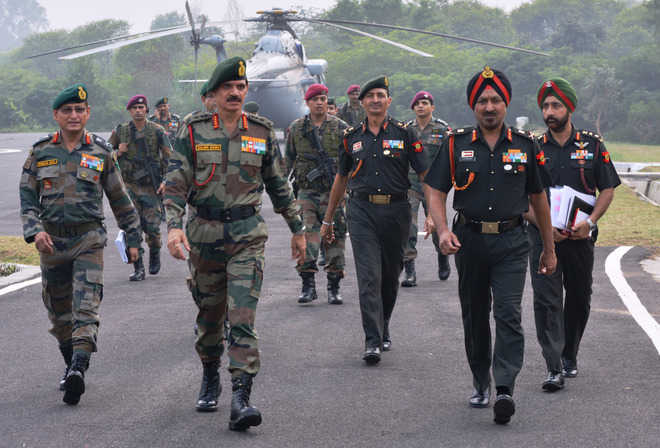
Army Chief (Second from left), on a visit to the region on Saturday, met members of special forces who carried out the surgical strikes across the LoC.

Majid Jahangir

Tribune News Service

Srinagar, October 1

The Army has shifted the commander of the Uri Brigade which was attacked by four Jaish-e-Mohammad fidayeen on September 18, leaving 19 soldiers dead and 24 injured. Brig K Somashanker will be replaced by Colonel GS (General Staff) of the Kilo Force, SP Ahlawat, who was recently promoted as Brigadier, even as an Army inquiry is “underway” to look into possible lapses that could have led to the attack.(Follow The Tribune on Facebook; and Twitter @thetribunechd)The decision came on a day when Army Chief General Dalbir Singh Suhag was in the state to review the security situation in the wake of heightened tensions along the Line of Control (LoC) following the surgical strikes in Pakistan-occupied Kashmir (PoK).Sources said more heads may roll once the inquiry by the Northern Command is complete. The Uri Brigade is very close to the LoC and acts as the  first line of defence.Sources said the commander had  been shifted to “facilitate” an impartial probe, but “will assist the probe.” Brig Somashanker is camping in Uri and is busy handing over the charge to his successor. The Uri attack came as 10 Dogra Regiment was in the process of moving out with the 6th Battalion of the Bihar Regiment replacing it. It is being ascertained if the attackers knew about the replacement, which is always a closely guarded secret.There were indications that “security lapses” may have led to the heaviest blow to the Army in a single militant attack since the eruption of insurgency in the Valley.  The attack is being investigated by the NIA.  


भारत को बताएंगे कि क्या होता है असली सर्जिकल हमला: सईद

भारत को बताएंगे कि क्या होता है असली सर्जिकल हमला: सईद 

जेयूडी प्रमुख और 2008 के मुंबई हमले के सरगना ने भारत को पीओके में उसके सैन्य अभियान के लिए मुंहतोड़ जवाब देने की चेतावनी देते हुए कहा है कि प्रधानमंत्री नरेंद्र मोदी अब जानेंगे कि लक्षित हमले का क्या मतलब होता है। सईद ने फैसलाबाद में एक जनसभा में कहा कि हम आपको बताएंगे कि असली लक्षित हमला क्या होता है, और आपको जल्द ही माकूल जवाब मिलेगा।

पाकिस्तान अधिकृत कश्मीर में नियंत्रण रेखा (एलओसी) पर आतंकी ठिकानों पर भारत के लक्षित हमले के एक दिन बाद उसने कहा कि मैं भारतीय मीडिया को बताना चाहता हूं कि पाकिस्तानी जवान कैसे लक्षित हमला करेंगे, यह दिखेगा।

मैं आपको बताता हूं, अमेरिका आपकी मदद नहीं कर पाएगा। सईद ने कहा कि अब भारत को मुंहतोड़ जवाब देने की बारी पाकिस्तान की है। नरेंद्र मोदी अब जान जाएंगे कि लक्षित हमले का क्या मतलब होता है।

Pak’s turn to respond, will teach India what a surgical strike is: JuD chief

Jamaat-ud-Dawah chief and mastermind of the 2008 Mumbai attacks warned India of a “befitting response” on Friday for its military operation in PoK, saying Prime Minister Narendra Modi will now know what is meant by “surgical strikes”.

“We will tell you what is a real surgical strike…and you will get the deserved response soon,” Hafiz Saeed said in a public address in Faisalabad in Lahore on Friday.

“I want to tell Indian media to see soon how Pakistani Jawans conduct surgical strikes. Let me tell you…the United States will not be able to help you,” he said, a day after India conducted surgical strikes on terror launch pads across the Line of Control (LoC) in Pakistan-occupied Kashmir.

“Now it is Pakistan’s turn to give a befitting response to India. Narendra Modi will now know what is meant by surgical strikes,” Saeed said.


Pak spy was trying to get info for a possible terror strike: Official

Pak spy was trying to get info for a possible terror strike: Official
Maulana Ramzan and Subhash Jangir were handing over information to Akhtar about security forces deployment in the Sir Creek area and Kutch region when they were arrested on Friday. PTI file photo

New Delhi, October 28The Pakistan High Commission official accused of spying may have been trying to gather classified information on Indian security forces along the western coast for a militant strike similar to the 2008 Mumbai attack, an official of the Home Ministry said on Friday.(Also read: Pak spy racket: Visa agent from Jodhpur arrested)Mehmood Akhtar was trying to gather information pertaining to deployment of security forces along the western coast, Sir Creek and Kutch areas and also about military installations in Gujarat, Maharashtra and Goa, a Home Ministry official said.”There have been intelligence inputs that Pakistan’s ISI was planning to send terrorists through the sea route to carry out a Mumbai-type terror attack in India. Akhtar’s activities and his interests to gather information about the western coast buttress the intelligence inputs,” the official said.

(Follow The Tribune on Facebook; and Twitter @thetribunechd)

More than 160 people died when 10 gunmen struck mayhem for three days in Mumbai in November 2008. The gunmen had come to Mumbai from Karachi by sea.Maulana Ramzan and Subhash Jangir were handing over information to Akhtar about security forces deployment in the Sir Creek area and Kutch region when they were arrested on Friday.The Pakistani official was to hand over the duo Rs 50,000 for getting information, the official said.Before being let off because of diplomatic immunity, Akhtar confessed to police about his role in the spy ring.Delhi Police also had a recorded video of his statement.In his statement to police, Akhtar admitted that he was part of the spy ring for more than a year.He has named a few officers of the Pakistani High Commission to whom he had reported the information he collected but police have no direct evidence and therefore have yet to take action.Acting on a tip-off, Delhi Police on Friday nabbed Akhtar, along with Ramzan and Jangir, at Delhi Zoo while a visa agent from Rajasthan, Shoaib, had managed to escape.Shoaib was detained near Jodhpur last evening and after being brought here, he was arrested.India declared Akhtar persona non grata on Thursday. Subhash and Maulana have been arrested on charges of passing on sensitive information and defence documents and deployment details of BSF along the Indo-Pak border. They were sent to 12-day police custody.A local court remanded them to police custody for 12 days. Akhtar enjoys diplomatic immunity but has been asked to leave India. — PTI


Amarinder tells PM to sack Parrikar

Tribune News Service

Chandigarh, October 25

2016_7$largeimg29_Friday_2016_220710756

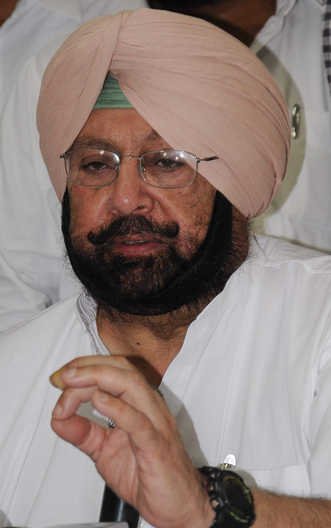
Punjab Congress president Capt Amarinder Singh today asked Prime Minister Narendra Modi to sack Defence Minister Manohar Parrikar for allegedly downgrading military officers’ ranks.“You cannot allow an incompetent person to continue to hold such a sensitive portfolio,” Amarinder told Modi in a strongly worded statement issued here.He condemned the Defence Minister’s diktat downgrading Army ranks as compared to their counterparts in the civil administration.Reacting strongly to a report in a section of the media that a new Defence Ministry letter has downgraded the status of military officers across ranks, Amarinder charged Parrikar with lowering the morale of the Army to satiate vested bureaucratic interests.


Why are Soldiers Agitating? Are they Greedy or There Are Serious Problems Violating Their Constitutional Status ?

FAQs: Why are Soldiers Agitating? Are they Greedy or There Are Serious Problems Violating Their Constitutional Status ?

Last updated on 28 Oct 2016 and is in progress

This blog is an attempt to answer ‘Frequently Asked Questions’ on issues of military. The questions answers given are not a complete set and shall be kept updated time to time.

Question No 1Military veterans seems to be always agitated on issues like pay, pension and allowances. Why is it? Are they depressed or greedy? 
Answer.
Military veterans vocal on electronic, print and social media or agitating on Jantar Mantar airing their concerns on many issues concerning military, are neither depressed nor greedy. Soldiers of Indian army give more preference to service to nation and democracy than money. There are certain pressure points which govts after govts have not only ignored since 1973, but are creating more reasons for agitations.
As for as public is concerned, in independent India it is happening for the first time, that in last 5-6 years military veterans have taken the course of agitation on key issues in public domain creating ripples in minds of common man creating such false impressions. The issues are pending with govt since 1973 and now the patience of soldiers is at breaking point.
Question No 2. But why shall Govt show such apathetic attitude towards soldiers? Soldiers defend nation and render great service and politicians, babus and govt are surely aware of it? 
Answer
It puzzles solders too. Why such apathetic attitude towards soldiers? Serving soldiers do not have unions or lobbies like civilians. They always had blind trust in govt but in 1973 they were delivered a serious blow when their status, pay, pensions and allowances were reduced drastically by 3rd pay commission and that of civilians raised.  It created serious imbalance and that too once soldiers had delivered an unprecedented and historic military victory in 1971 war.  Instead of award, soldiers were punished. It never happens like that. It is a sure way of killing the high moral of a victorious army setting a wrong precedence.
Soldiers have a system of reporting their problems to their commanding officers, who then report the matter to services HQ at Delhi. Military Chiefs then take up matter with the govt. Soldiers followed the same system and had trust in the ability of their chiefs and Govt. Naturally such serious imbalance created by 3rd pay commission were reported to Govt through proper channels. Then PM Indra Gandhi assured Military Chiefs of resolution of their problems but it never happened.
Since 1973. chiefs after chiefs have kept reporting the matter to Govt. Govts after Govts have kept assuring soldiers about resolution of their problems but without any solution in sight. Rather various political parties have used frustration of soldiers for petty vote bank politics. It has now created a situation wherein soldiers have lost trust in ability of military chiefs to get solution and started doubting the intentions and seriousness of Govts to deliver justice forcing them to came on street and social media bringing matters into the notice of public. After in all in democracy people are supreme. It is surely not a healthy sign for the democracy. It has also created problem within military where abilities of top leaderships to effectively communicate with govt are now being questioned?
Question 3Still why is Govt not serious? Soldiers on street in democracy is a frightening scene? 
 
Answer. 
It is surprising for soldiers too. Why is govt not serious? Why are political parties only interested in using frustration of soldiers for votes? Ignoring the problem without giving any justification is like adding the fuel to fire. Unfortunately, such apathy is creating impressions that corrupt politician- babu nexus has no time for serious issues of the nation and soldiers demand for justice is no exception. Look around, justice system has collapsed, govt administration is totally rusted, corruption rules everywhere, parliament has become defunct, proxy govts rule, no political party has internal democracy, funding channels are kept secret, banking is overburdened with NPAs, gap between poor and rich are widening, farmers are committing suicide. A situation of hopelessness exists. It looks politics has become a profession of employment for failed people who are only interested in loot and plunder. Babus, banks, judiciary, some crony businessmen and temple priests, have joined hands with corrupt politicians to create a mafia. Naturally such mafia has no time and sensitivity for soldiers and justice or what else could be the reason?
Indian soldiers are sensitive, committed to constitution and responsible people. Soldiers know that in the given situation of hopelessness, if they also come on street, as it happens in other countries, it will deliver a death blow to the nation. Naturally so, military veterans have taken the responsibility to communicate with “we the people” who are supreme in democracy, keeping the threshold of agitation well below acceptable limits so that the situation doesn’t explode.
Questions 4. What are the major demands of soldiers? 
 
Answer 
 
The major demands of soldiers are:
1. Status of soldiers as given in the constitution be respected.
2. Accordingly, serious imbalances and disparities between compensation model of soldiers and other govt civil employees be removed based on best HR practices taking into account the average career earnings including pension  benefits.
Question 5.  What are the constitutional provisions for the executive authority of the military? 
Answer
Constitutional military executive authority of the soldiers comes out of the following articles:
1. Article 18;- respects the “Title of Ranks” of Soldiers even after his death. Soldiers never retire. Title of Ranks never die.
2. Article 34:- Gives military a political executive authority to intervene by declaring martial law only to restore democracy.  In India parliamentary democracy is supreme. This article makes Indian military as soldiers totally committed to democracy and “we the people”. There may be situation where state fails to govern as per constitution or parliament is unable to function due to any reasons or rise of a civilian dictator endangers democracy or external/ internal aggression endangers it . In such situations constitution makes obligatory on military authorities to intervene to protect and restore democracy. Baba Saheb Ambedkar was a very wise man. He could sense that in independent India, probability of rise of civilian dictators are more than rise of a military dictator. He therefore under this article, entrusted military a role of silent and invisible custodian of Indian democracy.  History of independent India is testimony to the fact that Baba Saheb was right. Military has been loyal to constitution and we the people whereas Indra tried to become dictator declaring unconstitutional emergency. Military did play its role to protect democracy, when then Army Chief cautioned Indra to remain within limits of constitution. In fact emergency was lifted as all three chiefs wrote a top secret letter to Indra Gandhi advising her to lift emergency and call for elections. Probably this is right time the content of this letter shall be disclosed to public.
3. Article 52 read clubbed with Article 74:- The sovereign authority of govt is vested in the President who wears two distinct hats. One of being head of civil political govt and other of supreme commander of defense forces. These two roles of the president are independent. Under this article the hard and soft national powers are identified and constitutionally divided. While the democracy under the pre-dominance of soft power functions under the leadership of Prime Minister and his cabinet, the total command authority over the hard power of military is denied to him/her. Baba Saheb was a visionary and had deep knowledge of Indian history. He wisely so separated national hard power from the national soft power. Baba Saheb knew if PM or defense minister are given total command authority over military it will give rise to many civilian dictators.  Therefore under this article if read clubbed with article 74, the political direction to military comes from cabinet headed by PM, administrative support comes from ministry of defense and military retains the authority and freedom to take military executive decisions and that is the reason precisely military is an attached organisation to the political govt. Constitutionally, military can not be subordinate to PM and his cabinet as President who is senior to PM is its head and also PM is not given command of military. In Indian democracy where PM exercises executive political authority and President is constitutional head of military, services HQ can only be integrated with civil govt and can not be merged as is the case in USA.
4. Co-relation of Article 34 on Article 52 and 74. Articles 52 and 74 do not take away the authority as vested in supreme commander of defense forces and military commanders as Silent and Invisible Custodians of Indian Democracy. There could be situation where advice of PM (aspiring to become a dictator) and his cabinet to President could be detrimental to democracy. Under article 52 and article 74, president is left with no choice except to accept their advice after one review however under article 34 supreme commander of defense forces or military commanders can exercise military authority as vested in them only to defend constitution and democracy.

Question 6. Constitutionally, what are the roles of the defense forces? 

Answer

If seen in the backdrop of above constitutional provisions, the roles of Indian Defense Forces are:

1. Primary Role. To defend Indian Constitution and democracy against any of the following threats:

a. Any external aggression or threat in any form on the geo-political and economic interests of India, territories under the political control of Indian Govt and Indian constitution. The external threat may not be always in form of military invasions. It may appear in form of externally abetted political assassinations,  cyber or economic wars, threatening geo-poltical alliances or posturing etc.

b. Any internal threat endangering functioning of the constitution and democracy which may be in forms of armed rebellion or political takeover by a civilian dictator.

2. Secondary Role. To assist civil administration in maintenance of law and order and in case of natural calamities, disasters and disturbances only when requisitioned.

Please note that defenses forces can act in their secondary roles only when requisitioned. However for preforming their primary roles, no such orders or requisition are required. However as long as an elected political govt under parliamentary democracy is functioning, defense forces will always seek their political directions before any action. In case such govt seize to exist or nuke attacks have obliterated such govt or a civilian dictator has taken over violating constitution or any state govt has rebelled or any armed rebellion has seized any part of territory/ govt administration, defense forces will act under the military authority as vested in them to protect constitution and shall not wait for any political directions.

Question 7. What are the constitutional provisions for the status and service conditions of the Defense forces?

Answer
Chapter 14 of the constitution deals with “Services of the Union and States”. Though defense forces are created under articles 34 and 52, but their service conditions are constitutionally governed under this chapter. Relevant article are as under:
1. Article 309 empowers parliament to make legislation for the service conditions of various public services including defense forces.
 2. Article 310 Makes provisions for the tenure of all commissioned officers of the defense forces personals and civilian gazetted officers to be at pleasure of president. This article mentions various govt services in order of their seniority in terms of constitutional status. Officers of the defense forces are first in the seniority even ahead of civil services of the union (discontinued after independence) and All India Services (IAS, IPS, IRS, IFS etc).
Articles 311- 323 under the chapter deal with various safeguards provided to civil services and forming of Public Service Commissions.
Legal provisions for withdrawal of Pleasure of President in respect to officers of the  defense forces differ from the civil officers which  for defenses forces are further given in respective services acts, rules and also regulations.
Under article 309, various civil services acts for giving various service conditions in details like IAS acts and rules or IPS acts and rules have been framed. However in relation to defense services Govt and Parliament has chosen to remain silent and adhocism has been created. Absence of act and rules for service conditions of defense forces in detail as mandated under article 309, is the root cause of soldiers grievances. Present Defense Acts and Rules deal more with the discipline aspect of forces. The defense regulations are customs of Monarchy. India is a democracy and defense forces shall not be administered under adhoc regulations.
Question 8.  How are officers in defense forces appointed and how does their oath differ from a civil servant?
Answer
Officers of the defense forces in addition to being gazetted, are also commissioned officers. The word “commission” is mentioned in the parchment given to them at the time of their commissioning wherein they take oath of allegiance not only to the constitution as taken by civil officers but also to obey lawful command of their superior officer up in the chain of command after due observations to it being a lawful in accordance with laws of regular army.
Under this observed obedience of lawful command, duty to defend the constitution is inherent. Civilians including PM and Govt Ministers take oath of allegiance to the constitution and not to defend constitution? Few key aspect which shall be noted in appointments of defense officers are :
1. The parchment of commission is given under the printed signatures of the President authenticated by a Military General and not by any civil officer.
2. In parchment of commission, the President uses the word “ME” and not “MY GOVT” as he uses in Parliament, because the authority of military command is absolute in nature and is vested in him as supreme commander of the defense forces. Such power legally can not be delegated to any other authority. Provisions of article 74, therefore do not apply on military authority and chain of command. Army laws make nature of command legally very clear.  In case of confusion of political directions for military between President and PM, defense forces are obliged to follow orders of supreme commanders of defense forces and not PM.
3. Officers of defense forces take oath to serve anywhere in world and space, where ever they could be send by land, air and sea beyond the territories of India and where even the Indian laws do not apply? They enforce the sovereign authority of the state not only within national territories but beyond.
4. Officers are suppose to follow such orders of command which are lawful in nature. Legal validity of orders are decided by officer himself interpreting these under the law. Commissioned officers are therefore expected to use their judgment to decide legality of the orders and all illegal orders he is expected to disobey. In case commissioned officers obey illegal orders, they carry liability of criminal prosecution.
5. Officers of the defense forces by virtue of being commissioned officers, are vested with following powers
a. Military executive authority not only to impose its will using military force on any entity but also to the extend of forming govts. Military Govt in India were formed in Hyderabad, Goa and Junagarh once these were liberated and also in Bangaldesh and Jaffna Sri Lanka.
b. Judicial powers to not only give punishments to the extend of death sentence, but in certain situations confirm and execute it without any reference to any court, govt and president.
c. Powers of Magistrates are exercised by defense forces in aid to civil authority. Officers of the rank of NCOs and above  exercise such powers. Whereas in case of civil these are not below gazetted officers.
d Military Authority to command troops. Military functions based on unique concept of command.
e. Administrative powers like any civilian officers.
It could be seen from above that all functions of state for which a civil govt has different organs, in case of military are vested in commissioned officers.
Question 9It seems somewhat confusing? General Impressions are that constitutionally IAS officers are Masters of Indian Destiny and they are even superior than other sister services like IPS, IRS and IFS? 

Answer

If seen in backdrop of article 310, that is not correct. Over a period of time IAS officers have taken advantage of their certain appointments and closeness to politicians. Corrupt, greedy and insecure politicians have obliged them, as in elections IAS officers are appointed returning officers responsible to check validity of their nomination papers, their election canvassing activities and spending of funds. In fact it is this appointment which makes them a kind of masters of Indian Elections. It is the IAS officer as DM, who announces results of vote counting. When in multi corner elections where victory margins are thin, such officers naturally can oblige politicians. It is this relationship between politicians and IAS officers which has given unjustified advantage to IAS. In most of the democracy. No civil servant is given the responsibility of being a returning officer. In US, civil servants only oversee checks over political spending, in Pakistan, these are judicial officers who are nominated as returning officers. The present practice is harmful to Indian Democracy and parliament must take note of it? 

Nevertheless constitutionally, following shall answer the question about the correct position on the standing of officers of defense forces with officers of IAS and other All India Services :

Comparison of Constitutional Status of Defense Officers and IAS including Officers  of All India Services

1. Sovereign Executive Military Authority is an exclusive domain of military officers exercised through powers and chain of command. Under such authority nations are destroyed or made. Political directions for military actions at macro levels are given by elected govt in a functional democracy. Under article 34 defense forces have been made silent and invisible custodian of Indian democracy with a responsibility to keep it intact. No such powers in civil domain to any civil officer.

2. Authority to form political Govt is an exclusive domain of political civil Govt in a functional democracy on mandate of ‘we the people’. However in certain situations with approval of elected civil political authorities and if it doesn’t exist then own its own, officers of the defense officers form a political govt in any external captured territory and anywhere within the country. Examples are when military formed Govts in Haydrabad, Goa and Junagarh within the country and in Bangladesh and Jaffna; Sri Lanka abroad. Such govt can be led by any military officer or any other person so authorized by responsible military commander.  Adjutant General of the Army HQ is responsible for the subject. Only officers of the rank of Brigadier and above are authorized to declare formation of such govt. That is the reason rank of Brigadier was and should be equated with the appointment of secretary of Govt of India. Same is the practice world over in most democracies. No such authority is vested in any of the officers of all India services. All civil officers serve under the command of military commanders under the military govts.

3. Judicial Powers  Any commissioned officer can be nominated to the military court as a Judge. Military officers of the rank of Captain and above exercise judicial powers of a session judge and can give death sentences.  In case of SGCM, an officer of the rank of Captain and above can nominate himself as judge and can give death sentence in a summary trial. He in this case can also confirm the sentence given by himself on behalf of president and give orders for its execution without reference to any court and civil authority. No right of appeal is given to the accused. Military Laws can be made applicable to civilians either by notification by central govt or under martial laws. Legal validity of the courts formed under martial laws has the sanction of Supreme Court. No such powers or authority is held by any officer of the all India services.

4. Powers of Magistrate.   Powers of magistrate is more of a civilian concept when a civilian officer is given part of executive authority of the state by virtue of he/her holding an appointment or given for a period. Military works on the concept of command where executive powers of state are inherent in powers of command of Military officers by virtue of holding commission or authority to exercise such powers. In case of military, powers of command are given down to NCO levels. In aid to civil authority military Non Commissioned Officers, has the powers to order fire.  Such orders in case of civil can only be given by a Civil magistrate. These powers are not inherent as is the case of military officers. IAS officers exercise powers of magistrate as returning officers for an election. It is this appointment which gives advantage to them to illegally oblige politicians and makes them powerful over others.

5. Administrative Powers   Exercised as authorized by defense officers as well as officers of all India services.

Please note,  IAS officers or other officers of all India services exercise executive powers of state only when they have powers of magistrate or holding a specified appointment where as executive authority of the state are inherent to all commissioned officers by virtue of they holding  commission on behalf of President. Nature of job of officers of all India services is more as administrative whereas in case of defense officers it is pre-dominantly executive. That is the reason article 310, puts officers of defense forces in senior most order than officers of all India services and other civil services. Yes it is also true constitutionally that IAS officer have no legal standing to claim seniority or preference over IPS, IRS or IFS. They present superior status is illegal and has been created with help of politicians as they are the only one who can become returning officers to conduct elections.

Question 10. The word defending the constitution are neither mentioned in Oath and Nor in commission parchment, then how are officers of the defense forces responsible for the defending the constitution?

Answer 
 
Oath of President of India has two key words. One “upholding the constitutions” and other defending it?  President takes the oath to defend constitution as supreme commander of the defense forces and the only means to defend constitution, he has are the defense forces. He therefore passes his authority to officers of the defense forces in form of commission. It is through this commission the officers of defense forces become responsible for defending the constitution by military force following lawful command. Article 34 also makes it obligatory on part of the defense forces to defend constitution.
Question 10. Civil Political Govt has authority and freedom to decide what shall be status of the defense officers and how shall they be paid? Why shall defense officers and soldiers crib?
 
Answer
 
Govt of the day is formed and functions under the broad constitutional framework. No govt or babu is above constitution and they are expected to work within the space as provided. Since 1973 govt are taking certain unconstitutional decisions and downgrading status and compensations of the the defense forces. The same is highly objectionable. Defense forces have been so far maintaining the decorum and trying to argue reason with the govt. Unfortunately the same is not yielding the result and no answers are coming from the govt?  That is main reason military veterans have taken to social media and streets.
Questions 11Why shall Govt give answers to the military? It is communicating its decisions? Where is the problem in it? 
 
Answer
 
India is a democracy and not autocracy. Govts are answerable to the people and parliament. In case of military they need to explain reasons as by law military is not expected to obey unlawful orders. Soldiers have certain of their fundamental rights restricted it doesn’t mean they lose all other rights of a being Indian citizens? Govt carry a responsibility to reason out their grievances? It is demand of democracy.
Question 12. Why is military not going to court? After all it is an attached organisation to the govt and maintains its own identity? 
 
Answer
Defense forces surly have such options open but not exercising showing respect to democracy and hoping  that some day wisdom will prevail. After all military going against an elected govt in court might cause serious problems to the democracy. Yes some serving officers and military veterans are taking some lead but the same is also not a healthy sign.
Question 13. What are the main grievances? Can same be elaborated? 
Answer
 
Same were explained above in answer to question 4. The same is again elaborated here:
1. Considering various articles 18, 34, 52, 309 and 310 of the constitution and their authority, powers of command, roles and functions, officers of defense forces have a constitutional status and the same is superior to the senior most civil services that is IAS. Article 310 makes it very clear. Equating commissioned officers inferior to police and higher than homewards is surely humiliating. Since 1973 defense forces are actually under systematic attack from political establishment for marginalizing them. The same is likely to create a serious imbalance in power structure of the country in total violation of constitution which is fraught with serious consequences.
2. On the eve of Independence, first Govt under PM Nehru in fact had realized the problem and on recommendations of a committee, respecting constitutional status of the defense officers, certain principle of parity were laid down. The same were:
a. The status of officers of defense forces will be superior to civil services; IAS.
b. Seniority protocol between commissioned officers and IAS shall be decided based on length of service and not on the basis of rank of defense officers.
c. Compensation packages in terms of total average career take home including pension of defense forces shall be higher than civil. In case of defense officers more than IAS.
3. The above thumb rule as made under Nehru govt, respected the constitution. It was in 1973, in lust to be a dictator, Indra Gandhi tweaked above policy and cut their status and compensation drastically. The process which she started is still continuing? Now the situation is that in terms of status, defense forces are being equated to Grade B civil officers and their average career take homes are less than police and above home guard?
4. The real unrest is not OROP or some allowances here or there. Real issue is question of disparity and serious imbalances in total disregard to constitutional status of the soldiers. If a MP is respected as MP, if president is respected as president, if judges are respected as judges all as per status given in constitution than why are soldiers not being respected their constitutional status? Degrading soldiers in total disregards to constitution is nothing but direct attack on Constitution.
Question 14. PM Modi seems to be serious in resolving the issues, then why are soldiers still agitating?
 
Answer
 
Soldiers had lots of hope in Sh N Modi as he looked sincere but actions of his govt doesn’t speak the same story. Following may please be noted:
1. BJP promised a white paper on the problems and also formation of a military commission. In last 2 years nothing has happened on it?
2. After BJP formed govt, their defense minister clearly said “OROP” can not be given. Soldiers are asking salary for life. That triggered agitation. Then their Home Minister tried to break the agitation using force. A RSS leader in their first ever political darbar in Delhi, in fact as reported passed instructions to present Defense Minister in a very derogatory manner “Give them something and make them quite’?   It further aggravated problem.
3. Govt has accepted recommendations of the VII pay commission which has given a very humiliating treatment to soldiers, cutting them further in status and compensations. There are issue pending since IV, V and VI pay commissions. Nothing was addressed, rather more cuts have been implemented. It has happened for the second time, while the civilians have been given their dues, soldiers are still struggling. It is the first time in the history of India, where three services chiefs have polity declined implementation of VII pay commission till major anomalies are resolved.
4. On issue of disability govt has created yet another controversy.
5. Now fresh controversy over status parity has erupted in MOD, where civil officers of the Grade B are being treated much superior than commissioned officers.
6. On all these issues, one can notice deliberate leaks and motivated article  to defame soldiers? In VII pay commission report, an attempt has been made to put down soldiers and show them as greedy.
7. A new fund has been created for public to donate money giving and impression that as govt has no money for soldiers as nation is poor, public must pitch in donations.
Question 15. India is poor country surly she cant not pay soldiers lavishly? 
 
Answer
 
Who is asking that? India is a poor country then why to pay civilian govt employees so lavishly? Soldiers are asking to remove imbalances and restore their status maintaining the principle of parity in line  of constitutional status. Nehru Govt did make the rules.
Question 16. If govt doesn’t address the problem as seen by soldiers and tries to resolve its own way then what are the consequences? 
 
Answer
 
At first place govt shall not do that. The constitution is supreme. If govt still wishes to go ahead then better amend constitution. Make defense minister as supreme commander of defense forces, abolish article 34 and article 52 II. Amend article 310 to make defense forces junior to police forces. Make NSA as Chief of Defense Staff and stop giving commission to defense officers. Where is the problem? We live in a democracy where constitution and will of people are supreme.
But if not done, then respect the present constitution. In any case, since independence a situation has been created now where trust of soldiers in govt as the its lowest. It is a dangerous situation. A soldier who is low in his self esteem and doesn’t trust govt will have no trust in cause of his mission and moreover he will be more worried about future, safety and security of his family? Such soldiers can only deliver defeat.  Choice is of the govt and we the people.
Question 17. What is the way out? 
 
Answer
 
Well the way out is known to the govt. BJP did promise a white paper and standing military commission. In fact Supreme Court has been suggesting same to govt. Twice it has happened that SC has ordered Govt to form a standing commission and then withdrawn its orders on promise of the govt. Let this commission first publish a white paper and then take a comprehensive approach to restructure the whole model keeping constitution in mind. The real issues are only two. 1. Treating soldiers as per their constitutional status and 2. accordingly structuring a compensation model.


Pak shelling triggers migration in Hiranagar sector

Pak shelling triggers migration in Hiranagar sector
Border residents moving to a safer place at Kunthal village in Kathua district. Tribune photo

Sanjay Pathak

Kathua, October 21

Continuous shelling on border Bobiya and Pati villages on the Zero Line along the international border in the Hiranagar sector has triggered migration of locals.The shelling started around 9.35 am today and has been going on intermittently, reports said.Official sources said the district administration had launched an operation for the safety and rescue of the border residents. Due to the intermittent firing and shelling, the administration has decided to fully vacate Bobiya and Pati villages which fall in the firing range.“The administration has sent its bullet-proof vehicle to Bobiya and Pati villages and shifted residents of the villages to a temple at Kunthal village in Hiranagar and Higher Secondary School, Hiranagar,” a source said.Deputy Commissioner, Kathua, Romesh Kumar and MLA, Hiranagar, Kuldeep Kumar along with civil and police officers visited Bobiya village today to assess the situation.“We are fed up with repeated migration and suffering. India should take a one-time hard step to end our miseries,” said Surjeet Singh, a resident of Bobiya, who has taken shelter at the migrant camp in Kunthal village.“Just after 20 days, we have again been forced to migrate from our homes,” he added.Rani Devi, another Bobiya resident, said: “Due to the migration, our children are suffering. Their studies have been badly affected and their future seems bleak.”Meanwhile, the Kathua Deputy Commissioner and the Hiranagar MLA held a meeting with the villagers and promised them all help.


Retiring military officers abuse disability benefits

NEW DELHI: Top military officers nearing retirement are abusing disability benefits to extract higher and tax-free pension, HT has learnt. The revelations come at a time when the government is under fire over “sharp cuts” in benefits for disabled soldiers.

The military’s medical services wing warned the government two years ago about an “alarming trend” of absolutely fit generals, admirals and air marshals exploiting the welfare measure by getting themselves placed in the lower medical category.

A medical downgrade entitles a soldier to better retirement benefits. “I would like to apprise you of an alarming trend evolving in the services, with regards to claims for disability pension being preferred by senior officers of the rank of lieutenant general and major general and their equivalent,” Lt Gen BK Chopra said in a letter to the defence secretary. He was then heading the armed forces medical services.

These senior officers, who have stayed in Shape-1 medical category throughout their career, suddenly present (themselves) with diseases… at the fag end of their service,” said the communication dated December 16, 2014. HT has a copy of the letter.

The ministry was aware of the problem and attempts were being made to make the system more rigorous, a defence ministry official said on Monday.

Chopra’s letter reveals how military doctors are under pressure from top officers to write their medical reports. “Specialists and medical officers working in hospitals under their command find themselves constrained to oblige these officers,” the letter said.

Sources said the claims for disability pensions have shot up significantly during the last 10 years following the implementation of the sixth pay commission report in 2006 that enhanced benefits.

Chopra, who retired in June 2016, told HT that he pursued the matter for one and half years after writing the letter and the details that emerged were shocking.

“A detailed scrutiny of records showed that before 2006 hardly any top officers claimed disability pension. But by 2015, about 21% of them were claiming benefits. If someone has disability, they should declare it earlier in service and not a few months before retirement,” Chopra said.

Last week, defence minister Manohar Parrikar referred the issue of calculating disability pension for soldiers to the anomalies committee of the seventh pay commission, amid a controversy over defence personnel drawing lower benefits compared to their civilian counterparts. Chopra’s letter said, “I would like to reiterate that disability pensions have become an easy & attractive source of tax-free supplementary income rather than the lifeline to wounded veterans.” It said the officers were eyeing lower medical category mostly with diseases such as osteoarthritis, spondylosis, diabetes and hypertension.

Apart from disability pension, senior officers also seem to be milking another medical provision, the letter pointed out. It said top officers who retired in Shape-1 were submitting “post discharge claims” for disabilities “they claim to have contracted while in service”. The provision was being misused by few veteran officers who claimed disability benefits for diseases such as corns in their feet, eczema, a skin disorder, and hearing loss, the letter said.

In the past, officers took pride in leaving service in top shape but the trend was on the decline, an army officer said.


Dispel The Spectre of War; Rein in The War Mongers

cdb09f24-f386-46cd-8b85-6ef9bc4450f8
MAJOR GENERAL SG VOMBATKERE


India’s September 29 cross-LOC strike was conducted professionally, as expected of the apolitical army of the Indian Republic. Pakistan’s predictable response is denial of its ever having happened.

It could have been left at that, but the government and the opposition (such as it is), encouraged by TRP-hungry TV channels provoking certain publicity-hungry military veterans, have been using the apolitical army’s professionalism to make political or personal capital of the success of the operation, thus stoking war hysteria among a vocal minority. 

More specifically, Defence Minister Manohar Parrikar stated that it was he who enabled the Army to realize its own power and capability. Further, notwithstanding Prime Minister Narendra Modi discouraging chest-thumping over the success of the strike, Parrikar is freely indulging in it, even suggesting that enlargement of the conflict is possible. 

Somewhat more worrying is the fact that USIBC (US-India Business Council) sees “tremendous [business] opportunity” for USA’s military-industrial corporations, as tensions heighten between India and Pakistan. Whether or not India and Pakistan are presently economically or logistically capable of entering into even a short war (as in 1965, 1971 or 1999), the assurance of business in military hardware is being surreptitiously ensured. 

In addition, there is sufficient unfortunate precedent for countries entering into war or conflict simply to divert public attention from domestic problems, and India and Pakistan (and US and China too) presently have that motivation. 

Chinese artfulness overshadowed PM Modi’s “jhula diplomacy” at Sabarmati soon after he had assumed charge as PM. Even as the two sipped tea, Chinese troops were intruding into India near Depsang la in Ladakh, and most of PoK’s Gilgit was already occupied by Chinese PLA troops. 

PM Modi’s 2016 Independence Day mention of Pakistan’s problems in Balochistan, followed by an important Balochi seeking asylum in India, and most recently a Balochi “official” proposing creation of a Balochi government-in-exile in India, has clearly turned China more openly against India, because its CPEC terminates in Gwadar port on Balochistan’s Arabian Sea coast.

Some strategic thinkers suggest that India “taking on” Pakistan actually amounts to challenging China, thus opening our northern and eastern fronts in addition to our western front with Pakistan. It must be recalled that with the Lhasa railway in operation, China has excellent logistic support for its military already deployed on India’s Tibetan border, within comfortable missile range of India’s populous heartland cities. Further, we must not fail to note that when India proposed reworking the Indus Water Treaty to “punish” Pakistan, China immediately brought up its control over Yarlung Tsangpo (Brahmaputra) waters to effectively kill the proposal. 

India had drawn close to USA with PM Manmohan Singh’s initiative for strategic partnership with successive US presidents Clinton, Bush and Obama, when LEMOA and CISMOA, both of military importance, were proposed. There being no substantive difference between the (essentially neoliberal) strategic-economic outlooks of the NDA-1, UPA-1 & 2, and NDA-2 governments, today these two Agreements are on the verge of being operationalized. This has worsened India-China relations. 

Pakistan peevishly demanded similar “treatment” from the US. All this has driven the Pakistani State – the present elected government ostensibly in the driving seat, but with the steering wheel, accelerator and clutch-and-gears controlled by its army – ever closer to China, which has over the years provided it nuclear technology, weapon-delivery systems and hardware. 

A section of India’s electronic media has sought to humiliate Pakistan by tom-tomming the eminently successful September 29 cross-LOC strike, even as India has launched a diplomatic offensive to isolate Pakistan in the international community. With East Pakistan gone (1971) and Balochistan – 40% of its land area – now “on the block”, Pakistan feels threatened and cornered, but is predictably defiant in the warmth of China’s support. 

India’s choice of close (albeit subordinate) strategic partnership with the US has alienated both China and Russia, which have been moving closer together because of the common threat represented by the US in the Pacific and NATO in Europe.

Pakistan is moving closer to both China and Russia, and the strategic lines are being drawn more clearly. At the same time, India-Pakistan relations are in a tail-spin, with India talking about Balochistan while Pakistan talks of the Kashmir unrest, and both beat war drums. 

With terror-exporter Pakistan effectively run by its India-hating military-ISI combine, and badly hit by its own Frankenstein monster on the one hand, and a strongly right-wing government in India embattled by a make-or-break political situation at home on the other hand, the sub-continent appears close to escalation of military hostilities, possibly even war. 

By talking at each other rather than with each other, India and Pakistan are doing what can only profit military-industrial corporations which manufacture and supply military hardware, and smell business opportunity in the deaths and wounds of the inevitable victims of war. 

War is the product of forces in the international political stratosphere, caused by default or design of politicians, and prosecuted by generals who are far from the battle-fronts. 

Battles are fought by middle-rank and junior officers, JCOs and soldiers, who are the primary casualties. No soldier of any country in his right senses wants war, even if he trains and prepares assiduously for it, and proudly rises to the occasion like the Indian officers and soldiers have repeatedly done. 

The common citizen of every country wants peace and social tranquility, not war. But today, the Indian sub-continent is teetering on the edge of war. It is therefore the crying need of the hour for all right-thinking citizens in India and Pakistan to speak up and prevail upon their respective governments to de-escalate tensions and begin talks, rein in the war-mongering sections of the media and the public, and initiate appropriate diplomatic measures without, at the same time, lowering the military guard. 

This is eminently doable if military efficiency and prowess is not subordinated to domestic or international political expediency. As far as India is concerned, “NO WAR” should be the opening mantra if we want peace and development according to “sab ka saath, sab ka vikas”, coined by PM Modi. 

(Major General S.G. Vombatkere, VSM, retired as Additional DG Discipline & Vigilance in Army HQ AG’s Branch.)