Sanjha Morcha

Pak parties warn India on Indus treaty

Say revoking it will be ‘act of aggression’; slam ‘interference’ in Balochistan

Pak parties warn India on Indus treaty

Islamabad, October 3

Leaders of Pakistan’s political parties today warned that any attempts by India to unilaterally revoke the Indus Waters Treaty will be treated as an “act of aggression” and condemned India’s “interference” in Balochistan.In a joint statement, the leaders of the political and parliamentary parties at a special meeting chaired by Prime Minister Nawaz Sharif said they condemn the recent “unprovoked Indian aggression and repeated ceasefire violations that pose a threat to regional peace and security”.The leaders were briefed on the situation along the LoC by senior members of the Cabinet and Sharif, days after India conducted surgical strikes on terror launch pads in Pakistan-occupied Kashmir in retaliation to the Uri terror attack and repeated ceasefire violations by Pakistan.The leaders said they reject Indian efforts to “shift the focus from its brutal atrocities to suppress the indigenous uprising of the Kashmiri people to false claims of terrorism” across the Line of Control (LoC).Amid reports that India may review the 56-year-old Indus Waters Treaty, the leaders condemned the “stated intent by India to use water as a weapon against the people, not only of Pakistan but of the region, in flagrant violation of its international treaty obligations and state that any Indian attempts at unilateral revocation of Indus Waters Treaty shall be taken as an act of aggression”.The leaders from different Opposition parties expressed support to the government amid current tensions with India. They resolved that Pakistan remained firmly united in supporting the Kashmiri people’s right to self-determination.The leaders also condemned “India’s documented interference in Balochistan, a federating unit of sovereign Pakistan” besides attempts to “destabilise” Pakistan as substantiated by the capture and confession of serving Indian naval officer from RAW Kulbhushan Jadhav.On the postponement of the 19th SAARC Summit, which was scheduled to be held here in November, the leaders said they “regret Indian designs to scuttle all diplomatic efforts for bilateral and multilateral dialogue, including the refusal to engage constructively at the SAARC forum”. — PTI


Armed forces upset with Defence ministry over rank parity with civilian counterparts

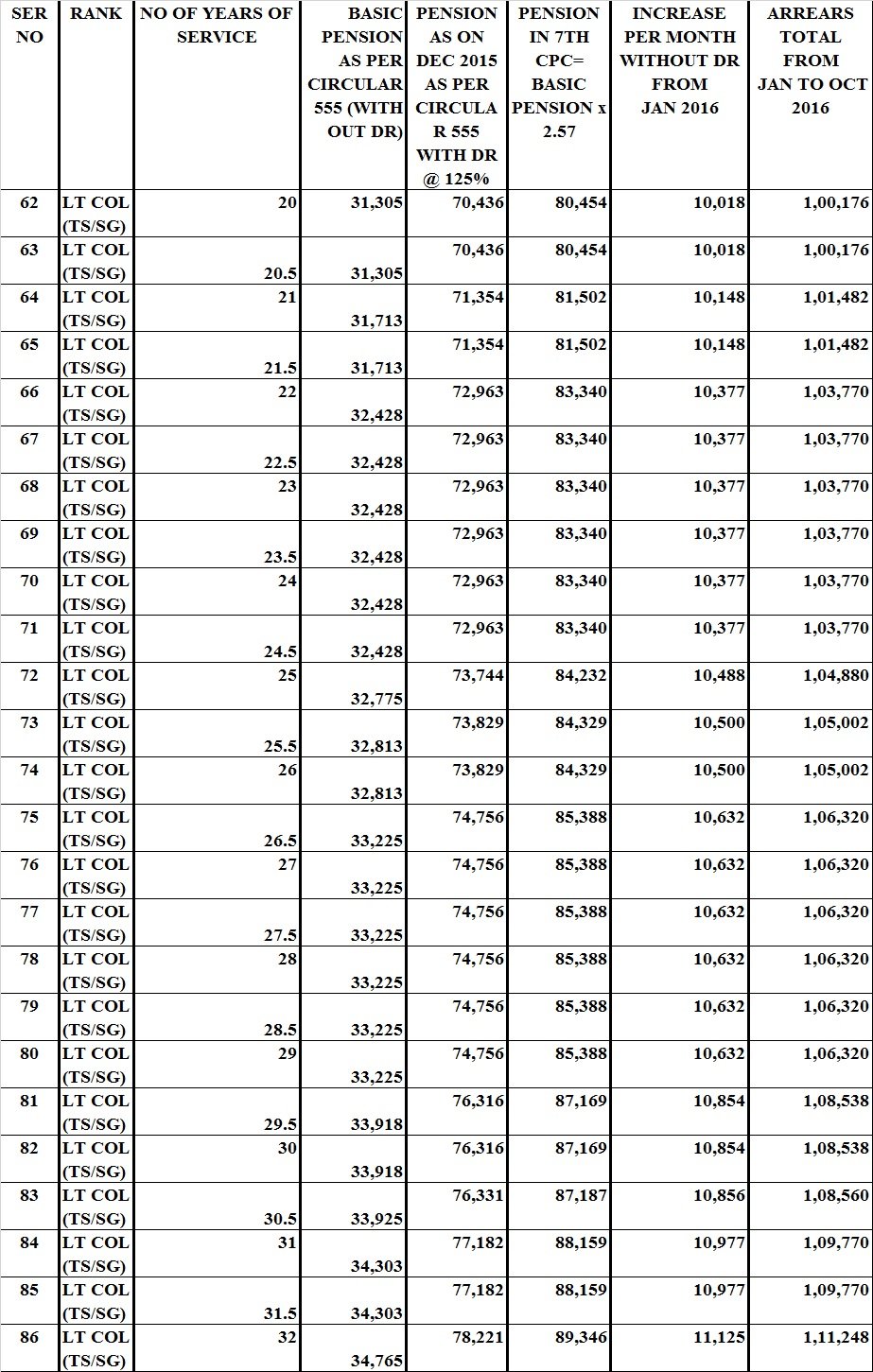
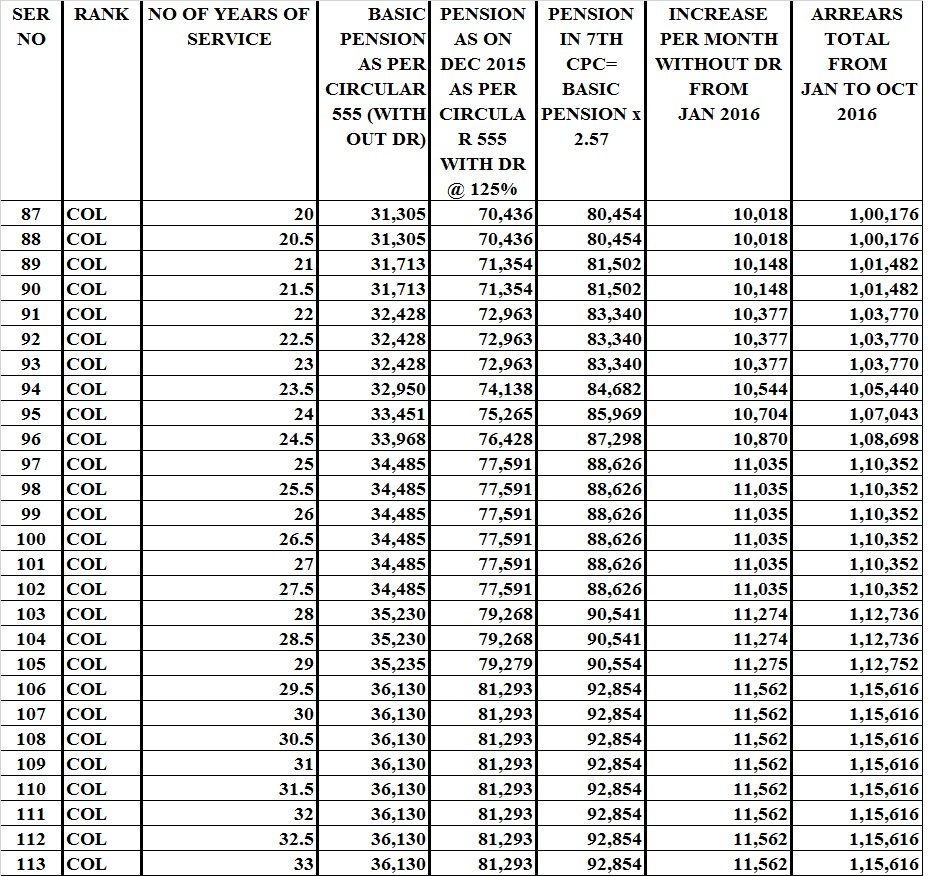
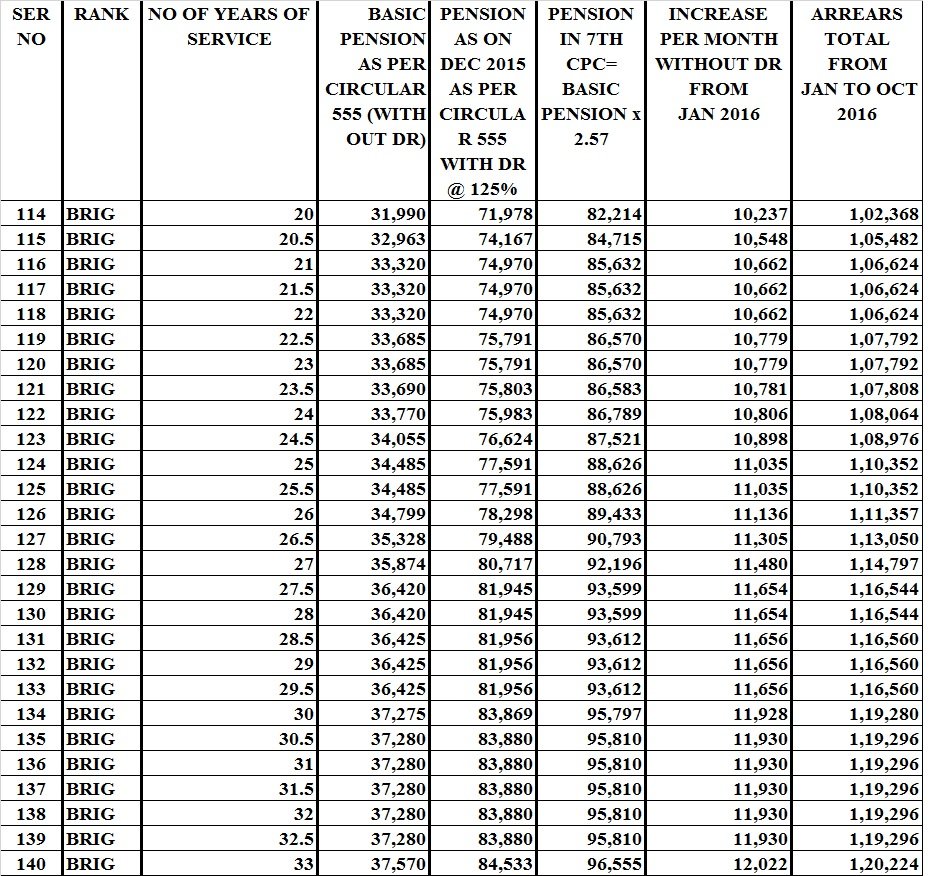
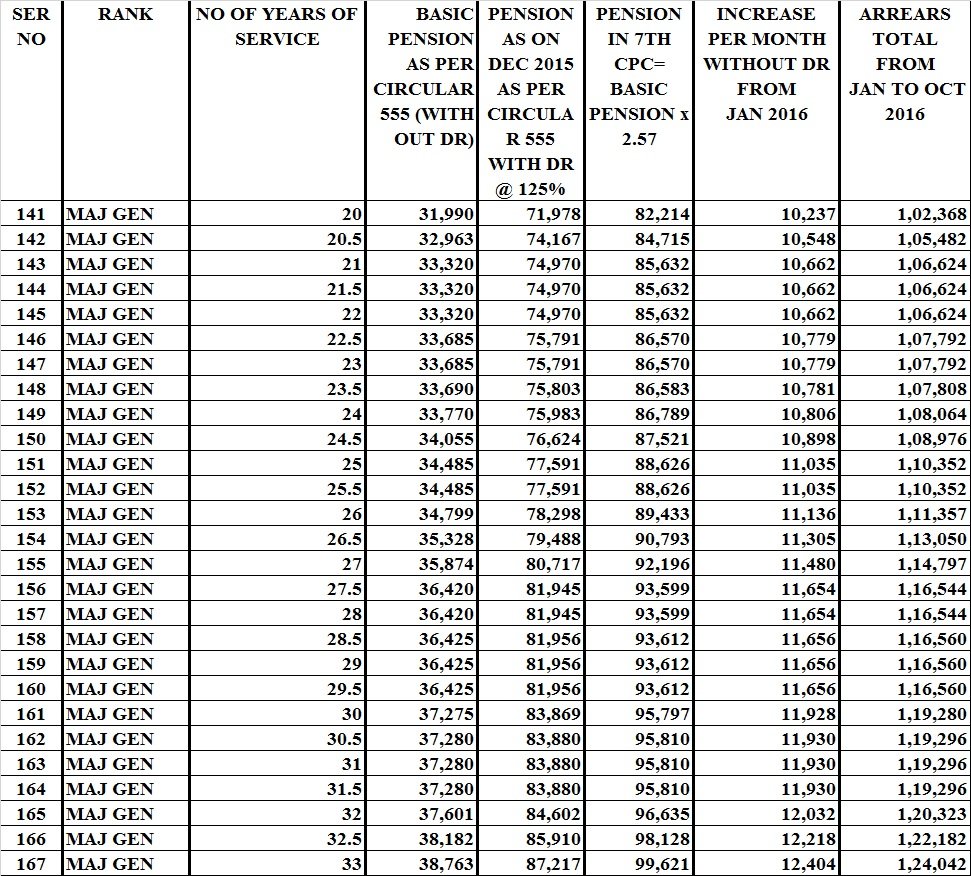
New Delhi: The armed forces continue to be upset with the government over a Defence Ministry circular regarding rank parity vis-a-vis their civilian counterparts at the Service headquarters even though the Ministry issued a statement today, saying no downgradation had been done.

Two days after Defence Minister Manohar Parrikar promised to look into the concerns of the military personnel, the Ministry issued a statement saying there has been no downgradation or any change in the existing equivalence of the Service ranks whatsoever.

“The existing functional equivalence as clarified in 1991 and further reiterated in 1992, 2000, 2004 and 2005 has only been re-affirmed,” the statement said.

It, however, failed to placate the armed forces, including some retired officers.

“PM exhorts nation to send Diwali ‘sandesh’ to soldiers. B’crats reduce disability pension n lower status vis-a-vis civilians. Happy Diwali!,” Brigadier Gurmeet Kanwal (Retd) tweeted, a view echoed by serving officers in the three Services.

As per the circular issued on October 18, an army Major General (rear admiral in the navy and vice-marshal in the air force) was to be on par with a principal director in the Armed Force Headquarters (AFHQ) Civil Service.

A Brigadier/Commodore/Air Commodore (with about 24 years of service) was to be equivalent in rank to a director (with about 14 years of service), and a Colonel/Captain/Group Captain to a joint director in the civil service, sources in the armed forces said.

So far, a colonel was equated with a director. A Brigadier did not have a clearly defined equivalence in the civilian hierarchy. However, they were treated at par with a deputy director-general. A major general was treated as the equivalent of a joint secretary.

In the letter of 1992, it was clearly mentioned that a Major General was equivalent to a Joint Secretary and equivalent ranked civil officers in the Service Headquarters.

Defence Ministry sources said that a Joint Secretary is equal to a Principal Director in the Services Headquarters in terms of pay band.

However, sources in the Services say that the Ministry should put it in writing that a Joint Secretary is equivalent to a Principal Director.

Sources in the armed forces said that the Services had issued an order for “Redesignation of Appointments of AFHQ Civil Service Officers posted at Headquarters between 2003-08) under which a Director was re-designated as Principal Director and a Joint Director as Director.

It was clearly brought out that designations were purely local and would be used for day-to-day purposes alone and not entail change in status, prevailing rank and equivalence, sources said.

“It is further clarified that the present reiteration of rank equivalence is only for matters of assigning duties and functional responsibilities as is already existing in different offices of the respective Service HQrs of the Army, Navy and Air Force having component of Service personnel as well as civilian officers.

“It has no bearing on civilian employees outside these offices of the Service HQrs. It is reiterated that there is no change in the rank structure or the status of the Armed Forces personnel,” the statement said.

However, sources alleged that Office of JS (Training) and Chief Administrative Officer has been issuing regular orders establishing protocol and status equivalence based on the redesignation.

They fear that with the letter of October 18 a Joint Secretary in the MoD will go a notch higher than a Major General.

Senior armed forces officers said an attempt at downgrading the status of military officers vis-a-vis their civilian counterparts had been resisted way back in 1992 by then Chiefs of Staff Committee.

“But, babus prevailed by simply bulldozing their way and (because of) unwillingness and irresponsibility of political executive.

“Issue is simple. There can be no more than one parameter for ‘equivalence’. How can there be separate equivalence for ‘Functionality’, ‘Warrant of Precedence’; and based on ‘Pay Scales/ Grade Pay’ ? Accepting such multiple regimes is a deliberate act of causing confusion and subverting status as per convenience,” a senior officer said.

The officers, speaking on the condition of anonymity, said it was important to scrutinise the mandate of AFHQ cadre.

Noting that AFHQ officers were meant to provide only secretarial support and had no executive authority or powers, they said comparing them to armed forces officers who have executive powers, exercise command over men in peace and war, and also have substantial judicial powers, is insane – like comparing “chalk and cheese”.

http://m.firstpost.com/india/armed-forces-upset-with-defence-ministry-over-rank-parity-with-civilian-counterparts-3076976.html


Worker, equipment shortage haunts BRO

Worker, equipment shortage haunts BRO

Vijay Mohan

Tribune News Service

Chandigarh, October 24

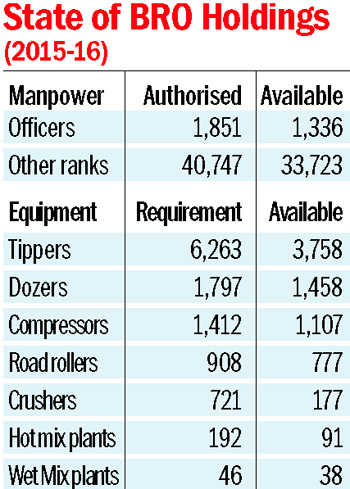
The Border Roads Organisation (BRO), tasked with building and maintaining vital infrastructure in frontier areas, continues to be bogged down with serious shortage of manpower as well as specialised equipment.Though there has been some increase in the strength of BRO’s officer cadre in the past five years, it is still deficient by about 30 per cent. Against an authorisation of 1,851, the force at present has 1,336 officers. In 2012, the figure was 1,291. The strength of the subordinate staff, on the other hand, has come down in recent years. While the sanctioned strength of this cadre is 40,747, it has fallen from 35,026 in 2012 to 33,723 this year.Data compiled by the Ministry of Defence also reveals a huge shortage of equipment like dozers, tippers, crushers, pavers, mix plants, air compressors and road rollers, that are required for the essential works in BRO. For example, the force is holding only 25 per cent of its requirement for stone crushers and 47 per cent of its requirement for hot mix plants. Budgetary constraints and some financial guidelines and ceilings on expenditure issued by the Ministry of Finance are among factors that are affecting the procurement process as well as the pace of works in the BRO. There has been a consistent shortfall between demand and allocation over the years. For 2016-17, BRO has been allocated Rs 3,075.73 crore against the demand of Rs 5,044 crore.The MoD has taken up a case with the finance ministry that owing to its peculiar operating conditions, harsh terrain and climatic conditions, limited working season and other functional requirements, some of the financial guidelines common to other ministries should not be applicable to BRO.


India’s diplomacy at work as Pak allies go silent on strikes

Beijing maintains restrained response; Kabul backs India; Islamabad says will defer Saarc meet

NEW DELHI: India’s diplomatic encirclement of Pakistan appeared to bear fruit on Friday, with even Islamabad’s traditional allies refusing to take its side over New Delhi’s surgical strikes on militant shelters across the Line of Control (LoC), their de-facto border.

GURPREET SINGH /HTDyal Singh and his family make their way out of Daoke village, which is metres away from the LoC fence on Friday. He said they had to arrange everything by themselves.

While the United States, a long presence in Pakistan’s corner, hastened to underline the importance of its alliance with India, others who could previously have been relied upon to take Islamabad’s side, at least in rhetorical terms, chose to maintain a studiously neutral line.

In South Asia, Pakistan’s isolation deepened as Afghanistan openly backed Thursday’s strikes as an act of “self-defence”, and Sri Lanka became the fifth country to pull out of the eight-nation Saarc Summit in Islamabad, citing concerns about terrorism – an unsubtle reference to Pakistan.

But perhaps China’s markedly restrained reaction comes most fraught for its “all-weather ally”. Neither did any voice of support ring out of the Organisation of Islamic Countries that has traditionally backed Islamabad’s stand on Kashmir.

Russia, despite currently conducting military exercises with Islamabad, joined South Korea to speak out against terrorism and call on Pakistan to do more to fight the menace on its soil.

And in what reflected growing global impatience with Pakistan’s self-defeating stand on fighting terrorism, Washington chose the moment to focus on the dangers of such policies in South Asia.

“We’ve repeatedly expressed our concerns regarding the danger that terrorism poses to the region and we all know that terrorism in many ways knows no border,” said State Department Spokesman, John Kirby.

The reply came to a question on the surgical strikes that New Delhi said took out seven militant “launchpads” across the LoC and inflicted heavy casualties on militants.

For that matter, Washington also used the occasion to underscore a new high in ties with India, with Defence Secretary Ashton Carter saying their military relationship was the “closest it has been ever”.

Islamabad, which deferred the Saarc Summit on Friday, would have probably wanted Beijing to be more vocal about the strikes. But then again, Pakistan has denied those took place.

China’s reaction to the strikes came two days after Pakistan dispatched two special envoys on Kashmir to Beijing to drum up support for its position.


Medical mafia – A MUST READ! FOR VETERANS INFORMATION

Medical mafia – A MUST READ!

http://groups.yahoo.com/group/Amdavadis4Ever/joinDoctors are often criticized for prescribing unneeded tests and procedures that harm more than they help and add to medical costs that could otherwise be avoided. 12 medical tests and procedures now being questioned worldwide as unnecessary and potentially cause — sometimes harmful results to patients. Since a campaign was launched last year, more than 130 tests and procedures have been called into question by 25 medical specialty societies with more than 500,000 member doctors. “Millions of Americans are increasingly realizing that when it comes to health care, more is not necessarily better,” said Dr. Christine Cassel, president of the ABIM Foundation. “Through these lists of tests and procedures, we hope to encourage conversations between physicians and patients about what care they truly need.”

12 MEDICAL TESTS TO AVOID

1. Avoid Inducing Labor or C-Section Before 39 Weeks

2. Avoid Routine Annual Pap Tests

3. Avoid CT Scans To Evaluate Minor Head Injuries

4. Avoid Stress Tests Using Echocardiographic Images

5. Avoid Prescribing Type 2 Diabetes Medication To Achieve Tight Glycemic Control

6. Avoid EEGs (electroencephalography) on Patients With Recurrent Headaches.

7. Avoid Routinely Treating Acid Reflux

ADDITIONAL MEDICAL TESTS TO BE AVOIDED


8. Avoid Lipid Profile Tests

9. Avoid Mammograms

Mammograms and breast screening have had no impact on breast cancer deaths and have actually been found to increase breast cancer mortality. With toxic radiation, mammogram testing compresses sensitive breast tissue causing pain and possible tissue damage. To make matters worse, the false negative and false positive rates of mammography are a troubling 30% and 89% respectively. Another concern is that many breast cancers occur below the armpits; however, mammography completely misses this auxiliary region, viewing only the breast tissue compressed between two plates of glass. Considering these drawbacks, breast thermography should be given closer consideration. Thermography is a non-invasive and non-toxic technique which can detect abnormalities before the onset of a malignancy, and as early as ten years before being recognized by mammography. This makes it much safer and potentially life-saving health test for women who are unknowingly developing abnormalities, as it can take several years for a cancerous tumor to develop and be detected by a mammogram.

10. Avoid PSA Testing

A PSA blood test looks for prostate-specific antigen, a protein produced by the prostate gland. High levels are supposedly associated with prostate cancer. The problem is that the association isn’t always correct, and when it is, the prostate cancer isn’t necessarily deadly. Nearly 20 percent of men will be diagnosed with prostate cancer, which sounds scary, but only about 3 percent of all men die from it. The PSA test usually leads to overdiagnosis — biopsies and treatment in which the side effects are impotence and incontinence. Moreover, there is some evidence which suggests that biopsies and treatment actually aggravate prostate cancer. During a needle biopsy, a tumor may need to be punctured several times to retrieve an amount of tissue that’s adequate enough to be screened. It is believed that this repeated penetration may spread cancer cells into the track formed by the needle, or by spilling cancerous cells directly into the bloodstream or lympathic system.

11. Avoid Routine Colorectal Cancer Screening

12. Avoid DEXA


Night after surgical strikes: Indian jawan in Pak custody, LoC firefight continues

The fighting, sources told The Indian Express, was spearheaded by jihadists sent in to retaliate against the raids, backed by Pakistani troops stationed across the Line of Control near Tata Pani.
surgical-strike

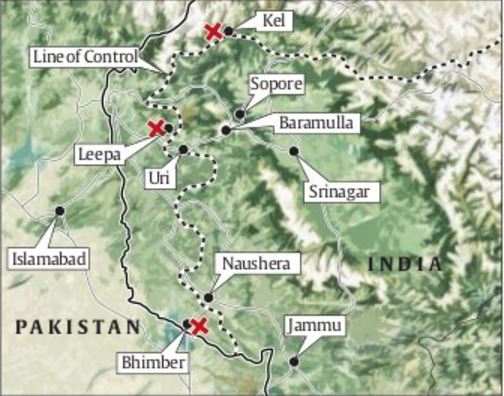
Fresh fighting has erupted along the southern stretches of the Line of Control with Indian forces engaging terrorists in the village of Mankote, close to the location of some of the most intense combat in Thursday’s pre-dawn special forces raids on jihadist staging posts.

The fighting, sources told The Indian Express, was spearheaded by jihadists sent in to retaliate against the raids, backed by Pakistani troops stationed across the Line of Control near Tata Pani.

WATCH VIDEO: India’s Surgical Strike: Beyond What The Govt Said

Chandu Babulal Chauhan, a soldier serving with the 37 Rashtriya Rifles, was captured after he “inadvertently crossed over to the other side of the Line of Control”, an Indian Army official said.

Islamabad-based diplomatic sources, however, told The Indian Express that Chauhan had been captured by Pakistani troops at Jhandroot, west of Mankote, and was now being kept at the military headquarters in Nikayal.

Eight Indian soldiers, Pakistani media reported, citing their army sources, had been killed in the second burst of fighting on Thursday near Tata Pani, a claim the Indian Army said was “completely false and baseless”.

Fears have been mounting that Thursday’s fighting could lead to a meltdown of the long-standing ceasefire on Line of Control in a year that has until now been the most peaceful in a decade. Government figures obtained by The Indian Express show there were just 21 exchanges of fire on the LoC until Thursday, down from 222 in 2015, 190 in 2014 and 229 in 2013. Fatalities in these clashes had dropped to zero, from nine army personnel and 16 civilians last year.

WATCH VIDEO: Night After Surgical Strikes: PM Narendra Modi To Review Situation

The quiet on the Line of Control has helped us contain infiltration amidst the awful situation inside the Kashmir valley, since its easier to maintain our defences”, a senior military officer at the Srinagar-based XV corps said. “Pakistan has an obvious interest in stepping up the heat”.

Government sources said the area around Mankote and Mendhar saw some of the most fierce fighting on Thursday with an Indian assault claiming the lives of at least two Pakistani soldiers. The fighting was centred around Roshni Post, from where Indian special forces were providing heavy fire support as they targeted rural safe-houses and military forward posts ued to support infiltration.

Troops have been since been pushed forward to guard against Pak retaliation, sources said, while civilians were being evacuated out of a 2-km buffer zone. Local residents said they saw the forward movement of artillery on Thursday.

WATCH VIDEO: Night After Surgical Strikes: PM Narendra Modi To Review Situation

Since 1989, troops on both sides of the Line of Control have been locked in a secret faceoff, which Thursday’s raids have brought out of the shadows. The Indian Government’s decision, meant to signal to Pakistan that it is no longer willing to tolerate cross-border infiltration, could set a new norm for action across the Line of Control by both militaries, experts have said.

The two countries had agreed to a ceasefire along the Line of Control in 2003, following the India-Pakistan military crisis that followed the Jaish-e-Muhammad’s attack on Parliament House. Efforts to sign a formal agreement, though, collapsed in 2006, amid disputes over the rules governing the construction of new defensive fortifications.

In January 2013, the ceasefire frayed after jihadists beheaded Lance-Naik Hem Raj and Lance-Naik Sudhakar Naik, with the Opposition calling for retaliation in kind.

The fighting had its genesis in events the previous October, when disputes over defensive fortifications in Uri led both sides to trade fire.

Following a series of bloody clashes, the Directors-General of Military Operations of the two countries met to cool down tensions, though skirmishes continued through the winter.

Long before the dispute over border construction, though, several similar cross-border clashes had taken place. In March 1998, an Indian special forces unit is alleged to have killed 22 in Bandala in the Chhamb sector. The Pak military claimed to have recovered an Indian-made watch from the scene of the carnage, along with a hand-written note which asked, “How does your own blood feel?”

The Bandala massacre is alleged to have been carried to avenge the massacre of 29 villagers at Prankote, in Jammu and Kashmir, by the Lashkar-e-Taiba.The Lashkar attackers slit the throats of their victims, which included women and infants.

Large-scale civilian killings did not take place again, but the Indian army continued to dish out at least as good as it got. In May 1999, as the Kargil war broke out, Captain Saurabh Kalia, along with sepoys Bhanwar Lal Bagaria, Arjun Ram, Bhika Ram, Moola Ram and Naresh Singh, were kidnapped by Pak troops. Post mortem revealed that the men’s bodies had been mutilated and burned with cigarette-ends.

Late in January, 2000, seven Pak soldiers were alleged to have been captured in a raid on a post in the Nadala enclave, across the Neelam River. The seven soldiers were allegedly tied up and dragged across a ravine running across the LoC. The bodies were returned, according to Pakistan, bearing signs of torture.

There have been a string of smaller incidents since the ceasefire went into force. In June 2008, Pak troops attacked the Kranti border observation post near Salhotri village in Poonch, killing 2-8 Gurkha Regiment soldiers in Jawashwar Chhame. Pak officials allege Indian troops retaliated by beheading a soldier and carrying his head across on June 19, 2008, in the Bhattal sector in Poonch. Finally on August 30, 2011, Pakistan complained that three soldiers, including a JCO, were beheaded in an Indian raid on a post in the Sharda sector, across the Neelam river valley in Kel — retaliation for the decapitation of two Indian soldiers near Karnah.


Chinese flags recovered in Baramulla

Letter pads of Lashkar-e-Toiba, Jaish found during search operation; 44 detained

Chinese flags recovered in Baramulla
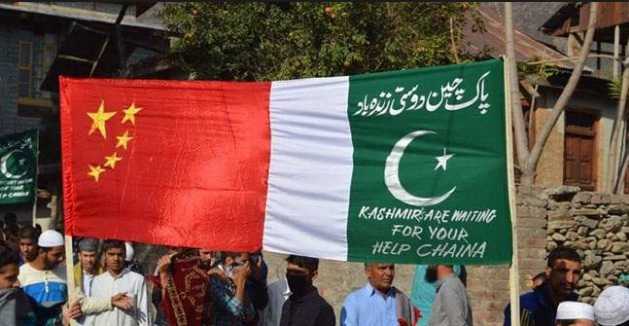
A file photo of protesters waving Chinese flag along with the Pakistan flag in Baramulla.

Ishfaq Tantry

Tribune News Service

Srinagar, October 18

A day after security forces conducted a door-to-door search operation in Baramulla, first of its kind during the  current phase of unrest, the Army today claimed the recovery of incriminating material, including Chinese and Pakistani flags.The recovery of Chinese flags from Baramulla came a few days after protesters waved Chinese flags in the town after Friday prayers.The flag protest had come at a time when the BRICS Summit was under way at Goa, in which the Chinese President participated.It was for the first time that Chinese flags had been seen in the Valley during protests since the killing of Hizbul Mujahideen militant commander Burhan Wani.“A large quantity of incriminating material such as petrol bombs, Chinese and Pakistani flags, Lashkar and Jaish letter pads, unauthorised mobile phones and seditious anti-national publicity material were seized during the raids,”  a spokesman said  in statement today. The extensive search operation was launched by security forces in the old town of Baramulla in the wee hours on Monday and lasted over 12 hours.During the operation, 44 persons were detained for suspected links with militants. The house-to-house search operation was launched after receipt of an input about militants, the police had said. During the unrest, Baramulla had witnessed two militant attacks, one targeting a military convoy and the other targeting an Army base.Soon after Friday prayers ended at the Idgah in Baramulla on October 14, a demonstration was staged and Chinese and Pakistani flags waved. Residents said the protesters, who were shouting slogans, had inscribed a message on one of the flags that sought help from China.

Pakistan again violates truce pact in Nowshera sector

Tribune News Service

Jammu, October 18

The Pakistani army again violated the ceasefire agreement on the Line of Control (LoC) in the Nowshera sector by firing 82-mm mortars, automatics and small arms on Monday night.The firing started around 8.30 pm on Monday and continued till 1.30 am today.Public Relations Officer, Defence, Lt Col Manish Mehta said Pakistan resorted to unprovoked ceasefire violation in the Nowshera sector on Monday night.“The firing continued till 1.30 am and the Indian Army responded appropriately. There was no casualty on the Indian side,” Lt Col Mehta said.This is the second ceasefire violation since Sunday. The Pakistani army has resorted to unprovoked firing in the Nowshera and Balakote sectors on Sunday in which soldier Sudees Kumar was killed.The Pakistani army has kept the LoC hot since the Indian Army carried out surgical strikes on militant launch pads in Pakistan-occupied Kashmir on September 28 night.Due to the increasing tension on the LoC, border residents had to relocate to safer places.However, as the situation started improving, people went back to their homes.As Pakistan has again resorted to ceasefire violations, border residents are panicked.“There was intense firing and shelling last night. Though there was no loss to life or property, there is panic among the people living close to the LoC,” said Surinder Choudhary, MLCfrom the Nowshera area.

Army provides Uri youth platform for development

Tribune News Service

Boniyar (Uri), October 18

The Army today dedicated a state-of-the-art club equipped with latest facilities to the youth of Uri town in Baramulla district.General Officer Commanding (GOC) of the Chinar Corps Lt Gen Satish Dua dedicated Chinar 9 Jawan Club to the youth in the presence of officials of the NHPC and civil administration and J&K Police officers.“The Chinar 9 Jawan clubs envision constructive engagement of the youth of Kashmir and provide them an ideal platform to interact, relax, rejuvenate, play games and develop their skills for their holistic growth in a stress-free environment,” an Army spokesman said.The club was inaugurated by girls of Boniyar amid cheering of the audience that included students, teachers and elders, he added. The ceremony began with a cultural show by students of Army Goodwill School, Boniyar, who were later felicitated by the Chinar Corps GOC.The spokesman said the club would help boys and girls prepare for competitive exams as it had a well-stocked library and would also provide career counselling.


US slams Pak for linking Afghan peace to Kashmir

Washington, October 12

Supporting India’s “right to self-defence” in the aftermath of the Uri attack which it dubbed a “clear case of cross-border terrorism”, the US today dismissed the recent attempt by Pakistan to link peace in war-torn Afghanistan with resolution of the Kashmir issue.The White House backed India’s right to defend itself as with any other country, in view of the recent surgical strike but advised caution given the heavy militarisation between the two neighbours.It also said the US was making every effort to ensure that India became a member of the Nuclear Suppliers Group (NSG) by the end of this year. Making a rare appearance before a Washington audience, Peter Lavoy, the White House’s point person for South Asia, said the India-US ties were the “most dynamic relationship” for the US as he listed the Obama administration’s achievements in strengthening the relationship between the two largest democracies of the world.“It (Uri) was a clear case of cross-border terrorism. But in a heavily militarised relationship that has also experienced three wars, there is indeed a need for caution and restraint,” he said.“We share with India, the concern for preventing any future attack,” Lavoy said.Last week, Lavoy met the two special envoys of Pakistan PM Nawaz Sharif on Kashmir. The two Pakistani envoys in their public meetings had linked peace in Afghanistan to resolving the Kashmir issue. “We certainly do not believe that the situation in Afghanistan is linked with Kashmir,” he said.Lavoy said the US is making every effort to ens
Read more at http://www.tribuneindia.com/news/nation/us-slams-pak-for-linking-afghan-peace-to-kashmir/308931.html#v3cY2MPjE6vjpqjV.99


Gunfight at Pampore complex: Institute under attack is Valley success story

Established in 1997 to develop and hone entrepreneurial skills, the EDI began functioning in 2004. Since then, more than 4,000 youths have trained at this institute — these include 1,800 youths from the Valley

ten by Mir Ehsan | Srinagar | Published:October 11, 2016 3:47 am

pampore, pampore encounter, pampore operation, indian army, kashmir, kashmir encounter, kashmir operation, india newsSecurity forces take position near the EDI building, where militants were holed up, in Pampore Monday. At least one soldier has been injured. (Express Photo: Shuaib Masoodi)

The J&K Entrepreneurship Development Institute (EDI) in Pampore, the scene of a second gunbattle between security forces and militants this year, has been a Valley success story, drawing youths from different parts of the state to its programmes on skill development and capacity building.

Officials at EDI, who rank it as one of the most successful startups in the country, underline that it’s a centre par excellence with state-of-the-art regional centres across Jammu, Kashmir and Ladakh. Community organisers are present in all 22 districts of the state, enabling entrepreneurship and promoting development at the grassroots.

Established in 1997 to develop and hone entrepreneurial skills, the EDI began functioning in 2004. Since then, more than 4,000 youths have trained at this institute — these include 1,800 youths from the Valley.pampore, pampore encounter, pampore operation, indian army, kashmir, kashmir encounter, kashmir operation, india newsSmoke rises from the EDI building. (Express Photo: Shuaib Masoodi)
Mohammad Ismail Parray, Director of EDI, told The Indian Express: “It is very unfortunate that our institute is burning again. After the main complex was damaged in the February encounter, we turned the hostel complex into our office. We have secured all our records online.”

In fact, a month before the last encounter, 373 youths successfully completed their training at the institute — they were trained for three weeks from December 21, 2015 to January 13, 2016.

“Currently, two short-term business entrepreneurship courses help the unemployed youth understand opening of new businesses, and in getting government subsidies, processing loans and finances for the businesses,’’ an EDI senior instructor said. “Many who received training and loans are now running successful ventures across the state.’’

The EDI offers short-term programmes on handicraft, boutiques, shawl making, embroidery, training for pharmaceutical stockists, timber shops, and other courses.

The institute also runs a youth startup programme and collaborates with the National Minorities Development and Finance Corporation to provide loans to marginalised sections of society at six per cent simple interest for setting up micro-level enterprises.

“In 2015-2016 alone, 968 beneficiaries availed this loan facility while 395 have do so this financial year. So far, 1,552 candidates who trained under Himayat have also been financed,’’ an official said.

On Monday, after the militants again occupied the EDI complex, former J&K Chief Minister Omar Abdullah tweeted: “No wonder for the 2nd time this year they have attacked the institute. They want young Kashmiris to be subservient & bitter not self-reliant. All the EDI ever did was train young Kashmiri boys & girls to stand on their own feet & not seek government jobs. Militants don’t like that!”

Officials said that during the rule of the NC-Congress government, the Sher-e-Kashmir Employment and Welfare Programme for Youth, with Seed Capital Fund Scheme (SCFS) as its major component, became a turning point because it helped many youth become self-reliant.

Those who availed benefits from the EDI schemes are grateful for the training received. “When we see damaged buildings, it hurts. Whatever I am today is because of the assistance I got through the EDI and the training I received there,’’ said a youth who now has his own business in a north Kashmir town.