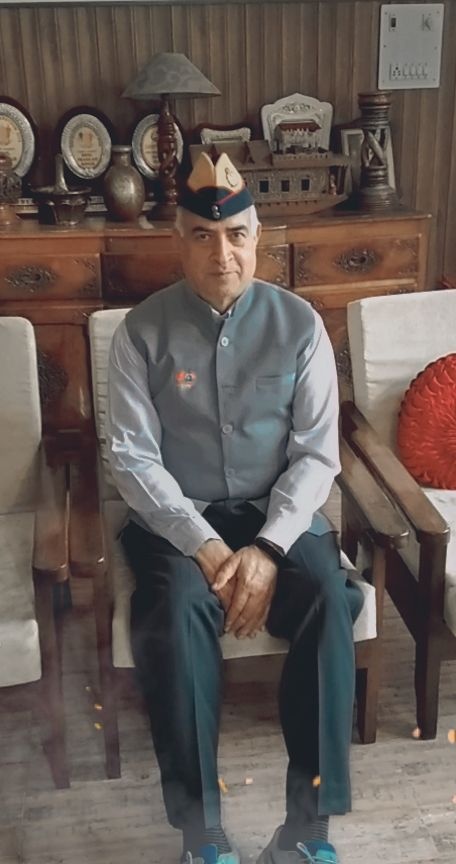
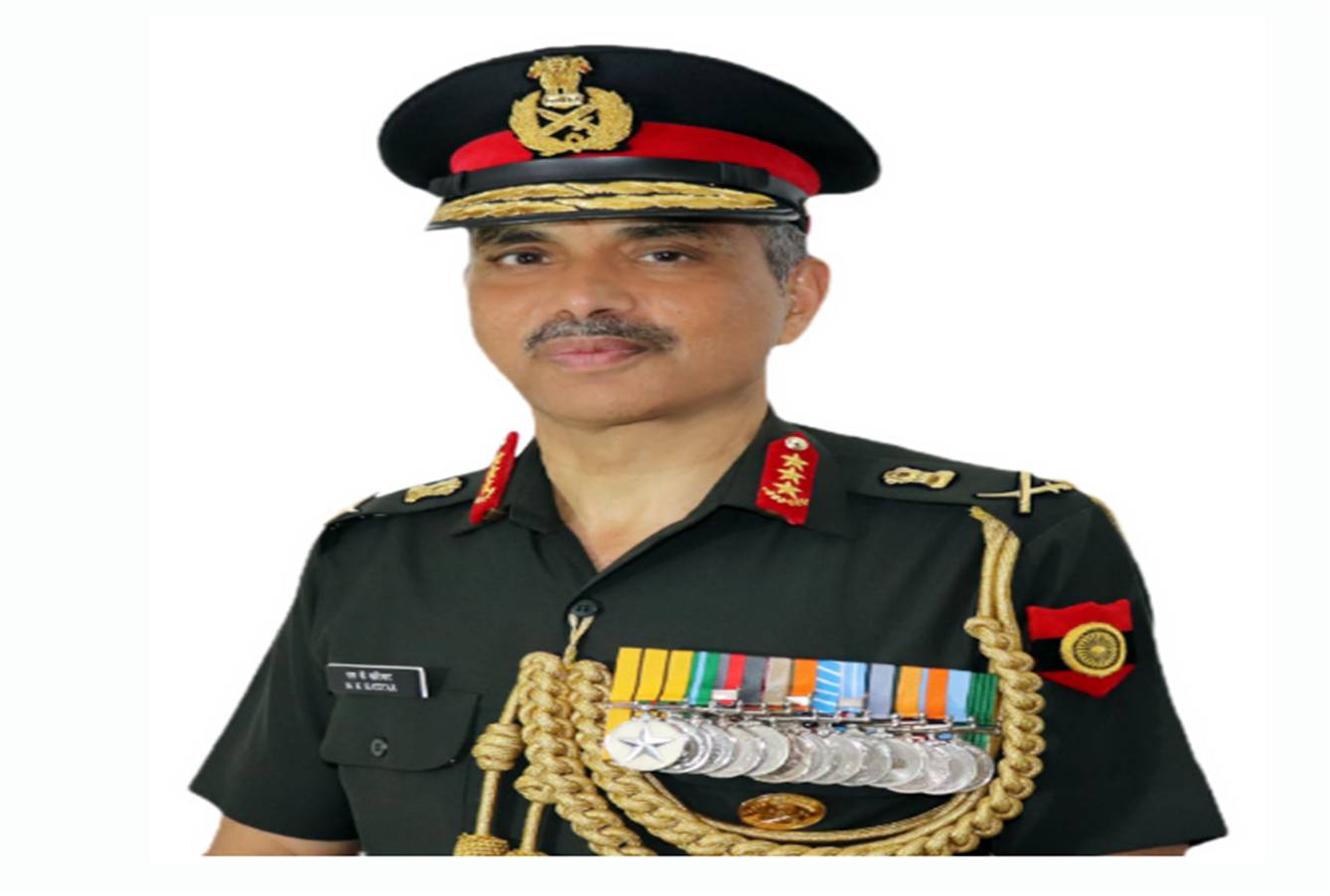
Lt Gen Bipin Rawat on Thursday took over as the new Vice-Chief of the Indian Army, succeeding Lt Gen MMS Rai who has retired.Rawat was commissioned in the Fifth Battalion of the Eleven Gorkha Rifles in December 1978, from IMA, Dehradun, where he was awarded the ‘Sword of Honour’.
The General Officer has vast experience in high altitude warfare and counter insurgency operations.He commanded an Infantry battalion along the Line of Actual Control in the Eastern sector, a Rashtriya Rifles sector and an Infantry Division in the Kashmir Valley.He has tenanted instructional appointments at Indian Military Academy, Dehradun and Army War College, Mhow.
Lt Gen Rawat has held important staff appointments at Directorate General of Military Operations and Military Secretary’s Branch at Army HQ.He has also been Major General General Staff at HQ Eastern Command. The officer commanded a Multinational Brigade in a Chapter VII mission in the Democratic Republic of Congo (MONUC).An alumni of Defence Services Staff College, Wellington, the Higher Command and National Defence College Courses, the General Officer, during the span of over 35 years service in uniform, has been awarded for gallantry and distinguished service.Prior to taking over as the VCOAS, Lt Gen Rawat was holding the post of the GOC-in-C, Southern Command. — PTI
Day after surgical strikes, PM to review border situation
New Delhi, September 30A day after the surgical strikes, Prime Minister Narendra Modi is likely to review the situation at the LoC and the international border with Pakistan at a meeting of the Cabinet Committee on Security (CCS) on Friday.As the tensions had heightened, Modi was expected to assess the situation on the ground, sources said.Pakistan has insisted that there was no strike by India even as its Prime Minister Nawaz Sharif has called a cabinet meeting on Friday.
India carried out surgical strikes on seven terror launch pads across the LoC on the intervening night of September 28 and 29, with the Army saying it had inflicted “significant casualties” on terrorists preparing to infiltrate from PoK, days after Modi warned that the Uri attack would not go unpunished.On Thursday, Pakistan summoned Indian High Commissioner Gautam Bambawale over “unprovoked firing” by India in which two Pakistani soldiers were killed. PTI
Gurdaspur activates ‘Disaster Management Plan’ for evacuating villages
Villagers crossing the Ravi river to go to safer places following the evacuation drive. Tribune photo
Ravi Dhaliwal
Tribune News Service
Gurdaspur, September 29
The Gurdaspur district administration on Thursday activated the ‘Disaster Management Plan’ evacuating scores of villages located in the 10 km periphery of the international border.
Although BSF and Police maintained that there was nothing to worry about, there was palpable tension in the air as villagers were reluctant to move out.
Educational institutions were ordered to be closed till further orders. Residents of border villages have been asked to switch off their lights during the night. The Power authorities were making arrangements to disconnect power supply to the border villages.
Repeated announcements were being made from Gurdwara loudspeakers asking people to leave their houses and “spend the night with relatives and friends living in other villages.” Police gypsies too were making the same announcement.
For the last several years the administration has been in possession of a ‘Disaster Management Plan’ which is to be put in place whenever there is a threat of flood from the Ravi and Beas rivers.
The plan came in handy today following which schools, colleges, community halls and religious places were vacated to make arrangement for the villagers.
Nearly a hundred villages falling in Dorangla, Dera Baba Nanak and Behrampur blocks (Gurdaspur), Narot Jaimal Singh and Bamial blocks (Pathankot) were vacated within hours of the police receiving verbal instructions from the state government.
Initially residents were wary of moving to new places but the administration officials nevertheless managed to convince them that “it was in their benefit that they were being shifted to safer places.”
Official sources said on Monday that the incursion was detected by a joint patrol of ITBP and army on September nine, after which a mandated banner drill was conducted. For representation only. File photo
Itanagar/New Delhi, September 26
Chinese troops came 45 km inside Indian territory in a remote area of Arunachal Pradesh earlier this month, built temporary shelters and claimed the territory belonged to them, reports indicate, six months after incursions were reported in Ladakh in Jammu and Kashmir.
Initial reports from Anjaw district said more than 40 Chinese troops set up a temporary shelter at ‘Plum post’, an area 45 km inside the Line of Actual Control (LAC) in the district earlier this month.
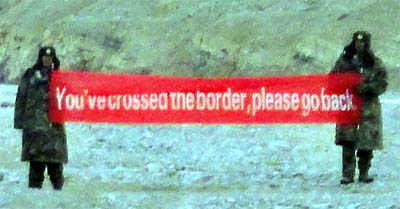
Official sources said on Monday that the incursion was detected by a joint patrol of ITBP and army on September nine, after which a mandated banner drill was conducted.
However, the Chinese troops claimed that the territory belonged to them and were reluctant to leave, the sources said.
The ‘Plum post’ has witnessed frequent incursion bids by the Chinese troops every year at least two to three times but it was for the first time that they entered the area, the sources said.
Some of the Chinese troops left on September 13 and the others followed after India and China held a flag meeting on September 14 on the Chinese side, the sources said.
In a bid to end the repeated incursions from the Chinese side in this area, the two sides would be meeting again on October 1.
Chinese troops have to travel through dense forests while Indian troops have a jeep track in larger areas and after have to trek for a distance to reach ‘Plum post’, the sources said.
Chinese troops had earlier entered into Tawang district of Arunachal Pradesh but were pushed back. — PTI
Kashmir ours, Pak has to stop dreaming: Sushma India makes case for isolating Pakistan globally at UN
Sushma Swaraj addresses the UN General Assembly. REUTERS
Simran Sodhi
Tribune News Service
New Delhi, September 26
India today made a case for isolating Pakistan globally at the United Nations when External Affairs Minister Sushma Swaraj questioned as to why some nations take no action against terrorists holding rallies in full public view on their soil and said “there is no place for such nations in the international community”.“These nations, in which UN-designated terrorists roam freely, lead processions and deliver their poisonous sermons of hate with impunity, are as culpable as the very terrorists they harbour,” she said. “The world needs to isolate countries that do not want to act against terrorists,” she said.Her statement reflected a continuation of the grand strategy that the government has adopted after the Uri terror attack — to isolate Pakistan globally.In an address that was marked by restraint, the minister, however, made it a point to make a rebuttal on the charges brought against India by Pakistan Prime Minister Nawaz Sharif, who addressed the UN assembly a few days ago. She also stated very clearly that “Kashmir is and will remain an integral part of India and Pakistan needs to stop dreaming”. She rebutted Sharif’s charges of human rights violations in India by asking Pakistan to look into its own backyard and said, “Pakistan needs to introspect, including on the brutalities in Balochistan.” The Baloch card is another issue that India has now been consistently raising at various multilateral fora in an attempt to push Pakistan back when it raises the bogey of rights violations in India.The minister also rubbished Sharif’s allegation that India is the one that has set preconditions for a dialogue. Instead, she pointed out, India had offered friendship to Pakistan and in return India got “Pathankot, Bahadur Ali and Uri”. Making the point that terrorism today is not just an India-Pakistan problem, but a menace that has spread globally, she said, “The terror apparatus that was behind 26/11 was also behind Uri. They were behind several terror attacks the world over.” She also called terrorism as the “biggest violator of human rights since it targets the innocent”.Towards the end of her address, she appealed to the global community: “We should adopt the Comprehensive Convention on International Terrorism to develop norms to prosecute terrorists.”
Pak demands international probe into Uri attack
Islamabad: Pakistan on Monday demanded an international probe into the Uri terror attack with its Senate passing a resolution calling on the UN to conduct an independent inquiry. The unanimous resolution expressed strong solidarity with the Kashmiris. Calling on the United Nations to hold an independent inquiry into the Uri incident, it urged the international community to take notice of the “grave human rights violations” in Kashmir, Radio Pakistan reported. PTI
Call session, declare Pak ‘terrorist state’: Cong
New Delhi: Accusing Prime Minister Narendra Modi of inaction following the Uri attack, Congress leader Abhishek Manu Singhvi said, “An immediate special session of Parliament should be called to declare Pakistan a terrorist state. Near 100 per cent economic sanctions should be imposed on Pakistan. The Most Favoured Nation status should be withdrawn, scaling down of the Indian High Commission in Islamabad and Pakistan Commission in India should be done and asylum application of Balochistan leader Brahumdagh Bugti should be immediately considered,” he said. TNS
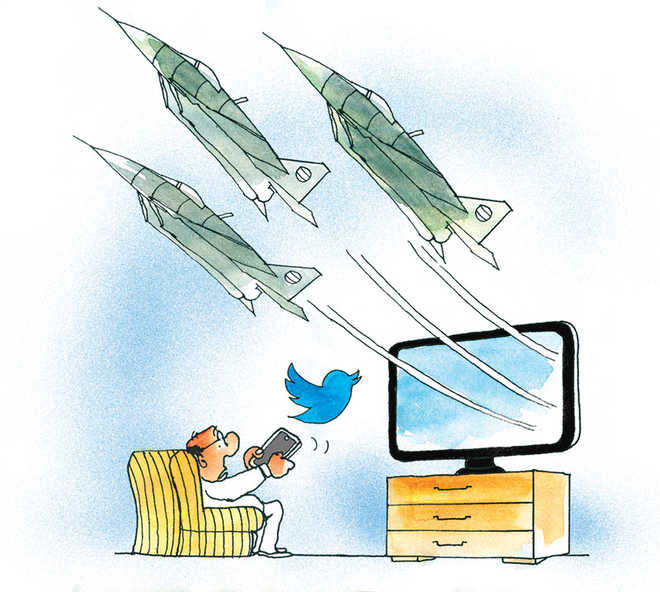
Since the times of the Mahabharata when false news of Ashwatthama’s death was manufactured, we have known that misinformation and rumours do play an important part in the conduct of wars between nations and armies. In the wars of the twentieth century, the leaders and generals have devoted considerable importance and resources to propaganda battles. Propaganda is important as much for reassuring citizens as for confusing and demoralising the enemy.In the twenty-first century, this game has now acquired an altogether chaotic dimension. The governments all over the world — with the possible exception of China — have lost their monopoly over the outflow of information. Now, the social media has created a million warriors, each equally capable of floating a rumour of war, battles won and lost or imminent. Anyone spending fifteen minutes in front of an Indian television channel this week would have had the powerful impression that we are about to have a total, all-out war with Pakistan. Since the Uri outrage, the television news industry has whipped up a mood of revenge, retaliation and retribution. The social media warriors have pitched in and a frenzy has come to take possession of our collective fortitude. How to defuse this dangerous mood? The Army has rightly asserted that India would respond to the Uri provocation at a time and place of its choosing. But the ultra-nationalist social media warriors would not be so easily palmed off. They want action, here and now. Very sensibly, the Modi government is not allowing itself to be swamped by the war noises in the television studios. Every senior political leader in this country is aware of the Kandahar episode, when the Vajpayee government succumbed to the hysteria whipped up by the television channels. Every single member of the Vajpayee government regrets, at least in the privacy of his drawing room, that shameful day when India had to release four hardcore terrorists. On that fateful day, the gains of the Kargil War got dissipated — Pakistan regained its psychological cockiness, and its Army discovered the usefulness of terror groups. The twenty-first century is a deadly century. Governments and responsible leaders have to learn how to keep their cool, how not to surrender their considered judgment to emotional tsunamis. Some leaders feel that they have a reputation to keep and get tempted to take unwise decisions. It is increasingly recognised that professional agencies across the world are engaged in manipulating the internet and its latest cousin, the social media, to spread rumours and half-truths. The Pakistanis’ capacity to play with this game competently and sophisticatedly should not be underestimated. They surely are able to play games with our minds. Take, for example, the Friday morning convulsions. Our television news channels got all excited because of a Pakistani journalist’s tweet, with an unverified — and unverifiable — claim of having spotted Pakistan air force’s F-16 fighter planes over Islamabad. Just a tweet! Not more than 140 characters. And the entire Indian television world spent its energy and its breadth in drawing fabulous inferences.In this mood of super-anxiety and suppressed anger, the Indian citizen becomes vulnerable to any rumour. If the storytellers in the social media are to be believed, we have already waged a covert war on Pakistan and won it. And, the charm of a good rumour is that it can neither be denied nor acknowledged. So be it. On Saturday morning, I had called up Natwar Singh to ask him whether he had received the honorarium cheque The Tribune had sent him a few days ago. In turn, he asked me: “Are we going to go to war with Pakistan?” Taken aback, I said: “Sir, you are a wise man, an experienced diplomat and a former foreign affairs minister. I should be asking you that question.”He lamented all this war-talk after the Uri attack. “Seventy policemen were killed by the extremists in Chhattisgarh and no one got excited, angry.” Natwar Singh is one of the few men in India who are well-versed in the history of warfare in the twentieth century. He indignantly asked me: “What is all this loose talk of teaching Pakistan this or that lesson? Illiterate editors and writers are quoting Chanakya and arguing about how to go to war. Do these people understand that Chanakya’s advice was relevant to his time and age? It is amazing that people are always quoting Chanakya — or Machiavelli — to sound knowledgeable, without realising how the times have changed, how much the technology of war and diplomacy has changed.”It was not for me to quarrel with this wise man’s very valid indictment of our cultivated blood-thirstiness. Navtej Sarna will be our new man in Washington. An ambassadorial assignment in the United States is the second-most coveted posting for an Indian Foreign Service officer. India has had a string of distinguished men and women represent the country in Washington. Asaf Ali, Vijay Laxmi Pandit, BK Nehru, Abid Hussain, Naresh Chandra, Siddharth Shankar Ray, Meera Shanker, Nirupama Rao. A veritable roster of talent, experience and professionalism. Sarna will be the first turbaned Sikh to join the distinguished band. Kewal Singh, though, was the first Sikh to be our envoy in Washington. When he joined the Indian Foreign Service, Kewal Singh used to sport the mandatory turban and beard, but soon thereafter chose to become a ‘mona.’Besides being a first-rate professional diplomat, Sarna is also widely respected as a man of letters. I first came to know Navtej as a literary critic when I was working for The Hindu. He wrote a regular books column for The Hindu. It is a redeeming sign indeed that a first-rate literary reputation has not come in the way of his professional advancement.I return once again to Ms Priyanka Chopra, who the other day hogged the limelight as a presenter at the Emmy Awards show. She deserves every bit of attention and praise, not just as a celebrity but also as a symbol of a new generation of talented Indians who are not afraid to go out and test themselves against competition on the world stage. What lends loads of oomph to Ms Chopra is the self-assurance and confidence that she possesses.Priyanka Chopra’s appearance at the Emmy Awards night in Los Angeles stands out in very, very sharp contrast to the ugly noises being heard in a section of Bollywood about the presence of Pakistani artistes in Mumbai. While our talented artistes, intellectuals, writers and professionals avail themselves of the opportunities offered by the openness in the West, we want to shut our doors on the creative outsiders, especially if they happen to be Pakistani. Second-rate minds and mediocre artistes invoke patriotism and nationalism to badmouth artistic talent from Pakistan. This kind of phony indignation and xenophobic righteousness sits unhappily with our claims of being a rising global power. Ms Chopra quietly tells a different story. I am sure very many Indians must have found totally incomprehensible an Indian diplomat’s charge that Pakistan was “host to Ivy League of Terrorism.” Perhaps, the convoluted formulation was meant for the American ears. As a product of the original “Ivy League”, I think a bit of explaining is in order.The term “Ivy League” is used for eight centres of higher learning on the north-east coast of America, but its reputation and record of exclusiveness, excellence, and elitism are best personified by three universities — Harvard, Princeton and Yale. Between the three of them, these universities have supplied the best of talent for the United States in all walks of life. Almost every outstanding president in last hundred years – Woodrow Wilson, FD Roosevelt, John F. Kennedy, Clinton, the two Bushes, Barrack Obama — have had their education or association with one of these three centres of learning. I am not sure that anyone with an Ivy League education would be thrilled by the reference to Pakistan and its institutionalised addiction to terrorism. But these are times of over-excitement and over-speak. Let all this rumour-mongering not spoil the taste for a cup of good coffee. Do join me.
First drill after decades of rivalry reflects growing military ties between the two countries
A Russian mechanised infantry unit arrived in Pakistan on Friday for the first military exercise between the two Cold War rivals, with reports suggesting part of the high altitude drill would be conducted in territory claimed by India.
ISPRRussian troops arrive in Rawalpindi on Friday for the first joint exercise with the Pakistan Army.
Lt Gen Asim Bajwa, head of the Pakistani military’s media arm, tweeted photos of the Russian troops after they flew into an airbase in Rawalpindi, squelching speculation that Moscow would call off the wargame in the wake of the . “A contingent of Russian ground forces arrived in Pakistan for first ever Pak- Russian joint exercise (two weeks) from September 24 to October 10,” Bajwa said. The Russian contingent was warmly welcomed by senior Pakistan Army officials before it left for the training venue.
About 200 soldiers from each side will join the two-week exercise “Druzhba 2016” (Friendship 2016), which is expected to focus on high-altitude warfare.
Russia’s state-run Tass news agency reported on Friday the exercise’s opening ceremony would be held at the “Pakistan Army’s High Altitude School in Rattu, Gilgit-Baltistan” on Saturday. A statement issued late on Friday night by the Russian embassy in New Delhi, however, said the “only venue of the exercise is Cherat” in Khyber-Pakhtunkhwa province. The statement said the drill will not be held in Pakistan-occupied Kashmir or any “sensitive or problematic” areas like Gilgit-Baltistan.
New Delhi had conveyed to Moscow its concerns that part of the drill would be held at a military facility in Gilgit-Baltistan, which was part of the erstwhile Jammu and Kashmir state and is claimed by India. Following the Uri attack that killed 18 soldiers, sections of the Indian media reported that India had prevailed on Russia to call off the exercise.
External affairs ministry spokesman Vikas Swarup referred to plans for manoeuvres in Gilgit-Baltistan on Thursday and said this was “part of Indian territory”. New Delhi’s “well known sensitivities” had been conveyed to Moscow, he said.
The drill reflects the growing military-to-military ties between Pakistan and Russia, whose relations were strained for decades following the Soviet intervention in Afghanistan. The two sides have taken several steps to improve ties as India’s military procurements moved away from Russia to the US and Israel.
The Pakistani media reported the joint exercise indicates a steady growth in ties between the two countries. Pakistan’s envoy to Russia, Qazi Khalilullah, said the exercise also reflected the increased cooperation between the two sides.
“This indicates a desire on both sides to broaden defence cooperation,” he told a Russian news agency. The chiefs of Pakistan’s army, navy and air force have also visited Russia over the past 15 months.
Shiv Kunal Verma is the author of 1962: The War That Wasn’t and The Long Road to Siachen: The Question Why
The Uri Brigade, along with the one located at Poonch, are perhaps two of our most vulnerable formations simply because both these Bde HQs are directly under observation from Pakistani positions. Uri is where the Jhelum River and the Srinagar-Muzaffarabad Highway leave Indian territory and enter POK.
The Uri bowl is dominated by features that are in the region of 1500 to 2000 mtrs and is clearly visible from Haji Pir (yes, the same Haji Pir that was handed ‘back’ to Pakistan in Tashkent in 1965) – if I’m not mistaken the distance between Uri town and the pass is barely 6 km as the crow flies. This does away with even the need for HUMINT, for the planners of any attack can literally see everything ‘real time’. From the Indian perspective, the overall landscape is a defenders nightmare for the terrain along the LOC is such that there are many mountain streams in the region along which infiltration usually takes place. The noise of the water makes it impossible for ambush parties to detect movement.
Over the years, the Indian side has spent tons of money deploying specialized equipment like HHTI (Hand Held Thermal Imagers) and a variety of sophisticated equipment including ground sensors. The technology has helped in many ways, for the days when large parties of 100 to 120 men would infiltrate in the early 1990s is now history. However, new equipment means new equations in the changing dynamics of the LOC – for Pakistan then began to send in smaller parties of 10-12 men. This too soon became too large a group and today, the norm is to send in even smaller parties of 3 to 4 men along the traditional routes around Ghikote, Sahora Hathlanla and Gulmarg, which is further towards the north. The north bank of the Jhelum over the years has seen a large number of encounters in the areas of Lachchipura and Maiyan Baihak on the Kazi Nag Dar ridge. It is a well-known fact that Kamalkote, a village situated bang on the LOC, has been a smuggling village. This is also not the first time that the Brigade in Uri has been targeted…
There was definite Intelligence passed on to all formations in the Valley on 15 September that there was going to be a Fiyadeen attack. What exactly were the circumstances in Uri will only emerge later, but the commanders on the ground should have been aware that any change of guard would be known to the Pakistanis. The distinct difference in features between Dogra and Bihar troops is a dead give away, and if ones own past experience of having filmed with the Army and the Hizbul Mujahideen in the Valley is anything to go by, they would have even known the names of every officer in at least the out going unit. To me the most appalling aspect of the entire operation is the fact that troops should be billeted so close to a fuel dump… a stray beedi or a casually tossed cigarette would have had catastrophic results as well. While we must acknowledge that in any Fiyadeen attack, there will be casualties, to lose such a large number of men is simply not acceptable.
Let’s come back to the overall picture… the whys and ifs of the operation itself will sort themselves out, and hopefully the lessons will be learnt.
In the wake of the Uri attack, it is but natural for every Indian’s blood to reach boiling point. Mumbai, Samba, Pathankot… the list is endless, to say nothing of the events in 1947-48, 1965, 1971 and then again in 1999. However, all the sabre rattling (followed by a whimpish ‘run to America and complain’ routine) is not going to take us anywhere. I think its time for the rest of the country to sit up and speak up. If it sounds like the boy who eventually pointed out that the Emperor actually did not have any clothes on his being, so be it. The crux of the current problem has been the ruling party’s mad desire to form a Coalition Government in Jammu and Kashmir and get into bed with Mufti Sayeed’s PDP, a party with a dubious record in Governance in the Valley.
Talk to any Intelligence agency and the facts are startling… almost all stone-throwing ‘activists’ who have been apprehended are members of the PDP or the NC. So much so, by the time the troops who caught these guys return to their camps, these fellows have been released by the police under political pressure. When your own institutions and systems have thrown up such a subversive political hotch potch that is supposed to govern the state, it is but natural for Pakistan to start eying the low-hanging fruit. Hell no… that’s probably an overstatement… its more like apples rotting on the ground waiting to be picked up.
Before Omar Abdullah starts nodding in agreement with me and wringing his hands in delight, let me also add that the Abdullah’s over the years have done as much damage to the state as the PDP is doing now. Both these political parties have held the Indian Government and the People of India to ransom for far too long. The biggest let down however, has been towards the Kashmiri people themselves, be they the Pundits who had to flee from the Valley or the Muslims who stayed behind. It is no secret that corruption in Kashmir has always been the biggest cause of dissatisfaction – and in the ultimate analysis, the prevailing mayhem and chaos.
Having said that, let us now turn our attention towards what to do with Pakistan, the real reason for this essay. Much as I hate to say this, retaliatory strikes across the border are highly unlikely to serve any major purpose. Air strikes, however surgical against no matter how well documented terror camps will by their very nature create their own problems. By all means keep that option open, but do not unnecessarily get involved in actions where deniability becomes a problem. So what can we do, and what should we do? Sentiment in India is boiling over and a street fight with a bastard nation who has nothing going for it – economically or otherwise, will only hurt your own equilibrium and mental peace.
However, before we start examining our option/or options, as the case may be, let us first tarry a while and look at sorting out our own house a bit. If we take 1999 as the base year when we fought our last ‘war’, the civil-military equation in India has plummeted to a level where today we are actually in the doldrums. The tussle for supremacy between the babu log and the soldier in Independent India was a losing battle for the man in uniform, but of late, it has reached a level that now borders on the ludicrous. Pandit Nehru was India’s first Prime Minister, and his initial term in office was a nominated one, not an elected one. His own insecurities vis a vis the Indian Army may have led to his famously stating that we did not need an army, a police force would be more than adequate to handle ‘peace-loving India’s’ security concerns. Nehru only said this, and for this remark he has been lampooned, but today’s Government by its actions is actually doing what Nehru had suggested.
Today, it is no secret that the entire security set up is manned by cops and ex Intelligence officers, who with due respect to them, are fairly clueless about what the armed forces are and are meant to be.
If we look at the role played by BN Mullik (the Intelligence Chief who was the de facto NSA at the time) in the build up to the 1962 conflict with China, there is a tremendous feeling of deja vu. Systematic eroding of the Army/Air Force/Navy’s own leadership has today created a situation where frankly half the senior appointments are actually suspect. Just what the hell are we doing? And where are we headed?
When you had Army and Corps Commanders apologizing for soldiers having fired at a vehicle that ran a barricade, what message were we giving to the rank and file? By the same yardstick, what were the sentries in Uri expected to do? Perhaps, had they shot these Fidayeens just that bit early, they would have been ‘kicked in the butt’ by our own system that today has to keep a watchful eye on what goes down well with the electorate. When our boys had been beheaded on the LOC by Pakistani raiders (AK Antony’s famous infiltrators in Pakistani uniforms) I had then advocated telling all company and platoon commanders that they were the bosses of their terrain… under no circumstances need they look back and ask for permission… just do what they think is right and the system will hold their hand. However, to take a stand, you need Generals who are, well, Generals!
These issues have to be addressed… and the sooner the better. The first thing we need to do is stop the insane interference with senior appointments. This Army needs commanders with ammunition under the belt, not puffed up chests with rows of inane medals. You have a few good commanders at the helm, the bulk of your issues will go away and this Army will be a force to reckon with. Forget Pakistan, it’ll be able to handle China as well… but only if we as a people allow it to.
So let us look at our options. In my view, we have to stop thinking like a landlocked nation and look at our entire assets, and the gaze automatically travels towards the Navy. Head to head, the Army and the Air Force more or less balance themselves out, especially when we look at the possibility of a two front war in the event that China gets into the act as well. In the case of the Navy, the ratio is close to 8:1 or thereabouts.
The solution, therefore, seems obvious enough… just blockade the Pakistani harbours and stop all trade as part of an economic blockade. The Navy talks of Blue Water capabilities and frankly, it has never been tested. In Goa, the fight with the Portugese was a turkey shoot and in 1962 it had no role to play even though Sea hawks and Alizes had been moved up to Gorakhpur in anticipation of air strikes against the Chinese. In 1965 it did sweet nothing, while in 1971 it did set the cat among the pigeons by attacking Karachi with its missile boats while INS Vikrant played its part in the east. IPKF was when the Navy came into its own, and perhaps the time has now come for it to prove its mettle. An economic blockade will amount to grabbing Pakistan by the neck with our thumb on its wind pipe.
A Naval blockade of Pakistan will also force into the open the hand of the United States. Look at the irony of it… every time a Pathankot or an Uri happens, we run to the Yanks asking them to declare the Pakistanis a terrorist state or a rogue state or whatever the current term in vogue. Of all people the Yanks! We’ve got to be kidding, for all the big talk, the fact is that they continue to underwrite Pakistan’s defence bill, even though a majority of Americans feel they have been bitten by their pet cobra more than once. Today you have China propping up the Pakistani Armed Forces as well, but the bulk of their arms and mutions have traditionally been US. I don’t have a head for figures, but 50 billion dollars worth of handouts by way of military supplies is a lot of cash. India now signs a 15 billion dollar deal with the very same Uncle Sam, and like Maroof Raza says, you land up part financing the terrorists who regularly attack you in Pathankot or Uri.
So what do we have to lose? Pakistan is very much aware of the threat and impact of an economic blockade and they talk of a nuclear response should that happen. Well, they also talk of a nuclear response in the case of cross border raids or air strikes against terrorist camps… By its very nature, a Naval blockade is a measured and calculated step and the situation can be tweaked as events play themselves out. India played the Naval blockade card during the Kargil War and it had Bill Clinton sitting on top of Nawaz Sharif like a flash. This time too, it would be very interesting to see what happens… especially in light of all the bonhomie between the US and the Indian Government of late. One way or the other, India now simply has to act. Forget about what the world thinks of us, we as ourselves, will not be left with anything even remotely resembling self respect. More than anything, we owe it to the men who guard us…
The Uri Brigade, along with the one located at Poonch, are perhaps two of our most vulnerable formations simply because both these Bde HQs are directly under observation from Pakistani positions. Uri is where the Jhelum River and the Srinagar-Muzaffarabad Highway leave Indian territory and enter POK.
The Uri bowl is dominated by features that are in the region of 1500 to 2000 mtrs and is clearly visible from Haji Pir (yes, the same Haji Pir that was handed ‘back’ to Pakistan in Tashkent in 1965) – if I’m not mistaken the distance between Uri town and the pass is barely 6 km as the crow flies. This does away with even the need for HUMINT, for the planners of any attack can literally see everything ‘real time’. From the Indian perspective, the overall landscape is a defenders nightmare for the terrain along the LOC is such that there are many mountain streams in the region along which infiltration usually takes place. The noise of the water makes it impossible for ambush parties to detect movement.
Over the years, the Indian side has spent tons of money deploying specialized equipment like HHTI (Hand Held Thermal Imagers) and a variety of sophisticated equipment including ground sensors. The technology has helped in many ways, for the days when large parties of 100 to 120 men would infiltrate in the early 1990s is now history. However, new equipment means new equations in the changing dynamics of the LOC – for Pakistan then began to send in smaller parties of 10-12 men. This too soon became too large a group and today, the norm is to send in even smaller parties of 3 to 4 men along the traditional routes around Ghikote, Sahora Hathlanla and Gulmarg, which is further towards the north. The north bank of the Jhelum over the years has seen a large number of encounters in the areas of Lachchipura and Maiyan Baihak on the Kazi Nag Dar ridge. It is a well-known fact that Kamalkote, a village situated bang on the LOC, has been a smuggling village. This is also not the first time that the Brigade in Uri has been targeted…
There was definite Intelligence passed on to all formations in the Valley on 15 September that there was going to be a Fiyadeen attack. What exactly were the circumstances in Uri will only emerge later, but the commanders on the ground should have been aware that any change of guard would be known to the Pakistanis. The distinct difference in features between Dogra and Bihar troops is a dead give away, and if ones own past experience of having filmed with the Army and the Hizbul Mujahideen in the Valley is anything to go by, they would have even known the names of every officer in at least the out going unit. To me the most appalling aspect of the entire operation is the fact that troops should be billeted so close to a fuel dump… a stray beedi or a casually tossed cigarette would have had catastrophic results as well. While we must acknowledge that in any Fiyadeen attack, there will be casualties, to lose such a large number of men is simply not acceptable.
Let’s come back to the overall picture… the whys and ifs of the operation itself will sort themselves out, and hopefully the lessons will be learnt.
In the wake of the Uri attack, it is but natural for every Indian’s blood to reach boiling point. Mumbai, Samba, Pathankot… the list is endless, to say nothing of the events in 1947-48, 1965, 1971 and then again in 1999. However, all the sabre rattling (followed by a whimpish ‘run to America and complain’ routine) is not going to take us anywhere. I think its time for the rest of the country to sit up and speak up. If it sounds like the boy who eventually pointed out that the Emperor actually did not have any clothes on his being, so be it. The crux of the current problem has been the ruling party’s mad desire to form a Coalition Government in Jammu and Kashmir and get into bed with Mufti Sayeed’s PDP, a party with a dubious record in Governance in the Valley.
Talk to any Intelligence agency and the facts are startling… almost all stone-throwing ‘activists’ who have been apprehended are members of the PDP or the NC. So much so, by the time the troops who caught these guys return to their camps, these fellows have been released by the police under political pressure. When your own institutions and systems have thrown up such a subversive political hotch potch that is supposed to govern the state, it is but natural for Pakistan to start eying the low-hanging fruit. Hell no… that’s probably an overstatement… its more like apples rotting on the ground waiting to be picked up.
Before Omar Abdullah starts nodding in agreement with me and wringing his hands in delight, let me also add that the Abdullah’s over the years have done as much damage to the state as the PDP is doing now. Both these political parties have held the Indian Government and the People of India to ransom for far too long. The biggest let down however, has been towards the Kashmiri people themselves, be they the Pundits who had to flee from the Valley or the Muslims who stayed behind. It is no secret that corruption in Kashmir has always been the biggest cause of dissatisfaction – and in the ultimate analysis, the prevailing mayhem and chaos.
Having said that, let us now turn our attention towards what to do with Pakistan, the real reason for this essay. Much as I hate to say this, retaliatory strikes across the border are highly unlikely to serve any major purpose. Air strikes, however surgical against no matter how well documented terror camps will by their very nature create their own problems. By all means keep that option open, but do not unnecessarily get involved in actions where deniability becomes a problem. So what can we do, and what should we do? Sentiment in India is boiling over and a street fight with a bastard nation who has nothing going for it – economically or otherwise, will only hurt your own equilibrium and mental peace.
However, before we start examining our option/or options, as the case may be, let us first tarry a while and look at sorting out our own house a bit. If we take 1999 as the base year when we fought our last ‘war’, the civil-military equation in India has plummeted to a level where today we are actually in the doldrums. The tussle for supremacy between the babu log and the soldier in Independent India was a losing battle for the man in uniform, but of late, it has reached a level that now borders on the ludicrous. Pandit Nehru was India’s first Prime Minister, and his initial term in office was a nominated one, not an elected one. His own insecurities vis a vis the Indian Army may have led to his famously stating that we did not need an army, a police force would be more than adequate to handle ‘peace-loving India’s’ security concerns. Nehru only said this, and for this remark he has been lampooned, but today’s Government by its actions is actually doing what Nehru had suggested.
Today, it is no secret that the entire security set up is manned by cops and ex Intelligence officers, who with due respect to them, are fairly clueless about what the armed forces are and are meant to be.
If we look at the role played by BN Mullik (the Intelligence Chief who was the de facto NSA at the time) in the build up to the 1962 conflict with China, there is a tremendous feeling of deja vu. Systematic eroding of the Army/Air Force/Navy’s own leadership has today created a situation where frankly half the senior appointments are actually suspect. Just what the hell are we doing? And where are we headed?
When you had Army and Corps Commanders apologizing for soldiers having fired at a vehicle that ran a barricade, what message were we giving to the rank and file? By the same yardstick, what were the sentries in Uri expected to do? Perhaps, had they shot these Fidayeens just that bit early, they would have been ‘kicked in the butt’ by our own system that today has to keep a watchful eye on what goes down well with the electorate. When our boys had been beheaded on the LOC by Pakistani raiders (AK Antony’s famous infiltrators in Pakistani uniforms) I had then advocated telling all company and platoon commanders that they were the bosses of their terrain… under no circumstances need they look back and ask for permission… just do what they think is right and the system will hold their hand. However, to take a stand, you need Generals who are, well, Generals!
These issues have to be addressed… and the sooner the better. The first thing we need to do is stop the insane interference with senior appointments. This Army needs commanders with ammunition under the belt, not puffed up chests with rows of inane medals. You have a few good commanders at the helm, the bulk of your issues will go away and this Army will be a force to reckon with. Forget Pakistan, it’ll be able to handle China as well… but only if we as a people allow it to.
So let us look at our options. In my view, we have to stop thinking like a landlocked nation and look at our entire assets, and the gaze automatically travels towards the Navy. Head to head, the Army and the Air Force more or less balance themselves out, especially when we look at the possibility of a two front war in the event that China gets into the act as well. In the case of the Navy, the ratio is close to 8:1 or thereabouts.
The solution, therefore, seems obvious enough… just blockade the Pakistani harbours and stop all trade as part of an economic blockade. The Navy talks of Blue Water capabilities and frankly, it has never been tested. In Goa, the fight with the Portugese was a turkey shoot and in 1962 it had no role to play even though Sea hawks and Alizes had been moved up to Gorakhpur in anticipation of air strikes against the Chinese. In 1965 it did sweet nothing, while in 1971 it did set the cat among the pigeons by attacking Karachi with its missile boats while INS Vikrant played its part in the east. IPKF was when the Navy came into its own, and perhaps the time has now come for it to prove its mettle. An economic blockade will amount to grabbing Pakistan by the neck with our thumb on its wind pipe.
A Naval blockade of Pakistan will also force into the open the hand of the United States. Look at the irony of it… every time a Pathankot or an Uri happens, we run to the Yanks asking them to declare the Pakistanis a terrorist state or a rogue state or whatever the current term in vogue. Of all people the Yanks! We’ve got to be kidding, for all the big talk, the fact is that they continue to underwrite Pakistan’s defence bill, even though a majority of Americans feel they have been bitten by their pet cobra more than once. Today you have China propping up the Pakistani Armed Forces as well, but the bulk of their arms and mutions have traditionally been US. I don’t have a head for figures, but 50 billion dollars worth of handouts by way of military supplies is a lot of cash. India now signs a 15 billion dollar deal with the very same Uncle Sam, and like Maroof Raza says, you land up part financing the terrorists who regularly attack you in Pathankot or Uri.
So what do we have to lose? Pakistan is very much aware of the threat and impact of an economic blockade and they talk of a nuclear response should that happen. Well, they also talk of a nuclear response in the case of cross border raids or air strikes against terrorist camps… By its very nature, a Naval blockade is a measured and calculated step and the situation can be tweaked as events play themselves out. India played the Naval blockade card during the Kargil War and it had Bill Clinton sitting on top of Nawaz Sharif like a flash. This time too, it would be very interesting to see what happens… especially in light of all the bonhomie between the US and the Indian Government of late. One way or the other, India now simply has to act. Forget about what the world thinks of us, we as ourselves, will not be left with anything even remotely resembling self respect. More than anything, we owe it to the men who guard us…
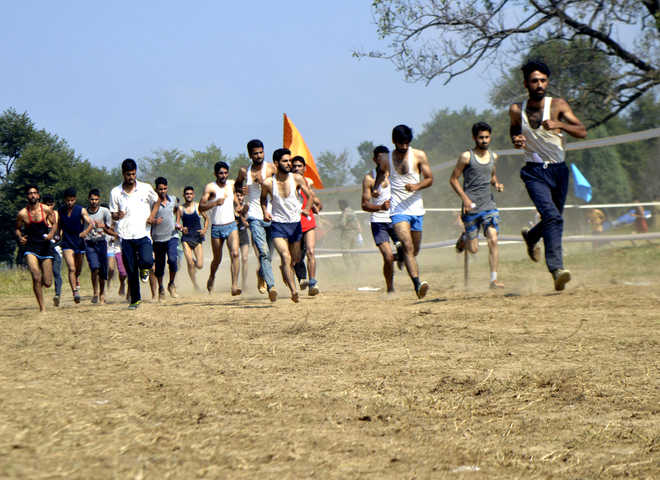
Youth run during a recruitment drive in Anantnag on Wednesday. Tribune Photo: Amin War
Suhail A Shah
Anantnag, September 21
The Army has today said that over 11,000 youth from the Kashmir valley have registered online for the recruitment process which commenced today from south Kashmir’s Anantnag district.“The response has been great. Some 11,500 youngsters have registered online to get recruited in the Army across Kashmir,” Brigadier JS Samyal, Deputy Director General, Recruitment, today told mediapersons here.He was at the Army camp at High Ground in Anantnag today to supervise the four-day recruitment process, which commenced today and will end on September 24.The second phase of the recruitment will be held at Bandipora in north Kashmir from September 29 and will end on October 2.Today, around 500 youth from Anantnag district turned up at the venue to get enrolled in the Army. The next three days will cater to aspirants from Kulgam, Shopian, Pulwama districts of south Kashmir and Budgam district of central Kashmir.“Of the 11,500 online registrations, more than 6000 are from the southern region of the Valley. Besides, we have kept the recruitment rally open and youth aspiring to be part of the Army can walk in,” Samyal said.Pertinently, the south Kashmir region has been the epicentre of the ongoing unrest, which started after the killing of Hizbul Mujahideen commander Burhan Wani on July 8.Since then more than 80 protesters have been killed and over 12,000 have been injured during clashes between the security forces and protesters.The youth who had turned up for recruitment today were upbeat about joining the Army. While some of them see this as a chance to serve the country, others look at it purely as a job opportunity in the wake of the overwhelming unemployment across the Valley.Zameer Ahmad (name changed), a youth from Kokernag in Anantnag district, said he was trained and prepared by the local Army unit in advance and he was sure he would be selected.“I am thankful to the Army for providing me this opportunity. I appeal to the youth to shun violence and give peace a chance. We should come forward and serve our country. Violence will fetch us nothing,” Ahmad said.Saleem, another aspirant from the Dooru area of Anantnag, said he was trying to earn a living and support his family. “I worked with a telecommunication company as a salesman. They have stopped paying me given the communication blackout imposed by the government. I have to do something and currently I don’t see many options available,” Saleem said. The Army, meanwhile, is expecting more youth to come forward to be a part of the force.
For some it’s patriotism, for others economics
The 500 youth who had turned up for recruitment in Anantnag on Wednesday were upbeat about joining the Army. While some of them see it as a chance to serve the country, others look at it purely as a job opportunity in the wake of the overwhelming unemployment across theKashmir valley.
State Stalwarts
DEFENCES FORCES RANKS
ARMY, NAVY, AIRFORCE RANKS
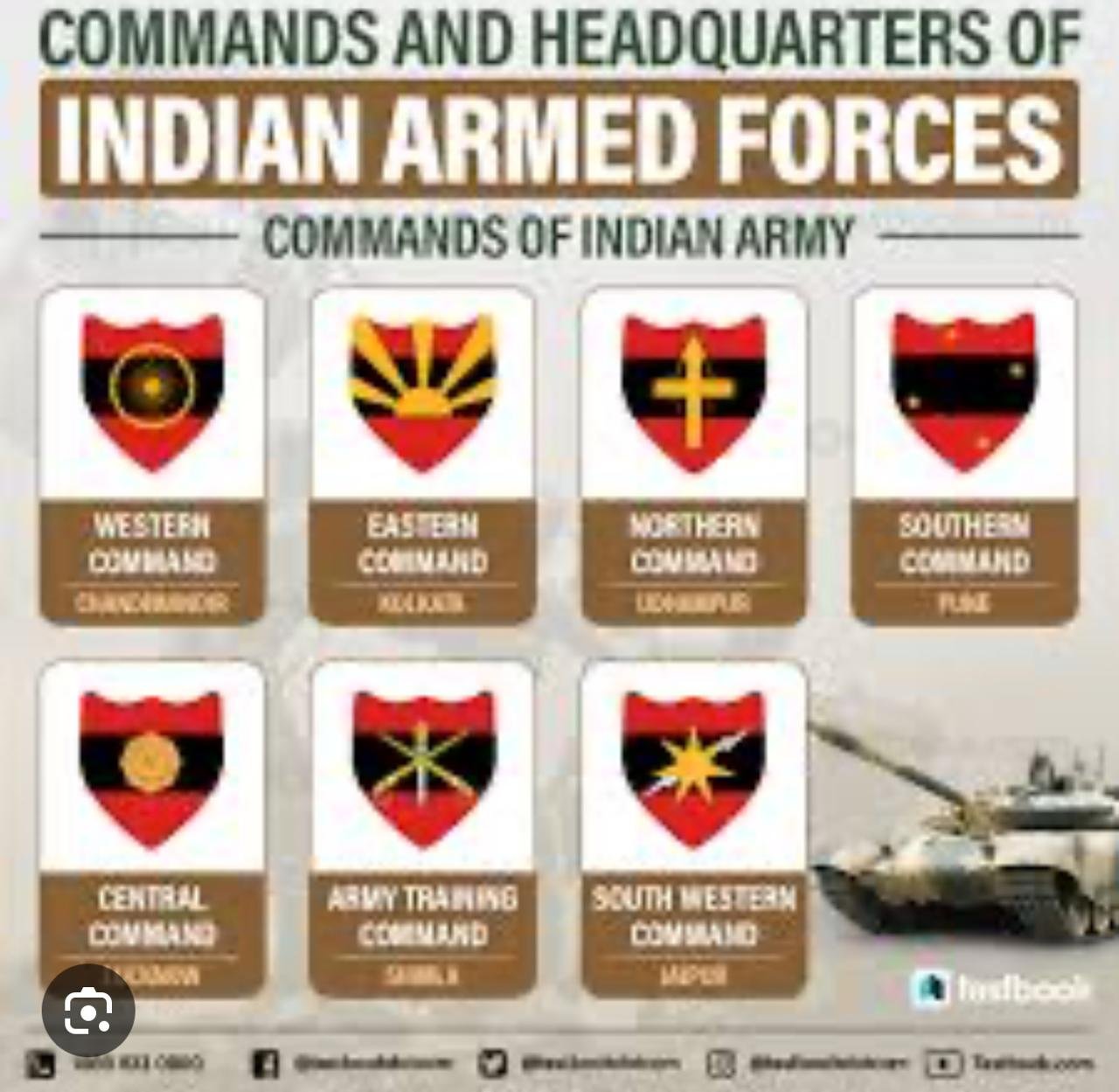
FORMATION SIGNS
FORMATION SIGNS
ALL HUMANS ARE ONE CREATED BY GOD
HINDUS,MUSLIMS,SIKHS.ISAI SAB HAI BHAI BHAI
CHIEF PATRON ALL INDIA SANJHA MORCHA
LT GEN JASBIR SINGH DHALIWAL, DOGRA
SENIOR PATRON ALL INDIA SANJHA MORCHA
MAJOR GEN HARVIJAY SINGH, SENA MEDAL ,corps of signals
.
.
PATRON ALL INDIA SANJHA MORCHA
MAJ GEN RAMINDER GORAYA , CORPS OF
sanjhamorcha303@gmail.com
PRESIDENT HARAYANA STATE CUM COORDINATOR ESM
BRIG DALJIT THUKRAL ,BENGAL SAPPERS
PRESIDENT TRICITY
COL B S BRAR (BHUPI BRAR)
PRESIDENT CHANDIGARH ZONE
COL SHANJIT SINGH BHULLAR
.
.
PRESIDENT PANCHKULA ZONE AND ZIRAKPUR
COL SWARAN SINGH
PRESIDENT SAS NAGAR (MOHALI)
COL BALBIR SINGH , ARTY
INDIAN DEFENCE FORCES
DEFENCE FORCES INTEGRATED LOGO
FORCES FLAGS
15 Th PRESIDENT OF INDIA SUPREME COMMANDER ARMED FORCES
Droupadi Murmu
DEFENCE MINISTER
Minister Rajnath Singh
CHIEF OF DEFENCE STAFF (2nd)
General Anil Chauhan PVSM UYSM AVSM SM VSM
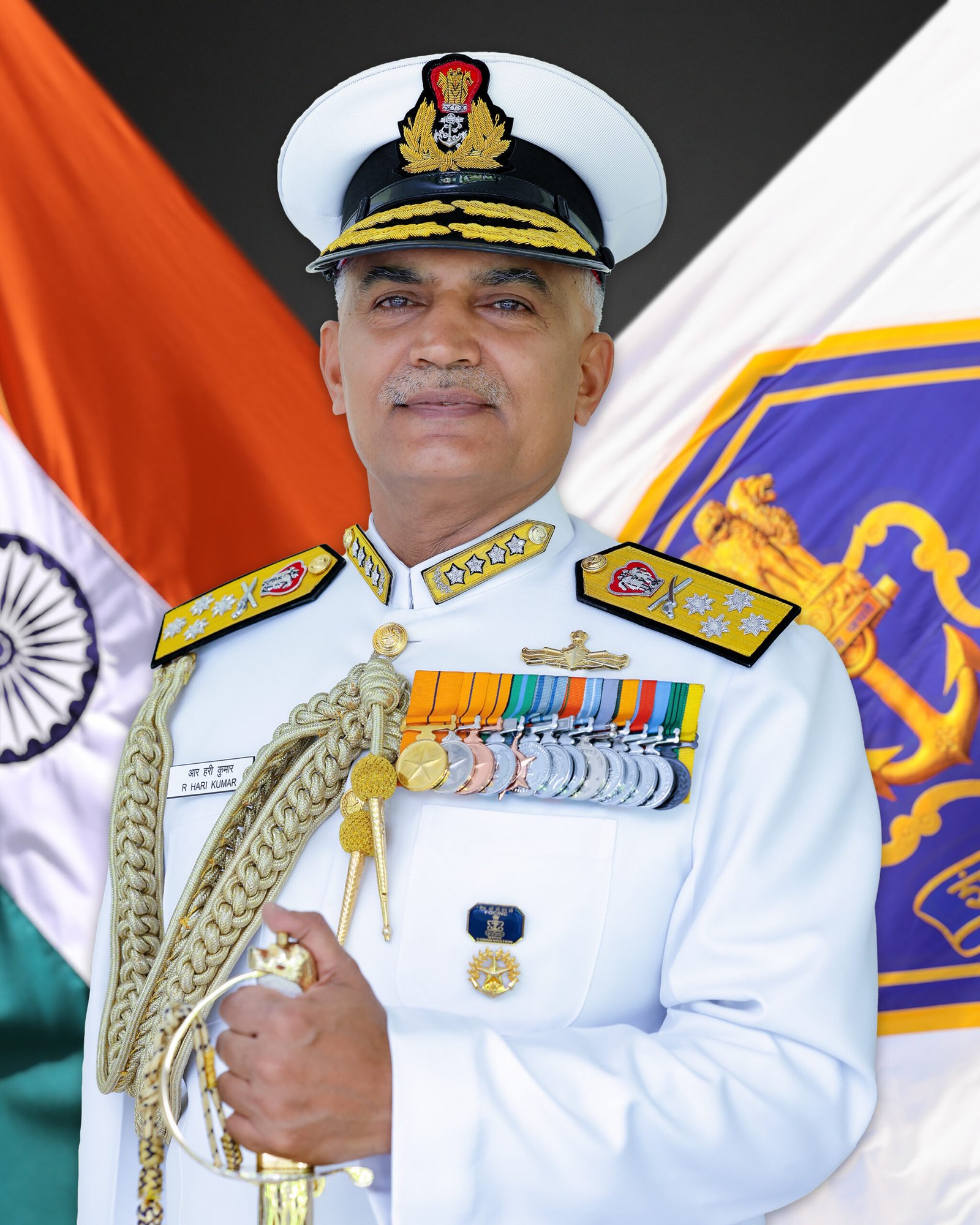
INDIAN FORCES CHIEFS
CHIEF OF ARMY STAFF(29th)
General Upendra Dwivedi, PVSM, AVSM (30 Jun 2024 to Till Date)