Sanjha Morcha

Over 1,700 officers from 76 nations graduated from Defence Services Staff College

2016_9$largeimg09_Friday_2016_174647624

Chennai, September 9

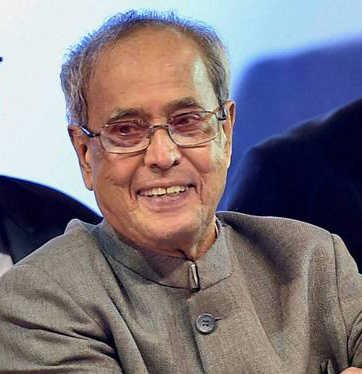
President Pranab Mukherjee on Friday said it was an honour that over 1,700 officers from 75 countries have graduated from the Defence Services Staff College, Wellington, in Tamil Nadu.Mukherjee, the Supreme Commander of the Indian armed forces, was at the college to present the Presidential Colours.The college is located in Nilgiris district in Tamil Nadu around 580 km from here.”It is also a matter of honour, that more than 1,700 officers from 75 countries from all over the world have graduated from the portals of this unique institution and a large number of them have risen to the highest positions in their countries,” Mukherjee said.Expressing delight that 40 officers from 31 friendly foreign countries were undergoing the present course Mukherjee said: “Each one of you is a befitting ambassador of your great nation and I am certain that you will cherish the strong bonds of friendship established by you with your peer group over a year of interactive learning.” “It is important that this strong relationship of goodwill develops into everlasting ties of mutual faith and warmth between our great nations, he added.Mukherjee also praised the Defence Services Staff College for spreading awareness on ‘Clean Ganga’, ‘Swachh Bharat’ and ‘Beti Bachao, Beti Padhao’ campaigns.He also complimented the college for taking up promotion of Green initiatives’ of rain water harvesting, solar power generation and recycling there by contributing towards preservation of the rich eco-biosphere of the Nilgiris. — IANS


Army chief reviews operational preparedness along China border

Tezpur, September 6

Army chief General Dalbir Singh Suhag on Tuesday reviewed the security situation in the region and operational preparedness along the critical border with China.He was here since yesterday and was accompanied by Lt General Praveen Bakshi, General Officer Commanding-in-Chief, Eastern Command, who will be the next Army chief.He was updated on the security situation in Assam by the Corps Commander, a statement by the Army said.”The Chief of Army Staff also reviewed the defence preparedness of Gajraj Corps as it is deployed on the line of Actual Control, the de facto boundary between India and China,” it added.The Army Chief was briefed by Lt General D Anbu, General Officer Commanding, Gajraj Corps, who will be in the running for the Army chief’s post after General Bakshi retires. — PTI


High on morale, low on machines, short of men

CASH CRUNCH The army is crippled by a lack of basic necessities, shortage of critical weapons and ammunition and bureaucratic tangle holding up purchases

The strike corps is absolutely necessary to upgrade India’s strategy against China… The government must make no compromise with the planned strength and funds required BRIG GURMEET KANWAL (RETD) Army has 3,500 snipers but only a handful of them can pass the standard test of taking a head-shot at 600 metres and a body-shot at 1,000 metres in the first shot… the army’s training is flawed LT GEN HS PANAG (RETD)

NEW DELHI: The army’s surgical strikes against militants at launchpads in Pakistan-occupied Kashmir demonstrated India’s hardened military resolve to the world.

HT FILEUncertainty surrounds two ongoing tenders for 44,600 carbines and 4,097 light machine guns as in both cases, only a lone vendor has met the army’s requirements.

The targeted operations behind enemy lines were carried out by India’s toughest fighting men — commandos from the elite special forces — and the daring move has already won accolades from political leaders and civil society alike.

But dig a little deeper and things aren’t as rosy for the world’s secondlargest army. The country may be surrounded by hostile Pakistan and China but its army is crippled by a lack of basic necessities, shortage of critical weapons and ammunition and bureaucratic tangle holding up purchases.

Forget the big stuff, even the small details are amiss. Sample this: For years, generals have complained that the orange stock and butt of the 5.56mm INSAS (Indian Small Arms System) rifle compromises the camouflage of soldiers. But several attempts to get the rifle’s colour changed have failed.

“The rifle’s orange colour puts soldiers at risk,” says lieutenant general BS Jaswal (retd), a former northern army commander.

He recalls several failed attempts to get the rifle in a combat colour during his stints as director general (infantry) and northern army commander from 2007-10.

That’s not all. In a private conversation, a senior army officer recalls how an infantry unit deployed in the Northeast a few years ago bought sandbags from its own funds to protect soldiers housed in tents.

The men, he says, were vulnerable to night strikes, similar to the one that left 18 soldiers dead in Uri last week: Fourteen of them were burnt alive after incendiary ammunition used by militants set their tents ablaze.

The sandbags and tents reflect critical shortcomings in the army spanning pivotal areas such as assault rifles, ammunition, body armour, night-vision equipment, artillery guns and air defence systems.

“From rifles to artillery guns, the shortcomings have dented the army’s capabilities. On the modernisation front, I reckon we are running 15 years behind,” says Jaswal.

Uncertainty surrounds two ongoing tenders for 44,600 carbines and 4,097 light machine guns as in both cases, only a lone vendor has met the army’s requirements. The tenders may be withdrawn, delaying the projects by at least six years.

“Arms-buying procedures are the biggest villain. It’s shocking that things that should have received highest importance have received least, irrespective of which government has been in power,” says lieutenant general Rajender Singh, a former director general of infantry.

The army is also battling shortage of officers and men. As of 2015, it was short of over 9,100 officers and nearly 31,000 men.

Training of soldiers is a bigger concern than equipment shortage, points out former northern army commander lieutenant general HS Panag (retired).

“The army has 3,500 snipers but only a handful of them can pass the standard test of taking a head-shot at 600 metres and a body-shot at 1,000 metres in the first shot. The equipment issue is overplayed…the army’s training is flawed,” says Panag.

But the army says its training standards are among the best globally. “That’s why armies queue up to hold joint drills with us,” a senior army officer insists.

A fruitless 10-year hunt for new assault rifles to replace the flaw-ridden INSAS rifle has returned to the drawing board, with the army on Monday seeking details from prospective vendors. The army plans to buy 65,000 larger calibre 7.62 mm rifles that are more lethal, with another 120,000 to be made in India.

The defence ministry’s acquisition council has given the green light to several projects including 145 ultralight howitzers (M777) for ` 4,600 crore, 420 air defence guns for `16,900 crore, 814 artillery guns for `15,750 crore and 118 Arjun Mk-II tanks for `6,600 crore. The clearance is the first step in a long weapons-buying process and some projects could take at least a decade to materialise.

The army has not inducted a single new artillery gun since the Bofors scandal in 1987.

The homemade Arjun Mk-II tank suffered a major setback two years ago, with a critical Israeli anti-tank missile to be fitted on it failing to meet the army’s needs. The DRDO is still looking for a missile to be fired from the tank’s main gun.

However, the senior officer says the force is “totally prepared” for any kind of military mission. “Most of the modernisation schemes are part of a long-term capability building plan to be implemented by 2027,” he adds.

Officers say the army is running low on ammunition too. Its reserves would barely last 20 days of “intense fighting” against an optimal 40, an audit report revealed last year.

Shortage of ammunition has been addressed to some extent over the last one year, army sources say.

The force requires more than 350,000 new bullet-proof jackets but only 50,000 are on order. The army sought the jackets almost eight years ago.

A cash crunch has forced the government to cut the size and cost of a new mountain strike corps to counter China in the Northeast.The UPA government kicked off the raising of 17 Corps in January 2014 without any separate allocation in the defence budget. “The strike corps is absolutely necessary to upgrade India’s strategy against China from dissuasion to genuine deterrence. The government must make no compromise with the planned strength and funds required,” says strategic affairs expert Brigadier Gurmeet Kanwal (retired).

The army needs to speed up armour modernisation too. “About 1,000 older T-72 tanks and an equal number of infantry combat vehicles have to be upgraded immediately,” says former army vice-chief lieutenant general Philip Campose (retired), who authored a report on review of security of military installations following the Pathankot strike.

Campose says upgrading air defence systems, modernising artillery and improving night-fighting capabilities should also top the army’s priorities.



Ex-servicemen to resume stir

Chandigarh, September 28

Ex-servicemen have decided to resume their agitation and fast at the Jantar Mantar in New Delhi in protest against the government failing to resolve perceived anomalies in the implementation of “one rank-one pension” (OROP) formula.A statement issued by the Indian Ex-services Movement today said the protest would commence from October 2 in Delhi as well as at other places. — TNS

COMMENTS

Sole purpose to collect funds over and above already collected in crores at JM and to launch Fauji Janta party a Political out fit a brain child of Maj Gen Satbir Singh.

Till date Maj Gen Satbir has not met Reddy commission but wants Reddy Commission to meet him.

Maj Gen Satbir Singh and his team of Janta  Mantar are misguiding the ESM of the Nation as they have not been invited by any Govt Agency since long.

Veterans can send their comments for uploading of wed site at the following email

sanjhamorcha303@gmail.com


Govt plan includes military options

NEXT MOVE Action plan handed over by Parrikar, decision on implementation to be taken by PM and his Cabinet

From page 01 NEW DELHI: The Narendra Modi government is working on a multi-pronged plan incorporating military options in its post-Uri campaign against Pakistan. The diplomatic part of the plan has been launched at the United Nations with India calling Pakistan a terrorist state that poses a global threat.

PTI FILEThe arms and ammunition recovered from the slain terrorists who attacked the camp in Uri.

New Delhi plans to intensify the diplomatic effort with Islamabad’s traditional supporters in West Asia next by providing direct evidence of the involvement of a Pakistan-based terror group in the Uri attack.

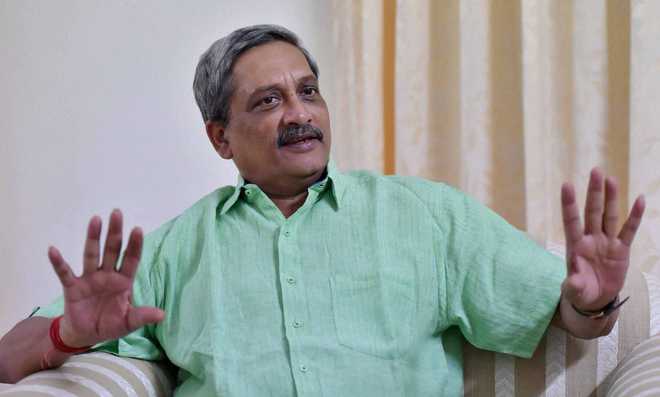
South Block sources said a military action plan has been handed over to the government by defence minister Manohar Parrikar. The decision on its operationalisation is for Prime Minister Modi and his Cabinet to take, they said. “There is no point in retaliating now with Pakistan forces beefed up across the Line of Control and an alert on the international border with India,” a senior official said on condition of anonymity.

There are no Pakistan markings on either the AK-47 rifles or the two under-barrel grenade-launchers used in the attack but two code sheets in Urdu for wireless communication, two map sheets, two global positioning system (GPS) devices, two wireless set and stores recovered from the four terrorists killed at Uri reveal that the attackers were from a proscribed terrorist group from Punjab in Pakistan, sources said.

The National Investigation Agency (NIA) team probing the September 18 attack that claimed the lives of 18 soldiers is expected to return to Delhi by the weekend. The damaged GPS devices will then be examined by experts to ascertain the route used by the four terrorists to cross the LoC and attack the army brigade at Uri. The wireless codes have already been deciphered by the security agencies, incriminating the terror group behind the attack.

Most of the Indian casualties were suffered as soon as the attack began and have been attributed to the fires in the tents and building housing the advance party of a Bihar Regiment unit. The terrorists were, however, prepared for a long operation as they were carrying dry fruit, medicines and nine packets of Pakistan-made juice powder and pouches.


Friday date for inking big-ticket 36 Rafale jet deal

NEW DELHI: Finally, the ‘burst of fire’. The Prime Minister Narendra Modi-led government on Wednesday cleared the much-awaited deal to buy 36 fighter jets from France’s Dassault Aviation.

The green signal for the deal worth ¤7.87 billion ($8.84 billion) was taken in a meeting presided by Modi.

The deal is expected to be signed on Friday, as French defence minister Jean-Yves Le Drian is arriving in Delhi on that day. Of the ¤7.87 billion, about 50 per cent will be covered under offset, which means either France will reinvest this amount in India or source equipment of this value from India.

French President Francois Hollande and Modi had intervened in the procurement of the nuclear-capable Rafale jets in 2015, ordering government-to-government talks after several years of commercial negotiations with Dassault had collapsed.

The leaders agreed to scale back the original plan to buy 126 Rafale planes to just 36 in fly-away condition to meet the Indian Air Force’s urgent needs as it tries to modernise and face an assertive China and long-time foe Pakistan.

Besides other features that make the Rafale a strategic weapon in the hands of the IAF is the Beyond Visual Range Meteor air-to-air missile with a range of over 150 km. Its integration on the Rafale jets will mean the IAF can hit targets inside both Pakistan and across the northern and eastern borders while still staying within Indian territory.

Pakistan currently has only a BVR with 80 km range. During the Kargil war, India used a BVR of 50 km while Pakistan had none. With Meteor, the balance of power has again tilted in India’s favour. Scalp, a long-range air-to-ground cruise missile with a range of over 300 km also gives the IAF an edge over its adversaries.

Tough negotiations by the MoD-IAF team extracted many concessions from the French before arriving at a price that is almost ¤750 million less than what was quoted by France in January.


Thousands bid adieu to soldiers

Thousands bid adieu to soldiers
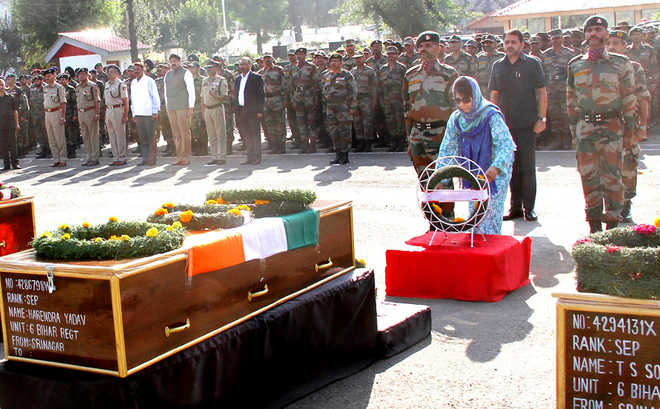
Chief Minister Mehbooba Mufti pays tributes to the soldiers, who were killed in the Uri attack, at Badami Bagh Cantonment on Monday. Tribune Photo: Amin War

Amir Karim Tantray

Tribune News Service

Sarwa (Vijaypur), September 19Thousands of people and Army men bid a tearful adieu to Havaldar Ravi Paul and Subedar Karnail Singh, two of the 18 soldiers killed in the Uri attack on Sunday, at their native villages in Samba and Jammu districts, respectively.Mortal remains of both soldiers were brought to the Jammu technical airport on Monday afternoon in an Army helicopter and from there they were taken to their respective villages — Sarwa in the Vijaypur area of Samba district and Shibu Chak in the Bishnah area of Jammu district.In Sarwa village, since morning all roads led to the house of Havaldar Ravi Paul (42), who is survived by wife and two sons, Vansh Salotra (10) and Sudhansheesh Salotra (7).This village is situated a few kilometres away from the international border in the Ramgarh sector. Around 50-60 people of the village are working with the Army. Ravi Paul, youngest of six siblings, was in 10 Dogra Regiment while his two elder brothers have also worked in the Army. His children want to continue the tradition by joining the Army.“My father wanted me to become a doctor and I will fulfil this by becoming a doctor in the Army,” Vansh Salotra told The Tribune. His younger brother Sudhansheesh also thinks on similar lines.Vansh said it was routine that his father used to call them early in the morning to wake them up so that they could get ready for school. “On Sunday also, we got a call from my father at around 5 am and our talk was about routine things,” he said, adding, “I know why people have gathered today here. Because my father has died and they are waiting for his mortal remains to reach the village.”Ravi Paul’s elder brother, Mohan Lal, who is working with Defence Service Corps (DSC) at Ludhiana after taking retirement from the Jammu and Kashmir Light Infantry (JAKLI) Battalion, said they used to take leave at the same time and visit the family. “We spent good time together. We also used to talk over phone regularly. The last time we talked was on September 17,” he said.Once the mortal remains of Ravi Paul reached his home, people raised slogans in favour of the Army and against Pakistan. Paul was cremated with full military honours as a galaxy of people including state minister Chander Prakash Ganga, Lok Sabha member Jugal Kishore, Rajya Sabha member Shamher Singh Manhas, the Jammu IG, Army officers and people from all walks of life were present.While on the one hand people felt proud of the sacrifice of the son of the soil, on the other hand there was anger among them over the death of soldiers while they were sleeping.“We don’t want our soldiers to die in sleep. If they have to die, let them die in a battlefield but not inside tents. It is the time to shun rhetoric and do something concrete,” said Roop Lal, naib sarpanch of the village.Meanwhile, thousands of people also attended the last rites of Subedar Karnail Singh at his native village Shibu Chak in the Bishnah area of Jammu district. He was cremated with full military honours.


Military personnel to get new salaries in September pay

Military personnel to get new salaries in September pay
The forces argue that the anomalies lower the status and pay parity of forces vis-a-vis their counterparts in the police and civilian administration. PTI file photo

New Delhi, September 16

Chiefs of Staff Committee (CoSC) Chairman Air Chief Marshal Arup Raha has issued directions to all service headquarters for implementing the 7th Pay Commission.

This means that soldiers will receive their new salary in their pay in September.

The development came after Raha, along with Navy chief Admiral Sunil Lanba, met with Defence Minister Parrikar earlier this week. Parrikar assured them that the central government would consider reviewing the “anomalies” they pointed out in the 7th Pay Commission, defence sources said.

In a surprising move, the three services had on September 9 issued letters to their formations saying they had asked the central government to hold “in abeyance” the implementation of the pay commission due to the “unresolved anomalies”.

Sources claimed Parrikar even had a gazette notification announcing the 7th Pay Commission amended to make sure the military retains its edge over the Central Armed Police Forces.

The Defence Ministry had recently notified the 7th Pay Commission.

Sources pointed out that a cabinet notification could not have been corrected before it was notified.

“The anomalies committees are meant to correct the shortcomings,” sources said.

The forces argue that the anomalies lower the status and pay parity of forces vis-a-vis their counterparts in the police and civilian administration. — PTI