Sanjha Morcha

Blood and water cannot flow together: PM on Indus treaty

Blood and water cannot flow together: PM on Indus treaty
Deliberations in progress. PTI

New Delhi, September 26

Prime Minister Narendra Modi on Monday said “blood and water cannot flow together,” as he chaired a review meeting of the 56-year-old Indus Water Treaty during which it was decided that India would “exploit to the maximum” the waters of Pakistan-controlled rivers, including Jhelum, under the water-sharing pact.

Held amidst heightened tension between India and Pakistan, the meeting also decided to set up an inter- ministerial task force to go into the details and working of the treaty with a “sense of urgency”, government sources said.

Attended by National Security Adviser Ajit Doval, Foreign Secretary S Jaishankar, the Water Resources Secretary and senior PMO officials, the meeting also noted that the meeting of Indus Water Commission could “only take place in an atmosphere free of terror”. The Commission has held 112 meetings so far.

“Prime Minister Modi’s message at the meeting was that ‘rakt aur paani ek saath nahin beh sakta’ (blood and water cannot flow together),” sources said.

Apart from deciding to exploit to the maximum the capacity of three of the rivers that are under Pakistan’s control— Indus, Chenab and Jhelum—in the areas of hydropower, irrigation and storage, the meeting also agreed to review the “unilateral suspension” of the Tulbul navigation project in 1987.

Sources asserted that the decision to maximise the water resources for irrigation would address the “pre-existing” sentiment of people of Jammu and Kashmir, who had complained in the past about the treaty not being fair to them.

The meeting came as India weighed its options to hit back at Pakistan in the aftermath of the Uri attack that left 18 soldiers dead, triggering demands that the government cancel the water distribution pact to mount pressure on that country.

Under the treaty, which was signed by Prime Minister Jawaharlal Nehru and Pakistan President Ayub Khan in September 1960, water of six rivers—the Beas, Ravi, Sutlej, Indus, Chenab and Jhelum—were to be shared between the two countries.

Pakistan has been complaining about not receiving enough water and gone for international arbitration in a couple of cases. PTI

PM chairs meeting to review Indus Water Treaty

New Delhi, September 26

Prime Minister Narendra Modi today chaired a meeting to review the Indus Water treaty with Pakistan amidst heightened tension between the two countries.

National Security Advisor Ajit Doval, Foreign Secretary S Jaishankar, the Water Resources Secretary, and senior PMO officials are present at the meeting.

The review is being undertaken as India weighs options to give a befitting response to Pakistan in the wake of the Uri attack that left 18 soldiers dead.

There have been consistent calls in India that the government scrap the water distribution pact to mount pressure on Pakistan in the aftermath of the terror attack.

Under the treaty, which was signed by Prime Minister Jawaharlal Nehru and Pakistan President Ayub Khan in September 1960, water of six river – Beas, Ravi, Sutlej, Indus, Chenab and Jhelum – were to be shared between the two countries.

Pakistan has been complaining of not receiving enough water and gone for international arbitration in couple of cases.

Jammu and Kashmir Deputy Chief Minister Nirmal Singh had said last week that his state will fully support whatever decision is taken by the Union government on the 1960 agreement.

“The treaty has caused huge loss to Jammu and Kashmir” as the people of the state cannot fully utilise the waters of various rivers, particularly Chenab in Jammu, for agricultural and other activities, Singh had said.

“The state government will support whatever decision is taken by the central government on Indus Waters Treaty,” he had said.

India had last week made it clear that “mutual trust and cooperation” was important for such a treaty to work. PTI


Avoid Knee Jerk Reaction::—————– Syed Ata Hasnain

Any response to Uri must combine diplomatic and military domains, be well thought through
For almost four days now India is looking at its potential response to the grave provocation by Pakistan through the premeditated sneak attack Fon the Uri garrison which led to the death of 18 soldiers. The surmises which have emerged after deliberations of experts and government are important to recount.First, there must not be any knee jerk reaction because that will pay no dividend and could force us to do exactly what the terrorist leadership or Pakistan’s deep state wishes. Second, we must respond with a clear cut strategic aim at a time and place that we choose, and not be forced to do so. Third, the use of both the diplomatic option to isolate Pakistan, exploiting the ongoing UNGA session and the military option with a choice of actions from a given spectrum, has to be part of India’s strategy .

Interestingly some issues on the above strategy have arisen in the process of detailing it. Can there be a purely military retribution to punish Pakistan without having to mix it with a diplomatic offensive? After 26 years of proxy militancy terror why hasn’t our diplomacy given us the dividend of seeing Pakistan isolated and under sanctions?
This needs an explanation of both Pakistan’s notoriety and strategic significance. Little is it realised that the territory of Pakistan is one of the most important strategic real estates of the world. It is the confluence of five civilisations; Indian, Chinese, Central Asian, Persian and Arab. Each of the regions making up these civilisations has a strategic interest connected with Pakistan.Big power interests also abound.

India’s military actions could adversely affect any of these powers. China for instance is inextricably linked to the China Pakistan Economic Corridor. The support of Afghanistan is an imperative.Iran’s guaranteed neutrality robs Pakistan of its perceived strategic depth. The US, perhaps the most important player in the game is also the most helpless. Its interests in Afghanistan have to be retained through Pakistani guarantee. Fifteen years of effort must witness a conflict termination on terms advantageous to the US and not to the Taliban.

The Russian diplomatic angle cannot be wished away . Recalling 1971 would reveal Indira Gandhi’s prudence in signing the Indo-Soviet Treaty and the diplomatic offensive she undertook to shape the situation in India’s favour. That facilitated the strategy to win the war.

Hybrid warfare is the flavour of the day in conflicts around the globe; it is what Pakistan is using to good measure against us. Our retribution should examine every component of the spectrum and the mixing should afford us flexibility . The game of diplomacy is crucial in this.

There is no ready answer to why we failed for 26 years to get the international community to label Pakistan a rogue state. Perhaps we underplayed it, or focussed our efforts at the wrong forums. We need to make amends for that especially when most major countries are concerned about the ease of movement of terror resources, finances and narcotics. Accompanied by a credible military threat and a potential nuclear exchange, the international community must be jolted into being interested.

It is perceived that employing the diplomatic option alongside a potentially robust military action could mean playing into the hands of Pakistan which essentially seeks the internationalisation of the J&K issue. There are two separate dimensions to this. The internationalisation of the boundary issue related to Kashmir is surely not in India’s favor as it would annul the Shimla Agreement.However, the issue of cross border terror and proxy war is a domain in which India needs to pull out all the stops, as internationalisation helps in the naming and shaming of Pakistan.

While public excitement and passion exist for a military option precious little has ever been done regarding sensitisation about the effects of all out or even calibrated conflict. The public remains oblivious of the adverse economic effects and dangers of nuclear escalation.But even more important is that contingency planning seems to be underway once the contingency has arrived and is well on the way to passing over. Such planning must be done well in advance and updated through yearly war games.

At the operational level no doubts exist. It is at the strategic level that there is little energy for a national level war game involving the political, diplomatic, military and bureaucratic fraternity .

The information and communication domain remains the weakest link in our strategy . Prime Minister Narendra Modi’s reference to Balochistan and his ardent efforts towards focussing on issues concerning transnational terror, both at G-20 and Asean summits, are the first real efforts at communication by an Indian leader in years.

Prudent and effective national strategy sandwiches the military options between two layers of the diplomatic campaign, preand post-launch.

Lastly response to instigated proxy conflicts of the low intensity variety usually must lie in the dimension of comprehensive national power. Since the response is calibrated, diplomacy and military power can alternate in primacy to achieve the common goal. It needs reiteration that public passion and interest, though important motivators, must not become the main trigger for action.

(The writer is former GOC of Srinagarbased 15 Corps and commanded the Uri Brigade)


Pakistan PM Nawaz Sharif a puppet in the hands of pale military, terrorists: Congress

y: ANI | New Delhi | Published:September 23, 2016 2:10 pm

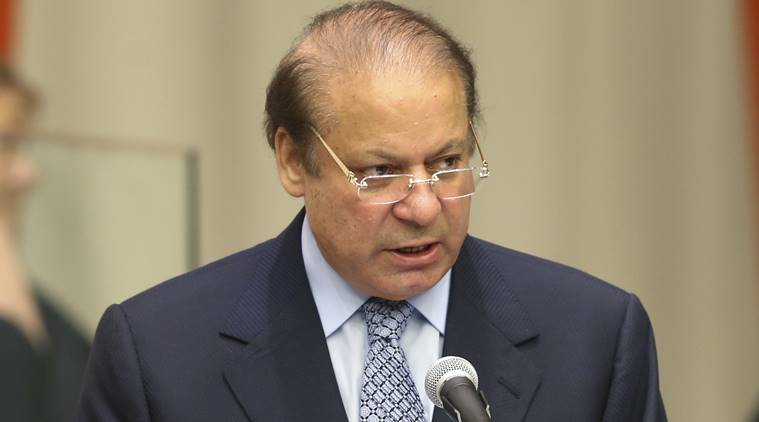
burhan wani, nawaz sharif, burhan wani killing, kashmir issue, kashmir unrest, kashmir curfew, kashmir violence, unga, nawaz sharif at UNGA, Kashmiri Intifada,Hizbul Mujahideen, india news, latest newsPakistani prime minister Nawaz Sharif  (AP Photo)
The Congress party said on Friday that Pakistan Prime Minister Nawaz Sharif is forKashmir rant and glorification of militant Burhan Wani at the UN is a clear sign that he is a puppet in the hands of military establishments and terrorists.

“Whatever the Prime Minister of Pakistan says, he is just a puppet in the hands of the military establishment and terrorists,” Congress leader Tom Vadakkan said.

“It is an established fact globally that terrorism is bread ,spread from Pakistan. Factories are manufacturing terrorists exist in Rawalpindi,” Vadakkan told ANI.

“These(terrorists) are people who infiltrate civil society, both in India and globally, and create not just terrorism but commit huge human rights issues,” he said.

“When we talk about human rights, lets flag terrorism as an important factor,” he added.

Vadakkan said India has taken up the issue internationally and should give fitting reply to Pakistani designs. During his nearly 20-minute speech at the 71st UNGA session on Wednesday, Sharif described the unrest in Kashmir as an “indigenous uprising” and an “intifada” (uprising) and accused India of “brutal suppression” and “gross and systematic violations of human rights”. He also referred to militant commander Burhan Wani, whose killing sparked the unrest, as a “young leader murdered by Indian forces”.

A bill was introduced in the US House of Representatives earlier this week to designate Pakistan as a state sponsor of terrorism. If enacted, it would cut off all financial aid and sales of military equipment to Pakistan.


Ex-servicemen can be engaged for disaster management

Ex-servicemen can be engaged for disaster management
Major Rahul Jugran (retd) Manager, Disaster Mitigation and Management Centre, Uttarakhand

UTTARAKHAND has a large population of servicemen and ex-servicemen. The armed forces in our country have traditionally been the first responders to any major disaster. This may be attributed to the fact that they can react quickly in an integrated and self contained manner. They have the core competence to operate under adverse conditions with a range of resources and capabilities at their disposal. The armed forces are equipped with the emergency search and rescue capabilities and they have been providing medical aid, communication, food, shelter and necessary infrastructure to disaster victims.The large number of ex-servicemen, who have the background and vast experience in engineering, medical, communication and signals, can be organized into a disciplined and trained workforce. This voluntary, trained, experienced and dedicated group can play an important part in search and rescue operations and also in providing medical aid at times of major disasters. Also, since most of the Army men retire at a young age between 30 and 40, their services can be fully utilised for disaster management and civil purposes as well.There are 123,113 ex-servicemen registered with Zila Sainik Boards in the state: Almora (9854), Bageshwar (7934), Chamoli (10759), Champawat (3416), Dehradun (22753), Haridwar (4240), Lansdowne (14891), Nainital (10389), Pauri Garhwal (6954), Pithoragarh (16522), Rudraprayag (3258), Tehri Garhwal (4826), Udham Singh Nagar (6584), and Uttarkashi (733). 

Dedicated organisation

In a post-disaster scenario, the first priority is extending immediate rescue and relief aid to victims, who need medical care, food and shelter. However, in the absence of a dedicated organisation, disaster relief tends to be ad hoc and leads to ‘crisis management’. A coordinated and synergistic approach at all levels to handle the resources available, along with an efficient communication and logistics network, is vital to post-disaster relief. It is here that a need exists for an organisation which has the required expertise, dedication and resources to handle this task.The potential for utilisation of disciplined and trained ex-servicemen for such situations has remained untapped due to lack of an organisational framework.  An Ex-Servicemen Disaster Management Unit (ESDMU) comprising primarily of retired defence officers, members of paramedical staff of Army Medical Corps, Military Nursing Services (MNS), engineers, signals and Ordnance Corps could play a vital role in preparedness for disaster management and relief works.Bihar has raised unit of retired soldiersUttarakhand cannot depend on the Central government for its forces all the time. Therefore, the state government must have a plan to recruit ex-servicemen and form ESDMUs that will not only effectively provide employment to an experienced, trained and disciplined force of ex-servicemen but will also utilise their services at the time of a disaster. The widespread presence of ex-servicemen in Uttarakhand will take care of reaching necessary assistance to the remotest places at the time of a disaster. The Bihar government has taken a decision to raise a separate unit of Special Auxiliary Police (SAP) to deal with disasters in that state. Ex-servicemen, who have been inducted into the SAP to fight the growing Naxal menace in the state, have also been proposed to be better utilised to effectively tackle the challenges arising out of calamities.

Planning considerations

The organisation of an ESDMU could be based on the concept of the Territorial Army. Only a nucleus staff could be employed on a permanent basis and the remaining voluntary force could be embodied periodically on as required basis.In Uttarakhand, the ESDMUs could be raised in Garhwal and Kumaon divisions with a unit in each district under the control of Zila Sainik Kalyan Board. The specialty of each divisional unit will be flexibility in terms of personnel (may do with whatever manpower is available) and response (depending upon the magnitude of the disaster).A databank of ex-servicemen, who volunteer for ESDMU services, can be maintained centrally at the Rajya Sainik Kalyan headquarters, and in each divisional headquarters. The requisite manpower for an ESDMU will be made available at short notice from this databank.The ESDMU can be tasked with creating public awareness, making disaster management plans with community involvement at the village level, carrying liaison with Army and paramilitary units deployed in remote places and organising medical camps throughout the year in association with the Ministry of Health and Family Welfare and the Red Cross.During any disaster, the ESDMU will be mobilised along with technical and supporting elements to the disaster site. The medical group within the ESDMU will comprise small disaster medical teams carrying expendable and non-expendable medical stores. An ESDMU will thus be significant in filling the gaps for the National Disaster Relief Force (NDRF) and the State Disaster Relief Force (SDRF) that cannot be present throughout the state, especially in remote places. Moreover, their presence in the community will be useful as the majority of ex-servicemen are natives of those places.  

Mobilisation

On receiving a request for assistance from the state government or the district administration or in anticipation of such a request, the ESDMU will inform the unit headquarters. And after obtaining permission from the headquarters, it will proceed to contact its volunteers by the fastest available means, including mobile phones, print media and television, requesting them to report for duty. The coordination of disaster relief operations will have to be maintained between the civil authorities, armed forces and the ESDMU at all levels through a joint operation centre. The services of ESDMUs can be utilised for disaster management on the Char Dham Yatra routes and the Hemkund Sahib yatra as well as in the event of accidents and natural catastrophes such as landslides, cloudbursts and earthquakes.The services of ex-servicemen can be used for setting up post-disaster infrastructure and makeshift arrangements for affected people. The task of navigating obstacles, clearing approach roads and debris, rebuilding bridges and roads, restoring electricity, water and making disaster relief shelters can be  effectively done by engineers with the available expertise and resources in the post-disaster scenario. Ex-servicemen capable of handling communication equipment can be trained for civil equipment. They can be very useful especially in remote and far flung areas in Uttarakhand. The signals group of an ESMDU can maintain and strengthen the emergency communication between the disaster site and the divisional headquarters through satellite. It can also set up a high frequency communication system. They are also trained in administering first aid, casualty evacuation and handling trauma cases.

Training

Disaster management requires continuous training and awareness. Selected officers and men of ESDMUs can be trained at the Disaster Mitigation and Management Centre. Search and rescue training or refresher courses could be organised for them in different institutes of the state through the ITBP, National Institute of Mountaineering (NIM) or the SSB.Ex-servicemen by virtue of their services in armed forces are well oriented and trained in the incident response system. The services of ex-servicemen will be utilised in turn for training volunteers of ESDMUs and organising welfare activities (medical camps) in remote areas.

Medical services

Ex-servicemen are also capable of handling transport, distribution of food and medicines and other essentials in remote areas. They are available in all populated villages in the state. Ex-servicemen with medical background or those belonging to the Army Medical Corps (AMC) can be identified and trained. They can help fill the shortage of employees in healthcare facilities, especially at places where they are residing. Medical officers, who had retired from the AMC, can be hired (region specific for consultation or floating services) for handling health services to provide specialised services to hill people and tide over the shortage of specialised medical staff.They can be tasked with distribution of medicines and contraceptives, taking blood samples and testing and health awareness and anti-AIDS drives.

Reverse migration

The government can evolve policies to encourage ex-servicemen to settle in their native villages. This can be done by offering them gainful employment through ESMDUs and through other schemes. Their services can be utilised in the tourism sector and promoting entrepreneurship. This way the government could check migration and at the same time ensure reverse migration. A few success stories could lead to an optimistic scenario in future.

Recommendations

  • The government can involve ex-servicemen by creating 40 to 50 ESDMUs to start with. The ex-servicemen will be well dispersed in district, tehsils, blocks and villages. This will contribute to effectively augmenting public awareness and training search and rescue teams at the village and community levels.
  • The government will have to provide minimal remunerations for ex-servicemen employed and finances for raising such units.
  • Such units will not only be useful in pre and post-disaster management and response, but also for creating awareness and a provision of health services to people in remote places.
  • Ex-servicemen can also effectively liaise with units deployed in far-flung areas. Such initiatives have borne good results in states such as Jammu and Kashmir, Mizoram and Nagaland.
  • Regular Army units deployed in remote places along with district units of ESDMUs can do a lot for local development.
  • Ex-servicemen can fill the gaps with respect to manpower, remote accessibility, distances and infrastructure and their associations that function at the district level.
  • They can work as semi-government representatives for coordination with regular units of armed forces in remote areas.
  • They can be trained considering their existing skills and given responsibility of coordination from village to village.
  • Ex-servicemen can also be made area specific nodal officers for conducting the affairs of ex-servicemen as well as local people with regard to health care

Veterans fume over Uri terrorist attack

Veterans fume over Uri terrorist attack
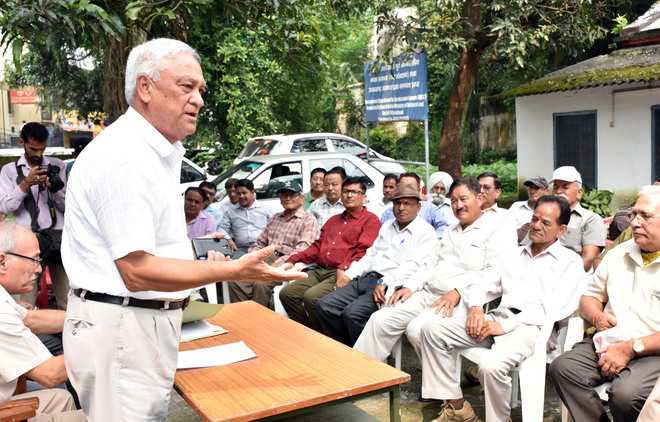
Lt Gen GS Negi (retd) vents his anger as he addresses a gathering of ex-servicemen in Dehradun on Tuesday. Tribune photo: Abhyudaya Kotnala

Tribune News Service

Dehradun, September 20

Retired defence personnel expressed serious concern over the terrorist attack in the Uri sector of Jammu and Kashmir in which 18 soldiers were killed two days ago. Ex-servicemen said the Indian government should judiciously respond to avoid repeat of such incidents. They said “what went wrong” in security should be thoroughly examined before jumping to any conclusion.Lt Gen GS Negi (retd) said the Indian Army should potently reply to Pakistan so that such an incident does not repeat. He added the Indian Army had many options to react to the Uri incident, and the best possible reply should be given to terrorists.Gen Negi said a quick retort against the Uri terrorist attack by the Indian Army would boost the morale of the India troops. “On the basis of information from different sources, it has now been established that there are many terrorists living in camps in Pakistan Occupied Kashmir (POK) and have been continuously infiltrating into Indian territories,” he said.Brig KG Behl (retd), patron of the Dehradun Ex-services League (DESL), said the government should avoid a hasty reaction to the Uri incident. He said patrolling should be increased and security measures should be stepped up along Line of Control so that terrorists could not sneak into Indian territory. He said apart from keeping a diplomatic talk option open, the government should respond to this attack.Brig RS Rawat (retd), president, Uttarakhand Ex-services League, said the Indian Army should strictly avoid taking any steps in haste as it would damage further to nation. He said top brass of the Army should deeply analyse on “what went wrong” before reacting to Uri incident. He said the Indian Army was fully capable of tackling any kind of external aggression or to repulse terrorist attack in any part of India.Col PL Parashar (retd), who had served in the Uri sector in 1968, stressed on the need of tightening security along the LoC to avoid repetition of such incidents in the future. He favoured that the Army should strictly react to this incident after considering every aspect. Parashar said the Indian troops must chase and kill infiltrators if they try to cross over or are seen indulging in such actions to enter India or running back to Pakistan. He said such action would teach Pakistan a lesson and make them stop making efforts for infiltration.


Memorials of brave soldiers dot Jammu countryside

Memorials of brave soldiers dot Jammu countryside
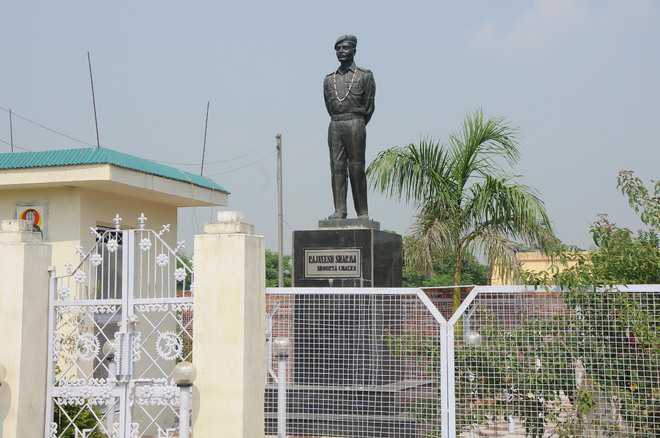
A statue of a martyr at Ramgarh village in Samba district. Tribune Photo: Inderjeet Singh

Sumit Hakhoo

tribune news service

Jammu, September 19

As the terrorist attack on an Army camp in Uri, close to Line of Control (LoC) in Baramulla district, on Sunday added another chapter to the 27-year-long insurgency in J&K, it’s also a brutal reminder of the sacrifices of hundreds of soldiers from the Jammu region who fought and died in the proxy war since 1989-90.While local lore revolves around tales of war and valour about soldiers who were martyred in the line of duty to defeat terrorism supported by Pakistan and its proxy radical Islamic groups operating from across the Line of Control (LoC) dividing J&K, hundreds of families have lost their sons and fathers due to indecisive approach of successive governments towards militants and their supporters in the state. Agriculture has been the main occupation, but dusty hamlets have produced brave soldiers.Moving along the highway and interior villages in Rajouri, RS Pura, Akhnoor, Samba, Kathua, Vijaypur and Hiranagar, the countryside is dotted with memorials (shaheedi samaraks) for the fallen soldiers, price being paid by ordinary people to fight terrorism.Though villages have tried to outwit each other while building war memorials by installing the statues of martyrs or creating huge gates depicting the pictures of soldiers at the entrance of their hamlets, but resentment against the government is growing for not doing enough to strike on terror sponsors.“My brother is serving in the Army and destruction caused by Pakistan during shelling on our village was the main motivation for him to join armed forces. Every village has a martyr in this belt,” said Shamsher Singh from RS Pura, close to the international border.It had been a tradition of a sort for villagers as families have served the armed forces for generations. Right from the time of Maharaja Gulab Singh, founder of the J&K state, plains of Jammu have been the breeding ground of warriors who fought in Hunza, Gilgit and Tibet to consolidate the Dogra rule in J&K and other war theatres during WW I and WW II. Since 1947, when Pakistan imposed a war on India to occupy Kashmir, people of Jammu have thwarted its efforts.“Valour and honour is in our blood, but sacrifices of our youth should not go vain. How much sacrifice the country’s leadership want before they wake up and take a decisive action?” said Gurdeep Singh, a farmer from Samba, whose son is serving in the Army.During the last two decades, people living along the international border and LoC have suffered heavily due to cross-border shelling and militants who infiltrate from Pakistan. However peasants have become part of the Village Defence Committees to track the movement of terrorists and have successfully succeeded in killing several groups of militants on several occasions. People act as eyes and ears for security forces in the hinterland.


URI TERROR ATTACK Asleep in tents, jawans were sitting ducks14 of 17 men died as tents caught fire in grenade attack

Ajay Banerjee

Tribune News Service

New Delhi, September 18

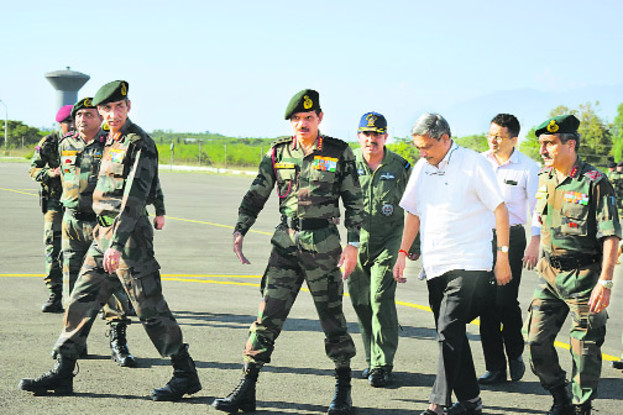
Defence Minister Manohar Parrikar and Army Chief General Dalbir Singh in Kashmir on Sunday. Tribune Photo: Amin War
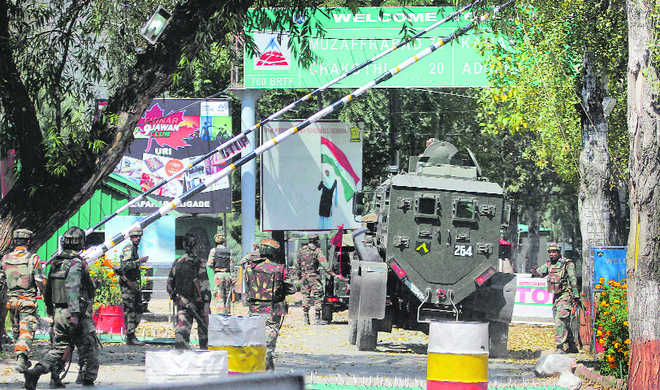
The Army camp which was attacked by militants in Uri. PTI

The number of casualties in the Uri attack could have been prevented as two buildings at the same military station were vacant, but the advance party of the Bihar Regiment was staying in tents pitched in the open, that too just 6 km from the volatile Line of Control (LoC).Fourteen of the 17 soldiers were killed as grenades lobbed by four Pakistan-trained terrorists led to fire in tents. Twelve bodies were burnt badly and four of them couldn’t even be recognised forcing a DNA test, sources said. Troops of the 6 Bihar Regiment were to replace the 10 Dogra Regiment at Uri just outside the headquarters of the 12 Brigade of the Army.Sources confirmed that the advance party (30-35 persons, including a Major) of the Bihar Regiment arrived on September 16 to start the administrative work before the rest of the regiment could arrive. Director General of Military Operations (DGMO) Lt Gen Ranbir Singh said, “The tents located in the complex were to house additional troops inducted due to routine turnover of units. There have been a total of 17 Army fatal casualties. Of these, 14 casualties have been due to these tents/shelters having caught fire.”It is being suspected that terrorists managed to hide themselves for a few hours inside the military camp during the night before launching the attack around 5.30 am and they were aware of the troops living in tents.The terrorists hiding inside the camp or at the edge of it caught the troops by total surprise as most of them were asleep inside the tents.It was a full-moon night, therefore not dark, which is not an ideal condition for an attack. Yet the terrorists mounted the attack, which suggests they had prior information of the change of regiments and took the risk of crossing the LoC to target the troops staying in tents.Terrorists on their own would have no prior intimation of a regiment getting relieved and some men living in tents. However, Pakistan-based military commanders keep an eye using satellite imagery and ground-based human intelligence, hence the Pakistan military link.But as recently retired Western Command chief Lt Gen KJ Singh puts it: “It is too early for a postmortem of the attack. The Army has a mechanism to deal with all such issues.” Defence Minister, Army Chief review security in Kashmir  Srinagar: In view of the Uri attack, Defence Minister Manohar Parrikar and Army Chief General Dalbir Singh Suhag on Sunday took stock of the ongoing operations and reviewed the overall security situation in Kashmir. Parrikar rushed to Srinagar this evening and General Suhag reached earlier on Sunday to review the situation. An Army spokesman said they were briefed by the Northern Command chief Lt Gen DS Hooda and Chinar Corps commander Lt Gen Satish Dua in Srinagar on the Uri attack. The Defence Minister was briefed about the security grid along the Line of Control and the hinterland. tnsUS with India in anti-terror fight  Washington: The US is committed to building a “strong partnership” with India to combat terrorism, the White House said on Sunday as it condemned the Uri attack. “The US strongly condemns the terrorist attack,” State Department Spokesman John Kirby said in a statement. Meanwhile, US Ambassador to India Richard Verma also condemned the attack. “We condemn the attack in Uri. Our thoughts are with the families of the soldiers who lost their lives #UriAttack,” Verma tweeted in Delhi. PTIPak scoffs at ‘unfounded’ chargeIslamabad: Pakistan on Sunday refuted as “unfounded and premature” India’s charge that it was behind the terrorist attack in Uri, with its army demanding “actionable intelligence” to support New Delhi’s accusation. Pakistan army spokesman Lt Gen Asim Saleem Bajwa said following the attack Director General of Military Operation (DGMO) of the two countries discussed the situation along the LoC through hotline. “Refuting the allegation, Pakistani DGMO asked his counterpart to share any actionable intelligence,” Radio Pakistan reported citing an Inter-Services Public Relations release. Bajwa said no infiltration was allowed from the Pakistani soil because of “water-tight arrangements” in place on both sides of the LoC. PTIJitendra warns of befitting responseNew Delhi: Blaming Pakistan for the Uri attack, Union Minister Jitendra Singh on Sunday said those trying to test India’s security and confidence would be given a befitting response. “We have known long enough who are behind sponsoring terrorism against India particularly in Jammu and Kashmir. I think time has come to call their bluff and give them a befitting reply,” the Minister of State in Prime Minister’s Office told reporters. PTi Union Home Secy to visit todayNew Delhi: Union Home Secretary Rajiv Mehrishi will visit Srinagar on Monday to review the security situation in Jammu and Kashmir. Following a directive of Home Minister Rajnath Singh, Mehrishi will visit Srinagar and attend a series of meetings with officials of the state government, Army, police and paramilitary force and take stock of the situation in the state, official sources said. He is expected to meet Governor NN Vohra and Chief Minister Mehbooba Mufti over the situation in J&K. PTI

Governor speaks to Generals

Srinagar: After the fidayeen attack at an Army camp in Uri, Governor NN Vohra on Sunday called Lt Gen DS Hooda, Northern Command chief, and Lt Gen Satish Dua, GOC 15 Corps, and conveyed his heartfelt sympathies on the loss of lives of brave soldiers. He saluted the martyrs and wished early recovery to the injured. TNSMajor fidayeen attacks June 26, 2016 Pampore: Eight CRPF men and two fidayeens die after CRPF convoy attacked Feb 20, 2016 Pampore: Three Army men, three fidayeens and a civilian killed in long gunfightDec 5, 2014 Baramulla: Eight Army men and three policemen killed at Army base in Mohra UriSept 25, 2013 Jammu: Twin attacks in Samba and Kathua leave nine persons dead June 24, 2013 Srinagar: Eight soldiers killed as Army convoy attacked on outskirts of the cityMarch 31, 2013 Srinagar: Five jawans, two militants dead after CRPF camp targetted October 5, 2006 Srinagar: Five policemen, two CRPF men and two fidayeens killed at Budshah ChowkJuly 22, 2003 Akhnoor: Eight men, including a Brigadier, lose lives at Army camp May 14, 2002 Jammu: 31 killed, 48 injured in Army Cantonment at KaluchakSept 17, 2001 Handwara: Nine policemen die as a camp of the Special Operations Group of the J&K Police attackedJuly 13, 1999 Bandipora: A DIG and four BSF personnel killedNov 3, 1999 Srinagar: Eight Army men killed at 15 Corps Headquarters — Compiled by Majid Jahangir


What they said

Pakistan must stop aiding and abetting the extremist forces as such activities are a big impediment to the peace process in the region. The Central Government has failed to stop infiltration of militants. — Sitaram Yechury, CPM general secretary We have given a long rope to Pakistan. Now is the time to take decisive action as the time for restraint is long past. Brutal provocations demand equally brutal reprisals. — Capt Amarinder Singh, Punjab state Congress president India cannot be cowed down by such attacks. I strongly condemn the cowardly attack at Uri. My heartfelt condolences to the families of those martyred in Uri. — Arvind Kejriwal, Delhi Chief Minister  India will not be cowed down by such attacks. We will thwart the evil designs of terrorists and their backers. I salute and pay tributes to the martyrs. — Pranab Mukherjee, President The current situation of unrest in the Valley is the result of the proxy war in which Pakistan has been indulging since ages. They [Pakistan] are doing everything in their power to create havoc in Kashmir. — Nirmal Singh, J&K Deputy Chief Minister Such attacks are the result of use of cross-border terrorism by one country in our region. We shall deal with such provocations in a befitting manner. — Hamid Ansari, Vice-President Deepest condolences to families of #UriAttack martyrs who sacrificed their lives for motherland. The perpetrators will be made to pay for it. — Kiren Rijiju, Minister of State for Home Modi ki laparwahi aur nakaami se jawan marae ja rahein hain. Kahan gaya Modi ka 56-inch ka seena? (Soldiers are dying due to the failure and negligence of Modi; where is his 56-inch chest now?). The Centre has to take tough action. — Lalu Prasad, Rashtriya Janata Dal chief The government must mobilise all resources, manpower and material to strengthen border defence to prevent infiltration of terrorists. — P Chidambaram, former Home Minister

12 bodies badly burnt

  • Two buildings at the same military station were vacant, but the advance party of the Bihar regiment was staying in tents
  • Twelve bodies were burnt badly and four of them couldn’t even be recognised forcing a DNA test
  • The tents located in the complex were to house additional troops inducted due to routine turnover of units
  • It was a full-moon night, therefore not dark, which is not an ideal condition for an attack. Yet the terrorists mounted the attack, which suggests they had prior information of the change of regiments.

The last stand

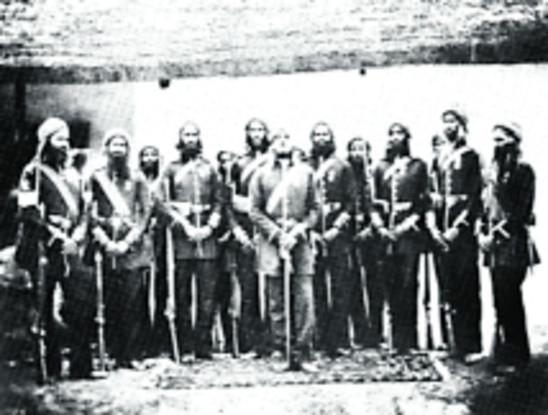
NEGLECTED HERITAGE: Men of the 11th Sikh Regiment in 1860
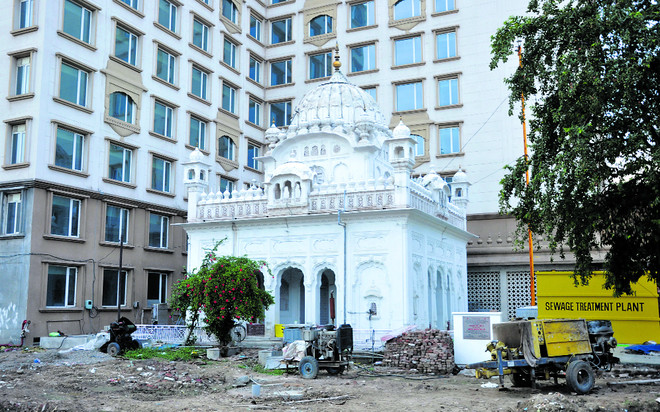
Saragarhi Gurdwara in Amritsar shows signs of government apathy

Jasmine Singh

Twentyone valiant soldiers against 10,000 — the Battle of Saragarhi is a tale of valour of epic proportions

For a casual tourist visiting Ferozepur, Punjab, a trip to Hussainiwala border is usually a major attraction. Thereafter comes, a visit to the local market or maybe the dargah. Only and if only you are a history buff, there’s a decent probability of a visit to the Saragarhi Memorial.Located in the Ferozepur Cantonment area, the Saragarhi Memorial was built to commemorate the memory and valour of 21 Sikhs who laid their lives in the Battle of Saragarhi on September 12, 1897.The memorial has been constructed on the lines of the Saragarhi Fort, it has a gurdwara inside, where each year, on September 12, a kirtan darbar is organised. Descendents of the 21 Sikh martyrs of Saragarhi are among the special invites which also include local leaders, politicians and soldiers of the Indian Army.This day is marked in history as one of valour and bravery. It was on this day that the British Indian contingent, comprising 21 Sikhs of the 36th Sikh (now the 4th Battalion of the Sikh regiment), stationed at an army post was attacked by around 10,000 Afghans. All 21 Sikh soldiers fought bravely and defended the post till their last breath. The battle is considered as one of the the great last-stands in the history.The 21 Sikh non-commissioned officers, led by Havildar Ishar Singh, and soldiers of the other rank who laid their lives in the Battle of Saragarhi were from Ferozepur district in Punjab. They were posthumously awarded the Indian Order of Merit (equivalent to Victoria Cross) by the British authorities.

Annual celebrations

Every year on 12th September, the sevadars at the Ferozepur Memorial Gurdwara, along with the Army personnel of the area, organise a grand function, where some fifth-generation family members of the 21 Sikh soldiers who come from different areas of Punjab and abroad as well, are honoured with a siropa.Bhai Bilambar Singh has been looking after the Saragarhi gurdwara in Ferozepur since 2004. He has seen a welcome increase in the number of visitors to the Memorial, especially around and on the D-day! “The preparations for this day start a month in advance, the premises of the memorial are cleaned, and everything is set in order,” he shares while talking about the most important part of the preparation, which is sending out letters, and making phone calls to the descendents of the 21 brave Sikh soldiers, who laid their lives in the battle. “Each year, the Sainik Welfare Office prepares a list of the family members of the Sikh soldiers, who are intimated about the function through a letter or a phone call. The good part is that many members from their families do make it to the ceremony,” adds Bhai Bilambar. They also arrange for buses to fetch ex-servicemen from the nearby villages to attend the function.

The flip side

While on one hand, the Saragarhi Memorial in Ferozepur sees a record number of people on September 12, another memorial, a Saragarhi gurdwara in Amritsar stands in complete contrast, with a handful of visitors wandering into the premises due to sheer curiosity. The Saragarhi gurdwara in Amritsar is passed off as any other domed structure by the locals who do not have any clue about its existence in their own city!“Even the locals do not know about this place, forget about the outsiders,” shares a person sitting inside the gurdwara, requesting anonymity. Though wanting to remain unnamed, he wants to voice his concern too. “I don’t see many visitors to gurdwara, it’s only once in while that someone walks in and is usually startled by the importance of this place. As far as celebrations for September 12 are concerned, they are nothing great. The descendents of the martyr Sikhs chose to go to Ferozepur instead,” he shrugs helplessly.

Battle for survival

Both the Saragarhi memorials were once looked after by the Army, where faujis from the Sikh regiment would make langar and do kirtan. Ever since, the two historical places have come under the jurisdiction of the Punjab Government, things have changed, “not for better at least,” Santokh Singh, a fifth-generation family member of Havildar Ishar Singh, minces no words while talking about the present state of the memorials.Santokh Singh’s family has built a samarak in the memory of late Ishar Singh at their own village, Cholda, Tehsil Raipur, Ludhiana district. Each year, mostly on September 15, a function is organised at the samarak. Ishar Singh’s family informs the local battalion about the ceremony, who then informs the Sikh regiment of that area. “Till the time the Army was taking care of the memorials, everything was good, now things are not that great. Since we also organise our function at Ludhiana, we do not get time to attend the Saragarhi ceremony at Ferozepur.”From the pages of historyAs family members of the martyr Sikh soldiers have taken it upon themselves to keep the memories of the heroes from their families alive, many Sikh historians have their own take on the historic Battle of Saragarhi. Ludhiana-based Punjabi scholar and modern critic Tejwant Gill from has read quite a bit on Saragarhi, but he is not too convinced with the information that has been provided in various books and articles. “We do not have any accurate information about the location of the Saragarhi village. Whatever information we have about Saragarhi comes from the British assessment, and we do not have any account of it directly.”Author Khan Barmazid in his book Analysis of Battle of Saragarhi: The Lies We Are Told has come out with some startling observations, and questions that he raises unabashedly. Khan writes: Sikhs and other Indians have made a claim, that ‘Ten thousands or 14,000’ Afghans attacked the Saragarhi post where 21 soldiers were stationed from 36th Regiment. Perhaps it’s based on some estimate by British authors, but British military reports of 1897-98 have never made such a claim. The fact is, the numbers of Pashtun attackers on Saragarhi fort can never be determined and by any estimation by the British.He raises yet another question, “Why did Sikh soldiers not surrender in the battle?” As per his chapter, Sikh soldiers are mentioned in British reports to be torturing and mutilating the Pashtun captives so Pashtuns would not take Sikhs as prisoners. Sikh soldiers at the Saragarhi post knew very well that they had no option of surrendering or negotiating with the enemy, so they fought desperately to the last man, while waiting for the arrival of reinforcements.All these questions, however, do not undermine the status of the event, which is still one of eight stories of collective bravery published by Unesco. It was a significant event, one- of-its kind, the one that is still fresh in the minds of at least those who take a moment on September 12 to read a little more on this historical event!


Army Chief calls on Governor

Army Chief calls on Governor
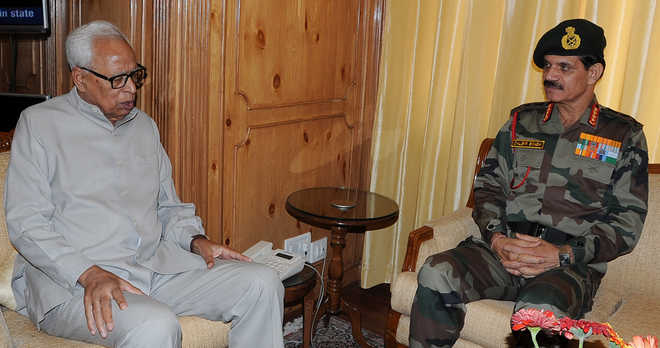
Governor NN Vohra during a meeting with Chief of Army Staff General Dalbir Singh Suhag in Sringar on Friday. A Tribune photo

Tribune News Service

Srinagar, September 9

Chief of Army Staff General Dalbir Singh Suhag, accompanied by Northern Command chief Lt Gen DS Hooda and General Officer Commanding of the Srinagar-based 15 Corps Lt Gen SK Dua, met Governor NN Vohra here today.During their hour-long meeting, the Governor and Army Chief discussed external security situation and issues of effective internal security management.The Governor and the Army Chief also discussed varied opportunities needed to be provided to the youth for assuring a stable and bright future for them.