



Sanjha Morcha

Defamation will remain a criminal offence, rules Supreme Court

NEW DELHI: Defamation will remain a criminal offence in India, the Supreme Court ruled on Friday, rejecting pleas from top politicians and public intellectuals that the British-era provision was an outdated idea that undermined free speech.

The verdict deals a blow to advocates of free speech, who had hoped to nudge the courts to either abolish or water down the criminal defamation law which, they say, discourages

dissent and forces people to hold back even fair criticism of powerful people. The court said the right to speech was sacrosanct but not absolute, and that one’s right to reputation was part of one’s fundamental right to life. “When reputation is hurt, a man is half-dead. It cannot be crucified at the altar of one’s right to free speech,” a bench comprising justices Dipak Misra and Prafulla C Pant said. See page 12

SC ORDER Says individual’s right to reputation part of a person’s right to life

NEW DELHI: Defamation will remain a criminal offence in India, the Supreme Court ruled on Friday, rejecting pleas from top politicians and public intellectuals that the British-era provision was an outdated idea that undermined free speech.

The verdict deals a blow to advocates of free speech, who had hoped to nudge the courts to either abolish or water down the criminal defamation law which, they say, discourages dissent and forces people to hold back even fair criticism of powerful people.

The court said the right to speech was sacrosanct but not absolute, and that one’s right to reputation was part of one’s fundamental right to life.

“When reputation is hurt, a man is half-dead. It cannot be crucified at the altar of one’s right to free speech,” a bench comprising justices Dipak Misra and Prafulla C Pant said.

“(It is) difficult to perceive that (the) provision on criminal defamation has chilling effect on right to freedom of speech and expression,” it said, adding the law served social interest.

The court ruling came in response to more than two dozen petitions, including from BJP leader Subramanian Swamy, Congress vice president Rahul Gandhi and Delhi chief minister Arvind Kejriwal – all of whom face criminal defamation cases.

The court said they will have to stand trial in the cases against them.

The petitioners still have the option to ask the Supreme Court to review its verdict or refer the matter to a constitution bench.

In India, criminal defamation is punishable by two years in jail, a fine or both. Indians largely enjoy freedom of speech, but over the years cases have risen of dissenting voices being dragged to court or citizens being jailed for expressing their opinion, especially on social media. Worldover free-speech votaries are pushing to de-criminalise defamation, but many democracies, including Australia, South Africa and several European nations persist with the law. Several states in Mexico and the United States still criminalise defamation.

Closer home, criminal defamation in Pakistan and Bangladesh criminal can land one in prison.

The top court, however, advised magistrates to be extremely careful in issuing summons to people accused of criminal defamation.

Swamy is facing three criminal defamation cases in Tamil Nadu filed by the J Jayalalithaa government for allegedly making defamatory comments against her, Rahul has a case in Bhiwandi in Maharashtra for allegedly blaming RSS for the assassination of Mahatma Gandhi.

Kejriwal too is facing a number of defamation cases, including those filed by union ministers and Arun Jaitley and Nitin Gadkari.

The court gave them protection for eight weeks and said they could appeal in higher courts within this time to get the summonses quashed.

Those who have already moved high court and did not succeed will have to face trial, it said.

Reacting to the verdict, Swamy tweeted: “This judgment though did not strike down criminal provisions serves our purpose to fight mad CMs and crazy politicians.”


India, Russia to finalise 5th Gen fighter jet deal

Ajay BanerjeeTribune News Service

New Delhi, May 11

Away from the much discussed issue of how French and US companies are in the race to provide fighter jets for the Indian Air Force, India and Russia have quietly set about to conclude a pending agreement to co-develop the fifth generation fighter aircraft (FGFA).Sources confirmed to The Tribune that a deal for signing a research and development (R&D) contract for the FGFA would be inked in the coming months. The differences are being ironed out. The R&D contract signing has been pending since June 2013 when the preliminary design contract (PDC), which detailed out the fighter’’s configuration, was completed. The PDC cost $295 million (Rs 1,483 crore).New Delhi has told Russia that it wants a new engine and the plane must have super cruise ability, a 360-degree radar ability, added stealth features among 40-odd other modifications over the existing prototype. A plane called the ‘T-50’ built by the Russians under the PAK-FA (Prospective Airborne Complex of Frontline Aviation) programme as FGFA is already being tested as prototype in Russia.The IAF said AL-41F1 engines being used on the existing T-50 were just upgraded versions of the Sukhoi-30MKI’’s AL-31FP engines and it would need a new engine. Also, the Ministry of Defence wants that the R&D contract should have an adequate share of work done in India, thus allowing Indian engineers to learn the art of designing and making a plane. The R&D contract is estimated to be for US $4 billion (around Rs 26,000 crore) and a ‘prototype fighter jet’ could be flying in India within three years. The R&D process and final development of the plane is expected to be spread across seven years.If the India-Russia deal goes through, the Ministry of Defence-run Hindustan Aeronautics Limited (HAL) will be the Indian partner. New Delhi is looking at huge numbers in case of its transfer of technology deal. It could be in excess of 200 jets over the next two decades, said sources.In a war scenario with China, an aircraft such as the FGFA would be ideal for missions deep into Tibet. Beijing has good border infrastructure that poses threat to India. With a dwindling fleet of fighter jets, the IAF is now operating at its lowest combat strength in more than a decade. It is down to 33 squadrons (some 16-18 planes in each) as against a mandated 42 squadrons needed for simultaneous and collusive two-front war scenario with Pakistan and China.


Not considering DA-linked pension for EPFO members: Govt

No plan for inflation-linked DA in pension: Govt

short by Aditya Kashyap / 01:58 pm on 05 May 2016,Thursday
The government is not considering inflation-linked Dearness Allowance (DA) to subscribers of the Employees’ Pension Scheme, Labour Minister Bandaru Dattatreya said on Wednesday. The DA “cannot be left open-ended by linking it (pension) with inflation which is variable”, he said, adding that the government has notified a minimum monthly pension of ₹1,000 for EPS subscribers from September 1, 2014.

The government is not considering inflation-linked pension for the subscribers of Employees’ Pension Scheme 1995 run by retirement fund body EPFO as the value of benefits cannot be left open-ended, Parliament was informed on Wednesday.

“…no proposal is under consideration of the Government at present for providing inflation-linked Dearness Allowance (DA) to pensioners of EPS, 1995,” said Labour Minister Bandaru Dattatreya in a written reply to Rajya Sabha.

Elaborating further, the minister said, “The value of benefits cannot be left open-ended by linking it (pension) with inflation which is variable.”

According to the statement, the issue of index-linking of pension by fully neutralising inflation was considered by the Expert Committee constituted by the government in 2009 for review of EPS, 1995 and the same was found not feasible in the case of a funded scheme like EPS, 1995 wherein contribution of the employer and Government is at a fixed rate of 8.33 per cent and 1.16 per cent respectively.

The minister, however, informed the House that the government has notified a minimum pension of Rs 1,000 per month to the pensioners under the EPS 1995 from September 1, 2014 for the year 2014-15, which is continued beyond March, 2015 without any break.

Unions have been demanding indexing of pension under the EPS 1995 for providing social security to formal sector workers who are subscribers of the Employees Provident Fund Organisation.

“We are demanding a minimum monthly pension of Rs 3,000. Besides, government should take steps to increase the pension contribution from present 9.49 per cent of basic wages to over 20 per cent for linking it with the inflations. The enhanced contribution should come from employer and government,” said All India Trade Union Congress Secretary and an EPFO Trustee D L Sachdev.

He was of the view that indexing of pension is viable only after enhancing EPS 1995 contribution to over 20 per cent of the basic wages.


Palwal’s Admiral Lanba takes over as Navy Chief

Palwal’s Admiral Lanba
takes over as Navy Chief
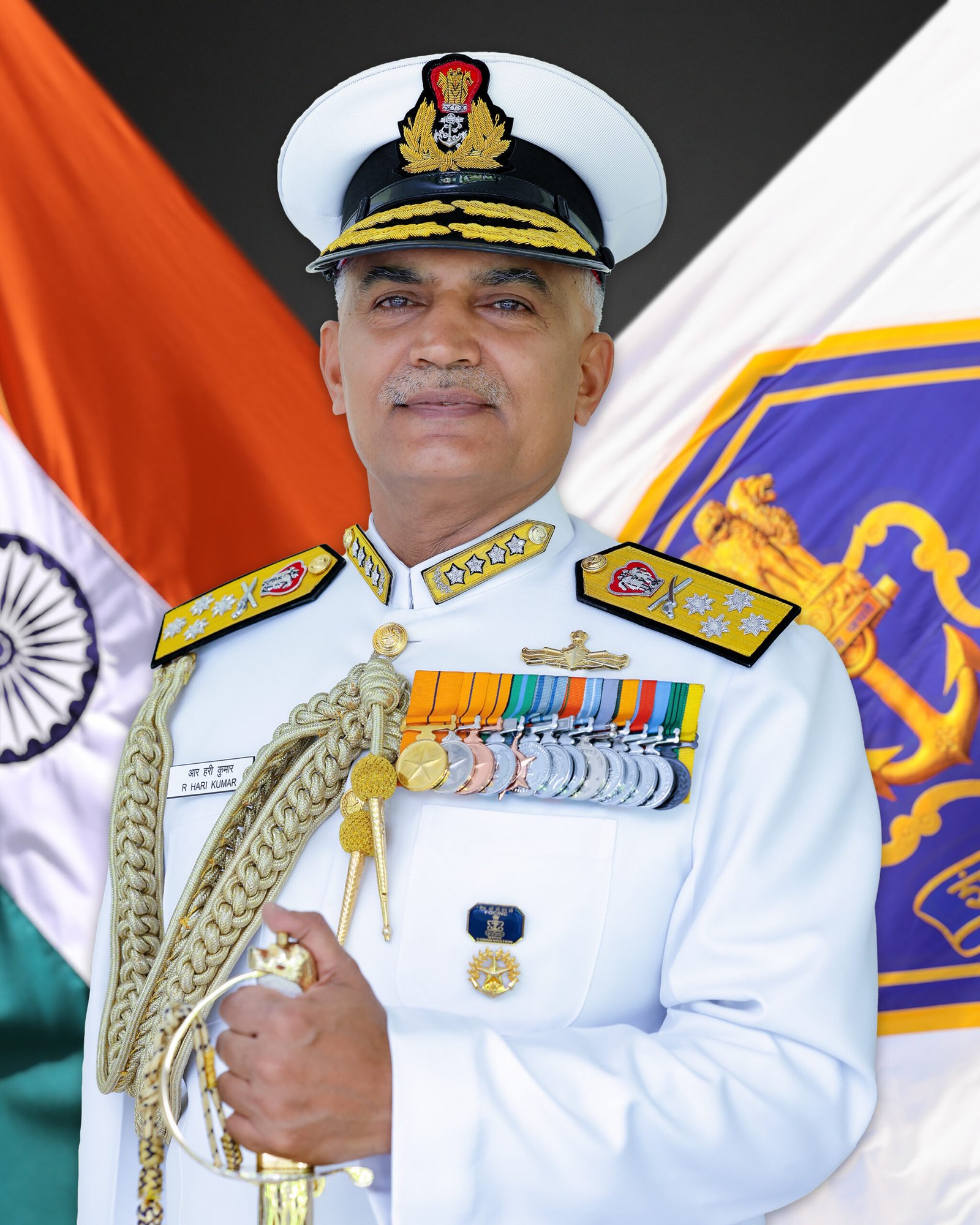
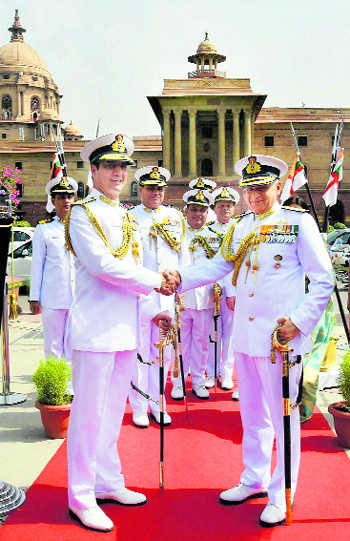
Admiral Sunil Lanba (R), hailing from Palwal in Haryana, on Tuesday took charge as Navy Chief. Succeeding Admiral Robin Dhowan, he will have a full three-year tenure till May 31, 2019, becoming the 23rd Navy Chief. PTI

Admiral Sunil Lanba (R), hailing from Palwal in Haryana, on Tuesday took charge as Navy Chief. Succeeding Admiral Robin Dhowan, he will have a full three-year tenure till May 31, 2019, becoming the 23rd Navy Chief. Prior to this appointment, he was heading the Mumbai-based Western Naval Command. A navigation and direction expert, Admiral Lanba has four decades of experience in both Eastern and Western Fleets. A former chief of the National Defence College, he has provided impetus to skill development, synergising combat operations, coastal security and infra development along the Western seaboard. 


Central forces deployed in 7 districts

Proposed Jat stir Forces reach Rohtak, Jhajjar, Sonepat, Hisar, Bhiwani, Jind and Kaithal districts

Central forces deployed in 7 districts
CRPF personnel deployed at Jat Dharamshala in Hisar on Saturday. Tribune photo

Chandigarh, May 28

In the wake of members of the Jat community threatening to launch a fresh agitation for reservation, security was today beefed up in Haryana as Central forces were deployed in seven sensitive districts across the state.The Central Armed Police Forces have been deployed in Rohtak, Jhajjar, Sonepat, Hisar, Bhiwani, Jind and Kaithal districts, a top police official said.“The deployment has been done as a precautionary measure,” Additional Director General of Police (Law and Order) Mohd Akil said, adding that the police were fully geared up to meet any situation.A sedition case was registered against Jat Sangharsh Samiti chief Yashpal Malik and 125 others yesterday for allegedly threatening peace and communal harmony in Haryana by instigating people to launch a fresh quota agitation. — PTI

Police on alert

Hisar: Paramilitary forces and the police have been put on alert in the district in view of the threat by Jat groups to resume their agitation from June 5. Hisar Range IGP OP Singh also held a meeting with SPs, DSPs and SHOs of five districts of the range. The IG told the policemen not to get swayed by any kind of divisive propaganda and deal with the anti-social elements belonging to any caste, region or party with a firm hand. He said the police would not let the divisive elements succeed in their designs. — TNSPrinting presses refuse to publish pamphletsJind: Senior Superintendent of Police Rakesh Kumar Arya today said the police had made all arrangements for the maintenance of law and order in the district. “The police will not allow anyone to disturb peace,” he said, adding the police had increased surveillance and keeping an eye on the movement of suspicious elements.Some Jat leaders alleged the police were threatening villagers for not taking part in the agitation and even printing presses had refused to publish their pamphlets and posters for agitation.


Khap announces do-or-die agitation

Hisar: The Satrol khap has announced to launch a do-or-die agitation for reservation to the Jats community at Narnaund village in the district on Saturday. Addressing a press conference, khap president Inder Singh said that the state government had cheated the Jats on the demand of reservation. He said that the six castes, which were included in the OBC (C) category, would raise their demand jointly. The khap leader opposed the registration of a criminal case against Jat leader Yashpal Malik and insisted that BJP MP Raj Kumar Saini should be arrested first for his utterances against the Jats. TNS


Women fighter pilots to pass out on June 18

Tribune News Service

New Delhi, May 25The first batch of women fighter pilots of the Indian Air Force (IAF) is slated to pass out of the IAF training academy on June 18. Defence Minister Manohar Parrikar will be chief guest on the occasion.These women pilot have been selected for combat role. At present, they are flying training aircraft, Kiran. After passing out from the academy, they will be sent for one-year training in combat role.The air force has allowed three women in combat stream for five years, on experiment basis. Women pilots in the IAF are cleared for all operational roles, including low-level tactical flying, para drop, air maintenance (northern and eastern sector) and special heli-borne operation. The women pilots undergo jungle and snow-survival course.They have undergone stage-I and stage-II training at the academy and have been assessed for their suitability. Now they will get training in the fighter stream.


7th Pay Commission: Good news for Central Govt employees! Arrears to be paid in August

Posted: 17 May 2016 07:49 AM PDT

 New Delhi, May 17: There is a good news for the central government employees who are waiting for the Seventh Pay Commission’s implementation.

If reports are to be believed then the arrears from January 2016, will be disbursed only August onwards.

 Reports had earlier suggested that the salaries of the government employees will be paid in July as per the 7th Pay Commission recommendations.

 As much as Rs 70,000 crore has been provisioned in the Union Budget 2016-17 for implementation of Seventh Pay Commission for government employees.

 Implementation of the pay commission report in toto is to cost the government Rs 1.02 lakh crore.

  The government in January set up a high-powered panel headed by Cabinet Secretary P K Sinha to process the recommendations of the 7th Pay Commission which will have bearing on the remuneration of 47 lakh central government employees and 52 lakh pensioners.

Implementation of new pay scales recommended by the 7th Pay Commission headed by AK Mathur estimated to put an additional burden of Rs 1.02 lakh crore, or 0.7 percent of GDP, on the exchequer in 2016-17, government has said.

 The recommendations of the Pay Commission will have bearing on the remuneration of 47 lakh central government employees and 52 lakh pensioners.

If reports are to be believed then the proposal of minimum pay of 24,000 will be taken into consideration and the reasonable expectations of central government employees will be met while announcing the salary hikes in accordance with the 7th pay commission.

Read more at: http://www.oneindia.com/india/7th-pay-commission-good-news-central-govt-employees-arrears-salary-hike-paid-august-2100999.html

OROP war over, veterans want their medals to be returned

Posted: 17 May 2016 07:42 AM PDT

 Nearly 20,000 medals were given back during the agitation. 

The long-standing demand for one rank one pension (OROP) in the Indian armed forces was accepted by the Modi government last year. Enroute putting pressure on the government to get their demands approved, many of the decorated war veterans had given up their service medals. But now with OROP implemented, the veterans want their prized medals back.

According to a Times of India report, nearly 20,000 medals were given back and are currently lying at President Pranab Mukherjee’s office. One of the organisations at the forefront of the agitation was the Indian Ex-Servicemen Movement (IESM) who has written to the MoD, asking for their medals back. IESM chairman Lt Gen (retd) Raj Kadyan told the daily that he did not consider the unsanctioned portion of the OROP serious enough now, to merit the medals to be still kept with the government.

There are still some grievances among a section of the veterans regarding the OROP issue saying that the government hasn’t fully met their demands. But it looks like those are not major enough for army men to part with their treasured medals won after valiantly fighting in the line of duty. Defence Minister Manohar Parrikar also said earlier that most of the veterans are happy with the OROP scheme implemented by the government.


Museum showcasing history of Western Command inaugurated

Museum showcasing history of Western Command inaugurated
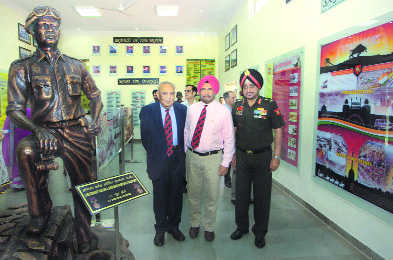
Serving and retired officers at the Western Command museum in Chandimandir on Sunday. A tribune photograph

Tribune News Service

Chandigarh, May 22

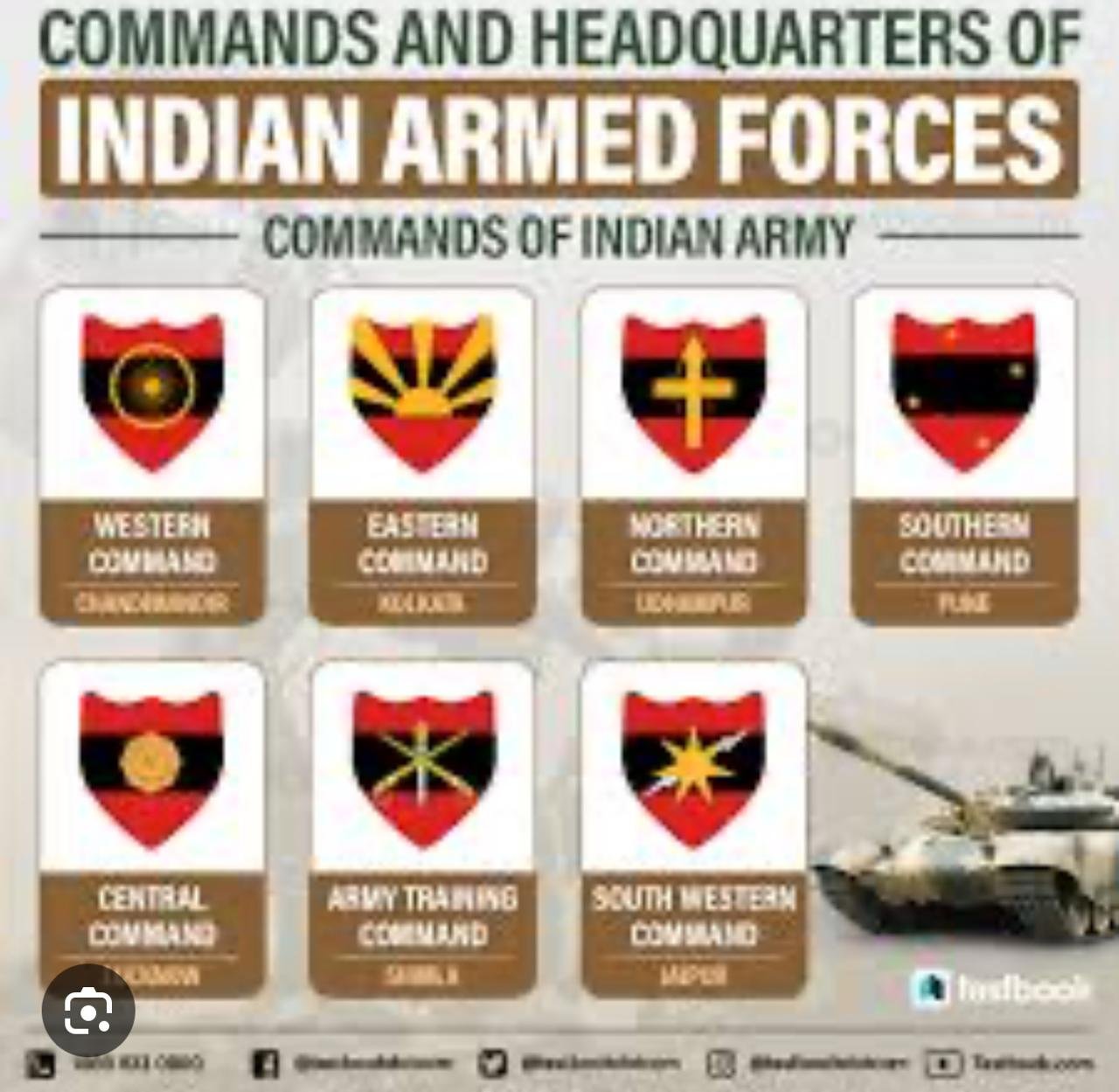
A museum showcasing the history and military heritage of the Western Command was inaugurated at Chandimandir today. The function was attended by a large number of veterans, including eight former chiefs of the Commander, serving officers and civil dignitaries.The museum is not only a repository of documents, archives and memorabilia, but also an embodiment of the rich heritage, valour and sacrifices made by the soldiers of this frontline operational command.It consists of four blocks. The Russell Block encompasses the genesis and evolution of the command and its various formations, while the Cariappa Block is dedicated to the valour. The Sinha Block is exclusively designed to accommodate a well-stocked library-cum-visitors room, a souvenir shop and an audio visual room. The exterior landscape of the complex has on display war trophies such as a Pushpak Aircraft used in 1965 and 1971 Indo-Pak Wars and a captured Pakistani Patton tank.Certain noteworthy contributions are the heritage railway locomotive and saloon from the Indian Railways, replicating and commemorating the historic association of this Command wherein the Western Command Headquarters (then known as Delhi and East Punjab Command) operated from the Viceroy’s Train during the Partition.  Immediately outside the Sinha Block are two imposing miniature battleship models contributed by the Indian Navy.Later, a coffee table book on Western Command, “Ever Westwards”, was released. It covers the journey traversed by the Western Command since its raising in 1947.

About the museum

  • The museum is not only a repository of documents, archives and memorabilia, but also an embodiment of the rich heritage, valour and sacrifices made by the soldiers of this frontline operational command

Will continue working with PM Modi to strengthen ties between two nations: US

Talking about the Prime Minister’s upcoming visit to the US on June 8th, state department spokesperson John Kirby said in a press briefing, that the ties between the two nations represented a ‘special relationship’.

PM Modi, Narendra Modi, Prime minister Narendra Modi, US, Barack Obama, US president Barack Obama, Obama, Modi, Modi's US visit, PM Modi's US visit, India-US ties, india newsEvery full-term prime minister since 1984 has addressed a joint meeting of the House and Senate.
Ahead of his key address at a joint meeting of the US Congress next month, the Barack Obama government has asserted that it is looking forward to continue to work with Prime Minister Narendra Modi on all fronts to strengthen ties between two nations.

Talking about the Prime Minister’s upcoming visit to the US on June 8th, state department spokesperson John Kirby said in a press briefing, that the ties between the two nations represented a ‘special relationship’.

 “It’s one that we’re very committed to, and we look forward to continuing to work with Prime Minister Modi on all the different areas in which the United States and India will and must work together,” Kirby said.

He will be the fifth Indian Prime Minister to address a joint meeting of Congress, and the first since 2005. The first-ever Indian premier to make such a speech was Rajiv Gandhi in 1985, followed by PV Narasimha Rao in 1994 and Atal Bihari Vajpayee in 2000. Prime Minister Modi will be the fifth, speaking 11 years after his predecessor, Congress leader Manmohan Singh. Every full-term prime minister since 1984 has addressed a joint meeting of the House and Senate.


Territorial armyman’s widow wins pension battle after eight years

Armed Forces Tribunal had dismissed the application filed by the widow for pension after her husband’s death

The eight-long year battle has finally come to an end for Santosh Devi, the widow of a Territorial Army personnel, who was granted an ex-gratia amount of Rs10 lakh by the Supreme Court, in a recent order. Army had denied the family pension on the ground that her husband, who died of heart attack, had not completed requisite15 years in service.

Directing the central government to pay the amount to Santosh Devi, whose husband died in 2008 at his native village in Punjab, the apex court set aside the Armed Force Tribunal’s order rejecting her plea.

The Armed Forces Tribunal had dismissed the application filed by the widow seeking family pension for the death of her husband claiming that Singh had rendered a total service of about twelve years in the army.

Tribunal had held that he did not have the requisite minimum qualifying embodied service of 15 years to earn service pension, and hence upon his death while he was in disembodied state, the widow was not entitled to family pension.

It was contended before the bench headed by Chief Justice of India T S Thakur that while the wife of a regular army soldier, who dies in harness is entitled to family pension even if the deceased soldier had not put in the minimum qualifying service to earn service pension, the same is denied to wife of a deceased Territorial Army soldier on a specious plea that the deceased soldier was in disembodied state when the death took place.

According to Devi’s petition, this discrimination is violation of Article 14 of the Constitution of India.

The division bench also comprising Justice R Banumathi agreed with the reasoning of the tribunal that a regular army person and a person enrolled in the Territorial Army are governed by different set of terms and conditions of service.

Observing that there are anomalies in the rules governing service conditions of Territorial Army men, the court observed, “inspite of repeated recommendations, it is not known why steps are not being taken to remove the anomalies to pay family pension to ‘next of kin’ of Territorial Army personnel who rendered long service in Territorial Army and died while in disembodied state.

We hope that the Union of India considers the issue favourably to remove the anomalies to pay appropriate family pension to next of kin of Territorial Army personnel who die while in disembodied state by giving due weightage to their embodied service.”

As per Army Order 77 of 1984, the Territorial Army is a part of the regular Indian Army. The role of Territorial Army is to relieve the regular army from static duties, assist civil administration in dealing with natural calamities and maintenance of essential services in situations where life of the communities is affected or the security of the country is threatened, and to provide units for the regular army as and when required.

Territorial army is part of regular Indian Army

As per Army Order 77 of 1984, the Territorial Army is a part of the regular Indian Army.

The role of Territorial Army is to relieve the regular army from static duties, assist civil administration in dealing with natural calamities and maintenance of essential services in situations where life of the communities is affected or the security of the country is threatened, and to provide units for the regular army as and when required.