Sanjha Morcha

AGUSTAWESTLAND SCAM Probe focus on those named

Vibha Sharma

Tribune News Service

New Delhi, May 4

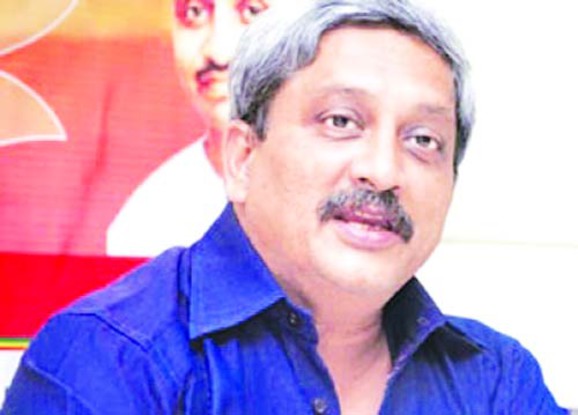
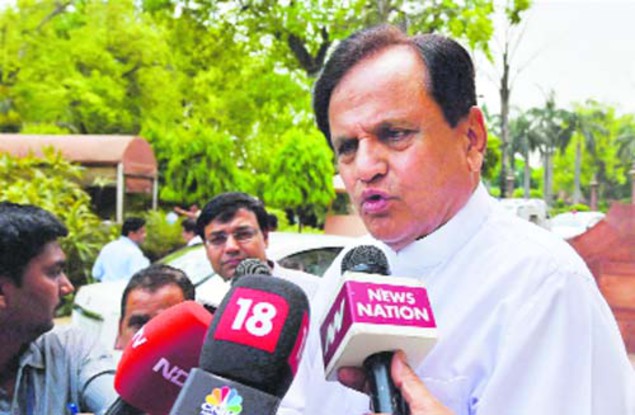
Stating that the CBI had already done considerable investigation in the AgustaWestland chopper scam, Defence Minister Manohar Parrikar today said the inquiry would now focus on the roles of those named by an Italian court in its ruling. In an all-out offensive against the Congress leadership, Parrikar told the Rajya Sabha that there was an agreement that “corrupt practices were involved” in the procurement of VVIP helicopters and the Italian court judgment unequivocally accepted this. The Minister, replying to a debate in the House on the chopper controversy, did not name anybody. Former Defence Minister AK Antony and Congress leader Ahmed Patel, political secretary to Congress president Sonia Gandhi, sought a thorough probe to trace all those who had received kickbacks. “It is proved beyond doubt that there is corruption in the deal. If you have evidence, take action, but do not threaten,” Antony said, reiterating  the demand by other political parties, including the SP, the JD-U, the Left and the BSP, for action against the company and an  SC-monitored probe, a demand that was rejected.  Parrikar said the CBI was on the money trail. “The government will leave no stone unturned to bring to justice those who have committed these corrupt acts against national interest,” he said.  “It is evident that trials were not conducted because chopper was at the development stage. Hence, the main action required is to trace and unmask the means of these corrupt practices,” he said. Patel’s name has been dragged because initials “AP” were found on  documents recovered during the probe by the Italian authorities.  “The inquiry will focus on the roles of those named in the judgment of Italian court… Where has the money (kickbacks) gone? It appears an invisible hand was guiding the action or inaction of the CBI and the ED” Manohar Parrikar, Defence minister”I will quit the Rajya Sabha and retire from public life if any allegation is proved. The propaganda against me, my party and leaders is baseless” Ahmed Patel, Political secretary to Congress president


Mehbooba Mufti Could Turn A New Leaf In J&K ::::Syed Ata Hasnain

Recognise Jammu And Kashmir Youth's Potential: Mehbooba Mufti To World Community
SNAPSHOT
  • While the Valley’s environment may have been heated enough for detractors to envisage a summer of discontent, things appear to have cooled down.
  • Indicators from the government’s initial moves appear to be more positive than most previous governments.
  • Even as separatists intend to prevent the government from settling down, leaders have displayed maturity by desisting from any contentious comments.

While much has been written and discussed about the situation in Jammu and Kashmir (J&K) in the last few weeks, most of it has been contextual to events. The Handwara incident sent out ominous signals, the fallout wasn’t too psychologically endearing for the Security Forces (SF). The NIT incident wasn’t too positive either. When it comes to J&K, analysts including this one, tend to take every event apart and hardly concentrate on the big picture. Rarely do we have analyses and projections when things are quiet and especially when positive trends are in the making.

One of the recent most positive events on the J&K landscape has been the formation of the new government of the PDP and BJP under the leadership of Chief Minister Mehbooba Mufti. Observers have generally been skeptical about it given the fact that it took almost three months to arrive at some form of agreement between the two parties before its formation.

Skepticism went further as the Handwara incident tested the new government which came into being even as the fallout over NIT was creating turbulence in the environment. That the Deputy Chief Minister rose to the occasion and played his role in keeping with the spirit of the coalition ensured that the fallout in Jammu was not as intense as I would have envisaged. Even the Handwara incident, I am convinced, was an expected manipulation to put the new government off balance.

While the Valley’s environment may have been heated enough for all detractors to envisage a very hot summer of discontent on the streets through 2016, things appear to have temporarily cooled down. However, there is a simmer and the Separatist attempt to trigger a chain of protests has not really manifested. Of course, in the Valley it does not take time beyond a single breath for things to go out of hand and predictions are always premature.

Indicators from the government’s initial moves appear to be more positive than most previous governments. That the Chief Minister found time to start addressing long pending issues on the economic front is itself a positive. I happened to attend a meeting a few months ago on the problems of Trans Line of Control (LoC) trade, which commenced in 2008 but floundered due to inability to go beyond a threshold. I was pleasantly surprised to learn that many of the issues discussed in that meeting with Mehbooba Mufti have been quickly addressed within the first month after government formation.

The durbar is to move shortly to Srinagar and many are expecting the welcome to be turbulent. The intent of the Separatists as assessed earlier is to disallow the government from settling down. I suspect that they too realize that the agenda of this government is going to be different and are attempting to divert that towards the streets.

That, in reality, is the actual theme of this analysis. What should be the attitude of this government and its approach to governance? Mainstream print and visual media was more taken up by the events which morphed with the arrival of the new government. It prevented a more intellectual analysis and advice with the overhang of events such as Handwara or NIT.

The BJP-PDP combine this time seems to have learnt from the experience of the previous government. The BJP has controlled its cadres effectively and avoided triggering contentious issues. We are neither witnessing hyperbole on Article 370, nor on the Kashmiri Pandit issue; both are legitimate issues, but not when a coalition government has come into being with major ideological differences and much give and take. The last time, late Chief Minister Mufti Mohammad Sayeed was embarrassed early in his tenure with the Masrat Alam case and some public statements about Pakistan. This time, the constituents and the leaders are displaying maturity by desisting from any contentious comments.

Patience is a virtue in a volatile environment such as J&K. Sooner than later, if patience starts running out and either political party starts to wrestle its way to garnering advantage in its core constituencies, much of what the government is achieving now will be compromised.

Politicians are usually smarter people than we care to think. Prematurely raising contentious issues which have no easy resolution, just for the sake of flagging their concern tends to move the carpet under their feet. It is smarter to look at issues which are less emotional, more workable in the short term and related to daily lives of the electorate (read people). Playing down emotions on the street will leave sufficient energy in the leadership to focus on issues where the people wish them to perform.

The Chief Minister’s timely intervention in the LoC trade must be taken to the next logical step and similar initiatives, which obviously must come to her through consultation, must show early decisions and progressive monitoring.

I have long believed that one of the issues which any J&K government must focus on is the winter management of Kashmir and Ladakh. Let this government take it upon itself to make a material and perceptible difference to the lives of the people the next winter. Consultation is the key, and that must take place with the lowest strata in remote villages and the gentry in semi-urban and urban areas.

The thing missing in the lives of the people has been grassroot political consultation and activism, because political leaders seldom felt safe to venture out on their own. Engineer Rashid, the independent MLA from Langaite (Handwara) may be a rabble rouser, but he would put to shame many a politician with the kind of following he enjoys in his constituency only on the back of his honesty and outreach to the people.  There are other examples too but Kashmir’s political landscape has largely witnessed only turbulence through emotive triggers. If this government can turn a new leaf, as it obviously is attempting to do, it will be a win-win for the establishment and a dent to the Separatist agenda.

The key for the government settling down well lies in focusing on a few issues in all three regions. No scope for accusations of favoring a region must be allowed to emerge. The government must also concentrate on some of the cultural aspects of all three regions to raise self-esteem about the richness of history and culture. The tourist season must also pan out without hindrances because that is the time money enters into pockets and emotions can be better managed. Lastly, on the governance front, much attention needs to be paid towards rehabilitation of the flood victims, with total control on corrupt practices.

Everything can go well if the security domain remains dormant. This is unlikely. Across the LoC, the United Jehad Council (UJC) and its cohorts in the Pakistan Deep State are unlikely to remain quiet. Infiltration attempts will be of a higher order. Hinterland terrorist activity will crop up from time to time, along with the new tactics of mob surges to the area of contact with terrorists. Thus far, the Army, Central Reserve Police Force (CRPF) and the Jammu and Kashmir Police (JKP) have displayed remarkable alacrity and maturity in the conduct of operations, but sooner than later, there will be incidents which are unpredictable and control of post incident events will be important.

There must be no quarter given to rumor mongering such as the type which emerged after the Handwara incident. There is no alternative to integration as none of the components of the SF can do anything on their own. This is not the time to reduce footprint of the Army, but consciously and with JKP advice, the Army could identify irritants which the Separatists may exploit to their advantage.

The common refrain of all those who know the ground is that having bunkers in close proximity to populated areas is no longer required. Yet, there has to be a degree of pragmatism in this. Much of the Army’s headquarters and units are themselves located within towns or their outskirts. This presence helps in many ways and limits the ability of anti-national elements having a free run.

The SF have now become quite adept at small cordon and search operations and must maintain their focus on these. The vulnerable towns must not be allowed to have a resurgence of terrorist leadership. It means the counter infiltration grid can have no let up. Nontraditional areas and those not activated for infiltration for long must also receive due focus. In North Kashmir, the forest tracts cannot be allowed to become havens and must be addressed.  In South Kashmir, reactivation of the Lidder Valley after long is being experienced. Some degree of redeployment may be necessary to control this.

The summer of 2016 may yet turn out to be different from what many have anticipated. It is good to expect the worst but continue to remain positive about the government’s intent and capacity to turn things around. It has shown promise in the first few weeks. Once ensconced in Srinagar, it must balance itself between the need for security and the demand for governance.

At the same time, some traditional activities such as the Amarnath Yatra and a few cultural activities of the Kashmiri Pandits must receive attention to prevent any emotions going astray. The Separatists will attempt to raise triggers in relation to both these events which must be responded with care and without allowing emotions in the streets or in cyber space.

Lastly, the government and the Army must work in tandem on the management of perception. This can be a completely different trend since it was the Army alone which worked on this for long. Perhaps in the next Unified Command meeting with the Chief Minister in the chair, one of the agenda items must be strategic communication, if not perception management.

This article was first published here.

Displaying images.jpgimages

Lt. Gen Syed Ata Hasnain (Retd) is the former Corps Commander of the Srinagar based 15 Corps, and is currently associated with Vivekanand International Foundation and the Delhi Policy Group, two major strategic think tanks of Delhi




Pak had achieved nuclear capability in 1984: Qadeer Khan

Islamabad, May 28

The father of Pakistan’s nuclear programme Dr Abdul Qadeer Khan today said the country could have become a nuclear power as early as 1984 but the then President General Zia ul Haq “opposed the move”.He was addressing a gathering on the anniversary of first nuclear tests, which were carried out under his supervision in 1998.”We were able and we had a plan to launch nuclear test in 1984. But President General Zia ul Haq had opposed the move,” said Khan.He said General Zia, who ruled Pakistan from 1979 to 1988, opposed the nuclear testing as he believed that the world would intervene militarily.Khan also said Pakistan has the ability to target Indian capital Delhi from Kahuta near Rawalpindi in five minutes.Khan was disgraced in 2004 when he was forced to accept responsibility for proliferation and live a life of semi house arrest.He regretted the treatment and said Pakistan would never have achieved the feat of becoming first Muslim nuclear country without his “services”.”We are facing the worst against our services to the country’s nuclear program,” he said referring to the humiliation he suffered. — PTI


Rafale deal will be concluded in June: Parrikar

short by Arjun Bhatia / 10:52 am on 27 May 2016,Friday
Defence Minister Manohar Parrikar on Thursday said there is “no reason” why the deal to buy 36 Rafale fighter jets from France should not be concluded in June. He further rejected suggestions of a delay in signing the €7.89 billion (₹59,200 crore) contract, saying any such process takes at least 6-8 months. The deal had been announced in April 2015.

West straining Sino-India ties: State media

Simran Sodhi

Tribune News Service

Beijing, May 25

Amid President Pranab Mukherjee’s ongoing visit, China seems to be softening its stance towards India with state news agency Xinhua running an article blaming the West for the hyped tension between “the dragon and the elephant”. One of the reasons for this could be growing Chinese apprehensions that India, Japan and the US are getting together as a power bloc to challenge Beijing’s dominance in the region.The report talks about the Chabahar port and how this is also being used to drive a wedge between the two Asian giants. “One of the latest targets of their smear campaign is a New Delhi-Tehran deal on developing Iran’s port of Chabahar. The seaport is 100 km from Pakistan’s Gwadar seaport, which is co-developed by China. Those media claim the Elephant-Dragon rivalry is unavoidable,” said the Xinhua report today. The report goes on to add that such hype is both “untrue and harmful”.(Follow The Tribune on Facebook; and Twitter @thetribunechd)The report comes out heavily in its criticism of the Western media, which it blames for creating such tension between China and other nations. The report goes on to state: “Yet the distorted coverage of China-India ties lays bare a deep and unfounded bias against China among Western media”.


India rebuts China on NSG issue

Tribune News Service

New Delhi, May 20India today gave a firm rebuttal to China on linking signing of the Non-Proliferation Treaty (NPT) to membership of the elite Nuclear Suppliers Group (NSG) and took exception to its increased investment in Pakistan-occupied Kashmir.Countering the Chinese argument, India cited the example of France, which was admitted to the NSG without first having signed the NPT. “I think there is some confusion here. Even the NPT allows civil nuclear cooperation with non-NPT countries. If there is a connection, it is between the NSG and IAEA safeguards and with export controls,” Ministry of External Affairs spokesperson Vikas Swarup said today in a media interaction.“NSG members have to respect safeguards and export controls, nuclear supplies have to be in accordance with the NSG guidelines. The NSG is an ad-hoc export control regime and France, which was not an NPT member for some time, was a member of the NSG since it respected NSG’s objectives,” Swarup added.China has objected to India’s NSG membership on the grounds that isn’t the NPT signatory. Chinese foreign ministry spokesman Lu Kang had said all the multilateral non-proliferation export control regime, including the NSG have regarded NPT as an important standard for the expansion of the NSG.Chinese stand has irked India and it is one of the topics that will also be raised by President Pranab Mukherjee who is travelling to China next week.India also slammed China for its increased investments in the Pakistan-occupied Kashmir. “Chinese activities in PoK have been taken up with the Chinese side, including at the highest level. Pakistan-occupied Jammu and Kashmir is an integral part of India… we have asked them to cease all activities (there),” Swarup said.


Pak court says try Lakhvi for abetting 26/11

Lahore, May 20

Lashkar-e-Toiba operations commander Zaki-ur-Rehman Lakhvi and six others accused in the 2008 Mumbai attack case will be individually charged with abetment to murder of 166 people who died in the carnage, a Pakistan anti-terrorism court ruled today.A senior official said the court did not allow cross-examination of the suspects. The prosecution had filed an application in the anti-terrorism court, Islamabad, two months ago, requesting it to make an amendment to the charges against the suspects of abetment to murder of each individual in the carnage. The trial court had in March reserved the verdict. As many as 166 people, including six Americans, were killed and more than 300 injured in the attack in November 2008 by 10 Pakistan terrorists. — PTI


LCA Tejas, BrahMos, LCH, Akash missile & AEW&C :: 5 defence products India is eyeing for exports

Defence Minister Manohar Parrikar has set himself a target – he wants India’s defence exports to reach $2 billion in the next two years, from the current level of $300 million. Indigenously developed defence products – be it India’s missiles, aircraft or helicopter – have generated interest in the global market, especially from African and Latin American countries. From HAL’s Light Combat Helicopter and LCA Tejas to BrahMos missile, we take a look at five defence products that India can look at exporting:

LCH ::

According to a PTI report, India is in talks with “certain” countries in Africa for possible export of the indigenous Light Combat Helicopter (LCH). LCH is a 5.5-tonne class combat helicopter designed and developed by HAL. Its features include sleek and narrow fuselage, tri-cycle crash worthy landing gear, crash worthy and self-sealing fuel tanks, armour protection, nuclear and low visibility features which makes the LCH lethal, agile and survivable.

Designed for anti-tank and anti-infantry roles with a maximum speed of 275 kilometers per hour, the LCH is also capable of high-altitude warfare since its operational ceiling will be 16,000 to 18,000 feet. “With great value for money, the helicopter is an attractive buy for many countries. The countries interested in the LCH in the current form do not need high features like air to air missiles. For them turret gun along with some other features work,” a senior defence official has said.

BRAHMOS ::

The supersonic cruise missile system BrahMos, which is a joint venture between India and Russia, has caught the attention of countries like Argentina, Venezuela, Chile and Brazil in Latin America and also of South Africa, which is part of the BRICS grouping, because it has been developed at a low cost of $300 million. (Image: DRDO)

BrahMos is a supersonic cruise missile developed by DRDO and Russian NPO Mashinostroyeniya. The missile can be launched from surface, submarine or air. Latin American countries as well as South East Asian countries have expressed their interest for the missile particularly for their naval and coastal defence.

The BrahMos missile has a range of 290 km, has a maximum velocity of 2.8 Mach and cruises at altitudes varying from 10 metres to 15 km, claims BrahMos. It can be launched in either inclined or vertical configuration based on the type of the ship.

Light Combat Aircraft (LCA) Tejas ::

India’s Light Combat Aircraft (LCA) Tejas, which was several years in the making, has now caught the attention of foreign buyers with Sri Lanka and Egypt evincing interest in the indigenously built fighter jet. Sri Lanka had recently rejected Pakistan’s JF-17 aircraft built with Chinese help, while Egypt had last year signed a contract for 24 French-made Rafale fighter jets. The two countries are interested in the current version of the Tejas and not the upgraded one which will be rolled out later.

Tejas is perhaps the world’s smallest lightweight, multi-role single engine tactical fighter aircraft. Tejas is equipped with a quadruplex digital fly-by-wire flight control system to ease handling by the pilot. It has intentionally been made longitudinally unstable to enhance manoeuvrability.

Two things that go in favour of the Tejas are its lower cost and flying ability. Sources have told PTI that enquiries by foreign countries came during the Bahrain air show in January, the first time that Tejas flew outside the country. The decision to send Tejas abroad was of Defence Minister Manohar Parrikar, who has put his weight behind the aircraft.

AKASH Missile System ::

Parrikar recently said that India is willing to export the Akash missile system. Akash, a surface-to-air missile, has a range of 25 km. Akash mobile Air Defence Weapon System has been designed, developed and led to production by DRDO for defending and protecting the important assets of the country from penetrating aerial attacks.

AEW&C ::

AEW&C is one of the flagship programmes of DRDO consisting of state-of-theart Airborne Early Warning and Control system that can detect, identify and classify threats present in the surveillance area and act as a command and control centre to support variety of air operations. “AEW&C India” with Mission Systems, with modular design & integrated on an Embraer 145 aircraft, are very cost effective, claims DRDO. With an eye on export, the DRDO had exhibited the plane during air shows in the past.


IAF wants highways as backup runways to help fighter ops

NEW DELHI: India’s future highways could be the latest force multiplier for its air force.

HT FILEThe IAF had landed a fighter jet on Yamuna Expressway last year.The Indian Air Force wants new public roads to be designed to serve as runways for its warplanes, providing an alternative for launching operations if key airfields are bombed out by the enemy, said a top officer.

The IAF, which has 53 airfields across the country, has firmed up an ambitious plan for emergency airstrips in important sectors — identifying road locations, minimum infrastructure requirement and portable logistics support.

It shared the plan for backup runways with the ministry of road transport and highways.

The first such runway is likely to come up on the 302km Lucknow-Agra Expressway, likely to be operational by the yearend. As part of its plan to use highways as runways, the IAF landed a Mirage 2000 fighter on the Yamuna Expressway in 2015, days after two combat planes landed on an airstrip in Saifai village in UP’s Etawah.

“We have communicated with the road transport ministry and got the plan for future road constructions … We have identified the roads, which are coming up and can be utilised (as backup runways),” a senior IAF officer was quoted as saying in a report tabled in Parliament on May 3. He said the IAF had covered significant ground over the past year.Also, existing road sections have been identified for converting them into alternative airfields with a straight stretch of at least 3km.

Alternative runways are likely to dot new highways in Rajasthan, Punjab, Haryana, Gujarat and Maharashtra — states where several fighter squadrons are based.

“We are not just looking at recovering fighters on roads. The plan is to create facilities that can be quickly converted into airfields that allow us to reload ammunition and launch missions,” said another IAF officer who did not wish to be named.

Countries known to have emergency airstrips on highways include China, Germany, Sweden and Singapore.

The new facilities, where peacetime training will be carried out, are set to come at a cost as state governments will have to acquire more land to convert road stretches into full-fledged airfields.

Such highway sections must fulfill requirements needed to land a plane and for takeoff such as installation of runway lighting, firefighting equipment, communication network, radars, weapon storage and makeshift air traffic control.